The Atlas is set to adopt a design language more closely aligned with the rest of Volkswagen’s lineup for the new model year.
The Volkswagen Atlas has been on the market since 2017, receiving updates in 2021 and again in 2024. Now, the three-row midsize SUV is preparing for a more comprehensive overhaul. Recent spy photos reveal a camouflaged prototype of the 2027 Atlas undergoing testing.
Volkswagen previously previewed the model in a vibrant camouflage wrap, and while the current test vehicle attempts to disguise its front and rear fascias to resemble the outgoing model, the automaker has confirmed that everything except the roof is new. Despite the effort to obscure the changes, the direction of the redesign is apparent.
The Chinese market counterpart to the Atlas, the SAIC-Volkswagen Teramont, received its latest update in February 2025. That vehicle offers a clear indication of the Atlas’s forthcoming design cues. Up front, the revised SUV will replace the rounded outer edges of the current headlights with sharper, more angular units.
The daytime running lights are expected to integrate into a chrome accent spanning above the Volkswagen emblem. Below the main headlamp clusters, upright lower air intakes framed in gloss black will contribute to a more assertive appearance.
At the rear, the taillight assembly is likely to retain a full-width layout but with modified outer edges that extend into the rear quarter panels along the shoulder line. A gloss black trim piece beneath the tailgate and a faux diffuser-style panel with diamond-pattern detailing are anticipated, giving the SUV a sportier character.

The rear quarter glass will also change shape, adopting a straighter extension behind the C-pillar rather than the stepped design seen on the current Atlas. Collectively, these updates align the Atlas more closely with models such as the Tiguan and Golf, reinforcing a unified Volkswagen design language.
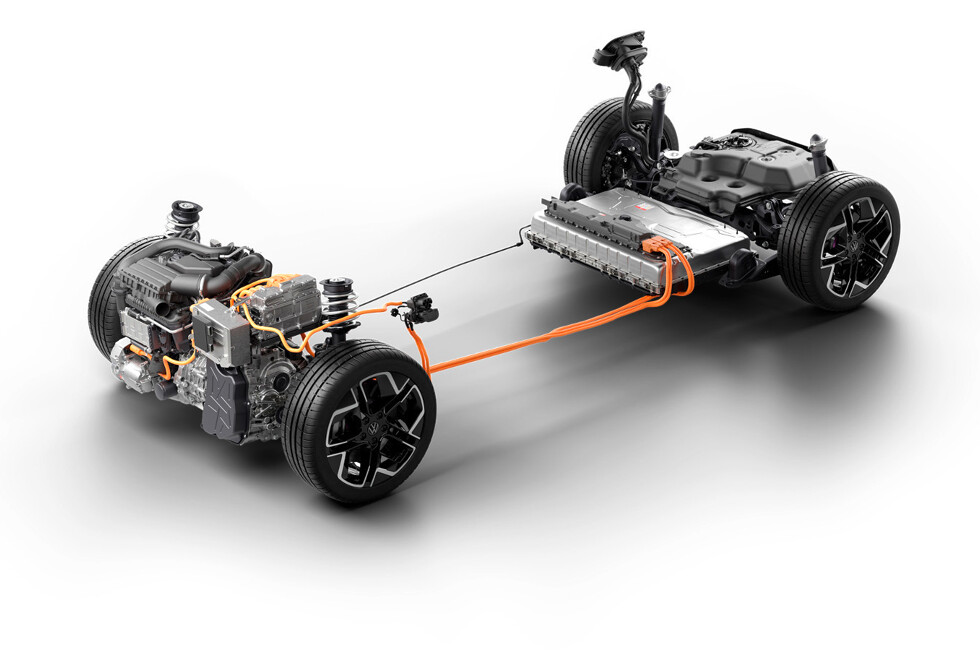
Beneath the revised exterior, the 2027 Atlas will transition to the Volkswagen Group’s MQB Evo architecture. Power is expected to come from the EA888 Evo5 turbocharged engine.
While the earlier Evo4 variant used in the Golf R produces 328 horsepower and 295 lb-ft of torque, the current Evo5 application in the Tiguan delivers 268 horsepower and 258 lb-ft. The outgoing Atlas generates 273 lb-ft of torque, so Volkswagen may recalibrate the new engine to preserve the SUV’s 5,000-pound towing capacity.
A hybrid variant has not yet been officially announced, but given increasing adoption of electrified powertrains among competitors, such an option appears plausible.
Interior changes are also anticipated. Although specific details remain under embargo, expectations include a redesigned cabin and potential revisions to the control interface. Observers hope for the return of physical controls in place of a fully touch-based layout.
A colleague recently drove a prototype Atlas but was restricted from photographing or describing the interior controls. Complete information will be disclosed at the New York Auto Show, scheduled for April 3–12, 2026.
Also Read: 5 Vehicles With Practical Cabin Storage vs 5 That Lack It