With US$1.5bn raised and Uber as a distribution partner, Wayve prepares to test its autonomous model against more established rival Waymo.
Wayve has secured US$1.5bn in a Series D funding round, lifting its valuation to US$8.6bn and bringing total capital raised to US$2.5bn. The round was led by Eclipse Ventures, Balderton Capital and SoftBank Vision Fund 2. It also marked the first direct investments in the company from major automotive manufacturers, including Mercedes-Benz, Stellantis and Nissan.
Included in the raise is a US$300m tranche from Uber, contingent upon Wayve achieving specific performance milestones. That funding is intended to support a fleet of robotaxis powered by Wayve’s software across ten cities in multiple countries. London is set to be the first deployment location, with operations expected to begin later in 2026.
Wayve confirmed that Mercedes-Benz and Stellantis are evaluating potential integration of its autonomous driving systems into their vehicles. Nissan has moved further, announcing a confirmed partnership to incorporate Wayve’s technology into its next-generation ProPilot driver assistance platform, scheduled for release in 2027.
“Wayve is moving from an R&D stage to a commercialisation phase,” said Co-Founder and Chief Executive Alex Kendall in comments. The first consumer vehicles equipped with Wayve’s AI driver, produced by Nissan, are expected to launch next year.
Initially, these vehicles will offer a hands-off, eyes-on-the-road SAE Level 2 system that still requires driver supervision. Kendall also stated that discussions are underway with “every western carmaker who is not Tesla” regarding software licensing.
Wayve’s core proposition to automakers centers on the generalisability of its AI-driven approach. Unlike systems dependent on high-definition maps or rule-based programming, Wayve’s model is trained on real-world driving data and designed to transfer across cities and vehicle platforms without location-specific calibration.
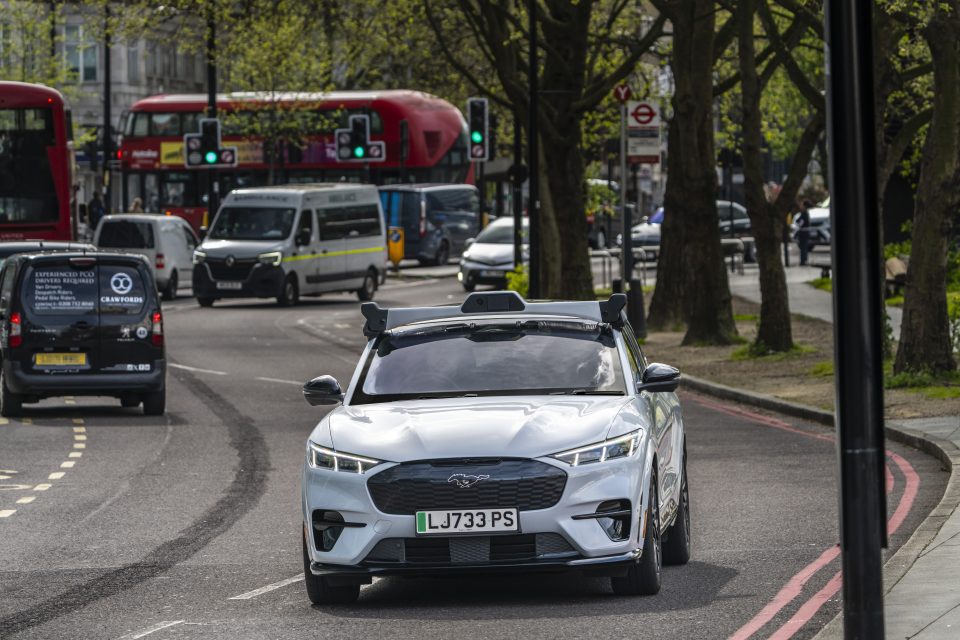
Over the past year, Wayve has conducted road tests in more than 500 cities across Europe, North America and Japan without tailoring its system to individual urban environments. Kendall contends that a licensing strategy, rather than owning and operating large-scale proprietary fleets, could generate stronger long-term margins than vertically integrated competitors such as Tesla or Waymo.
By supplying an AI software layer that manufacturers integrate into their own vehicles, Wayve potentially avoids the substantial capital expenditures associated with fleet ownership and robotaxi infrastructure.
To date, no major player, including Waymo, Tesla, Pony.ai or others, has demonstrated ride-hailing revenues that consistently exceed the combined costs of research, development and deployment.
The closest reported example is Baidu’s Apollo Go service, which announced in mid-2025 that it had achieved unit-level profitability in Wuhan, meaning revenue from individual vehicles exceeded their direct operational and maintenance expenses.
London is rapidly becoming a focal point in the global race toward robotaxi commercialisation. While the UK currently has no paid autonomous ride-hailing services in operation, the capital is expected to host fleets from Waymo and Apollo Go through partnerships with Uber and Lyft.
Wayve’s established testing presence and local familiarity provide a strategic advantage, although it competes with significantly larger rivals. Waymo, for example, has raised approximately US$16bn and reached a valuation of US$110bn earlier this month, underscoring the financial scale of the competition Wayve now faces.