
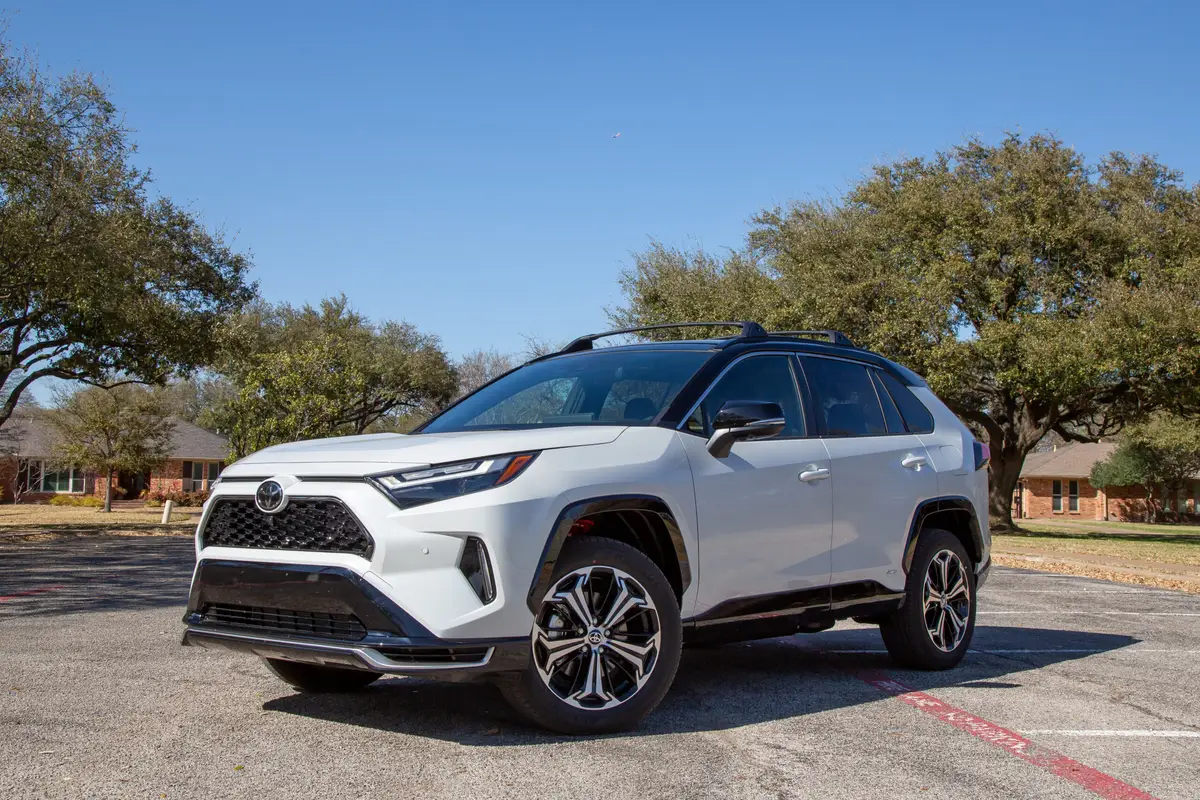
Toyota has released pricing details for the 324-horsepower Toyota RAV4 PHEV, and the numbers position it as one of the strongest value propositions in the compact plug-in hybrid segment.
The redesigned RAV4 carries a slightly higher base price than its predecessor, largely because a hybrid powertrain is now standard across the range.
In fully optioned form, upper trims can approach $70,000. Given that context, expectations were that the plug-in hybrid variant would also see a price increase. Instead, Toyota has taken the opposite approach.
Despite delivering more output than before, the 2026 RAV4 PHEV is priced over $3,000 lower than the outgoing model. That adjustment materially changes its competitive standing within the compact crossover category.
2026 Toyota RAV4 PHEV Pricing
Toyota confirmed the new pricing in a late-February update to its official pricing documentation. The lineup is structured as follows:
- SE: $41,500
- Woodland: $45,300
- XSE: $47,200
- GR Sport: $48,500
For comparison, the 2025 RAV4 PHEV, which remains configurable online, starts at $44,815. That represents a $3,315 reduction for the entry-level 2026 SE. The XSE trim now undercuts its predecessor by $1,485, while the Woodland and GR Sport trims are new additions for 2026.
The updated RAV4 PHEV produces 324 horsepower from its 2.5-liter four-cylinder engine paired with electric motors.
Output increases by 22 horsepower compared to the previous model. All-electric range also improves by 10 miles, now reaching 52 miles in SE and XSE trims.
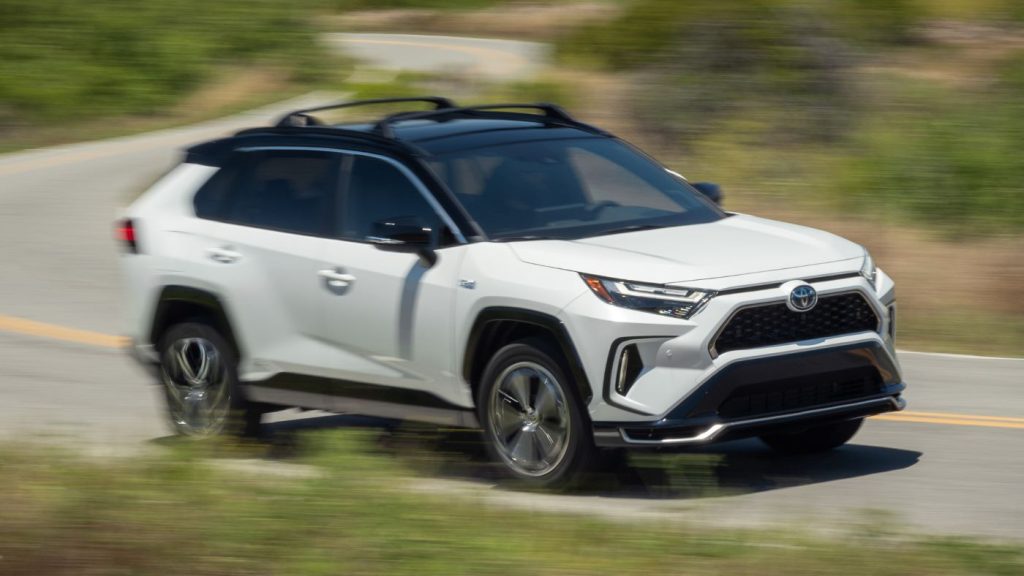
The GR Sport variant introduces more assertive styling elements and recalibrated steering, giving it a more engaging driving character.
In addition to mechanical refinements, the latest RAV4 generation benefits from updated exterior styling and a more polished interior layout.
Primary competitors include the Hyundai Tucson PHEV starting at $40,325, the Kia Sportage PHEV at $40,490, and the Nissan Rogue PHEV at $45,990.
While the Tucson and Sportage share an appealing design and common powertrain, their combined output of 268 horsepower falls well short of the RAV4’s 324 horsepower. Their electric-only range of approximately 32 to 34 miles also trails Toyota’s 52-mile capability.
The Rogue PHEV is effectively a rebadged Mitsubishi Outlander PHEV. Although competent, it produces 248 horsepower, carries a higher starting price, and offers an all-electric range of 38 miles, all metrics that leave it behind the RAV4 PHEV.
The 2026 RAV4 PHEV emerges as one of the most strategically positioned models in Toyota’s lineup. Plug-in hybrids have faced scrutiny over long-term reliability in some segments, but Toyota’s extensive experience with hybrid systems may mitigate those concerns.
It outperforms its direct rivals in power, delivers a genuinely usable electric-only range, and undercuts its predecessor in price. The SE trim in particular presents strong value relative to performance and efficiency.
Although conventional hybrids have recently dominated consumer demand, Toyota’s pricing strategy could renew interest in plug-in hybrids when the 2026 RAV4 PHEV reaches dealerships in spring 2026.
