
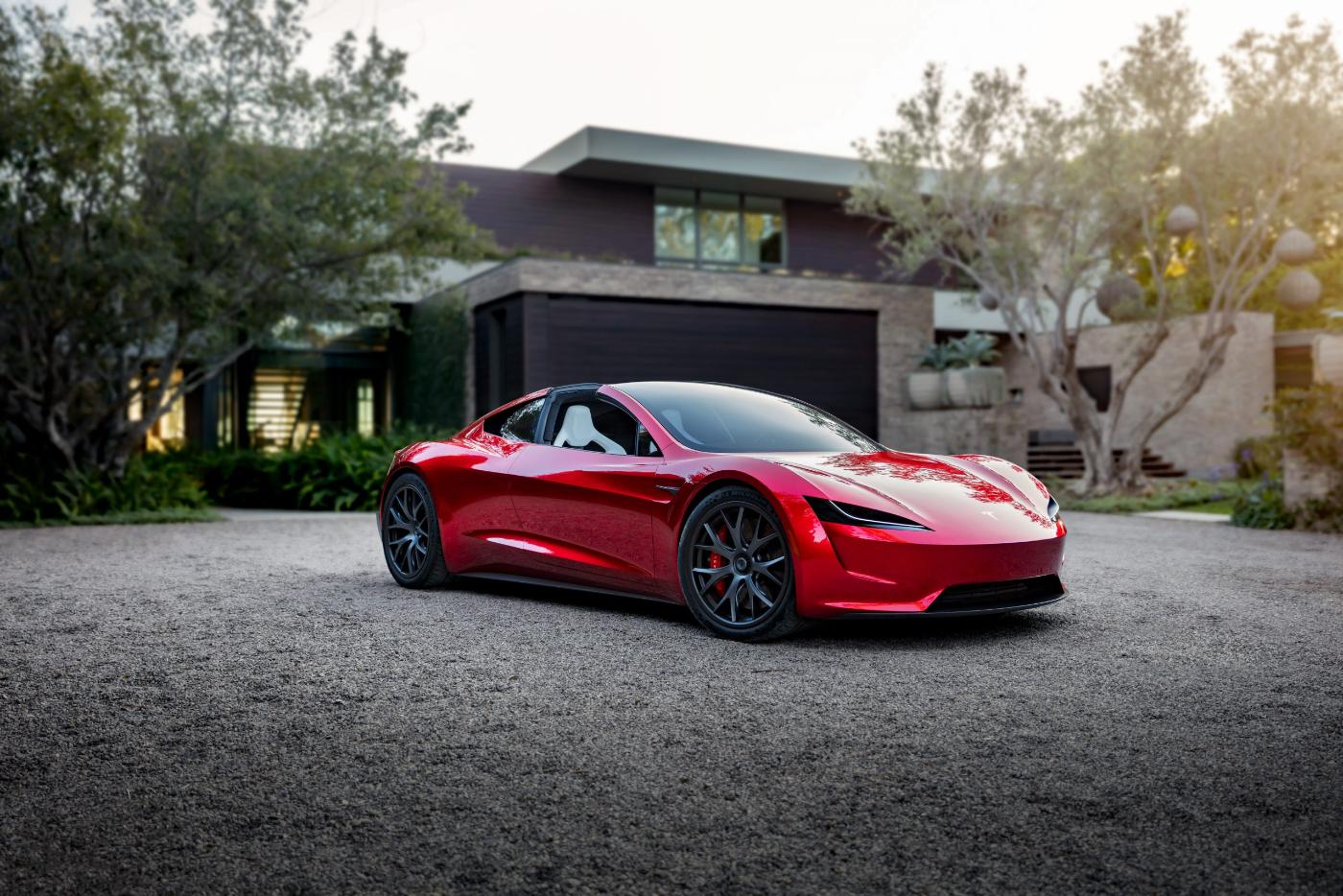
Tesla may be preparing a significant redesign for one of the most overlooked components inside a car: the seat. A newly published patent suggests the company is developing a radically different seating structure for the upcoming Tesla Roadster, potentially reshaping how automotive seats are engineered and manufactured.
The Roadster itself has become somewhat legendary in the automotive world due to its long development timeline. Originally revealed in 2017 with a projected price around $200,000, the all-electric hypercar has faced repeated delays. However, a recently discovered patent indicates Tesla may still be advancing new technologies intended for the vehicle.
Traditional automotive seats are surprisingly complex. Most consist of dozens of components, including metal brackets, recliner mechanisms, headrest supports, and multiple internal frames. These parts are typically bolted, welded, or riveted together during assembly.
The design centers around a monolithic composite frame, meaning the seat base, backrest, headrest, and side bolsters would all be formed as a single continuous structure. Instead of multiple metal parts connected together, the entire seat skeleton would be thermoformed into one integrated piece.
This design philosophy closely mirrors Tesla’s broader manufacturing strategy, which focuses on reducing part counts and simplifying assembly. The company has already pursued this approach through large-scale structural casting techniques used in several of its vehicles.
The innovation goes beyond structural simplicity. According to the patent, the seat frame could be divided into multiple stiffness zones, each tuned to provide different levels of support and comfort.
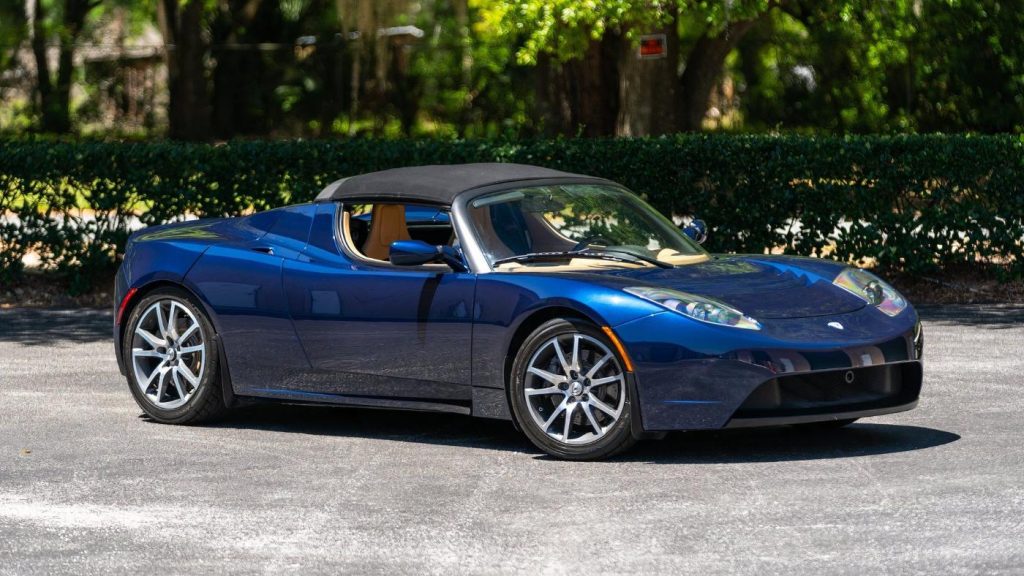
Instead of a traditional mechanical recliner mechanism, the seat would use a flexible composite hinge built directly into the structure. This hinge allows the seat to move without requiring bulky metal hardware.
The design also incorporates multiple actuators, giving the seat six degrees of freedom for movement and adjustment. An onboard electronic control unit would manage these adjustments through software, effectively making the seat programmable.
Additional integrated features described in the patent include:
- Molded ventilation channels within the seat frame
- Built-in paths designed for side airbag deployment
- Simplified trim attachment without separate fasteners
These features indicate Tesla is thinking about the seat as a fully integrated system rather than a collection of mechanical parts.
While the technology appears in a patent tied to the Roadster, the concept could have broader implications across Tesla’s vehicle lineup.
If successfully implemented, the monolithic seat structure could significantly reduce manufacturing complexity. Fewer components mean fewer assembly steps, lower production costs, and potentially lighter vehicles.
Weight reduction is particularly important in electric vehicles, where efficiency and range are closely tied to mass.
Whether the design ultimately reaches production remains to be seen. However, the patent suggests Tesla continues to experiment with unconventional engineering solutions as it prepares for the eventual launch of the long-awaited Roadster.
If the technology proves viable, the humble car seat may become the next component Tesla reimagines from the ground up.
