
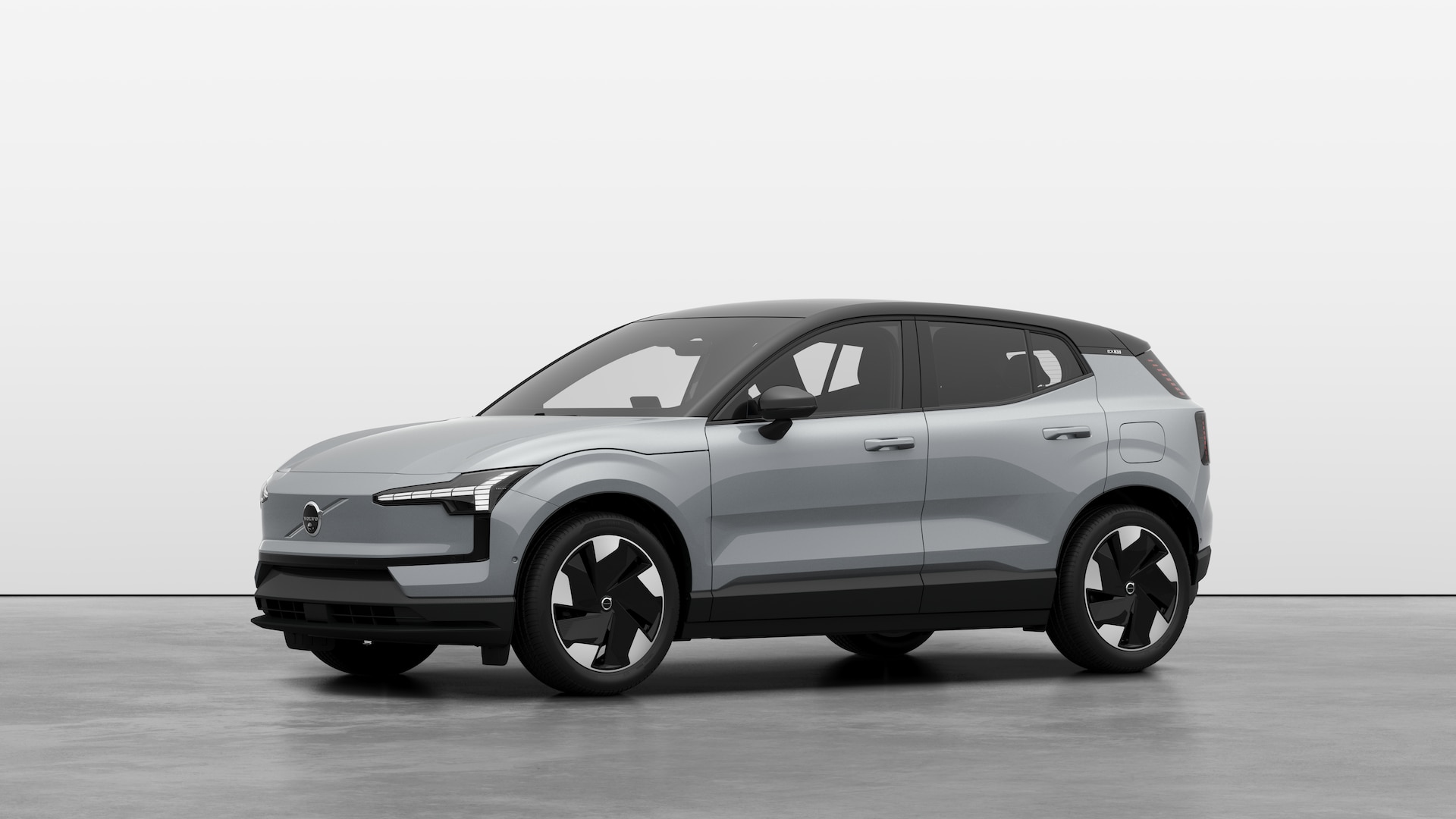
Volvo Cars has confirmed that it will discontinue US sales of the EX30 and EX30 Cross Country after the 2026 model year. Dealer orders for the vehicles will close on March 20, while production of units destined for the US market will gradually wind down through the summer months. Despite this withdrawal, the model will continue to be available in other North American markets as well as across global regions.
The Geely-owned automaker stated that the decision was driven by a mix of financial considerations and market-specific conditions. At the same time, Volvo reiterated that its broader objective of transitioning to a fully electric lineup by 2030 remains unchanged. However, the EX30’s presence in the US market has been complicated from the outset.
The vehicle was originally intended to be manufactured in China with a starting price below US$35,000. Tariffs introduced during the Biden administration, however, forced Volvo to relocate production to Belgium in an effort to comply with shifting trade policies.
Shifting production to Europe significantly increased manufacturing costs, pushing the vehicle’s starting price above US$40,000. At that price point, consumer demand proved limited.
Throughout the entirety of 2025, Volvo sold only 5,409 units of the EX30 in the United States. Competing models offered stronger value propositions: Hyundai’s Kona Electric subcompact SUV starts at approximately US$34,500, the Chevrolet Bolt EUV at around US$29,000, and the Nissan Leaf S+ at roughly US$30,000.
Wider trade and market dynamics in the United States have also done little to improve the situation for imported electric vehicles. Tariffs imposed during the Trump administration on European imports currently stand at 15%, following a volatile period when they briefly climbed to 27.5% before being reduced and applied retroactively from August of the previous year.
Additional pressure came in September 2025 with the removal of the federal electric vehicle tax credit, which had previously helped offset the higher sticker prices of imported EVs and made them more accessible to mainstream buyers.
Production of the EX30 had already been moved to Volvo’s Ghent facility in Belgium after earlier policy changes during the Biden administration.
With the EX30 exiting the US lineup, Volvo’s most affordable electric offering in the country becomes the EX40. However, this model carries a significantly higher starting price of approximately US$56,545, roughly US$17,000 more than the departing EX30.
As a result, Volvo’s US strategy appears increasingly focused on higher-margin vehicles that can better absorb the added costs associated with tariffs and overseas manufacturing while remaining competitive in the market.
Across the broader US automotive market, average transaction prices for passenger vehicles have already climbed beyond US$50,000. This trend has pushed many automakers to reconsider how they approach affordability. Ford, for example, has announced plans to introduce five vehicles priced under US$40,000 by 2030.
Among them is a US$30,000 electric pickup expected to launch in 2027. The vehicle will utilize a new universal EV platform designed to reduce component complexity and streamline manufacturing, with the goal of reversing rising vehicle prices and strengthening Ford’s position against competitors from China.
Looking ahead, the upcoming EX60, scheduled to arrive in the US later this spring, will play a key role in Volvo’s electrification strategy within the American market.
In other regions, the model has already generated strong interest. European pre-orders exceeded Volvo’s internal projections within weeks of its reveal. Sweden alone accounted for more than 3,000 confirmed orders, prompting the company to reassess production capacity at its Torslanda manufacturing facility.
Also Read: 8 Classic European Wagons That Offer incredible Cargo Space
