
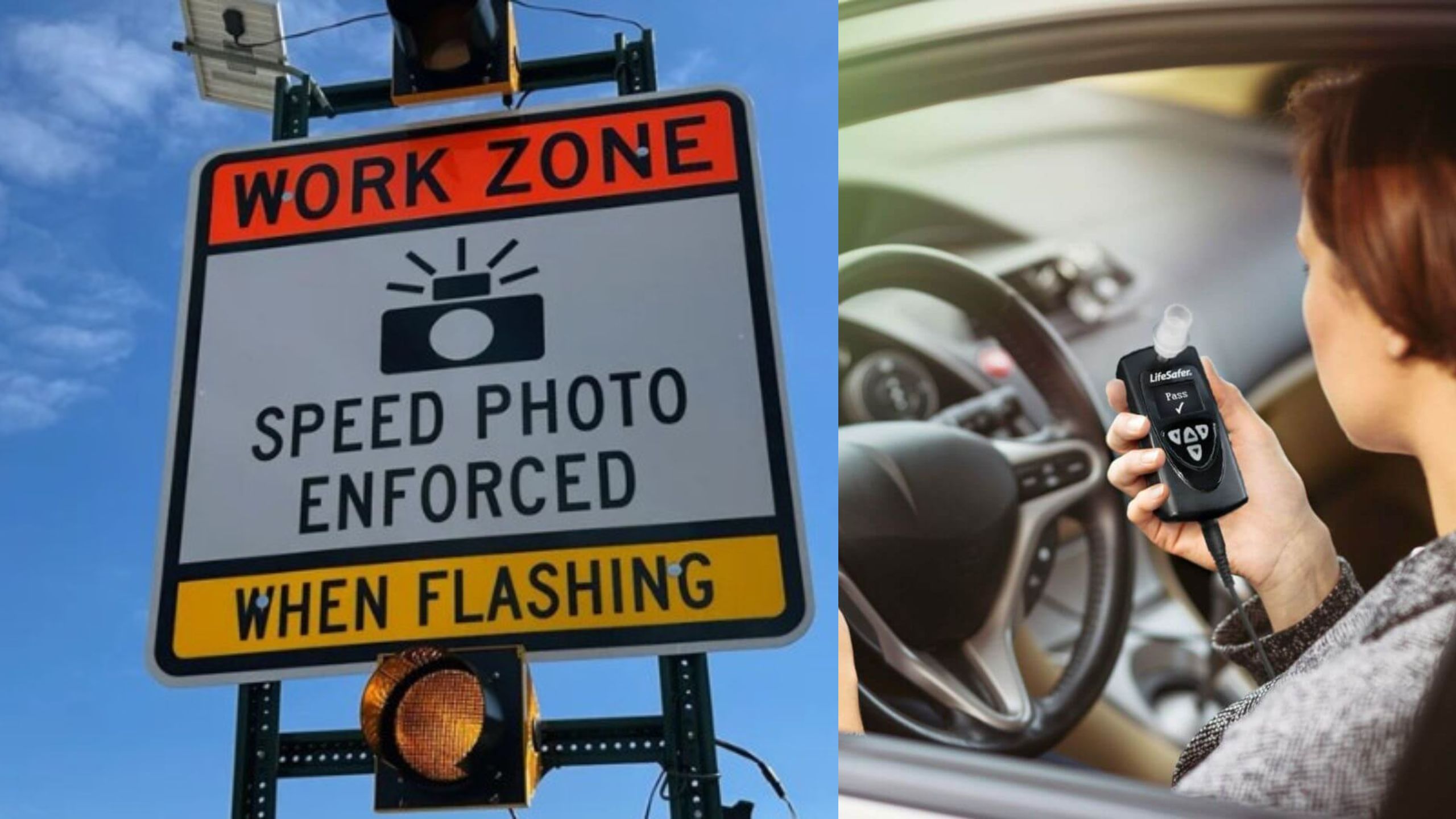
The roads are changing. If you’ve been driving for years and feel like you already know everything there is to know about highway safety, 2026 has a surprise waiting for you.
Across the United States and particularly in states like California, which often leads the nation in traffic legislation a wave of new safety laws has officially gone into effect that will directly reshape how you behave behind the wheel on the highway.
These aren’t minor bureaucratic tweaks buried in legal fine print. These are real, enforceable laws with real consequences, and ignoring them could mean fines, license penalties, or worse.
The motivations behind these changes are clear. Highways remain among the most dangerous environments in everyday life. Distracted driving, drunk driving, excessive speed, and the rapidly growing presence of autonomous and electric vehicles have created new challenges that older laws simply weren’t designed to handle.
Lawmakers and transportation agencies have responded with a fresh set of rules that lean heavily on technology, stricter enforcement, and expanded responsibilities for both drivers and vehicle manufacturers.
Traffic laws across the United States are evolving dramatically in 2026. States are adding new ways to catch people breaking laws, increasing fines, and putting in place rules designed to make driving safer.
This isn’t one big national change, but rather a nationwide trend toward using cameras and technology to enforce laws, cracking down on distracted driving, and ensuring that dangerous drivers face bigger consequences than ever before.
Whether you’re a daily commuter, a long-haul traveler, or someone who simply gets on the highway a few times a week, understanding these five new laws is not optional it’s essential. Read on, because the way you drive is about to change.
Law #1: The Expanded “Slow Down and Move Over” Rule, It Now Covers Every Stranded Vehicle
There’s a good chance you’ve passed a broken-down car on the highway and barely given it a second thought. You may have slowed down a little, maybe moved slightly to the left or maybe you didn’t change your behavior at all.
In the past, the “Move Over” law was primarily designed to protect law enforcement officers and emergency responders who were parked on the shoulder with their lights flashing.
That standard has now been significantly raised, and in 2026, the law applies to every single stranded vehicle on the highway not just official ones. The expanded “Slow Down and Move Over” rule now requires drivers approaching any stationary vehicle displaying flashing hazard lights, warning cones, or road flares to move into a lane that is not adjacent to the stopped vehicle.
If changing lanes is not possible due to traffic or road conditions, drivers must slow down to a speed that is appropriate and safe given the circumstances. This applies whether the stationary vehicle is a police cruiser, an ambulance, a highway maintenance truck or an ordinary civilian car with a flat tire.
This is a fundamental change in how millions of drivers are expected to interact with broken-down vehicles on the highway. Previously, if you saw a regular car parked on the shoulder with its hazard lights blinking, you had no legal obligation to move over or reduce speed.
Now you do. The law effectively treats every stranded motorist the same way it once treated police cruisers as a potential life-or-death situation requiring your active attention and deliberate response.
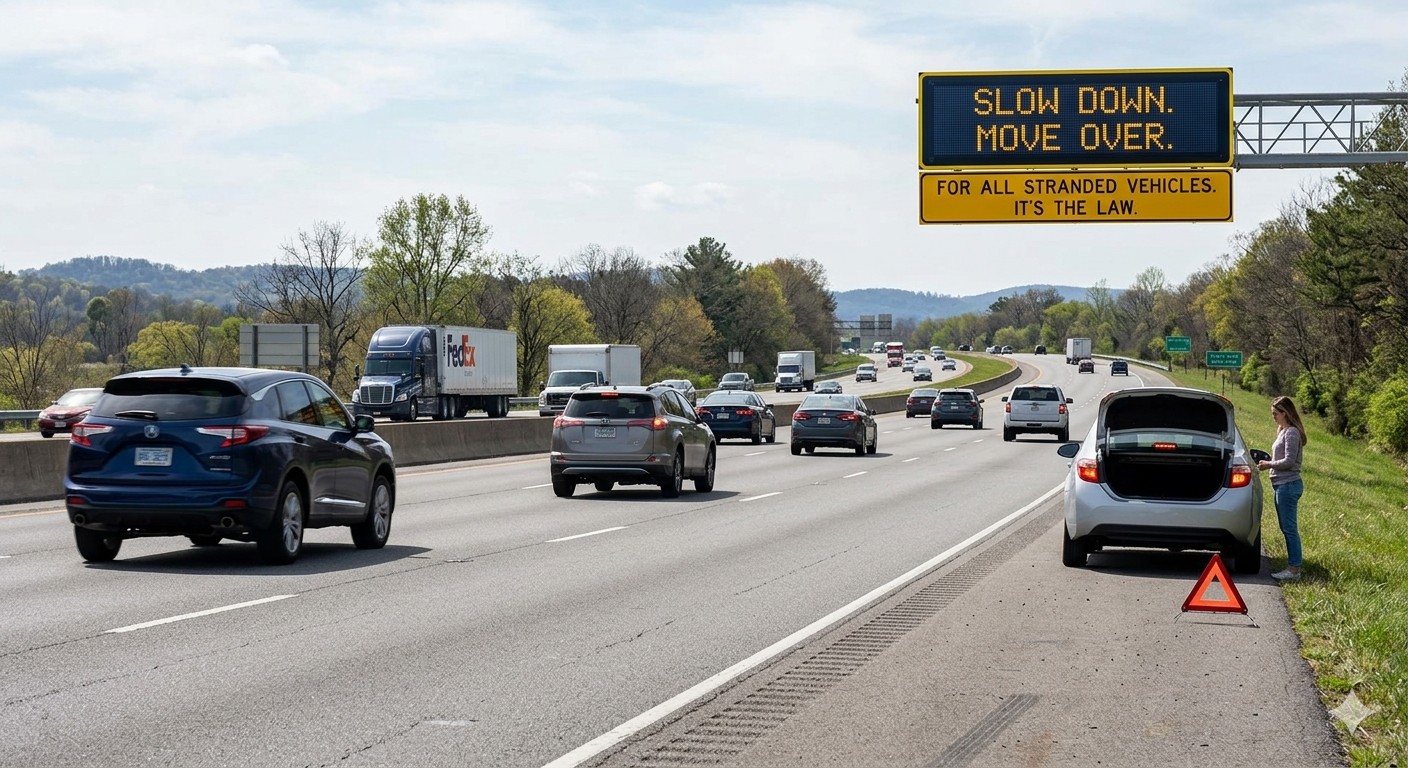
Why does this matter so much on the highway specifically? Because highway speeds make roadside incidents exponentially more dangerous. A person stepping out of their disabled car on a surface street faces a very different level of risk than someone doing the same thing on an interstate where traffic is moving at 65 or 70 miles per hour.
Highway shoulders are narrow, visibility can be limited especially at night or during bad weather and the margin for error is almost zero. Drivers who are distracted, fatigued, or simply not paying attention have struck and killed people standing near their own vehicles countless times.
The practical implications for you as a driver are straightforward but demand a genuine change in habits. On a multi-lane highway, you are now legally required to move one lane away from any stationary vehicle displaying hazard lights.
If you are already in the far-left lane and there is no room to move further, you must reduce your speed to a level deemed safe given the road and weather conditions. Failing to do so can result in a traffic citation and significant fines and those penalties may increase if your failure to comply results in injury or property damage to others.
Think of it this way: the law is finally acknowledging that highway breakdowns are emergencies for ordinary people too, not just when police and firefighters are involved. When someone’s engine dies at highway speed and they coast to the shoulder, they are in genuine danger.
They may need to open their car door into live traffic, stand outside their vehicle to signal for help, or assist a passenger in distress. These are moments when your behavior as a passing driver can be the difference between a frightening experience and a fatal one.
Transportation safety experts have long pushed for this expansion, arguing that the original Move Over law created a confusing and arbitrary distinction between “official” vehicles and civilian ones. From a physics and safety standpoint, a person standing next to a broken-down sedan is just as vulnerable as a traffic officer standing next to a cruiser.
The new law eliminates that distinction entirely and holds all drivers to the same standard of care. Adjusting your highway behavior to respect this rule is one of the simplest and most meaningful things you can do to make American roads safer for everyone.
Also Read: 5 Iconic 1980s Sports Cars With Pop Up Headlights vs 5 With Fixed Lights
Law #2: Work Zone Speed Cameras Are Now Watching You, And They Will Send You a Ticket
Road construction zones have always been labeled as high-risk areas. The orange signs, flashing arrows, and reduced speed limit postings are everywhere and yet drivers routinely blow through work zones at speeds far above what’s posted, gambling that nobody will catch them. In 2026, that gamble has become significantly riskier.
The era of passive work zone signage is giving way to active, automated enforcement, and the camera does not look away, take breaks, or get tired at the end of a shift.
New legislation authorizes state Departments of Transportation to establish work zone speed safety system pilot programs that utilize fixed or mobile radar and laser systems to detect speeding violations.
When a violation is detected, the system captures a clear photograph of the vehicle’s license plate, and a citation is issued directly to the registered owner of that vehicle. You don’t get pulled over. You don’t see blue lights in your mirror. You simply receive a ticket in the mail days later, and there is no arguing that no officer was present to clock your speed.
This is a landmark shift in how speed enforcement works on highways. For decades, catching speeders in work zones required a police officer to be physically present parked in or near the zone with a radar gun, ready to pull violators over.
This was logistically challenging and expensive, meaning work zones were frequently unpatrolled and speeding went completely unchecked. Automated cameras change the entire equation. They operate continuously, without fatigue, without needing a squad car nearby, and without missing a single vehicle that passes through too fast.
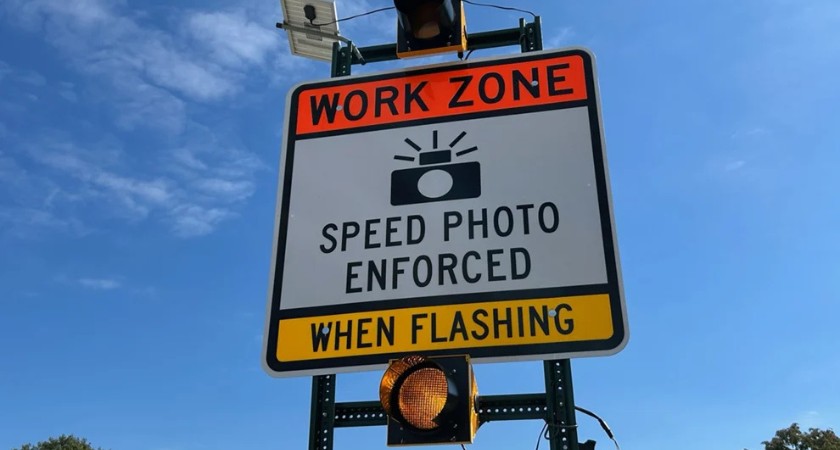
The technology being deployed includes both radar and lidar systems. Lidar, which uses laser pulses rather than traditional radio waves, is capable of extremely precise speed readings and performs reliably even in poor weather conditions making it a powerful enforcement tool in zones where adverse weather may already be contributing to dangerous road conditions. Whether it’s raining, foggy, or dark, these systems continue to operate and record violations.
Highway work zones are among the most dangerous environments on any road. Construction workers operate heavy equipment just feet from live traffic lanes. Lanes are often shifted, narrowed, or merged abruptly.
Pavement conditions may be uneven, barriers sit extremely close to travel lanes, and sight distances can be limited by heavy machinery and equipment.
Workers who are focused on their jobs operating jackhammers, guiding paving machines, or laying asphalt are often not watching for oncoming vehicles. A speeding driver in a work zone does not just put themselves at risk; they put an entire crew of hardworking people in immediate, life-threatening danger.
Research from transportation safety organizations has consistently shown that automated camera enforcement significantly reduces speeding in monitored zones. When drivers know a camera is watching not just might be watching their compliance with posted speed limits improves dramatically.
The work zone camera program is expected to produce similar results, creating genuinely safer conditions for construction crews who have long been among the most vulnerable workers on American highways.
For drivers, the message is clear and blunt: slow down in construction zones, because you will no longer be able to rely on the absence of a visible police officer as your safety net.
The citation will find you regardless. Drivers who have grown accustomed to treating posted work zone speed limits as suggestions rather than legal requirements need to change their habits immediately. Construction workers deserve to go home safely at the end of their shifts, and this law exists to help make sure they do.
Law #3: Mandatory Ignition Interlock Devices Extended for All DUI Offenders, Including First-Timers
Drunk driving remains one of the most devastating and thoroughly preventable causes of highway deaths in the United States. Despite decades of public awareness campaigns, tougher penalties, and significant cultural shifts around drinking and driving, impaired drivers continue to cause thousands of fatalities on American highways every single year.
In 2026, the approach to DUI enforcement takes a decisive technological turn one that does not simply punish drunk drivers after the fact, but physically prevents them from driving while impaired in the first place.
The Statewide Ignition Interlock Device program has been significantly expanded, and its most important update is this: the mandatory IID requirement now applies to all DUI offenders, including first-time offenders.
This is a major departure from previous policy, where IID requirements in many jurisdictions were typically reserved for repeat offenders or those involved in serious accidents. The expansion to first-timers sends an unambiguous message there is no grace period, no learning curve, and no “one free pass” for driving drunk on public highways.
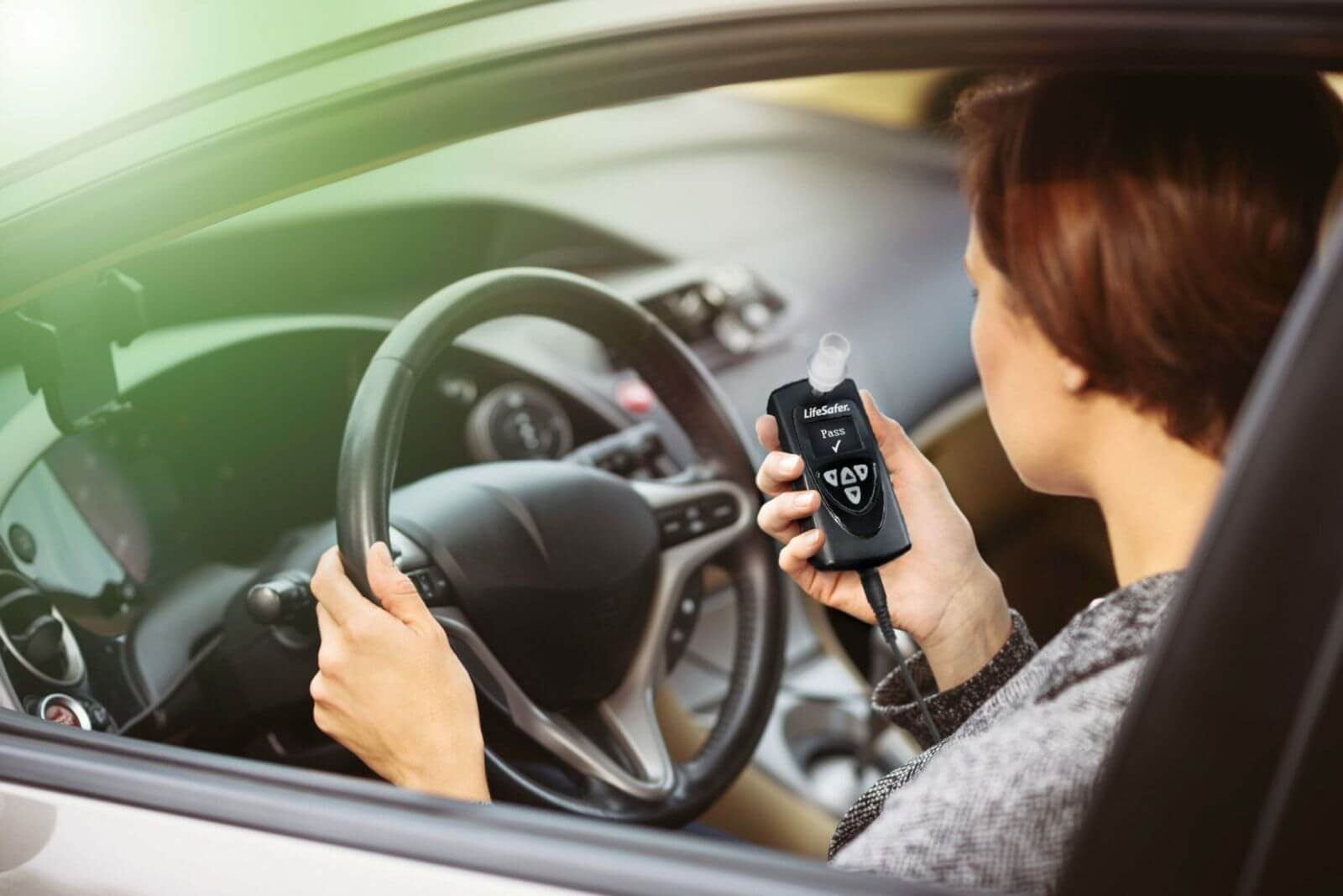
An Ignition Interlock Device is a small breathalyzer unit installed directly into a vehicle’s ignition system. Before the car can start, the driver must blow into the device and register a blood-alcohol concentration below the legal threshold.
If the reading is too high even marginally the car simply does not start. There is no workaround, no override button, and no way to bypass the system without triggering an alert.
Beyond the startup test, the device also requires periodic rolling retests while the vehicle is in motion, meaning drivers must blow into it at intervals throughout their journey. This makes it impossible to pass the initial test while sober and then consume alcohol before driving or while stopped along the way.
On highways specifically, the stakes of drunk driving are catastrophically high. Highway speeds leave almost no room for the kind of delayed reaction times, impaired judgment, narrowed field of vision, and poor coordination that alcohol causes even at relatively moderate levels of intoxication. A drunk driver on a quiet residential street moving at 25 mph may cause a serious accident.
That same driver on a highway at 70 mph is capable of triggering a catastrophic multi-vehicle collision with mass casualties. The highway is simply not an environment that forgives impaired driving even slightly.
Alongside the IID expansion, 2026 also brings changes to probation terms for DUI-related offenses. Probation for vehicular manslaughter while intoxicated has been significantly extended, aligning these cases with the more rigorous oversight standards of standard DUI probation.
The goal is to allow for greater rehabilitation, longer-term behavioral monitoring, and increased accountability for drivers who cause fatal accidents while under the influence of alcohol or drugs.
For the broader driving public, this law offers meaningful protection every time they travel on a highway. Knowing that any driver with a DUI conviction is physically unable to start their car while drunk provides a layer of safety that no awareness campaign or warning label ever could.
For those who have received a conviction, compliance is absolute and non-negotiable. The IID must be installed by a certified, approved provider, and any attempt to tamper with, bypass, or circumvent the device carries serious additional criminal penalties.
This is one of the most direct and technologically grounded highway safety measures of 2026, and its potential to reduce alcohol-related highway fatalities over the coming years is enormous.
Law #4: Autonomous Vehicle Oversight Gets Serious, Manufacturers Are Now Legally Accountable on the Highway
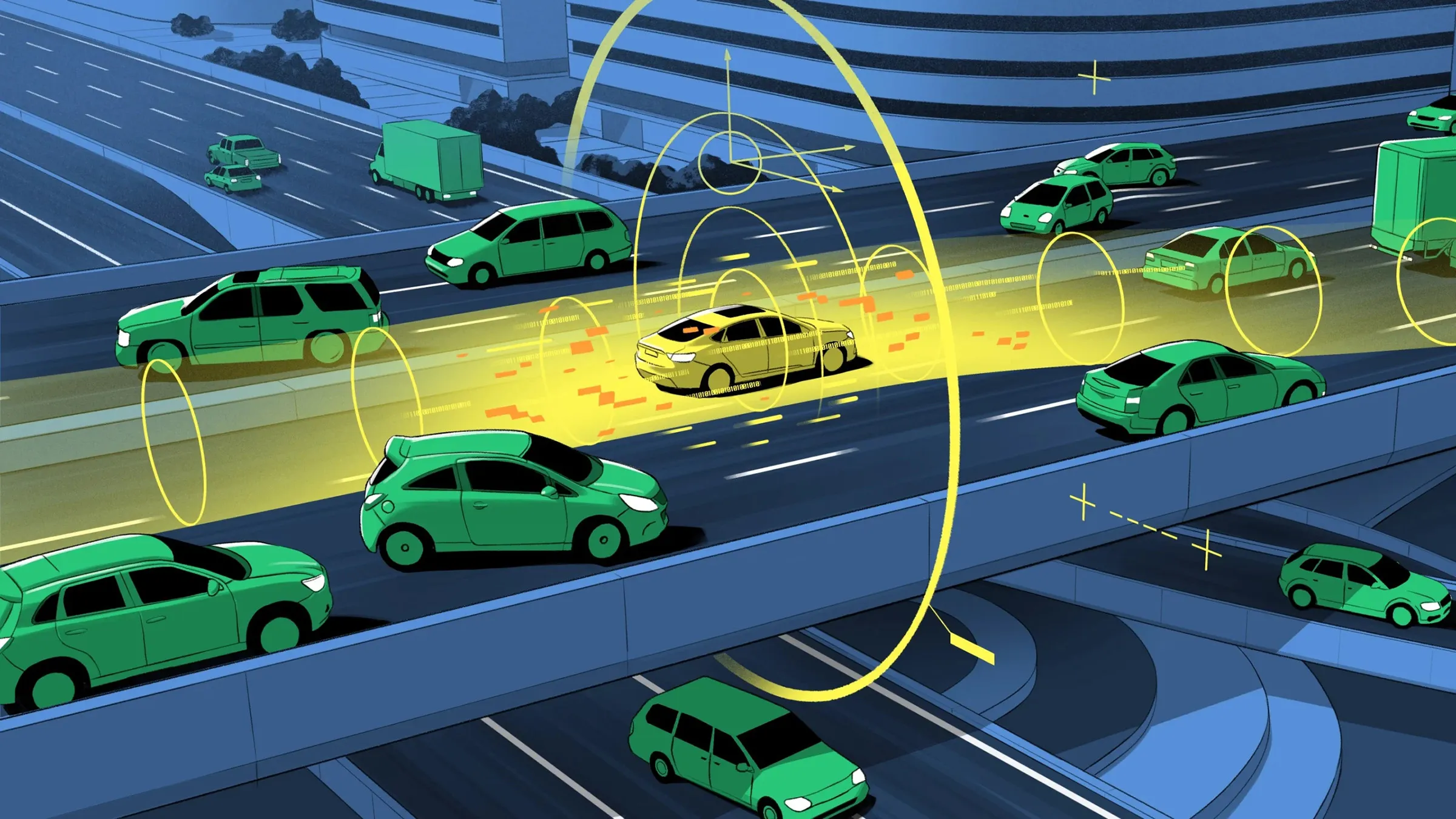
Self-driving vehicles are no longer science fiction. They are on public roads right now, sharing lanes with human-driven cars, going through highway on-ramps, merging into traffic, and making split-second decisions using sensors, cameras, and complex algorithms.
As the technology has become more common, so have the urgent and unresolved questions that follow it: Who is legally responsible when an autonomous vehicle breaks a traffic law? What happens when a self-driving car causes an accident on a highway at 70 miles per hour? Who gets the ticket, and who faces the lawsuit? In 2026, lawmakers have provided firm and clear answers and the responsibility has been placed squarely on the manufacturers who build and operate this technology.
Law enforcement officers can now issue formal notices of noncompliance directly to autonomous vehicle manufacturers for traffic violations committed by their technology on public roads.
This is a transformative legal shift. Traffic violations have historically been tied to individual human drivers the person physically operating the vehicle was the legally responsible party.
When a vehicle has no human actively controlling it, that centuries-old legal framework breaks down entirely. The 2026 laws resolve this ambiguity with clarity: if a self-driving car runs a red light, fails to observe a highway speed limit, makes an illegal lane change, or violates any other traffic rule, the company that built and deployed that vehicle is the legally accountable party.
This accountability structure creates a powerful financial and legal incentive for manufacturers to ensure their autonomous systems are rigorously tested, fully compliant with all traffic laws, and genuinely safe before they are deployed on public highways.
The threat of regulatory violations and manufacturer liability gives companies a compelling reason to not cut corners during the development and testing process something that voluntary industry standards and public pressure alone have struggled to guarantee.
Beyond legal accountability for violations, the new laws also address highway safety in more immediate and practical terms. Beginning in mid-2026, manufacturers are required to provide a two-way communication device in all autonomous vehicles that operate without a human operator present. This requirement is critically important for highway safety specifically.
Imagine a self-driving car involved in a highway collision, broken down in an active travel lane, or stranded after a software malfunction. Emergency responders arriving on the scene need to be able to communicate with the vehicle’s systems to understand what happened, to safely move the vehicle, to disable its autonomous functions, or to determine whether anyone inside requires medical attention. Without a built-in communication device, first responders are essentially dealing with a sealed black box at 70 miles per hour.
Additionally, autonomous vehicles can now be equipped with ADS marker lamps, specialized lights that emit a distinct, recognizable color to clearly signal to other drivers, pedestrians, cyclists, and law enforcement officers that the vehicle’s automated driving system is actively engaged.
This visual indicator is a simple but powerful safety tool on highways, where vehicles travel in proximity at high speeds with limited time to assess the behavior of surrounding cars. Knowing that the vehicle beside you is being operated by software rather than a human driver allows you to adjust your awareness, your following distance, and your behavior accordingly.
This law also protects ordinary drivers. If you are sitting in an autonomous vehicle as a passenger or if a self-driving car causes an accident involving your vehicle you will no longer face the uncertainty of trying to determine which human driver bears legal responsibility for actions taken by a machine. Manufacturer liability is now clearly established, and that clarity benefits everyone who shares the highway with autonomous technology.
Law #5: Dynamic Speed Limit Reductions on Highways, And Camera Enforcement to Back It Up
Speed limits have traditionally been static, fixed things. A sign on a highway says 65 mph, and that’s what it says regardless of whether it’s a clear, dry Tuesday afternoon or a dense, foggy Friday night with bumper-to-bumper rush-hour traffic.
Transportation officials have long known that rigid, unchanging speed limits fail to account for the enormous variability in real-world highway conditions weather, traffic volume, accident proximity, construction activity, visibility, and pavement quality all fluctuate constantly, and the appropriate safe speed fluctuates with them. In 2026, that begins to change in a meaningful and fully enforceable way.
New legislation now allows state transportation officials to temporarily reduce speed limits by up to five miles per hour on certain designated highway segments.
When a reduction is implemented, warning-only citations are issued during the first 30 days following the change, giving drivers time to notice and adapt to updated signage before financial penalties kick in.
After that initial grace period, full enforcement begins and camera-based systems ensure that compliance is monitored continuously, not just when a patrol car happens to be nearby.
This may sound like a modest change on the surface, but it represents a foundational shift in how highway speed management works and when paired with automated enforcement technology, it becomes a genuinely powerful safety tool. The ability to dynamically reduce speed limits allows transportation authorities to respond to real-world conditions as they develop in real time.
When traffic is unusually dense on a particular stretch of highway, when heavy rain or fog dramatically reduces visibility, when a crash scene ahead requires traffic to slow significantly, or when maintenance operations are underway, authorities can drop the speed limit in that specific zone and enforce the change immediately.
This kind of responsive, data-driven traffic management is not a new concept globally. Modern transportation systems across Europe and parts of Asia have employed dynamic speed limit technology for years, using sensors and traffic management centers to adjust posted limits based on live conditions.
American highways are now beginning to adopt the same approach, and the early evidence from international implementations is encouraging variable speed limits, when properly communicated and enforced, reduce the frequency and severity of accidents, smooth out traffic flow, and decrease the kinds of sudden braking events that often trigger chain-reaction collisions.
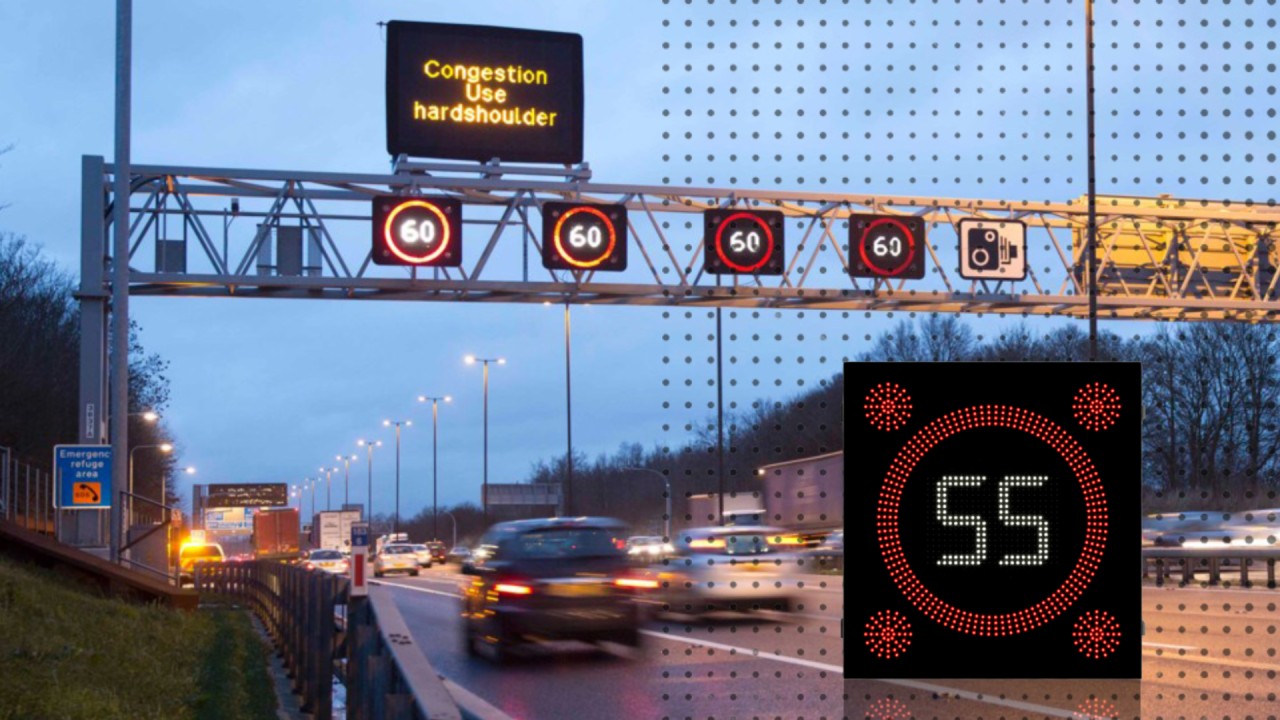
Drivers will notice the change on roads that implement this system through updated electronic signage the kind of illuminated overhead signs increasingly common on major urban highways.
These signs will display the current enforced speed limit, which may differ from the permanent posted limit on traditional fixed signs nearby. Paying attention to these overhead displays will become essential, not optional.
highway corridor you have driven at 65 mph for years may now display a posted limit of 60 mph under specific conditions, and the cameras overhead will not distinguish between a regular commuter and a first-time visitor.
The 30-day warning period built into the rollout of each new speed limit adjustment reflects thoughtful legislative design. It acknowledges that changing habits takes time and that penalizing drivers before they’ve had adequate opportunity to learn about updated limits would be neither fair nor effective. But the warning period also has a firm end point, after which full enforcement with real financial consequences applies without exception.
Beyond individual highways, this law is part of a broader national trend toward smarter road management. States across the American West and Pacific Northwest have simultaneously increased penalties for high-speed corridor violations and introduced stricter lane safety requirements for drivers passing stationary vehicles.
The direction of travel in highway safety policy is unmistakable: the age of passive signage and sporadic enforcement is ending. The era of technology-assisted, continuously monitored, dynamically responsive highway management has arrived, and it will only expand in the years to come.
For drivers, the adaptation required is straightforward but demands genuine attentiveness. Watch the signs all of them, including the electronic overhead displays you may have previously ignored.
Understand that speed limits on familiar routes may have changed, and that cameras are watching even when patrol cars are not. The highway of 2026 is smarter, more responsive, and more unforgiving of complacency than the highway of even five years ago.
Also Read: Top 8 European Luxury Coupes That Dominated the 1980s Executive Market
