
Tesla and SpaceX have announced plans to build a massive semiconductor manufacturing facility in Austin, Texas, called “Terafab.” Estimated to cost between $20 billion and $25 billion, the project would rank among the largest chip fabrication sites ever attempted and reflects a major push by Elon Musk’s companies to bring advanced chip production in-house.
The facility will be developed as a joint venture between Tesla, SpaceX, and xAI, and is planned for the North Campus of Giga Texas. According to Musk, Terafab is designed to handle the entire semiconductor production process under one roof, including chip design, fabrication, memory production, and advanced packaging. The plant is expected to target 2-nanometer process technology, placing it at the cutting edge of modern chip manufacturing.
Tesla outlined ambitious production goals for the project. Initial capacity is projected at 100,000 wafer starts per month, with long-term plans to scale to one million. At full output, the facility could produce between 100 billion and 200 billion chips annually, primarily focused on artificial intelligence applications. These chips are intended to support Tesla’s Full Self-Driving systems, Optimus humanoid robots, and broader AI initiatives.
A notable aspect of the announcement is the focus on space-based computing. Musk stated that up to 80% of Terafab’s output could be allocated to orbital AI systems, with satellites handling large-scale processing tasks. He argued that higher solar energy availability in space and more efficient heat dissipation could make this approach more cost-effective than traditional Earth-based data centers.
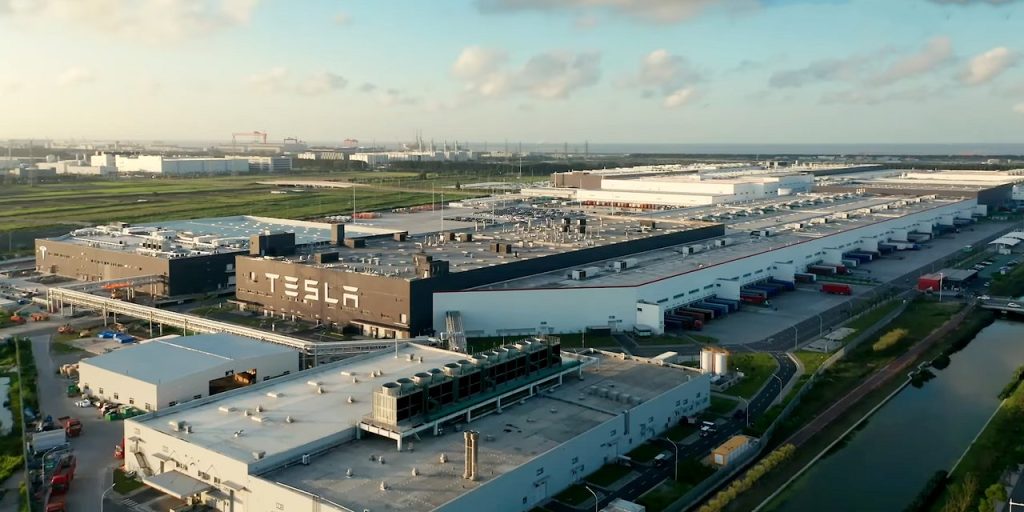
The move also signals Tesla’s intent to reduce reliance on existing semiconductor partners such as Samsung and TSMC. Musk acknowledged current suppliers but noted that their expansion pace does not align with Tesla’s future demand, prompting the company to pursue its own manufacturing capabilities.
Despite the scale of the proposal, the project has raised questions within the industry. Advanced semiconductor manufacturing, particularly at the 2-nanometer level, is widely regarded as one of the most complex industrial processes, typically requiring decades of experience and significant investment. Tesla and SpaceX do not currently operate chip fabrication facilities at this level.
Financial details also remain uncertain. Tesla’s chief financial officer confirmed that the projected cost of Terafab is not yet included in the company’s capital expenditure plans for 2026, which already exceed $20 billion.
Terafab represents a bold expansion into semiconductor manufacturing and AI infrastructure. However, its success will depend on execution in an industry known for its technical complexity and high barriers to entry.
