
Driving a truck in the city can be either a practical convenience or a logistical nightmare, depending on what you’re behind the wheel of. As cities become more crowded and urban infrastructure ages, parking has turned into one of the biggest headaches for drivers, especially for those with larger vehicles.
For truck owners who live or work in the city, navigating narrow streets, avoiding tight turns, squeezing into parallel spots, and fitting into underground parking garages are daily battles.
While many associate trucks with large, open roads and job sites, there is a growing group of drivers who use them for everyday tasks within dense urban environments. This shift has forced manufacturers to rethink what urban-friendly trucks should look and feel like.
The reality is that not all trucks are built for tight spots or tricky maneuvers. Some are enormous, with oversized beds and wide bodies that barely fit within standard parking lines.
These vehicles might be amazing at hauling heavy loads or towing massive trailers, but when it comes to sliding into a parallel spot downtown or making a quick U-turn to snag a curbside parking space, they fall short.
Others, however, are surprisingly nimble despite their utility-focused appearance. Over the last decade, truck makers have developed more compact designs and included advanced features like multi-view cameras, tighter steering systems, and better visibility to accommodate urban needs.
City-friendly trucks are becoming more popular, not just with tradespeople or delivery workers, but also with regular drivers who like the practicality and versatility that a truck offers.
However, it’s not just about tech, physical size, wheelbase, and turning radius still play a huge role in how a truck performs when it’s time to park. While backup cameras and parking sensors help, the actual footprint of the truck determines whether it’s a tight squeeze or a breeze.
This article looks at two types of trucks: those that make parking in the city much easier and those that are a serious pain to deal with. If you’re considering a truck for your urban lifestyle or just want to avoid daily frustration in crowded lots, knowing which models are better suited to the task can save you a lot of time, stress, and even a few scratched bumpers.
Also Read: 5 GMCs That Rarely Need Suspension Work vs 5 That Constantly Fail
5 Trucks That Are Easy to Park in the City
1. Ford Maverick
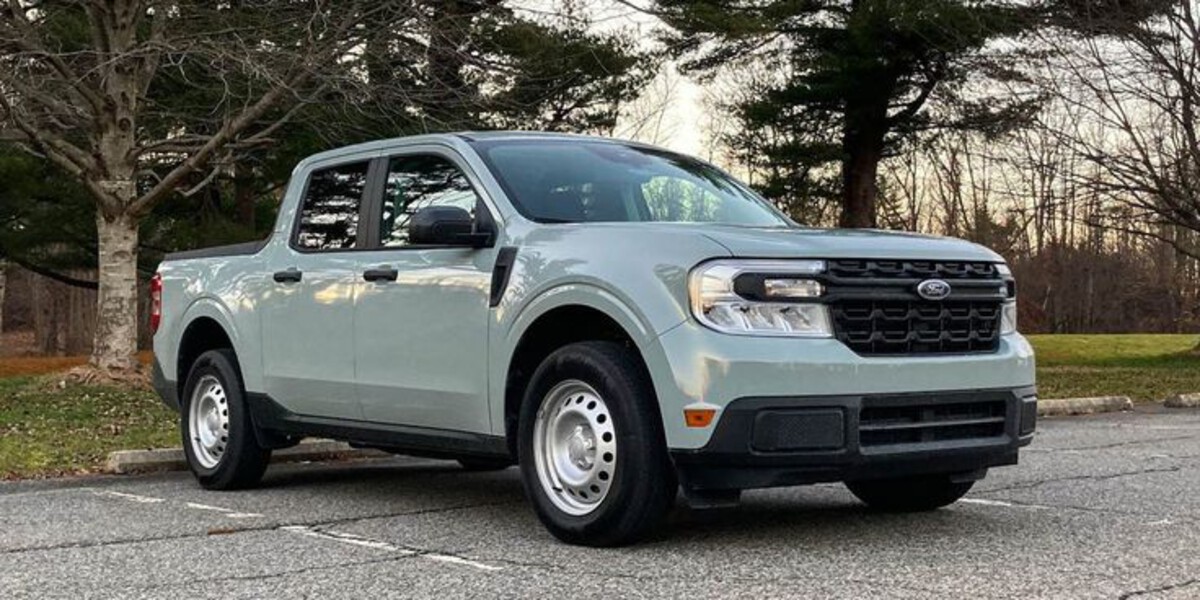
The Ford Maverick is one of the most city-friendly trucks available today, and it’s easy to see why. It’s compact, agile, and surprisingly maneuverable for a pickup. With a total length of around 200 inches, the Maverick is closer in size to a midsize SUV than a traditional full-size truck, making it a solid choice for drivers navigating tight urban spaces.
Its smaller wheelbase helps reduce the turning radius, which is incredibly useful when performing U-turns or navigating crowded parking lots. Ford made the smart decision to base the Maverick on a unibody platform, the same one used in the Ford Escape and Bronco Sport. This setup gives it a smoother ride and more precise handling, much like a car, which is a significant advantage when parking in the city.
Its physical size is only part of the story. Ford equipped the Maverick with several helpful parking features that work hand-in-hand with its dimensions to make it even more suitable for urban environments. A rearview camera with active guidelines comes standard, and higher trims add rear parking sensors for extra assistance.
These technologies help drivers back into tight spaces or monitor blind spots in busy city areas. The Maverick also comes with large side mirrors that offer excellent visibility, reducing the risk of misjudging distances between parked cars or clipping nearby obstacles. These little details make the Maverick not only easier to park but also more forgiving for drivers who aren’t used to piloting trucks.
Another huge perk is the Maverick’s low ride height. Unlike some trucks that sit high off the ground and block visibility, the Maverick feels closer to the road, making it easier to judge space and angles when parking.
The hood slopes gently downward, improving forward visibility so you can better see low curbs or objects ahead of the truck. This comes in especially handy when nose-in parking or making tight turns where other trucks would force you to rely solely on cameras. It also contributes to safer driving in crowded city settings.
Despite its smaller size, the Maverick still provides solid utility with a four-and-a-half-foot bed, decent payload capacity, and available all-wheel drive. It doesn’t compromise on usefulness, even while excelling at maneuverability. For city dwellers who want a practical truck without the headaches that come with parking a full-size model, the Maverick is one of the smartest and most well-rounded options on the market.
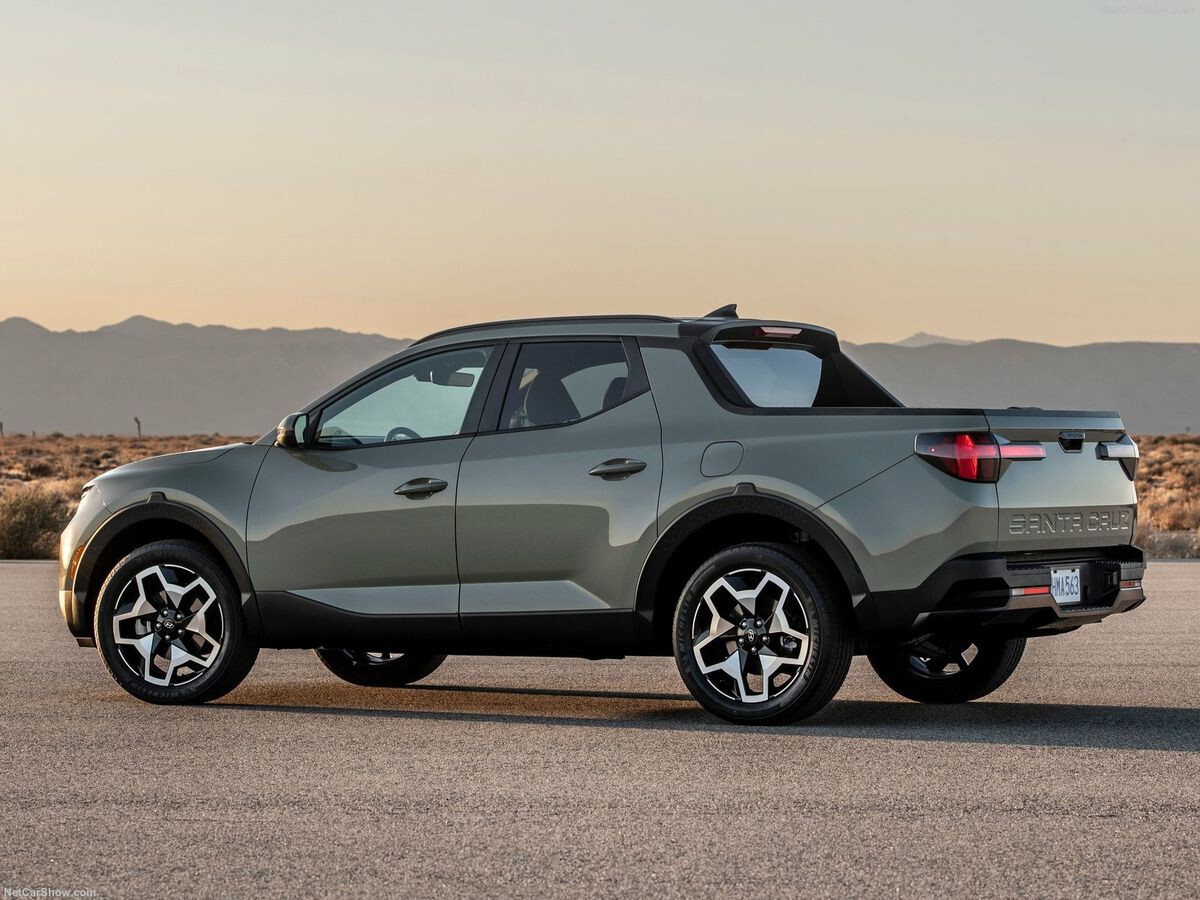
2. Hyundai Santa Cruz
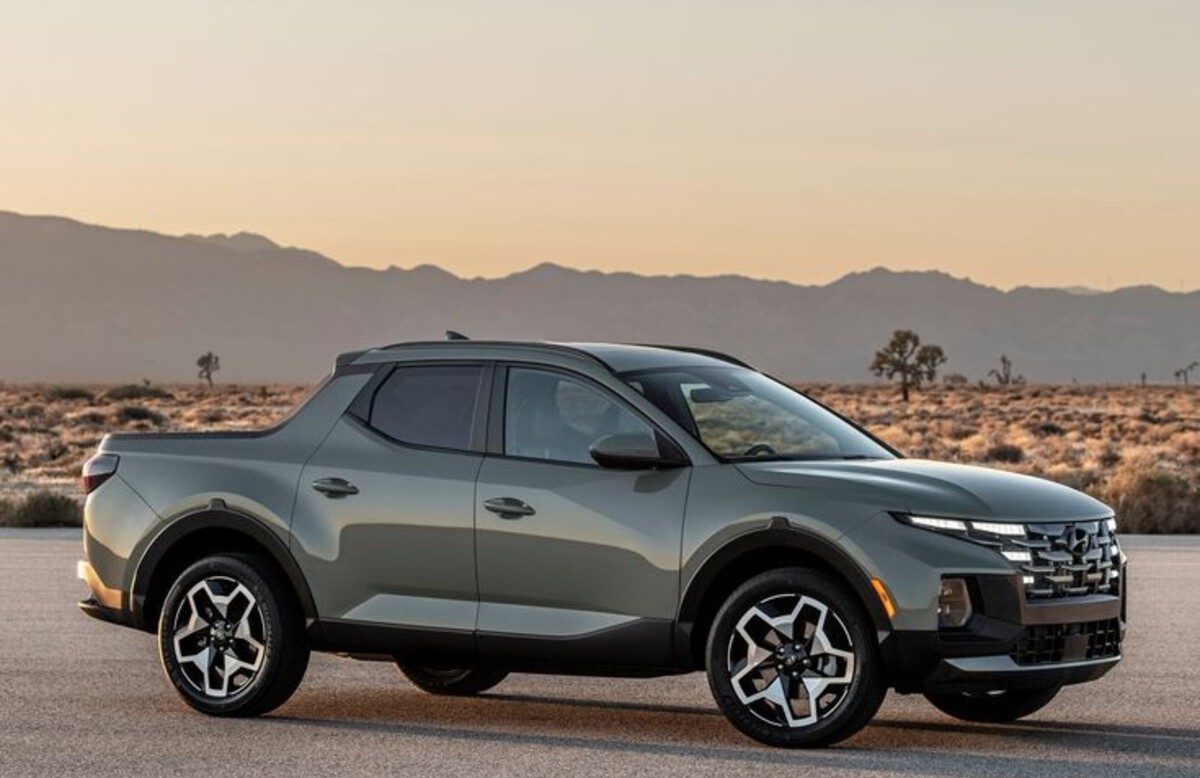
The Hyundai Santa Cruz is another compact truck that feels tailor-made for urban life. It’s not a traditional body-on-frame pickup, but rather a crossover-based vehicle with a truck bed, which gives it car-like driving dynamics while still offering truck-style utility.
One of the biggest advantages the Santa Cruz brings to the table is its length, which is just under 196 inches. That’s shorter than most midsize trucks, and this smaller size makes it easier to fit into parking spots and garages that would make full-size pickups struggle.
The Santa Cruz also has one of the tightest turning circles in its class, allowing for smoother cornering and less frustration when dealing with parallel parking or narrow alleyways.
From a design perspective, Hyundai prioritized city usability when developing the Santa Cruz. It’s slightly narrower than most traditional trucks, which means you’re less likely to scrape a mirror or encroach on another parking space.
The truck also features a large rearview camera display and an optional surround-view camera system that provides a bird’s-eye view of the vehicle, making it easier to spot curbs, pedestrians, or tight clearances. These tools are a massive help in urban settings where one wrong angle can lead to a ding or worse.
Another thing that makes Santa Cruz city-friendly is its smooth and predictable steering. Unlike some trucks that require multiple steering adjustments just to get straight in a spot, the Santa Cruz responds like a sedan, which reduces driver fatigue and makes every parking job feel more natural. The suspension is also tuned for comfort, meaning it won’t bounce around or feel unstable when driving over potholes or uneven pavement, a common challenge in city environments.
The cabin design adds to the ease of use as well. It’s built with excellent visibility in mind, and the dashboard layout is clean and intuitive, letting the driver focus more on navigating tight areas rather than fumbling with controls.
When you add all these features together, it becomes clear that the Santa Cruz is not only unique in its form factor but also one of the easiest trucks to manage in a city setting. For those who want something practical, stylish, and low-stress to park, this is a standout choice.
3. Toyota Tacoma (4-Cylinder, Short Bed)
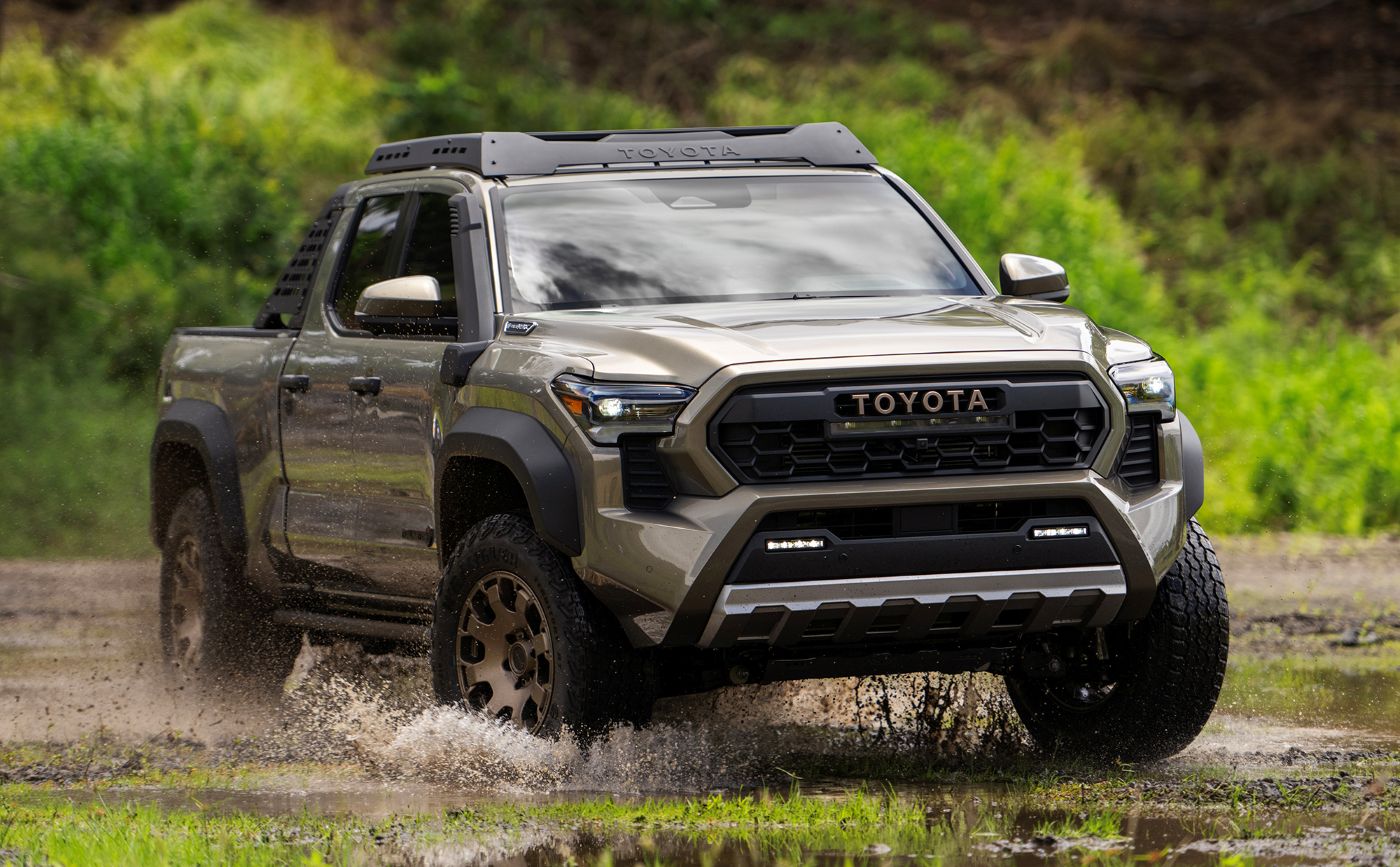
The Toyota Tacoma, when equipped with a short bed and the 4-cylinder engine, offers a more compact and manageable experience than its more powerful V6 or extended-bed counterparts. Although it’s often associated with off-road adventures and outdoor use, the base models of the Tacoma provide just enough truck utility without crossing the threshold into “hard to handle” territory.
With a total length just under 212 inches in certain configurations, it fits much more comfortably into tight parking spots compared to full-size trucks. The shorter wheelbase trims make a real difference in urban maneuverability, allowing drivers to perform tighter turns and fit into standard city parking spaces with fewer complications.
Beyond just size, the Tacoma benefits from a straightforward, no-frills design that focuses on driver visibility and simplicity. Its upright windshield and square front corners give drivers a better sense of where the vehicle begins and ends, a big plus when judging whether you’ll fit into a curbside spot or a compact stall.
While it might not have the most high-tech parking tools out there, the standard rearview camera does a respectable job, and optional parking sensors offer extra help when backing into tight places. Unlike larger trucks, where the front end seems to stretch on forever, the Tacoma’s cab-forward design makes it easier to place in a parking space on the first try.
Another major strength is the Tacoma’s balanced ride quality. The lighter 4-cylinder engine configuration keeps the front end more responsive, reducing the sluggish feel some larger trucks have at low speeds.
Its suspension is tuned for both light off-roading and city driving, which creates a firm but controlled ride that doesn’t bounce or feel overbearing in tight conditions. Combined with a solid braking system and light steering feel, the truck can be guided through cramped spaces more easily than many might expect from a vehicle still considered a pickup.
Lastly, Tacoma’s reputation for durability and reliability means it appeals to people who want a practical vehicle that doesn’t wear them out during everyday use. It can carry gear, home improvement supplies, or a couple of bikes in the bed while still being mild-mannered enough to tackle rush hour traffic and parking lots without feeling clumsy.
If you don’t need the towing capacity of a heavy-duty truck and care more about convenience, the 4-cylinder, short-bed Tacoma might just be the perfect urban compromise.
4. Chevrolet Colorado
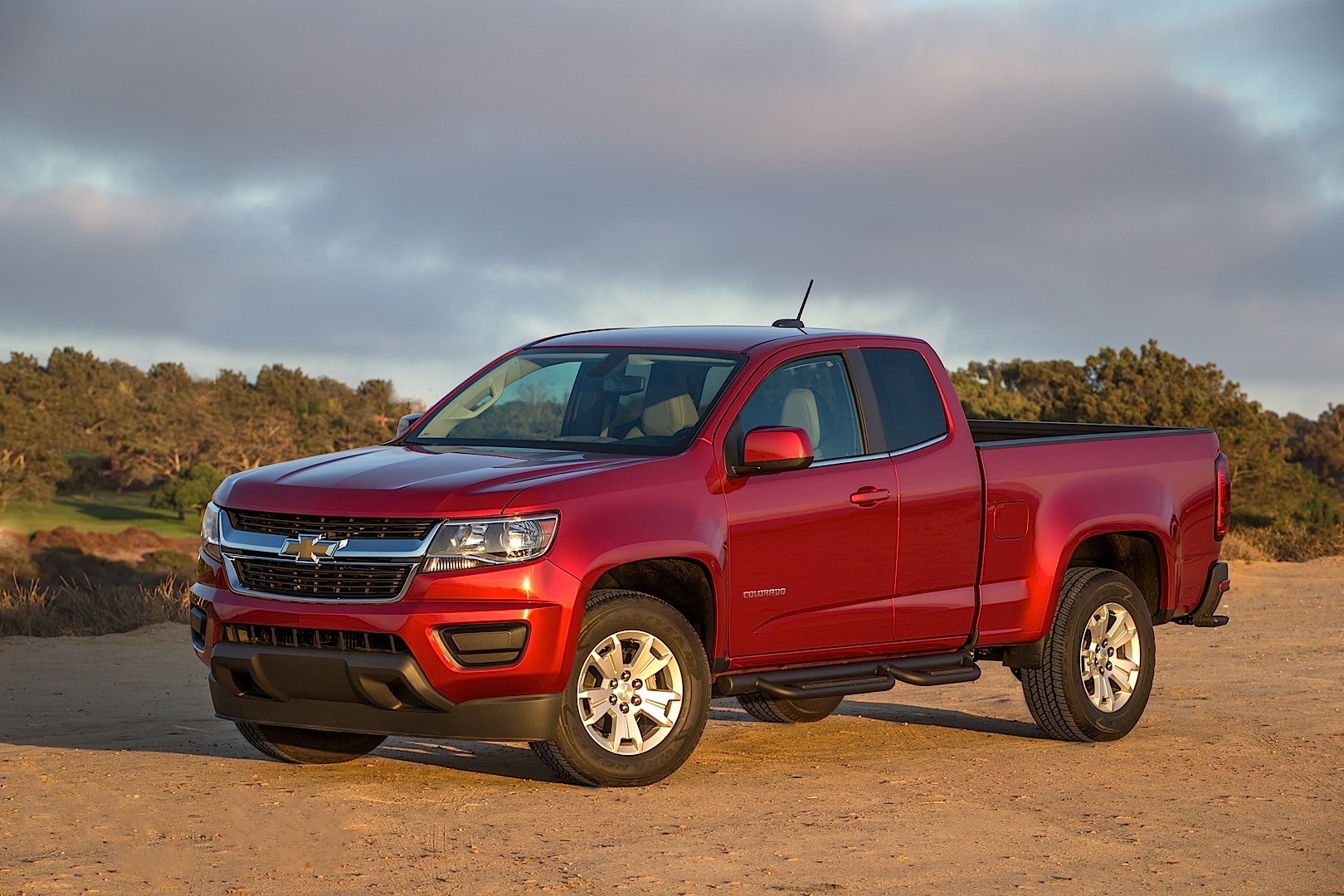
The Chevrolet Colorado is a midsize truck that finds a strong middle ground between utility and urban convenience. It’s bigger than compact trucks like the Maverick or Santa Cruz, but smaller and easier to handle than full-size pickups like the Silverado. The Colorado comes in multiple configurations, but the short bed with crew cab setup is the most city-friendly.
With a length of about 212 inches and a moderate width, this version can comfortably fit into most city parking spots without requiring superhuman effort. The truck’s responsive handling and relatively small turning radius make parking in tight garages or parallel spots much more doable than you might expect from a true body-on-frame pickup.
What sets Colorado apart in urban environments is how natural it feels in everyday traffic. Unlike some trucks that feel like they belong exclusively at a job site, the Colorado has a smooth, composed ride that doesn’t beat you up on bumpy city streets.
It absorbs rough pavement well, and the cabin remains fairly quiet, making it suitable for both daily commuting and work-related tasks. From a parking perspective, the lighter steering effort and clear sightlines help reduce stress, especially in multi-level garages or angled parking spots where misjudging space can lead to trouble.
Tech-wise, Chevrolet has outfitted the Colorado with several tools to aid in maneuverability. A standard rearview camera provides a clear image when backing up, and some trims offer rear parking sensors and lane-departure warning systems.
While it doesn’t have a 360-degree camera system on all trims, the available features still give urban drivers the tools they need to make parking safer and more predictable. Also helpful is the truck’s lower beltline and squared body shape, which allow for better mirror visibility and judgment when pulling in or backing out.
A final benefit of Colorado is its versatile performance. Even in urban conditions, it feels like a vehicle that can do it all. Whether it’s hauling landscaping materials on weekends or navigating a congested shopping center during rush hour, it doesn’t feel oversized or out of place. For drivers who need real truck capability but want to avoid the full-size bulk that makes city parking a pain, the Colorado checks a lot of important boxes.
5 Trucks That Are a Nightmare to Park in the City
1. Ford F-350 Super Duty
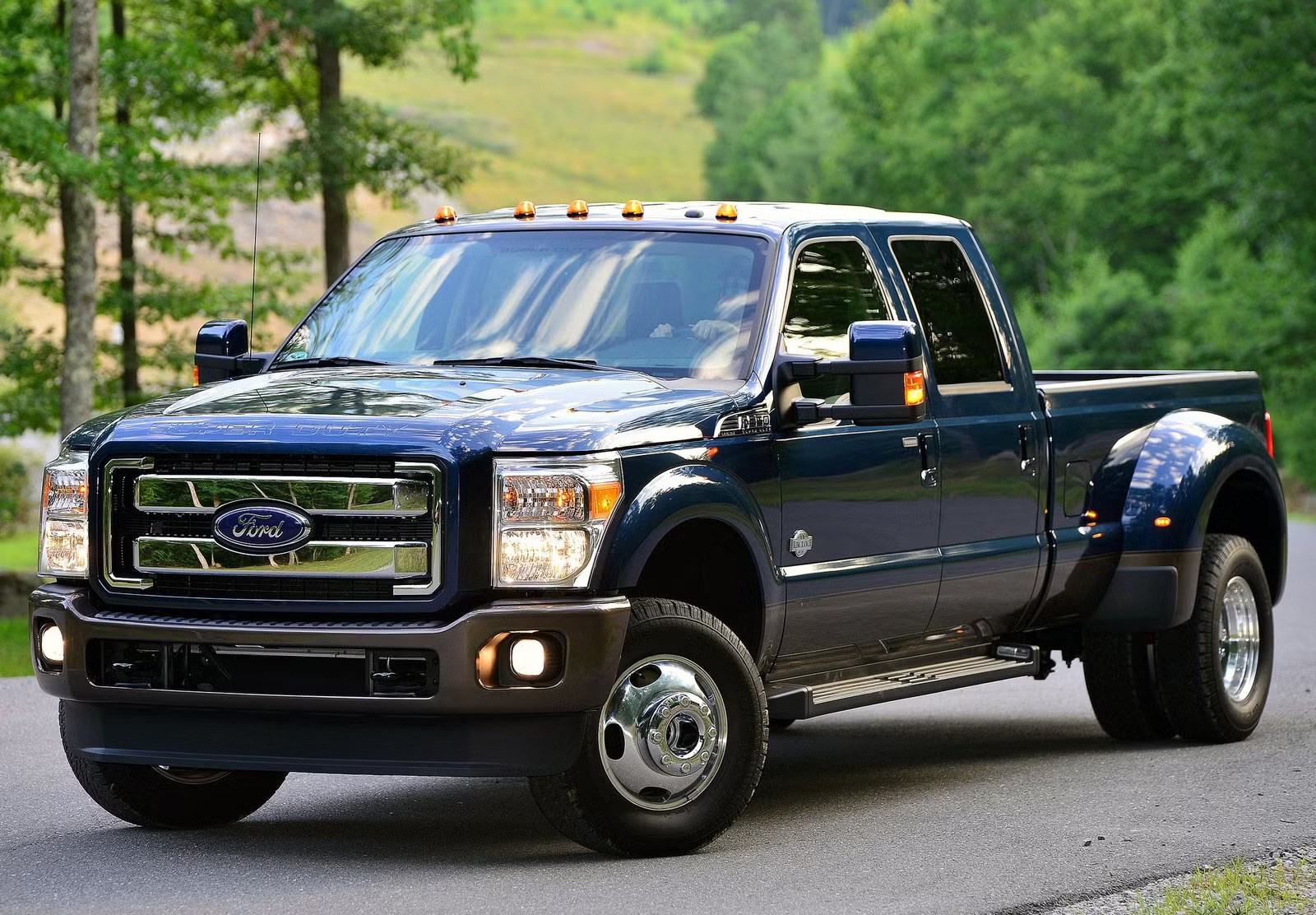
The Ford F-350 Super Duty is a massive truck built with one goal in mind: power. It’s a favorite among those who tow heavy trailers, haul huge loads, or work in industries like construction and agriculture. But all of that capability comes with a serious downside when it comes to city use.
Measuring up to nearly 266 inches in some configurations, this truck is often too long for standard parking spots, requiring extra room in front or behind to avoid sticking out into traffic. Even simple parking jobs can turn into complex puzzles where every inch matters, and unfortunately, the F-350 doesn’t leave a lot of room for error.
The width of the F-350 adds another layer of challenge. At over 96 inches wide with mirrors extended, this truck can take up more than its fair share of a parking space, often making it difficult to open the doors fully or avoid encroaching on neighboring spots.
This can cause real problems in packed city lots or garages, where space is at a premium. Even folding the mirrors doesn’t solve everything, because the sheer bulk of the truck remains a constant obstacle. Add to that the fact that in tight garages, you’ll often find yourself forced to make three-point turns just to back out without scraping a column or wall.
The turning radius is another major weak point of the F-350 in urban conditions. Due to its long wheelbase and heavy-duty suspension, this truck doesn’t turn sharply or easily. Tight U-turns become multi-step processes, and making quick decisions in traffic, like pulling into a suddenly available curbside spot, is nearly impossible without blocking the road.
Combine that with busy pedestrian traffic, bicycles, narrow alleyways, and parallel parking demands, and you’ve got a vehicle that’s clearly out of its element. Even experienced drivers find themselves having to rely heavily on camera systems and sensors just to avoid damaging property.
Though Ford includes a number of helpful driver-assist features, like a 360-degree camera system, blind-spot monitoring, and advanced rear parking assist, these tools can only do so much. The fundamental issue with the F-350 in the city is that its size is simply incompatible with most urban layouts.
2. Ram 3500 Heavy Duty
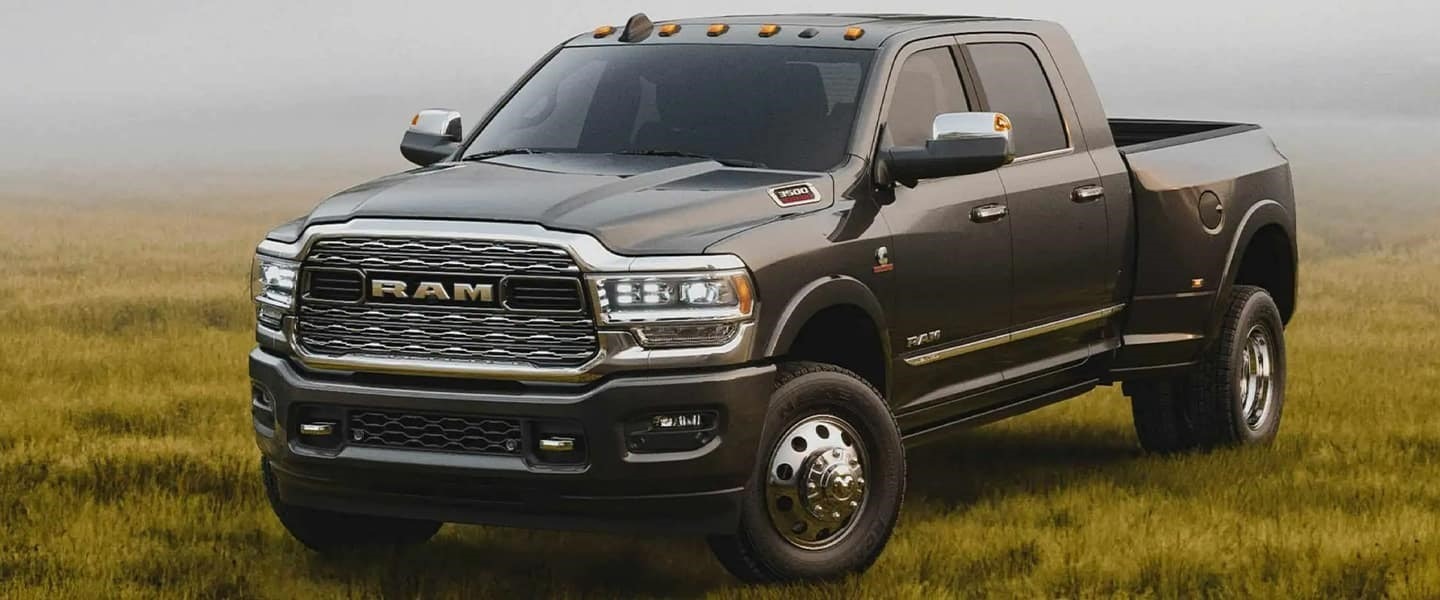
The Ram 3500 Heavy Duty is another absolute giant on the road. It’s built to perform serious tasks, whether towing fifth-wheel campers or hauling enormous loads of building materials. However, like the F-350, its immense proportions make it an unwieldy nightmare in dense city environments.
The Ram 3500 can reach nearly 260 inches in length and over 80 inches in width, making it difficult to fit into most city parking spaces. Unlike a standard pickup that might squeeze into a tight curbside spot with some effort, the Ram 3500 often physically doesn’t fit at all.
In city parking lots and garages, the length and width are just part of the problem. The Ram’s weight and height add further complications. With a high ride height and heavy-duty suspension, the truck sits tall, which can cause clearance issues in many garages.
Drivers may find themselves unable to enter certain structures altogether or feel incredibly confined once inside. The tall hood and bulky front end reduce forward visibility, making nose-in parking a guessing game, not ideal in cities where precision matters. Meanwhile, the extended tail can hang dangerously out into active traffic if not perfectly aligned.
Steering feel is another area where the Ram 3500 struggles in the city. Designed more for highway stability and trailer towing than for quick, tight maneuvering, its steering is slow and requires more effort than most vehicles. The large turning circle only adds to the pain, making every parking maneuver more time-consuming and stressful.
If you’re trying to do a quick turnaround in a city alley or even just fit into a tight spot between two vehicles, expect to take up a lot of space and possibly block traffic while doing so. The stress of being honked at or having impatient drivers waiting behind you becomes a normal part of parking this truck in the city.
Even with high-end trims offering features like rear cameras, parking sensors, and trailer guidance systems, these do little to overcome the fundamental problem: the Ram 3500 is just too much truck for the city.
Unless your urban job absolutely requires this level of heavy-duty capacity and you have access to private, oversized parking, the daily headaches outweigh the benefits. For most drivers, bringing this beast into the city is like showing up to a dinner party with a bulldozer. You may have the power, but you won’t have anywhere to put it.
3. Chevrolet Silverado 3500HD
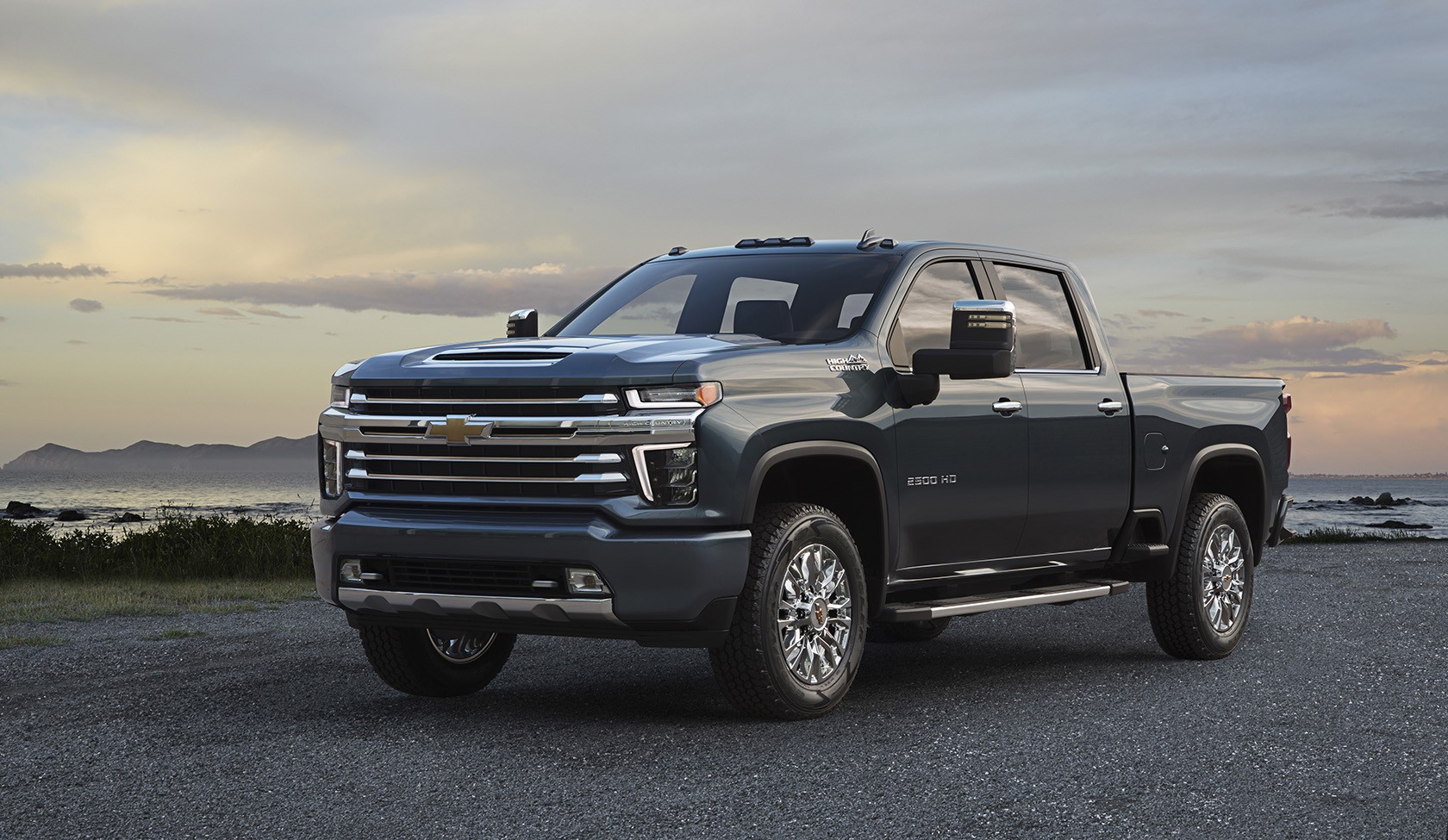
The Chevrolet Silverado 3500HD is Chevrolet’s answer to the Ford and Ram heavy-duty trucks, and it’s every bit as large and difficult to manage in the city. Designed for maximum towing and payload capacity, this truck comes with configurations that push it well beyond what a typical city can handle in terms of parking and maneuverability.
With options for a crew cab and an eight-foot bed, the Silverado 3500HD can stretch beyond 266 inches in total length, longer than many delivery vans. This makes it virtually impossible to parallel park in any urban area that doesn’t have oversized commercial vehicle spots.
The width is another limiting factor. Add the optional dual rear wheels, and the truck becomes so wide that standard parking spots feel like squeezing into a narrow closet. Even entering or exiting the truck becomes difficult when you’re parked between two other vehicles.
On busy streets or crowded garages, this can lead to dented doors, angry neighbors, and a whole lot of frustration. Maneuvering into tight driveways, alleyways, or small service roads requires nerves of steel and a sharp eye for angles. Even one misstep can lead to a very expensive accident.
The truck’s height and profile also create issues in older cities with tighter infrastructure. Underground garages or multi-level structures with low clearance may be completely off-limits. And once you’re inside one, the long hood and bed mean you’ll often find your truck protruding into the lane or corner of a parking structure.
Despite having some decent tech, including optional front and rear sensors, a high-definition backup camera, and even trailer-focused guidance, these tools simply can’t overcome the space limitations in most city environments. You can know exactly how much room you don’t have, and still not be able to do anything about it.
The Silverado 3500HD is a workhorse and deserves credit for its performance and toughness, but in the city, it becomes a source of constant compromise. Whether you’re trying to make a sharp turn, find legal street parking, or just avoid hitting a parked scooter, this truck offers none of the grace or convenience required for urban life. If you need the power, it’s a strong choice, but if you value your sanity in tight quarters, you’ll want to keep it far from downtown.
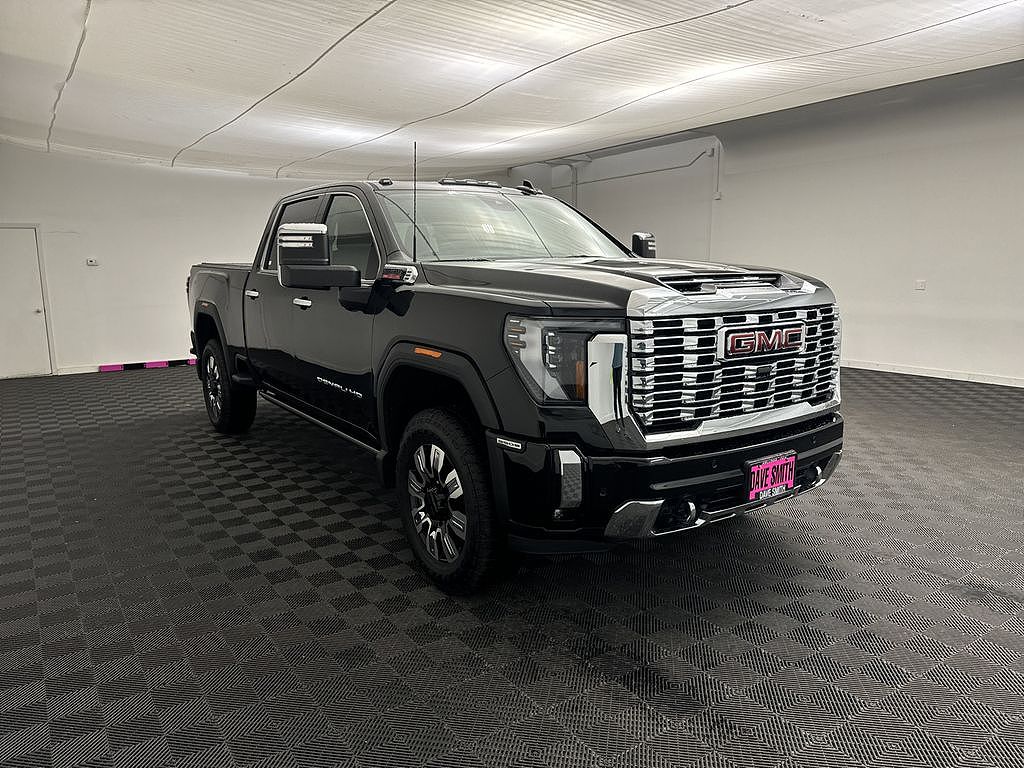
4. GMC Sierra 3500HD
The GMC Sierra 3500HD is a powerhouse, no doubt, but parking it in a city can be more frustrating than useful. With certain versions measuring over 21 feet long, it’s nearly impossible to fit this truck into standard urban parking spots without something sticking out, usually the bed.
Its wide stance makes things even more difficult. Even with the mirrors folded in, the Sierra takes up more space than most city cars, often crowding adjacent spots. That means even if you do fit, others may struggle to get in or out beside you.
While GMC does offer some decent parking technology, including multiple camera views and sensors, the systems don’t eliminate the stress of maneuvering such a large vehicle in dense areas. They help, but you’re still dealing with a vehicle that was built for wide-open spaces.
The size, ride height, and slow steering response make every urban driving task harder. Whether you’re pulling into a tight garage, making a turn on a narrow street, or just trying not to block traffic, the Sierra 3500HD fights you every step of the way in a city.
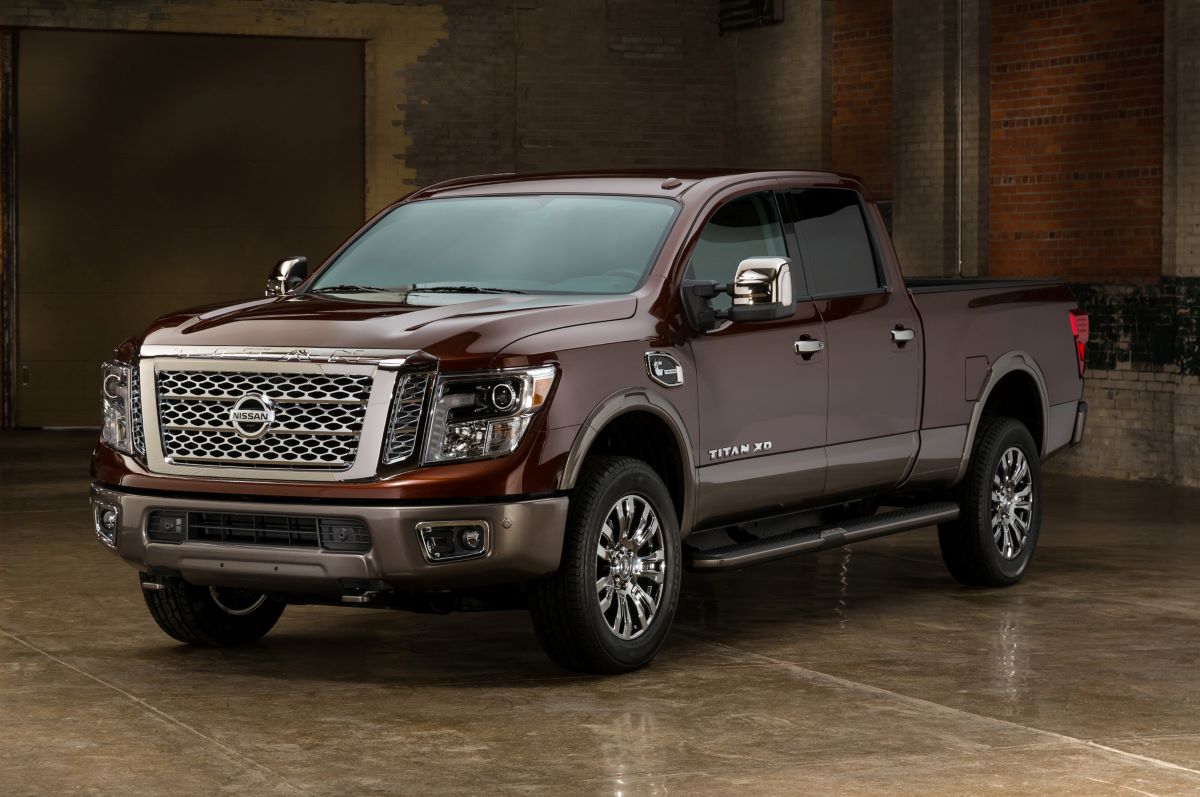
5. Nissan Titan XD (Heavy-Duty Version)
The Titan XD is Nissan’s attempt at bridging the gap between light-duty and heavy-duty trucks. While it offers solid towing and a beefy frame, it feels bulky and awkward in city environments.
Its length and width put it closer to heavy-duty American trucks than midsize pickups. That makes it tough to park in crowded areas, especially with limited visibility over the large hood and around the wide bed.
The Titan XD lacks some of the advanced parking systems that other brands include, especially on base models. Without features like surround-view cameras or front parking sensors, maneuvering becomes even more stressful.
In tight spaces, the turning radius feels wide, and the steering can be heavy. It’s not a truck that you can quickly back into a narrow space without a lot of adjustment. If you’re planning to use a Titan XD in the city every day, expect a constant battle with its size.
Also Read: 5 BMWs That Survive Winters vs 5 That Can’t Handle Snow
Choosing the right truck for city driving comes down to more than just personal preference it’s about practicality, size, and your tolerance for daily hassle. The difference between a truck that fits easily into your daily routine and one that turns every parking job into a struggle is huge.
While all trucks offer power, utility, and versatility, not all are built for the same environment. Some are clearly engineered with tight turns, small garages, and crowded parking lots in mind. Others are designed for heavy-duty work, open highways, and hauling large loads, where space is never an issue. The challenge arises when these two worlds collide.
Urban drivers need to think carefully about how they plan to use their truck. A smaller, more maneuverable model like the Ford Maverick or Hyundai Santa Cruz can make daily driving easier without sacrificing too much utility. These trucks are easy to park, quick to handle in tight spaces, and come with features that are actually useful in a city setting.
They may not be able to tow the heaviest loads, but for most people, their capabilities are more than enough. More importantly, they reduce the everyday frustration that comes with city traffic, small parking spaces, and narrow roads.
On the other hand, trucks like the Ford F-350, Ram 3500, or Chevrolet Silverado 3500HD are impressive in terms of strength, but they’re built for a completely different world. Trying to use one of these in an urban setting on a regular basis is exhausting.
Their size, turning radius, and poor visibility in tight spaces make them difficult to manage in any city. Even with modern parking aids and camera systems, these vehicles often feel out of place, not because they’re badly made, but because they’re being used in an environment they weren’t designed for.
