
Oil consumption is a topic that often sparks debates among car enthusiasts, mechanics, and engineers. While all internal combustion engines are designed to use a small amount of oil for lubrication, sealing, and cooling, there’s a difference between normal oil usage and excessive oil consumption. Some engines, even when well-maintained, are notorious for burning oil much faster than expected.
On the other hand, there are engines known for their robust design and tight tolerances that barely sip oil even after thousands of miles. The difference often comes down to engineering choices, such as piston ring design, valve stem seals, and even emissions strategies. Not all engines are created equal when it comes to oil control, and even brand reputation doesn’t always tell the full story.
A small amount of oil consumption is normal. Manufacturers even provide a specification for how much is acceptable. However, when an engine begins to require frequent top-offs between oil changes, that’s when eyebrows start to raise.
The problem may stem from poor design, aging gaskets, worn valve guides, or even the result of emissions systems that inadvertently contribute to oil usage. In some cases, oil burning begins early in an engine’s life and becomes a chronic issue.
On the flip side, some engines defy the odds, running for hundreds of thousands of miles without a drop of oil missing. These engines are praised for their durability, build quality, and thoughtful engineering.
Their track records give drivers peace of mind, especially those who rack up miles quickly or drive under extreme conditions. Many of these engines have become legendary for their reliability, not just in terms of staying on the road but also in how little oil they require to do so.
In this article, we’ll compare five engines that are known for being stingy with oil to five that are infamous for going through it quickly. This list isn’t exhaustive, but it offers a good cross-section of engines from different automakers, eras, and types.
Whether you’re shopping for a used vehicle, maintaining your current one, or just curious about engine performance, this breakdown should help clarify which engines you can trust and which ones may have you carrying a quart of oil in the trunk.
Also Read: 5 Hybrids With Bulletproof Motors and 5 That Constantly Need Help
5 Engines That Rarely Burn Oil
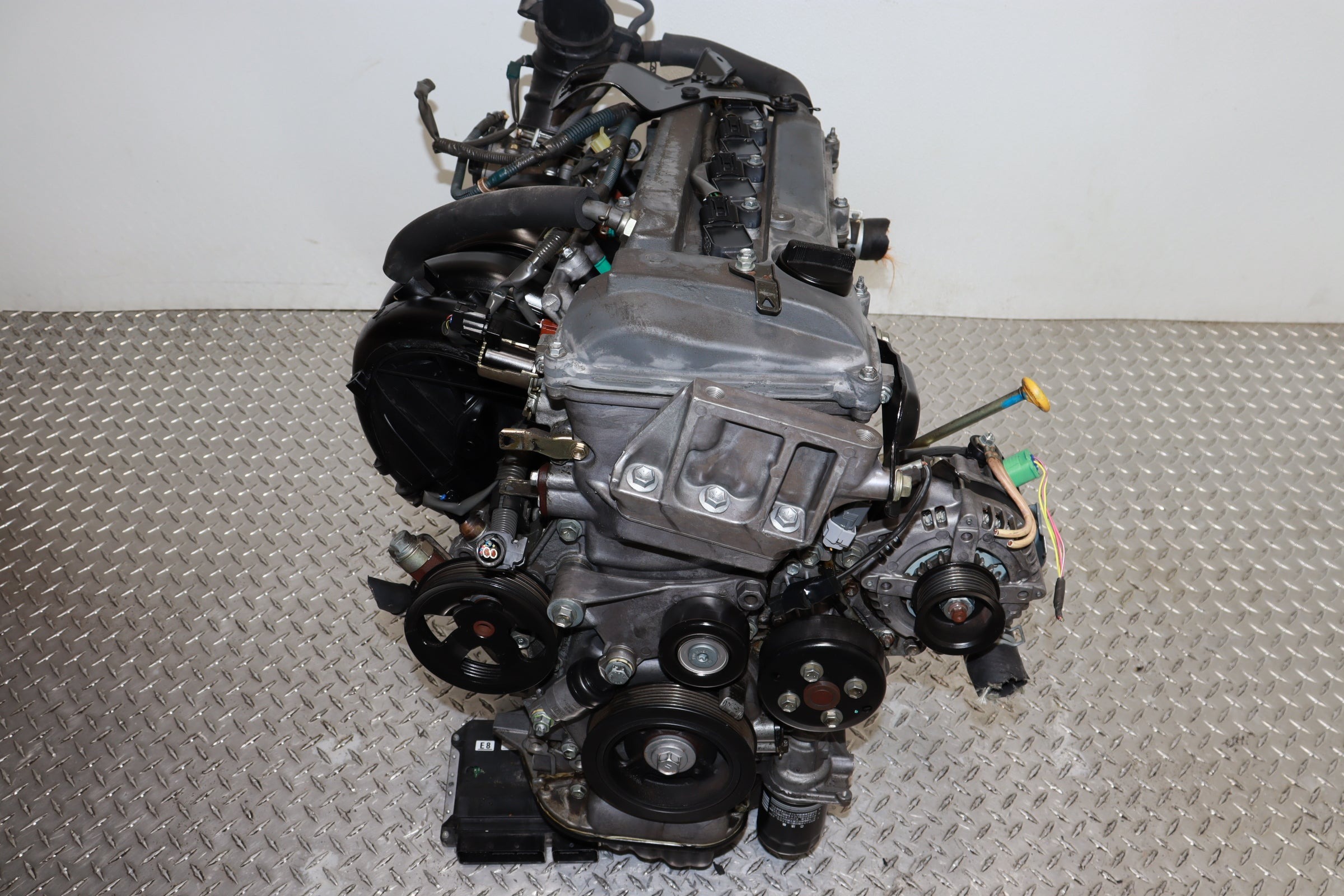
1. Toyota 2.4L 2AZ-FE
The Toyota 2.4L 2AZ-FE engine, commonly found in the Camry, RAV4, and Scion tC during the early to mid-2000s, has earned a reputation for being incredibly dependable. This four-cylinder engine was not flashy or powerful, but it delivered consistent performance and impressive longevity.
One of its standout characteristics is how well it manages oil consumption over time. Even after crossing the 150,000-mile mark, many of these engines maintain their oil levels with minimal top-offs between changes. This comes down to Toyota’s approach to engine construction during that period: solid piston ring design, a durable cylinder wall finish, and conservative tuning.
The 2AZ-FE is equipped with VVT-i (Variable Valve Timing with intelligence), but Toyota kept the design relatively simple compared to newer, more complex systems. That simplicity contributes to fewer points of failure, especially in areas that can lead to oil burning, such as valve seals or oil control rings.
It’s not uncommon to find these engines in vehicles that have racked up over 300,000 miles without requiring a rebuild or major engine work. Another reason for its low oil consumption is Toyota’s manufacturing standards at the time, which focused heavily on durability. These engines were built with long-term use in mind, and it shows.
While there have been some reports of head bolt thread failures on certain model years, this doesn’t seem to translate into oil-burning issues in the majority of vehicles. Routine maintenance, like oil changes and timing chain inspections, go a long way in keeping the engine healthy.
The 2AZ-FE is a perfect example of a well-built, oil-conscious engine that delivers reliable performance over the long haul without leaving oil spots in your driveway or constantly triggering the oil light.
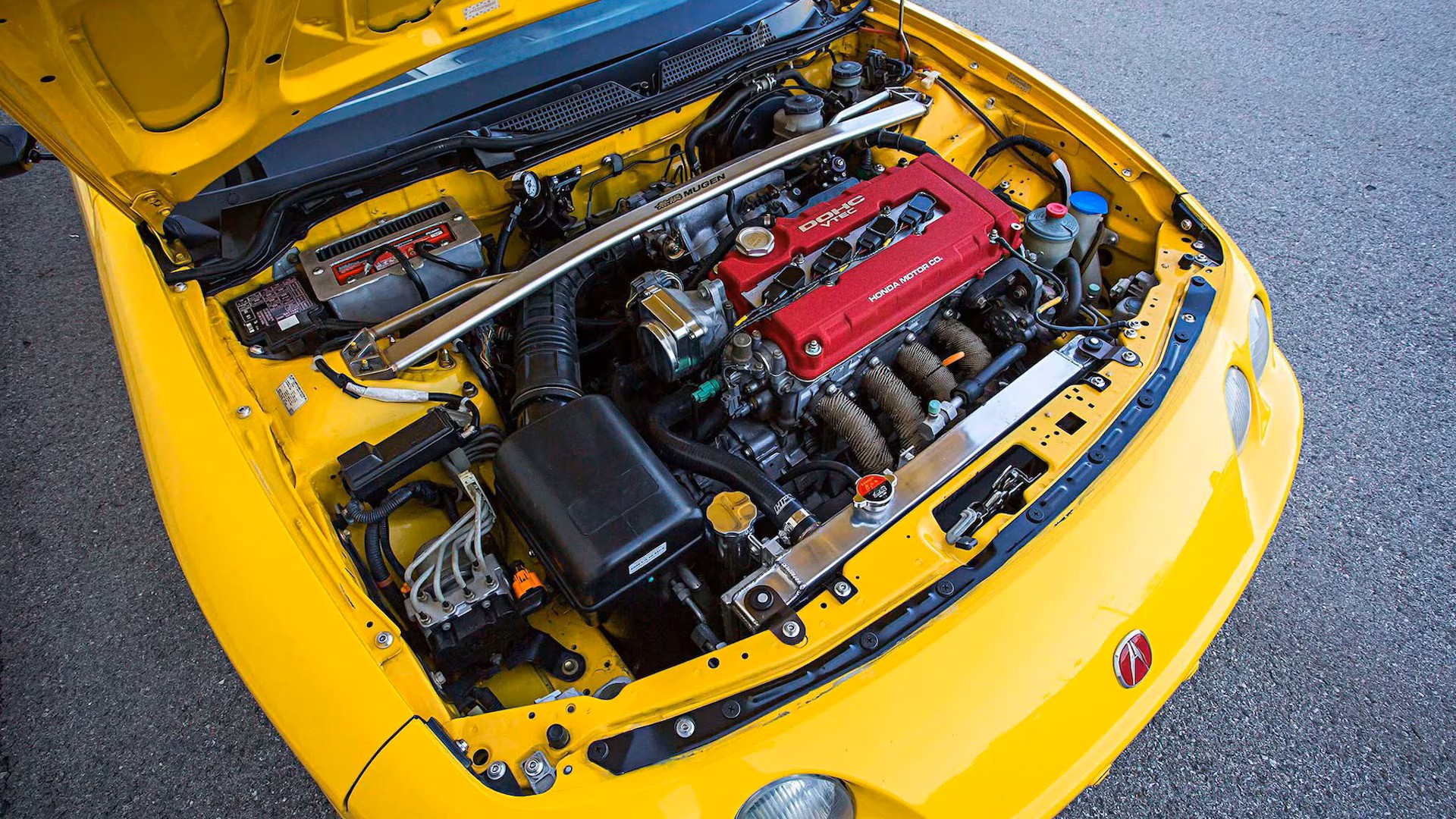
2. Honda K20/K24 Series
Honda’s K-Series engines, especially the K20 and K24 variants found in vehicles like the Accord, CR-V, Civic Si, and Element, are highly respected in the automotive community for their precision engineering and long-lasting reliability. These engines are often praised not just for their performance but also for how cleanly they run.
Unlike some older Honda engines that had a reputation for burning a bit of oil, the K-Series engines were a significant leap forward in terms of efficiency and oil control. They feature better piston ring designs, improved PCV systems, and higher-quality valve seals compared to earlier Honda powerplants.
One of the reasons the K-Series engines tend to avoid excessive oil consumption is Honda’s commitment to maintaining tight engine tolerances during the manufacturing process. The result is less blow-by and better oil control over time. The engines are also known for maintaining their performance and cleanliness even under aggressive driving.
In fact, many enthusiasts and tuners push these engines hard, yet still report excellent oil retention and minimal consumption between oil changes. Whether naturally aspirated or modified for performance, the K-Series engines typically don’t develop oil-burning issues unless they’ve been severely neglected.
It’s also worth noting that Honda chose high-quality materials for this series, including stronger aluminum alloy blocks and well-balanced crankshafts. These choices contribute to the engine’s resistance to internal wear, which is often the root cause of oil consumption in other engines.
Provided they are maintained with proper oil and filter changes, K20 and K24 engines rarely develop the kind of oil burning that plagues other four-cylinder engines in the same era. Their success is evident in the millions of units still running strong on roads all over the world.
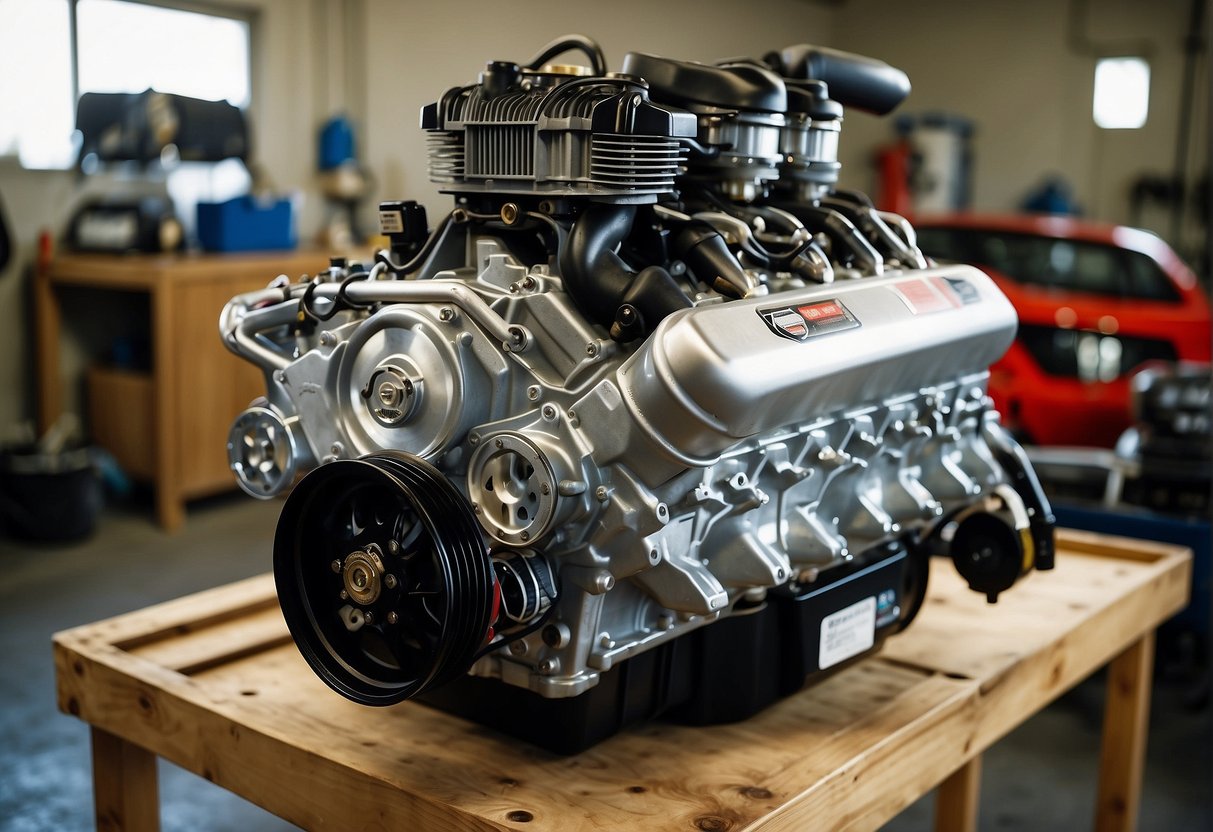
3. Ford 4.6L Modular V8 (2V)
The Ford 4.6L Modular V8, particularly the 2-valve version found in late ’90s and early 2000s Crown Victorias, Mustangs, and F-150s, is widely known for being a workhorse. One of its most respected traits is its conservative oil consumption. These engines were not designed for high-performance output but for long-term reliability, and they perform this role exceptionally well.
Ford’s engineering team put a lot of emphasis on making a durable and maintenance-friendly engine, and this paid off in real-world longevity and minimal oil usage. Police fleets, taxi companies, and utility services all ran these engines well past 200,000 miles with little more than routine care.
What keeps this engine from burning oil is its sturdy bottom-end construction and long-wearing components. The piston ring design is robust and does an excellent job of controlling oil along the cylinder walls. Unlike some of the newer, more tightly tuned engines with turbochargers and higher compression, the 4.6L 2V runs relatively cool and low-stress.
These factors significantly reduce the chances of oil breaking down or leaking into the combustion chamber. Even the valve stem seals, which are a common failure point in many engines, hold up well under normal use in this powerplant.
The engine’s oil capacity also contributes to its reliability. With a larger oil sump than many comparable engines, it can better withstand longer intervals between oil changes, although regular maintenance is still recommended.
When properly maintained with the correct oil weight and quality filters, the 4.6L is an example of a V8 that you can trust to keep its oil inside the engine, not burning off into the exhaust or leaking into your driveway.
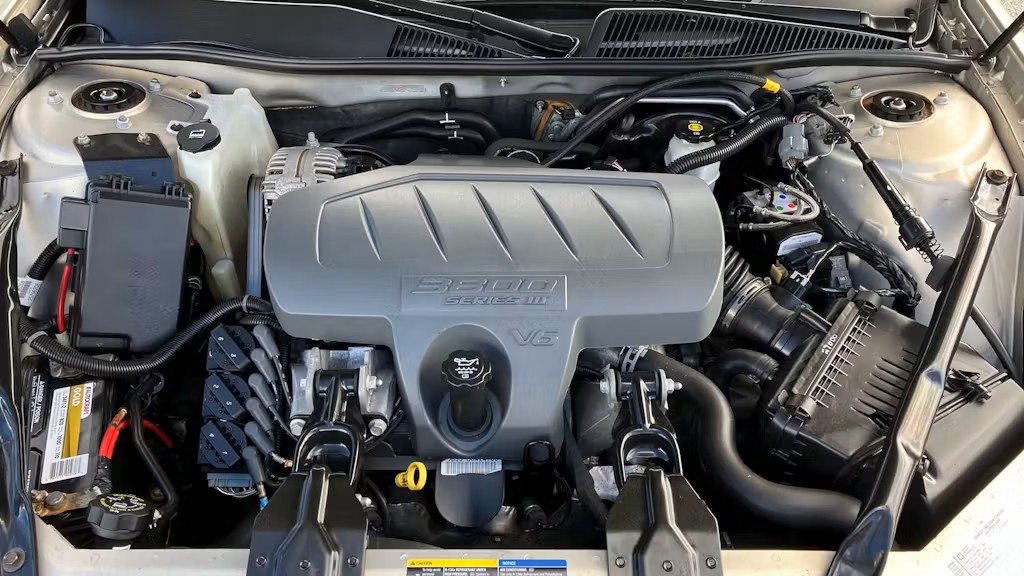
4. GM 3.8L V6 (3800 Series II and III)
The GM 3800 Series II and III engines are legendary for their reliability and long lifespan, and a big part of that legacy comes from their ability to maintain proper oil control. Found in numerous GM vehicles, including the Pontiac Grand Prix, Buick LeSabre, and Chevy Impala, this engine has a strong cast-iron block and a time-tested pushrod design.
While it may not be the most technologically advanced engine ever made, it stands out for how little oil it consumes over its service life. Many owners have driven these engines past 250,000 miles with no significant oil-burning issues.
The pushrod design keeps things simple and reliable. Fewer moving parts mean fewer areas where wear could lead to oil leaks or burning. The piston rings are well-designed and maintain a good seal, even after years of use.
The valve stem seals also hold up well, and unless the engine is badly neglected, it rarely shows signs of smoking or excessive oil loss. One of the major advantages of this engine is that it was overbuilt for its intended applications, meaning it tends to operate well within its mechanical limits. This reduces internal stress and heat, two key factors in oil degradation and loss.
Maintenance plays a role, of course, but the 3800 seems especially forgiving even with average care. It doesn’t have the complex emissions equipment or direct injection systems that can introduce oil consumption issues in newer engines.
For many drivers who want a dependable engine that won’t leave oil puddles in the garage or require constant top-offs, the GM 3800 Series remains a solid pick. It’s a favorite among used car buyers looking for something bulletproof and low-maintenance.
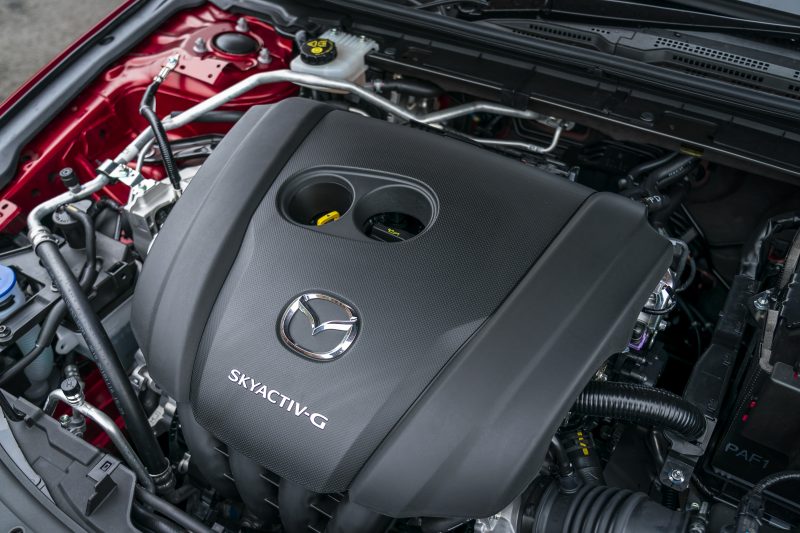
5. Mazda 2.0L SkyActiv-G
Mazda’s 2.0L SkyActiv-G engine stands out in a crowded field of modern four-cylinder engines due to its efficiency, clean combustion characteristics, and low oil consumption. Unlike many of its contemporaries that suffer from oil-related issues as they age, particularly direct injection engines, the SkyActiv-G engine uses a combination of direct and port injection to reduce carbon buildup and improve combustion efficiency.
This dual-injection system helps prevent the kind of intake valve fouling that can often lead to increased oil burning in engines that rely solely on direct injection. The result is a cleaner engine over time and reduced pressure on the piston rings and valve seals to manage oil exposure to combustion gases.
One of the key engineering decisions that helps this engine resist oil consumption is the high 13:1 compression ratio, which Mazda managed to implement without requiring premium fuel. The precision with which this engine is built, including the advanced piston design and combustion chamber shape, allows for better thermal efficiency and tighter control over internal engine conditions.
This reduces oil volatility under high-load conditions, which often contributes to oil burning in less refined engines. Drivers of the Mazda3 and CX-3 routinely report that oil levels remain stable between changes, even after tens of thousands of miles.
Another factor that contributes to the low oil consumption of the SkyActiv-G is Mazda’s emphasis on lightweight design and optimal lubrication flow. The engine runs cooler and smoother than many competitors, reducing thermal stress on oil seals and piston rings.
While other brands were chasing power figures with small-displacement turbocharged engines, Mazda stuck to naturally aspirated engineering, and it paid off in terms of real-world durability.
For drivers who are seeking an economical, modern engine that doesn’t constantly require oil top-offs or expensive repairs, the 2.0L SkyActiv-G stands as one of the most solid choices in its class. It’s a rare example of a new-age engine that behaves more like the bulletproof powerplants of the past.
5 Engines That Drink Oil
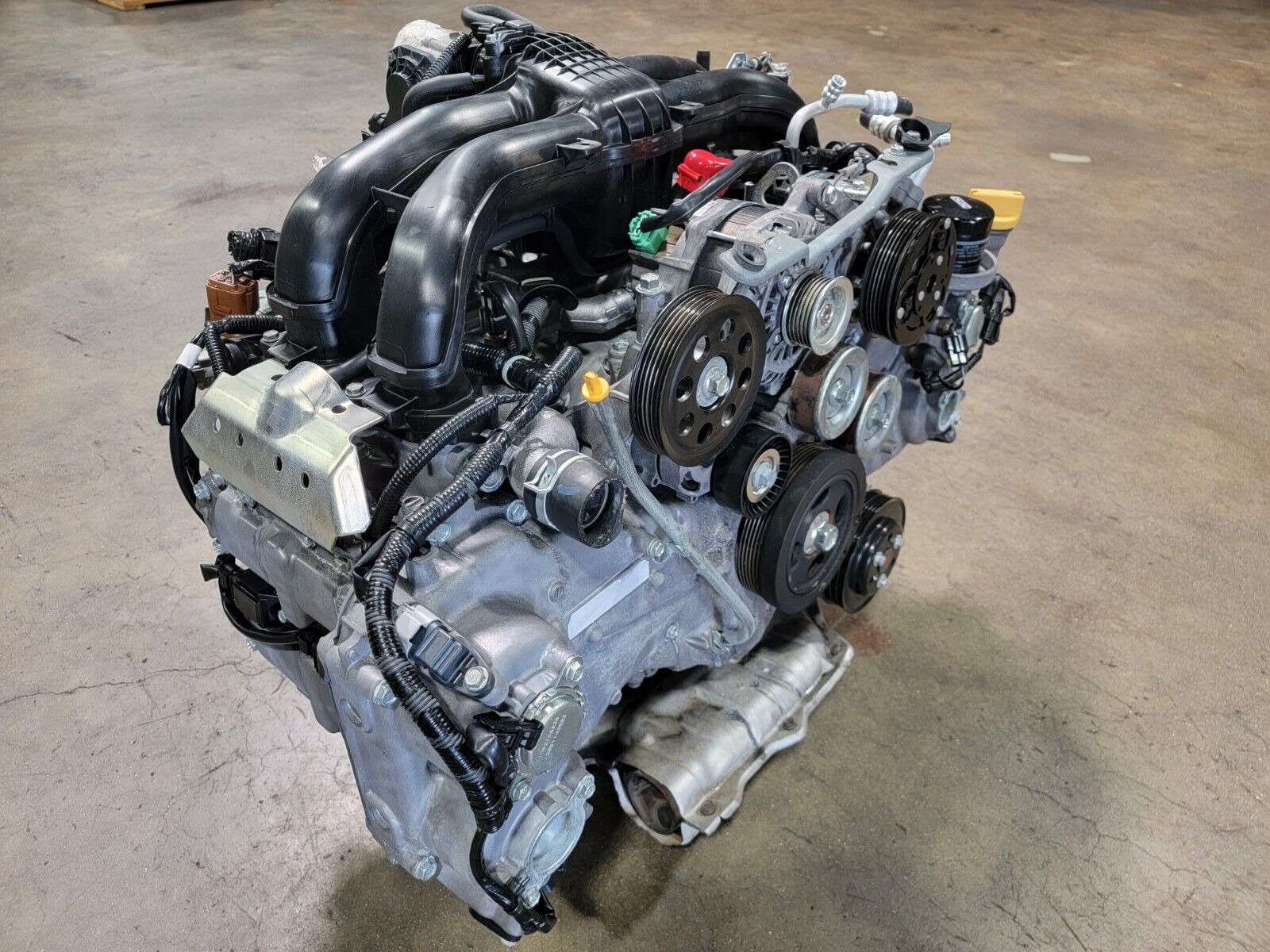
1. Subaru 2.5L FB25 (Early Models)
The Subaru FB25 engine, particularly those found in 2011–2014 Outbacks, Foresters, and Legacys, has a well-documented issue with excessive oil consumption. This flat-four (boxer) engine was designed as a successor to the older EJ series and aimed to improve emissions and fuel economy.
While it did succeed in achieving those goals to some extent, it also introduced a problem that many owners quickly became frustrated with: rapid oil consumption even in relatively low-mileage engines. What made the issue worse was that the oil-burning often began early in the engine’s life, sometimes before even reaching 60,000 miles, and was not always accompanied by visible leaks or smoke.
One of the contributing factors is the design of the piston rings and how they interact with the cylinder walls in the horizontal configuration of Subaru’s boxer engine. Because the pistons lie flat rather than vertically, gravity doesn’t help oil drain as effectively, and oil tends to accumulate and burn off more readily during combustion.
Subaru tried to fix the issue with revised piston rings and software updates, but the early FB25s continue to have a spotty reputation. Many owners were left to check their oil levels weekly, top off between oil changes, or deal with low-oil warning lights regularly.
Subaru did respond with a technical service bulletin and extended warranties in some cases, but the issue affected brand perception and led to several class-action lawsuits. It’s important to note that later revisions of the FB25 improved significantly, but for those with earlier models, the oil-burning problem remains a persistent annoyance.
While not every engine in this range suffers from the issue, it was prevalent enough that it became a major talking point among mechanics, owners, and automotive forums. For a company known for ruggedness and reliability, this engine became a black mark that they’ve since worked to overcome.
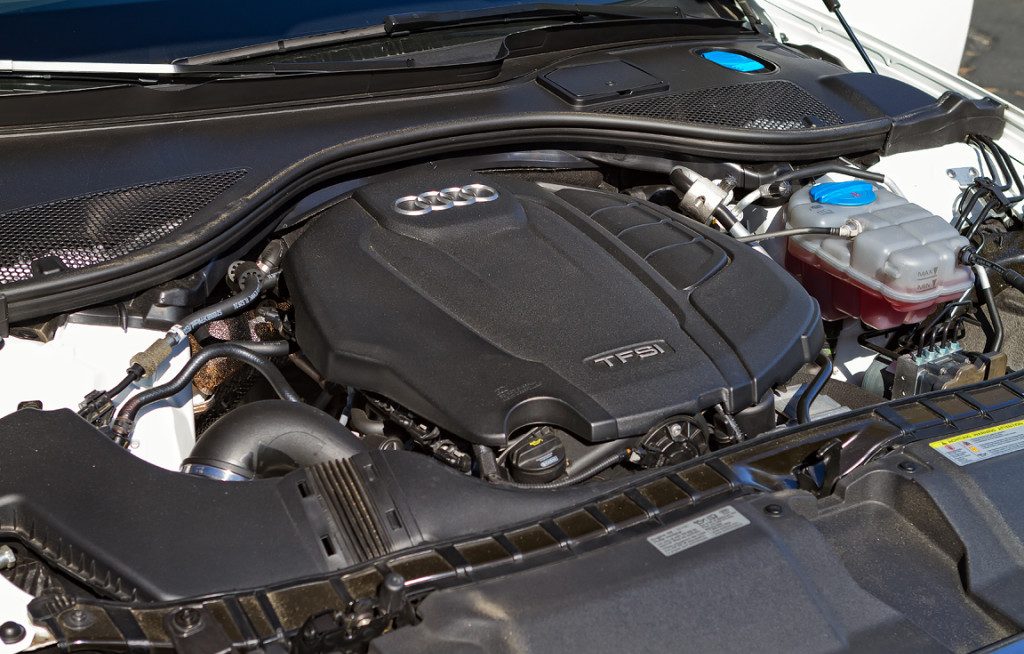
2. Audi 2.0T TFSI (EA888 Gen 1 and 2)
Audi’s early 2.0T TFSI engines, particularly those in the EA888 Gen 1 and Gen 2 families, are infamous for their oil consumption problems. Found in numerous Audi and Volkswagen vehicles from the mid-2000s through the early 2010s, including the A4, A5, Passat, and GTI- these engines were praised at the time for their performance and turbocharged punch.
However, many owners soon found themselves constantly refilling oil between changes. In some cases, drivers reported burning more than a quart every 1,000 miles, which is well beyond what most would consider acceptable for a modern engine.
The root of the problem lies in the engine’s piston ring design and the way it interacts with the combustion chamber. The oil control rings were too thin and tended to become coked up with carbon deposits, leading to reduced sealing ability and increased oil passage into the combustion chamber.
Combine this with a turbocharger that introduces additional heat and stress into the engine, and you have a recipe for regular oil burning. To make matters worse, the engine didn’t always trigger a low-oil warning until the situation was severe, leaving many owners unaware of the problem until engine damage occurred.
Audi eventually acknowledged the issue and updated the piston design in later generations, but for Gen 1 and Gen 2 engines, the problem was so widespread that it led to multiple lawsuits and extended warranties.
Many owners were advised by dealerships that this level of oil consumption was “normal,” leading to frustration and distrust. Some chose to rebuild or replace piston rings out of pocket, while others simply lived with the hassle. For used buyers, these engines are a cautionary tale, attractive on the surface, but often hiding an expensive and recurring maintenance problem that can’t be ignored.
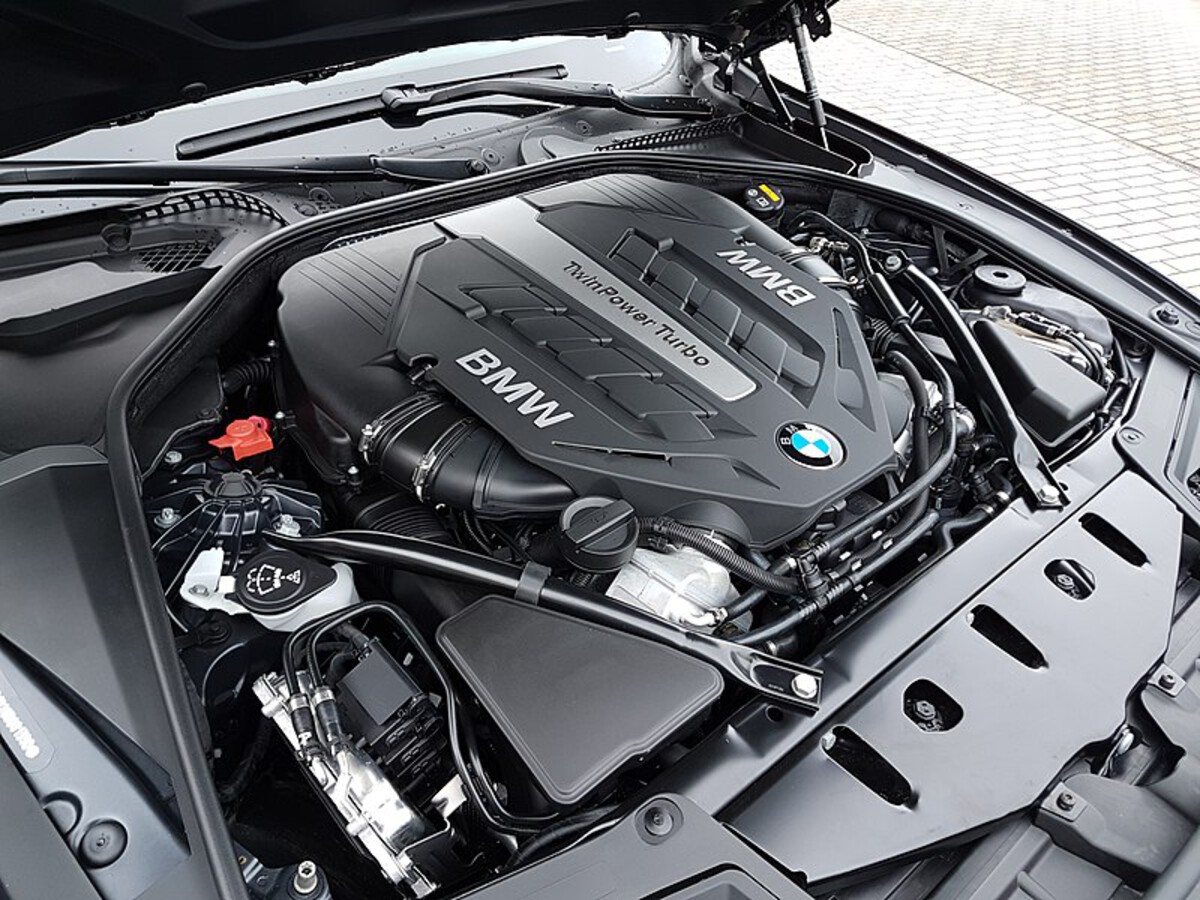
3. BMW N63 Twin-Turbo V8
BMW’s N63 engine, a 4.4-liter twin-turbocharged V8 introduced in 2008, is one of the most powerful and technologically ambitious engines the brand has produced. It has powered high-end models like the 7 Series, 5 Series, and X5, delivering exceptional performance and a smooth driving experience.
But underneath all that horsepower and engineering complexity lies a serious flaw: excessive oil consumption that has plagued nearly every version of the engine since its introduction. Owners of N63-equipped vehicles have long complained of having to add oil between changes, sometimes as often as every 1,000 miles, and the issue persists even in well-maintained, low-mileage cars.
The reasons behind this high oil consumption are complex and multifaceted. First, the N63 runs extremely hot due to its turbochargers being mounted in the “hot-vee” configuration, inside the V of the engine, rather than on the outside.
This exposes engine components to higher levels of heat than usual, which accelerates the degradation of valve stem seals and piston rings. Once these components begin to wear, oil starts leaking into the combustion chamber. The high-pressure turbo system further increases stress on the piston rings, pushing oil past them and leading to combustion-related oil loss.
BMW attempted to address the issue with multiple technical service bulletins, redesigned valve seals, and even a customer care package that included free oil top-offs and engine inspections. Despite these efforts, the engine continues to be a sore spot for owners and mechanics alike.
Many buyers of used BMWs equipped with the N63 are advised to budget for significant maintenance costs or consider aftermarket solutions. While the engine delivers strong performance and a satisfying driving experience, it comes at the cost of consistent oil top-offs and a higher risk of long-term mechanical issues. This is one engine where performance often outpaces practical reliability.
4. Toyota 2.4L 2AZ-FE (Certain Years)
While the Toyota 2AZ-FE was earlier listed as an engine that rarely burns oil, it’s also one of the most complex examples because it deserves a spot on both sides of the debate. In certain years, particularly the 2007–2009 models of the Camry and RAV4, the 2AZ-FE developed an oil consumption issue that turned into a widespread customer complaint.
The core of the issue was related to poor piston ring design and manufacturing tolerances that allowed excessive oil to slip past the rings and burn off in the combustion chamber. Many owners started noticing their oil light coming on between changes, and some were going through more than a quart every 1,000 miles.
The problem became so widespread that Toyota issued a Technical Service Bulletin (TSB) and eventually extended warranties for affected vehicles. The fix involved replacing the pistons and rings, which is not a small or inexpensive repair.
The odd part is that this problem was not universal across all 2AZ-FE engines, many earlier and later models were free from the issue entirely. This inconsistency frustrated owners who bought Toyotas specifically for their reliability, only to find themselves constantly monitoring oil levels and dealing with dealership visits.
Part of the issue appears to stem from Toyota’s attempt to improve fuel efficiency and emissions by reducing internal friction in the engine. Unfortunately, this resulted in piston rings that were too thin and less capable of maintaining an effective seal.
Combined with extended oil change intervals and the use of lower-viscosity oils, the engine became more susceptible to oil control problems. For owners who were lucky enough to avoid the problem, the 2AZ-FE was rock solid. For those caught in the defective year range, however, it became a frustrating and costly problem that stained Toyota’s otherwise excellent reputation for engine longevity.

5. GM 2.4L Ecotec (LAF/LEA/LUK)
General Motors’ 2.4L Ecotec engine, especially in the LAF, LEA, and LUK variants, is notorious for oil consumption problems. Found in a wide variety of vehicles, including the Chevrolet Equinox, GMC Terrain, and Buick Regal from around 2010 to 2017, this engine looked good on paper: decent power, reasonable fuel economy, and a modern design featuring direct injection.
But it quickly gained a reputation for excessive oil use, often appearing before 75,000 miles. Many owners found themselves adding oil regularly between changes, and in extreme cases, complete engine failure resulted from low oil levels.
One of the key contributors to this oil-burning issue is the design of the piston rings and the fact that they tend to stick or wear prematurely. The direct injection system, while efficient in terms of fuel economy, allows more carbon buildup due to the lack of fuel washing over the intake valves.
This buildup can affect crankcase ventilation and combustion quality, making oil control even more difficult. GM initially responded by telling customers that a quart every 1,000 miles was within acceptable limits, a statement that only further frustrated those dealing with unexpected maintenance costs.
Eventually, GM released a TSB and even offered extended warranties on some models, but the damage to the brand’s reputation had already been done. Many vehicles required engine rebuilds or ring replacements to solve the issue, and resale value suffered as a result.
The combination of poor engineering choices, emissions trade-offs, and cost-cutting measures led to a power plant that failed to meet expectations in real-world conditions. For buyers looking at used GM vehicles from that era, the presence of the 2.4L Ecotec engine often serves as a red flag rather than a selling point. It remains one of the more glaring examples of how design shortcuts can lead to long-term ownership headaches.
Also Read: 5 Motors That Love Long Drives and 5 That Hate Highways
Oil consumption is a critical factor when evaluating the long-term reliability of an engine, and it’s one that often gets overlooked during the excitement of a purchase or the daily routine of driving. While a certain amount of oil usage is expected in all internal combustion engines, there’s a clear difference between normal behavior and problematic design.
The engines that rarely burn oil tend to have a few things in common: well-engineered piston rings, durable valve seals, simple and conservative configurations, and a track record of long-term durability. They were often built with a focus on longevity rather than pushing the limits of performance or emissions compliance. As a result, they continue to run cleanly even after high mileage, with minimal oil loss between services.
On the other side of the spectrum, the engines that are known for drinking oil often suffer from overly aggressive engineering choices or design flaws. Whether it’s a direct injection system that causes carbon buildup, turbocharging that adds extra thermal stress, or poor piston ring design, the result is the same: oil enters the combustion chamber and burns off over time.
This not only creates the inconvenience of frequent top-offs, but it can also lead to more serious engine damage if the oil runs low unnoticed. Many manufacturers have attempted to explain these issues away as “within spec,” but owners know better when their engine is burning a quart every 1,000 miles or less.
For consumers, understanding which engines fall into which category is crucial, especially when buying a used car or planning to keep a vehicle long-term. Engines like Honda’s K-Series or Toyota’s older 2AZ-FE (in its better years) offer peace of mind, while engines like Audi’s early 2.0T or GM’s 2.4L Ecotec are a gamble that might require expensive repairs.
Even among reputable brands, not all engines are equal, and doing a bit of homework can mean the difference between years of worry-free driving and frequent visits to the parts store.
Oil consumption isn’t just a nuisance; it’s a sign of what’s happening inside your engine. Choosing an engine known for holding its oil is choosing reliability, lower maintenance costs, and a better driving experience. For drivers who want simplicity, durability, and fewer surprises, the engine choice matters more than ever.
