
Innovation in the automotive industry has always been driven by the pursuit of better performance, safety, comfort, and efficiency. While most new features debut with plenty of hype, only a handful stand the test of time and prove to be genuinely valuable.
Many cars have introduced flashy technologies over the years, but very few of those ideas have stuck around or had a lasting impact.
Some concepts were too far ahead of their time, while others were overcomplicated or unreliable. However, certain vehicles managed to strike the perfect balance by integrating features that were both novel and genuinely useful.
These vehicles didn’t just follow trends; they set new standards. Today, their influence can still be seen in almost every modern car, even though the original models have long been retired or replaced.
Some of the most recognizable advancements in today’s vehicles were pioneered by cars that weren’t necessarily the most popular at the time. They might not have sold millions of units, but the innovations they introduced reshaped the automotive industry.
From safety technologies that are now mandatory to comfort features that once seemed like luxuries but are now expected, these vehicles left a permanent mark. The idea of anti-lock brakes, for instance, started with a specific model and now feels like a basic requirement.
Similarly, keyless entry, hybrid drivetrains, and even user-friendly infotainment systems all had a point of origin. These weren’t overnight sensations, but the durability and usefulness of these features gave them long-term staying power.
What makes these particular cars so important is not just what they introduced, but how those introductions influenced every model that came after.
It’s easy to take modern conveniences for granted, but almost every useful tech feature in today’s vehicles can trace its roots back to one of these early adopters. Some of the names on this list are expected, while others might surprise you.
The common thread, however, is that each of these ten vehicles brought something genuinely new to the table, something that worked, stuck around, and shaped the future of driving. These are the cars that quietly rewrote the rules and made today’s driving experience what it is.
Also Read: 12 Fixes That Extend a Hyundai Sonata’s Engine Life
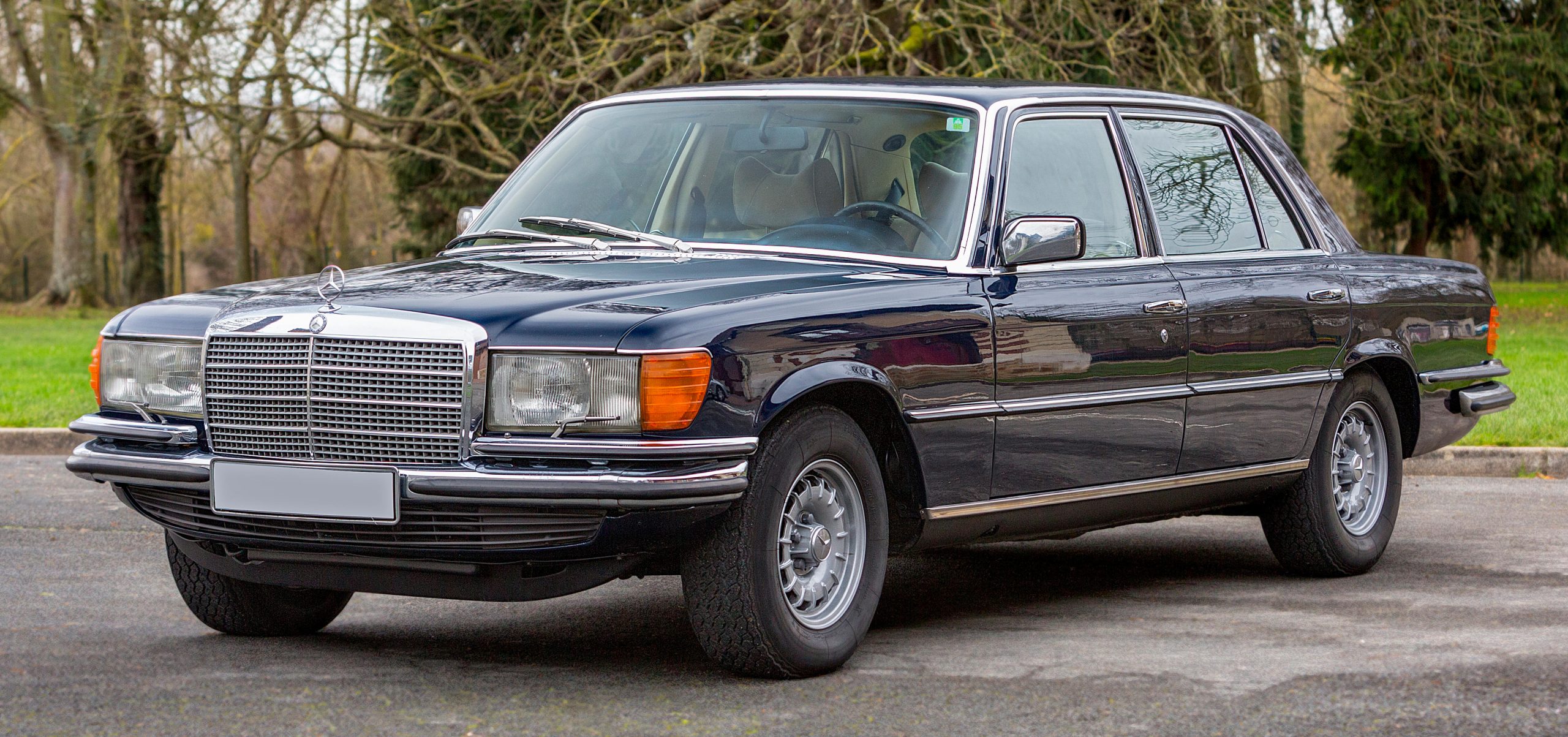
1. 1978 Mercedes-Benz S-Class (W116) – First Car with ABS
The W116 generation of the Mercedes-Benz S-Class was not just a flagship luxury sedan, it was a technical powerhouse that introduced a number of innovations still relevant today. Among these, the biggest breakthrough was the introduction of anti-lock braking systems (ABS) as a production feature.
Co-developed with Bosch, the system first appeared in 1978 and completely changed how vehicles approached emergency braking. ABS gave drivers much more control under heavy braking, preventing wheel lockup and allowing for better maneuverability even in slippery conditions.
The significance of ABS cannot be overstated. Before its introduction, braking hard on wet or icy roads almost always meant a complete loss of control. ABS added a layer of safety that hadn’t existed before, making cars significantly more forgiving in emergencies.
While it took years to trickle down into more affordable models, today ABS is not only common but legally required in many countries. Its debut in the S-Class set the stage for widespread adoption, and it’s now considered one of the most important safety features in modern cars.
What made Mercedes-Benz’s implementation so effective was the precision and reliability of the early system. Unlike more experimental features that failed due to inconsistency, the W116’s ABS was practical and worked exactly as intended. It enhanced performance and safety without demanding any special input from the driver.
That seamless integration helped it gain acceptance more rapidly than many other first-time features. It was a case of an innovation being both technically sound and genuinely beneficial.
To this day, the principle behind ABS remains largely unchanged. Of course, modern systems are more advanced, faster, and often tied into larger electronic stability programs, but the core idea remains the same. It’s a technology that has aged well and still performs the same critical role it did nearly five decades ago. The 1978 S-Class may be long gone, but what it started lives on in nearly every car on the road today.
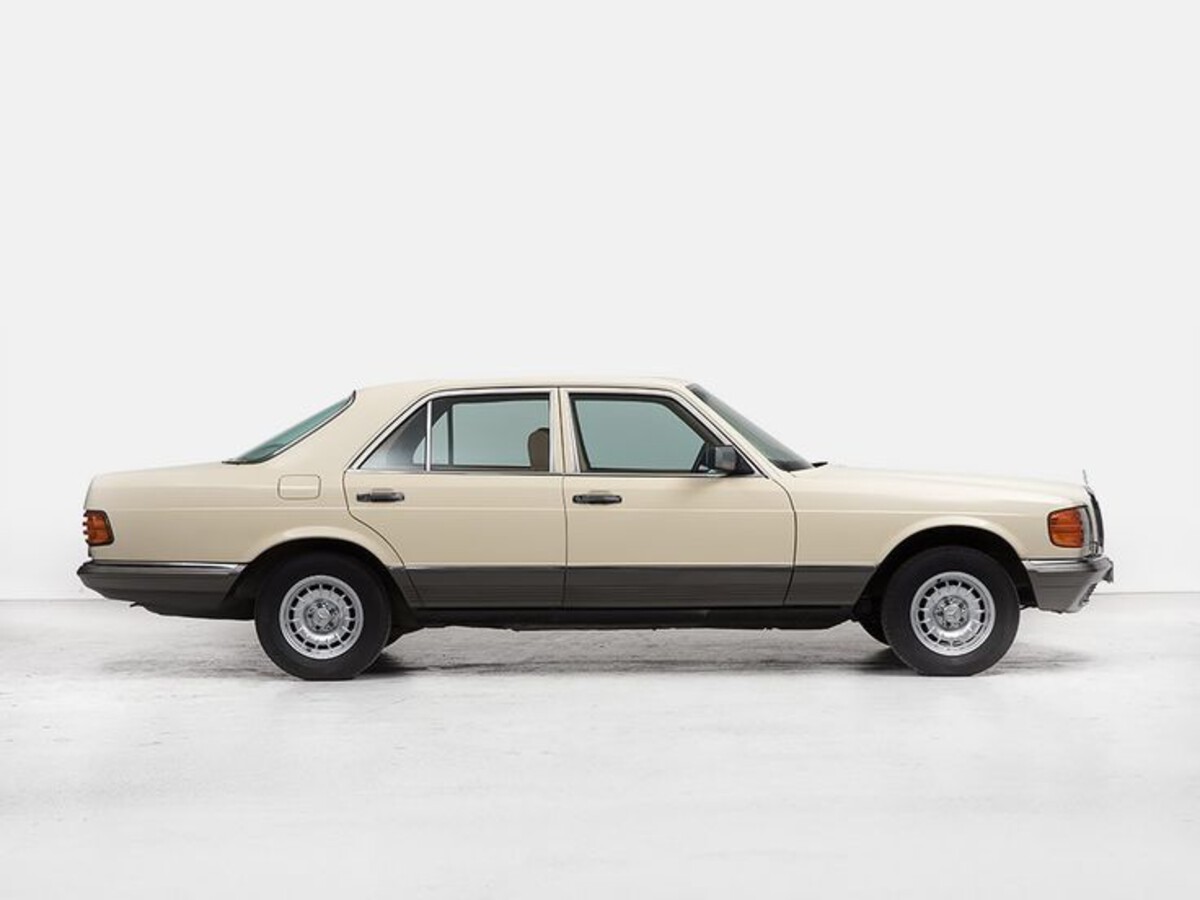
2. 1981 Mercedes-Benz S-Class (W126) – First Car with Airbags
Just a few years after introducing ABS, Mercedes-Benz followed it up with another landmark development in vehicle safety: the airbag. In 1981, the W126 generation of the S-Class became the first car available with a driver’s airbag.
While airbags had been conceptualized and even prototyped in earlier decades, it was this model that brought them into production and made them part of the modern safety package.
Initially viewed as a supplement to seatbelts, airbags added a second line of defense during collisions. The key benefit was their ability to cushion the driver in the event of a frontal crash, reducing the likelihood of serious head or chest injuries.
Although early airbags were relatively basic compared to today’s multi-stage, sensor-driven systems, they were a major step forward in passive safety. Their success helped shift the public’s perception of what safety in cars should include.
What made the airbag introduction even more important was the way it paved the way for further development. After the driver’s airbag, passenger airbags followed, then side-impact airbags, curtain airbags, and knee airbags.
Each evolution built on the original idea, proving just how significant that first implementation was. It created a foundation on which future safety innovations could be layered. Without that initial leap, the modern cocoon-like safety system of today’s vehicles might never have materialized in the same way.
Today, airbags are not only standard, they’re legally required in most parts of the world. What was once an optional extra on a luxury sedan is now an integral part of vehicle design across all segments.
And while cars have come a long way since the W126, the basic idea behind the airbag remains firmly intact. It’s a perfect example of a technology that started in one specific car and went on to change the automotive world fundamentally.
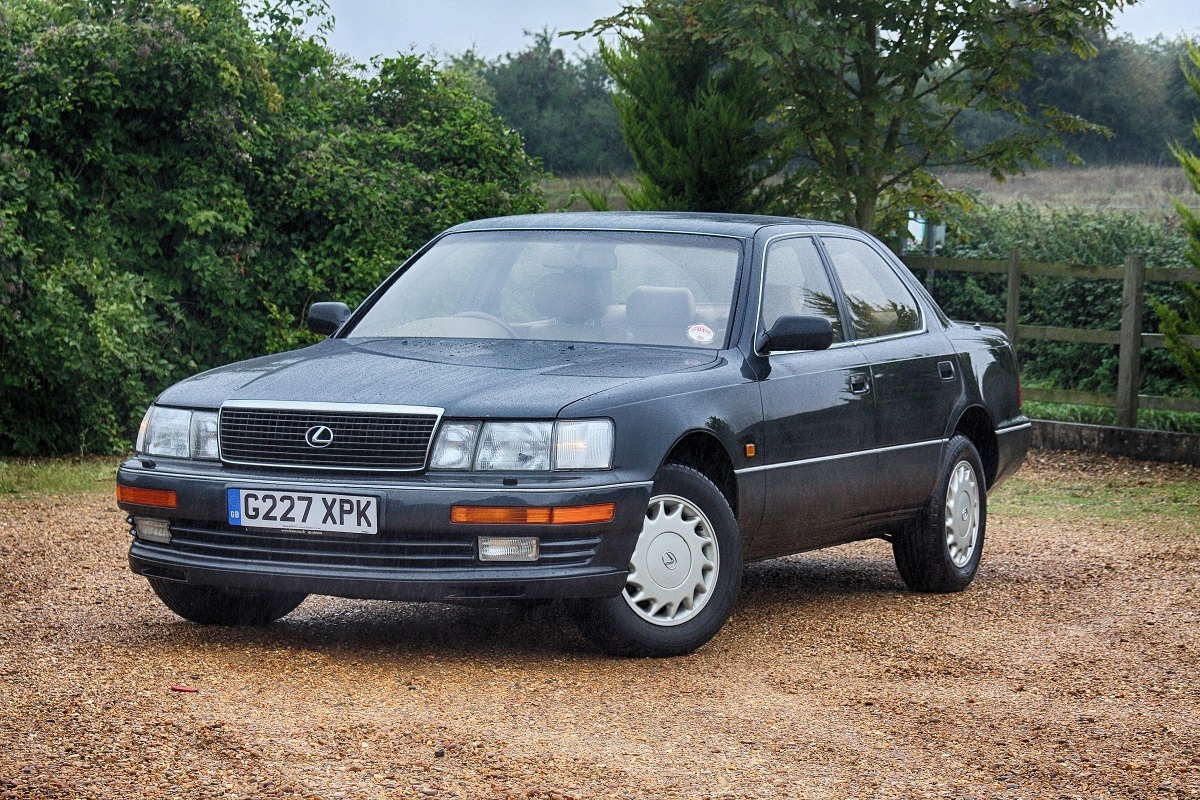
3. 1989 Lexus LS400 – Reliability and Quietness as Engineering Priorities
When the Lexus LS400 debuted in 1989, it didn’t come with flashy gimmicks or radical styling. Instead, it focused on engineering perfection, especially in reliability, refinement, and cabin silence.
This wasn’t just another luxury sedan; it was a clear message that these qualities could be achieved through technology and manufacturing precision. What set the LS400 apart was not a single gadget but the way it introduced a new philosophy in car-making.
At the heart of the LS400’s success was its bulletproof V8 engine and its obsessive attention to NVH (noise, vibration, and harshness).
Engineers went to extreme lengths to isolate the cabin from road and engine noise, using multi-layer insulation, hydraulic engine mounts, and sound-deadening materials that were often over-engineered by industry standards.
The result was a level of quietness usually reserved for far more expensive cars. And that quietness wasn’t just about luxury, it was about engineering consistency.
Reliability was another standout trait. Lexus didn’t aim to be merely “good enough”; they aimed for perfection. The LS400 went through some of the most rigorous quality control processes in the industry. The success of this car prompted competitors to rethink their own quality assurance processes.
Reliability became not just a selling point but a standard that other luxury brands were forced to meet. Lexus demonstrated that consistency and precision could be technology-driven.
The LS400 changed buyer expectations. It wasn’t about high-tech dashboards or digital gimmicks; it was about how well a car could perform day in and day out without issues. That focus on core quality has had a long-lasting effect.
Modern vehicles across every price point now strive for higher reliability and cabin comfort, often benchmarking themselves against the standards set by the LS400. The car didn’t just compete with rivals; it changed what luxury meant.
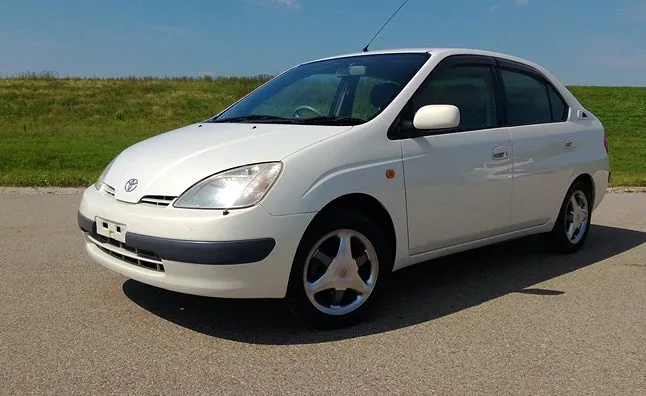
4. 1997 Toyota Prius – First Mass-Produced Hybrid Car
When Toyota launched the Prius in 1997, it didn’t just introduce a new model; it introduced a completely new way of thinking about car propulsion.
The idea of combining a gasoline engine with an electric motor wasn’t entirely new in theory, but Toyota was the first to bring this concept to mass production in a reliable, practical, and relatively affordable way.
The original Prius wasn’t fast, and it wasn’t flashy, but what it offered was efficiency and reduced emissions at a time when the world was just beginning to think seriously about the environment and fuel economy.
That commitment to innovation paid off, and today, hybrid technology is an essential part of the automotive industry.
The success of the Prius came from how seamlessly it integrated its hybrid system into a standard driving experience. Drivers didn’t have to change how they drove or plug the car in, it worked just like a regular vehicle, only more efficient.
The system used a gasoline engine for higher speeds and heavier loads, while the electric motor handled low-speed driving and stop-and-go traffic.
Regenerative braking added another layer of efficiency by capturing energy that would normally be lost. This design allowed the Prius to offer real-world fuel economy numbers that other vehicles of the time simply couldn’t match.
Toyota also focused on long-term reliability, which was crucial in convincing skeptical buyers that hybrid technology wasn’t just a short-lived experiment. Many early Prius models are still running today, and the technology has proven to be durable under real-world conditions.
Over time, the hybrid system was refined and expanded to other models within Toyota’s lineup and eventually copied by virtually every major automaker. It’s hard to imagine today’s car market without hybrids, but back in 1997, the Prius was a risk. That risk became a foundation.
What Toyota introduced with the Prius has now evolved into an entire segment of vehicles, including plug-in hybrids and even performance-oriented hybrid systems. But the original concept, balancing efficiency with usability, has remained remarkably consistent.
Today, hybrids are seen as a practical middle ground between traditional gasoline cars and full EVs, and the reason that’s possible is because the Prius proved it could be done. It changed the trajectory of automotive development, and the core technology still forms the backbone of many vehicles today.
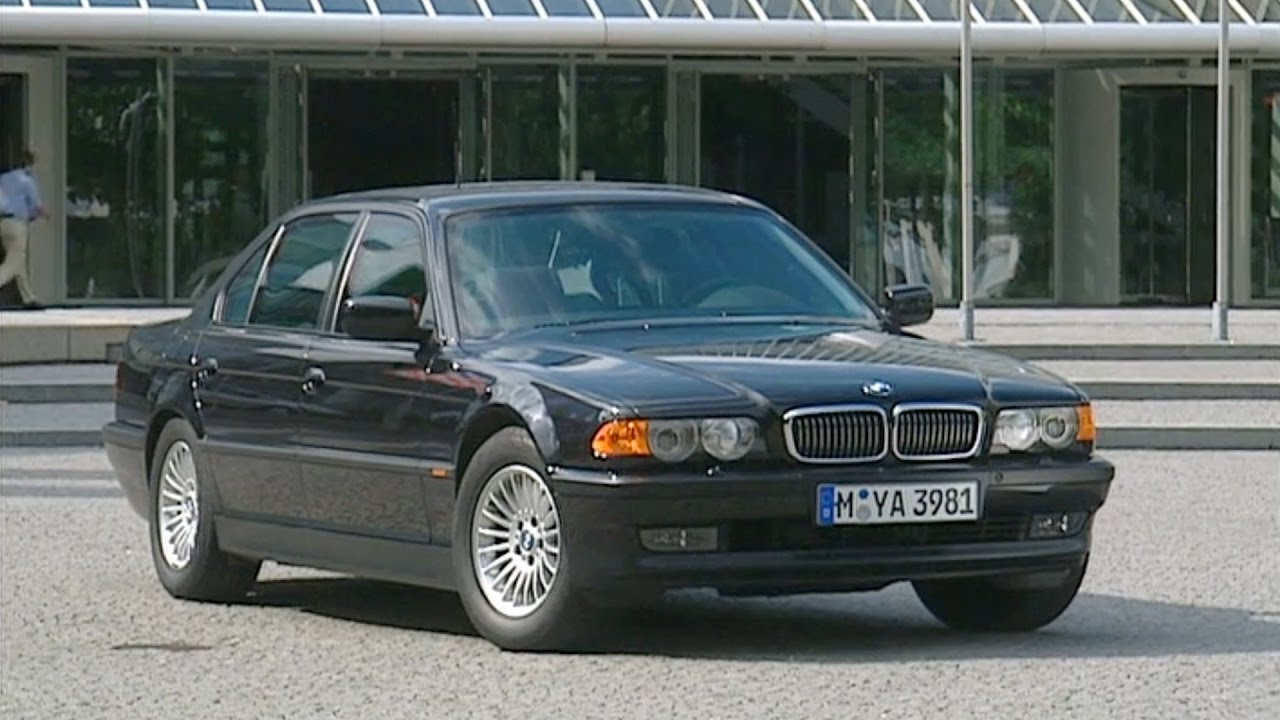
5. 2001 BMW 7 Series (E65) – iDrive and Centralized Vehicle Controls
The 2001 BMW 7 Series (E65) is often remembered for its controversial styling, but its most lasting contribution was the introduction of the iDrive system. At the time, most vehicles had a sea of buttons and switches scattered across the dashboard, each controlling a single function.
BMW chose to rethink the entire user interface by centralizing these functions into one control system. The result was iDrive, a rotary knob and screen setup that handled everything from navigation to climate control. Initially criticized for its steep learning curve, iDrive was nonetheless revolutionary.
The logic behind iDrive was that cars were becoming more complex, and drivers needed a better way to interact with increasing features. Rather than adding more buttons, BMW created a centralized digital interface that could be updated and expanded.
It was one of the first systems to anticipate the future trend toward software-defined vehicles. While the first generation of iDrive was far from perfect, it laid the groundwork for more refined systems that would follow not just in BMWs, but across the industry.
As time went on, BMW improved the usability of iDrive, and other automakers began to develop their own versions. Audi’s MMI and Mercedes-Benz’s COMAND systems were direct responses, as was the widespread shift toward large touchscreens and digital interfaces.
iDrive’s importance wasn’t in being a flawless product at launch, it was in showing that the traditional dashboard was outdated. It challenged the industry to rethink how drivers should interact with increasingly complex cars.
Today, nearly every new car uses some form of centralized control interface, often touchscreen-based, with voice and gesture inputs also becoming more common. The concept that one device could manage navigation, media, connectivity, and vehicle settings is now completely standard.
That idea started with the E65 7 Series. While opinions about the car’s design may still be mixed, its influence on in-car tech is beyond dispute. The digital interface it introduced is now the default expectation, and its legacy can be seen in every infotainment system on the market today.
Also Read: 5 Hyundai Accent Years Worth Owning vs 5 To Avoid

6. 2003 Toyota Sienna – Factory-Installed Backup Camera
In 2003, Toyota quietly introduced a feature in the Sienna minivan that would go on to transform driver safety: the backup camera. At the time, reversing a large vehicle was a common source of stress, and accidents involving small children, pets, or objects hidden behind the vehicle were unfortunately too frequent.
The Sienna changed that by providing a simple, effective solution, showing drivers what’s behind them. This wasn’t a flashy feature meant for tech lovers; it was a straightforward safety tool that made immediate sense.
The initial implementation was basic by today’s standards, showing a small black-and-white video feed from a camera mounted near the rear license plate. But even in its earliest form, it was clear that the backup camera offered real advantages.
It eliminated blind spots directly behind the car and gave drivers a better understanding of their surroundings, especially in tight parking situations or crowded areas. Parents quickly saw its value, and as the technology spread, so did its adoption across vehicle classes.
Once the Sienna proved the practicality of backup cameras, the technology spread rapidly. Luxury cars began offering it, then mid-size sedans, then compact cars.
Over time, the resolution improved, grid lines were added to help guide drivers, and eventually, 360-degree camera systems evolved out of this original idea.
In 2018, the United States even made backup cameras mandatory on all new cars, a rare example of a safety feature moving from a luxury option to a legal requirement in under two decades.
Today, it’s hard to imagine a new car without a backup camera, and most drivers use them instinctively. The technology has expanded beyond just reversing, now aiding in towing, off-road navigation, and even automated parking systems.
The simplicity of the original idea, giving drivers visual access to an area they couldn’t otherwise see, continues to define one of the most widely adopted safety technologies ever introduced. And it all started with a minivan that simply wanted to make parking less stressful.
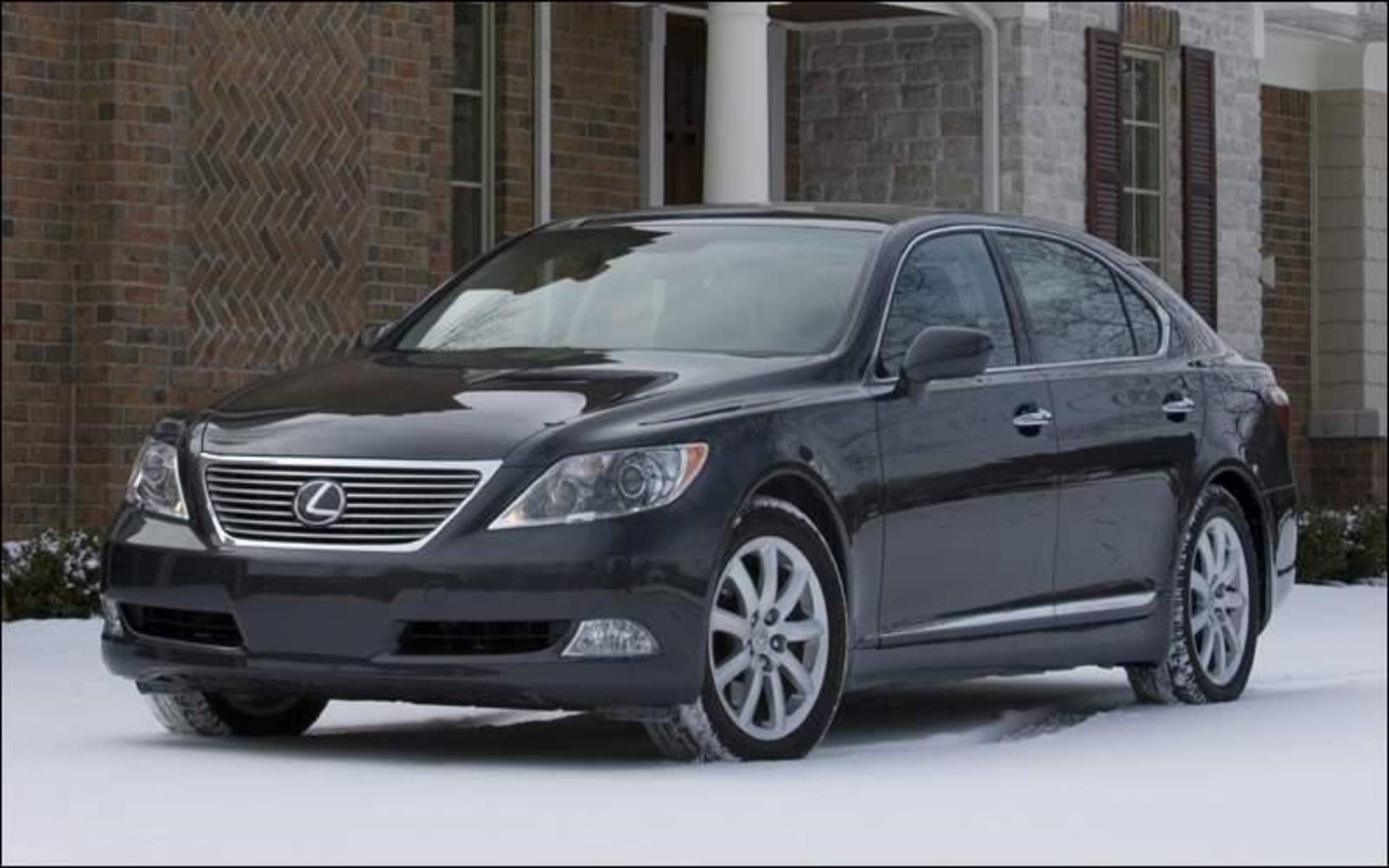
7. 2006 Lexus LS460 – Self-Parking Technology
When Lexus introduced the LS460 in 2006, it brought with it something that sounded like science fiction at the time: a self-parking system.
Using ultrasonic sensors, cameras, and software algorithms, the system could automatically guide the car into parallel parking spaces with minimal input from the driver. While it wasn’t fully autonomous, the Lexus Advanced Parking Guidance System (APGS) marked a significant step forward in driver-assist technology.
The appeal of self-parking wasn’t just convenience; it addressed a real-world challenge that made many drivers nervous. Parallel parking, especially in busy urban environments, could cause anxiety or lead to accidents.
By automating this task, Lexus showed how technology could reduce both stress and the likelihood of vehicle damage. The system also demonstrated how sensors and computing power could work together to perform complex tasks without requiring full autonomy.
Though the early versions of self-parking weren’t perfect, they set the stage for rapid improvement. Over the next few years, similar systems began appearing in models from Ford, BMW, and Volkswagen.
Eventually, parking assistance became part of a broader suite of features known as ADAS (Advanced Driver Assistance Systems). What began with parking is now contributing to lane centering, adaptive cruise control, and eventually, full autonomous driving.
Today, self-parking technology has become increasingly common. Some vehicles can now park themselves in perpendicular spaces or even exit a spot with no driver inside. But the core idea remains the same: using onboard technology to make driving less demanding and more precise.
The LS460 showed that this was not only possible but practical. It helped normalize the concept of car-assisted driving and pointed the way toward a future where machines handle more of the burden behind the wheel.
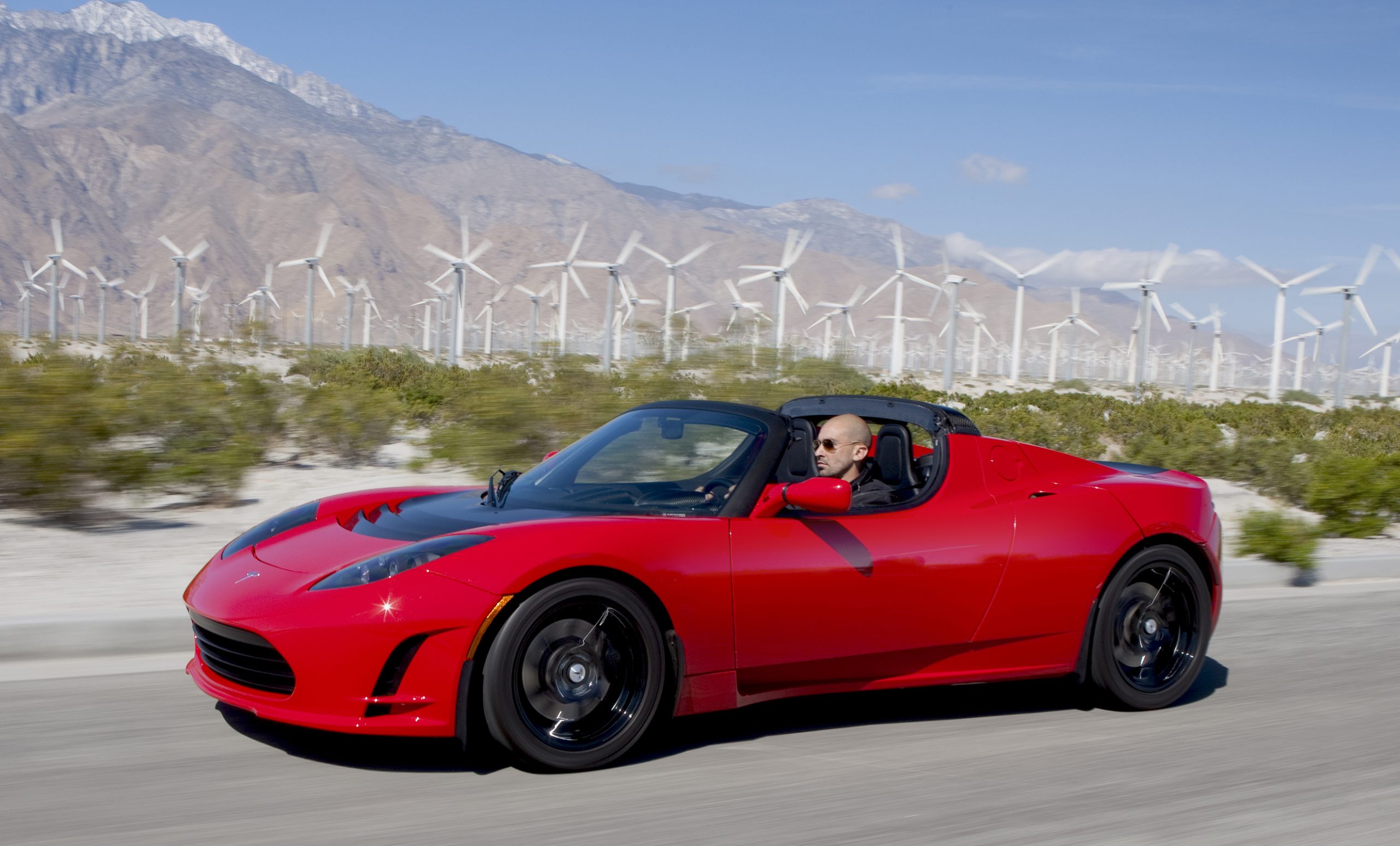
8. 2008 Tesla Roadster – Electric Cars as Performance Machines
Before the Tesla Roadster arrived in 2008, electric cars had a reputation for being slow, impractical, and niche. They were often seen as glorified golf carts, suited for short city commutes and little else. The Roadster flipped that image on its head. Built on a modified Lotus Elise chassis, it proved that an electric vehicle could be fast, stylish, and fun to drive.
For the first time, performance enthusiasts had a reason to take electric cars seriously. It wasn’t just an experiment; it was a complete rethink of what an EV could be.
What made the Tesla Roadster remarkable wasn’t just its speed, though it could sprint from 0 to 60 mph in under four seconds. More important was the way it delivered that power. Unlike internal combustion engines that build torque gradually, the Roadster’s electric motor offered instant torque, delivering all its power immediately. This resulted in a driving experience that felt both effortless and exhilarating. It wasn’t just a clean car, it was a car that enthusiasts could love.
The Roadster also brought lithium-ion battery technology to the forefront. Instead of relying on heavy and inefficient lead-acid batteries like earlier EVs, Tesla packed the Roadster with thousands of small, cylindrical lithium-ion cells, similar to those used in laptops.
This gave the vehicle a real-world range of over 200 miles, far beyond what any other electric car at the time could offer. It made the idea of a usable, long-range electric car a reality. It was a milestone not only in performance but also in practicality.
Today’s electric vehicle market owes a great deal to the Tesla Roadster. While newer EVs are more refined and offer even greater range and features, the original Roadster proved that electric power could be thrilling and viable at the same time.
The idea that EVs could rival and even surpass gasoline cars in performance was cemented with this model. That mindset shift is still influencing car design and consumer expectations today, as the global industry pivots toward electrification with increasing urgency.
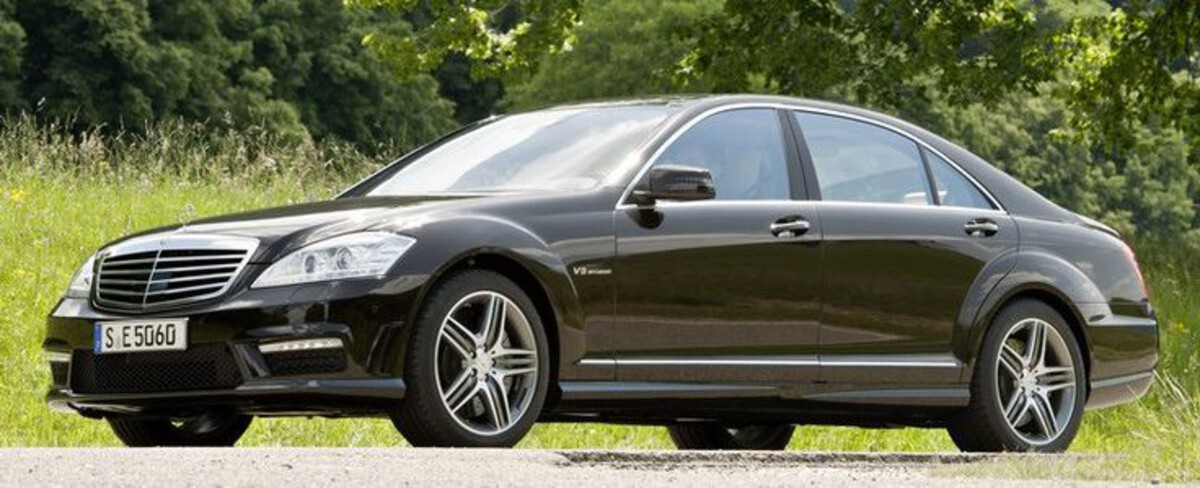
9. 2013 Mercedes-Benz S-Class (W222) – Advanced Driver Assistance Systems
The 2013 Mercedes-Benz S-Class (W222) didn’t just update the brand’s flagship luxury sedan, it redefined what was possible in terms of driver assistance. While the S-Class has always been a platform for debuting new technology, the W222 took it several steps further by offering features that bordered on autonomy. Systems like adaptive cruise control, lane keeping assist, traffic sign recognition, and autonomous braking brought a new level of semi-automated driving to the public.
These technologies weren’t just added as isolated functions, they were integrated into a cohesive system. The S-Class could maintain a set distance from the car in front, steer to stay within its lane, and even bring itself to a complete stop if a pedestrian or vehicle suddenly appeared.
This made highway driving dramatically safer and less fatiguing, especially on long trips or in heavy traffic. It wasn’t full autonomy, but it was the most complete form of semi-autonomous driving available at the time.
Another key innovation was the vehicle’s use of stereo cameras and radar to “read” the road ahead. For example, the car could detect bumps and potholes, then adjust the suspension in real time to smooth out the ride. This wasn’t just about comfort, it was an early form of predictive control, where the car could make decisions based on environmental input.
The W222 essentially became aware of its surroundings and adapted dynamically, a crucial step toward truly intelligent vehicles.
Since then, these features have become increasingly common, even in mid-range vehicles. Brands like Tesla, BMW, and Hyundai have followed suit, offering robust driver assistance suites of their own.
But the integration, sophistication, and real-world usability of the W222’s systems set a benchmark that others still try to match. It took features that once seemed experimental and made them trustworthy, seamless, and part of the everyday driving experience. That approach remains the gold standard for what modern driver assistance systems aim to achieve.
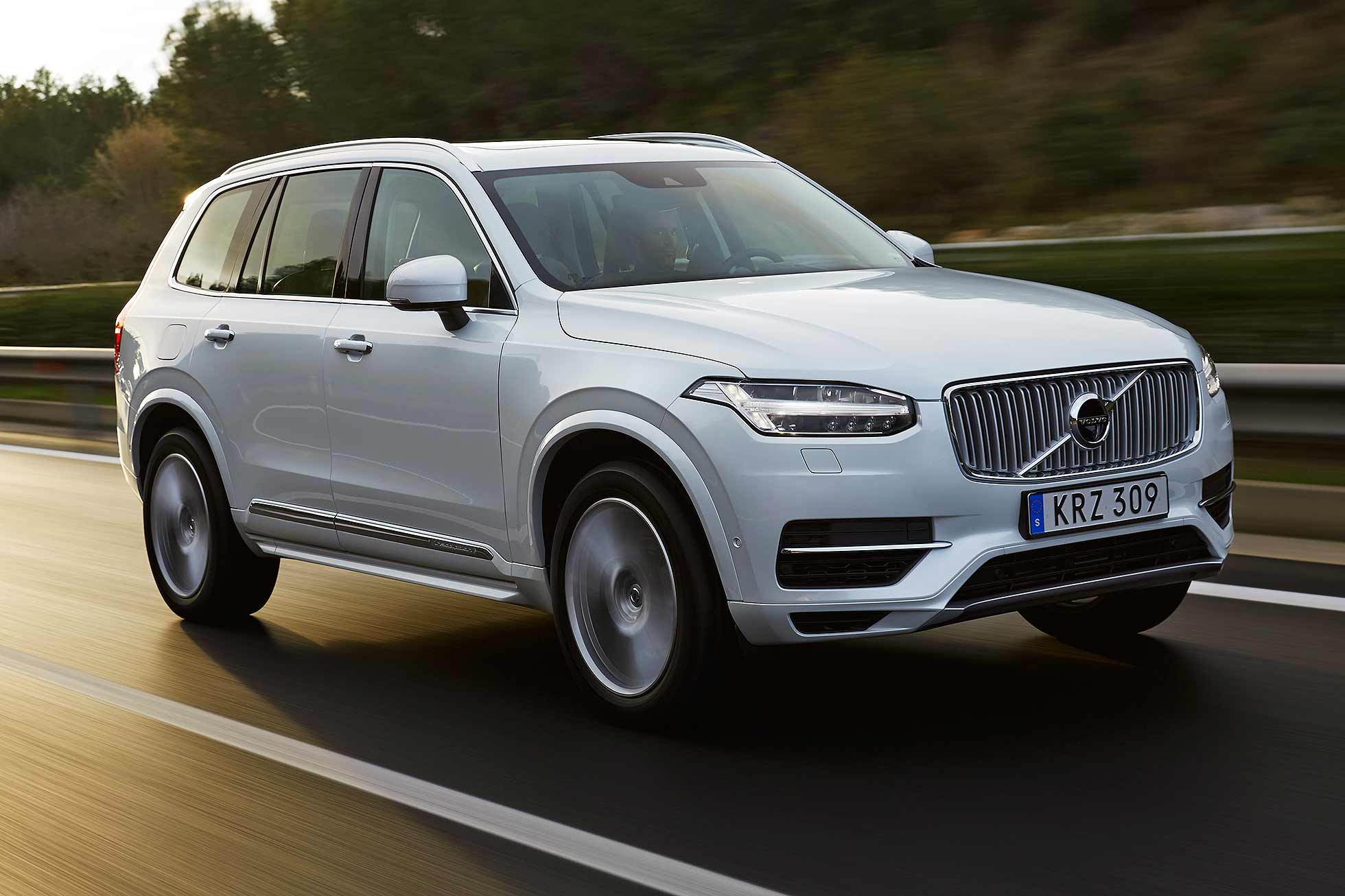
10. 2015 Volvo XC90 – Standardizing Safety as a Core Identity
When the second-generation Volvo XC90 launched in 2015, it wasn’t trying to be the fastest or most high-tech vehicle in its segment. Instead, Volvo doubled down on what it had always prioritized: safety. What made the XC90 different was how it turned that philosophy into a modern, tech-forward feature set.
Nearly every active safety system available at the time, automatic emergency braking, pedestrian detection, blind-spot monitoring, cross-traffic alerts, was either standard or seamlessly integrated into the driving experience. The XC90 wasn’t just safe in the event of a crash; it was designed to prevent one from happening in the first place.
Volvo took a bold stance with the XC90 by stating that no one should die or be seriously injured in one of its new vehicles by a certain future date. While that goal is ambitious, the 2015 XC90 made a clear effort to realize it.
The SUV included a robust set of structural reinforcements, advanced crumple zones, and interior features like a redesigned front seat that absorbed energy during impacts. It treated every passenger, not just those in the front, as equally deserving of protection. It was a holistic approach that prioritized safety without compromising luxury.
The XC90 also introduced Pilot Assist, Volvo’s early semi-autonomous driving feature. Though more conservative than similar systems from Tesla or BMW, it emphasized security and predictability over flash. This made it more appealing to safety-conscious drivers and showcased Volvo’s commitment to responsibility in automation. Unlike other brands, Volvo didn’t rush features to market. It ensured that every system performed reliably under a wide range of conditions before offering it to the public.
Since its debut, the XC90’s safety suite has become a blueprint for the industry. Other brands have followed Volvo’s lead, making advanced safety features standard rather than optional extras. Insurance companies, regulators, and safety organizations now consider many of these technologies essential.
Volvo didn’t just make safety its brand; it proved that safety itself could be a technology platform. The 2015 XC90 turned that philosophy into a reality, and it continues to influence how cars are designed, marketed, and rated for safety to this day.
