
Small car engines have come a long way from their humble beginnings. What used to be a segment reserved for budget-conscious drivers looking for nothing more than basic transportation has evolved into a space filled with engineering marvels.
Today, some small engines manage to punch far above their weight class, offering power, torque, and driving satisfaction that rivals much larger engines. Thanks to turbocharging, direct injection, variable valve timing, and better materials, engineers have found ways to squeeze serious performance out of tiny powerplants.
However, not all small engines are created equal. While some deliver impressive results, others fall short, especially when pushed beyond city driving or loaded with passengers and cargo.
These underwhelming engines can feel sluggish on the highway, struggle to climb hills, or simply fail to provide a confident driving experience. Buyers expecting peppy performance from a small engine are often disappointed when the reality doesn’t match the spec sheet.
This contrast is particularly noticeable in compact cars, crossovers, and even some entry-level sedans where small displacement engines are the norm. The growing trend of downsizing for the sake of fuel efficiency and emissions has led to an increase in the number of small engines in vehicles not always well-suited for them.
Some automakers have mastered this balance, delivering small engines that feel refined, energetic, and capable. Others have fallen into the trap of underpowering vehicles, which can compromise both performance and reliability over time.
Also Read: 5 Diesel Engines That Outlive Pickups vs 5 That Crack Under Pressure
5 Small Car Engines That Run Like Big Ones
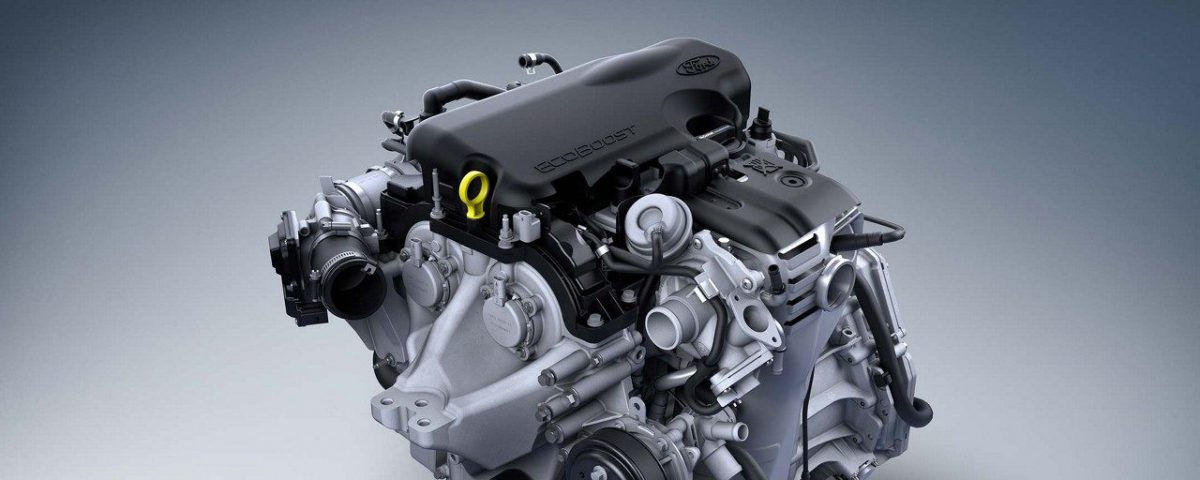
1. Ford 1.0L EcoBoost Inline-3
Ford’s 1.0-liter EcoBoost inline-3 engine is often praised as a game-changer in small engine technology, demonstrating how advanced engineering and turbocharging can make a tiny engine perform far beyond its displacement. Introduced in the early 2010s, this engine was designed to deliver the fuel efficiency of a small engine without sacrificing power or drivability.
Despite being just one liter in size and having only three cylinders, it packs a punch with outputs ranging from about 123 to 140 horsepower, depending on tuning and application. What truly sets the EcoBoost apart is its ability to produce impressive torque figures in the low and mid-RPM ranges, which allows it to feel lively and responsive in everyday driving conditions, similar to larger engines.
The EcoBoost’s turbocharger plays a significant role in achieving its performance. By forcing more air into the engine, the turbo allows the small displacement to burn more fuel efficiently and generate greater power output. Unlike older turbocharged engines, the EcoBoost’s turbo is designed to spool quickly, minimizing lag and delivering power smoothly.
This responsiveness is essential for urban driving and highway acceleration, where instant throttle response can make all the difference in safety and driver satisfaction. The engine also incorporates direct fuel injection and variable valve timing, which further enhances its efficiency and power delivery. These technologies work together to ensure the engine doesn’t feel underpowered despite its small size.
Another impressive aspect of the Ford 1.0L EcoBoost is its balance of performance and fuel economy. It manages to deliver spirited driving without sacrificing mileage, often achieving upwards of 40 miles per gallon in mixed driving conditions. This efficiency does not come at the cost of durability either.
Ford engineered the EcoBoost with high-strength materials and advanced cooling systems to handle the increased stresses of turbocharging, ensuring it maintains longevity similar to larger, naturally aspirated engines. The engine has earned numerous awards for its innovation and performance, reflecting how well it manages to bridge the gap between small displacement and big-engine capability.
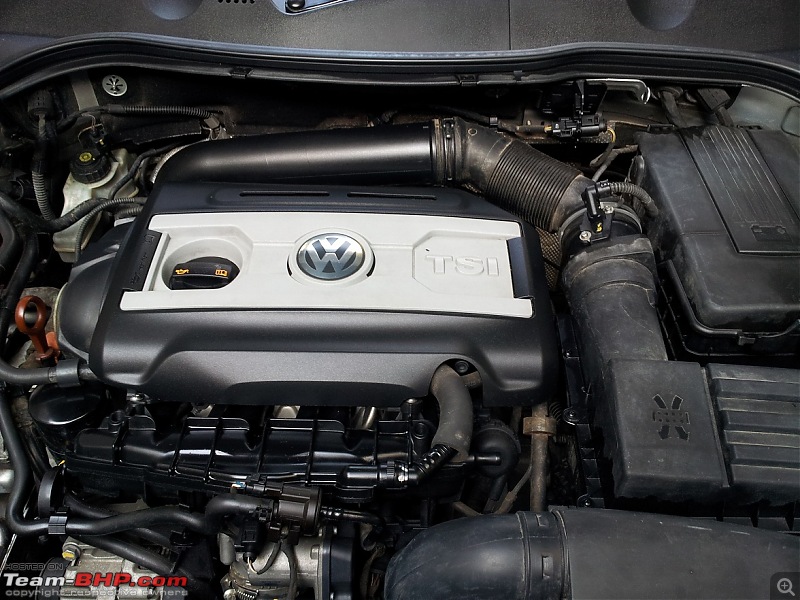
2. Volkswagen 1.8L TSI Inline-4
Volkswagen’s 1.8-liter TSI (Turbocharged Stratified Injection) inline-4 engine is a benchmark for how small engines can deliver the kind of performance traditionally expected from larger powerplants. Found in various models, including the Golf and Jetta, the 1.8 TSI balances power, torque, and efficiency in a way that feels much more substantial than its displacement might suggest.
With power outputs typically between 170 and 180 horsepower and torque around 200 lb-ft, this engine offers brisk acceleration and strong mid-range performance, characteristics more commonly associated with 2.0-liter or even larger engines from previous generations.
One of the core reasons the 1.8L TSI engine performs so well is its advanced turbocharging system combined with direct fuel injection. The turbocharger is carefully engineered to provide quick spool-up, reducing lag and ensuring that the engine responds immediately when the throttle is applied.
Direct injection enhances combustion efficiency and power delivery by precisely controlling fuel spray into the cylinders, which also helps reduce emissions and improve fuel economy. The engine’s variable valve timing system further refines power output and efficiency by adjusting valve operation according to driving conditions, making it versatile across different speeds and loads.
In addition to raw power, the 1.8L TSI engine is lauded for its smoothness and refinement. Unlike many small turbo engines that can feel jerky or uneven, this engine runs smoothly with minimal vibration and noise, contributing to a premium driving experience.
Its balance of power and quiet operation allows it to perform well in both city traffic and highway cruising without feeling strained or coarse. The transmission options paired with this engine, including efficient dual-clutch gearboxes, also enhance its ability to feel like a larger, more powerful engine by delivering power swiftly and seamlessly.
Fuel economy is another strong suit of the Volkswagen 1.8L TSI. It manages to provide lively performance without excessive fuel consumption, often delivering mid-to-high 30s in miles per gallon under mixed driving scenarios.
This balance of economy and performance makes the engine popular among drivers who want a small car that doesn’t compromise on fun or efficiency. The 1.8 TSI’s reputation for reliability and smooth power delivery means it stands out as one of the best examples of a small engine running like a bigger one, providing a driving experience that punches well above its displacement.
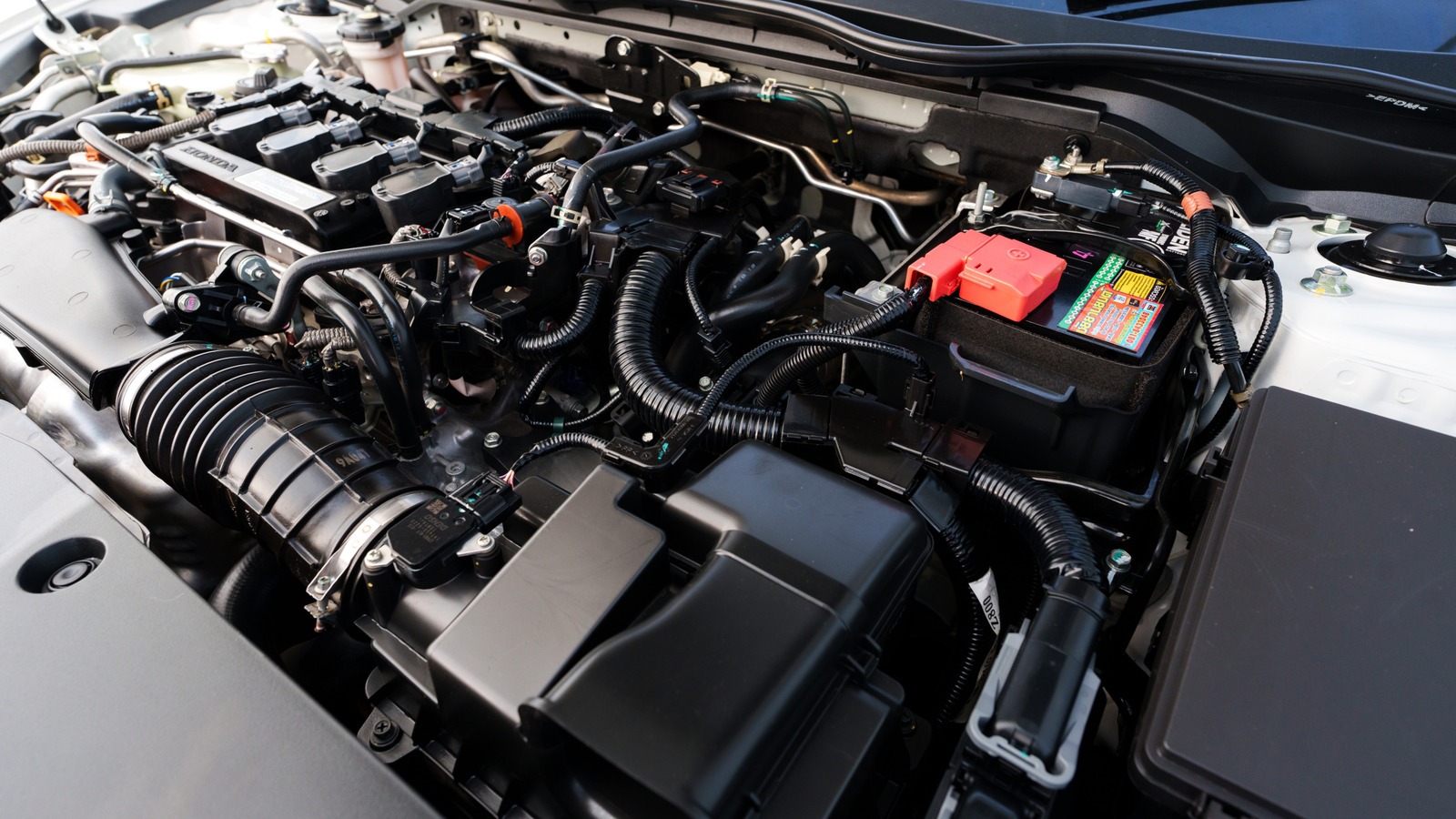
3. Honda 1.5L Turbo Inline-4
Honda’s 1.5-liter turbocharged inline-4 engine has become a hallmark of modern small engine performance, especially in models like the Civic and CR-V. Honda has long been known for its efficient and reliable engines, but with this turbocharged powerplant, the company took a significant step toward combining fuel efficiency with lively performance.
The engine produces approximately 174 horsepower and 162 lb-ft of torque, allowing small vehicles to accelerate smoothly and confidently, often rivaling the performance of naturally aspirated engines with larger displacements.
One of the key features of Honda’s 1.5L turbo engine is its ability to deliver torque early in the rev range. This means that power is accessible from low RPMs, improving drivability and reducing the need for frequent gear changes or excessive throttle input.
The engine’s turbocharger is designed to minimize lag, making the power feel immediate and responsive. This characteristic is crucial for daily driving, where quick acceleration and smooth power delivery enhance both safety and enjoyment.
Furthermore, the engine employs direct injection and a variable valve timing system (VTEC), which contributes to efficient combustion, improved fuel economy, and reduced emissions.
In addition to its performance benefits, the Honda 1.5L turbo engine is praised for its smoothness and refinement. The inline-4 configuration, combined with modern engineering techniques, results in a powerplant that operates quietly and without harsh vibrations, which can be common in smaller turbo engines.
This smooth operation helps the engine feel more substantial and balanced, traits usually reserved for larger engines. The engine’s design also incorporates high-strength materials and advanced cooling systems, which contribute to its longevity and durability, making it a reliable choice for long-term ownership.
Fuel economy is a standout attribute of the 1.5L turbo engine. It typically achieves impressive mileage figures for a turbocharged engine with strong power output, often reaching into the high 30s or low 40s in miles per gallon, depending on the vehicle and driving conditions.
This combination of efficiency, power, and smooth operation positions Honda’s 1.5L turbo inline-4 as a prime example of how small engines can perform like big ones, delivering satisfying driving experiences without the penalty of high fuel consumption or frequent maintenance.
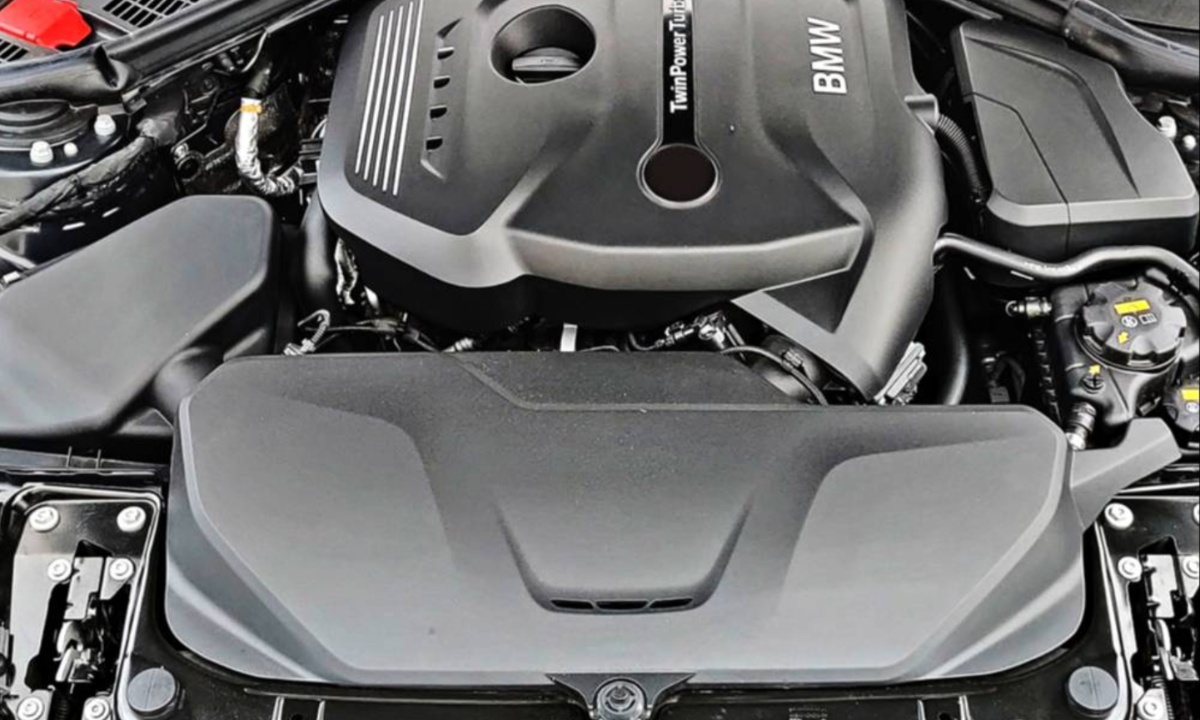
4. BMW B48 2.0L Turbo Inline-4
BMW’s B48 2.0-liter turbocharged inline-4 engine is a standout example of how a small displacement engine can deliver the kind of power, smoothness, and responsiveness typically expected from larger engines. Introduced as part of BMW’s modular engine family, the B48 is used in a wide range of models including the 3 Series and X1.
It delivers power outputs ranging from 180 to over 250 horsepower, depending on tuning, alongside torque figures that allow for strong acceleration and flexible driving dynamics. Despite being just a 2.0-liter engine, it often feels like a larger engine due to its refined power delivery and engineering.
The B48’s success lies in its combination of technologies such as twin-scroll turbocharging, direct fuel injection, and variable valve timing. The twin-scroll turbocharger helps reduce turbo lag by efficiently utilizing exhaust gases, ensuring the engine responds quickly to throttle inputs.
Direct injection provides precise fuel delivery for optimal combustion and power, while variable valve timing adjusts valve timing and lift for improved efficiency and performance across a wide RPM range. Together, these features make the engine feel highly responsive, smooth, and capable of delivering a broad torque curve that enhances driving pleasure.
Beyond raw power, the BMW B48 is known for its refinement. The engine runs quietly and smoothly, with minimal vibrations, even under load or at high RPMs.
This level of refinement contributes to a premium driving experience and sets it apart from other small engines that might sacrifice smoothness for power. The engine’s integration with BMW’s advanced transmissions also plays a role in creating a seamless and dynamic driving experience, making the power feel natural and controlled rather than forced or abrupt.
Fuel efficiency remains strong despite the engine’s performance capabilities. The B48 manages to deliver impressive mileage numbers for a turbocharged engine producing high horsepower, often aided by technologies such as auto start-stop and efficient thermal management systems.
This combination of power, refinement, and efficiency makes the BMW B48 a clear example of a small engine that runs like a big one, providing the excitement, smoothness, and versatility of larger engines while maintaining the benefits of smaller displacement.

5. Mazda 2.5L SkyActiv-G Inline-4
Mazda’s 2.5-liter SkyActiv-G inline-4 engine is an excellent demonstration of how clever engineering and a focus on efficiency can allow a small engine to perform with the strength and smoothness of larger engines. Used in models such as the Mazda3 and CX-5, this engine delivers around 187 horsepower and 186 lb-ft of torque.
While 2.5 liters is slightly larger than some other small engines, Mazda’s SkyActiv technology enables it to extract power and efficiency levels that exceed what many might expect from an inline-4 of this size.
SkyActiv-G refers to Mazda’s approach to internal combustion engine design that focuses on high compression ratios, efficient combustion, and reduced internal friction. This engine operates with a compression ratio as high as 13:1, which is uncommon in gasoline engines without forced induction.
Achieving this high compression required advances in combustion chamber design, precise fuel injection, and engine management systems. The result is an engine that delivers strong torque at low and mid-range RPMs, translating into quick acceleration, responsive throttle, and smooth power delivery that mimics larger engines.
In addition to power and responsiveness, the SkyActiv-G engine is for its balance of fuel economy and emissions performance. Thanks to the efficient combustion process, it offers competitive mileage figures without sacrificing drivability or refinement.
The engine runs quietly and smoothly, with minimal vibration, helping create a premium feel for vehicles equipped with it. Mazda’s engineering ensures the engine is durable and reliable, capable of delivering consistent performance over many miles with regular maintenance.
In essence, the Mazda 2.5L SkyActiv-G inline-4 stands out as a powerful and efficient engine that manages to feel larger and more capable than its inline-4 designation suggests. It combines modern technology and smart engineering to deliver an engine experience that balances power, smoothness, and economy, making it a prime example of a small engine running like a big one in today’s automotive industry.
Also Read: 5 V6 Engines That Surprise Owners With Longevity vs 5 That Don’t Last
5 Small Car Engines That Can’t Keep Up
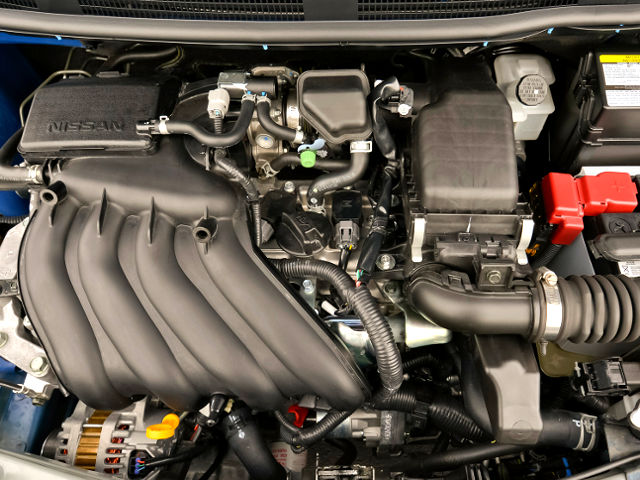
1. Nissan 1.6L HR16DE Inline-4
The Nissan HR16DE 1.6-liter inline-4 engine has been a staple powerplant in several entry-level and compact models such as the Nissan Versa and Sentra for years. It is generally recognized for its reliability and ability to deliver consistent fuel economy, making it a popular choice for budget-conscious buyers.
However, when it comes to performance, especially in comparison with more modern small engines or larger displacement powertrains, the HR16DE shows its limitations clearly. With an output of roughly 109 horsepower and 107 lb-ft of torque, this naturally aspirated engine struggles to provide the kind of spirited acceleration or robust mid-range power that many drivers expect from today’s vehicles.
One of the primary reasons the HR16DE underperforms in terms of power is its older design and lack of forced induction technologies like turbocharging. While many competitors have moved toward downsized turbocharged engines that extract more power from less displacement, the HR16DE relies on traditional port fuel injection and a relatively simple valvetrain setup.
This restricts its ability to generate strong torque at lower RPMs, which in turn affects its drivability. Drivers often report that the engine feels sluggish when quick acceleration is needed, such as merging onto highways or overtaking slower vehicles. The engine’s response tends to be slow, requiring drivers to push the throttle further than desired to get moving, which can lead to frustration.
In addition to performance concerns, the HR16DE’s tuning heavily favors fuel economy and emissions compliance over excitement or power delivery. While this makes it economical for city driving or light commuting, it results in a rather uninspired driving experience.
The lack of low-end torque means that the transmission frequently has to downshift and work harder to maintain speeds, which may increase wear over time, especially if the vehicle is driven in hilly or stop-and-go conditions regularly. This lack of power flexibility limits the car’s appeal to drivers who want a more engaging or responsive drive, highlighting the trade-off between economy and performance that this engine embodies.
Despite these shortcomings, the Nissan HR16DE engine maintains a solid reputation for reliability and ease of maintenance, factors that often make it a practical choice for first-time car buyers or those who primarily need a dependable vehicle for urban driving.
However, for drivers who desire a small car with the punch and smoothness typically associated with larger engines or more advanced small engines, the HR16DE often falls short. It serves as a clear example of a small engine that meets basic transportation needs but cannot keep up with modern expectations of power and driving enjoyment.
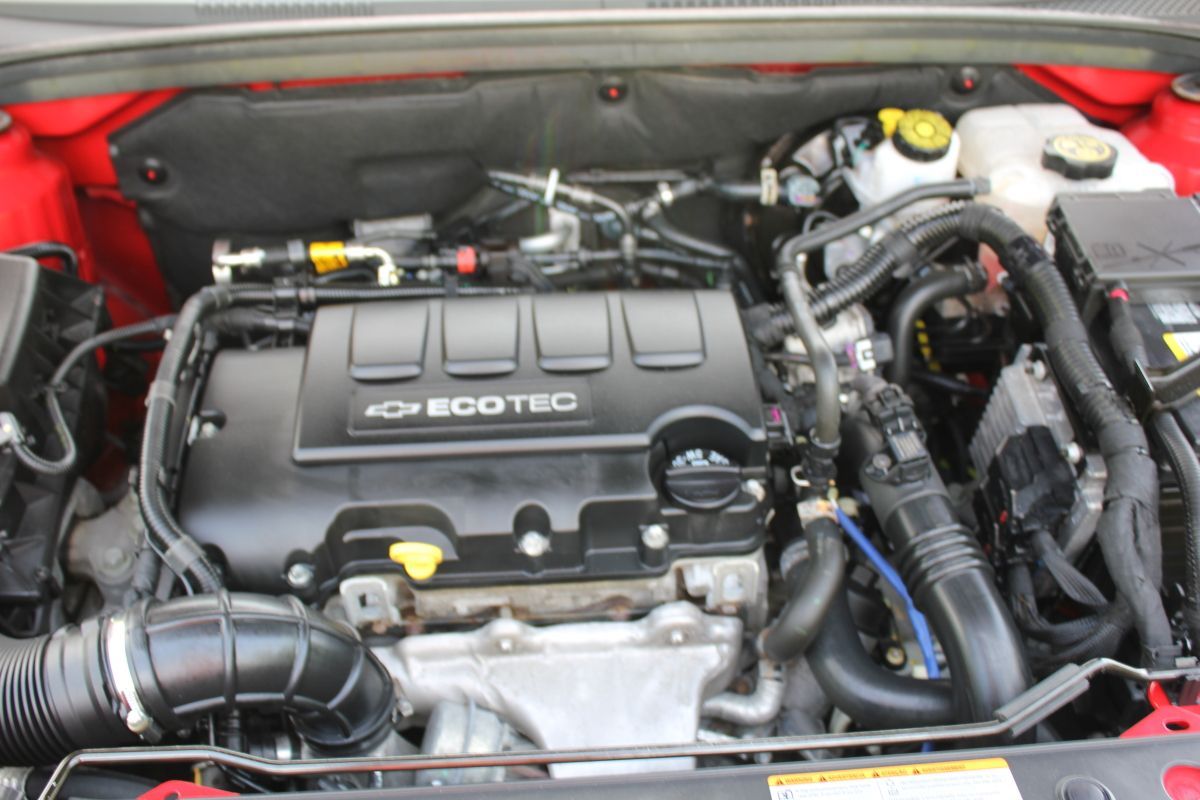
2. Chevrolet 1.4L Turbo (LUV)
General Motors’ 1.4-liter turbocharged engine, commonly found in vehicles such as the Chevrolet Cruze and Sonic, represents an attempt to combine turbocharging with a small displacement for better efficiency and moderate power output. In theory, turbocharging a small engine should deliver a strong power-to-weight ratio and responsive driving dynamics.
However, in practice, this particular engine often falls short of expectations in both performance smoothness and reliability. While it produces a respectable 138 horsepower and 148 lb-ft of torque on paper, the real-world experience often reveals issues that prevent it from competing effectively with other small turbo engines or larger naturally aspirated engines.
One of the drawbacks of this engine is its inconsistent power delivery, which many drivers describe as having noticeable turbo lag followed by a sudden surge of power. This uneven throttle response can make driving unpredictable, especially during city traffic or quick accelerations, reducing driver confidence and comfort.
The turbocharger design appears to be less refined compared to competitors, lacking the ability to spool quickly and deliver power smoothly. This lag-surge combination means that the engine does not offer the kind of linear power progression that is typically associated with modern turbocharged engines designed to mimic the feel of larger engines.
In addition to performance issues, the 1.4L turbo engine has been criticized for reliability problems, including timing chain failures, carbon buildup, and sometimes even oil consumption issues. These mechanical concerns raise the cost of ownership over time and detract from the engine’s appeal as a durable small engine option.
The need for frequent maintenance or repairs can offset the initial cost savings from buying a smaller, more efficient car. Moreover, this engine’s power and torque figures, while adequate in isolation, are not supported by the smoothness and responsiveness required to make the vehicle truly competitive in its segment.
Therefore, while the Chevrolet 1.4L turbo engine attempts to combine efficiency and performance, it often fails to provide a satisfying driving experience or the reliability expected from a powerplant aspiring to compete with larger engines. It struggles to keep pace both in terms of raw performance and day-to-day drivability, making it less attractive to buyers seeking a well-rounded small engine with big-engine characteristics.
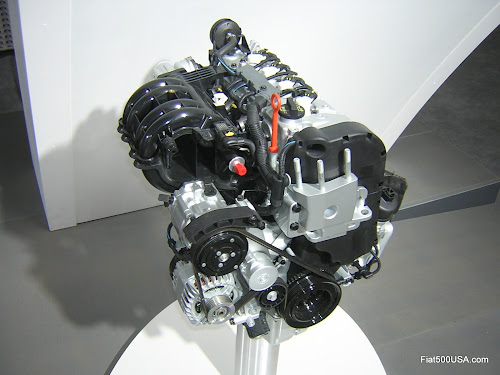
3. Fiat 1.4L MultiAir Inline-4
The Fiat 1.4-liter MultiAir engine introduced a unique approach to engine efficiency with its innovative variable valve timing and electro-hydraulic actuation system. This technology allowed for more precise control of air intake, which improved combustion efficiency and reduced emissions.
However, despite these advancements, the MultiAir engine has often been viewed as underwhelming when it comes to performance and long-term reliability, particularly in markets where drivers expect more from their small engines in terms of power and responsiveness. With an output of around 135 horsepower, the engine’s numbers are respectable, but its real-world driving experience does not always live up to these figures.
One of the most significant issues with the 1.4L MultiAir engine is its relatively low torque output at low RPMs. This results in a sluggish throttle response and less spirited acceleration, which detracts from driving enjoyment. The naturally aspirated design means the engine needs to rev higher to generate power, making it noisy and less fuel-efficient during aggressive driving.
This lack of low-end torque makes city driving and highway merging challenging, especially when the vehicle is fully loaded or climbing steep grades. Drivers often have to work the engine harder, which can increase wear and decrease efficiency.
Furthermore, the MultiAir system’s complexity has introduced maintenance challenges. While the technology offers theoretical benefits for fuel economy and emissions, it can lead to higher repair costs and potential reliability issues.
Problems such as timing belt wear, oil leaks, and valve actuator failures have been reported, which may deter potential buyers looking for a trouble-free ownership experience. These maintenance concerns, combined with the engine’s limited performance, make the 1.4L MultiAir less appealing compared to other small engines that provide a better balance of power, efficiency, and durability.
The Fiat 1.4L MultiAir engine offers an interesting technological approach but falls short in delivering the driving dynamics and reliability required to keep pace with bigger or more advanced small engines. Its combination of modest power, low torque, and complex maintenance needs positions it as a small engine that often fails to meet the expectations of drivers seeking performance and longevity.
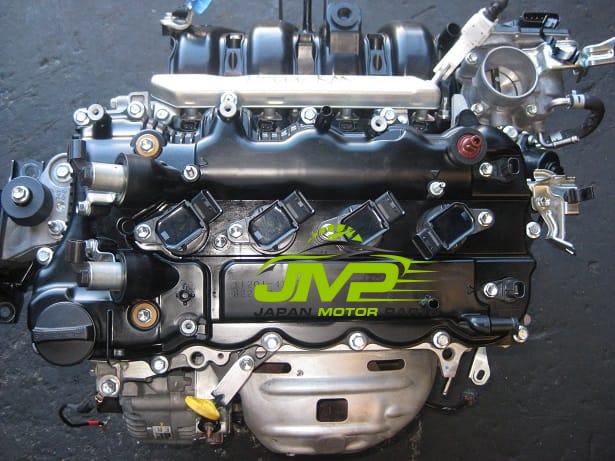
4. Toyota 1.3L VVT-i Inline-4
Toyota’s 1.3-liter VVT-i engine is well-known for its simplicity, durability, and fuel efficiency, which has made it a common choice in entry-level models like the Toyota Yaris. This engine, producing around 100 horsepower, is designed primarily for economical transportation and ease of maintenance.
However, when it comes to performance, especially compared to modern small engines that utilize turbocharging or advanced direct injection, the 1.3L VVT-i falls noticeably behind. Its lack of power and torque means it struggles to deliver an engaging or responsive driving experience.
One key reason for its limited performance is the absence of forced induction and the relatively small displacement. The engine’s naturally aspirated design relies on basic fuel injection and a traditional valvetrain, which limits its ability to produce strong low-end torque.
This can make acceleration feel slow, particularly when the vehicle is carrying passengers or climbing hills. Drivers often find that they must downshift frequently to maintain speed or safely overtake, which can be inconvenient and reduce fuel efficiency. The engine’s modest power output results in a driving experience that feels lackluster compared to other small engines designed with performance in mind.
On the other hand, the 1.3L VVT-i excels in reliability and low maintenance costs. Its simple mechanical design and proven durability mean it can often run for hundreds of thousands of miles with minimal issues.
This makes it an excellent choice for drivers who prioritize reliability and fuel economy over sporty performance. However, for those seeking a small car with lively acceleration or the feel of a bigger engine, the 1.3L VVT-i engine’s limitations are a clear disadvantage.
In effect, Toyota’s 1.3-liter VVT-i engine is a practical, efficient powerplant that fulfills basic transportation needs but cannot match the performance or driving excitement of more advanced or larger engines. It is best suited for buyers who want a no-nonsense, economical small car rather than those seeking spirited driving dynamics.
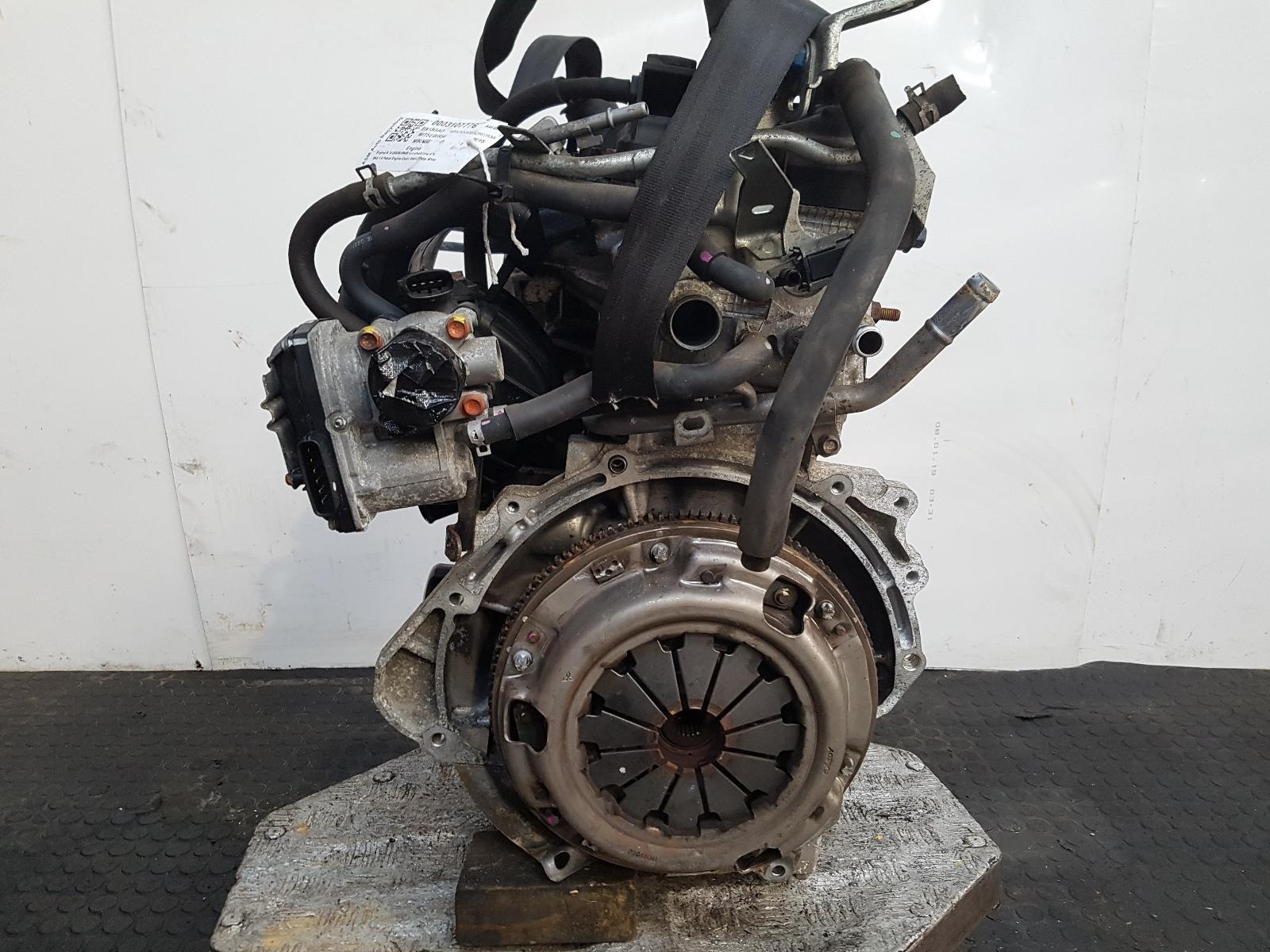
5. Mitsubishi 1.2L 3-Cylinder Turbo
Mitsubishi’s 1.2-liter three-cylinder turbocharged engine, used in models such as the Mitsubishi Mirage, represents an effort to bring forced induction to a very small and lightweight engine block. The idea behind this engine was to offer a balance between fuel economy and acceptable performance in an entry-level vehicle.
However, despite its turbocharger, the engine often struggles to deliver the kind of power and refinement expected from modern small turbo engines. Producing only about 78 to 80 horsepower, this engine’s output is modest and falls well short of what many competitors offer, making it one of the weaker performers in the small engine category.
One of the major drawbacks of the 1.2L turbo engine is its three-cylinder layout, which tends to create more vibration and noise compared to four-cylinder engines. While Mitsubishi has incorporated balance shafts and other engineering solutions to reduce harshness, the engine still feels rougher and less refined, especially at higher RPMs.
This can lead to a less comfortable driving experience, particularly on longer trips or at highway speeds. Furthermore, the turbocharger itself provides limited boost, which results in a lackluster acceleration feel and significant turbo lag. Drivers frequently report that power delivery is uneven, with a noticeable delay before the turbo engages and a weak surge afterward.
Additionally, the engine’s low horsepower and torque figures mean it often struggles with tasks that demand more power, such as highway merging, overtaking, or climbing hills. The engine is forced to operate at high RPMs to maintain speed, which increases fuel consumption and engine noise.
This diminishes the fuel economy advantage that the small displacement might suggest, and it impacts the driving comfort. Many owners express frustration that the engine does not live up to the expectations set by other small turbocharged engines.
Mitsubishi’s 1.2L 3-cylinder turbo engine is a small powerplant that fails to meet the performance and refinement standards commonly associated with modern small turbo engines. Its limited output, roughness, and lack of responsiveness make it an example of a small engine that cannot keep up with bigger engines or more advanced small ones that deliver stronger and smoother performance.
