
Truck collecting has transformed from a niche interest to a flourishing segment in the classic vehicle auction market. What once was the domain of workhorse utilitarian machines has become a canvas for nostalgia, restoration artistry, and investment strategy.
Some trucks, due to their rarity, cultural significance, unique design, or exceptional condition, have seen their auction prices climb dramatically. Those values no longer reflect just their utility or even just their beauty but the intangible factors around provenance, originality, and desirability among collectors.
Over the past decade, collectors and enthusiasts have driven up demand for iconic trucks, pushing marquee names into rarified price territory. The result is that models once regarded as humble daily drivers are now being bid to astonishing sums, often surpassing equivalent classic cars.
That shift has been fueled by rising interest in vehicle history, the restoration community’s growing skill, and the willingness of buyers to pay for authenticity.
Moreover, scarcity plays a central role: many of the trucks commanding top prices are rare factory options, limited production years, or unique combinations of powertrain, trim, and equipment. Those few surviving examples in excellent shape or fully restored have become trophy pieces.
Another factor influencing skyrocketing auction prices is the crossover between pop culture and automotive identity. Trucks associated with film, famous owners, or distinctive usage are especially prized. Social media exposure amplifies that effect, letting every detail of a prized restoration or an original survivor circulate widely.
Buyers are more aware now of provenance, matching numbers, documentation, and originality. They will pay a premium for trucks that retain their factory paint, period-correct parts, or have documented histories.
The preservation community’s standards have pushed restoration and conservation quality ever higher, increasing the cost and effort required to reach auction‑grade condition. That in turn raises the entry price for sellers, which then feeds back into higher auction estimates and realized prices.
At the same time certain modern trucks have joined classics in value growth because of limited production, high-performance portioning, and fan‑base demand. Specialty trims, powerful engines, rare four‑wheel drive systems, and desirable color packages can create auction fever.
Another element is the geographic and economic backdrop: strong interest in restoration disciplines in particular regions, availability of skilled restoration shops, and collector wealth all play a role. As fiscal conditions, tastes, and collector priorities evolve, trucks that once were overlooked are now being reappraised.
In what follows we examine ten trucks whose auction prices have escalated sharply. Each of these has broken through previous norms, achieving numbers that illustrate how significant the collector truck market has become.
Also Read: 5 Cars That Look Cheap But Last Long and 5 That Don’t
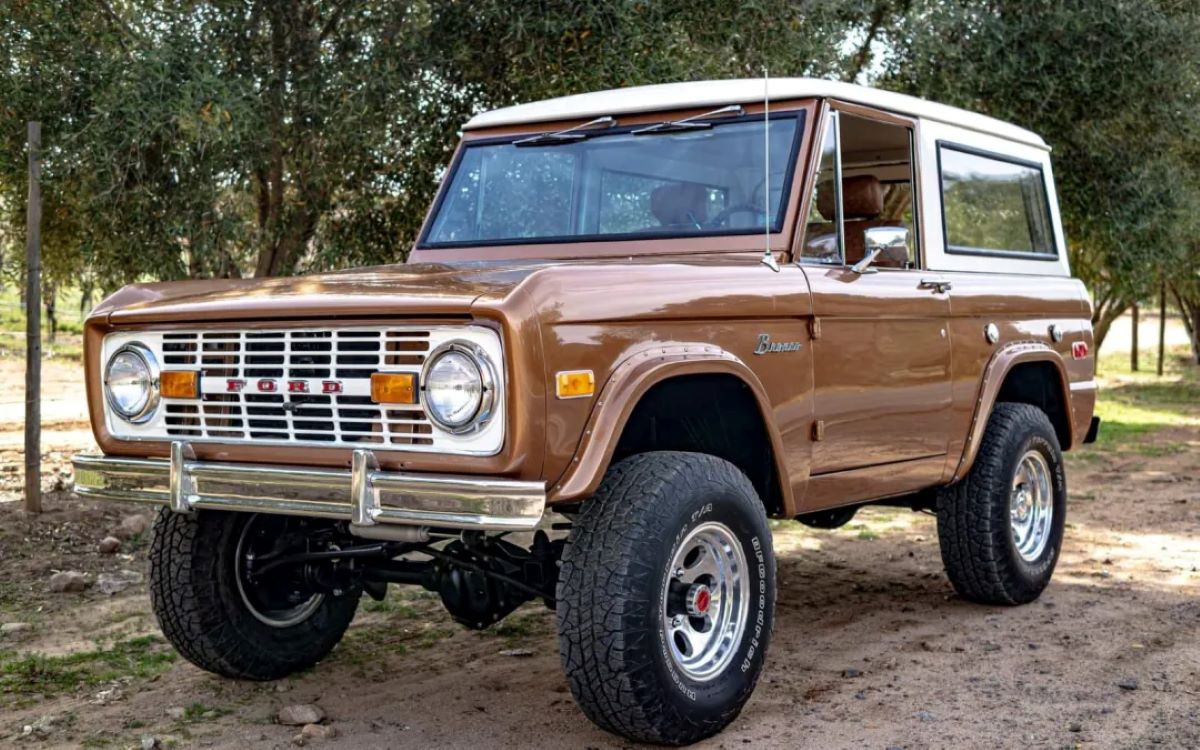
1. 1972 Ford Bronco
One of the most celebrated trucks in recent auction history is the first‑generation 1972 Ford Bronco. Originally built for off‑road function and outdoor adventure, that model has become an icon of rugged style and vintage performance.
Its short wheelbase, solid front axle, and simple but strong drivetrain make it both visually appealing and mechanically straightforward to restore.
Collectors prize the originality of portions such as the paint scheme, badging, interior trim, and engine components. A fully restored 1972 Bronco in factory colors, with matching numbers and documented history, often draws bidders from around the world. What used to sell for modest sums has, for top examples, leapt into six‑figure territory.
Several factors have combined to raise its auction values. First, limited production makes high‑quality examples rare. Many Broncos suffered from hard off‑road use, rust, or modification. It is difficult to find one in or restored to factory condition. Second, appreciation in the classic SUV/truck hybrid segment has grown.
Enthusiasts want trucks that can provide adventure and authenticity. Third, restorers have become increasingly meticulous.
Parts reproduction has improved, allowing more faithful restorations. Fourth, demand from urban collectors who value aesthetics and status has increased. That has created more competition at auction, pushing prices upward.
Some Broncos have sold for several hundred thousand dollars. Bidders especially favor units with rare options like high output engines, automatic transmissions, or desirable color combinations.
A Bronco with original interior, original drivetrain, and a documented life story—perhaps minimal damage over many decades—can outshine even a more modified or flashy version. Restoration costs for top examples are high, often tens of thousands of dollars in labor and materials. Those restoration costs are baked into the price that buyers are willing to pay.
As auction houses spotlight these desirable examples, public exposure rises. News stories amplify what the top sales achieved, which then becomes a benchmark. Owners holding Broncos that might sell in the seven figure realm are less willing to accept lower offers, having seen what peer vehicles fetch.
That benchmark effect serves to raise the floor across all Bronco auctions. When rare Bronco appears at auction, it often becomes a headline item, drawing bidding wars and pushing price growth.

2. 1955 Chevrolet Cameo Carrier
The 1955 Chevrolet Cameo Carrier blended pickup utility with car styling in a way that was unusual for its time. Introduced as a premium pickup, the Cameo’s smooth body sides, styling cues borrowed from Chevrolet’s passenger cars, and landscaped rear bed set it apart from the more work‑oriented pickups of the era.
It was not built for farm or heavy hauling tasks but rather for those who wanted utility with elegance. Because relatively few were made and even fewer have survived in good condition, when one appears at auction in restored or preserved form, the price tag can be eye‑opening.
Collectors prize original Cameo Carriers especially those with the correct engine, trim, and accessories. Panels need to align well; chrome and emblems must be correct; the bed often requires special wood or metal work that adheres to the original design.
Restoring one demands parts that are harder to find, and the craftsmanship must meet expectations among discerning buyers. When well done, the beauty of the design, smooth fenders, integrated taillights, and stylish grille, can rival that of passenger cars, but the cost is higher due to rarity and special components.
Auction results for Cameo Carriers have jumped significantly. Prices that once hovered modestly above common pickups now eclipse many mid‑range classic cars. A fully restored example with matching engine and transmission, original trim, and minimal body replacement will attract strong bidder interest.
The rarity of the original features or ability to reproduce high quality replacements means that only a few will reach premium condition. That scarcity in premium condition plays into supply and demand, pushing record numbers.
Buyers of Cameo Carriers are often those who appreciate beauty, nostalgia, and design history. They are willing to invest not only in the mechanical soundness but in making sure the look is as close as possible to what left the factory.
Show car judges, car‑shows, museums, and private collectors all compete. When a Cameo Carrier takes a top appearance award or has documented show history, its auction value tends to be even higher. The perception of prestige adds to its value beyond its physical condition.

3. 1965 Ford F100 Unibody
The 1965 Ford F100 Unibody model was one of the few pickups built with a unibody construction rather than the more common body‑on‑frame design. That gives it a distinct feel, weight distribution, and ride quality.
Originally intended for urban or light duty use, many of them were used hard, modified, or repurposed, meaning original or well‑preserved examples are rare. Enthusiasts seeking a piece of truck history prize unibody models because they represent engineering experiments, design risks, and a departure from the mainstream methods of pickup construction.
Restoration of a 1965 F100 Unibody is expensive. The unibody structure demands particular attention to rust repair because of the way panels support load and interact. Replacing or repairing major sheet metal, floorpans, rocker panels, and attaching proper reinforcements is labor‑intensive.
Also retrieving accurate parts for trim, interior, and drivetrain can be challenging. Buyers at auctions look for factory correct engines, transmission pairings, and original styling elements. Even small differences can reduce value significantly, so preserving originality matters.
Recent auction prices have shown dramatic increases. Examples that once sold for barely more than restorers paid in parts are now trading at multiples. A standout F100 with excellent history, matching powertrain, correct trim and paint, and documented restoration can fetch prices that even some similar class trucks do not reach.
Competitive bidding ramps up when provenance is excellent. Trucks with clear service history or surviving in unrestored or minimally altered states are especially appealing.
Collectors attracted to the F100 unibody are often drawn by its combination of rarity, design distinctiveness, and nostalgia. The cultural memory of work‑truck aesthetics from mid‑1960s combined with a stylish ride makes it desirable in both show and street contexts.
Owners often face choices: preservation of patina or full restoration. Both paths can lead to high auction results, though restoration usually garners higher dollar figures, especially in clean and well documented condition.
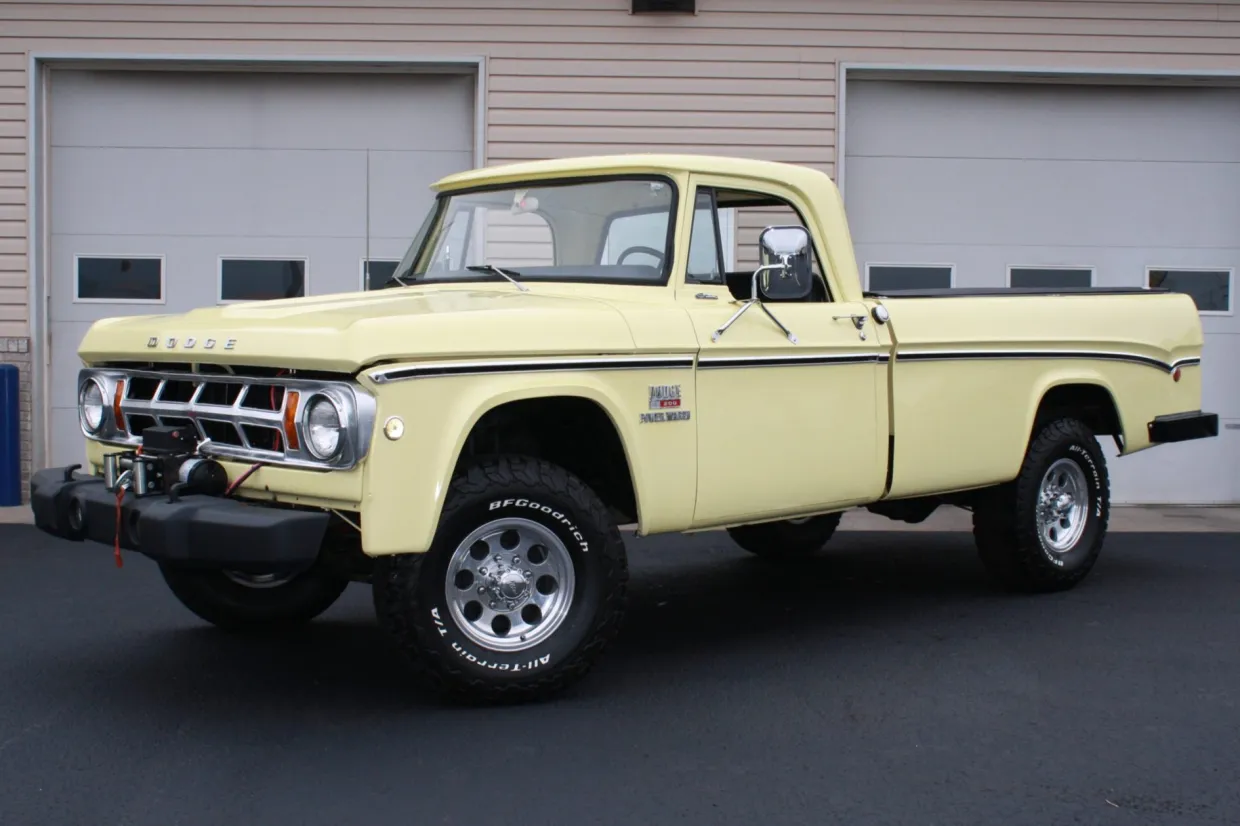
4. 1969 Dodge Power Wagon
The 1969 Dodge Power Wagon is a legendary beast of off‑road capability and rugged utility. Birthed in an era when trucks were largely built tough, this model stands out for its military‑heritage design cues, heavy duty components, and four‑wheel drive prowess.
It evokes memories of exploration, hauling, and agricultural or industrial labor. Those qualities now carry heritage value. Intact, original Power Wagons are not common. Many have been used hard, modified, or cut up, leaving few survivors in original or restorable shape.
Auction buyers seeking a 1969 Power Wagon often look for strong mechanicals: original transfer case, heavy duty axles, correct gear ratios, good frame and body without severe rust. Interior often is worn but originality matters: the original bench seat, gauges, dash, and metalwork will affect desirability.
Body panels need repair, but auctions favor trucks with correct sheet steel, original glass, and factory paint or color. Restorations that incorporate performance or usability upgrades are tolerated, but originality drives top dollar.
In recent years, outstanding examples have fetched surprisingly high prices. Where decades back a restored Power Wagon might have landed in the mid‑five figures, now you see high‑six figure numbers for the cleanest, most original, or highly restored units.
Trucks with matching drivetrain, documented ownership, and minimal restoration errors tend to lead bidding contests. The rarity alone of finding one that survived decades intact adds scarcity value.
Collectors who purchase Power Wagons often see them as investment pieces, museum pieces, or show trucks. Some combine preservation with usability. Others prefer them as static display. Either way, showing correct hardware, original or high quality reproduction parts, and attention to detail matter greatly.
Auction houses increasingly provide condition reports, historical documentation, and photographs that allow buyers to assess originality and value. That transparency helps fuel confidence and supports higher bids.

5. Early‑1980s Toyota Hilux & Pickup Desert Racers
Toyota Hilux trucks from the early 1980s have seen a remarkable rise in collector esteem. Known for durability, simplicity, and adaptability, they have built a reputation over decades rather than generations. Those that survived sun, sand, rust, or heavy work are rare.
Among their enthusiasts are those who appreciate originality, survivor condition, or minimal restoration that preserves age‑character. Hilux trucks used for desert racing or remote work add stories that attract bidders who love patina and authenticity.
Some of these trucks were modified in period to race or traverse remote areas. Frame reinforcement, heavy suspension, engine swaps or upgrades are common. But examples that retain or return to correct engine, matching drivetrain, correct bed, and minimal unnecessary modification are most sought in auctions.
Buyers look for good body integrity, solid chassis, absence of rust in critical structural points, correct wheels, and correct interior styling. Even trim details such as original instrument cluster, switches, and gauges matter.
Auction prices for top examples have risen strongly. Trucks that once sold for a few thousand dollars are now crossing tens of thousands, in some rare cases over a hundred thousand. Hilux trucks with known history, documented use, unrestored sand or desert patina, and strong mechanical function draw multiple bidders.
The exotic illusion of remote survival adds mystique. Especially for trucks with show history or media exposure, premium prices are paid.
People attracted to early‑1980s Hilux pickups are often those who value both ruggedness and authenticity. They may prefer a survivor rather than a perfect restoration. They enjoy vehicles that show life, carry scars and stories, yet still function.
That blend of character plus preservation is increasingly prized. Auctions that emphasize originality tend to reward those who resisted overrestoration. Hilux flatbeds or desert racer heritage versions with correct signage, accessories, or period modifications often command top dollar.
Also Read: 5 Cars With Trusted AWD Systems and 5 With Systems That Fail
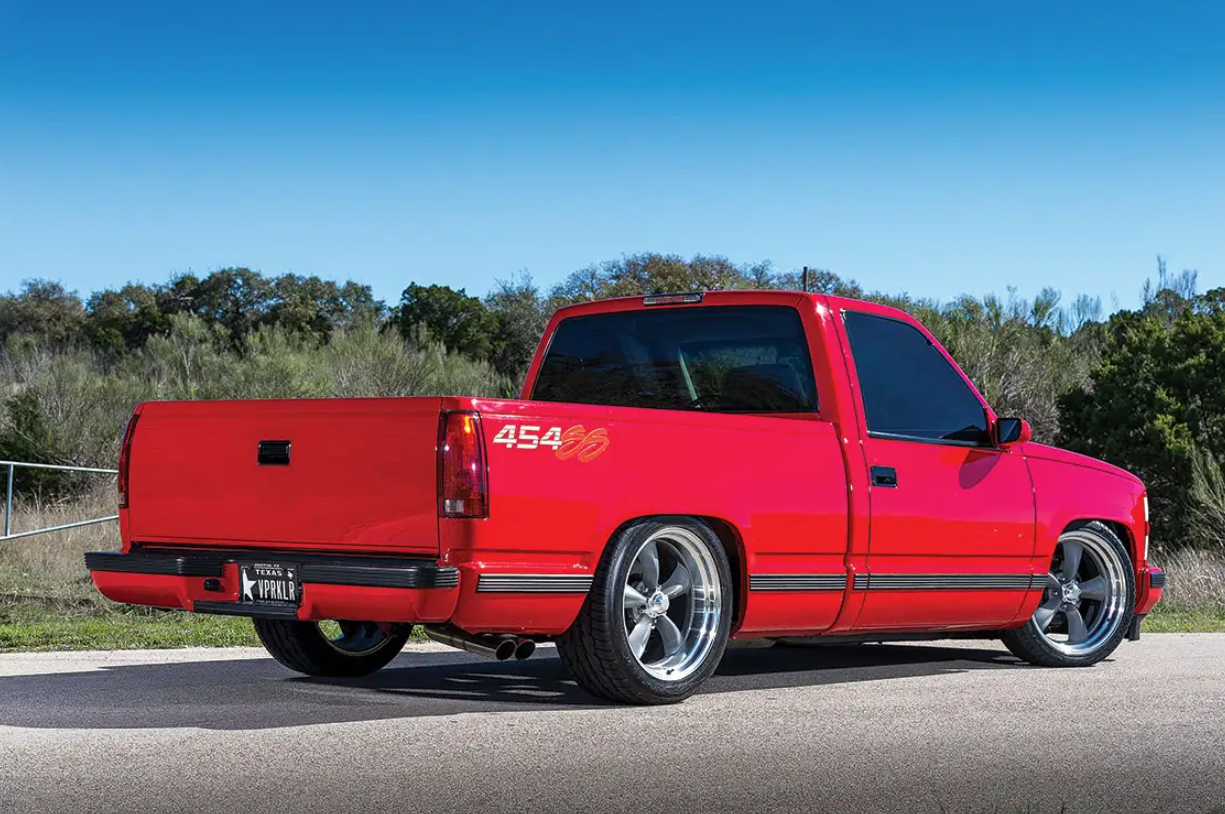
6. GMC Sierra 454 SS (1990)
The 1990 GMC Sierra 454 SS is an example of a modern truck that has entered collector territory. Equipped with a big block V8, heavy duty components, and street‑performance ambitions, it represented a high watermark for modern pickups in its era.
At the time it stood apart for combining raw power, aggressive appearance, and everyday usability. Many were used hard, modified, or neglected. Very few remain in excellent or original condition.
Collectors seeking a Sierra 454 SS look for unmodified engines, correct trim packages, proper suspension, and clean interior. Many surviving examples have modified exhausts or been repainted.
Papers, service history, and matching numbers matter. The rarity of completely unspoiled examples has steadily increased its value. Those with minimal corrosion, straight frames, and factory wheels or option packages become rare prizes.
Auction prices for good 454 SS trucks have gone up sharply. What once might have sold for moderate amounts now sells for well above those expectations when condition is exceptional.
Several recent auctions have seen bidders in competition, especially when trucks are preserved in stock form, well documented, and free from severe wear. Prices of these examples have begun to rival those of more classic trucks, especially when original, unrestored, or lightly restored.
Buyers of the 454 SS tend to be those who appreciate high performance in a pickup package, perhaps as a display vehicle, perhaps as a weekend driver. They may not expect perfect show vehicle appearance, but want strong mechanical condition, correct exhaust tones, and original powertrain components.
For those with low mileage, known ownership history, and intact interior, auctions sometimes yield absurd sums compared with comparable trucks that have been modified or abused.
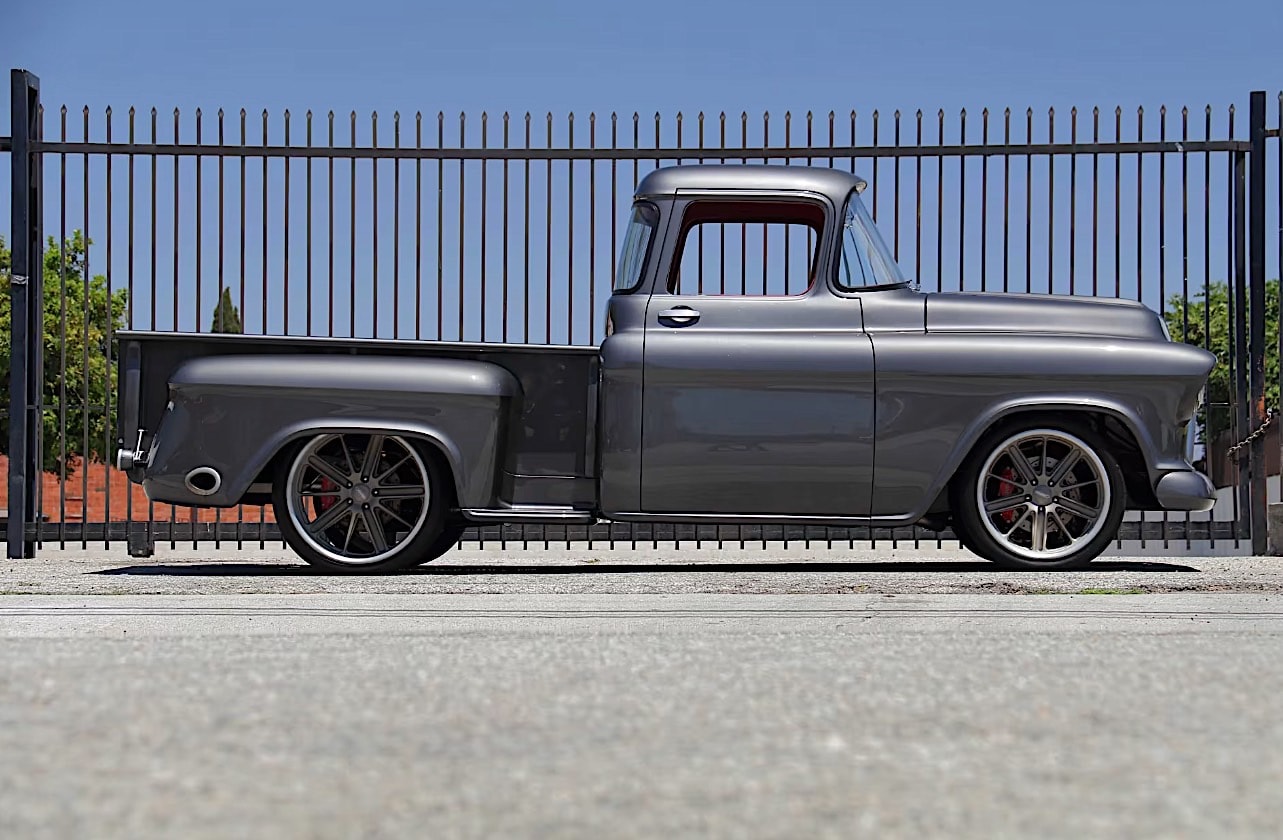
7. 1951 Chevrolet 3100
The 1951 Chevrolet 3100 pickup is classic post‑war era truck history. It represents a shift in styling, engineering, and utility following the Second World War. With its smooth curving fenders, simple mechanics, and robust build, it has long appealed to restorers.
Many were used, neglected, or stored in rough condition. Only a subset survive with straight sheet metal, original running gear, and solid interiors.
Collectors demand original or high quality restoration with matching mechanical parts. Keeping original drive train, correct transaxle, transmission, differential, correct gearing, and correct cab interior is essential.
The wood bed or metal bed floors need to be correct or properly restored. Paint matching original shades, correct chrome treatments, correct trim all have strong influence on value. Trucks that have been heavily modified often lose value in the collector marketplace.
Auction sales have shown increasing prices for the 3100, especially those from early 1950s, and particularly those restored carefully or preserved well. Where decades ago one might see restored examples in the five-figure sum, now very clean trucks with outstanding restorations are selling for multiples above that.
Trucks with well-documented history, minimal past damage, and restored to high standard command premium prices. Those that retain original features tend to attract more aggressive bidding.
Enthusiasts who appreciate the 1951 3100 often emphasize authenticity and historical character. They value the tactile experience of original or well‑faithful details: the feel of the manual gear shift, the sound of the engine at rest, the presence of steel and chrome rather than modern plastics, and the design lines of the early fifties. That emotional factor plays into auction results as much as the mechanical condition.
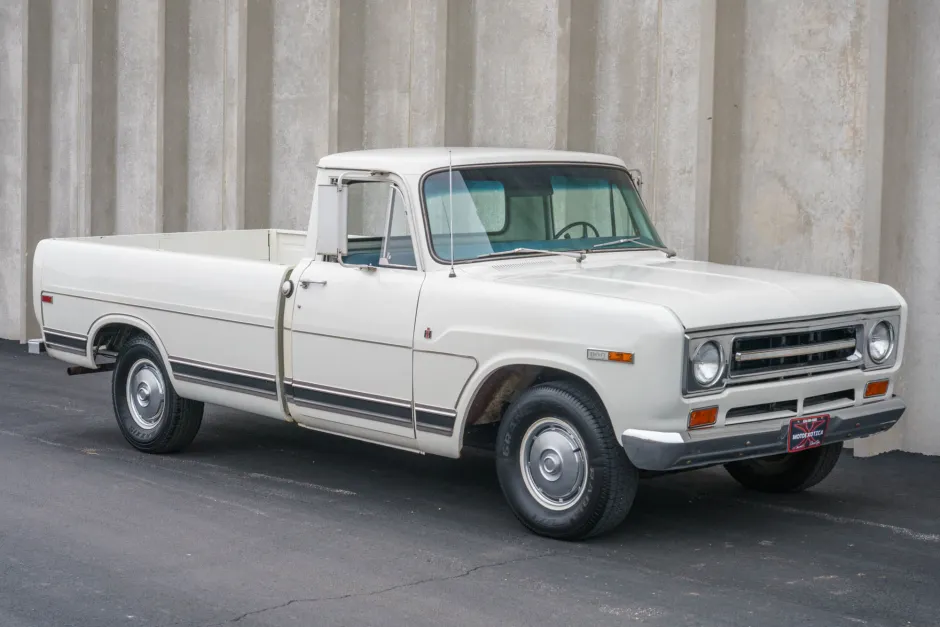
8. 1967 International Harvester Travelall
The International Harvester Travelall, particularly from year 1967, has become a sought after vehicle in collector truck auctions. Although more SUV‑like than pure pickup it shares many mechanical and utilitarian roots with its truck cousins.
It combined cargo carrying capacity with passenger accommodation in ways that few did. For collectors this hybrid form is appealing: it represents utility, family travel, and versatility in one package. Early Travelalls had rugged construction, durable drivetrains, and often saw heavy use, making preserved examples rare.
Important value factors include original body panels, especially roof structure, doors and cargo area that have remained uncrushed, rust‑free, or unmodified. Interiors with proper stitch patterns, original instrumentation, and correct trim such as woodgrain or metal detailing are prized.
Under the hood, original engines and drivetrain, proper four‑wheel drive systems if equipped, matching numbers, and well-maintained chassis contribute strongly. Trucks or Travelalls with good service history and minimal structural damage command higher prices.
Auction values have climbed sharply for top Travelalls. Restored or preserved examples with strong originality have drawn competitive bids. Trucks with rare optional equipment such as factory roof racks, upgraded audio or heating systems, or special color trims tend to be more desirable.
As the collector community appreciates the Travelall as a precursor to modern SUVs, interest has grown. Rising awareness of its place in automotive history pushes values higher.
Buyers often are those who want utility plus nostalgia. They may use the vehicle for shows, photo ops, or gentle cruising, rather than heavy hauling. Some owners preserve them as family heritage vehicles.
Auction houses that showcase Travelalls with excellent documentation often see multiple bidders from both sides of the utility‑collectible divide. The intersection of practicality and collectability gives this model special appeal in the auction market.

9. 2016 Ram 3500 Cummins Mega Cab Limited
A surprising entry among classic trucks is the modern high‑end heavy duty segment. The 2016 Ram 3500 Cummins Mega Cab Limited represents a peak of modern truck luxury and performance. It was built to work hard but with creature comforts.
Powerful diesel engine, long wheelbase, premium interior, modern amenities. Many such trucks have been work trucks, fleet units, or modified heavily. Excellent condition, low mileage, original components remain rare. Collectors or buyers who favor modern collectability have begun to prize these examples.
Value drivers include low odometer readings, original drivetrain including unmodified diesel engine and transmission, clean maintenance history, and original interior with all luxury and tech features functioning properly.
Any upgrades, lift kits, or heavy wear damage may reduce value. Clean exteriors, minimal rust, correct paint and trim, and premium wheel options and packages influence pricing heavily. Those with proper documentation, service records, and in many cases single ownership from new fetch more interest.
Auction prices for distinguished examples have increased sharply in recent years. What used to trade as used heavy-duty trucks are now crossing thresholds once reserved for classic vintage trucks. Some sales have broken expected ceilings when the buyer wants a rarity or a one‑owner condition example in pristine shape.
Mega Cab Limited with show quality, original and low mileage, fully documented often bring premiums. The scarcity of such lightly used modern heavy-duty trucks helps push auction prices upward.
Interest in modern collectible trucks often comes from enthusiasts who grew up with these vehicles or appreciate both form and function. They may not expect patina in the classical sense but want very well-maintained condition.
Some use them for display, some drive them for special occasions, and others preserve them. Because these trucks are relatively recent, documentation tends to be more complete. Buyers value that. Auction houses highlight such trucks as bridging the gap between work utility and collectible prestige.
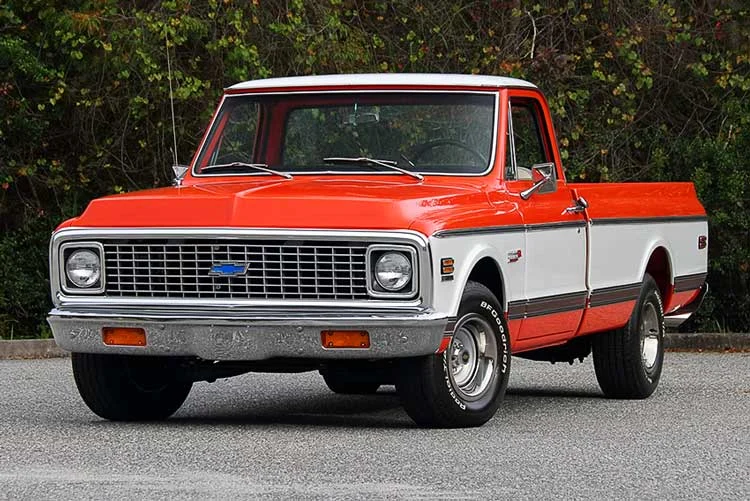
10. 1970 Chevrolet Cheyenne Super 10
The 1970 Chevrolet Cheyenne Super 10 is considered one of the more desirable full‑size pickups from the era. With trimmed interiors, upgraded styling, and the Super 10 package it bridged the gap between bare bones labor truck and more refined passenger vehicle style.
Many survived as hard-working trucks; few remain in excellent restored condition. Its allure comes from its blend of power, style, and classic pickup appearance. As collector demands shift, the Super 10 stands out as increasingly prized.
Authentication of a Cheyenne Super 10 usually involves verifying correct trim, badging, hubcaps, interior upholstery, dash options, and drivetrain. Matching engine, correct transmission, and original or well‑restored Super 10 options such as bucket seats or upgraded vinyl or cloth interior are desirable.
Exterior styling including grille, chrome trim, paint combination, bed wood or bed floor panels, and correct side emblems affect value. Condition of frame and underside, rust repairs, and body straightness matter as with all classic trucks.
Auction prices have grown strongly for top examples. Where in past decades such a truck in restoration quality might have sold for moderate sums, now well‑restored or preserved Cheyenne Super 10s can draw serious money.
Examples with low usage, excellent finishes, and strong documentation can compete with other highly valued pickups. Bidding wars often erupt when multiple collectors recognize rarity of condition and originality. The highest sales set new comparables and push the market upward.
Collectors attracted to the Super 10 are those who want classic styling without full‑on premium luxury, those who appreciate the work truck heritage ,along with taste. They often prefer trucks that show correct details from the factory, that retain origins, and that reflect the period aesthetic.
For many, the Cheyenne Super 10 represents both American automotive culture and the evolution of pickups as not just workhorses but expressions of design, individuality, and mechanical achievement.
