
Performance is a term that often gets tossed around in automotive discussions, but its meaning varies significantly depending on the type of vehicle in question. A supercar is expected to deliver blistering acceleration and track-ready handling. A pickup truck is evaluated on towing capability and rugged endurance.
A compact hatchback is typically praised for fuel efficiency and maneuverability, not quarter-mile times. That’s why certain vehicles stand out more than others, not because they lead their respective classes in every single spec sheet entry, but because they shift expectations in surprising ways. These are the models that force both enthusiasts and competitors to reconsider what’s possible in a given category.
When a vehicle redefines performance in its class, it does more than simply post a good lap time or offer a high-output engine. It introduces a new benchmark that often leaves a lasting impression for years to come. Some of these vehicles use innovative engineering to punch far above their weight.
Others combine power with refinement in a way that seems almost unfair to the rest of their segment. Whether it’s a family sedan with the heart of a sports car, or an electric SUV that outruns traditional gas-powered rivals, these machines prove that there are no fixed boundaries anymore.
The vehicles selected here each bring something uncommon to their respective categories. Their abilities might come from unique tuning, clever packaging, lightweight construction, or an unusually bold drivetrain.
In many cases, these choices are not just technical achievements, they’re philosophical ones. The manufacturers behind these cars took chances, made bold decisions, and in many cases, created something that others would soon try to imitate.
Some of the names listed here are familiar, but the versions discussed have something extra that sets them apart. Others are less obvious but deserve recognition for what they’ve accomplished. In each case, what they offer goes beyond what anyone expected from that type of vehicle. They don’t just perform well, they change the standards.
1. Toyota GR Yaris
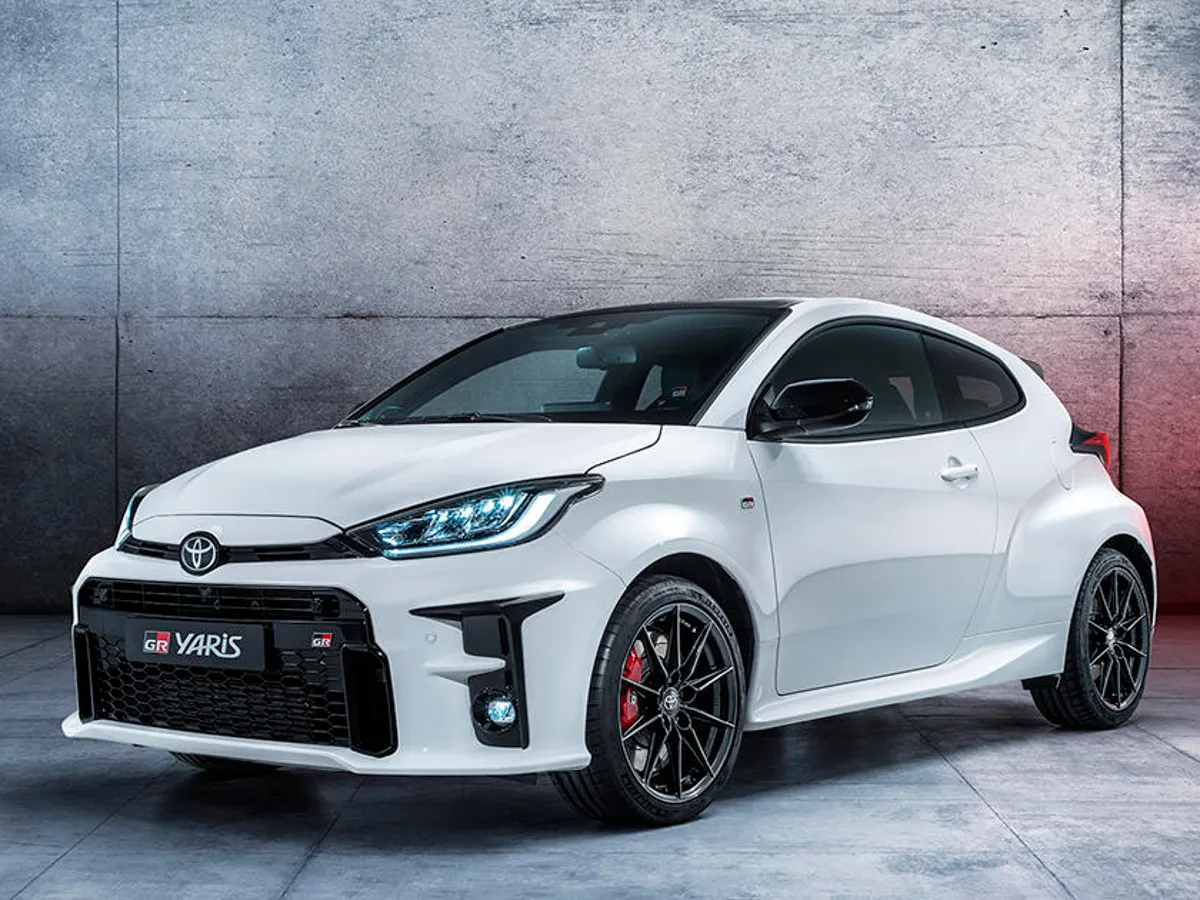
Most hatchbacks in the subcompact segment are designed with practicality and affordability in mind. They’re built to be light on fuel, easy to park, and simple to maintain. Driving engagement is typically not the primary concern. That’s what makes the Toyota GR Yaris such an outlier.
Developed by Toyota’s Gazoo Racing division, this car was built with homologation in mind, meaning it had to be based on a production model but suitable for rally competition. This requirement led to one of the most remarkable hot hatches in years, a car that completely flips the narrative of what a small economy-based vehicle can do.
Under the hood, the GR Yaris features a 1.6-liter turbocharged three-cylinder engine that produces over 260 horsepower, which is an exceptional figure given the car’s modest weight. This is paired with a six-speed manual transmission and a sophisticated all-wheel-drive system.
That drivetrain setup alone is more commonly found in performance sedans or rally cars than in a small three-door hatch. The result is staggering off-the-line performance, cornering ability that rivals much more expensive cars, and a sense of raw mechanical connection that’s rare in this price bracket.
But what really sets the GR Yaris apart is how it feels when pushed to its limits. The car remains composed even under aggressive driving, with quick steering feedback and tight body control.
The short wheelbase helps with agility, while the advanced torque vectoring system distributes power in a way that keeps the car planted through turns. This gives the driver a sense of precision that is often missing in hot hatches, especially those that are front-wheel-drive.
Toyota took a significant risk by investing in such a specialized product in a market that didn’t necessarily demand it. Yet that risk paid off by demonstrating how much performance can be engineered into a seemingly ordinary package. The GR Yaris is not just a fun hatchback; it’s a technical statement. It forces other automakers to rethink what can be done at this size and price point.
2. Porsche Taycan Turbo S
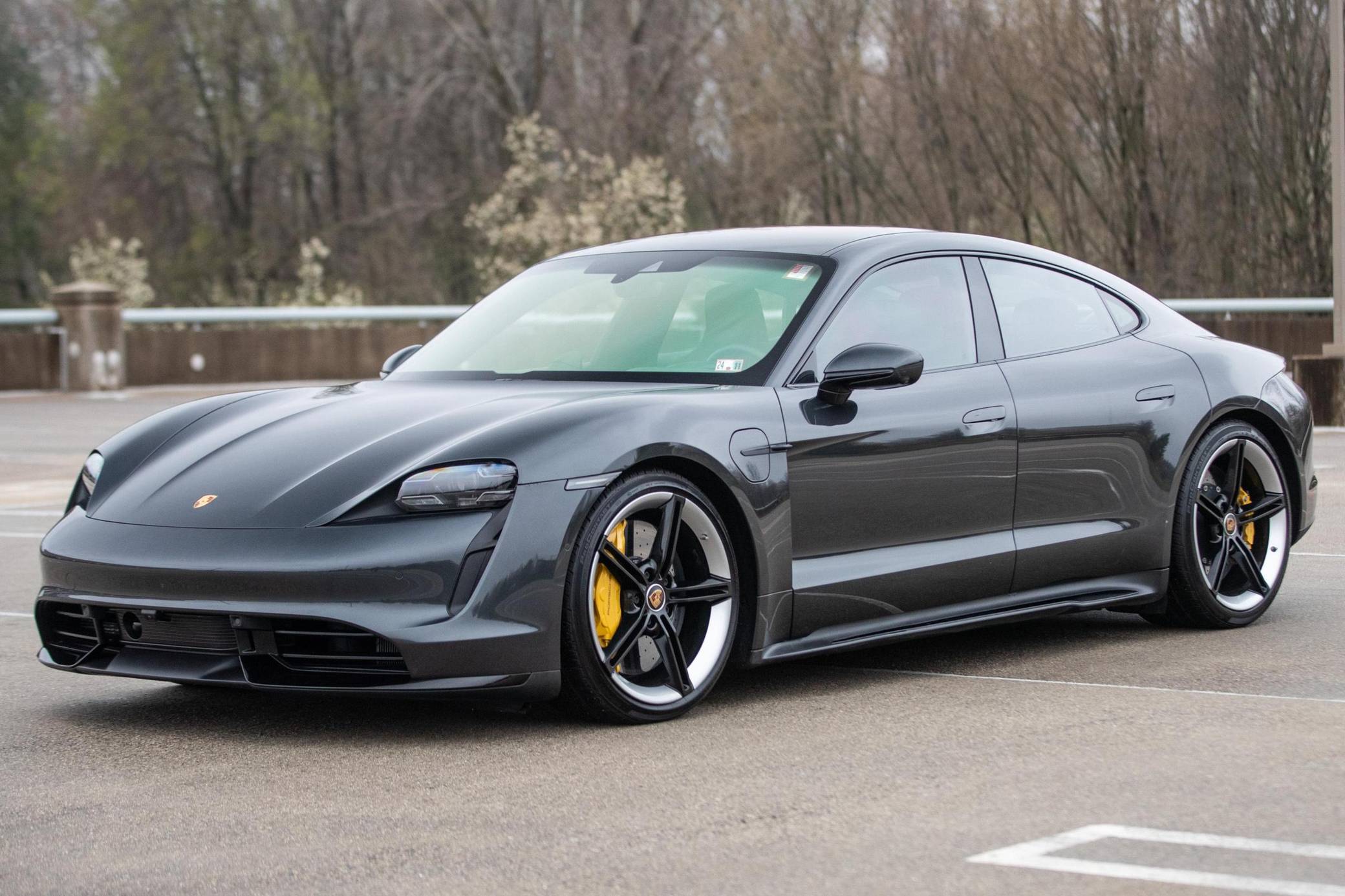
Electric vehicles have been around for a while now, but many early models emphasized efficiency and range over driving excitement. Then the Porsche Taycan arrived and shifted expectations almost instantly.
From the outset, it was clear that Porsche wasn’t content with simply producing an electric car, they aimed to build a performance machine that could wear the Porsche crest without compromise. In the Taycan Turbo S, they succeeded to a degree that few thought possible for a battery-powered sedan.
The Turbo S version of the Taycan can accelerate from 0 to 60 mph in under 2.5 seconds, making it one of the quickest production cars of any kind. But raw acceleration isn’t the only story. The chassis tuning is precise, with a low center of gravity due to the floor-mounted battery pack and a multi-link suspension system that balances comfort with agility.
The steering is responsive and accurate, delivering a driving experience that feels much closer to a 911 than a luxury EV. In fact, most reviewers have noted how Porsche has managed to retain their distinctive driving feel even while moving away from internal combustion.
What further solidifies the Taycan’s impact is its charging performance and build quality. It was one of the first electric vehicles to offer an 800-volt electrical system, allowing for extremely fast charging when using compatible stations.
This helps reduce the traditional downtime associated with EVs and gives it real-world usability on long drives. At the same time, the cabin is filled with high-end materials and a driver-focused layout that makes the car feel just as luxurious as it is fast.
The Taycan didn’t just meet the performance goals set for electric sedans; it redefined them. It showed that electric cars don’t have to feel like appliances, and it raised the bar for handling and driver involvement in a segment that had been growing increasingly uniform. This car proves that embracing electrification doesn’t require giving up on the qualities that make driving thrilling.
3. Ram 1500 TRX
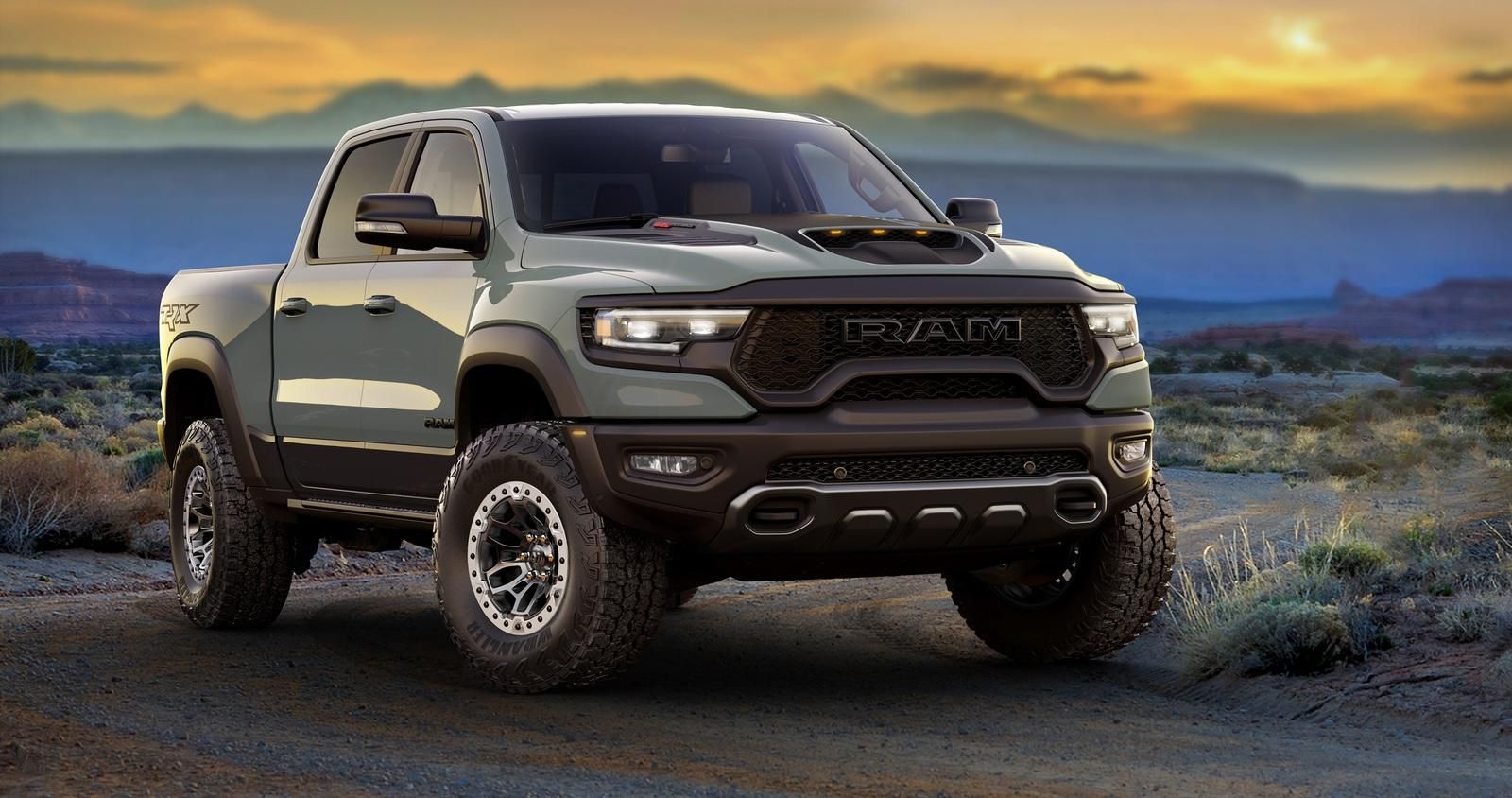
Pickup trucks are typically judged based on towing capacity, payload, off-road capability, and workhorse durability. Speed and on-road handling are rarely top priorities, especially in full-size trucks. Then came the Ram 1500 TRX, a vehicle that somehow delivers the raw performance of a high-powered muscle car while still maintaining its utility as a rugged truck. This was a deliberate move to create something excessive, dramatic, and completely unlike anything else in the category.
The TRX is powered by a 6.2-liter supercharged HEMI V8, the same engine found in the Dodge Hellcat series, producing over 700 horsepower. This allows it to go from 0 to 60 mph in about 4.5 seconds, which is staggering for a vehicle that weighs over 6,000 pounds. The engine produces a thunderous roar, and the transmission has been tuned to deliver quick, aggressive shifts. It’s not subtle or refined, but it’s not supposed to be. The whole truck is built around the idea of unfiltered excess.
But the performance credentials go beyond just acceleration. The TRX features a heavily upgraded suspension with long-travel Bilstein shocks, high-strength axles, and reinforced components that allow it to handle extreme off-road conditions at high speeds. It can jump, crawl, and slide through dirt trails with ease.
On pavement, the ride remains surprisingly comfortable thanks to advanced damping, and the steering, while not sports-car sharp, offers enough feedback to keep the driver in control at speed.
This combination of brutish speed, off-road durability, and on-road comfort gives the TRX a versatility that no other truck quite matches. It isn’t the most efficient, nor the most practical for daily commuting, but that’s not its mission. It was built to be outrageous, and in doing so, it forces other trucks to re-evaluate what performance means in this space. It’s no longer just about utility, it’s also about thrill.
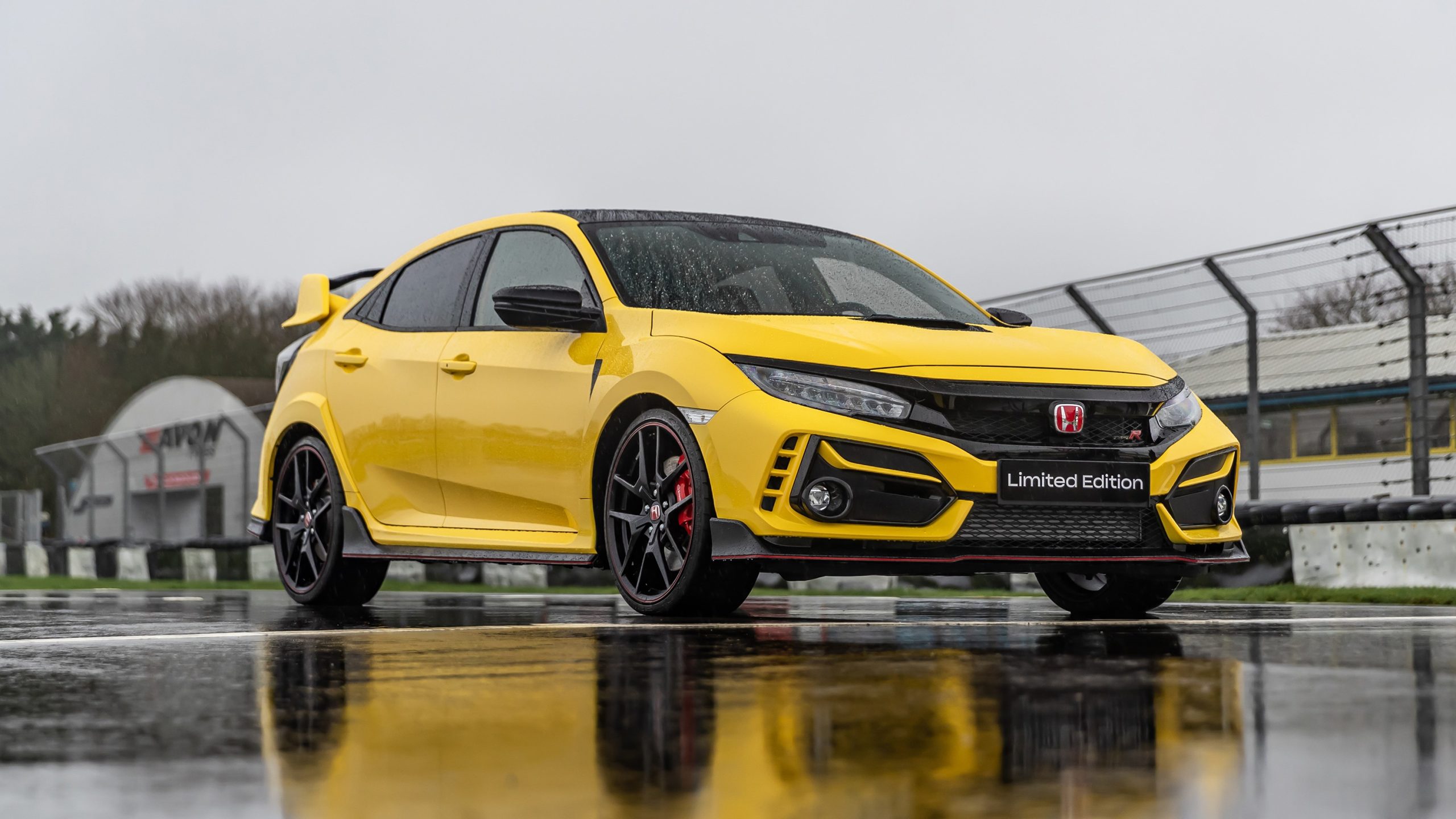
4. Honda Civic Type R (FL5)
Hot hatches are often fun but limited by the compromises of front-wheel-drive dynamics. Torque steer, understeer, and traction issues can keep even the most powerful models from reaching their full potential. The Honda Civic Type R has always tried to challenge that perception, and the latest FL5 generation takes it to another level.
It’s not just quick, it’s precise, planted, and incredibly responsive, setting records for front-wheel-drive performance while also improving comfort and usability.
The Type R uses a 2.0-liter turbocharged engine that makes over 300 horsepower, which in itself is impressive for a front-wheel-drive layout. But the real achievement is how well that power is put to the ground.
The differential and suspension geometry have been refined to limit torque steer and deliver balanced handling. The result is a car that feels natural at the limit, encouraging the driver to push harder without fear of instability or loss of control.
One of the highlights of the FL5 is its chassis. The body is stiffer than the previous generation, the suspension has been upgraded with new adaptive dampers, and the wider track helps with stability in corners. Steering feel is also improved, giving the driver a more confident sense of connection with the road.
One of the highlights of the FL5 is its chassis. The body is stiffer than the previous generation, the suspension has been upgraded with new adaptive dampers, and the wider track helps with stability in corners. Steering feel is also improved, giving the driver a more confident sense of connection with the road.
On a racetrack, it behaves like a much more expensive sports car, delivering lap times that would embarrass some rear-wheel-drive competitors. Yet it does this without losing its usability as a daily driver. The cabin is quieter, the ride is more forgiving in Comfort mode, and the technology suite is up to modern standards, making it suitable for more than just weekend blasts.
The aggressive stance still tells you it means business, but it no longer tries too hard to scream about it. This approach extends to the interior as well, where the supportive red bucket seats are the main statement piece in an otherwise well-organized and ergonomic cabin. The materials feel more upscale, and the layout places all controls within easy reach, encouraging engagement rather than distraction.
Perhaps what defines the Type R’s brilliance most clearly is how complete it feels. This isn’t a car that’s great just because of one standout feature. It’s a carefully engineered machine where everything works together in harmony. Whether it’s attacking corners with surgical precision or cruising on the highway in comfort, it never feels out of its depth.
That balance is something rare in this segment, and it shows that front-wheel drive, when engineered correctly, can hold its own against almost anything. It challenges the idea that a car needs rear- or all-wheel drive to deliver a proper performance experience.
Honda has long been respected for its engineering prowess, but the FL5 Type R feels like a culmination of years of refinement and learning. It builds upon the strong foundation of its predecessors and pushes every aspect forward, not by adding gimmicks, but by focusing on the fundamentals of what makes a great driver’s car.
It’s not just the best Civic Type R ever, it’s one of the most complete performance vehicles in any class, especially considering its price point. In doing so, it resets the expectations for what a front-wheel-drive car can achieve.
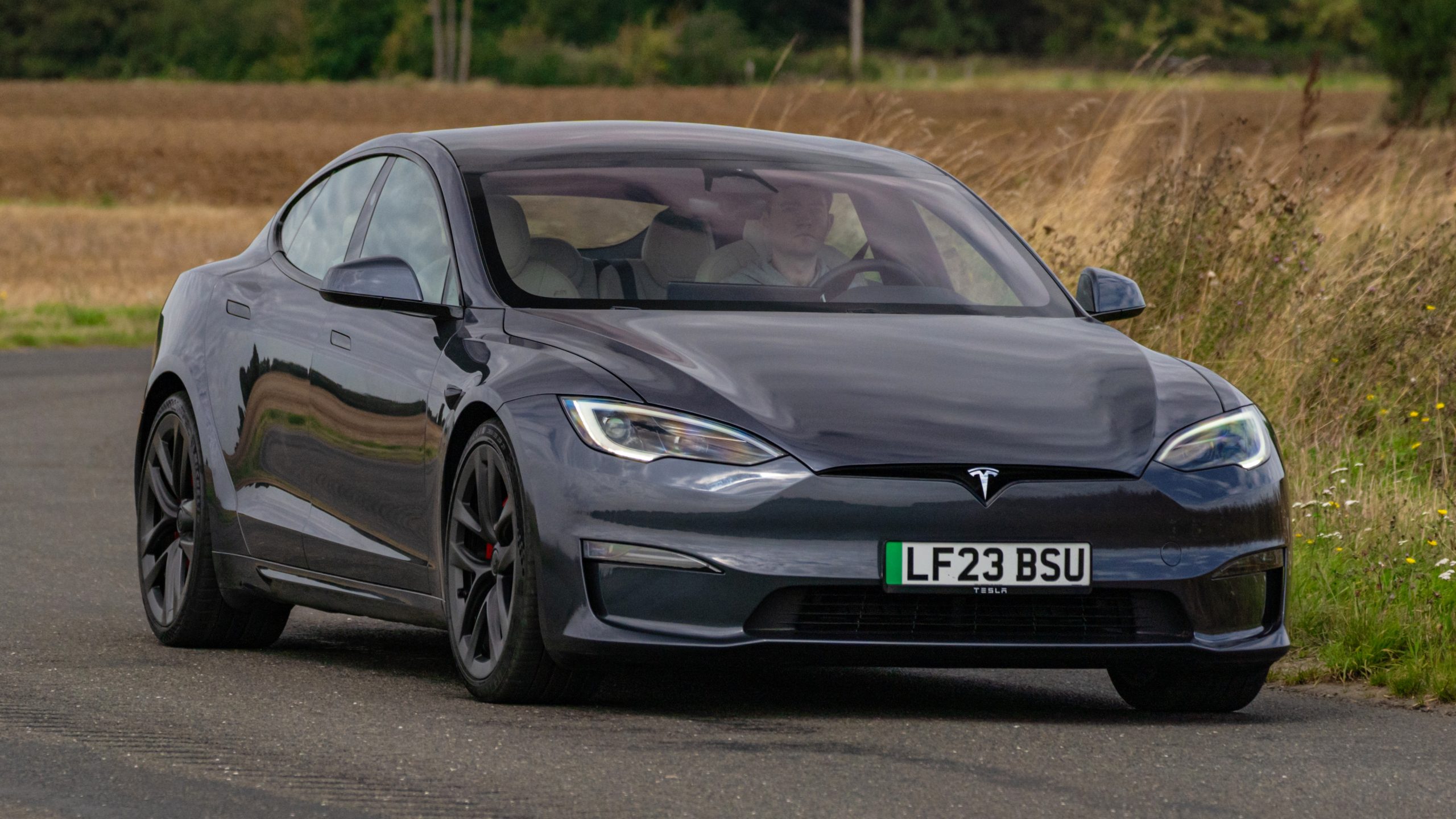
5. Tesla Model S Plaid
Luxury sedans were traditionally measured by comfort, prestige, and smooth power delivery. Performance was appreciated, but rarely the headline feature. That changed dramatically with the Tesla Model S Plaid.
This version takes the familiar electric luxury format and injects it with an outrageous amount of power, transforming a long-distance cruiser into one of the fastest-accelerating vehicles in history. With three electric motors producing a combined 1,020 horsepower, the Model S Plaid goes from 0 to 60 mph in under 2 seconds under optimal conditions, making it quicker than most hypercars.
What’s particularly striking is how effortless that speed feels. There’s no gearshift, no engine noise ramping up, just an immediate, linear surge of power that continues far beyond where most performance cars taper off. The sensation is almost surreal, especially given the quiet and refined cabin environment.
It creates a contrast that amplifies the drama of acceleration while maintaining a sense of composure. Tesla has leveraged its powertrain efficiency and battery management expertise to deliver a vehicle that performs on demand, without the usual trade-offs in drivability or complexity.
Beyond raw speed, the Model S Plaid introduces technology that supports performance in meaningful ways. The new heat pump, upgraded battery packs, and improved thermal systems mean it can deliver repeated acceleration without suffering the typical degradation associated with high-output EVs.
Additionally, Tesla’s proprietary torque vectoring system improves stability at high speeds and under cornering loads, giving the driver more confidence during spirited driving. Though not a track car in the traditional sense, the Plaid holds its own on road courses, aided by its low center of gravity and wide footprint.
What sets the Plaid apart is not just that it’s fast, but that it changes the expectations for what a luxury sedan can do. It forces other manufacturers to confront a new standard of performance and efficiency in one package. The idea that a five-seat, four-door vehicle can out-accelerate million-dollar supercars is no longer a fantasy. It’s reality, and the Model S Plaid was the first to put that reality in customer driveways.
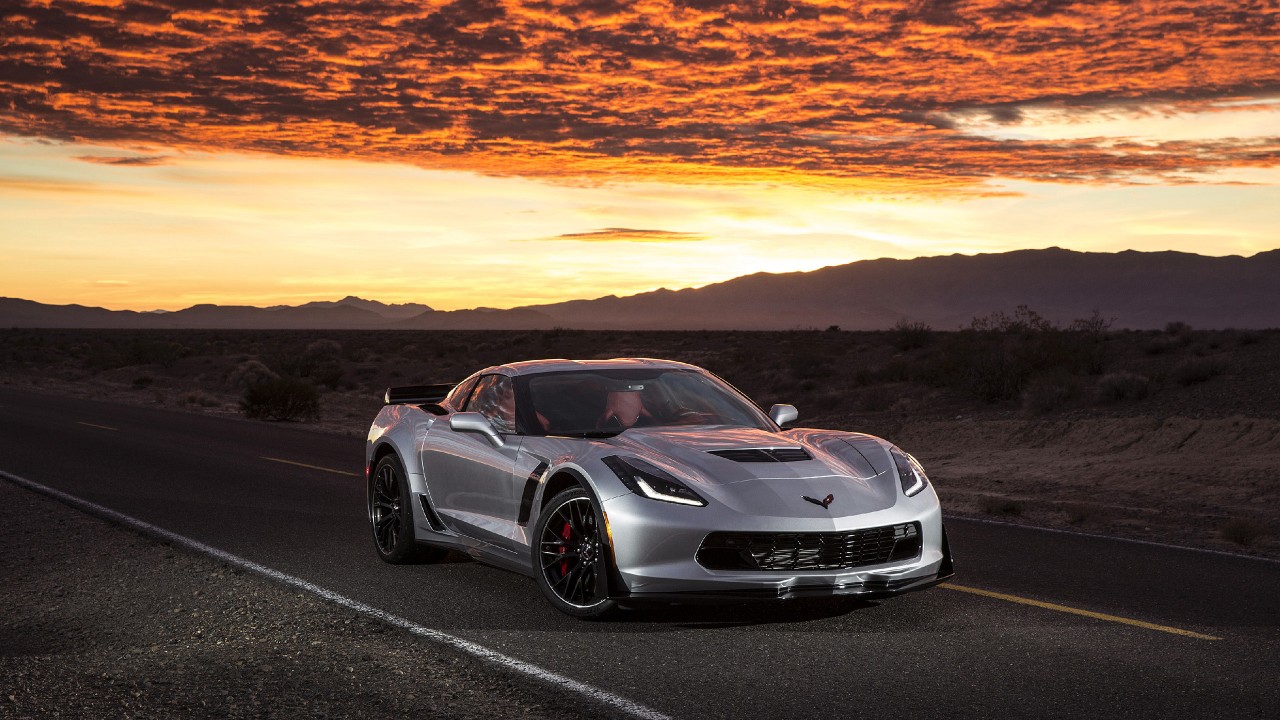
6. Chevrolet Corvette Z06 (C8)
The Chevrolet Corvette has always occupied a unique space in the sports car world. It offers genuine performance, but at a price that undercuts many of its European rivals. The C8 generation took a bold leap with its move to a mid-engine layout, changing the car’s dynamics significantly.
But it’s the Z06 version that really takes things to the next level. With a naturally aspirated 5.5-liter flat-plane crank V8 producing 670 horsepower, the Z06 brings race car-like performance to a platform that remains surprisingly affordable.
The engine alone is worth highlighting. It’s the most powerful naturally aspirated V8 ever put into a production car, and it revs to an astonishing 8,600 rpm. The sound it produces is unlike any Corvette before it, more reminiscent of a Ferrari than a traditional American muscle car.
This engine character is paired with razor-sharp throttle response, making the car feel alive and eager in a way that turbocharged engines often fail to match. It’s not just about straight-line speed, it’s about a visceral experience behind the wheel.
Handling is another area where the Z06 impresses. The mid-engine layout provides a better weight distribution, and the chassis has been tuned for serious cornering performance. Magnetic Ride Control, carbon-ceramic brakes, and sticky tires all contribute to a car that feels at home on a racetrack.
Yet, despite all this capability, it’s still livable day-to-day. The cabin is comfortable and well-appointed, with supportive seats and enough tech to make long drives enjoyable rather than tiring. That blend of extreme performance and real-world usability makes it unique in the segment.
Perhaps the most significant impact of the Z06 is how it challenges the idea that you need to spend six figures on an exotic badge to get exotic performance. Here is a car that can keep up with, and in some cases outperform, machines that cost double or triple its price. It’s not just fast, it’s engineered to compete with the best, and it succeeds. That makes it not only a standout in the sports car class but also a model that forces everyone else to take notice.
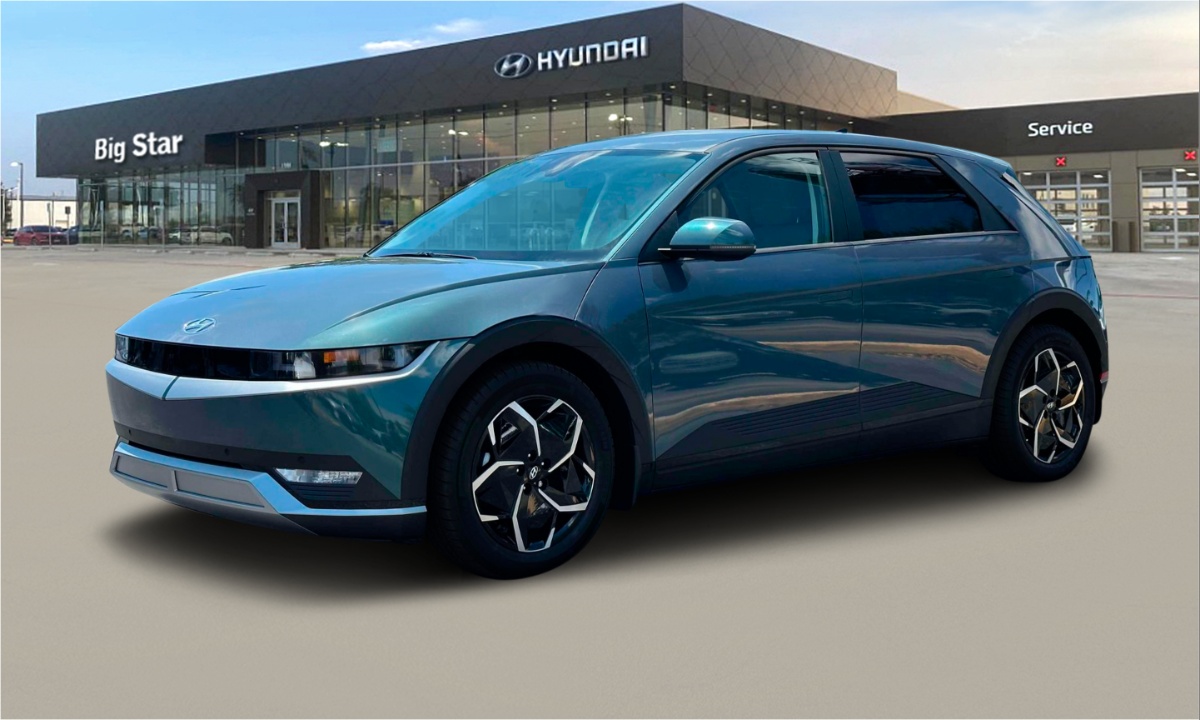
7. Hyundai Ioniq 5 N
Hyundai has made impressive strides in recent years, and the Ioniq 5 N is one of its boldest statements yet. It takes the retro-futuristic design of the standard Ioniq 5 and infuses it with high-performance DNA, creating something that’s not just quick but also engaging to drive.
Electric performance often focuses on straight-line speed, but the Ioniq 5 N goes further, delivering a dynamic package that rewards the driver beyond just pressing the accelerator pedal.
Power comes from a dual-motor setup producing around 641 horsepower with the use of the N Grin Boost mode. That allows for short bursts of maximum output, giving the car shocking acceleration off the line. But what sets the Ioniq 5 N apart isn’t just its power, it’s the way that power is managed.
The all-wheel-drive system actively balances torque between the front and rear axles for optimal grip and control. Add to that a specially developed suspension setup and upgraded brakes, and you have an EV that handles with surprising agility and confidence.
Hyundai has also taken an unconventional step in addressing one of the criticisms of EVs: lack of emotion. The Ioniq 5 N introduces artificial sounds and simulated gearshifts through its N e-Shift feature. While this may seem gimmicky, it actually contributes to the driving experience in a meaningful way.
It gives drivers a better sense of what the car is doing and adds a layer of engagement that many EVs lack. The system is customizable, allowing for a quiet, refined drive or a more intense, motorsport-inspired feel.
This vehicle redefines expectations not just for electric crossovers, but for performance EVs in general. It shows that electric cars can have character, that they can be tuned to deliver driving pleasure in ways beyond just rapid acceleration.
Hyundai has used the Ioniq 5 N to stake a claim in a new frontier of performance, one that doesn’t abandon emotion or interaction, even as it embraces a different power source. For a brand that was once seen as merely practical, this is a striking evolution.
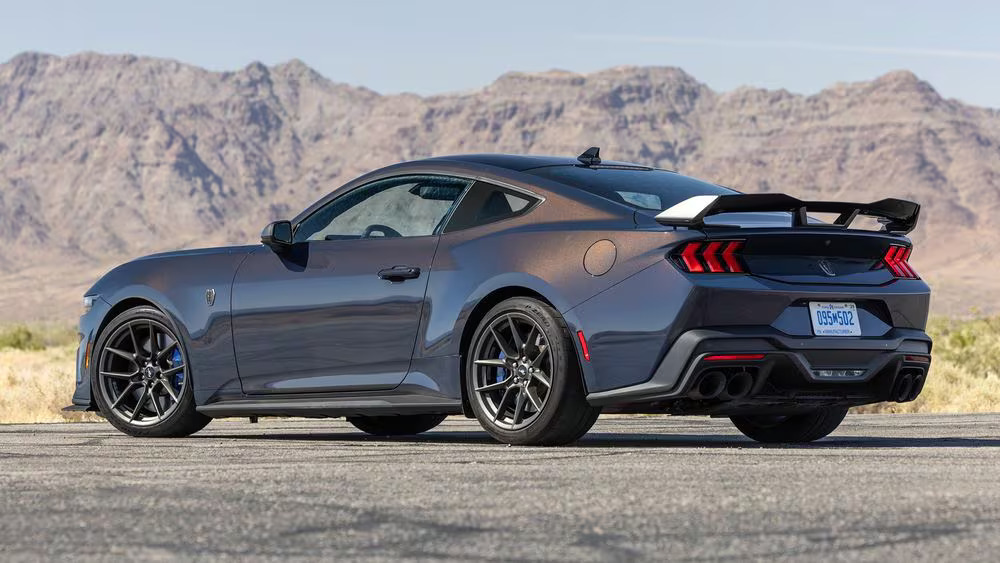
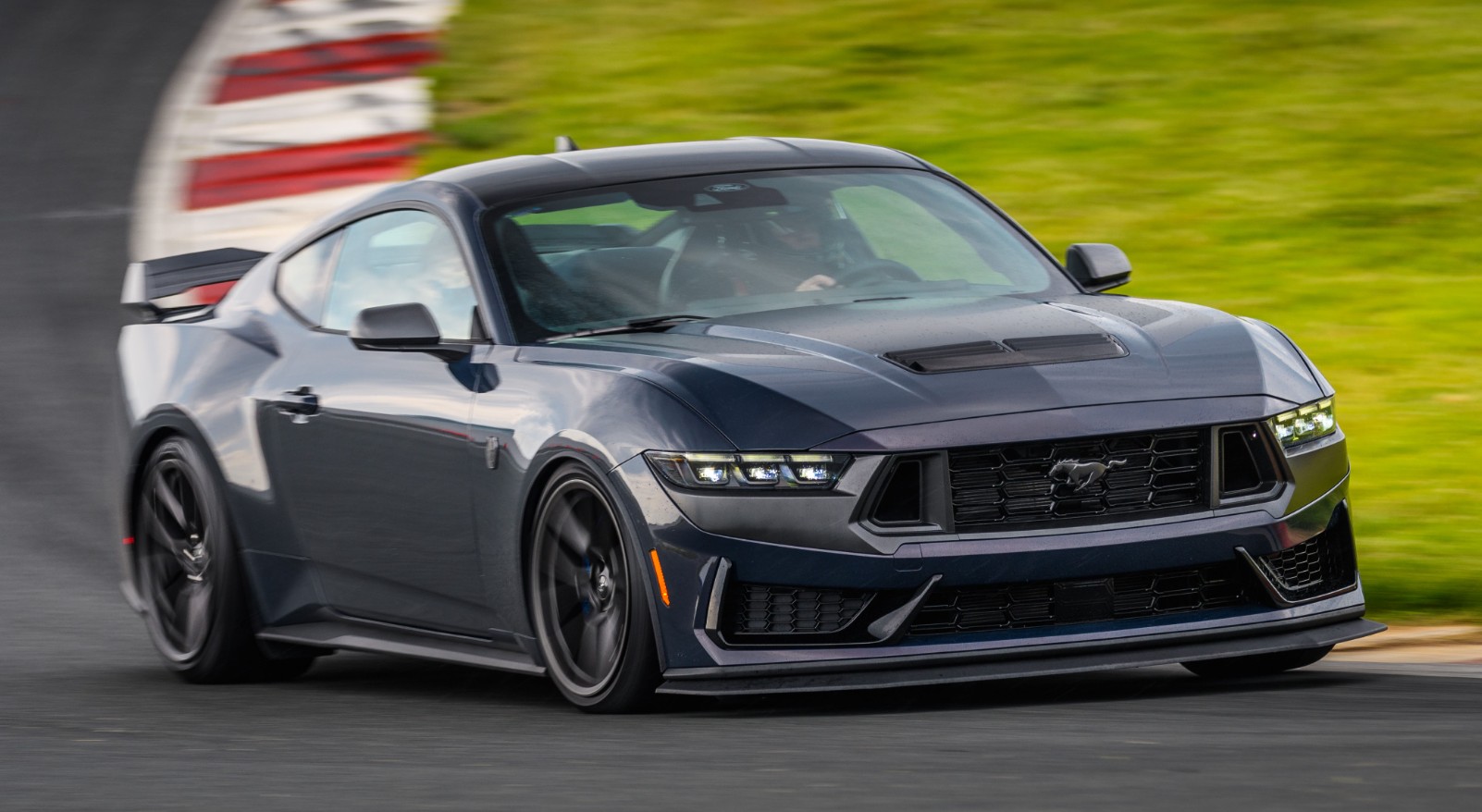
8. Ford Mustang Dark Horse
The Ford Mustang has always been a symbol of American muscle, but for much of its history, it was more about straight-line speed than nuanced handling. The new Mustang Dark Horse changes that perception. It’s still raw and aggressive, but it also brings a level of precision and focus that puts it in a new category.
Ford didn’t just upgrade the powertrain, they reengineered key aspects of the car to deliver something that can compete seriously on track without losing its daily usability. It’s a more sophisticated beast that raises the bar for what a performance-focused pony car can be.
The Dark Horse features a 5.0-liter Coyote V8 that produces 500 horsepower, but the headline here isn’t just the output, it’s how the engine feels. It delivers power smoothly and eagerly across the rev range, and it sounds thunderous under load without being overly harsh.
Available with either a six-speed manual or a 10-speed automatic, it gives drivers real choice, which is becoming increasingly rare in the performance market. The engine is paired with improved cooling, a stronger crankshaft, and upgraded internals, meaning it’s not just a marketing trim; it’s a legitimately enhanced package.
What the Mustang Dark Horse achieves is the blending of two worlds: traditional muscle car drama with modern sports car dynamics. It doesn’t abandon the Mustang’s heritage, but it moves the formula forward in a way that feels intentional and considered.
Ford has shown that a performance car can still have a rumbling V8 and a manual gearbox while also being track-capable and sophisticated. This version of the Mustang isn’t just a new trim, it’s a complete rethinking of what the car can be in the modern era.
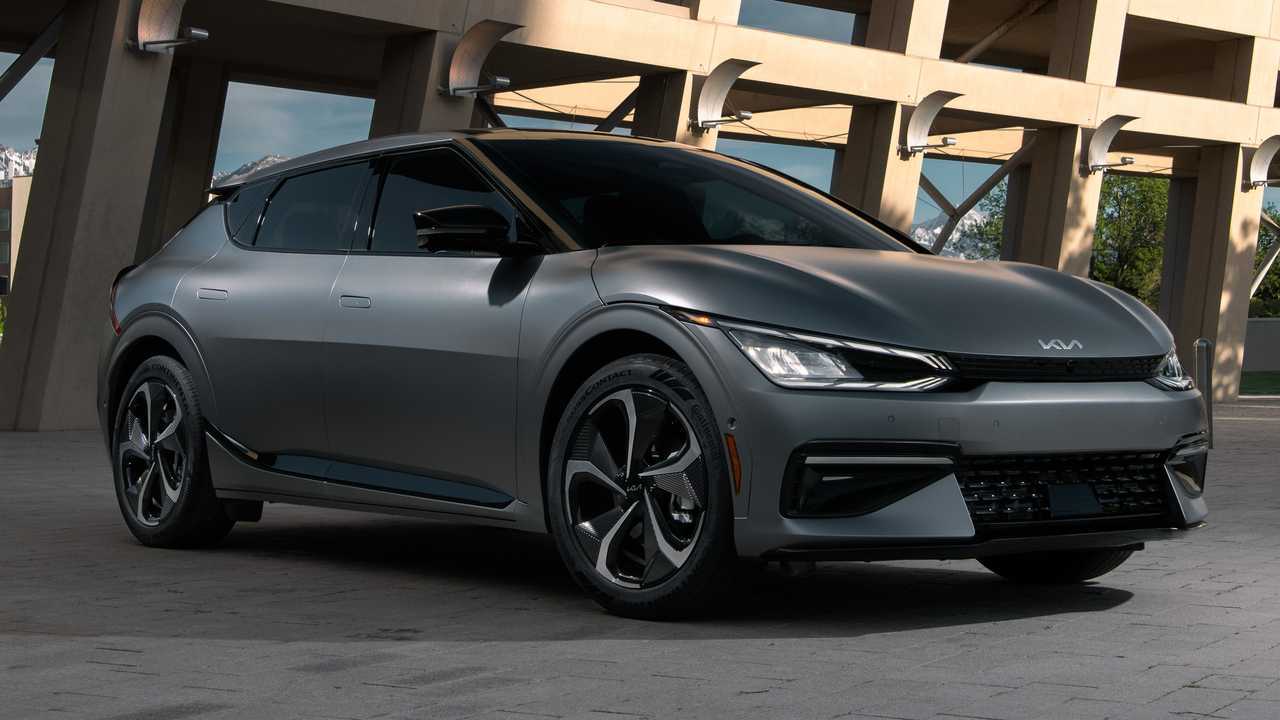
9. Kia EV6 GT
Kia is not the brand most people associate with high-performance vehicles, especially in the electric space. But the EV6 GT defies that assumption completely. It takes the all-electric crossover formula and injects it with real sports car energy, giving the EV6 GT the kind of performance that forces people to reassess both the Kia brand and the potential of electric crossovers in general. With 576 horsepower and a 0–60 mph time of under 3.5 seconds, this is no ordinary family vehicle; it’s a performance machine with real purpose.
The dual-motor setup gives the EV6 GT all-wheel drive and immediate torque delivery, but what’s more impressive is how Kia has tuned the car to handle its power. The suspension is significantly stiffer than the standard EV6, with adaptive dampers that adjust in real time.
The steering has also been sharpened, offering better feedback and quicker responses than expected from a crossover. It’s not just about straight-line sprints, the EV6 GT can hold its own through winding roads, giving the driver real confidence and involvement. That dynamic competence, combined with electric efficiency, makes for a compelling and unique experience.
Kia also didn’t forget about usability, and that’s a big part of what makes this car special. Despite its performance focus, the EV6 GT still retains the practicality of a five-door crossover, with decent rear-seat space, a large cargo area, and fast-charging capabilities that make it convenient for daily life.
The cabin is modern and high-tech, with a curved dual-screen layout, performance-oriented seat design, and a clean aesthetic. It feels upscale and thoughtfully executed, not just slapped together with sporty graphics and accents. That attention to detail adds credibility to the EV6 GT as a serious competitor in this evolving space.
The EV6 GT is proof that performance and practicality no longer have to live in separate categories. Kia has shown that it’s possible to make an electric crossover that excites the driver, engages the senses, and still fulfills the daily demands of family life or commuting.
It’s a well-rounded machine that expands the definition of what an EV can be. For a company that was once known primarily for budget-friendly transportation, this car signals a new direction, one that’s bold, confident, and fast.
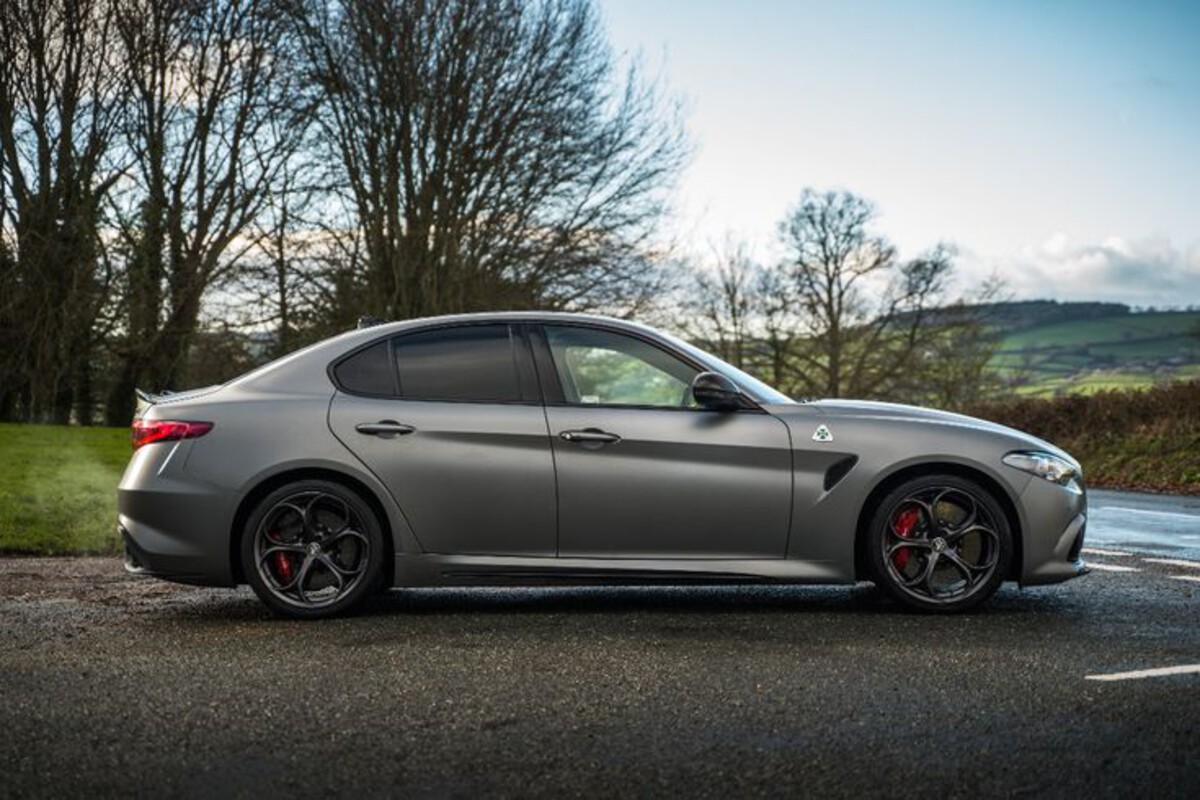
10. Alfa Romeo Giulia Quadrifoglio
The Alfa Romeo Giulia Quadrifoglio represents a different kind of performance. It’s not the fastest in its class on paper, nor is it the most luxurious, but it strikes a unique balance between passion and engineering that few cars manage to achieve.
Powered by a Ferrari-derived 2.9-liter twin-turbo V6 that produces over 500 horsepower, the Giulia QV offers blistering acceleration, but the real magic is in how it delivers its power and how it feels on the road. It’s a car that appeals not just to numbers-focused enthusiasts, but to those who value driving feel, character, and excitement.
Alfa Romeo has always carried a certain mystique, part of it earned, part of it romanticized. With the Giulia QV, that aura is matched by actual performance credentials.
The car can sprint from 0 to 60 mph in under 4 seconds, but more importantly, it corners with grace and confidence. Its chassis tuning is exceptional, offering a perfect blend of agility and composure. The steering is light but incredibly direct, giving the driver a clear sense of connection. It’s the kind of car that makes mundane roads feel interesting and demanding roads feel rewarding.
The design, both inside and out, plays a major role in the car’s appeal. The exterior is aggressive yet elegant, with purposeful lines and signature Alfa styling cues that make it stand out without being loud. Inside, there’s a driver-focused cockpit with carbon fiber accents, bolstered leather and Alcantara seats, and simple but effective controls.
It feels tailored for someone who values the experience behind the wheel more than the size of the infotainment screen. Even the sound of the engine and the rhythm of its power delivery contribute to an emotional experience that rivals those from Germany often lack.
What the Giulia Quadrifoglio offers is a reminder that performance isn’t just about metrics. It’s about how a car makes you feel when you’re driving it. Alfa Romeo built something that dares to be imperfect in some areas if it means delivering excellence where it matters most: the driving experience. It’s not trying to be the most logical choice; it’s trying to be the most memorable one. And in that, it succeeds with flair.
