

The electric vehicle market has grown at an unprecedented pace over the last decade, reshaping the automotive industry and influencing consumer behavior in ways that were unimaginable just a few years ago. As more manufacturers release electric models, buyers face a complex scenario, balancing factors like range, charging infrastructure, performance, design, and technology.
One aspect that is often overlooked in initial buying decisions is resale value. Unlike traditional gasoline vehicles, which have decades of historical depreciation data, electric vehicles are still a relatively young segment, making predictions about long-term value more challenging. While some EVs hold their value surprisingly well, others experience steep depreciation shortly after purchase, leaving owners with unexpected financial losses.
Resale value in electric vehicles is influenced by multiple factors. Brand reputation, battery longevity, software support, and build quality all play a significant role in determining how much a vehicle retains its worth over time.
Some models benefit from strong brand loyalty, consistent software updates, and widespread charging network support, all of which contribute to higher resale values. Conversely, vehicles from lesser-known manufacturers or those with limited charging infrastructure often face rapid depreciation.
The rate at which technology evolves in the EV space also impacts resale value. Batteries improve, ranges extend, and once cutting-edge features can become standard within a few years. This fast pace can make older models appear outdated, even if they are mechanically sound, affecting their market appeal.
For consumers considering electric vehicles, understanding which models are likely to maintain value can have a direct effect on financial planning. Cars with strong resale value offer peace of mind and lower cost of ownership, while models that depreciate quickly may lead to losses if owners plan to sell within a few years.
Evaluating the resale potential of an EV involves not only looking at current market trends but also considering factors like warranty coverage, availability of replacement parts, and software support from the manufacturer.
Moreover, government incentives and tax benefits can play a role, sometimes temporarily boosting resale value but not providing a long-term advantage once the vehicle leaves the incentive program.
In this article, we compare five new electric vehicles known for strong resale value with five models that tend to lose value quickly. By examining these contrasting trends, prospective buyers can make informed decisions about which vehicles are likely to remain financially viable in the years ahead.
While all EVs provide the environmental benefits of zero emissions, their economic implications vary significantly. Understanding depreciation patterns and resale trends is essential not only for individual buyers but also for the broader EV market, as it shapes supply, demand, and consumer confidence.
5 New EVs With Strong Resale Value
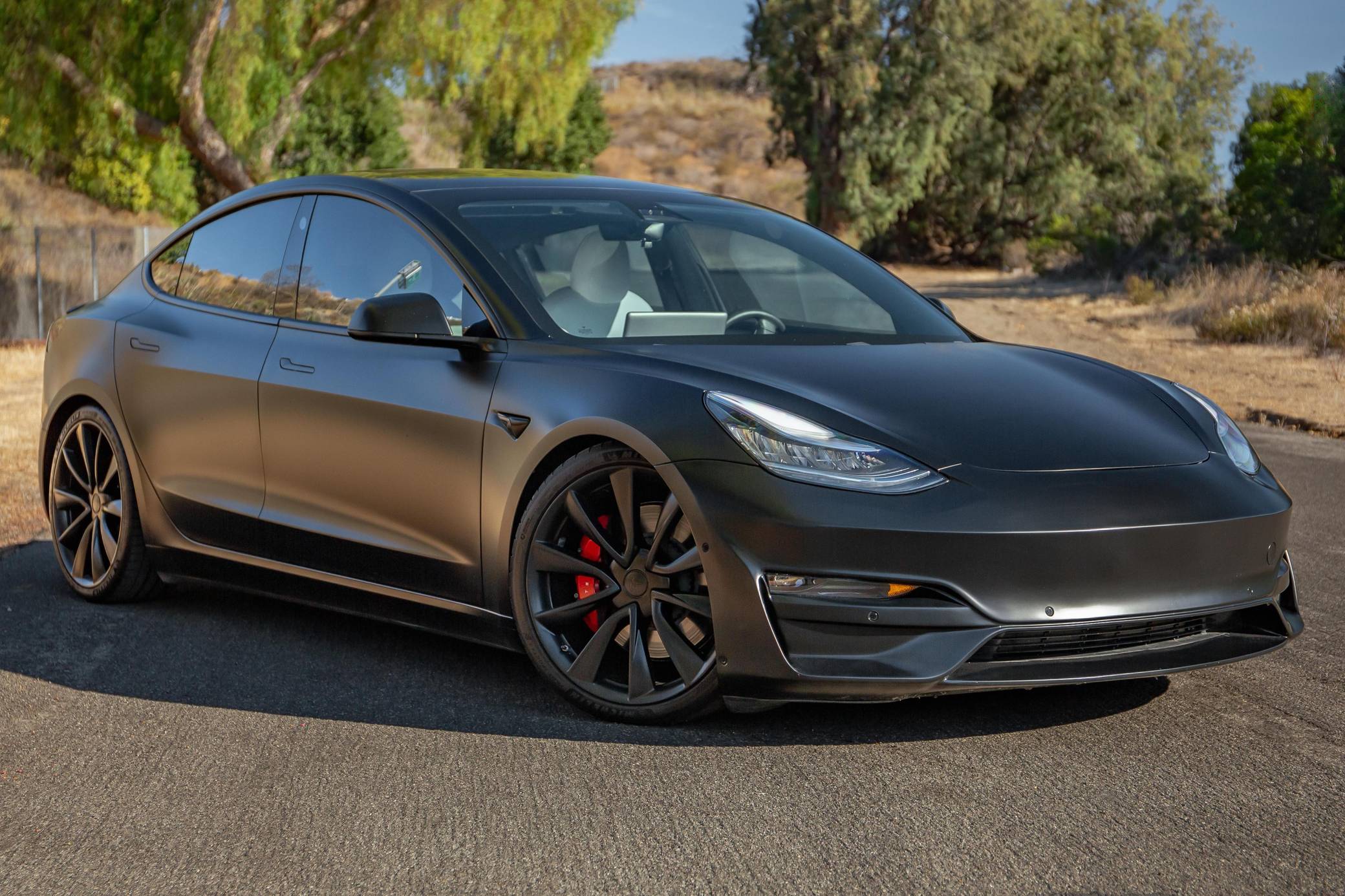
1. Tesla Model 3
The Tesla Model 3 has become one of the most recognizable electric vehicles on the market, and for good reason. Its combination of performance, technology, and brand reputation has established it as a leader in the EV segment, attracting both first-time electric vehicle buyers and experienced Tesla enthusiasts.
Beyond its sleek exterior and minimalist interior design, the Model 3 offers a driving experience that rivals many luxury sedans. Its acceleration is instant, thanks to the electric drivetrain, and the handling feels precise, giving drivers confidence on a variety of road conditions. This unique combination of practicality and excitement adds to its desirability, making it a sought-after option in the used car market.
Tesla’s commitment to over-the-air software updates plays a pivotal role in maintaining the Model 3’s resale value. Unlike most vehicles, which gradually feel outdated over the years, the Model 3 can receive new features, enhanced driver-assist functions, and performance improvements without requiring a visit to a dealership.
These updates ensure that older models can continue to feel modern and competitive, reducing depreciation compared to traditional cars. Buyers recognize that even a three- or four-year-old Model 3 retains cutting-edge technology, which encourages higher resale prices. The access to Tesla’s Supercharger network is another major advantage, offering fast and convenient charging that is often unmatched by other EVs.
Battery longevity and reliability are other critical factors supporting the Model 3’s value retention. Tesla has consistently improved its battery chemistry and management systems, and the company backs its batteries with generous warranties.
Even after several years of use, Model 3 owners report minimal loss in range, which translates to a reliable and practical experience for secondary buyers. The combination of long-lasting performance and Tesla’s reputation for engineering quality reassures used car buyers that they are making a smart investment, further boosting resale prices.
In addition to technology and reliability, market demand and cultural influence significantly impact the Model 3’s strong resale value. Tesla has cultivated a loyal customer base and positioned itself as a symbol of innovation and environmental consciousness.
This social appeal creates consistent demand for used models, sometimes even exceeding supply. As a result, pre-owned Model 3s often sell quickly and at competitive prices, reflecting a market perception that these vehicles are not only practical but also a statement of status and modernity.
The inclusion of evolving autonomous features, such as Full Self-Driving, adds another layer of value, as buyers anticipate future technological benefits, making the Model 3 a rare EV that holds its worth exceptionally well.
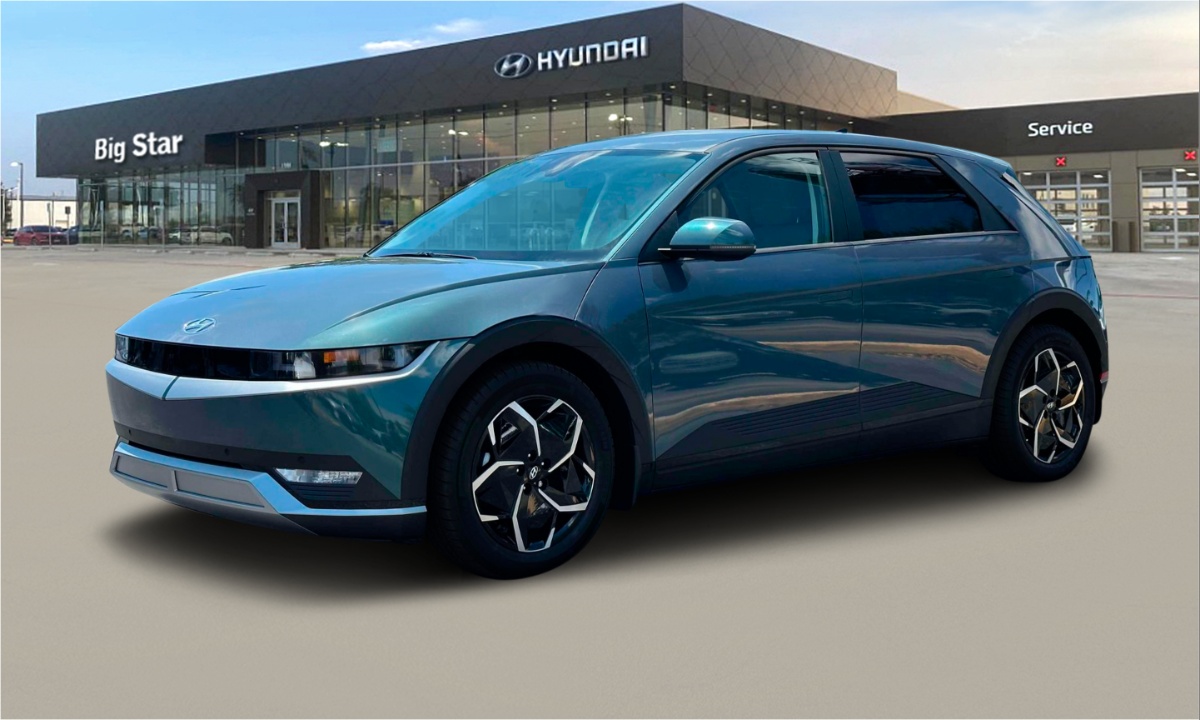
2. Hyundai Ioniq 5
The Hyundai Ioniq 5 has rapidly gained a reputation for reliability, innovative design, and everyday practicality, all of which contribute to its strong resale value. One of the first electric vehicles built on Hyundai’s dedicated Electric-Global Modular Platform, the Ioniq 5 combines a futuristic exterior with a spacious, versatile interior.
Its bold, angular styling captures attention, while the interior prioritizes comfort, technology, and functionality. Features like adjustable rear seats, abundant cargo space, and high-quality materials make it appealing not only for individual drivers but also for families seeking a long-term vehicle investment. These qualities help the Ioniq 5 remain desirable in the used car market.
Battery performance and longevity play a central role in the Ioniq 5’s ability to retain value. Hyundai has implemented advanced thermal management systems that regulate temperature fluctuations and prevent rapid battery degradation.
Combined with an eight-year or 100,000-mile warranty, these features provide buyers with confidence that the vehicle will maintain its performance over time. This reliability is especially critical in the EV market, where concerns about battery replacement costs can heavily influence depreciation rates. The Ioniq 5’s competitive range and fast-charging capabilities make it practical for daily commuting and longer trips, ensuring continued relevance as newer EVs enter the market.
Hyundai’s attention to software and connectivity further strengthens the Ioniq 5’s resale value. While it does not have the same extensive software ecosystem as Tesla, the company has invested in over-the-air updates that enhance the vehicle’s functionality and keep it current with technological standards.
Updates can include improvements to infotainment systems, navigation, and driving efficiency, ensuring that older models do not feel obsolete. Buyers increasingly view these software capabilities as a major factor in vehicle value, and the Ioniq 5 demonstrates that consistent support can positively influence resale prices.
Finally, the Ioniq 5’s balance of design, versatility, and brand reliability contributes to strong resale retention. It appeals to a broad audience, from urban professionals seeking a stylish commuter car to families prioritizing space and safety.
Its combination of futuristic aesthetics, thoughtful interior layout, and proven engineering reduces the risk of rapid depreciation. Vehicles that consistently meet buyer expectations in design, technology, and practicality tend to hold value well, and the Ioniq 5 exemplifies this principle by offering a compelling package that remains relevant and competitive even as the EV industry evolves rapidly.
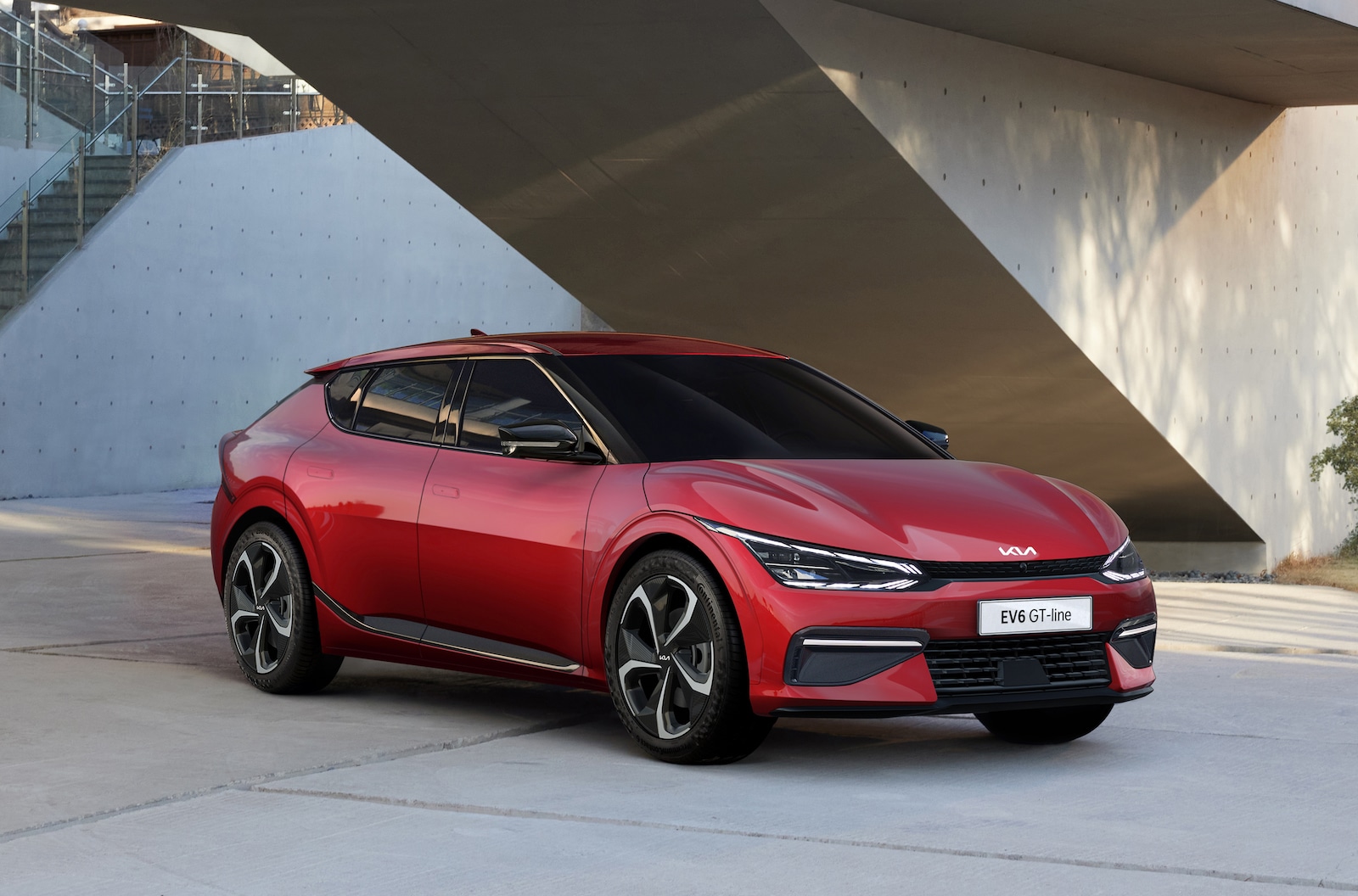
3. Kia EV6
The Kia EV6 stands out as one of the most dynamic electric crossovers on the market, combining bold design, impressive performance, and cutting-edge technology. Its sleek, coupe-like silhouette, modern lighting elements, and aerodynamic profile give it an edge over more conventional EVs, attracting attention from style-conscious buyers.
Inside, the EV6 offers a spacious, tech-forward cabin, with digital displays, high-quality materials, and driver-focused features. Its versatility appeals to both performance enthusiasts and practical buyers, which is a key factor in its strong resale value. A vehicle that successfully blends style, comfort, and technology tends to retain desirability in the used market, as it addresses multiple buyer priorities.
Battery durability and long-term reliability are also major contributors to the EV6’s resale strength. Kia has implemented a robust battery management system designed to minimize degradation and ensure consistent performance over time.
The company provides a comprehensive warranty that covers both the battery and key components, giving secondary buyers peace of mind. Additionally, the EV6 offers competitive driving range and fast-charging capabilities, making it a practical choice for urban commuting and long-distance travel alike. These factors reassure buyers that they are investing in a vehicle that will remain functional and dependable for years.
The EV6’s software support and connected features further bolster its value. Kia provides regular over-the-air updates that improve vehicle performance, enhance infotainment, and expand convenience features. This ongoing technological support prevents older models from becoming obsolete quickly and ensures that even used EV6 vehicles continue to meet modern expectations.
Integration with charging networks and advanced driver-assist systems also enhances the vehicle’s attractiveness to potential buyers, contributing to slower depreciation compared to models with less robust technological support.
Lastly, brand recognition and reputation for quality are critical to the EV6’s strong resale performance. Kia has invested heavily in electric mobility, marketing the EV6 as a flagship model that embodies the brand’s commitment to innovation.
Positive reviews, word-of-mouth recommendations, and growing awareness of Kia’s EV portfolio help maintain demand in the secondary market. Vehicles that successfully combine performance, aesthetics, technology, and brand credibility tend to retain value, and the EV6 exemplifies these qualities, making it one of the most resilient options in the electric vehicle market.
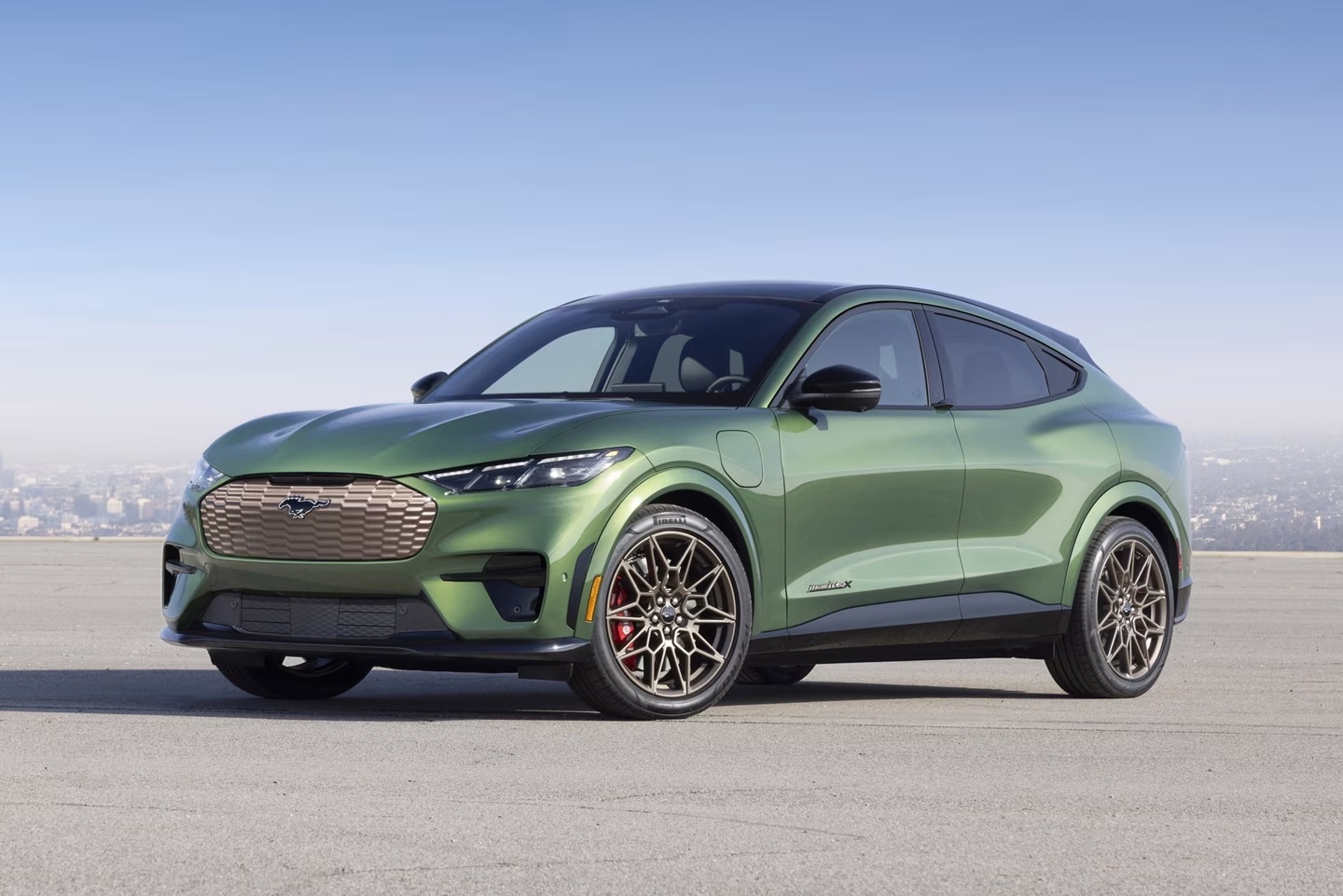
4. Ford Mustang Mach-E
The Ford Mustang Mach-E marks a significant evolution in Ford’s approach to electric mobility, combining the legendary Mustang nameplate with modern EV technology. Its bold, sporty design reflects its performance-oriented character, attracting buyers who desire both style and functionality.
The Mach-E provides a unique combination of acceleration, handling, and interior comfort that competes with many traditional luxury electric SUVs. This blend of heritage and innovation has established the Mach-E as a desirable vehicle in both new and used markets, contributing to its strong resale value.
Battery performance and reliability are essential factors that support the Mach-E’s value retention. Ford provides extensive warranty coverage for the battery and key drivetrain components, and the vehicle’s range remains competitive even after several years of use.
Owners consistently report stable performance and minimal battery degradation, which reassures potential buyers of its long-term practicality. The Mach-E’s build quality, attention to interior materials, and ergonomic design also enhance its appeal, creating a perception of durability and premium value that supports resale prices.
Software and technology contribute significantly to the Mach-E’s continued relevance in the EV market. Over-the-air updates improve features such as driver-assist systems, infotainment, and performance tuning.
Buyers of pre-owned Mach-Es benefit from ongoing technological enhancements, ensuring that older vehicles continue to feel modern and capable. Additionally, access to public fast-charging networks adds convenience and practicality, increasing the vehicle’s attractiveness in the secondary market and reducing depreciation risks.
Finally, the Mach-E’s brand identity and market demand reinforce its resale strength. Ford’s reputation, combined with the Mustang heritage, creates a sense of cultural and emotional value. Buyers are not just purchasing an electric vehicle, they are buying a performance-oriented lifestyle statement.
Vehicles that combine heritage, performance, technology, and practicality tend to maintain higher resale values than those lacking a clear identity. The Mach-E demonstrates this principle, offering a strong blend of emotional appeal and functional advantages that help it resist rapid depreciation.
5. Volkswagen ID.4
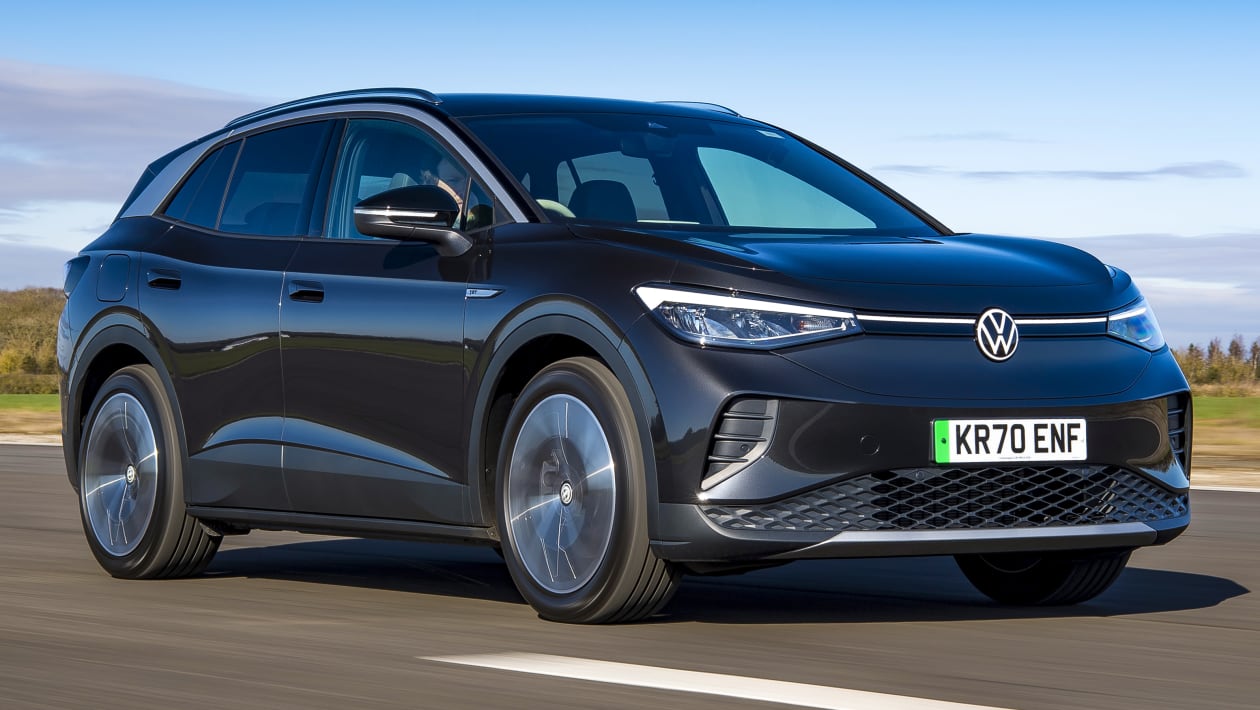
The Volkswagen ID.4 has established itself as a reliable, practical, and widely accessible electric vehicle, all of which contribute to its solid resale value. Its clean, understated exterior design appeals to buyers seeking a versatile and approachable vehicle.
The interior emphasizes comfort and user-friendly technology, offering ample space for passengers and cargo. These qualities make the ID.4 an attractive option for families and commuters alike, ensuring steady demand in the used EV market and supporting its long-term value.
Battery longevity and performance are key factors in the ID.4’s ability to retain value. Volkswagen employs a robust battery management system and offers comprehensive warranty coverage, giving buyers confidence that the vehicle will remain dependable over time.
The combination of efficient energy management and consistent performance ensures that older ID.4 models retain a competitive driving range and usability, reducing concerns about rapid depreciation that often affect other EVs with uncertain battery performance.
Software support and connected features further enhance the ID.4’s resale appeal. Volkswagen provides periodic over-the-air updates that improve functionality and usability, including enhancements to navigation, infotainment, and driver assistance systems.
These updates help maintain the vehicle’s relevance as newer EV models enter the market, preventing it from feeling outdated. Buyers increasingly consider software capabilities when assessing value, and the ID.4’s consistent support ensures it continues to meet modern expectations.
Finally, the ID.4 benefits from versatility, brand recognition, and broad market appeal. Its combination of comfort, cargo capacity, and ease of use makes it suitable for a wide range of buyers. Volkswagen’s long-standing reputation for reliability adds credibility and reassurance to potential owners.
Vehicles that balance practicality, brand strength, and ongoing support tend to hold value well, and the ID.4 exemplifies this balance, making it a resilient choice in an EV market where depreciation patterns can vary significantly.
5 EVs That Tank Immediately
1. Nissan Leaf
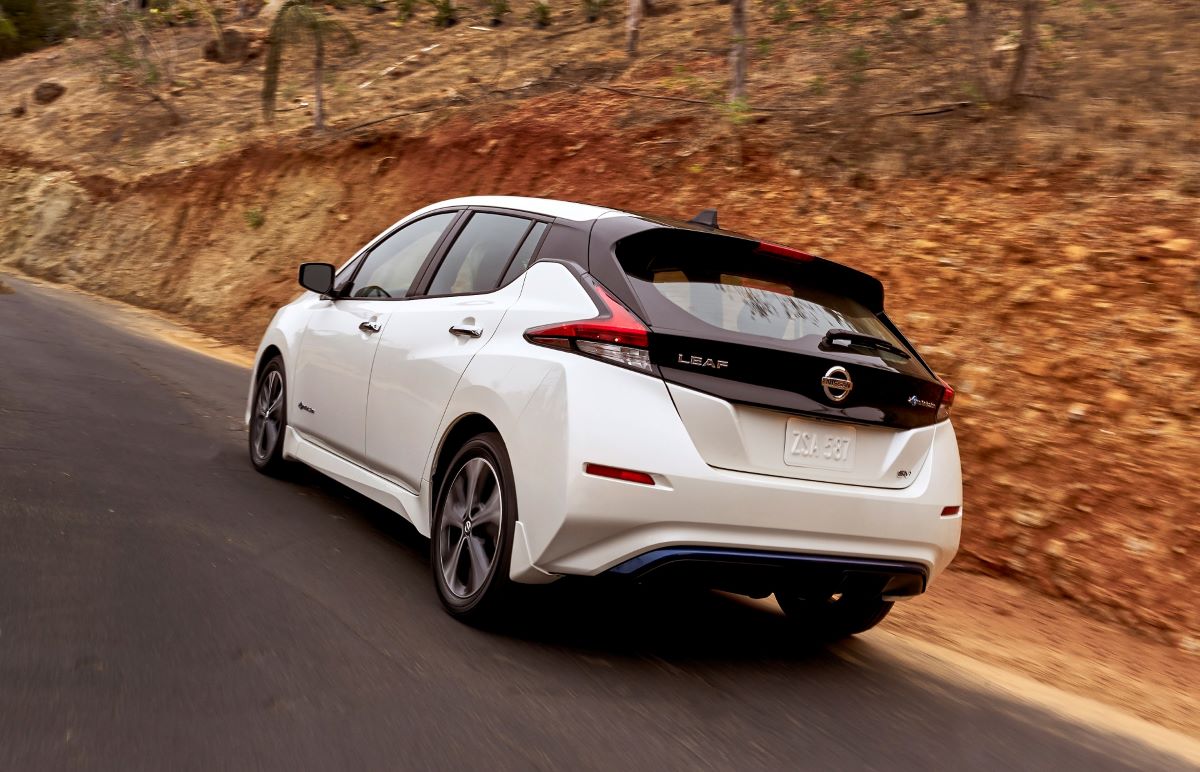
The Nissan Leaf, one of the earliest mainstream electric vehicles, struggles with rapid depreciation despite its historical significance. While it was revolutionary at its launch for bringing electric cars into a wider market, its older models suffer from limited range and outdated technology.
Early Leaf models had ranges as low as 73 miles per charge, and even later models only moderately improved. In a market where consumers prioritize driving range and efficiency, these limitations heavily impact resale value. Buyers looking at used Leafs are often concerned about whether the battery can handle daily driving needs without significant degradation.
Battery longevity is a major factor in the Leaf’s rapid depreciation. Older Leafs relied on early-generation lithium-ion batteries that were prone to faster degradation, especially in hotter climates. This led to diminishing range over time, which directly undermined the vehicle’s usefulness and desirability in the second-hand market.
Even though Nissan offered battery replacement programs, the cost and inconvenience associated with a failing battery deterred buyers. As a result, Leaf owners often face steep losses when attempting to sell their vehicles, contributing to the model’s reputation for poor resale performance.
Technology and feature obsolescence also play a role. The Leaf lacks many of the software update capabilities that newer EVs now offer. Unlike Tesla or Hyundai models that can receive over-the-air enhancements, the Leaf’s older systems are static, making the car feel outdated compared to contemporary alternatives.
Infotainment, driver-assist features, and efficiency improvements cannot be retroactively applied, leaving buyers with a vehicle that feels technologically behind its peers. This contributes to a perception of obsolescence that accelerates depreciation.
Finally, market demand for used Leafs is limited compared to more modern electric vehicles. While some buyers are attracted to its affordability, the combination of limited range, outdated tech, and potential battery issues often outweighs price considerations.
This weak secondary market demand ensures that depreciation happens quickly, and the Leaf is frequently cited as an example of an EV that loses value much faster than newer competitors that offer better range, features, and brand support.
2. Fiat 500e
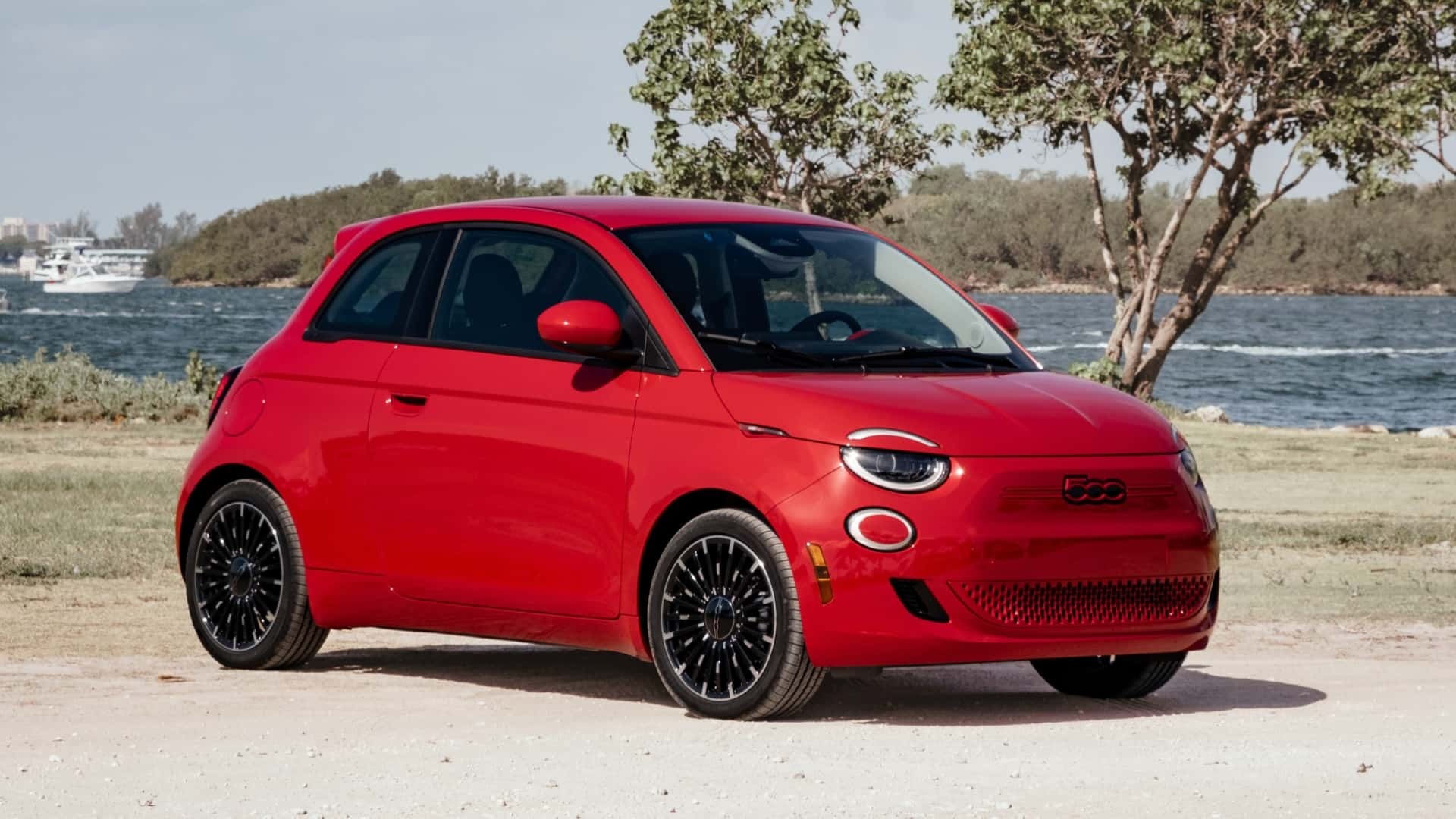
The Fiat 500e is a compact electric vehicle that struggles with retention in the used car market. While it has a stylish, retro-inspired design and small footprint suitable for urban driving, its limited range and minimal practicality reduce its appeal over time.
The 500e’s battery capacity is small compared to modern EV standards, resulting in ranges of only around 80–100 miles per charge in early models. This limitation makes it less attractive for buyers who want a versatile, everyday vehicle, directly contributing to steep depreciation in the used market.
Battery reliability also affects resale value. The Fiat 500e uses a relatively small battery pack that can degrade quickly with repeated fast-charging cycles or extended use in high temperatures.
Early owners often experienced noticeable drops in range, making the vehicle less practical for daily commuting or longer trips. While Fiat provided warranties and battery replacements, these factors still created uncertainty for potential buyers, undermining confidence and suppressing resale prices.
The 500e’s technology also falls behind modern expectations. Infotainment systems are basic, driver-assist features are minimal, and there are no over-the-air updates to improve functionality. Buyers in the current EV market increasingly consider software support and connected features essential. Older 500e models do not meet these expectations, which accelerates depreciation. Even though the car remains fun and nimble for city driving, its lack of modern amenities diminishes long-term value.
Lastly, market demand for used Fiat 500e vehicles is limited. Its niche appeal and lack of practicality compared to larger, more versatile EVs mean that it attracts fewer potential buyers in the secondary market.
Those seeking affordable electric vehicles often choose options with longer range, better technology, or stronger brand recognition, leaving the 500e with weak resale demand. Consequently, it depreciates quickly, making it one of the EVs that tank immediately after purchase.
3. BMW i3
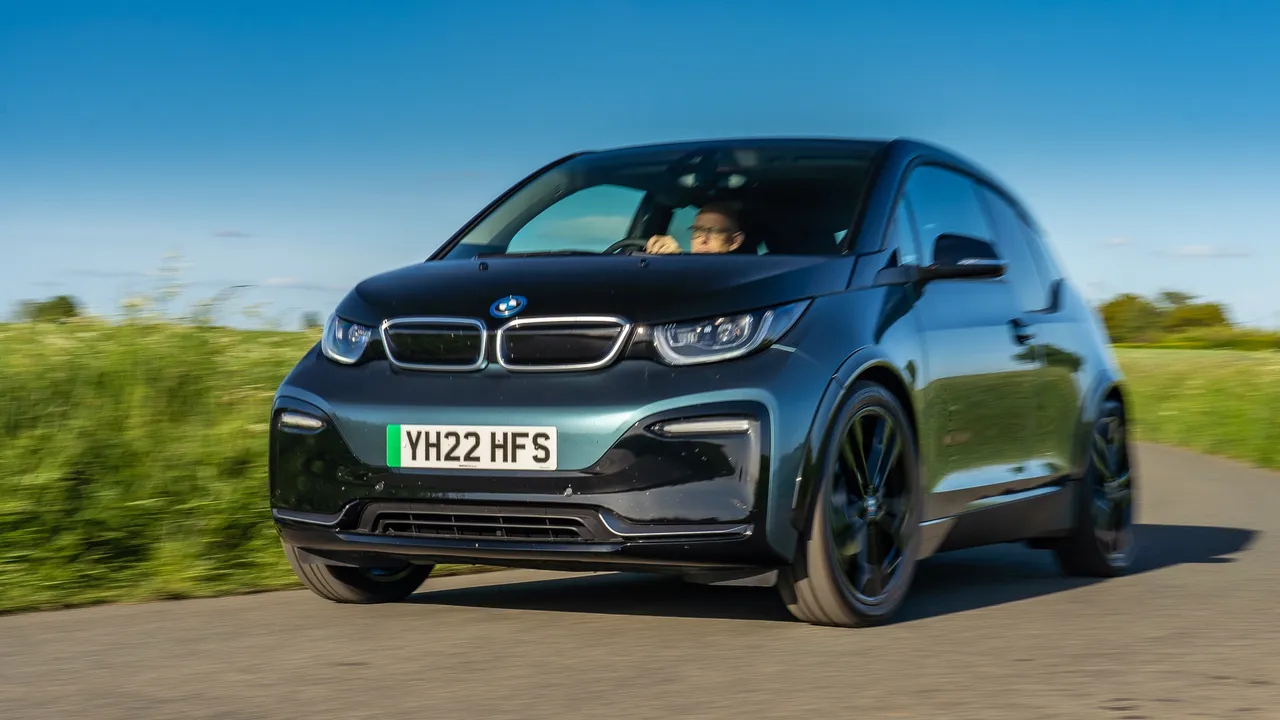
The BMW i3 was one of the earliest attempts at a premium, compact electric vehicle, for its carbon-fiber-reinforced plastic body and distinctive styling. Despite its innovation, the i3 suffers from poor resale performance due to limited range and small market appeal.
Even its higher-range variants often fail to compete with newer EVs offering longer range, faster charging, and more modern technology. Buyers considering used i3s are often concerned about whether the vehicle’s unique design and unconventional materials will age well, which affects market perception and accelerates depreciation.
Battery degradation is another issue that limits the i3’s resale value. While BMW provided a warranty covering battery capacity, the small battery packs used in earlier models are prone to diminished range over time. Urban-focused commuters might still find the vehicle useful, but anyone seeking versatility or longer trips will be discouraged.
Range anxiety, combined with the cost and effort of potential battery replacement, contributes to steep depreciation, making the i3 a risky investment for resale value-conscious buyers.
Technology obsolescence further hinders the i3. Its infotainment system, while advanced for its time, lacks the modern connectivity, over-the-air updates, and driver-assist features expected by today’s EV buyers.
This technological stagnation makes older i3s feel outdated, and even BMW’s reputation for engineering excellence cannot fully counteract the perception of obsolescence. Buyers often opt for more technologically current vehicles, leaving the i3 with weaker demand and rapid depreciation.
Finally, market demand is limited due to the i3’s niche appeal and high initial price relative to features. While it is an interesting vehicle for collectors or enthusiasts, its unconventional design, small size, and limited range make it impractical for most buyers in the used market. Combined with battery concerns and outdated technology, this limited demand ensures that the i3 depreciates much faster than mainstream EVs with broader appeal, placing it firmly among vehicles that lose value quickly.
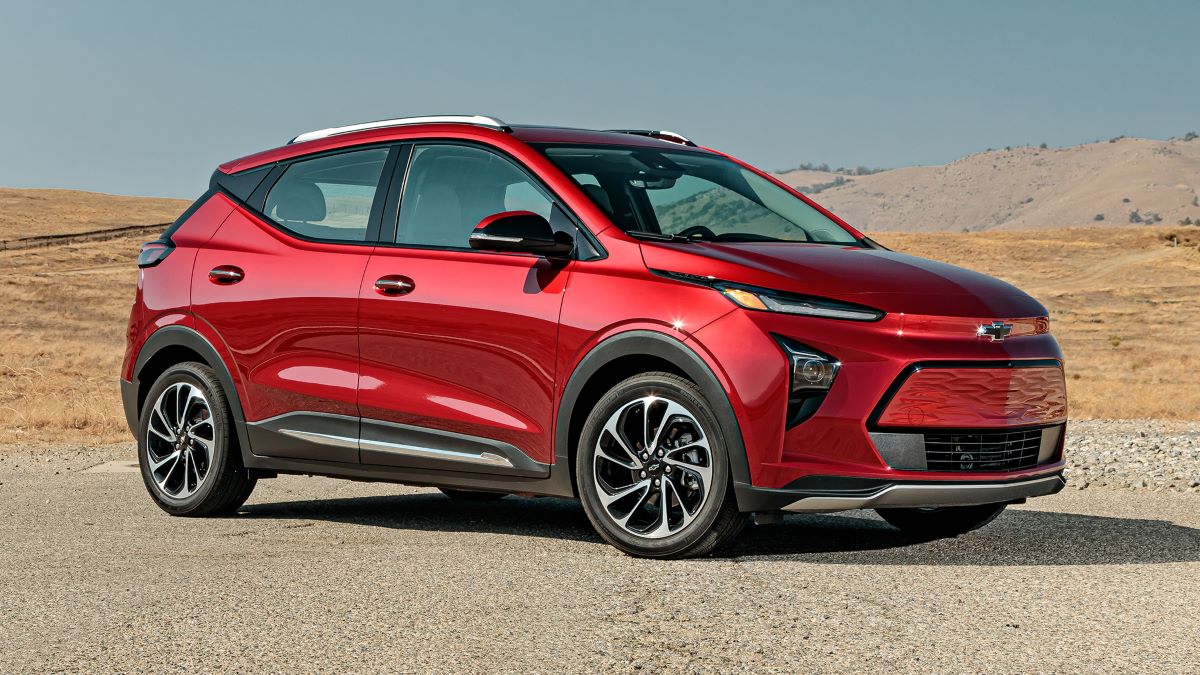
4. Chevrolet Bolt EV (Early Models)
The Chevrolet Bolt EV, while praised for its early long-range capabilities, experiences rapid depreciation due to reliability concerns, battery issues, and market competition. Early Bolt models were groundbreaking with ranges around 238 miles, but safety recalls and battery fire risks have damaged its reputation.
The 2020 recall involving potential battery defects caused widespread concern, which directly impacted resale values. Buyers are understandably cautious about purchasing used Bolts, even after replacements, contributing to a steep decline in resale prices for older models.
Battery degradation and replacement concerns also affect resale value. While the Bolt’s battery is relatively efficient and durable, the fear of defects or future recalls reduces buyer confidence. Potential owners may worry about maintenance costs or the availability of replacement parts, which suppresses demand in the secondary market. Vehicles with perceived risks, even if rare, often depreciate faster than safer alternatives.
Technology and features in early Bolt models also lag behind newer competitors. Infotainment systems, driver-assist options, and interior quality are functional but not exceptional, especially compared to newer EVs with cutting-edge software and connected features.
Buyers in the current EV market increasingly value technology updates, over-the-air improvements, and premium interior design, areas where early Bolts fall short. This technological gap accelerates depreciation and reduces resale appeal.
Finally, market competition is a significant factor. The EV market has matured rapidly, and newer vehicles from Tesla, Hyundai, Kia, and Ford offer longer ranges, more advanced features, and modern designs at competitive prices.
Compared to these alternatives, the early Bolt appears less desirable, limiting secondary market demand. This weak demand ensures that early Bolt EVs experience rapid depreciation, placing them among the EVs that tank immediately after purchase.
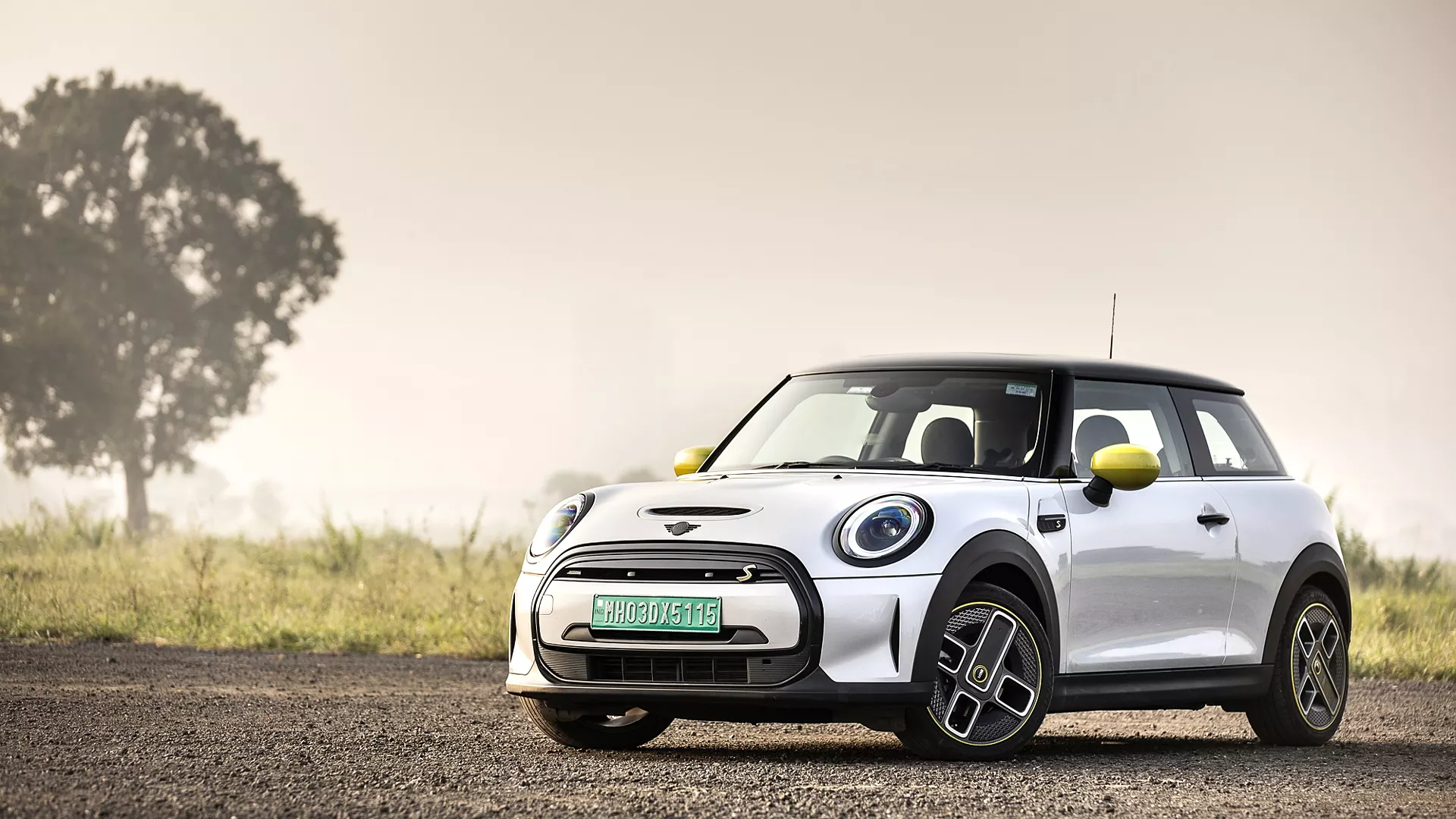
5. Mini Cooper SE
The Mini Cooper SE is a small, stylish electric car aimed primarily at urban drivers, but it struggles to retain value over time due to range limitations, niche appeal, and technological shortcomings. Early models offer only around 110 miles of range per charge, which is insufficient for buyers who need a versatile daily driver. This limited range, combined with a small battery, significantly reduces practicality and deters potential secondary market buyers, accelerating depreciation.
Battery reliability plays a role in the Cooper SE’s rapid depreciation. Smaller batteries tend to degrade faster with frequent use, particularly under high temperatures or repeated fast-charging sessions. While the vehicle is well-built and designed for city driving, the perceived risk of battery wear over time discourages resale buyers. Even though Mini offers a warranty for battery capacity, uncertainty about long-term performance contributes to poor value retention.
The Cooper SE also suffers from outdated technology. Infotainment, driver-assist systems, and connected features are basic compared to modern competitors. Without over-the-air updates or significant software improvements, the car quickly feels behind the times. Buyers today increasingly prioritize vehicles that remain technologically relevant, and the Mini Cooper SE does not meet these expectations in the long term.
Lastly, market demand for used Mini Cooper SE models is limited. While some buyers are attracted to its styling and compact urban-friendly design, the combination of short range, small battery, and outdated technology limits appeal. Most secondary market buyers prefer larger, more practical EVs with extended range, faster charging, and modern features. This lack of demand ensures steep depreciation, making the Mini Cooper SE one of the EVs that loses value almost immediately after purchase.
