
Hybrids have grown in popularity over the past decade as fuel efficiency has become a higher priority for drivers. For many, the appeal of a hybrid vehicle is straightforward: lower fuel costs, reduced emissions, and a smoother driving experience.
Automakers advertise impressive EPA ratings, often claiming that a particular model can achieve extraordinary miles per gallon.
These numbers are important benchmarks, yet the real-world experience often tells a different story.
Many drivers have discovered that the fuel economy they achieve in daily traffic conditions rarely matches the EPA estimates, leading to frustration and disappointment.
Conversely, some hybrids manage to deliver on their promises, meeting or even exceeding expected mileage in city and highway driving.
Understanding which hybrids truly perform and which fall short is valuable for anyone considering a purchase or evaluating fuel efficiency.
Fuel economy depends on a variety of factors, including driving style, traffic patterns, and even environmental conditions.
Stop-and-go traffic in urban areas can be particularly punishing for hybrid systems, as constant acceleration and braking impact energy recovery and efficiency.
Meanwhile, highway driving often allows hybrids to shine, benefiting from steady speeds and regenerative braking that occurs less frequently but more predictably.
Additionally, battery management, engine calibration, and vehicle weight all influence how close a hybrid comes to its advertised figures.
Certain manufacturers have refined their systems to maintain consistent mileage across different driving environments, while others struggle to balance performance, comfort, and efficiency.
Another consideration is the gap between EPA ratings and real-world experience. The EPA test cycle provides a standardized method for measuring fuel economy, but it cannot replicate every driving condition a typical driver encounters.
Some hybrids achieve stellar numbers under laboratory testing but fail to account for high-speed traffic, aggressive acceleration, or frequent short trips.
On the other hand, models designed with urban driving in mind may underperform on the highway but thrive in stop-and-go conditions.
This discrepancy explains why some drivers feel frustrated with their hybrid purchase, while others are pleasantly surprised by the actual mileage they achieve.
In this article, we will highlight ten hybrid models, divided into two categories. The first section will focus on five hybrids that deliver fuel efficiency close to or better than EPA estimates, showing that careful engineering and system design can produce reliable real-world results.
The second section will cover five hybrids that tend to disappoint in traffic, revealing that marketing numbers do not always translate to everyday driving satisfaction.
By examining these models in detail, drivers can make more informed decisions and understand the factors that influence hybrid performance in practical conditions.
5 Hybrids That Actually Hit EPA MPG
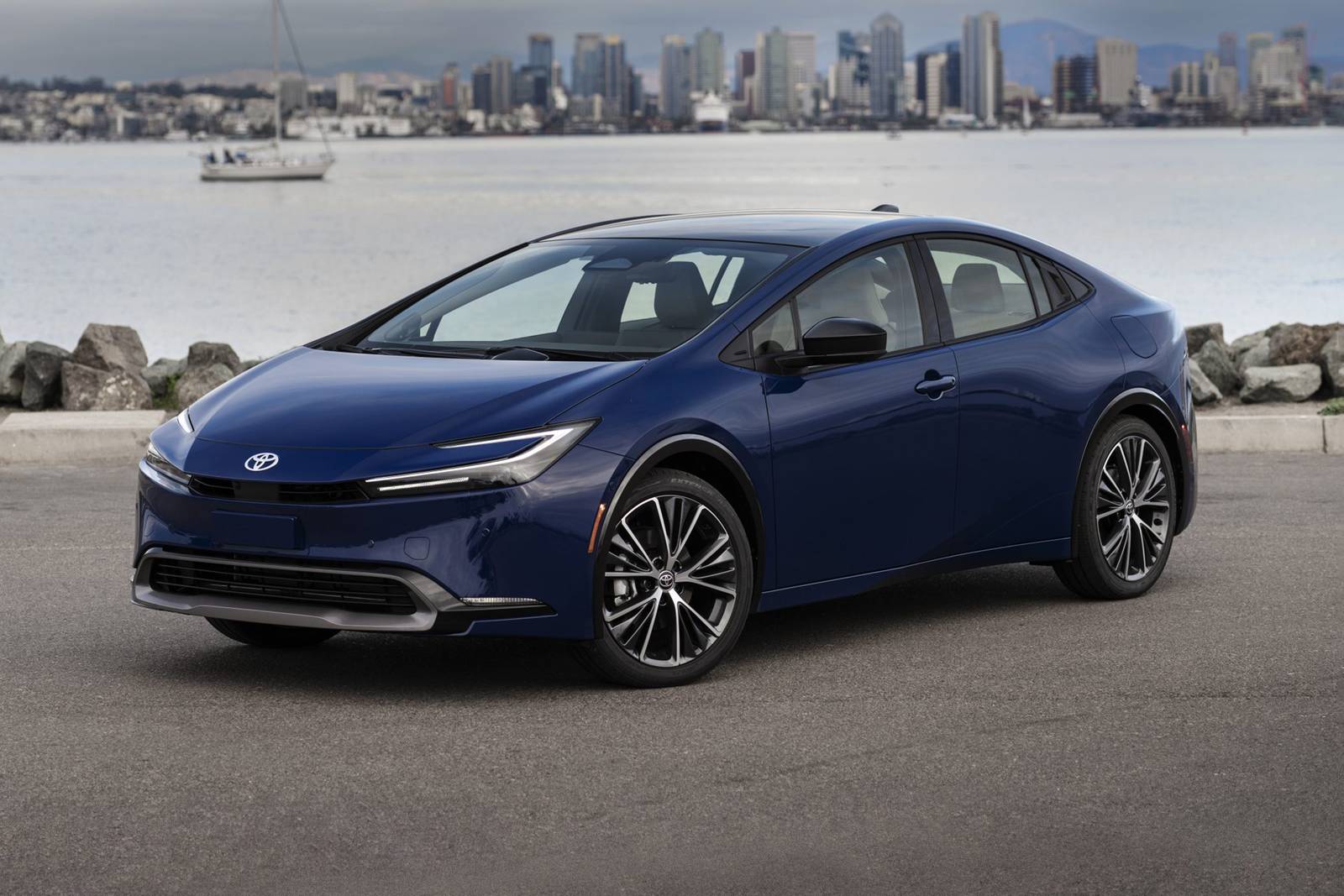
Toyota Prius
The Toyota Prius has long been a benchmark for hybrid efficiency, setting a standard that many competitors struggle to match.
Its reputation is built on consistent performance that closely mirrors or even exceeds EPA estimates across city, highway, and combined driving conditions.
The vehicle’s hybrid system is carefully engineered to optimize the balance between its electric motor and gasoline engine, allowing seamless transitions that prevent wasted energy.
Regenerative braking is particularly effective, capturing energy whenever the car slows down or stops, and feeding it back into the battery for future use.
This ensures that even in heavy urban traffic, the Prius can operate for extended periods primarily on electric power, minimizing gasoline consumption.
Its relatively lightweight frame compared to other vehicles in its class further contributes to fuel efficiency, reducing the load on the hybrid system during constant acceleration or deceleration in city conditions.
Aerodynamics also play a significant role in the Prius’s ability to achieve real-world fuel economy. The vehicle features a low drag coefficient and carefully sculpted body lines that minimize air resistance, allowing it to maintain impressive efficiency at higher speeds.
Even during highway driving, where some hybrids experience a drop in fuel economy, the Prius sustains high MPG due to its aerodynamic design and efficient engine management.
Inside the cabin, visibility and ergonomics encourage calm, measured driving, which naturally promotes fuel efficiency.
Drivers often report that the combination of hybrid engineering, lightweight design, and aerodynamic efficiency results in MPG numbers that consistently match the EPA estimates, making it a reliable choice for commuters and long-distance drivers alike.
For example, the Prius can adjust engine output dynamically based on driving conditions, using electric power at low speeds and gasoline power when acceleration or sustained high-speed driving is required.
In city traffic, this translates to frequent electric-only operation during stops, which dramatically lowers gasoline consumption.
The reliability of the hybrid components ensures consistent efficiency even after many years of use, which is a key reason why the Prius has maintained its reputation as a fuel-sipping vehicle.
Finally, the Prius stands out due to its predictability and driver-friendly experience. Owners quickly learn how the system behaves under different conditions, allowing them to maximize fuel economy without having to rely on complicated driving techniques.
The hybrid’s smooth acceleration, intuitive controls, and clear energy monitoring displays all encourage steady driving habits, reinforcing efficiency.
Compared to many competitors that overpromise and underdeliver, the Prius reliably meets expectations and delivers real-world results close to advertised EPA numbers.
Its combination of engineering excellence, aerodynamic efficiency, and predictable performance makes it one of the most trusted hybrids available for drivers seeking consistent fuel economy.
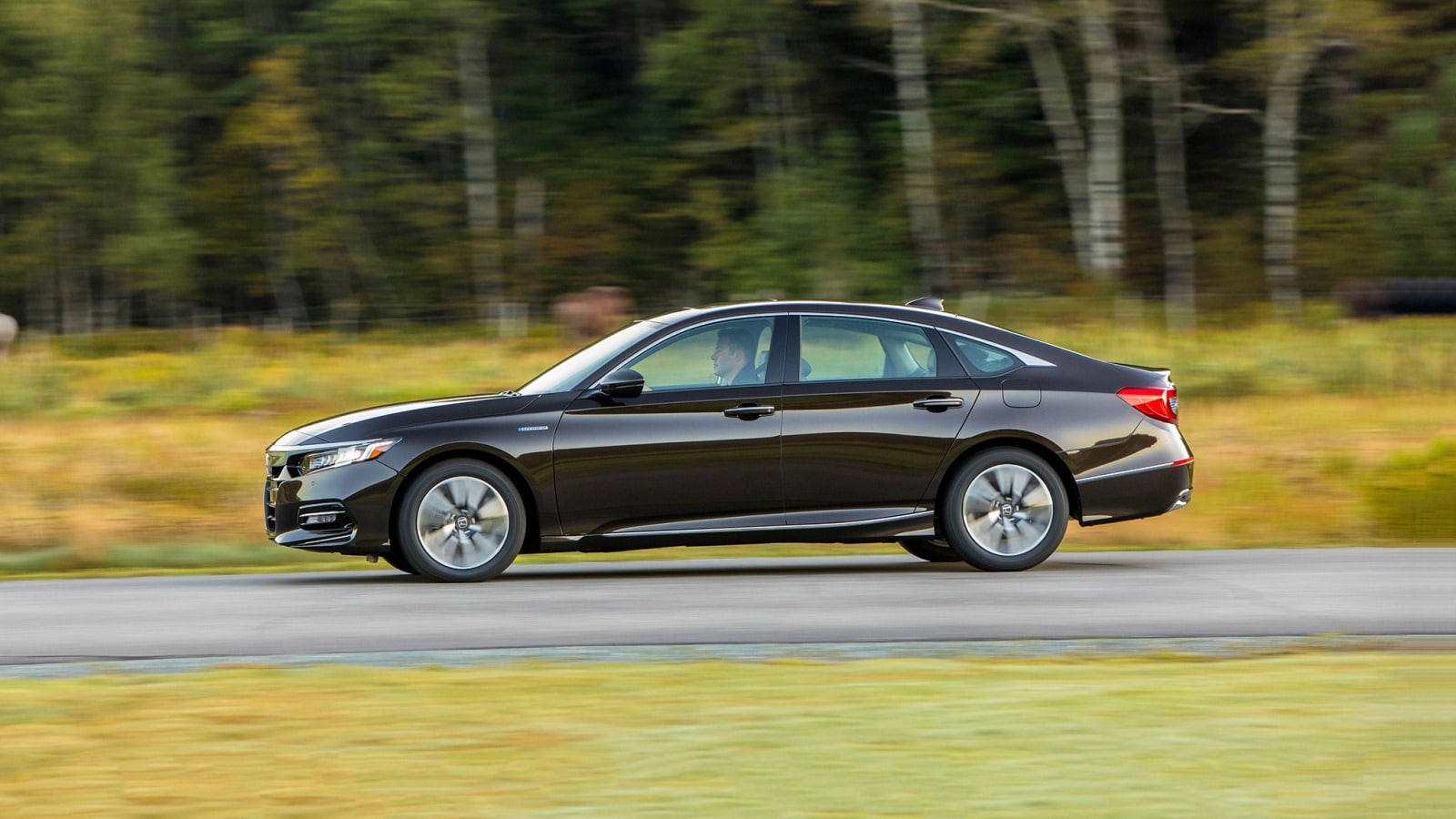
Honda Accord Hybrid
The Honda Accord Hybrid achieves a balance between fuel efficiency, comfort, and driving performance, making it a standout option in the hybrid sedan category.
Its two-motor hybrid system intelligently alternates between electric-only and gasoline-assisted power depending on speed, terrain, and driver behavior.
This allows the vehicle to maintain high MPG even in urban driving conditions with frequent stops and starts.
One of the Accord Hybrid’s strengths is its ability to shut off the gasoline engine at low speeds, letting the electric motor handle most city driving scenarios.
This is especially useful in stop-and-go traffic, where traditional gasoline engines tend to consume more fuel than expected.
The intelligent motor management ensures that the engine only engages when necessary, preserving fuel and maintaining a smooth driving experience.
Aerodynamic design and weight optimization further enhance the Accord Hybrid’s real-world efficiency.
Engineers have carefully shaped the body to reduce wind resistance while selecting materials that keep the sedan’s weight manageable without compromising safety or comfort.
The result is a vehicle that performs well in both city streets and highways, achieving combined fuel economy numbers that frequently match or exceed EPA estimates.
Drivers often note that during extended city commutes, the Accord Hybrid delivers better-than-expected mileage, demonstrating that the system effectively handles urban driving challenges.
This combination of comfort, efficiency, and performance makes it an ideal choice for commuters who require a versatile hybrid capable of excelling in varied traffic conditions.
Battery management and energy monitoring in the Accord Hybrid are also noteworthy. The vehicle continuously tracks battery levels, driving conditions, and energy usage to optimize power distribution between the electric motor and gasoline engine.
This real-time adjustment allows the hybrid system to remain efficient even in unpredictable traffic patterns, reducing reliance on gasoline and increasing the proportion of electric-only operation.
Drivers often experience fuel economy that is close to the advertised EPA ratings without having to engage in extreme hypermiling techniques.
The hybrid system’s ability to adapt to driver behavior and traffic conditions makes it one of the more dependable and consistent performers in real-world scenarios.
Finally, the Accord Hybrid’s driving experience indirectly reinforces efficiency. Its smooth acceleration, responsive handling, and quiet cabin environment encourage drivers to accelerate gradually and brake gently, which naturally conserves fuel.
Intuitive displays provide clear feedback on energy usage, allowing owners to track efficiency and adjust driving habits effortlessly.
This combination of engineering, driver support, and practical comfort enables the Accord Hybrid to reliably achieve fuel economy close to EPA numbers, earning its place among the hybrids that deliver real-world performance without compromise.
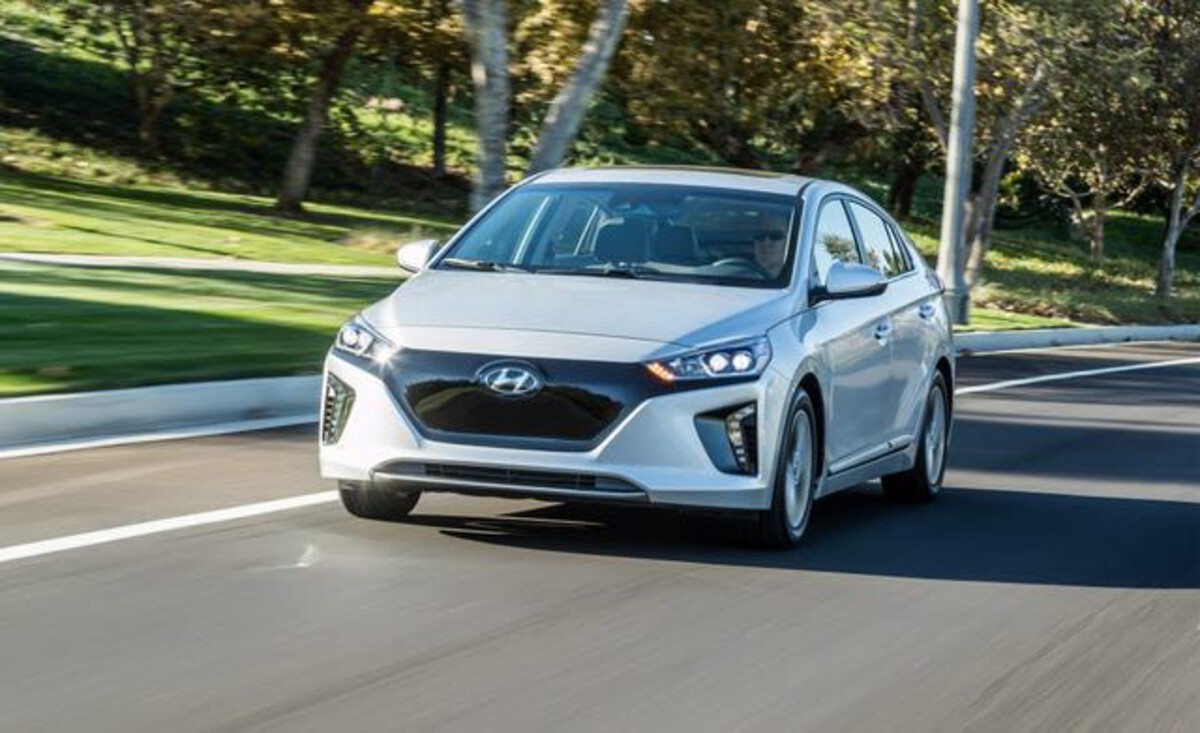
Hyundai Ioniq Hybrid
The Hyundai Ioniq Hybrid has earned acclaim for its exceptional fuel efficiency and city-friendly performance, making it one of the most reliable hybrids for real-world MPG.
Its powertrain is designed to maximize electric-only operation at lower speeds while seamlessly integrating gasoline power when needed.
This ensures that energy is not wasted during stop-and-go traffic, a situation where many hybrids struggle.
Regenerative braking is highly effective, capturing energy from deceleration and storing it for future use, which allows the vehicle to maintain impressive city MPG numbers without aggressive driver intervention.
Lightweight construction further reduces strain on the hybrid system, making it easier for the vehicle to handle frequent acceleration and deceleration efficiently.
The Ioniq Hybrid also benefits from advanced aerodynamic design. Its low drag coefficient and sleek profile reduce air resistance, helping the vehicle maintain high fuel economy during highway driving.
The combination of aerodynamics and powertrain efficiency allows the Ioniq to achieve strong combined MPG, closely matching or even surpassing EPA estimates.
The cabin design also encourages relaxed driving, with excellent visibility and a comfortable seating position that promotes measured acceleration and steady braking.
Drivers often find that the Ioniq maintains consistent efficiency even during long commutes, making it a dependable choice for those seeking predictable hybrid performance.
Battery management and intelligent power distribution are central to the Ioniq Hybrid’s success.
The system continuously monitors driving conditions, energy demand, and battery charge to optimize efficiency, allowing the electric motor to handle low-speed operation and reducing the frequency of gasoline engine engagement.
This capability is particularly valuable in urban traffic, where frequent stops would otherwise lead to higher fuel consumption.
Real-world experiences confirm that the Ioniq’s hybrid system effectively manages energy, producing MPG close to or better than the official EPA ratings.
Additionally, the Ioniq Hybrid provides driver-focused tools that support efficient operation. Energy flow monitors, real-time MPG displays, and predictive feedback encourage drivers to maintain fuel-saving habits without extra effort.
These systems complement the hybrid engineering, allowing the vehicle to achieve consistent efficiency even in challenging conditions.
The result is a hybrid that consistently delivers performance aligned with advertised EPA numbers, combining technical sophistication, aerodynamic efficiency, and user-friendly features into a highly dependable fuel-saving vehicle.
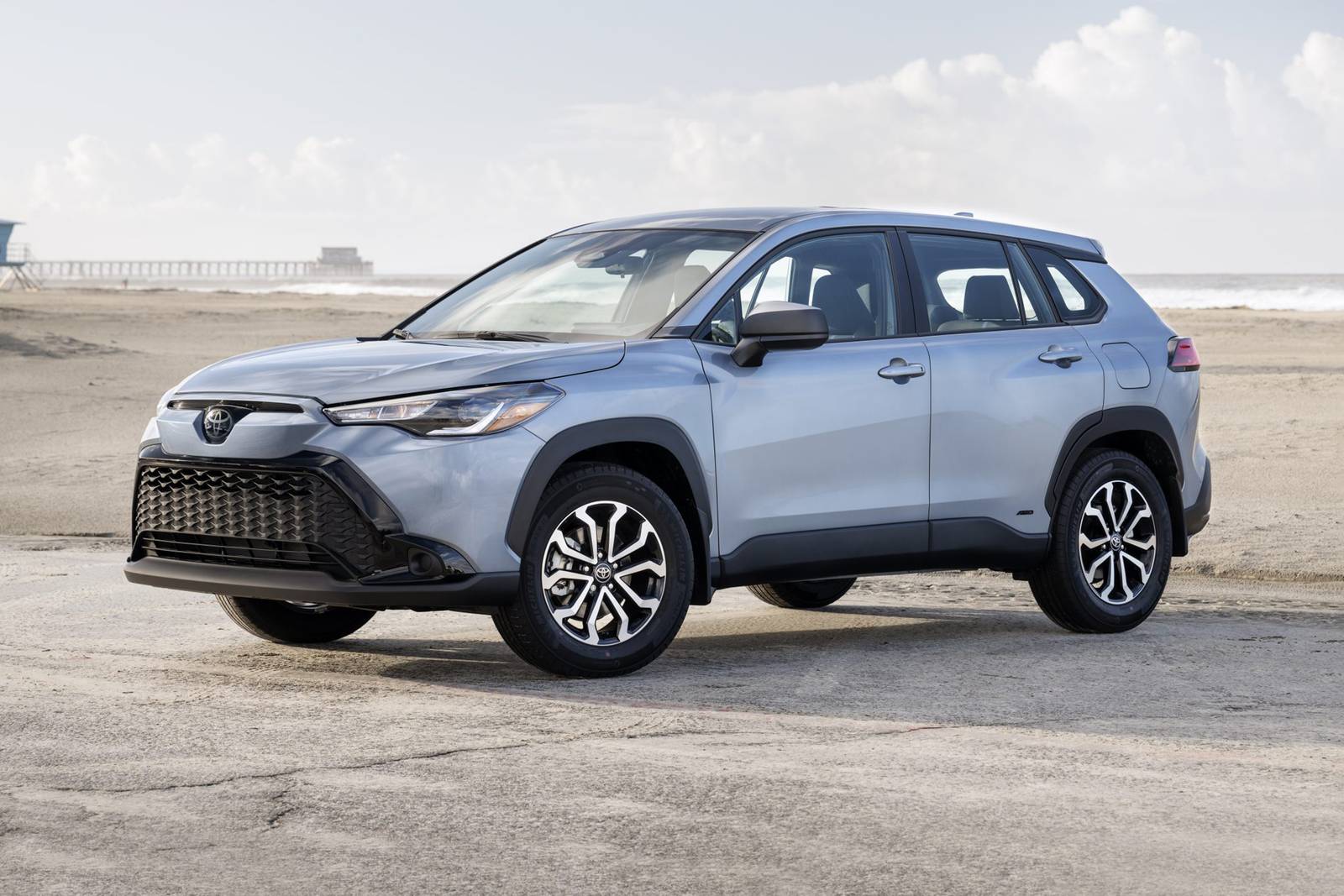
Toyota Corolla Hybrid
The Toyota Corolla Hybrid offers an accessible and practical approach to hybrid technology, delivering reliable fuel economy in a compact, comfortable package.
Its hybrid system integrates electric and gasoline power to optimize efficiency, with the electric motor handling low-speed driving and the gasoline engine engaging as needed for acceleration or sustained speeds.
This careful balance allows the Corolla Hybrid to achieve fuel economy numbers that frequently match EPA estimates, even during stop-and-go city driving
. The vehicle’s lightweight platform and compact dimensions enhance its efficiency, reducing energy demand and improving performance in urban traffic.
Aerodynamics also contribute to the Corolla Hybrid’s success. The vehicle’s body shape minimizes drag, while design details like a smooth underbody and streamlined profile reduce energy loss.
This enables consistent fuel efficiency during highway travel, where some hybrids experience a noticeable drop in MPG.
Drivers often report that the Corolla Hybrid maintains strong city and highway mileage without requiring unusual driving techniques, demonstrating the hybrid system’s reliability and practicality.
The Corolla Hybrid’s battery and powertrain management systems are well-calibrated, enabling energy to be captured efficiently during braking and reused for electric propulsion.
In urban traffic, where frequent stopping can otherwise reduce efficiency, this system ensures that fuel consumption remains low.
The gasoline engine engages only when necessary, preserving fuel and maintaining smooth operation. These features contribute to a predictable driving experience that supports consistent MPG.
Finally, driver experience is a key factor in the Corolla Hybrid’s performance. The vehicle’s responsive steering, smooth acceleration, and quiet cabin encourage careful driving, which naturally improves fuel economy.
Energy monitoring tools provide feedback that helps drivers maintain optimal efficiency without effort.
This combination of engineering, hybrid management, and intuitive feedback ensures that the Corolla Hybrid consistently delivers real-world MPG in line with EPA ratings, making it a dependable choice for commuters and city drivers seeking reliable fuel savings.
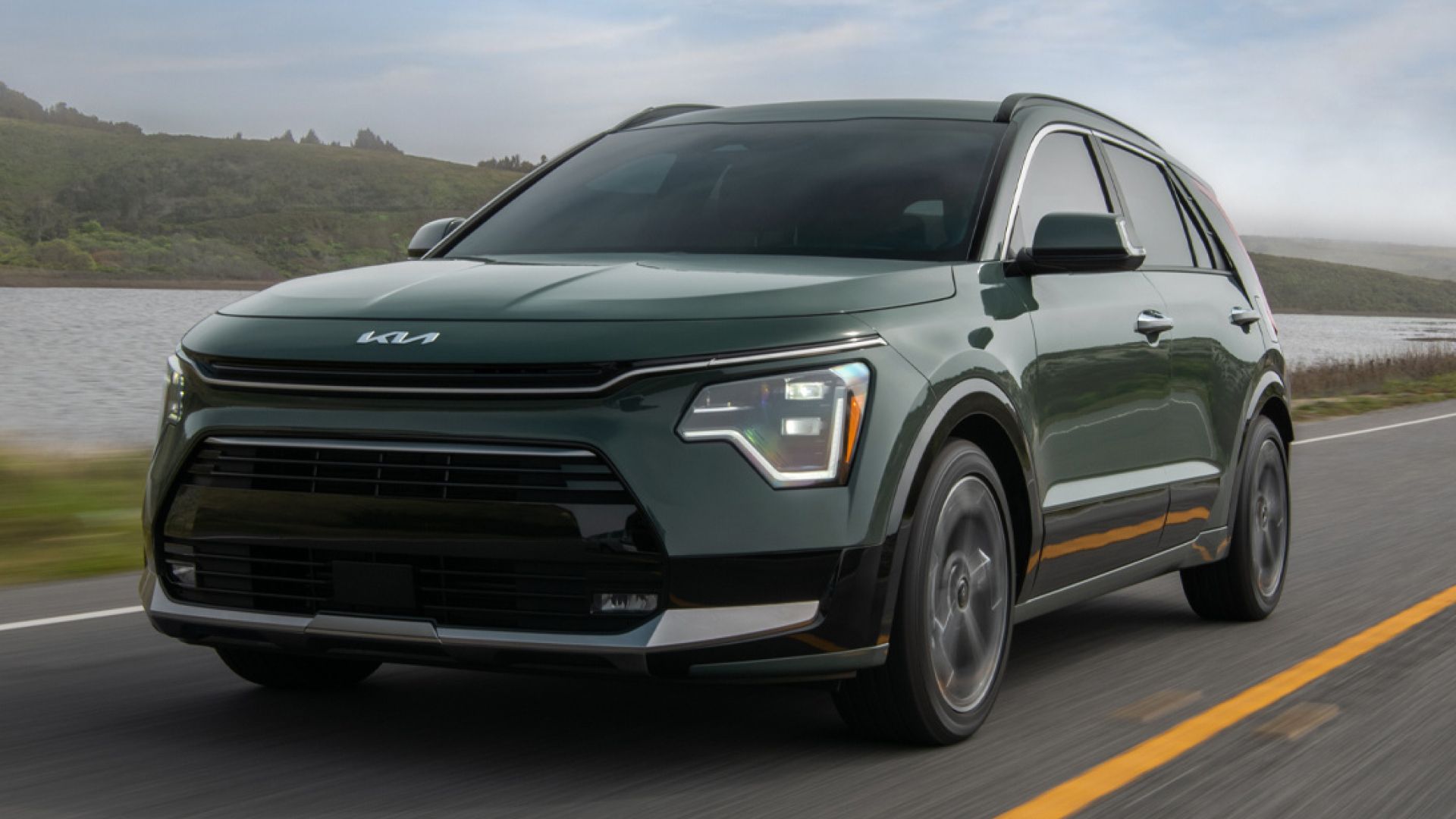
Kia Niro Hybrid
The Kia Niro Hybrid combines the practicality of a crossover with the fuel efficiency of a small hybrid vehicle, producing strong real-world MPG across varied driving conditions.
Its hybrid system optimizes energy use by allowing the electric motor to handle low-speed acceleration while the gasoline engine supports higher-speed driving and extended trips.
This ensures that the vehicle remains efficient in city traffic, where stop-and-go driving can challenge less sophisticated hybrid systems.
The lightweight body and carefully tuned hybrid drivetrain help minimize energy loss, allowing the Niro to achieve MPG close to advertised EPA figures even during dense traffic conditions.
Aerodynamic efficiency and weight management play a significant role in the Niro Hybrid’s performance. The vehicle’s streamlined shape reduces drag, and the use of lighter materials allows the hybrid system to operate without excessive strain.
These design choices, combined with a responsive hybrid system, enable drivers to achieve strong fuel economy during both city and highway driving.
Real-world tests often show that the Niro maintains consistent efficiency across different traffic conditions, making it a reliable option for daily commuting and longer trips alike.
Battery management and power distribution systems further enhance the Niro’s ability to meet EPA ratings. The hybrid system adjusts in real-time to driving conditions, optimizing the mix of electric and gasoline power.
This ensures that the vehicle operates as efficiently as possible, reducing fuel consumption during heavy traffic and maintaining steady performance during highway travel.
Drivers benefit from consistent MPG without having to adopt extreme driving habits or complicated energy-saving techniques.
Finally, the Niro Hybrid supports efficient driving through intuitive feedback and cabin design. Displays provide real-time information on energy usage and regenerative braking, helping drivers make small adjustments that maximize efficiency.
The smooth ride, comfortable seating, and responsive handling encourage careful driving habits, which further enhance fuel economy.
Together, these features ensure that the Kia Niro Hybrid reliably delivers on its EPA MPG claims, combining versatility, comfort, and efficiency into a crossover that performs well in real-world conditions.
5 Hybrids That Disappoint in Traffic
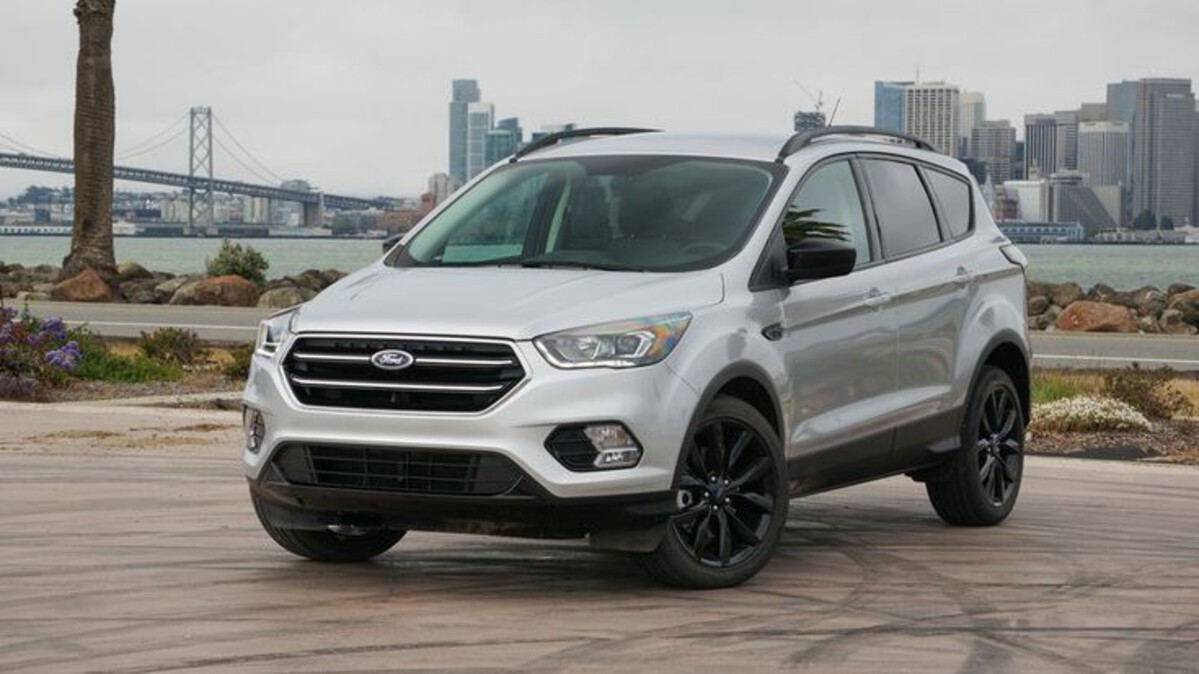
Ford Escape Hybrid
The Ford Escape Hybrid offers a spacious, versatile SUV experience, but when it comes to city traffic fuel economy, it often falls short of EPA estimates.
The vehicle’s hybrid system is designed to combine electric and gasoline power, but in real-world stop-and-go conditions, the gasoline engine tends to engage more frequently than drivers might expect.
This can be attributed to the vehicle’s relatively heavier weight compared to smaller hybrids, which places a larger demand on the powertrain during acceleration from a standstill.
While the Escape Hybrid performs adequately on highways, its fuel economy in congested urban settings often lags behind advertised figures, leading to disappointment for drivers who prioritize city efficiency.
The crossover’s size and aerodynamics also contribute to lower-than-expected city MPG. With a larger frontal area and higher drag coefficient than compact hybrids, the Escape Hybrid requires more energy to overcome wind resistance and inertia in traffic.
This effect becomes particularly pronounced during frequent stops and starts, where energy that could otherwise be captured through regenerative braking is partly offset by repeated gasoline engine engagement.
Drivers often notice that while the Escape Hybrid is responsive and comfortable, its fuel efficiency is highly dependent on maintaining steady speeds rather than navigating heavy traffic patterns. The result is an SUV that delivers utility and performance at the expense of consistent city MPG.
Unlike lighter, more compact hybrids, the system struggles to sustain long periods of electric-only operation when frequent acceleration is required, reducing potential fuel savings.
Drivers attempting to maximize MPG may find themselves disappointed, especially if they expect the Escape Hybrid to perform like smaller, more nimble hybrids that excel in stop-and-go conditions.
Finally, the driving experience, while comfortable and technologically advanced, does not necessarily encourage maximum fuel efficiency.
The Escape Hybrid features a smooth ride, intuitive infotainment, and responsive handling, but these qualities may lead drivers to accelerate more aggressively than necessary in traffic, further reducing MPG.
Even with energy-monitoring displays that provide feedback on hybrid system usage, the real-world performance often fails to match EPA predictions.
While the Escape Hybrid remains a strong choice for those seeking a capable hybrid SUV, it is not the most reliable option for drivers whose primary concern is achieving high fuel efficiency in dense city traffic.
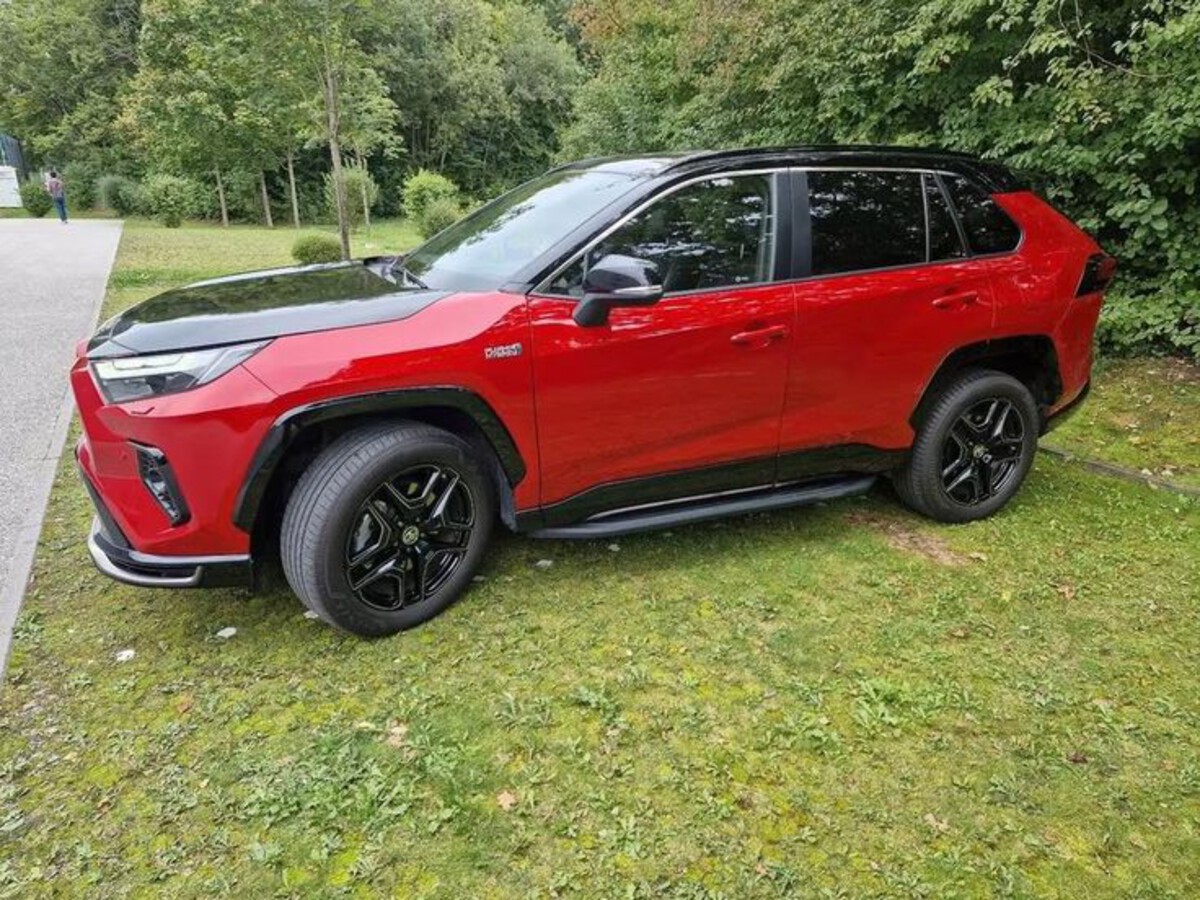
Toyota RAV4 Hybrid
The Toyota RAV4 Hybrid is well-regarded for reliability and versatility, but its fuel economy in traffic-heavy environments can be underwhelming.
Although the hybrid system combines electric and gasoline power to optimize efficiency, real-world city driving reveals that the gasoline engine often activates more frequently than expected.
This is partly due to the vehicle’s increased weight compared to compact sedans and smaller hybrids, which requires more energy to accelerate from a stop.
Drivers may notice that the RAV4 Hybrid’s EPA-rated city MPG is difficult to achieve during regular commuting conditions, particularly when navigating stop-and-go traffic with frequent braking and acceleration cycles.
Aerodynamics and vehicle size also play a role in reducing city efficiency. The RAV4 Hybrid’s larger SUV frame generates additional drag, requiring more energy to maintain even modest speeds in urban traffic.
While regenerative braking helps recapture some energy during deceleration, the system cannot completely offset the extra fuel consumed due to the frequent engagement of the gasoline engine.
This means that in real-world scenarios, drivers often observe fuel consumption higher than EPA city ratings, making it a hybrid that excels more in highway efficiency than in urban stop-and-go conditions.
Battery management and hybrid system calibration can further challenge efficiency in traffic.
The RAV4 Hybrid is programmed to maintain a balance between performance and fuel economy, which often results in early activation of the gasoline engine during acceleration or hill climbing in city environments.
The driving experience itself, while smooth and comfortable, may also contribute to disappointing MPG.
The RAV4 Hybrid is designed to provide confident handling and responsive acceleration, which can encourage drivers to press the throttle more aggressively than necessary in stop-and-go traffic.
Combined with frequent engine engagement, this behavior often leads to fuel consumption higher than advertised.
While the RAV4 Hybrid remains a practical and reliable choice for families and commuters, it is less suited for drivers who prioritize consistently high fuel efficiency in congested city traffic.
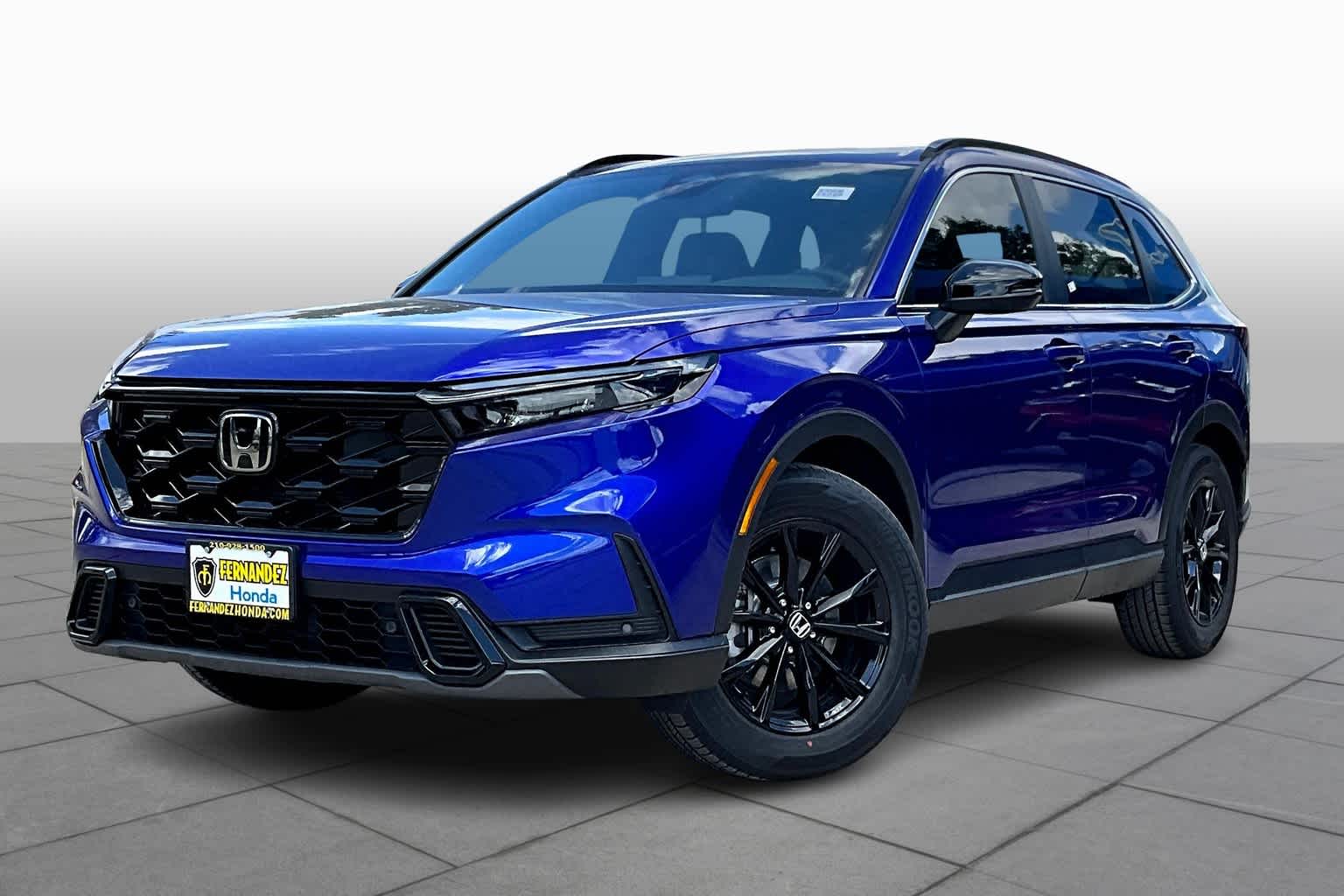
Honda CR-V Hybrid
The Honda CR-V Hybrid is a versatile and well-appointed SUV, but it struggles to maintain high fuel economy in traffic-heavy urban environments.
The hybrid system is designed to blend gasoline and electric power efficiently, but in stop-and-go city driving, the gasoline engine frequently intervenes, reducing potential fuel savings.
The CR-V Hybrid’s weight and size make it less nimble than smaller hybrids, and its energy demands increase significantly during repeated acceleration from a standstill.
While highway driving allows the CR-V Hybrid to approach its EPA fuel economy estimates, urban traffic conditions often reveal a noticeable discrepancy between expected and actual MPG.
Vehicle design and aerodynamics contribute to these challenges. The CR-V Hybrid features a larger body and higher ride height than compact sedans, which increases aerodynamic drag and energy requirements during city driving.
Even with regenerative braking capturing energy during deceleration, frequent gasoline engine engagement limits the effectiveness of this energy recovery, resulting in real-world fuel economy lower than the official EPA ratings.
Drivers commuting in heavy traffic often notice that the CR-V Hybrid consumes more fuel than anticipated, particularly during extended periods of stop-and-go driving.
Battery management and hybrid system optimization also affect urban fuel efficiency. The CR-V Hybrid is tuned to maintain a balance between responsiveness and fuel savings, but this calibration sometimes favors performance over pure efficiency.
The gasoline engine may activate sooner than expected during acceleration or moderate inclines, reducing the proportion of time the vehicle runs in electric-only mode.
For drivers seeking maximum city MPG, this results in a hybrid that falls short of expectations, particularly when compared to smaller, lighter hybrids optimized for urban traffic conditions.
Finally, the CR-V Hybrid’s driving experience, though comfortable and technologically advanced, can unintentionally reduce fuel efficiency.
Its smooth acceleration, responsive handling, and quiet cabin encourage confident driving, which may lead to more aggressive throttle use in congested traffic.
While energy monitoring displays help drivers understand hybrid system usage, real-world city fuel economy often remains below EPA estimates.
The CR-V Hybrid remains a capable and reliable SUV, but it is not the ideal choice for drivers whose primary concern is high MPG in stop-and-go traffic.
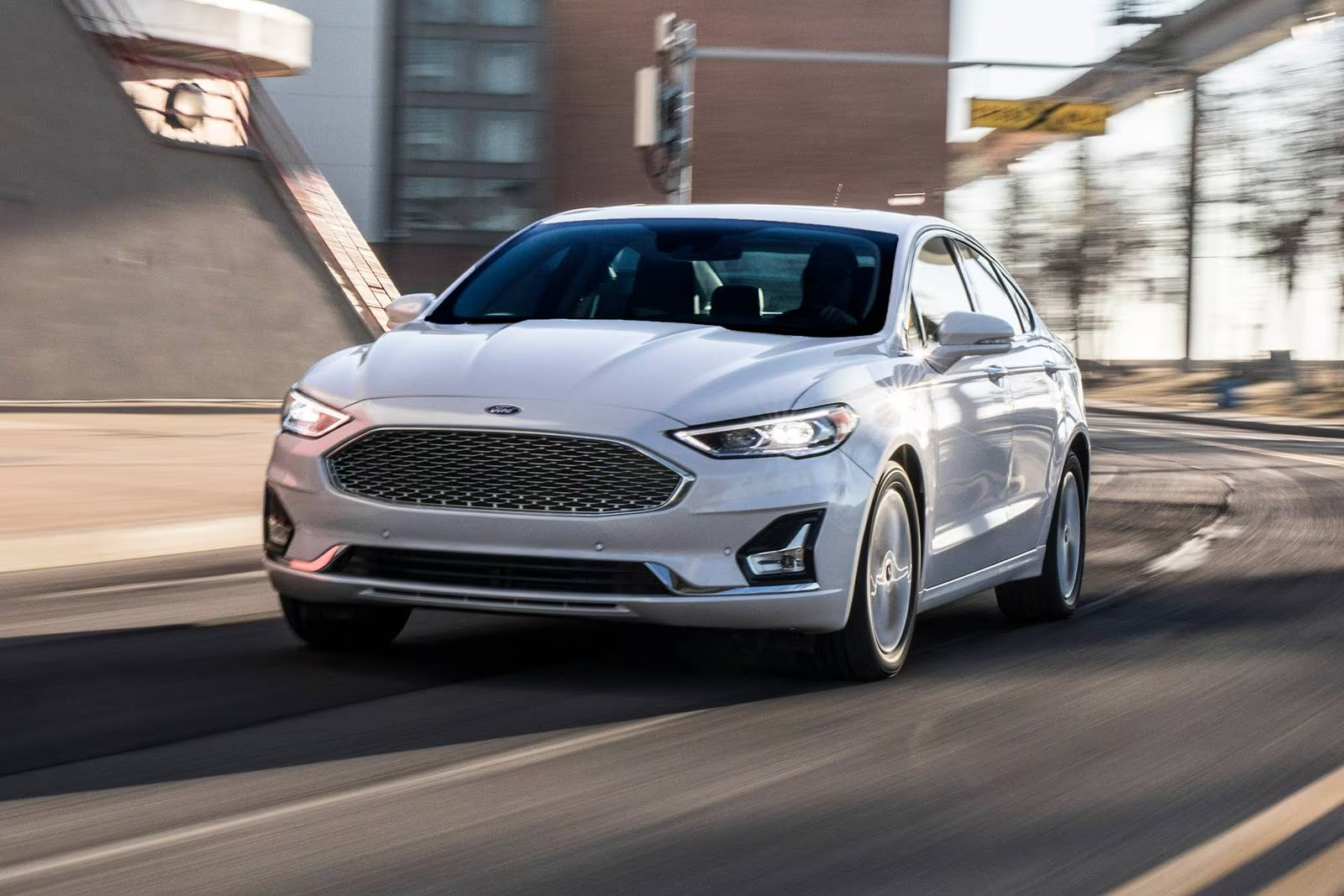
Ford Fusion Hybrid
The Ford Fusion Hybrid delivers a comfortable and refined midsize sedan experience, but in traffic-heavy city conditions, it often fails to meet advertised fuel economy.
The hybrid system combines electric and gasoline power, but the Fusion Hybrid tends to rely more on its gasoline engine during stop-and-go driving than expected.
Its curb weight and less compact design contribute to increased energy demand during acceleration from stops.
As a result, drivers commuting in dense urban traffic may find that real-world city MPG falls short of EPA ratings, leading to disappointment for those prioritizing fuel efficiency.
Aerodynamic and design factors further influence city performance. The Fusion Hybrid’s larger body size and sedan proportions create more drag than smaller hybrids, requiring additional energy to maintain acceleration and speed in traffic.
While regenerative braking captures some energy during deceleration, it cannot fully compensate for the frequent engagement of the gasoline engine, particularly during repeated stops.
This often results in lower fuel economy than the official city MPG rating, making the Fusion Hybrid less efficient in urban settings compared to smaller, lighter hybrid vehicles.
Battery management and hybrid system calibration also affect city fuel efficiency. The Fusion Hybrid is designed to optimize the balance between performance and economy, but its programming often favors gasoline engagement earlier than ideal in stop-and-go conditions.
Electric-only operation is limited during moderate acceleration, meaning that city driving frequently triggers the gasoline engine, reducing potential fuel savings.
Drivers seeking consistent high MPG in urban traffic may find the Fusion Hybrid less satisfying in real-world conditions than advertised.
Finally, the driving experience, while refined and smooth, can unintentionally encourage fuel-consuming behavior. The Fusion Hybrid’s responsive acceleration, quiet cabin, and comfortable ride encourage confident driving, often resulting in more aggressive throttle use in congested conditions.
Despite energy monitoring tools that provide feedback on hybrid system performance, real-world MPG frequently falls short of expectations.
The Fusion Hybrid remains a capable midsize sedan with strong highway performance, but it is less effective at delivering high fuel efficiency in urban traffic, highlighting the limitations of its hybrid system in stop-and-go environments.
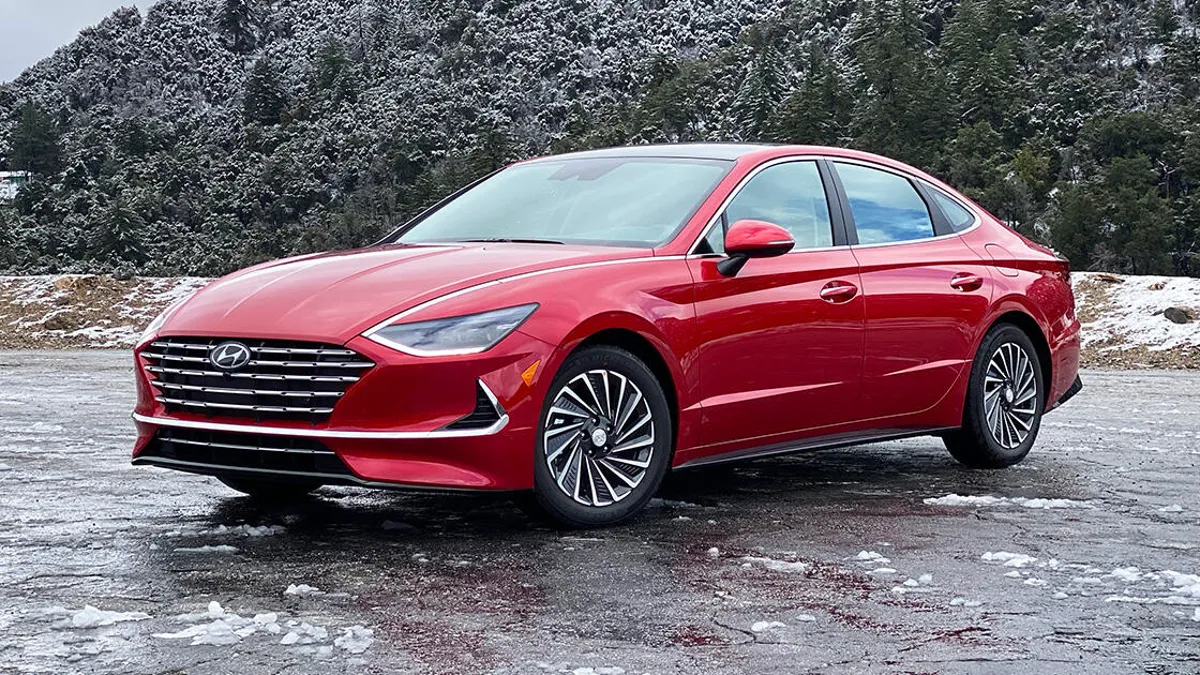
Hyundai Sonata Hybrid
The Hyundai Sonata Hybrid is a stylish and well-equipped sedan that promises impressive fuel economy, but in city traffic, it often underperforms relative to EPA ratings.
Its hybrid system is designed to alternate between electric and gasoline power for optimal efficiency, but real-world urban driving reveals frequent gasoline engine engagement.
The Sonata Hybrid’s size and weight contribute to higher energy demands during acceleration, especially in stop-and-go traffic, reducing the amount of time the vehicle operates in electric-only mode.
Commuters relying on advertised city MPG may find their expectations unmet during daily urban driving.
Aerodynamics and vehicle design affect the Sonata Hybrid’s fuel efficiency in traffic. While the vehicle features a sleek profile and low drag coefficient, the larger sedan frame and higher ride height compared to compact hybrids increase energy consumption during repeated acceleration.
Regenerative braking captures some energy during deceleration, but frequent gasoline engine engagement diminishes its effectiveness, leading to real-world MPG below EPA estimates in dense city conditions.
Battery management and hybrid system optimization also influence city fuel performance. The Sonata Hybrid’s system prioritizes a balance of power and efficiency, but in practice, the gasoline engine often activates sooner than expected during acceleration or mild inclines.
This reduces the duration of electric-only operation and leads to higher fuel consumption in stop-and-go traffic.
Drivers seeking maximum city MPG may find this hybrid less satisfying compared to lighter, more compact vehicles optimized for urban driving efficiency.
Finally, the Sonata Hybrid’s driving experience, while comfortable and engaging, can inadvertently reduce fuel economy.
Its smooth acceleration, quiet cabin, and responsive handling encourage confident driving in traffic, often resulting in more frequent gasoline engine engagement.
Even with energy monitoring displays that provide real-time feedback, real-world city MPG is often lower than advertised, highlighting the limitations of this hybrid system in urban stop-and-go conditions.
The Sonata Hybrid remains a capable and stylish sedan with strong highway efficiency, but it struggles to deliver the same level of fuel savings in city driving scenarios.
