
The 1990s produced some of the most memorable cars in automotive history, blending performance, style, and a sense of character that continues to capture the imagination of enthusiasts today.
During this decade, car manufacturers experimented with advanced engineering, pushing boundaries in aerodynamics, turbocharging, and electronic systems while also catering to the emotional appeal of driving.
Cars that might have been overlooked when new are now being recognized for their unique qualities, rarity, and cultural significance. This combination has made them highly desirable at auctions, with collectors and fans willing to pay premium prices to secure a piece of automotive history.
Several factors contribute to the rising value of these ’90s cars. First, many models were produced in limited numbers, either as special editions or performance-focused variants.
The scarcity of these cars in well-preserved condition has made them especially attractive to buyers who want something distinctive.
Second, nostalgia plays a strong role. People who grew up in the ’90s now have the financial means to purchase the cars that shaped their youth, whether it was a turbocharged sports coupe, a high-performance sedan, or a stylish convertible.
Third, the technological innovations introduced during this decade have stood the test of time, meaning many of these vehicles remain fun to drive and hold up well compared to their contemporaries.
The auction market has become an important indicator of what collectors value, with certain cars seeing dramatic increases in price over just a few years.
Early ’90s sports cars, in particular, are seeing explosive growth in auction results due to their performance, styling, and association with an era when automotive design was both bold and experimental.
Even cars that were once considered mundane or overlooked are now experiencing a renaissance as enthusiasts recognize their hidden potential and historical significance.
This article highlights ten ’90s hero cars that are climbing the auction charts. Each vehicle demonstrates a unique blend of performance, rarity, and cultural impact, making it highly sought after in today’s collector market.
By examining these models, it becomes clear why the ’90s remain a critical decade in automotive history, and why certain cars from this era are achieving status that goes far beyond their original showroom price. These ten vehicles are shaping the way collectors think about value, nostalgia, and the ongoing passion for driving.
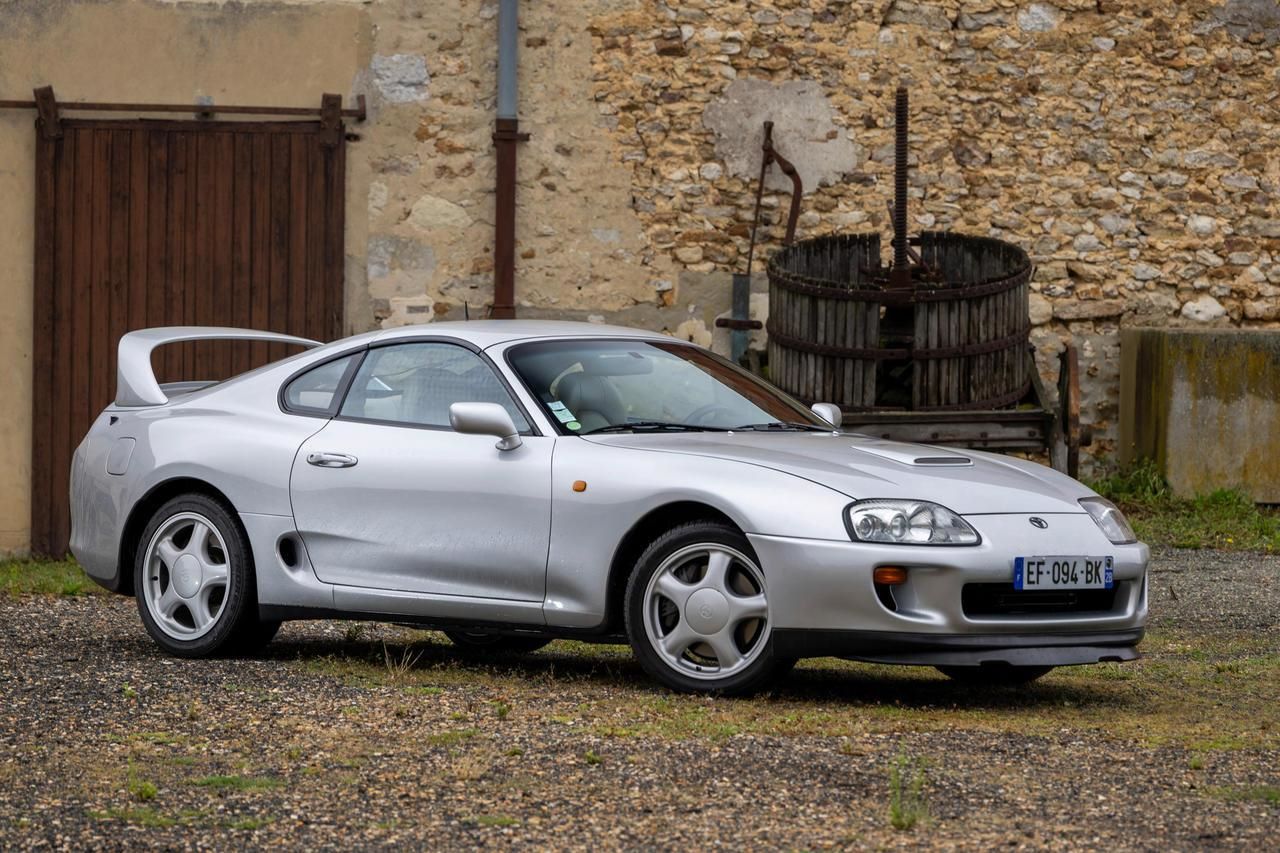
1. Toyota Supra MK4 (1993–2002)
The Toyota Supra MK4 has earned legendary status thanks to its robust 2JZ-GTE engine and impressive tuning potential. Even when it first arrived, the Supra was recognized for its smooth twin-turbo inline-six, which could rival some European supercars in both speed and reliability.
Enthusiasts today seek well-maintained, low-mileage examples, often paying exorbitant amounts at auction to secure models with original documentation and minimal modifications. The Supra’s combination of style, engineering, and cultural influence makes it a quintessential ’90s hero car.
Its design, marked by a long hood, curvy fenders, and distinctive rear spoiler, embodies the era’s performance aesthetic. Unlike many modern vehicles, the Supra’s interior maintained a driver-focused layout with supportive seats, simple controls, and an optional six-speed manual gearbox that amplified its appeal to purists.
Collectors appreciate that the MK4 offers both usability and performance, making it a rare combination in the sports car market. Its presence in popular films and video games has only reinforced its desirability and cemented its iconic status.
The rarity of clean, unmodified MK4 Supras drives auction prices upward. Many owners from the ’90s took liberties with aftermarket parts, so vehicles retaining factory specifications are increasingly difficult to find.
Original turbocharged models with low mileage are particularly sought after, and pristine examples are often snapped up for amounts far exceeding their original MSRP. This demand reflects a broader trend in which cars with both historical significance and tuning potential command premium valuations.
Cultural influence plays a significant role in the Supra’s auction performance. Beyond its engineering prowess, it became a symbol of Japanese sports cars in the global market. Its appearances in movies, especially in racing-themed franchises, and its role in shaping tuner culture have created a legendary aura that transcends simple performance statistics.
Collectors recognize that owning an MK4 Supra is not just about speed, it is about participating in a moment of automotive history that continues to inspire new generations.
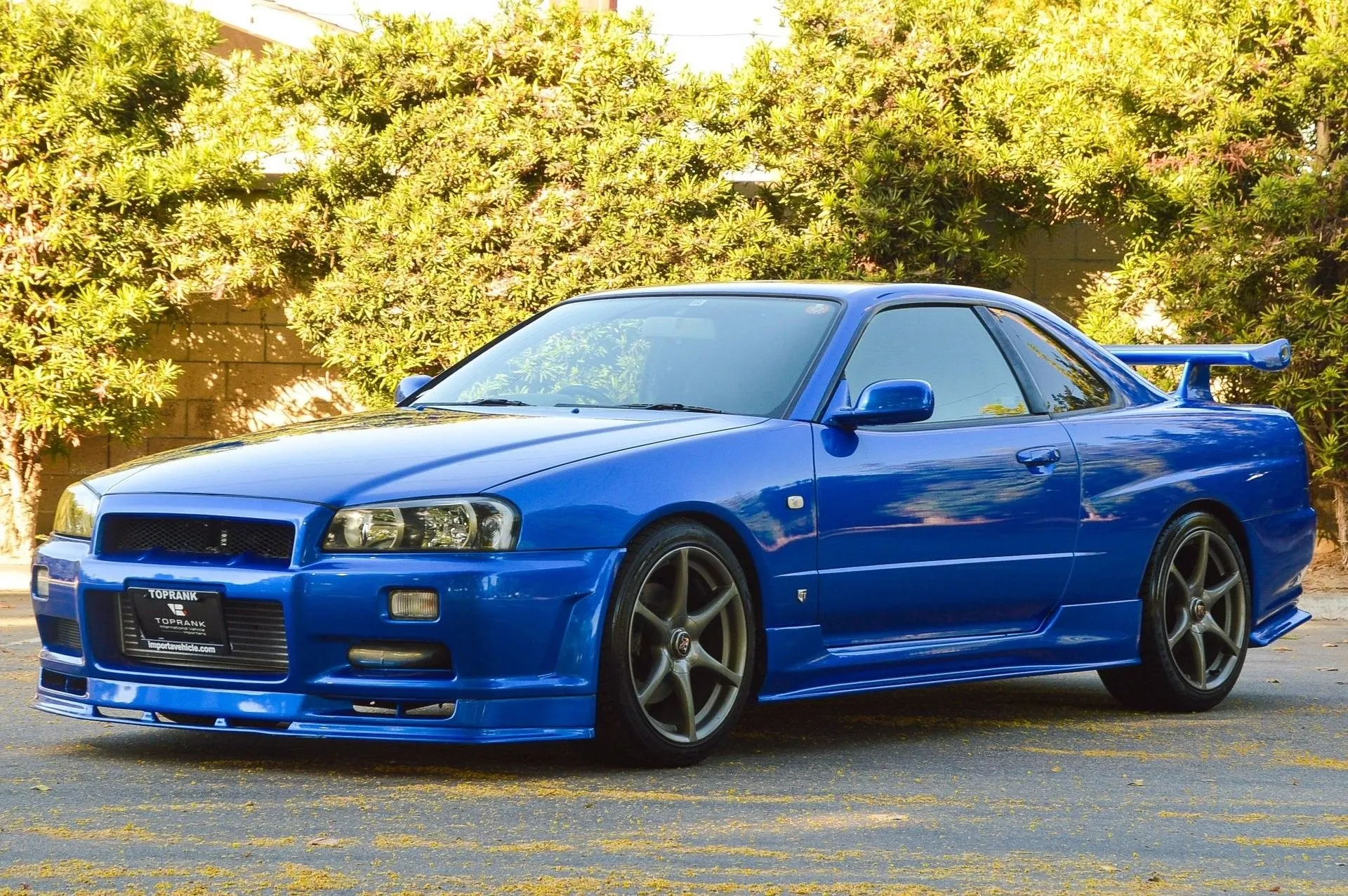
2. Nissan Skyline GT-R R34 (1999–2002)
The Nissan Skyline GT-R R34 is revered for its advanced technology and aggressive design. Featuring the RB26DETT inline-six engine and the ATTESA E-TS Pro all-wheel-drive system, it offered performance that could challenge even European competitors of the era.
Its digital dashboard, featuring a multifunction display showing engine parameters, was revolutionary and helped cement the R34 as a tech-forward sports car. Collectors are now driving prices up at auctions for models with factory original condition and rare specifications.
The R34’s styling emphasizes aerodynamics and purpose, with muscular fenders, a large rear spoiler, and sleek lines giving it an unmistakable presence. Its cockpit remains driver-centric, with intuitive controls and comfortable seating, making it equally enjoyable on the track and on winding roads.
Enthusiasts admire the R34 for its combination of performance precision, design clarity, and technological advancement, qualities that ensure it stands out among 1990s sports cars.
Limited production numbers increase the R34’s desirability. Although the GT-R badge carries a storied history, only a few thousand R34s were made, with specific trims and colors commanding even higher attention.
Auctions often showcase these rare versions, with mint-condition examples attracting buyers willing to pay multiples of their original price. This scarcity, combined with strong demand from both domestic and international collectors, has propelled the R34 to a revered status.
Beyond performance, the R34 has earned cultural significance. Its inclusion in video games and global automotive media created a mystique that helped define tuner culture at the turn of the millennium.
Collectors understand that acquiring an R34 is not merely an investment in a car, it is a claim to a piece of automotive heritage. Its continued influence on car enthusiasts and its consistent auction performance confirm its place as a 1990s hero.
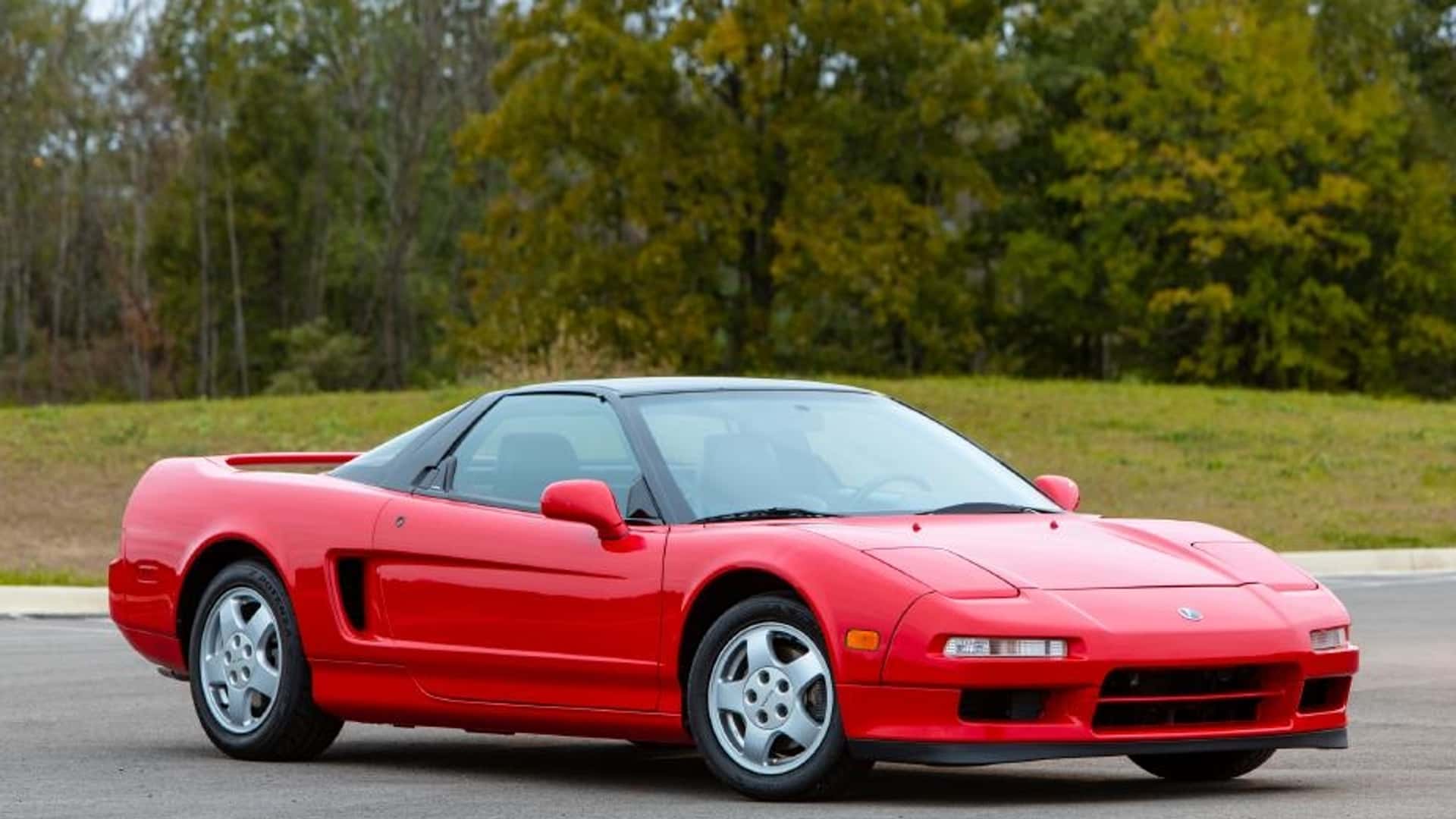
3. Acura NSX (1990–2005)
The Acura NSX stands out as a milestone in automotive engineering, merging precision, reliability, and supercar performance. Featuring an all-aluminum chassis and mid-mounted V6 engine, it redefined what a Japanese sports car could achieve, both in terms of handling and everyday usability.
Its balance of performance and comfort ensured that it was not just a track toy but a car that could be driven on public roads without compromise. Collectors increasingly view the NSX as one of the decade’s most important vehicles, driving auction prices steadily higher.
The NSX’s design emphasizes aerodynamic efficiency and understated elegance. Unlike many of its contemporaries, it did not rely on aggressive styling to make a statement; instead, it combined sleek lines with a purposeful stance.
Its cockpit blends driver focus with refinement, offering excellent visibility, ergonomics, and support. Buyers value these traits because they illustrate a thoughtful approach to performance without sacrificing everyday usability.
Limited production and the passage of time have made early NSXs particularly rare. Models with manual transmissions, low mileage, and original paint are especially prized at auctions.
The car’s reputation for reliability also enhances its appeal: unlike some exotic cars that deteriorate quickly, the NSX has a proven track record of durability, ensuring that collectors can enjoy their investment both as a display piece and as a functional performance car.
Cultural resonance contributes to the NSX’s status as a hero car. It is seen as a benchmark for Japanese automotive engineering, rivaling European supercars while maintaining distinct character and accessibility. Enthusiasts celebrate the NSX for the way it blends technological sophistication with the joy of driving. This combination of rarity, engineering excellence, and cultural significance keeps the NSX climbing in value at auctions worldwide.
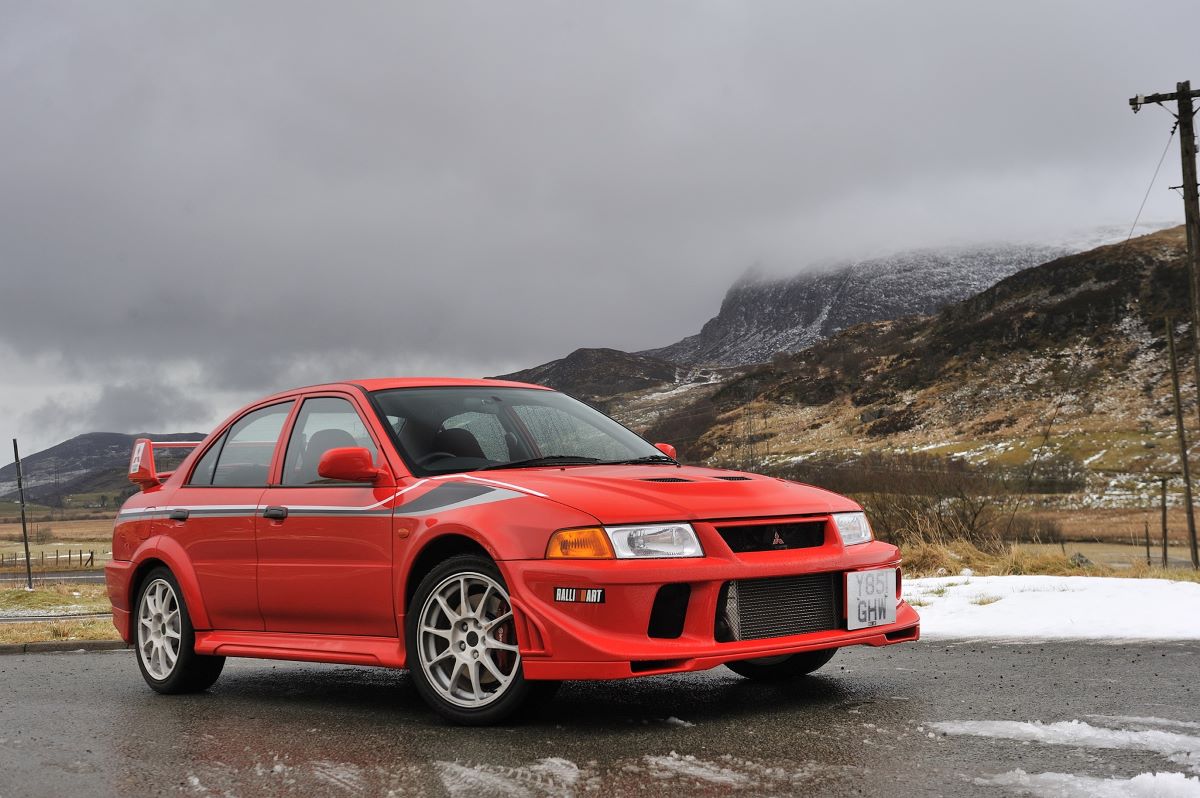
4. Mitsubishi Lancer Evolution VI (1999–2001)
The Mitsubishi Lancer Evolution VI represents the pinnacle of rally-inspired performance in a ’90s sedan. Its turbocharged four-cylinder engine, all-wheel-drive system, and finely tuned suspension made it a formidable competitor both on the road and in rally stages. Enthusiasts are drawn to the Evo VI for its raw, mechanical feel, where driver skill and precision are rewarded, making it an increasingly sought-after model at auctions.
The Evo VI’s design is aggressive, with wide fenders, large spoilers, and functional vents reflecting its rally heritage. Inside, the cabin emphasizes functionality with supportive seats and simple instrumentation, reinforcing the driver-focused nature of the car. Its combination of lightweight construction and high power-to-weight ratio makes it a thrilling vehicle to drive, whether on twisty backroads or in controlled performance events.
Auction demand is boosted by rarity and the model’s racing pedigree. Only a limited number of Evo VIs were produced, with certain trims and colors commanding higher interest among collectors. Models in factory condition with minimal modifications are especially valuable, as many original examples were upgraded for racing purposes. This scarcity, coupled with strong enthusiast interest, drives prices upward quickly when a clean Evo VI appears at auction.
Cultural impact also plays a role in the Evo VI’s growing reputation. It helped cement Mitsubishi’s position in the world of performance sedans and influenced tuner culture significantly. Its presence in racing circuits, magazines, and video games has reinforced its image as an approachable yet potent sports sedan. Collectors recognize the Evo VI as a symbol of engineering excellence, performance heritage, and driver engagement, which has propelled its desirability over time.
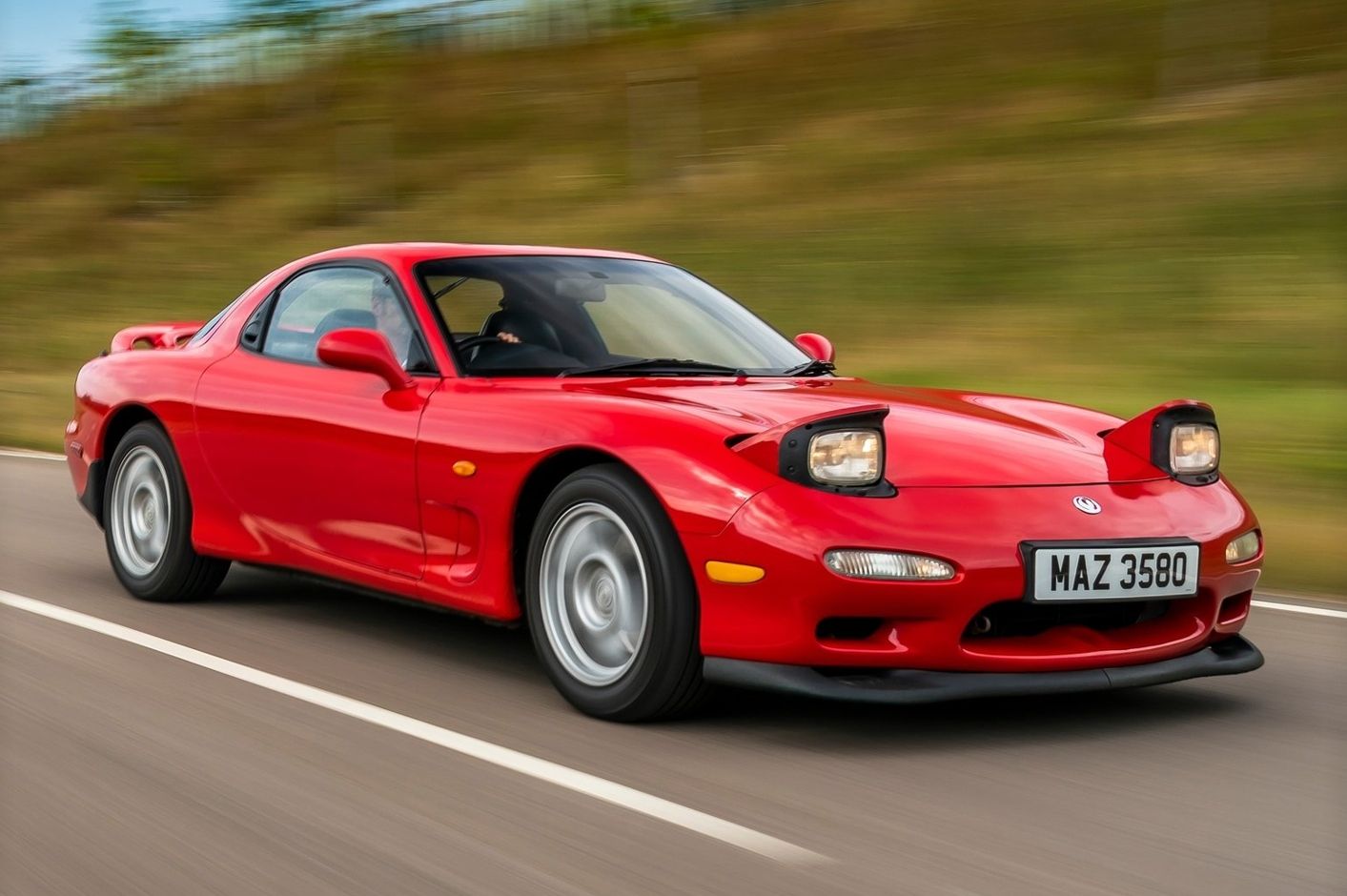
5. Mazda RX-7 FD (1992–2002)
The Mazda RX-7 FD remains one of the most revered Japanese sports cars of the 1990s due to its combination of lightweight construction, rotary engine performance, and sharp handling. Its 1.3-liter twin-rotor rotary engine produced surprising power for its size, creating a car that felt much faster than its modest displacement suggested.
Collectors prize the RX-7 FD not only for its performance but also for its engineering ingenuity, as the rotary engine represents a unique approach to delivering smooth, high-revving performance that conventional piston engines cannot easily replicate. This innovation, coupled with Mazda’s reputation for reliability, has made the FD a highly desirable model in pristine, stock condition.
The FD’s styling captures the essence of 1990s sports car design, characterized by flowing curves, retractable headlights, and a low, wide stance that emphasizes agility and speed. Its proportions make it instantly recognizable, and the aerodynamic bodywork was carefully engineered to enhance high-speed stability and cornering capability.
Inside, the cockpit is driver-focused, featuring supportive seats and a minimalist dashboard that prioritizes control and feedback over flashy electronics. This purity of design is part of what has made the RX-7 FD so beloved among enthusiasts, as it remains engaging and rewarding to drive even decades after its release.
Rarity plays a major role in the FD’s current auction success. While production numbers were not extremely low, many RX-7 FDs were modified heavily due to the car’s popularity in the tuning scene, meaning that truly stock examples are difficult to find.
Vehicles with original paint, matching numbers, and unaltered engines command premium prices, as collectors recognize that these characteristics preserve both the vehicle’s performance integrity and historical authenticity. Auctions consistently highlight the value of well-maintained FDs, with prices climbing for clean examples with complete documentation.
Cultural significance has also fueled the RX-7 FD’s rise in desirability. It became an icon in motorsport and media, featuring prominently in racing games, magazines, and films, particularly in street racing culture, which amplified its legendary status.
Enthusiasts appreciate the FD not just as a machine but as a symbol of 1990s Japanese sports car innovation. The combination of engineering excellence, rarity, aesthetic appeal, and cultural resonance ensures that the RX-7 FD remains one of the most sought-after auction cars from the decade, with values continuing to grow steadily.
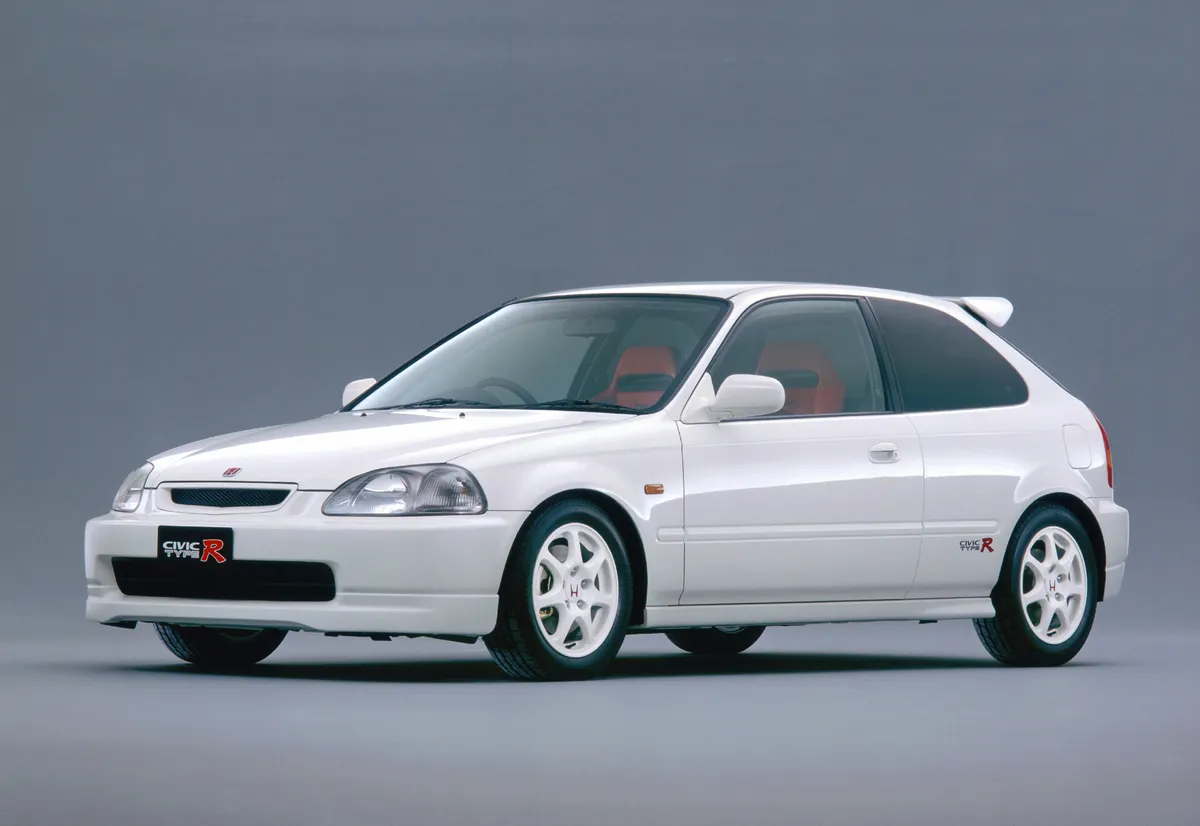
6. Honda Civic Type R EK9 (1997–2000)
The Honda Civic Type R EK9 is a lightweight, high-revving performance hatchback that demonstrates the brand’s commitment to precision engineering and driver engagement. Its naturally aspirated 1.6-liter engine delivers a thrilling experience despite modest displacement, thanks to Honda’s focus on high RPM performance and a responsive chassis.
Enthusiasts appreciate the EK9 for its pure, mechanical feel, where every input from the driver directly affects the car’s behavior, making it one of the most driver-oriented vehicles of the 1990s. Its presence at auctions is steadily increasing, especially for well-preserved examples with full service records and limited ownership history.
The EK9’s design reflects the era’s focus on functional sportiness, with a simple yet aggressive exterior, including a rear spoiler, aerodynamic bumpers, and lightweight alloy wheels. Inside, the cabin emphasizes a driver-first layout, with supportive racing-style seats, a clean dashboard, and straightforward controls that maintain the connection between car and driver.
This emphasis on ergonomics and simplicity contributes to the car’s appeal, particularly as enthusiasts seek vehicles that offer an unfiltered, enjoyable driving experience without unnecessary electronics or distractions.
Rarity is a significant factor in the EK9’s auction growth. As a limited-production performance model, it was primarily sold in Japan, and import regulations have made clean, original examples scarce in international markets.
Collectors place a high value on EK9s that retain their original engine, transmission, and suspension components, as these preserve the car’s intended performance and authenticity. Consequently, auction prices for stock models continue to rise, reflecting both the scarcity of pristine examples and the growing appreciation for the EK9’s engineering excellence.
The Civic Type R EK9’s impact on car culture is profound. It played a pivotal role in establishing Honda’s reputation for creating affordable, high-performance vehicles that could compete with far more expensive European sports cars. Its influence on tuner culture, motorsport, and enthusiast communities around the globe has cemented its status as an icon.
Collectors now see the EK9 not just as a car, but as a representation of 1990s innovation, driver-focused engineering, and enduring performance, which explains its strong showing at auctions worldwide.
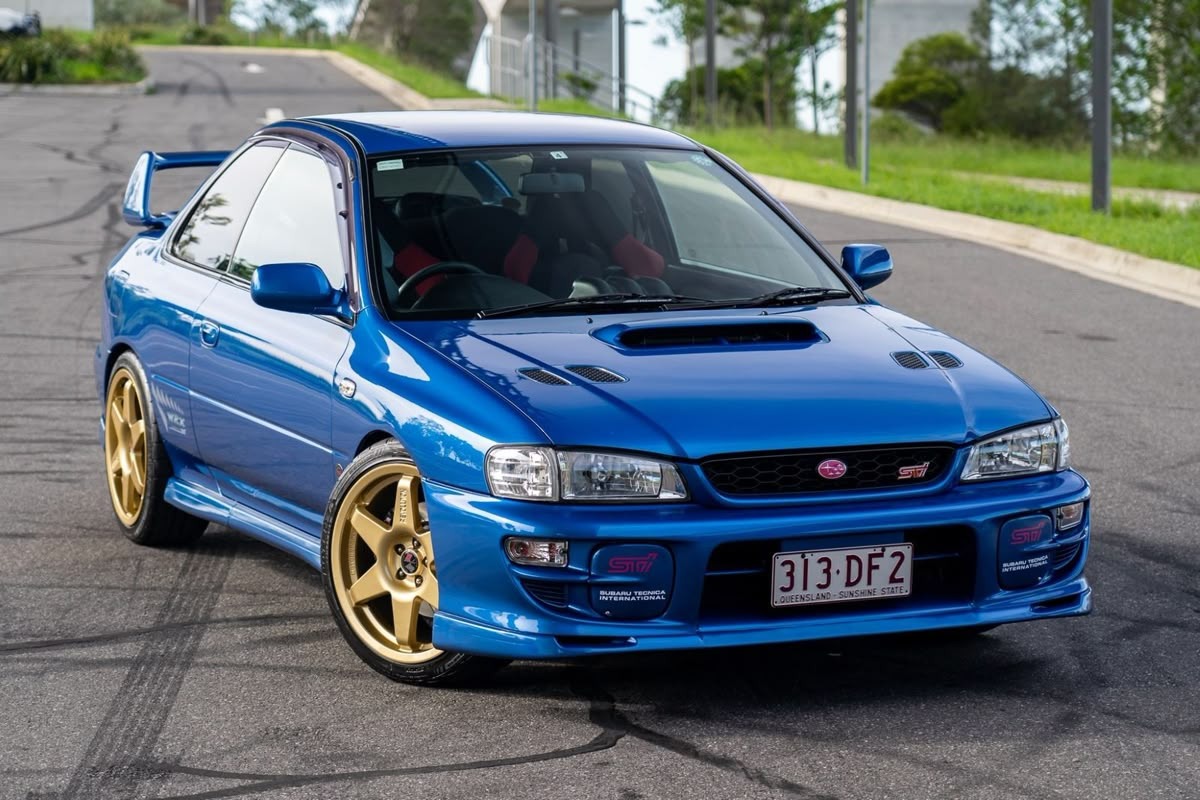
7. Subaru Impreza WRX STI (GC8) (1992–2000)
The Subaru Impreza WRX STI GC8 has become synonymous with rally-inspired performance and all-weather capability. Its turbocharged flat-four engine, paired with a sophisticated all-wheel-drive system, delivers exhilarating acceleration and precise handling.
Enthusiasts prize the GC8 not only for its rally heritage but also for its reliability and mechanical engagement, offering a car that can be enjoyed on both daily roads and high-performance tracks. Auctions frequently feature clean, original examples that attract buyers seeking vehicles with motorsport credibility and nostalgic appeal.
The design of the GC8 emphasizes practicality without sacrificing sportiness. Its wide fenders, functional hood scoop, and aggressive bumpers communicate performance intent while maintaining a compact, agile form factor.
Inside, the cabin is utilitarian but thoughtfully designed, with supportive seats, clear instrumentation, and driver-focused ergonomics. These characteristics enhance the connection between car and driver, making the WRX STI a favorite among those who appreciate a performance vehicle that can also function as a practical daily driver.
Rarity plays a crucial role in the GC8’s rising auction prices. Although the car enjoyed significant popularity, many units have been modified extensively for racing or performance purposes, reducing the availability of unaltered examples.
Collectors increasingly prioritize vehicles with original parts, matching numbers, and minimal wear, valuing authenticity over heavily tuned models. This scarcity has created a premium market for pristine GC8 STIs, pushing auction prices higher as demand grows among enthusiasts who understand the car’s historical significance.
The GC8’s cultural significance extends beyond performance metrics. Its success in rally racing, combined with its presence in motorsport media and video games, helped establish a global reputation that persists today. Enthusiasts admire the car for its engineering, performance potential, and connection to a golden era of rally racing.
As a result, the GC8 continues to enjoy a strong following, with well-preserved examples achieving high auction values and reinforcing its status as a hero car of the 1990s.
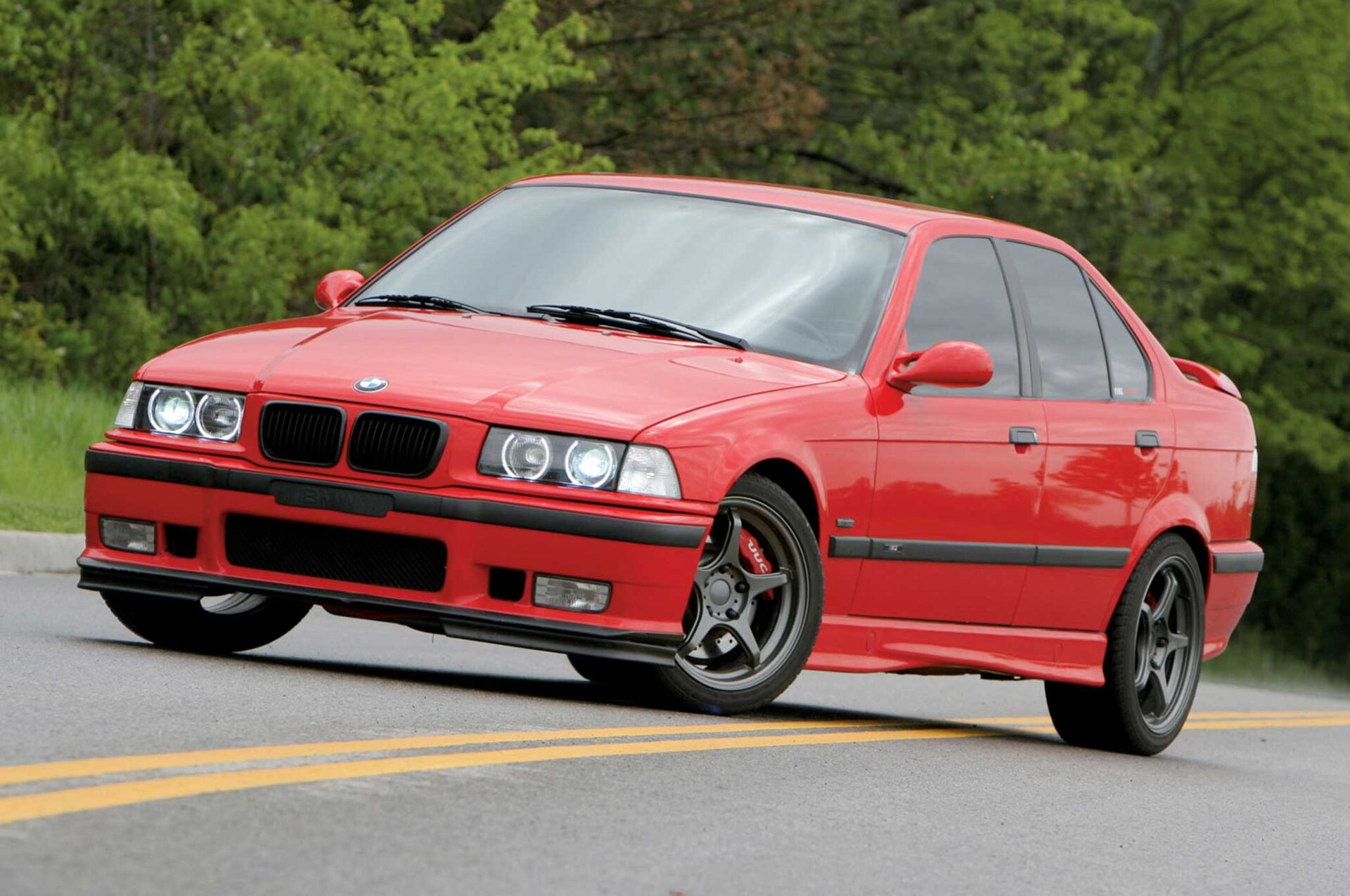
8. BMW E36 M3 (1992–1999)
The BMW E36 M3 represents one of the most celebrated European sports sedans of the 1990s. Its naturally aspirated inline-six engines, precise suspension, and balanced chassis deliver a driving experience that rewards skill and engagement.
Collectors value the E36 M3 for its combination of performance, refinement, and classic BMW handling dynamics, which have aged exceptionally well. Auctions increasingly reflect this appreciation, with well-maintained examples achieving prices that far exceed their original market value.
The E36 M3’s design captures understated aggression and functional elegance. Its long hood, flared wheel arches, and subtle spoilers communicate performance without exaggeration. The interior combines comfort with driver-centric ergonomics, including supportive seats, intuitive controls, and a layout that encourages engagement. This combination of form and function is part of what continues to make the E36 M3 appealing, as it remains both a capable daily driver and a thrilling track machine.
Rarity contributes to the M3’s auction appeal. Certain trims, engine configurations, and limited-production special editions are particularly desirable. Vehicles with low mileage, original paint, and comprehensive service history are increasingly difficult to find, driving auction prices upward.
Enthusiasts seek examples that maintain the car’s original character, emphasizing authenticity and mechanical integrity over modified versions. This demand reflects a broader trend where European performance sedans from the 1990s are achieving collectible status.
Cultural significance also boosts the E36 M3’s appeal. It represents a key moment in BMW’s evolution as a performance brand, bridging the gap between classic, analog driving experiences and modern engineering sophistication. Its presence in motorsport, media, and enthusiast communities has solidified its place in automotive history. The E36 M3’s combination of rarity, performance, and enduring desirability ensures that it continues to rise in value at auctions worldwide.
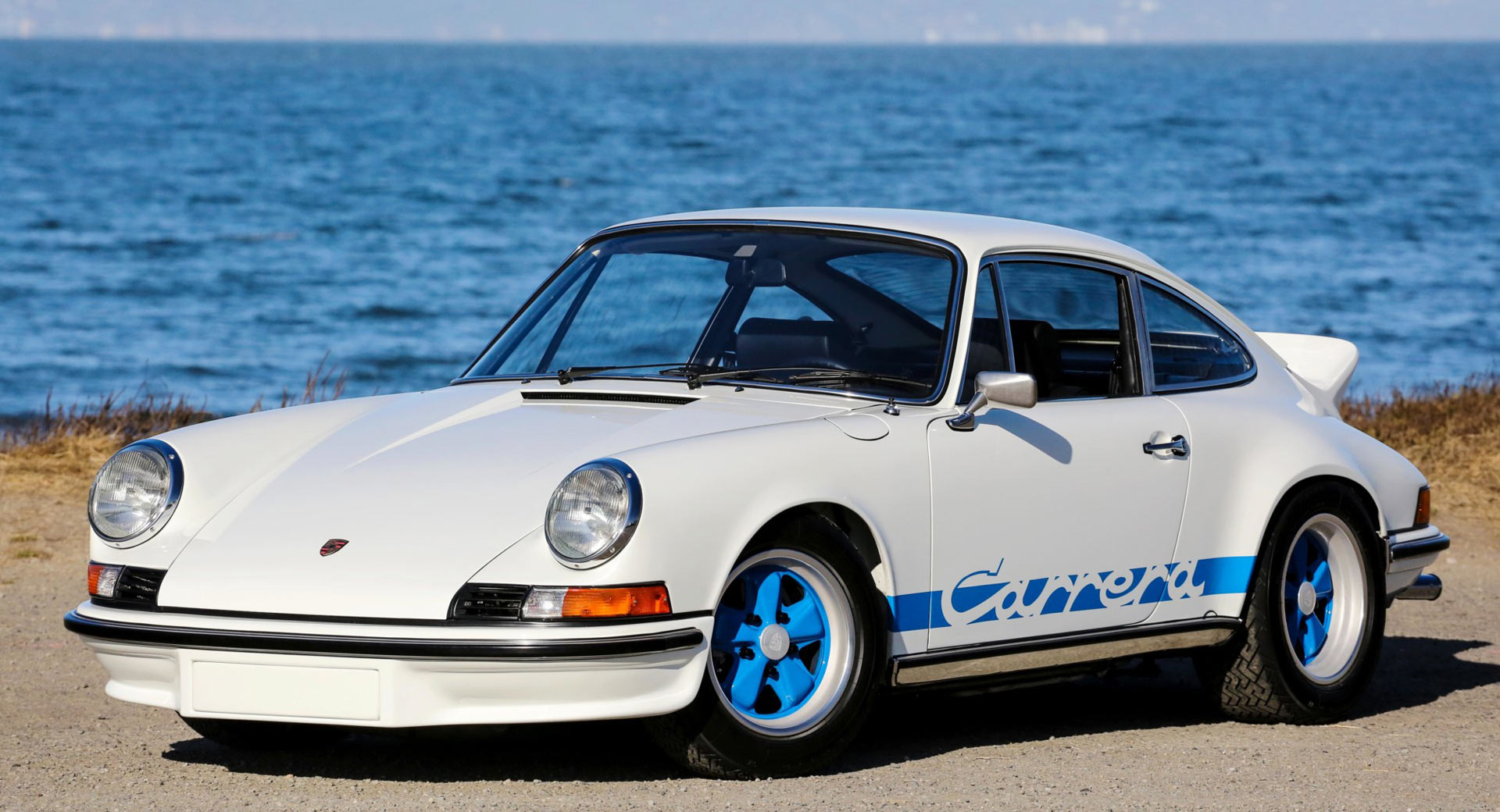
9. Porsche 911 (993) (1994–1998)
The Porsche 911 (993) is widely regarded as one of the most refined air-cooled 911s ever produced, combining classic Porsche styling with modern performance and handling improvements. Its flat-six engine delivered smooth, linear power with a character distinct from later water-cooled models, while the lightweight chassis and precise steering provided a driving experience that is still celebrated today.
Collectors are drawn to the 993 not only for its engineering excellence but also for its place as the last of the traditional air-cooled 911s, which imbues it with historical significance and enduring appeal at auctions worldwide.
The 993’s design is a seamless evolution of the classic 911 silhouette, with sculpted fenders, round headlights, and an elegant rear end that balances aerodynamic efficiency and timeless aesthetics. Inside, Porsche emphasized both comfort and driver engagement, with supportive sport seats, intuitive controls, and a minimalistic yet functional layout.
Unlike some modern sports cars, the 993 communicates its performance through feel rather than electronics, which enthusiasts find highly engaging and rewarding. Its design harmonizes form and function, creating a car that excels both visually and dynamically.
Rarity and condition are key drivers of the 993’s auction value. While production numbers were higher than some of its contemporary supercars, well-preserved examples with low mileage, original paint, and unmodified engines are increasingly scarce.
Special variants such as the Carrera S, Turbo, and limited-edition models are particularly sought after, with auction prices reflecting their rarity and desirability. Collectors often prioritize cars with complete service histories, factory options, and documented provenance, understanding that these details preserve both authenticity and long-term value.
The 993 also enjoys immense cultural and historical significance. As the last air-cooled 911, it represents the culmination of decades of Porsche engineering and design philosophy. It has become a symbol of the brand’s heritage, appealing to both long-time enthusiasts and new collectors discovering the appeal of classic 911s.
Its combination of performance, design, and collectibility ensures that the 993 continues to rise steadily in value, securing its status as a true ’90s hero car that embodies the pinnacle of Porsche craftsmanship.
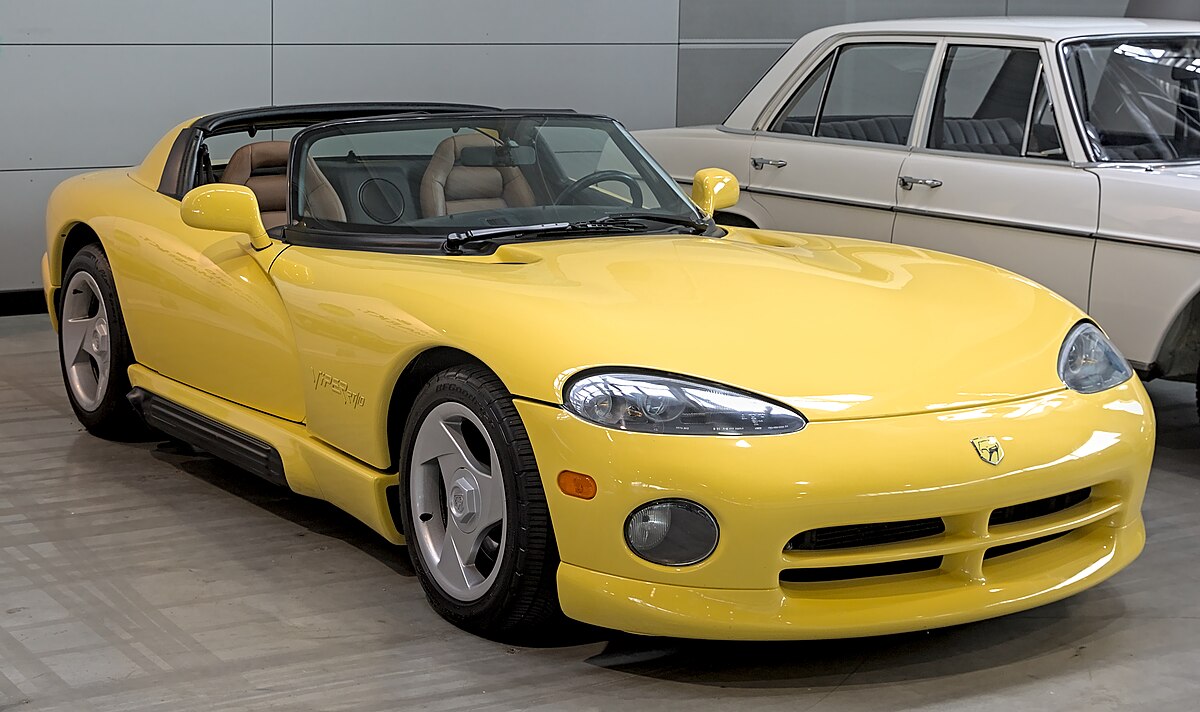
10. Dodge Viper RT/10 (1992–1995)
The Dodge Viper RT/10 was a bold statement when it debuted in the early 1990s, redefining the concept of American performance cars. Its massive V10 engine delivered raw, unfiltered power that few other production cars could match, creating a visceral driving experience that was both thrilling and demanding.
Unlike European supercars of the era, the Viper emphasized pure performance over luxury or refinement, making it a car that rewarded skill and courage behind the wheel. Its originality, extreme power, and rarity have made it a standout at auctions, with early models often commanding six-figure sums.
The Viper RT/10’s design reflects its uncompromising focus on performance. The long hood, aggressive curves, and low, wide stance highlight the car’s muscular character, while the minimalist interior reinforces its no-nonsense ethos.
Lacking driver aids common in modern sports cars, the Viper requires careful attention and respect from the driver, enhancing its appeal to purists who enjoy raw, mechanical engagement. Its aesthetic is unmistakable and remains an enduring symbol of 1990s American sports car daring.
Rarity drives the Viper’s auction value significantly. Early RT/10 models were produced in limited numbers, and pristine examples with original components are becoming increasingly rare. Collectors value vehicles that maintain their factory specifications, as many Vipers were modified over the years to suit track use or personal preferences.
Original paint, correct trim, and documented history elevate auction prices, reflecting the Viper’s growing status as a collectible icon. As the number of unaltered examples declines, the car’s desirability continues to rise.
Cultural and historical significance further elevate the Viper RT/10. It represents a period when American automakers were willing to take risks, offering vehicles that prioritized raw excitement over conventional refinement. The Viper became a symbol of performance excess, inspiring enthusiasts and shaping perceptions of American supercars for decades.
Its appearance in films, video games, and automotive media cemented its legend, ensuring that collectors view the car as both a historical artifact and a thrilling performance machine. Auction results consistently show that the RT/10 is a ’90s hero car whose value continues to grow.
