
The 1990s was a decade of automotive experimentation, where Japanese car manufacturers balanced raw performance with everyday usability. While some vehicles were designed to scream speed through aggressive styling and track-oriented features, there was a subset of cars that quietly blended into traffic while hiding surprising potential beneath the hood.
These vehicles, often referred to as “sleepers,” were unassuming in appearance, yet packed engines and handling capabilities that could outperform far flashier machines. During the ’90s, the Japanese Domestic Market (JDM) became a hub for these sleepers, offering cars that were nimble, reliable, and thrilling to drive without drawing too much attention.
Their understated nature often meant that enthusiasts overlooked them at the time, but as automotive culture has evolved, these cars are now being recognized for their performance, rarity, and historical significance.
Sleepers from the ’90s have a special allure today because they represent a perfect blend of practicality and performance. Unlike supercars or heavily modified street machines, these vehicles could be driven daily without requiring constant attention or modification.
They were often equipped with turbocharged engines, precise transmissions, and suspension systems tuned for spirited driving, all hidden beneath conservative bodywork. For collectors, this duality adds value; a car that looks like a commuter can still offer an adrenaline rush once pushed.
Additionally, many of these cars were produced in limited numbers or had specific trims available only in the Japanese market, making them increasingly rare outside Japan. The combination of rarity, performance potential, and understated aesthetics has turned many ’90s JDM sleepers into sought-after collectibles, commanding high prices in enthusiast circles.
Another reason these vehicles are gaining attention is their influence on automotive culture. Many modern sports cars draw inspiration from the lightweight, agile, and turbocharged designs that defined ’90s JDM sleepers. They also played a role in the rise of car tuning culture, as owners discovered the hidden performance potential of stock vehicles.
Cars that were initially ignored in mainstream markets have now become symbols of ingenuity and engineering, representing an era when manufacturers were willing to experiment with forced induction, lightweight chassis, and advanced suspension designs. Today, these sleepers are not just cars; they are pieces of automotive history, embodying a period of innovation and creativity that shaped modern performance vehicles.
Collecting these sleepers is not merely about owning a fast car; it is about preserving a chapter of automotive heritage. Many examples have been well-maintained by enthusiasts who appreciate their understated charm, while others are being restored to original specifications, highlighting the craftsmanship of ’90s Japanese engineering.
With each passing year, the pool of clean, low-mileage examples diminishes, driving demand higher. What was once considered a budget-friendly option for spirited driving has now transformed into an investment for collectors and enthusiasts who understand the significance of these unassuming yet capable machines.
The ’90s JDM sleepers may not have the flash of their more extroverted peers, but their combination of performance, rarity, and historical importance ensures their place in the automotive hall of fame.
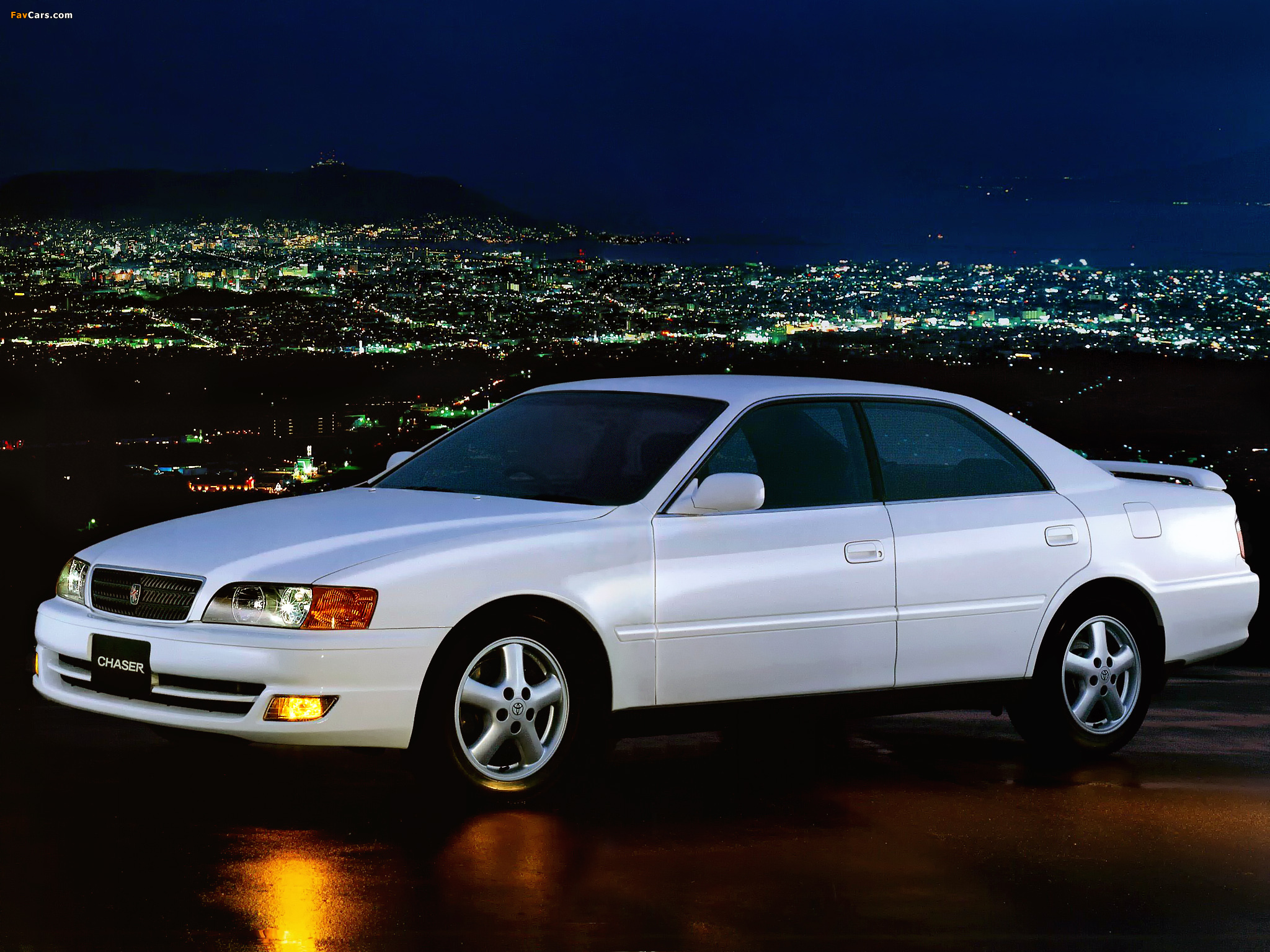
1. Toyota Chaser Tourer V
The Toyota Chaser Tourer V was a prime example of a car that looked like a standard sedan but hid serious performance capabilities beneath its quiet exterior. Equipped with the legendary 1JZ-GTE inline-six engine, it offered twin-turbo power that could propel the car well beyond its unassuming appearance.
Despite being marketed primarily as a family sedan, its chassis and suspension tuning made it highly capable on winding roads and even suitable for track use. Enthusiasts have long appreciated the Tourer V for its perfect balance of comfort and performance, making it a sleeper that could easily outperform cars that looked more aggressive.
Beyond its engine, the Chaser Tourer V featured rear-wheel drive and a well-tuned suspension setup, allowing for sharp handling without compromising ride quality. Its interior was spacious and understated, not indicating the power that lurked beneath the hood.
This combination of subtle design and high performance is what makes the Tourer V such a sought-after collector item today. Unlike sports cars that demand attention, the Chaser could quietly outperform rivals while maintaining a low profile.
One of the most appealing aspects of the Tourer V is its modifiability. Enthusiasts have taken advantage of the 1JZ-GTE’s robust engine platform to extract even more performance, from simple bolt-ons to full engine builds. Despite this potential, many original examples remain in pristine condition, preserving the car’s sleeper appeal. Collectors value cars that can be appreciated in their stock form as much as they can be modified, and the Chaser Tourer V fits this criterion perfectly.
The rarity of export versions also contributes to the Chaser Tourer V’s collectible status. While popular in Japan, only limited numbers were exported to markets like North America, making genuine examples highly desirable.
As a result, prices for well-maintained units have steadily risen, and the Tourer V is increasingly viewed as a cornerstone of ’90s JDM performance sedans. Its combination of understated design, powerful engine, and driving enjoyment ensures its continued relevance in the collector car market.
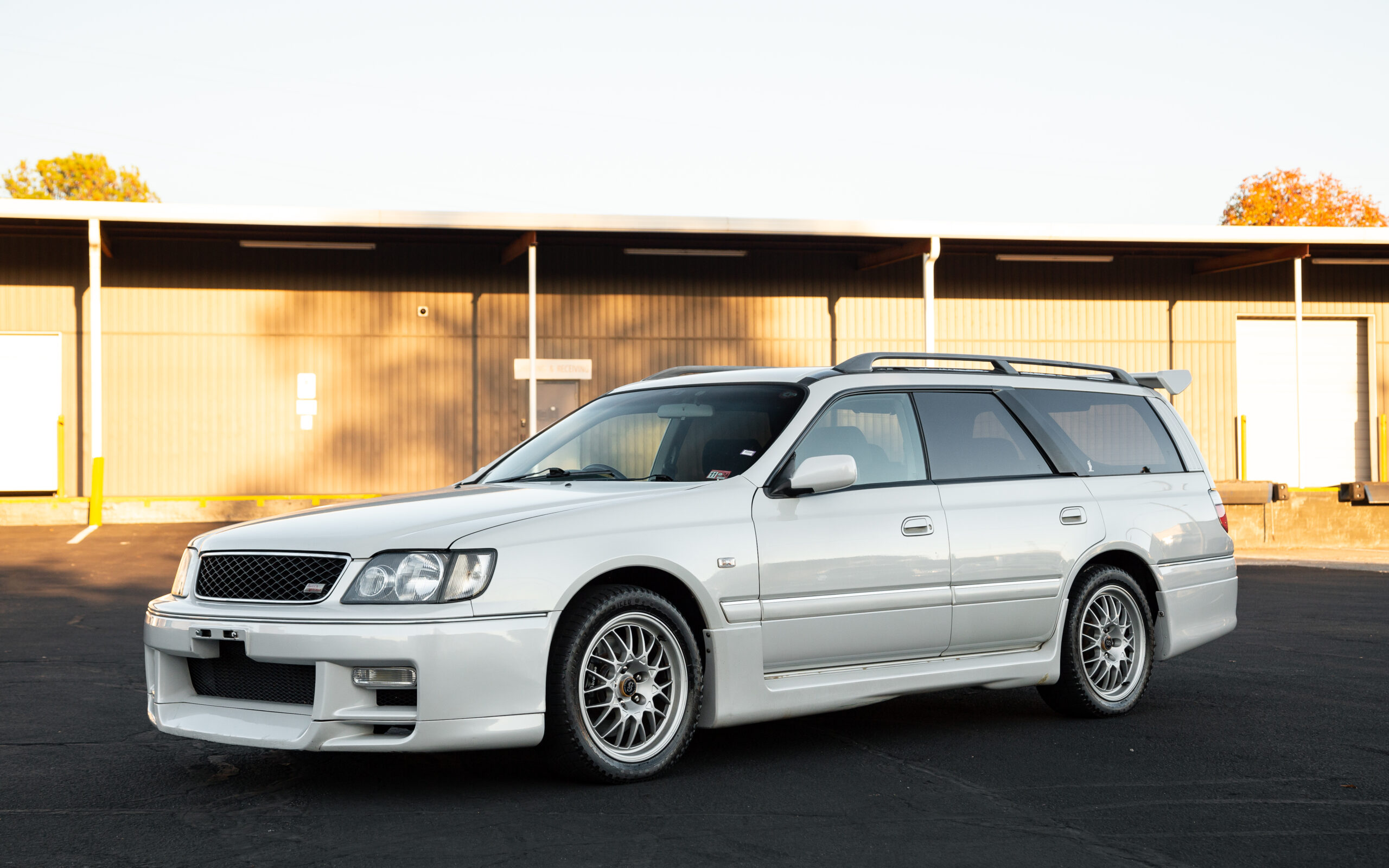
2. Nissan Stagea 260RS
The Nissan Stagea 260RS was often mistaken for a standard station wagon, but it carried the heart of a Skyline GT-R under its long hood. Powered by the RB26DETT inline-six engine, the same engine found in the legendary GT-R R32, the 260RS offered all-wheel-drive performance in a package designed for practicality.
Its sleeper credentials were bolstered by a discreet body shape, making it one of the most unassuming cars capable of serious performance during the ’90s. For enthusiasts, the Stagea 260RS represented a rare blend of family utility and track-capable engineering, a combination almost unheard of at the time.
Handling on the Stagea 260RS was exceptional for a wagon, thanks to the GT-R-derived chassis and all-wheel-drive system. It could accelerate, corner, and brake with the precision expected of a sports car while still offering the interior space and comfort of a daily driver.
This balance made it an attractive option for drivers who wanted performance without drawing unwanted attention, solidifying its status as a sleeper.
The 260RS also had a degree of exclusivity that added to its collectible appeal. Produced in limited numbers and available primarily in the Japanese market, it became difficult to find outside Japan.
Enthusiasts in other countries have since imported these cars, recognizing the unique combination of power, handling, and practicality that only the Stagea could offer. Its connection to the GT-R legacy adds a layer of historical significance, further enhancing its desirability.
Today, clean and original examples of the Stagea 260RS are increasingly rare. Its sleeper nature, combined with strong performance credentials and limited availability, has made it a prized addition to JDM collections. As appreciation for unconventional performance vehicles grows, the 260RS stands out as one of the most interesting sleepers of the ’90s, offering a driving experience that few wagons can match.
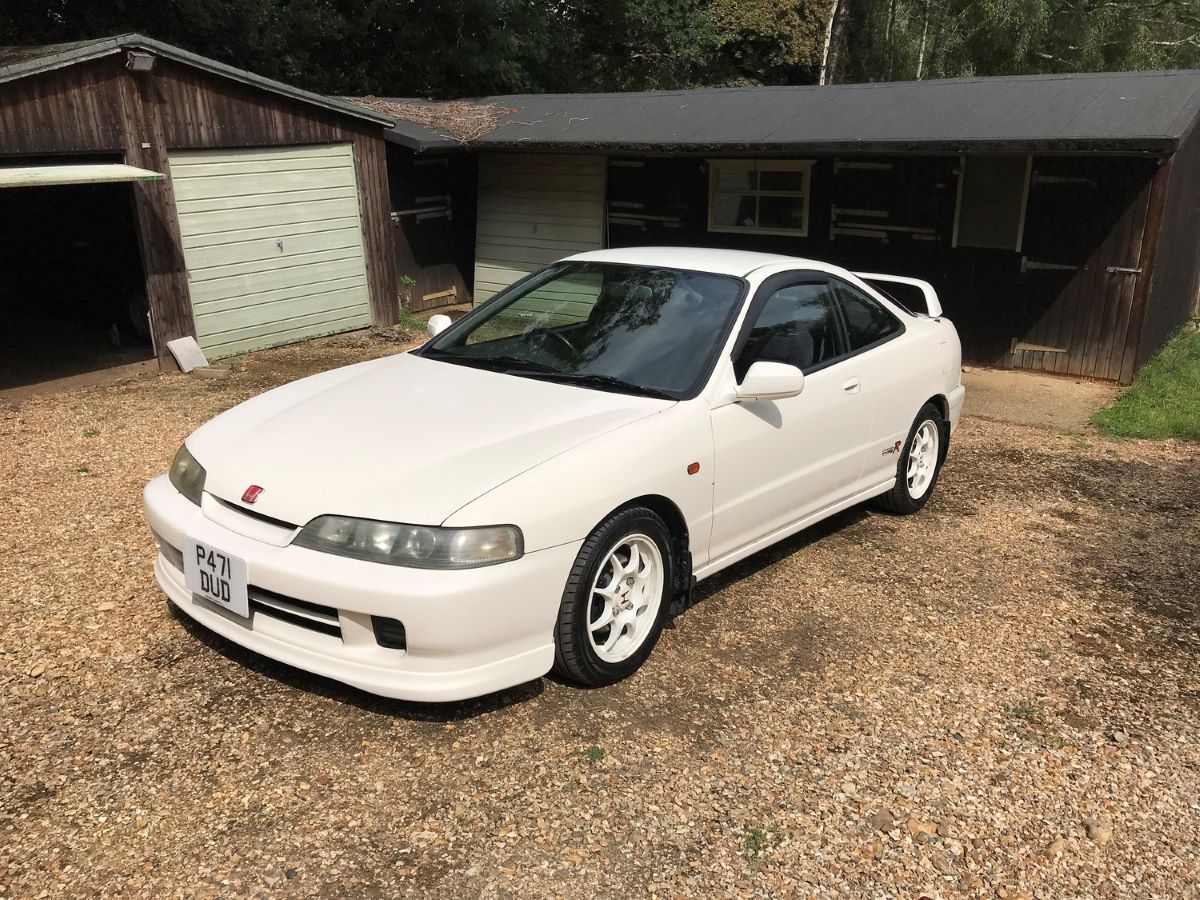
3. Honda Integra Type R (DC2)
The Honda Integra Type R, known as the DC2, represents the pinnacle of naturally aspirated JDM performance from the ’90s. Lightweight, precise, and rev-happy, it showcased Honda’s engineering philosophy without relying on turbocharging.
Its B18C engine delivered impressive power for its size, and when paired with a tight, responsive manual transmission, the Type R became a benchmark for front-wheel-drive sports cars. Despite aggressive engineering, its styling was relatively restrained, allowing it to blend into traffic while leaving drivers with a thrilling experience when pushed.
The DC2’s chassis and suspension setup were remarkable, designed for agility and responsiveness. Every corner felt controlled, and the feedback from the steering and brakes made the car feel exceptionally connected to the road.
This precision allowed drivers to enjoy spirited driving in an understated package, a hallmark of a true sleeper. While many cars of the ’90s relied on sheer horsepower, the Type R proved that balance, weight, and handling could outperform raw power in real-world scenarios.
The rarity and cultural significance of the DC2 further enhance its collectible status. Only a limited number of factory Type R examples were produced, and many were initially sold exclusively in Japan.
Enthusiasts outside Japan have sought these cars for decades, creating a strong demand for well-preserved models. Its influence on later performance Hondas and compact sports cars cannot be overstated, as many modern vehicles borrow from its lightweight, driver-focused design philosophy.
Collectors prize the DC2 not only for its driving dynamics but also for its originality. Modifications are common, but an untouched example in factory condition represents a piece of automotive history. Its understated appearance hides its performance capabilities, making it a quintessential sleeper and a perfect representation of the engineering excellence of ’90s Japanese performance cars.
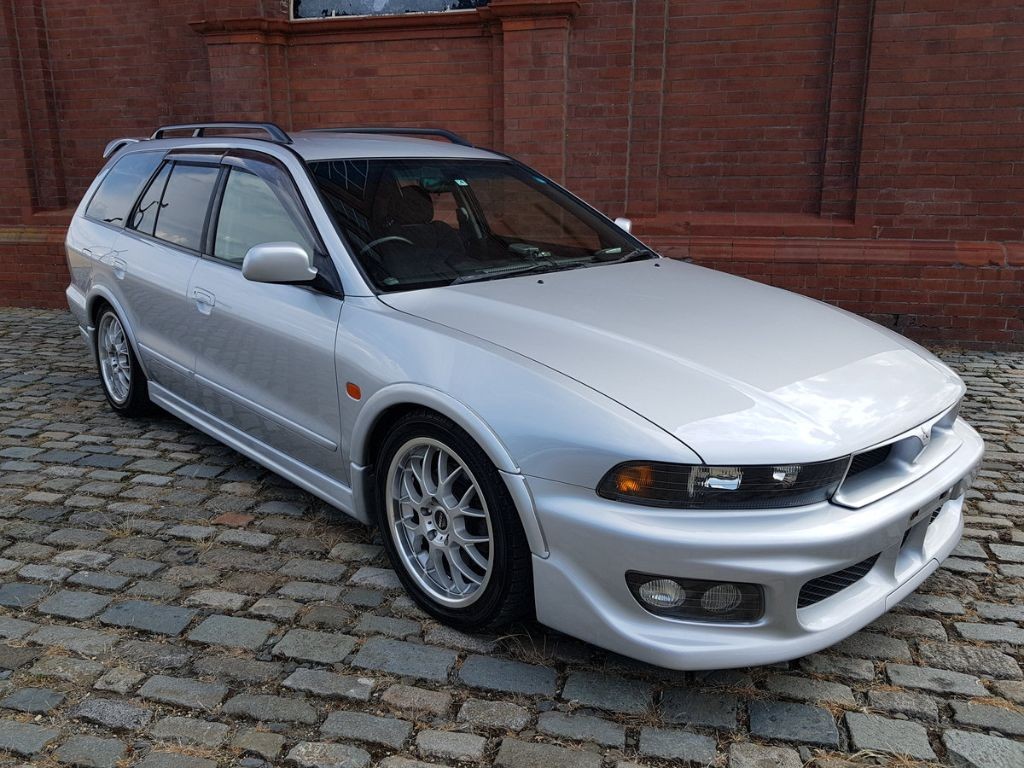
4. Mitsubishi Legnum VR-4
The Mitsubishi Legnum VR-4 was the wagon counterpart to the Galant VR-4 sedan, offering turbocharged all-wheel-drive performance in a package that looked practical and conventional. Its 2.0-liter 4G63T engine, shared with the Lancer Evolution series, provided impressive turbocharged power, while the AWD system ensured traction and stability in all conditions.
The Legnum VR-4 could accelerate quickly, handle corners with confidence, and yet remain unassuming in appearance, making it one of the most underrated sleepers of its era.
What set the Legnum apart was its versatility. Unlike traditional sports cars, it could comfortably carry passengers and cargo without compromising performance. Its suspension was tuned for both comfort and dynamic driving, allowing it to handle spirited driving as well as long-distance cruising. This balance between utility and speed contributed to its appeal for enthusiasts seeking a multi-functional performance vehicle.
The Legnum VR-4 also benefited from its connection to Mitsubishi’s rally heritage. Engineering lessons from the Lancer Evolution series trickled down to the VR-4, giving it strong handling, precise steering, and reliable turbo performance. For collectors, this link to Mitsubishi’s motorsport history adds both prestige and relevance, making it more than just a practical wagon.
Today, finding well-preserved examples of the Legnum VR-4 is increasingly difficult. Its sleeper qualities, combined with rarity and performance credentials, make it a sought-after choice for JDM enthusiasts. As the market continues to recognize the value of versatile, understated performance cars from the ’90s, the Legnum VR-4 stands out as a rare and compelling option for collectors.

5. Subaru Legacy GT-B
The Subaru Legacy GT-B is one of the most underrated sleepers from the ’90s, combining the practicality of a midsize sedan with the heart of a rally-bred performance machine. Powered by Subaru’s turbocharged EJ20 engine and equipped with the brand’s signature symmetrical all-wheel-drive system, the GT-B could outperform many cars that looked far sportier.
Its understated exterior, featuring subtle body lines and minimal spoilers, made it almost invisible in traffic, allowing drivers to harness its full potential without drawing attention. Enthusiasts appreciated this combination because it allowed for spirited driving during daily commutes while remaining inconspicuous, a hallmark of an effective sleeper.
Handling and ride quality were exceptional for its class. The Legacy GT-B featured a well-tuned suspension system derived from Subaru’s rally experience, offering both stability and agility. Corners could be attacked with confidence, and the AWD system ensured that power was delivered effectively, reducing understeer or loss of traction.
Even though the car was heavier than typical compact sports cars, the balance of its chassis and engine output created a driving experience that was precise, communicative, and satisfying. Many drivers have noted that the GT-B could be taken on mountain roads and spirited drives without the driver ever feeling overwhelmed by its performance capabilities, further solidifying its sleeper status.
Another reason for the GT-B’s rising collectible value is its rarity. While Subaru produced large numbers of standard Legacy models, the turbocharged, all-wheel-drive GT-B was less common, particularly in markets outside Japan. Enthusiasts who recognize its performance pedigree often seek out well-preserved examples, driving up demand.
Additionally, the car’s understated styling means that it has aged gracefully; it does not scream its age, which makes it appealing to collectors who value subtlety alongside performance. The combination of rarity, reliability, and hidden potential makes the GT-B a true sleeper and a smart addition to any collection of ’90s JDM vehicles.
Finally, the Legacy GT-B’s influence on Subaru’s modern performance vehicles adds historical significance. It helped set the stage for later performance sedans like the WRX and STi models, demonstrating that a four-door, practical vehicle could still deliver excitement and precision handling.
Today, collectors are drawn to the GT-B not only for its driving experience but also for its role in bridging the gap between everyday usability and high-performance engineering. With the combination of a turbocharged engine, advanced AWD system, and understated design, the Legacy GT-B remains one of the 90s’ most compelling sleepers.
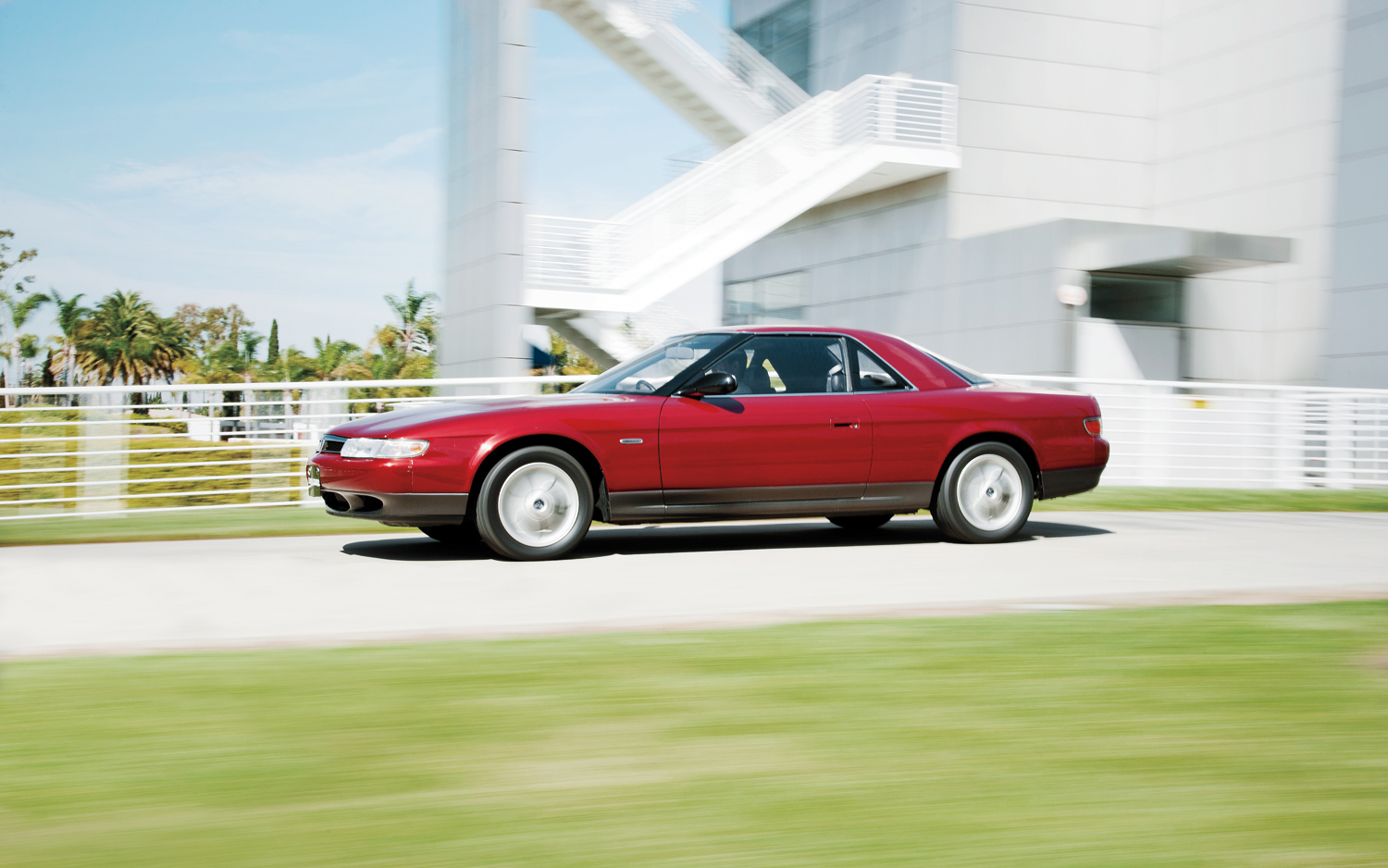
6. Mazda Cosmo 20B
The Mazda Cosmo 20B represents a unique chapter in ’90s JDM performance cars because it combined a twin-rotor rotary engine with a conservative, almost unassuming exterior. While many performance vehicles of the time relied on inline-four or six-cylinder engines, the Cosmo’s 20B three-rotor engine provided a distinct blend of smooth power delivery and high-revving capability.
Despite producing impressive horsepower, the car did not advertise its performance with aggressive styling. Instead, the Cosmo maintained a sleek, simple silhouette that could easily blend in with luxury sedans of the era, embodying the essence of a sleeper vehicle.
Driving the Cosmo 20B was a distinct experience. The rotary engine’s characteristics allowed for smooth and continuous acceleration, while the chassis maintained stability and control through corners. Steering feedback was precise, and the car’s suspension balanced comfort with agility, making it suitable for both city driving and spirited runs on open roads.
Its low weight and balanced layout enhanced handling dynamics, giving drivers the sensation of a car far sportier than its outward appearance suggested. Enthusiasts often highlight how the Cosmo was not just fast in a straight line but also engaging in terms of driver connection and feedback.
The rarity of the Cosmo 20B further enhances its appeal. Mazda produced limited numbers, primarily for the Japanese market, making imports increasingly sought after. Original, well-maintained examples are hard to find, and those with low mileage command premium prices among collectors.
Additionally, the rotary engine’s cult following adds another layer of desirability; few cars of the ’90s offered such a distinctive engine character in a package that could double as a discreet luxury coupe. Collectors value this blend of uniqueness, performance, and stealth.
Finally, the Cosmo 20B’s legacy lies in its engineering ambition. It pushed the boundaries of what a Japanese luxury coupe could achieve, offering performance that rivaled more aggressive sports cars while maintaining refinement and subtlety.
Its understated design and hidden capabilities embody the sleeper ethos, making it a centerpiece for enthusiasts who appreciate vehicles that combine rarity, engineering excellence, and a unique driving experience. As time passes, the Cosmo 20B is increasingly recognized not only as a performance car but as an icon of Mazda’s innovative spirit.
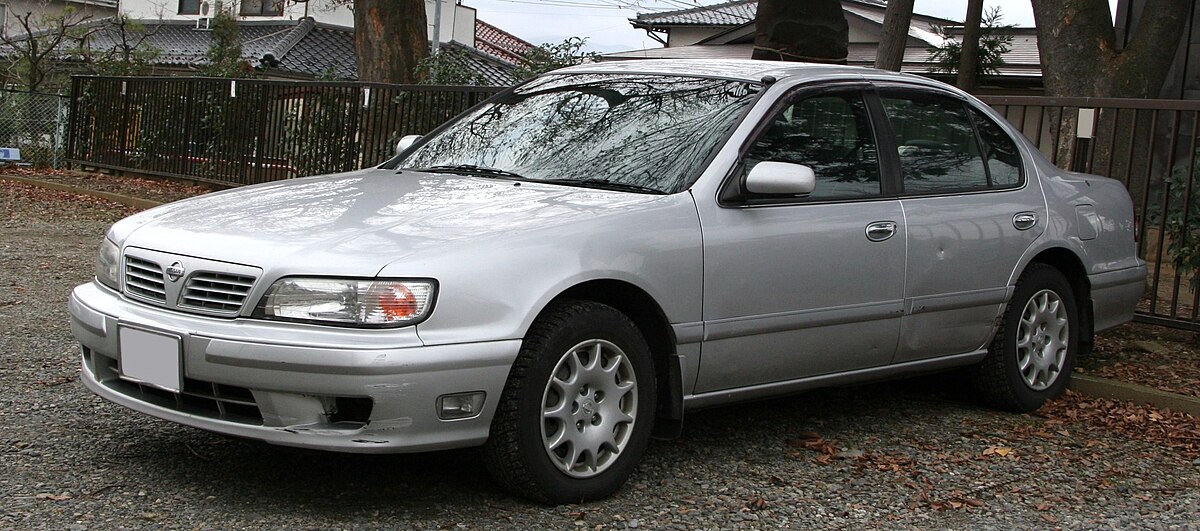
7. Nissan Cefiro A31 2.0 Twin Turbo
The Nissan Cefiro A31 2.0 Twin Turbo is another quintessential ’90s sleeper. At first glance, the Cefiro appears to be a standard executive sedan, but under the hood, it hides a potent turbocharged engine capable of surprising performance.
Equipped with the RB20DET turbocharged inline-six, it delivered smooth yet aggressive acceleration that could challenge far more overtly sporty cars. The rear-wheel-drive layout, combined with a well-tuned chassis, made the A31 not only fast in a straight line but also adept at handling corners with precision. Its understated styling ensured that few drivers outside the enthusiast community recognized the car’s capabilities.
One of the Cefiro’s key advantages was its balance between comfort and performance. Its interior offered ample space, making it a practical family car, yet it remained connected to the driver through responsive steering and well-calibrated suspension.
The twin-turbo engine provided sufficient boost to make highway overtakes effortless while maintaining a smooth and refined power delivery. Enthusiasts who experienced the A31 often remark that it could comfortably serve as a daily driver while simultaneously satisfying a craving for spirited driving, an ideal combination for a sleeper.
The Cefiro A31’s collectible appeal is tied to both its rarity and its performance potential. While many A31s were sold as ordinary sedans, the 2.0 Twin Turbo variant was less common, especially outside Japan. As a result, original examples in good condition are becoming increasingly difficult to find.
Moreover, the RB20DET engine offers significant tuning potential, attracting a wide range of enthusiasts interested in either preserving the car’s factory configuration or modifying it for higher performance. This dual appeal makes the A31 a versatile and desirable option in the sleeper market.
Finally, the A31’s place in the evolution of Nissan’s performance sedans cannot be understated. It helped establish the blueprint for subsequent RB-powered cars, demonstrating that a seemingly conservative vehicle could deliver excitement comparable to dedicated sports cars.
Today, collectors appreciate the Cefiro not only for its rarity and performance but also for its embodiment of ’90s JDM ingenuity. Its subtle styling hides serious engineering, making it a true sleeper in both historical and practical contexts.

8. Toyota Caldina GT-T
The Toyota Caldina GT-T represents one of the more practical sleepers from the ’90s, blending station wagon versatility with turbocharged performance. Powered by the 3S-GTE engine, the same turbocharged inline-four found in the Celica GT-Four, the GT-T could achieve impressive acceleration while maintaining an unassuming exterior.
With all-wheel-drive capabilities and a suspension tuned for sporty handling, the Caldina GT-T was capable of spirited driving while carrying passengers and cargo comfortably. Its understated styling made it look like a typical family wagon, leaving its true potential hidden from casual observers.
Handling in the Caldina GT-T was excellent for its class. The combination of turbocharged power, all-wheel-drive traction, and balanced suspension made it surprisingly agile through corners.
The chassis provided stability at higher speeds, while the steering feedback was communicative enough to make drivers feel confident on winding roads. Its dual-purpose nature, combining practicality and performance, made it unique among ’90s JDM vehicles, giving enthusiasts the best of both worlds in a discreet package.
The GT-T’s rarity outside Japan adds to its collectible appeal. While widely appreciated domestically, the Caldina GT-T was rarely exported, making imports increasingly sought after.
Enthusiasts value well-maintained examples for both their performance potential and historical significance as a bridge between family-oriented vehicles and sports-oriented engineering. Its combination of understated aesthetics and impressive capabilities embodies the sleeper ethos perfectly, appealing to drivers who value subtlety and excitement in equal measure.
Finally, the GT-T’s legacy lies in demonstrating that practical vehicles can carry serious performance hardware without sacrificing usability. For collectors, it represents an era when engineers were willing to embed high-output engines and advanced drivetrains into everyday cars. Its discreet appearance, turbocharged engine, and all-wheel-drive system make the Caldina GT-T a standout sleeper, increasingly recognized as a rare and exciting ’90s JDM gem.
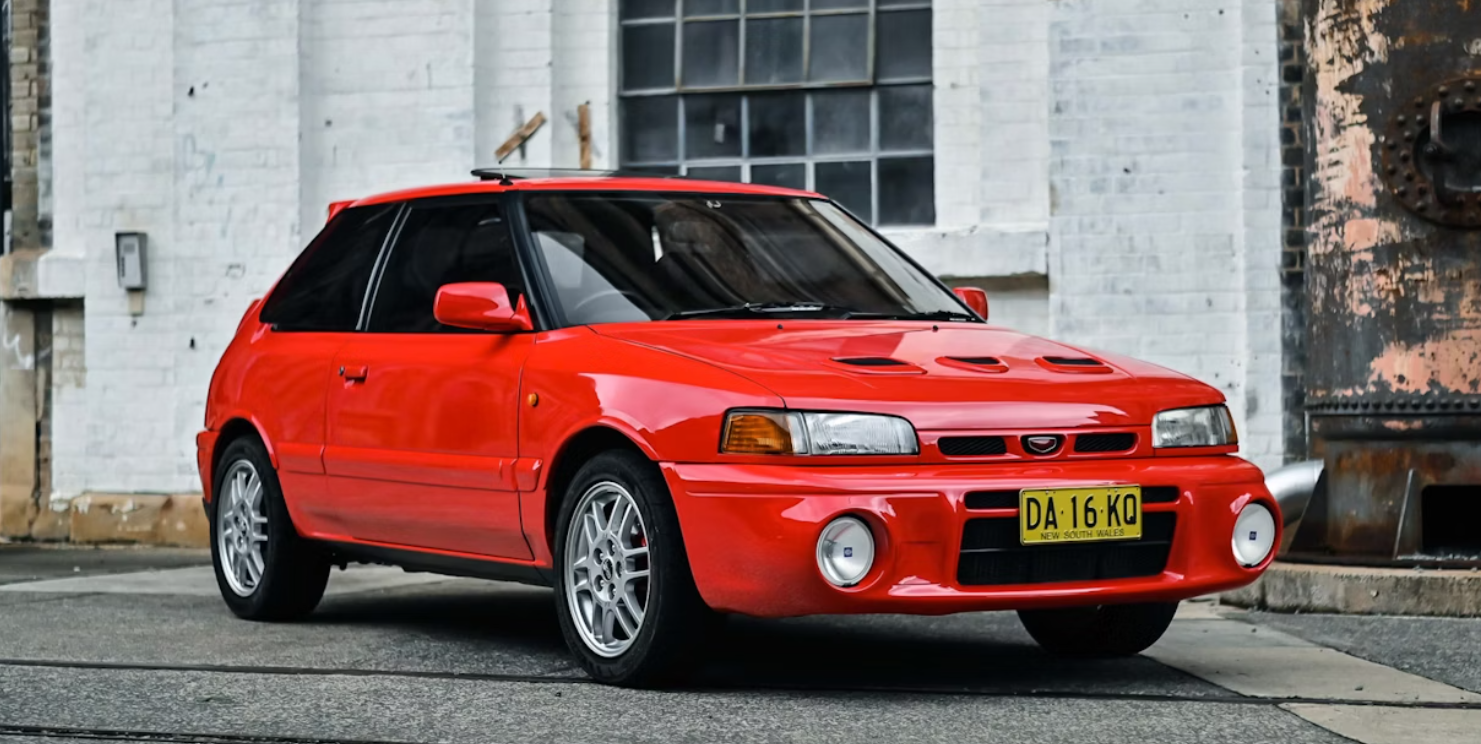
9. Mazda Familia/323 GT-R
The Mazda Familia GT-R, also known as the 323 GT-R in some markets, is a lightweight, nimble, turbocharged vehicle that exemplifies the sleeper philosophy. Underneath its modest exterior, the Familia GT-R housed a turbocharged inline-four engine coupled with a sophisticated four-wheel-drive system, offering excellent acceleration and handling in a small package.
Its unassuming hatchback design concealed performance that could challenge much larger and more aggressively styled competitors, making it a favorite among enthusiasts who appreciated subtlety and engineering precision.
Driving the Familia GT-R was a highly engaging experience. Its lightweight chassis allowed for quick directional changes, while the turbocharged engine provided a surprising punch when needed.
The all-wheel-drive system ensured traction, even in less-than-ideal conditions, and the precise suspension gave drivers confidence through tight corners and high-speed maneuvers. Despite its small size, the car could hold its own against larger sedans and coupes, demonstrating that performance does not always require flashy styling or a high-displacement engine.
The Familia GT-R is rare, particularly outside Japan, which adds to its desirability among collectors. Its compact size and understated appearance make it a perfect sleeper, as it can easily be mistaken for a daily driver while hiding considerable performance potential.
Enthusiasts prize original examples for their balance, reliability, and historical significance, recognizing the car as a key player in the ’90s JDM performance scene.
Finally, the Familia GT-R influenced small performance cars that followed, showing that turbocharged engines, lightweight construction, and advanced drivetrains could deliver excitement in an otherwise modest package.
Collectors appreciate it not only as a vehicle capable of spirited driving but also as a symbol of Mazda’s ingenuity and willingness to push engineering boundaries. Its combination of rarity, performance, and subtlety ensures that the Familia GT-R remains a sleeper icon.
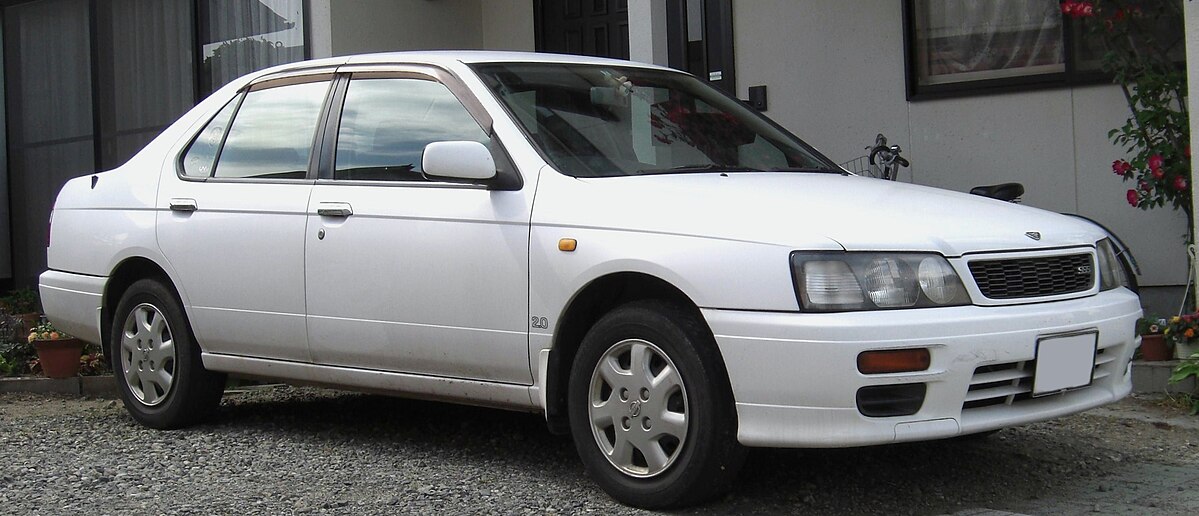
10. Nissan Bluebird SSS (U12)
The Nissan Bluebird SSS U12 represents one of the more overlooked sleepers from the ’90s. While the standard Bluebird was a conventional family sedan, the SSS variant featured a turbocharged SR20DET engine, rear-wheel drive, and a chassis capable of sporty handling.
It offered more than just power; its suspension, brakes, and steering were tuned to deliver a precise, engaging driving experience. With conservative styling and understated dimensions, the SSS could easily blend in with ordinary sedans, making it a true sleeper that could surprise unsuspecting drivers at traffic lights or on winding roads.
The Bluebird SSS’s handling was commendable, especially for a sedan that appeared designed for practicality. It could hold corners with minimal body roll, and the turbocharged engine provided smooth and consistent power delivery across a wide range of speeds.
Its rear-wheel-drive layout contributed to a more dynamic driving experience, making it a favorite for enthusiasts seeking a discreet yet engaging car.
Its rarity and collectibility are tied to its limited production numbers and the fact that few were exported outside Japan. Enthusiasts who value understated performance and historical significance are increasingly seeking the Bluebird SSS, and clean examples are becoming harder to find.
Its sleeper nature, combined with a robust engine and rear-wheel-drive dynamics, makes it an appealing candidate for collectors who want performance without flashy styling.
Finally, the U12 Bluebird SSS demonstrates Nissan’s engineering versatility during the ’90s, embedding performance into an everyday sedan without compromising its practical nature. Its understated design hides a capable chassis and potent turbocharged engine, embodying the essence of a sleeper.
For collectors, it represents an era when manufacturers were willing to combine utility, subtlety, and performance, making it a standout among ’90s JDM vehicles that are now turning collectible.
