
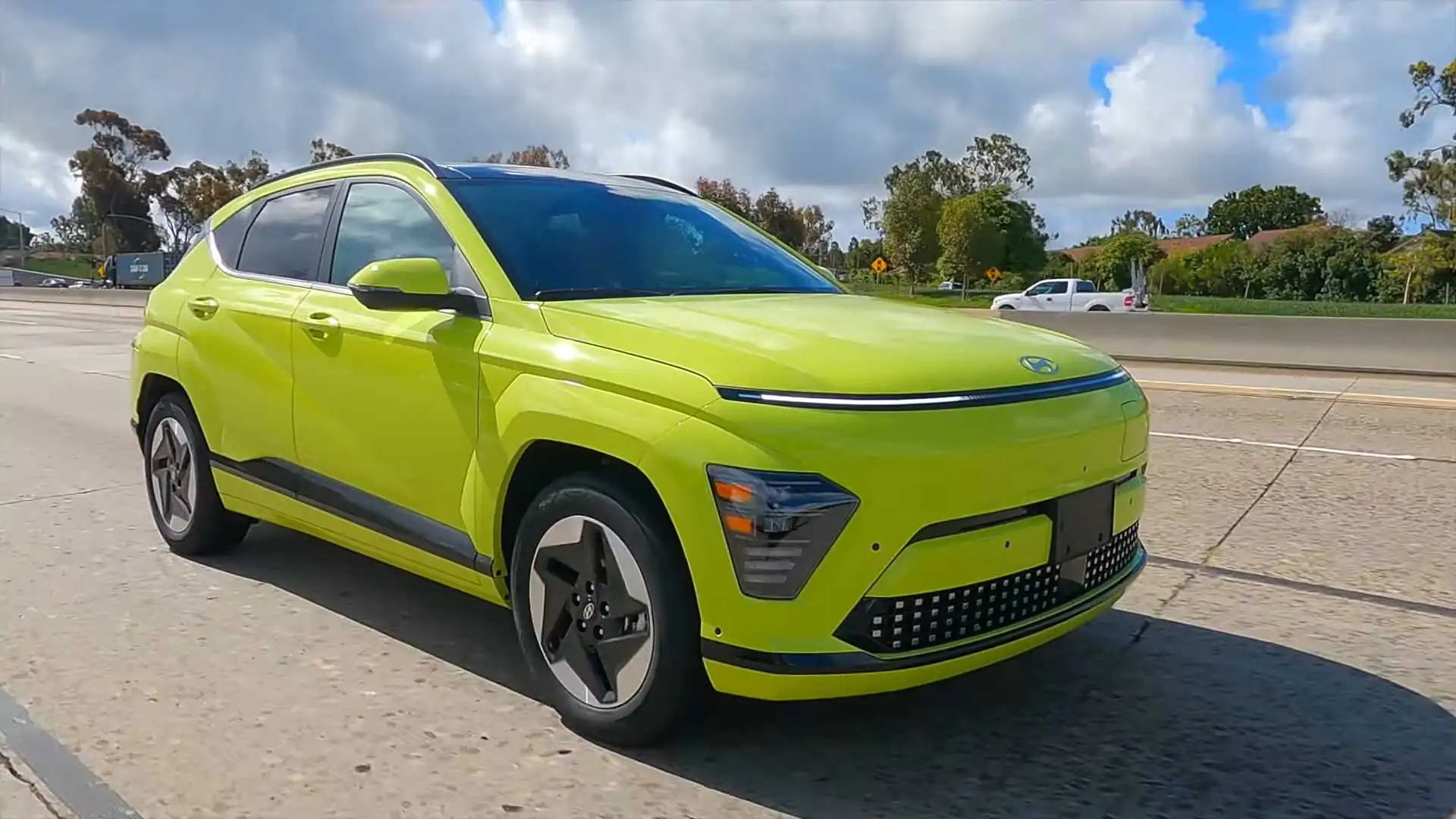
Electric vehicles have become more than just a trend; they are reshaping how people think about transportation. As more manufacturers enter the EV market, buyers are presented with a variety of options that promise efficiency, range, and technology.
However, one practical aspect often overlooked is how these vehicles respond to real-world road conditions, especially potholes. Not every electric vehicle handles bumps, dips, and rough pavement the same way. Some manage to absorb shocks and keep passengers comfortable, while others transmit every imperfection directly into the cabin.
Ride quality is influenced by several factors, including suspension design, battery placement, weight distribution, and tire choice. For urban drivers who frequently encounter uneven streets, this distinction can make a significant difference in both comfort and vehicle longevity.
Potholes are more than a minor inconvenience; they can damage tires, wheels, and even the suspension system. With EVs, the stakes are sometimes higher because these vehicles often carry heavy battery packs that affect their dynamics.
Automakers have had to balance handling, efficiency, and ride comfort, leading to wide variations in how different models perform on rough roads.
Some EVs feature adaptive suspension systems, softer damping, or chassis designs optimized to absorb impacts, while others prioritize sporty handling or lightweight construction, resulting in a harsher ride. For potential buyers, understanding these differences is crucial, particularly in regions with aging infrastructure and frequent road hazards.
Beyond personal comfort, ride quality also affects long-term maintenance. Vehicles that thud over potholes repeatedly may suffer from misaligned wheels, damaged suspension components, or uneven tire wear.
Conversely, EVs that shrug off rough roads not only keep occupants more comfortable but also maintain better performance and structural integrity over time. Consumer experiences and expert reviews can highlight which EVs are more resilient and which may require extra caution on uneven terrain. In this context, it is worth examining specific models that excel at handling potholes versus those that transmit every bump sharply to the cabin.
This article compares five electric vehicles that demonstrate impressive resilience over potholes with five others that tend to deliver a harsher, less forgiving ride. The goal is to provide potential buyers with insight into which vehicles are better suited for real-world driving conditions.
By understanding these differences, drivers can make informed decisions that align with their comfort expectations, road environments, and long-term ownership considerations. Ride quality is not merely a matter of luxury; it directly impacts safety, enjoyment, and vehicle durability, making it a critical factor in evaluating electric vehicles.
EVs that shrug off potholes
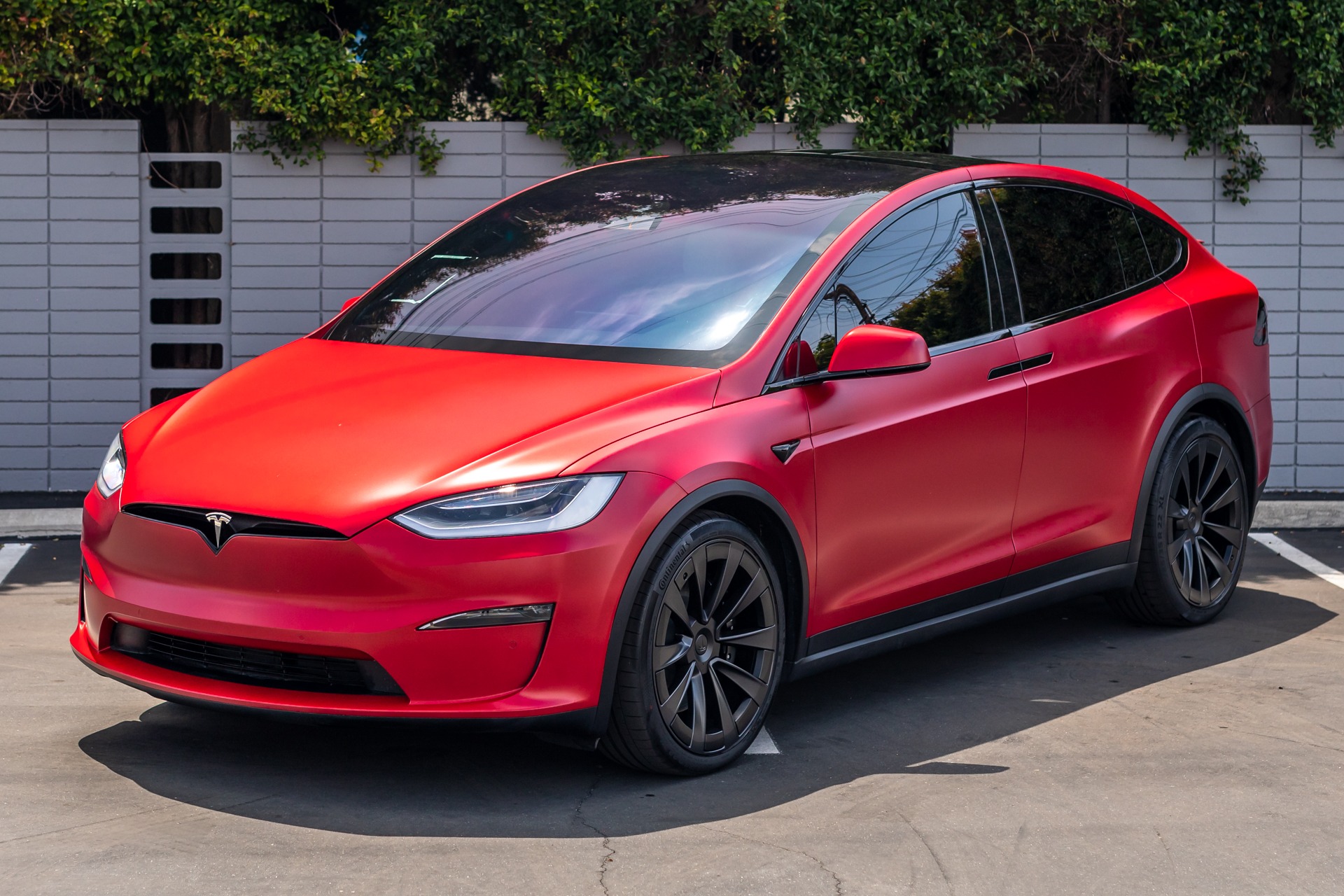
1. Tesla Model X
The Tesla Model X is widely recognized for its ability to combine size, performance, and comfort, and one of its standout features is the way it handles uneven roads. Its adaptive air suspension system allows the vehicle to actively adjust ride height and damping settings depending on the driving conditions.
This means that when the car approaches a pothole, the suspension can soften just enough to absorb the impact without transferring significant jolts into the cabin. On highways, the Model X lowers itself for aerodynamic efficiency, but the system maintains enough travel to absorb sudden bumps, making even older, poorly maintained roads surprisingly comfortable to drive.
The vehicle’s independent suspension system is another key factor in its smooth ride. Each wheel can move individually, which is crucial for uneven surfaces. Unlike a solid axle system, which transfers the motion of one wheel to the other, independent suspension allows the Model X to isolate each wheel’s movements, reducing cabin vibration and improving traction.
Wide tires and electronically controlled stability management further enhance the assurance that potholes do not compromise safety or ride comfort. Drivers often note that the combination of these features makes the vehicle feel unusually planted and composed, even when navigating city streets riddled with imperfections.
Battery placement and weight distribution also contribute heavily to the ride quality. The Model X has a large battery pack integrated into the floor, which lowers the center of gravity significantly. This placement not only improves handling and reduces rollover risk but also ensures that vertical forces from potholes are absorbed efficiently.
The vehicle’s considerable mass works in tandem with the suspension, meaning that minor bumps do not feel exaggerated inside the cabin. Even when encountering a deep pothole at moderate speeds, the vehicle maintains stability, keeping passengers comfortable and the cabin largely free from the unsettling sensation of sudden impacts.
Finally, the Model X’s interior comfort amplifies its ability to shrug off road imperfections. High-quality seats, noise insulation, and thoughtful chassis bracing reduce vibrations and road noise, allowing the occupants to feel as though they are gliding over rough patches rather than being jolted.
This sense of smoothness is particularly important on longer journeys, where repeated pothole impacts could otherwise become fatiguing. In short, the Model X demonstrates that with a combination of air suspension, independent wheel control, smart weight distribution, and refined cabin design, an EV can absorb the challenges of imperfect roads with remarkable composure.
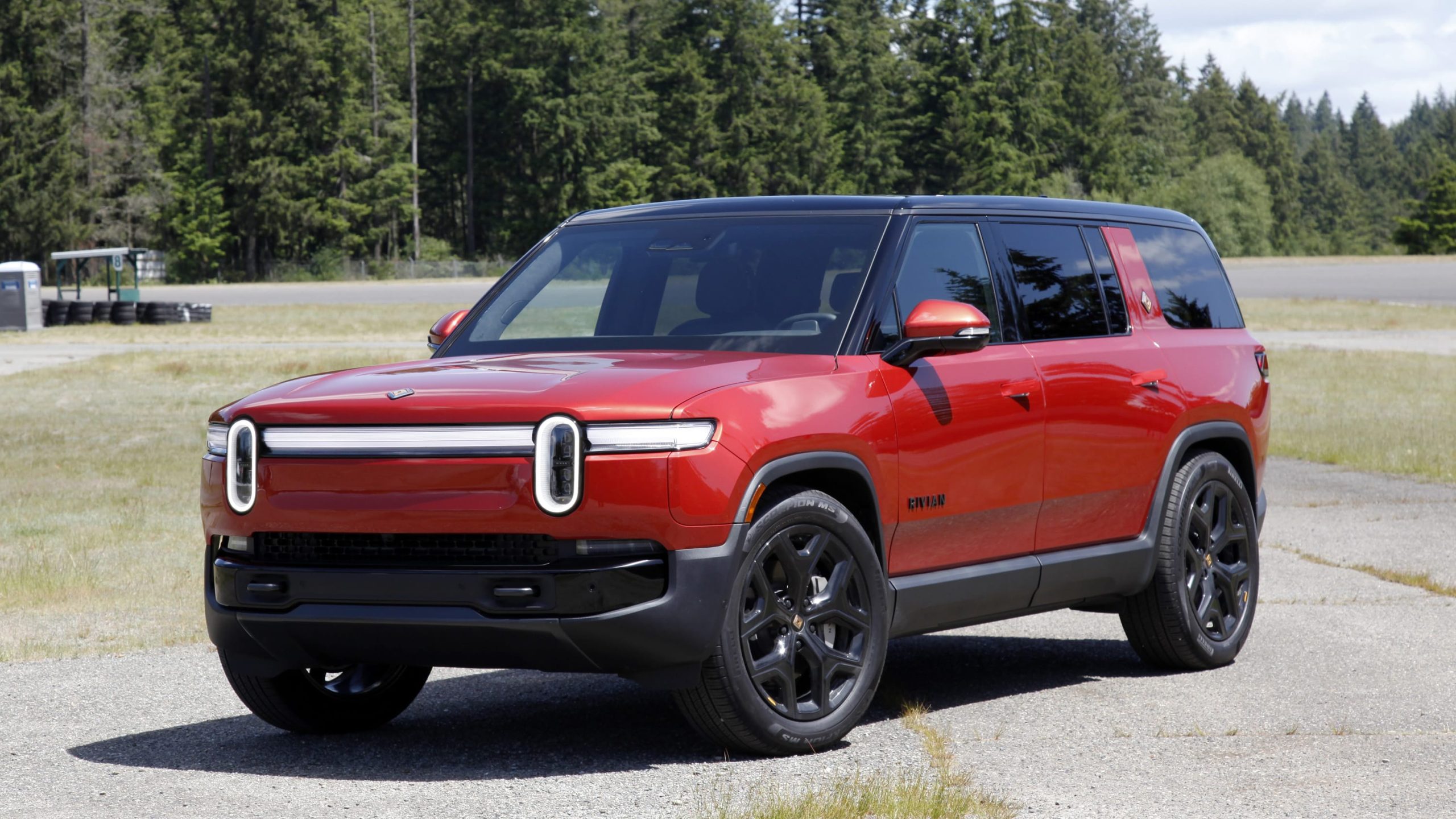
2. Rivian R1T
The Rivian R1T pickup is engineered for both rugged off-road adventures and comfortable daily driving, making it a standout when it comes to handling potholes and uneven roads. The vehicle features an adaptive air suspension system with multi-link rear suspension, which allows each wheel to react independently to road imperfections.
This independence is critical because it means that a pothole under one wheel does not destabilize the entire vehicle. The R1T can adjust its ride height by several inches on demand, which is especially useful for clearing deeper potholes or absorbing sharp bumps without transmitting harsh shocks into the cabin.
Rivian has also focused heavily on chassis durability. Reinforced subframes and robust suspension components are standard, reducing the chances of rattles and vibration over time.
The pickup’s tires, typically larger and designed with some flex, complement the suspension system by absorbing impacts before the suspension has to respond fully. This combination of strong suspension geometry, air-assisted damping, and high-quality tires ensures that everyday bumps and potholes are dealt with almost invisibly from the driver’s perspective.
Weight distribution is another important factor. With a large floor-mounted battery, the R1T maintains a low center of gravity despite its size, which contributes to stability over bumps and potholes. The long wheelbase helps the vehicle “bridge” small gaps or dips in the road, reducing the vertical jolts that shorter vehicles might transmit to occupants.
These characteristics are particularly important for pickup drivers, who may frequently encounter roads with inconsistent maintenance in suburban and rural areas.
The cabin experience is also a strong contributor to comfort. Rivian employs effective noise, vibration, and harshness reduction strategies, including seat damping and high-quality insulation materials. As a result, passengers experience minimal discomfort even over moderately damaged roads.
The R1T exemplifies how combining off-road capability with refined suspension tuning can produce an EV that navigates potholes with confidence, providing both everyday usability and the ruggedness needed for adventure.
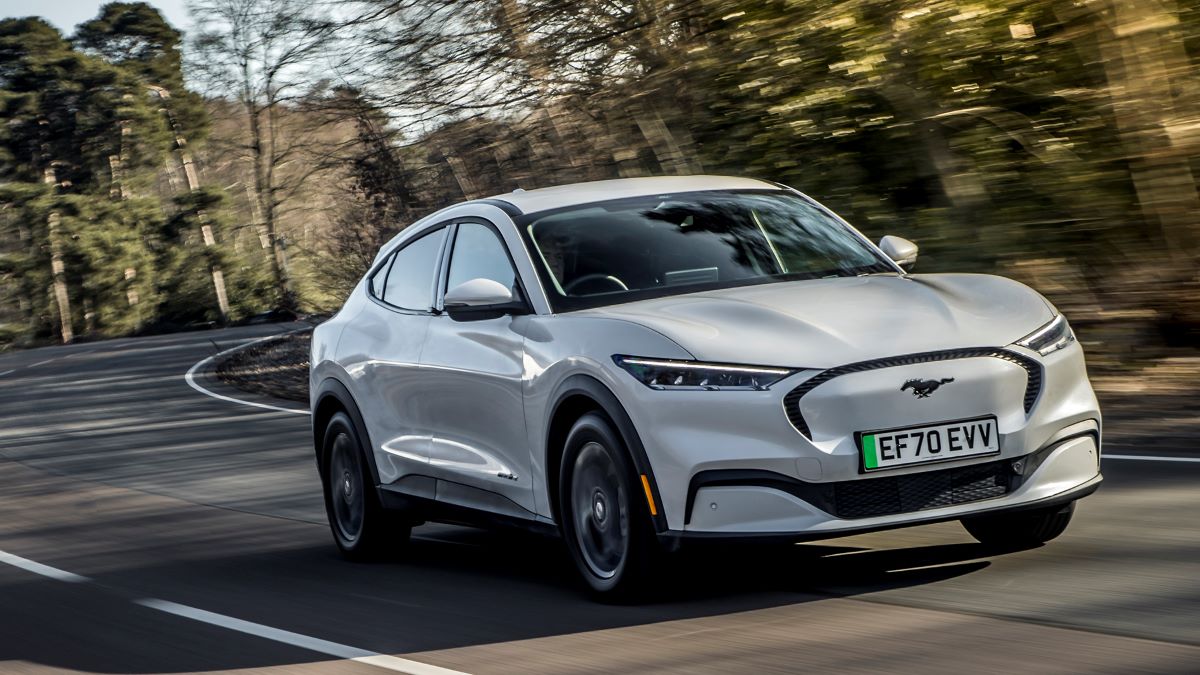
3. Ford Mustang Mach-E (AWD models)
The Ford Mustang Mach-E, especially the all-wheel-drive variants, strikes a careful balance between sporty driving dynamics and comfort over uneven surfaces. The front MacPherson strut suspension and multi-link rear setup provide an effective combination of handling and ride absorption.
When encountering potholes or minor road irregularities, the Mach-E tends to distribute forces across the suspension rather than transmitting a sharp impact to the cabin. The AWD system further stabilizes the vehicle, as it ensures that all wheels remain in contact with the road, reducing abrupt jolts or wheel hop on uneven terrain.
Tire selection plays a significant role as well. Larger tires with some degree of sidewall flexibility help absorb the initial shock of a pothole before the suspension fully engages. This design reduces both vertical motion and vibrations felt inside the cabin, creating a smoother experience for passengers.
Even on roads with frequent cracks and dips, the Mach-E maintains composure, demonstrating that careful tire and suspension synergy can greatly enhance ride quality.
Weight distribution and battery placement are additional contributors. With the battery located in the floor, the Mach-E enjoys a near-ideal center of gravity, allowing the vehicle to handle vertical disturbances with minimal pitching. The chassis responds predictably to bumps, which reduces the risk of feeling destabilized when hitting potholes at moderate speeds. These dynamics also enhance driver confidence, as the vehicle reacts in a controlled, stable manner.
The interior is thoughtfully designed to complement the mechanical systems. Well-cushioned seats, low cabin noise, and reduced vibration levels allow occupants to perceive potholes less intensely.
The combination of mechanical suspension sophistication and refined cabin design makes the Mach-E a surprisingly comfortable EV, capable of handling the irregularities of city and suburban roads without compromising the driving experience or passenger comfort.
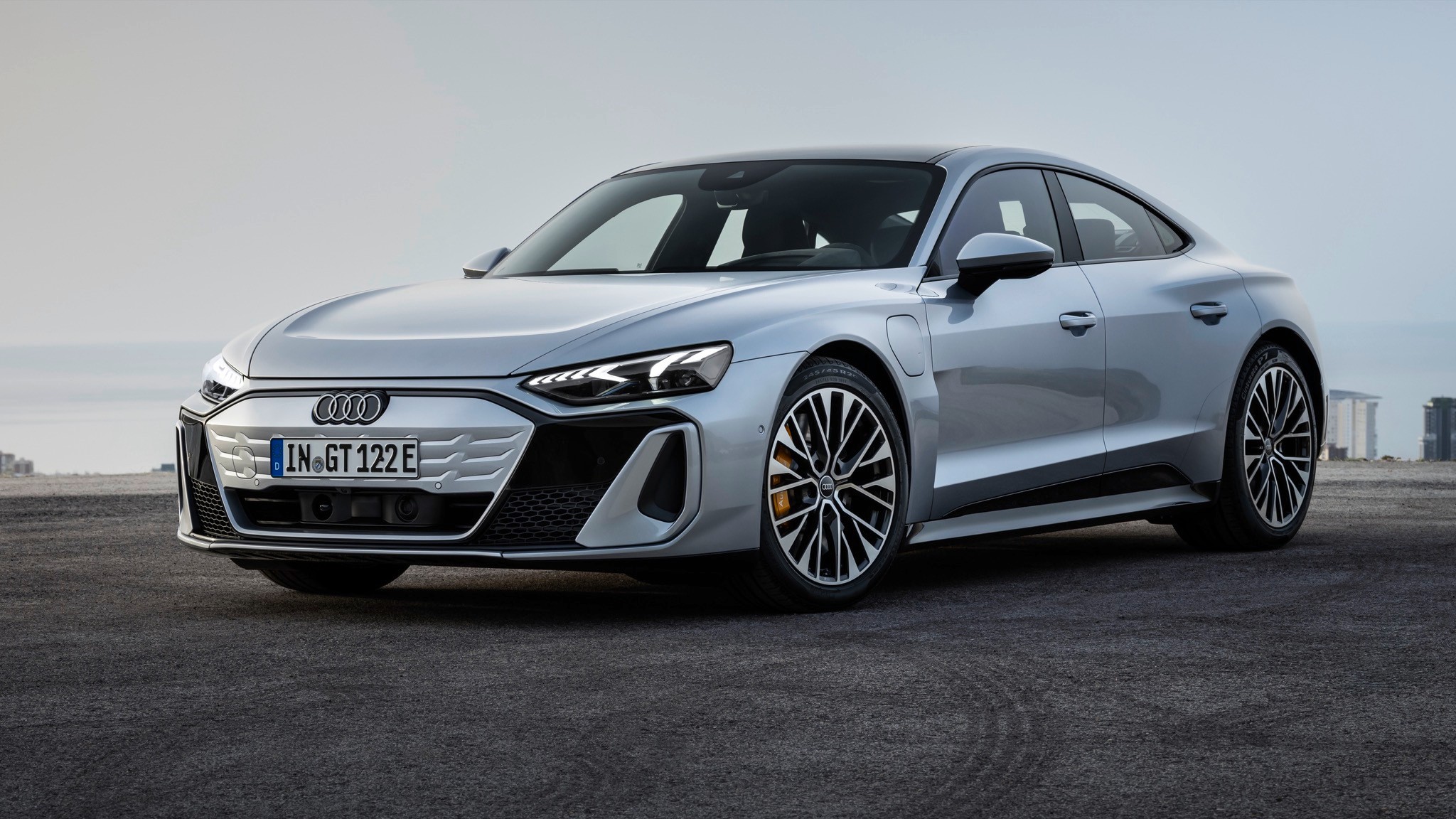
4. Audi e-tron
Audi’s e-tron lineup demonstrates a commitment to luxury and refinement, and nowhere is this more evident than in its handling of potholes and uneven surfaces. The SUV’s adaptive air suspension is paired with dynamic damping, which adjusts in real time to road conditions.
When encountering a pothole, the suspension responds by softening at precisely the right moment, allowing the vehicle to maintain stability while minimizing jolts felt inside the cabin. Audi’s engineers have carefully tuned this system to balance comfort and control, ensuring that even sharp bumps are handled gracefully.
Each wheel on the e-tron operates independently, which is essential for smoothing out uneven surfaces. The suspension’s multi-link design allows for vertical movement without transmitting excessive energy to the cabin, and the SUV’s rigid chassis further enhances stability.
Tires are selected with both comfort and performance in mind, providing enough sidewall flex to absorb minor imperfections without compromising grip or handling. The result is a ride quality that feels exceptionally refined, even on roads that are less than perfect.
Battery placement reinforces the e-tron’s poise. By integrating the battery pack into the floor, the vehicle maintains a low center of gravity, which helps control pitch and roll when navigating potholes or sudden dips. This stability allows the suspension to work efficiently, isolating passengers from the brunt of road irregularities.
The combination of low weight bias, sophisticated damping, and reinforced structural components makes the e-tron feel composed under conditions that would unsettle smaller or stiffer EVs.
Finally, the interior environment amplifies the perception of smoothness. Audi focuses on noise, vibration, and harshness reduction, ensuring that passengers feel minimal disturbance even over rough roads. Seats, cabin materials, and structural bracing all contribute to an experience where potholes and minor bumps are almost imperceptible.
The e-tron demonstrates that with careful engineering, an EV can achieve the dual goals of delivering responsive performance while also shrugging off the everyday imperfections of real-world roads.
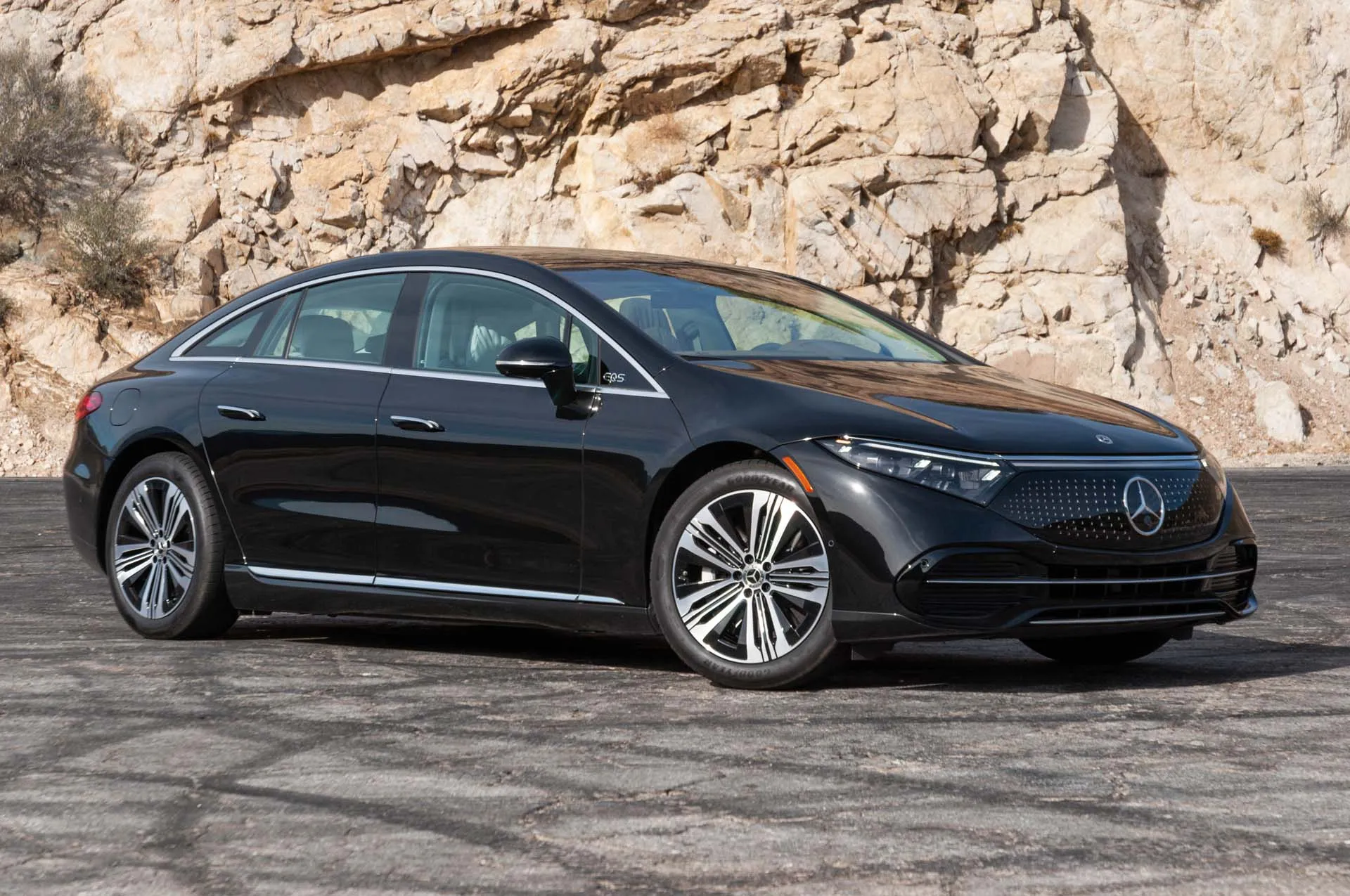
5. Mercedes-Benz EQS
The Mercedes-Benz EQS, the brand’s flagship electric sedan, is a prime example of engineering designed to create a serene and insulated ride, even on roads littered with potholes. The EQS uses a sophisticated air suspension system with adaptive damping that can adjust stiffness and ride height almost instantaneously.
When the vehicle encounters a pothole, the suspension softens strategically, allowing the wheel to absorb the impact while minimizing the transfer of vibrations into the cabin. Unlike traditional steel-spring setups, this air-based system effectively cushions abrupt vertical movements, giving occupants the sensation of floating over imperfections rather than being jolted by them.
The EQS also benefits from a multi-link rear suspension, which allows each wheel to respond independently to bumps. This setup minimizes the risk of one wheel’s motion affecting the entire chassis, keeping the cabin stable and quiet.
Wide, low-pressure tires further enhance comfort by flexing slightly under impact, softening the initial jolt before the suspension fully engages. Even when driving on roads with deep potholes or sudden dips, the EQS maintains composure, demonstrating the effectiveness of combining independent suspension geometry with adaptive air damping.
Battery placement is another key factor in ride quality. The EQS features a floor-mounted battery pack, which lowers the center of gravity and distributes weight evenly across the chassis. This design not only improves handling and cornering stability but also helps the suspension absorb vertical impacts more efficiently. Even at highway speeds, potholes are often barely perceptible to passengers, as the car’s mass, low center of gravity, and adaptive suspension work together to smooth out disturbances.
Inside the cabin, Mercedes’ attention to noise, vibration, and harshness reduction amplifies the ride’s comfort. Seats feature advanced cushioning and dynamic support that can absorb minor vibrations, while cabin insulation materials prevent road noise from intruding.
Combined with the EQS’s intelligent suspension and chassis engineering, these features create a driving experience where potholes, cracks, and uneven surfaces are almost imperceptible. For drivers seeking a luxury EV that handles both urban streets and long-distance journeys with poise, the EQS exemplifies how cutting-edge engineering can make potholes virtually irrelevant to comfort and stability.
EVs that thud and crash
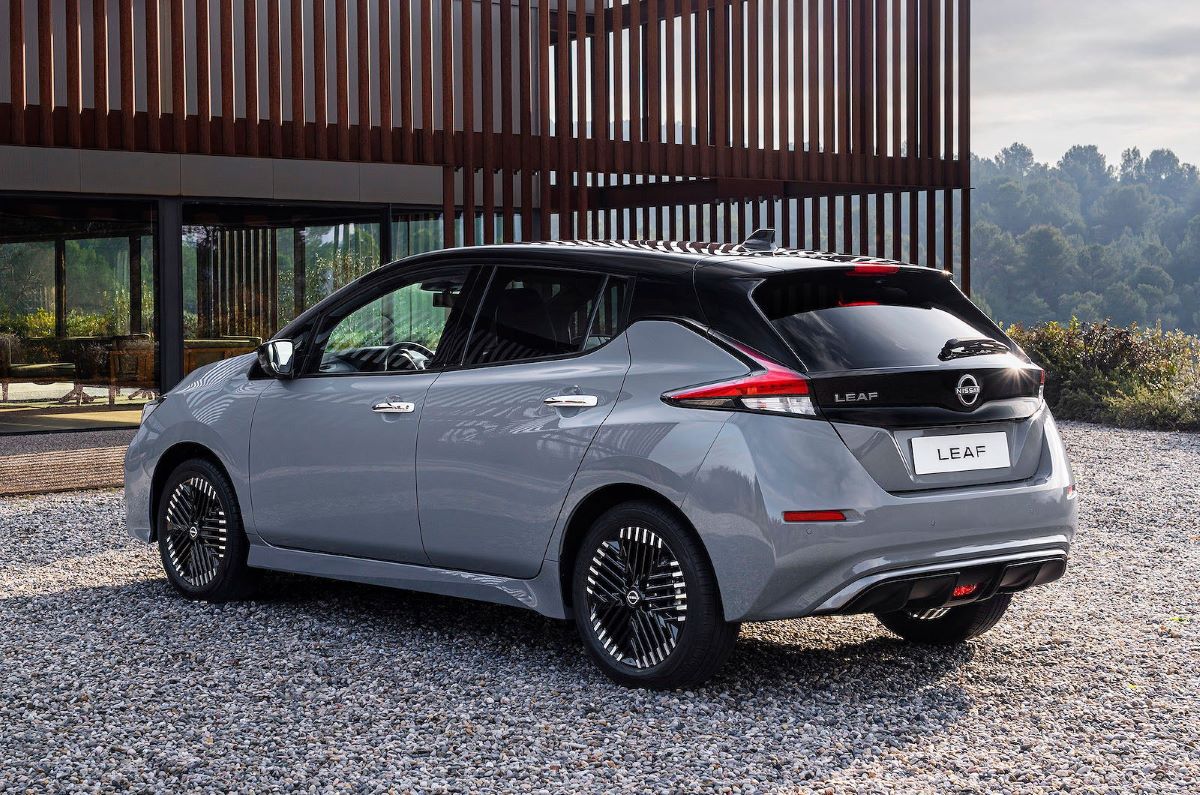
1. Nissan Leaf
The Nissan Leaf, while a pioneering and affordable EV, often struggles with road imperfections due to its relatively basic suspension setup. The front uses MacPherson struts, and the rear relies on a torsion beam design, which is less capable of isolating potholes from the cabin.
Unlike multi-link rear suspensions or air-assisted systems, the Leaf’s torsion beam connects both rear wheels, meaning that when one wheel hits a pothole, the impact can transmit across the rear axle. Drivers frequently report that even moderate bumps produce noticeable jolts, creating a thudding sensation inside the cabin.
Tire size and sidewall design contribute further to the Leaf’s rough ride. Many configurations come with low-profile tires aimed at efficiency rather than comfort.
While these tires improve energy economy and handling slightly, they provide less cushioning over road irregularities. A pothole that would barely register in a heavier or better-suspended vehicle can feel significant in the Leaf, especially at higher speeds, amplifying both vertical motion and vibration inside the cabin.
Weight distribution plays a role as well. The Leaf’s battery pack, although floor-mounted, is relatively light compared with heavier EVs, reducing the natural damping effect mass can provide. Lighter vehicles transmit vertical impacts more directly to occupants because there is less mass to “absorb” the energy before it reaches the suspension. On rough city streets with multiple potholes in succession, passengers can experience repeated thuds, which can feel unsettling or even fatiguing over time.
Finally, the cabin design in the Leaf, while adequate for quietness and ergonomics, does little to mask road imperfections. Seats offer minimal damping, and NVH levels are moderate rather than premium, meaning that potholes and cracks are easily felt.
Combined with the suspension limitations and light weight, these factors result in a ride experience that can feel harsh, especially compared with EVs engineered to absorb or shrug off irregularities. The Leaf illustrates how cost-efficient engineering choices can compromise comfort on less-than-perfect roads.
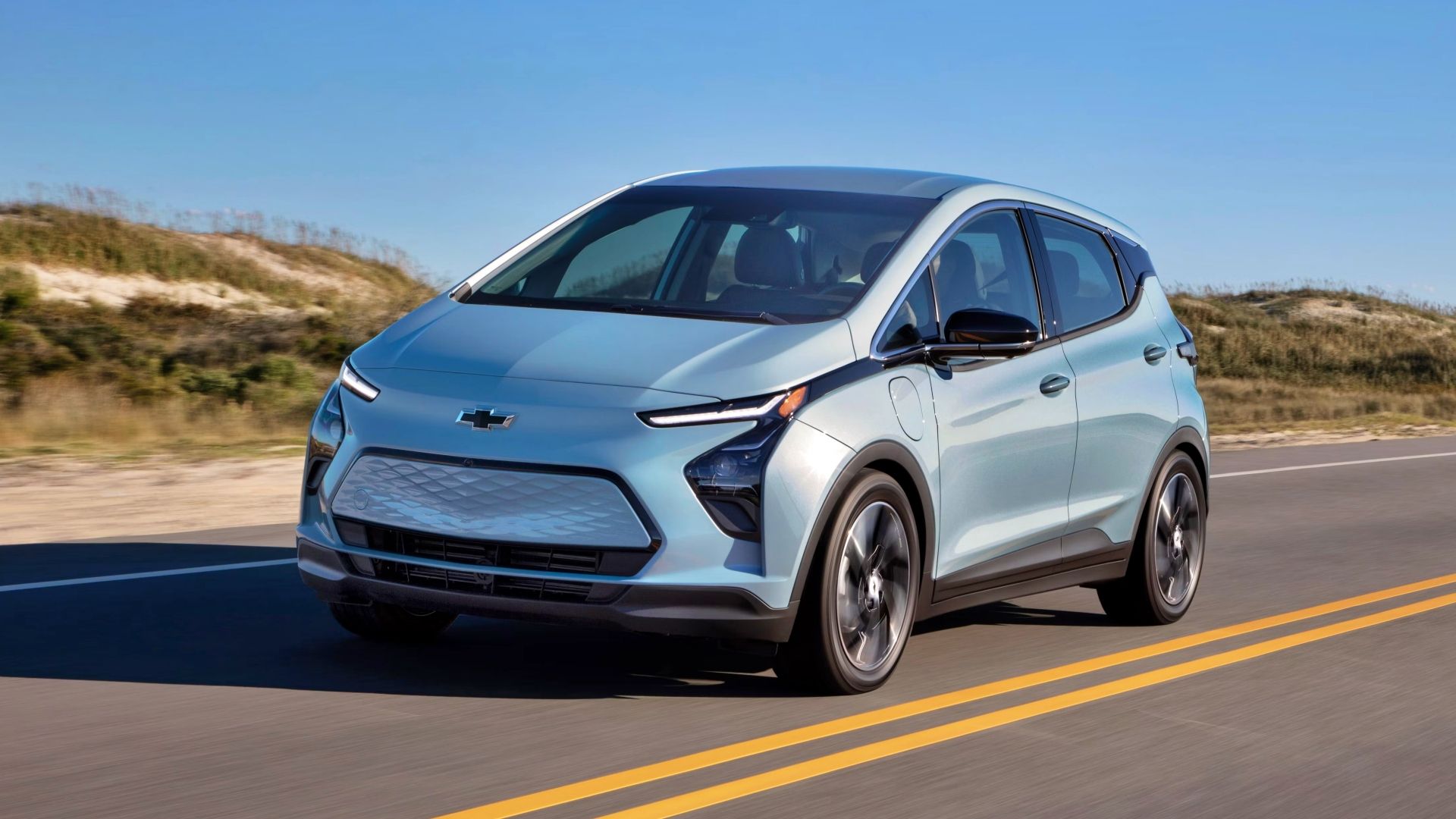
2. Chevrolet Bolt EV
The Chevrolet Bolt EV offers excellent efficiency and city driving practicality, but its ride over potholes often leaves much to be desired. The Bolt uses a front MacPherson strut and a rear torsion beam suspension, a configuration that is simple and cost-effective but not ideal for isolating bumps.
When a rear wheel hits a pothole, the torsion beam setup tends to transmit the shock to the opposite wheel, causing the entire rear of the car to react abruptly. This often results in a distinct thud that reverberates through the cabin.
Tire design and size exacerbate the problem. Many Bolt models come with relatively narrow tires and minimal sidewall height to improve range and handling efficiency. While this reduces rolling resistance, it also reduces the tire’s ability to flex and absorb impacts. As a result, vertical forces from potholes are passed more directly to the suspension and cabin, making even small irregularities noticeable and sometimes uncomfortable.
The Bolt’s weight distribution further contributes to its thudding behavior. Although the battery is mounted in the floor, the vehicle is relatively light.
This means that it lacks the natural damping effect heavier EVs enjoy, where the mass of the car helps smooth over minor bumps. On uneven surfaces or roads with a series of potholes, the light chassis bounces more noticeably, which can be jarring for passengers.
Inside the cabin, comfort features are adequate but not exceptional. While the seats are supportive, they do little to absorb vibration from the road. Noise and vibration are transmitted more easily into the cabin compared with larger, more refined EVs.
Taken together, the Bolt’s light weight, basic rear suspension, and tire design make potholes a source of thudding discomfort, creating a ride experience that can feel harsh, especially in urban environments with frequent surface imperfections.
3. BMW i3
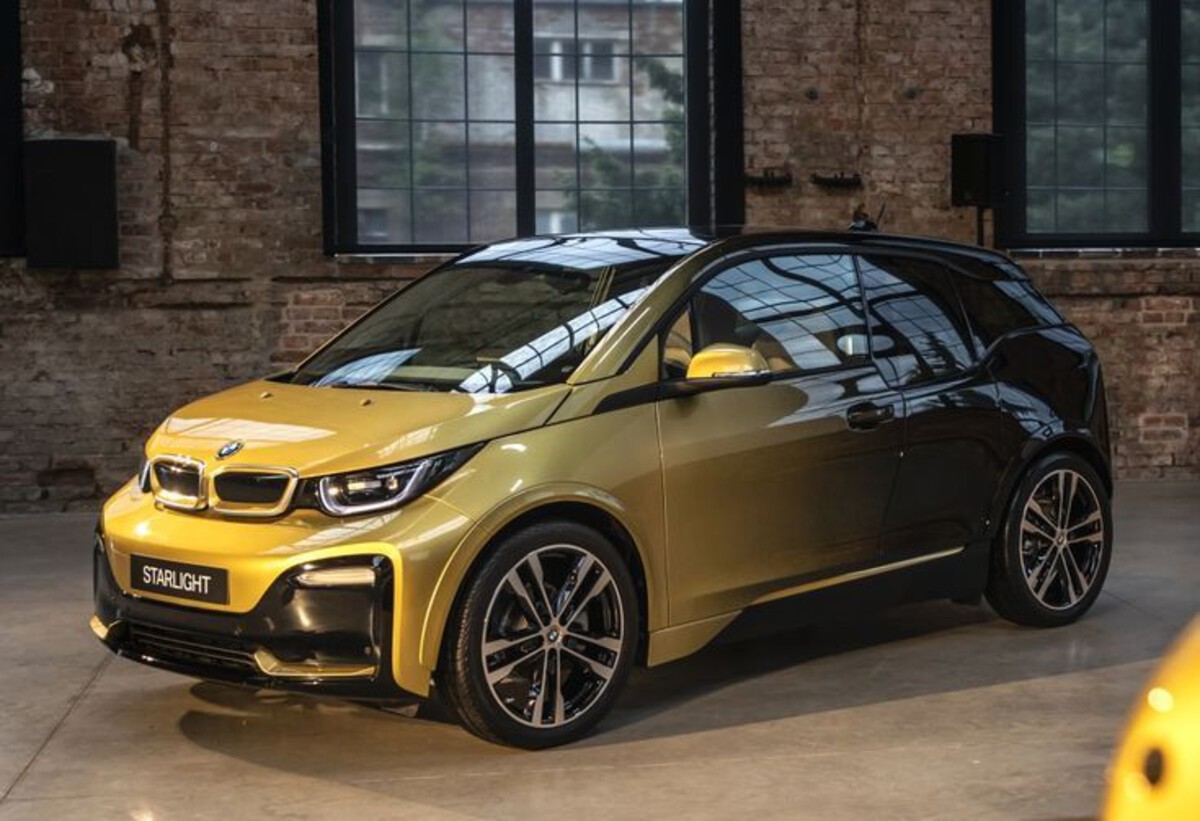
The BMW i3 is celebrated for its unique design, lightweight carbon fiber structure, and urban agility, but its ride quality over potholes is often criticized. The i3 uses a rear semi-trailing arm suspension with a front MacPherson strut, a setup that, while space-efficient and lightweight, lacks the refinement to fully absorb sharp impacts.
When a wheel encounters a pothole, the energy is transferred quickly into the cabin, producing a noticeable jolt. Drivers frequently describe this sensation as “thudding” because the chassis reacts abruptly rather than smoothing the impact.
The i3’s low curb weight amplifies the sensation. While a lighter vehicle is generally more nimble, it has less natural inertia to resist vertical motion. Combined with a short wheelbase, potholes produce a sharper, more pronounced impact, especially when the vehicle is fully loaded with passengers or cargo. The relatively stiff ride, tuned to provide a sporty driving feel, also reduces the suspension’s capacity to absorb bumps quietly, making potholes more apparent.
Tire choices on the i3, often narrow with low sidewalls for efficiency and handling, contribute to the problem. These tires transmit more road irregularities directly into the suspension, which, in combination with the lightweight chassis, increases the perception of every bump.
Even minor imperfections that would go unnoticed in a heavier, better-suspended vehicle can feel disruptive in the i3, particularly in city traffic where potholes are frequent.
Finally, the cabin, while futuristic and stylish, offers minimal vibration damping. Carbon fiber construction reduces weight but can also transmit sharp impacts more directly. Seat cushioning is moderate, so vertical jolts are felt more clearly by occupants.
Altogether, the BMW i3 demonstrates that light weight, minimal suspension sophistication, and narrow tires can combine to produce an EV that reacts harshly to potholes, making them a noticeable and sometimes uncomfortable aspect of everyday driving.
4. Hyundai Kona Electric
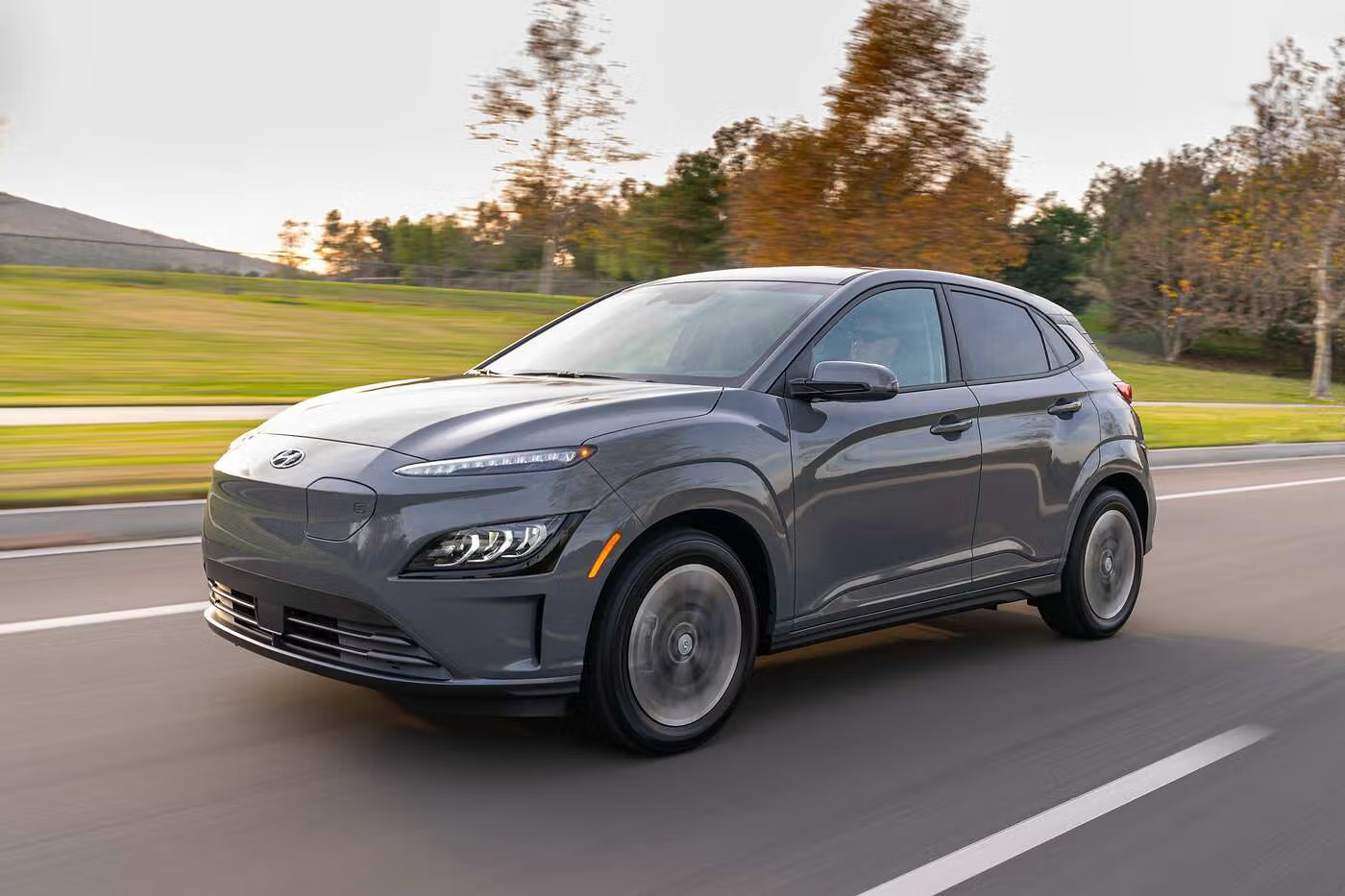
The Hyundai Kona Electric is a compact EV aimed at affordability and efficiency, but its ride over potholes is often firm and unforgiving. Its front MacPherson strut and rear torsion beam suspension are cost-effective and space-efficient but cannot isolate vertical impacts.
When the rear wheels encounter a pothole, the torsion beam transfers some of the energy across the axle, causing the rear of the vehicle to react noticeably. The result is a distinct thud that can feel harsh to passengers, particularly on roads with frequent dips or cracks.
Tires play a significant role in this experience. Many Kona Electric trims come with low-profile tires designed for efficiency and handling rather than comfort. These tires have less ability to flex over bumps, so more of the impact is transmitted to the suspension and then into the cabin. Even small potholes are felt sharply, which can be particularly noticeable at higher speeds or when driving with multiple passengers.
Weight distribution also affects ride quality. Although the battery is floor-mounted, the Kona Electric is relatively light, which means it lacks the natural damping effect that heavier EVs benefit from.
Vertical energy from bumps is less absorbed by the vehicle’s mass, increasing the perception of thuds. Shorter wheelbase compounds this effect, as the distance between the front and rear wheels is insufficient to smooth over irregularities effectively.
Cabin refinement, while good for its segment, is insufficient to mask harsh road inputs completely. Seats and interior materials provide limited vibration absorption, and NVH control is moderate, so potholes are easily perceived.
The Kona Electric highlights how compact, affordable EVs with basic suspension setups and light construction can experience pronounced jolts over rough roads, making everyday driving less comfortable than in heavier, better-engineered competitors.
5. Volkswagen ID.3
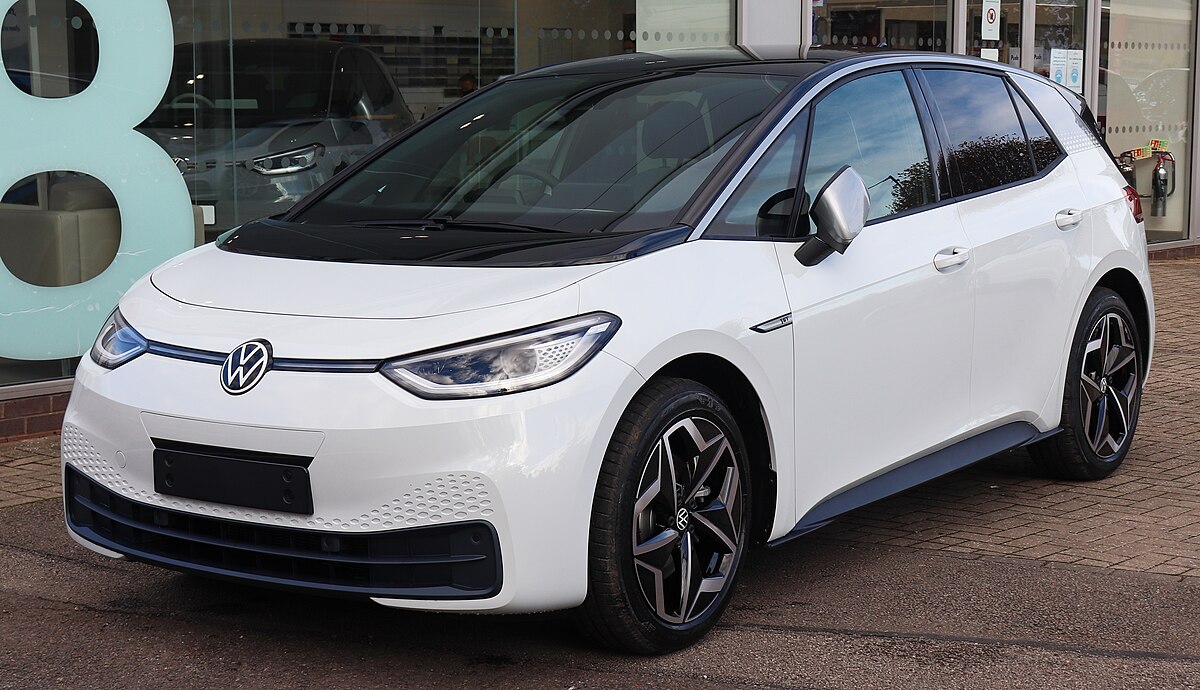
The Volkswagen ID.3 is a compact EV with a lightweight platform designed for efficiency and urban driving, but it struggles with road imperfections. The front MacPherson strut and rear torsion beam suspension provide adequate handling and economy but do not offer sophisticated bump absorption.
When a rear wheel hits a pothole, the energy is transmitted to the opposite wheel and into the cabin, resulting in a noticeable thud. Drivers often describe the impact as abrupt, especially compared with vehicles with multi-link or adaptive suspension setups.
Tire and wheel choices contribute to the perception of harshness. The ID.3 often uses narrow tires with low sidewalls to reduce rolling resistance and improve efficiency. While beneficial for range, this design leaves little margin for absorbing road impacts. Even small potholes can create a sudden vertical jolt, and combined with a light vehicle weight, the effect is magnified, leading to a less comfortable ride in real-world urban conditions.
The ID.3’s battery placement partially offsets the issue by lowering the center of gravity, but its light mass reduces the suspension’s ability to smooth impacts naturally. This makes potholes feel more pronounced, especially when the vehicle is lightly loaded. Short wheelbase and compact dimensions further accentuate the sensation, as the vehicle cannot bridge dips as effectively as larger EVs.
Interior comfort, while well-finished, does not fully mitigate road harshness. Seat cushioning and cabin isolation are moderate, meaning that vertical jolts from potholes are easily felt by occupants. The ID.3 illustrates that while efficiency and lightweight design are important, they can come at the cost of ride comfort when encountering uneven roads.
