
Italy has shaped the idea of the supercar more than any other nation, not only through speed and engineering but through emotion, identity, and cultural meaning.
Long before performance numbers became marketing tools, Italian manufacturers treated cars as statements of intent, expressions of national pride, and mechanical art forms built to stir the senses.
The sound of a high revving Italian engine, the curvature of hand formed bodywork, and the focus on balance rather than brute force created machines that felt alive rather than merely fast. These cars were not designed simply to win traffic light contests but to define eras and influence how the entire automotive industry thought about performance.
What makes Italian supercars unique is the way passion and engineering coexist without canceling each other out. Italian designers have historically trusted instinct alongside mathematics, allowing creativity to guide technical decisions. This philosophy led to cars that sometimes challenged logic but rewarded drivers with unforgettable experiences.
Many Italian supercars demanded respect, skill, and patience, creating a bond between driver and machine that felt personal rather than transactional. That relationship is a key reason these vehicles are remembered decades later with near mythical status.
Another defining trait of Italy’s supercar legacy is risk taking. Italian brands often introduced radical layouts, untested materials, and bold styling long before competitors felt comfortable doing so. Some ideas failed, others succeeded spectacularly, but all pushed boundaries.
This willingness to gamble created breakthroughs in aerodynamics, engine placement, and chassis design that became industry standards years later. The supercar segment itself owes much of its existence to Italian visionaries who believed performance should be dramatic and unapologetic.
Ranking Italy’s greatest supercars requires more than horsepower figures or top speed claims. Influence, beauty, engineering significance, and emotional impact matter just as much as acceleration times.
The following list ranks ten Italian supercars that best represent these qualities, considering how each car shaped its era and continues to inspire modern performance machines. These rankings reflect legacy, not hype, and focus on vehicles that changed how people think about speed, design, and driving pleasure.
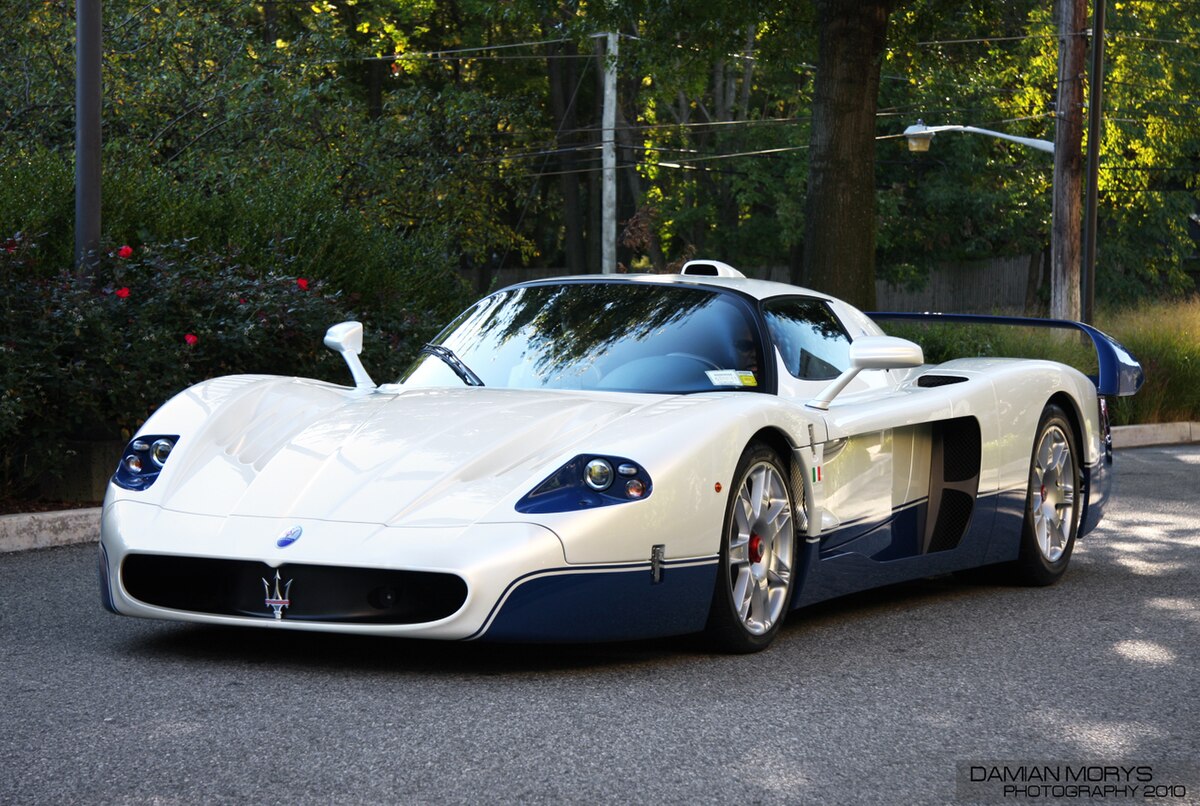
10. Maserati MC12
The Maserati MC12 was a statement of intent, marking Maserati’s return to the pinnacle of international motorsport after decades of relative quiet. Built on the Ferrari Enzo platform, it took a foundation already proven in performance and endurance racing and reshaped it to Maserati’s unique vision.
The car’s extended bodywork was unlike anything else at the time. Its elongated nose, enormous rear wing, and sharply sculpted sides were not just stylistic choices, they were calculated interventions in aerodynamics to improve high-speed stability and downforce.
While some critics initially questioned its sheer size and unconventional proportions, these same characteristics allowed the MC12 to dominate its racing class and maintain composure on the road.
Mechanically, the MC12 was a blend of Ferrari engineering and Maserati-specific tuning. The 6.0-liter V12 engine produced a broad, smooth powerband that emphasized reliability under long-distance conditions, essential for its racing homologation.
Unlike some supercars that focus solely on raw horsepower figures, the MC12 emphasized controllable speed and stability.
Paired with a precise sequential gearbox, the engine provided a driving experience that was both exhilarating and disciplined, giving drivers a sense of total command over a car capable of extraordinary velocity. The car’s handling characteristics reflected Maserati’s philosophy: power must be balanced with control to create a true racing machine.
The interior reinforced the MC12’s performance-first approach. Inside, luxury was minimized to reduce weight and maintain focus. The cabin featured high-quality materials such as Alcantara, carbon fiber, and leather, but with little emphasis on entertainment or comfort features.
Every control was placed for accessibility and clarity, ensuring that the driver remained connected to the car’s behavior at all times.
Unlike more opulent Italian exotics, the MC12’s interior reminded owners that the car was built for purpose rather than show. This stripped-back approach further highlighted the MC12’s identity as a track-ready, yet road-legal, supercar.
Beyond its mechanical excellence, the MC12 had a cultural impact that elevated Maserati’s brand for a new generation. Its racing success in the FIA GT Championship and limited production numbers created mystique and desirability.
The car represented a bridge between Maserati’s storied past and a reinvigorated future, demonstrating that the brand could compete with Ferrari, Lamborghini, and Porsche in both aesthetics and performance. As a result, the MC12 is remembered not just for its technical achievements, but for restoring Maserati’s reputation as a producer of elite, world-class supercars.
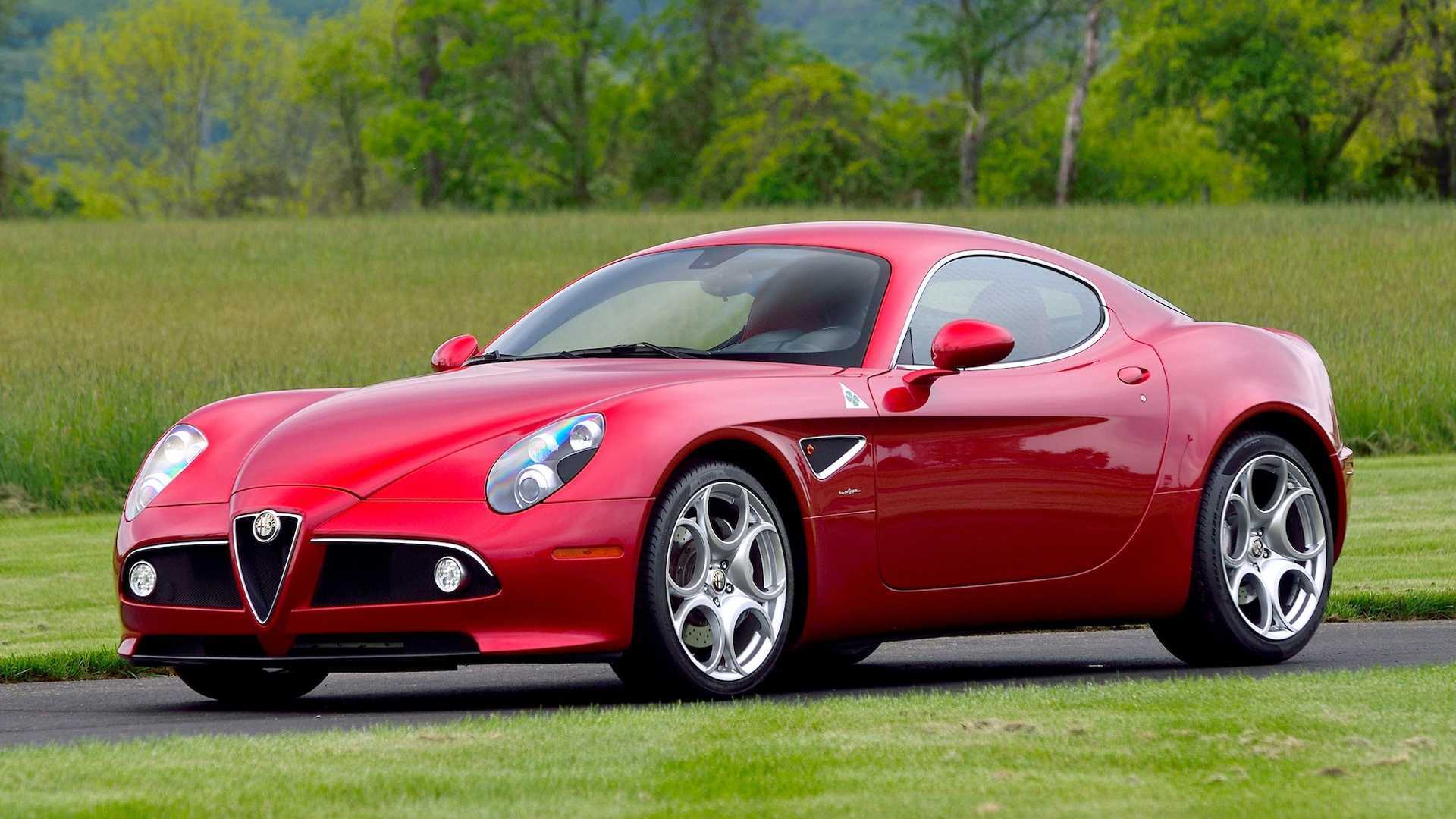
9. Alfa Romeo 8C Competizione
The Alfa Romeo 8C Competizione embodied a philosophy of beauty and performance that harked back to the company’s most celebrated classic models. Unlike many supercars of its time, which chased numbers and lap times, the 8C emphasized design and proportion, blending heritage with modern technology.
Its low, sweeping lines, muscular haunches, and iconic front grille recalled legendary Alfa Romeo models while asserting a contemporary identity. The body panels were crafted from carbon fiber, contributing to lightness and strength while allowing sculptors and designers to execute precise curves that would have been impossible with conventional metal. The car became a visual and emotional statement, demonstrating that speed could coexist with elegance.
The performance of the 8C Competizione relied on a naturally aspirated 4.7-liter V8 engine derived from Ferrari technology. Delivering over 450 horsepower, the engine produced a sound that many consider one of the most beautiful in automotive history.
The power delivery was immediate and linear, rewarding skilled drivers with responsiveness that transformed ordinary roads into thrilling stages.
Its suspension and chassis were tuned to balance handling precision with ride quality, allowing the 8C to feel confident in corners while maintaining composure over less-than-perfect surfaces. Every mechanical element was chosen to enhance the connection between driver and car.
Inside, the cabin combined sporty restraint with a sense of refinement. High-grade leather, carbon fiber accents, and meticulous stitching created a sense of craftsmanship not common in modern supercars.
Yet the interior did not distract from the driver’s primary task: controlling a high-performance machine with precision and awareness.
Ergonomics were carefully considered, from pedal placement to seating position, reinforcing the car’s identity as a driver-focused vehicle. In this way, the 8C Competizione married traditional Italian artistry with cutting-edge engineering.
The Alfa Romeo 8C Competizione left a lasting impression on both enthusiasts and the broader automotive community. Limited production numbers ensured exclusivity, while its timeless design cemented its status as a modern classic.
Beyond performance statistics, the 8C’s true achievement lay in its ability to communicate emotion through engineering and aesthetics. It demonstrated that Alfa Romeo could return to its roots of building cars that were not only capable but inspiring, reestablishing the brand’s place among Italy’s supercar elite.
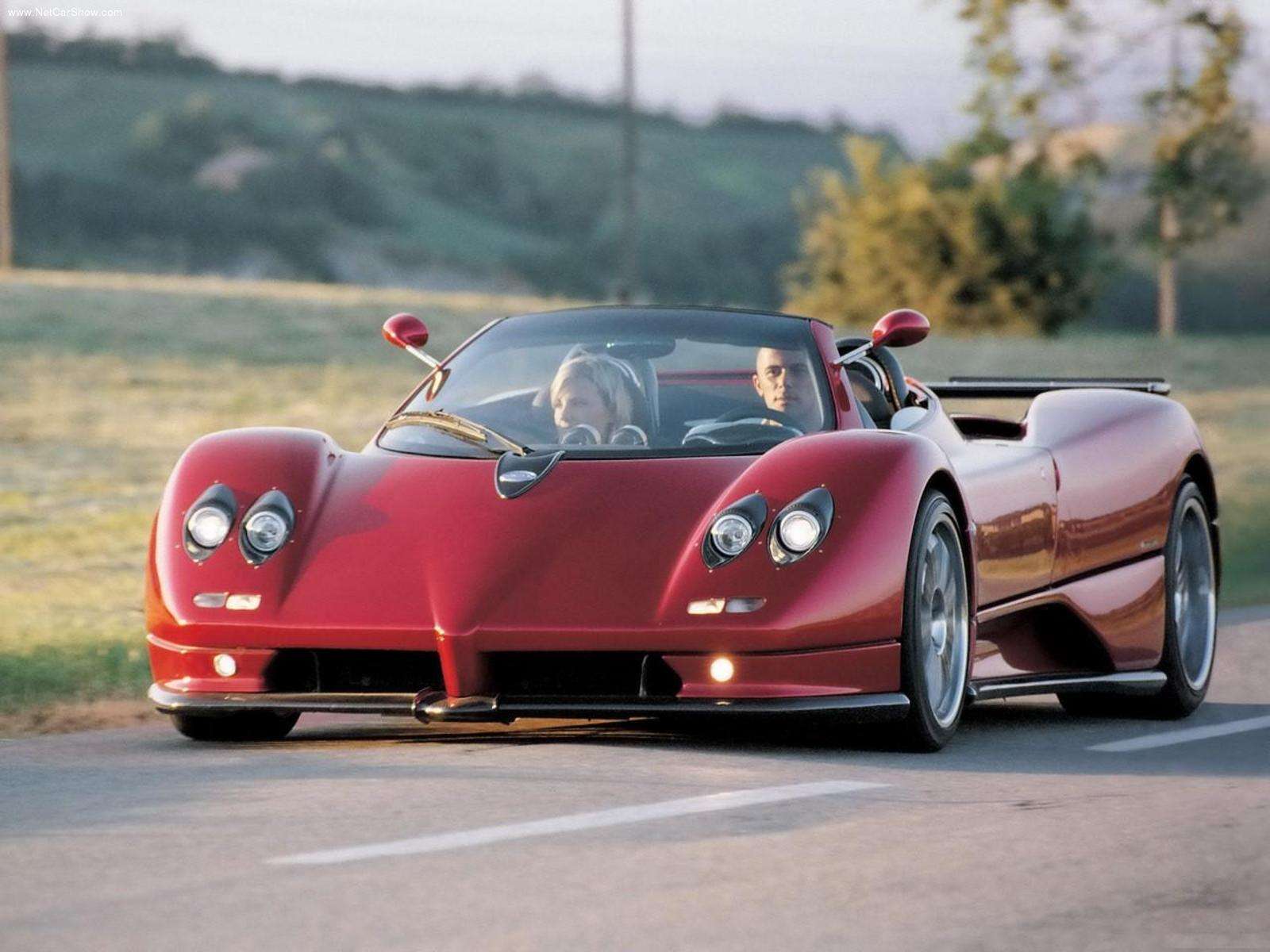
8. Pagani Zonda C12
The Pagani Zonda C12 marked the emergence of a boutique Italian manufacturer with ambitions to rival the best supercars in the world. Founded by Horacio Pagani, the brand brought a meticulous focus on craftsmanship and technical innovation. Every aspect of the Zonda, from its chassis to its interior trim, reflected obsessive attention to detail.
The car’s exposed carbon fiber bodywork revealed both the structural skeleton and the art of construction, creating a visual celebration of engineering. The Zonda became instantly recognizable for its sculpted lines, aggressive stance, and emphasis on form following function.
At its heart, the Zonda housed a naturally aspirated Mercedes-Benz AMG V12 engine, tuned for exceptional responsiveness and high-revving capability. The engine’s power was complemented by a lightweight structure that amplified acceleration and handling.
Unlike some supercars, which prioritize straight-line performance, the Zonda focused on delivering an engaging, tactile driving experience.
Steering was precise, brakes were powerful, and the chassis communicated with the driver in a way that made every corner feel alive. Driving the Zonda was as much a sensory experience as a performance test, offering a rare combination of power, feedback, and involvement.
Aerodynamics were another key area where the Zonda distinguished itself. Carefully sculpted vents, splitters, and a prominent rear wing improved airflow management and downforce without compromising the car’s dramatic visual presence.
The Zonda’s proportions, long overhangs, and wide track were carefully engineered to maintain balance at high speeds while appearing purposeful even when stationary. Pagani’s approach blurred the line between art and function, resulting in a car that was technically brilliant and visually breathtaking.
Culturally, the Zonda demonstrated that a small independent manufacturer could produce a car rivaling Ferrari, Lamborghini, and Maserati. Its combination of performance, exclusivity, and bespoke craftsmanship created a new benchmark for boutique supercars.
Each Zonda was a statement of individuality, with customizable options that allowed owners to express personal taste while experiencing a machine capable of extraordinary performance. The C12’s success laid the groundwork for the brand’s future and established Pagani as a serious player in the global supercar arena.
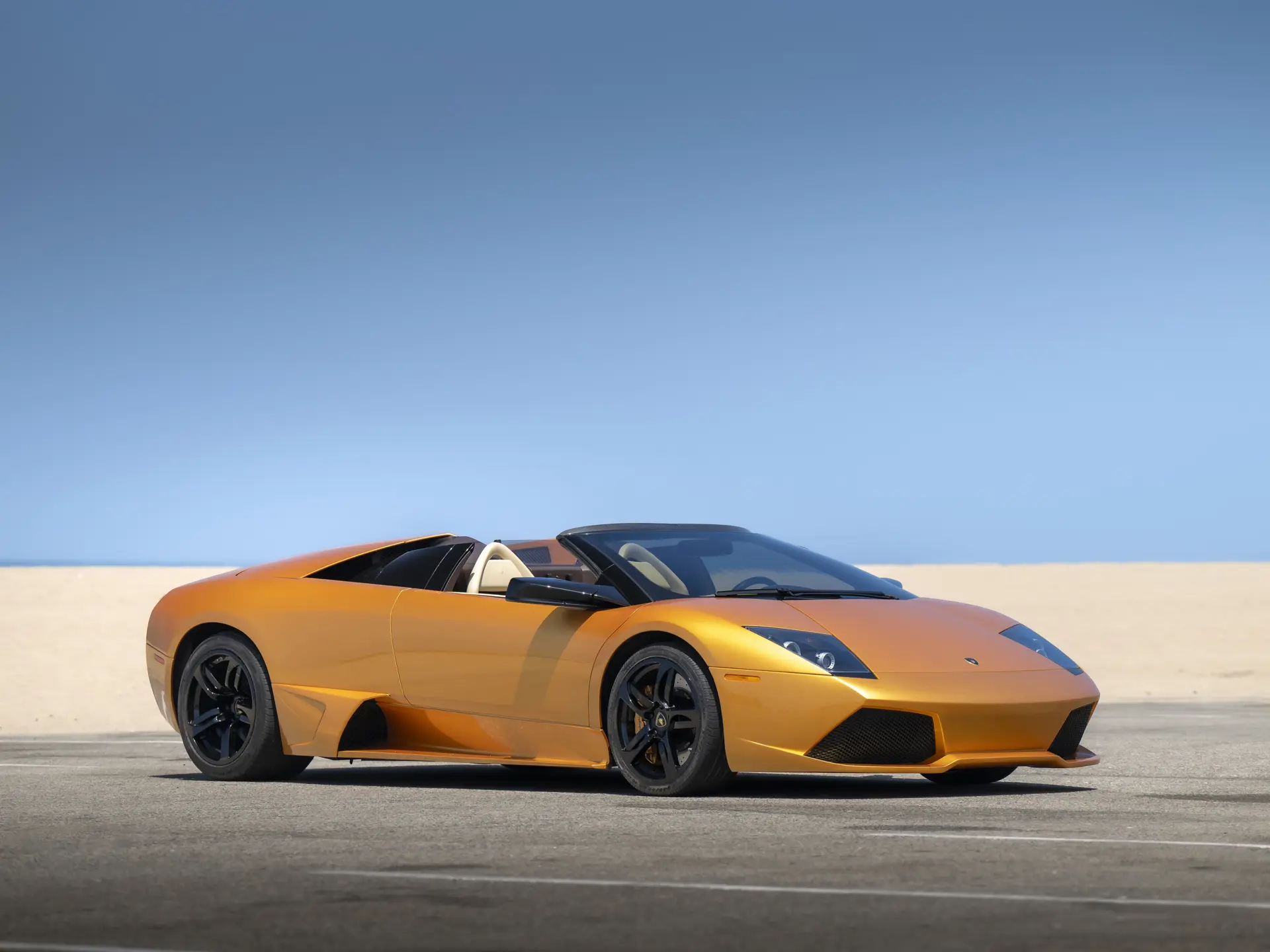
7. Lamborghini Murciélago
The Lamborghini Murciélago represented a careful evolution of the brand’s signature style and performance philosophy. As the successor to the Diablo, it preserved the aggressive aesthetic, V12 heart, and theatrical presence that Lamborghini had become known for, while integrating modern engineering improvements.
Its wide stance, sharp nose, and dramatic scissor doors created an instantly recognizable silhouette. The car’s design balanced function and flair, with extensive attention to aerodynamics, cooling, and mechanical packaging, ensuring that the Murciélago performed as impressively as it looked.
Under the hood, the Murciélago featured a naturally aspirated 6.2-liter V12 engine, producing over 580 horsepower in early variants and even more in later LP640 models. The engine’s roar and performance were visceral, rewarding both cautious drivers and those seeking maximum adrenaline.
Lamborghini’s signature all-wheel drive system improved traction and stability without dulling the car’s wild character, making high-speed driving more accessible. The Murciélago’s acceleration, handling, and braking balance reflected careful refinement, blending unbridled power with real-world usability.
Inside, Lamborghini balanced dramatic style with greater attention to ergonomics than previous models. The cockpit was wide and accommodating, with modern controls and driver-focused instrumentation that improved usability without sacrificing exotic appeal.
Materials were premium, with leather, Alcantara, and carbon fiber combining to create a cabin that felt luxurious yet clearly performance-oriented. The driving experience was immersive, with every control and interface designed to communicate mechanical precision and responsiveness.
The Murciélago’s lasting influence lies in its ability to carry Lamborghini’s flamboyant identity into a modern era while addressing some of the handling and usability shortcomings of earlier V12 models. It solidified the company’s reputation for theatrical, high-performance supercars that could be driven on public roads without compromising excitement.
The Murciélago bridged the gap between Lamborghini’s heritage and its future, inspiring subsequent models like the Aventador and cementing its status as a landmark in Italian automotive history.
6. Ferrari F40
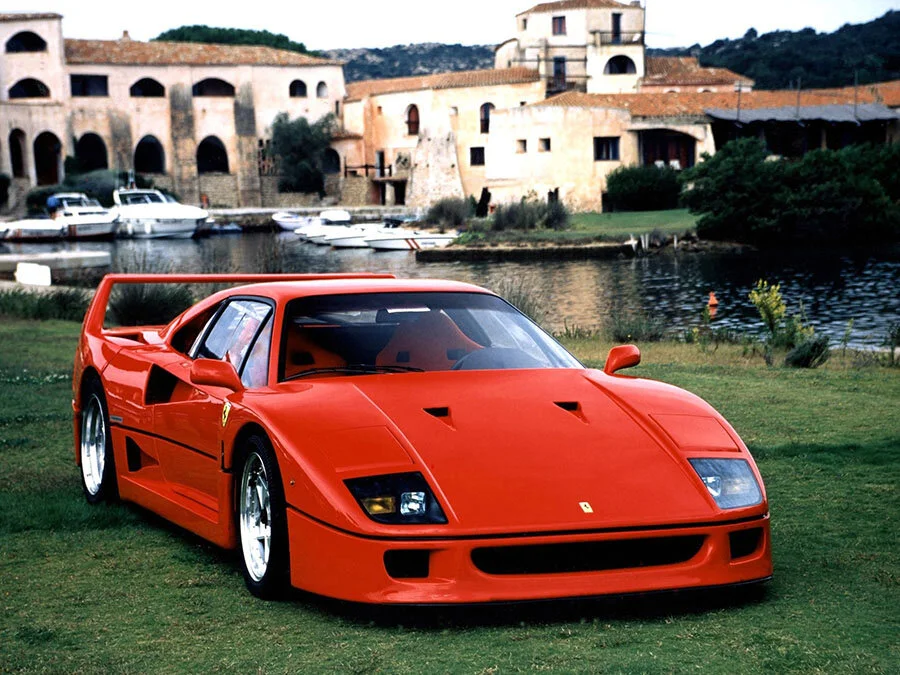
The Ferrari F40 is one of the most iconic supercars ever created, a vehicle that defined an era and remains a benchmark for driving intensity. Commissioned to celebrate Ferrari’s 40th anniversary, it was conceived during a time when turbocharged competition and emerging electronic aids were reshaping performance expectations.
Ferrari deliberately stripped the F40 of luxuries to focus on raw driving experience. Its lightweight body, composed largely of carbon fiber and Kevlar, reduced weight dramatically while ensuring structural rigidity. Every curve, vent, and scoop served a functional purpose, creating a car that looked aggressive and performed even more aggressively.
Power came from a twin turbocharged 2.9-liter V8 engine, producing 478 horsepower. Acceleration was explosive, with the F40 reaching 60 miles per hour in under four seconds, yet the experience remained demanding.
Turbo lag, sharp throttle response, and minimal driver aids meant that every action had consequences, rewarding precision and punishing error.
The connection between man and machine was direct, with steering, brakes, and gearshift communicating feedback instantly. Driving the F40 was a sensory and psychological challenge, offering a combination of fear and thrill rarely replicated in later supercars.
The interior of the F40 was deliberately spartan, emphasizing function over comfort. Exposed carbon panels, simple seating, and minimal instrumentation created a racing-inspired environment that reminded the driver of the car’s purpose.
Air conditioning, sound insulation, and luxury trim were largely absent, reflecting Ferrari’s philosophy that performance should never be compromised by convenience. This uncompromising approach strengthened the F40’s reputation as a pure and authentic driving machine.
The F40’s influence extends beyond performance. It captured the imagination of enthusiasts around the world, representing a time when supercars were defined by mechanical honesty and human skill.
Its combination of extreme power, minimal weight, and unfiltered driving experience inspired generations of engineers and designers. Even decades after its introduction, the F40 is revered not just as a supercar, but as a symbol of Ferrari’s dedication to intensity, passion, and authenticity.
5. Ferrari Enzo
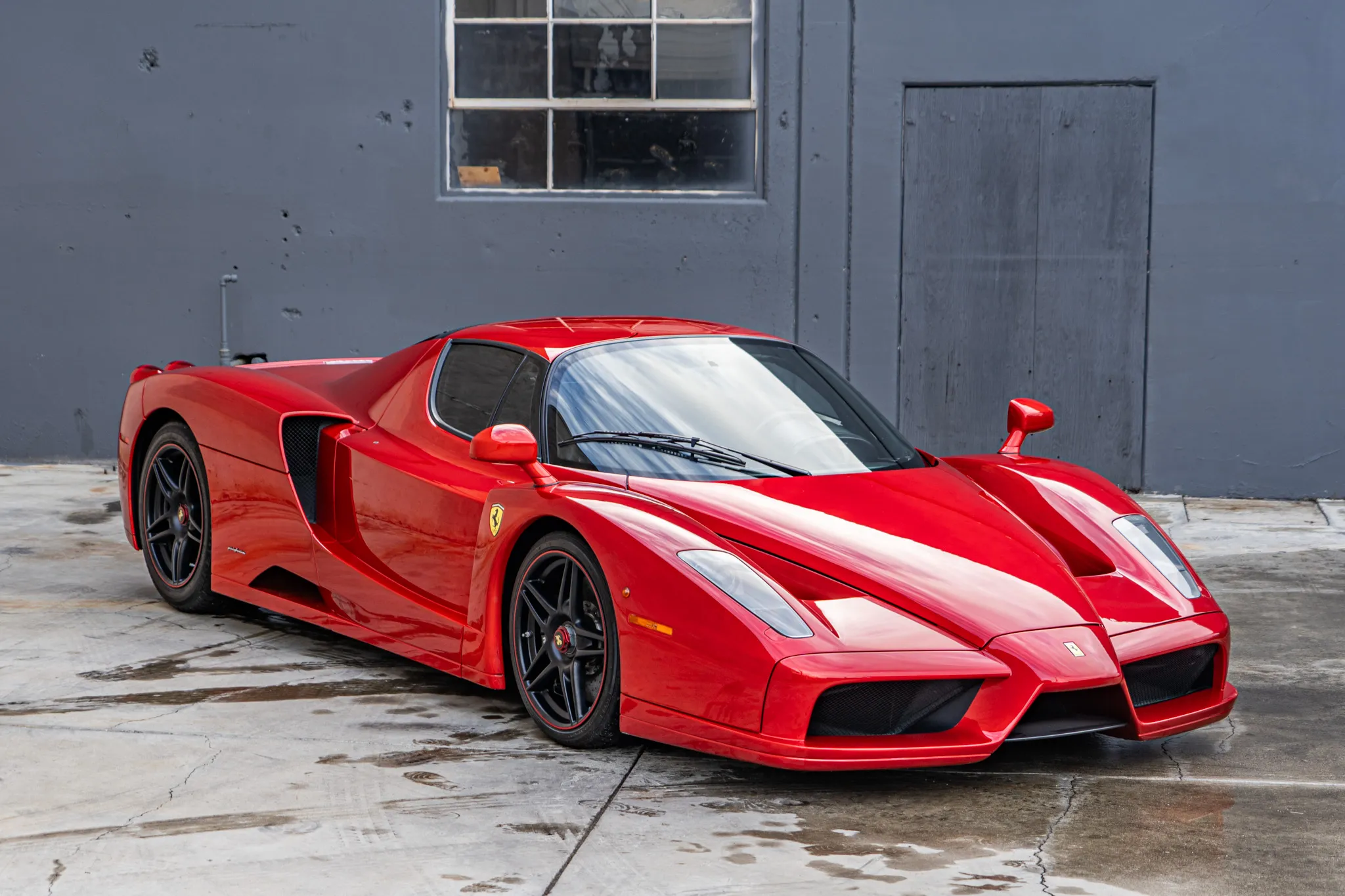
The Ferrari Enzo was a bold statement from Ferrari, representing the company’s philosophy of bringing Formula One technology to the road without compromise. Introduced in 2002, the Enzo was built to showcase what was possible when racing expertise met road-legal performance requirements.
Its carbon fiber chassis, active aerodynamics, and semi-automatic F1-style gearbox were cutting-edge at the time, providing drivers with unprecedented control and responsiveness.
Every design element, from the sharply sculpted nose to the aerodynamic underbody, was created to maximize airflow, reduce drag, and optimize downforce, resulting in a car that could handle exceptionally high speeds with confidence and precision.
At the heart of the Enzo was a naturally aspirated 6.0-liter V12 engine, producing over 650 horsepower and capable of revving to more than 8,000 rpm. The engine delivered power in a linear, predictable manner, but with a ferocity that demanded respect.
The sound of the V12 was intoxicating, providing an auditory experience that matched its mechanical excellence. The Enzo’s suspension and chassis were designed to handle extreme forces at high speed, allowing the driver to feel intimately connected to the road while maintaining stability. This combination of power and precision made the Enzo a benchmark in the supercar world.
Inside, the Enzo reflected Ferrari’s focus on driver engagement over luxury. The cabin was minimalist yet functional, with exposed carbon fiber, a racing-inspired steering wheel, and ergonomically placed controls that emphasized performance over comfort.
Instrumentation was clear and centered on delivering information critical to driving dynamics, such as engine revs, speed, and gear selection. The seating position and pedal placement further reinforced the connection between driver and machine, allowing for confident handling even at the limits of performance.
The Enzo’s influence on the automotive world was profound. It established new standards for supercar performance and technology integration, inspiring both Ferrari’s subsequent models and competitors’ vehicles.
Its combination of F1-inspired systems, unfiltered driving feedback, and pure mechanical prowess made it a defining car of its era. Collectors and enthusiasts continue to revere the Enzo not just for its speed and engineering, but for the emotional intensity and thrill it delivers behind the wheel.
4. Lamborghini Aventador
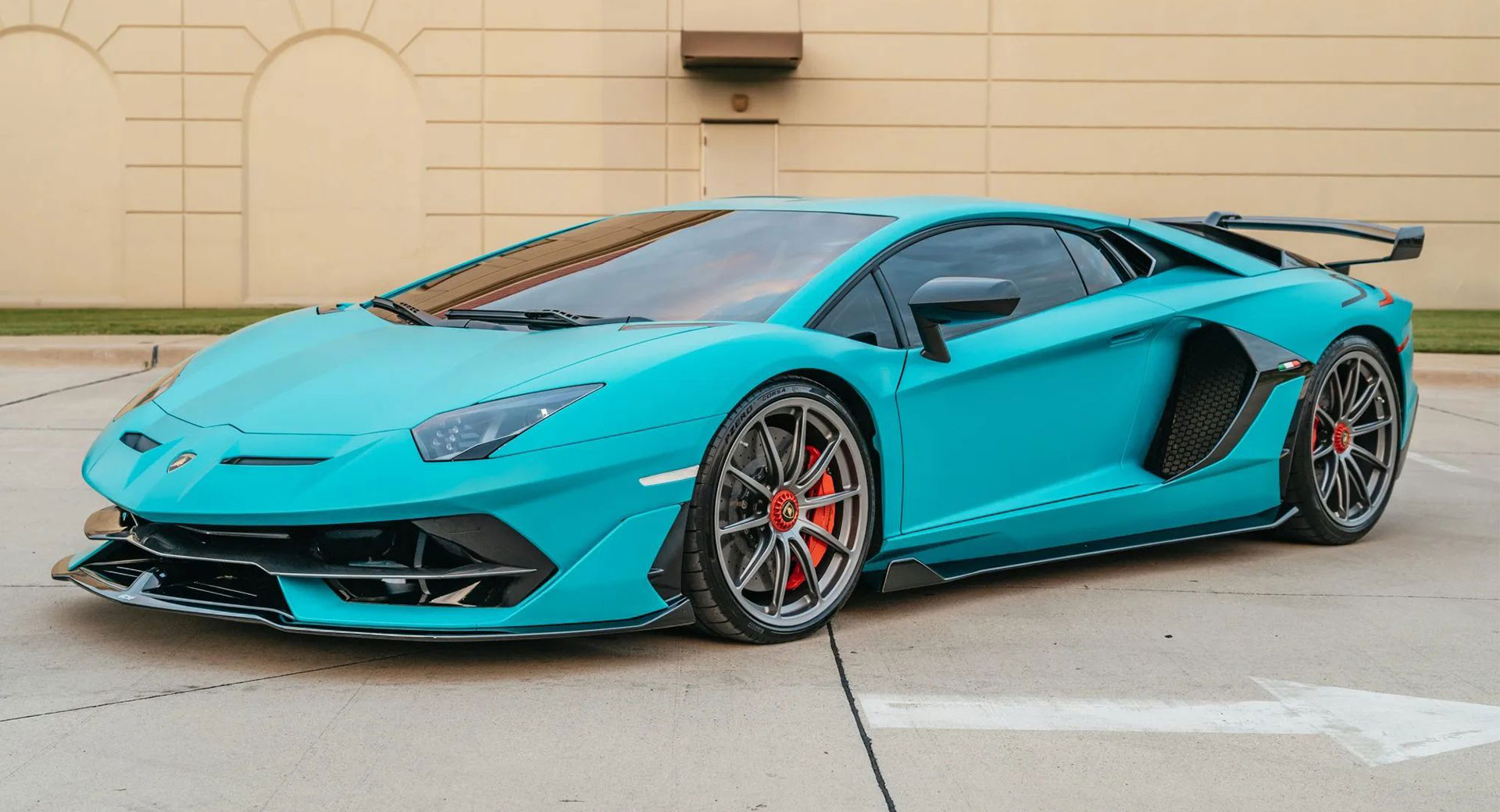
The Lamborghini Aventador marked a new chapter in the evolution of the brand, combining extreme engineering innovation with the uncompromising visual drama Lamborghini is known for.
Introduced in 2011, the Aventador featured a full carbon fiber monocoque, a first for a Lamborghini V12, providing exceptional rigidity and a significant weight reduction compared to previous models.
This lightweight construction dramatically improved handling, cornering stability, and acceleration, allowing the Aventador to exploit its powerful V12 engine fully.
Every line of the car, from its sharp front fascia to the aggressive rear diffuser, was designed to reflect both aerodynamic efficiency and visual aggression, creating a machine that looked fast even when standing still.
Under the hood, the Aventador housed a naturally aspirated 6.5-liter V12 producing over 700 horsepower, paired with a seven-speed ISR transmission. The engine’s sound was raw and exhilarating, a signature of Lamborghini’s V12 lineage, providing instant auditory feedback with every throttle input.
Acceleration was brutal, with the Aventador capable of sprinting from 0 to 60 miles per hour in under three seconds, yet it retained a sense of stability that made high-speed driving both thrilling and manageable.
Advanced suspension geometry and all-wheel drive ensured that the car delivered power efficiently while remaining responsive through corners and at high speeds.
The Aventador’s interior combined cutting-edge technology with Lamborghini’s iconic styling cues. The driver-focused cockpit included digital displays, premium materials, and ergonomic controls, making it possible to tame a car of this performance while remaining immersed in its drama.
Alcantara, leather, and carbon fiber were used extensively, blending luxury with race-inspired aesthetics. Despite its power and size, the Aventador was surprisingly usable on normal roads, allowing drivers to experience extreme performance without compromising daily drivability.
Culturally, the Aventador became a symbol of modern Lamborghini identity. Its striking appearance, ferocious performance, and technological advancements set new benchmarks for the brand and the supercar market.
The Aventador not only continued Lamborghini’s tradition of aggressive V12 supercars but also influenced the design language of future models. Its blend of engineering prowess and theatrical design made it a car that defined a generation, appealing to enthusiasts seeking both performance and presence.
3. Pagani Huayra
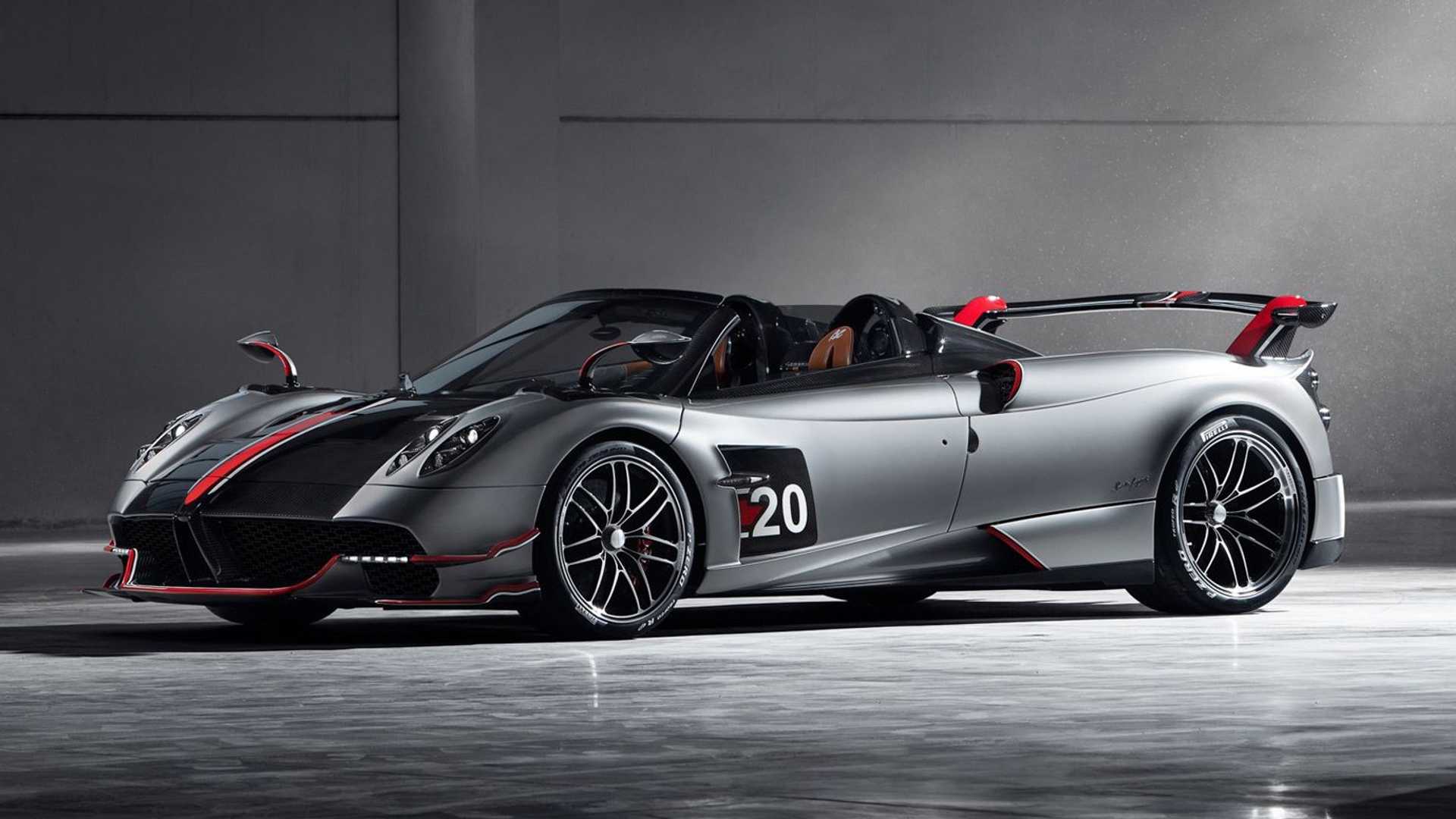
The Pagani Huayra took the principles established by the Zonda and evolved them into a more technologically advanced and refined supercar. Introduced in 2011, the Huayra emphasized precision engineering, luxury craftsmanship, and extreme performance.
The car’s carbon-titanium monocoque made it exceptionally rigid and light, enhancing both safety and handling characteristics.
Every aerodynamic detail, including active flaps on the front and rear, was designed to adapt in real time, improving downforce and stability while reducing drag. The Huayra’s design showcased Horacio Pagani’s vision of blending art and engineering, with flowing lines and functional aerodynamics working in harmony.
Power came from a Mercedes-AMG twin-turbocharged V12, producing over 700 horsepower. Unlike the naturally aspirated engines of previous Pagani models, the turbocharged unit delivered immense torque throughout the rev range, making acceleration feel immediate and effortless.
Despite its raw performance, the Huayra maintained composure and balance, with steering and chassis feedback providing the driver with an unparalleled sense of connection. Every motion, whether a tight corner or high-speed straight-line run, was translated through the car’s mechanical systems to create a complete sensory experience.
The interior of the Huayra represented a fusion of luxury and technology. Unlike many supercars that prioritize minimalism, Pagani embraced intricate detailing, including hand-stitched leather, polished metals, and custom instruments. The cabin felt bespoke, almost as if it were a personal creation for the owner.
Yet, despite the emphasis on craftsmanship, ergonomics and driver engagement remained paramount. Controls were intuitive, the seating position was ideal for spirited driving, and the layout emphasized the relationship between driver and machine.
The Huayra’s significance extends beyond performance and design. It demonstrated that small manufacturers could rival large brands in both technology and emotional appeal.
The car’s combination of extreme power, advanced aerodynamics, and artistic execution positioned Pagani at the forefront of automotive innovation. The Huayra is not only a supercar but a statement about what is possible when engineering, art, and obsession converge into a single vehicle.
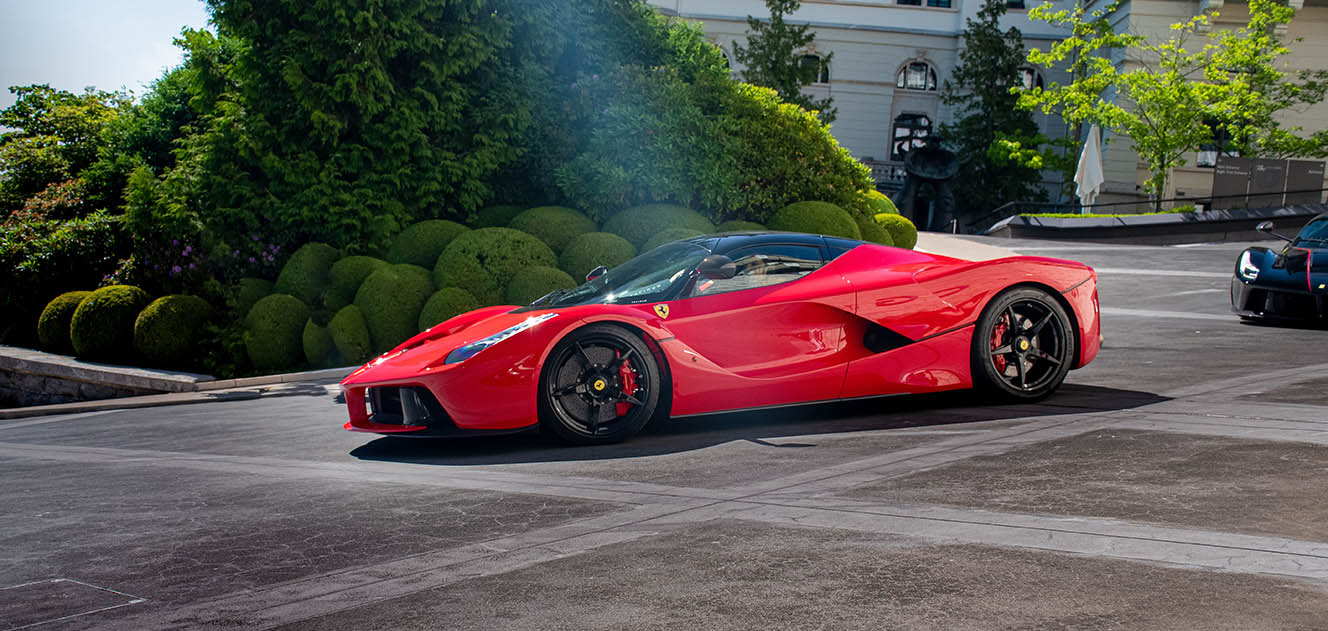
2. Ferrari LaFerrari
The Ferrari LaFerrari represented a groundbreaking shift in supercar technology by integrating hybrid systems into Ferrari’s flagship performance platform. Introduced in 2013, the LaFerrari used a naturally aspirated 6.3-liter V12 paired with an electric motor for a combined output exceeding 950 horsepower.
Unlike hybrid cars focused on efficiency, the system in LaFerrari enhanced acceleration, torque delivery, and responsiveness. This allowed for instant power at low speeds while maintaining the character and sound of a traditional Ferrari. It was a perfect blend of modern technology and classic Ferrari emotion.
The interior combined advanced technology with Ferrari’s commitment to craftsmanship. Digital displays, racing-style steering wheel controls, and carbon fiber trim created a high-tech cockpit, yet leather, Alcantara, and hand-finished elements ensured luxury and tactile satisfaction.
Ergonomics were carefully considered to allow maximum driver concentration while maintaining comfort during longer drives. The result was a car that merged cutting-edge systems with an emotional, engaging environment.
LaFerrari’s cultural and engineering significance cannot be overstated. It proved that hybrid technology could enhance supercar performance without diluting the emotional experience.
The car set a precedent for future hypercars, combining technology, power, and style into a cohesive package.
Limited production, unparalleled performance, and extreme desirability cemented LaFerrari as a modern icon and one of Italy’s greatest contributions to automotive excellence.
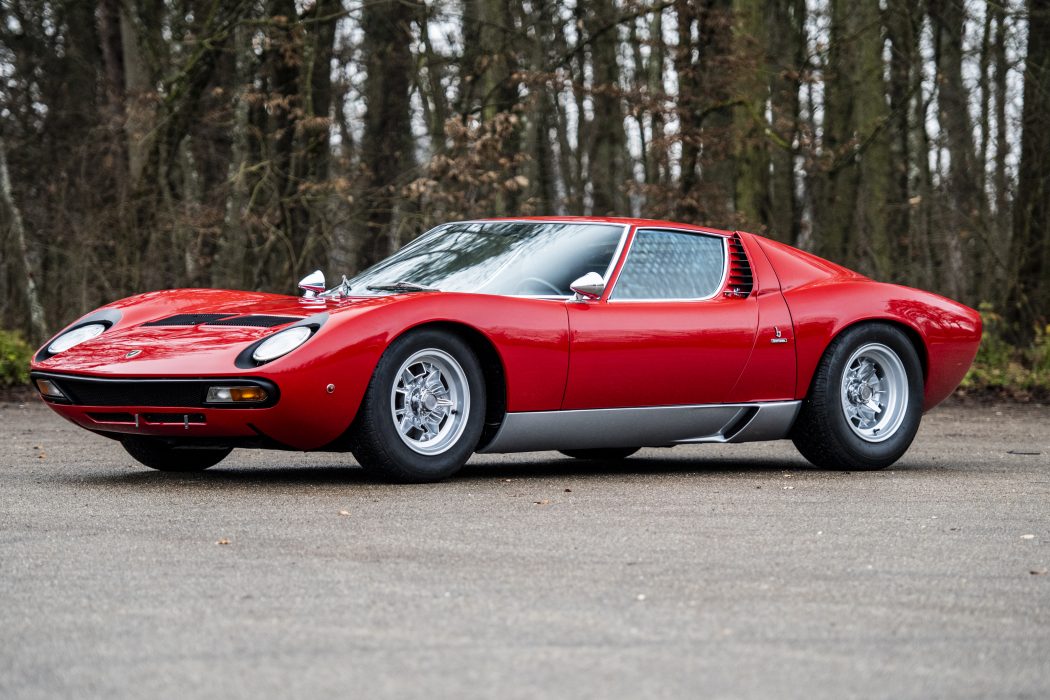
1. Lamborghini Miura
The Lamborghini Miura is often regarded as the birth of the modern supercar and remains one of the most influential vehicles ever produced. Launched in 1966, it introduced the concept of a mid-engine layout for high-performance road cars, an arrangement previously reserved for race cars.
This configuration dramatically improved weight distribution and handling, creating a driving experience that was unprecedented for the era. Its low-slung proportions, flowing curves, and aggressive stance immediately captured attention and set a design template for generations of supercars to come.
The interior of the Miura combined elegance with driver-focused ergonomics. Minimalist controls, high-quality materials, and a snug seating position reflected the car’s racing inspiration, yet it retained comfort suitable for road use.
The cabin was intimate and engaging, reinforcing the Miura’s identity as a car for passionate drivers rather than casual passengers. Every detail, from the dashboard layout to the pedal spacing, emphasized harmony between human and machine.
Culturally, the Miura transformed the automotive industry. It set the standard for supercars, inspiring designers and engineers worldwide. Its combination of performance, style, and innovation defined what a supercar should be, and its influence can be seen in countless vehicles that followed.
The Miura remains a symbol of Italian creativity, daring, and engineering excellence, earning its place as the pinnacle of Italy’s automotive achievements.
