
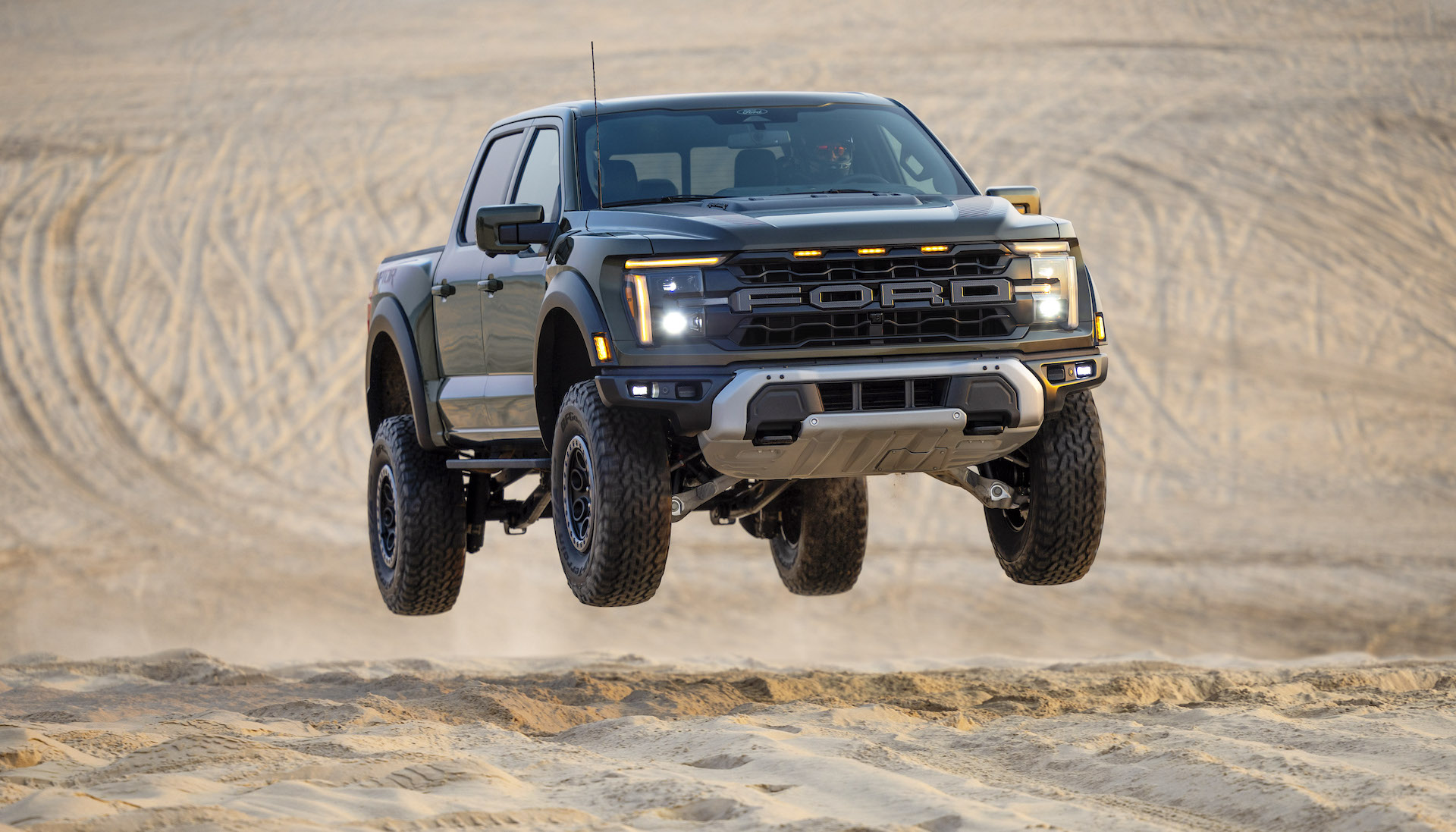
American garages have a serious size problem. Most homes built before the 1990s were designed with smaller vehicles in mind. The average single-car garage in the United States measures around 12 feet wide and 22 feet long. That might sound like enough space, but modern vehicles have grown dramatically over the decades.
Today’s trucks and SUVs are behemoths compared to their predecessors. A brand-new full-size pickup truck can stretch over 20 feet in length and nearly 7 feet in width. Fitting one of these giants into a standard garage is nearly impossible. You end up sacrificing wall space, storage, and your own sanity.
On the flip side, the automotive market still offers smart, compact cars that slide into tight garages with room to spare. These vehicles are practical, fuel-efficient, and perfectly sized for real American life. They don’t require a custom-built three-car garage just to park safely.
This guide breaks down six cars that are ideal for small American garages and six trucks that simply will not fit. Whether you’re shopping for a new vehicle or just curious about what works, this list will save you a headache. Smart parking starts with smart buying.
6 Cars for Small American Garages
These vehicles are designed with compact dimensions and practical proportions, making them ideal for tight garage spaces commonly found in older American homes and urban areas.
Their shorter length, narrower width, and tighter turning radius allow easy parking and maneuvering without constant adjustments. Despite their smaller footprint, they still offer comfortable interiors and everyday usability, making them perfect for drivers who need efficiency without sacrificing convenience.
1. Honda Civic (2024)
The Honda Civic has been America’s go-to compact car for decades. It earns that reputation every single year with smart engineering and sensible dimensions.
The 2024 Civic sedan measures just 184.0 inches in length. That’s roughly 15.3 feet, leaving several feet of breathing room in a standard 22-foot garage. You’ll have enough space to open the trunk and walk around comfortably.
Its width sits at 70.9 inches, which is under 6 feet. Most single-car garages are at least 10 to 12 feet wide, so the Civic parks easily without scraping side mirrors. You can even install wall shelving without worrying about clearance issues.
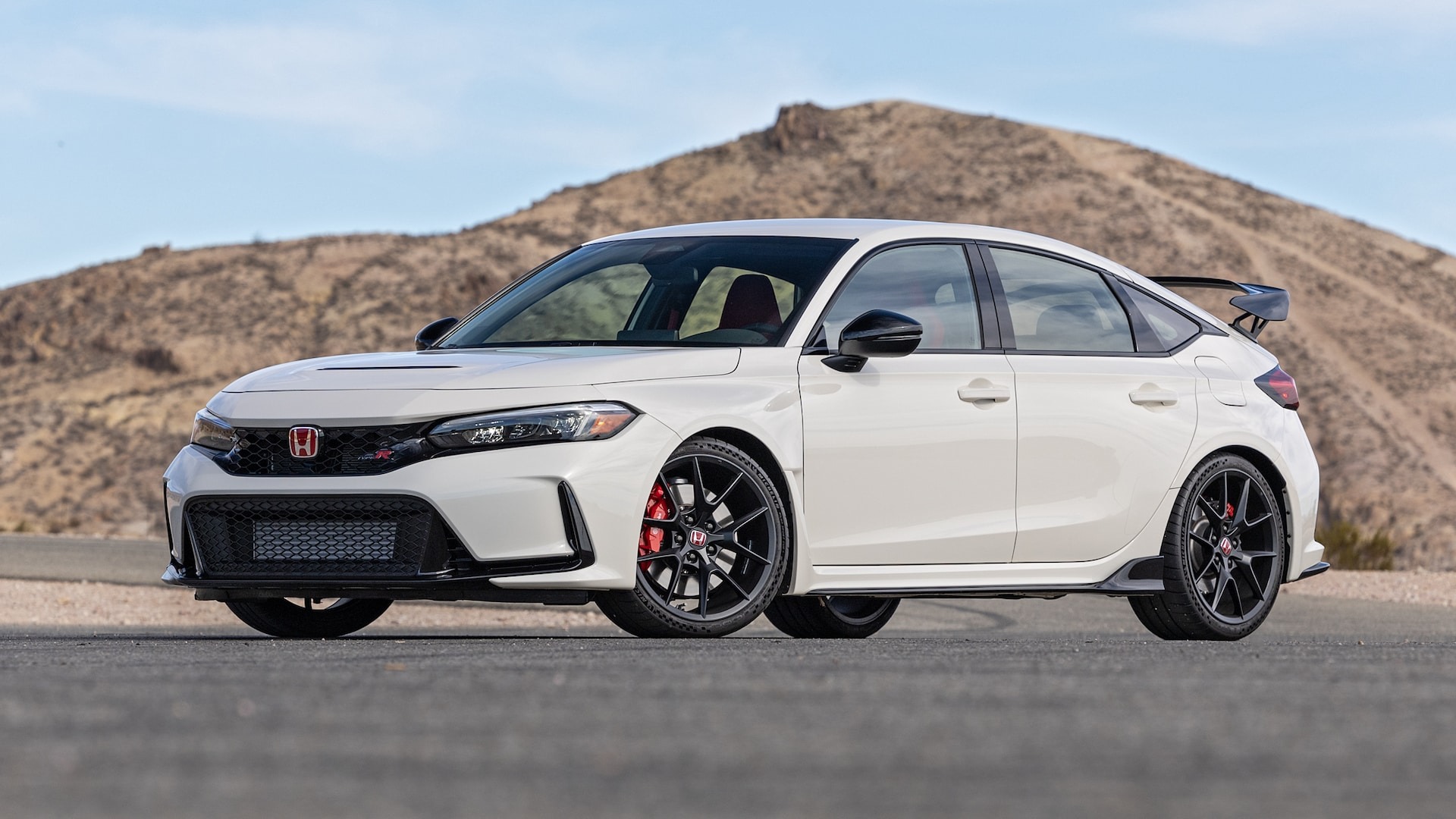
The Civic’s turning radius is impressively tight at 36.7 feet. Maneuvering into a narrow driveway or tight garage entry is smooth and stress-free. Parallel parking on city streets becomes far less intimidating with this car.
Inside, the Civic punches well above its compact class. It offers genuine rear-seat legroom that rivals some midsize sedans. You don’t sacrifice comfort just because you’re choosing a garage-friendly size.
Fuel economy is another strong argument for the Civic. It delivers up to 36 mpg on the highway in its base turbocharged form. For daily commuters and weekend drivers alike, those numbers matter enormously.
The Civic also comes in a hatchback variant for those who need extra cargo flexibility. The hatch adds just a few inches to the length but keeps the same narrow width. It still fits neatly in most compact garage spaces without issue.
Safety technology on the 2024 Civic is class-leading. Honda Sensing comes standard, including automatic emergency braking and lane-keeping assist. You get big-car safety features packed into a small-car footprint.
Reliability is perhaps the Civic’s greatest selling point. Honda consistently ranks among the top brands for long-term dependability. Owners routinely drive Civics past 200,000 miles with regular maintenance.
For anyone dealing with a tight garage, the Civic is the smartest starting point. It’s the benchmark against which all other compact cars are measured. Decades of refinement show in every detail of its design.
2. Toyota Corolla (2024)
The Toyota Corolla is one of the best-selling cars in human history. Its continued success is rooted in a simple formula: reliable, efficient, and perfectly sized.
The 2024 Corolla sedan comes in at 182.5 inches long. That translates to about 15.2 feet, making it one of the shorter sedans in the mainstream market. A standard garage swallows it comfortably with space to walk around all four sides.
Width measures 70.1 inches, keeping it slim even by compact car standards. You can park the Corolla in a tight stall and still open the doors without hitting a wall. Side mirrors fold in easily for extra clearance when needed.
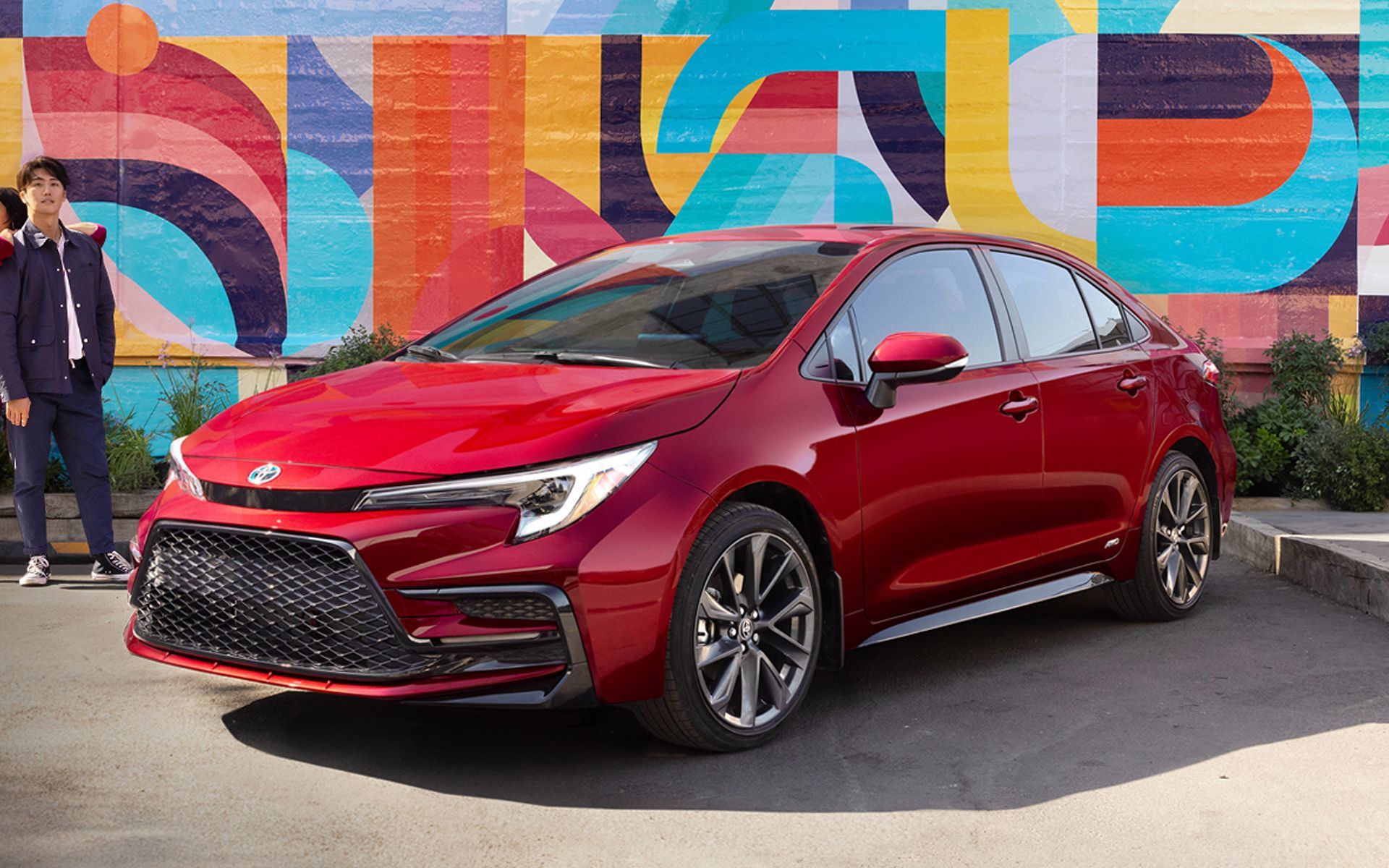
Toyota’s build quality is legendary in the automotive world. The Corolla rarely needs anything beyond routine oil changes and tire rotations. Owners frequently cite it as the most worry-free car they’ve ever owned.
The 2024 Corolla gets an EPA-estimated 31 mpg in the city and 40 mpg on the highway. For a non-hybrid model, those numbers are exceptional. Fuel savings add up quickly over months and years of regular driving.
A hybrid version is also available for eco-conscious buyers. The Corolla Hybrid pushes fuel economy to an incredible 53 mpg in the city. It shares the same compact footprint as the standard model, so garage compatibility remains identical.
The interior is modern, clean, and more upscale than previous generations. Toyota has improved materials quality significantly over recent years. Even base trims feel thoughtfully designed and durable.
Toyota Safety Sense 3.0 comes standard on all 2024 Corolla trims. This includes pre-collision warning, automatic high beams, and lane departure alert. Safety is never a compromise, even at the entry-level price point.
The Corolla’s reputation for resale value is unmatched in the compact segment. It holds its value better than almost any non-luxury competitor. That makes it a smart financial decision beyond just its parking convenience.
Choosing the Corolla means choosing peace of mind. You get a car that fits your garage, your budget, and your lifestyle. It’s not glamorous, but it is genuinely excellent in every practical way.
3. Mazda3 (2024)
The Mazda3 proves that a small car doesn’t have to feel like a compromise. It delivers an upscale driving experience wrapped in garage-friendly dimensions.
The sedan version of the 2024 Mazda3 measures 183.5 inches in length. That puts it firmly in compact territory at just over 15 feet. Standard American garages handle this length with no trouble at all.
Its width of 70.7 inches is narrow enough to avoid door-ding anxiety. You can park it comfortably in tight spaces and still get in and out easily. The slim profile also helps in multi-vehicle garages where space is shared.
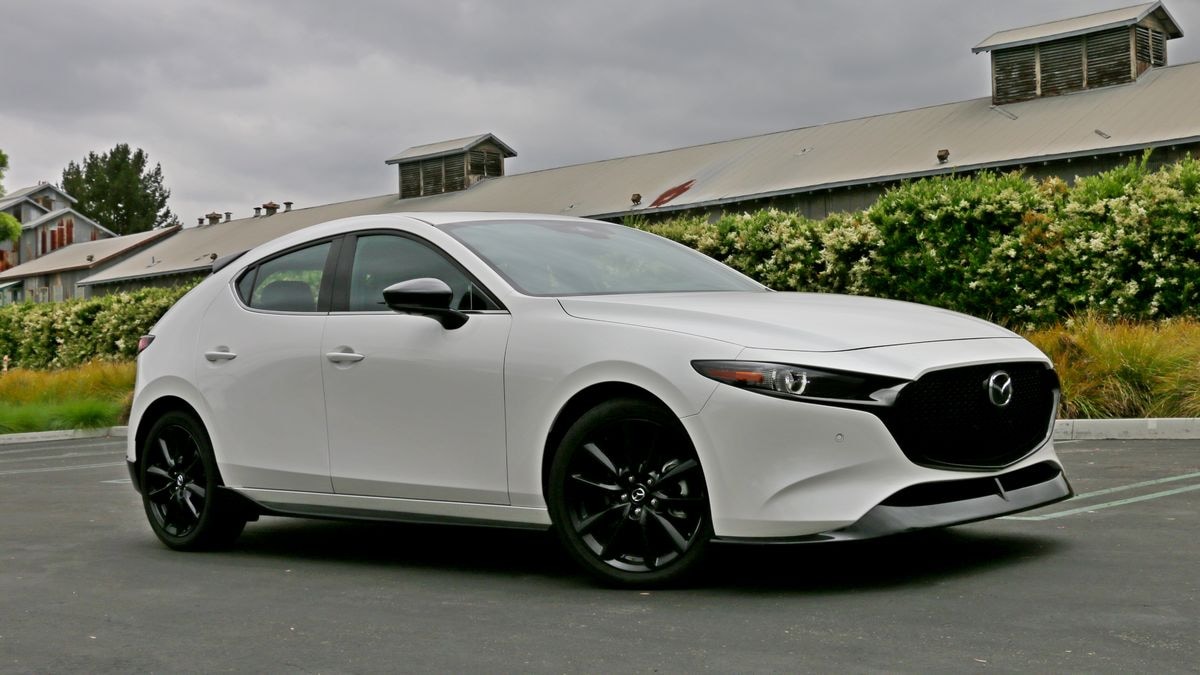
Mazda’s KODO design language makes the Mazda3 one of the best-looking cars in its class. The lines are sculpted and sophisticated without being flashy. Many owners report being stopped in parking lots by people admiring the design.
The interior quality rivals vehicles costing significantly more. Soft-touch materials, a refined infotainment layout, and excellent noise insulation set it apart. Sitting inside feels more like a luxury car than a compact economy vehicle.
Driving dynamics are where the Mazda3 truly separates itself. The steering is precise and communicative in a way most sedans simply aren’t. Mazda engineers treat the driving experience as seriously as any performance brand.
Available all-wheel drive is a major advantage in snowy or rainy climates. Most compact cars in this class are front-wheel drive only. The Mazda3’s AWD option gives it year-round capability without expanding its physical footprint.
Fuel economy sits at a respectable 26 mpg city and 35 mpg highway with the base engine. The turbocharged option adds power without dramatically hurting efficiency. It’s a well-balanced combination for real-world driving conditions.
Safety ratings from both NHTSA and IIHS are strong across the board. Standard driver assistance features include blind-spot monitoring and rear cross-traffic alert. The Mazda3 protects its occupants without requiring an expensive trim upgrade.
For drivers who want a refined, attractive car that still respects garage constraints, the Mazda3 is the answer. It’s the thinking person’s compact car. Every drive in it is a reminder that small doesn’t mean ordinary.
4. Hyundai Elantra (2024)
The Hyundai Elantra has transformed from a budget basic into a genuinely stylish compact. It now competes confidently against Honda and Toyota with bold design and smart packaging.
At 184.1 inches long, the Elantra is nearly identical in length to the Honda Civic. It fits inside a standard garage with several feet to spare. The proportions are long and low, which actually makes it look larger than it truly is.
The width of 71.9 inches is slightly broader than some competitors. However, it still clears most garage side walls comfortably. The added width contributes to a spacious interior that belies its compact exterior.
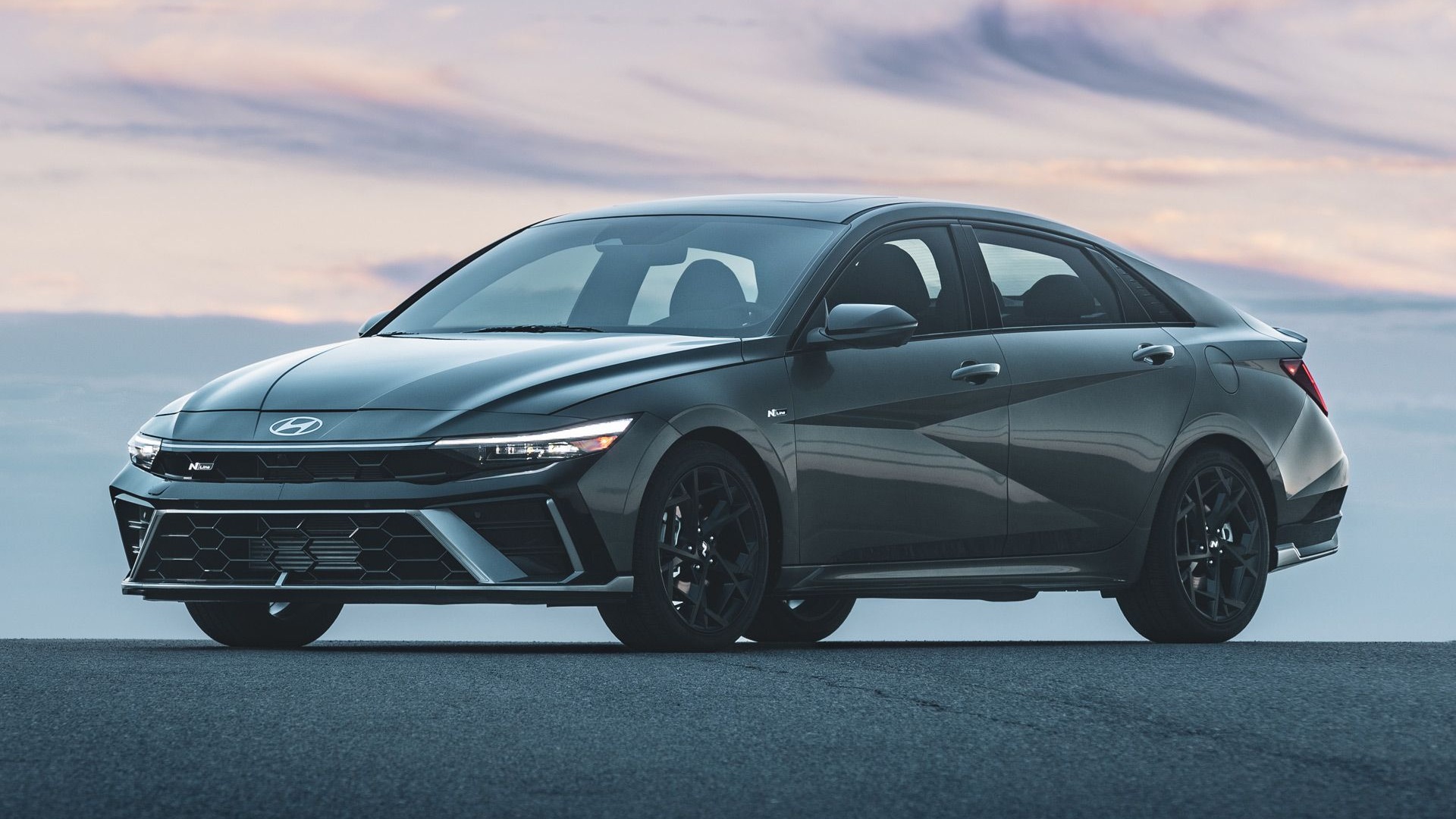
Hyundai’s exterior design has become one of the most talked-about in the mainstream segment. Parametric jewel-like surfaces and sharp angular lines give it a futuristic appearance. It stands out in a parking lot full of conservative-looking competitors.
The interior continues that bold design language with a curved digital display. A 10.25-inch infotainment screen and 10.25-inch digital cluster come together seamlessly. It looks like something from a much more expensive car brand.
Standard safety features are comprehensive on even base Elantra trims. Hyundai SmartSense includes forward collision avoidance assist and lane following assist. Buyers don’t need to spend extra to get genuinely useful driver aid technology.
Fuel economy is impressive at 33 mpg city and 43 mpg highway. The available hybrid version takes that even further with over 50 mpg combined. Few cars in any segment can touch those efficiency numbers.
The Elantra N Line and full N performance variants add sporty character for driving enthusiasts. Even these performance models stay within the same compact dimensional footprint. You get excitement without sacrificing your garage clearance.
Hyundai’s warranty coverage is among the best in the industry. The 10-year/100,000-mile powertrain warranty provides exceptional long-term peace of mind. That’s double what many competitors offer in this price range.
The Elantra is proof that value-oriented brands can deliver genuine sophistication. It fits beautifully in small garages while delivering features that impress every day. Smart shoppers are increasingly recognizing what this car offers.
Also Read: 5 Used Sedans With Robust Alternators vs 5 Prone to Battery Charging Faults
5. Mini Cooper (2024)
The Mini Cooper was literally engineered to solve the problem of limited urban space. It remains one of the most space-efficient cars ever created for the American market.
The 2024 Mini Cooper hardtop measures just 151.9 inches in length. That’s barely 12.6 feet, making it one of the shortest cars sold in the United States today. Even the smallest garages can accommodate a Mini without any difficulty.
Width comes in at 68.0 inches, narrower than nearly every mainstream car on this list. You can park a Mini in a single-car garage and still store bicycles alongside it. The space savings are genuinely remarkable compared to any other option here.
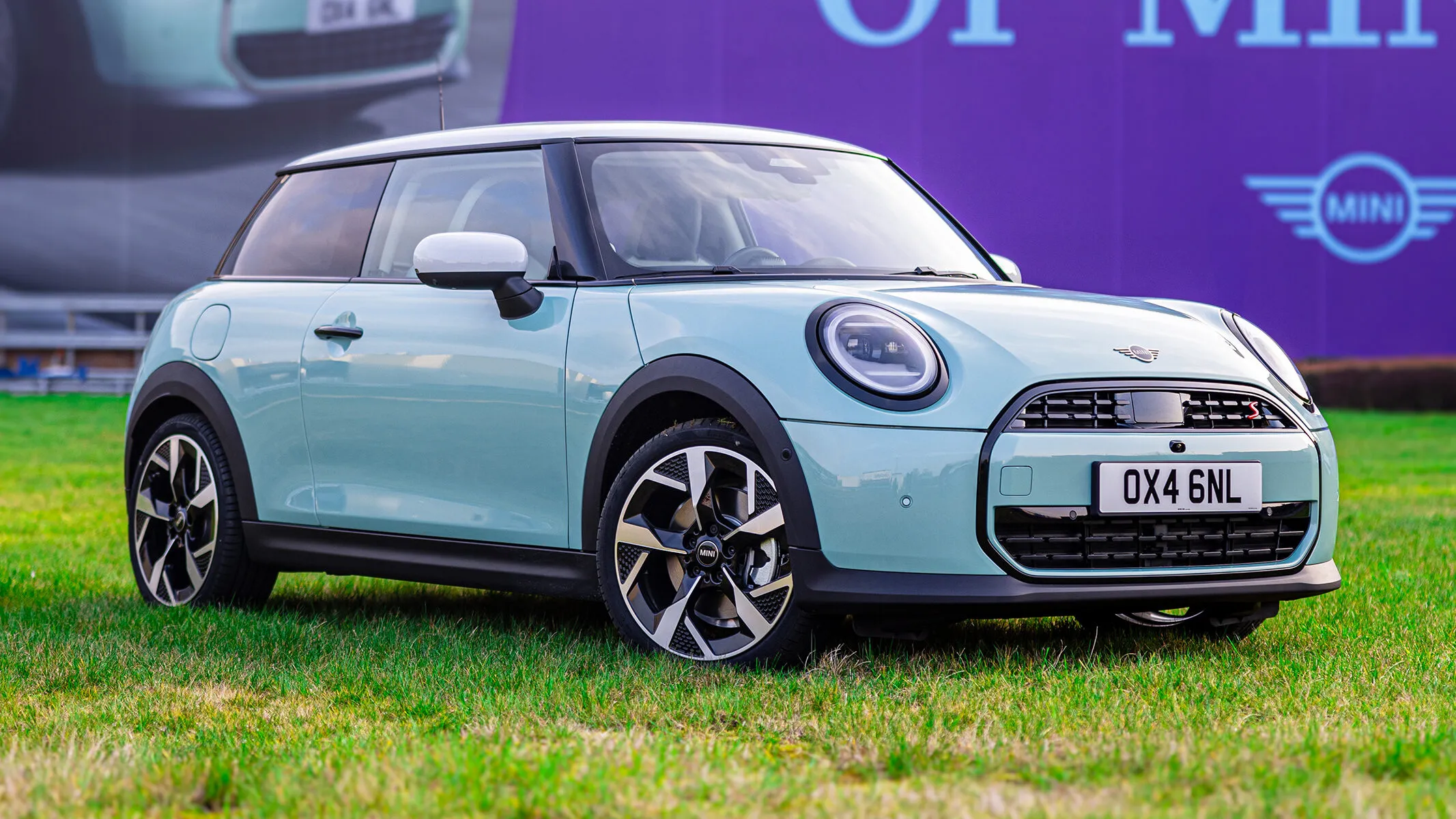
Mini’s signature design has remained iconic for over six decades. Round headlights, a raised roof graphic, and go-kart proportions are immediately recognizable anywhere. Few cars carry as much visual personality in such a small package.
The interior has been completely redesigned for 2024 with a circular OLED touchscreen. Physical buttons have been reduced in favor of the large central display. The cabin feels tech-forward while keeping the retro charm that Mini fans love.
Driving a Mini is an experience unlike any other compact car. The steering is sharp, the body control is excellent, and corners feel genuinely fun. Mini owners often describe it as the most enjoyable car they’ve ever driven.
The John Cooper Works trim takes performance to another level entirely. A turbocharged engine producing 231 horsepower comes in a package shorter than most crossovers. It’s a genuine performance car that fits comfortably in a small garage.
Fuel economy for the base Cooper sits at 28 mpg city and 36 mpg highway. An all-electric version, the Cooper SE, is also available for zero-emission driving. Both options are practical for everyday urban and suburban use.
The Mini community is famously enthusiastic and welcoming. Clubs, rally events, and online forums make ownership part of a larger lifestyle. Buying a Mini means joining something bigger than just a car purchase.
For garage-constrained Americans who refuse to give up personality, the Mini Cooper is the clear choice. No other car on this list delivers as much character per square inch. It solves the garage problem while making every drive feel special.
6. Subaru Impreza (2024)
The Subaru Impreza offers something almost no other compact car can match. It delivers standard all-wheel drive on every single trim level without exception.
The 2024 Impreza hatchback measures 180.9 inches in length, the shortest on this list among mainstream sedans. Under 15.1 feet total makes it very easy to fit in tight garage spaces. You’ll have comfortable clearance at both ends of a standard stall.
The width sits at 70.4 inches, keeping it well within typical garage door openings. Even older, narrower garage doors found in mid-century homes can accommodate the Impreza. It’s one of the most universally compatible cars for legacy American housing stock.
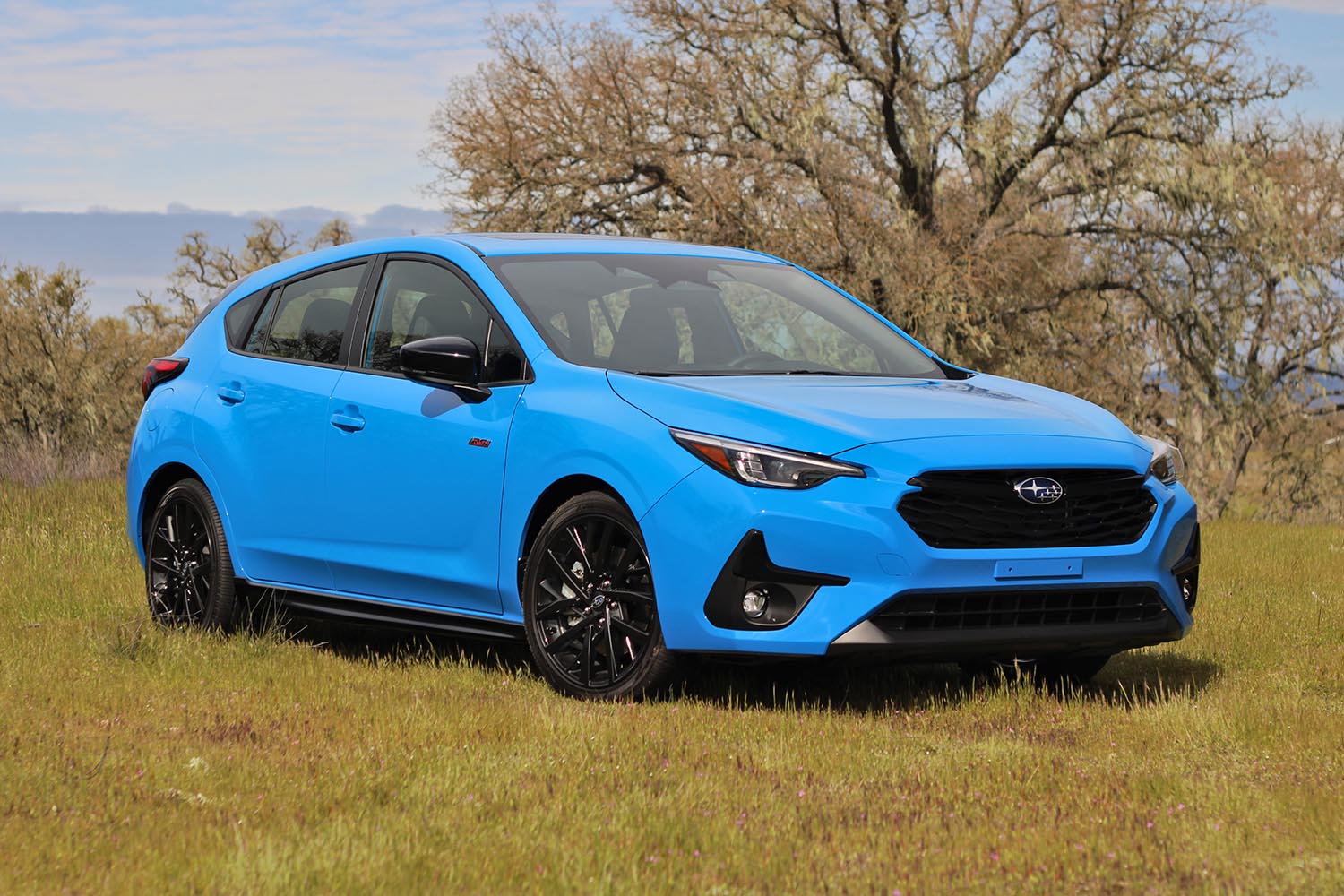
Subaru’s symmetrical all-wheel drive system is standard, not optional. This matters enormously for drivers in regions with heavy snow, rain, or unpaved roads. You never have to choose between garage-friendliness and all-weather capability.
The 2024 Impreza is available only as a five-door hatchback in the United States. This body style maximizes cargo flexibility without adding significant length. Folding rear seats create a flat load floor for larger items and weekend gear.
Subaru EyeSight driver assistance technology comes standard across the lineup. This includes adaptive cruise control, pre-collision braking, and lane centering function. Safety features that used to cost extra are now simply included.
Fuel economy reaches 28 mpg city and 36 mpg highway with the standard powertrain. That’s solid performance for a car with a full-time AWD system running constantly. Most AWD vehicles sacrifice more efficiency than the Impreza does.
The interior is functional rather than flashy, which suits many practical buyers perfectly. Everything is within easy reach and the controls are straightforward to operate. Subaru prioritizes usability over showroom wow-factor, and owners appreciate it.
Subaru has built a strong reputation for long-term reliability and owner satisfaction. The brand consistently ranks highly in loyalty surveys year after year. Once people drive Subaru, they tend to stay with the brand for life.
The Impreza is the pragmatist’s choice for a small garage. It handles all seasons, carries real cargo, and parks with ease. For buyers who want capability without bulk, it’s one of the smartest decisions in the compact segment.
6 Trucks That Won’t Fit
These oversized trucks are built with massive dimensions, wide bodies, and extended lengths that can easily exceed the limits of standard residential garages.
Their large turning radius and tall stance make parking in tight spaces difficult, often requiring outdoor parking or specialized storage. While they offer impressive capability and presence, their sheer size can become a daily inconvenience in neighborhoods with limited space or smaller garage designs.
1. Ram 1500 TRX (2024)
The Ram 1500 TRX is not just a big truck. It is one of the largest, most aggressive production pickup trucks ever built for public roads. The TRX stretches to a staggering 232.9 inches in total length. That’s over 19.4 feet, nearly the full length of a standard single-car garage all by itself. There is simply no version of this truck that works in a normal residential garage.
Width tells an even more alarming story. The TRX measures 88.0 inches wide including its factory fender flares. That’s 7.3 feet across, which exceeds the opening width of most standard residential garage doors. You’d scrape both sides simultaneously trying to enter.
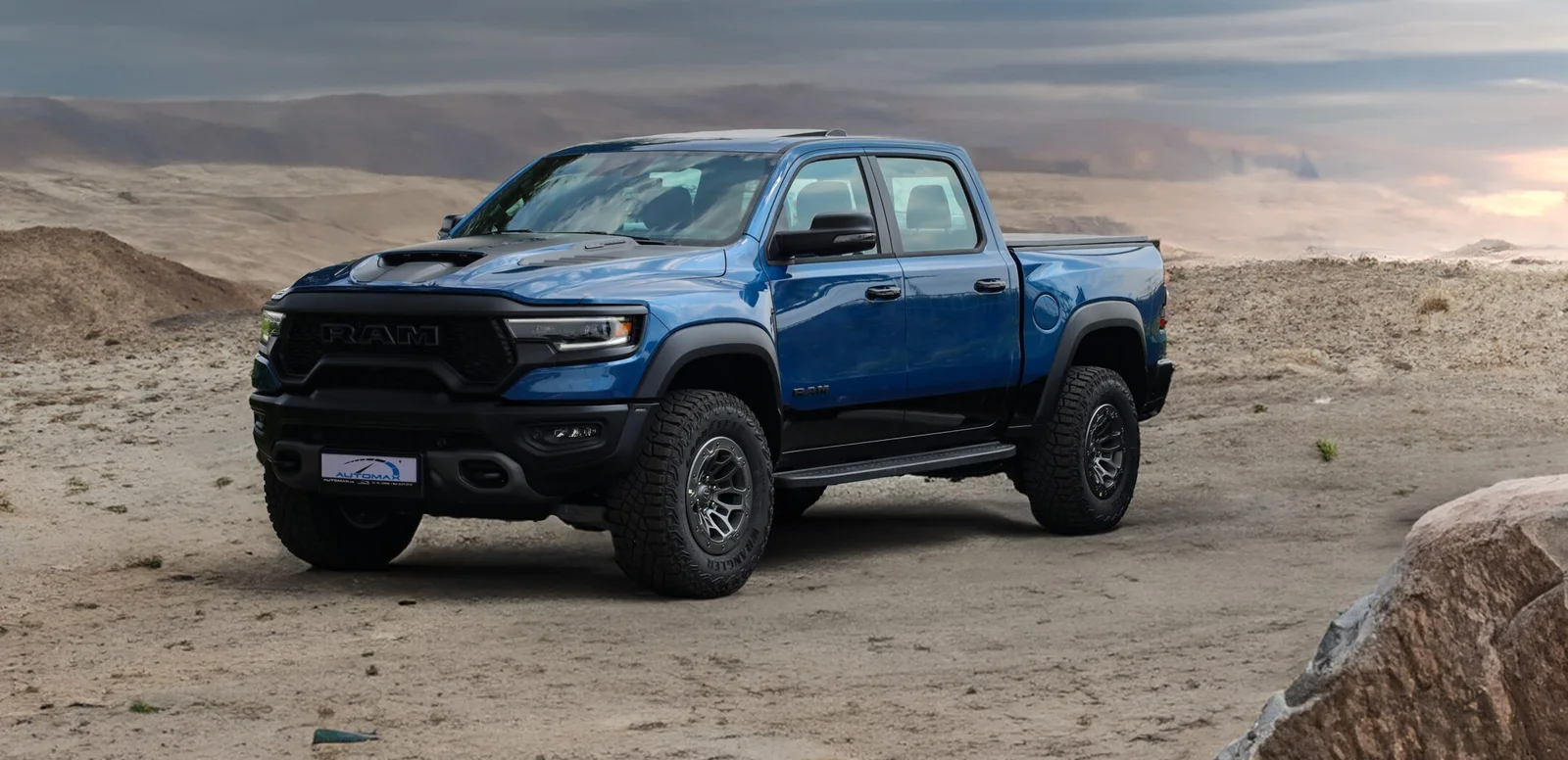
Under the hood sits a supercharged 6.2-liter Hemi V8 producing 702 horsepower. This engine was borrowed directly from the Dodge Hellcat family of performance vehicles. The TRX is essentially a muscle car that happens to ride on enormous off-road tires.
Ground clearance of 11.8 inches means the TRX towers over ordinary passenger vehicles. Add 35-inch all-terrain tires and the height becomes another garage obstacle. Many standard garage doors simply aren’t tall enough to clear this truck.
The suspension travel is designed for high-speed desert racing, not suburban driveways. Fox Racing shocks with 13 inches of suspension travel come standard from the factory. It bounces and flexes in ways that make tight maneuvering genuinely unpredictable.
Fuel economy is, predictably, not the TRX’s strongest attribute. It achieves approximately 10 mpg city and 14 mpg highway under normal driving conditions. Aggressive driving drops those numbers even further into single-digit territory.
Starting price exceeds $80,000 before adding any options or packages. Fully loaded TRX models can approach $100,000 without difficulty. It’s a significant financial commitment for a vehicle that also can’t use your garage.
The TRX has developed a devoted following among truck enthusiasts and off-road community members. Its performance credentials are genuinely impressive on trails and open terrain. But for everyday suburban storage, it presents insurmountable dimensional challenges.
If your garage is standard-sized, the TRX will never be your garage-parked vehicle. It will live outside, exposed to the elements regardless of what you paid for it. That’s a significant lifestyle trade-off that every potential buyer must honestly consider.
2. Ford F-250 Super Duty Crew Cab Long Bed
The Ford F-250 Super Duty in Crew Cab Long Bed configuration is the definition of maximum truck. Every dimension of this vehicle pushes far beyond what any residential garage can handle.
Total length reaches an extraordinary 250.5 inches in long-bed crew cab form. That’s over 20.8 feet, which actually exceeds the interior length of most standard American garages. The truck is longer than the room itself.
Width measures 80.0 inches at the mirrors folded position, and significantly more with mirrors extended. Getting this truck through a standard 8-foot garage door opening is a genuinely tight squeeze. Many people simply cannot do it without mirror damage.
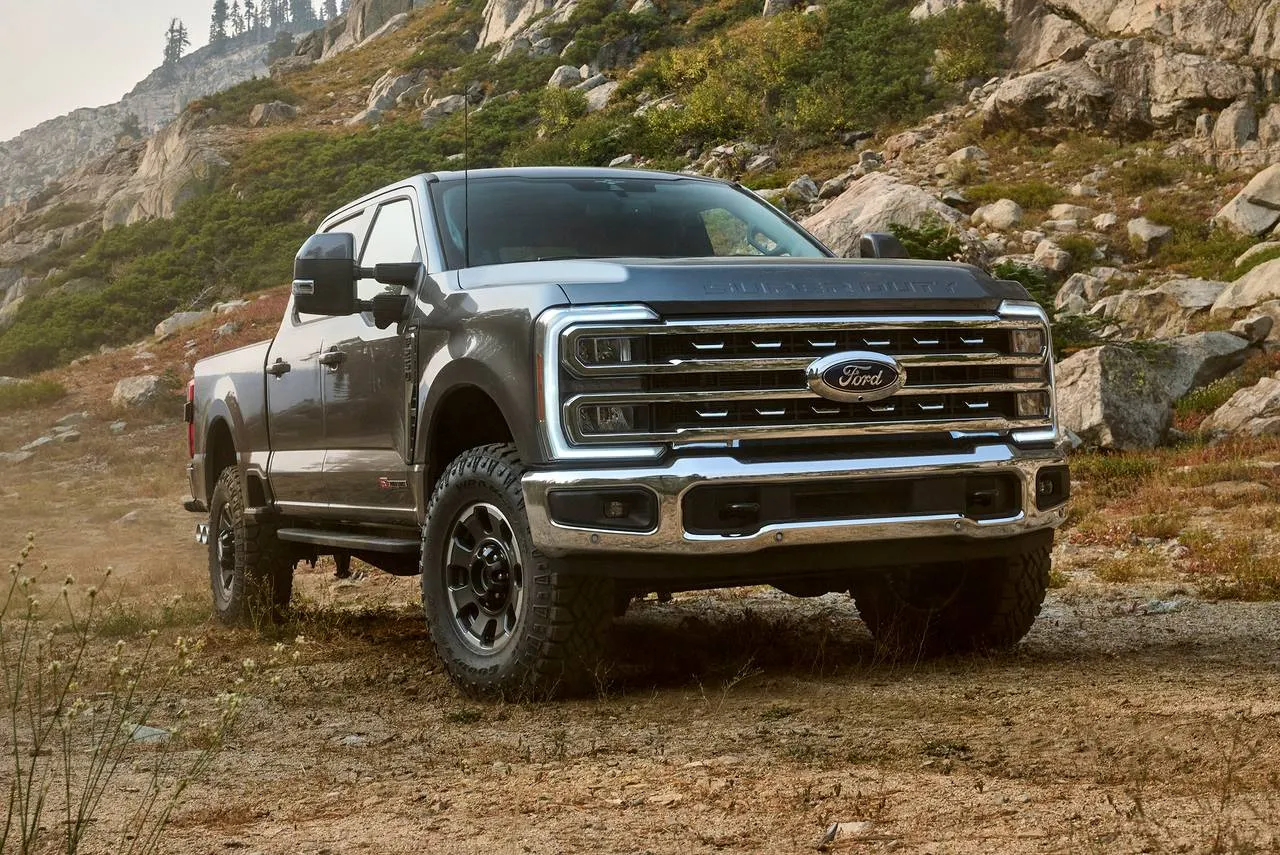
The F-250 is built for heavy-duty work that lighter half-ton trucks cannot perform. It can tow up to 21,200 pounds when properly configured with the right powertrain and hitch setup. That capability comes with dimensions that match its industrial-grade purpose.
A 6.7-liter Power Stroke diesel engine is available and produces 500 horsepower. That diesel torque figure of 1,200 lb-ft is astonishing for a production road vehicle. Pulling a loaded horse trailer or equipment hauler barely registers as an effort for this truck.
Payload capacity exceeds 4,000 pounds in optimal configurations. That means you can load the bed with several tons of gravel, lumber, or equipment. No light-duty truck comes close to those numbers in real-world use.
Turning radius is enormous due to the extended wheelbase and length. U-turns in urban environments often require a three-point maneuver just to reverse direction. Parking lots become strategic puzzles rather than simple tasks.
Ride quality is predictably stiff due to the heavy-duty rear leaf spring suspension. Empty, the truck rides firmly, which many drivers find fatiguing on long highway drives. Loaded, the ride smooths out considerably as the suspension reaches its working range.
Interior appointments on higher trims like Platinum and King Ranch are legitimately luxurious. Massaging leather seats, premium sound systems, and ambient lighting come standard on top models. The cabin contrast with the truck’s brutal exterior is genuinely surprising.
If your work genuinely demands a Super Duty, there’s no real alternative. But parking it in a residential garage is simply not realistic. Plan for a gravel pad, extended driveway, or commercial parking situation from day one of ownership.
3. GMC Sierra 1500 Crew Cab Long Box
The GMC Sierra 1500 in Crew Cab Long Box trim is the everyday work truck taken to its dimensional extreme. It’s a popular choice for contractors, ranchers, and outdoor enthusiasts who need maximum bed space.
Total length hits 241.3 inches, or just over 20.1 feet, in this configuration. You’d need a garage roughly 25 feet deep just to close the door behind this truck. Most American attached garages simply don’t exist at that depth.
Width measures 81.2 inches with the mirrors folded flat against the body. That’s nearly 6 feet 9 inches wide before you even account for any accessories or side steps. Sliding through a standard 9-foot garage door leaves just inches of clearance per side.
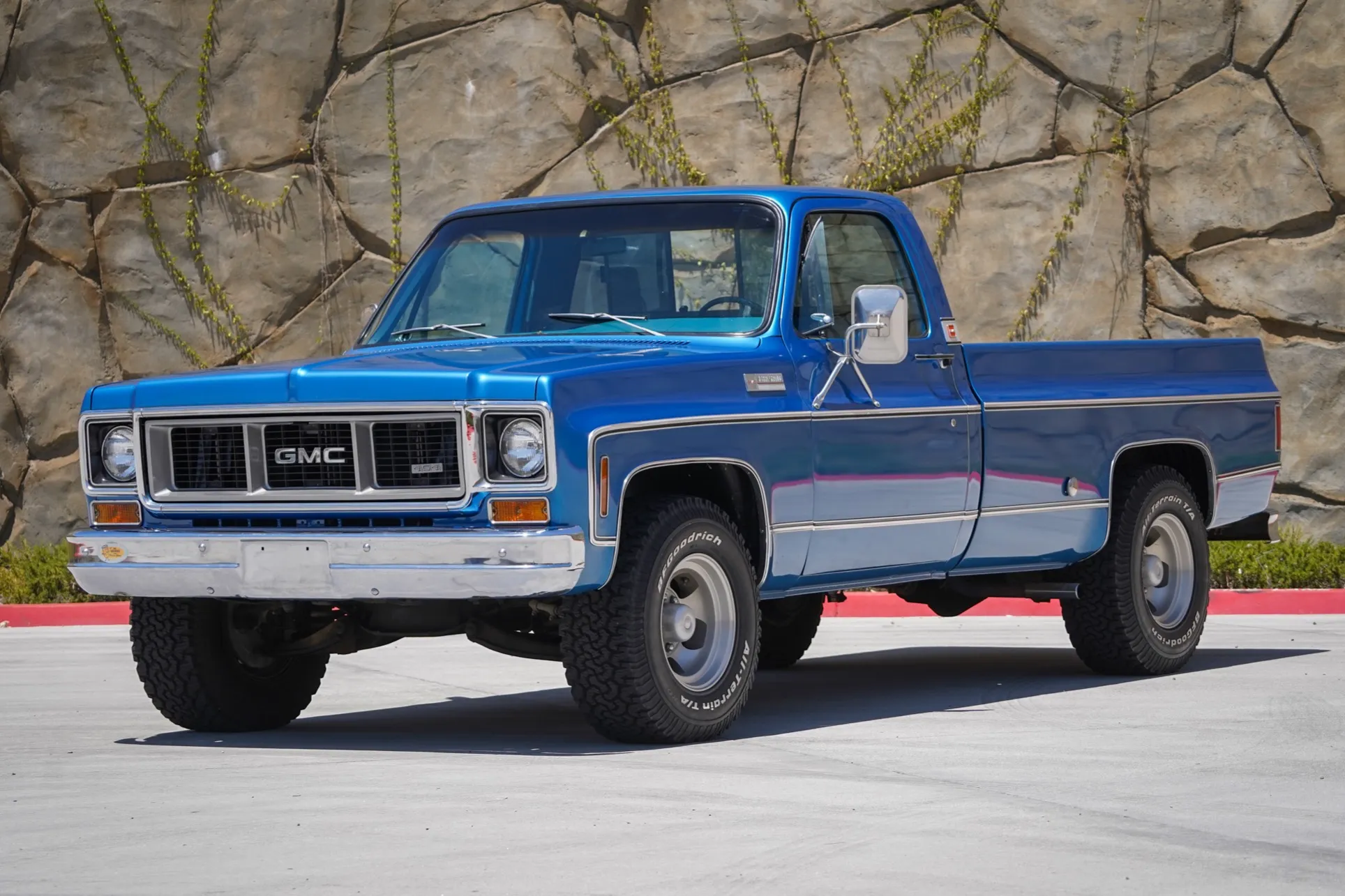
The Sierra 1500 long box offers 8 feet of cargo bed space. That full 96-inch bed is ideal for carrying full sheets of plywood, long lumber, or large landscaping materials. However, it adds substantially to length compared to the short or standard box options.
Available Duramax 3.0-liter inline-six diesel brings strong efficiency to a large truck platform. EPA-rated fuel economy of 23 mpg combined is surprisingly good for a vehicle this size. Long highway hauls become more economical than many buyers initially expect.
The MultiPro Tailgate is a GMC exclusive feature that transforms into six different configurations. It functions as a step, a work surface, and a secondary smaller gate. This thoughtful engineering adds genuine utility to the already generous bed space.
Towing capacity reaches up to 13,200 pounds with the right engine and package combination. That’s adequate for most recreational trailers, boats, and cargo haulers in common use. It covers the majority of light-commercial and personal towing needs comfortably.
Super Cruise hands-free driver assistance technology is available on higher GMC trims. This system enables true hands-free highway driving on compatible mapped roads. It’s one of the most advanced driver assistance systems offered in a production truck.
The interior on Denali and AT4 trims reaches near-luxury quality levels. Open-pore wood trim, ventilated seats, and a large infotainment display come standard on top trims. You feel like you’re in a premium vehicle despite the working-truck origins.
The Sierra Long Box is genuinely useful for specific work and hauling applications. But its length makes residential garage parking essentially impossible. Buyers should make peace with outdoor parking before signing any purchase agreement.
4. Chevrolet Silverado HD Crew Cab
The Chevrolet Silverado Heavy Duty in Crew Cab configuration represents the full-size work truck taken to its absolute limit. It exists to do jobs that would overwhelm lesser vehicles completely.
Length in crew cab dually configuration reaches 266.1 inches, or over 22.1 feet. This is longer than most residential garages are deep by a significant margin. The truck physically cannot enter most private garages in America.
The dually rear axle configuration adds dramatic width to the standard truck body. The width with dual rear wheels can reach 96 inches, or exactly 8 feet. Standard residential garage doors are often only 7 to 8 feet wide in single-car configuration.
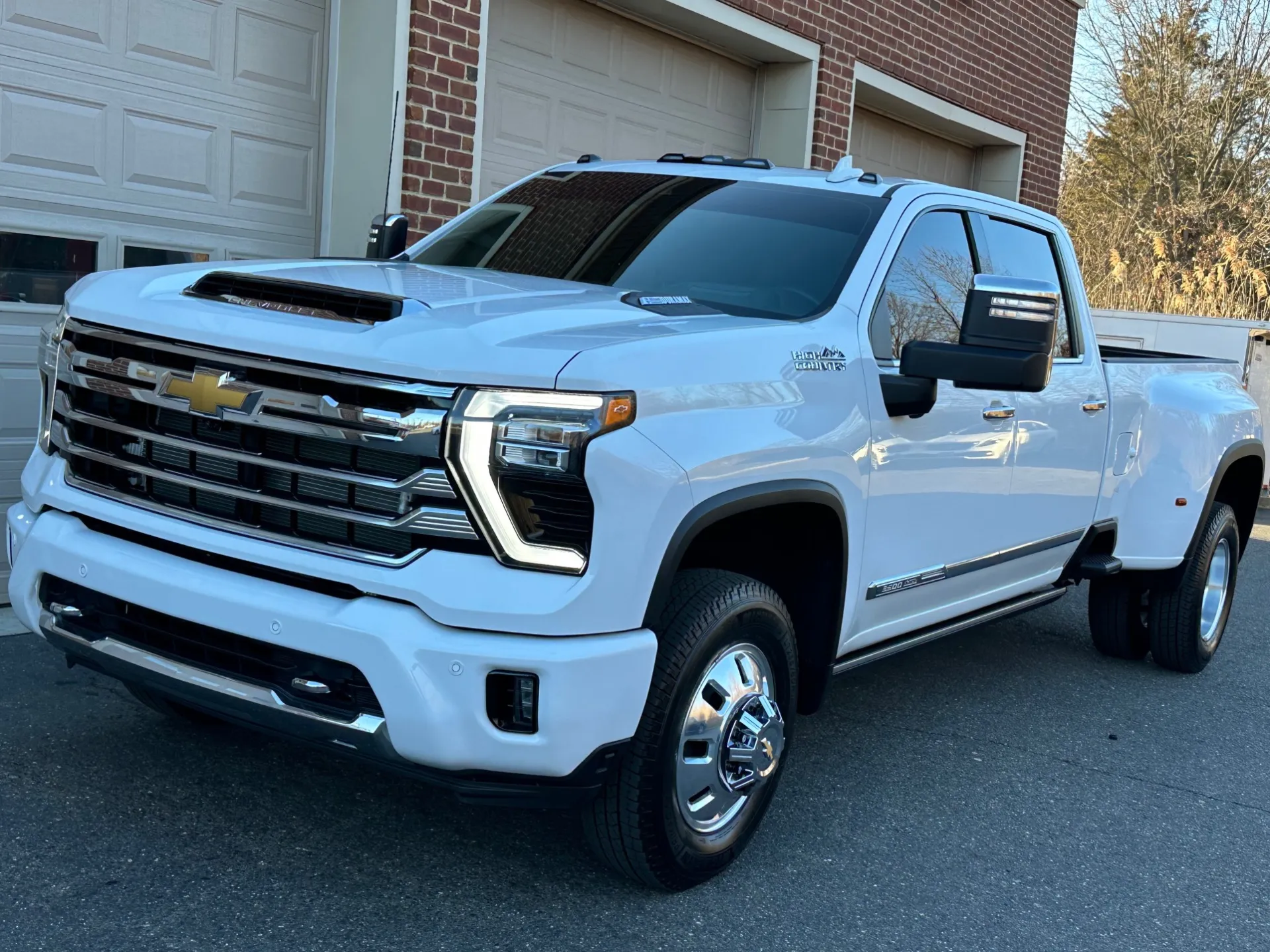
Maximum towing capacity for the Silverado HD is a jaw-dropping 36,000 pounds when properly equipped. That figure rivals dedicated commercial trucks and semi-trailers. It’s in a different universe compared to anything a half-ton truck can achieve.
The 6.6-liter Duramax diesel V8 produces 470 horsepower and 975 lb-ft of torque. Under hard towing conditions, this engine barely sounds strained. It has enormous reserves of power that make heavy loads feel manageable and stable.
Gooseneck and fifth-wheel towing are where the HD Silverado proves its purpose. Commercial farmers, RV owners, and equipment haulers rely on this capability daily. No other body-on-frame pickup can match what the Silverado HD provides in this space.
The ride when empty is predictably stiff and bouncy on rough road surfaces. Heavy-duty trucks are designed to carry weight, not glide over empty pavement. Passengers unfamiliar with work trucks sometimes find the empty ride unsettling.
Visibility from the driver’s seat is actually better than many smaller vehicles. The high seating position provides excellent sightlines over surrounding traffic. Backing up requires the standard rearview camera, which thankfully comes equipped on all trims.
Inside, the Silverado HD offers creature comforts appropriate for long work days. Heated seats, a large infotainment display, and ample storage cubbies are well-placed throughout. Comfort features help drivers stay productive during extended working hours on the road.
The Silverado HD is a genuine commercial-grade tool for serious work applications. It is not a vehicle that can share space with a residential garage in any practical sense. Plan for alternative parking or commercial facility access from the beginning.
5. Toyota Tundra CrewMax Long Bed (2024)
The Toyota Tundra in CrewMax Long Bed configuration is Toyota’s attempt to match American full-size truck expectations. It succeeds in capability but creates genuine challenges for anyone with a normal-sized garage.
Total vehicle length reaches 233.6 inches, or just under 19.5 feet in this body and bed combination. Fitting that into a standard 20-to-22-foot garage leaves virtually no room for anything else. Opening the tailgate inside the garage becomes physically impossible.
Width measures 80.2 inches with mirrors folded, making it one of the widest trucks in this guide. Getting the Tundra through a 9-foot garage door requires careful alignment and slow-speed entry. Even experienced drivers find it stressful every single time.
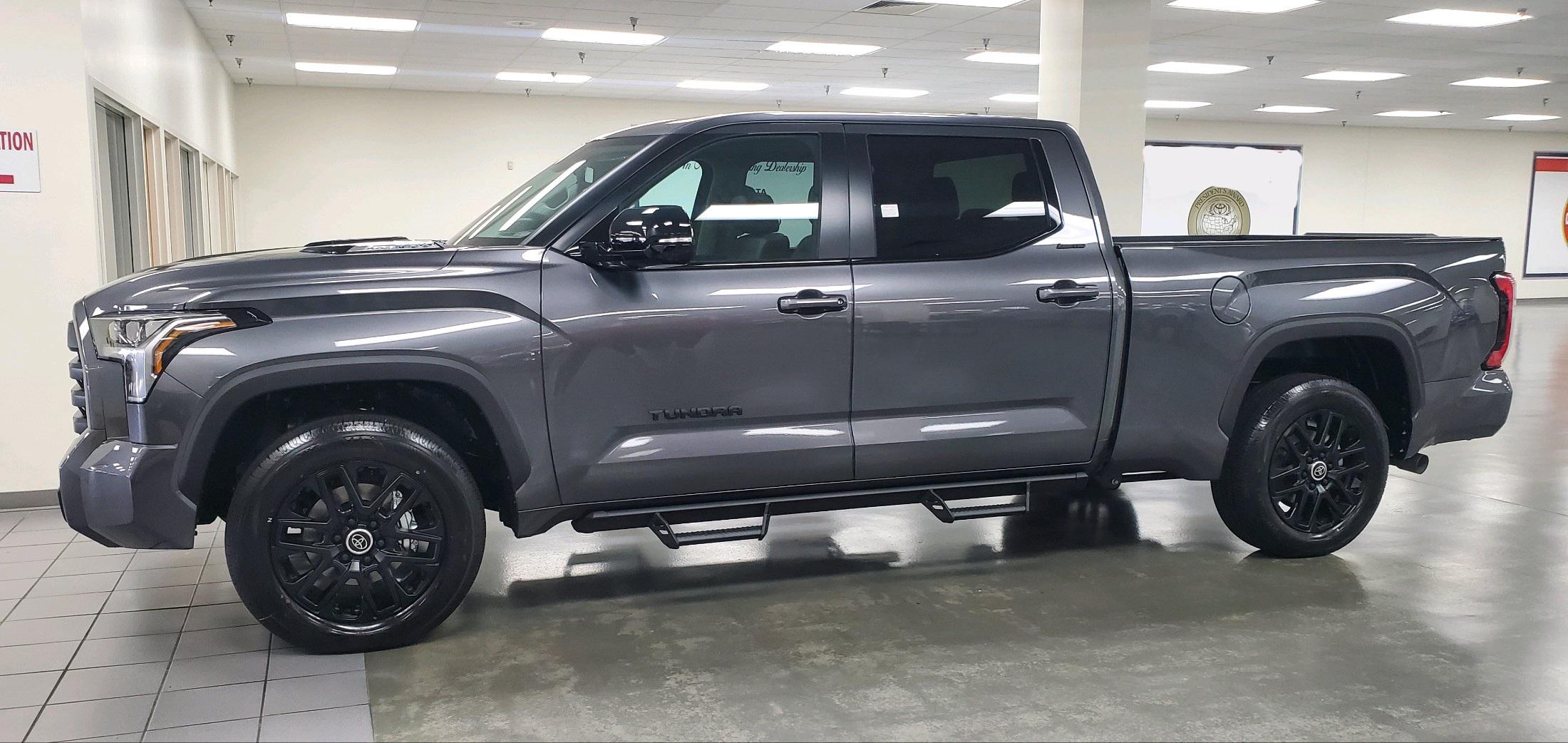
Toyota’s twin-turbocharged 3.5-liter V6 is the only engine option in the new-generation Tundra. It produces 389 horsepower and 479 lb-ft of torque as standard configuration. A hybrid version adds an electric motor for a combined output of 437 horsepower.
Towing capacity reaches up to 12,000 pounds with proper equipment. That’s competitive with Ford F-150 and Chevrolet Silverado 1500 in similar configurations. The Tundra holds its own against domestic competitors in real-world towing performance.
Toyota’s reputation for reliability follows the Tundra through its full ownership lifespan. Previous Tundra generations were famously durable to extremely high mileage figures. Owners regularly reported reaching 300,000 miles with standard maintenance schedules only.
The CrewMax cabin is genuinely spacious and well-appointed on higher trims. Rear passengers have limousine-like legroom thanks to the extended cab structure. It’s one of the roomiest rear seats in any production truck on the market today.
Standard Toyota Safety Sense 2.5 plus comes included on all current Tundra trims. Pre-collision system, radar cruise control, and lane departure alert are all standard equipment. Safety technology is not reserved for expensive trim levels in this truck.
The Tundra holds its resale value exceptionally well even compared to domestic competitors. Toyota’s brand equity translates directly into strong secondary market demand. Buying a Tundra is a better financial decision than buying most trucks in this size class.
Despite all its merits, the Tundra CrewMax Long Bed will not fit in a standard garage. Its dimensions are simply too great for ordinary residential parking. Buyers must plan for driveway or outdoor parking as a permanent daily solution.
6. Ford F-150 Raptor R (2024)
The Ford F-150 Raptor R is the most capable off-road performance truck Ford has ever produced. It is also one of the least garage-compatible vehicles available in the consumer market today.
Total length measures 231.9 inches in standard SuperCrew cab configuration. That’s nearly 19.3 feet, pushing the absolute boundary of what standard garage dimensions can theoretically contain. In practice, the combination of width and height makes entry impossible.
Width without mirrors reaches 86.3 inches across the widened front and rear fender flares. That’s over 7.1 feet at its widest body point, not counting mirrors. Passing through a standard 8-foot garage door becomes a white-knuckle experience even for experts.
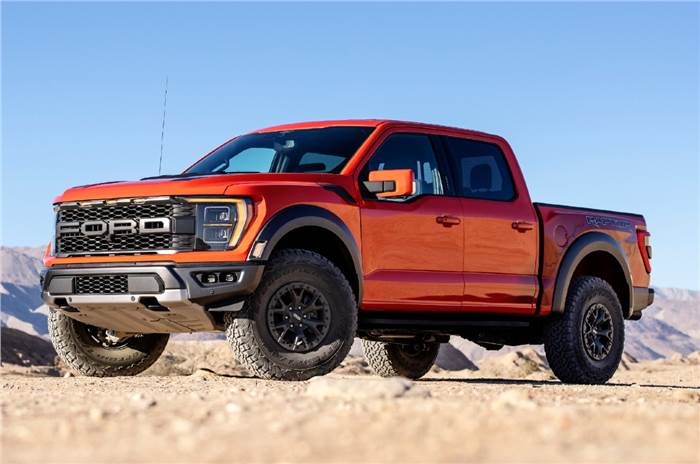
The Raptor R uses a supercharged 5.2-liter V8 producing 700 horsepower. This is the same engine architecture found in the Mustang Shelby GT500 performance car. Ford transplanted a supercar engine into an off-road truck, and the result is extraordinary.
Fox Live Valve shocks with 15 inches of suspension travel allow desert racing at highway speeds. The truck can absorb massive terrain impacts that would destroy any ordinary pickup. This capability comes with significant ride height that adds to garage clearance difficulties.
Off-road capability of the Raptor R is genuinely world-class in the production truck segment. It can maintain high speeds across whoops, rocks, and sand that halt other trucks completely. The Baja desert is the natural environment this truck was engineered to dominate.
Starting price exceeds $109,000 before adding any dealer markup or optional accessories. At that price point, buyers are investing seriously in performance and off-road hardware. The cost doesn’t include solving the garage problem, which requires additional planning.
BFGoodrich All-Terrain KO2 tires measure 37 inches in diameter straight from the factory floor. These massive tires raise the height significantly above any standard F-150. Garage doors need to be at minimum 8 feet tall to even attempt entry with this truck.
The interior is sportier than standard F-150 with unique Raptor-specific seats and trim accents. Carbon fiber and aluminum details reinforce the performance character throughout the cabin. It feels purposeful and exciting rather than simply utilitarian.
The Raptor R is a dream truck for many American buyers who love performance and adventure. But owning one means accepting that your garage is simply no longer part of its lifestyle. It lives outside, and it doesn’t apologize for that inconvenience at all.
Also Read: 5 Brands Offering the Best Tech Support in 2026 vs 5 That Charge Monthly
