
Driving conditions in the desert regions of the United States demand a very specific kind of vehicle performance. Areas such as the Mojave Desert, Sonoran Desert, and parts of Nevada and Utah present extreme temperatures, loose sand surfaces, long stretches without fuel stations, and terrain that can shift from hard-packed dirt to deep sand within a few miles.
Because of these challenges, vehicle selection becomes a major factor in safety, efficiency, and driving success. A suitable desert vehicle is not only about power but also about cooling performance, suspension strength, fuel range, and reliability under sustained heat.
At the same time, not all vehicles are designed for endurance or long-distance off-road travel. Many compact and urban-focused cars prioritize lightweight design, fuel economy in city driving, and ease of parking. These vehicles often come with smaller fuel tanks, which can limit driving range, especially outside urban environments.
While they perform efficiently in cities and suburban roads, they are not ideal for extended rural travel or desert conditions where refueling opportunities are rare.
Understanding the difference between desert-ready vehicles and small fuel tank cars helps drivers make better choices depending on their needs. A desert capable vehicle typically includes features like all-wheel drive or four-wheel drive systems, high ground clearance, reinforced suspension systems, and enhanced cooling systems to handle extreme heat. These vehicles are often built on truck or SUV platforms designed for durability rather than compact convenience.
On the other hand, vehicles with smaller fuel tanks are usually lightweight sedans, hatchbacks, or compact city cars. Their design focuses on fuel efficiency, lower emissions, and affordability. While they are excellent for daily commuting and short trips, they can struggle in remote environments where fuel stops are far apart. In desert environments, this limitation becomes more significant due to the long distances between service stations.
This article examines two categories of vehicles in detail. First, it highlights five vehicles commonly recognized for their strong performance in desert driving conditions across the USA. Second, it discusses five vehicles known for having relatively small fuel tanks and how that affects their usability in long-distance or remote travel scenarios.
The comparison is intended to provide a clear understanding of how vehicle design aligns with driving environments and why selecting the right type of vehicle is essential for safety and efficiency.
5 Cars for Desert Driving in the USA
1. Toyota Land Cruiser
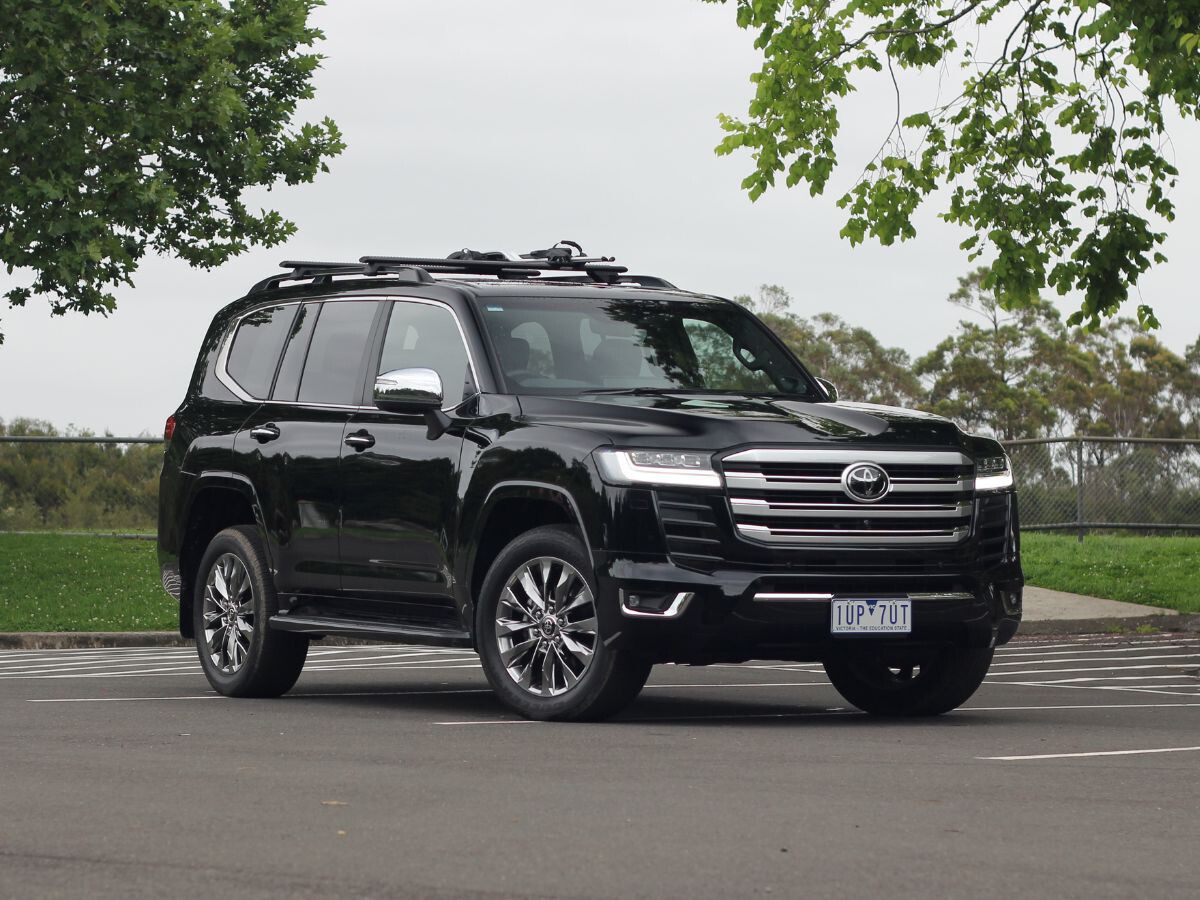
The Toyota Land Cruiser is widely regarded as one of the most reliable vehicles for desert driving in the United States due to its long-standing reputation for durability in extreme environments. It has been used globally in deserts, mountains, and remote regions where road infrastructure is limited or completely absent.
Its engineering focuses on mechanical strength and long-term endurance, which makes it suitable for repeated exposure to heat, sand, and rocky terrain without major performance loss.
One of the most important strengths of the Land Cruiser is its advanced four-wheel drive system. This system is designed to deliver consistent traction even when the surface beneath the tires is unstable, such as soft sand or loose gravel.
The ability to distribute power across all wheels reduces the chances of wheel spin, which is a common issue in desert conditions. This makes it easier for the vehicle to maintain forward momentum in environments where stopping unexpectedly can lead to getting stuck.
The suspension system in the Land Cruiser is built for heavy-duty use while still maintaining passenger comfort during long journeys. Desert driving often involves constant vibration from uneven surfaces, and a poorly designed suspension can quickly lead to driver fatigue.
The Land Cruiser’s suspension absorbs shocks effectively while keeping the vehicle stable at moderate speeds, which is important for covering long distances across desert highways and off-road trails.
Heat resistance is another major advantage of the Land Cruiser. Desert regions in the USA, such as Arizona and Nevada, often experience extreme daytime temperatures that can strain engines and cooling systems. The Land Cruiser is equipped with a robust cooling system that helps maintain stable engine temperatures even during long periods of continuous driving. This reduces the risk of overheating, which is one of the most common mechanical failures in desert travel.
In terms of long-distance capability, the Land Cruiser performs well due to its combination of fuel tank capacity and engine efficiency balance. While it is not the most fuel-efficient SUV, it compensates with a strong driving range that allows fewer stops in remote areas.
This becomes especially important in desert regions where fuel stations may be located far apart, requiring careful planning and a dependable vehicle that can handle extended travel without interruption.
2. Jeep Wrangler
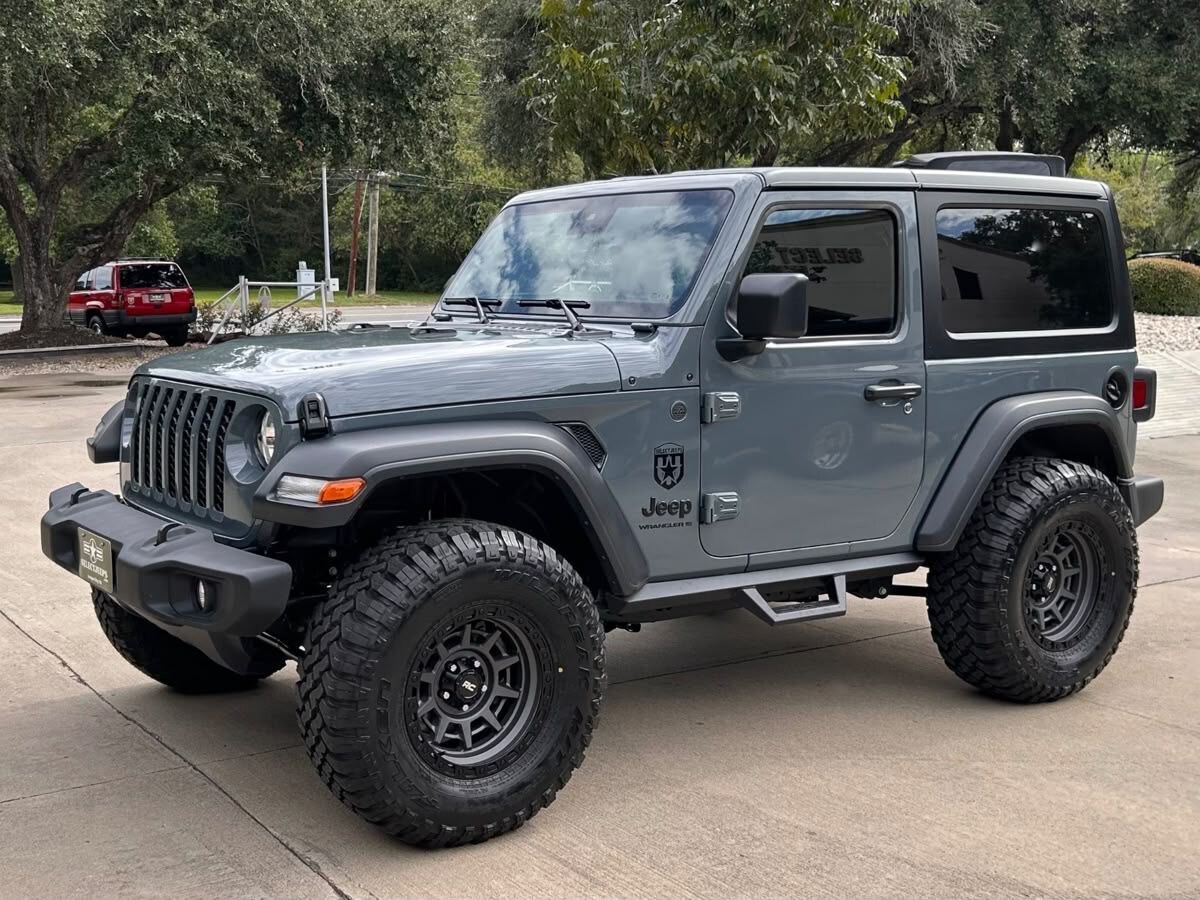
The Jeep Wrangler is one of the most iconic off-road vehicles in the United States and has a strong presence in desert driving culture. Its design is rooted in military-style durability, which makes it highly suitable for unpredictable terrain.
Whether driving across sand dunes, rocky desert paths, or dry riverbeds, the Wrangler is built to handle constant changes in surface conditions without losing stability or control.
A key feature of the Wrangler is its specialized four-wheel drive system, which is engineered specifically for off-road traction. This system allows drivers to switch between different driving modes depending on terrain difficulty. In desert environments, low-range gearing becomes particularly useful because it increases torque at low speeds, helping the vehicle move through deep sand without losing momentum or getting stuck.
The Wrangler’s compact frame also plays an important role in its desert performance. Unlike larger trucks, it can navigate narrow desert trails and uneven pathways with greater flexibility. This makes it especially useful in areas where terrain is unpredictable and turning space is limited. Its smaller size also reduces weight, which helps improve movement over soft sand surfaces where heavier vehicles may struggle.
Another important aspect of the Wrangler is its suspension articulation system. This allows each wheel to move independently over uneven ground, helping maintain tire contact with the surface at all times. In desert driving, where hidden rocks and shifting sand are common, this feature improves traction and reduces the chances of losing control. It also enhances stability when climbing or descending dunes.
The Jeep Wrangler is also highly customizable, which makes it popular among off-road enthusiasts. Drivers often upgrade it with larger off-road tires, reinforced bumpers, skid plates, and improved air intake systems for dusty conditions. These modifications further improve its ability to handle desert environments. While its fuel economy is not its strongest feature, its mechanical toughness and adaptability make it a dependable option for desert exploration.
3. Ford F-150 Raptor
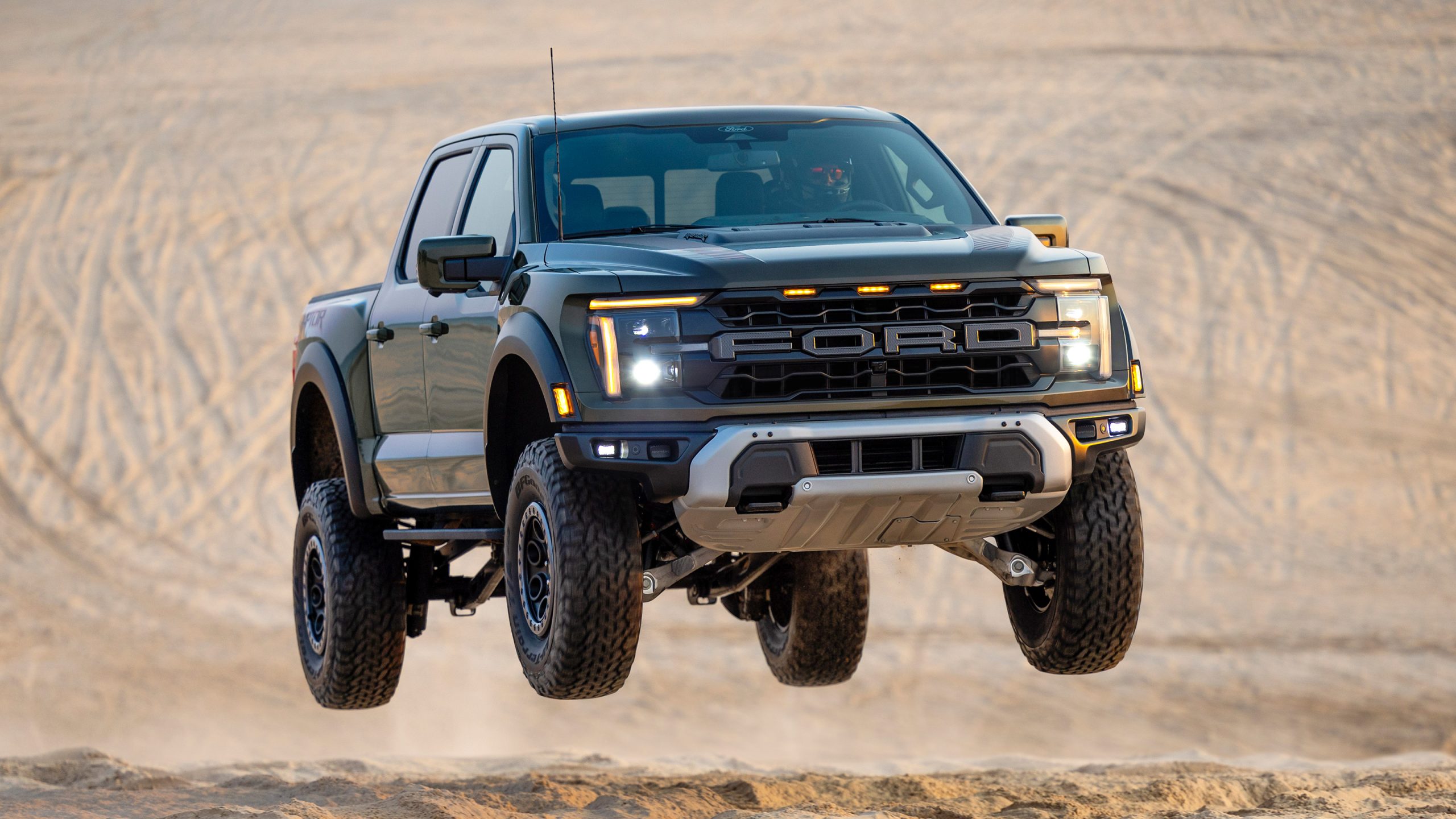
The Ford F-150 Raptor is designed specifically for high-performance off-road driving, making it one of the most capable trucks for desert terrain in the United States. Unlike standard pickup trucks, the Raptor is engineered for speed and stability across rough environments. It is often used in desert racing conditions, which demonstrates its ability to handle extreme heat, sand, and continuous high-speed travel.
One of the standout features of the Raptor is its powerful engine, which delivers high torque output essential for desert driving. Torque plays a critical role in maintaining momentum on soft sand, where vehicles can easily lose traction. The Raptor’s engine allows it to accelerate quickly when needed, helping it avoid situations where it might become stuck in deep or loose terrain.
The suspension system is another major highlight of the Raptor. It uses advanced shock absorber technology designed to handle repeated impacts at high speeds. In desert conditions, the terrain is rarely smooth, and vehicles often encounter dips, bumps, and uneven sand formations. The Raptor’s suspension is built to absorb these impacts while maintaining vehicle control, allowing for smoother rides over long distances.
Ground clearance is significantly higher than standard trucks, which helps protect the underside of the vehicle from rocks and uneven desert surfaces. This is especially important in desert regions where hidden obstacles may be covered by sand. Higher clearance reduces the risk of damage to critical components such as the engine, transmission, and fuel system.
Despite its high fuel consumption, the Ford F-150 Raptor is designed with a large fuel tank and efficient fuel management system that supports long-distance desert travel. Drivers can cover extended stretches of remote terrain without frequent refueling stops. This combination of power, durability, and range makes it a strong choice for both recreational desert driving and professional off-road use.
4. Toyota 4Runner
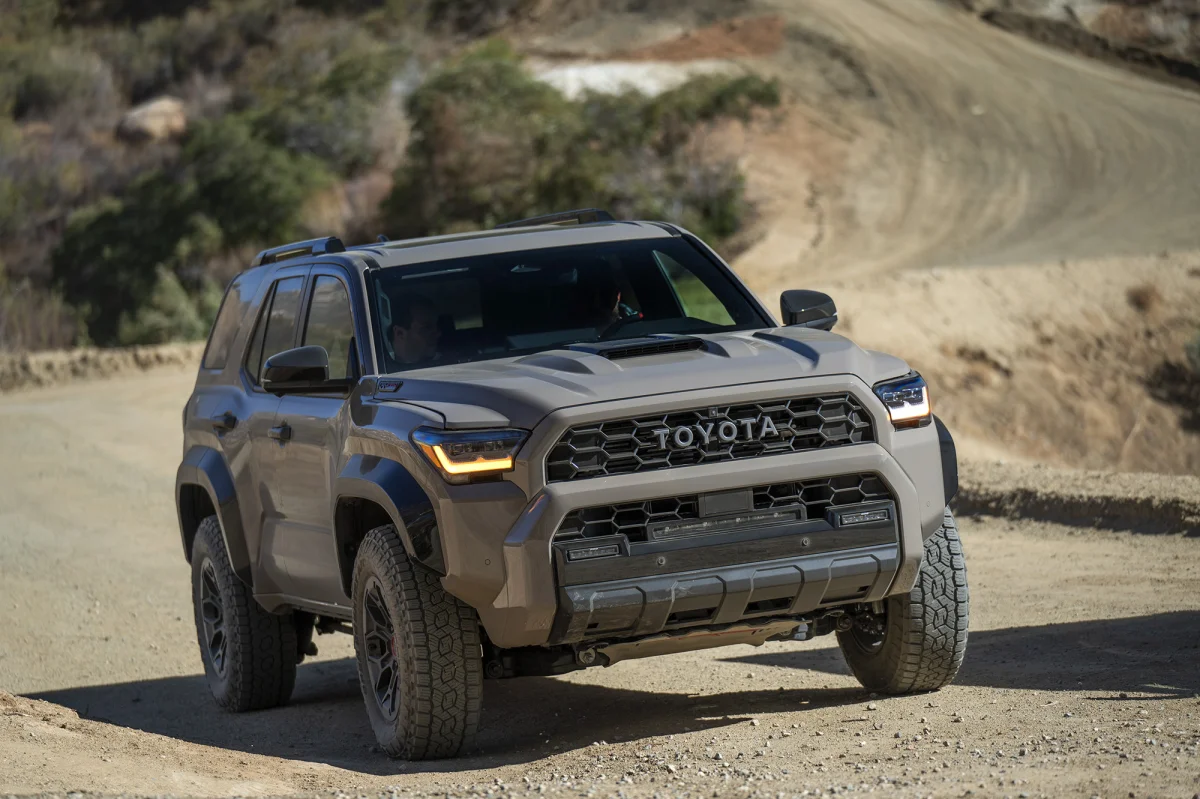
The Toyota 4Runner is a mid-size SUV that has earned a strong reputation for reliability in off-road and desert environments across the United States. It is built on a body-on-frame platform, which gives it structural strength similar to trucks. This design is particularly useful in desert conditions where uneven surfaces and rough terrain can place stress on a vehicle’s frame.
The four-wheel drive system in the 4Runner is designed for versatility, allowing drivers to adapt to different terrain types with ease. In desert environments, this flexibility becomes essential because conditions can shift quickly from hard-packed dirt to soft sand. The system helps distribute power evenly, improving traction and reducing the risk of getting stuck in unstable ground.
Its suspension system is tuned for off-road comfort and stability, which is important for long desert journeys. Continuous vibrations from uneven terrain can cause discomfort and fatigue, but the 4Runner’s suspension helps reduce these effects by absorbing shocks efficiently. This makes it more suitable for extended travel compared to many standard SUVs.
Another advantage of the 4Runner is its mechanical simplicity compared to more complex modern vehicles. Fewer electronic components in critical off-road systems can mean fewer failure points in extreme environments. This reliability is important in desert regions where repair services may not be easily accessible.
Fuel range is also a practical strength of the 4Runner. While it does not offer exceptional fuel economy, its tank capacity and consistent performance allow it to handle moderate to long desert trips when properly planned. This balance between durability and range makes it a dependable choice for drivers who need both off-road capability and everyday usability.
5. Chevrolet Colorado ZR2
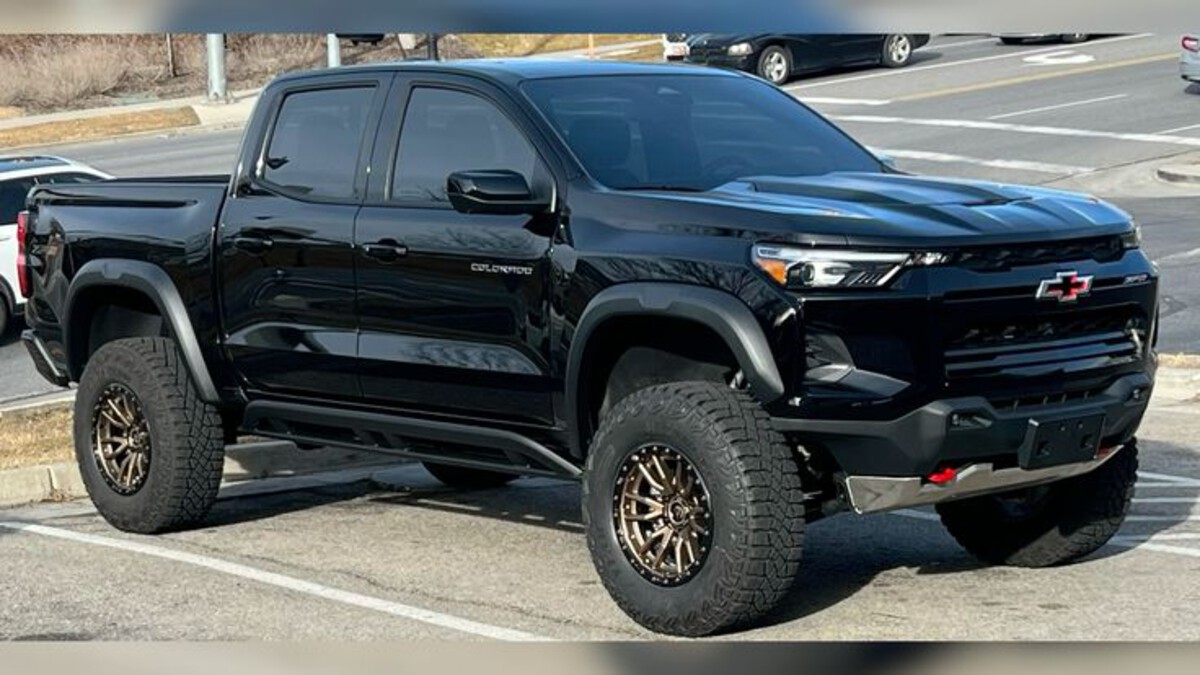
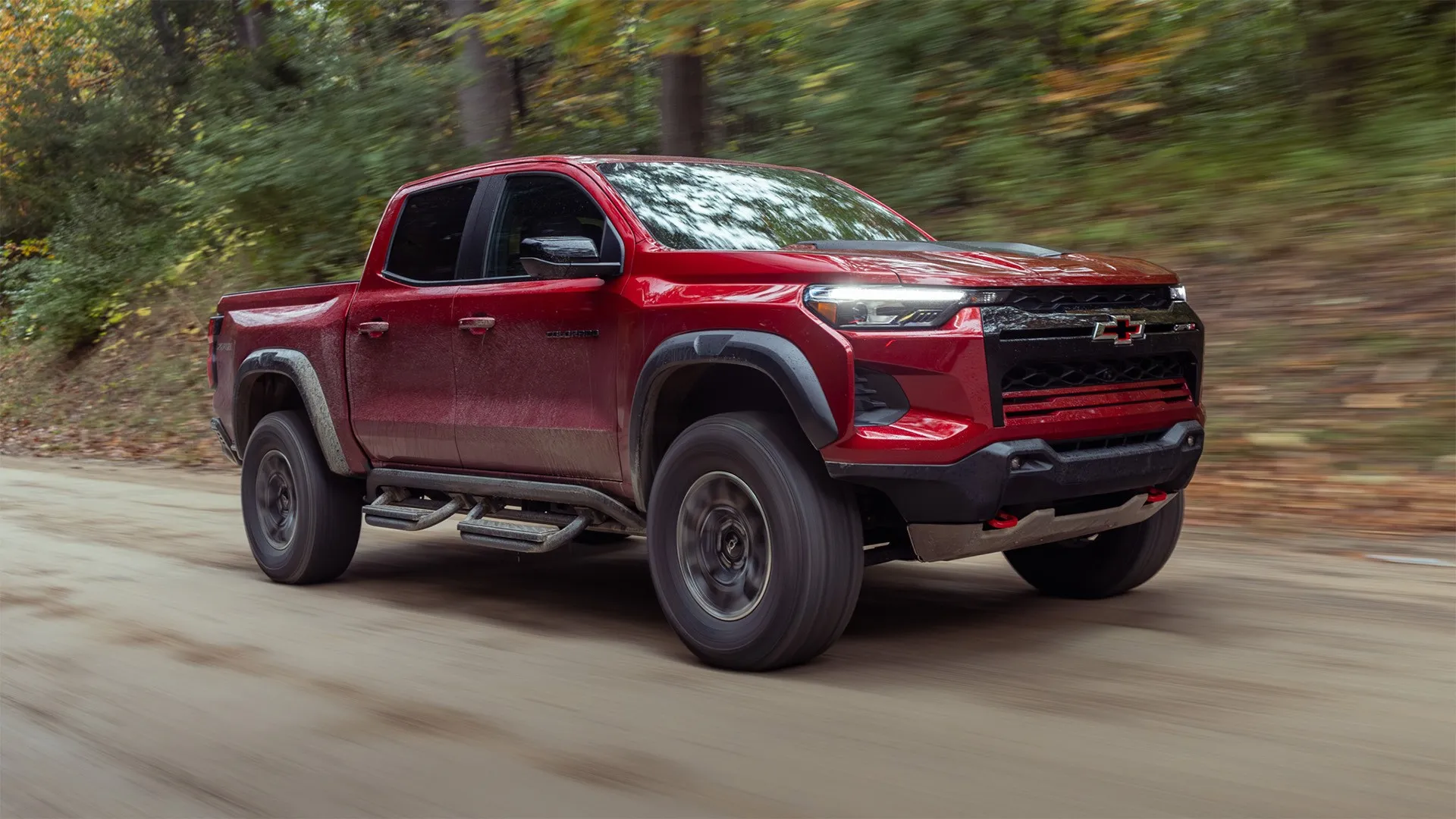
The Chevrolet Colorado ZR2 is a mid-size pickup truck designed specifically for off-road performance, making it well-suited for desert driving conditions in the USA. It combines manageable size with advanced off-road engineering, allowing it to handle both narrow desert trails and open sandy . This balance makes it more versatile than larger full-size trucks in certain environments.
One of its most advanced features is the Multimatic DSSV damping system, which provides superior control over rough terrain. This system helps stabilize the vehicle during rapid changes and uneven sand surfaces. In desert conditions where the ground is constantly shifting, this improved damping system helps maintain traction and reduces bouncing, which improves both safety and comfort.
The Colorado ZR2 also features strong ground clearance and factory-installed skid plates. These components protect the underside of the vehicle from rocks, debris, and uneven terrain. Desert environments often conceal obstacles beneath sand, and this protection helps prevent damage to essential mechanical parts.
Its engine is designed to offer a balance between torque output and fuel efficiency. While it does not match the raw power of larger trucks like the Raptor, it provides enough performance for most desert driving conditions while consuming less fuel. This makes it more practical for drivers who want off-road capability without extremely high fuel costs.
The ZR2 is also highly adaptable for customization, which is important for desert travel. Drivers often add auxiliary fuel tanks, off-road lighting systems, and upgraded tires to improve performance in remote environments. Its balanced design makes it suitable for both daily driving and weekend desert exploration, offering flexibility that many larger off-road trucks cannot match.
5 Cars with Small Fuel Tanks
1. Fiat 500
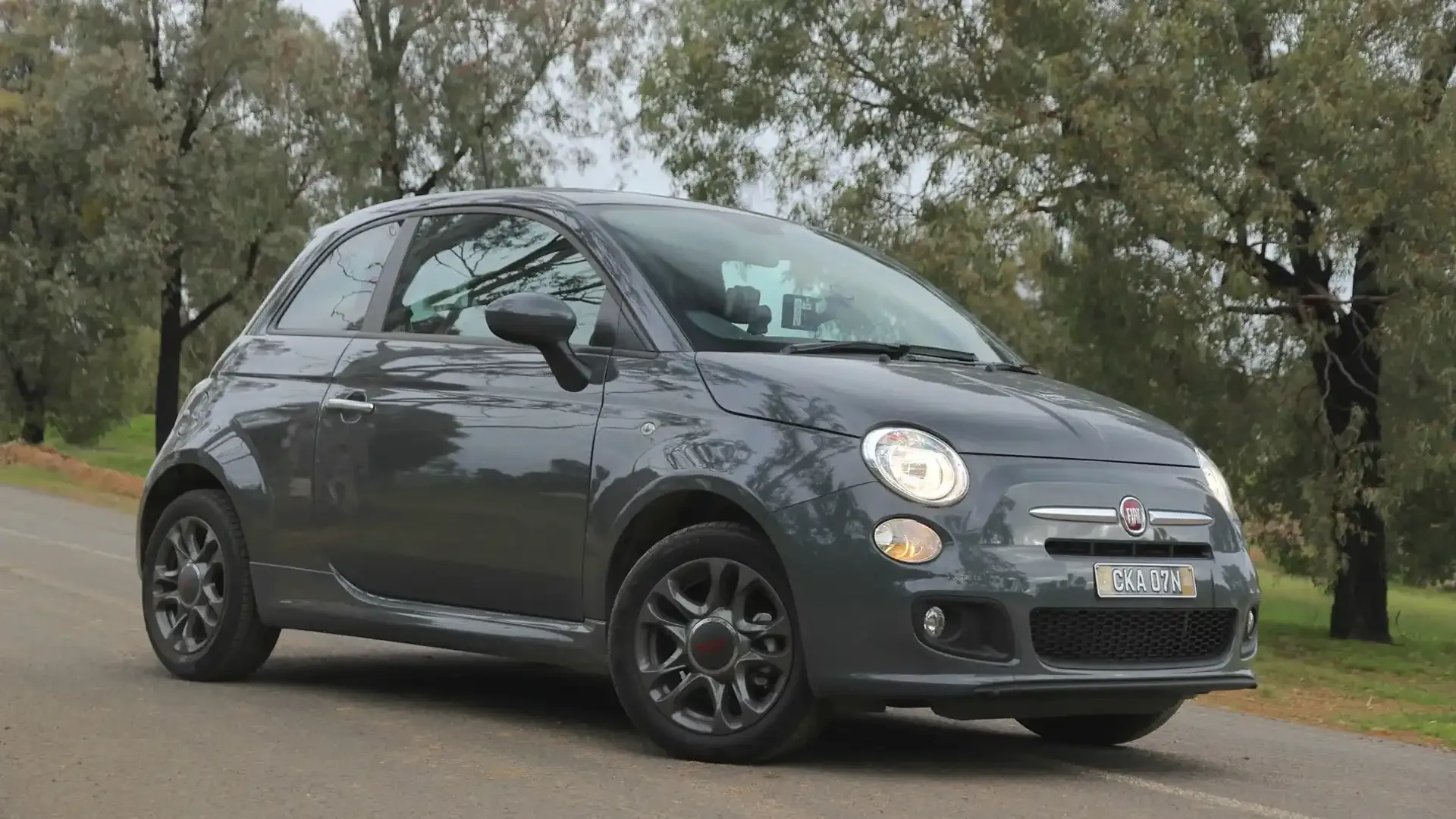
The Fiat 500 is a compact city-focused vehicle designed primarily for urban driving conditions where short distances, frequent stops, and easy maneuverability are more important than long-range capability. Its small size plays a major role in its engineering philosophy, including its relatively small fuel tank capacity. The vehicle is built to prioritize efficiency and convenience in crowded streets rather than endurance for long highway or remote travel.
One of the main reasons the Fiat 500 has a small fuel tank is its lightweight structure and small engine displacement. The car is designed to consume minimal fuel per mile, which means it does not require a large tank to maintain practical driving range within city environments.
However, this also means that its total driving range is limited compared to larger sedans or SUVs, especially when used on highways or longer rural routes.
The compact design of the Fiat 500 also affects its storage capacity and travel practicality. Because the vehicle is optimized for city use, it does not offer significant space for carrying extra fuel containers or long-distance travel supplies. This becomes a limitation when driving in areas where fuel stations are spaced far apart, such as desert highways or rural regions in the United States.
In addition, the Fiat 500’s engine is tuned for low-speed efficiency rather than sustained high-speed performance. While this makes it economical in stop-and-go traffic, it also means that fuel consumption can increase when the vehicle is pushed beyond its intended urban driving conditions. This further reduces its effective range when compared to vehicles designed for mixed or off-road environments.
The Fiat 500 is best suited for short daily commutes and city . Its small fuel tank aligns with its role as an urban vehicle, but it is not designed for long-distance travel or remote environments where fuel availability is limited and reliability over extended distances is required.
2. Mini Cooper
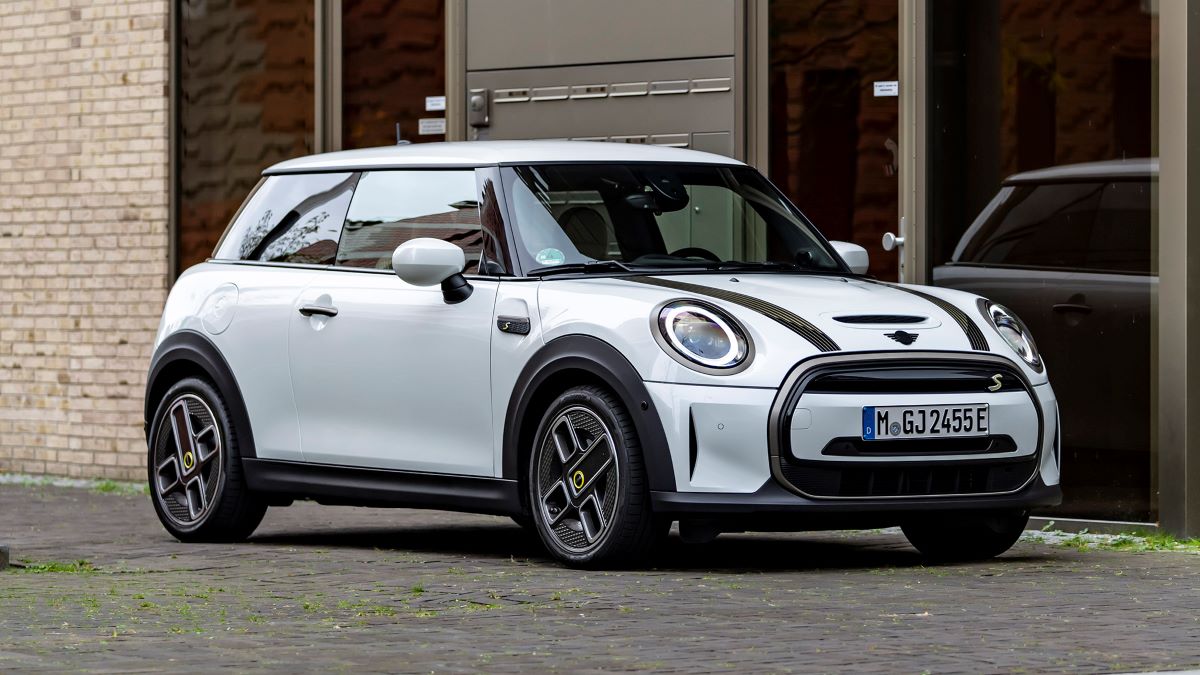
The Mini Cooper is a compact car known for its sporty design, responsive handling, and strong urban performance. Like many small vehicles in its category, it is equipped with a relatively small fuel tank that reflects its intended use in city environments and short to medium-distance travel. The design prioritizes agility and driving experience rather than long-range endurance.
The vehicle’s fuel tank size is closely related to its compact body structure. Since the Mini Cooper is designed to be lightweight and easy to maneuver, it does not require a large fuel storage system. This contributes to its efficiency and performance in urban traffic, but it limits the distance it can travel without refueling, especially on long highway routes or in rural areas.
Another important factor is the balance between performance and fuel efficiency. The Mini Cooper is engineered to deliver a fun and responsive driving experience, which sometimes requires higher engine output compared to basic economy cars. When driven aggressively or at higher speeds, fuel consumption increases, which further reduces the effective range of its small fuel tank.
The limited fuel capacity also affects long-distance travel planning. Drivers using the Mini Cooper for extended trips must account for more frequent fuel stops compared to larger vehicles. This is not a major issue in cities or densely populated regions, but it becomes a limitation in remote areas where fuel stations are widely spaced.
Despite this limitation, the Mini Cooper remains popular due to its driving dynamics and compact convenience. It is best suited for urban environments where fuel stations are easily accessible and long uninterrupted travel is not a requirement. Its small fuel tank is consistent with its role as a city-oriented performance hatchback.
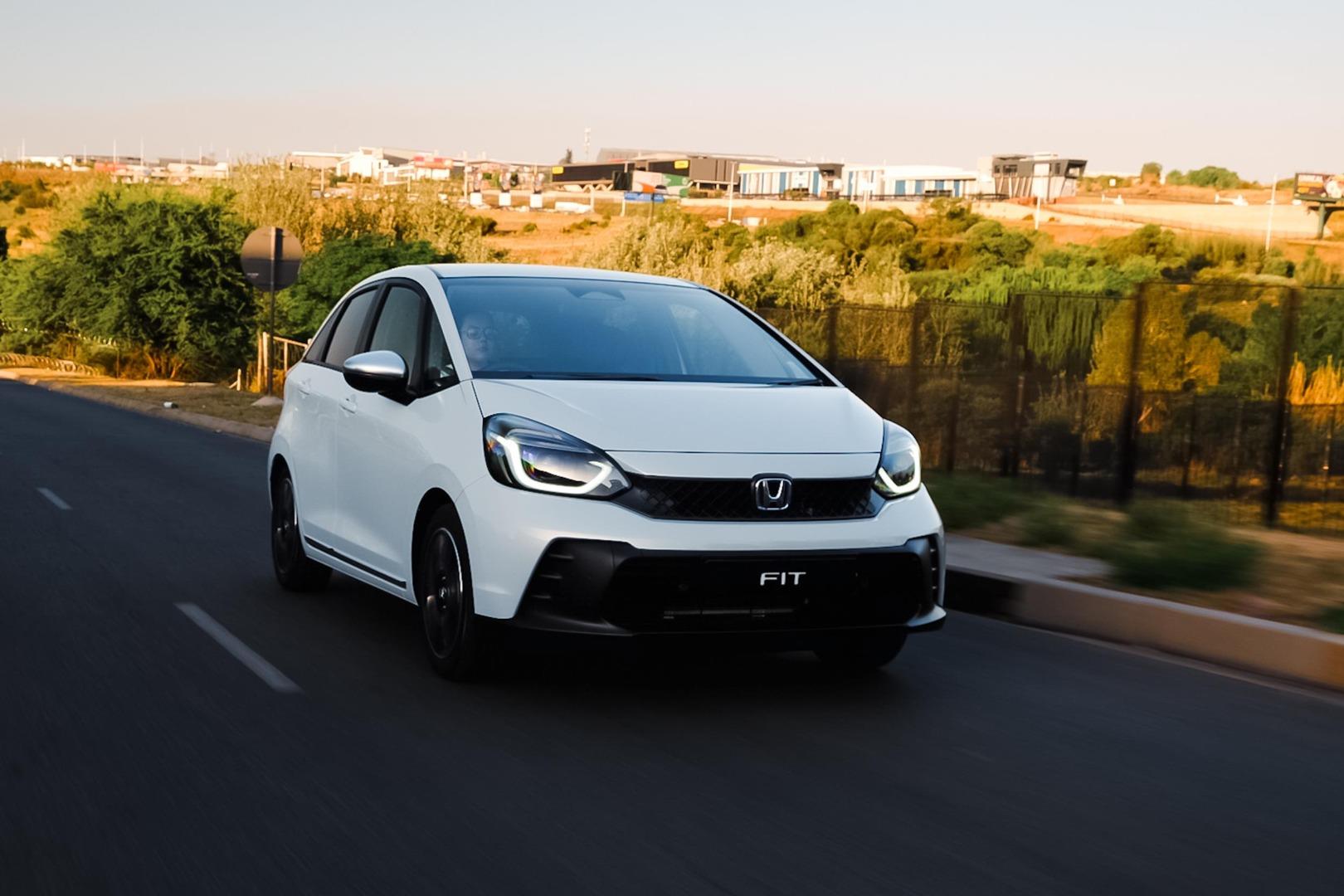
3. Honda Fit
The Honda Fit is a compact hatchback designed with a strong emphasis on practicality, interior space efficiency, and fuel economy. Although it is highly efficient in terms of mileage, it comes with a relatively small fuel tank that matches its lightweight and city-focused design. This balance makes it ideal for urban commuting but less suitable for long-distance travel in remote regions.
The vehicle’s engineering prioritizes maximizing usable interior space while keeping the external size compact. This means that design compromises are made in areas such as fuel tank capacity. While the Honda Fit can travel a respectable distance on a full tank due to its excellent fuel efficiency, the total range is still limited compared to larger sedans or SUVs.
In city environments, the small fuel tank is not a major drawback because fuel stations are easily accessible and frequent refueling is not inconvenient. However, when the Honda Fit is used for highway travel or long rural journeys, drivers may find themselves stopping more often than they would in vehicles with larger fuel tanks.
The engine of the Honda Fit is tuned for efficiency rather than power. This makes it extremely economical in stop-and-go traffic conditions, but it also means that extended high-speed driving can increase fuel consumption. As a result, the effective range of the vehicle can vary significantly depending on driving conditions.
Honda Fit is best suited for daily commuting, small families, and urban travel needs. Its small fuel tank is consistent with its design purpose, but it is not intended for desert driving, long road trips, or environments where fuel availability is uncertain.
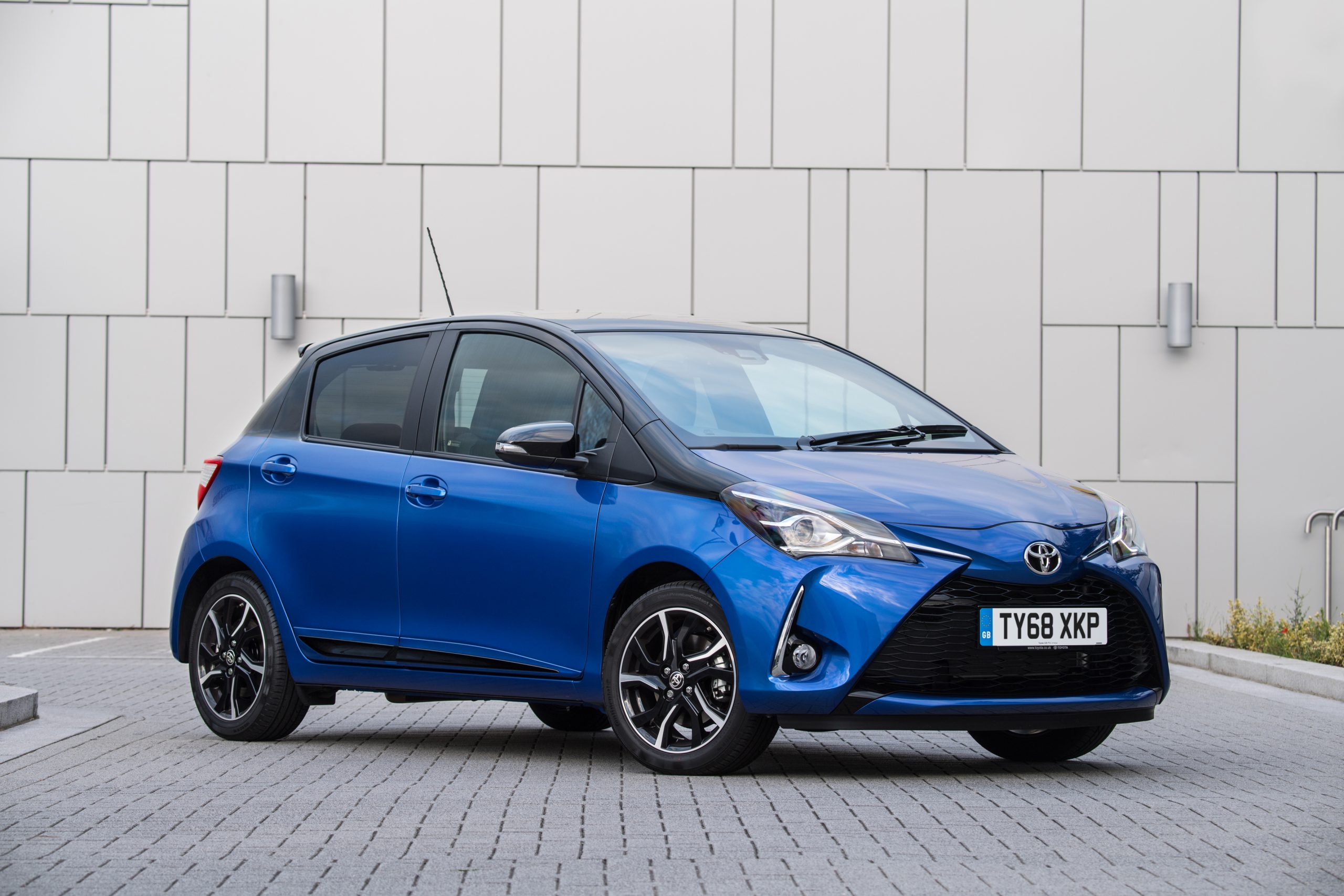
4. Toyota Yaris
The Toyota Yaris is an economy-focused compact car designed for affordability, reliability, and strong fuel efficiency. It is widely used in urban environments where driving distances are short and fuel stations are readily available. Its relatively small fuel tank is consistent with its role as a lightweight, cost-effective transportation solution.
One of the key characteristics of the Toyota Yaris is its ability to achieve high mileage per liter of fuel. While this helps offset the limitation of its smaller fuel tank, the driving range still remains modest compared to larger vehicles. This makes it practical for city driving but less ideal for extended highway or remote travel.
The compact size of the Yaris contributes directly to its fuel system design. Since the vehicle is engineered to be lightweight and affordable, reducing fuel tank size helps maintain cost efficiency and simplicity. However, this also means that drivers must plan for more frequent refueling during longer trips.
In rural or desert conditions, the limitations of a small fuel tank become more noticeable. When fuel stations are far apart, the reduced range can create planning challenges. The Yaris is not designed for such environments, and its low ground clearance further limits its suitability for rough terrain.
Despite these limitations, the Toyota Yaris remains a strong choice for urban commuters and budget-conscious drivers. It offers dependable performance and excellent fuel economy, but its small fuel tank reinforces its role as a city vehicle rather than a long-distance travel option.
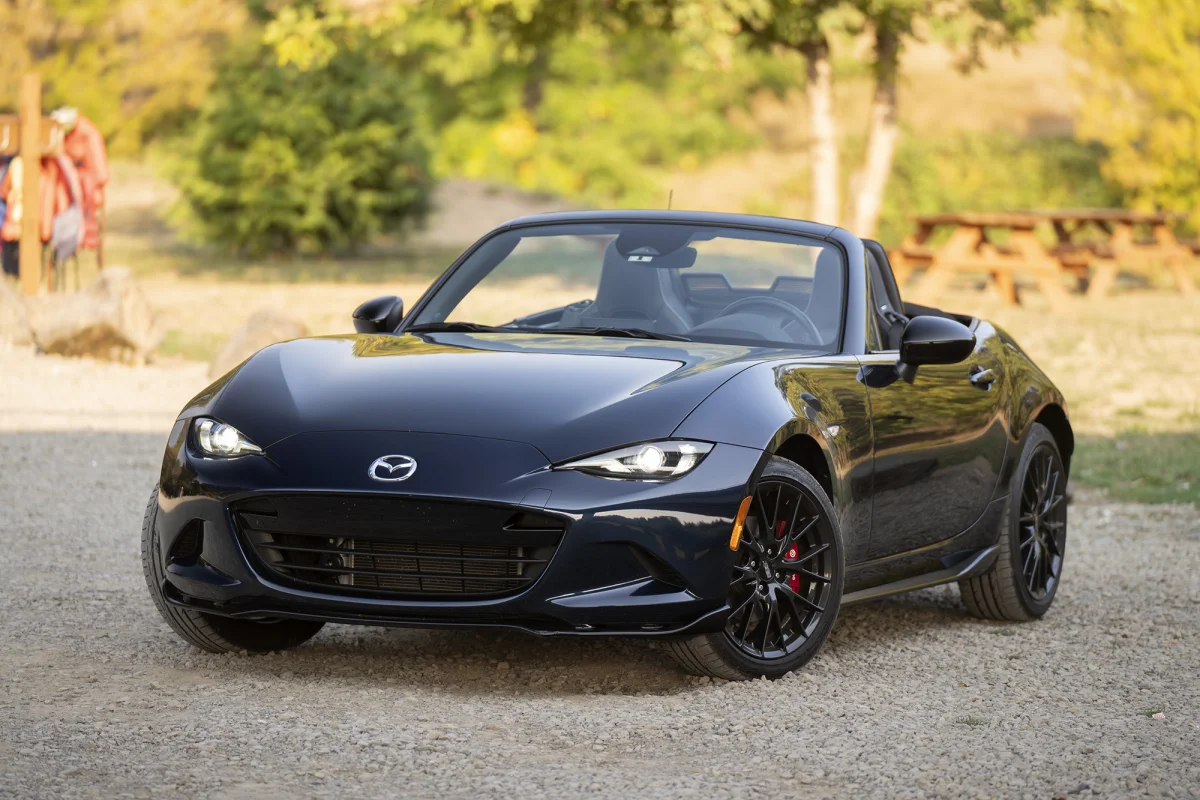
5. Mazda MX-5 Miata
The Mazda MX-5 Miata is a lightweight sports car designed primarily for driving enjoyment, precise handling, and road performance rather than practicality or long-distance utility. Its relatively small fuel tank reflects its focus on performance-oriented driving instead of extended travel range or cargo capacity.
The vehicle’s design philosophy prioritizes weight reduction, which is essential for improving acceleration, cornering, and driving responsiveness. A smaller fuel tank contributes to this lightweight structure, helping maintain the car’s balanced handling characteristics and sporty feel on paved roads.
While the MX-5 Miata performs exceptionally well on highways and winding roads, its fuel capacity limits its long-distance travel convenience. Drivers who take it on extended trips must plan frequent fuel stops, especially when traveling through areas where fuel stations are widely spaced.
The engine is tuned for a balance of efficiency and performance, but spirited driving can significantly increase fuel consumption. This reduces the effective range even further when the vehicle is driven in a performance-oriented manner, which is often how it is intended to be used.
The Mazda MX-5 Miata is best suited for recreational driving rather than long-distance touring or off-road environments. Its small fuel tank aligns with its lightweight sports car design, but it is not intended for desert driving or extended travel where fuel availability is limited.
