
The word bulletproof gets thrown around carelessly in automotive circles, applied to everything from basic economy cars to lightly modified track weapons. But turbocharged four-cylinder engines, truly deserving that label requires more than surviving a few hundred thousand miles in light-duty commuting service.
A genuinely bulletproof turbo four-cylinder must handle the thermal and mechanical stresses of forced induction across a wide range of driving conditions, tolerate the kind of abuse that real-world owners actually impose, and do so without requiring specialist knowledge or exotic maintenance procedures to stay healthy.
Turbocharging adds a layer of complexity to any engine’s durability equation. The turbocharger itself operates at temperatures and speeds that would destroy most mechanical components, and it must do so reliably for the entire service life of the engine.
The oil and coolant systems must support the turbo’s needs without sacrificing their primary role of protecting the engine internals. The engine management system must control boost pressure with precision that prevents detonation while extracting useful power.
When all of these systems work in harmony over hundreds of thousands of miles, the result is an engine combination that genuinely earns the bulletproof description. The ten engines profiled here have established their credentials through owner experience, fleet data, and competitive analysis that places them in a category apart from the ordinary.
Each has demonstrated specific technical characteristics that explain its durability, and each has a real-world track record of high mileage service to back up the engineering argument. These are not the engines of speculation or manufacturer claims. They are proven quantities in the most demanding laboratory of all: the daily lives of real vehicle owners.
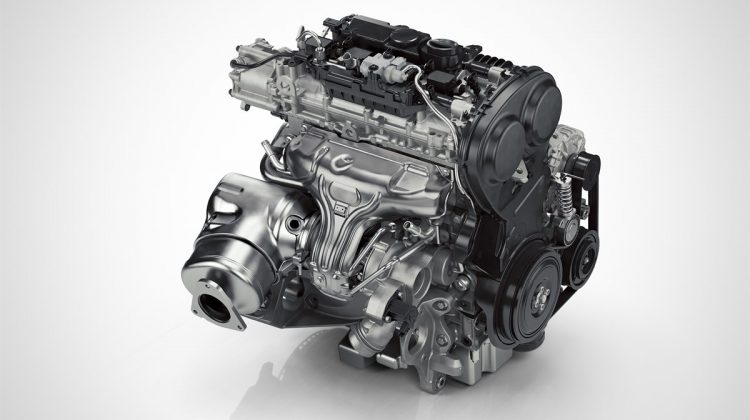
1. Volvo Drive-E T5 2.0L Turbocharged Four-Cylinder
Volvo’s Drive-E T5 2.0-liter turbocharged engine was designed with the Swedish manufacturer’s signature emphasis on longevity and reliability built into every specification decision.
The engine uses a low-pressure turbocharger configuration that keeps turbo inlet temperatures moderate, reducing thermal stress on the bearing housing and compressor wheel compared to high-pressure systems that extract more performance at the cost of increased heat.
The cast iron block, unusual in an era of aluminum construction, provides superior dimensional stability at high temperatures and resists the micro-porosity that can develop in aluminum castings over many thermal cycles. The combination of these two design choices gives the Drive-E T5 a durability foundation that more performance-oriented engines cannot match.
Volvo’s choice to target moderate peak power output from the Drive-E T5 rather than chasing segment-leading numbers reflects a corporate understanding that customers value reliability over bragging rights. The boost pressure target is set conservatively, leaving significant headroom between operating boost levels and the maximum pressure the engine can safely tolerate.
This margin means that small variations in ambient conditions, fuel quality, and engine condition have little effect on the engine’s safe operating envelope.
Owners who drive spiritedly but within normal road speeds never push the engine into conditions that approach its stress limits, and the accumulated wear from a lifetime of this kind of driving is correspondingly modest.
The Drive-E platform’s integrated exhaust manifold and cylinder head design improves thermal management by reducing the number of joints and gaskets in the hot exhaust path. Traditional designs with a separate exhaust manifold bolted to the head require a manifold gasket that must seal against extreme temperature cycling, and this gasket is a common long-term failure point.
By casting the manifold as part of the head, Volvo eliminates this failure mode entirely and reduces the thermal mass of the exhaust path, which allows the catalytic converter to reach operating temperature faster during cold starts, reducing the duration of the fuel enrichment period that increases carbon deposits.
Oil system management on the Drive-E T5 reflects Volvo’s turbo experience from decades of turbocharged vehicles. The oil supply to the turbocharger uses a dedicated feed line with a controlled flow rate that ensures the bearing receives adequate lubrication under all operating conditions, including during cold starts when oil viscosity is highest.
The turbo’s water cooling circuit continues circulating coolant through the bearing housing after engine shutdown, preventing the oil coking that can occur when a hot turbocharger loses cooling flow after the engine stops. This heat-soak protection system is a straightforward feature that significantly extends turbocharger service life.
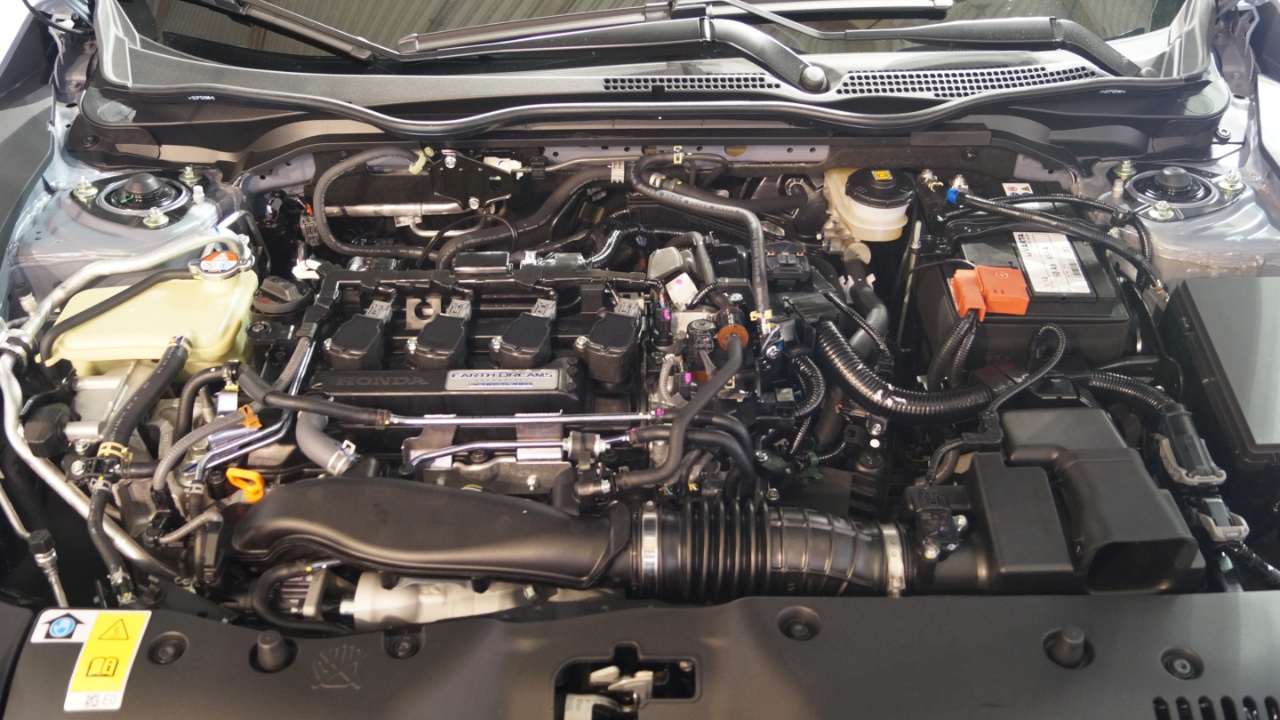
2. Honda 1.5L Earth Dreams Turbocharged Engine (L15B7)
Honda’s 1.5-liter Earth Dreams turbocharged engine, found in the Civic, CR-V, and Accord, brings Honda’s engineering philosophy of reliable high-performance to the turbocharged segment. Honda was a latecomer to the turbo four-cylinder segment relative to some European manufacturers, which allowed the company to learn from competitors’ durability lessons before finalizing its own design.
The L15B7 uses a small-displacement, high-specific-output approach that keeps engine temperatures moderate while delivering competitive power output. Honda’s VTEC variable valve timing is integrated with the turbocharging system to optimize both power delivery and efficiency, and the two technologies complement each other in ways that benefit long-term engine health.
The direct injection system in the L15B7 uses injector placement and spray pattern optimization to minimize intake valve carbon deposits, a known weakness of direct injection systems that Honda engineers studied carefully before production. The injector targeting creates a wash effect on the valve face during the intake stroke that helps dislodge any deposits before they accumulate to problematic levels.
Combined with Honda’s regular use of quality fuels with effective detergent packages, this design approach has kept intake valve cleanliness at acceptable levels across the engine’s service life in the vast majority of documented cases. Honda also provides specific guidance on fuel quality requirements that helps owners make choices that support long-term engine cleanliness.
The L15B7’s oil dilution issue, which affected some early CR-V examples in cold climates, was a genuine concern that Honda addressed through software updates and fuel injection calibration revisions. The root cause was excessive fuel entering the oil during cold-start enrichment in very cold weather, which required changes to the injection strategy to prevent fuel washing down the cylinder walls.
The corrected calibration, which Honda distributed as a free update, resolved the issue without requiring any mechanical changes. This response to a real-world problem demonstrates Honda’s commitment to supporting the engine’s long-term performance and illustrates how software management can address durability concerns without invasive mechanical work.
The turbocharger in the L15B7 is a compact unit sized to match the engine’s displacement and power output targets without over-speeding under normal driving conditions. Over-speeding, where the turbo wheel rotates faster than its bearing system is rated for, is a primary cause of early turbocharger failure, and Honda’s sizing choices keep the wheel well within safe operating speeds during normal driving.
The ball bearing cartridge design, which Honda uses in this application, provides more precise wheel centering than journal bearings and tolerates the gyroscopic loads that the turbo experiences during hard cornering or rapid throttle changes better than older journal bearing designs.
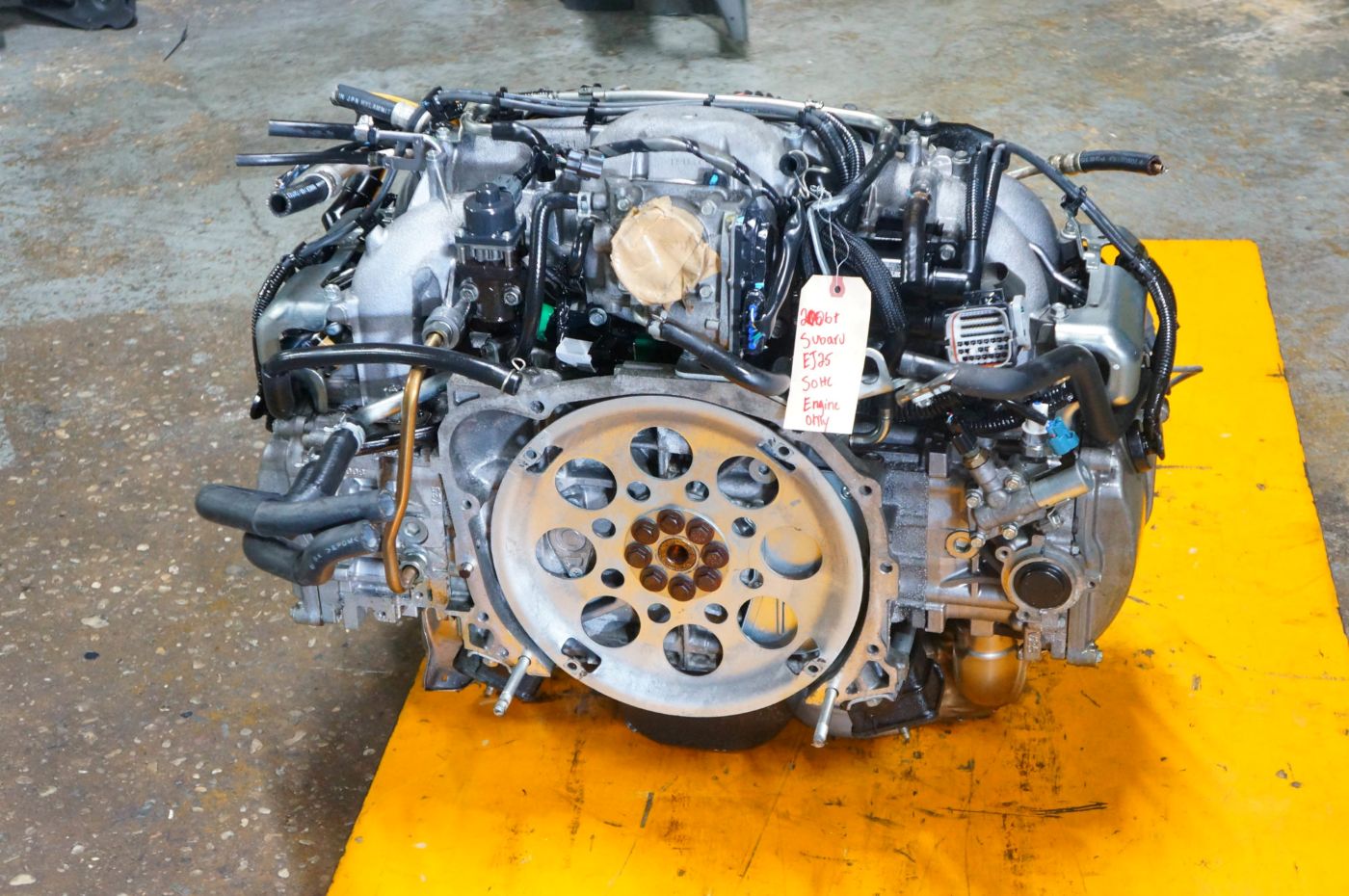
3. Subaru 2.5L FA25 Turbocharged Boxer Four-Cylinder (WRX)
The FA25 turbocharged boxer four-cylinder in the current WRX represents the culmination of Subaru’s decades of turbocharged all-wheel-drive engineering experience. The boxer layout, with horizontally opposed cylinders, provides inherent balance advantages over inline configurations, reducing the vibration that stresses engine mounts, accessory brackets, and the engine itself.
Subaru transitioned from the EJ-series to the FA-series architecture to address the known durability weaknesses of the older design, incorporating lessons learned from years of owner feedback, motorsport experience, and engineering research. The FA25 uses a more robust bottom end, improved piston ring design, and enhanced cooling compared to its predecessor.
The direct injection system in the FA25, when combined with the port injection system Subaru added in recent updates, addresses the carbon buildup concern that challenged direct injection only engines. Port injection provides a solvent effect on the intake valves and ports, preventing the progressive restriction of airflow that occurs when carbon deposits accumulate on valve faces and stems.
This dual injection approach, similar to what Toyota pioneered on their D-4ST system, ensures that the FA25 maintains consistent volumetric efficiency throughout a long service life, preserving power output and fuel economy in a way that single-injection systems cannot match over very high mileage.
This smoothness also reduces the stress on the engine’s own output shaft and crankshaft, contributing to bottom-end longevity. The integration between engine and drivetrain management is more sophisticated in the WRX than in most comparable performance cars.
The FA25’s cooling system was substantially revised compared to the EJ series it replaced, addressing one of the older engine’s documented weaknesses. The FA25 uses separate coolant channels that provide more even temperature distribution across all four cylinders, preventing the hot spots in the rear cylinders that contributed to some EJ engine failures.
The thermostat is a wax-type unit with a well-proven failure mode, and the cooling system’s capacity is sized to handle sustained high-load operation including track driving. Owners who use their WRX for occasional track events report that the cooling system maintains acceptable temperatures even during extended sessions, providing a useful margin of safety for the head gaskets and valve seats.
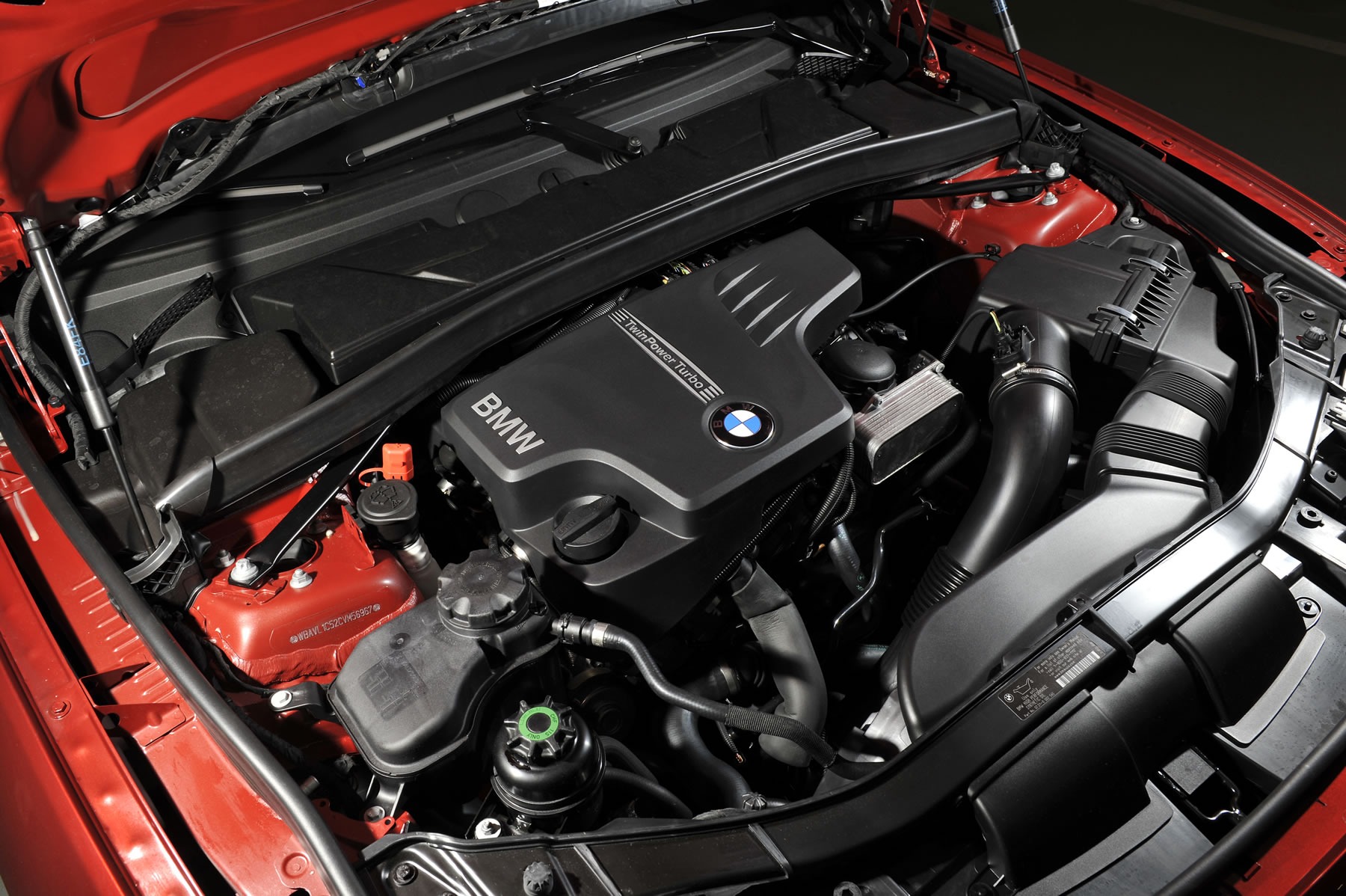
4. BMW N20 2.0L TwinPower Turbo Four-Cylinder
The BMW N20 2.0-liter TwinPower turbocharged four-cylinder earned a strong reliability reputation despite the brand’s occasional quality concerns, and the documented evidence supports taking that reputation seriously.
The N20 uses BMW’s TwinScroll turbocharger technology, which pairs alternate cylinders to the two separate scroll housings in the turbine section, reducing exhaust pulse interference and improving response time without increasing the size of the turbocharger itself.
This architecture allows the N20 to deliver the throttle response associated with a larger, more powerful engine while maintaining the fuel efficiency and low-end torque of a small-displacement turbocharged unit. It is an elegant engineering solution that also benefits longevity by keeping turbo wheel tip speeds moderate.
The N20’s Valvetronic variable valve lift system, combined with double VANOS variable cam timing on both intake and exhaust camshafts, allows the engine to control the intake charge with precision that eliminates the need for a traditional throttle butterfly in most operating conditions.
This throttle-less operation reduces pumping losses and allows very fine control of the combustion charge that optimizes combustion efficiency across a wide range of conditions. The Valvetronic actuator mechanism is mechanically complex, but BMW has accumulated significant production experience with the system and the failure rate in properly maintained engines is low.
The N20’s oil system requires careful attention to maintain its durability potential. BMW specifies a full synthetic long-life oil with a specific viscosity and additive package, and using this oil is not optional for owners who want to achieve high mileage without internal issues. The engine’s tight tolerances and the turbocharger’s bearing requirements make oil quality a critical maintenance input.
The timing chain on the N20 is a component that requires monitoring, as early production examples experienced chain stretch that required replacement around 60,000 to 80,000 miles in some cases. BMW issued updated chain tensioners and revised the oil control valve design to address the root causes, and later production N20 engines do not exhibit the early chain wear that characterized the first production years.
Owners of early examples who address the timing chain service when needed find that the engine continues to perform well afterward, as the fundamental architecture is sound. The chain issue is a known and manageable service item rather than a fundamental design flaw.
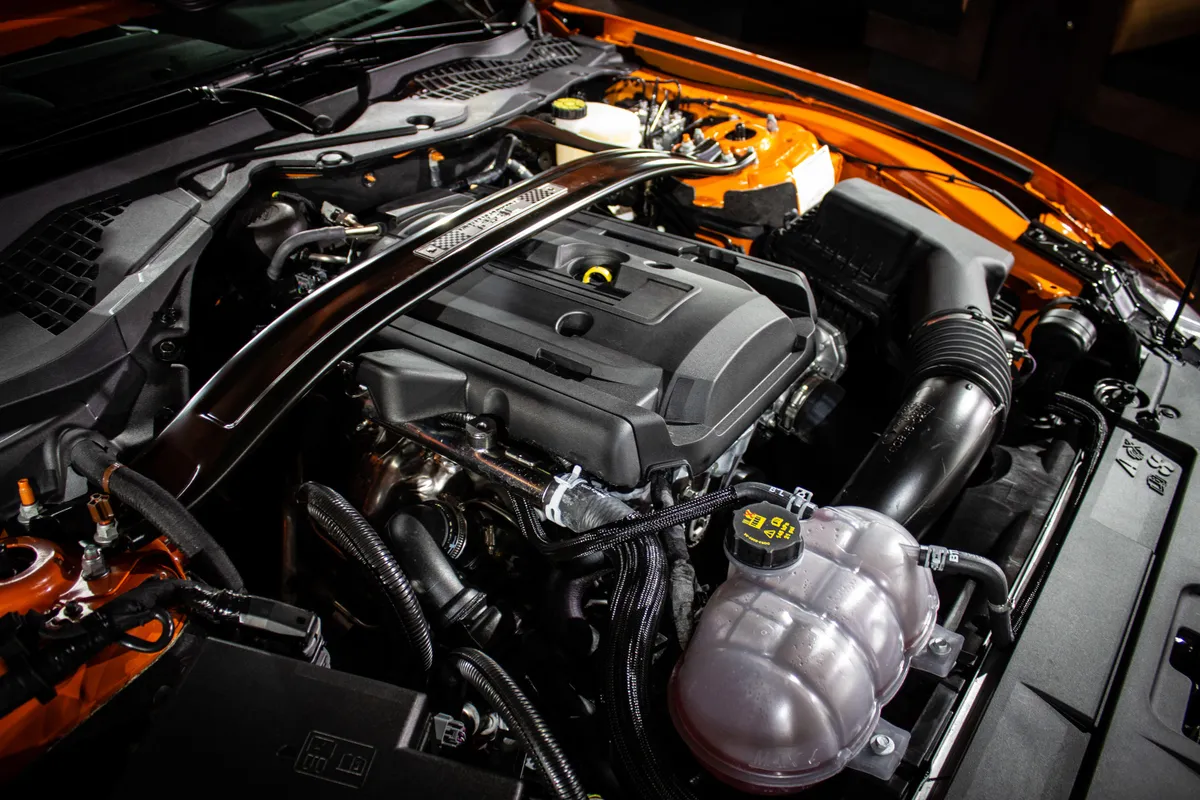
5. Ford EcoBoost 2.3L Four-Cylinder (Mustang EcoBoost)
The 2.3-liter EcoBoost four-cylinder in the Mustang and Focus RS has proven itself in one of the most demanding performance applications available to a four-cylinder engine in the mainstream market. This engine must satisfy buyers who want Mustang performance and are willing to accept a four-cylinder only if it genuinely delivers.
Ford’s engineers designed the 2.3 EcoBoost with a cast iron block for structural rigidity under the high cylinder pressures generated by its boost levels, and the decision to use iron rather than aluminum in this application reflects a prioritization of structural integrity over weight reduction. The result is an engine with excellent bottom-end durability under the kind of hard use that Mustang buyers actually impose.
The port injection plus direct injection system on the Mustang EcoBoost version of the 2.3 addresses the carbon buildup concern by maintaining continuous port injection wash of the intake valves. The direct injection system handles the main fuel delivery for efficiency and precise combustion control, while the port injectors deliver a measured quantity of fuel to the intake ports in a pattern that keeps valve faces and stems clean.
This dual injection approach is more expensive to engineer and manufacture than a single-injection system, but the long-term cleanliness benefits justify the investment in an engine expected to accumulate significant performance mileage.
Track use is a reality for a meaningful portion of Mustang EcoBoost owners, and Ford engineered the engine to tolerate occasional circuit driving without distress. The cooling system uses an air-to-water intercooler that provides consistent intake charge temperatures regardless of ambient conditions, preventing the heat-soak that causes power reduction and detonation risk during back-to-back acceleration runs.
The oil system is sized with a capacity adequate for sustained high-load operation, and the oil pan baffling prevents oil starvation during the lateral acceleration that hard cornering generates. These track-day engineering inputs directly benefit long-term durability by ensuring the engine operates within safe thermal limits even under demanding conditions.
The 2.3 EcoBoost’s low-end torque delivery is a characteristic that reduces wear during the kinds of driving maneuvers that stress engines in traffic. The strong torque output available from very low rpm means the engine never needs to be held at high revs to execute passing maneuvers or merge onto highways.
This ability to perform at low engine speeds translates into fewer high-rpm events over the engine’s lifetime, which directly reduces the rate of wear on the valve train, piston rings, and rod bearings that occurs at engine speeds. The broad power band that turbocharging provides is thus not just a performance feature but a durability feature as well.
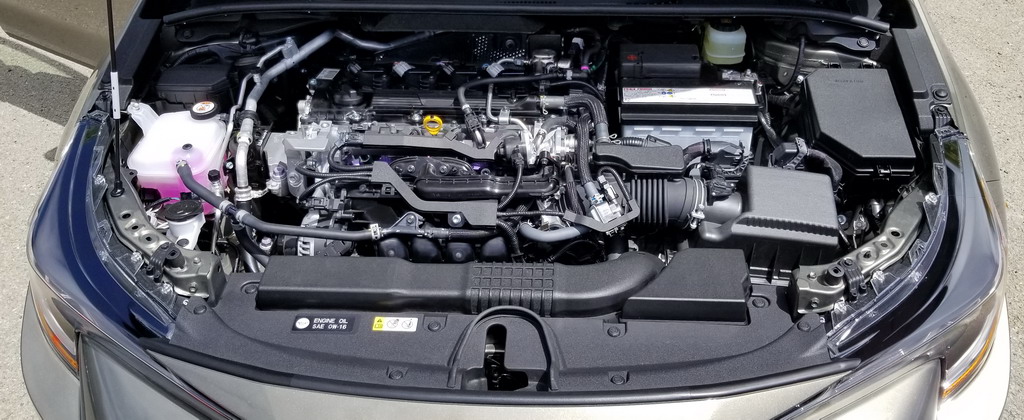
6. Toyota 2.0L Dynamic Force Turbocharged Engine (GR Corolla)
The G16E-GTS turbocharged 1.6-liter three-cylinder in the GR Corolla may technically be a three-cylinder, but the principles behind Toyota’s GR engine family reliability apply equally to the turbocharged four-cylinder Dynamic Force engine used in various Corolla applications.
Toyota’s approach to turbocharging in the GR family draws heavily on the company’s rally racing experience with the GR Yaris, and the result is an engine that combines high specific output with the durability standards Toyota applies to its entire range. The forged internals, precision manufacturing, and conservative thermal management that characterize all Toyota GR engines make this platform one of the most durable in the performance segment.
Toyota’s use of laser-welded cylinder walls in the GR engine family deserves particular attention as a durability feature. The laser welding process creates a bore surface with a precise texture that holds oil film reliably while minimizing friction, providing better piston ring seal and reduced wear compared to conventional honing techniques.
This manufacturing process is more expensive but produces a bore surface quality that traditional machining cannot match, and the benefits accumulate over a long service life through reduced ring and cylinder wall wear. The precision of the laser welding process also means that bore geometry is more consistent across production units, reducing unit-to-unit variation in engine performance and wear characteristics.
Cooling architecture in the GR turbocharged four-cylinder uses separate cooling circuits for the block and head, allowing precise temperature control of each section independent of the other. The cylinder head’s cooling circuit is designed to flow coolant at high velocity through the areas surrounding the combustion chambers and exhaust ports, where combustion heat generation is highest.
This targeted cooling approach prevents the localized hot spots that cause valve seat recession, pre-ignition, and head gasket failures. The cylinder block’s cooling circuit warms more slowly to bring the engine to operating temperature quickly, reducing the time spent in the wear-intensive cold-start phase.
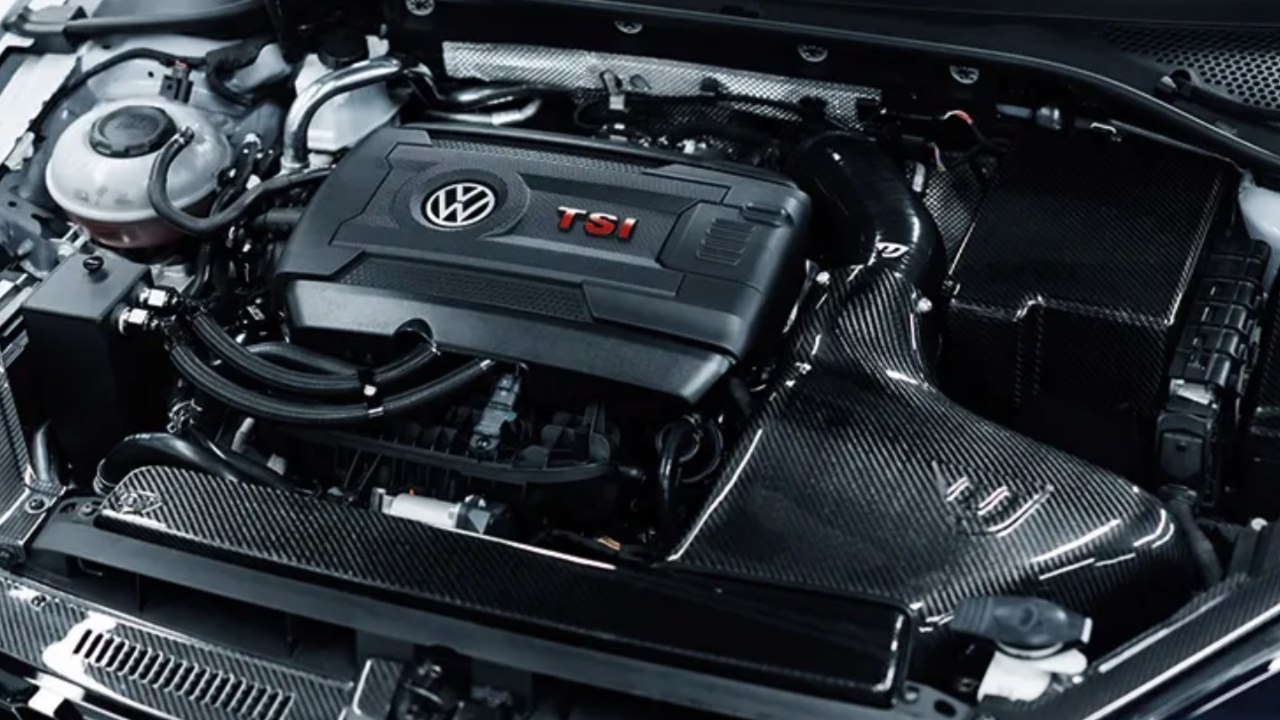
7. Volkswagen 2.0 TSI EA888 Gen 3B Turbocharged Engine
The Volkswagen 2.0 TSI EA888 Generation 3B engine represents the mature evolution of VW’s turbocharged four-cylinder platform, incorporating lessons learned from earlier generations that had oil consumption and timing chain concerns.
Generation 3B introduced revised piston ring design that dramatically reduced oil consumption, updated timing chain tensioners that addressed the stretch issues of earlier units, and improved thermal management that reduced the risk of oil coking in the turbocharger bearing housing.
These targeted engineering improvements transformed the EA888 from a capable but sometimes problematic engine into a genuinely durable turbocharged unit that competes with the best in the segment.
The EA888 Gen 3B uses a dual injection system with both direct and port injection, delivering fuel through port injectors under cold start and light load conditions when deposit prevention is most important, and through direct injectors under higher load conditions when combustion precision matters most.
The transition between injection modes is managed seamlessly by the engine management system, and the combined effect is an intake tract that remains significantly cleaner over high mileage than earlier direct-injection-only versions of the EA888. Long-term owners report that intake valve condition at high mileage is substantially better than what was commonly observed on Gen 1 and Gen 2 EA888 engines.
The TSI turbocharger in the EA888 Gen 3B uses a twin-scroll design that provides rapid response while keeping bearing temperatures moderate. The turbo bearing housing uses a water cooling circuit that continues to circulate after engine shutdown, preventing oil coking in the housing during heat soak.
The oil supply to the turbo bearing is controlled by a check valve that maintains positive pressure at startup to minimize the duration of the unlubricated period when the engine first fires. These details reflect VW’s understanding that turbocharger durability is the critical factor separating ordinary turbocharged engines from genuinely high-mileage units.
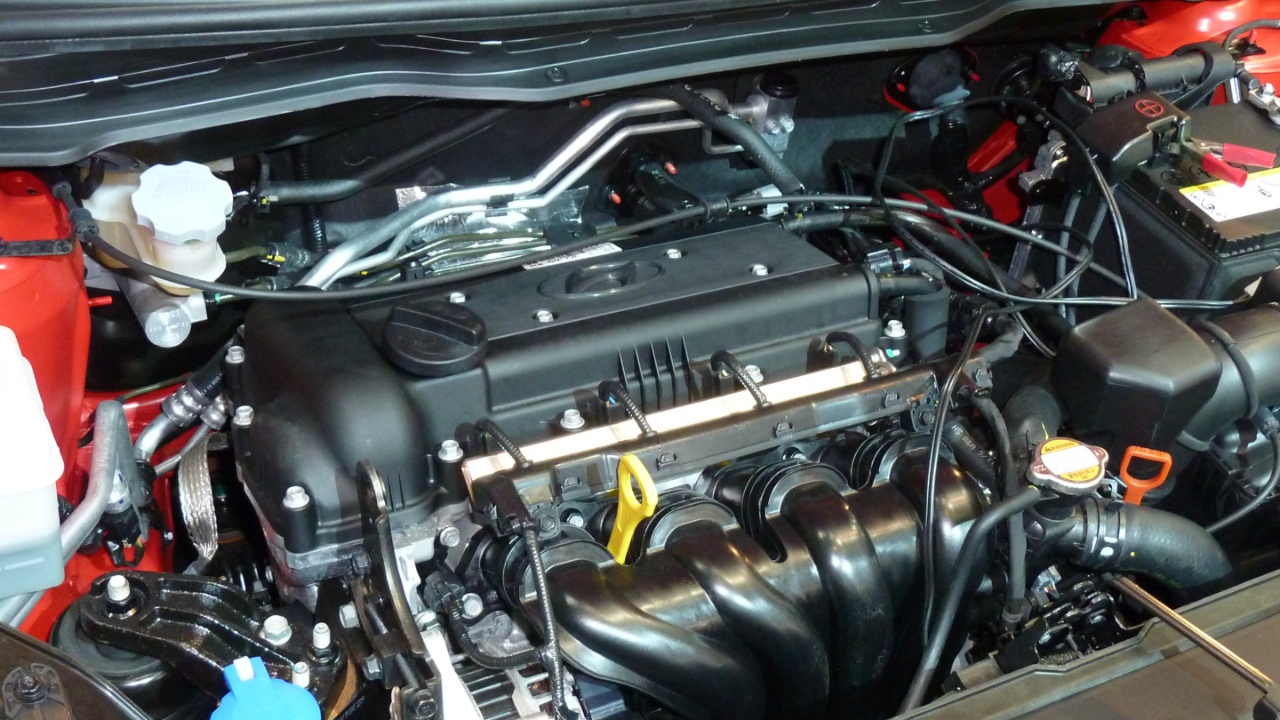
8. Hyundai 1.6L Gamma II Turbocharged Engine (N Line)
Hyundai’s 1.6-liter Gamma II turbocharged engine, used in the Veloster Turbo, Elantra N Line, and Tucson N Line, represents Korean engineering at its most ambitious in the performance four-cylinder segment. Hyundai has invested heavily in developing performance expertise, and the Gamma II turbo is a product of that investment combined with practical engineering judgment about durability requirements.
The engine uses a water-cooled turbocharger with an integrated manifold, keeping the hot exhaust pathway short and allowing close-coupled catalytic converter placement that reduces cold-start emissions without compromising engine hardware durability. The integrated design also reduces the thermal mass between combustion and turbo, improving response time.
The cylinder block in the Gamma II uses a closed-deck design, where the coolant passages around the cylinder bores are partially closed at the top rather than open. This closed deck construction provides significantly greater structural rigidity around the bore, resisting the distortion that can occur under high cylinder pressures in open-deck designs.
The reduced distortion means piston ring seal is maintained more consistently throughout the engine’s life, contributing to lower oil consumption and better compression retention at high mileage. Hyundai chose closed-deck construction understanding that the slight weight penalty was worth the structural and longevity benefits in a turbocharged application.
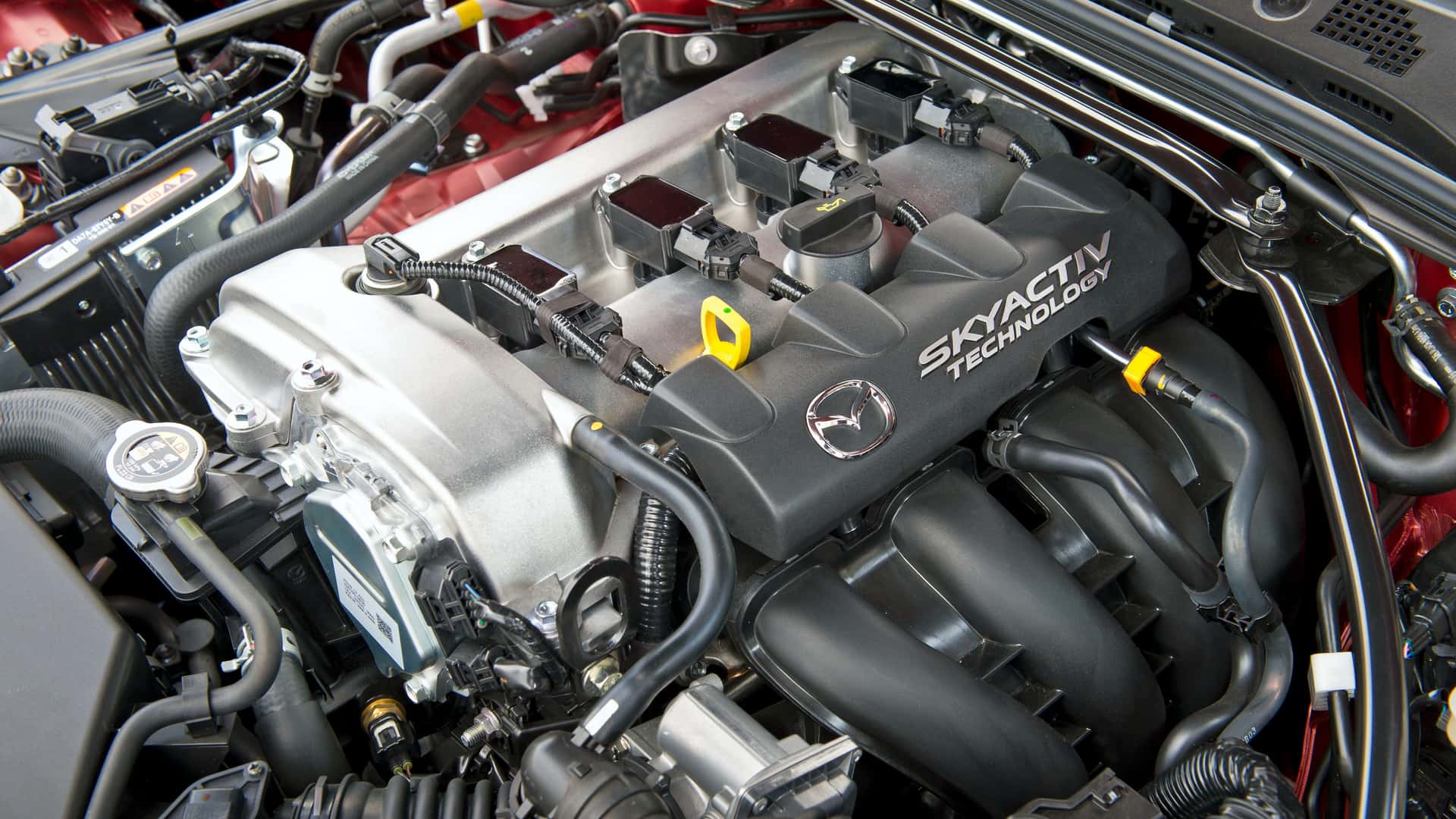
9. Mazda 2.5L Skyactiv-G Turbocharged Engine
Mazda’s 2.5-liter Skyactiv-G turbocharged engine, found in the CX-5, CX-9, and Mazda6, approaches turbocharged engine design from a philosophy of thermodynamic efficiency that has direct benefits for durability.
Mazda’s Skyactiv technology program is built around the conviction that high compression ratios, more complete combustion, and reduced heat rejection produce better efficiency and lower stress on engine components.
The turbocharged 2.5 uses a modest boost level combined with a high compression ratio that is unusually high for a turbocharged engine, requiring careful combustion management but delivering combustion efficiency that reduces the thermal load on the engine structure.
The Skyactiv-G turbo’s 4-2-1 exhaust manifold design pairs cylinders in a way that separates exhaust pulses in the turbine inlet, allowing the turbo to extract more energy from each pulse rather than averaging them together as conventional manifolds do.
This design reduces exhaust back pressure on the cylinders during the exhaust stroke, which directly reduces the pumping work the engine must do and lowers the residual hot gas retained in the cylinder after exhaust.
Lower residual hot gas reduces the likelihood of pre-ignition, which is the primary concern limiting compression ratio in turbocharged engines. The result is a combustion environment that is inherently more stable and less stressful for pistons and head gaskets.
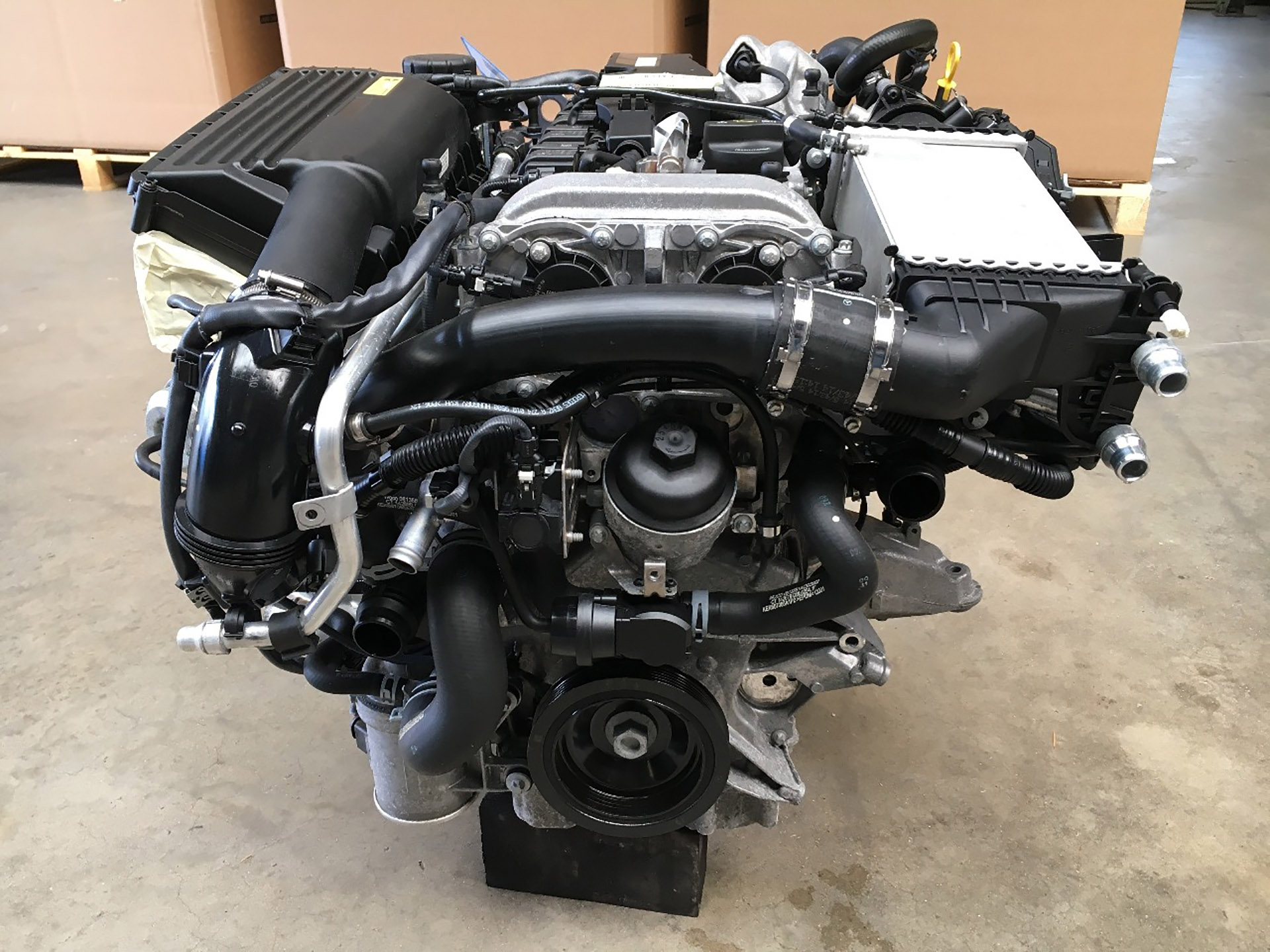
10. Mercedes-Benz M270/M274 2.0L Turbocharged Engine
The Mercedes-Benz M270 and M274 turbocharged four-cylinder engines form the foundation of the brand’s four-cylinder lineup across A-Class, C-Class, GLC, and E-Class applications. Mercedes engineers designed these engines to meet the durability expectations of Mercedes buyers, who have historically expected their vehicles to serve reliably for high mileage across varied operating conditions.
The M270 and M274 share a common architecture but differ in displacement and application, with the M274 2.0-liter version used in more demanding applications including the C250 and GLC 300. Both engines use Mercedes’ Nanoslide cylinder bore coating technology, which applies an iron-carbon compound to the cylinder bore surface to create an extremely hard, low-friction wear surface.
The Nanoslide bore coating technology used in the M270 and M274 deserves detailed explanation as it is one of the most significant durability advances in recent production engine development. The coating is applied by a twin-wire arc spray process that creates a surface with billions of microscopic pores per square centimeter.
The turbocharger specification on the M274 uses a twin-scroll design with water cooling and oil cooling for the bearing housing, providing the turbocharger bearing with robust thermal protection during the operating cycle and during heat soak after shutdown.
Mercedes specifies a turbo cool-down procedure for the stop-start system that keeps the coolant pump running briefly after engine shutdown, circulating water through the turbo bearing housing to remove heat before it can damage the bearing and coking oil. This automated heat management eliminates one of the most common causes of early turbocharger failure in engines with hot-side turbo placement.
