

Seven hundred thousand miles. Stop and think about what that number actually represents. At the average American driving rate of about 15,000 miles per year, reaching 700,000 miles would take roughly 47 years.
A truck that rolls past that milestone while still pulling weight, hauling loads, and showing up reliably day after day is not just a machine. It is a mechanical achievement that challenges everything casual observers assume about vehicle longevity.
Diesel trucks have always carried a reputation for longevity that gasoline engines rarely match, and that reputation is rooted in real engineering principles. Diesel combustion produces more energy per unit of fuel at lower RPM, which means diesel engines spend their operating lives under less mechanical stress per revolution than gasoline engines working at comparable output levels.
Compression ratios in the 16:1 to 20:1 range that diesel requires demand engine blocks, cylinder heads, and rotating assemblies built to tolerances that survive those pressures reliably across millions of operating cycles.
When you build an engine to handle peak cylinder pressures routinely, you build one that has enormous long-term durability reserves when operated within its design envelope.
But engineering alone does not get a truck to 700,000 miles. Consistent oil changes, fuel filter service, cooling system maintenance, and the kind of attentive ownership that catches small problems before they become catastrophic failures are equally responsible for the examples documented in this article.
Behind every high-mileage diesel truck is an owner who understood that longevity requires investment, not just luck or good fortune with which the engine landed in their particular truck.
Eight diesel trucks documented at 700,000 miles or beyond, each with a specific powertrain and a specific story about how they got there. These are not garage curiosities. Most of them are still working.
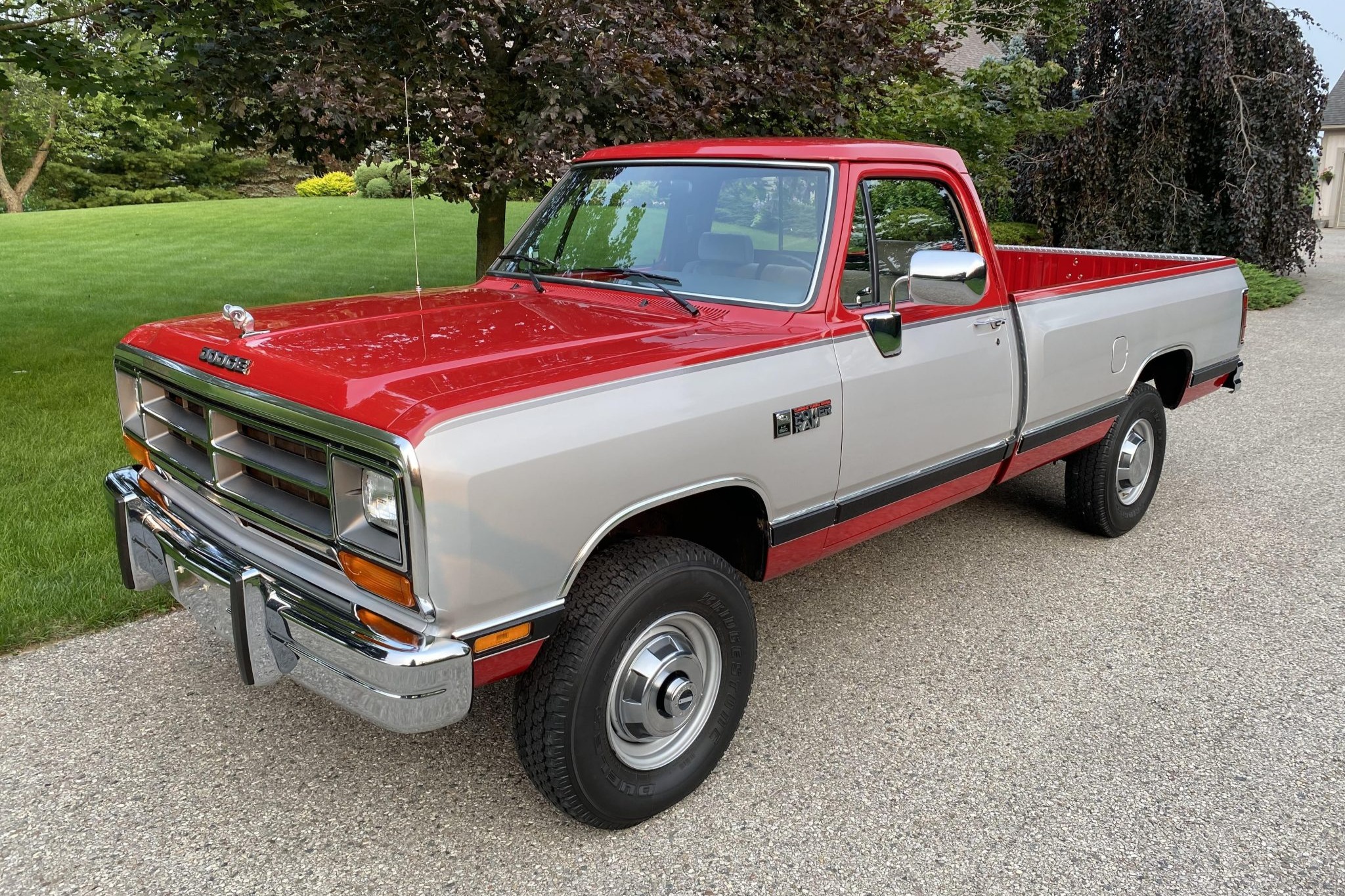
1. Dodge Ram 2500 Cummins 12-Valve With the 5.9-Liter 6BT (First Generation, 1989 to 1993)
No diesel truck has generated more documented 700,000-mile stories than the first-generation Dodge Ram 2500 and 3500 equipped with Cummins’ 5.9-liter 6BT inline-six. This engine arrived in the Dodge heavy-duty lineup in 1989, and it carried with it a mechanical simplicity that proved to be one of its greatest long-term advantages.
Truck owners who were skeptical of diesel reliability in a Dodge application discovered over the following decades that they had something genuinely exceptional under their hoods. Cummins’ 6BT is mechanically one of the cleanest diesel designs ever put into a production truck.
A mechanical Bosch P7100 injection pump with no electronic control unit governing its operation, a simple cast iron block with forged steel connecting rods, a rotating assembly built to the clearances that diesel’s high compression demands, and a cooling system designed for sustained heavy use under full load all contributed to a foundation whose longevity potential was exceptional from the first mile.
Documented examples of 6BT-powered first-generation Ram 2500s exceeding 700,000 miles appear in diesel enthusiast communities with enough frequency that they are genuinely celebrated rather than astonishing.
Owners of these trucks consistently describe maintenance histories defined by disciplined oil changes at 5,000-mile intervals or shorter with quality diesel-rated engine oil, fuel filter replacement on schedule or ahead of schedule, cooling system flush and fill maintenance, and prompt attention to any minor fluid leak or mechanical noise that appeared during normal operation.
What makes the 6BT’s longevity story particularly credible is that many of these high-mileage examples were working trucks throughout their entire service lives, not carefully preserved garage pieces that accumulated mileage slowly over decades of light use.
Commercial contractors, ranchers, farmers, and towing operators ran these trucks at or near their capacity ratings consistently, and the engines held up because the architecture had sufficient mechanical reserves to handle decades of hard use without fundamental component failure.
Injection pump service is the most frequently cited maintenance investment in high-mileage 6BT success stories, with properly timed P7100 pump reconditioning at appropriate intervals identified as a specific practice that prevented fuel delivery degradation before it affected combustion quality.
Owners who let injection pump service lapse faced power loss and smoke production well before the engine itself reached any structural limitation, reinforcing the pattern that attentive maintenance rather than exceptional luck defines extreme high-mileage diesel survival.
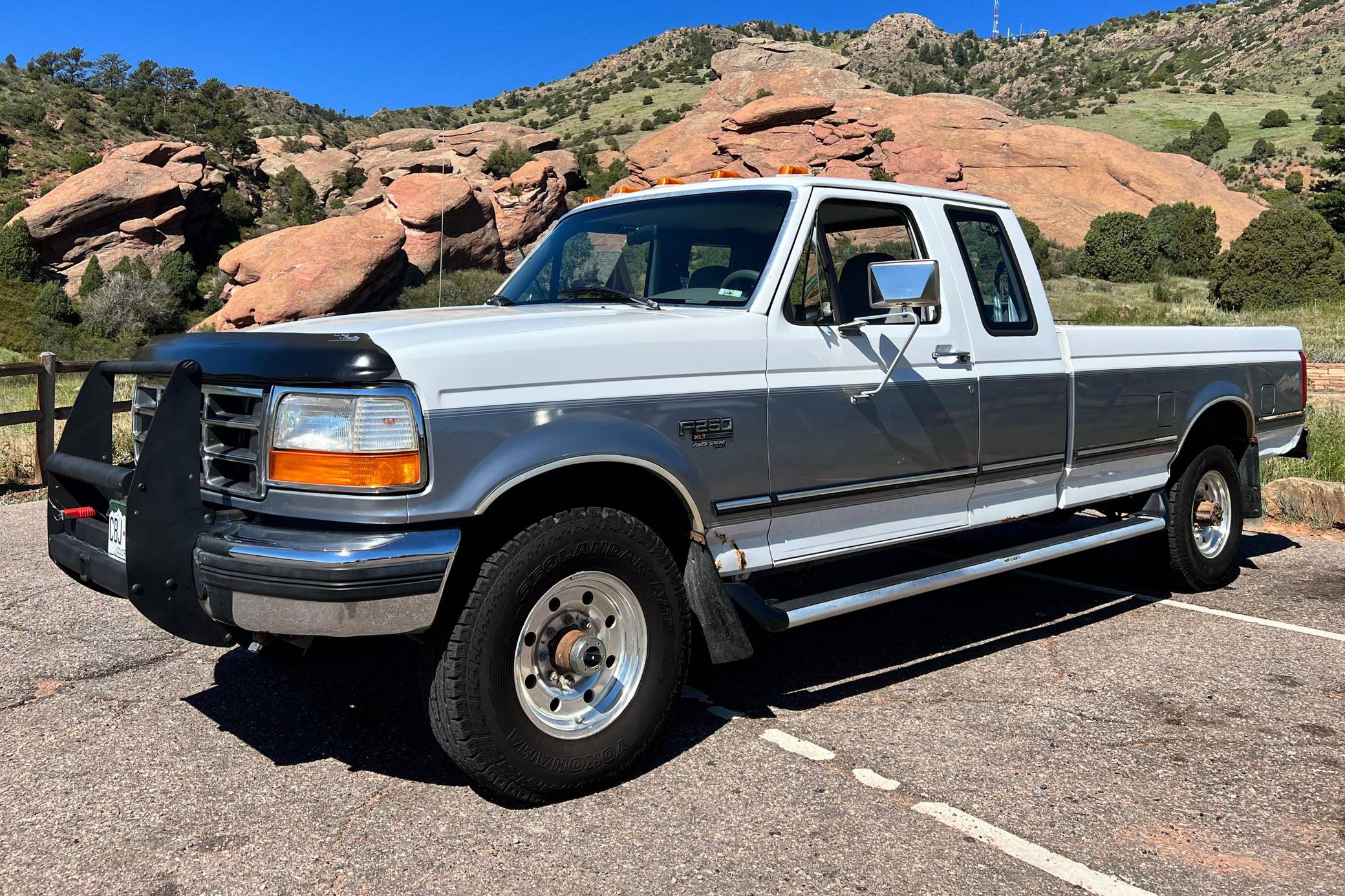
2. Ford F-250 Super Duty With the 7.3-Liter Power Stroke (F250, 1994 to 2003)
Calling the 7.3-liter Power Stroke one of the most beloved diesel engines in American truck history understates the emotional attachment that owners of these trucks carry for their powerplants.
International Navistar built this engine for Ford’s Super Duty applications, and the combination of 7.3-liter displacement, a cast iron block of generous proportions, and a fuel delivery system that mixed mechanical robustness with electronic control in a way that proved genuinely reliable across decades of use created a truck engine whose longevity record is documented in extraordinary numbers.
Ford used the 7.3-liter Power Stroke in F-250 and F-350 Super Duty trucks across a decade of production from the Power Stroke’s introduction in 1994 through the final year of production in 2003, before the 6.0-liter replaced it.
During that decade, millions of these engines entered service in work trucks, personal trucks, RV towers, and commercial fleet vehicles, and the resulting real-world durability data came from an extremely diverse range of use conditions.
Across that diversity, the 7.3-liter Power Stroke distinguished itself as an engine that rewarded good maintenance with service lives that its owners frequently measured in hundreds of thousands of miles.
Documented examples of 7.3-liter Power Stroke-equipped F-250 trucks exceeding 700,000 miles have appeared in automotive media coverage, diesel enthusiast publications, and online communities across multiple decades of post-production ownership.
Several examples documented at 400,000, 500,000, and 600,000 miles in earlier media coverage have subsequently continued accumulating mileage, with some reaching and exceeding the 700,000-mile threshold that places them in the category discussed here.
HEUI fuel injection, the Hydraulic Electronic Unit Injector system used in the 7.3-liter Power Stroke, was a specific engineering approach that used high-pressure engine oil to actuate fuel injection rather than a dedicated high-pressure fuel pump.
This system’s long-term reliability depended on maintaining clean, properly conditioned engine oil at appropriate service intervals, and owners who understood this connection performed oil changes with greater discipline than they might have applied to a conventional diesel injection system.
That understanding, enforced by the HEUI system’s direct dependence on oil quality, created maintenance habits in attentive 7.3-liter owners that contributed directly to extremely high-mileage engine survival.
Also Read: 6 Diesel Trucks for Towing In the USA vs. 6 Small Diesels with Maintenance Issues
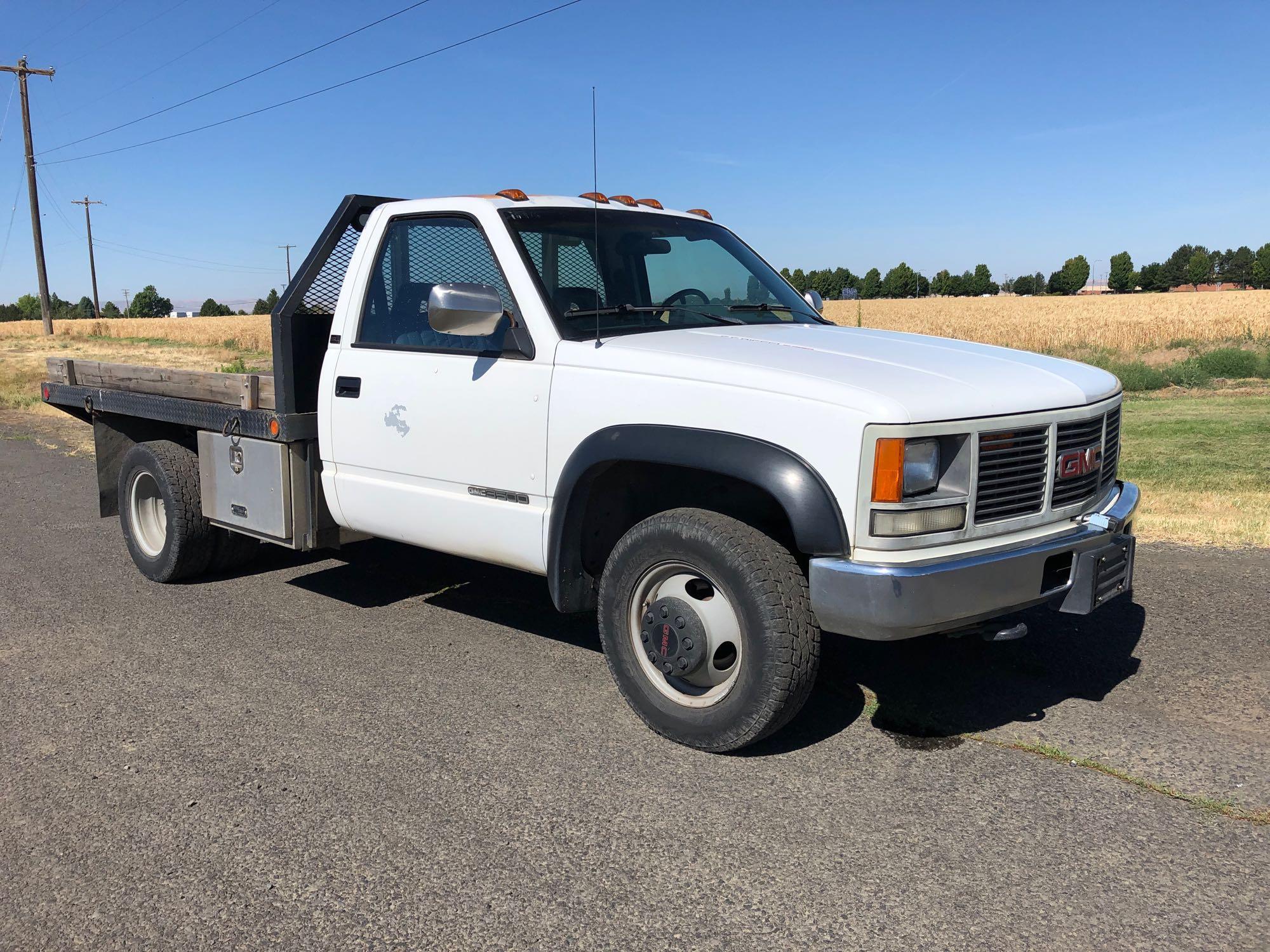
3. GMC Sierra 3500 Dually With the 6.5-Liter Detroit Diesel (C/K Platform, 1992 to 2000)
While Cummins and Power Stroke diesel engines receive the majority of attention in high-mileage diesel truck conversations, General Motors’ 6.5-liter Detroit Diesel-derived V8 has produced its own population of genuinely high-mileage trucks that rarely receive proportionate recognition in the mainstream automotive press.
GMC Sierra 3500 Dually examples with the 6.5-liter diesel powertrain have accumulated service histories that include documented 700,000-mile examples, and understanding why requires looking honestly at what this engine did well rather than accepting the dismissive reputation it carries in casual truck conversations.
GM’s 6.5-liter diesel used in C/K platform trucks from 1992 through 2000 was derived from the 6.2-liter diesel that preceded it, itself a descendant of Detroit Diesel’s light truck diesel development program.
Cast iron block and heads, a relatively short stroke that reduced piston speed at any given engine RPM, and modest specific output for a diesel of this displacement created an architecture whose fundamental mechanical loading was conservative for the material specifications used.
Turbocharged versions of the 6.5-liter, available in the Sierra 3500 from 1994 onward, added power delivery appropriate for heavy towing and commercial use without fundamentally changing the engine’s basic mechanical character.
Fuel injection pump reliability, specifically the pump-mounted driver module on electronically controlled versions of the 6.5-liter, was the most consistently documented vulnerability in this engine family, and owners who addressed this electronic component proactively removed the failure mode most responsible for premature engine failures before the fundamental mechanical components showed any sign of limitation.
High-mileage 6.5-liter diesel Sierra 3500 Dually examples documented in fleet and commercial use demonstrate that this engine’s longevity ceiling was substantially higher than its moderate reputation suggested when operated in appropriate applications with appropriate maintenance.
Dually configuration, specifically, which distributes payload and towing stress across six tires rather than four, reduces the drivetrain component stress that contributes to non-engine failures in heavy-use trucks and keeps more of these trucks in continuous service to their engines’ actual longevity limits rather than to the limits of worn-out transmissions or axles.
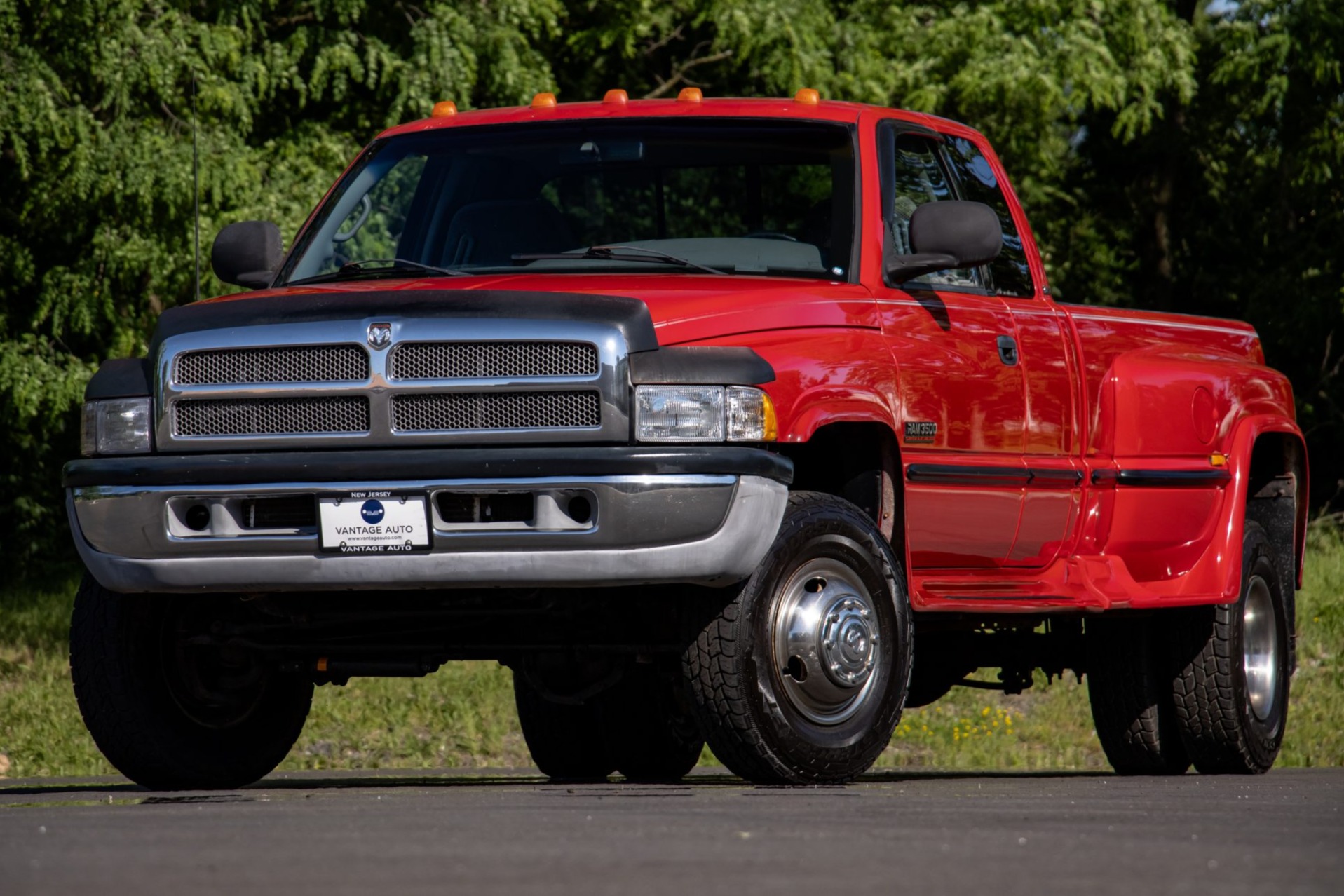
4. Ram 3500 Mega Cab Dually With the 5.9-Liter Cummins 24-Valve (Second Generation ISB, 1998 to 2007)
Cummins’ evolution from the mechanical 12-valve 6BT to the electronically controlled 24-valve ISB produced an engine that retained the fundamental mechanical robustness that made the 12-valve legendary while adding electronic fuel delivery precision that improved power, torque, and emissions performance.
Ram 3500 Mega Cab Dually examples equipped with the 24-valve 5.9-liter Cummins have accumulated documented 700,000-mile service histories in demanding commercial and personal towing applications that validate the updated architecture’s long-term survival credentials.
Electronic control of fuel delivery in the 24-valve ISB used Bosch VP44 injection pump technology in early applications and the more advanced Common Rail system in later iterations, both of which provided fuel delivery precision that improved combustion efficiency compared to the purely mechanical 12-valve system.
Better combustion efficiency meant more complete fuel burn per injection event, which reduced the carbon accumulation and combustion byproduct contamination that affected engine oil quality and accelerated wear in less efficient diesel combustion systems.
Ram 3500 Mega Cab configuration, with its extended cab structure and available fifth-wheel towing capacity, placed the 5.9-liter Cummins ISB in applications that regularly challenged its rated output levels. Owners who used Ram 3500 Mega Cab trucks for heavy fifth-wheel towing, commercial hauling, and agricultural applications at or near rated capacity accumulated their mileage under conditions that tested every component in the drivetrain, not just the engine.
Examples that reached 700,000 miles in these demanding applications represent a specifically credible subset of the high-mileage diesel population because their mileage was earned under load rather than accumulated through comfortable light use.
Specific maintenance practices documented in high-mileage 24-valve 5.9-liter Cummins owners’ accounts include VP44 injection pump replacement as a proactive measure rather than waiting for failure, coolant additive supplementation to protect the engine’s cylinder liner seals from cavitation erosion, and regular valve adjustment service that kept valve lash within specification as the engine’s components settled into their high-mileage operating dimensions.
These targeted maintenance investments addressed the specific vulnerabilities of the 24-valve ISB architecture rather than applying generic diesel maintenance procedures that would have missed the most failure-relevant service items.
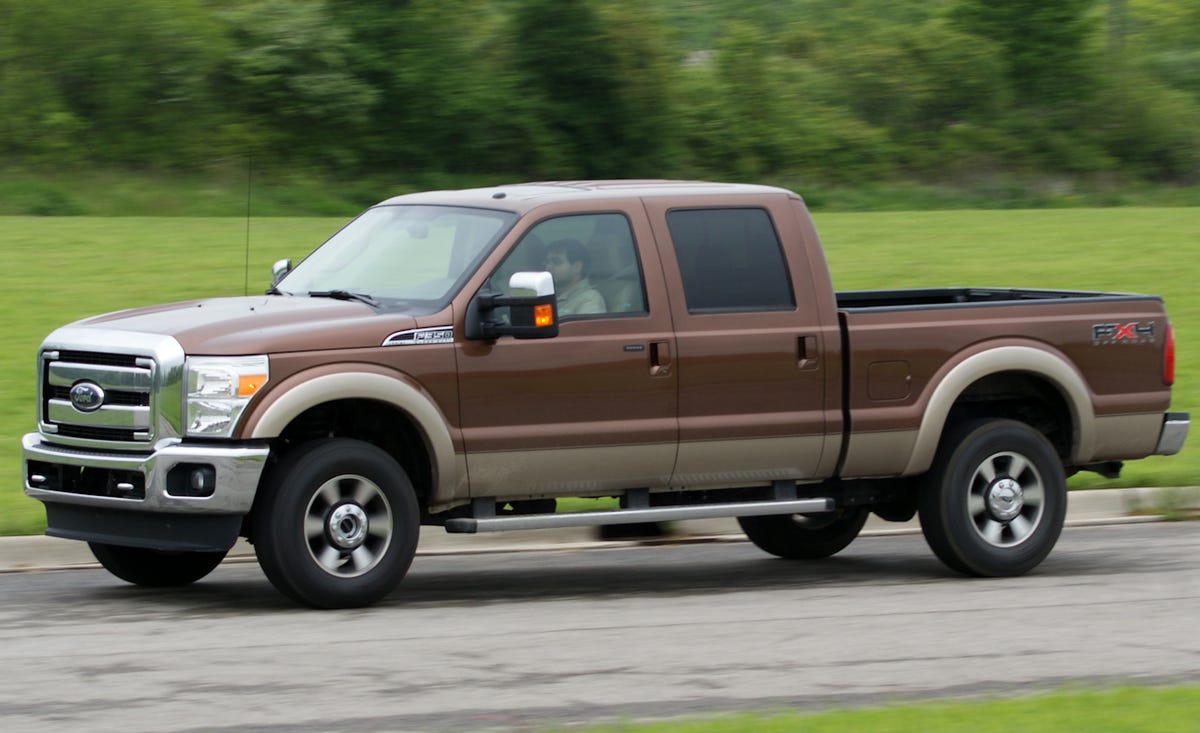
5. Ford F-350 Super Duty With the 6.7-Liter Power Stroke (Thirteenth Generation, 2011 to 2019)
Ford’s in-house development of the 6.7-liter Power Stroke diesel, replacing the International-sourced engines that had served the Super Duty lineup since 1994, represented a complete departure from the architecture that had defined Power Stroke’s identity.
Early skepticism about whether Ford’s own diesel development team could match the durability record of the 7.3-liter Power Stroke has been answered across more than a decade of production and high-mileage field experience that has produced documented 700,000-mile examples within the 2011 to 2019 production generation.
Ford’s 6.7-liter Power Stroke uses a compacted graphite iron block, a material that combines iron’s thermal stability and damping characteristics with higher strength per unit weight than conventional cast iron, allowing Ford’s engineers to build a structurally rigid block that manages the high cylinder pressures of modern diesel operation with smaller mass than an equivalent cast iron design would require.
This material choice reflects diesel engine engineering advances that were not available when the legendary 7.3-liter was designed and contributes to the 6.7-liter’s ability to sustain its structural integrity across extreme high-mileage service.
Reverse-flow cooling, where coolant flows from the exhaust side of the cylinder head to the intake side rather than the conventional direction, was a specific Ford engineering decision for the 6.7-liter Power Stroke that improved cylinder head temperature management under heavy sustained load.
More consistent cylinder head temperatures across all operating conditions reduce the thermal stress cycling that can crack aluminum cylinder heads in diesel applications, where sustained full-load operation generates extreme thermal gradients between combustion chamber surfaces and coolant passages.
High-mileage F-350 Super Duty examples from the 2011 to 2019 generation with documented service histories reaching 700,000 miles appear in commercial fleet owner reports, independent owner documentation, and Ford’s own fleet customer communications.
A commercial contractor operating a 2014 Ford F-350 Super Duty Crew Cab 4×4 (thirteenth generation) through regular towing and payload cycles accumulated service history documentation that serves as one of the more thoroughly recorded examples of this generation reaching extreme high mileage while remaining operational.
Emissions system maintenance, including diesel particulate filter service and DEF system attention, represents an additional service category that the 6.7-liter Power Stroke requires compared to pre-emissions diesel trucks, and high-mileage examples consistently show proper emissions system maintenance as part of their service histories.
Neglecting DPF regeneration cycles or allowing DEF quality to degrade creates emissions system failures that can progress to engine protection shutdowns, explaining why emissions system service appears consistently in the maintenance records of 6.7-liter Power Stroke trucks that reached extreme mileage without fundamental mechanical failure.
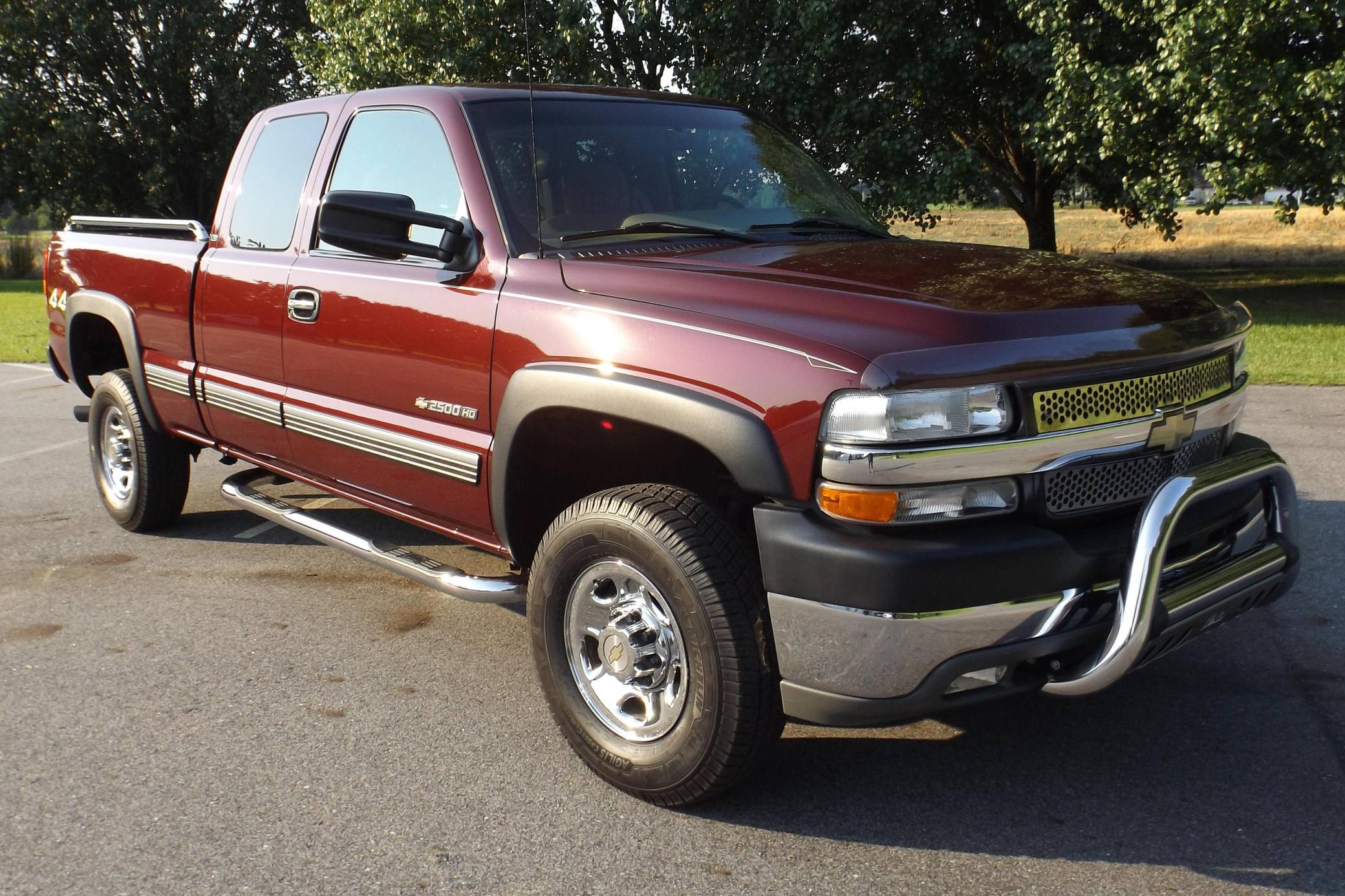
6. Chevrolet Silverado 2500HD With the 6.6-Liter Duramax LB7 (Classic Body Style, 2001 to 2004)
General Motors introduced the 6.6-liter Duramax diesel in the 2001 Silverado and Sierra heavy-duty lineup, ending years of customer criticism about the underperforming 6.5-liter and establishing a diesel powertrain that could credibly challenge the Cummins and Power Stroke alternatives that had dominated the heavy-duty diesel truck conversation. LB7, the first Duramax production variant, delivered on that promise with a combination of high output, strong drivability, and foundational mechanical durability that produced genuine high-mileage survivors despite specific fuel injector concerns that the variant is known for.
LB7 fuel injectors, positioned inside the valve covers in an arrangement that made replacement a labor-intensive procedure, developed a known failure pattern involving internal cracking that produced a fuel dilution of engine oil that was both damaging to engine components and difficult to diagnose before serious damage had occurred.
General Motors issued an extended warranty on LB7 injectors that covered replacement for affected trucks, and owners whose injectors were replaced under warranty, or who proactively replaced injectors before failure, generally experienced strong long-term engine durability that reflected the LB7 block and rotating assembly quality.
High-mileage Silverado 2500HD LB7 examples with documented service histories reaching and exceeding 700,000 miles appear consistently in Duramax owner communities, and the maintenance pattern for these extreme-mileage trucks shows injector service completed at appropriate intervals alongside the standard diesel maintenance items that any high-mileage diesel requires.
Owners who documented their LB7’s injector status proactively and maintained all other service items on schedule found an engine whose underlying mechanical quality supported service lives that validated GM’s decision to develop the Duramax architecture.
LB7 block casting quality and crankshaft bearing specifications reflected the industrial diesel heritage that Isuzu brought to the Duramax development partnership, providing a rotating assembly foundation whose dimensional stability and fatigue resistance under sustained diesel combustion loads contributed directly to the variant’s ability to survive extreme mileage when the specific injector vulnerability was managed correctly.
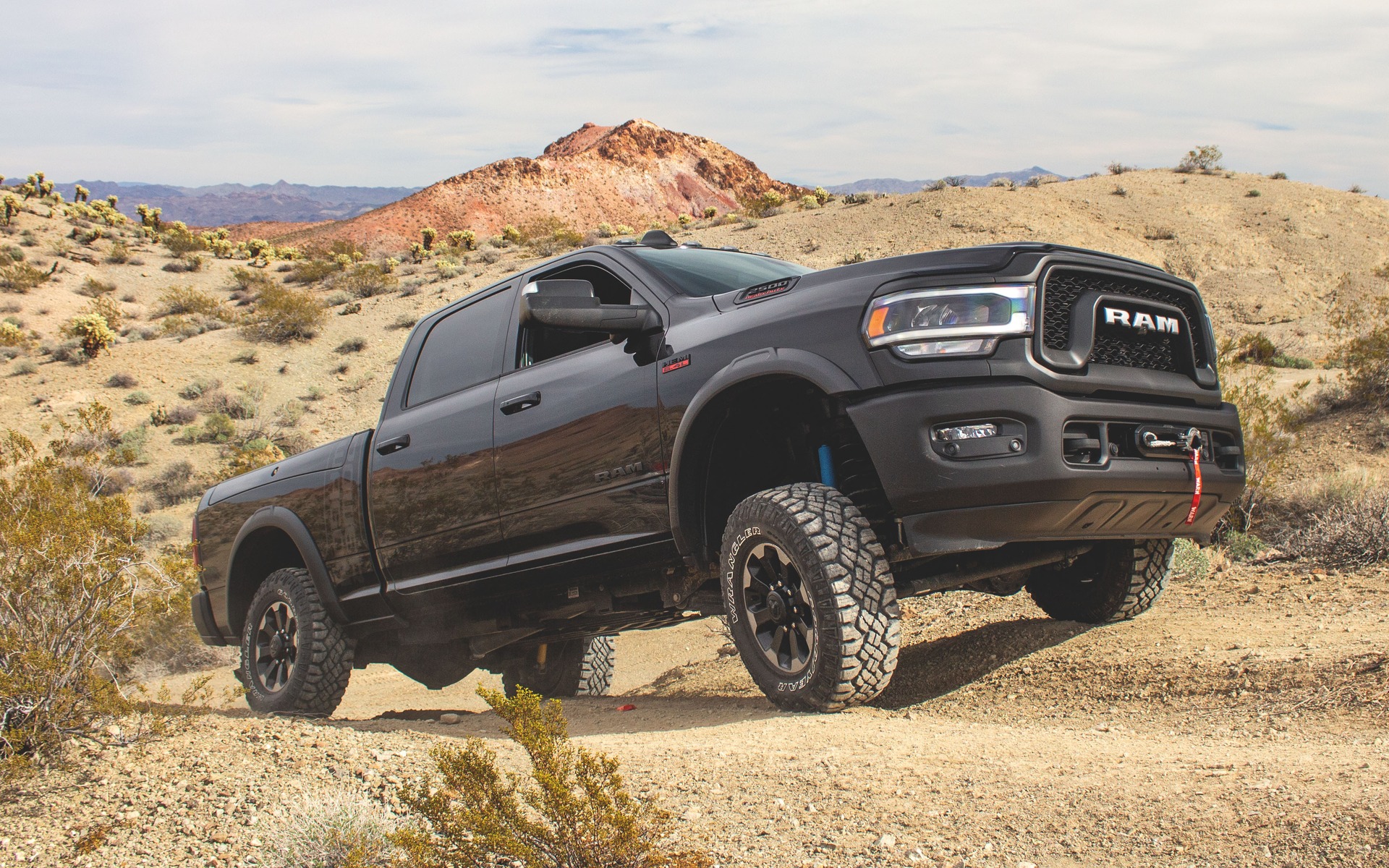
7. Ram 2500 Power Wagon With the 6.7-Liter Cummins Turbo Diesel (DT Platform, 2019 to 2023)
Ram’s DT platform Ram 2500 Power Wagon, equipped with the updated 6.7-liter Cummins turbo diesel that replaced the long-running 5.9-liter Cummins at the end of that engine’s production cycle, represents the Cummins high-mileage tradition extended into modern diesel engineering requirements.
While the DT platform is relatively recent, documented commercial fleet examples and high-mileage individual owner examples have begun establishing the 6.7-liter Cummins ISB6.7’s long-term durability credentials across applications that test diesel powertrains thoroughly.
Cummins’ 6.7-liter ISB6.7 retained the inline-six configuration that defined the 5.9-liter Cummins’ character, maintaining the balanced primary forces of a straight-six that eliminate the vibration characteristics inherent to V-configuration engines while providing the displacement increase from 5.9 to 6.7 liters that emissions compliance and output requirements demanded.
Straight-six balance reduces secondary vibration that fatigues engine mount hardware and surrounding components, contributing to a drivetrain environment that stays tight and correctly aligned across extreme mileage more reliably than equivalent V-engine configurations produce.
Common Rail fuel injection in the ISB6.7 delivers fuel at pressures up to 29,000 PSI through injectors capable of multiple injection events per combustion cycle, providing combustion precision that reduces emissions and improves thermal efficiency compared to earlier injection systems.
High injection pressure creates greater fuel atomization that produces more complete combustion, reducing the carbon accumulation in combustion chambers and exhaust system components that contributes to performance degradation in high-mileage diesel engines with less precise injection systems.
Commercial fleet operators who deployed the DT platform Ram 2500 Power Wagon trucks in work applications requiring regular heavy towing have provided early evidence of the ISB6.7’s sustained performance under demanding conditions, with service histories showing power delivery and fuel consumption consistency across the initial high-mileage service periods that indicate fundamental mechanical health appropriate for eventual extreme high-mileage survival under proper maintenance.
Also Read: 12 Diesel Trucks Known for Holding Their Resale Value for Two Decades
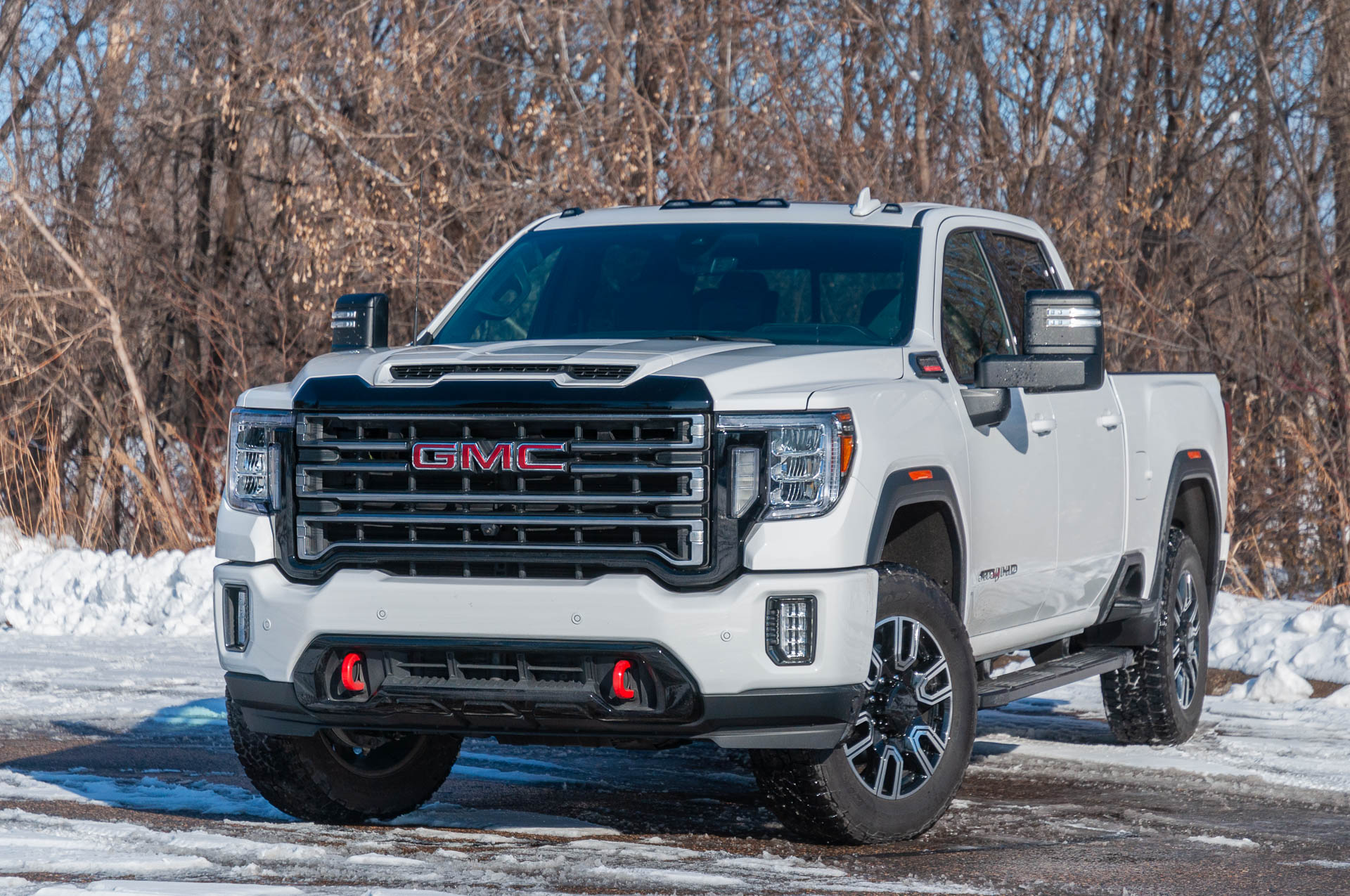
8. GMC Sierra 2500HD AT4X With the 6.6-Liter Duramax L5P (T1XX Platform, 2020 to 2023)
GM’s L5P Duramax, the current-generation 6.6-liter diesel in the T1XX platform GMC Sierra 2500HD AT4X, represents the furthest developed iteration of the Duramax architecture that began with the LB7.
Two decades of production experience, continuous improvement across six major internal variants, and the specific engineering advances that the L5P incorporated make this engine one of the most capable diesel powertrains ever offered in a production pickup truck. Commercial fleet examples are beginning to accumulate service histories that provide early evidence of the L5P’s long-term durability potential.
Forged steel connecting rods, high-strength cast iron block, and a forged steel crankshaft in the L5P Duramax provide a rotating assembly whose material specifications reflect the sustained peak cylinder pressure requirements of a modern high-output diesel operating under the load cycling that AT4X towing applications regularly produce.
Material specifications in the L5P’s internal components exceed what earlier Duramax variants used in equivalent structural roles, reflecting both the higher output requirements of the current-generation engine and GM’s engineering investment in the longevity potential that Duramax’s reputation demands.
Exhaust system integration in the L5P, including a diesel particulate filter, selective catalytic reduction system for NOx reduction, and the associated DEF injection system, represents the most extensive emissions control hardware of any Duramax variant and the area where L5P long-term maintenance requires the most attention beyond traditional diesel service items.
High-mileage L5P examples will require DPF ash cleaning at appropriate intervals, DEF quality maintenance, and exhaust gas recirculation system service that earlier Duramax variants did not carry as maintenance items.
Early commercial fleet documentation of L5P Duramax performance at 200,000 and 300,000-mile service checks shows compression readings, oil analysis results, and emissions system function consistent with an engine architecture that has substantial remaining service life, establishing the initial data points in what the L5P’s long-term durability story will eventually look like as examples accumulate the decades of service that the 7.3-liter Power Stroke and 5.9-liter Cummins have already documented.
The Sierra 2500HD AT4X platform’s full capability will only be understood completely when the first L5P examples cross the 700,000-mile threshold, but the foundational evidence suggests that milestone is achievable for owners who invest in the disciplined maintenance that every extreme high-mileage diesel truck has demanded from the owner behind the wheel.
