Performance sedans occupy a fascinating space in the automotive world. They are often overshadowed by flashy supercars and dedicated track machines, yet they possess a quiet capability that becomes evident when pushed to their limits.
Built to carry passengers in comfort during the week, these cars transform into precise, high performing tools on the track, delivering a level of versatility that few vehicles can match.
What makes these sedans particularly impressive is their ability to balance competing priorities. They must provide comfort, practicality, and refinement for everyday use while also offering the sharpness and control required for high speed driving.
This dual nature demands careful engineering, where suspension tuning, chassis rigidity, and power delivery must all work in harmony. When executed correctly, the result is a car that feels composed in traffic yet confident on a circuit.
Another factor that contributes to their effectiveness is predictability. On a track, consistency matters more than raw speed. Drivers need a car that responds the same way lap after lap, allowing them to build confidence and refine their technique.
Performance sedans excel in this area, offering stable handling, reliable braking, and power that can be managed without sudden surprises.
Technology also plays a significant role. Modern performance sedans are equipped with advanced systems that enhance traction, optimize power distribution, and adapt to different driving conditions.
These features do not replace skill but instead support it, allowing drivers to extract more performance while maintaining control. This integration of technology and engineering gives these cars an edge that is not always immediately visible.
The following selection highlights eight performance sedans that consistently prove their capability on track days. They may not always attract the same attention as more exotic machines, but their results speak for themselves.
Each one brings a unique approach to performance, demonstrating that practicality and track readiness can coexist in a single, well engineered package.
Also Read: 8 Engines With Head Gasket Failures That Destroy Entire Blocks
1. BMW M3 Competition
The BMW M3 Competition approaches track performance with a sense of discipline that becomes evident the moment it begins to move at speed. It does not rely on theatrics to make its presence known. Instead, it builds confidence through consistency, allowing drivers to focus on refining their inputs rather than managing unpredictable behavior.
Acceleration is strong and immediate, yet it remains controllable. The engine delivers power in a way that feels progressive, making it easier to modulate throttle inputs when exiting corners. This balance between intensity and control allows the car to maintain traction, reducing the need for constant correction and helping drivers carry speed more effectively.
Handling is where the M3 Competition establishes its advantage. The chassis feels rigid and responsive, translating steering inputs into precise movements. Through corners, the car maintains a stable posture, allowing drivers to approach limits without feeling uncertain. This predictability becomes a key factor in achieving consistent lap times.
Braking performance reinforces this sense of control. The system delivers strong and repeatable stopping power, allowing drivers to brake later and with confidence. Even after multiple laps, the performance remains steady, ensuring that the car does not lose effectiveness under pressure.
Inside, the cabin supports the driving experience without unnecessary distractions. Controls are positioned logically, and the seating provides the support needed for high performance driving. While it remains comfortable enough for daily use, the focus clearly shifts toward functionality when on track.
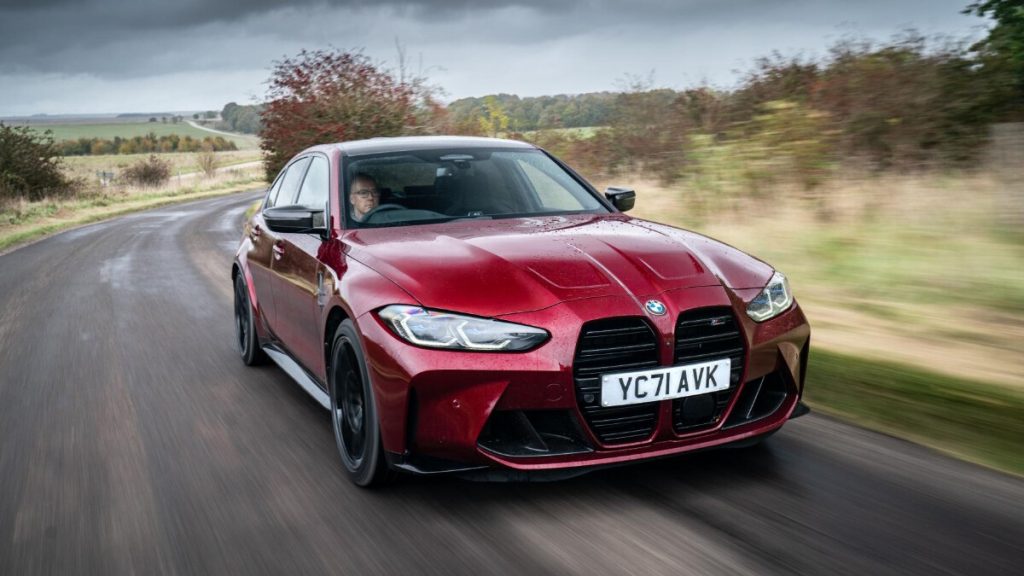
What allows the M3 Competition to dominate quietly is its ability to deliver results without drawing excessive attention.
It does not need to stand out visually or rely on exaggerated features. Instead, it focuses on execution, ensuring that every aspect of the car contributes to performance. This approach makes it a reliable and effective choice for track enthusiasts.
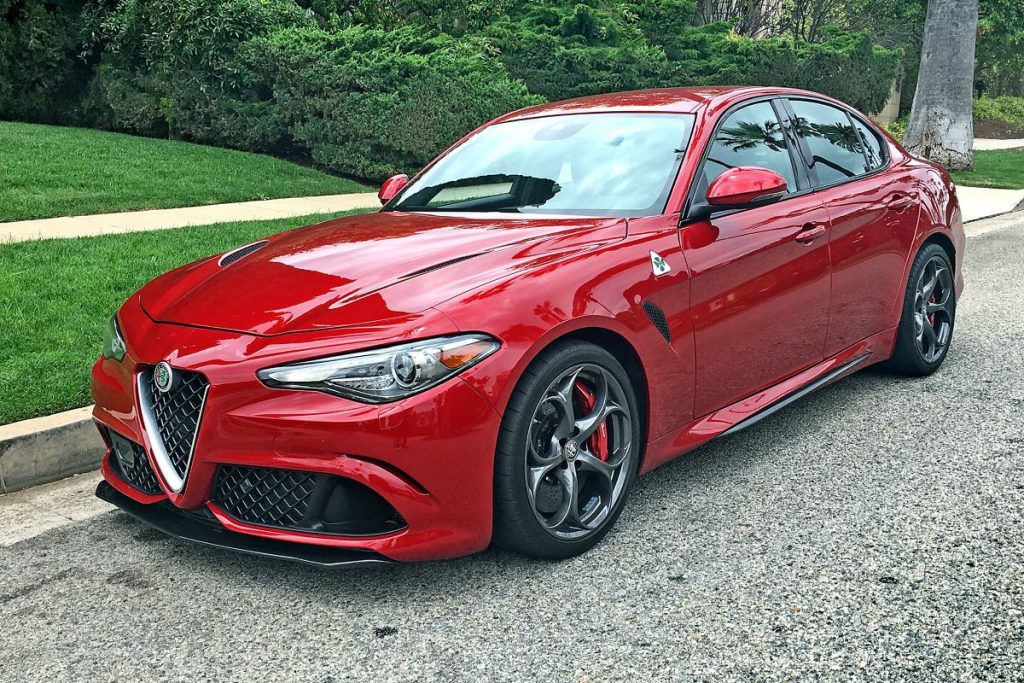
2. Alfa Romeo Giulia Quadrifoglio
The Alfa Romeo Giulia Quadrifoglio brings a different energy to the track, one that feels more expressive yet equally capable. It does not hide its personality, but beneath its character lies a level of engineering that allows it to compete with and surpass many of its rivals.
The engine provides a distinctive response, delivering power with a sense of urgency that feels engaging. Acceleration builds quickly, yet it remains manageable, allowing drivers to maintain control even when pushing hard. This combination of intensity and balance makes it particularly effective in dynamic driving situations.
Where the Giulia truly shines is in its agility. The car feels light on its feet, changing direction with ease. Steering inputs are met with immediate response, creating a sense of connection that enhances driver confidence. This responsiveness allows it to navigate corners with precision, maintaining momentum throughout.
The chassis contributes significantly to this behavior. It remains composed even when subjected to rapid transitions, ensuring that the car does not lose stability. This composure allows drivers to focus on their line rather than correcting unwanted movements, improving both confidence and performance.
Braking is equally impressive, providing consistent stopping power that holds up under repeated use. This reliability allows drivers to push deeper into braking zones, gaining an advantage in lap times. The system works seamlessly with the rest of the car, reinforcing its cohesive nature.
Inside, the cabin reflects a driver focused approach. The layout emphasizes engagement, placing controls within easy reach and minimizing distractions. Seating provides the necessary support without sacrificing comfort, making the car suitable for both track and road use.
The Giulia Quadrifoglio succeeds by combining emotion with precision. It delivers an engaging driving experience while maintaining the control required for consistent performance. This balance allows it to stand out among performance sedans, proving that character and capability can coexist without compromise.
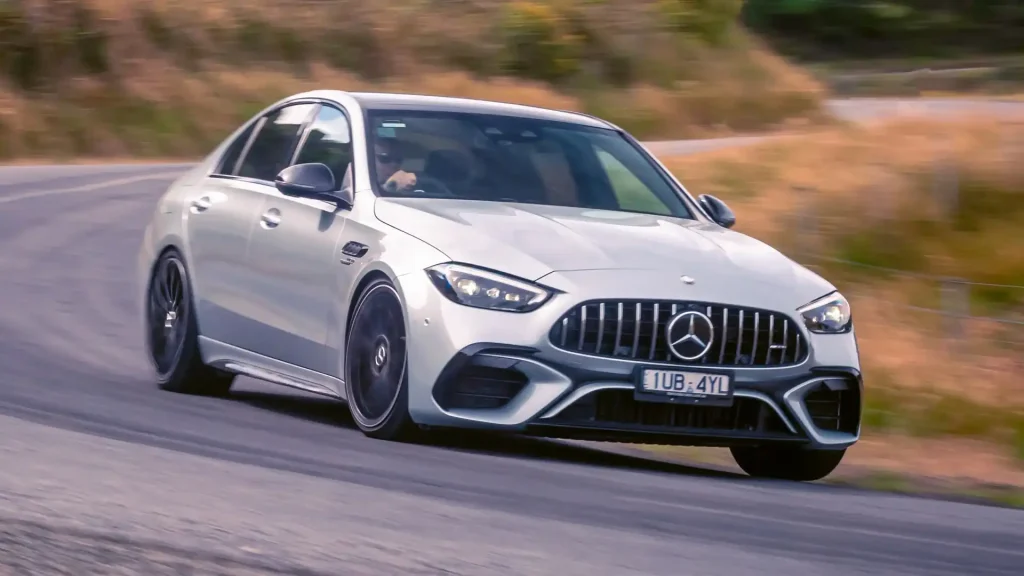
3. Mercedes AMG C63 S
The Mercedes AMG C63 S takes a more forceful route into track performance, yet it manages to channel that strength in a way that feels controlled rather than overwhelming.
At first impression, it seems defined by its power, but spend time on a circuit and a deeper layer of capability begins to reveal itself. This is where it quietly separates from rivals that depend too heavily on raw output alone.
The engine delivers a strong surge of acceleration, pushing the car forward with authority. What makes it effective on track is not just the intensity but the way that power can be managed.
Throttle response is sharp, allowing drivers to fine tune inputs when exiting corners. This level of control ensures that traction is maintained, preventing unnecessary loss of momentum.
Through corners, the C63 S demonstrates a surprising level of balance. The chassis absorbs weight transfer in a composed manner, allowing the car to remain stable during rapid direction changes. It does not feel overly eager or unpredictable. Instead, it responds in a way that builds trust, which is essential when pushing closer to the limit.
Steering provides a clear sense of connection, translating inputs into confident movements. While it may not feel as light as some competitors, it compensates with a sense of solidity that becomes reassuring at higher speeds. This characteristic allows drivers to place the car accurately without second guessing their actions.
Braking performance adds another layer of confidence. The system delivers consistent stopping power, maintaining effectiveness even after repeated laps. This reliability allows drivers to approach braking zones with precision, knowing the car will respond as expected every time.
The interior reflects a blend of performance and refinement. It maintains a premium atmosphere while still supporting focused driving. Controls are accessible, and the seating provides the support needed during high speed cornering. This balance ensures that the car remains usable beyond the track environment.
What defines the C63 S is its ability to harness power without losing composure. It transforms what could be an overwhelming experience into something controlled and repeatable. This refinement allows it to perform consistently, making it a strong contender for those who value both intensity and stability in a performance sedan.
4. Cadillac CT5 V Blackwing
The Cadillac CT5 V Blackwing approaches track performance with a sense of purpose that feels deeply rooted in driver engagement. It does not rely on subtlety or restraint. Instead, it embraces its capability while ensuring that every element contributes to a cohesive and controlled experience.
The engine delivers strong and immediate power, yet it remains approachable. Acceleration feels linear, allowing drivers to build speed without sudden surges that might unsettle the car. This consistency becomes particularly valuable during track driving, where maintaining control is essential for achieving reliable lap times.
Handling is one of the Blackwing’s defining strengths. The chassis feels planted, maintaining stability through corners while still allowing enough flexibility for the driver to adjust their line. This balance creates a sense of confidence, encouraging drivers to push further without feeling disconnected from the car.
Steering response enhances this connection. Inputs are met with clarity, providing feedback that helps the driver understand how the car is behaving. This communication becomes a key advantage, allowing for precise adjustments that improve performance over time.
Braking performance is equally dependable. The system offers strong and consistent stopping power, ensuring that the car remains composed even under repeated stress. This reliability allows drivers to focus on their technique rather than worrying about fading performance.
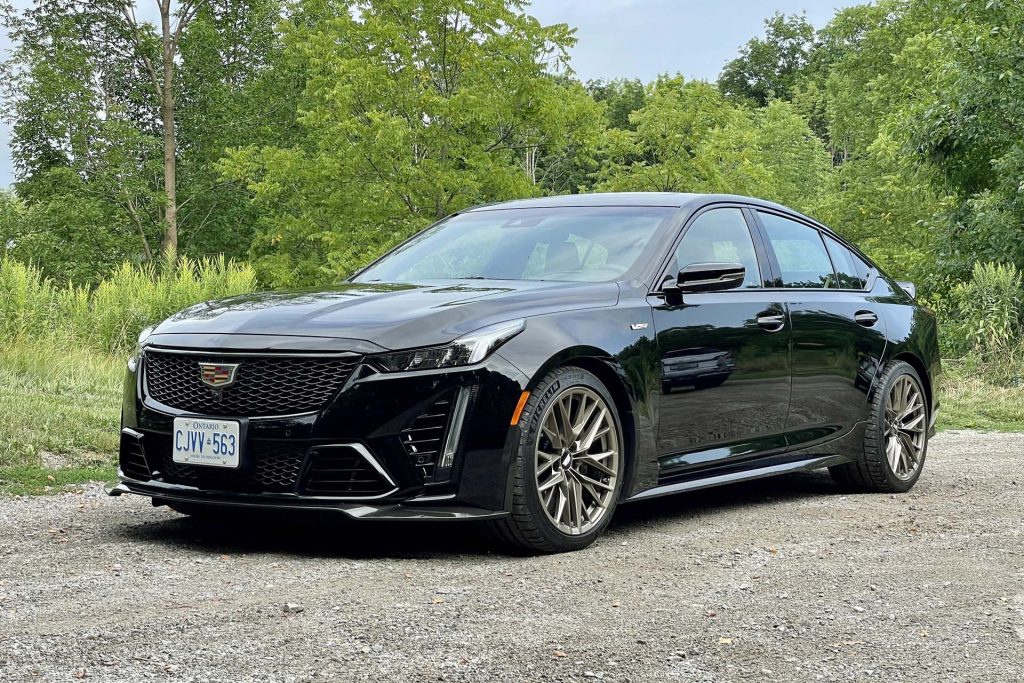
Inside, the Blackwing presents a driver centric environment that emphasizes control. The layout is intuitive, and the seating provides support during aggressive driving. While it retains elements of comfort, the focus clearly leans toward functionality when on track.
What makes the CT5 V Blackwing stand out is its commitment to engagement. It does not isolate the driver from the experience.
Instead, it invites involvement, creating a connection that enhances both confidence and enjoyment. This approach allows it to perform at a high level while still delivering a sense of character that many rivals lack.
5. Audi RS5 Sportback
The Audi RS5 Sportback approaches track days with a mindset rooted in precision and control rather than spectacle. It does not announce its intentions loudly, yet once on a circuit, its methodical nature begins to shine. This is a car that thrives on discipline, rewarding drivers who value consistency and clean execution over aggressive inputs.
Power delivery feels measured and deliberate. The engine responds quickly, yet it avoids overwhelming the driver with sudden surges. Instead, it builds speed in a controlled manner, allowing throttle inputs to be applied with confidence.
This makes it particularly effective when exiting corners, where maintaining traction becomes crucial for preserving momentum.
The quattro all wheel drive system plays a central role in defining the RS5’s character. It distributes power intelligently, ensuring that grip remains consistent even when conditions change.
On a track, this translates into stability that allows drivers to push harder without fear of losing control. The car feels anchored, resisting the unpredictability that can affect less balanced setups.
Cornering behavior reflects this stability. The RS5 does not dart aggressively into turns. Instead, it follows a clean and composed line, maintaining balance throughout.
This approach may feel less dramatic, but it proves highly effective over multiple laps. Drivers can rely on the car to behave predictably, which becomes a key advantage in maintaining steady performance.
Braking performance supports this consistency. The system delivers reliable stopping power, allowing drivers to approach corners with precision. There is no sense of fading or inconsistency, even after repeated use. This reliability ensures that the car remains dependable throughout a session.
Inside, the cabin maintains a refined atmosphere while still supporting focused driving. Controls are logically arranged, and the seating offers a balance between comfort and support. This allows the car to transition seamlessly between daily use and track activity without requiring adjustment.
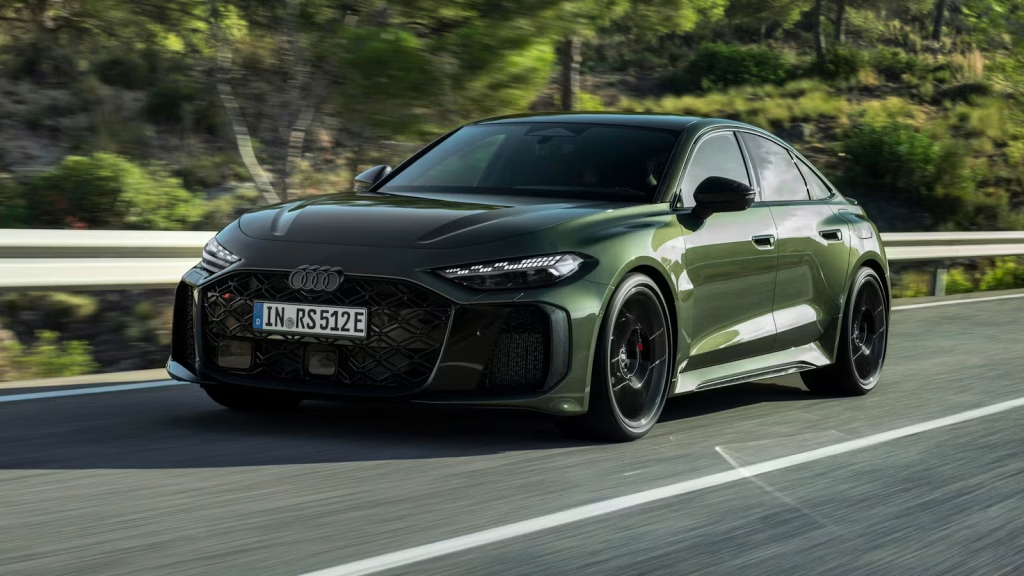
What defines the RS5 Sportback is its quiet effectiveness. It does not rely on dramatic behavior or exaggerated characteristics. Instead, it focuses on delivering repeatable performance through balance and control.
This makes it a strong choice for drivers who value precision and consistency, proving that dominance on track does not always need to be loud or obvious.
6. Lexus IS 500 F Sport Performance
The Lexus IS 500 F Sport Performance enters the track environment with a philosophy that feels refreshingly different. It does not depend on complex systems or aggressive tuning to make its mark. Instead, it relies on a naturally aspirated engine and a carefully balanced chassis to deliver performance that feels honest and direct.
The engine provides a linear flow of power that builds steadily as revs increase. This characteristic allows drivers to anticipate how the car will respond, making it easier to manage acceleration through corners. Unlike turbocharged setups that can introduce sudden bursts, the IS 500 maintains a smooth progression that supports consistent driving.
Handling reflects a similar sense of clarity. The car feels stable, maintaining composure even during rapid transitions. It does not attempt to feel overly sharp or reactive. Instead, it prioritizes balance, ensuring that drivers can maintain control without constant correction. This approach proves effective during extended track sessions.
Steering response contributes to this predictability. Inputs are translated into smooth movements, allowing the driver to guide the car with confidence. While it may not deliver the most aggressive feedback, it compensates with a sense of reliability that becomes valuable over time.
Braking performance remains dependable, providing consistent stopping power without unnecessary complexity. The system performs its role effectively, allowing drivers to focus on their technique rather than adapting to changing behavior. This consistency enhances the car’s usability on track.
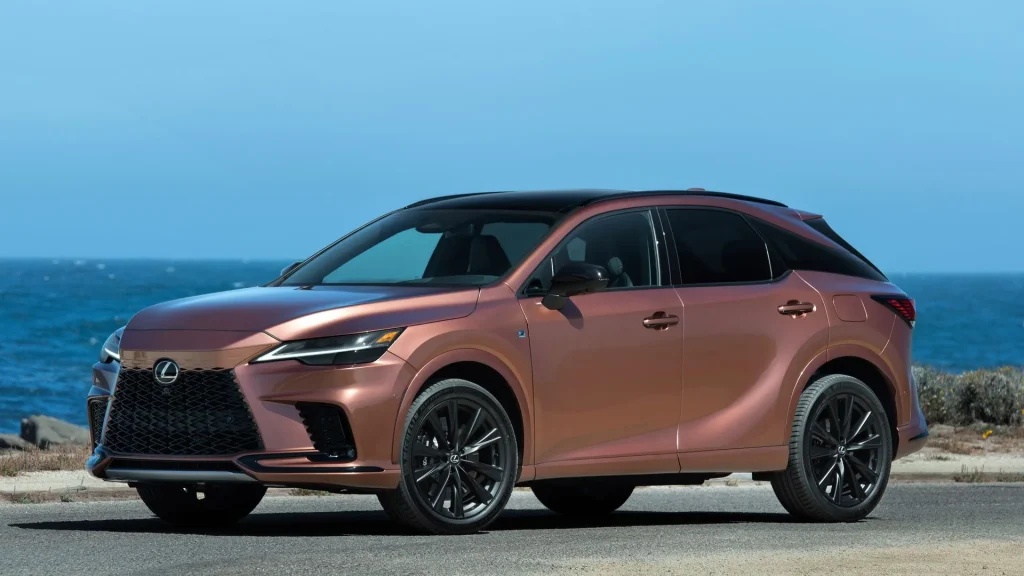
Inside, the cabin emphasizes craftsmanship and comfort. The materials and layout create an environment that feels refined, yet it does not distract from the driving experience. Seating provides adequate support, ensuring that occupants remain comfortable even during extended sessions.
What sets the IS 500 apart is its straightforward approach to performance. It does not attempt to redefine the segment through advanced technology.
Instead, it focuses on delivering a balanced and predictable experience that drivers can rely on. This honesty allows it to perform consistently, making it a compelling option for those who value simplicity paired with capability.
7. Porsche Panamera GTS
The Porsche Panamera GTS approaches track performance with a level of composure that feels almost understated at first encounter. It does not rely on dramatic behavior to make an impression.
Instead, it reveals its capability gradually, rewarding drivers who spend time understanding how it responds under pressure. This measured approach allows it to deliver results that often surpass more attention grabbing rivals.
Power delivery is refined and consistent. The engine builds speed in a smooth and controlled manner, allowing drivers to manage throttle inputs with precision. There is no sense of unpredictability or sudden surge.
This makes it easier to maintain balance when exiting corners, where careful application of power can determine how effectively the car accelerates onto the next straight.
Handling reflects a careful calibration between comfort and performance. The chassis remains composed through corners, absorbing weight transfer without losing stability.
It does not feel overly aggressive, yet it maintains enough responsiveness to keep the driver engaged. This balance allows the Panamera GTS to sustain performance over multiple laps without becoming tiring to drive.
Steering response contributes to this sense of control. Inputs are met with clarity, providing feedback that helps the driver understand how the car is interacting with the road. This communication allows for precise adjustments, enabling drivers to refine their line and improve consistency.
Braking performance reinforces confidence. The system delivers strong and repeatable stopping power, maintaining effectiveness even under demanding conditions. This reliability allows drivers to approach braking zones with assurance, focusing on timing rather than worrying about fade or inconsistency.
Inside, the cabin offers a blend of luxury and functionality. It remains comfortable enough for daily use, yet it supports focused driving when required. Controls are arranged logically, and the seating provides the necessary support during high speed cornering. This dual nature allows the car to transition seamlessly between roles.
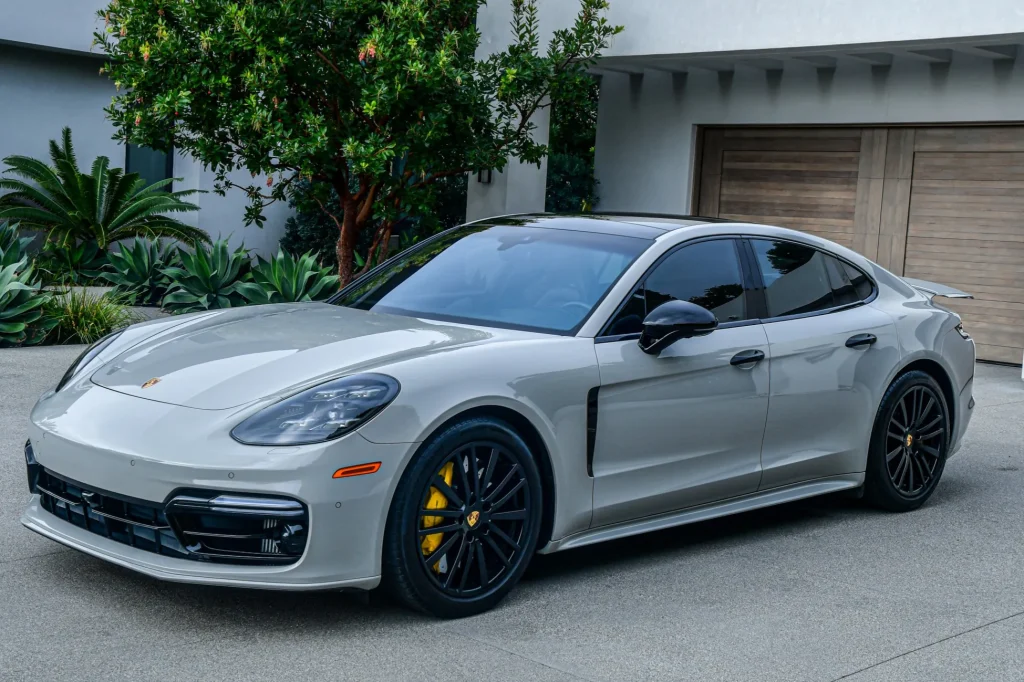
The Panamera GTS stands out through its ability to sustain performance without drawing attention to itself. It does not rely on extremes or aggressive characteristics.
Instead, it delivers a balanced and controlled experience that proves highly effective on track. This quiet capability allows it to compete with and often outperform more specialized machines.
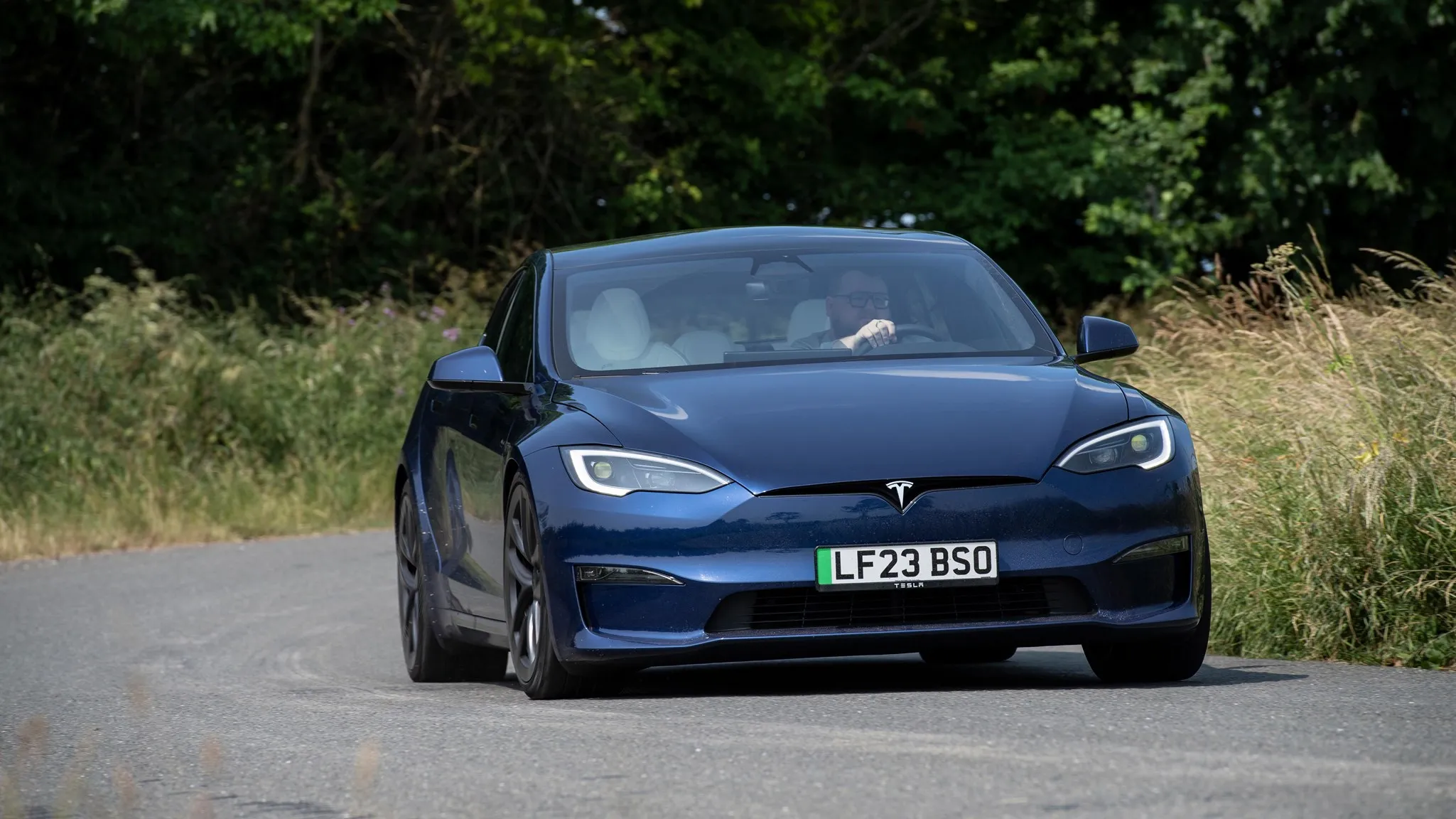
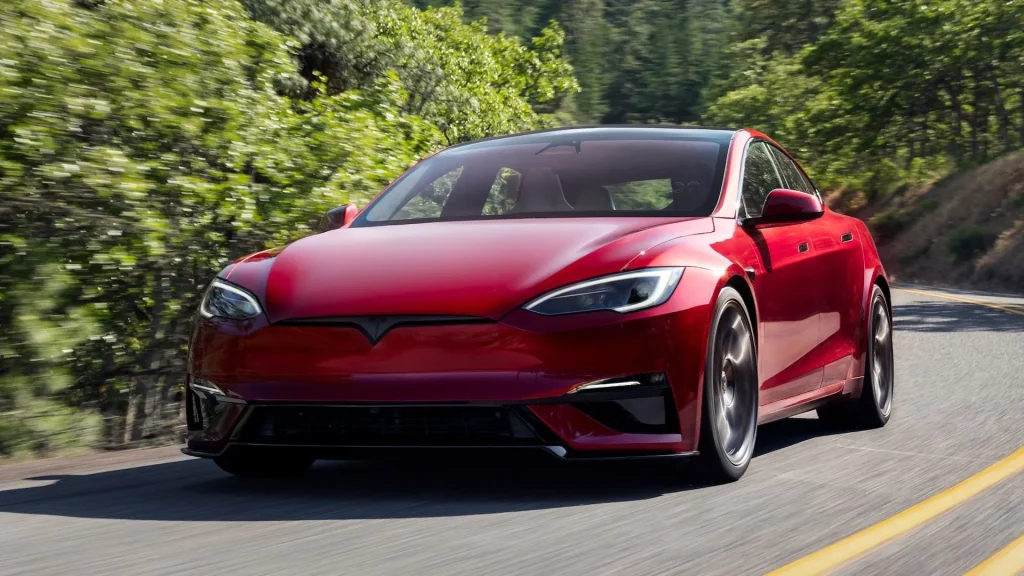
8. Tesla Model S Plaid
The Tesla Model S Plaid brings a completely different perspective to track performance, challenging traditional expectations with its electric powertrain. It does not follow the conventional formula of engine noise and mechanical feedback. Instead, it focuses on delivering performance through instant response and advanced control systems.
Acceleration is immediate and continuous, providing a level of responsiveness that feels fundamentally different from combustion powered rivals.
The absence of delay allows the car to build speed rapidly, making it particularly effective on straights. This instant delivery of power gives it an advantage in situations where quick acceleration is required.
Handling is shaped by its low center of gravity, a result of the battery placement. This design helps the car remain stable through corners, reducing body roll and improving balance. While its weight is noticeable, the way it is distributed allows the car to maintain composure when pushed.
Steering offers a clean and predictable response. Inputs are translated into smooth movements, allowing the driver to guide the car with confidence. The experience may feel different from traditional performance sedans, but it remains effective once understood.
Braking performance is supported by both traditional systems and regenerative capabilities. This combination provides consistent stopping power while also contributing to efficiency. The integration of these systems ensures that the car remains controlled during demanding driving.
Inside, the cabin reflects a minimalist approach. The layout reduces distractions, allowing the driver to focus on the task at hand. While it differs from more traditional interiors, it supports the car’s modern philosophy.
What makes the Model S Plaid stand out is its ability to redefine how performance is delivered. It does not rely on conventional methods, yet it achieves results that rival or surpass many established competitors.
By combining instant power with advanced technology, it proves that track capability can take multiple forms while still delivering strong and consistent performance.
Performance sedans have quietly evolved into some of the most capable machines on a race track, blending everyday usability with serious performance in a way that few other vehicle types can match.
While they may not attract the same attention as purpose built sports cars, their ability to deliver consistent lap times and driver confidence makes them highly effective during track days. These cars prove that practicality and performance do not have to exist separately.
A major strength of performance sedans lies in their balance. Engineers must design them to handle daily driving while still maintaining the structural rigidity, suspension tuning, and braking performance required for high speed conditions.
This results in cars that feel composed rather than extreme. On a track, that composure becomes a major advantage, allowing drivers to focus on improving technique instead of managing unpredictable behavior.
Another defining quality is consistency. Track driving is not about a single fast lap but about maintaining performance over time.
These sedans excel in delivering repeatable results, with engines that provide steady power, braking systems that resist fade, and chassis setups that remain stable across multiple laps. This reliability builds trust, which is essential for pushing limits safely.
Technology also contributes significantly to their capability. Advanced traction systems, adaptive suspensions, and intelligent power distribution help maximize grip and control.
These features do not remove the need for skill but instead enhance it, allowing drivers to extract more performance while maintaining stability. The integration of these systems ensures that the car remains predictable even under demanding conditions.
Diversity within this category is another reason for its strength. Some performance sedans focus on precision and balance, offering sharp handling and controlled power delivery.
Others lean toward raw strength, using powerful engines to dominate straights while still maintaining enough composure to handle corners effectively. There are also models that emphasize refinement, delivering track capability without sacrificing comfort.
What unites all of them is their ability to perform without unnecessary drama. They do not rely on exaggerated styling or extreme setups to prove their worth. Instead, they deliver results through careful engineering and thoughtful design.
This understated approach often allows them to outperform more specialized vehicles, especially in real world track conditions where consistency matters more than peak performance figures.
In the end, these performance sedans demonstrate that true capability is not always obvious at first glance. They combine practicality, precision, and endurance in a way that makes them highly effective on track.
By delivering controlled power, reliable handling, and sustained performance, they continue to prove that dominance does not always need to be loud to be effective.
Also Read: 8 Engines Where a Single Failed Sensor Triggers $5,000 in Damage