
Performance cars have long carried a reputation for being expensive to own, not just in purchase price or fuel consumption, but especially in insurance costs. Many drivers assume that anything labeled as a sports car automatically triggers high premiums, strict underwriting, and limited affordability.
While this is often true for exotic supercars and high-horsepower luxury vehicles, the reality in 2026 is far more nuanced. Insurance pricing is no longer based purely on speed or styling. Instead, insurers increasingly evaluate a complex mix of safety ratings, repair costs, theft rates, driver demographics, and even parts availability when calculating premiums.
This shift has created a surprising category in the automotive world: performance cars that are fun, fast, and engaging to drive, yet still relatively affordable to insure. Cars that were once considered expensive “enthusiast-only” machines are now accessible to a wider audience due to improved safety engineering and more predictable repair costs.
In fact, many modern sports coupes and performance sedans now cost less to insure than some mainstream SUVs, depending on driver profile and location.
Another factor influencing insurance affordability is manufacturer design philosophy. Brands like Subaru, Mazda, and Ford have developed performance models that share platforms with economy or commuter vehicles, which significantly reduces repair costs.
This helps insurers lower premiums because parts are easier to source and less expensive to replace after an accident. Additionally, vehicles with strong crash-test ratings and advanced driver assistance systems tend to reduce claims severity, which further lowers insurance risk profiles.
Driver behavior also plays a role. Some performance cars attract older, more responsible buyers who maintain their vehicles properly and drive them less aggressively than expected. Insurers take these patterns into account when pricing policies. As a result, not all fast cars are treated equally in the insurance market.
In this article, we explore the performance-oriented vehicles that surprisingly offer cheaper insurance rates in 2026 than most people expect. These cars strike a balance between excitement, practicality, and affordability, making them standout options for enthusiasts who want performance without excessive ownership costs.
Each model has been selected based on insurance trend data, repair economics, and real-world premium comparisons across major insurers.
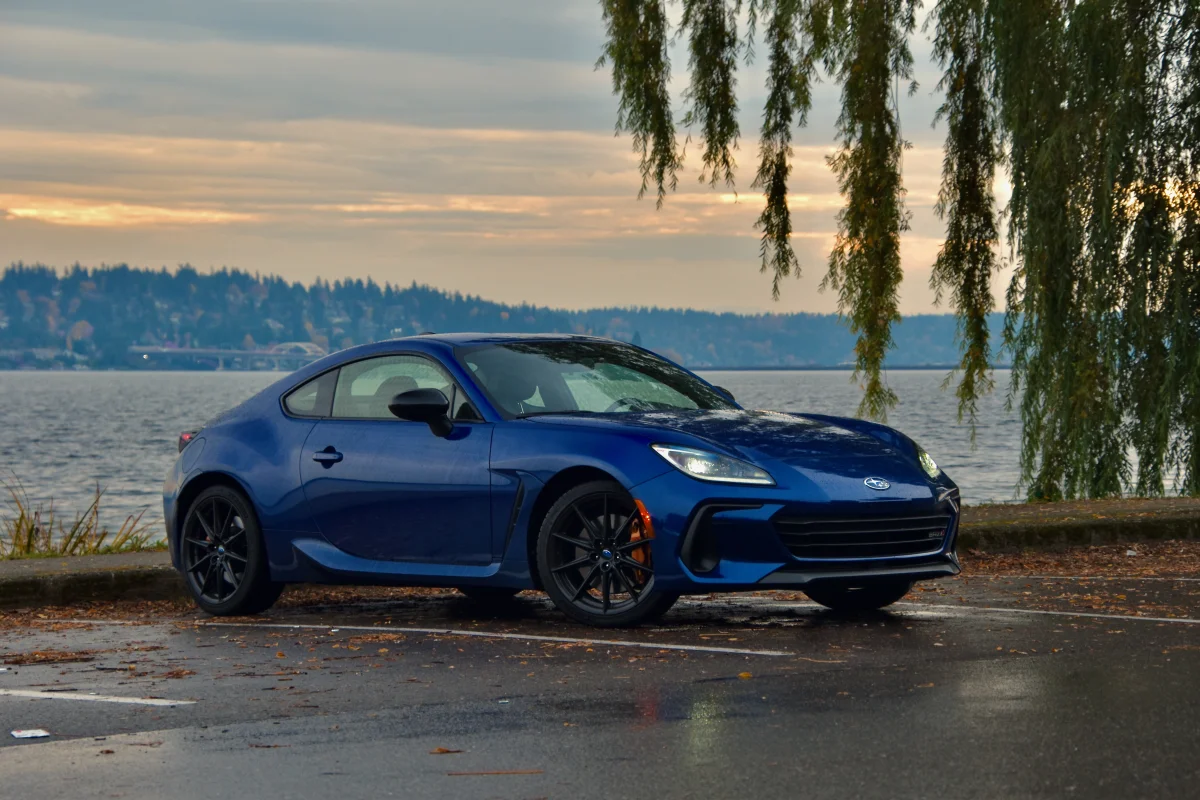
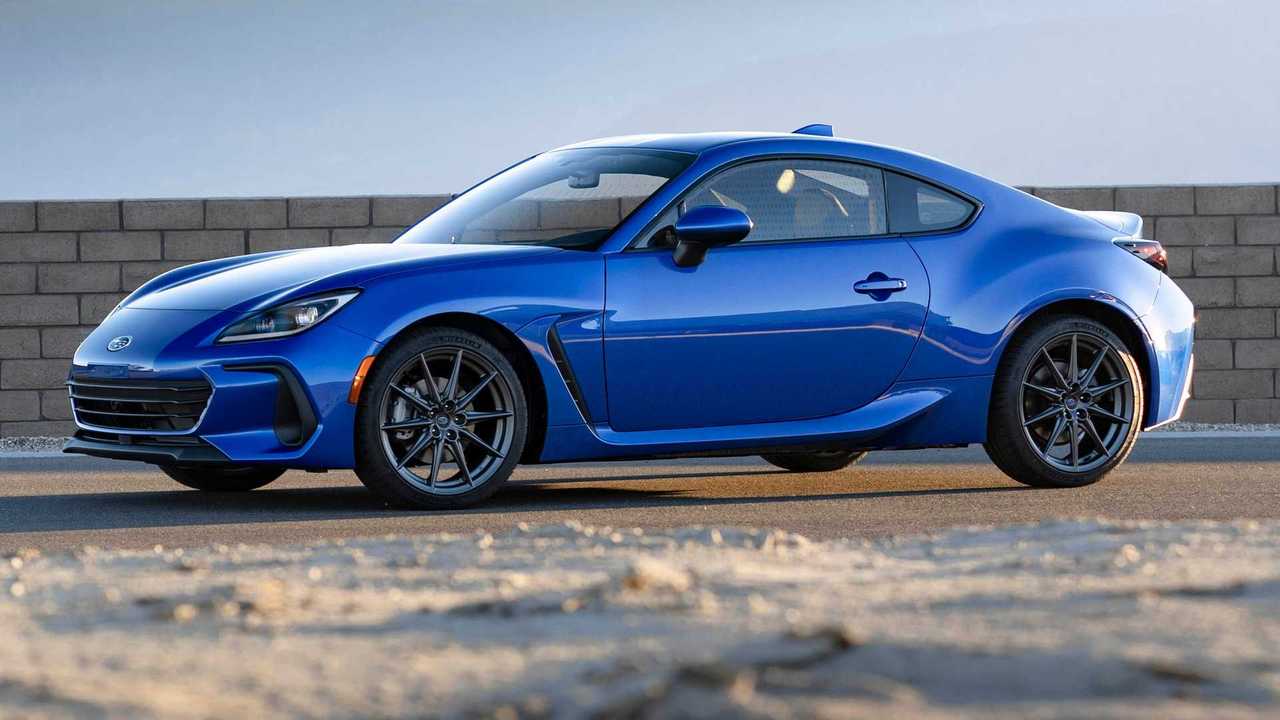
1. Subaru BRZ
The Subaru BRZ has established itself as one of the most insurance-friendly performance cars in the modern sports coupe category, and this reputation continues into 2026. What makes it particularly interesting is that it delivers a pure rear-wheel-drive driving experience while still maintaining relatively low ownership costs compared to other vehicles in its class.
Insurance companies tend to evaluate vehicles based on repair complexity, power-to-weight ratio, and claim frequency, and the BRZ performs well across all of these categories. Unlike high-powered turbocharged sports cars, the BRZ uses a naturally aspirated 2.4-liter boxer engine, which is mechanically simpler and less expensive to repair.
This simplicity reduces the likelihood of high-cost insurance claims, which directly benefits policyholders in the form of lower premiums.
Another important factor is the BRZ’s shared development with the Toyota GR86. Because both vehicles are built on the same platform, they benefit from shared components, standardized repair procedures, and wide parts availability across global markets.
Insurance companies place strong value on this kind of predictability because it reduces uncertainty in repair costs after collisions. Even if body panels or suspension components are damaged, they can usually be replaced without the inflated costs associated with luxury or limited-production sports cars. This makes the BRZ a financially stable option for insurers, which translates into more affordable coverage for drivers.
The driver profile associated with the BRZ also plays a significant role in its insurance affordability. While it is certainly popular among younger driving enthusiasts, it also attracts a large number of responsible drivers who value precision handling and balance over outright speed.
Unlike high-powered muscle cars that often appeal to aggressive driving behavior, the BRZ is typically driven in a more controlled and recreational manner. Insurance companies analyze these behavioral trends closely, and the BRZ benefits from a relatively balanced risk profile compared to other performance coupes.
Safety improvements in newer model years have also helped maintain its insurance advantages. Modern versions of the BRZ include enhanced structural rigidity, improved crash absorption zones, and optional driver assistance features that reduce the likelihood of severe accidents.
While it remains a lightweight sports car designed for engagement rather than luxury comfort, these safety enhancements help lower claim severity when accidents do occur. As a result, insurers see it as a lower-risk sports car than many of its competitors.
The Subaru BRZ stands out in 2026 as a rare example of a true enthusiast vehicle that remains financially accessible to insure. It combines simplicity, reliability, and balanced performance in a way that keeps ownership costs predictable and manageable. For drivers seeking a genuine sports car experience without excessive insurance premiums, the BRZ continues to be one of the strongest choices available.
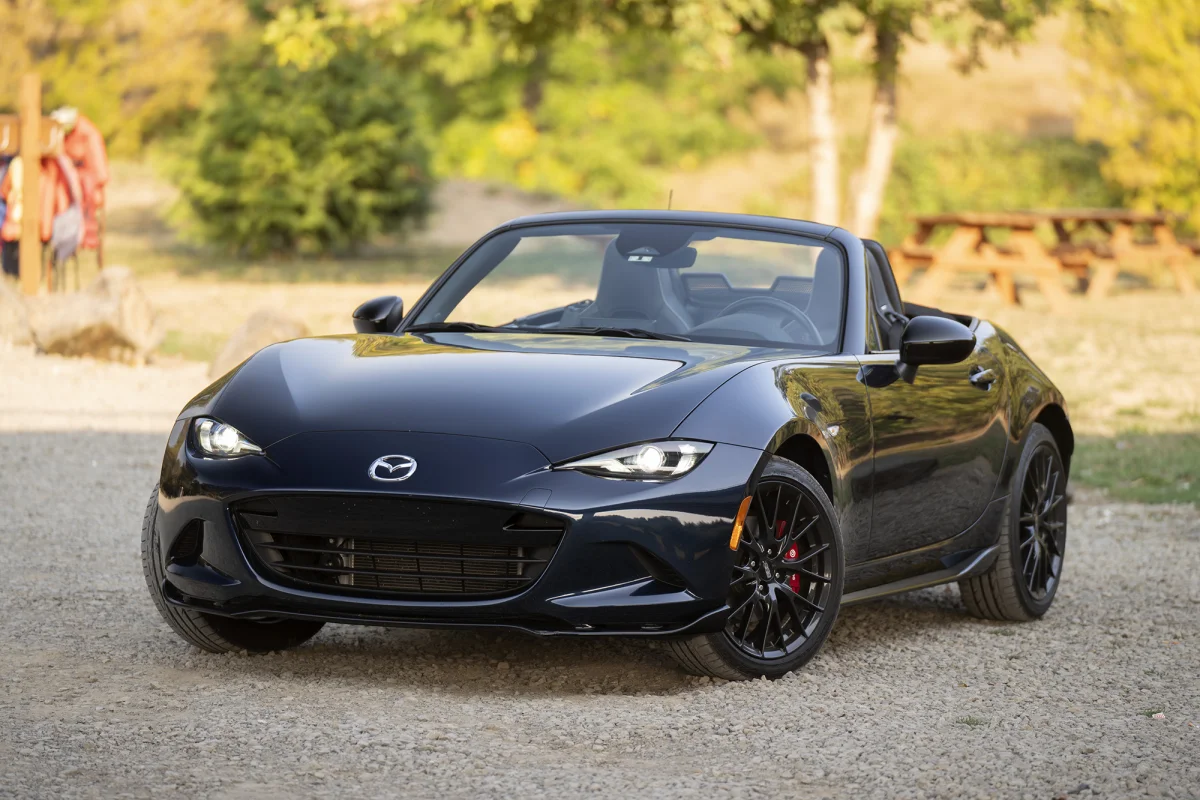
2. Mazda MX-5 Miata
The Mazda MX-5 Miata has long held its position as one of the most affordable sports cars to own, and its insurance profile remains just as impressive in 2026. Despite being a lightweight convertible designed for driving enjoyment, it consistently ranks among the lowest-cost performance vehicles to insure.
One of the primary reasons for this is its intentionally modest power output. The Miata is not designed to compete with high-horsepower sports cars; instead, it focuses on balance, agility, and driver engagement. Insurance companies reward this philosophy because lower horsepower generally correlates with reduced accident severity and lower claim costs.
Another major contributor to the Miata’s affordability is its mechanical simplicity. The vehicle uses a straightforward naturally aspirated engine and a compact drivetrain layout that avoids overly complex or expensive components.
This means that even in the event of a collision, repair costs are typically far lower than those of turbocharged sports cars or luxury convertibles. Body panels are relatively inexpensive, and Mazda’s global parts distribution network ensures that replacements are readily available, which further reduces downtime and repair expenses.
The driver demographic associated with the MX-5 Miata also plays a crucial role in maintaining low insurance premiums. Unlike many performance vehicles that attract riskier driving behavior, the Miata is often owned by enthusiasts who treat it as a recreational or weekend car rather than a high-speed daily driver.
Many owners are also older drivers who prioritize enjoyment and precision over aggressive acceleration. Insurance companies take these patterns into account, and the result is a consistently stable and low-risk profile.
In addition to mechanical and behavioral factors, the Miata also benefits from strong safety engineering. Despite its small size, it is designed with modern crash protection structures that help absorb impact energy efficiently.
Advanced stability systems and traction control further reduce the likelihood of loss-of-control accidents, especially in poor driving conditions. These features help mitigate risk and contribute to favorable insurance assessments across multiple regions.
The Mazda MX-5 Miata remains one of the most cost-effective ways to enjoy open-top sports car driving. Its combination of low repair costs, responsible ownership demographics, and strong safety performance ensures that insurance premiums remain surprisingly affordable, making it one of the best entry-level performance cars in 2026.
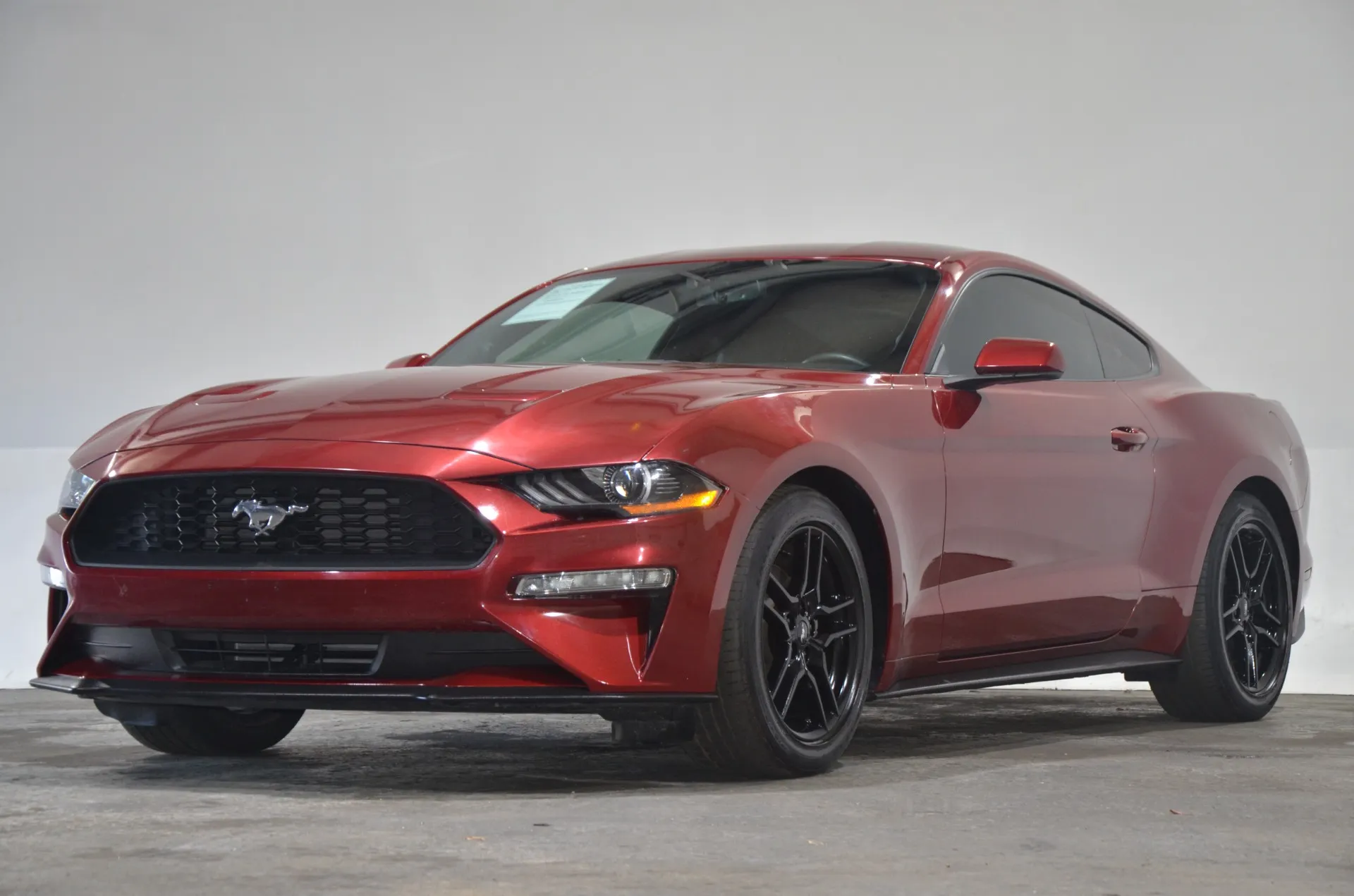
3. Ford Mustang EcoBoost
The Ford Mustang EcoBoost continues to surprise many drivers in 2026 by offering performance-oriented driving dynamics without the extreme insurance costs typically associated with the Mustang nameplate. While the Mustang has historically been linked to powerful V8 engines and higher insurance premiums, the EcoBoost variant changes that perception significantly.
Equipped with a 2.3-liter turbocharged four-cylinder engine, it delivers strong acceleration and respectable horsepower while remaining in a lower insurance category compared to its V8 counterparts. This reduction in raw engine output directly influences how insurers classify risk, making it more accessible from a cost perspective.
Another important factor is the Mustang’s widespread production and global popularity. Because it is one of the most mass-produced sports coupes in the world, parts availability is excellent, and repair processes are well standardized.
Insurance companies strongly favor vehicles with predictable and cost-effective repair structures, and the EcoBoost Mustang fits this profile extremely well. Even in the event of significant body damage, replacement components are relatively easy to source and do not carry the inflated costs associated with exotic or limited-production performance vehicles.
The EcoBoost Mustang also benefits from evolving driver demographics. While traditional V8 Mustangs often attract performance-focused drivers, the EcoBoost model has become popular among younger buyers seeking an affordable entry point into the muscle car experience.
Although this demographic can sometimes increase insurance risk, the balance is offset by the vehicle’s safety technology and lower power ceiling. Many insurers recognize that EcoBoost owners are not typically engaging in extreme performance driving compared to higher trim models.
Modern safety systems have also played a major role in improving insurance affordability. Features such as forward collision warning, lane-keeping assistance, and stability control systems help reduce accident likelihood and severity. These technologies contribute to fewer insurance claims and more favorable underwriting decisions.
As a result, the EcoBoost Mustang is treated more like a sporty commuter car than a high-risk performance machine in many insurance models.
The Ford Mustang EcoBoost represents one of the most accessible ways to enjoy American muscle-inspired styling and performance without facing excessive insurance costs. It balances everyday practicality, strong brand recognition, and improved safety engineering, making it a smart choice for drivers who want performance on a budget.
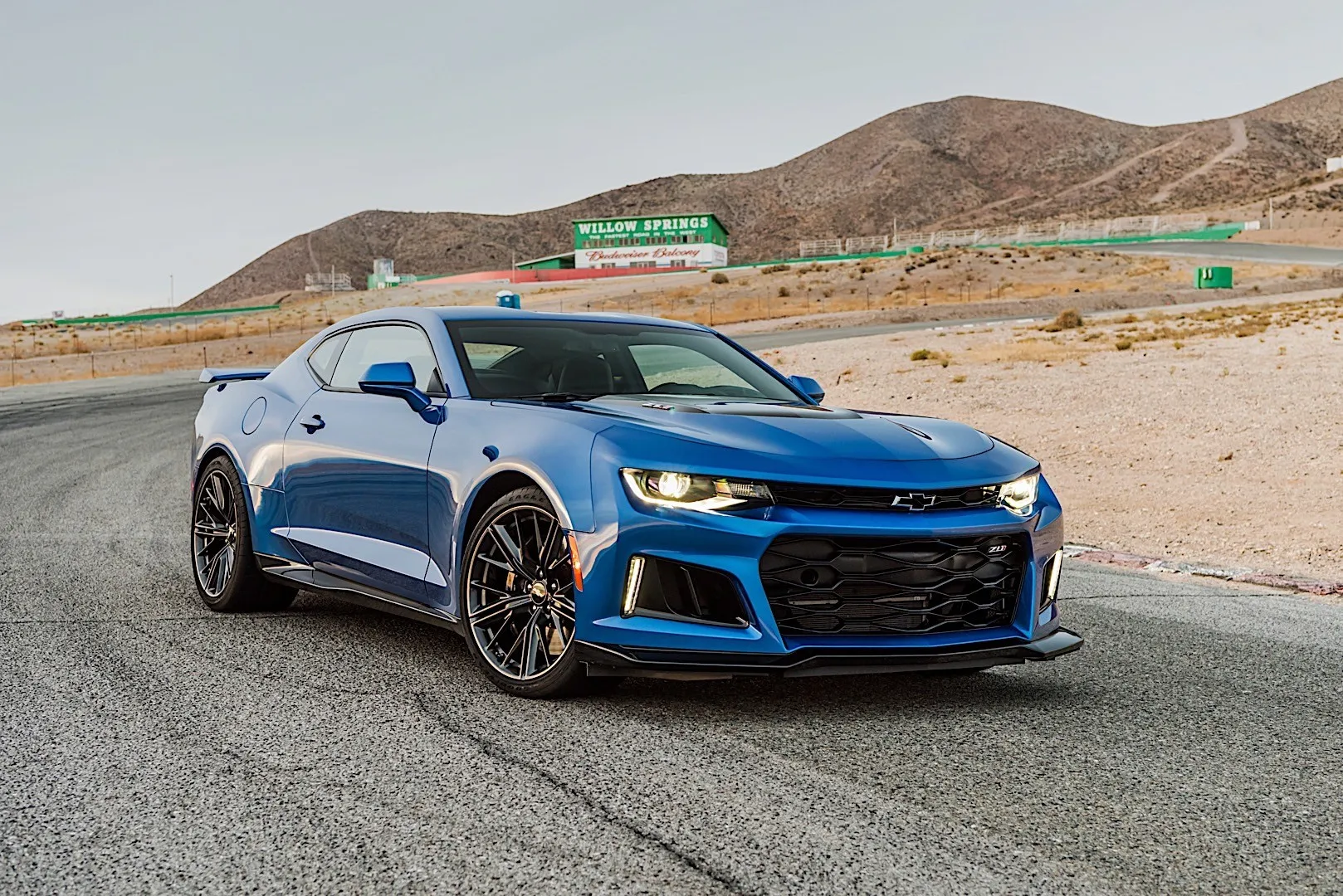
4. Chevrolet Camaro LS
The Chevrolet Camaro LS stands out as one of the most affordable entry points into the Camaro lineup, particularly when it comes to insurance costs in 2026. While higher trims such as the SS or ZL1 are known for their aggressive performance and significantly higher insurance premiums, the LS model is positioned as a more restrained and budget-conscious alternative.
It uses a less powerful engine configuration, which immediately reduces its classification risk in the eyes of insurance providers. Lower horsepower levels typically translate into reduced accident severity potential, which helps keep premiums more manageable.
Another key advantage of the Camaro LS is its platform familiarity and widespread parts availability. Built on General Motors’ architecture that shares components across multiple models, the Camaro benefits from a robust supply chain for replacement parts.
This significantly reduces repair costs, which is one of the most important factors insurers consider when determining premiums. Even in cases of moderate collision damage, repair expenses tend to remain within predictable ranges, avoiding the high volatility seen in imported or limited-production sports cars.
Driver demographics also influence insurance pricing for the Camaro LS. While the Camaro nameplate is often associated with aggressive driving, the LS trim tends to attract a more diverse and balanced group of buyers.
Many owners choose it as a stylish coupe rather than a high-performance track-focused machine. This helps reduce risk exposure, as insurers are not dealing exclusively with high-risk driving behavior across the entire model range.
Modern engineering improvements further enhance the Camaro LS’s insurance appeal. Its structural design incorporates advanced crash energy absorption zones, and newer models are equipped with stability management systems that help prevent loss-of-control situations. These features significantly reduce the likelihood of severe accidents, which in turn lowers claim severity for insurers.
As a result, the Chevrolet Camaro LS offers a surprisingly affordable insurance profile for a car that still carries sporty styling and engaging driving dynamics. It demonstrates how entry-level performance trims can provide excitement without the financial burden typically associated with muscle cars.
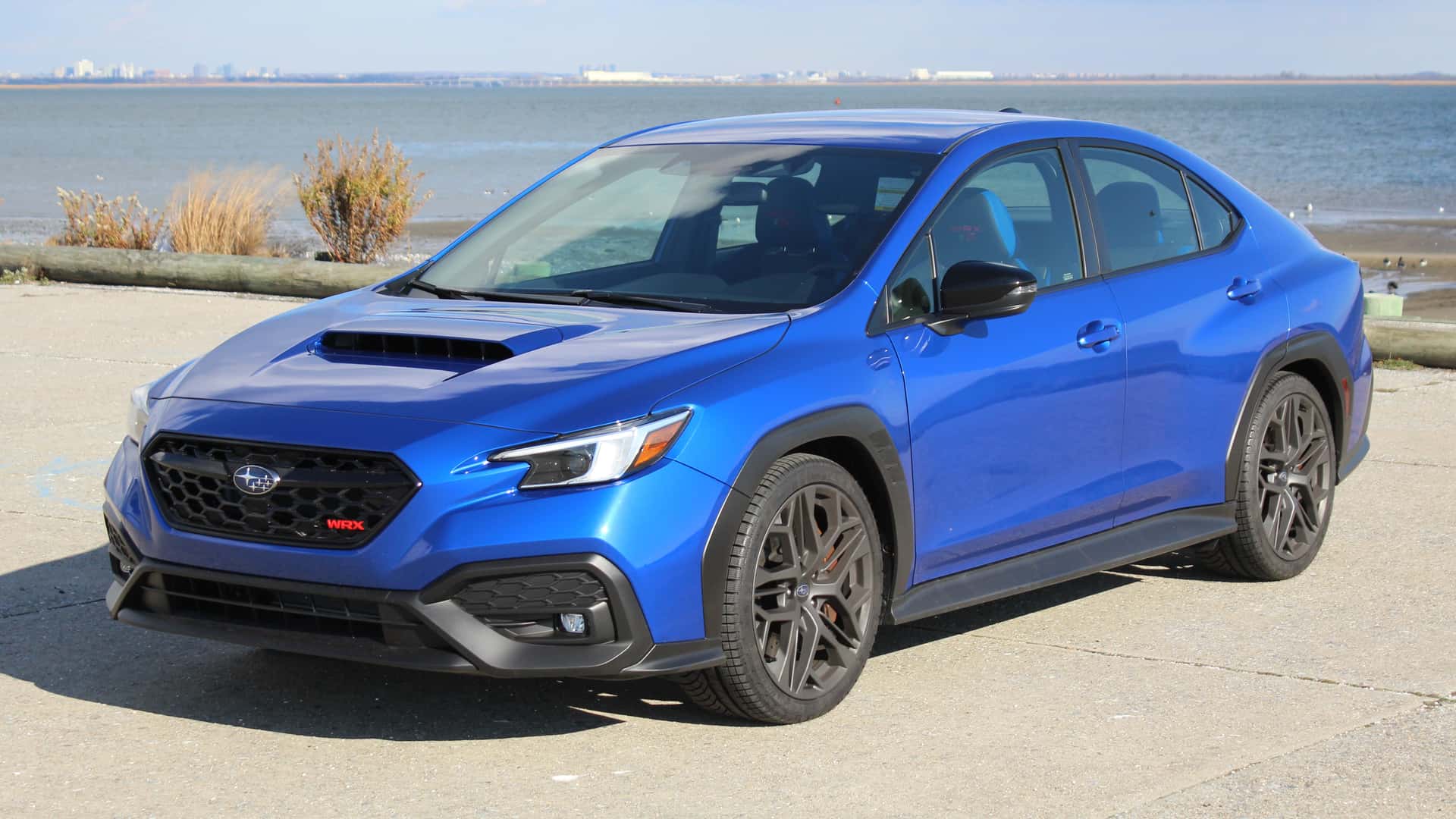
5. Subaru WRX
The Subaru WRX remains one of the most distinctive performance sedans on the market, and its insurance profile in 2026 reflects a balance between sporty capability and practical risk management.
Unlike many performance cars that rely solely on rear-wheel drive, the WRX features Subaru’s signature all-wheel-drive system, which significantly improves traction and stability in a wide range of driving conditions. This added control is especially valuable in adverse weather, and insurers recognize that all-wheel-drive systems can reduce accident likelihood in low-grip environments such as rain or snow.
Another important factor contributing to the WRX’s insurance affordability is its long-standing presence in the automotive market. Because it has been produced in various forms for many years, repair procedures are well established, and parts availability is strong across global markets.
This reduces uncertainty in repair costs, which is a critical factor for insurance companies when calculating premiums. Even turbocharged engine components, while more complex than those in economy cars, remain relatively standardized within Subaru’s lineup.
The driver profile of the WRX also plays a significant role in shaping its insurance rates. While it is undeniably a performance-oriented vehicle, it attracts a wide range of enthusiasts who value handling precision and rally-inspired engineering rather than straight-line speed. Many WRX owners are highly engaged with vehicle maintenance and driving skill development, which can result in more responsible ownership behavior. Insurance companies take these trends into account when assessing risk levels.
Safety and structural engineering improvements further support the WRX’s moderate insurance costs. Modern models feature reinforced chassis design, advanced stability control systems, and improved crash protection structures. These enhancements help reduce both accident frequency and severity, which are key metrics used by insurers when determining premiums.
The Subaru WRX demonstrates that a performance-oriented vehicle can still maintain reasonable insurance costs when it combines safety technology, balanced driver demographics, and predictable repair economics. It continues to be a strong choice for enthusiasts who want all-weather performance without excessive insurance expenses.

6. Toyota GR86
The Toyota GR86 continues to be one of the most strategically designed performance coupes when it comes to keeping ownership costs, especially insurance, at a surprisingly reasonable level in 2026. Much like its mechanical twin, the Subaru BRZ, it benefits heavily from a philosophy centered around simplicity, balance, and driving purity rather than extreme horsepower.
This approach directly influences insurance calculations because insurers tend to reward vehicles that prioritize predictable performance over high-risk acceleration figures. The GR86 uses a naturally aspirated 2.4-liter boxer engine that delivers smooth and linear power delivery, which reduces the likelihood of sudden high-speed incidents that often contribute to severe insurance claims.
One of the strongest advantages of the GR86 is its shared development platform with Subaru. This collaboration ensures that parts are widely available, standardized, and relatively inexpensive to replace. Insurance companies place significant weight on repair predictability, and the GR86 excels in this area.
Even if the vehicle suffers collision damage, the cost of replacing body panels, suspension components, or drivetrain parts is generally much lower than that of turbocharged or luxury sports cars. This reduces the insurer’s financial exposure, which benefits drivers through lower premiums.
Another important factor is the driver demographic associated with the GR86. While it is certainly popular among younger driving enthusiasts, it also attracts a growing number of mature drivers who appreciate its balanced chassis and engaging driving dynamics.
Unlike high-powered muscle cars or turbocharged hatchbacks that often encourage aggressive acceleration, the GR86 is typically driven more deliberately, especially by enthusiasts who enjoy cornering performance rather than straight-line speed. Insurance companies analyze these behavioral trends closely when determining risk profiles, and the GR86 benefits from a relatively stable and moderate classification.
The GR86 also benefits from Toyota’s reputation for reliability and long-term durability. Vehicles that generate fewer mechanical issues over time tend to have lower insurance claim frequencies, which contributes to more favorable premiums.
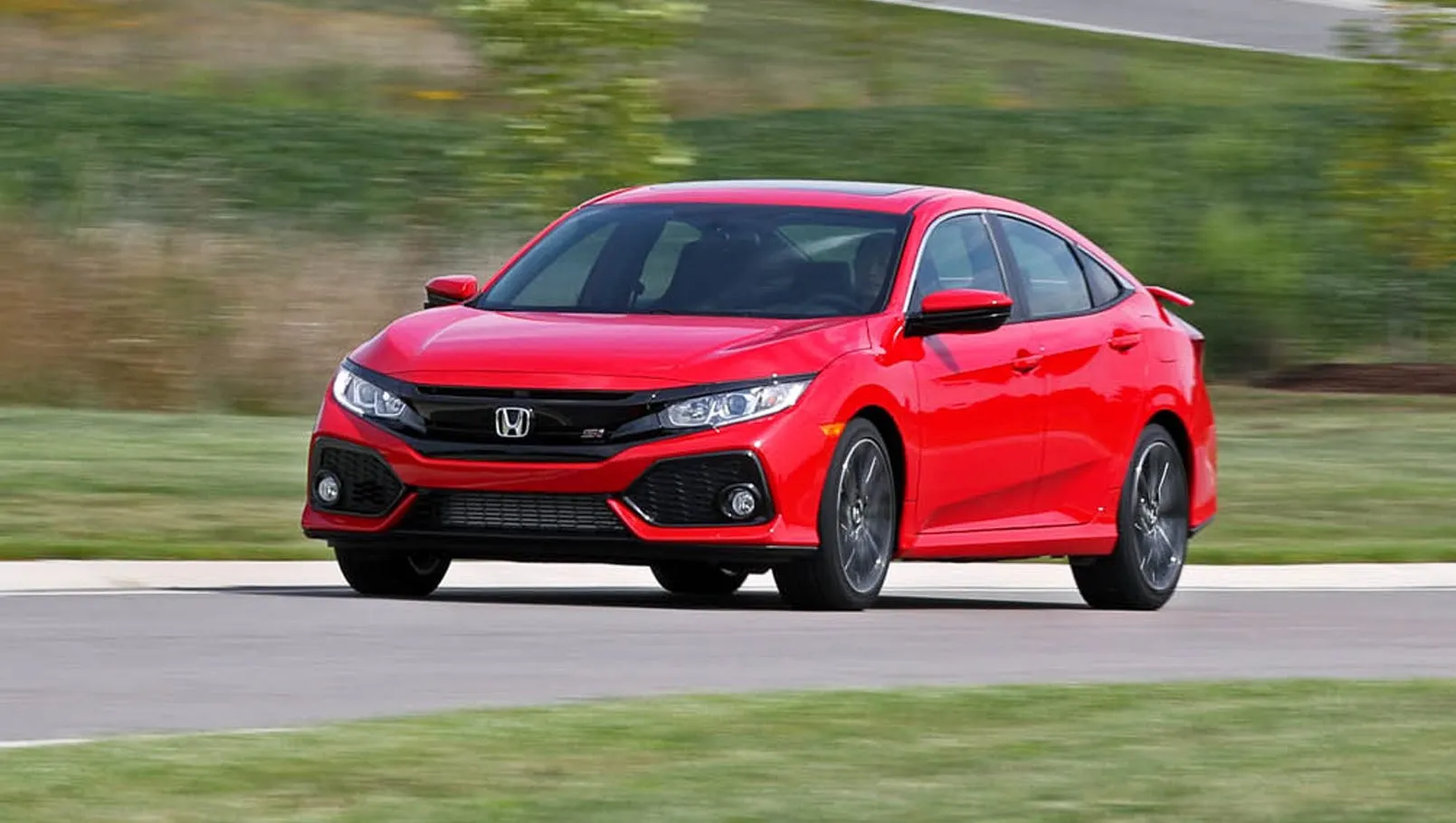
7. Honda Civic Si
The Honda Civic Si has earned a strong reputation as one of the most balanced performance-oriented compact sedans available today, and its insurance affordability in 2026 is a direct reflection of its thoughtful engineering.
Unlike high-performance sports cars that prioritize raw acceleration, the Civic Si is designed to offer a blend of practicality, efficiency, and spirited driving. It uses a turbocharged 1.5-liter engine that provides responsive performance without crossing into extreme horsepower territory, which helps keep it in a lower insurance risk category.
Insurers tend to favor vehicles with moderate power outputs because they statistically correlate with fewer severe high-speed accidents.
Another major factor contributing to the Civic Si’s affordable insurance profile is Honda’s longstanding emphasis on reliability and low repair costs. The Civic platform is one of the most widely used automotive architectures globally, meaning replacement parts are abundant, affordable, and easy to source.
Even in the event of significant collision damage, repair costs remain relatively controlled compared to premium sports sedans or European performance vehicles. This predictability is highly valued by insurance providers because it reduces uncertainty in claim payouts.
The Civic Si also benefits from a driver base that is more diverse and practical than many performance cars. While it certainly appeals to enthusiasts, it is also commonly used as a daily commuter vehicle due to its fuel efficiency, comfort, and reliability.
This dual-purpose usage helps reduce aggressive driving behavior on average, which in turn lowers risk exposure for insurers. Vehicles that serve both performance and practical roles tend to have more balanced claim histories, which translates into more stable insurance premiums.
In addition to mechanical and behavioral advantages, the Civic Si also performs well in modern safety evaluations. It includes advanced driver assistance systems such as collision mitigation braking, adaptive cruise control, and lane-keeping assistance in newer models.
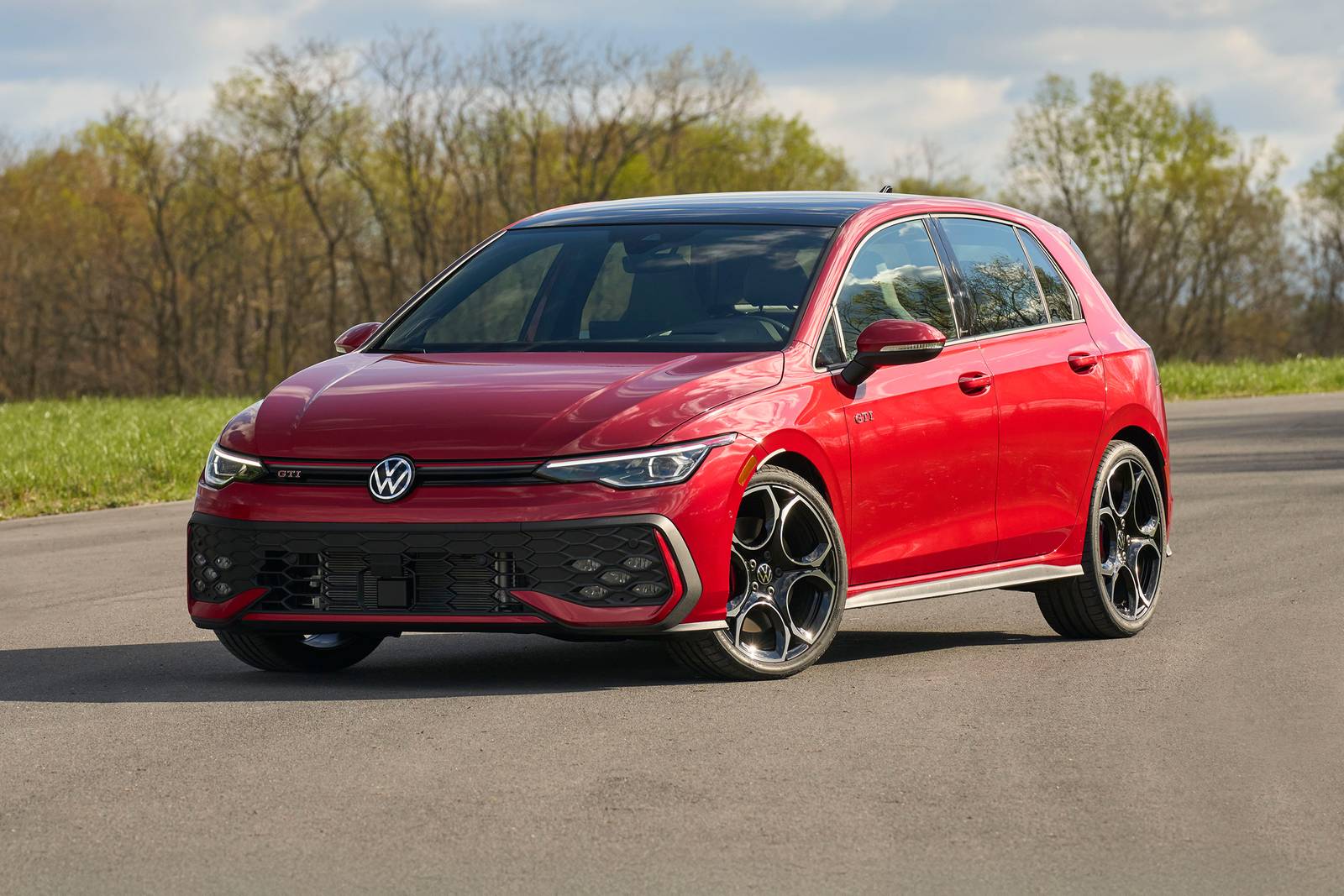
8. Volkswagen GTI
The Volkswagen GTI has long been regarded as the benchmark for the hot hatch segment, and its insurance profile in 2026 continues to reflect a carefully balanced combination of performance and practicality. Unlike extreme performance vehicles that prioritize maximum horsepower, the GTI is engineered to deliver controlled, usable speed in everyday driving conditions.
Its turbocharged engine provides strong acceleration, but not to the level that would place it in a high-risk insurance category. This moderate performance output plays a key role in keeping insurance premiums more affordable than many other sporty hatchbacks.
Another significant factor influencing the GTI’s insurance affordability is its widespread global presence and platform sharing within the Volkswagen Group. The GTI shares components with other Volkswagen and Audi models, which ensures that replacement parts are readily available and relatively standardized.
This reduces repair complexity and cost, two major considerations for insurance companies when calculating premiums. Even in cases of moderate accident damage, repair procedures are well established, allowing insurers to predict costs with greater accuracy.
The GTI also benefits from a driver profile that is generally more balanced than high-performance coupes or muscle cars. While it certainly attracts driving enthusiasts, it is also widely used as a practical daily vehicle due to its hatchback design, fuel efficiency, and interior comfort.
This dual-purpose nature reduces the likelihood of consistently aggressive driving behavior, which helps stabilize insurance risk assessments across the model’s user base.
Safety technology has also evolved significantly in newer GTI models, contributing to improved insurance ratings. Features such as automatic emergency braking, blind spot monitoring, and advanced traction control systems help prevent accidents or minimize their severity. These systems are especially valuable in urban driving environments where most GTIs are typically used, further reducing claim frequency and severity.
In essence, the Volkswagen GTI continues to represent a sweet spot in the automotive world where performance, practicality, and affordability intersect. Its insurance costs remain relatively reasonable because it avoids extremes in both power and risk while maintaining strong engineering consistency and safety performance.
