
The automotive world is full of legends and disasters alike. Some cars were so good that their discontinuation still feels like a betrayal to enthusiasts everywhere. Others were so bad that manufacturers quietly pulled the plug and hoped everyone would forget they ever existed. In 2026, the used car market is more interesting than ever. Classic discontinued models are appreciating in value while forgotten failures gather dust in junkyards.
Hunting for a discontinued car can be one of the most rewarding experiences for any enthusiast. You get a unique machine that stands out from the sea of modern crossovers and electric SUVs. But the hunt can also turn into a nightmare if you pick the wrong car. Some discontinued models were dropped for very good reasons that still haunt buyers today.
This guide separates the gems from the junk. We explore five discontinued models that are absolutely worth tracking down in 2026. Then we reveal five that should stay exactly where they are in the past. Whether you are a seasoned collector or a first-time buyer considering something different, this list will save you time, money, and heartbreak. Read carefully before you sign any paperwork.
5 Discontinued Models Worth Hunting Down in 2026
These discontinued vehicles remain highly desirable thanks to proven reliability, strong performance, and lasting appeal. Models like the Honda S2000 and Toyota MR2 are still loved for their engaging driving experience and solid engineering. Others, such as older Toyota Corolla and Chevrolet Impala models, continue to offer dependable, low-cost ownership.
Many of these cars benefit from strong enthusiast communities and easy parts availability, making them smart used buys even years after production ended. Their reputation, durability, and timeless design keep them relevant and worth seeking out in 2026.
5 That Should Stay Forgotten in 2026
These discontinued models are often best avoided due to poor reliability, weak resale value, or limited long-term support. Vehicles like the Dodge Dart and Chrysler 200 struggled in the market and developed a reputation for inconsistent quality.
Others fall into this category because of rapid depreciation, outdated features, or uncertain parts availability, which can make ownership more difficult over time. While they may seem affordable upfront, these cars often bring higher long-term costs and fewer benefits compared to better-supported alternatives.
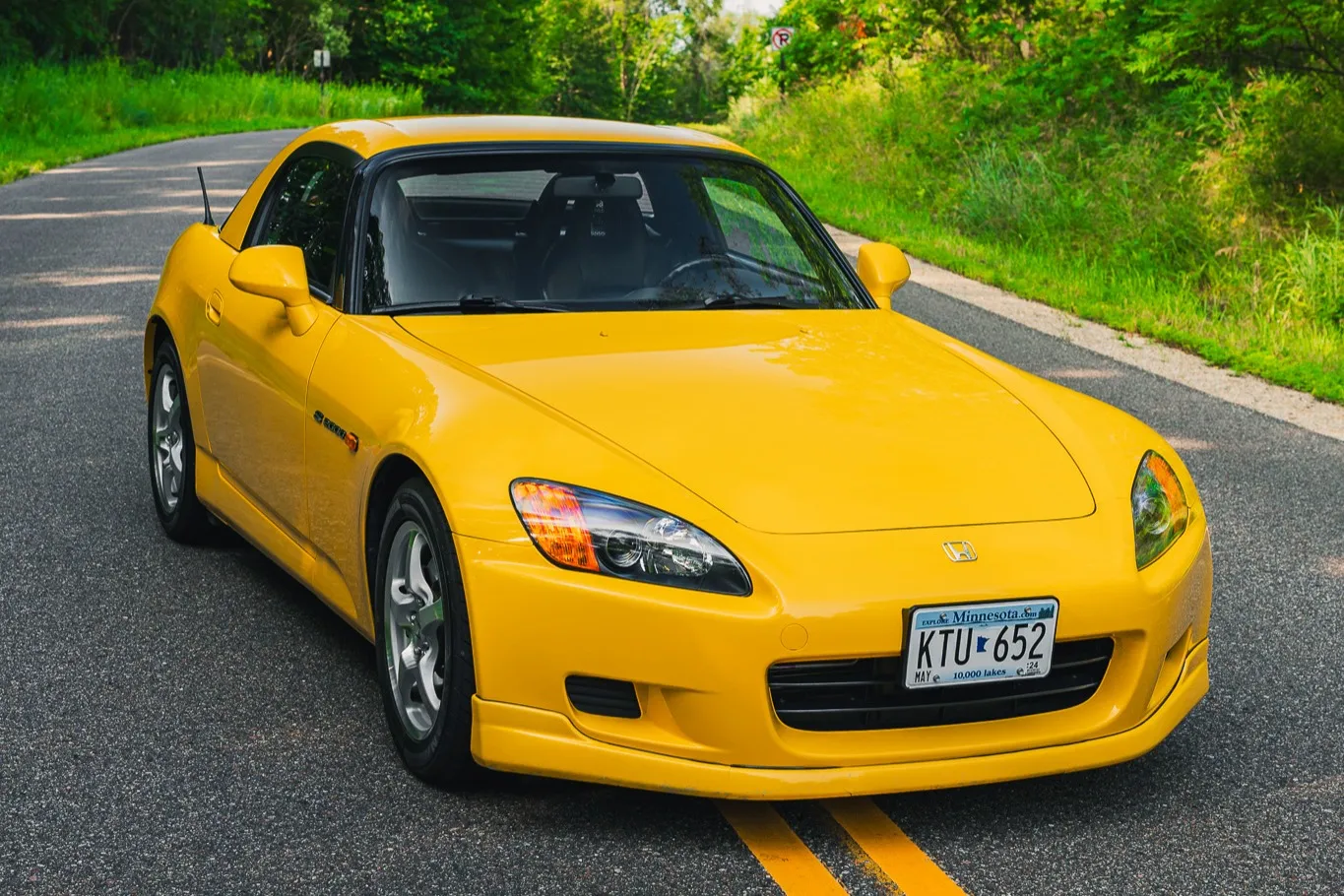
1. Honda S2000 (1999–2009)
The Honda S2000 is one of the greatest sports cars ever built by a Japanese manufacturer. It was discontinued in 2009, and the automotive world has never quite recovered from that loss. Honda built this roadster with a singular purpose to deliver a pure, unfiltered driving experience. Every single element of the S2000 was engineered with precision and passion.
At the heart of the S2000 sits the legendary F20C engine. This 2.0-litre naturally aspirated four-cylinder revs all the way to 9,000 rpm. That redline figure alone makes it one of the most thrilling engines ever fitted to a production sports car. The power delivery is linear, responsive, and absolutely addictive.
The chassis balance of the S2000 is near-perfect. Honda placed the engine behind the front axle to achieve an almost 50/50 weight distribution. This gives the car a neutral, playful handling character that rewards skilled drivers. It punishes the careless, which is exactly how a sports car should behave.
The six-speed manual gearbox is a mechanical masterpiece. Short throws, precise gates, and a satisfying mechanical click on every shift make it endlessly enjoyable. You never get tired of rowing through the gears on a twisty back road. The gearbox alone is reason enough to seek one out.
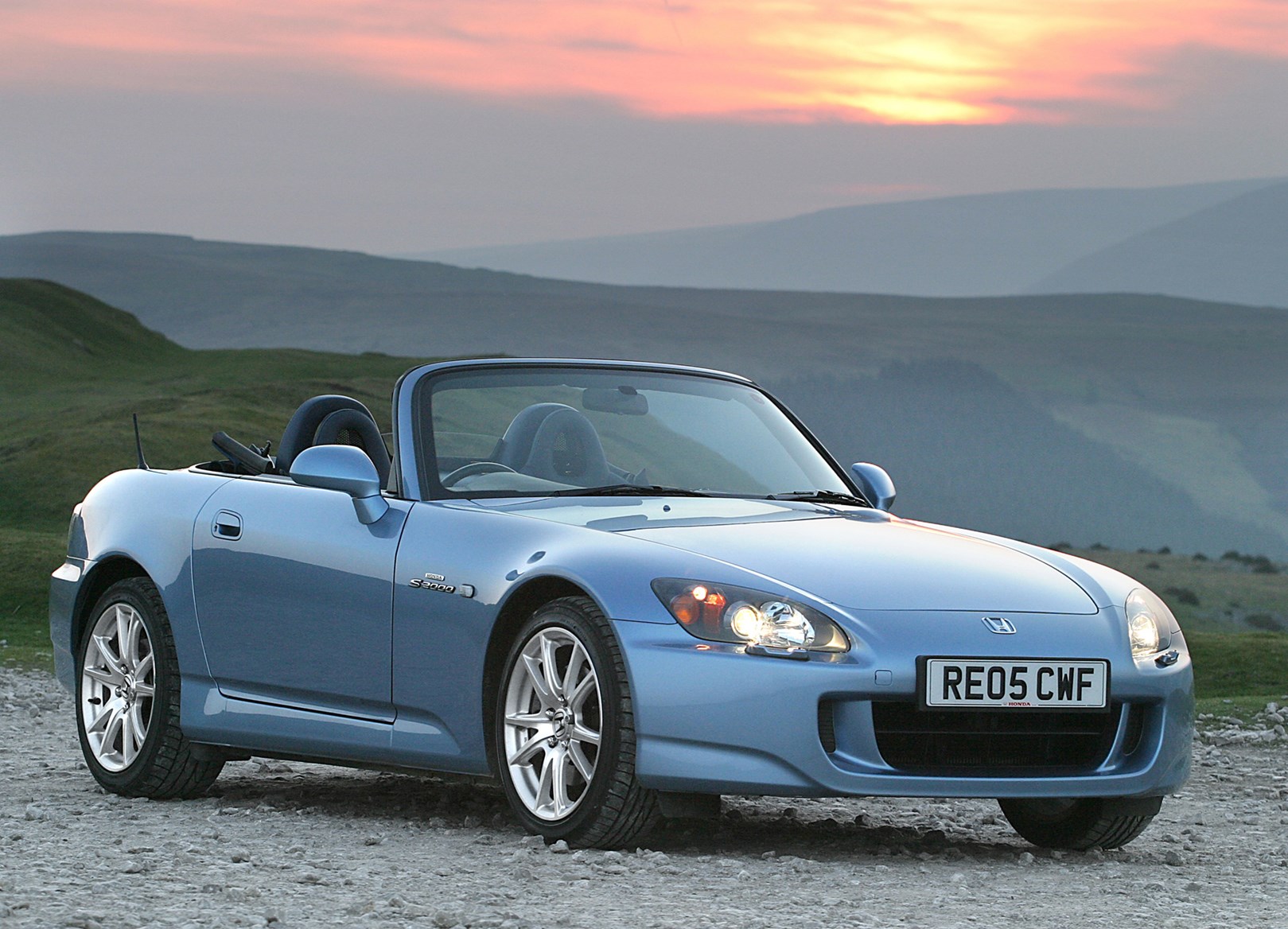
The build quality on the S2000 was exceptional for its era. Honda used high-quality materials and put serious attention into panel fit and finish. The soft-top roof seals tightly and operates smoothly even after years of use. Interior plastics have held up far better than most rivals from the same period.
Values have climbed significantly in recent years. Low-mileage, unmodified examples now command serious money in the collector market. However, well-maintained higher-mileage cars remain available at more accessible price points. They still drive brilliantly and represent outstanding value for the experience they deliver.
Finding a good S2000 requires patience and careful inspection. Common issues include wear on the differential, rust in the sills on older examples, and stretched timing chains on neglected engines. A pre-purchase inspection by a Honda specialist is absolutely essential. Pay the inspection fee and save yourself from an expensive mistake.
The S2000 community worldwide is passionate, knowledgeable, and genuinely supportive. Parts availability is excellent thanks to Honda’s global reach and a thriving aftermarket. You will never struggle to find components or technical advice for this car. Owning one connects you to a global family of enthusiasts who truly love what they drive.
In 2026, the S2000 represents everything modern sports cars have moved away from. It is light, naturally aspirated, rear-wheel drive, and completely analog in its driving experience. No hybrid system, no torque-fill turbo, no artificial steering weight. Just you, the road, and 9,000 rpm of pure mechanical joy.
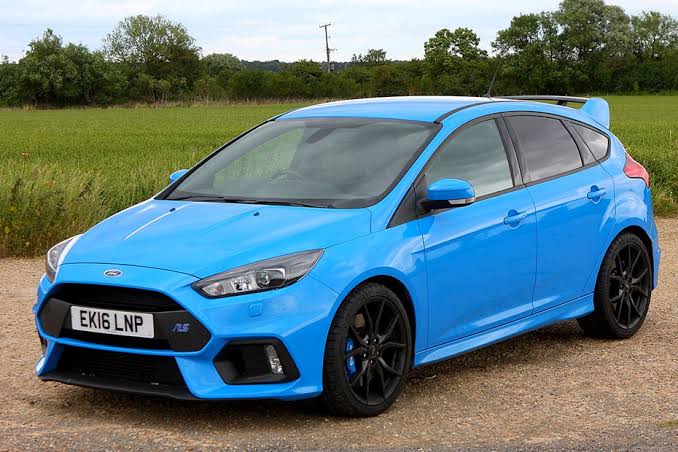
2. Ford Focus RS (MK3, 2016–2018)
The third-generation Ford Focus RS was a genuine performance car revolution hidden inside a family hatchback body. Ford discontinued it in 2018, and nothing has replaced it in the Blue Oval lineup since. It combined everyday practicality with supercar-baiting performance in a way that few cars at any price could match. The RS badge has always meant something special, but the MK3 took it to another level entirely.
Under the bonnet sits a 2.3-litre EcoBoost turbocharged four-cylinder engine. It produces 350 horsepower and 440 Nm of torque in standard form. That power figure was remarkable for a hot hatchback when it launched. It still holds its own against modern performance cars a decade later.
The party trick of the MK3 Focus RS was its Drift Mode. Ford’s engineers programmed a specific torque-vectoring all-wheel-drive system that could deliberately oversteer. You could hang the tail out on a track like a seasoned professional. It was controversial at launch but has since become one of the most talked-about features in hot hatch history.
Handling was sharp, communicative, and confidence-inspiring on both road and track. The RS could switch from comfortable daily driver to track weapon with a button press. Suspension settings were adjustable through multiple drive modes. Few cars offered this level of versatility at the Focus RS price point.
The interior was functional rather than luxurious. Recaro bucket seats held occupants firmly during spirited driving. The driving position was excellent, and visibility was good in all directions. Build quality was solid, though not quite up to the standard of German rivals like the Golf R.
One concern that potential buyers must research thoroughly is the coolant mixing issue. Some early MK3 Focus RS models suffered head gasket failures that allowed coolant to mix with engine oil. Ford extended warranties on affected cars, but the issue gave the model a negative reputation in some circles. Buyers must check service history and look for any signs of this problem before purchasing.
Despite that concern, well-maintained examples are genuinely fantastic machines. Many owners drove them hard and looked after them properly. These cars surface regularly in the used market and represent strong value. The driving experience justifies every penny of the asking price on a good example.
In 2026, the Focus RS represents the end of an era for affordable performance. No manufacturer currently sells a front-engined, four-door, all-wheel-drive hot hatch with this much character and capability at this price point. The MK3 RS is already being recognized as a modern classic. Prices are moving upward, and that trend is unlikely to reverse anytime soon.
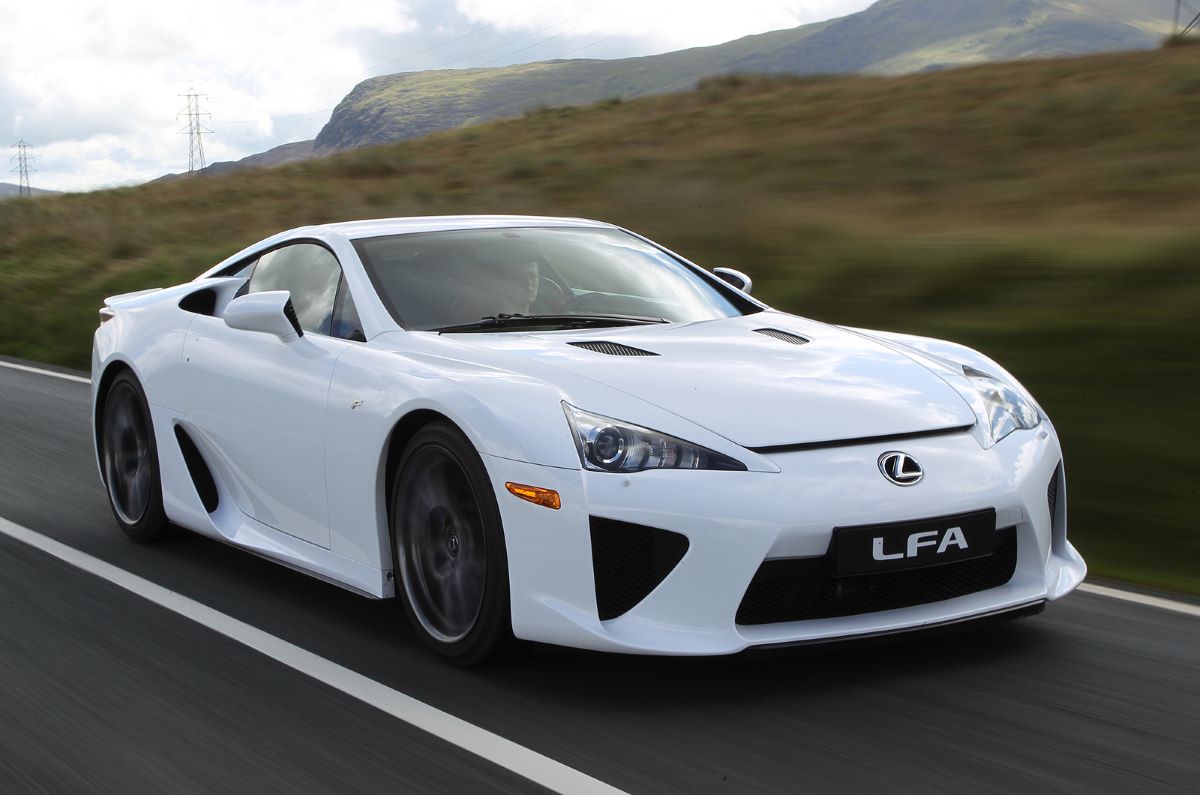
3. Lexus LFA (2010–2012)
The Lexus LFA is one of the greatest supercars ever produced. Lexus built only 500 units over two years before quietly ending production. It was never meant to be a volume product. It was a statement proof that a Japanese luxury brand could compete with Ferrari and Lamborghini on the highest stage imaginable.
The centrepiece of the LFA is its naturally aspirated 4.8-litre V10 engine. It produces 553 horsepower and revs to an extraordinary 9,000 rpm. The sound it produces is unlike anything else on four wheels. Engineers from Yamaha helped develop both the engine and the exhaust note, treating acoustic performance as seriously as mechanical performance.
The instrument cluster is digital and reconfigures itself so quickly that analog needles could not keep up with the engine’s acceleration. That detail alone tells you everything about the LFA’s extraordinary character. Every component was chosen for a specific purpose. Nothing was included without deliberate engineering intent.
The body structure is made almost entirely from carbon fibre reinforced polymer. Lexus developed an entirely new manufacturing process to work with this material at the required scale. The CFRP construction gives the LFA exceptional rigidity while keeping weight impressively low. The result is a car that handles with breathtaking precision and agility.
Reliability has proven to be genuinely impressive for a supercar of this complexity. Lexus quality control and build standards are embedded deeply in the LFA’s DNA. Owners report that these cars are far less temperamental than comparable Italian or German exotics. Running costs are high, but unexpected breakdowns are surprisingly rare.
Values have increased dramatically since production ended. The LFA is now firmly in collector car territory, with well-documented examples fetching extraordinary prices. Finding one for sale at any price requires serious patience and the right connections. When they do appear, they sell quickly to buyers who have been waiting for the opportunity.
The LFA proves that discontinuation can actually enhance a car’s legacy. Its rarity, performance, and unique character have made it one of the most desirable modern classics in existence. If you have the resources and the opportunity to acquire one, do not hesitate. The LFA is as close to a guaranteed appreciating asset as the automotive world currently offers.
4. Volkswagen Phaeton (2002–2016)
The Volkswagen Phaeton is one of the most misunderstood luxury cars ever built. Volkswagen discontinued it in 2016 after years of disappointing sales figures. The problem was never the car itself. The problem was that nobody could understand why a Volkswagen should cost as much as a Mercedes S-Class or BMW 7 Series. Perception destroyed a genuinely brilliant machine.
Ferdinand Piëch personally oversaw the Phaeton’s development with obsessive attention to detail. His famous requirements included the ability to cruise at 300 km/h in 50-degree desert heat with the air conditioning maintaining exactly 22 degrees Celsius inside the cabin. These demands forced engineers to create solutions that exceeded normal automotive standards. The result was an engineering masterpiece wearing the wrong badge.
The 6.0-litre W12 engine option is an absolute highlight. It produces smooth, effortless power that makes even the most demanding motorway journeys feel effortless. The air suspension delivers a magic carpet ride quality that rivals anything in the luxury car segment. Every component was engineered to the highest possible standard regardless of cost.
Build quality is extraordinary. The Phaeton shares its platform and many components with the Bentley Continental Flying Spur. Both cars were assembled at Volkswagen’s transparent factory in Dresden. The production process was meticulous and the quality of materials used throughout the cabin is exceptional.
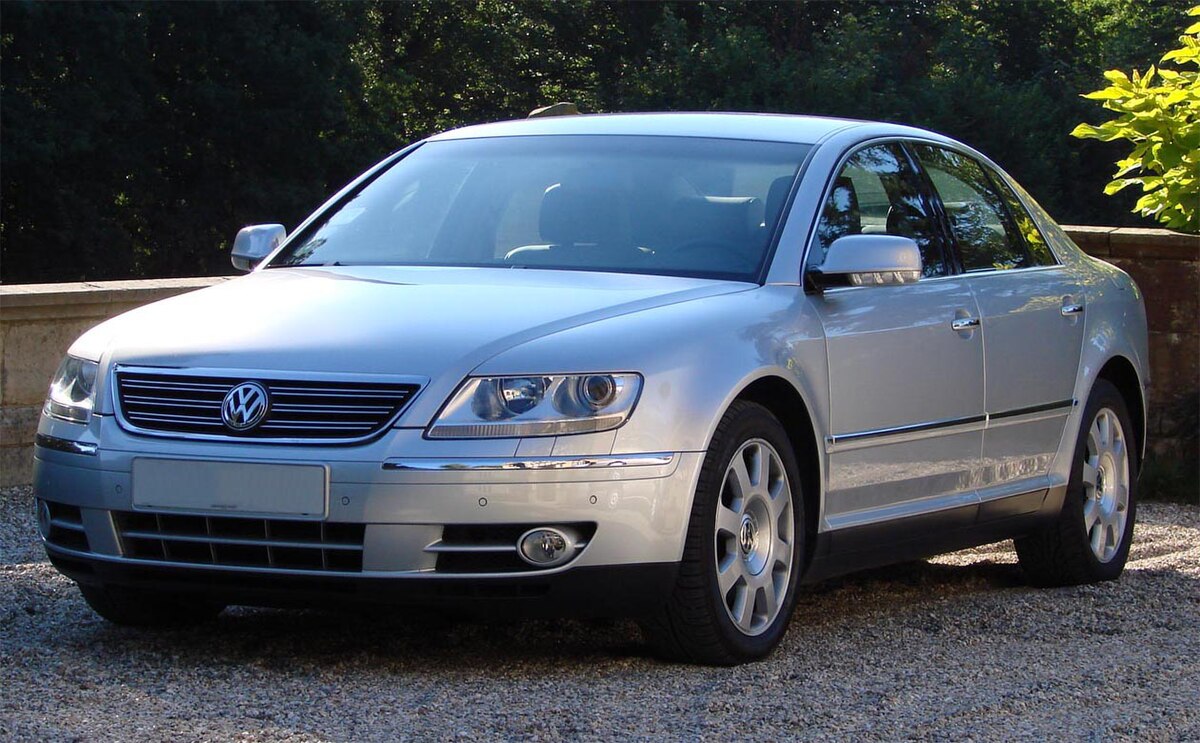
Maintenance costs are the critical factor that buyers must honestly consider. The Phaeton uses complex systems from across the Volkswagen Group, and specialist knowledge is required for most repairs. Air suspension components can be expensive to replace. The W12 engine requires careful attention and expert maintenance to remain reliable.
However, depreciation has been savage and relentless since these cars left the showroom. A Phaeton that cost over £70,000 new can be purchased today for a fraction of that figure. This creates a fascinating opportunity for buyers who do their research and find a well-documented low-mileage example. The maintenance costs become manageable when the purchase price is this low.
In 2026, a good Phaeton offers extraordinary luxury at a price that makes all comparable alternatives seem overpriced. The badge snobbery that killed its sales figures means nothing when you are sitting in the beautifully appointed cabin. Find one with a full service history from a reputable specialist, and you have one of the great automotive bargains of the modern era.
Also Read: 5 Volkswagen Models That Handle Abuse vs. 5 That Don’t Last a Year
5. Mazda RX-8 (2003–2012)
The Mazda RX-8 was the last production car to use a rotary engine. When Mazda discontinued it in 2012, an entire engine technology effectively disappeared from the mainstream automotive world. The RX-8 was a four-door sports car with genuinely usable rear seats and a free-revving Renesis rotary engine that made it unlike anything else available. It remains unique in the most literal sense of the word.
The 1.3-litre naturally aspirated Renesis rotary engine is an engineering marvel. It produces around 232 horsepower in the higher output version and revs smoothly to 9,000 rpm. The power delivery is completely unlike any piston engine. It builds in a silky, continuous sweep that makes driving the RX-8 a genuinely hypnotic experience.
The handling of the RX-8 is exceptional and deserves far more recognition than it receives. Mazda positioned the rotary engine low and behind the front axle to achieve near-perfect weight distribution. The steering is communicative and accurate without being overly sensitive. Every corner rewards you with a sense of connection between driver and machine that most modern sports cars have completely lost.
The four-door layout with rear-hinged back doors was a genuine innovation. The rear seats are actually usable by adults for shorter journeys. This made the RX-8 a sports car that could serve as the only car for many owners. No other genuine sports car offered this combination of driving pleasure and practical accommodation.
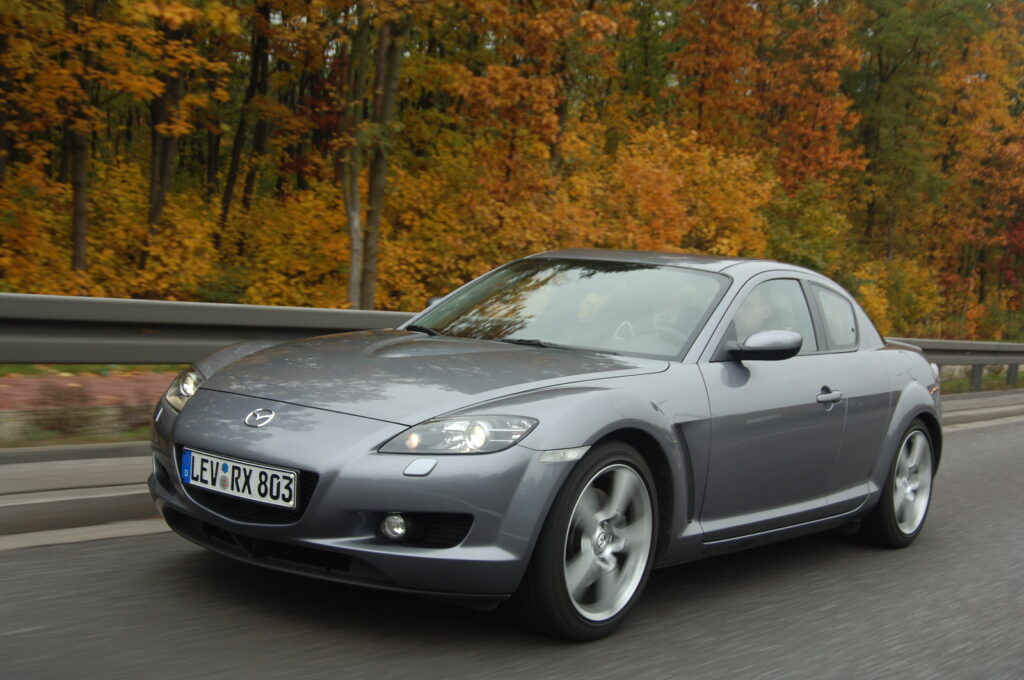
Buyers must be fully aware of the rotary engine’s specific requirements before purchasing. The Renesis engine requires regular oil top-ups between services because it uses oil as part of its combustion process. Cold starts must be handled correctly to avoid carbon buildup on the apex seals. Engine flooding can occur if the car is not driven properly on every journey.
An RX-8 with a healthy engine is a revelation to drive. Finding that example requires patience and specialist knowledge. A compression test on the rotary engine is absolutely mandatory before any purchase. Low compression figures indicate expensive trouble that no amount of enthusiasm can justify.
For the well-prepared buyer who understands and accepts the maintenance requirements, the RX-8 offers something truly irreplaceable in 2026. No other car on the market drives like this, sounds like this, or carries this much engineering uniqueness. It is a piece of automotive history that remains genuinely thrilling to drive today.
5 That Should Stay Forgotten in 2026
These discontinued models are often best avoided due to poor reliability, weak resale value, or limited long-term support. Vehicles like the Dodge Dart and Chrysler 200 struggled in the market and developed a reputation for inconsistent quality.
Others fall into this category because of rapid depreciation, outdated features, or uncertain parts availability, which can make ownership more difficult over time. While they may seem affordable upfront, these cars often bring higher long-term costs and fewer benefits compared to better-supported alternatives.
1. Pontiac Aztek (2001–2005)
The Pontiac Aztek holds a special place in automotive history as one of the most comprehensively disliked vehicles ever produced. General Motors launched it with significant fanfare and genuine commercial optimism. It sold poorly, was ridiculed mercilessly by critics and the public alike, and contributed significantly to the broader decline of the Pontiac brand. When GM pulled the plug in 2005, almost nobody mourned its passing.
The design was the primary problem, and it was catastrophic from every angle. Multiple design teams with conflicting visions appear to have worked on the Aztek simultaneously. The front end, the body side, and the rear all look like they belong to completely different vehicles. No single design direction was consistently applied, resulting in visual chaos that confounded everyone who saw it.
Performance was mediocre in every measurable sense. The 3.4-litre V6 engine produced 185 horsepower, which was adequate but never inspiring. The front-wheel-drive layout with an optional all-wheel-drive system felt uninspired and disconnected. Driving an Aztek was a forgettable experience that left no positive impression on anyone who experienced it.
Interior quality was another disaster area. Plastics throughout the cabin were low-grade and scratchy. The dashboard design was confusing and cluttered with awkwardly placed controls. The attempt to make the interior functional and adventurous with camping-oriented features felt gimmicky rather than genuinely useful. Most buyers found the features impractical in everyday use.
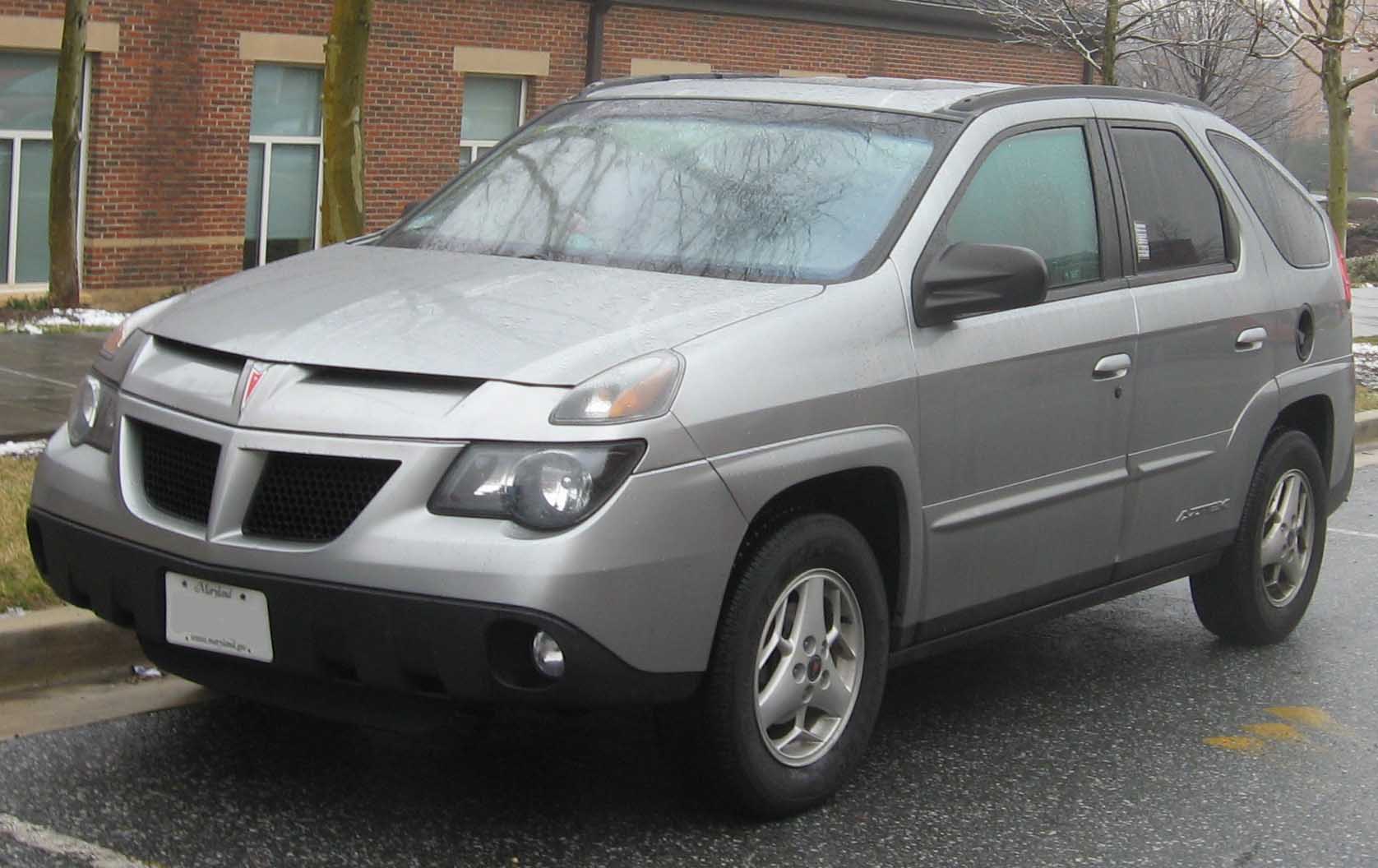
Reliability was not dramatically terrible, but it was below the standards expected even at the time. Various electrical gremlins plagued examples throughout their lives. The GM platforms of this era were not known for their long-term dependability. Repair costs were reasonable, but the frequency of issues was frustrating for owners.
The Aztek’s cultural rehabilitation came almost entirely from the television series Breaking Bad. Walter White’s use of an Aztek as his character vehicle gave the car unexpected cultural relevance. Some enthusiasts now seek them out for novelty or ironic appreciation. This is genuinely the only scenario where purchasing an Aztek makes any logical sense.
In 2026, the Aztek offers nothing that better alternatives from the same period or the thriving used market cannot provide more pleasantly. The camping accessories are unavailable, the design remains deeply challenging, and the driving experience is as forgettable as ever. Unless you want a conversation piece or a Breaking Bad tribute vehicle, leave the Aztek exactly where it belongs in the past.
7. Chrysler PT Cruiser (2000–2010)
The Chrysler PT Cruiser was a car built on a fundamentally misguided premise. Chrysler believed that retro styling inspired by 1930s American hot rods would create sustained commercial appeal. It worked briefly and spectacularly at launch. Then the novelty wore off, the quality issues surfaced, and the PT Cruiser became one of the most lamented vehicles of the early 2000s. It limped to the end of production in 2010 with almost no goodwill remaining.
The retro styling that caused such excitement at launch became the car’s greatest burden. What felt fresh and nostalgic in 2000 looked dated and tired within just a few years. The design referenced an era that most buyers had no genuine emotional connection to. Once the novelty evaporated, there was nothing else to sustain buyer interest or enthusiasm.
Mechanical underpinnings were borrowed from the Dodge Neon, which told you everything you needed to know about the engineering ambition behind the project. The 2.4-litre four-cylinder engine was acceptable but uninspiring. Performance was adequate for urban commuting and nothing more. Anyone who expected excitement from a PT Cruiser left disappointed every single time.
Reliability was a serious and persistent problem throughout the PT Cruiser’s production life. The head gasket was a known weak point that caused expensive failures at relatively low mileage. Electrical systems were temperamental and prone to unexplained faults. Automatic transmission units were not known for their long-term durability in this application.
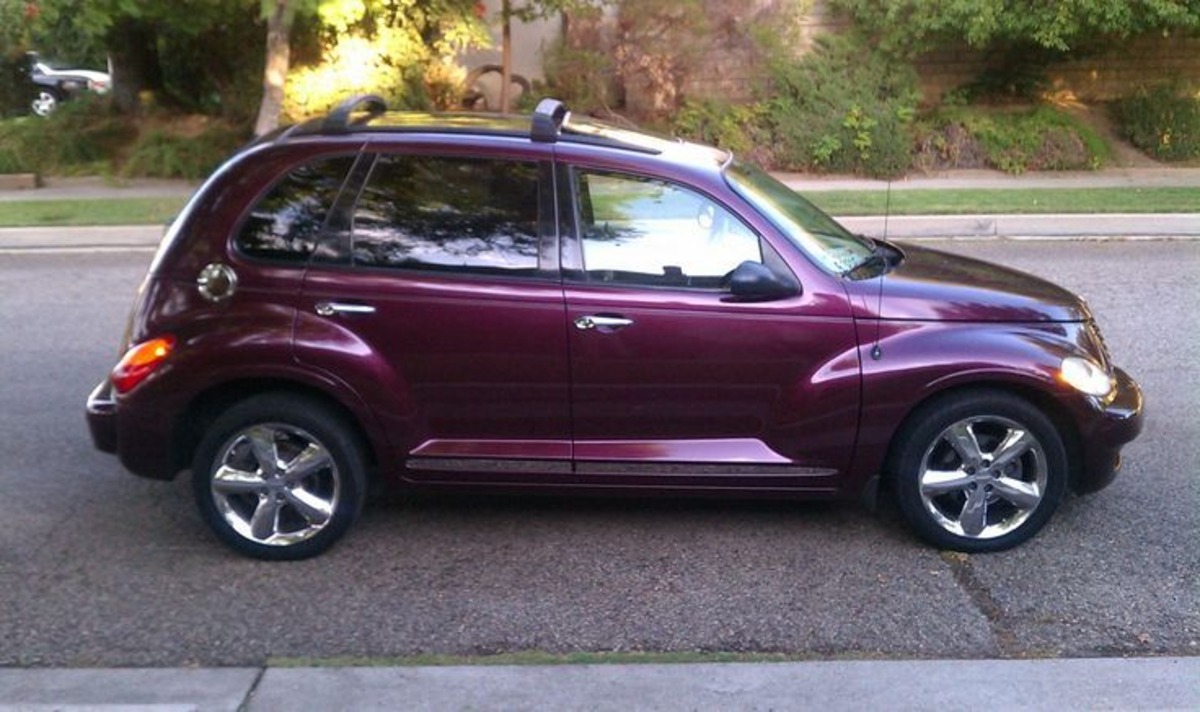
Interior quality was profoundly disappointing, even by early 2000s standards. The retro styling theme was applied inconsistently throughout the cabin. Some surfaces featured period-inspired design touches, while others were purely functional and cheap-looking. The effect was an interior that felt neither genuinely retro nor properly modern it occupied an uncomfortable middle ground.
The PT Cruiser Convertible version, introduced in 2005, somehow made things worse rather than better. The convertible top reduced body rigidity significantly, introducing noticeable scuttle shake on anything but smooth road surfaces.
Wind noise was excessive at motorway speeds. The roof mechanism was unreliable and costly to repair when it failed, which happened with discouraging regularity.
In 2026, PT Cruisers represent poor value in every practical dimension. They are expensive to maintain relative to what they offer. Parts availability is declining as stocks are depleted.
The driving experience never justified the purchase price, even when new. Finding an enthusiastic community of owners and specialists is increasingly difficult. The PT Cruiser is a car that time has not been kind to, and no amount of retro charm can change that fundamental reality.
2. Ssangyong Rodius (2004–2013)
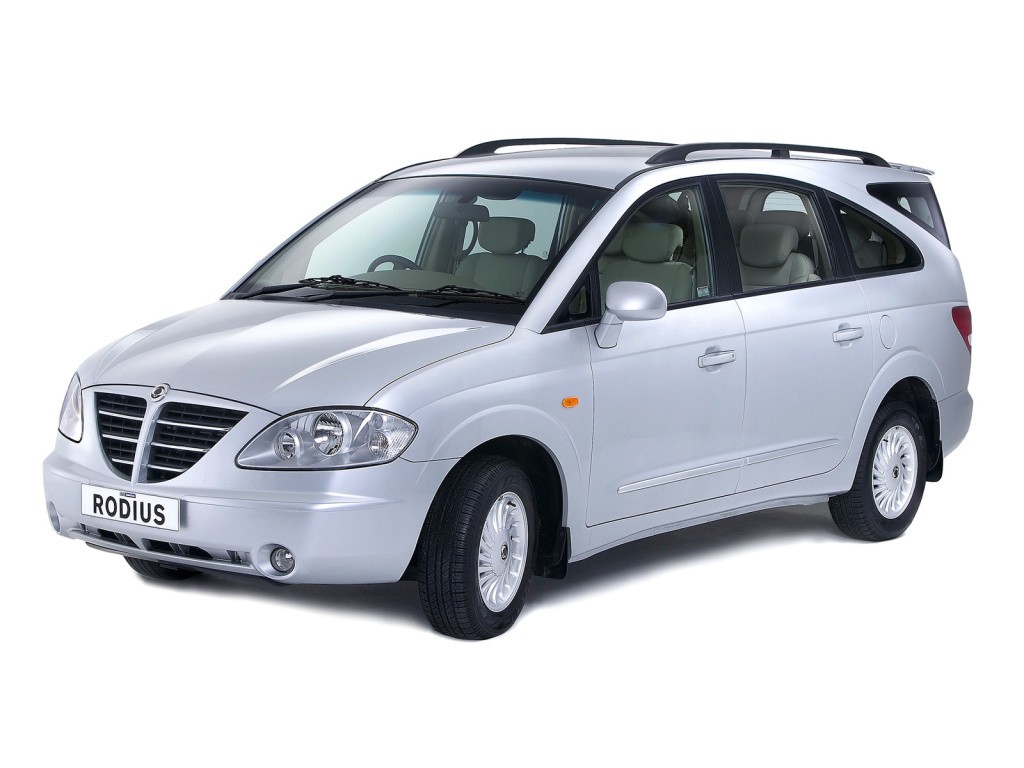
The Ssangyong Rodius is a vehicle that earned a global reputation as one of the worst-designed cars in the history of the automobile. The South Korean manufacturer launched it in 2004 with genuine commercial intentions targeting the minivan market. Design critics and automotive journalists responded with almost universal bewilderment and horror. The Rodius managed to be genuinely unattractive in ways that seemed almost deliberately challenging.
The exterior design is the most frequently discussed aspect of the Rodius, and not in any positive sense. Various critics described it as appearing to be assembled from components intended for completely different vehicles. The proportions are deeply unusual, with a high roofline and an awkward rear section that seems uncertain of its own purpose. Nothing about the exterior communicates confidence or intention.
Interior space was the Rodius’s primary selling point, and it was the one area where the vehicle performed reasonably well. The cabin could accommodate up to eleven passengers in various configurations. For family buyers in markets where large people movers were practical necessities, the space offered genuine utility. This was quite literally the only positive attribute that journalists consistently acknowledged.
Build quality and material selection were problems from the beginning. Interior plastics were thin, flexible, and prone to producing irritating rattles over time. Assembly quality was inconsistent, with panel gaps and trim alignment varying noticeably between examples. The impression was of a vehicle assembled in haste with insufficient quality control at every stage.
Mechanical reliability was another area of serious concern. Various engine and transmission combinations were offered throughout the production run, and none developed a strong reputation for long-term dependability. Electrical systems proved complex and prone to failures that were difficult and expensive to diagnose accurately. Finding specialist knowledge for Ssangyong mechanics outside of major urban areas was genuinely challenging.
Depreciation was brutal and relentless from the moment these vehicles left dealership forecourts. Values collapsed faster than almost any other vehicle of comparable newness. While extreme depreciation can sometimes create buyer opportunities, the Rodius offered poor enough quality that low prices simply reflected genuine value rather than market mispricing.
In 2026, the Rodius should remain firmly in the past where it belongs. Parts availability has become increasingly problematic as the manufacturer itself has gone through significant corporate difficulties. The design is ageing in entirely the wrong direction. Practical alternatives from Japanese and Korean manufacturers of the same era offered significantly better quality, reliability, and ownership experience at comparable prices.
4. Rover CityRover (2003–2005)
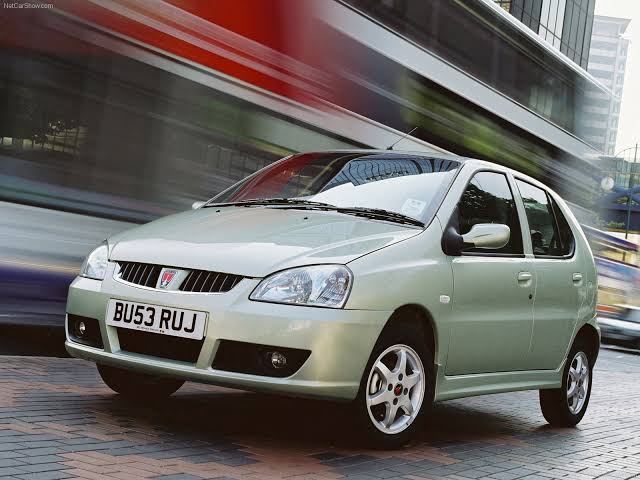
The Rover CityRover represents one of the most depressing episodes in the final years of the Rover brand. Rover needed a small city car to compete in the booming supermini segment of the early 2000s. Rather than develop a proper new product, they chose to rebadge the Indian-built Tata Indica with minimal modifications. The result was an embarrassment that accelerated the collapse of buyer confidence in the Rover name.
The original Tata Indica was a competent, value-oriented product designed for the specific demands of the Indian market. As a rebadged product repositioned for European buyers at European prices, it was wildly inappropriate. The Indica’s engineering was designed for different road conditions, different quality expectations, and a fundamentally different price bracket. Rover tried to charge a premium for what was essentially a budget product with a British badge.
Build quality was immediately apparent as a serious problem to anyone who sat inside a CityRover. Panel fits were loose and inconsistent. Trim pieces rattled alarmingly, even on new cars. Materials throughout the cabin were far below the standards expected by British buyers considering a Rover purchase. The brand’s heritage demanded better, and the CityRover delivered far worse.
The driving experience was equally disappointing. The 1.4-litre petrol engine was rough and noisy at higher revs. Ride quality was poor on British road surfaces that the original Indian engineering never accounted for. Steering was vague and uninspiring. Handling was mediocre at best and actively unsettling at worst when pushed near the limits of its ability.
Reliability proved predictably problematic for European conditions and usage patterns. Various electrical gremlins appeared with frustrating regularity. Build quality issues translated directly into ongoing ownership problems. Repair costs were disproportionate given the car’s value proposition, as specialist parts were not always straightforward to source promptly.
The CityRover damaged the Rover brand in its final years when the brand could least afford further negative attention. Buyers who expected Rover quality and received a rebadged budget product felt genuinely deceived. This betrayal of trust accelerated the erosion of brand loyalty that ultimately contributed to Rover’s collapse in 2005.
In 2026, no rational case exists for seeking out a CityRover. Survivors are rare precisely because so few people wanted them even when new. Those that remain are old, tired, and increasingly difficult to maintain. The CityRover is a monument to corporate desperation rather than automotive achievement. It belongs in automotive history books as a cautionary tale, not in anyone’s garage.
5. Chevrolet SSR (2003–2006)
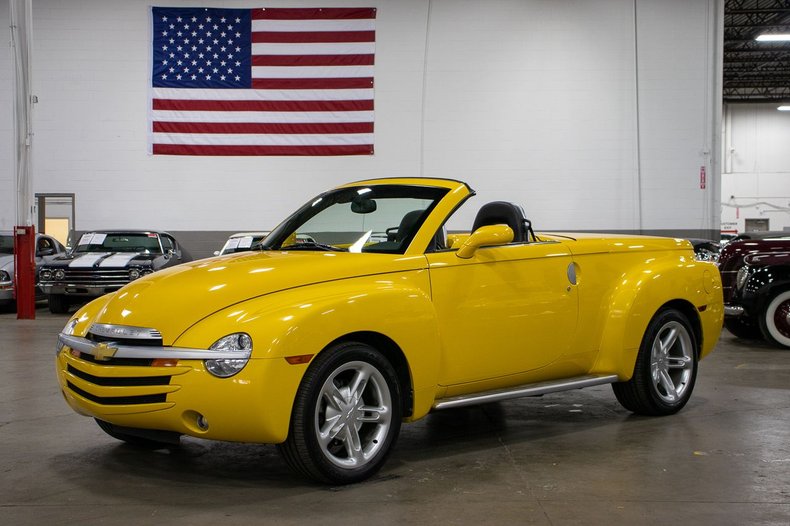
The Chevrolet SSR attempted to combine a retro-styled pickup truck body with convertible roof functionality and sports car performance aspirations.
This combination of ingredients sounds intriguing on paper. In execution, it produced a vehicle that satisfied none of its own ambitions while costing an extraordinary amount of money for what buyers actually received. General Motors discontinued it after just three model years and mercifully low production numbers.
The design concept was genuinely ambitious, and the retro-inspired styling drew significant attention when the SSR debuted. The sweeping fenders, the chrome detailing, and the general proportions referenced American hot rod culture in a way that generated real excitement initially. The problem was that the execution did not match the concept’s promise in any meaningful way.
The retractable hardtop mechanism was complex, heavy, and problematic. It added significant weight to a vehicle that was already heavier than its performance pretensions could accommodate.
When the roof mechanism worked, it was impressive as a party trick. When it malfunctioned, which happened with concerning frequency, repair costs were substantial, and dealer knowledge was often inadequate.
Early SSR models used a 5.3-litre V8 producing around 300 horsepower. This sounds impressive until you account for the SSR’s considerable weight. Performance was underwhelming for the engine displacement.
The truck was heavy, slow to respond, and lacked the sporting character that its styling strongly implied. A later 6.0-litre V8 option improved matters but never truly resolved the fundamental mismatch between image and ability.
Practicality as a pickup truck was laughable. The bed was tiny, shallow, and covered by the retractable hardtop mechanism when the roof was deployed. Using the SSR as an actual work truck was essentially impossible.
It was too expensive and too impractical to serve as a lifestyle truck. It was too slow and too heavy to serve as a genuine sports vehicle. It existed in an uncomfortable commercial no-man ‘s-land.
The SSR’s price was another fundamental problem throughout its brief production life. It launched at a price point that placed it in competition with genuine sports cars and proper luxury vehicles.
At that price, buyers had far superior options in every direction they looked. Sales were poor from the beginning and never recovered despite various attempts to improve the product.
In 2026, the SSR occupies an odd nostalgic space in American automotive history. Some collectors appreciate it as a curiosity from an era when General Motors was willing to experiment boldly if not always wisely.
The retractable roof mechanism remains a maintenance nightmare on ageing examples. Values have stabilized at modest levels that reflect the vehicle’s genuine limitations. The SSR is interesting as a historical artifact but offers nothing compelling as a modern ownership proposition for anyone seeking actual driving satisfaction or practical utility.
