
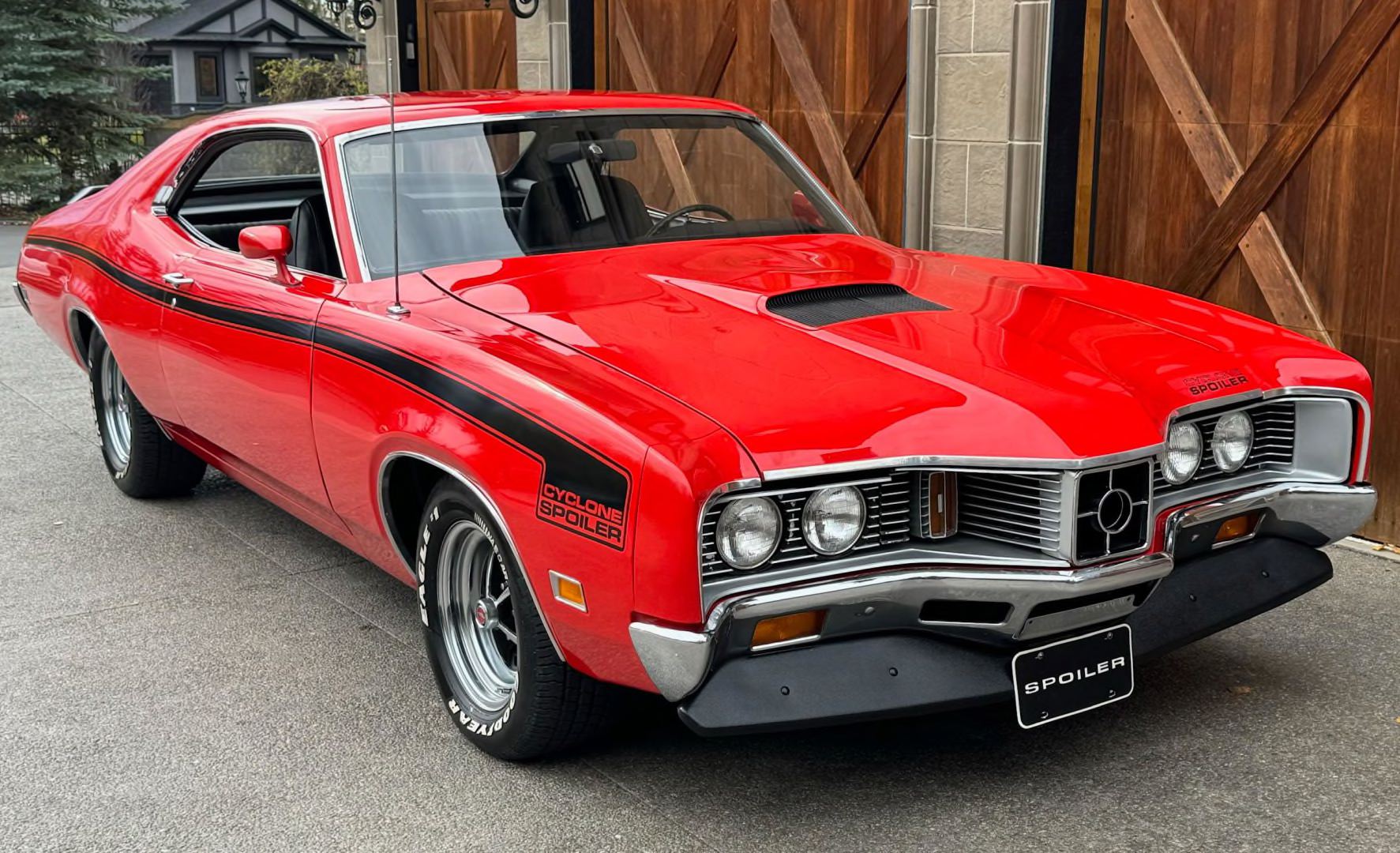
Drag strips do not care about reputation. A quarter-mile track measures elapsed time and trap speed, and neither of those numbers responds to how well-known a car is or how much Instagram attention it generates at car shows. What matters is what happens between the lights and the finish line, and that is where a specific category of 1970s muscle car keeps showing up and making its argument louder than any marketing campaign could.
Certain 1970s muscle cars disappeared from mainstream automotive conversation almost immediately after their production ended. Insurance rates ate into their buyer pool. Emissions regulations reduced their advertised output. The cultural momentum that had carried the muscle car era through its peak years ran out, and these cars faded from magazine covers and showroom floors into storage, barn finds, and the collections of enthusiasts who understood something about them that the broader market had missed.
What those enthusiasts understood, and what drag strip timing lights confirm in 2026, is that several of these forgotten machines were engineering achievements that outlasted their cultural moment by decades. Powertrains that responded well to modern fuel and ignition improvements while retaining their fundamental architecture intact.
Chassis designs that accepted modern suspension components without requiring wholesale reconstruction. Body weight distributions and wheelbase lengths that, when driven by experienced operators on modern drag radials, produced ideal launch behavior.
These are not barn-fresh originals that someone occasionally dusts off for a nostalgic pass. These are actively campaigned vehicles whose owners have invested in them as performance tools rather than display pieces, and whose elapsed times prove that 1970s engineering translated into 2026 strip performance better than their obscurity would ever suggest.
Nine cars follow. Each one vanished from mainstream memory. Each one is still running competitive times in 2026, and each one deserves more recognition than the official muscle car history has given it.
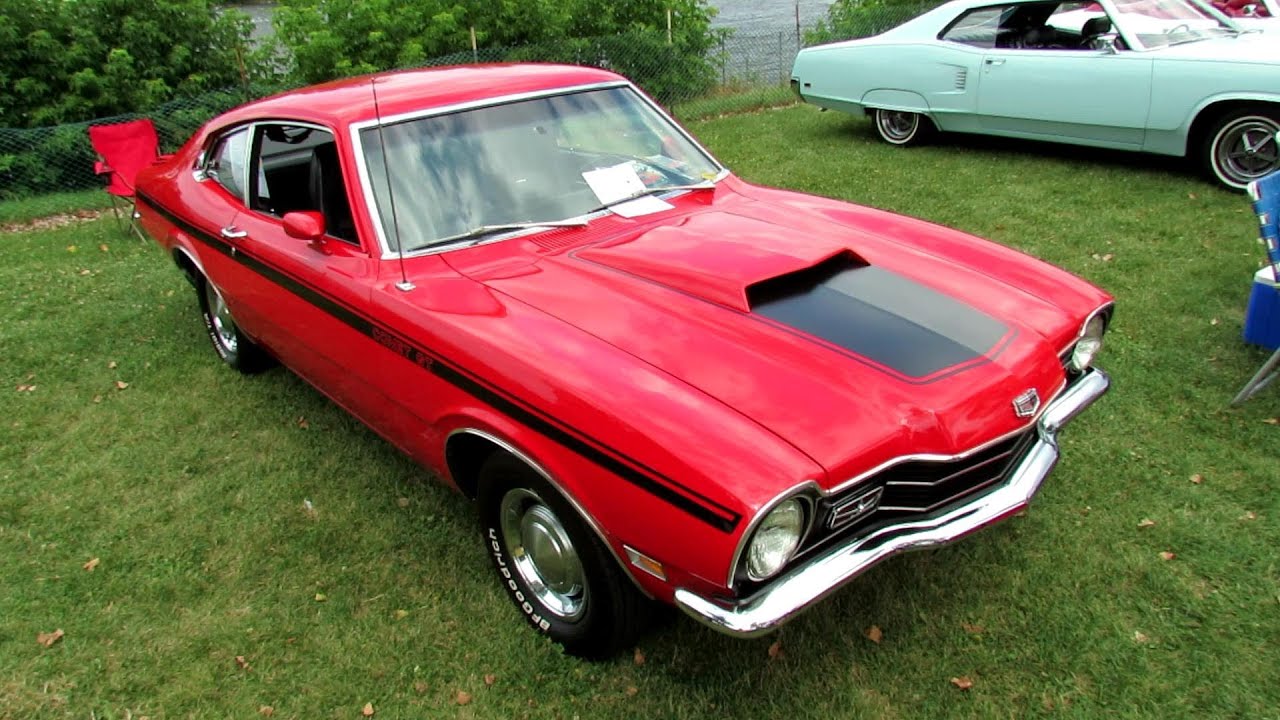
1. Mercury Comet GT 429 (1971)
Mercury built the Comet GT in the early 1970s as a compact performance platform that slotted below the larger Torino and Cyclone in Ford’s lineup, and the decision to stuff a 429 cubic inch big-block into a body that weighed approximately 3,100 pounds created a power-to-weight combination that drag racers in 2026 describe with the specific reverence reserved for cars that were right about performance before the market understood what they had.
429 cubic inch Super Cobra Jet variant available in some 1971 Comet GT configurations was factory underrated at 375 horsepower, with documented actual output substantially higher in original configuration. This engine in the lightweight Comet body produced launch characteristics that larger, heavier Ford and Mercury performers from the same period could not match at equivalent power levels because weight distribution and power-to-weight advantage in the Comet more than compensated for the chassis refinement advantages that the larger vehicles offered.
Strip-focused builders in 2026 who have acquired 1971 Mercury Comet GT 429 examples approach them as blank canvases whose primary asset is the power-to-weight relationship that Mercury created by installing the big-block in the compact chassis.
Modern fuel injection adapted to the 429’s displacement, current ignition technology that delivers precise timing advance across the RPM range, and modern drag radial tires that the original bias-ply rubber could not have anticipated in capability all combine to produce a Comet that runs elapsed times its original drivers would not have believed possible from street-legal equipment.
Quarter-mile times from modified 1971 Mercury Comet GT 429 examples at 2026 events regularly fall in the high 10-second range with moderate engine preparation, and more aggressively built examples dip into the 9-second range while retaining a body and chassis that Mercury engineers designed before the phrase drag radial entered the American vocabulary.
Owners who run these cars consistently report that the combination’s sweet spot, where the power-to-weight relationship and launch characteristics align most effectively, produces bracket racing predictability that more familiar muscle cars cannot match.
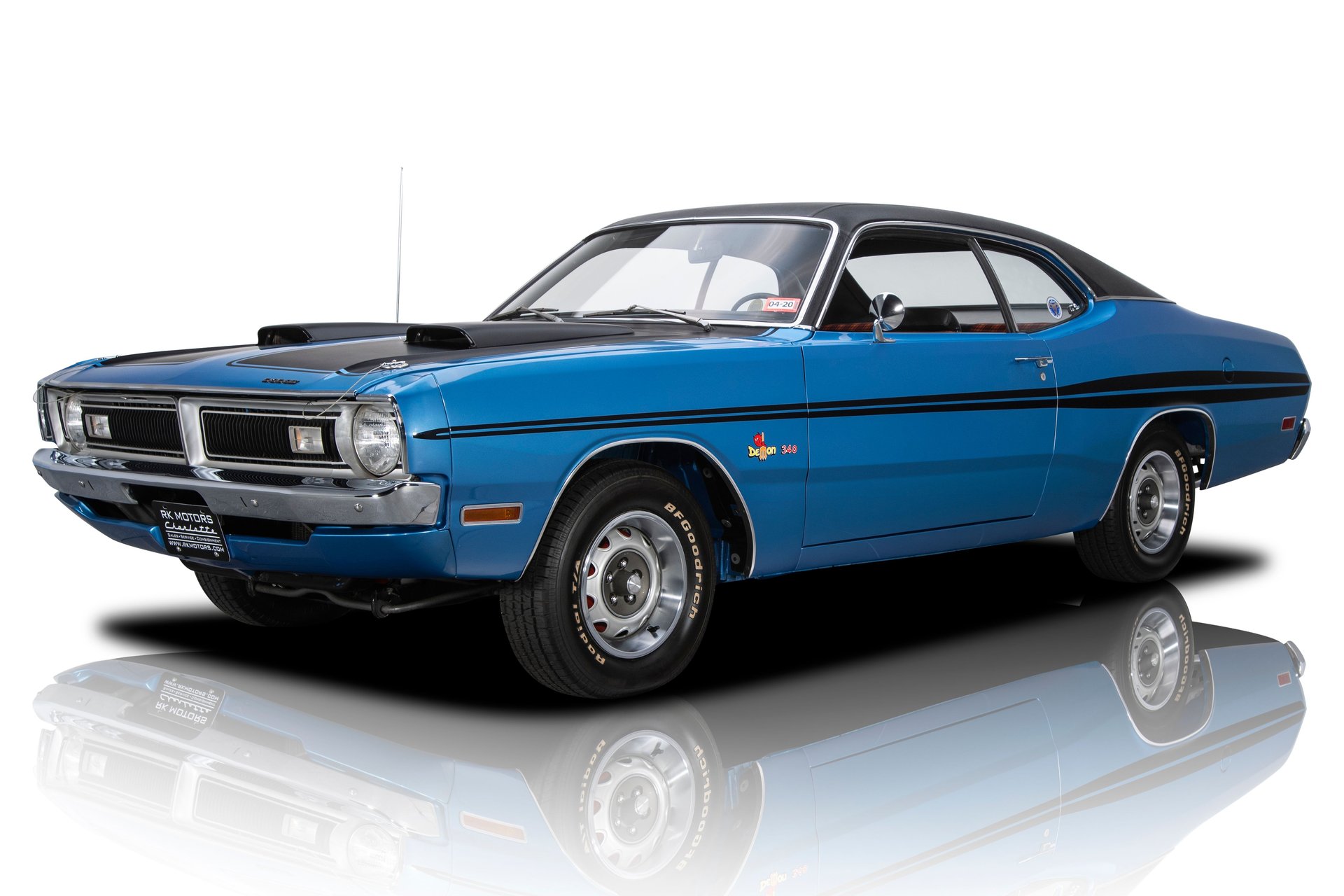
2. Dodge Demon 340 Six Pack (1971-1972)
Dodge introduced the Demon as an entry-level muscle car positioned below the Charger and Challenger in the Mopar lineup, and the 340 Six Pack combination that appeared in the 1971 and 1972 Demon gave buyers a lightweight, short-wheelbase car with three two-barrel Holley carburetors feeding a 340 cubic inch small-block that Mopar engineers had specifically calibrated for high-RPM efficiency rather than low-end torque dominance.
This calibration decision, which seemed like a concession to buyers who wanted a less expensive muscle car rather than the real thing, turned out to be one of the more prescient engineering choices of the early 1970s muscle car period. High-RPM small-block efficiency in a lightweight body produces consistent power delivery through the quarter-mile run that big-block torque in heavier vehicles sometimes struggles to match on hook-friendly surfaces, where raw low-end power creates more wheel spin than forward motion.
340 cubic inch engine with Six Pack induction in the 1971 Dodge Demon 340 Six Pack weighed approximately 400 pounds less than the 440-equipped Challenger of the same year, which is a weight reduction that translates directly to elapsed time advantage when displacement and power output are comparable rather than dramatically different.
Weight is the enemy of elapsed time in bracket racing, and Dodge had inadvertently created an ideal bracket racing platform by installing a high-revving small-block in one of their lightest production bodies. Drag racing communities in 2026 that have discovered the Demon 340 Six Pack as a platform consistently describe the car’s behavior on modern drag radials as unusually predictable across temperature and track condition variations, which is the characteristic that bracket racers specifically value for consistent dial-in accuracy.
A car that runs the same elapsed time repeatedly across varying conditions wins bracket events at a rate that faster but less predictable alternatives cannot match, and the Demon’s consistent behavior in 2026 hands reflects engineering choices that Dodge made for different reasons, but that produce exactly the right outcome for this application.
Also Read: 8 Classic Muscle Cars Still Attainable on a Working-Class Budget
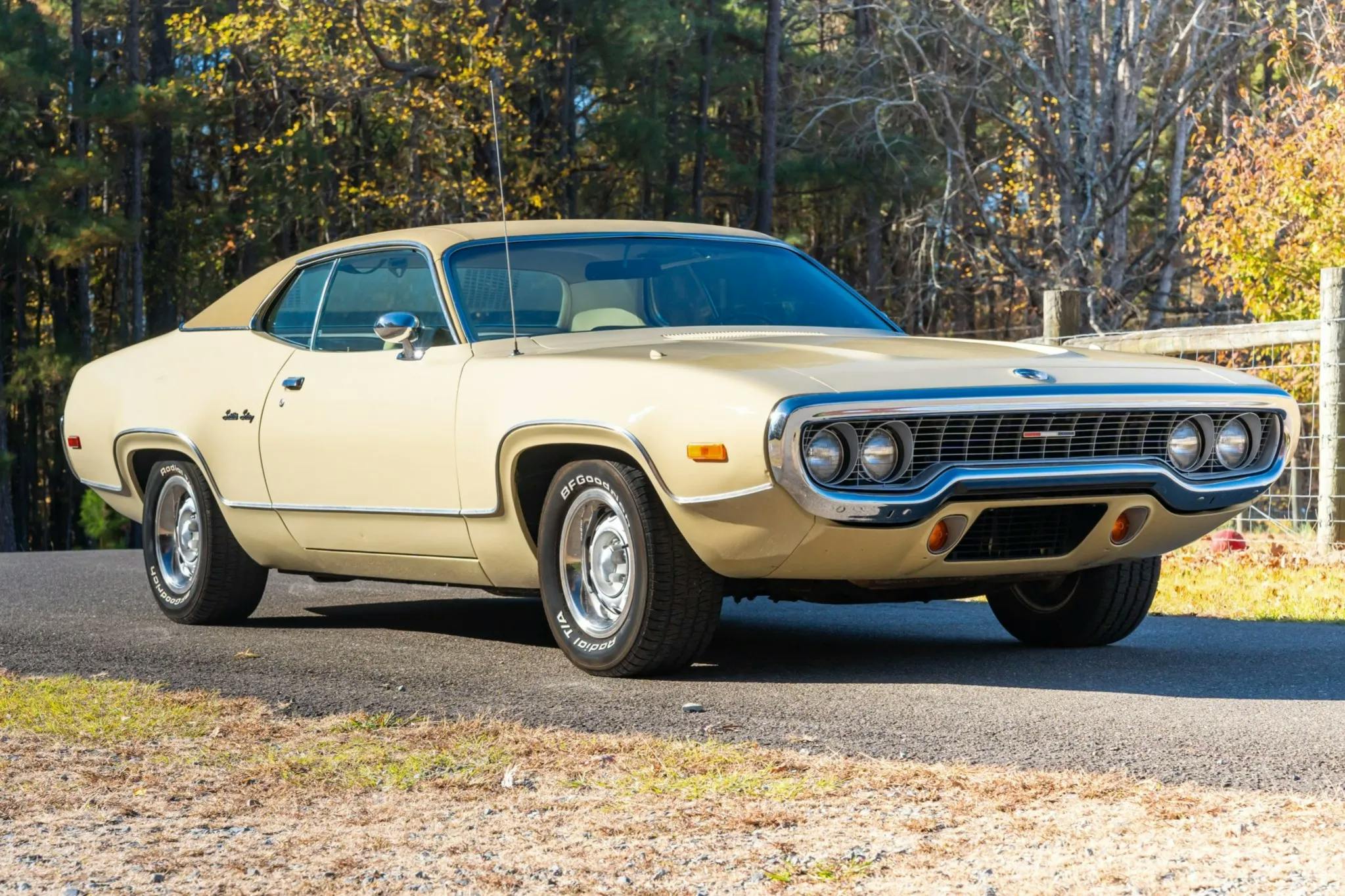
3. Plymouth Satellite Sebring-Plus 440 (1972)
Plymouth’s Satellite was always the more anonymous sibling of the Road Runner in the B-body lineup, sharing the platform and most mechanical components while attracting less enthusiast attention because the Road Runner’s cartoon bird marketing gave it a cultural identity that the Satellite’s more conventional presentation never achieved.
This anonymity has made surviving examples available at prices that Road Runner buyers would not accept, and smart builders who understand that the mechanical platform is identical have been acquiring Satellite Sebring-Plus 440 examples as drag strip investments at prices that the performance community at large has not yet corrected upward.
440 cubic inch four-barrel in the 1972 Plymouth Satellite Sebring-Plus was rated at 280 horsepower following net power rating standardization that made all 1972 engine specifications appear dramatically reduced from 1971 gross ratings, but the actual engine output was identical to the 440 that had powered previous B-body performance cars under higher-looking gross horsepower specifications.
Strip builders in 2026 who understand net versus gross rating history approach 1972 440 vehicles with appropriate expectations rather than dismissing them based on the lower-appearing specification. B-body chassis shared with Road Runner and Super Bee means that all suspension, brake, and powertrain upgrade components developed for those celebrated platforms transfer directly to the Satellite without modification or specialized adaptation.
This parts interchangeability allows Satellite builders to access the full development history of Mopar B-body performance building without paying Road Runner premiums for the physical car itself, which is a financial advantage that compounds across every component purchase made during the build process.
Quarter-mile capability from a 2026-prepared Plymouth Satellite Sebring-Plus 440 with modern tire and ignition upgrades regularly produces mid-11-second elapsed times without internal engine modification, and builders who have taken the 440 through appropriate refresh and performance enhancement while retaining its fundamental architecture describe times deep in the 10-second range as achievable with street-registered equipment.
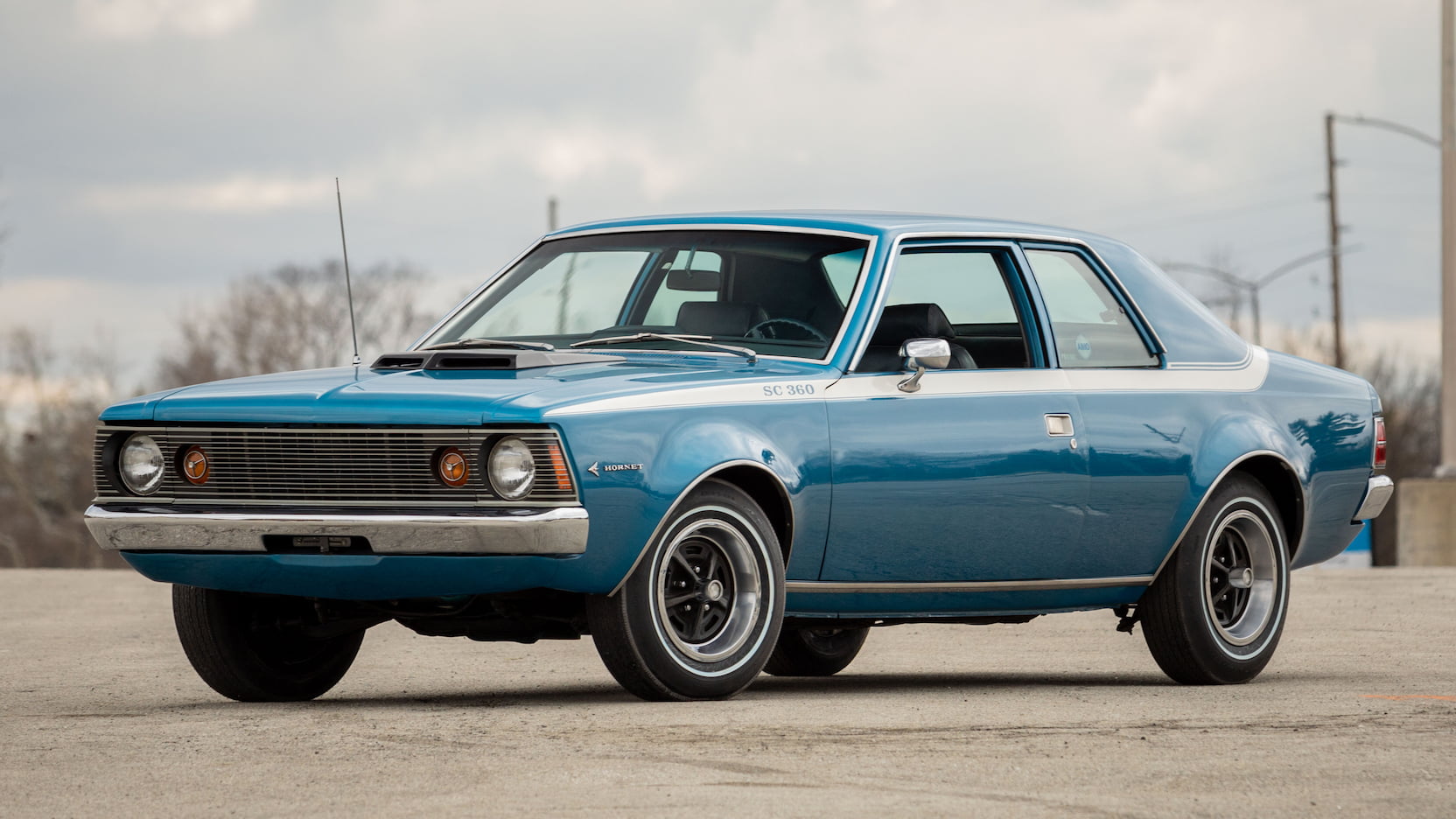
4. AMC Hornet SC/360 (1971)
American Motors built the Hornet SC/360 as a compact performance car that the market received with polite indifference during its brief production run, which is one of automotive history’s more straightforward cases of a buyer population failing to recognize what it was being offered.
Combining AMC’s 360 cubic inch V8 with a compact, lightweight Hornet body, the SC/360 delivered performance that its more famous and more expensive competitors from Ford, GM, and Chrysler could not match at an equivalent price because none of them had thought to install a V8 of this displacement in a body this light.
SC/360 specific performance package included a functional hood scoop with cold-air induction, a specific exhaust system with freer-flowing characteristics than standard Hornet equipment, and a 3.91 rear axle ratio that made the 360’s power delivery immediately available rather than requiring driver restraint at the launch point.
AMC engineers who developed this package understood that the compact Hornet’s weight advantage was only valuable if the powertrain delivered its power at the RPM range where launch traction was achievable, and the rear axle specification reflected this understanding directly.
Total weight of approximately 3,100 pounds combined with 245 horsepower from the 360 V8 in factory configuration gave the 1971 AMC Hornet SC/360 a power-to-weight ratio that only a small number of 1971 American production cars could match, and none of them at the Hornet’s purchase price.
Price accessibility meant that SC/360 examples reached buyers who modified them aggressively during their ownership because the cars had not cost enough to inhibit performance modifications the way that expensive muscle cars sometimes did.
Strip operators who have campaigned 1971 AMC Hornet SC/360 examples in 2026 describe a car that launches predictably on modern drag radials due to the short wheelbase and optimal weight transfer characteristics, runs consistent elapsed times that improve smoothly with suspension tuning, and surprises observers who expected a more familiar brand on the timing board when the elapsed time posts.
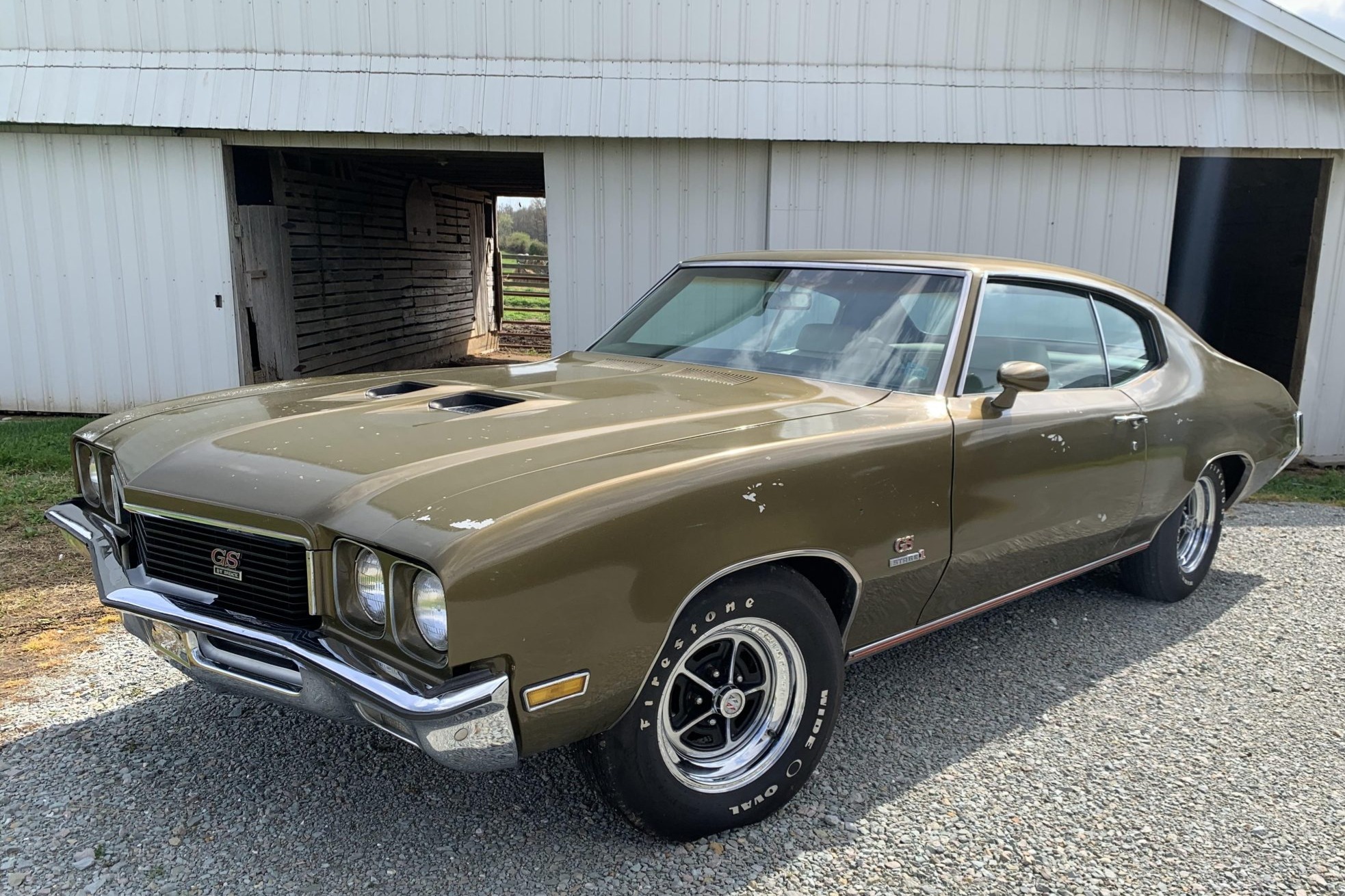
5. Buick Gran Sport Stage 1 455 (1972)
Buick’s Gran Sport Stage 1 produced some of the most remarkable quarter-mile performance of any 1970 to 1972 General Motors vehicle, achieving elapsed times and trap speeds that equaled or exceeded the celebrated Chevelle SS LS6 and the Pontiac GTO Judge while receiving roughly one-tenth of the attention.
Buick’s buyer demographic, perceived as older and less performance-oriented than Chevrolet’s or Pontiac’s, allowed the Gran Sport Stage 1 to slip through the muscle car era without the cultural recognition its engineering deserved.
Stage 1 455 cubic inch V8 in the 1972 Gran Sport produced peak torque of 510 pound-feet at a remarkably low 2,800 RPM, which made the engine’s power available from a launch RPM that did not require the driver to maintain high revs against the converter before release. Low-RPM torque delivery in a properly weighted car produces consistent elapsed times that high-revving engines launching at 4,500 to 5,000 RPM sometimes struggle to match because torque multiplication through the converter is highest when input speed is lowest, and Stage 1’s torque curve was calibrated almost accidentally for optimum converter interaction.
Buick’s aluminum front bumper on the 1972 Gran Sport reduced front-end weight compared to steel alternatives, contributing to weight transfer characteristics on launch that Buick engineers included for cost reasons but that drag racers in subsequent decades identified as a handling advantage at the strip.
Weight transfer toward the rear wheels during acceleration is the load transfer that keeps tires hooked, and the lighter front end contributed to this transfer at a rate that measurably improved 60-foot times compared to equivalent powertrain outputs in heavier-nosed alternatives.
Active 1972 Buick Gran Sport Stage 1 455 examples in 2026 strip competition regularly produce elapsed times in the low 12-second range with minimal preparation beyond tires and tuning, with more extensively prepared examples dipping into the 11-second range while maintaining factory engine architecture and original body configuration.
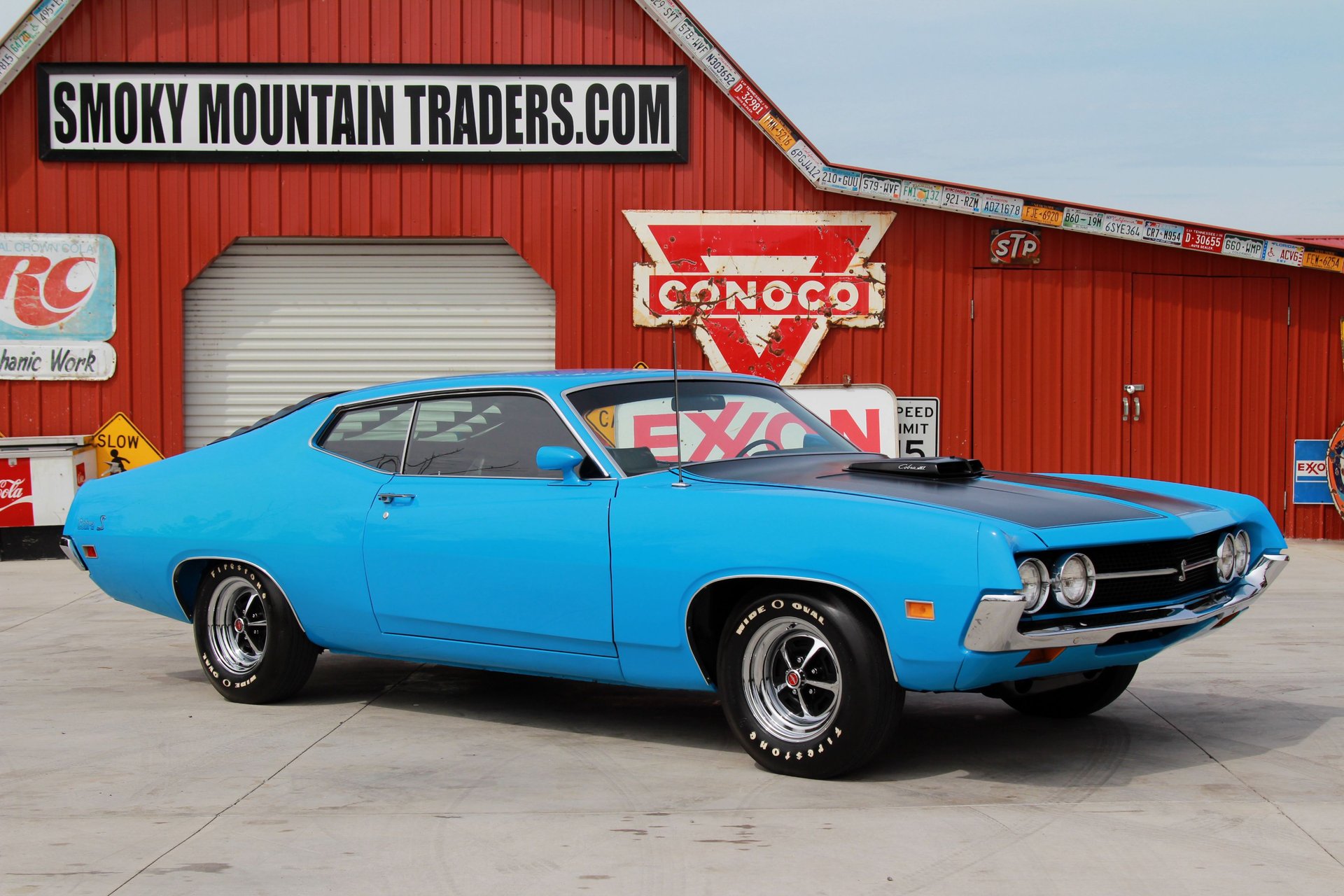
6. Ford Torino Cobra 429 Super Cobra Jet (1971)
Ford’s Torino Cobra occupied a specific position in the 1971 Ford performance lineup that the market never fully understood, partly because its NASCAR heritage was being diluted by the introduction of more restrictive rules that diminished the aerodynamic advantages that had made the Torino platform competitive, and partly because the performance car market’s attention was already beginning to move toward the smaller, lighter pony car platform as the muscle car era’s cultural energy faded.
429 Super Cobra Jet engine in the 1971 Ford Torino Cobra was factory-rated at 375 horsepower through the gross rating system that would be replaced for 1972, but the SCJ’s specific configuration with a four-bolt main bearing block, forged steel crankshaft, heavy-duty connecting rods, and a 780 CFM Holley carburetor on a specific intake manifold produced actual output that period dyno testing placed considerably above the conservative factory rating.
This engine in the Torino’s platform, which weighed approximately 3,800 pounds with the SCJ package, produced factory quarter-mile capability that Ford documentation placed in the low 13-second range from experienced hands. Strip builders who have acquired 1971 Ford Torino Cobra 429 SCJ examples in 2026 approach them as engines first and cars second, because the SCJ’s fundamental architecture responds predictably and effectively to modern fuel management and ignition enhancement while retaining original displacement and mechanical configuration.
Modern EFI conversion adapted to the 429’s displacement characteristics, combined with modern ignition timing that delivers optimal advance curves across the RPM range, produces power output improvements that the factory Holley carburetor and points ignition of the original configuration could not approach.
Strip appearances by prepared 1971 Torino Cobra 429 SCJ examples in 2026 produce elapsed times in the mid to low 11-second range without forced induction, which places this forgotten Ford muscle car in direct competition with modern performance vehicles that cost multiples of the Torino’s current collector market value.
Track operators and fellow competitors who see the Torino in staging consistently report surprise at the elapsed time when it appears on the scoreboard, which is the most direct evidence that this car’s performance potential remains systematically underestimated in 2026.
Structural rigidity from Ford’s Torino platform and the SCJ package’s specific suspension provisions give the car predictable behavior on the strip that owners have refined through traction tuning rather than fighting the car’s natural characteristics, producing consistent dial-in accuracy that makes the Torino a genuine bracket racing tool rather than a car that produces impressive best times but inconsistent performance across multiple runs.
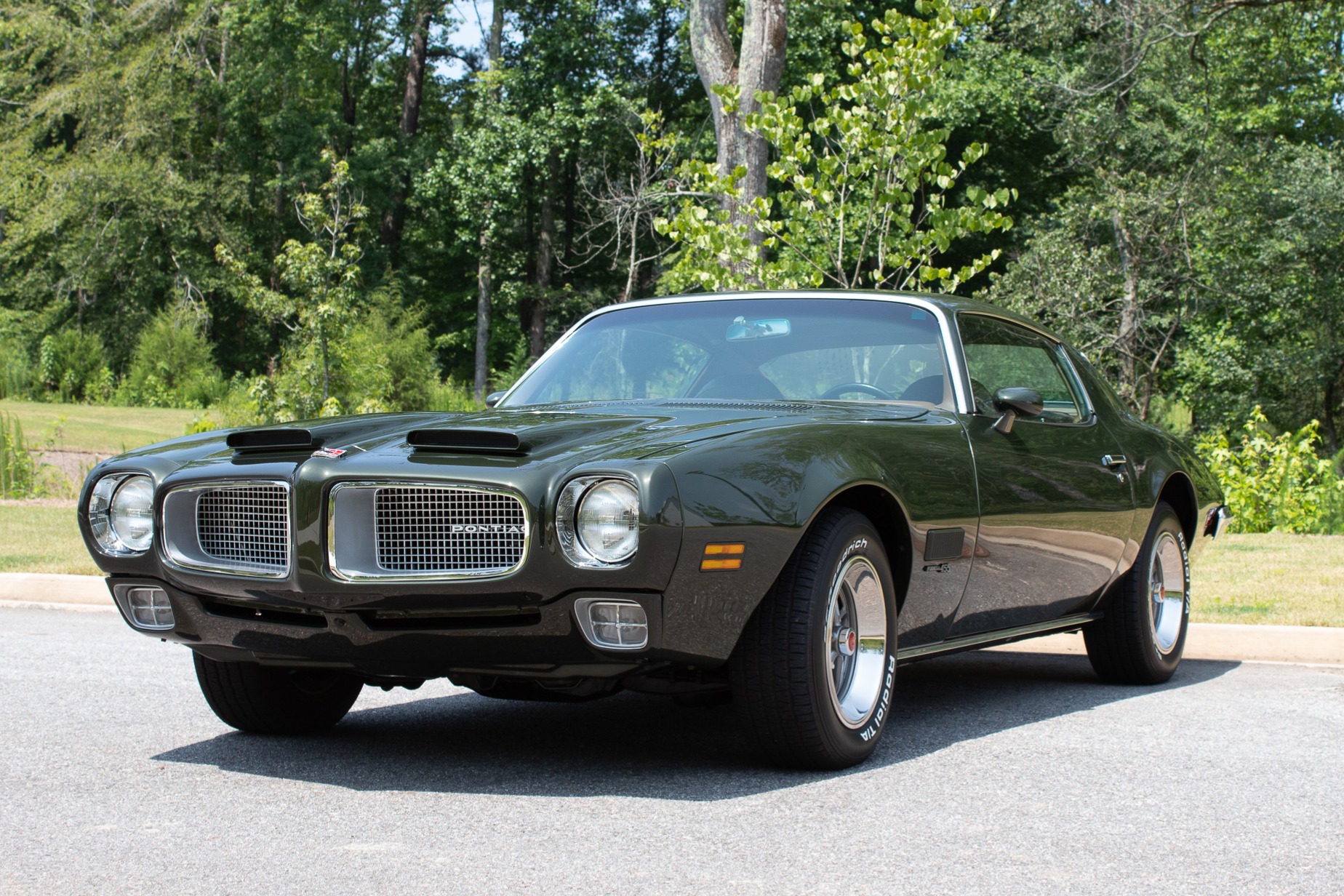
7. Pontiac Firebird Formula 455 (1971)
Pontiac’s Firebird lineup in the early 1970s was dominated in enthusiast conversation by the Trans Am, which carried the racing heritage, the specific bodywork, and the marketing investment that made it the celebrated F-body variant of its era.
What the Formula 455 provided beneath its quieter exterior was the same fundamental mechanical capability in a body that drew less attention, cost less money, and has since become available to strip builders at prices that Trans Am acquisition no longer permits.
455 cubic inch High Output engine in the 1971 Pontiac Firebird Formula 455 produced factory-rated 335 horsepower with 480 pound-feet of torque through a specification that Pontiac engineers described internally as conservative, meaning that actual output exceeded the published figures by a margin that period dyno testing consistently documented.
Formula-specific suspension provisions and the available four-speed manual or Turbo-Hydramatic 400 automatic transmission provided the powertrain combination that strip builders in 2026 identify as the correct starting point for a 10-second F-body build.
Formula 455, with a weight of approximately 3,600 pounds and the automatic transmission, was modestly heavier than some competing muscle car platforms but within the range that the 455 High Output’s substantial torque output managed effectively through the launch sequence.
Weight distribution on the F-body platform with the 455 seated behind the front axle centerline was more favorable than smaller-displacement alternatives, whose lighter engines allowed more weight toward the front, giving the 455 Formula a chassis attitude at launch that transferred weight effectively to the rear tires when power was applied.
Documented 2026 strip performances from Pontiac Firebird Formula 455 examples that have received basic preparation, including suspension rebuild, modern ignition, and drag radial tires consistently produce elapsed times in the low 12-second range from experienced operators, with the same vehicles capable of dipping into 11-second territory when the driver develops the specific technique that this platform rewards.
Traction management from the rear suspension requires understanding the launch RPM and throttle application sequence that produces the best 60-foot times, and operators who develop this technique through repeated runs find that the car’s consistency improves dramatically as they refine their approach.
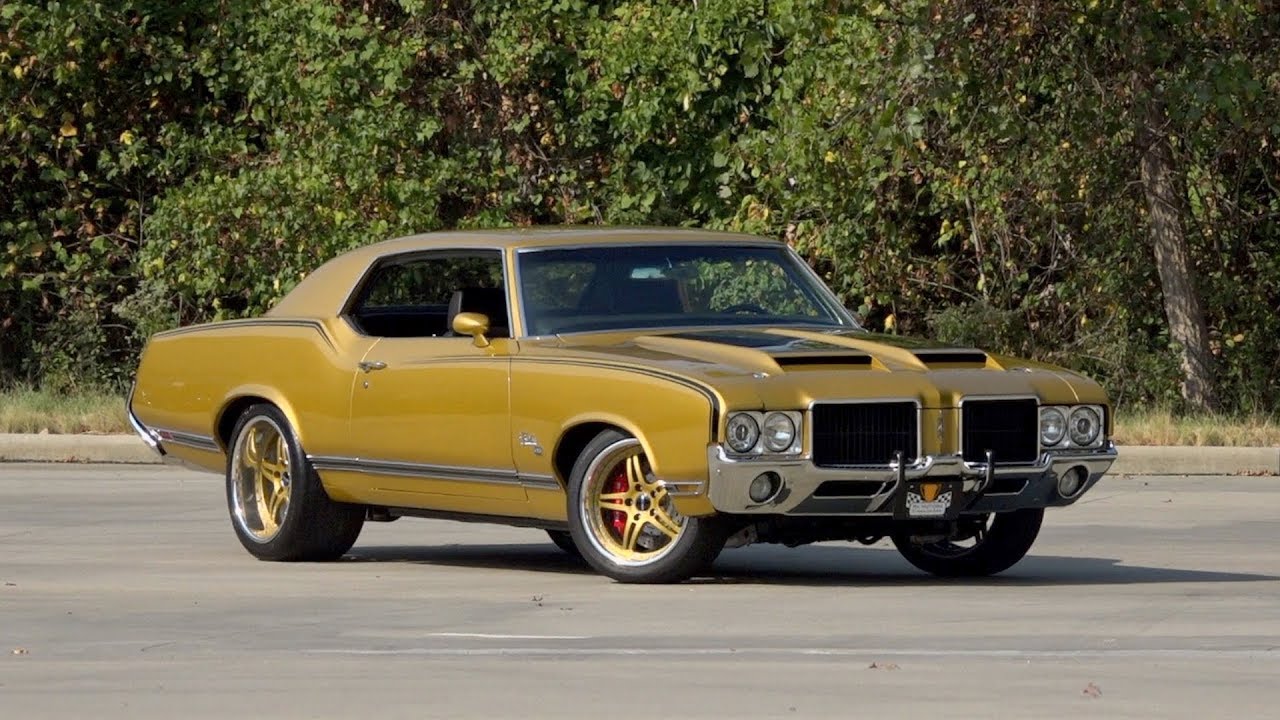
8. Oldsmobile Cutlass Supreme SX 455 (1971)
Oldsmobile’s W-30 and W-32 performance packages gave the 455 engine in various A-body applications specific induction, camshaft, and breathing characteristics that the standard 455 did not receive, and the Cutlass Supreme SX with W-32 package represents a specific combination that exists in the overlap between Oldsmobile’s understated performance culture and the specific mechanical requirements for effective drag strip operation.
W-32 455 in the 1971 Oldsmobile Cutlass Supreme SX produced 320 horsepower through a specific camshaft profile and four-barrel carburetor calibration that Oldsmobile engineers balanced between low-end torque availability for street driving and upper-RPM breathing capability for performance use.
This balance, which was different from the W-30’s more aggressive full-performance orientation, produced an engine that worked effectively across a wider RPM band than either pure-performance or pure-street calibration would allow, which translates in 2026 strip use to more consistent elapsed times across varying track conditions and temperature ranges.
A-body Cutlass weight of approximately 3,600 pounds, combined with the W-32 455’s substantial torque delivery, gave the 1971 Cutlass Supreme SX a launch characteristic that experienced drivers describe as predictable and smooth rather than violent and difficult to manage.
Predictable launch behavior produces consistent 60-foot times, and consistent 60-foot times are the single strongest predictor of bracket racing success because the first 60 feet establish the run’s character in ways that the remaining 1,260 feet can modify only modestly.
Strip veterans who have driven or campaigned Oldsmobile Cutlass Supreme SX 455 examples in 2026 consistently place them in the performance category above where the car’s obscurity would predict, with mid-11-second elapsed times achievable from relatively modest preparation and 10-second territory reachable for builders willing to invest in suspension and tire optimization without disturbing the fundamental engine architecture.
Oldsmobile’s engineering in this specific combination deserved more recognition during production than the brand’s low-key performance marketing provided, and the strip results of 2026 confirm what the factory engineers knew when they built it.
Also Read: 8 American Muscle Cars Enthusiasts Consider Severely Underrated
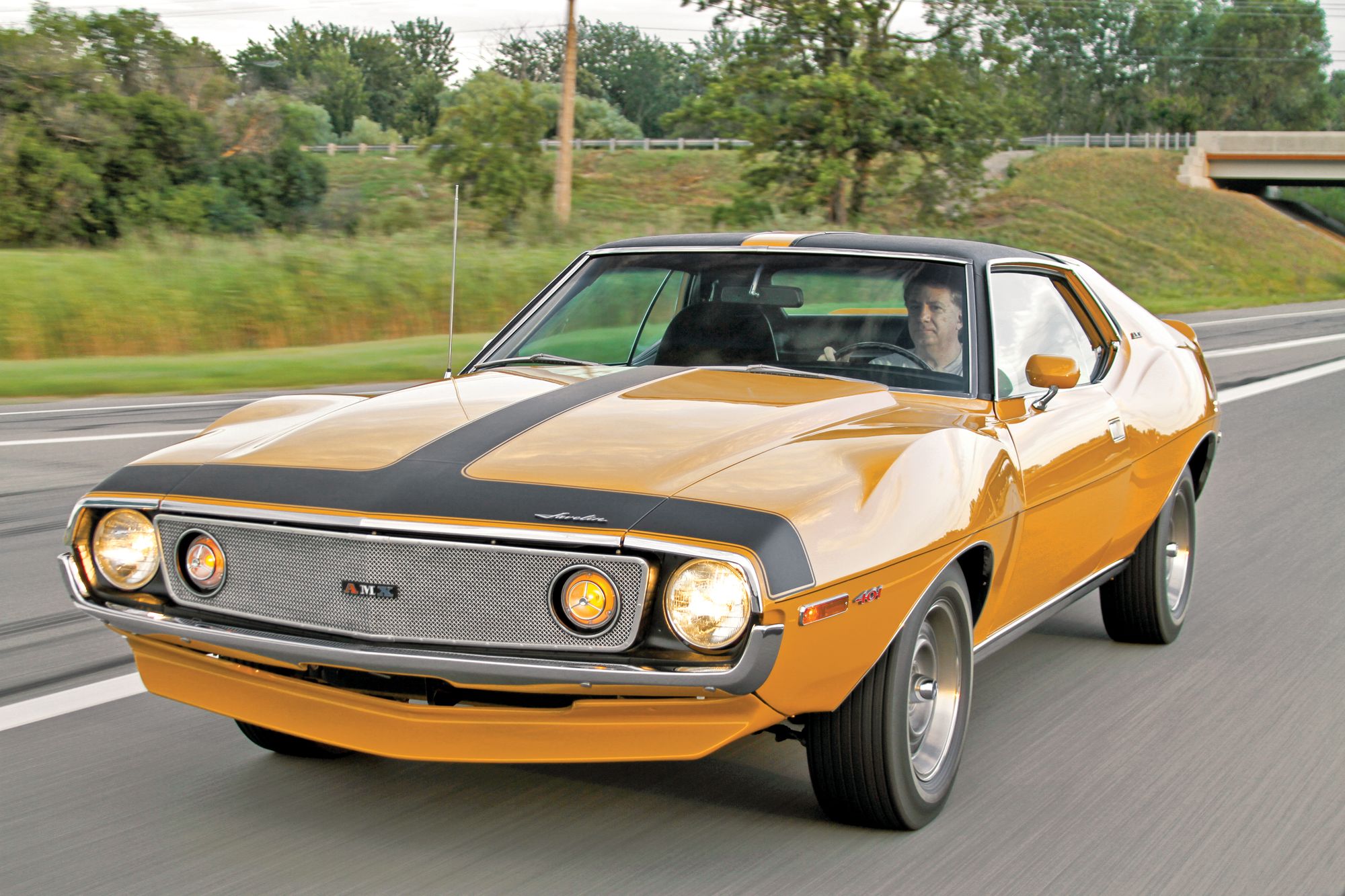
9. AMC Javelin AMX 401 Go Package (1971)
AMC closed out the Javelin AMX platform’s performance era with the 401 cubic inch V8 that replaced the previous 390 as the top-line big-block offering, and the Go Package specification that surrounded it with functional performance equipment created a car whose quarter-mile capability the muscle car collecting community has only recently begun to acknowledge at a level proportional to its actual performance.
Go Package on the 1971 AMC Javelin AMX 401 included functional Ram Air induction through a specific hood scoop configuration that delivered cold air directly to the carburetor air cleaner under positive pressure at speed, increasing air density above what ambient temperature air at the carburetor inlet would provide without Ram Air. This induction advantage was genuine rather than cosmetic, producing measurable power increase at highway speeds and strip use where the car’s forward motion created ram pressure in the air intake.
401 cubic inch V8 factory-rated at 330 horsepower, combined with the Javelin AMX body’s weight of approximately 3,200 pounds, created a power-to-weight relationship that AMC’s own marketing understated, partly because the company’s advertising budget was modest compared to the Big Three and partly because AMC’s engineering team had calibrated the 401 conservatively by the standards of how the market interpreted horsepower ratings.
Strip builders in 2026 who have committed to the 1971 AMC Javelin AMX 401 Go Package as a platform report that the car’s behavior on modern drag radials exceeds the expectations created by its period reputation and current market price.
Modern ignition timing that maximizes the 401’s compression ratio advantage, fuel delivery calibration that the original carburetor could not approach in precision, and suspension tuning that exploits the Javelin’s wheelbase length for effective weight transfer combine to produce elapsed times that surprise competitors unfamiliar with what AMC’s engineers accomplished in 1971.
Quarter-mile results from 2026-campaigned examples regularly produce elapsed times in the mid-11-second range from well-prepared cars, with the most extensively developed examples reaching into the low-11 or high-10-second range while retaining the Javelin body, original engine displacement, and a mechanical package that looks entirely appropriate for a car built by American Motors in 1971.
Timing slips do not lie, and the Javelin’s timing slips in 2026 are making an argument for AMC engineering that the company itself never got to make loudly enough before it ceased to exist.
