
Owning a classic muscle car used to be something that almost any working person with mechanical aptitude and a little patience could pull off. You found a project in a field or barn, negotiated a reasonable price, spent weekends wrenching, and eventually had something that made your neighbors stop and look when you backed it out of the garage.
That era felt like it ended sometime in the mid-2000s when auction fever and the collector car market turned even rough driver-quality muscle into five-figure investments seemingly overnight.
Here is the truth that the auction house headlines obscure: there are still classic muscle cars available at prices that a working-class budget can handle without taking out a second mortgage or liquidating a retirement account. They are not the cars that appear on Barrett-Jackson’s prime-time segments.
They are not the numbers-matching, original-paint, one-owner examples that pull six figures from bidders who treat cars as investments rather than machines to be driven. But they are real muscle cars with real engines and real driving character that can be purchased, enjoyed, and in many cases appreciated while you own them.
What you need to know going in is that budget muscle car ownership requires mechanical honesty. You will probably be buying a project or a driver with deferred maintenance rather than a turnkey show car.
You will put in time, either your own labor or money paid to someone else, to get the car where you want it. And you will accept that certain desirable configurations, the big-block cars, the factory four-speed cars, the convertibles, have already been priced beyond working-class reach in most cases.
What remains attainable are the small-block cars, the automatic-equipped coupes, and the less glamorous body styles from the production years before the collector market fully matured. All eight cars on this list can still be found at prices that a motivated working-class buyer with some savings and patience can reach.
1. 1973 to 1977 Pontiac Firebird Formula 400 (Second Generation)
Estimated Price: $8,000-$18,000
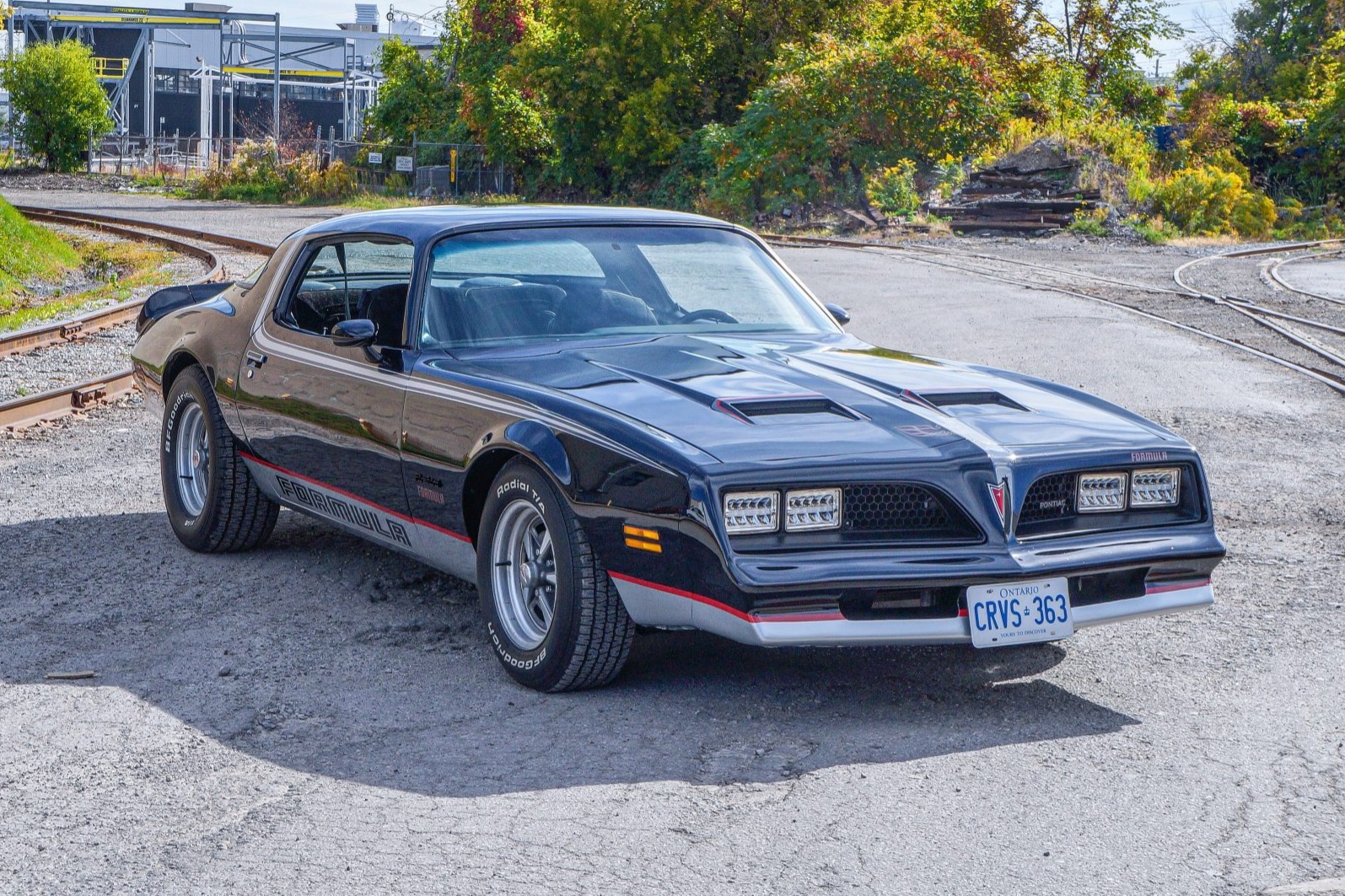
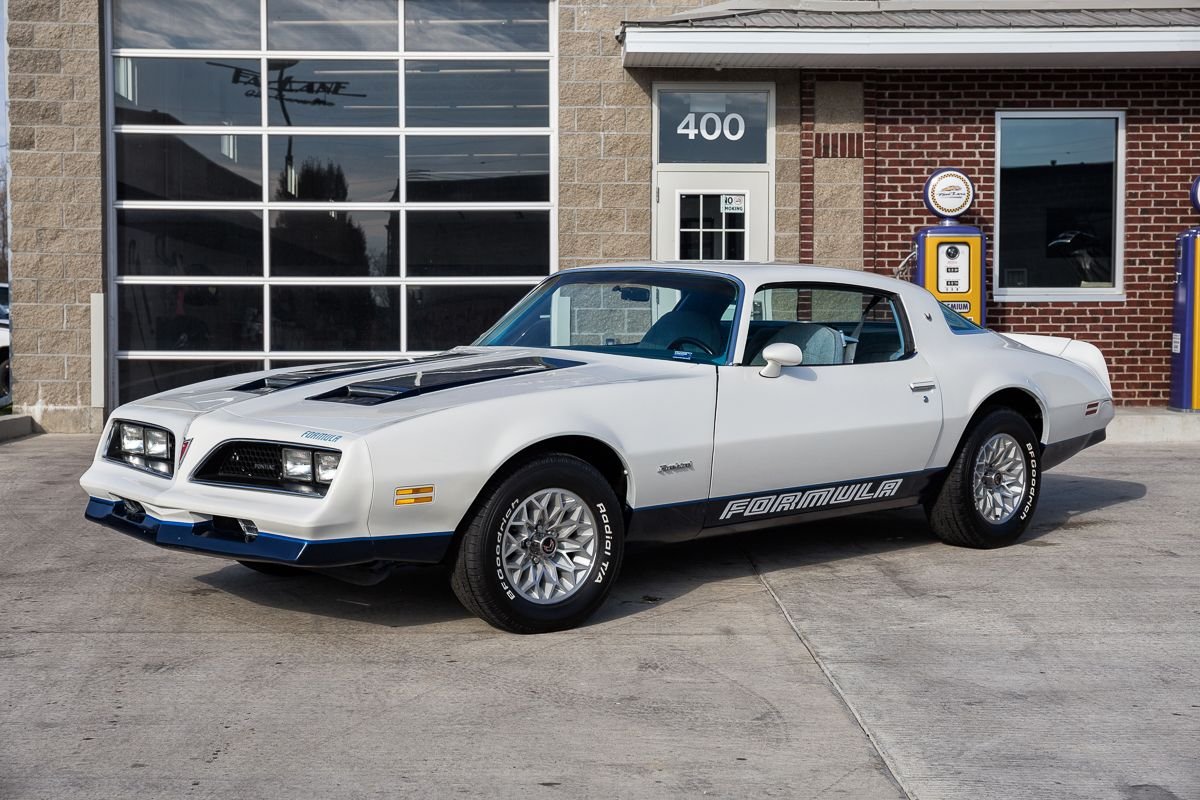
Second-generation Pontiac Firebirds sit in a pricing position that rewards informed, patient buyers. Trans Am versions are already fully absorbed by collectors, with prices lifted by the 1977 film association. Formula models from 1973 to 1977, fitted with the 400 cubic inch V8, remain attainable alternatives for many enthusiasts.
Formula Firebirds from this period received the same basic drivetrains and chassis hardware as contemporary Trans Ams but without the shaker hood scoop, the rear spoiler, and the chicken graphic that generate the premium pricing that Trans Am has commanded.
From a driving standpoint, a well-maintained Formula 400 with a four-barrel carburetor and appropriate exhaust delivers essentially the same experience as a Trans Am from the same year, but buyer attention is concentrated on the Trans Am badge, leaving Formula models priced more reasonably than the mechanical equivalence warrants.
Pontiac’s 400 cubic inch V8 in this period is a straightforward, parts-accessible engine that any competent small-block V8 mechanic can service and rebuild. Pontiac V8s from this era use external oiling system features that require attention during rebuilds, but the basic engine architecture is robust, and the aftermarket support for performance parts and rebuild components is mature.
An original-condition Formula 400 with a tired but running engine represents a straightforward path to a genuinely satisfying driver-quality muscle car rather than a frustrating restoration money pit. Body structure on second-generation Firebirds is a legitimate inspection point that buyers must address honestly before committing to a purchase.
Floors, frame rails, torque box areas at the front of the rear leaf springs, and the cowl area are specific locations where rust initiation produces problems that range from cosmetic to structural. Cars from southern states or western states carry lower rust risk than equivalent-year cars from the rust belt, and paying for a pre-purchase inspection from a shop familiar with these cars is money well spent before negotiating any price.
Realistic current pricing for a driver-quality 1974 or 1975 Pontiac Firebird Formula 400 in running condition with acknowledged deferred maintenance runs from approximately $8,000 to $18,000, depending on condition, location, and documentation.
That range represents genuine working-class accessibility for a car with real V8 performance character and a passionate enthusiast community that provides technical support, parts sourcing assistance, and events for anyone willing to invest the effort.
2. 1978 to 1981 Chevrolet Malibu Sport Coupe With the 350 V8 (A-Body)
Estimated Price: $6,000-$14,000
Chevrolet’s A-body Malibu from the late 1970s does not appear on most muscle car shortlists, and that absence from the mainstream conversation is precisely what keeps its pricing accessible for buyers who understand what these cars actually offer.
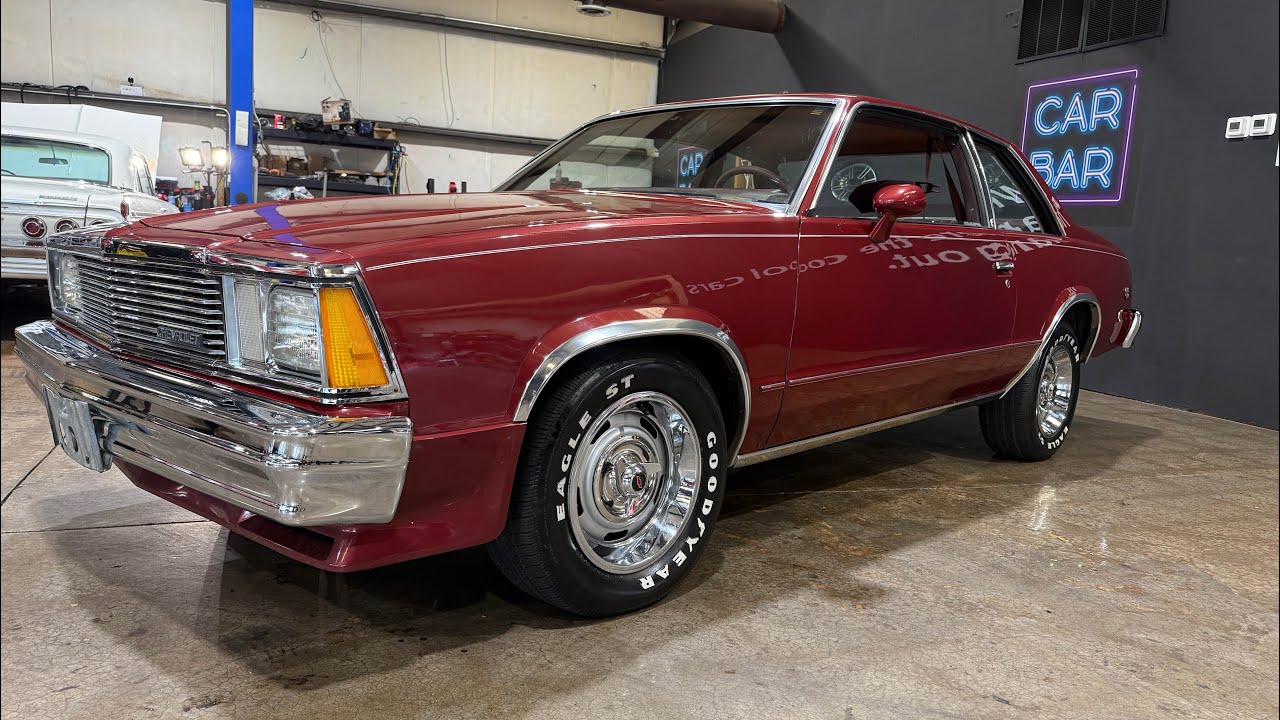
A 1978 to 1981 Malibu Sport Coupe with the 350 cubic inch V8, a four-barrel carburetor, and a four-speed manual transmission is a genuine performance car that shares its fundamental architecture and drivetrain components with the El Camino and Monte Carlo of the same period, all while being priced well below those nameplate equivalents.
Small-block Chevrolet 350 V8 ubiquity is one of the strongest arguments for choosing this platform as a budget entry into classic V8 muscle car ownership. No other engine in American automotive history has more aftermarket support, more experienced mechanics, or more parts availability at competitive prices than the small-block Chevy.
A tired 350 in a Malibu Sport Coupe is not a financial threat. It is a known quantity with a well-documented rebuild path and a parts supply that makes restoration more straightforward than almost any other classic muscle car application. Malibu Sport Coupes from this period carry clean, simple body lines that age well and that respond well to fresh paint and chrome cleaning if the underlying structure is solid.
Body panel availability through the restoration parts aftermarket is adequate for these cars, though not as comprehensive as early Camaro or Chevelle parts availability. Buyers who find structurally solid cars with presentable bodies have the most straightforward path, since mechanical restoration is simpler and less expensive than combined body and mechanical restoration on cars whose structures have been compromised by rust or accident damage.
The collector market’s indifference to the late-1970s Malibu works in budget buyers’ favor at every stage of the purchase and ownership process. Sellers do not expect premium pricing and are generally negotiable when knowledgeable buyers present fair offers with supporting market comparisons.
Auctions and estate sales occasionally produce Malibu Sport Coupes at prices that would be impossible for more desirable nameplates. And parts prices across the platform are held down by the same market indifference that keeps purchase prices reasonable.
Current market pricing for a running 1979 or 1980 Chevrolet Malibu Sport Coupe with the 350 V8 in driver condition typically falls between $6,000 and $14,000, placing these cars within reach of buyers whose budget ceiling is genuinely limited by working-class income and savings rather than by investment strategy preferences.
Also Read: 10 Most Reliable Engines Ever Put in an American Muscle Car
3. 1970 to 1974 Dodge Dart Swinger With the 340 or 360 V8 (A-Body Mopar)
Estimated Price: $9,000-$20,000
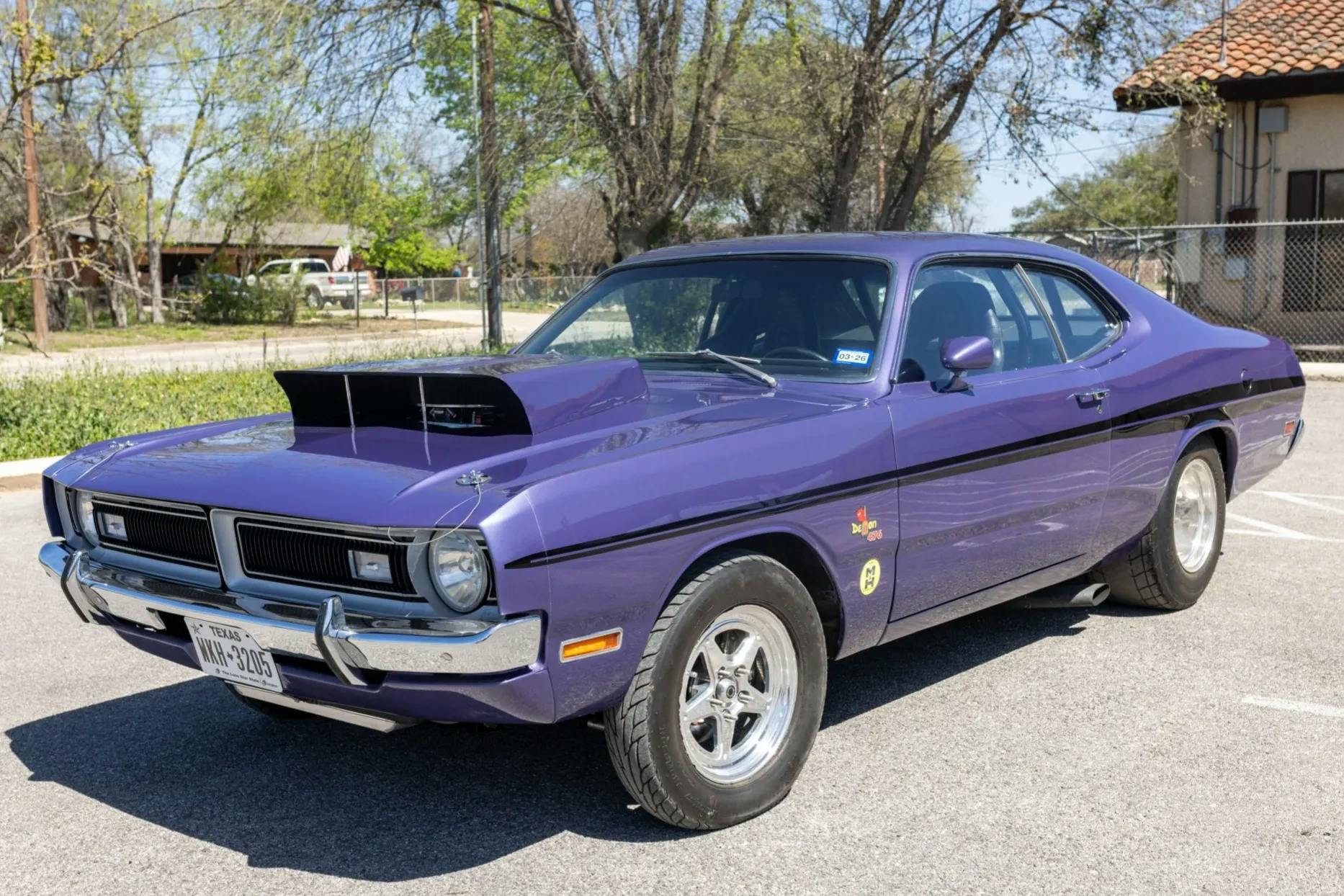
Mopar A-body muscle cars have historically received less collector market attention than B-body Chargers and Road Runners, and within the A-body category, the Dart Swinger with a small-block V8 offers a combination of genuine performance capability, mechanical simplicity, and current pricing accessibility that makes it one of the strongest arguments for budget muscle car ownership available to buyers in the current market.
Chrysler’s 340 cubic inch small-block, used in Dart Swingers from 1970 through 1973 before displacement increased to the 360 cubic inch unit, is one of the highest-specific-output naturally aspirated small-block V8s produced during the muscle car era.
Revving freely to high RPM ranges where its four-barrel carbureted breathing produced strong power delivery, the 340 gave Dart Swingers performance that contradicted their modest exterior appearance and pricing.
Buyers who chose the 340 Dart over the larger B-body Mopar muscle cars got a lighter, quicker car that was also cheaper to purchase and maintain than the bigger alternatives. A-body Mopar structure requires the same honest rust inspection that any late muscle car era car demands, with specific attention to front subframe attachment points, rear quarter panel lower sections, and trunk floor integrity.
Cars from dry-climate states, particularly southwestern examples that have lived their entire lives in low-humidity environments, often present structural integrity that is dramatically better than Mopar A-bodies from the northeast or Midwest that experienced decades of salt road exposure.
Parts availability for the Dart Swinger platform has improved meaningfully over the past two decades as the Mopar A-body restoration aftermarket has matured. Body panels, interior components, and mechanical parts are available through suppliers who specifically serve the Mopar A-body community, and the small-block Chrysler V8 in 340 and 360 form has strong general-market parts availability for mechanical components.
Pricing for driver-quality 1971 to 1973 Dodge Dart Swinger examples with 340 or 360 V8 engines currently runs from approximately $9,000 to $20,000, depending on specification, condition, and documentation, with cars at the lower end of that range requiring mechanical attention and cars at the upper end representing turnkey driver quality.
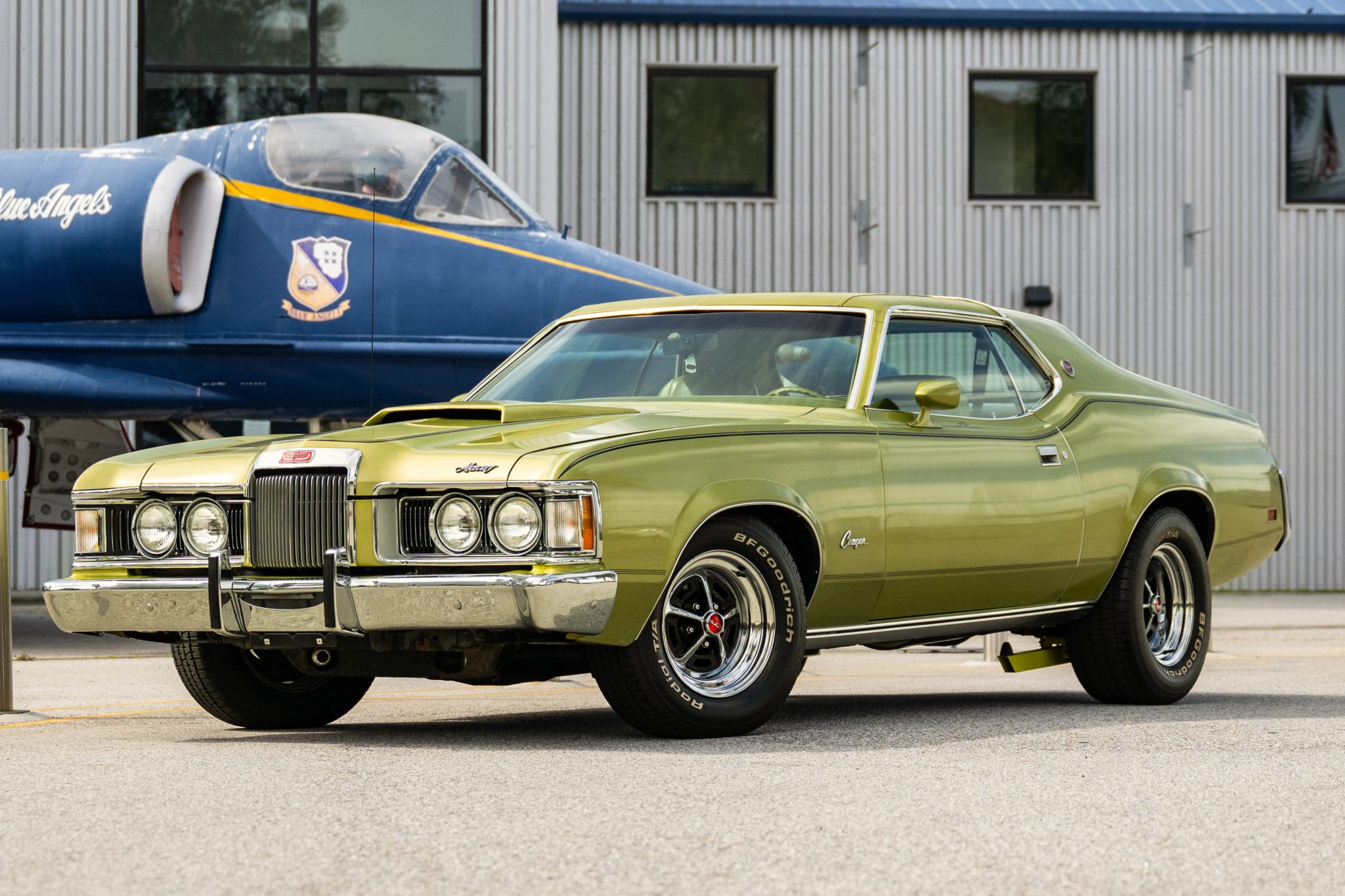
4. 1971 to 1973 Mercury Cougar Hardtop With the 351 Cleveland (Intermediate Body Style)
Estimated Price: $8,000-$16,000
Mercury’s Cougar, in its 1971 to 1973 intermediate body style, represents an interesting intersection between Ford’s performance parts ecosystem and Mercury’s chronically lower collector market attention, producing a car that benefits from excellent mechanical parts availability while being priced well below Ford Torino GT and Mustang FastBack equivalents that carry similar drivetrain components.
Ford’s 351 Cleveland V8, used in 1971 to 1973 Cougars, is one of the most capable small-block V8s from the muscle car era. Port geometry, combustion chamber design, and breathing characteristics of the Cleveland head distinguish this engine from the Windsor family engines with which it shares displacement numbering but not engineering.
Cleveland-headed engines respond well to performance development and have an enthusiast following that supports excellent aftermarket parts availability and a body of technical knowledge documenting how to get the most from this specific architecture.
Mercury’s historical collector market disadvantage relative to Ford means that Cougar Hardtops with 351 Cleveland engines are consistently priced below mechanically equivalent Ford Torino GT models, which themselves are priced below Mustang FastBack models from the same powertrain era.
Buyers who understand that the intermediate Cougar’s structure and drivetrain are fundamentally related to the Torino’s can leverage this pricing differential to access 351 Cleveland muscle car character at costs that Ford-badged alternatives of equivalent specification do not offer.
Body structure concerns for 1971 to 1973 Cougar Hardtops include floor pan integrity, quarter panel lower sections, and trunk floor condition, which are consistent with other intermediate-body muscle cars from this production period. Rust-belt cars require more careful structural evaluation than southwestern examples, and professional inspection before purchase is particularly valuable for buyers who lack the hands-on experience to evaluate rust depth and extent accurately without experienced guidance.
Current pricing for running, driver-quality 1972 or 1973 Mercury Cougar Hardtop examples with 351 Cleveland V8 engines typically falls in the $8,000 to $16,000 range, representing genuine value access to Ford’s small-block muscle car tradition under a badge that has not yet attracted the collector premium that equivalent Ford-badged alternatives command in most market conditions.
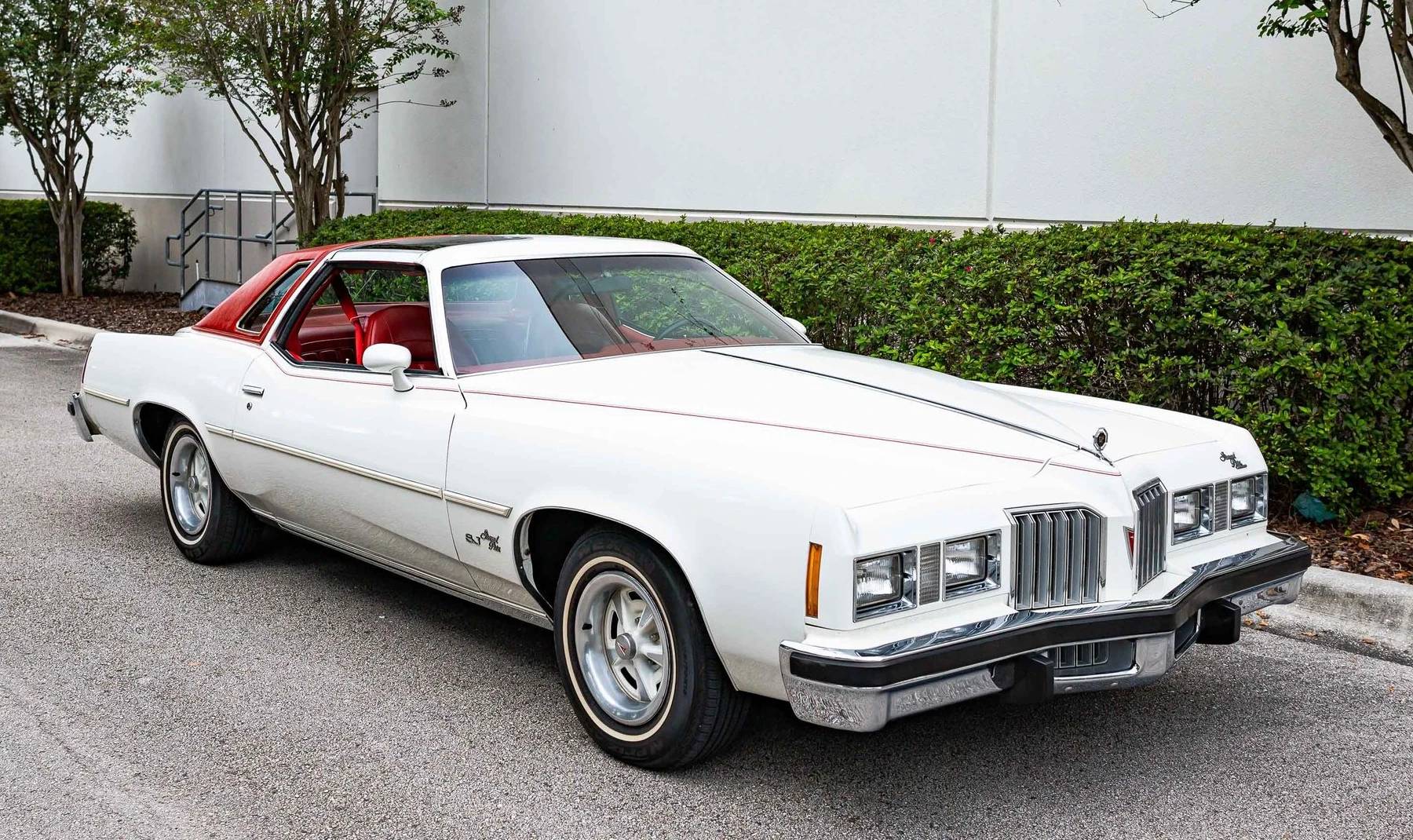
5. 1975 to 1979 Pontiac Grand Prix SJ With the 400 V8 (G-Body, Second Generation)
Estimated Price: $5,000-$12,000
Personal luxury coupes from the mid-to-late 1970s occupy one of the most thoroughly neglected corners of the classic car market, and within that neglected category, the Pontiac Grand Prix SJ with the 400 cubic inch V8 offers working-class buyers access to genuine Pontiac V8 performance in a package that the collector market has not yet decided deserves serious attention.
That neglect, frustrating as it might be for existing Grand Prix owners who watch more popular cars appreciate while their cars stagnate, represents a legitimate buying opportunity for budget buyers who are willing to own something that has not yet arrived at collectible status.
Pontiac’s 400 cubic inch V8 in G-body Grand Prix application was the same fundamental engine family used in Firebird Formula and Trans Am models of the same period, calibrated for the slightly different power delivery characteristics appropriate for a personal luxury coupe rather than a dedicated sports car.
Torque delivery in the low and mid-RPM range provided the effortless highway cruising character that Grand Prix buyers valued, and the engine’s fundamental mechanical robustness ensured that well-maintained examples survived to ages and mileages that many contemporary performance cars never reached.
Grand Prix SJ trim level added specific equipment distinctions, including distinctive front-end styling, special interior appointments, and the larger engine option that distinguished SJ from base Grand Prix models. Finding an SJ specification car in driver condition provides the complete period personal luxury coupe experience, including the style details and drivetrain specification that make Grand Prix ownership worthwhile, rather than settling for a base model that delivers less of what makes these cars interesting.
Rust inspection priorities for G-body Grand Prix cars include the same structural attention points that apply to most GM A and G-body products of this era: floor pan integrity under the front seat area, rear floor sections, frame rail condition at the front subframe attachment points, and rear quarter panel lower sections where moisture accumulates behind trim panels that were not always well-sealed at the factory.
Western and southwestern examples consistently present better structural integrity than rust-belt cars, and the price differential between clean-structure cars and rust-compromised examples is generally large enough to justify buying the better-structure car even if it requires traveling to find it.
Current pricing for driver-quality 1976 to 1978 Pontiac Grand Prix SJ examples with 400 V8 engines in running condition falls from approximately $5,000 to $12,000 in most markets, with regional variation reflecting availability and local enthusiasm for the nameplate. That pricing window represents some of the best dollar-per-cubic-inch V8 muscle car value currently available anywhere in the classic car market.
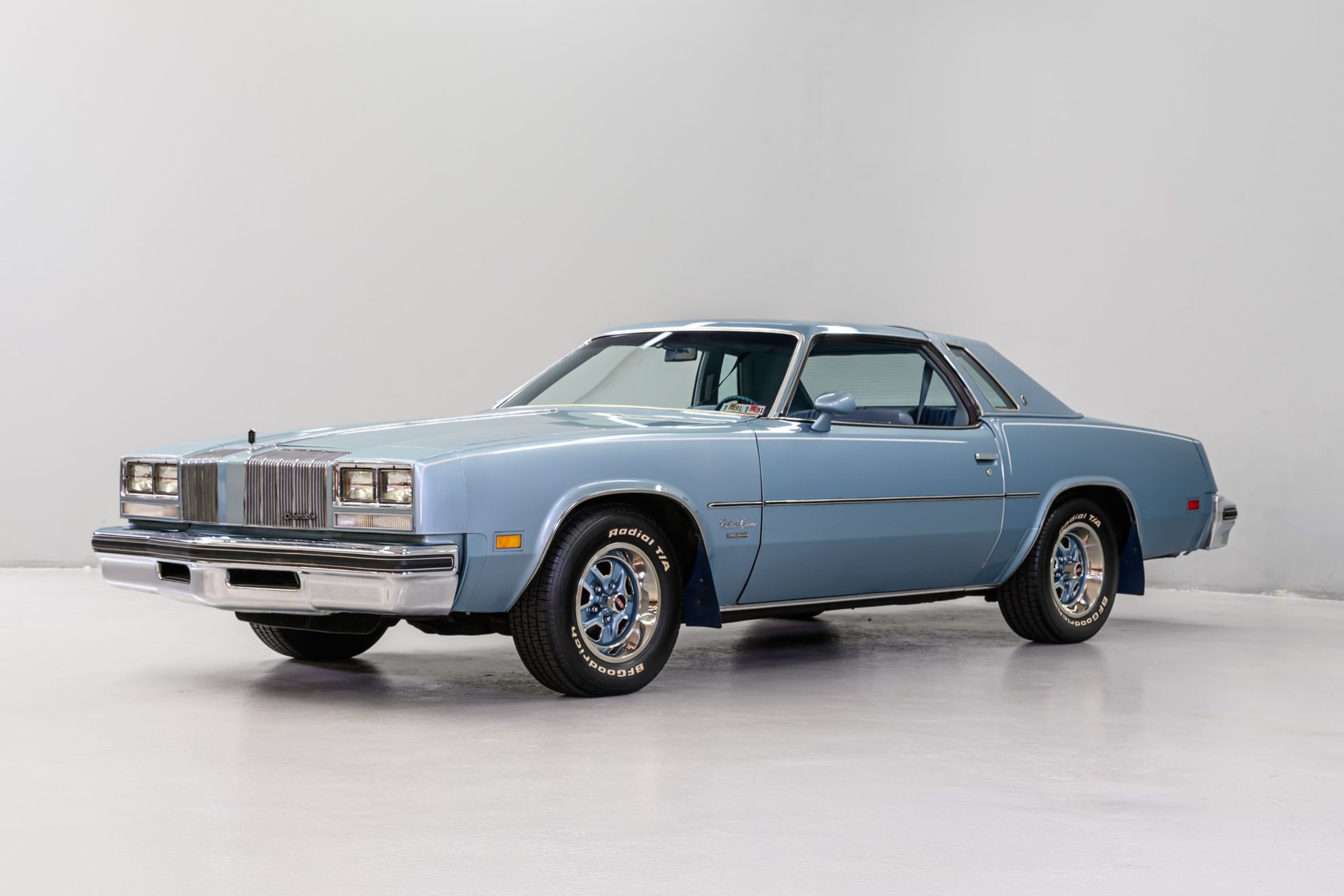
6. 1973 to 1977 Oldsmobile Cutlass Supreme Brougham With the 350 Rocket V8 (A-Body)
Estimated Price: $5,000-$11,000
Oldsmobile’s A-body Cutlass Supreme Brougham from the 1973 to 1977 model years receives almost no attention in muscle car media coverage, and that silence is reflected directly in pricing that places these cars within reach of working-class buyers who would struggle to purchase more media-celebrated alternatives.
A Cutlass Supreme Brougham with the 350 cubic inch Rocket V8 under the hood delivers genuine V8 muscle car driving character through an engine with strong performance credentials and a well-supported parts ecosystem. Oldsmobile’s 350 Rocket V8 differs from the small-block Chevrolet 350 in important ways that buyers should understand before assuming parts interchangeability.
Olds V8 engines use a unique bore spacing and architecture that means engine-specific parts from the Oldsmobile aftermarket rather than the generic small-block Chevy supply chain. That said, Oldsmobile V8 parts availability has improved meaningfully as the Olds restoration community has matured, and the 350 Rocket in particular has adequate aftermarket support for rebuilds and performance enhancement through dedicated Oldsmobile specialty suppliers.
The Cutlass Supreme Brougham occupied a distinct position within the wider Cutlass range. It featured enhanced interior finishes and unique exterior detailing that separated it from the standard Cutlass while avoiding the aggressive image of the Cutlass 442. The car was marketed as a comfort-focused personal luxury coupe, despite sharing the same A body platform used by earlier high-profile muscle cars.
For buyers seeking a V8-powered Oldsmobile A-body driving experience without paying premium collector prices, the Supreme Brougham remains an appealing choice. Current market prices for 1974 to 1976 examples with the 350 Rocket V8 usually fall between 5000 and 11000 dollars, depending on condition and location.
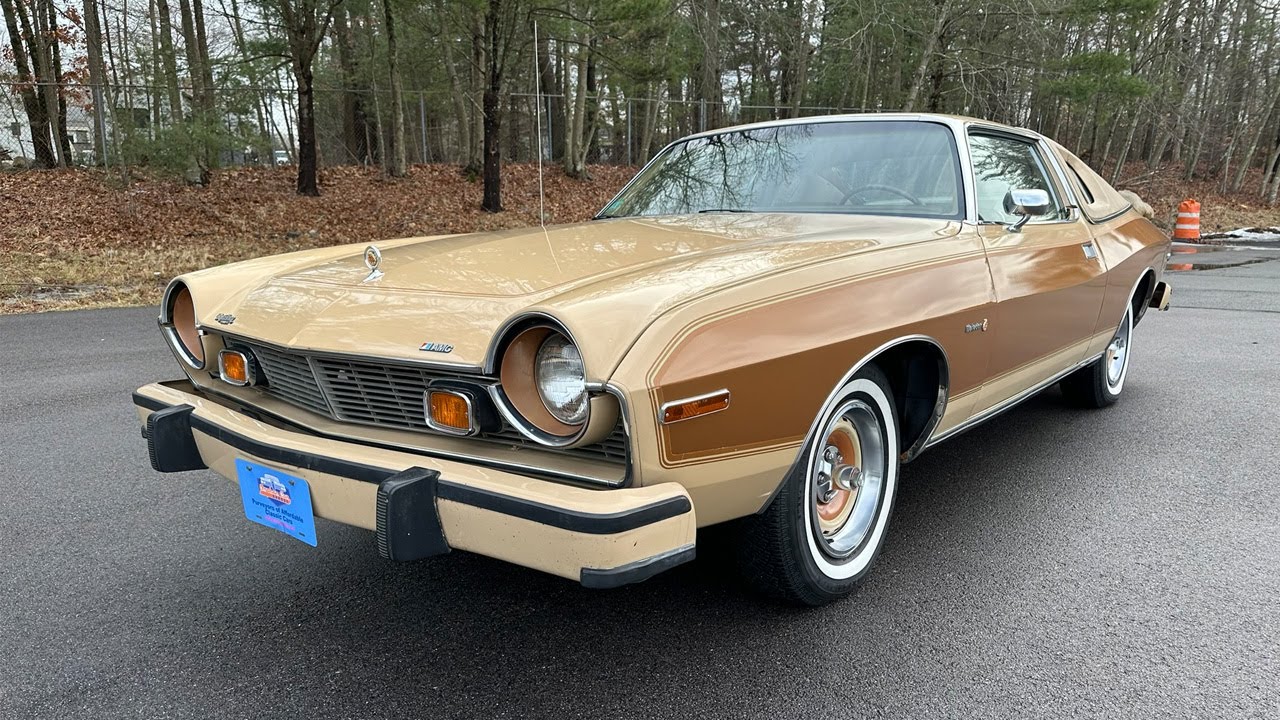
7. 1974 to 1978 AMC Matador X With the 401 V8 (AMX-Inspired Coupe)
Estimated Price: $6,000-$14,000
American Motors Corporation’s Matador Coupe in X trim specification represents one of the most thoroughly forgotten performance cars from the American muscle car era, and that forgetting has kept its pricing at levels that working-class buyers can genuinely access without extraordinary financial sacrifice.
A Matador X with the 401 cubic inch V8, AMC’s largest displacement production V8, delivers the kind of torque-rich, V8 muscle car experience that was standard equipment in American automotive culture during this period, wrapped in body styling that was genuinely distinctive even if it never achieved the mainstream recognition of Pontiac’s and Chevrolet’s competing products.
AMC’s 401 cubic inch V8 is a robust, torque-oriented engine with a following among AMC enthusiasts who understand its specific engineering character and performance potential. Parts availability for the AMC 401 is more limited than for GM and Ford V8s of comparable vintage, and buyers should approach AMC engine ownership with an honest assessment of their willingness to source parts through specialty AMC suppliers and online parts exchanges rather than walking into any auto parts store with a reasonable expectation of finding what they need.
Buyers who make this parts sourcing commitment find an engine with genuine character and adequate support from the dedicated AMC enthusiast community. Matador Coupe body structure uses AMC’s unitized construction from this period, with the same rust vulnerability points that other contemporary domestic manufacturers’ products presented.
Floor pan condition, rocker panel integrity, and the areas where structural members meet body panels require honest assessment from an experienced inspector before any purchase commitment. AMC body panels have more limited reproduction parts availability than GM or Ford alternatives, which increases the financial consequence of structural rust damage and makes finding a structurally sound car more important for this nameplate than for some alternatives.
Current pricing for running, driver-quality 1975 to 1977 AMC Matador X examples with 401 V8 engines runs from approximately $6,000 to $14,000 in most markets, with examples at the lower end requiring mechanical attention and those at the upper end representing cars that have received recent work and drive well.
For buyers who specifically want AMC ownership’s unique character and are willing to engage with the dedicated AMC parts and knowledge community, this pricing window provides genuine access.
Also Read: 5 Modern Muscle Cars That Are Actually Comfortable for 10 Hour Drives
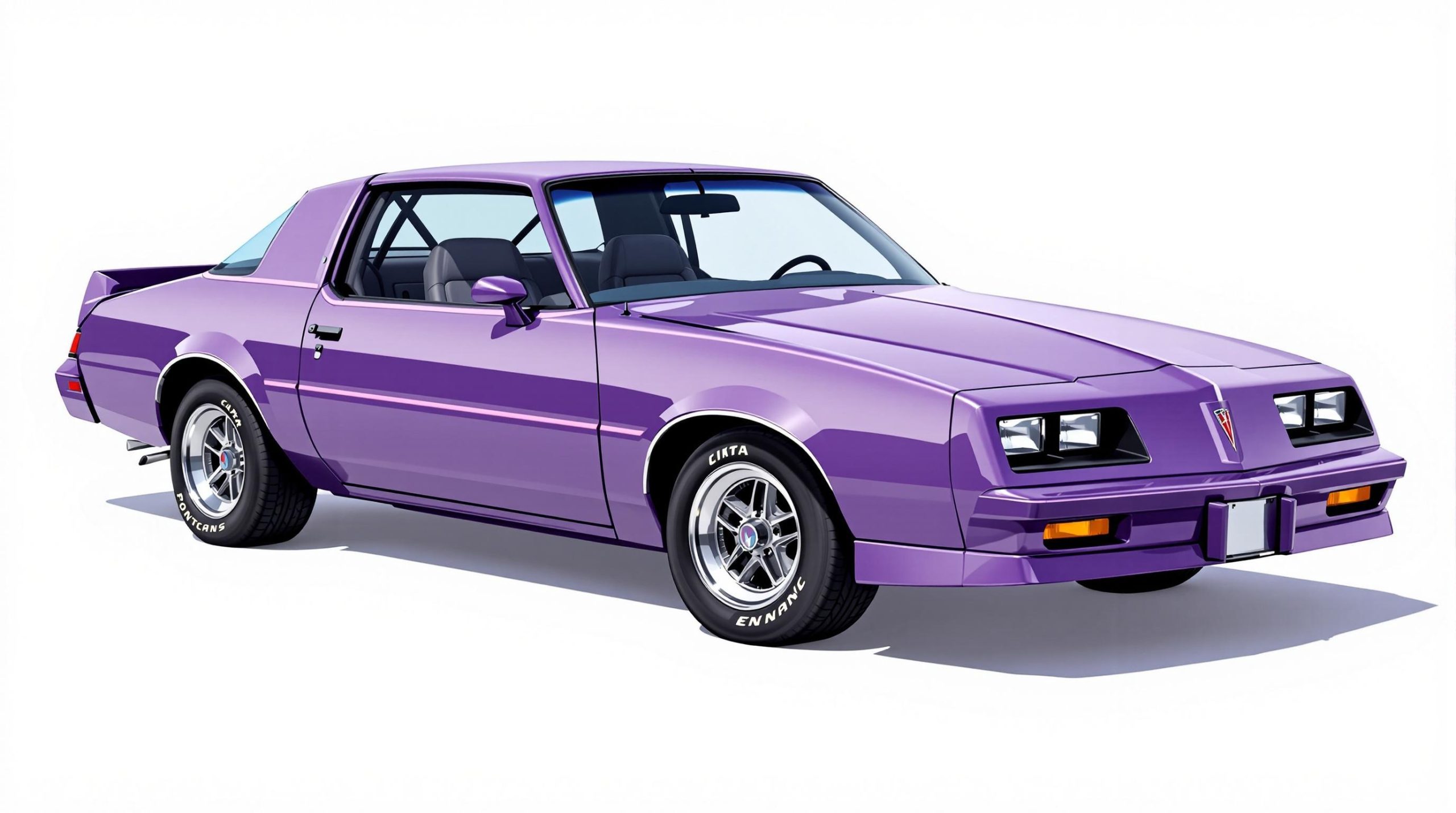
8. 1977 to 1981 Pontiac LeMans Can Am With the 301 or 350 V8 (A-Body Final Generation)
Estimated Price: $4,500-$10,000
Pontiac’s LeMans Can Am edition from the final years of A-body production represents the tail end of a muscle car era stretching back to the mid-1960s, and its pricing in the current market reflects both its technical heritage and the collector market’s declining interest in emissions-era muscle cars whose output numbers do not compare favorably with their mid-decade predecessors.
For working-class buyers who want A-body Pontiac V8 character at genuinely accessible prices, the LeMans Can Am with available V8 power represents one of the last opportunities before the collector market catches up to this generation as earlier models become fully priced out of reach.
Pontiac’s 301 cubic inch V8, specific to this era’s LeMans application and Pontiac’s smallest production V8, and the available 350 cubic inch V8, deliver the fundamental V8 character that defines the Pontiac A-body experience in a period when emissions equipment and reduced compression ratios had reduced output from the heights of the late 1960s.
Buyers who approach late-era A-body Pontiacs with realistic performance expectations proportionate to the era’s engineering constraints find cars that deliver satisfying V8 driving character for street and cruise use without the disappointment that comes from expecting mid-1960s performance from a late-1970s emissions-compliant powertrain.
Can Am trim specification provided specific exterior and interior distinctions that distinguish these cars from standard LeMans models, including specific graphics packages, sport suspension tuning, and the entire character of Pontiac’s attempt to maintain performance car identity during a period when regulatory and market pressures were pushing the industry toward fuel economy and emissions compliance.
Finding a genuine Can Am specification car rather than a standard LeMans with added graphics confirms the authenticity of the specific trim equipment that makes these cars collectible rather than simply old.
A-body LeMans rust inspection follows the same priorities as other GM A-body products of this era, with particular attention to floor pan integrity, rear torque box condition, and front subframe attachment areas that develop rust-related structural concerns in cars from high-salt-exposure climates.
Dry-climate examples present substantially better structural risk profiles and are worth specifically seeking out, with the cost of transportation to inspect and potentially purchase a western car often justified by the structural quality differential compared to locally available rust-belt alternatives.
Current pricing for running, driver-quality 1978 to 1980 Pontiac LeMans Can Am examples with V8 engines typically falls from approximately $4,500 to $10,000, with the low end of that range representing the most affordable working-class entry point of any car on this list and the high end representing driver-quality cars that present well and run reliably without requiring immediate investment.
