
Owning a vehicle comes with many costs that go far beyond the initial purchase price. Insurance, fuel, maintenance, and registration fees all add up quickly over the course of a year. For budget-conscious drivers, finding ways to reduce these recurring expenses can make a significant financial difference. One often-overlooked area of savings is the annual vehicle registration fee.
Most people assume that registration fees are fixed and unavoidable. However, the truth is that the type of vehicle you own plays a massive role in determining how much you pay each year. Certain vehicles, due to their age, weight, engine size, or classification, consistently attract lower registration costs across many U.S. states.
Keeping your yearly registration fee under $100 is not just possible; it is entirely achievable with the right vehicle choice. From older model cars to fuel-efficient compacts and motorcycles, there are numerous options that keep this annual cost impressively low. Some states base fees on the vehicle’s market value, which means older or more affordable vehicles naturally cost less to register.
This article explores nine specific vehicles known for attracting registration fees well under $100 annually. Each option offers its own unique blend of practicality, affordability, and low ownership costs. Whether you are a daily commuter, a retiree, or simply someone looking to trim expenses, these vehicles deserve serious consideration.
1. Honda Civic (Older Models Pre-2010)
The Honda Civic has been one of America’s most popular compact cars for decades. It is known for its reliability, fuel efficiency, and incredibly low cost of ownership.
Older models, particularly those manufactured before 2010, tend to attract some of the lowest annual registration fees available. This makes the pre-2010 Civic a standout choice for drivers who want to minimize every recurring vehicle expense.
In many states, registration fees are calculated based on a vehicle’s current market value. Older vehicles naturally depreciate over time, which directly reduces the assessed value used in fee calculations.
A 2005 or 2006 Honda Civic, for example, may be valued at just $3,000 to $5,000 in today’s market. This low valuation translates directly into a registration fee that often falls well below $50 annually in value-based states.
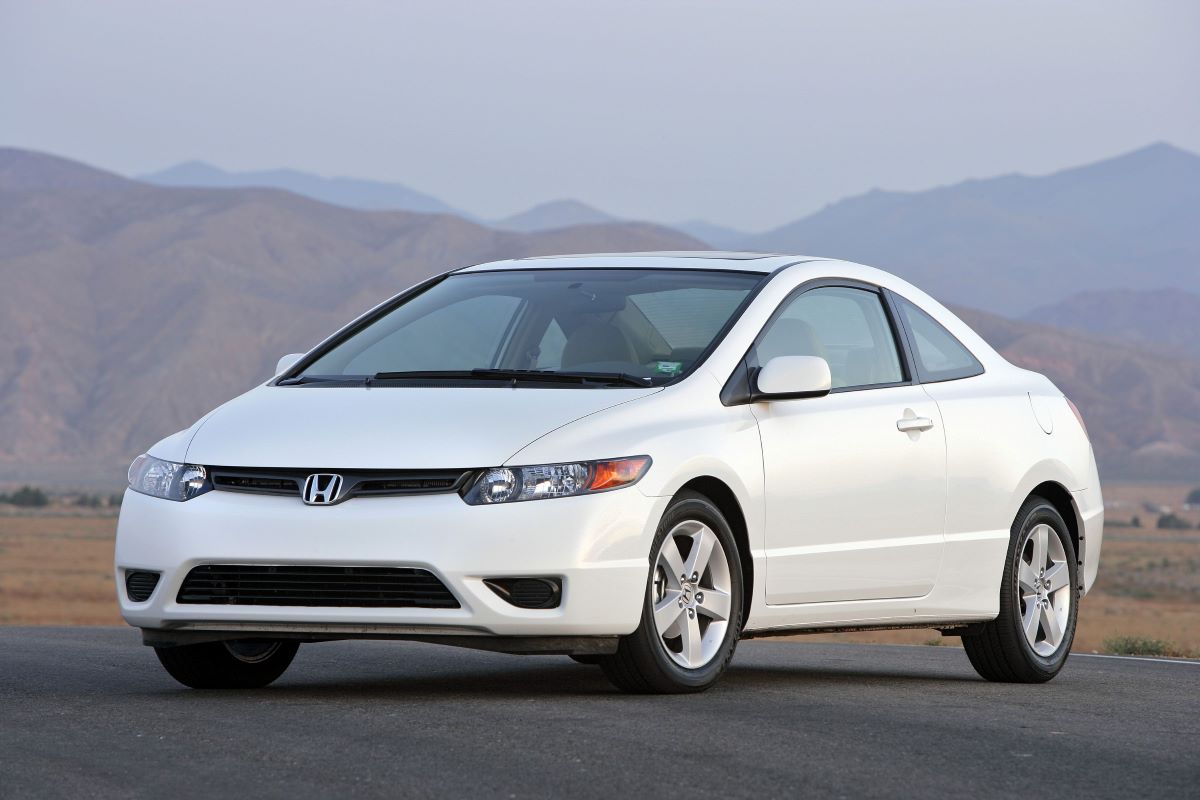
States like Arizona, Colorado, and Montana use value-based or age-based fee structures. In these states, a pre-2010 Civic can be registered for as little as $30 to $70 per year. Even in states with flat-rate systems, the Civic’s lightweight classification keeps fees modest and predictable.
The Honda Civic is legendary for its mechanical durability. Many pre-2010 models are still running strong with proper maintenance schedules. Owners frequently report crossing the 200,000-mile mark without major engine or transmission issues. This reliability means your total annual vehicle expenses stay low across the board, not just in registration costs.
Maintenance parts for older Civics are widely available and affordable. Oil changes, brake pads, and filters cost significantly less than those for luxury or European vehicles. Independent mechanics are very familiar with Civic servicing, which keeps labor costs competitive.
Older Honda Civics were built with efficiency in mind. Most four-cylinder models from this era return between 30 and 36 miles per gallon on the highway. For drivers covering moderate distances each week, this translates into real fuel savings over the course of a year. Lower fuel consumption also means fewer trips to the gas station, saving both time and money.
The Civic sedan and coupe configurations offer comfortable seating for four to five passengers. The trunk space is adequate for grocery runs, weekend trips, and everyday cargo needs. The driving experience is smooth, predictable, and easy to handle in urban traffic. These qualities make it an excellent choice for students, commuters, and retirees alike.
Insurance premiums for older Civics are typically very affordable. The vehicle’s modest market value reduces comprehensive and collision coverage costs significantly.
Many owners choose liability-only coverage on these older models, reducing monthly insurance bills dramatically. When you factor in low registration, low insurance, and low maintenance costs together, the pre-2010 Honda Civic is arguably one of the most economical vehicles to own in America today.
2. Toyota Corolla (2005–2012 Models)
The Toyota Corolla is one of the best-selling cars in automotive history. It has earned a global reputation for outstanding reliability and no-nonsense practicality.
Models from the 2005 to 2012 generation are particularly well-regarded for their combination of low purchase prices and minimal ongoing costs. Annual registration fees for these vehicles routinely fall under $100 in most states.
A 2008 Toyota Corolla in average condition is typically valued between $4,000 and $6,500 in today’s used car market. In states that calculate registration fees as a percentage of vehicle value, this low valuation results in very affordable annual fees.
Arizona, for instance, charges a vehicle license tax based on assessed value, which for older Corollas often amounts to $40 to $80 per year. This is a meaningful saving compared to newer vehicles that might attract fees of $200 to $400 annually.
Even in flat-fee states, the Corolla’s standard passenger car classification keeps costs predictable. There are no heavy vehicle surcharges or performance vehicle premiums to worry about.
Toyota built the 2005 to 2012 Corolla to last well beyond 200,000 miles. With regular oil changes and basic maintenance, these vehicles rarely experience major mechanical failures.
Timing chain and engine problems are uncommon in well-maintained examples. This longevity means you are investing in a vehicle that will continue rewarding you with low costs for many years.
Parts availability is excellent nationwide. Toyota components are stocked at virtually every auto parts store, keeping repair costs manageable. Mechanic familiarity with Corollas is widespread, reducing diagnostic time and labor charges.
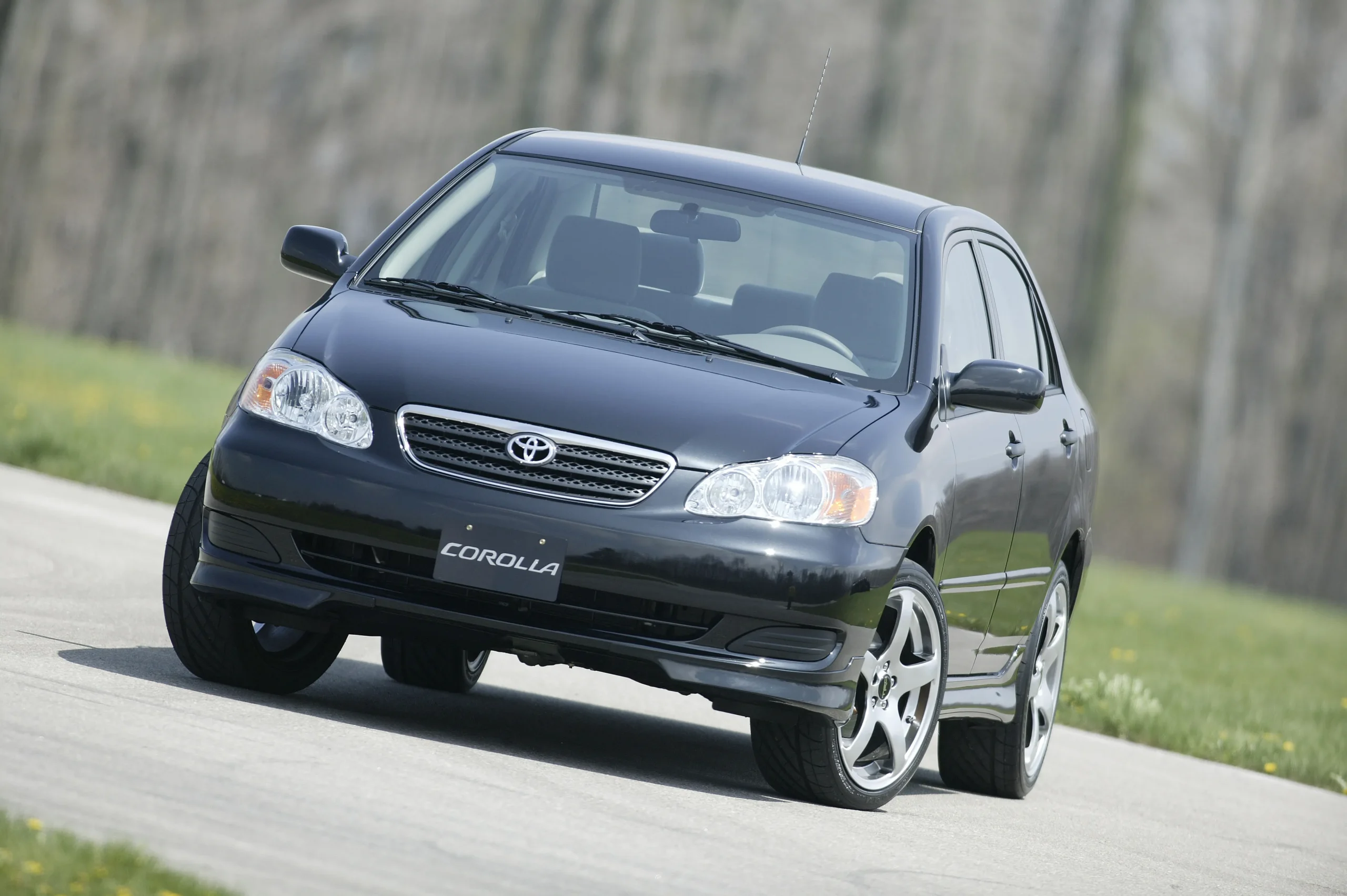
The 2005 to 2012 Corolla was equipped with a 1.8-liter four-cylinder engine. Highway fuel economy typically ranges between 32 and 38 miles per gallon, depending on driving conditions and model year.
This efficiency competes favorably with many newer vehicles still on the road today. Drivers in suburban or rural areas especially benefit from these highway figures.
The Corolla’s interior is straightforward, functional, and comfortable for daily use. Seating is supportive for long commutes, and rear passenger space is decent for a compact sedan.
Visibility from the driver’s seat is excellent, which aids urban parking and lane changes. The infotainment systems in later models of this generation offer CD and auxiliary audio connectivity.
Insurance costs for this era of Corolla are typically very competitive. Combined with low registration fees, affordable fuel costs, and cheap maintenance, the total annual ownership cost can be remarkably low.
Drivers who choose a well-maintained 2008 to 2010 Corolla often report spending less than $3,000 per year on all vehicle-related expenses combined. That figure is hard to beat in modern transportation.
3. Yamaha V-Star 250 (Motorcycle)
Motorcycles consistently rank among the most affordable vehicles to register annually. The Yamaha V-Star 250 is one of the best examples of a practical, beginner-friendly motorcycle with an exceptionally low cost of ownership.
Annual registration fees for small-displacement motorcycles like this one frequently fall between $10 and $50 across most U.S. states. For riders seeking maximum freedom at minimum expense, the V-Star 250 is hard to beat.
State registration fee structures generally assign lower fees to motorcycles compared to passenger cars. This is because motorcycles occupy less road space, cause less road wear, and are typically lighter than automobiles. The V-Star 250, weighing around 330 pounds, falls well within the lightest vehicle weight categories. Most states charge a flat motorcycle registration fee that is substantially lower than car fees, regardless of value.
In states like Arizona, Georgia, and Indiana, motorcycle registration fees often range from $15 to $45 per year. Even in higher-cost states, the V-Star 250 rarely exceeds $80 for annual registration. This makes it one of the most consistently affordable vehicles to keep registered year after year.
The V-Star 250’s small engine delivers outstanding fuel economy. Riders frequently report averages of 70 to 85 miles per gallon under normal riding conditions. For commuters or weekend riders covering moderate distances, fuel costs become almost negligible. A full tank of gas costs just a few dollars and lasts for hundreds of miles.
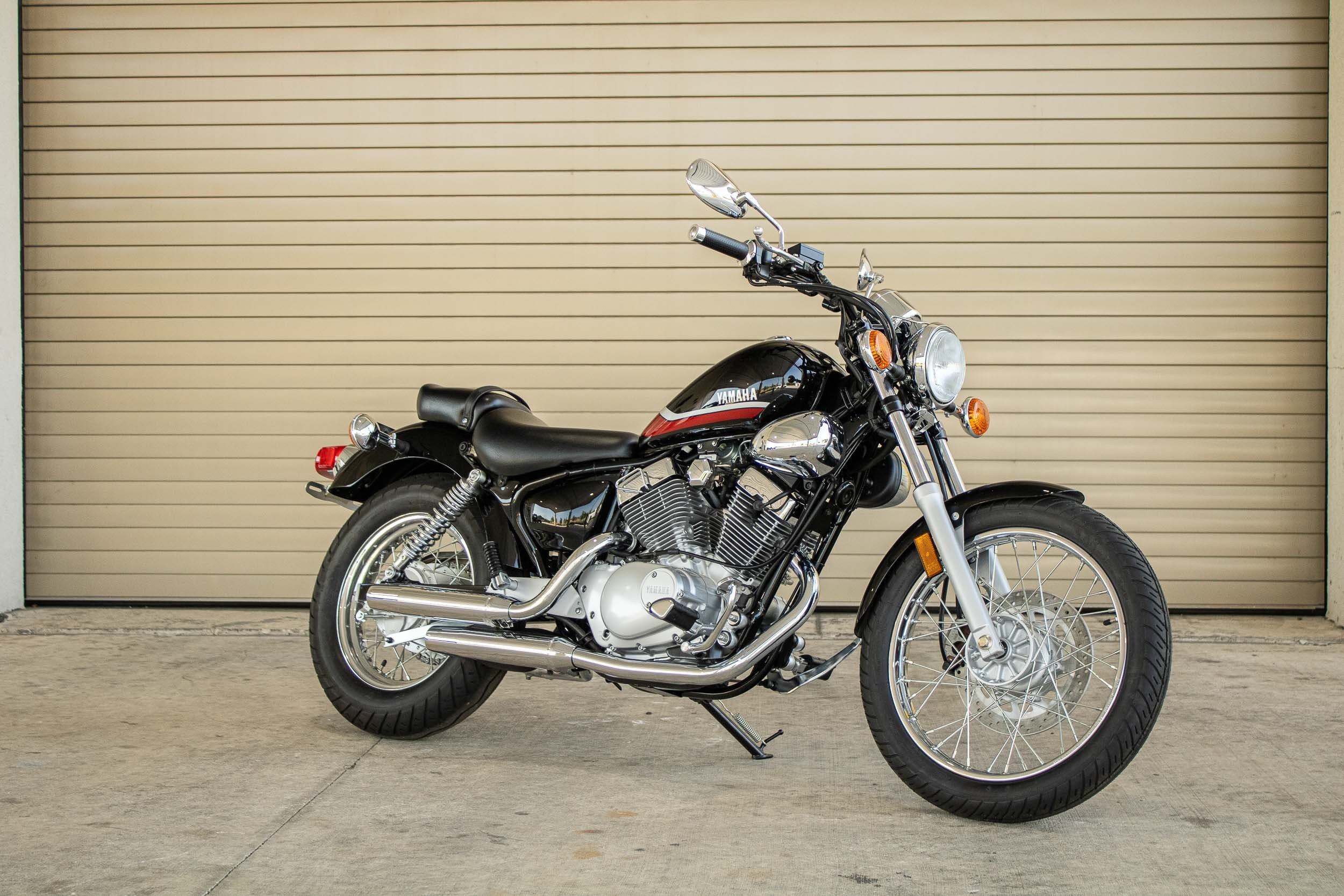
The V-Star 250 is widely recommended as a beginner motorcycle. Its low seat height, manageable power, and predictable handling make it accessible to new riders.
Experienced riders also appreciate it as a nimble around-town commuter. Parking is easy, lane filtering is possible in legal states, and maintenance requirements are minimal.
Oil changes, air filters, and chain maintenance are the primary service needs. Parts are affordable and readily available through Yamaha dealers and online retailers.
Insurance premiums for small-displacement motorcycles are typically very low, especially for riders with clean driving records. Liability-only coverage for a V-Star 250 can cost as little as $100 to $200 per year, depending on the state.
Beyond pure economics, the V-Star 250 offers an enjoyable riding experience. The classic cruiser styling is attractive and timeless. Weekend rides through scenic routes become genuinely pleasurable outings rather than expensive hobbies. For riders who can manage without a car full-time or use the bike as a secondary vehicle, the annual savings on registration, insurance, and fuel are substantial.
4. Ford Ranger (Pre-2012)
The Ford Ranger was America’s best-selling compact pickup truck for many years before Ford temporarily discontinued it in 2012. Pre-2012 Rangers remain popular among truck owners who want practicality without the expense of a full-size pickup.
Importantly, older Rangers attract very affordable annual registration fees. In most states, a well-maintained 2005 to 2011 Ranger can be registered for well under $100 per year.
Registration fees for trucks in many states are influenced by weight, age, and value. The Ford Ranger, being a compact truck rather than a full-size model, falls into a lower weight and value bracket.
Its gross vehicle weight rating (GVWR) is significantly lower than that of trucks like the F-150 or Silverado, which often trigger higher weight-based fees. This size advantage consistently keeps Ranger registration costs lower than full-size alternatives.
In value-based states, a 2006 Ford Ranger in average condition may be assessed at just $3,500 to $6,000. This valuation produces registration fees that often fall between $40 and $90, depending on the specific state formula. Older Rangers from 2000 to 2005 may attract even lower fees based on depreciated values.
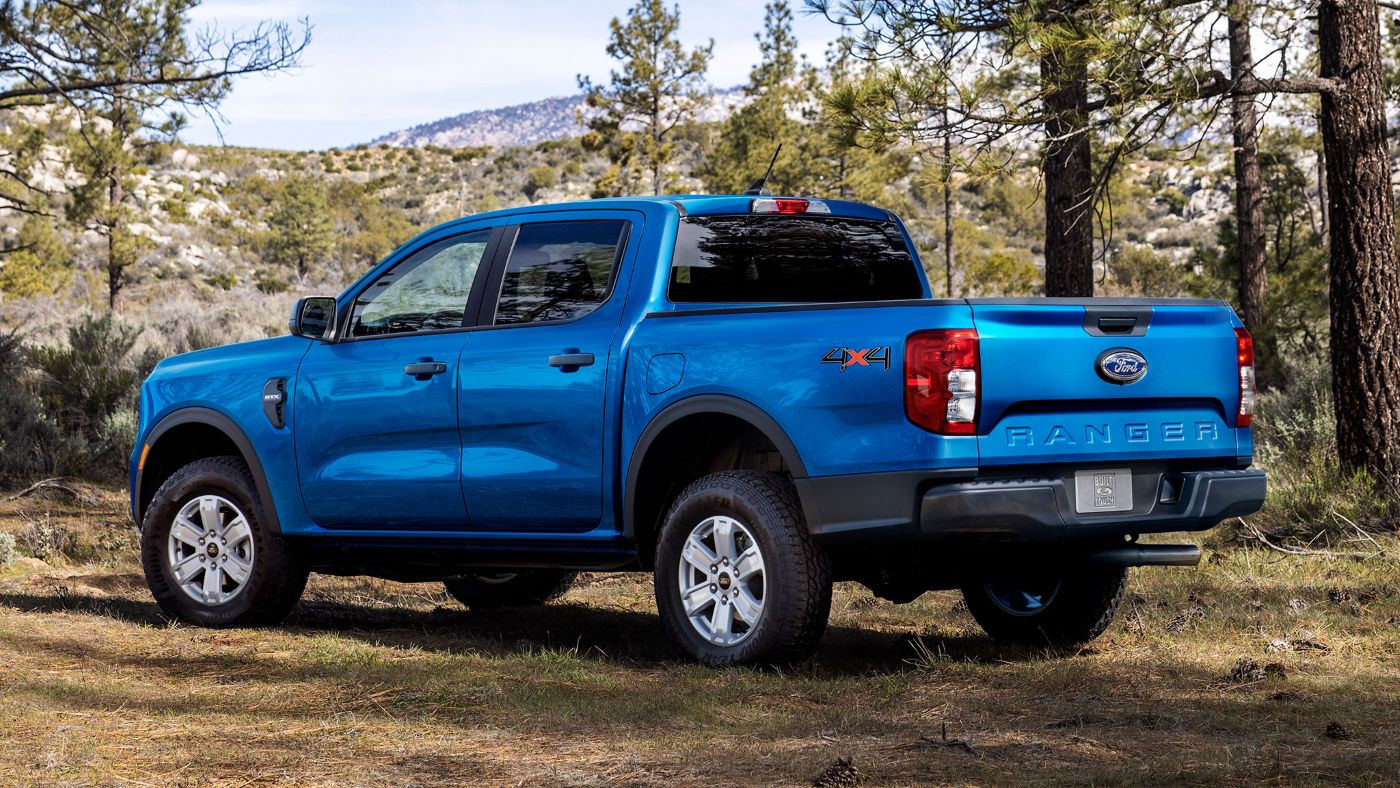
Despite its compact dimensions, the Ranger is a capable utility vehicle. It can haul between 1,400 and 1,850 pounds in the bed, depending on configuration.
The four-wheel-drive variants handle light off-road terrain with confidence. For homeowners, contractors, and outdoor enthusiasts who need occasional hauling capability, the Ranger delivers real utility at a fraction of full-size truck costs.
The four-cylinder Rangers deliver highway fuel economy of around 24 to 27 miles per gallon. Even the V6 variants manage reasonable efficiency for a truck. Compared to modern full-size trucks averaging 17 to 20 miles per gallon on the highway, the Ranger offers meaningful fuel savings for drivers who do not need maximum towing capacity.
Pre-2012 Rangers are well-regarded for their mechanical simplicity and durability. The 2.3-liter and 4.0-liter engines are proven powerplants with extensive service histories. Parts are abundant and affordable at auto parts retailers nationwide. Many Ranger owners report these trucks running well past 200,000 miles with regular maintenance.
A pre-2012 Ford Ranger purchased for $5,000 to $9,000 provides truck utility, low registration costs, reasonable fuel economy, and proven reliability. For budget-minded truck buyers who need more than a sedan but do not want full-size truck expenses, the pre-2012 Ranger remains one of the smartest value propositions on the used vehicle market today.
Also Read: 10 Vehicles With Spare Keys That Cost Under $100 To Replace
5. Chevrolet Spark (2013–2019)
The Chevrolet Spark is one of the smallest and most affordable new cars ever sold in the American market. Used examples from the 2013 to 2019 generation are now widely available at very accessible prices. Their combination of compact size, low vehicle value, and simple mechanical design makes them excellent candidates for sub-$100 annual registration fees in most states across the country.
The Chevrolet Spark’s market value drops quickly as the vehicle ages. A 2015 or 2016 Spark in good condition typically sells for $5,000 to $8,000 in today’s used car market. States that calculate fees based on vehicle value will produce very modest annual assessments for these cars. In flat-fee states, the Spark’s classification as a standard passenger car with no performance or luxury premiums keeps costs straightforward and low.
Its lightweight construction the Spark weighs approximately 2,200 pounds, also works in favor of lower weight-based fees where applicable. There are no additional charges for towing packages, oversized frames, or commercial classifications.
The Spark was designed specifically for city driving and urban environments. Its tiny footprint makes parallel parking easy and urban navigation stress-free. The 1.4-liter engine produces modest power that is perfectly adequate for city speeds and light highway driving. Most drivers report fuel economy between 30 and 38 miles per gallon in combined driving conditions.
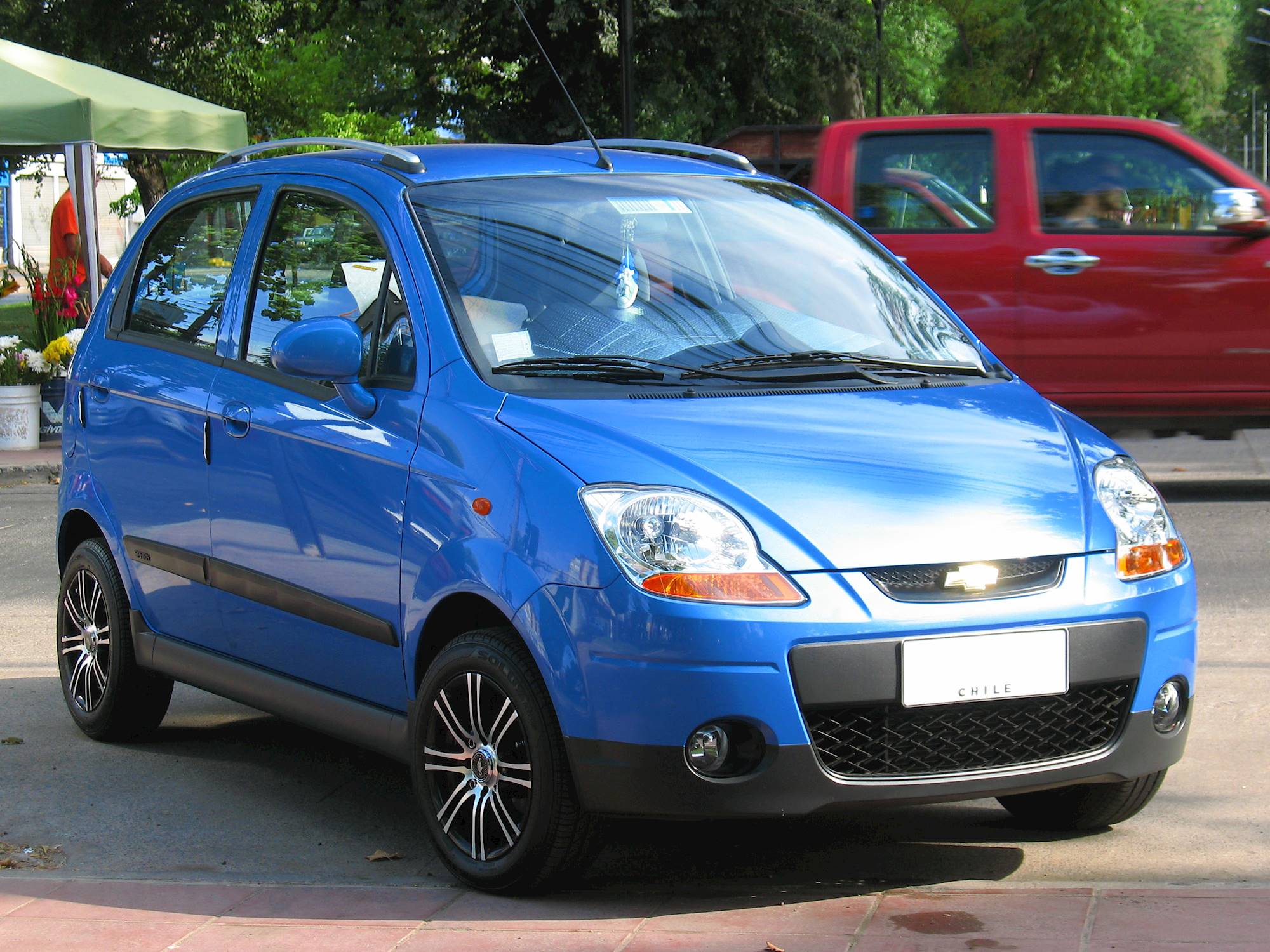
The Spark’s low market value significantly reduces comprehensive and collision insurance premiums. Many owners carry only liability coverage, further reducing monthly insurance costs. Oil changes and routine maintenance are among the cheapest for any vehicle due to the small engine size and minimal fluid capacities. Tires are small and inexpensive compared to those needed for larger vehicles.
The Spark comfortably seats four adults for short trips. Cargo space behind the rear seats is limited but adequate for daily commuting needs. The rear seats fold flat to create additional cargo room when needed. For urban singles, students, or anyone seeking a pure commuter car, the Spark fulfills its role efficiently and affordably.
When you factor in purchase price, insurance, fuel, maintenance, and registration costs together, the Chevrolet Spark emerges as one of the lowest total-cost vehicles available on the used market. Drivers who prioritize minimizing recurring expenses above all else will find the Spark to be a practical and reliable financial decision year after year.
6. Kawasaki KLX 300 (Dual-Sport Motorcycle)
Dual-sport motorcycles like the Kawasaki KLX 300 offer the unique ability to ride on both public roads and off-road trails. They combine the fun of dirt bike riding with the practicality of street-legal registration. Registration fees for dual-sport bikes remain very low in most states, typically falling between $20 and $60 per year. For riders who enjoy versatility in their two-wheeled adventures, the KLX 300 is an outstanding choice.
Dual-sport motorcycles are classified similarly to standard motorcycles for registration purposes in most states. Their lightweight construction, the KLX 300 weighs approximately 278 pounds, placing them in the lowest vehicle weight categories. This classification consistently results in registration fees well below those of passenger cars or trucks. Some states charge as little as $25 to $40 annually for dual-sport bikes.
The KLX 300 also has a relatively modest market value compared to larger adventure motorcycles. This further reduces registration costs in value-based states. Buyers who purchase used examples at $4,000 to $6,000 will see particularly low annual fee assessments.
The KLX 300’s small engine delivers excellent fuel efficiency. On-road commuting typically yields 60 to 75 miles per gallon under reasonable riding conditions. Off-road fuel consumption is higher due to the nature of the terrain, but the small tank capacity means fuel expenses remain modest. This efficiency makes the KLX 300 an economical vehicle for both commuting and recreation.
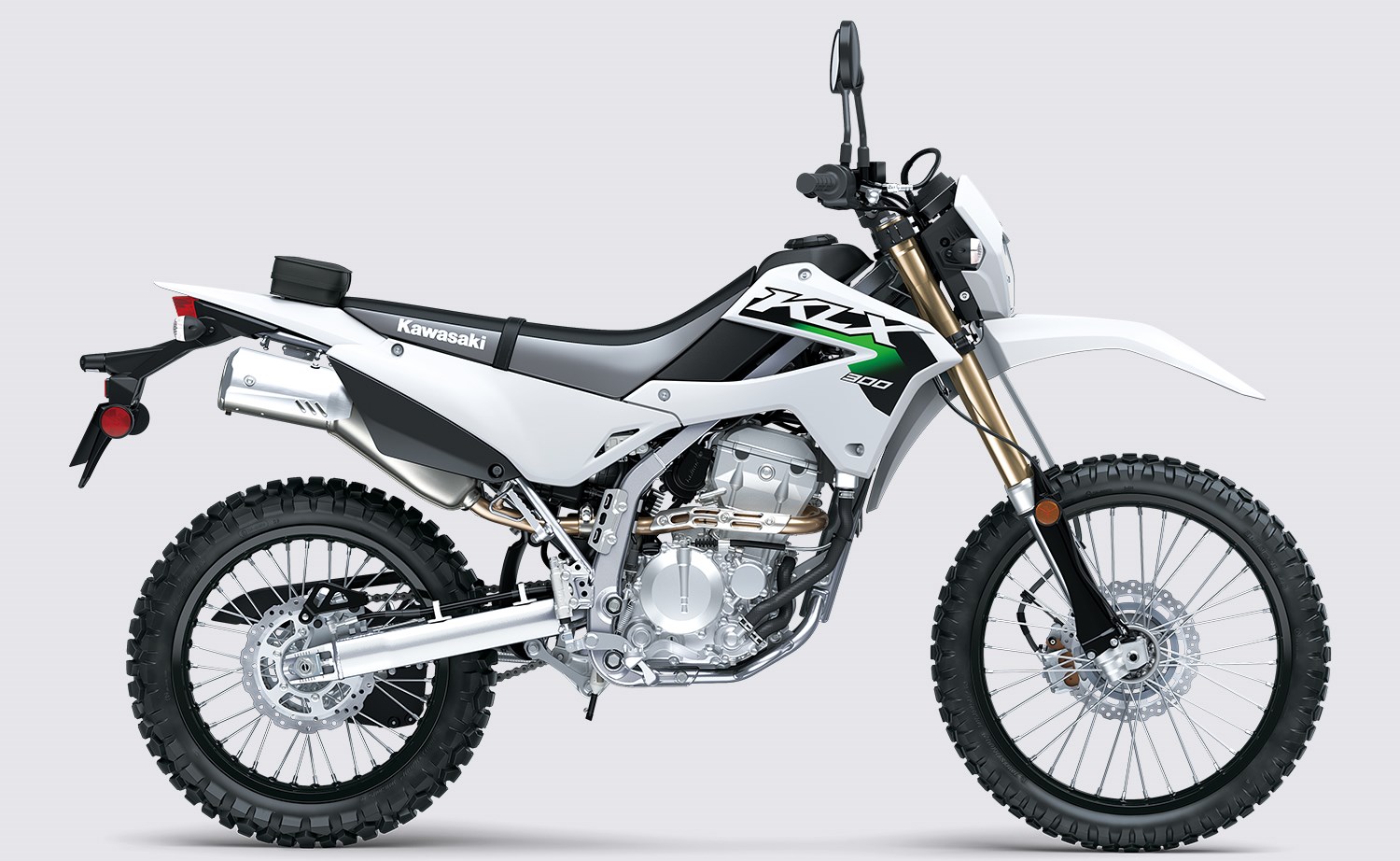
The ability to ride on paved roads as well as dirt trails, forest paths, and unpaved backroads adds enormous recreational value. One vehicle satisfies both practical transportation needs and weekend adventure riding. Riders who live near state forests, national parks, or rural areas particularly benefit from this dual-purpose capability. The KLX 300 eliminates the need for a separate off-road bike.
Kawasaki’s single-cylinder engine is mechanically simple and easy to service. Oil changes, air filter replacements, and chain maintenance are the primary service requirements. Parts are affordable and widely available. Many KLX 300 owners perform their own maintenance with basic mechanical knowledge and standard tools.
Small-displacement dual-sport bikes attract very competitive insurance premiums. Annual insurance costs for the KLX 300 often range from $150 to $300 for comprehensive coverage. Liability-only policies cost even less. Combined with low registration fees and excellent fuel economy, the KLX 300’s total annual ownership costs are impressively minimal for such a versatile vehicle.
7. Nissan Versa (2012–2017)
The Nissan Versa has consistently ranked among the most affordable new cars in America throughout its production run. Used examples from the 2012 to 2017 generation are now available at very low prices on the used car market.
Their combination of basic but reliable mechanics, low vehicle value, and standard passenger car classification makes them ideal candidates for annual registration fees well under $100.
A 2014 or 2015 Nissan Versa in average condition typically carries a market value of $5,000 to $8,500. In value-based registration states, this modest valuation translates to annual fees of $40 to $80 in many cases.
The Versa’s classification as a standard economy sedan places it in the lowest passenger vehicle fee categories without any surcharges for size, performance, or special features.
Its lightweight construction at approximately 2,400 pounds also helps in weight-based fee structures. There are no heavy-vehicle premiums or commercial-use fees to worry about with a standard Versa sedan.
The 2012 to 2017 Versa was powered by a 1.6-liter four-cylinder engine known for reasonable reliability. The engine is not particularly powerful, but it is durable and straightforward to service.
Many owners successfully drive these vehicles past 150,000 miles with consistent oil changes and basic upkeep. The simplicity of the Versa’s mechanical design keeps repair costs predictable and affordable.
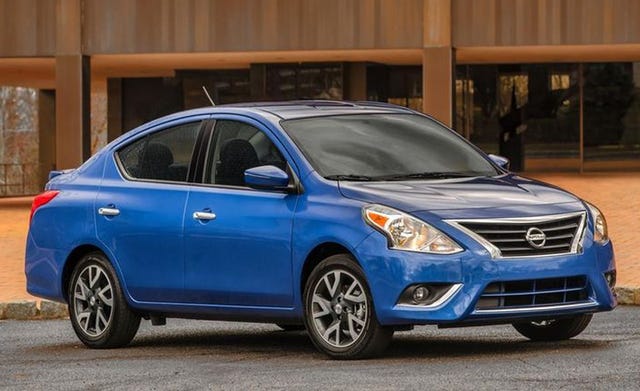
The Versa delivers competitive fuel economy figures of 30 to 38 miles per gallon on the highway. For budget-conscious drivers covering significant daily distances, this translates into real savings at the pump. The modest 10.8-gallon fuel tank fills up inexpensively, keeping per-fill costs low even when gas prices rise.
Despite its small exterior footprint, the Versa offers surprisingly generous interior space. Rear seat legroom is notably generous for a subcompact sedan, a feature that Nissan specifically prioritized in the Versa’s design.
Trunk space at 14.9 cubic feet is among the largest in the subcompact segment. These practical dimensions make the Versa more livable for everyday use than its entry-level price suggests.
The Nissan Versa’s combination of low purchase price, minimal registration fees, competitive fuel economy, and decent reliability creates a genuinely compelling ownership package.
For drivers who prioritize keeping total annual vehicle costs as low as possible, the 2012 to 2017 Versa consistently delivers on that promise without requiring significant compromises in daily practicality.
8. Honda Metropolitan Scooter
The Honda Metropolitan is a small, stylish scooter designed specifically for urban commuting and short-distance travel. It has maintained a loyal following among city dwellers, college students, and anyone who needs convenient, affordable local transportation.
Annual registration fees for small scooters like the Metropolitan are among the lowest possible for any motorized vehicle, often falling between $10 and $30 in most states. For purely local transportation needs, very few vehicles can compete on cost.
Small scooters and mopeds occupy the lowest tier of motorized vehicle registration fee schedules in virtually every state. The Honda Metropolitan’s 49cc engine places it at the very bottom of the displacement spectrum. In many states, vehicles with engines under 50cc are classified as mopeds and attract minimal registration fees or even flat annual fees of just $10 to $20.
Even states that classify the Metropolitan as a small motorcycle rarely charge more than $30 to $50 annually for registration. Over a five-year period, total registration costs for this scooter may amount to less than what a car owner pays in a single year.
The Honda Metropolitan delivers fuel economy that genuinely challenges belief. Most riders report achieving 100 miles per gallon or more under typical urban riding conditions. Its tiny 1.0-gallon fuel tank fills up for just a few dollars. For riders covering 30 to 50 miles per day in urban environments, monthly fuel costs can be as low as $10 to $20. This level of efficiency is simply unmatched by any car or full-sized motorcycle.
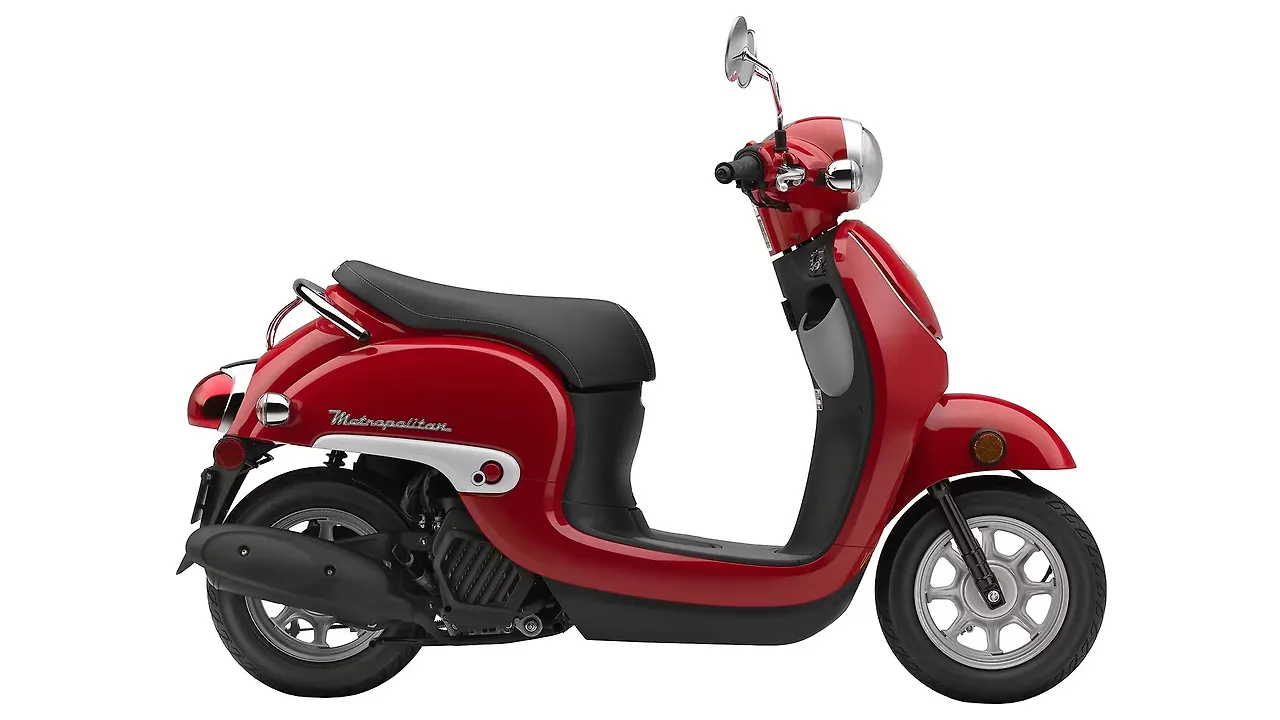
The Metropolitan’s compact size makes it ideal for going through the congested city streets. Parking is effortless, as the scooter fits into tiny spaces that would challenge even compact cars.
On college campuses, urban neighborhoods, and small towns, the Metropolitan is a practical and enjoyable daily vehicle. The automatic transmission eliminates the need for clutch operation, making it accessible to non-motorcycle riders as well.
Honda’s Metropolitan is mechanically simple and straightforward to maintain. Oil changes require minimal oil volume and can be done very quickly.
Tire replacement and brake maintenance costs are minimal compared to those of larger vehicles. The build quality is excellent for a small scooter, and Honda’s reputation for reliability holds true in this product category.
For urban residents who travel primarily within a few miles of home, the Honda Metropolitan fulfills nearly all transportation needs at an extremely low annual cost.
When combined with public transit for longer trips, the Metropolitan provides a complete and genuinely affordable urban mobility solution that is very difficult to improve upon in terms of cost-effectiveness.
9. Subaru Outback (Pre-2006)
The Subaru Outback is celebrated for its all-weather capability, practical wagon body style, and outdoor lifestyle appeal. While newer Outbacks can be expensive to purchase and register, older models from before 2006 tell a very different financial story.
These well-depreciated examples attract annual registration fees well under $100 in most states, while still offering the versatility and capability that made the Outback famous in the first place.
A pre-2006 Subaru Outback in average to good condition typically carries a market value of $3,000 to $6,500 in today’s used car market. In value-based states, this low assessed value produces registration fees that frequently fall between $30 and $75 annually.
Even in flat-fee states, the standard passenger car or light wagon classification keeps costs well below $100. States that reduce fees based on vehicle age further benefit owners of these older Outbacks.
The contrast with a new Outback is striking. A 2024 Subaru Outback might attract registration fees of $200 to $600 in value-based states. Choosing an older model saves hundreds of dollars in registration costs alone every single year.
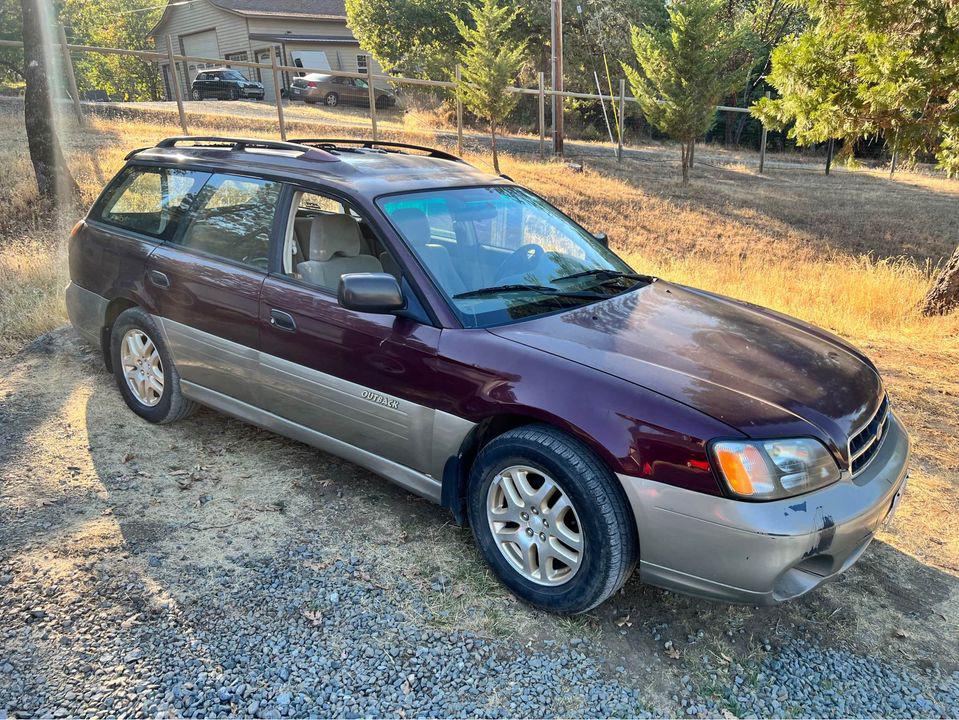
The pre-2006 Outback came standard with Subaru’s full-time symmetrical all-wheel-drive system. This AWD system delivers exceptional traction in rain, snow, ice, and light off-road conditions.
Owners in northern states and mountain regions particularly value this capability during winter months. The 8.7 inches of ground clearance helps go through the unpaved roads and modest off-road terrain with confidence.
The Outback’s wagon body style delivers cargo versatility that sedans simply cannot match. With the rear seats folded, cargo capacity expands significantly for hauling bikes, camping gear, kayaks, and sports equipment. The roof rails support additional cargo carriers and racks. For outdoor enthusiasts who need a practical hauler, the pre-2006 Outback punches well above its cost.
The 2.5-liter horizontally-opposed Boxer engine in pre-2006 Outbacks has a distinctive character. It delivers smooth, linear power delivery and a low center of gravity.
However, head gasket issues are a known concern in some examples from this era, particularly the 2.5-liter non-turbo versions. Buyers should verify the head gasket history carefully before purchasing. Examples with repaired or recently replaced head gaskets are preferable and still offer excellent long-term value.
A pre-2006 Subaru Outback purchased for $4,000 to $7,000 provides all-wheel-drive capability, wagon practicality, and annual registration fees well under $100.
For outdoor enthusiasts, winter commuters, and budget-focused families who need versatility above all else, the older Outback represents one of the smartest automotive value propositions available. It delivers premium capability at economy car running costs, a combination that is genuinely rare and deeply appealing for the right buyer.
Also Read: 10 Vehicles With Spare Keys That Cost Under $100 To Replace
