
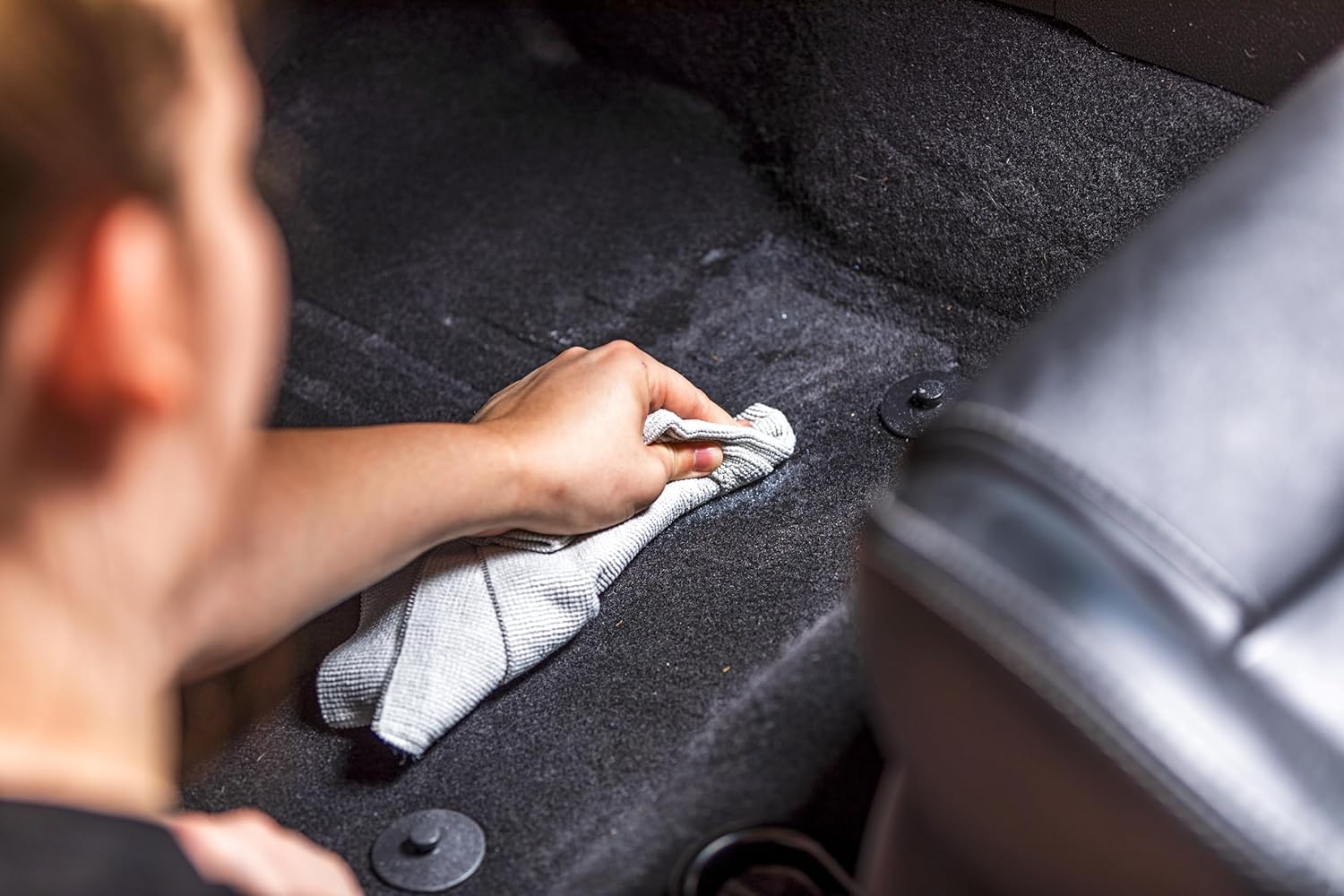
Buying a used car often feels like a practical decision until the interior starts telling stories the seller did not explain. Seats, more than any other surface, absorb years of daily use, accidents, neglect, and mechanical trouble. A stain is rarely just a cosmetic flaw.
Color, texture, smell, and location can quietly point to issues that go far beyond upholstery cleaning. What appears to be a harmless mark can signal water intrusion, engine trouble, safety system damage, or long-term neglect that affects reliability and resale value.
Shoppers tend to focus on mileage, service records, and exterior condition, yet seats often reveal hidden truths faster than a diagnostic scan. Liquids travel, soak padding, trigger corrosion, and trap odors that refuse to disappear. Some stains suggest one-time accidents, while others hint at recurring problems that were never resolved. Learning how to read these signs can protect buyers from expensive surprises after purchase.
This guide breaks down the most troubling seat stains found in used vehicles and explains what they usually mean beneath the surface. Each section focuses on one stain type, how it forms, where it appears, and why it should raise concern. Attention to these details helps buyers ask better questions, negotiate with confidence, or walk away before regret sets in.
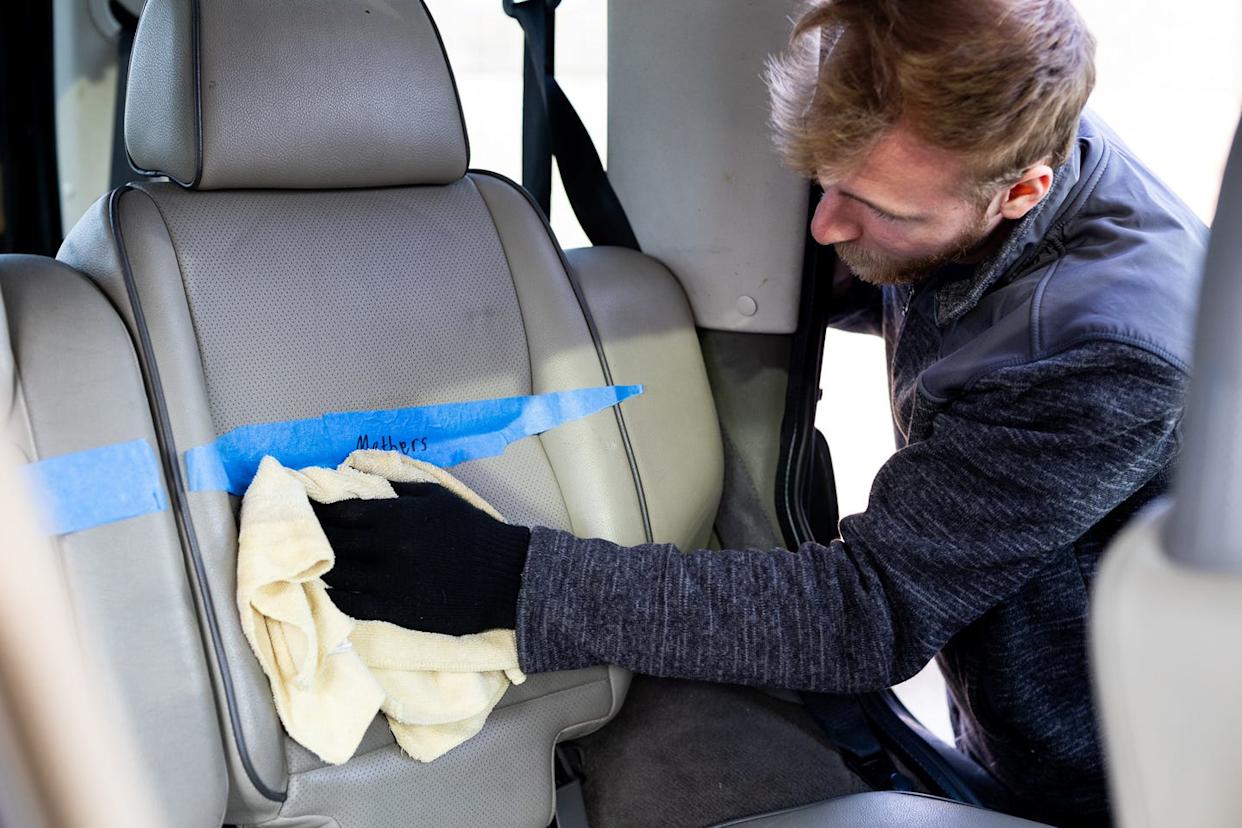
1. Dark Brown or Black Grease Stains Near the Driver’s Seat Base
Grease-like stains concentrated around the lower portion of the driver’s seat often suggest more than spilled food. Placement matters here. When discoloration appears near seat rails, mounting points, or the carpet line beneath the cushion, mechanical involvement becomes a real possibility.
Lubricants used in seat tracks, pedals, or steering components can migrate upward through repeated contact, especially when seals fail, or parts are over-lubricated during poor repairs. Texture provides another clue. Grease stains tend to feel slick even after cleaning attempts.
Fabric may appear darker in irregular patches that spread outward, showing how oil travels through the padding. Leather surfaces may show softening or a glossy sheen in specific areas. This type of residue usually returns after cleaning, which indicates an ongoing source rather than a one-time spill.
Smell adds confirmation. Mechanical grease carries a heavy, industrial odor distinct from food oils. When warmed by sunlight, the smell intensifies. That reaction points toward petroleum-based substances rather than household contaminants. Buyers should crouch and inspect under-seat components, checking for wetness, drips, or excessive lubrication.
Underlying causes vary. Worn steering column seals, leaking brake components, or poorly serviced seat mechanisms can all contribute. In some cases, engine oil from previous leaks entered the cabin through damaged firewall insulation. That scenario suggests a history of unresolved engine issues.
Ignoring this stain risks more than cosmetic frustration. Grease can degrade seat foam, weaken fabric fibers, and contaminate electrical connectors beneath the seat. Modern vehicles house airbag sensors and wiring in this area. Oil exposure can interfere with proper deployment or trigger warning lights later. Repair costs extend beyond upholstery, reaching into safety systems.
A buyer encountering this stain should request a mechanical inspection focused on leaks and under-seat electronics. Cleaning alone does not solve the problem. Without addressing the source, the stain will continue to return, carrying its warning with it.
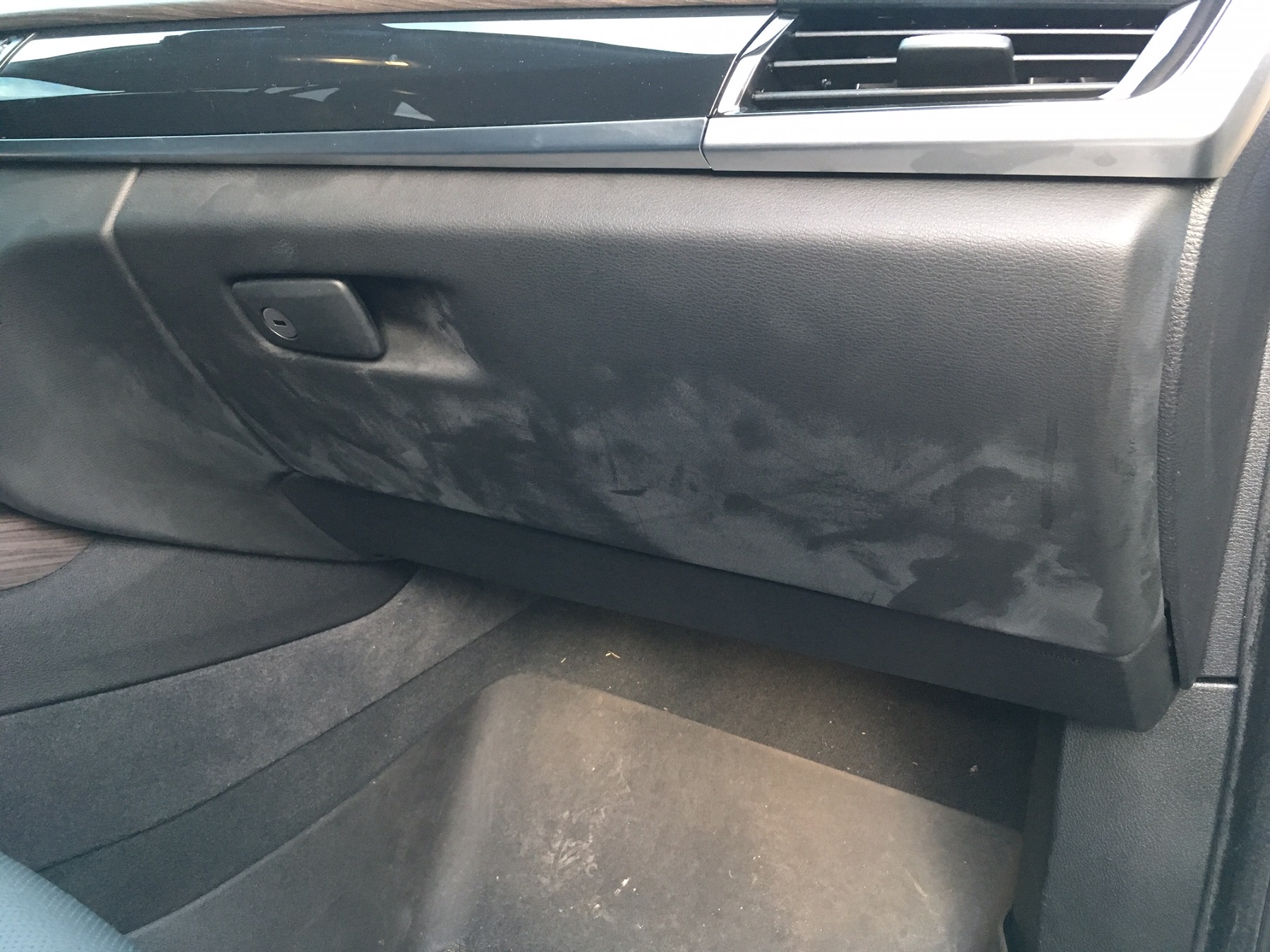
2. Chalky White or Gray Residue After Cleaning Attempts
A pale, powdery stain that reappears after cleaning signals moisture intrusion rather than surface dirt. This residue forms when water containing minerals soaks into seat padding, then evaporates repeatedly. Each cycle leaves minerals behind, creating a chalk-like film that spreads gradually. Location often includes lower cushions, rear seats, or areas near doors.
Texture tells the story quickly. Fabric feels stiff or crusted, unlike normal wear. Leather may show a dull haze that resists conditioning. When rubbed with a damp cloth, the stain may temporarily disappear, only to return once dry. That behavior confirms mineral content rather than simple grime.
Sources of moisture vary. Failed door seals, sunroof drains, windshield leaks, or flood exposure can all lead to this pattern. Vehicles stored outdoors without proper drainage often develop these stains during rainy seasons. Sellers may attempt deep cleaning to hide the issue, but minerals always resurface.
Smell supports the diagnosis. Damp interiors develop a musty odor that intensifies in warm conditions. Even if air fresheners mask it briefly, humidity brings it back. Buyers should lift seat edges and check carpet padding for dampness or discoloration. Long-term consequences deserve attention.
Persistent moisture encourages mold growth inside the seat foam and under the carpets. Mold affects air quality and can trigger health concerns. Corrosion also begins quietly, attacking seat frames, wiring harnesses, and floor panels. Electrical issues often appear months later, far removed from the purchase date.
Addressing this problem requires identifying and fixing the leak, drying the interior fully, and replacing contaminated padding. Costs rise quickly, especially when mold remediation becomes necessary. A surface-level stain hides a deeper condition that rarely resolves on its own.
When this residue appears, buyers should pause. Asking direct questions about water exposure and requesting documentation helps clarify risk. Without clear answers, walking away often proves cheaper than repairs down the road.
Also Read: 8 Tips for Keeping Your Sensors Clean to Prevent Safety Tech Failure in Rain
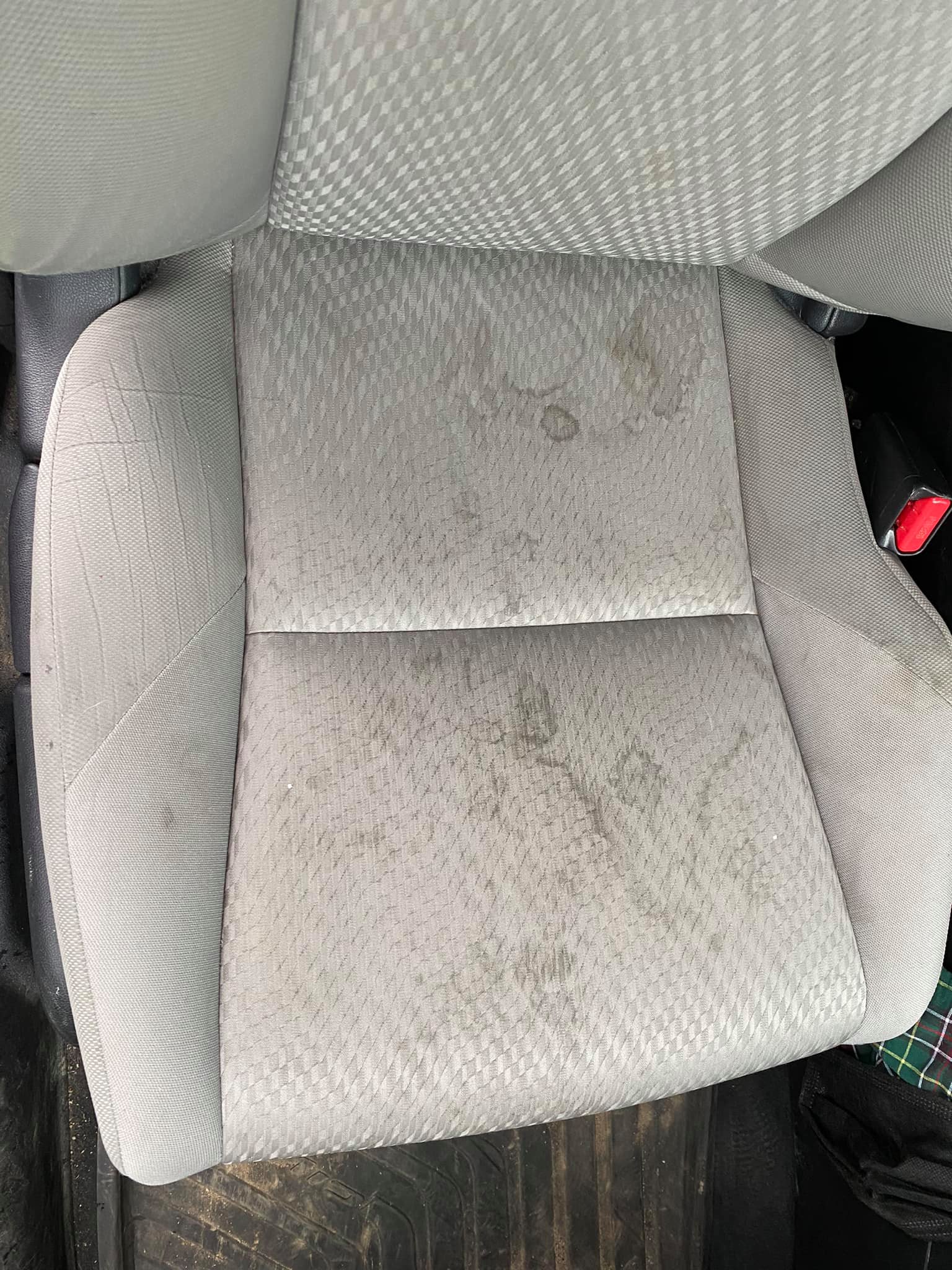
3. Yellow or Amber Stains With a Sharp Chemical Smell
Yellowish stains on seats often raise immediate suspicion, and rightly so. Color alone suggests exposure to bodily fluids or chemical agents. When paired with a sharp, ammonia-like odor, the concern moves toward coolant leaks or repeated pet accidents. Distinguishing between these causes matters, as one points to mechanical failure while the other suggests neglect.
Coolant stains usually appear near the front seats, especially on the passenger side. Heater core leaks allow antifreeze vapors or liquid to enter the cabin, soaking seats and carpets. Antifreeze dries with a yellow tint and leaves a sweet yet biting smell. Touching the area may reveal a slightly sticky texture.
Pet-related stains, while unpleasant, often spread across rear seats and carry a different odor profile. Even after cleaning, the smell returns when humidity rises. Fabric discoloration may appear blotchy rather than concentrated. Mechanical sources deserve priority attention. A leaking heater core indicates dashboard removal for repair, a labor-intensive job.
Coolant exposure also damages seat foam and accelerates corrosion beneath carpets. Fogging windows and unexplained coolant loss often accompany this issue. Health concerns follow. Antifreeze contains toxic compounds. Prolonged exposure inside a closed cabin poses risks, especially for children and pets.
Masking the smell without fixing the leak does nothing to reduce danger. Buyers should run the heater during inspection and watch for odor changes. Damp carpets near the firewall or sticky residue confirm suspicion. Professional inspection becomes essential before purchase. Yellow stains tell a story that cleaning cannot erase.
Whether caused by mechanical failure or chronic pet use, they signal conditions that affect comfort, safety, and cost. Ignoring them invites regret that lingers far longer than the stain itself.
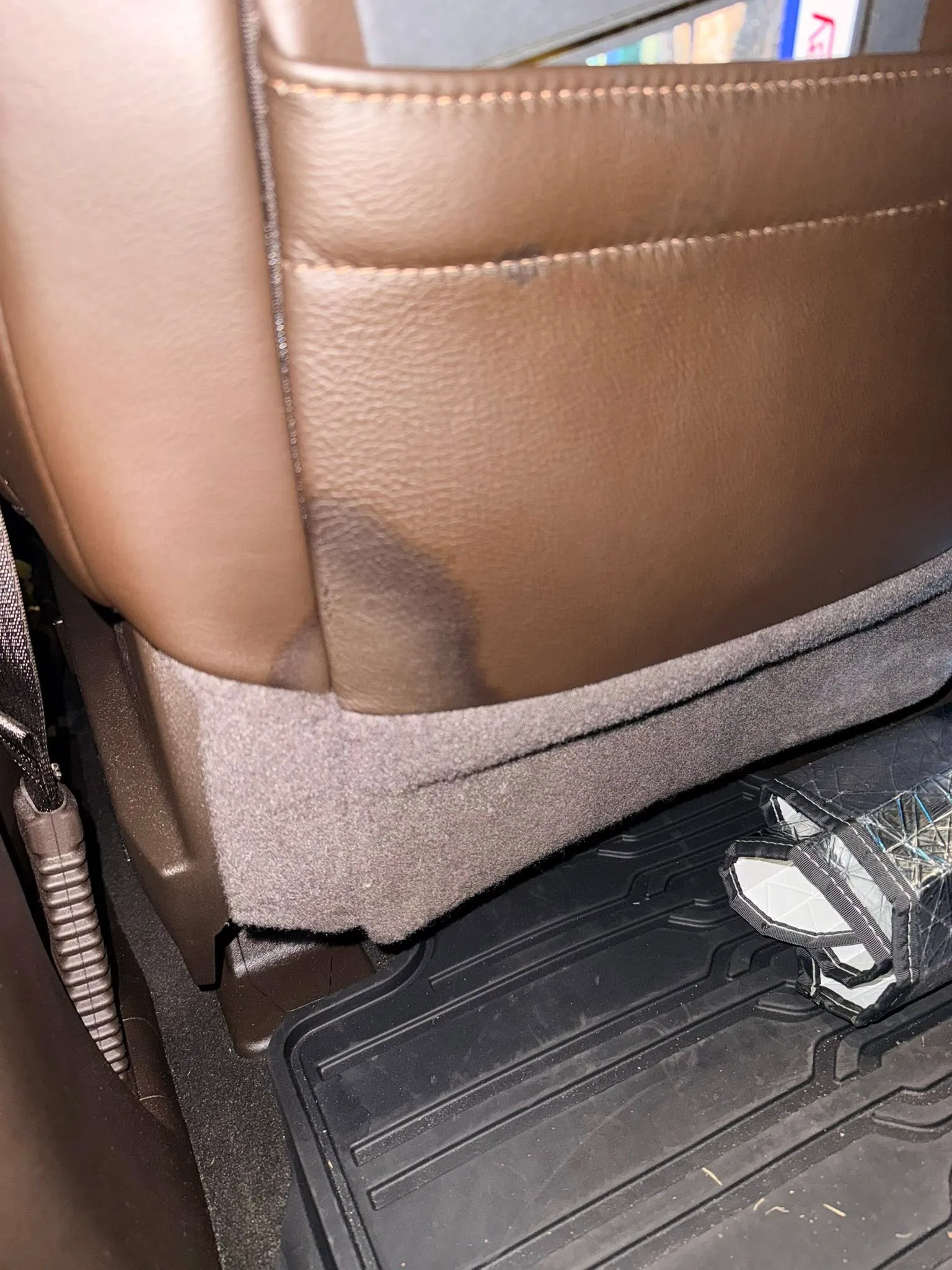
4. Reddish or Rust-Colored Stains Along Seat Edges
Reddish stains along seams or lower edges of seats often indicate corrosion rather than spilled beverages. Rust particles migrate upward from seat frames, springs, or floor mounts when moisture persists. As time goes on, oxidation bleeds into fabric, creating a rusty hue that spreads slowly.
Location supports this conclusion. These stains rarely appear in the center of cushions. Instead, they trace metal components beneath. Fabric may feel weakened, tearing more easily in affected areas. Leather may show discoloration along stitching lines where moisture lingers.
Moisture remains the root cause. Flood exposure, chronic leaks, or poor drying after cleaning allow metal parts to corrode. Each time humidity rises, rust progresses. Surface cleaning removes visible stains temporarily, but oxidation continues underneath. Structural integrity becomes a concern.
Seat frames weakened by rust compromise crash safety. Mounting points may fail under stress, reducing occupant protection. Repair involves seat removal, frame treatment or replacement, and upholstery work. Electrical components under the seats also suffer.
Corroded connectors lead to intermittent faults, airbag warnings, or seat adjustment failures. These issues often appear unpredictably, frustrating owners and increasing repair bills. Inspection should include sliding the seat fully forward and back, checking rails and bolts for flaking metal. Any resistance or grinding suggests deeper corrosion.
Buyers should also inspect floor pans for similar discoloration. Reddish stains signal time and moisture working together. They rarely form overnight and usually indicate a history of exposure that affects more than appearance. Treating them as minor cosmetic flaws underestimates their implications.
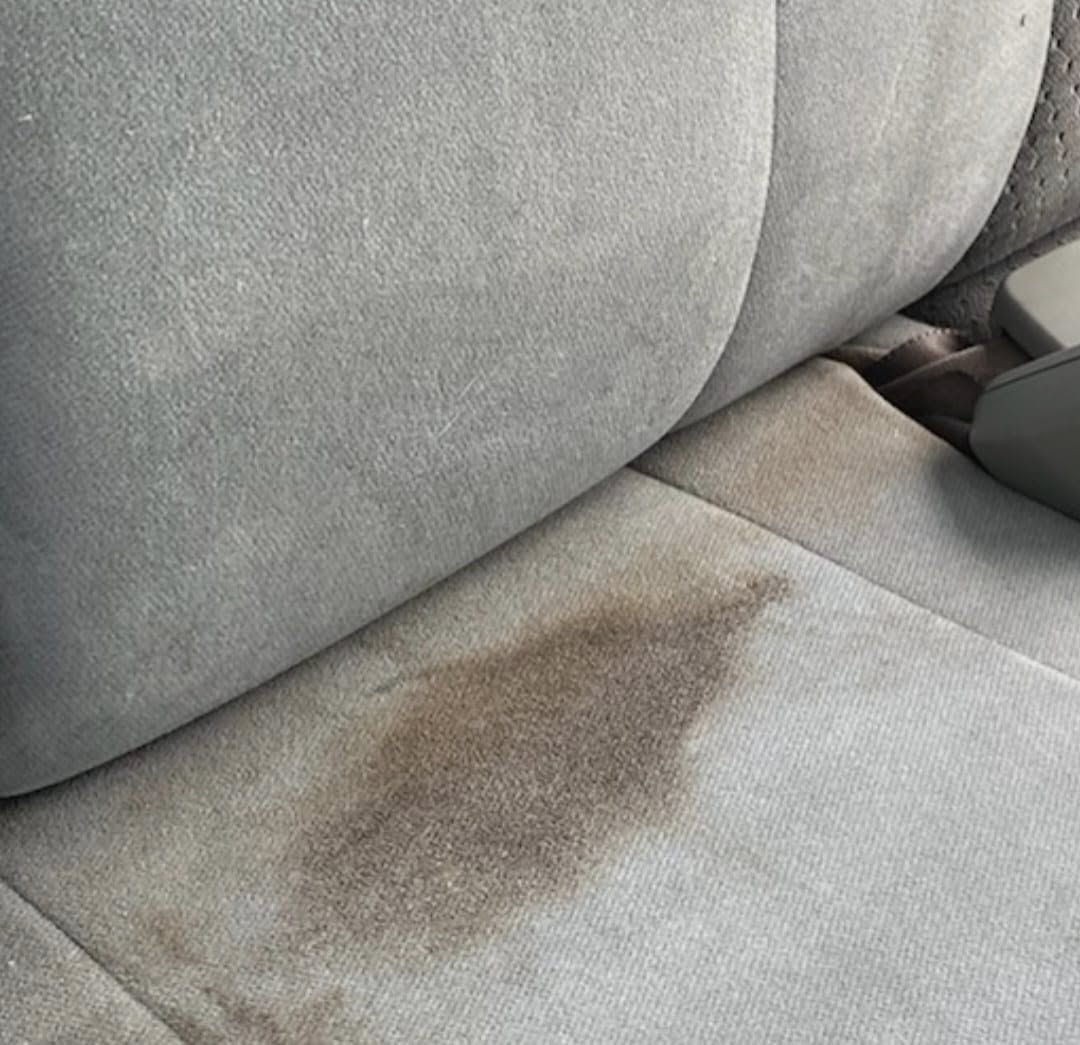
5. Oily Rainbow Sheen Embedded in Seat Fabric
An iridescent sheen embedded in fabric often escapes notice until light hits it just right. This rainbow effect points toward oil or fuel contamination. Unlike simple grease, these substances penetrate deeply, bonding with fibers and foam. The stain may appear subtle at first, spreading gradually with use.
Source identification matters. Fuel system leaks, poor transport of fuel containers, or mechanical failures can introduce hydrocarbons into the cabin. Drivers who carry spare fuel improperly may have soaked seats without realizing the long-term effects. Smell confirms suspicion. Gasoline leaves a sharp, volatile odor that intensifies with heat. Even faint traces raise safety concerns.
Vapors trapped in foam create a persistent fire risk, especially in enclosed spaces. Material damage follows. Oil-based contaminants weaken fabric dyes, causing fading and brittleness. Leather exposed to fuel dries out, cracks, and loses structural integrity. Cleaning rarely removes the problem completely.
Health risks deserve mention. Prolonged exposure to fuel vapors causes headaches and respiratory irritation. Children remain especially vulnerable. Insurance companies often declare such vehicles unsafe without extensive remediation. Addressing this stain requires replacing affected padding and ensuring no active leaks exist.
Costs escalate quickly. Buyers encountering this sheen should question the vehicle’s history carefully and consider a professional evaluation before proceeding.
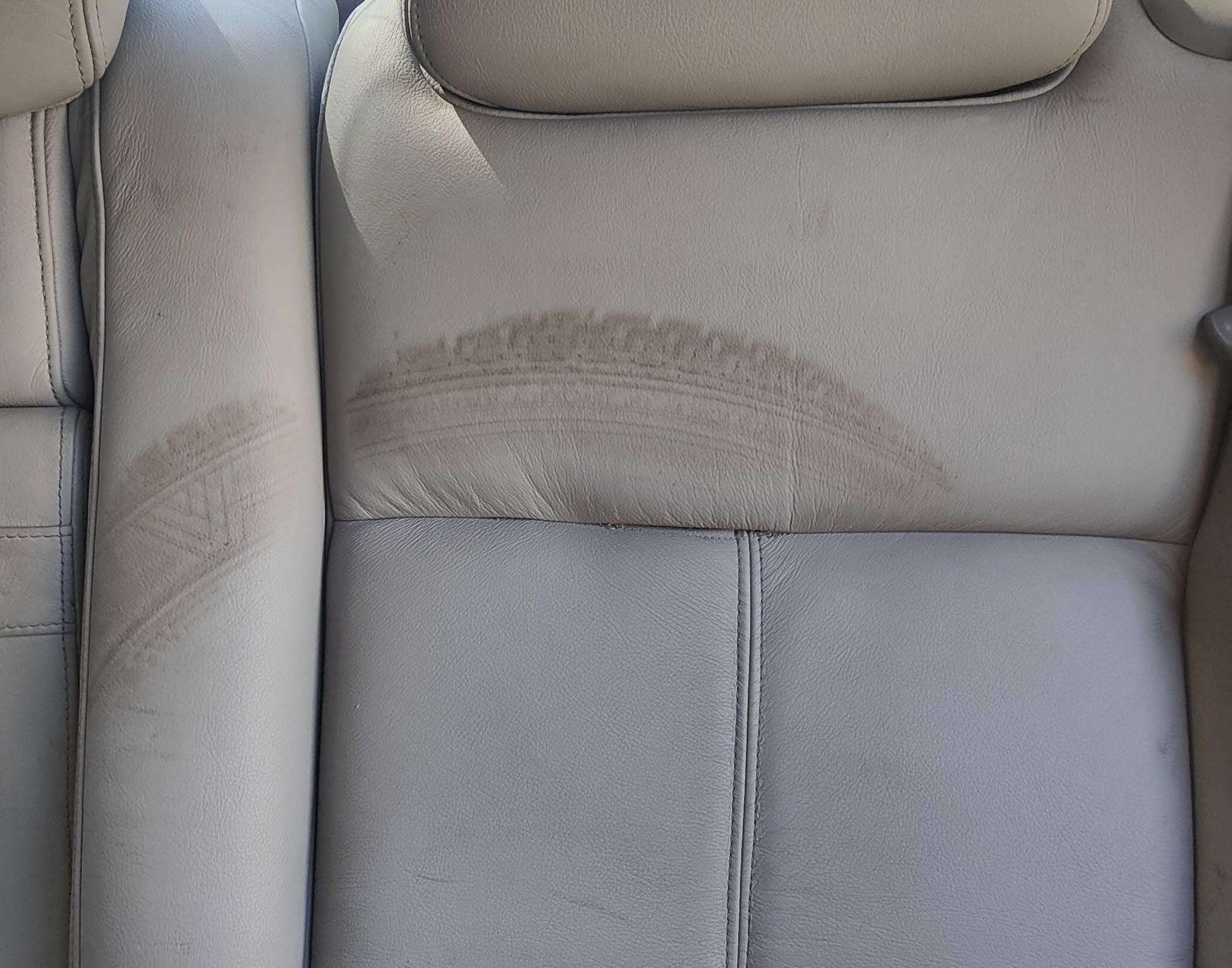
6. Deep Blue or Purple Stains With Uneven Borders
Deep blue or purple discoloration on car seats often signals exposure to dye transfer combined with moisture problems. While denim transfer alone is common, a serious concern begins when color penetration reaches deep into the padding and spreads irregularly beyond normal contact zones. These stains usually appear on light-colored fabric or leather and resist standard cleaning methods.
Pattern recognition matters here. Dye transfer from clothing typically follows predictable shapes, limited to areas of frequent contact. When borders appear uneven, feathered, or creeping outward, liquid involvement is likely. Moisture allows dye molecules to travel beyond the surface, embedding into foam layers. This movement suggests repeated wetting rather than a single incident.
Smell can provide supporting evidence. A faint, damp odor or chemical undertone indicates that moisture carried the dye. Leather may feel tacky or overly soft, while fabric can feel matted. Both textures point toward saturation rather than surface contact. Underlying causes often involve water intrusion through doors, windows, or roof components.
Once padding becomes wet, it acts like a sponge, pulling dye from clothing, seat covers, or previous spills. As time goes on, the stain grows even without new exposure. Long-term implications extend beyond appearance. Moisture trapped in padding creates conditions favorable for mold growth, even if no visible spores appear.
Odors intensify during warm weather, and air quality inside the cabin declines. Electrical components beneath seats may also suffer corrosion. Repair options remain limited. Deep dye saturation rarely responds to cleaning. Upholstery replacement or foam removal becomes the only lasting solution. Costs rise quickly, especially in vehicles with integrated airbags or sensors within seats.
Buyers encountering these stains should ask about water exposure and interior repairs. Absence of clear explanations raises risk. What looks like cosmetic discoloration often reflects unresolved moisture issues that continue to affect the vehicle long after purchase.
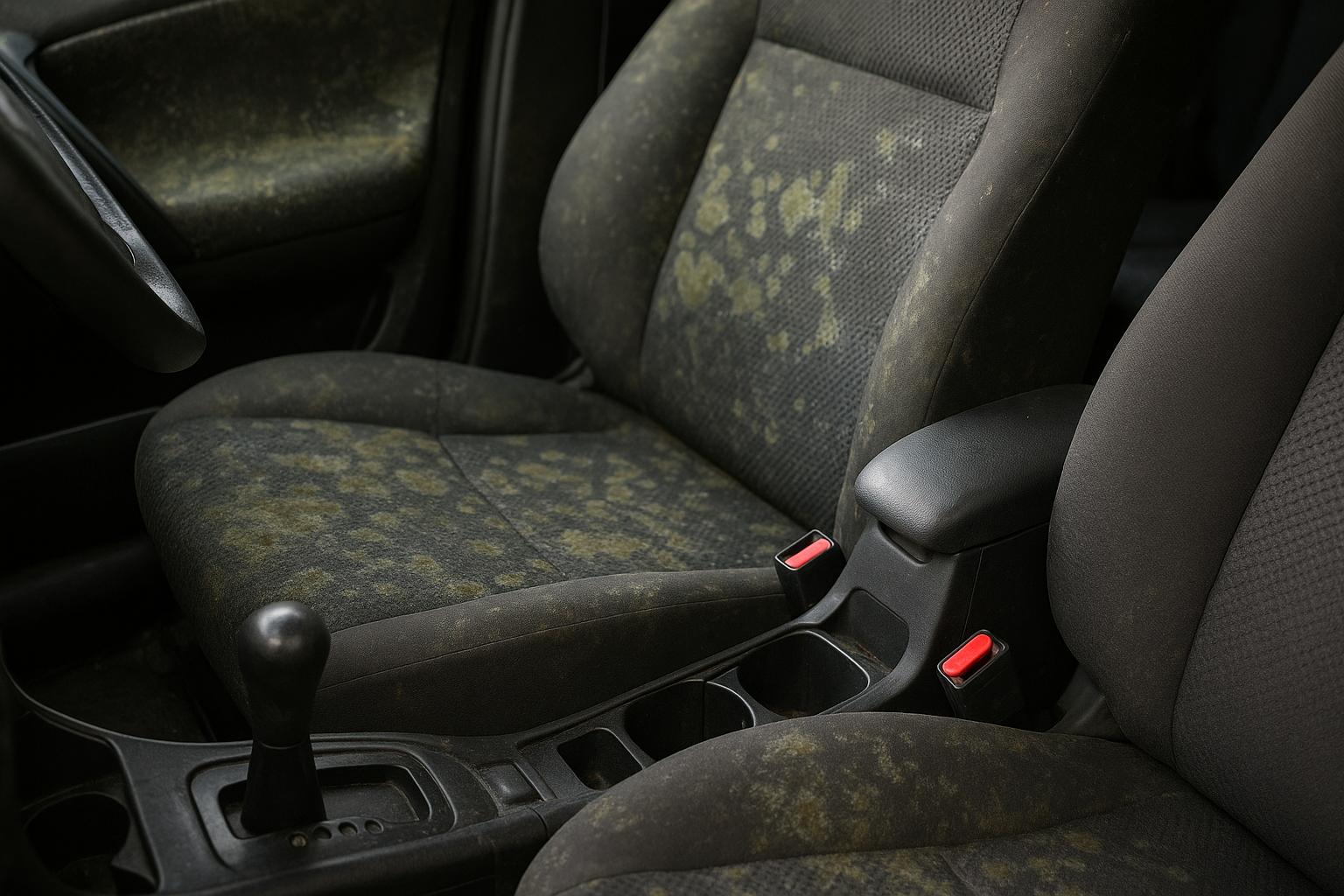
7. Black Mold-Like Spots That Reappear After Cleaning
Small black or dark green spots clustered on the seat fabric often indicate mold activity rather than dirt. These marks may disappear briefly after cleaning, only to return within days or weeks. Reappearance confirms active growth rather than residue. Distribution offers clues. Mold tends to form in shaded, low-airflow areas such as seat backs, lower cushions, and rear seating zones.
Spots may vary in size, forming clusters rather than uniform patterns. Texture feels slightly fuzzy or grainy when dry. Odor strengthens suspicion. A musty smell that intensifies after rain or overnight parking suggests active spores. Air conditioning use may temporarily mask it, yet humidity brings it back.
Source tracing becomes essential. Mold requires moisture, meaning water intrusion exists somewhere in the vehicle. Leaking seals, clogged drains, or past flood exposure often sit at the root. Cleaning surfaces without addressing moisture allows regrowth. Health considerations add urgency.
Mold spores affect respiratory health, especially for children or individuals with allergies. Long-term exposure inside a closed cabin poses risks that outweigh cosmetic concerns. Remediation involves more than upholstery cleaning. Seats often require removal, foam replacement, and thorough drying of the interior structure. In severe cases, professional mold treatment becomes necessary. Costs escalate quickly.
Buyers should approach such stains cautiously. Even if cleaned before sale, recurrence indicates unresolved conditions. Without proof of comprehensive remediation, walking away often proves wiser than inheriting an ongoing health and maintenance problem.
8. Sticky Residue With Dark Rings Around the Stain
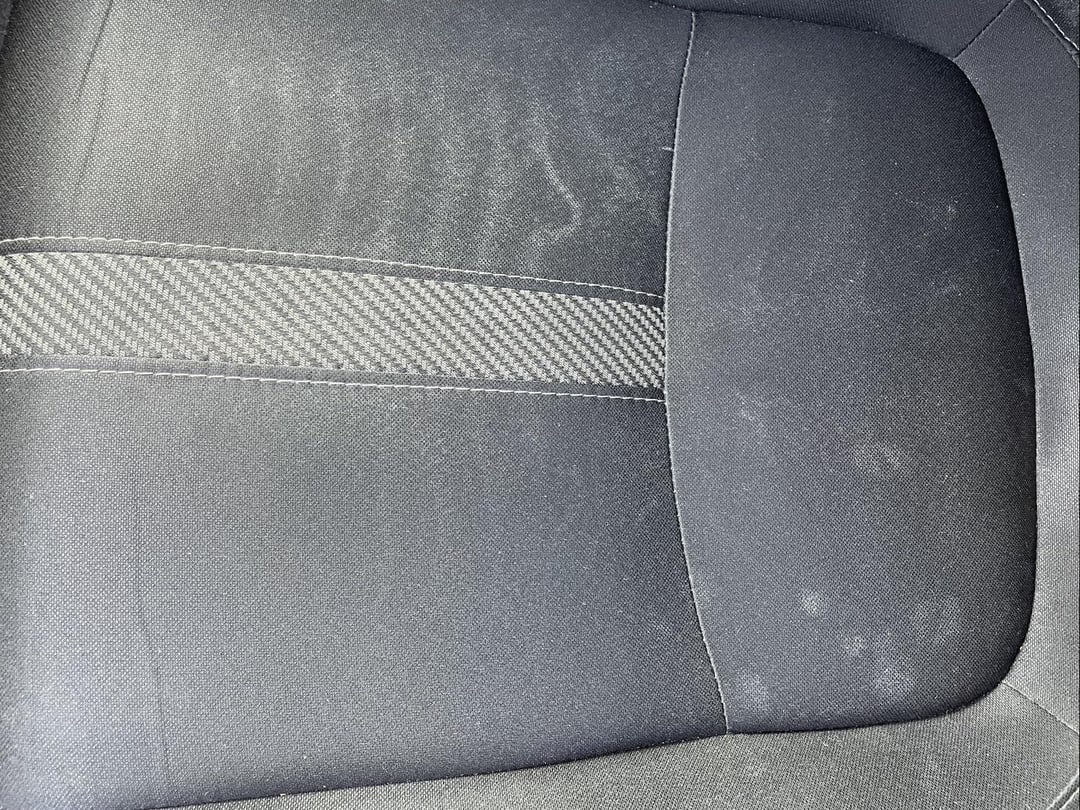
Sticky patches surrounded by darker circular marks usually point to sugary drinks or flavored liquids that have soaked into seat layers. Drinks like soda, juice, and energy beverages tend to seep past surface fabric quickly, reaching foam padding where cleanup becomes harder. Once this happens, the stain rarely stays uniform. It spreads outward before drying, leaving a ring pattern that becomes more visible with time and use.
A closer inspection often reveals texture changes. Running fingers across the affected area may produce a slight tacky feel, even after surface wiping. Fabric fibers can stiffen due to dried sugar crystals settling within the weave. In leather seats, the finish may appear uneven, with glossy patches forming where liquid sat longer. These surface differences suggest more than a simple spill.
Ring formation follows a predictable process. Liquid travels outward from the point of contact, carrying dyes and sugars with it. The center dries faster, leaving heavier residue at the edges. That process produces a halo effect that remains visible even after light cleaning attempts. This pattern usually signals that the spill was not treated immediately or thoroughly.
Deeper concerns begin beneath the surface. Sugary residues attract moisture and can encourage microbial activity inside the seat foam. This leads to recurring odors, especially in warm weather or after long parking periods in the sunlight. Foam breakdown may also occur gradually, reducing cushioning and altering seat comfort. What appears as a cosmetic stain can hint at structural wear beneath.
Ownership habits come into question when these stains appear. Frequent, untreated spills suggest limited attention to interior upkeep. Vehicles showing this type of residue may also carry similar neglect in hidden areas such as air vents or carpeting. A buyer evaluating such a car often uses seat condition as a proxy for broader care patterns.
Cleaning sticky stains requires more than surface wiping. Professional extraction is usually needed to remove sugars embedded in padding. In some cases, seat foam must be replaced entirely if odor or stickiness persists after treatment. This level of intervention raises cost and time considerations for any potential owner.
A sticky stain with dark rings tells a layered story. It reflects not just a spill, but how long it remained untreated and how deeply it penetrated materials. That information often carries more weight than appearance alone suggests.
9. Greenish Stains Near Seat Seams or Floor Contact Points
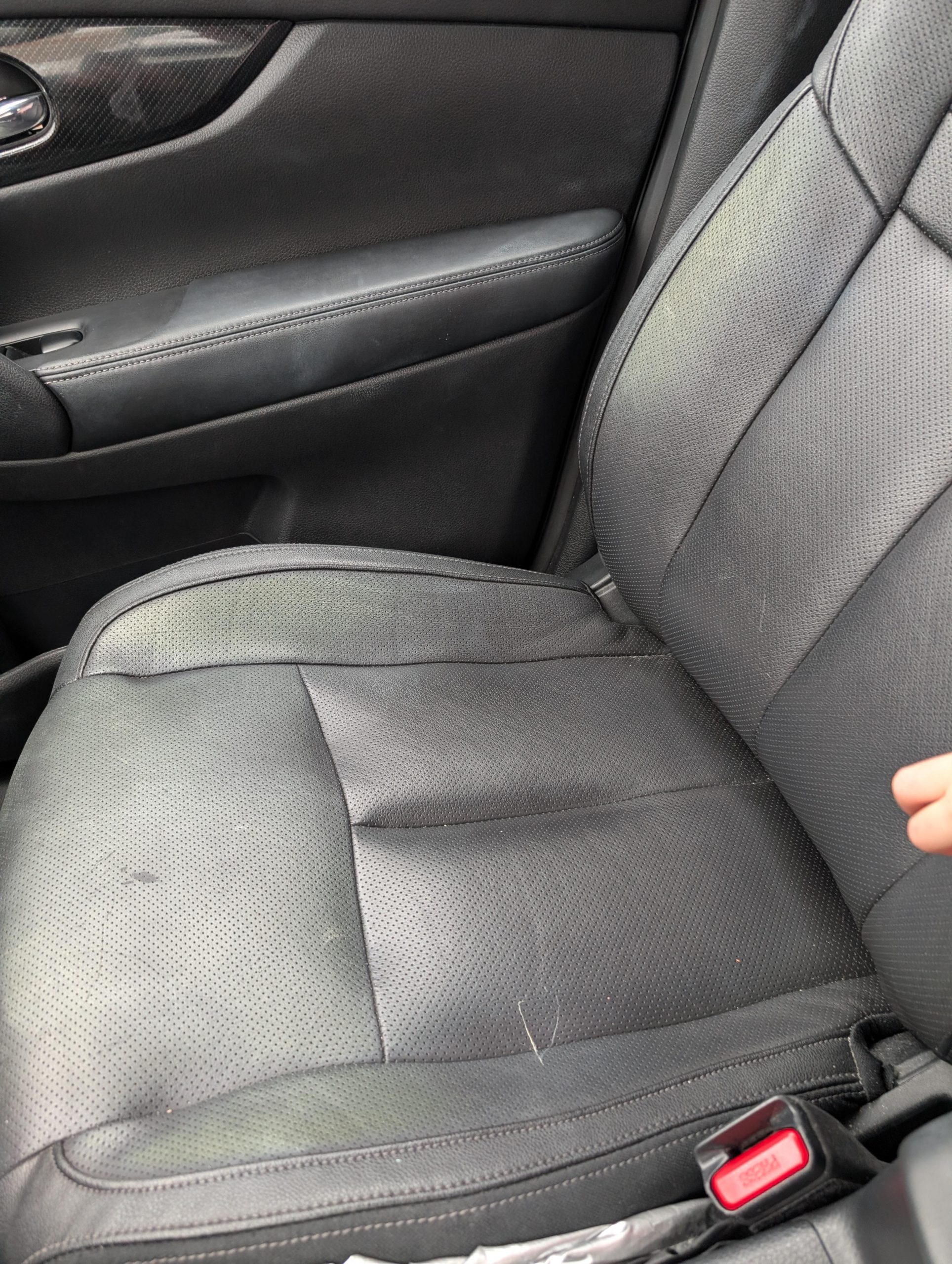
Green-tinted discoloration appearing along seat seams or where cushions meet the floor often signals exposure to coolant or corrosion-related fluids. These stains tend to develop slowly, creeping along stitching lines or fabric folds where liquid naturally collects. At first glance, they may appear faint, but they often expand with continued exposure or residual leakage.
Coolant fluid contains chemical additives that leave behind green, teal, or bluish residue when dried. A common source inside vehicles is heater core leakage. Even a minor failure can release vapors or small fluid amounts into the cabin, which then settle into low-lying areas such as seat rails and seam junctions.
Texture around affected areas can feel slightly different. While not always oily, the fabric may feel damp or uneven due to repeated exposure. Odor becomes an important indicator. A faint, sweet chemical smell inside the cabin often accompanies coolant-related stains. Window fogging or unexplained coolant level drops may appear alongside these signs during driving.
Mechanical concerns associated with these stains extend beyond upholstery. Heater core repairs typically require dashboard disassembly, making labor costs high and repair time extensive. Continued leakage may damage surrounding wiring, foam padding, and floor insulation materials. These secondary effects can spread well beyond the initial stain area.
Inspection of the surrounding areas becomes necessary when greenish stains are present. Carpets beneath the seat, air vents, and coolant reservoir levels should be checked. During a test drive, temperature consistency and heater function should also be evaluated, as irregular heating can align with coolant system faults.
Repair approaches depend on severity. Minor cases may involve sealing small leaks and deep cleaning interior surfaces. Larger issues often require heater core replacement, which involves labor due to dashboard access requirements. Ignoring the stain may allow further deterioration of both interior materials and cooling system reliability.
A green stain near seams is rarely a surface-only problem. It often points to internal leakage that has found its way into cabin materials. That makes it one of the more serious indicators a used vehicle can present, especially when paired with odor or coolant loss.
Also Read: 8 Tips for Finding Local Classic Car Meets in Your Area
10. Burn Marks or Melted Fabric With Dark Edges
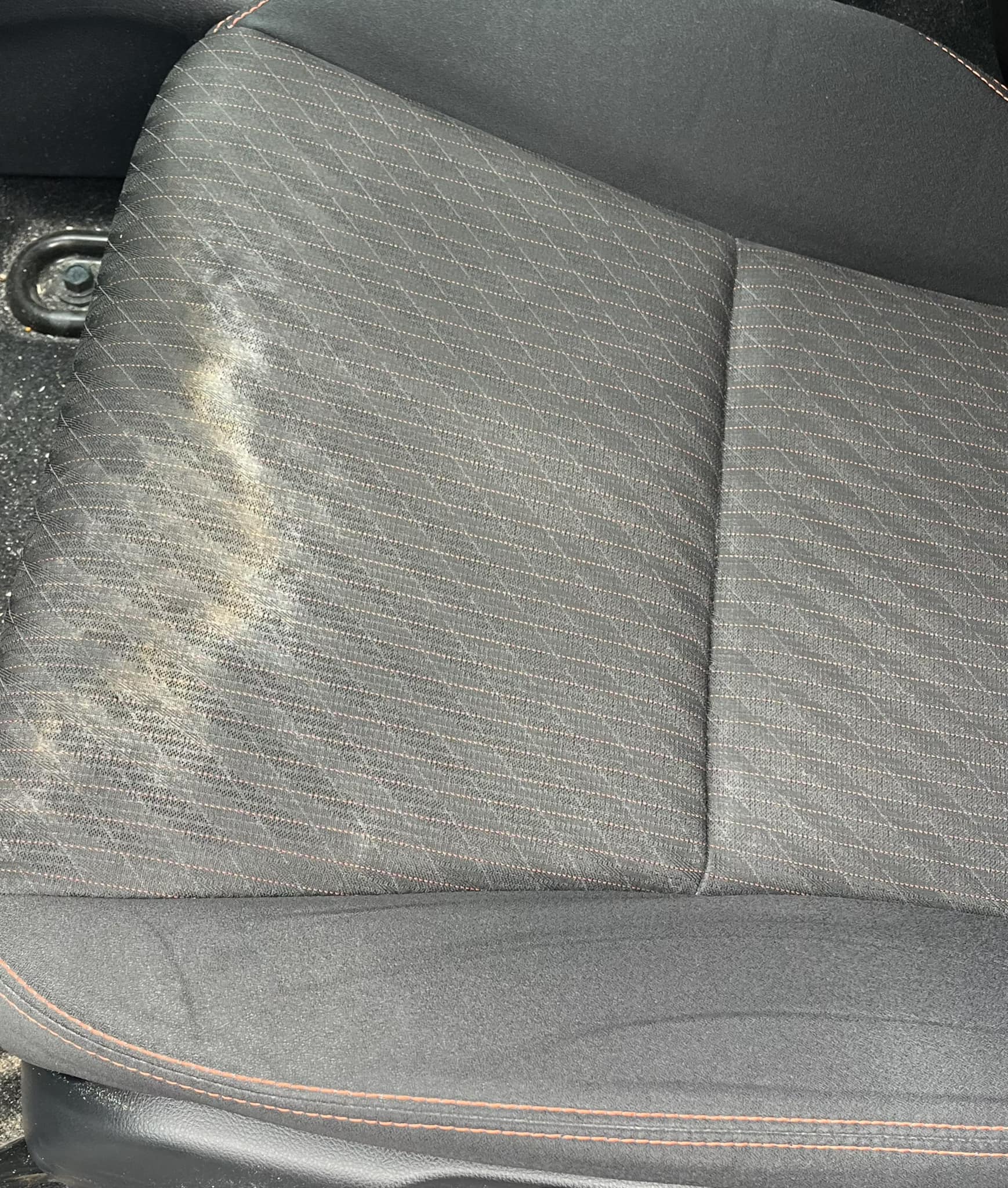
Burn damage on a seat surface usually comes from direct heat exposure, such as cigarette contact, dropped ash, or hot objects resting briefly on upholstery. These marks appear as darkened spots with hardened or melted fibers around the edges. Even small burns can reveal deeper material weakening beneath the surface layer.
Surface inspection often shows more than one layer of damage. Fabric burns may leave exposed foam beneath, while leather seats can develop hardened, brittle patches that lose flexibility. The edges of these marks tend to darken further due to heat concentration during the burning process. That boundary often expands slightly with continued use.
Smell tends to linger long after visible cleaning. Burnt odors can reappear when cabin temperature rises, especially under direct sunlight. This persistent scent suggests that fibers beneath the surface absorbed smoke or heat residue that surface treatment cannot fully remove.
Electrical faults can also produce similar burn patterns. Faulty seat heaters or wiring issues may generate localized overheating. These cases differ from cigarette burns because damage may appear in irregular patterns or areas not easily reached by handheld heat sources. Electrical origin raises safety concerns beyond cosmetic repair.
Repeated burn marks often reflect user behavior patterns. Multiple small burns scattered across one seat typically indicate habitual smoking inside the vehicle. That habit increases long-term wear across interior materials and may also affect air quality components such as filters and ventilation ducts.
Repair options vary depending on severity. Small burns in fabric seats can sometimes be patched or reupholstered. Leather damage may require panel replacement to restore uniform appearance. Electrical causes demand diagnostic testing before any cosmetic repair takes place to prevent recurrence.
Burn marks reveal more than surface damage. They often point toward either repeated habits or underlying electrical faults. Both conditions influence long-term vehicle condition, making these stains an important factor during used car inspection.
