
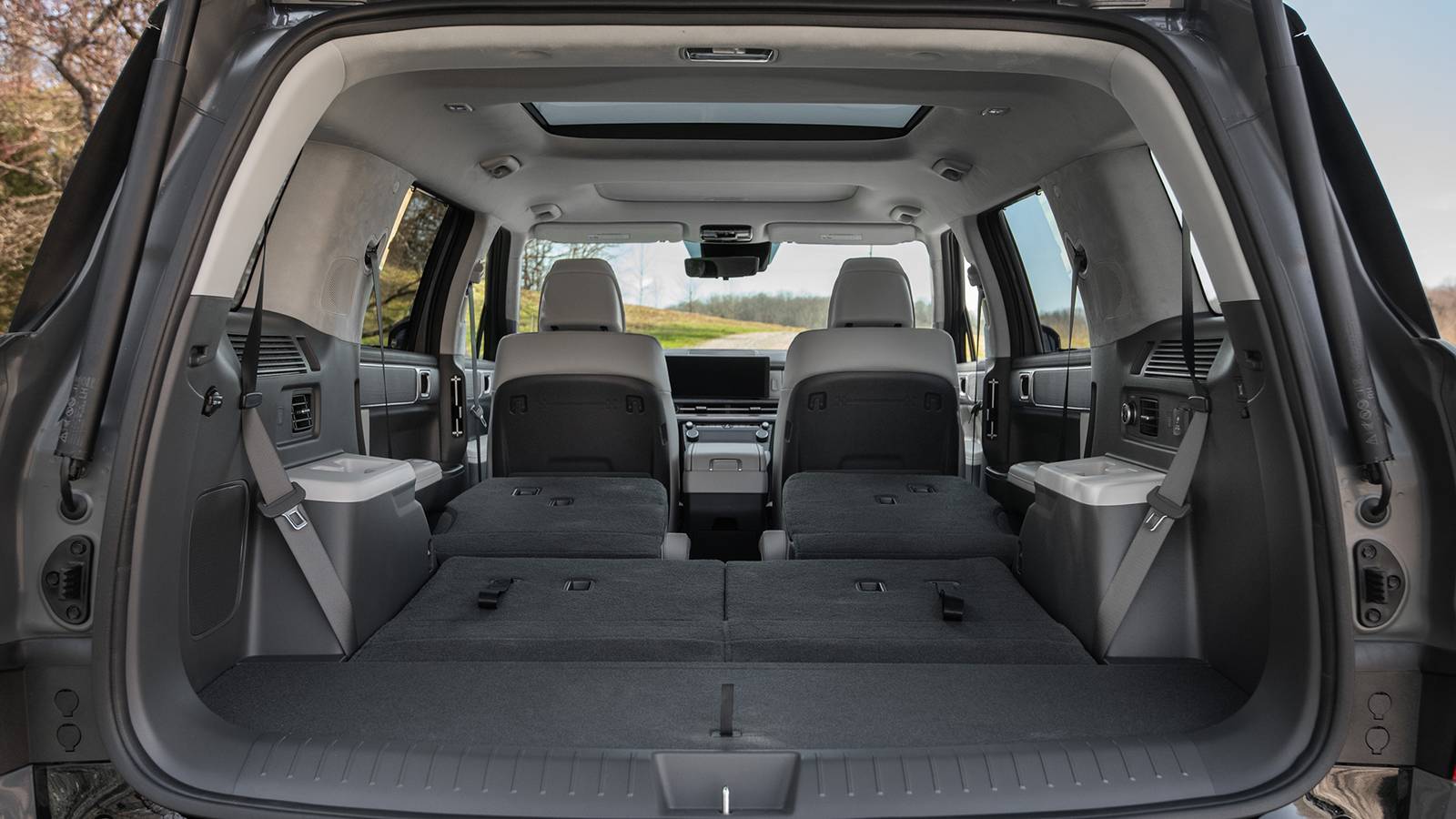
Long before horsepower figures or touchscreen size enter the discussion, interior flexibility shapes how useful a crossover feels in daily life. Weekend projects, spontaneous road trips, bulky shopping runs, and moving day favors all depend on how well a vehicle adapts when passenger space turns into cargo room. Fold flat rear seats promise versatility, yet many vehicles fail to deliver a truly level surface once those seats drop.
Shoppers often assume that folding seats automatically create a smooth load floor. Reality tells a different story. Seat backs sometimes stop short of full extension, cargo floors sit too high, or hinges create awkward angles that complicate loading. Anyone who has tried sliding a bicycle, dresser, or stack of storage bins into a tilted cargo area knows the frustration that follows.
Manufacturers now understand that buyers want cargo areas that behave like clean, open platforms rather than stepped surfaces. A flat load floor allows items to slide easily, stack evenly, and rest securely without awkward gaps. Families appreciate it during travel. Outdoor enthusiasts rely on it for gear. Even everyday errands become simpler when cargo space works without compromise.
This page focuses on crossovers that deliver what the specification sheet promises. Each model listed here offers rear seats that fold down into a genuinely flat surface rather than an angled approximation. Design choices, seat engineering, and floor layout all play a role in achieving that result.
1. Honda CR-V EX-L
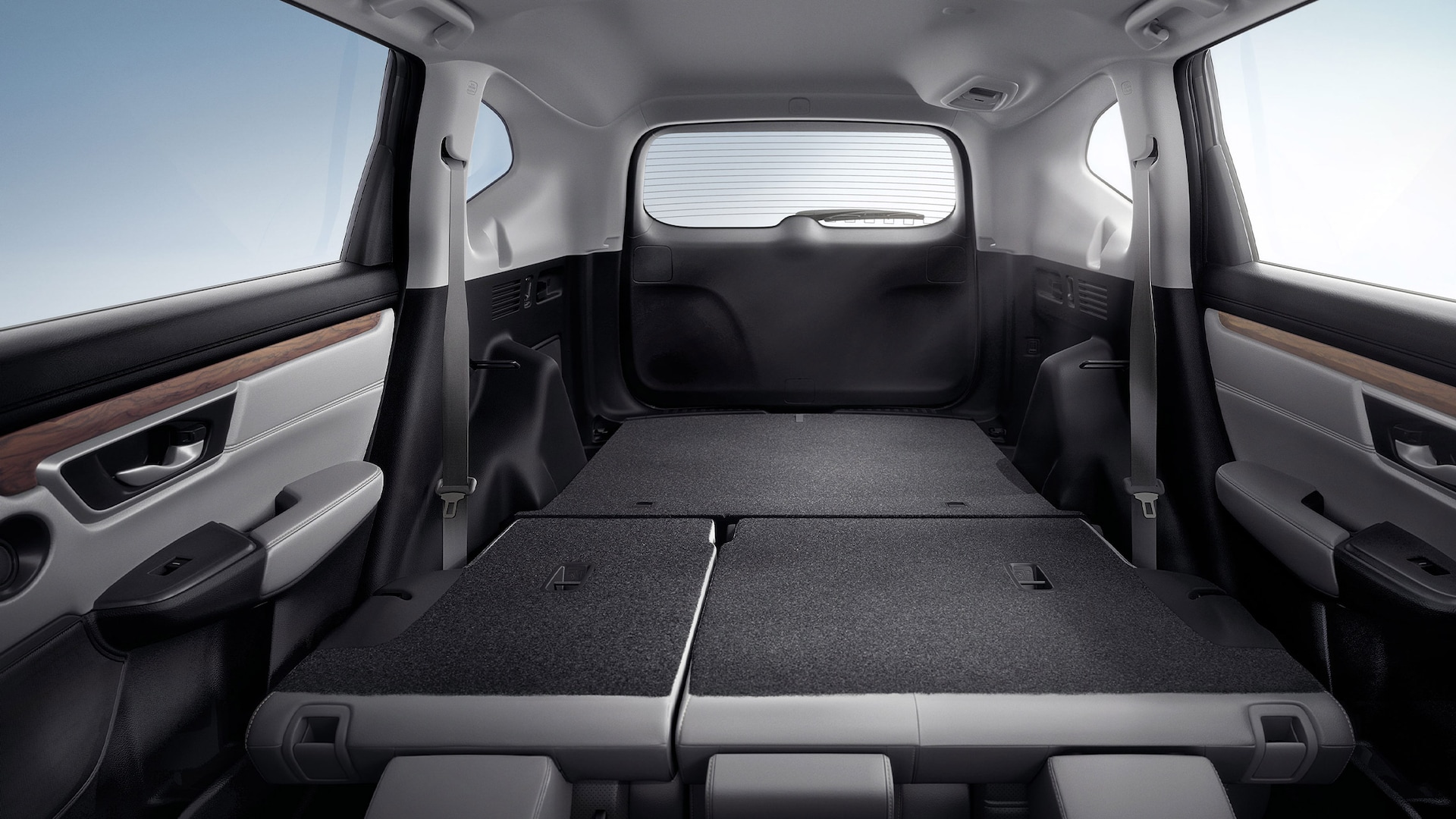
Versatility defines the Honda CR-V EX-L the moment its rear seating transitions into cargo mode. Rather than leaving a raised angle or uneven step between seatbacks and the floor, Honda engineers designed a layout that settles into a level surface that feels carefully measured.
Attention went into hinge placement, seat cushioning density, and floor alignment so that once the seats are lowered, the result supports practical use without requiring repositioning or additional adjustments. Engagement with the folding system starts through a release handle placed near the rear doors. A single pull activates the mechanism, allowing both seatbacks to move forward in a controlled motion.
As they settle, they align closely with the cargo floor, producing a continuous surface that supports a wide range of items. Suitcases, boxed goods, camping equipment, and furniture pieces sit with stability, avoiding the rocking motion that often appears in less carefully designed crossovers.
Loading convenience benefits from a low cargo floor position. That reduced height lessens strain when lifting heavier objects into the rear area, which becomes especially useful for frequent hauling tasks. Whether handling grocery runs, athletic equipment, or work-related materials, the loading process feels straightforward.
During travel situations, the flat area can also support temporary sleeping arrangements, a feature often used by drivers who spend extended time on road trips or outdoor activities. Interior durability plays a direct role in maintaining this usability. The cargo zone uses reinforced textured surfaces designed to resist scuffs and abrasions from repeated loading.
Seatbacks remain firm when folded, avoiding the sagging effect that can disrupt even weight distribution. This structural firmness allows items to rest securely without creating pressure points that might damage interior materials. Practical design thinking extends into anchoring and access.
Tie-down points are placed at measured intervals along the cargo edges, allowing straps to secure items without awkward angles or interference. Rear door openings provide wide access, making it easier to load bulky objects without tilting or forcing them through narrow gaps. The flat surface supports smooth sliding motion, reducing effort when positioning heavier loads deeper into the cargo area.
Passenger comfort remains unaffected when the rear seats return to upright use. Cushioning, legroom, and seating posture stay consistent with everyday expectations, ensuring that utility does not interfere with daily driving comfort. Cabin quietness and ride stability remain steady whether the cargo area is empty or fully used.
This balance between comfort and practicality demonstrates how the CR V EX L treats fold-flat seating as a functional engineering decision rather than a marketing feature. The system responds quickly to changing needs, supporting both routine commuting and more demanding hauling situations without requiring effort from the driver.
2. Subaru Forester Touring
Subaru’s approach to interior practicality inside the Forester Touring reflects a design philosophy centered on predictable usability rather than decorative presentation. Cargo flexibility is treated as a structural requirement, and the rear seating system demonstrates this thinking through its ability to create a level load surface that supports real transportation needs.
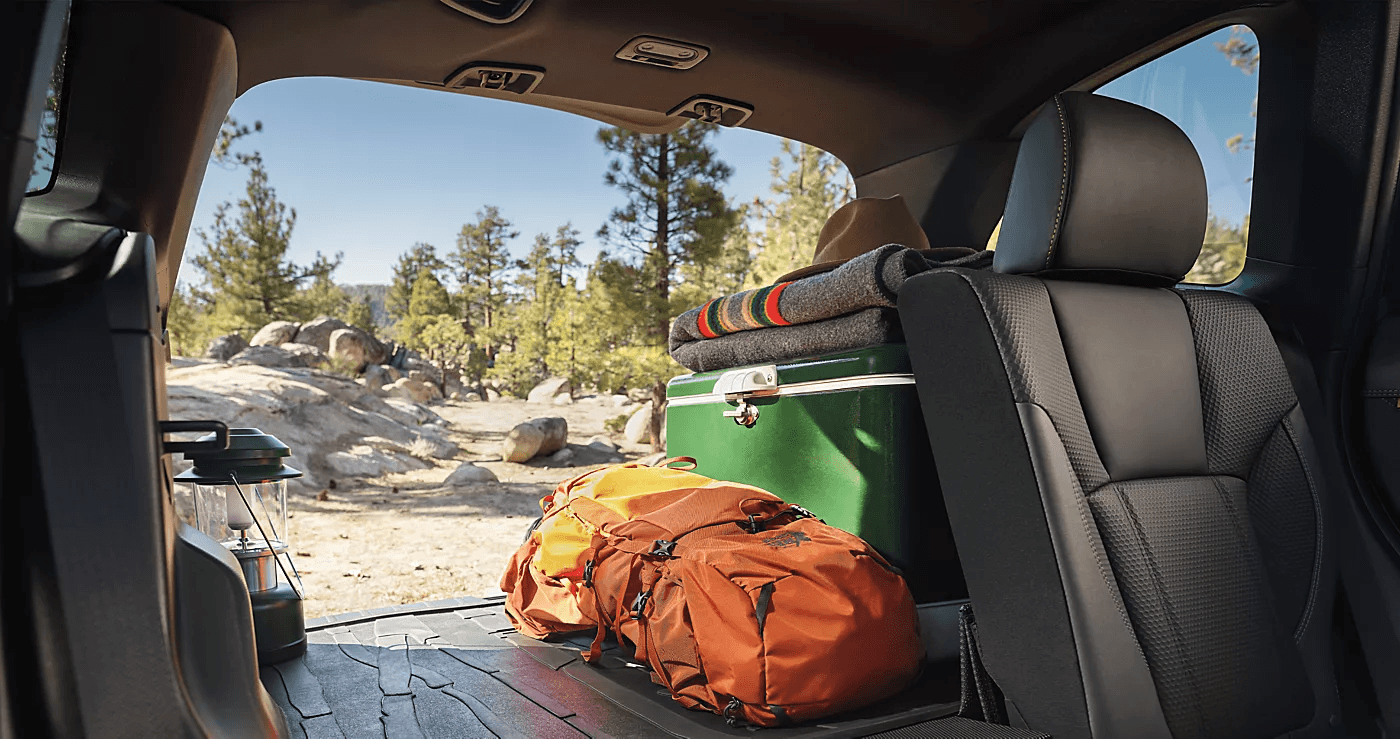
When the rear seats are folded, alignment with the cargo floor remains consistent, forming a continuous area that accommodates varied cargo types without irregular angles or interruptions. Operation of the folding system is direct and efficient. Release points positioned within reach of the cargo opening allow the seatbacks to move forward with controlled motion.
The mechanism avoids abrupt movement, which helps preserve interior materials and ensures that the seatbacks settle into a position that aligns properly with the floor surface. Once positioned, the result is a uniform platform that extends from the tailgate toward the front seating area.
Cargo access benefits from a low loading height. This reduces physical effort during lifting, particularly when handling heavy or bulky items. Equipment such as camping gear, tools, or packaged goods can be placed into the cargo area without requiring awkward lifting angles. Stability improves during transport because the flat surface reduces shifting during acceleration or braking.
Material selection supports long-term durability. Seatback surfaces are reinforced to resist indentation, even under repeated pressure. The cargo floor remains firm, avoiding deformation that could disrupt alignment. Surface textures are selected to provide grip where needed while still allowing smooth placement of cargo items.
Interior width is preserved effectively due to controlled wheel well intrusion. This allows the cargo area to maintain a rectangular usable shape, which simplifies loading arrangements. Long objects rest evenly without requiring diagonal positioning. This practical layout benefits users who regularly transport elongated or bulky items.
Passenger comfort remains fully intact when the seats are returned to the upright position. Cushioning and support remain consistent, allowing the Forester Touring to serve as a daily transport vehicle without compromise. Ride quality is maintained regardless of cargo configuration, reflecting Subaru’s balanced approach to interior design.
The Forester Touring demonstrates that thoughtful engineering can produce a cargo system that performs reliably in varied conditions. Its flat folding capability provides dependable utility for drivers who require consistent functionality across both everyday travel and task-oriented use.
Also Read: 9 Family Crossovers With Third Rows Adults Can Actually Sit In In 2026
3. Toyota RAV4 Limited
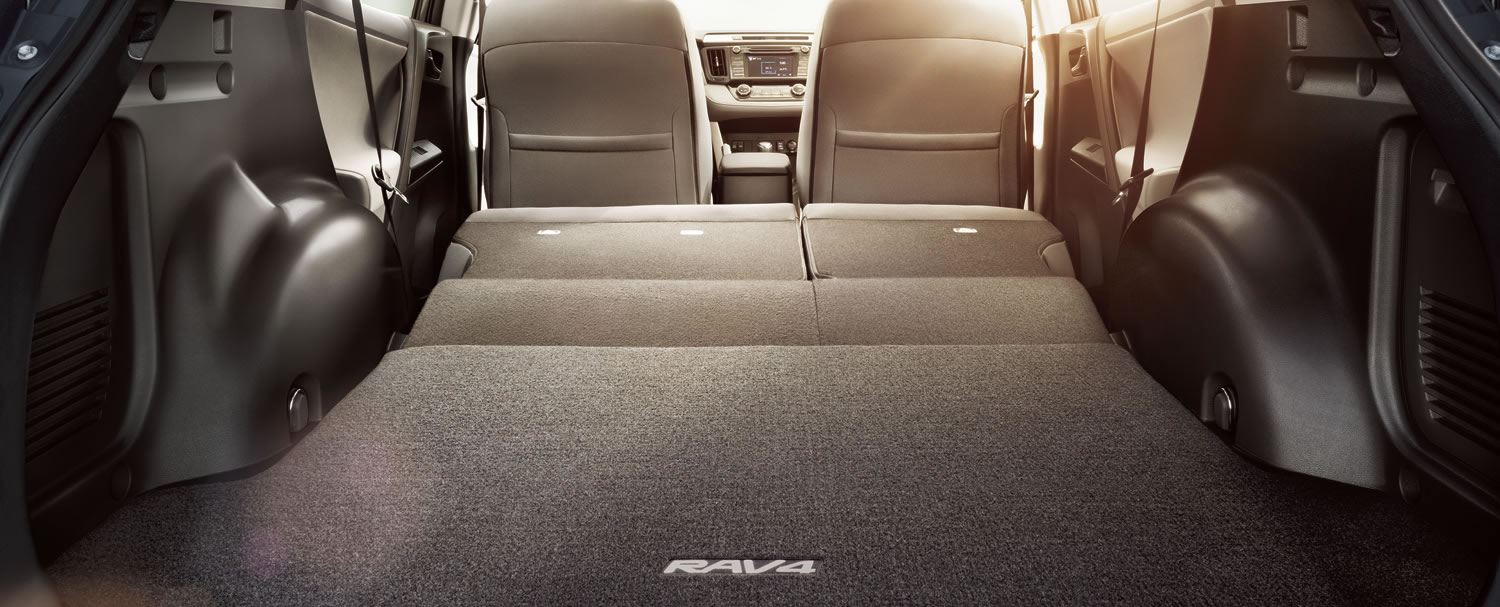
Toyota’s execution of cargo functionality in the RAV4 Limited reflects a structured design approach focused on precision and repeatable usability. The rear seat system folds in a controlled manner, allowing the seatbacks to settle into alignment with the cargo floor. This alignment produces a flat surface that supports stable cargo placement without uneven steps or raised sections.
Seat operation is designed for convenience. Release mechanisms located near the rear seating area allow quick activation without requiring repositioning of the driver or extensive effort. Once engaged, the seats move forward smoothly and settle into a position that aligns cleanly with the load floor.
Cargo floor construction plays an important role in achieving flatness. The floor height is calibrated to match the folded seatbacks, producing a continuous surface that extends from the rear opening forward. This allows items to be placed securely without rolling or shifting during movement.
Durability is reinforced through structural engineering. Seatback frames are built to resist deformation under repeated use, maintaining shape integrity even when subjected to weight. Flooring materials are selected for resistance to wear, ensuring that long-term use does not compromise surface uniformity.
Practical cargo management features are integrated into the layout. Tie-down points are positioned along accessible areas of the cargo space, allowing secure fastening of items without creating uneven tension angles. This improves load stability during travel.
Interior refinement remains unaffected by cargo functionality. Cabin quietness and ride stability are preserved whether the rear seats are upright or folded. Passenger comfort remains consistent, ensuring that the vehicle maintains usability for both daily commuting and cargo transport.
Toyota’s approach in the RAV4 Limited demonstrates a careful balance between practicality and refinement. The flat folding rear seat system provides reliable utility that supports real-world usage without requiring compromise from occupants or drivers.
4. Kia Sportage X Line
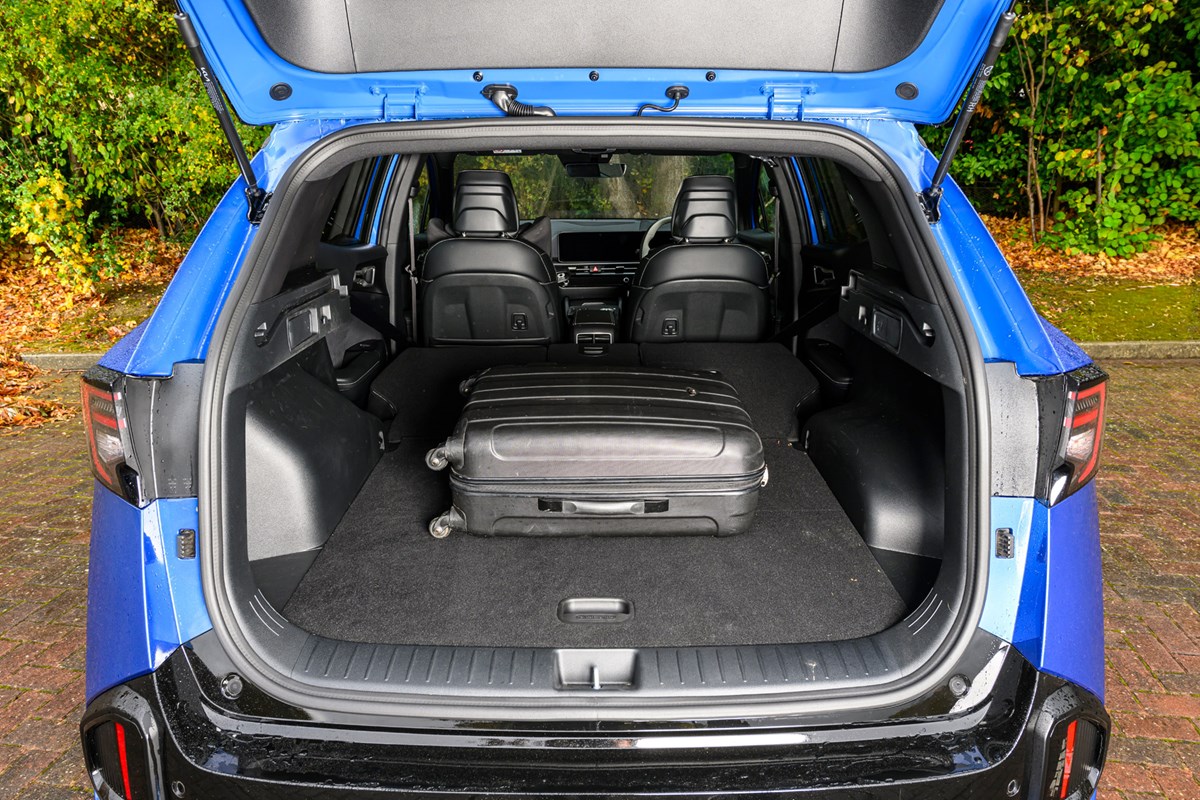
Kia’s Sportage X Line presents a cargo configuration that prioritizes usability through structured interior design. The rear seat system is engineered to fold into a surface that aligns directly with the cargo floor, creating a flat area suitable for a wide range of transportation needs. This alignment reduces irregularities that typically interfere with loading efficiency in many crossovers.
The seat folding operation is designed for simplicity. Activation points allow the seatbacks to move forward in a controlled motion, settling into a position that aligns evenly with the cargo base. Once fully engaged, the surface forms a continuous plane from the rear opening toward the front of the cabin.
Cargo accessibility benefits from a controlled loading height. This reduces physical strain when placing heavy or bulky items into the vehicle. Stability during travel improves because the flat surface minimizes shifting and uneven weight distribution.
Material durability supports frequent use. Seatback surfaces are constructed to resist wear and maintain structural firmness under repeated loading conditions. Flooring materials retain rigidity, preventing surface distortion that could affect alignment. Protective side surfaces reduce abrasion from cargo contact.
Space efficiency is enhanced through careful interior shaping. Wheel well intrusion is managed to preserve usable width, allowing larger items to be loaded without restriction. This supports practical use cases such as the transport of equipment, luggage, or household goods.
Passenger comfort remains unaffected by cargo functionality. Rear seating maintains adequate support and comfort when returned to the upright position. Cabin refinement is preserved, ensuring that everyday driving remains comfortable regardless of cargo configuration.
The Sportage X Line demonstrates how structured interior design can support practical needs without diminishing passenger experience. Its flat folding rear seat system provides reliable cargo capability that aligns with real usage expectations, offering consistent functionality for a wide range of driving scenarios.
5. Mazda CX-5 Signature
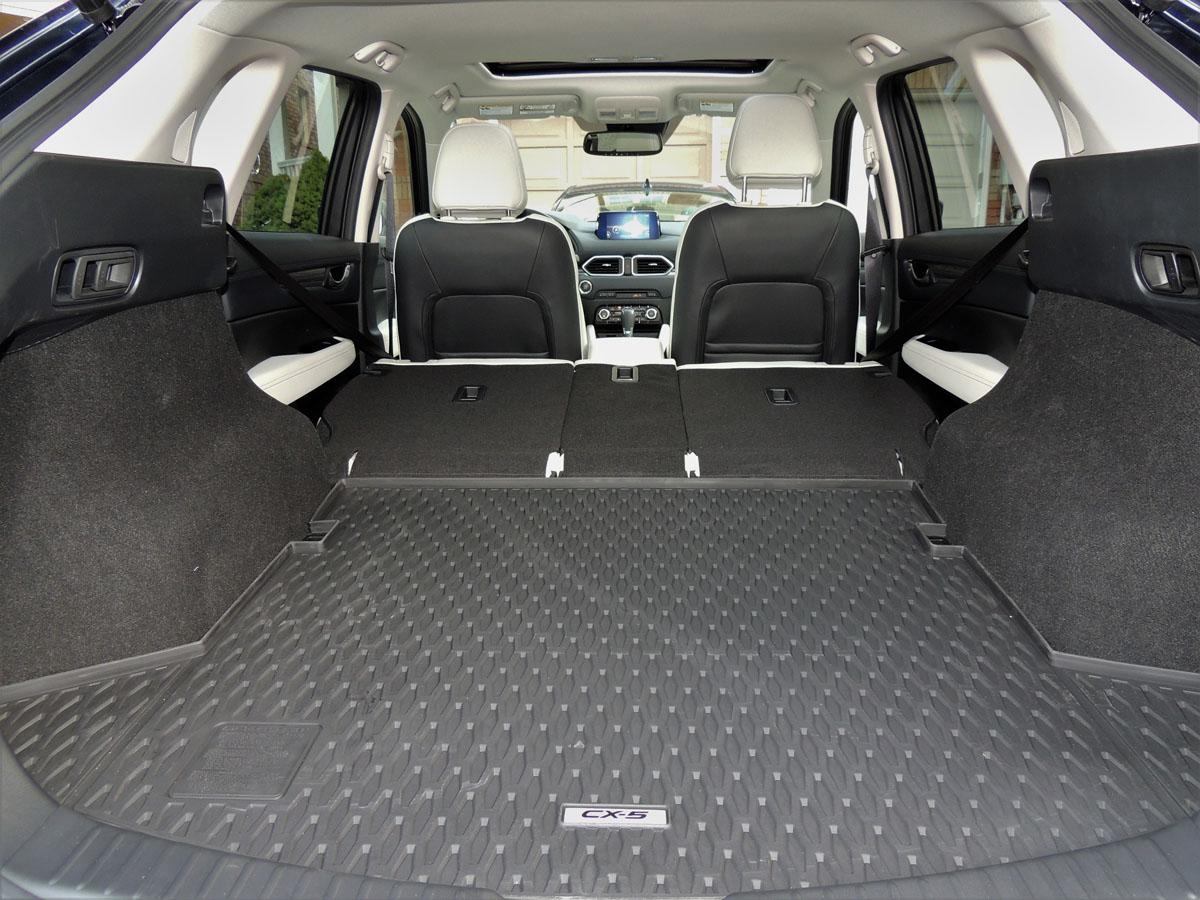
Precision guides the interior philosophy of the Mazda CX-5 Signature, and that same attention appears clearly once the rear seats fold forward. Rather than leaving a raised lip or shallow incline, Mazda designed the cargo area to accept the seatbacks cleanly, producing a surface that behaves like a continuous platform. This result does not happen by coincidence. Engineers shaped the rear floor, hinge points, and seat thickness around a single goal: true flatness during cargo use.
Operation feels intuitive. A simple pull on the seat release allows the backrests to move forward with controlled motion. Once they settle, alignment with the cargo floor feels deliberate. Boxes slide without resistance, long items lie evenly, and stacked loads stay balanced during motion. This design benefits owners who carry photography equipment, musical gear, or household items that demand stability.
Cargo floor height stays modest, which reduces effort during loading. Lifting heavy objects into the CX-5 feels manageable because the opening does not force awkward angles. This advantage becomes especially noticeable during repeated use, such as weekend projects or travel preparation.
Material quality supports repeated transformation between passenger and cargo duty. Seatback panels resist compression and retain firmness, even under sustained weight. Flooring materials maintain their structure, preventing sagging that would otherwise interrupt flatness. Side trim panels remain tight, preventing rattles during highway travel.
Interior width receives careful treatment as well. Wheel well intrusion remains controlled, preserving usable space across the cargo area. Flatness combined with width allows items like bicycles or folded furniture to rest naturally rather than diagonally.
Driving refinement remains intact. Quiet cabin behavior and controlled ride quality persist regardless of seat position. Rear passengers continue to enjoy comfort when seats return upright, which prevents compromise during daily use. Mazda demonstrates that thoughtful packaging creates flexibility without sacrificing design integrity. The CX-5 Signature suits drivers who expect their crossover to serve multiple roles with equal confidence.
6. Hyundai Santa Fe Calligraphy
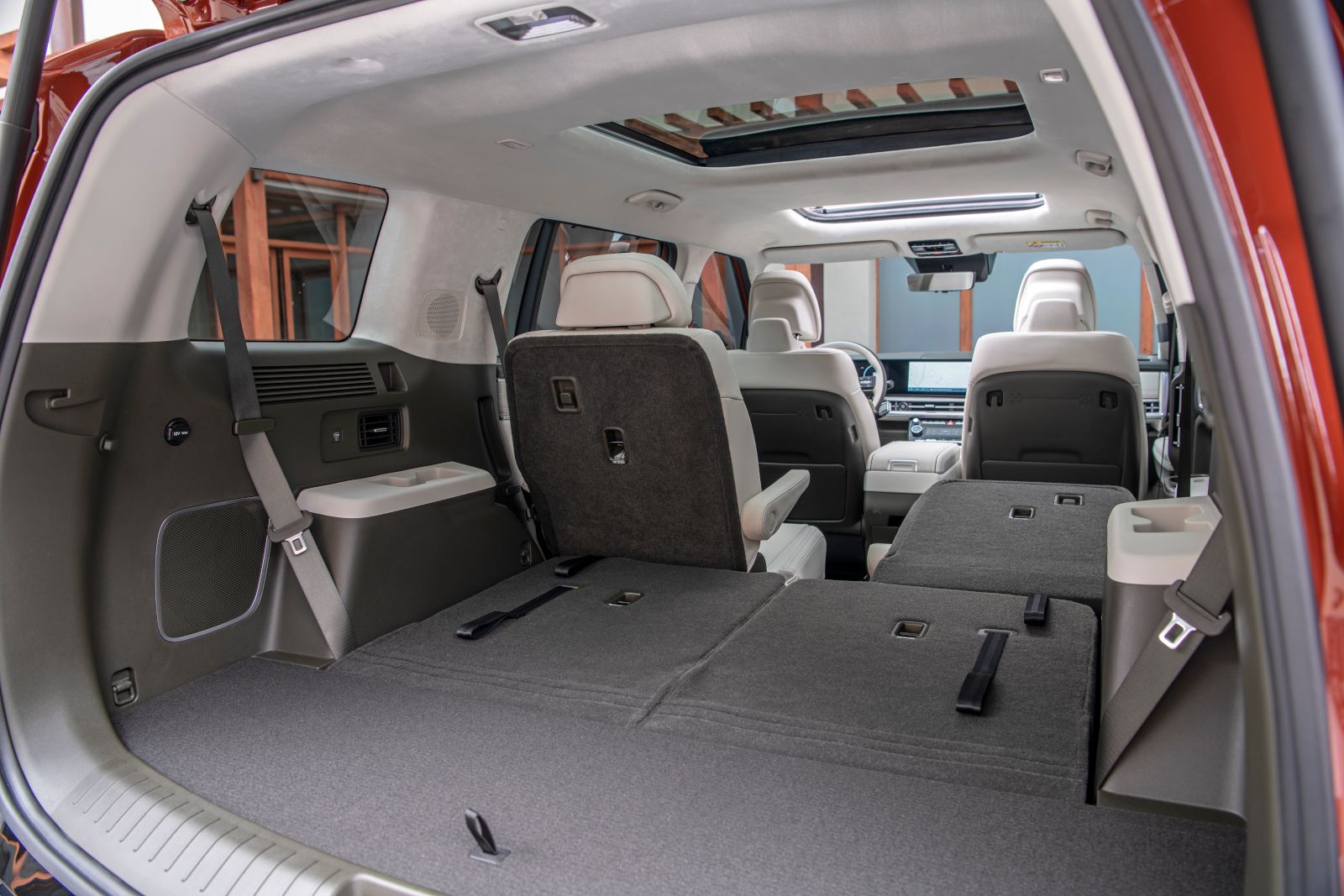
Purpose defines the cargo design inside the Hyundai Santa Fe Calligraphy, where fold-flat seating feels engineered for real use rather than occasional convenience. When the rear seats lower into place, the surface that appears feels intentional, even, and ready for serious hauling. Hyundai invested heavily in seat geometry to ensure that the backrests align directly with the cargo floor without forcing users to adjust panels or remove inserts.
Control levers located within reach make the folding process straightforward. Seats move forward smoothly and settle without bounce or misalignment. This results in a long, uninterrupted floor that stretches deep into the cabin, making it easy to transport furniture, sports equipment, or travel luggage.
Cargo floor height balances accessibility and clearance. Objects lift in and out without strain, while flatness allows loads to rest securely. Stability improves during braking and cornering because the weight is distributed evenly across the surface rather than concentrating at an angle.
Durability stands out through material selection. Seatback surfaces use reinforced coverings that resist denting and compression. Flooring beneath remains firm, avoiding the spongy feel that undermines confidence during heavy loading. Side panels feature protective finishes that reduce visible wear.
Interior proportions add further value. The Santa Fe offers generous width between wheel wells, making full use of the flat floor. Large boxes fit without rotating or shifting, and long cargo remains supported across its length. Comfort does not disappear when flexibility appears. Passenger seating retains proper support, cushioning, and legroom once seats return upright. Climate control airflow remains quiet and consistent regardless of seat position.
Hyundai presents the Santa Fe Calligraphy as a vehicle that respects daily practicality. Flat cargo execution enhances that promise, offering owners a dependable solution for tasks that demand space without frustration. This design approach rewards drivers who expect adaptability without sacrificing refinement.
7. Nissan Rogue Platinum
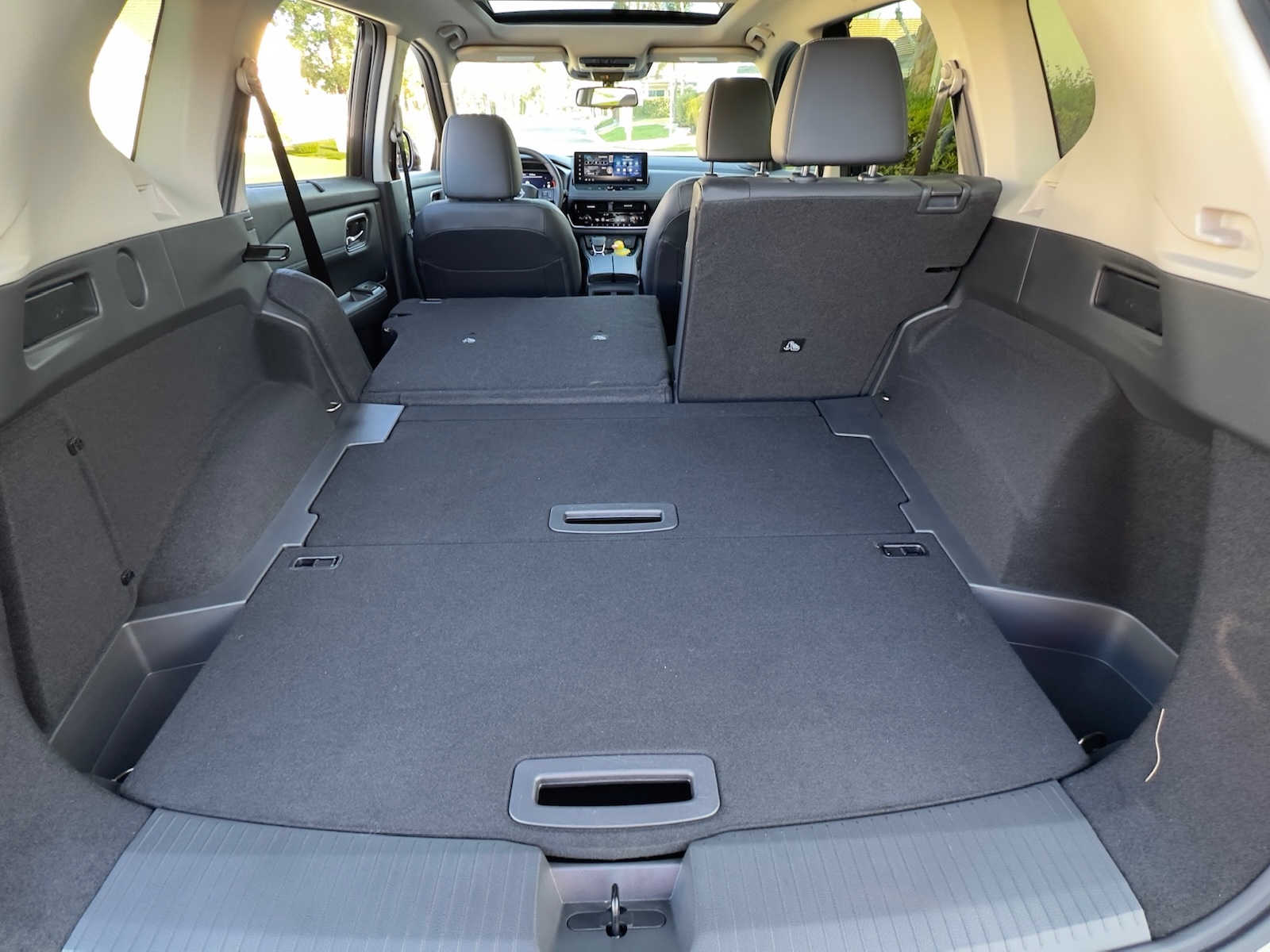
Practical thinking defines the interior arrangement of the Nissan Rogue Platinum, especially in the way the rear seating system transforms into a usable cargo surface. Nissan approached this aspect of design with attention to proportion, alignment, and long-term usability rather than visual impression alone. When the rear seatbacks are folded forward, the resulting surface presents itself as even, dependable, and suitable for carrying items that demand stability during movement.
The folding mechanism operates with a sense of restraint and precision. Release levers positioned within easy reach allow the seatbacks to lower smoothly without sudden drops. This controlled movement protects interior finishes and ensures the seatbacks settle into their intended position.
Once fully lowered, the seatbacks align closely with the cargo floor, reducing the incline that often creates frustration for owners who need to transport boxes, equipment, or personal belongings. Cargo floor height plays an important role in daily convenience. In the Rogue Platinum, the floor remains low enough to reduce strain when lifting heavier items.
This characteristic proves useful during repeated loading activities such as weekly shopping, professional use, or preparation for extended travel. The flat surface allows items to remain in place, limiting the need for constant adjustment while driving.
Durability is evident in the materials used across the cargo area. Seatback panels retain firmness under pressure, resisting deformation even when weight rests on them for extended periods. The cargo floor stays secure, avoiding unwanted movement that could interrupt alignment. Side panels feature smooth finishes without harsh edges, allowing items to slide into position without damage.
Space utilisation receives thoughtful attention. Wheel well intrusion is limited, preserving a generous width that supports larger items. This design allows cargo to sit naturally rather than being angled to fit around obstacles. Long items remain supported across their length, reducing stress points and improving transport safety.
Comfort during normal driving remains consistent. Cabin insulation, suspension tuning, and seating support continue to perform as expected, whether the rear seats are upright or folded. Rear passengers experience proper comfort when seats return to position, ensuring family use remains uncompromised.
The Rogue Platinum presents a clear example of how functional interior planning supports everyday reliability. Its flat folding rear seats offer practical value that aligns with real usage patterns, making it a dependable option for drivers who expect adaptability without inconvenience.
Also Read: 4 Compact Crossovers for Tight Alleys In Pittsburgh vs 4 Wide Luxury Sedans
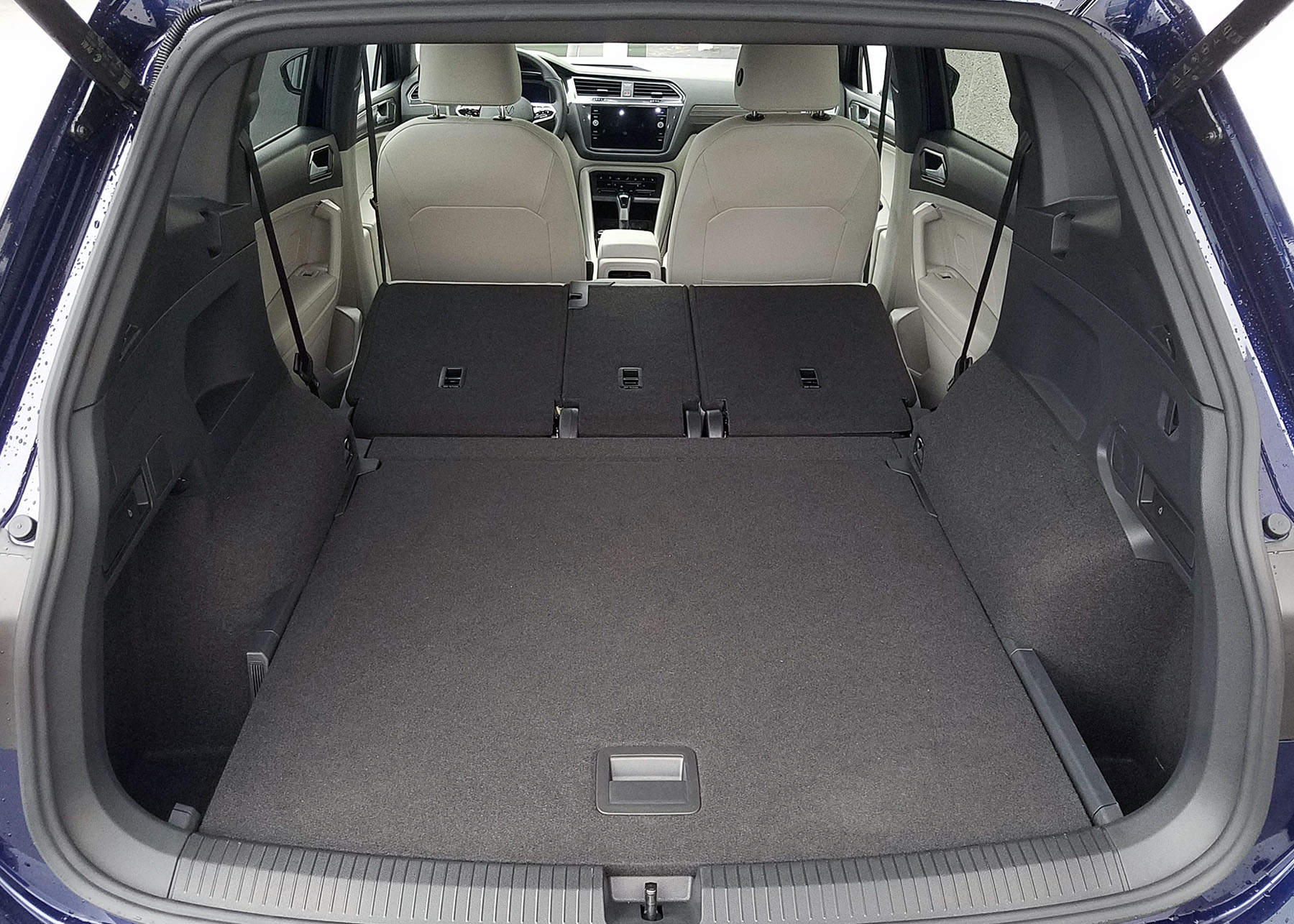
8. Volkswagen Tiguan SEL Premium R-Line
Engineering discipline shapes the interior flexibility of the Volkswagen Tiguan SEL Premium R Line, particularly in the execution of its fold-flat rear seating system. Volkswagen approached the cargo area as a structural element rather than an afterthought, ensuring that transitions between passenger use and load carrying remain seamless and predictable.
Rear seat operation begins with well-placed release points that guide the backrests forward with controlled motion. This measured action prevents unnecessary impact against the cargo floor and maintains the integrity of interior materials. Once the seats settle, alignment with the cargo floor appears intentional, creating a continuous surface that supports heavy or bulky items without imbalance.
Cargo floor panels sit level with the folded seatbacks, eliminating step differences that often interrupt usability. This arrangement simplifies loading and unloading, allowing items to slide smoothly into place. During driving, the flat surface helps prevent movement, even during sudden braking or changes in direction.
Material selection reinforces this structure. Seatback coverings resist compression and retain their shape under weight. Flooring remains rigid and well supported, preventing sag that could compromise alignment. Protective finishes along the sides of the cargo area reduce visible wear from repeated contact.
Interior width further improves practicality. Wheel wells intrude minimally, preserving a rectangular cargo shape that simplifies planning and packing. Larger items rest evenly, while longer objects remain supported across their full length. This consistency reduces the need for improvised solutions when transporting household or professional items.
Passenger comfort remains a priority. Rear seats retain proper cushioning and support once returned to their upright position, maintaining suitability for daily commuting and family use. Cabin sound control and ride stability remain consistent, ensuring refinement during extended travel.
Volkswagen demonstrates that careful engineering can transform a practical feature into a reliable daily asset. The Tiguan SEL Premium R Line offers a flat cargo solution that feels deliberate and dependable. For drivers who value flexibility backed by thoughtful design, this crossover delivers confidence during every transition between people-carrying and load transport.
