
CVT transmissions have long been misunderstood. Drivers often dismiss them without truly understanding how they work. The Continuously Variable Transmission is not a new invention. It has been around for decades, quietly improving fuel efficiency and ride comfort. Yet, the reputation remains largely negative among car enthusiasts and everyday drivers alike.
Most of the criticism comes from early CVT designs. Those early versions had real problems with rubber belts, weak construction, and poor reliability. But modern CVTs are a completely different story. Engineering has advanced dramatically over the past twenty years.
Many drivers compare CVTs to traditional automatic or manual gearboxes. That comparison is unfair because CVTs operate on an entirely different principle. They don’t shift gears at all; they adjust continuously, like a perfectly smooth slope rather than a staircase.
The “rubber band” feeling that drivers complain about is real. But it is also manageable and, in many cases, has already been fixed by manufacturers. Understanding why CVTs feel different is the first step to appreciating them.
The “Rubber Band” Effect Feels Unnatural to Drivers
The most common complaint about CVTs is the rubber band effect. Drivers press the accelerator, and the engine revs rise, but the car seems slow to respond. This disconnect between engine sound and vehicle speed feels strange. It goes against everything drivers have learned from traditional gearboxes.
In a conventional automatic, the engine and speed are tightly linked. When the engine revs climb, the car accelerates noticeably. CVTs break this connection on purpose. They hold the engine at its most efficient RPM while the belt ratio adjusts separately.
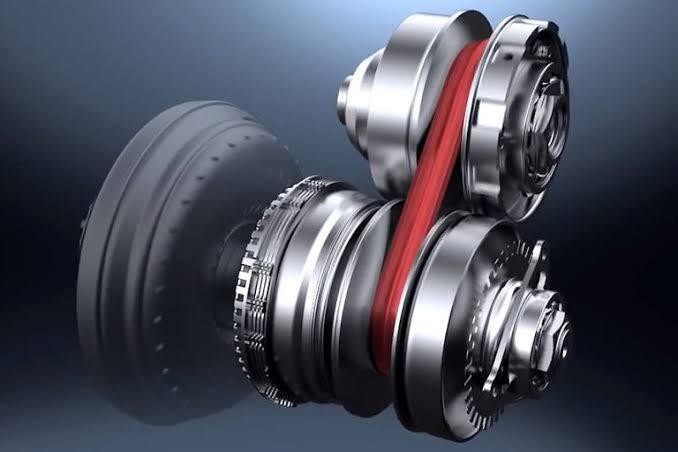
This design is actually brilliant from an engineering perspective. It means the engine always works at peak efficiency. But for the driver, it creates a sensation that feels like something is wrong.
Many manufacturers have now programmed “virtual gear steps” into their CVTs. This mimics the feel of a traditional automatic transmission. Honda, Nissan, and Toyota have all introduced these simulated shifts in recent models.
The discomfort is largely psychological, not mechanical. Once drivers understand what is happening, the feeling becomes far less bothersome. Familiarity is the real cure for the rubber band complaint.
Also Read: 10 Reasons a Used Car With Low Mileage Could Still Be a Bad Deal
Early CVTs Were Genuinely Unreliable
The bad reputation of CVTs didn’t come from nowhere. Early CVT units, particularly those from the late 1990s and early 2000s, had serious problems. They used rubber or chain belts that wore out quickly. Overheating was a common issue in hot climates or under heavy loads.
Nissan’s early JATCO CVTs became infamous for premature failure. Many owners reported complete transmission failure before 100,000 kilometres. Repair costs were high, and replacement was often the only option. These stories spread fast and stuck in the public memory.
Subaru also had notable CVT reliability issues in specific model years. Lineartronic CVT problems frustrated loyal Subaru owners. Extended warranties and class-action lawsuits became part of the brand’s history during that period.
However, these failures pushed manufacturers to improve rapidly. Modern CVTs use steel push belts and advanced hydraulic systems. Cooling technology has improved significantly. Service intervals and fluid quality have also been upgraded.
Today’s CVTs from brands like Toyota and Honda have excellent reliability records. Consumer reports consistently show modern CVTs lasting well beyond 200,000 kilometres with proper maintenance. The stigma, however, continues to outlive the actual problem.
Enthusiast Culture Has Unfairly Demonised CVTs
Car culture has a deep emotional connection to gear changes. The click of a manual gearstick or the firm kick of an automatic shift is part of driving pleasure. CVTs offer none of that tactile feedback. For enthusiasts, this feels like a loss of control and engagement.
Online forums and YouTube reviews often dismiss CVTs harshly. Comments like “CVTs are not real transmissions” are common. This language shapes the opinions of younger drivers before they even drive a CVT-equipped car. Perception spreads faster than actual experience.
Motorsport culture reinforces this bias. Racing cars use dual-clutch or manual systems for maximum performance. CVTs are never seen on a racetrack. This association leads people to believe CVTs are inferior in all driving situations.

But most drivers are not racing. The average person drives in city traffic, on highways, and in stop-and-go conditions. For these real-world situations, CVTs are often smoother and more efficient than alternatives. The context matters enormously.
Enthusiast opinions carry weight, but they do not represent the average driver’s needs. A CVT in a family sedan is not competing with a sports car gearbox. Judging it by those standards is simply the wrong comparison to make.
CVTs Actually Deliver Real-World Benefits That Get Ignored
Despite the criticism, CVTs offer genuine advantages that rarely get attention. Fuel efficiency is the most significant benefit. Because the engine stays in its optimal power band, less fuel is wasted. This translates to real savings over time for everyday drivers.
Smoothness is another major advantage. There are no gear hunting issues, no sudden jolts between ratios. Passengers in a CVT-equipped car often feel a noticeably more comfortable ride. Long highway journeys become far less tiring.
In hilly or mountainous terrain, CVTs perform exceptionally well. They constantly adjust to maintain the right power delivery without the driver doing anything. Hills start, and gradual climbs become effortless. This is a genuine practical benefit for drivers in places like India, Japan, or Southeast Asia.
Maintenance costs for modern CVTs are also competitive. They have fewer mechanical components than traditional automatics. Fewer parts mean fewer things that can go wrong over time.
CVTs are also well-suited to hybrid vehicles. The Toyota Prius has used a CVT-based system since its first generation. It is one of the most reliable vehicles ever produced. That single fact alone should challenge many of the assumptions people hold about CVT durability and performance.
Also Read: Why Buying a New Car in 2026 Might Be the Worst Financial Move You Make
