
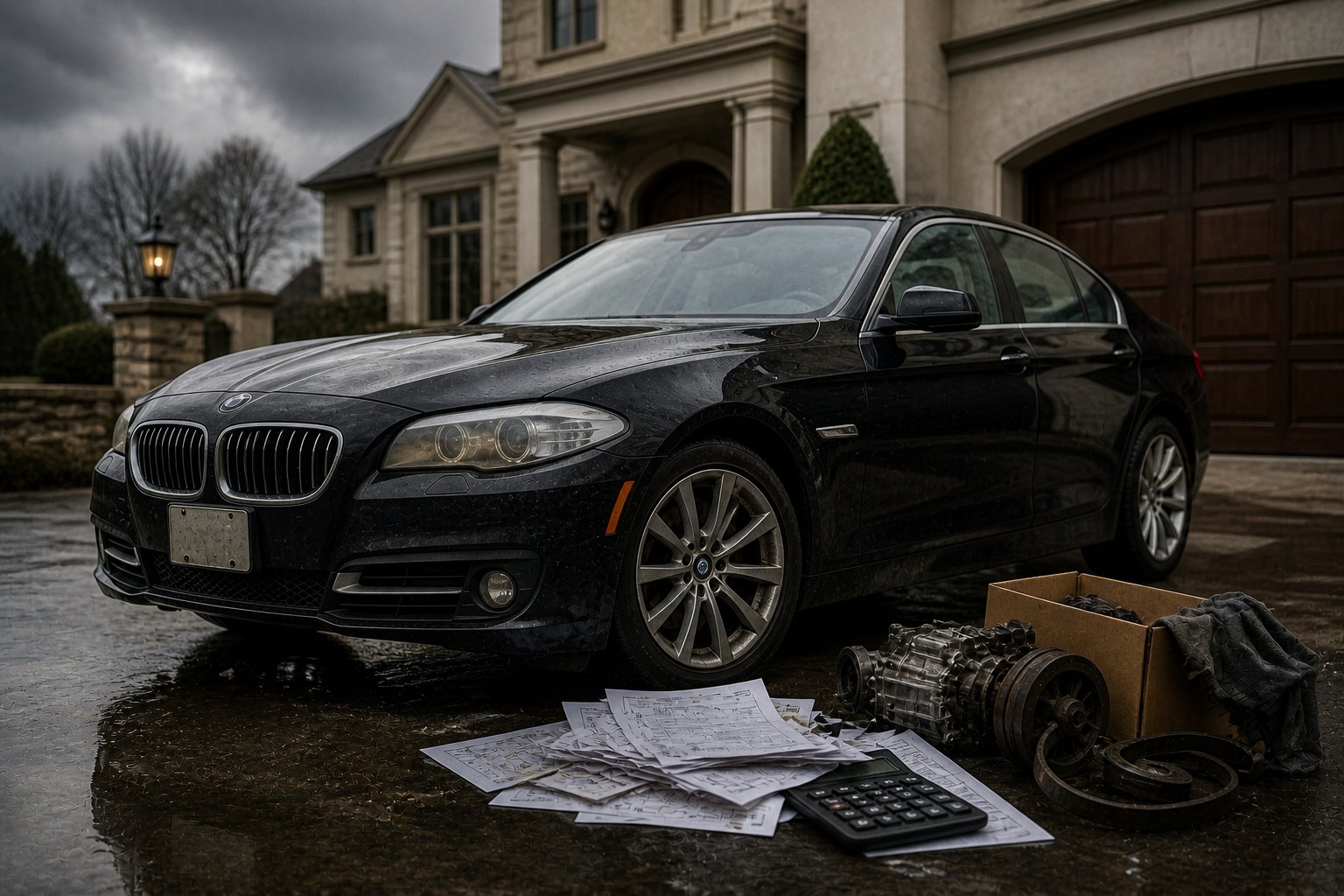
Luxury cars are dream machines. They promise comfort, prestige, and a driving experience unlike anything else on the road. Many buyers look at a 10-year-old BMW, Mercedes-Benz, or Audi and see incredible value.
The price tag has dropped dramatically from its original sticker price. What was once a $90,000 vehicle now sits on a used car lot for $15,000. It feels like a steal.
But that low price exists for a very good reason. The original owners and subsequent buyers have already experienced the expensive problems. They have passed those problems on to the next unsuspecting buyer.
Luxury vehicles are engineered with complex technology and premium components. Those components do not age gracefully. They age expensively. A decade of wear, deferred maintenance, and outdated technology creates a dangerous financial trap.
What looks like smart shopping often turns into a monthly money pit. Repair bills can quickly exceed the purchase price of the car itself. Insurance, parts availability, and fuel costs add further pressure. This article breaks down exactly why a 10-year-old luxury car is almost always the wrong choice for budget-conscious buyers.
The Hidden Cost of Depreciation Has Already Destroyed Its Value Perception
Luxury cars depreciate faster than almost any other vehicle category. A brand-new Mercedes S-Class can lose 50% of its value within the first three years. By the time it reaches 10 years old, it has lost nearly 80% of its original price. This sounds like a buyer’s advantage. In reality, it is a warning signal.
The market prices these vehicles low because experienced buyers know the risks. Dealerships and private sellers understand what is coming mechanically. They price the car to move it quickly before the next repair cycle begins. The buyer who sees a bargain is often the last person standing before a major breakdown.
Depreciation also affects parts pricing in a cruel way. The car becomes cheap to buy but expensive to fix. Manufacturers still charge premium prices for replacement components. A 10-year-old Audi A8 might cost $12,000 to purchase. A single air suspension repair can cost $3,000 to $5,000. The math turns ugly very fast.
Resale value continues to crater after purchase. If you need to sell the car after one or two years of ownership, you will struggle to recover even half of what you paid. The depreciation curve at this age becomes nearly vertical. You are essentially renting a luxury car at the cost of ownership.
Maintenance and Repair Costs Will Shock You
Luxury vehicles are not built like standard economy cars. They are engineered with tighter tolerances and more sophisticated systems. Every component is designed to deliver a premium experience. That premium experience comes with premium repair costs.
At 10 years old, most of these vehicles are approaching or past critical service milestones. Timing chains, water pumps, and transmission rebuilds become likely expenses. A BMW N63 engine, found in many 7-Series and 5-Series models, is notorious for expensive oil consumption issues. These problems do not appear in a basic pre-purchase inspection.
Independent mechanics can help reduce labour costs slightly. However, many modern luxury vehicles require specialised diagnostic equipment. Generic tools simply cannot communicate with the car’s multiple control modules. This means you are often forced back to dealership service centres. Those hourly rates can range from $150 to $250 per hour.
Consumables like brake pads, rotors, and tyres are also significantly more expensive on luxury models. A set of performance tyres for a Porsche Panamera can cost three times more than tyres for a Toyota Camry. These are not one-time costs. They are recurring expenses that never stop coming.
Also Read: 6 American Classics That Are Still Cheap But Won not Be for Long
Technology Has Aged Poorly and Become a Liability
A decade in the automotive world is an eternity for technology. What was cutting-edge in 2014 or 2015 feels outdated today. Infotainment systems that once seemed impressive now struggle to function properly. Software updates have often been discontinued by manufacturers.
Navigation systems in older luxury vehicles use outdated maps. They cannot connect to modern smartphones the way current vehicles can. Apple CarPlay and Android Auto were not standard features a decade ago. Retrofitting these systems is either impossible or prohibitively expensive on many models.

Driver assistance features have also aged poorly. Sensors for adaptive cruise control and lane assist degrade over time. Recalibrating or replacing these systems is extremely expensive. In many cases, owners simply disable these features rather than pay for repairs.
The multimedia and connectivity gap creates a daily frustration. Every time you sit in the car, you are reminded that the technology is a generation behind. This matters especially for foreign buyers who rely on accurate navigation in unfamiliar cities. An outdated system in a foreign country can create genuine safety concerns.
Parts Availability Becomes a Serious Problem
As luxury cars age beyond a decade, sourcing genuine parts becomes increasingly difficult. Manufacturers typically support their vehicles with genuine parts for around 10 to 12 years. After that window, supply chains for original components begin to dry up.
Aftermarket parts exist for some models, but quality varies enormously. A cheap aftermarket suspension component on a luxury vehicle can create handling problems. It can also trigger warning lights throughout the car’s electronic systems. The cost of diagnosing those secondary problems adds up quickly.
Importing parts from overseas is sometimes the only option for rarer models. This adds weeks to repair timelines and unpredictable shipping costs. For buyers in markets outside Europe or North America, this problem is even more severe. A car sitting in a garage waiting for a part is a car costing you money every day.
Specialised models like Bentley, Maserati, or older Range Rovers face extreme parts scarcity. Even common wear items like door seals or window regulators can be backordered for months. This is not a minor inconvenience. It is a fundamental ownership risk that most buyers do not consider before purchase.
Insurance and Running Costs Remain Stubbornly High
Many buyers assume that an older luxury car will be cheap to insure. This assumption is almost always wrong. Insurance companies assess risk based on repair costs, not purchase price. A 10-year-old Jaguar XJ is still expensive to repair after an accident.
Insurers also consider theft risk when pricing premiums. Luxury vehicles remain attractive targets for theft regardless of their age. Certain models like older Range Rovers and Mercedes SUVs appear on high-theft lists year after year. This keeps insurance premiums uncomfortably high for owners.

Fuel costs present another ongoing burden. Most luxury vehicles from a decade ago were built during an era of less aggressive fuel economy standards. Large displacement engines, heavy bodies, and older transmission technology combine to produce poor fuel efficiency.
City driving in a 10-year-old luxury SUV can deliver single-digit fuel economy figures. Road tax, registration fees, and emissions charges also tend to be higher for older, larger-engine vehicles.
Many cities across Europe, Asia, and the Middle East have introduced congestion or emissions zones. Older luxury cars frequently fall into the highest penalty brackets. What seemed like an affordable purchase becomes a vehicle you cannot afford to drive daily.
Also Read: 5 Discontinued Models Worth Hunting Down And 5 That Should Stay Forgotten In 2026
