
When you take an SUV off the road, the underbelly becomes the most vulnerable part of the vehicle. Rocks, debris, and rough terrain can cause serious damage to critical components like the oil pan, transmission, and fuel tank. That is where skid plates come in; they act as armor for everything underneath your vehicle.
But here is the problem. Not every SUV that claims to be “off-road ready” actually has proper skid plates. Many manufacturers slap on plastic belly pans and call them protection. These pieces crack on the first rocky trail. They snap off on highway debris. They give you a false sense of security when you need protection the most.
Real skid plates are made from steel or heavy-duty aluminum. They absorb impacts, deflect rocks, and keep your drivetrain safe in genuine off-road conditions. Plastic covers, on the other hand, are primarily designed to improve aerodynamics and reduce road noise.
This article breaks down four SUVs that come with genuinely tough skid plate systems, and four that rely on flimsy plastic panels that will leave you stranded. Knowing the difference could save your engine and your wallet.
4 SUVs With Real Skid Plates
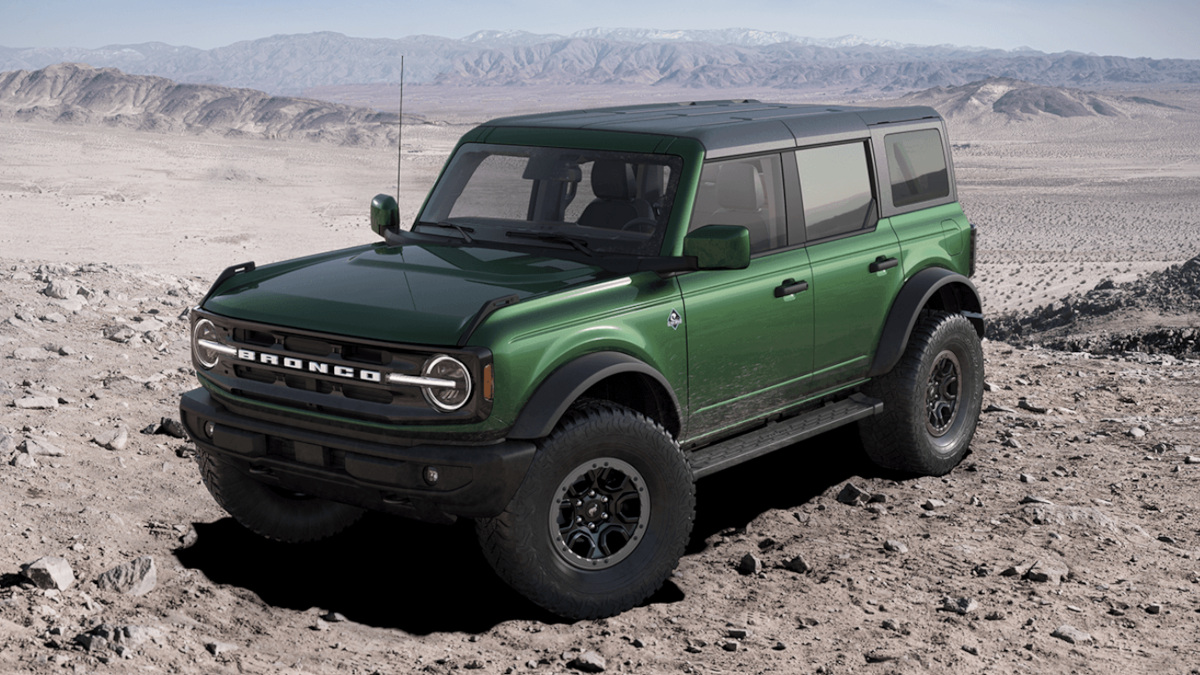
These SUVs come equipped with genuine metal skid plates designed to protect critical components like the engine, transmission, and fuel tank during off-road use. Models like the Toyota 4Runner, Jeep Wrangler, and Ford Bronco are built with steel or aluminum underbody protection, allowing them to handle rocks, debris, and rough terrain without damage.
Vehicles such as the Land Rover Defender also offer factory-installed heavy-duty protection, making them suitable for serious off-road adventures. These skid plates are built to take impacts and provide real durability where it matters most.
1. Toyota 4Runner TRD Pro
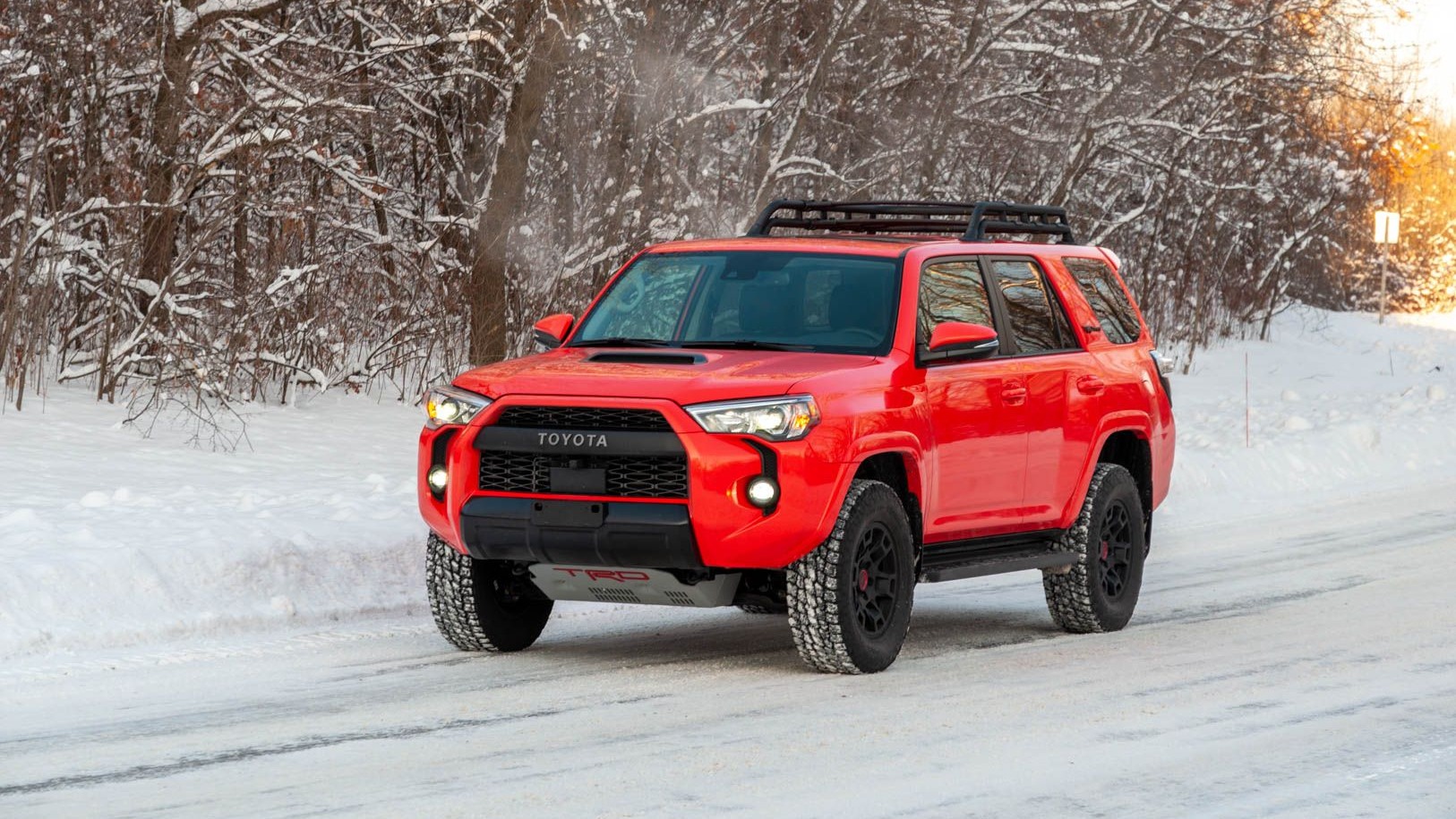
When people talk about serious factory off-road protection, the Toyota 4Runner TRD Pro always comes up first. Toyota has spent decades building this vehicle for people who actually use it in the dirt. The TRD Pro trim does not just look tough; it is engineered to take punishment on trails where most SUVs would be left limping home.
The 4Runner TRD Pro comes equipped with a multi-piece skid plate system from the factory. The front skid plate is made from heavy-gauge steel and covers the engine oil pan completely. A separate skid plate protects the front differential. Another plate shields the transfer case from direct rock strikes. These are not decorative pieces. They are functional armor designed for real-world abuse.
Toyota built the 4Runner’s frame with off-road use in mind from the beginning. The skid plates bolt directly to reinforced mounting points on the ladder frame. This means when a rock hits the plate, the force transfers to the frame, not to softer body panels or unprotected engine components. That engineering detail matters enormously on rocky terrain.
The approach angle on the 4Runner TRD Pro is 33 degrees. The departure angle is 26 degrees. These numbers mean the front skid plate engages terrain regularly, not occasionally. Toyota knew this and designed the plate to take repeated hits without deforming or loosening over time. The steel used is thick enough to slide over embedded rocks rather than catch and tear.
Many off-road enthusiasts upgrade the already solid factory setup with aftermarket steel plates. But the truth is, for the majority of trails in North America, the factory skid plates on the TRD Pro are more than sufficient. Toyota does not cut corners on this system because the 4Runner’s entire reputation depends on its trail capability.
The underbody protection extends to the fuel tank as well. A separate skid plate covers the tank from impacts. This is critical because a punctured fuel tank on a remote trail is a catastrophic situation. Toyota treats it as a priority, not an afterthought.
Even the standard 4Runner trims come with some skid plate coverage. But the TRD Pro takes the system to another level with complete multi-zone protection. You are paying for peace of mind that is genuinely backed by metal. The 4Runner TRD Pro is proof that a manufacturer can build a mass-market SUV that does not compromise on real-world protection.
2. Ford Bronco (Sasquatch Package)
Ford made a bold promise when it revived the Bronco in 2021. It claimed the new Bronco would be a genuine off-road competitor, not just a lifestyle vehicle with aggressive styling. Under the body, Ford backed that promise up with a serious underbody protection package that separates the Bronco from most of its competitors.
The Bronco with the Sasquatch package comes with full-length steel underbody skid plates. The system covers the front axle, transmission, and fuel tank as a connected protective layer. Ford designed these plates to work together rather than leaving gaps between individual sections. Gaps are where trail damage actually happens. A rock does not care about your plate boundaries.
The material used in the Bronco’s skid plate system is high-strength steel. It is not the thinnest gauge available. Ford engineers specifically chose a thickness that would handle the stress of serious rock crawling without cracking or bending permanently. A bent plate that contacts the driveshaft is far more dangerous than no plate at all.
Ford gave the Bronco a ground clearance of up to 11.6 inches with the Sasquatch package. That clearance keeps the skid plates from constantly dragging on moderate terrain. But when the terrain does get serious, the plates are positioned and angled to deflect rather than catch incoming rocks. The geometry was part of the design, not an afterthought.
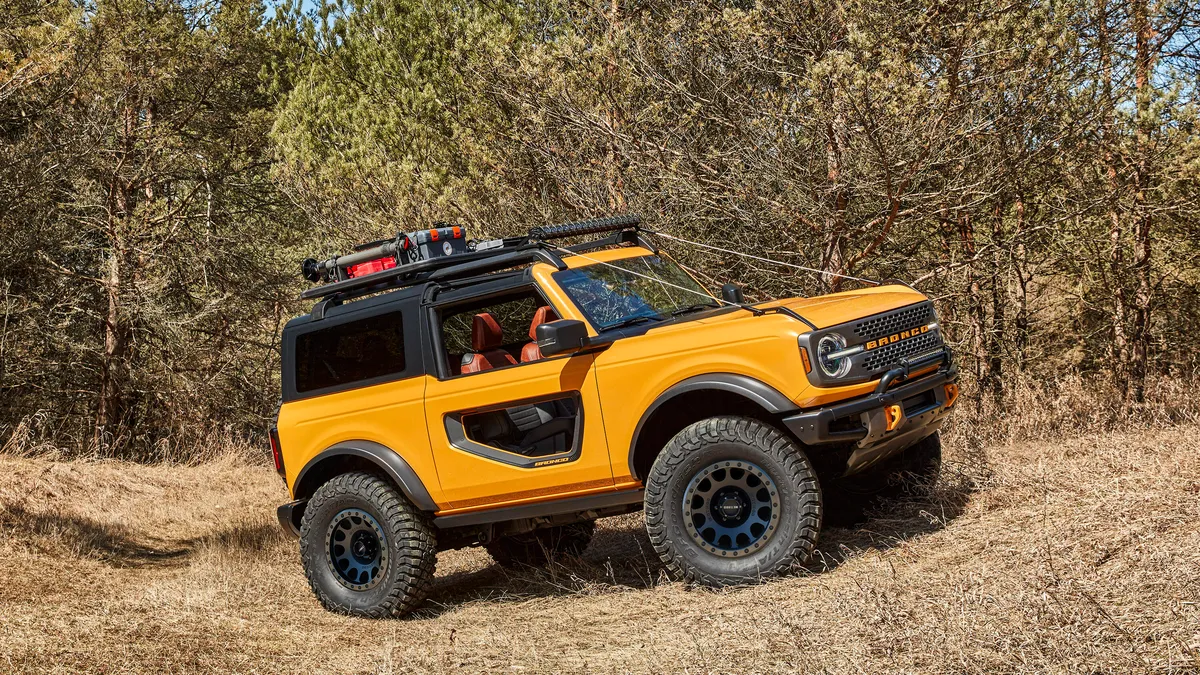
The Bronco’s removable doors and roof get a lot of attention in the media. But the real engineering story is what Ford put underneath. The transfer case skid plate alone would cost several hundred dollars as an aftermarket addition on competing platforms. Ford includes it as part of a cohesive system on properly equipped Broncos.
One detail that deserves specific attention is the rock rails that come with higher Bronco trims. These side-mounted steel rails protect the rocker panels and connect to the skid plate system conceptually. Together, they create a cage-like protection zone around the most vulnerable undercarriage areas. This is systems thinking applied to off-road durability.
The Bronco does have some trim levels with less impressive protection. Buyers need to pay close attention to which package they are selecting. But on a fully equipped Bronco with the Sasquatch package, you are getting factory underbody protection that stands up to genuine scrutiny. Ford earned the right to call this one a real off-roader.
3. Land Rover Defender
The Land Rover Defender carries a legendary name in off-road circles. For decades, the original Defender was used by militaries, farmers, and explorers in some of the most remote places on earth. The modern Defender had enormous shoes to fill when it launched in 2020. Underneath, Land Rover made sure it did not disappoint.
The current Defender comes standard with an aluminum skid plate that protects the engine and transmission. Higher trims and the optional off-road packages add additional plates covering the transfer case and rear differential. Land Rover uses aerospace-influenced aluminum alloys that are significantly stronger than conventional aluminum sheet metal. The material choice is deliberate; aluminum saves weight while still delivering real protection.
Land Rover’s engineers spent years testing the Defender in some of the world’s most demanding environments. The skid plates on production vehicles reflect lessons learned in those testing programs. The mounting system uses hardened steel bolts that resist stripping and corrosion. The plates themselves are designed to be removable for maintenance without special tools.
The Defender’s wading depth is rated at 900mm. That is nearly three feet of water. Any vehicle designed to wade that deep needs its undercarriage protected from more than just rocks. The skid plates on the Defender also serve as splash shields, keeping water out of electrical connectors and sensitive drivetrain components. Protection is multi-dimensional on this vehicle.
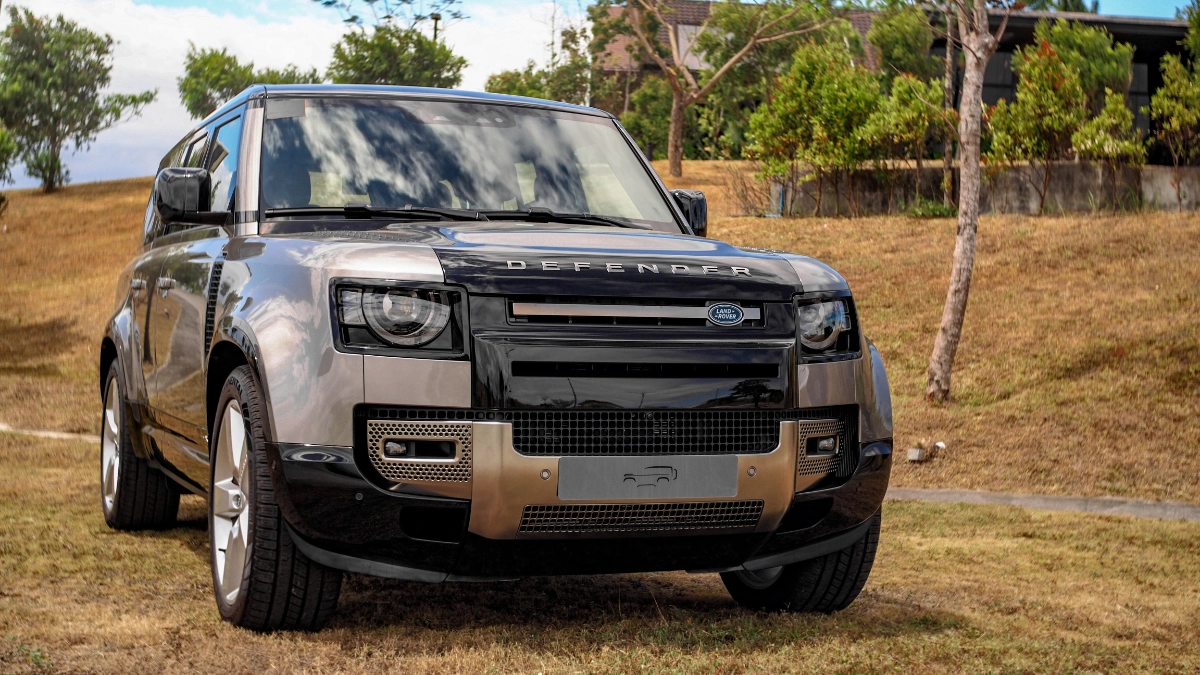
Ground clearance on the Defender stands at 11.5 inches in standard configuration. With the available air suspension, the vehicle can raise itself further for serious obstacles. The skid plates are designed to work across this full range of suspension travel. They do not bind or contact the chassis at full droop or full compression.
The Defender also benefits from Land Rover’s Terrain Response system, which adapts the vehicle’s dynamics to different surfaces. But technology without physical protection is incomplete. The skid plates ensure that when the algorithms push the Defender into difficult terrain, the hardware underneath can survive what the software tells it to attempt.
Critics of the modern Defender sometimes point to its premium price and luxury features as signs that it has lost its rugged DNA. The underbody tells a different story. Land Rover invested real engineering effort in protecting this vehicle’s critical components. The Defender’s skid plates are not theater; they are functional armor on a vehicle that genuinely earns its off-road reputation.
4. Ram 1500 TRX
The Ram 1500 TRX is not a traditional SUV, but it functions as one for many buyers who use it as a primary daily driver and weekend off-road machine. Ram built the TRX to dominate desert terrain at high speed. That specific purpose demanded an underbody protection system unlike anything found on a typical pickup truck.
The TRX comes with a comprehensive skid plate package from the factory. The front skid plate is made from heavy-gauge steel and protects the oil pan and front suspension components. A second plate covers the transfer case. A third unit shields the fuel tank. These plates are not optional add-ons; they are part of the standard equipment on every TRX that leaves the factory.
Ram engineers designed the TRX’s skid plate system for high-speed desert running, which is arguably more demanding than slow rock crawling. When a truck hits a hidden rut or embedded rock at 60 miles per hour, the impact force is exponentially greater than the same obstacle at 5 mph. The TRX’s plates are rated to handle those high-speed impacts without deforming or failing.
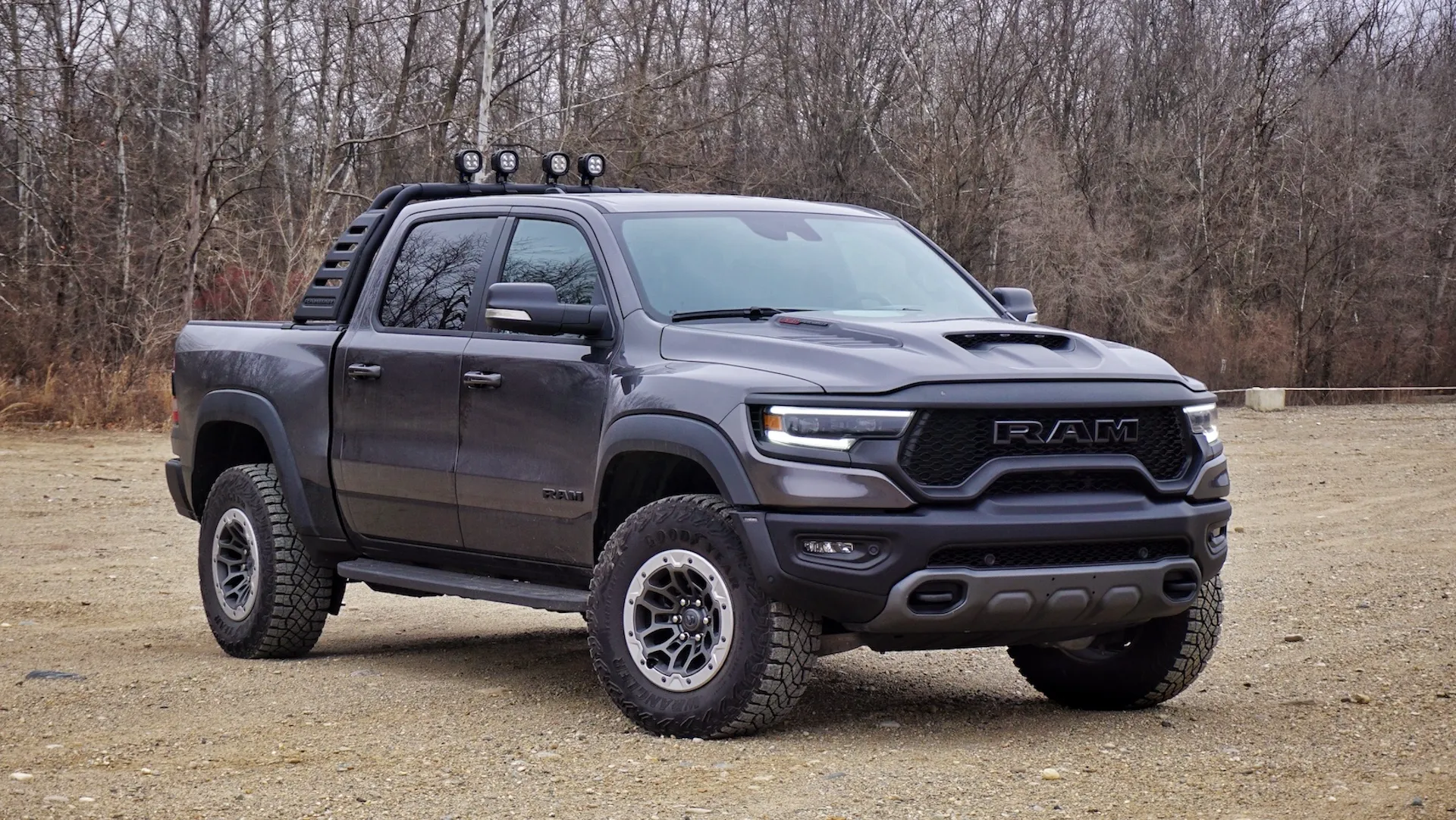
The TRX rides on 35-inch Goodyear Wrangler Territory tires from the factory. The suspension travel is 13 inches in the front and 14 inches in the rear. These extreme suspension numbers mean the skid plates had to be engineered around massive chassis movement. Plates that work at rest but contact the driveline under full compression would be worse than no plates at all.
One engineering detail that sets the TRX apart is the plate mounting system. Ram used reinforced frame brackets with multiple attachment points per plate. Single-point mounted plates can rotate or shift under impact. The TRX’s multi-point mounting ensures each plate stays exactly where it was designed to be, even after repeated hard hits.
The TRX’s 702-horsepower supercharged engine is an expensive component to protect. Ram clearly understood this and built the underbody protection system with that value in mind. A cracked oil pan on a supercharged V8 in the middle of a desert would be an extraordinarily costly repair. The steel skid plate is cheap insurance against that outcome.
The TRX is a performance machine built on a truck platform. But its underbody protection philosophy is directly applicable to the SUV world. It demonstrates that manufacturers who take off-road performance seriously always back it up with real metal underneath. The TRX is expensive, but the skid plate system is one area where Ram spent money in exactly the right place.
Also Read: Why Buying a 10-Year-Old Luxury Car Is Almost Always a Mistake
4 With Plastic Ones That Crack Off
These SUVs often feature plastic underbody panels that look like skid plates but offer minimal protection. While they may help with aerodynamics or minor debris, they are not designed for real off-road impacts.
In rough conditions, these plastic covers can crack, break, or tear off easily, exposing important components underneath. Vehicles with such setups may appear rugged but lack true underbody protection, making them less suitable for demanding terrain.
1. Chevrolet Traverse
The Chevrolet Traverse is a popular three-row family SUV that sells in massive numbers across North America. It looks substantial on the outside. It feels solid in the showroom. But underneath, Chevrolet has equipped the Traverse with plastic underbody panels that offer no real protection against road debris or mild off-road use.
The panels on the Traverse are technically described as “aerodynamic underbody covers” in Chevrolet’s own engineering documentation. That language is telling. They are designed to smooth airflow and improve fuel economy numbers. They are not designed to protect the oil pan, transmission, or other critical components from impact damage.
Many Traverse owners discover the reality of these panels the hard way. A moderately rocky, unpaved road is enough to crack them. Highway debris, particularly chunks of retreaded truck tires, can shatter sections of the panel completely. Replacement costs can run several hundred dollars per section, and the new plastic panels are just as fragile as the original ones.
The Traverse sits relatively low to the ground compared to genuine off-road SUVs. This low ground clearance means the plastic underbody panels contact road irregularities more frequently. Each contact event either cracks the plastic further or knocks sections loose entirely. Owners frequently report hearing the panels dragging on the road before they fall off completely.
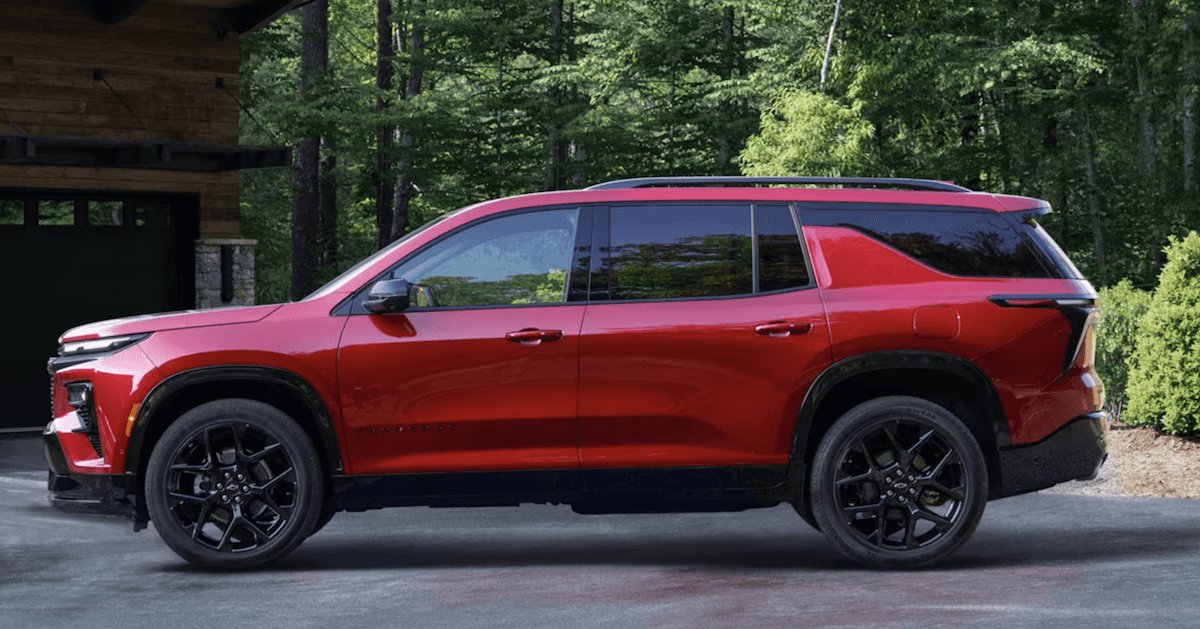
Chevrolet is not hiding anything illegal or unethical here. The Traverse is marketed as a family crossover, not a trail vehicle. But the problem arises when owners take these vehicles on even mildly unpaved roads, something millions of American families do regularly on camping trips and rural drives.
A trip to a national forest campground on a gravel access road can destroy a Traverse’s underbody panels. The irony is that the vehicle looks rugged enough from the outside to inspire confidence in buyers who do not investigate the undercarriage before purchase. The disconnect between appearance and actual capability is where the real danger lives.
Aftermarket steel skid plates are available for the Traverse from several manufacturers. They bolt to the existing frame mounting points and provide genuine protection. But buyers should not have to spend extra money to protect a vehicle that is sold at a premium price point. The factory plastic panels represent a cost-cutting decision that ultimately costs owners more in the long run.
2. Hyundai Tucson
The Hyundai Tucson is one of the best-selling crossovers. It offers impressive interior technology, comfortable seating, and genuinely competitive fuel economy. Hyundai has done an excellent job making the Tucson feel premium without charging a premium price. But the underbody protection situation is a significant weak point that buyers rarely discover until it is too late.
The Tucson uses thin plastic underbody covers that are common across Hyundai’s crossover lineup. These panels cover the engine bay area and extend partially under the floor. They are held in place by plastic push-pin fasteners that are notoriously prone to breaking. Once the fasteners break, the panels begin to sag and eventually drag on the road surface.
Tucson owners who live in areas with harsh winters face an additional challenge. Road salt and repeated freeze-thaw cycles make the plastic panels brittle faster than normal wear would. A panel that survived a summer in good condition can shatter during the first cold snap after winter road treatment begins. The material simply was not chosen with cold-weather durability as a priority.
The Hyundai Tucson does offer an N-Line trim with slightly more aggressive styling. It adds a sportier appearance both inside and out. But the underbody protection does not change between standard and N-Line trims. The same fragile plastic panels appear under every version of the Tucson, regardless of price or trim level.
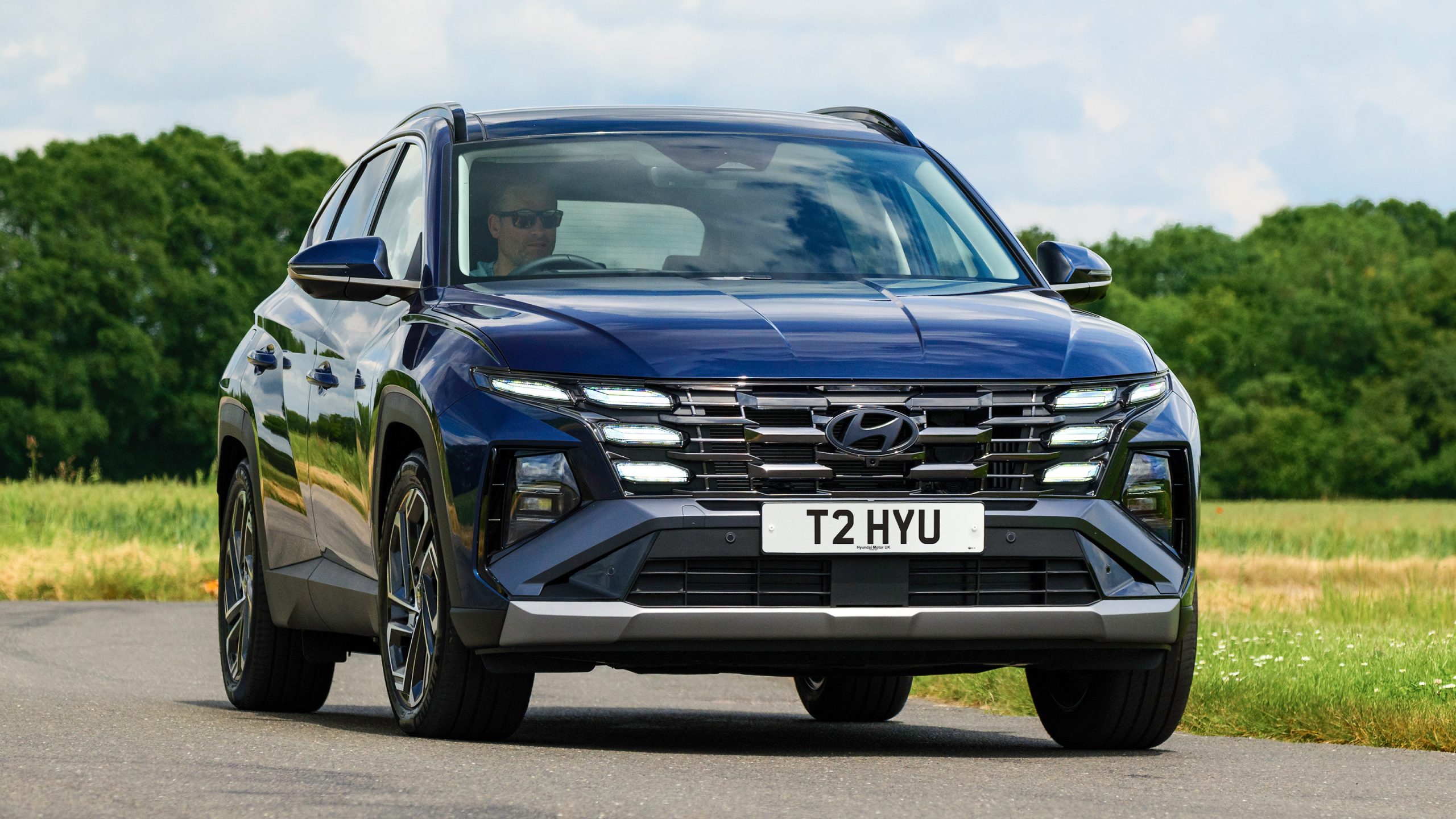
AWD versions of the Tucson have additional drivetrain components underneath that need protection. The rear differential and driveshaft are exposed to road debris just as the front components are. Plastic panels that cover the front but leave the rear components inadequately shielded create a false sense of complete protection. In reality, only part of the underbody is even minimally covered.
Hyundai’s warranty covers manufacturing defects in the underbody panels. But cracked or missing panels due to road debris contact are considered road hazard damage, not covered under warranty. Owners absorb the cost of replacement themselves. Given how frequently these panels are damaged, the lifetime ownership cost of maintaining them can be surprisingly high.
The Tucson is an excellent vehicle in many measurable ways. But buyers who intend to use it on anything other than paved roads should factor in the cost of aftermarket protection. The factory plastic panels are among the most fragile in the crossover segment. They represent a real gap between the vehicle’s capable-looking exterior and its actual underbody vulnerability.
3. Kia Sportage
The Kia Sportage shares its platform with the Hyundai Tucson and inherits many of the same underbody protection shortcomings. Kia has made tremendous strides in build quality, interior design, and powertrain refinement over the past decade. The Sportage is genuinely competitive in almost every measurable category. Underbody protection is the glaring exception.
Like the Tucson, the Sportage uses a series of plastic underbody panels that prioritize aerodynamics over impact resistance. The panels are shaped to reduce drag and improve fuel efficiency. Both are legitimate engineering goals. But they come at the cost of actual protection for the components underneath.
Sportage owners who venture onto gravel roads regularly report losing panel sections within the first year of ownership. The panels are particularly vulnerable at the front edge where they meet incoming debris at a direct angle. Even small rocks that deflected off the road surface can crack the leading edge of the front panel. Once the edge cracks, water and road salt enter behind the panel and accelerate corrosion of fasteners.
Kia offers the Sportage X-Pro and X-Pro Prestige trims with increased ground clearance and more aggressive off-road styling. These trims include all-terrain tires and revised suspension tuning. The marketing materials emphasize adventure capability. But the underbody panels remain plastic on these trims. The gap between the adventurous marketing image and the fragile plastic underneath is significant.
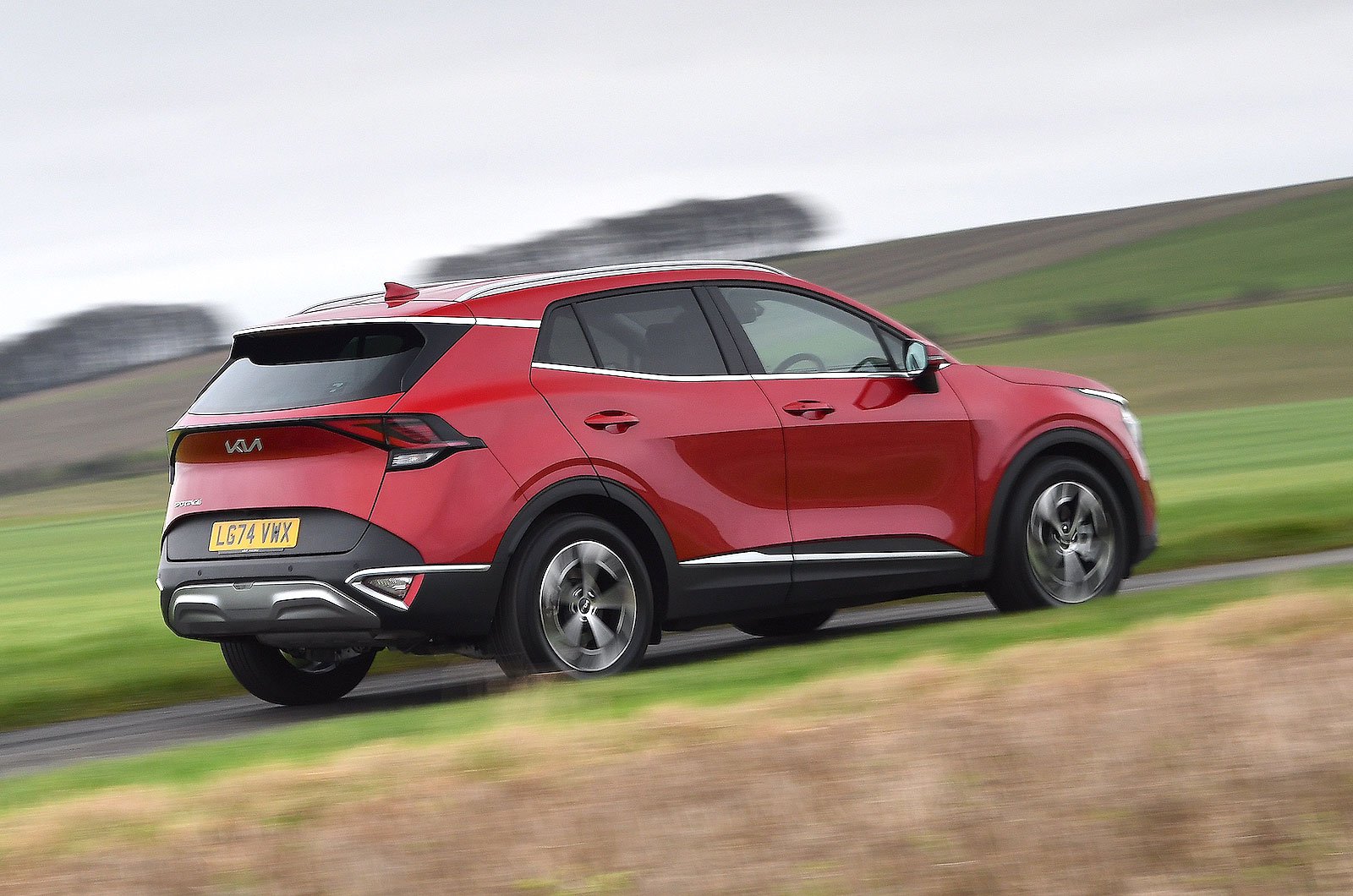
The Sportage’s 2.5-liter naturally aspirated and 1.6-liter turbocharged engines are well-engineered powertrains. They deserve proper protection from road debris. An unprotected oil pan struck by a sharp rock can cause catastrophic engine failure almost instantly. The plastic panels provide no meaningful buffer against that kind of impact.
Cold-weather markets see accelerated plastic panel degradation in the Sportage as well. Canadian owners have reported complete panel loss after a single winter season in areas with aggressive road salting programs. Kia dealerships in these markets frequently see panel replacement as a routine service item, which speaks volumes about how poorly the factory panels perform in real-world conditions.
The Sportage deserves credit for its excellent engines, refined interior, and competitive pricing. But the underbody protection package is a meaningful weakness that potential buyers should understand before purchase. Anyone planning regular use on unpaved surfaces should budget for aftermarket steel protection as part of the total cost of ownership.
4. Volkswagen Tiguan
The Volkswagen Tiguan is a polished, well-engineered crossover that appeals strongly to buyers who value driving dynamics and interior quality. VW has built a strong reputation for precise handling, premium materials, and thoughtful ergonomics. The Tiguan delivers on those expectations in almost every area. But look underneath the vehicle, and the picture changes considerably.
The Tiguan uses plastic underbody panels that are similarly fragile to those found on many Asian-market crossovers. VW does not market the Tiguan as an off-road vehicle, which is fair. But the panels fail under conditions that most buyers would not consider extreme. Gravel parking lots, modest unpaved driveways, and highway debris are all enough to damage the factory plastic panels on the Tiguan.
One specific complaint from Tiguan owners is the front underbody panel. It hangs relatively low and is among the first components to contact road irregularities. Even a moderately aggressive speed bump can crack the front edge of this panel if the vehicle approaches at a slightly awkward angle. Parking lot curbs are another common culprit for panel damage on the Tiguan.
VW uses a push-pin and clip fastener system to hold the Tiguan’s underbody panels in place. These fasteners are made from the same type of plastic as the panels themselves. When the panel cracks, the fasteners often break simultaneously. Replacing the panel without also replacing the fasteners leads to a poorly secured replacement that falls off faster than the original.
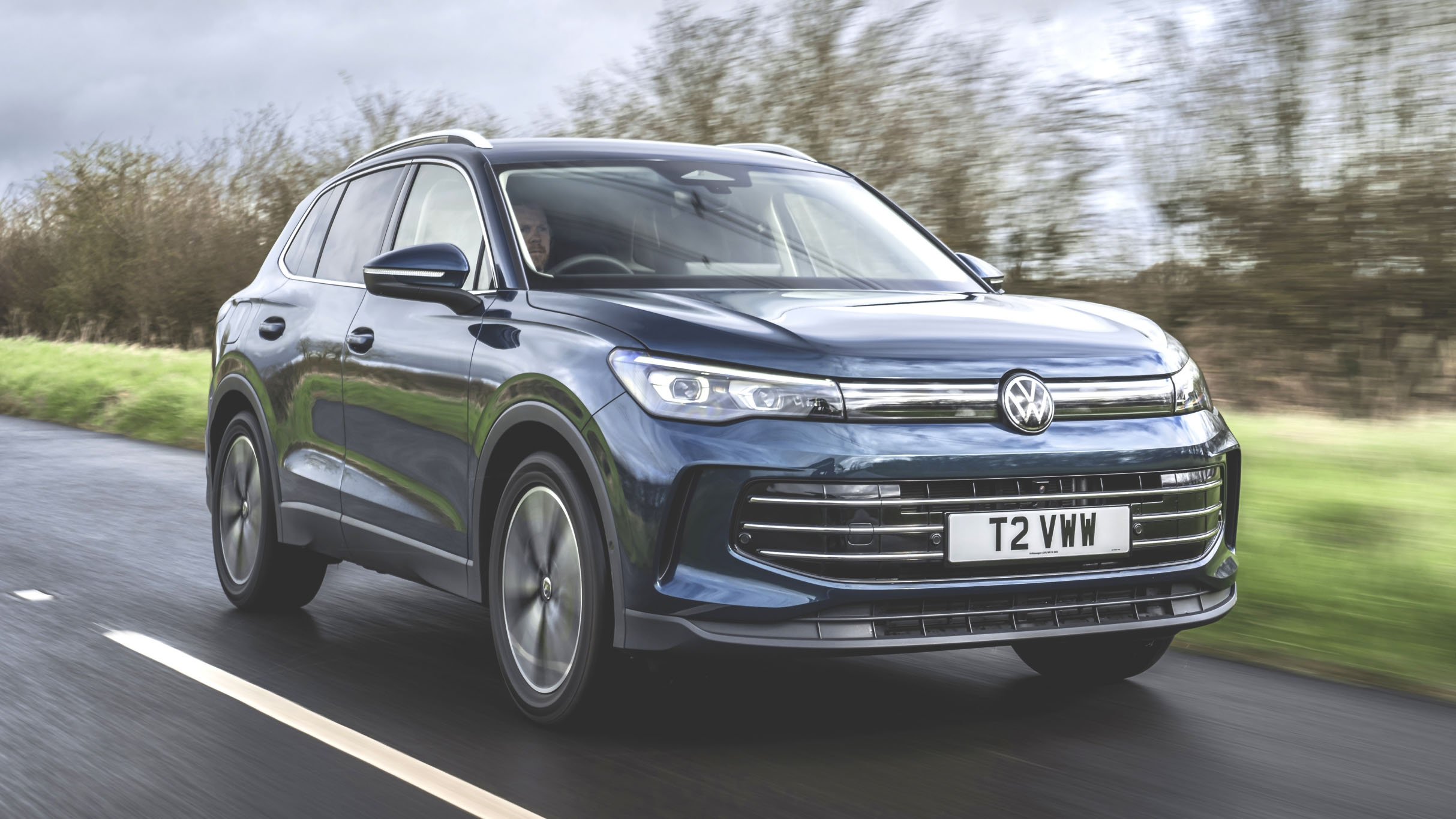
The Tiguan’s 4MOTION all-wheel-drive system is a well-regarded technology that handles adverse road conditions competently. But 4MOTION capability does not help you if the plastic belly pan has caved in and is pressing against the driveshaft. Drivetrain technology and underbody protection are separate systems; having one does not compensate for lacking the other.
European buyers of the Tiguan face unique challenges because many European country roads feature stone surfaces and narrow gravel lanes that are the standard route to popular tourist and rural destinations. VW manufactures a vehicle that is widely used in these conditions, but does not protect the undercarriage appropriately for them.
Aftermarket protection for the Tiguan is widely available and relatively affordable. Several manufacturers produce stamped steel skid plates specifically for the Tiguan’s engine and transmission. These plates bolt to existing mounting points and provide genuine protection. The fact that a thriving aftermarket exists for Tiguan underbody protection tells you everything you need to know about the factory solution’s adequacy.
Also Read: The Real Cost of Owning an Electric Vehicle in a Cold Climate
