
Reputation in the automotive world is a funny thing. An engine earns a great name; the story spreads through enthusiast forums and magazine articles, and within a decade that engine becomes untouchable in the minds of buyers who have never actually owned one, mechanics who have worked on dozens of them with mixed experiences, and collectors who repeat the praise they read somewhere without verifying it against actual ownership data.
Some engines absolutely deserve their reputations. They were engineered at a standard that the industry should be proud of; they served their owners faithfully across high mileage and difficult conditions, and the enthusiast community’s reverence for them is completely proportionate to their actual achievement. But other engines got lucky.
They were in the right vehicle at the right time, marketed in the right way, or used in a product that became culturally beloved for reasons that had nothing to do with the engine itself. The reputation traveled with the vehicle, and the engine absorbed praise it was never quite entitled to.
This article is about the second group. These are engines that receive consistent praise in automotive writing, command premiums in the used market, and generate enthusiastic defense from owners who have never actually experienced their failures or who have selectively forgotten the problems they did experience. Being included on this list does not mean the engine was terrible. It means the reputation exceeds the reality, which is its own specific kind of overrating that deserves honest discussion.
Eight engines follow. Each one has a reputation that outpaces its actual engineering achievement or reliability record, and each one benefits from circumstances that had more to do with luck than engineering excellence. Read through all eight before deciding whether you agree.
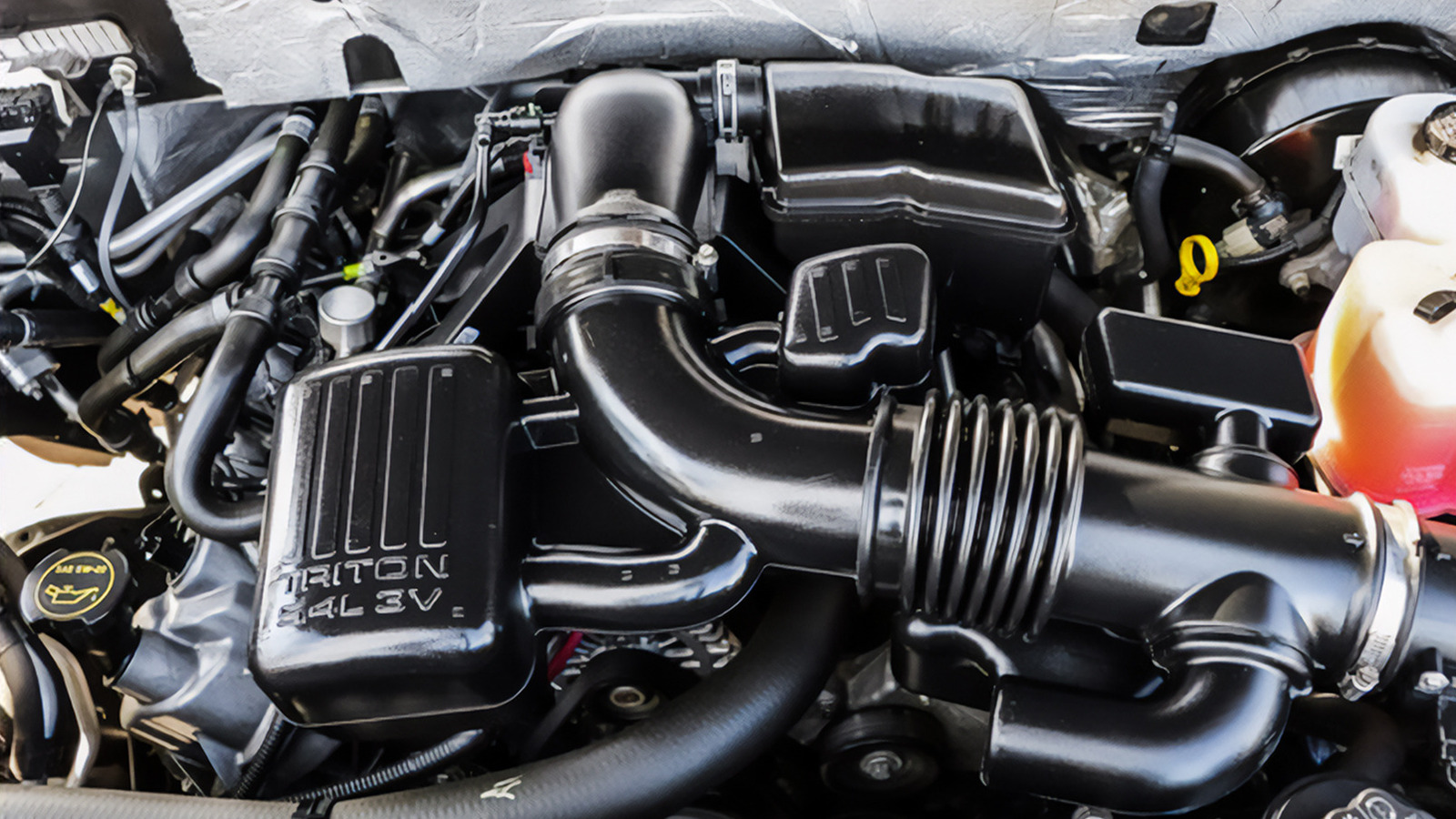
1. Ford 5.4-Liter Triton V8 in the 2004 Ford Expedition Eddie Bauer 4WD
Ask a group of American truck and SUV enthusiasts which V8 they associate most strongly with Ford’s heavy-duty capability during the 2000s, and most of them will mention the 5.4-liter Triton. Ask those same people whether they have personally dealt with a broken spark plug during a Triton removal, or whether they have owned a vehicle where three or four coil-on-plug units failed across a single driving year, and the conversation changes noticeably.
The 5.4 Triton in its peak production years has a reputation for capable, powerful American V8 performance that a substantial number of owners would argue is considerably more generous than their actual ownership experiences warranted.
Two-piece spark plug design in the 5.4 Triton was the most consequential engineering decision that damaged this engine’s real-world ownership reputation, even as the engine’s entire reputation remained largely untouched among buyers who did not research its specific failure modes before purchase.
When aluminum cylinder heads are used with steel-threaded spark plugs, the differential expansion rates between the two metals create clamping force on the spark plug’s threads during heat cycling. Over tens of thousands of miles of this heat cycling, the plug can become seized in the head with a bonding force that exceeds the structural integrity of the two-piece plug itself, causing the outer shell to separate from the inner electrode assembly during removal.
Removal of a broken 5.4 Triton spark plug required specialized tools that Ford developed specifically for this failure mode, including a thread extraction kit that cost several hundred dollars on its own. Many independent mechanics who attempted extractions without specialized training and equipment made the situation worse, sometimes damaging threads to the point where head repair or replacement became necessary.
A routine 30-minute tune-up could become a multiple-thousand-dollar repair event, and this was not a rare outcome on high-mileage 5.4 Triton engines. Coil-on-plug ignition failures added a second reliability concern that accumulated cost across ownership periods.
Individual coil failures required replacement of the failing unit, but because coils age together, owners who replaced one often found themselves replacing additional units in the following months as other coils failed sequentially. A complete coil replacement across all eight cylinders was not unreasonable for a high-mileage 5.4 Triton, and this service represented a cost that buyers did not always factor into their budget when purchasing a vehicle with this engine.
The 5.4 Triton maintained its positive reputation because Ford had already built strong trust in the truck and SUV market, which helped shape how owners interpreted its performance. Many drivers were more likely to see problems as a result of age or maintenance habits rather than flaws in the engine’s design itself.
Media coverage during this period focused predominantly on the engine’s power and capability characteristics, which were genuine, rather than on its specific failure modes, which were equally genuine. And enthusiast communities built around Ford trucks and SUVs created social environments where criticism of a beloved product was sometimes unwelcome, even when the criticism was factually accurate.
What the 5.4 Triton deserved was a reputation as a capable but maintenance-intensive engine with specific, expensive failure modes that required owner awareness and budget provision. What it received was broadly uncritical praise that left buyers unprepared for the ownership realities that a substantial number of them subsequently encountered.
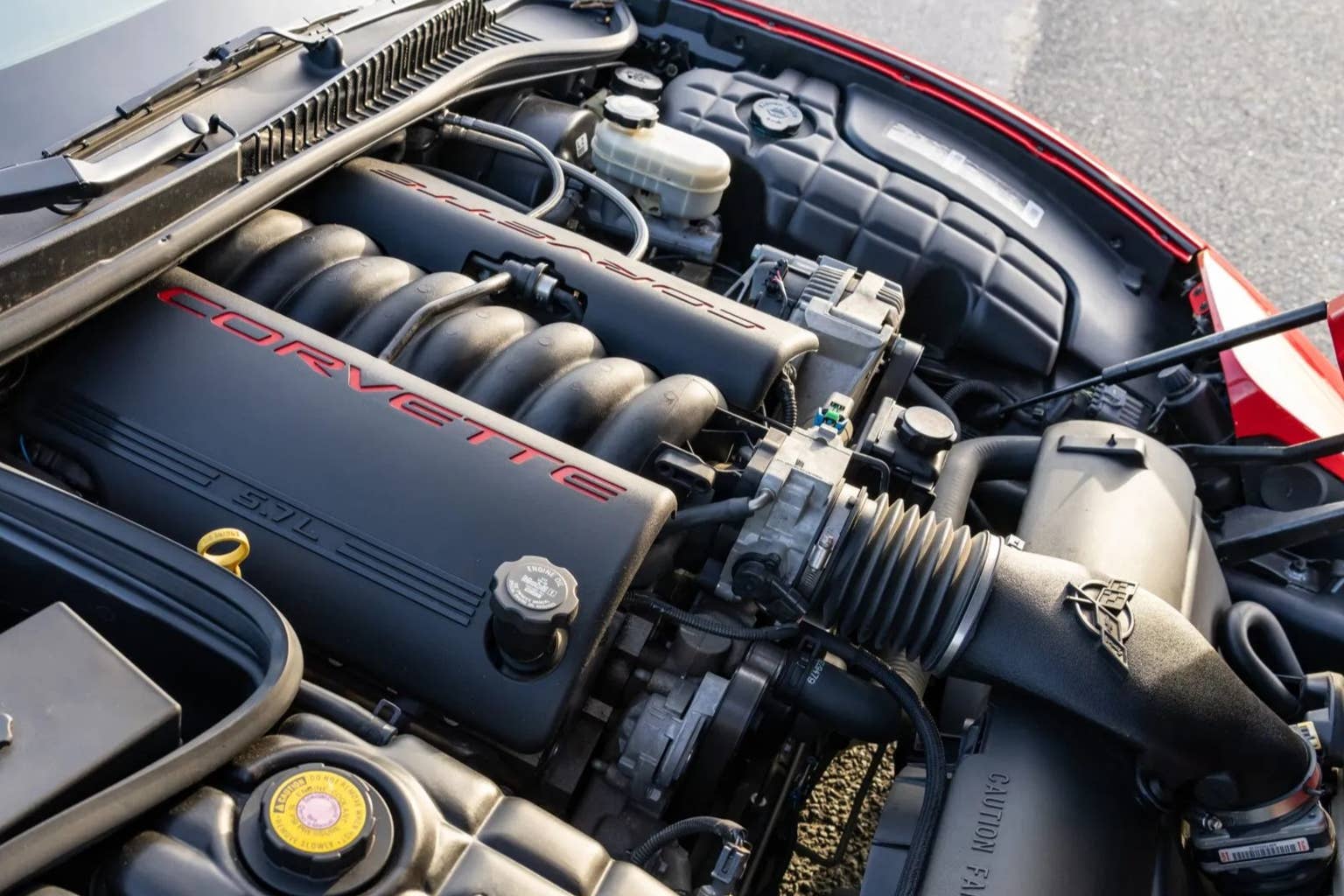
2. Chevrolet LS1 5.7-Liter V8 in the 2000 Pontiac Firebird Trans Am WS6
Acknowledging that the LS1 is one of the genuinely great American V8 engines requires being said before the criticism, because placing it on an overrated list without that acknowledgment would misrepresent the intent. LS1 is a very good engine. But it is not the near-perfect deity of modern American V8 engineering that its most passionate advocates describe, and the gap between its actual achievement and its enthusiast-community reputation is wide enough to justify its inclusion here.
LS platform’s reputation grew through a specific combination of factors that amplified genuine engineering quality into something approaching mythology. High-profile appearances in Corvettes and Camaros gave the LS1 a performance context that communicated capability through racing association rather than everyday ownership experience.
Cheap availability as a salvage engine made LS swaps accessible to a large population of builders who then became vocal advocates for a platform they had invested their time and money in. And the naturally occurring tribalism of the enthusiast community created an environment where doubting the LS’s reputation was culturally equivalent to doubting a religious text.
Actual LS1 ownership in the 2000 Pontiac Firebird Trans Am WS6 reveals an engine that produces genuinely impressive power and sound, but that is housed in a production vehicle with reliability weaknesses in surrounding systems that affected the ownership experience in ways that LS reputation discussions rarely acknowledge.
Oil consumption that some owners experienced, coolant system challenges that required attention at higher mileage, and the LS1’s sensitivity to consistent oil change discipline all produced real-world ownership realities that enthusiasts sometimes minimize when defending the engine against criticism.
Aftermarket parts availability for the LS platform is genuinely exceptional, which is a legitimate advantage that contributes to the platform’s appeal for modification. But conflating aftermarket parts quality with factory engine quality produces an inflated reputation that benefits from the aftermarket’s achievements rather than from General Motors’ factory engineering alone.
When enthusiasts say the LS is bulletproof, they are often describing a modified, built, and upgraded version of the engine rather than the factory unit in stock form in a production vehicle.
Also Read: The 10 Most Bulletproof Diesel Engines Ever, Ranked
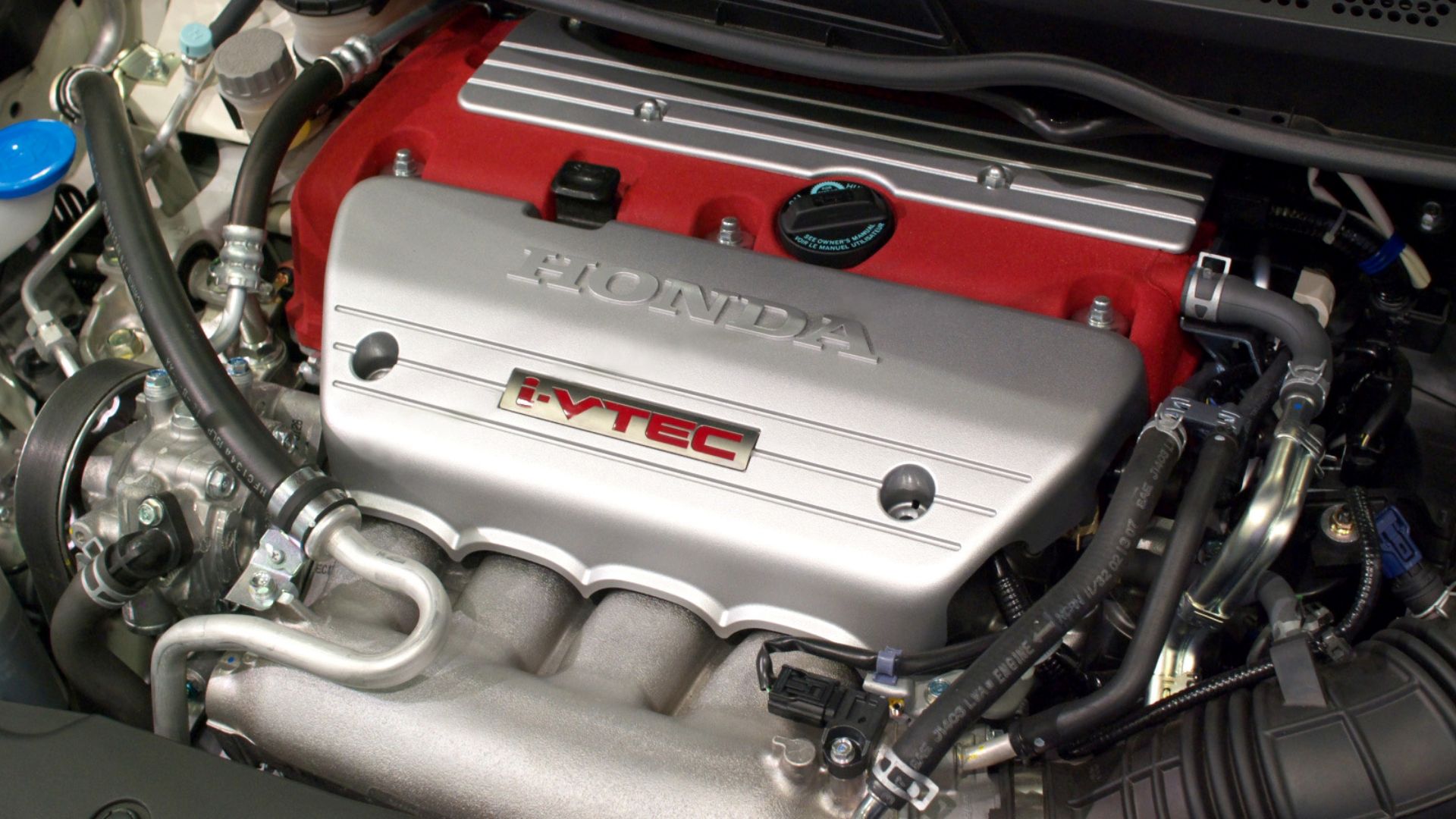
3. Honda K20A2 2.0-Liter VTEC in the 2002 Honda Civic Si EP3 Hatchback
Honda’s VTEC technology created a specific kind of driving experience that generates genuine enthusiasm, and the K20A2 in the EP3 Civic Si is an engine whose high-revving character produced memories in its owners that translated into reputation-building that went beyond what the engine’s actual engineering achievement warranted.
VTEC engagement is a genuinely interesting driving sensation. But sensation is not the same as engineering excellence, and the K20A2’s reputation has benefited from the emotional impact of the VTEC experience in ways that detached engineering evaluation would not fully support.
Oil consumption in the K20 family across various applications and production years was a documented concern that enthusiast communities discussed extensively in forum threads while simultaneously rating the engine highly in reputation surveys.
An engine that consumes oil at a rate requiring owner monitoring between changes is not delivering the maintenance-free ownership that its reputation suggests, and the K20A2’s oil consumption tendency specifically undermines the maintenance simplicity that Honda’s reliability reputation promised buyers who chose the Civic Si specifically for long-term economic ownership.
High-revving operation that the K20A2 required for best performance placed demands on engine oil quality and change frequency, which owners who maintained their cars on conventional schedules rather than performance-appropriate schedules sometimes did not meet.
An engine that rewards high-RPM operation needs oil that can handle the thermal and shear conditions that sustained high-RPM operation creates, and factory change interval recommendations that were not calibrated for frequent VTEC-zone driving left some owners with accelerated wear they attributed to other causes.
VTEC’s operating concept, while engaging to experience, is also mechanically interesting in ways that create additional wear surface and complication compared to fixed-cam alternatives. Praise for the K20A2 rarely engages with the engineering trade-offs that VTEC introduced alongside its performance benefits, preferring instead to discuss the driving character without acknowledging what that character cost in mechanical terms.
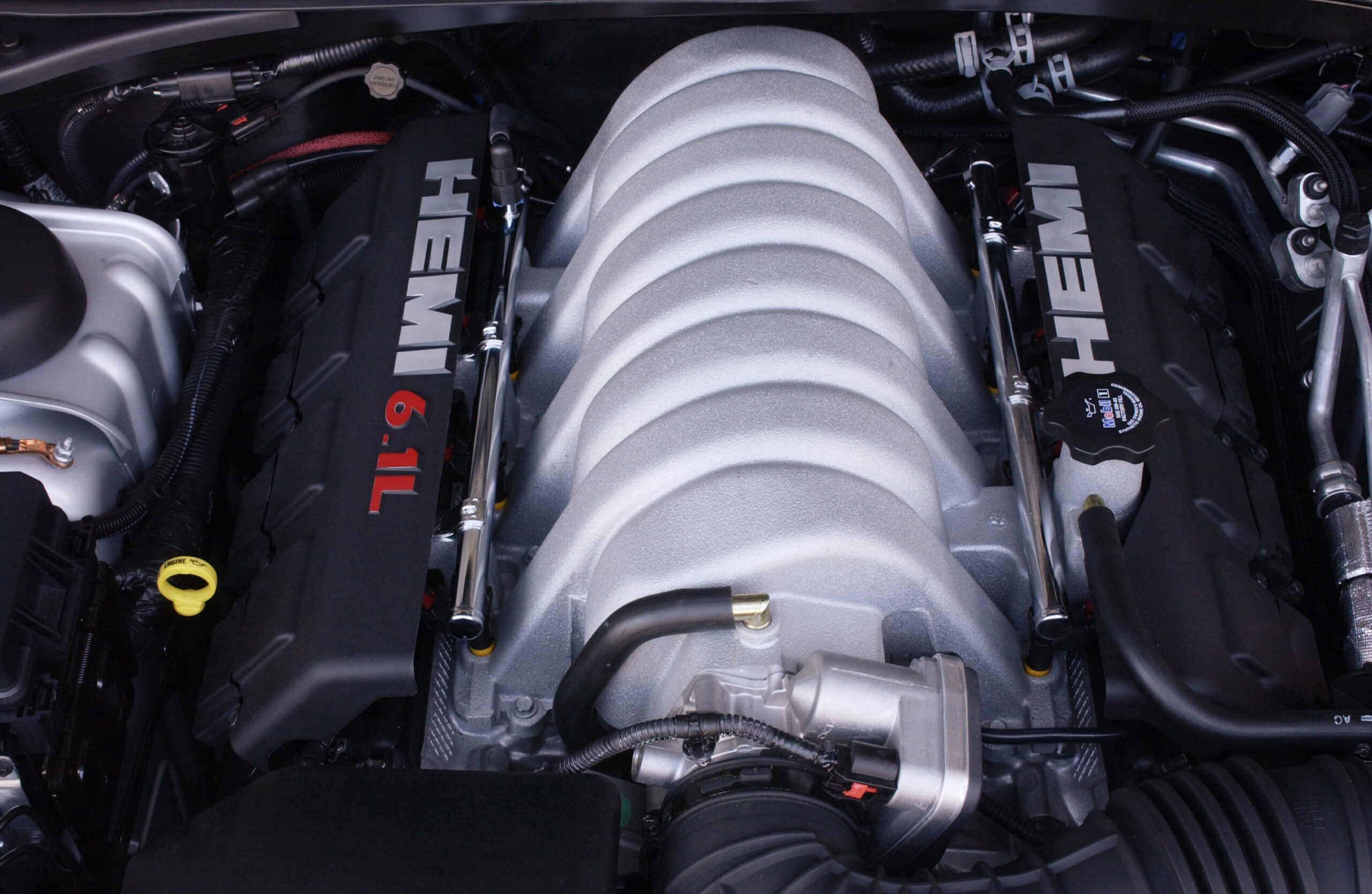
4. Chrysler 6.1-Liter HEMI SRT in the 2006 Chrysler 300C SRT8 Sedan
Chrysler’s 6.1-liter HEMI in the SRT8 application generated enormous enthusiasm when it appeared in production vehicles during the mid-2000s, because it offered genuine American V8 performance at accessible pricing during a period when domestic performance options had been limited by years of emission regulation restraint.
Performance at the price point the 300C SRT8 delivered was genuinely unusual, and buyers and press responded with praise that established the 6.1 HEMI as an icon before enough high-mileage ownership data had accumulated to test whether the enthusiasm was proportionate.
High-mileage 6.1 HEMI ownership revealed head gasket concerns, oil consumption tendencies, and timing system wear patterns that were not consistent with an engine whose reputation suggested it could be driven hard indefinitely without consequences.
Owners who used the 6.1’s substantial power output consistently in performance driving discovered that the engine’s durability at sustained high-load operation was not equivalent to its initial power delivery promise, with mechanical issues arising at mileages that the engine’s reputation suggested should present no concerns.
Fuel consumption from the 6.1 HEMI was substantial, which is a known characteristic that buyers accepted at purchase. What was less clearly communicated was that the fuel consumption in performance driving conditions exceeded even the modest EPA estimates, which were themselves honest about the engine’s appetite.
Buyers who factored EPA numbers into their ownership cost calculations sometimes found that actual operational fuel costs exceeded their budget allowance by margins that the purchase decision had not fully anticipated. Transmission stress from the 6.1 HEMI’s torque output exceeded what the 5-speed automatic transmission in some applications was optimally designed to handle at sustained performance loads, creating reliability concerns in the drivetrain that reduced confidence in the powertrain system as a whole, even when the engine itself was performing correctly.
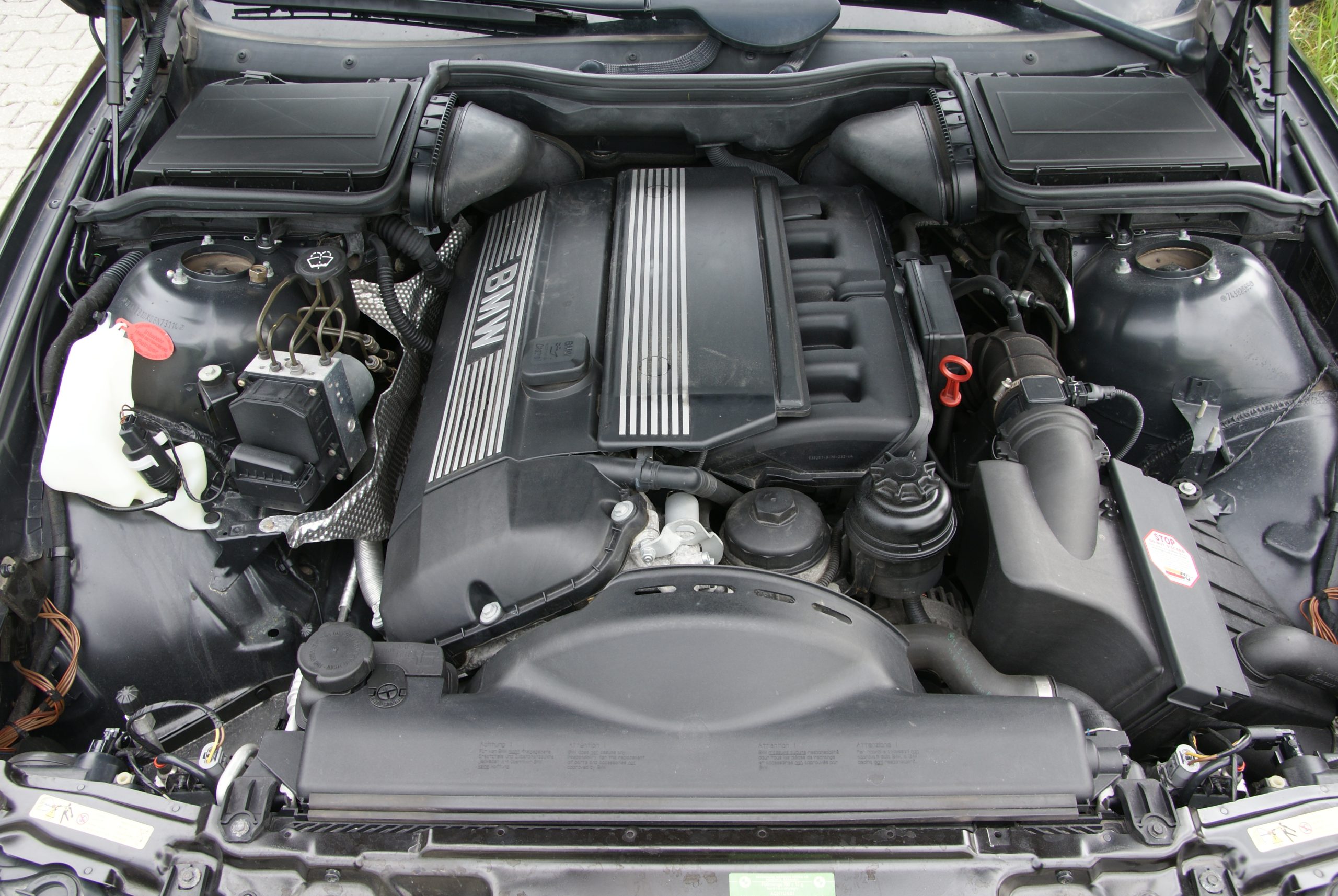
5. BMW M54B30 3.0-Liter Inline-Six in the 2004 BMW 330Ci Convertible E46
BMW’s M54B30 inline-six receives reverence in enthusiast communities that is partially earned and partially the product of the E46 generation’s undeniable driving character being attributed to the engine rather than to the suspension, steering, and chassis that were equally responsible for the vehicle’s appeal.
When an entire car earns a driving reputation, the engine often absorbs more of the credit than it strictly deserves, and the M54B30 benefits from this attribution effect more than its own specific engineering achievement would merit independently.
Cooling system fragility in the M54B30 application is the most thoroughly documented reliability concern, with plastic components in the cooling circuit, including thermostat housings, water pump impellers, expansion tanks, and radiator end caps, that degraded on timelines that BMW’s ownership cost communications did not transparently prepare buyers for.
A preventive cooling system overhaul on a high-mileage M54B30 that addressed all plastic components before failure rather than after was a service that cost $1,500 to $2,500 at independent shops and more at dealers, which was not factored into the “affordable BMW” calculations that E46 buyers frequently performed.
VANOS variable cam timing system in the M54B30 introduced a mechanical component that produced a characteristic rattle at cold start when seals wore, and oil pressure delivery to the VANOS mechanism was delayed during initial startup.
VANOS seal replacement resolved the symptom and prevented the progressive cam timing accuracy loss that continued wear would create, but it required either dealer-level service knowledge or aftermarket expertise that independent mechanics without BMW specialization sometimes lacked. An engine that requires brand-specialist service knowledge for routine maintenance has a higher real-world ownership cost than its used market pricing initially suggests.
Oil leaks from multiple gasket surfaces at higher mileage produced a maintenance requirement that was not exceptional by European vehicle standards, but that American buyers accustomed to Japanese reliability standards found disproportionate to the premium that owning a BMW supposedly delivered.
Valve cover gaskets, oil filter housing gaskets, oil pan gaskets, and rear main seals all appeared in M54B30 service histories with a frequency that honest maintenance cost accounting would present differently than the engine’s enthusiast reputation suggests.
High-quality oil requirement at every service interval added an ongoing cost that basic enthusiast calculations about BMW value sometimes exclude. An engine that produces best longevity outcomes from specific synthetic oil at manufacturer-specified change intervals costs more to maintain correctly than an engine that tolerates conventional oil at extended intervals, and this difference compounds across ownership years into a genuine cost differential that used BMW buyers sometimes encounter only after purchase.
Why does the M54B30 carry the reputation it does? Partly because the E46 chassis is genuinely exceptional, and the smooth, revvy character of the inline-six when properly maintained delivers exactly the engaging experience that BMW’s brand promises. When everything is working as designed, the M54B30 is a pleasure to operate. The overrating comes from that best-case experience becoming the assumed normal rather than the maintained optimum.
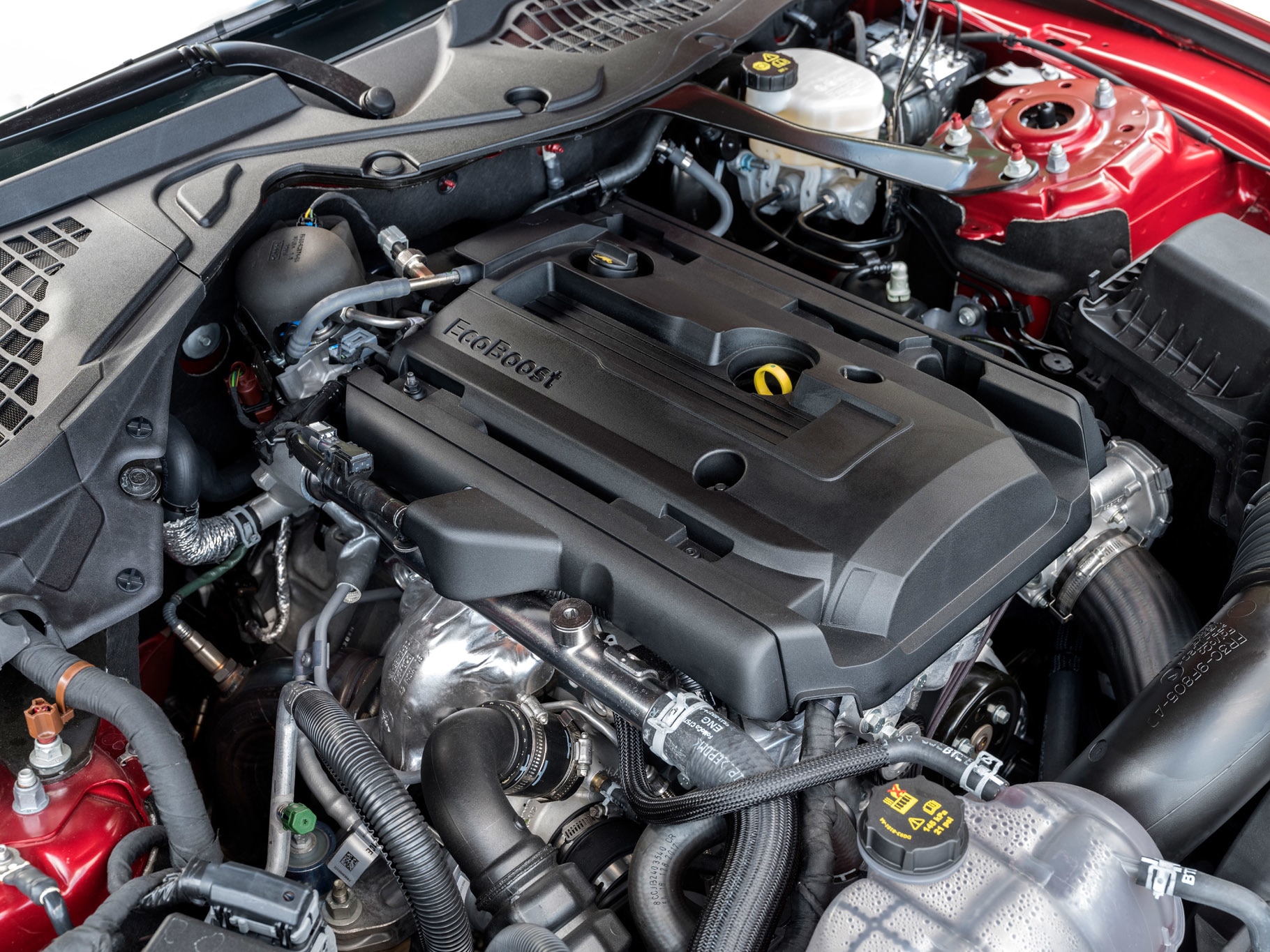
6. Ford 2.3-Liter EcoBoost Inline-Four in the 2015 Ford Mustang EcoBoost Premium Fastback
Ford’s decision to offer the 2.3-liter EcoBoost four-cylinder in the Mustang created a specific kind of controversy that eventually settled into acceptance, and that acceptance has gradually expanded into an enthusiasm that outpaces what the engine deserves in the context of its application.
Mustang buyers who chose the EcoBoost to save fuel while maintaining performance quickly found that real-world fuel economy under Mustang driving conditions produced far more modest efficiency advantages than the marketing gap between the EcoBoost and GT V8 numbers suggested.
Turbocharger response characteristics in the 2.3 EcoBoost produce a power delivery behavior that differs from the linear power curve of a naturally aspirated V8 in ways that Mustang driving specifically reveals. Stop-and-go acceleration events that require immediate throttle response from low RPM encounter the turbocharger’s boost build time before full power is available, which creates a hesitation character in the power delivery that experienced Mustang drivers find inconsistent with the performance driving character the car’s name promises.
Straight-line speed metrics that the EcoBoost achieves at optimal conditions are genuine, but the driving experience connecting those metrics to the driver’s inputs feels less immediate than the numbers suggest. EcoBoost engine also borrowed its basic architecture from Ford’s passenger car applications, which means that the Mustang application of this engine was an adaptation rather than a clean-sheet performance design.
Adaptation is not inherently inferior to purpose-built design, but it creates specific engineering challenges in areas like thermal management, exhaust routing, and intake positioning that purpose-built engines avoid because they are designed around their specific application from the beginning.
Spark plug carbon fouling from direct injection that the EcoBoost uses exclusively, without port injection to wash the intake valves, created a service requirement that owners of high-performance driving habits encountered earlier than casual driving would produce.
Intake valve cleaning through walnut blasting or chemical cleaning at intervals shorter than Ford’s recommendation under performance driving conditions adds a maintenance cost that EcoBoost Mustang buyers were not always informed of at purchase.
What the EcoBoost Mustang deserves is respect as a capable, accessible performance option that delivers genuine pace with reasonable running costs for buyers who drive calmly and value efficiency. What it receives is comparison to and near-equivalence with the V8 GT that its enthusiast defenders sometimes argue, which requires selectively ignoring the driving character differences that the two powertrains create.
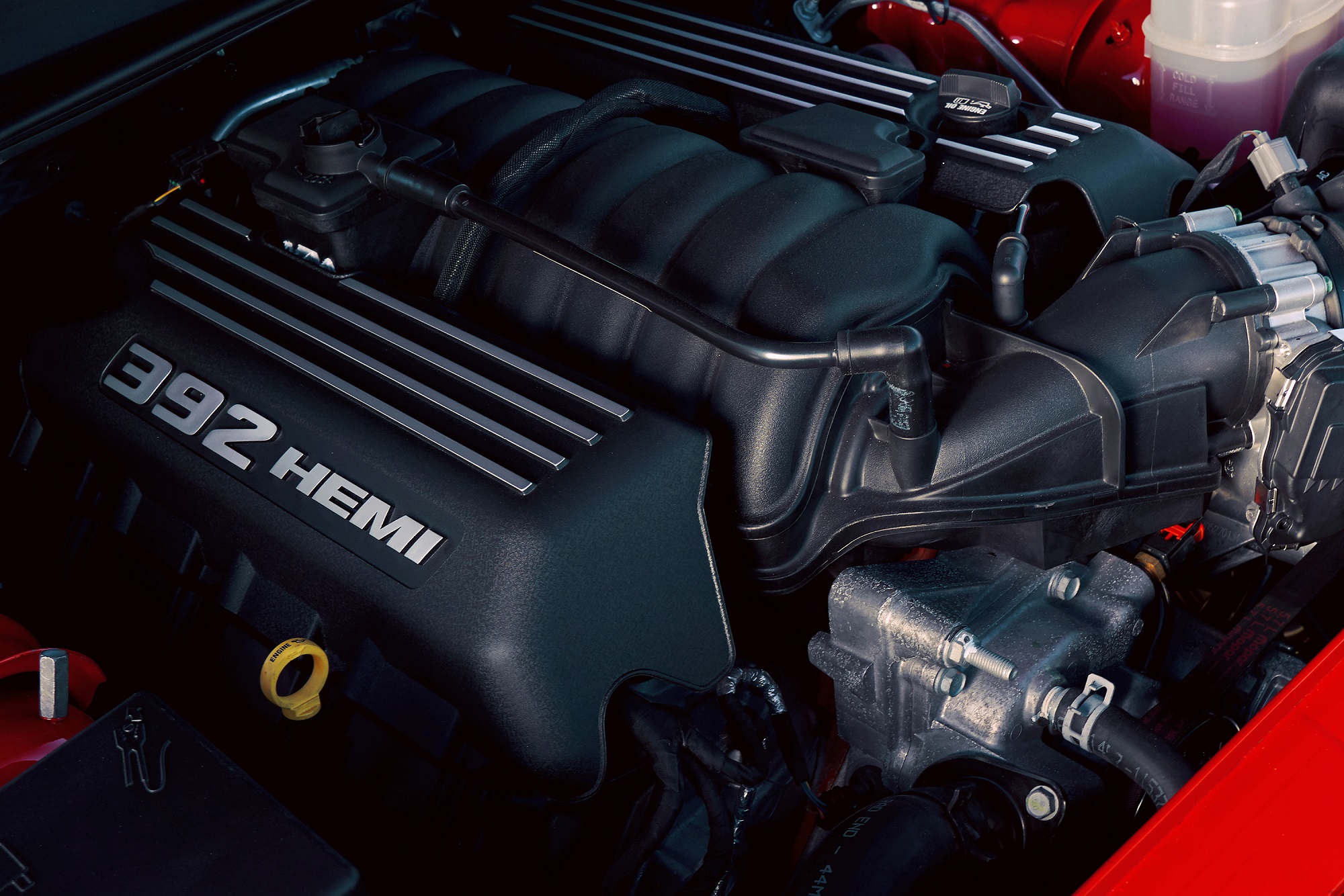
7. Dodge 6.4-Liter HEMI Apache in the 2012 Dodge Challenger SRT8 392 Coupe
Chrysler’s 392 cubic inch HEMI, marketed under the Apache name for SRT8 applications including the 2012 Challenger SRT8, received enthusiast praise that was disproportionate to what the engine added over the 6.1 it replaced in terms of technological sophistication. Adding displacement is a straightforward path to additional power, and the 6.4 HEMI’s power increase over the 6.1 reflected exactly this straightforward approach rather than the sophisticated engineering advancement that the marketing implied.
Fuel consumption from the 6.4 Apache in the Challenger SRT8 body was substantial regardless of the Multi-Displacement System that deactivates cylinders during light-load cruising, because the conditions that produce cylinder deactivation are infrequently met during the kind of performance driving that buyers of this specific vehicle typically engage in.
EPA estimates that show reasonable combined fuel economy for this engine are achievable only in driving cycles that do not reflect how Challenger SRT8 buyers actually operate their vehicles, which means real-world ownership fuel costs consistently exceed the estimates that influenced purchase decisions.
Transmission options available with the 6.4 in this period, specifically the five-speed automatic, were adequate for casual performance driving but fell short of the calibration precision that the engine’s power output warranted for track use or sustained performance driving.
Gear ratios that left gaps in the power band at certain speeds produced situations where the engine felt less authoritative than its displacement suggested it should, and the transmission’s heat management under sustained performance conditions produced behavior that owners who tracked their cars found limiting.
SRT8 branding on the Challenger conveyed performance expectations that the complete vehicle package sometimes fell short of in areas beyond straight-line acceleration, including braking consistency under repeated hard stops, suspension compliance under performance cornering loads, and the general sense of refined performance integration that purpose-built sports cars from the same price range delivered more consistently.
Also Read: 10 Engines That Run Better at 200,000 Miles Than at 50,000
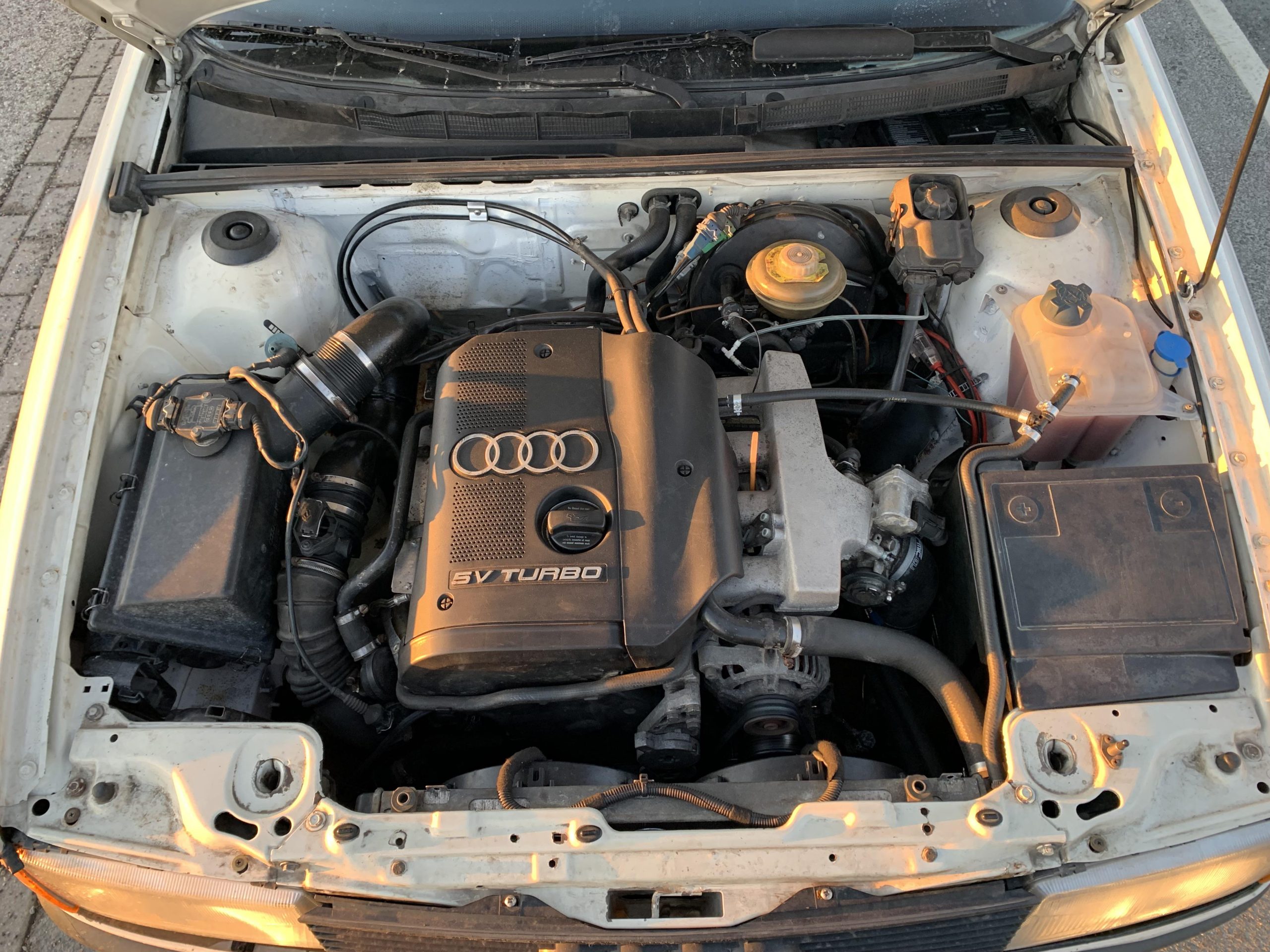
8. Volkswagen 1.8T AEB in the 2001 Volkswagen Passat GLS 1.8T Sedan
Volkswagen’s 1.8-liter turbocharged four-cylinder from the late 1990s and early 2000s earned a reputation as a sporty, willing, sophisticated European turbocharged engine that distinguished VW products from their naturally aspirated competitors in the American market.
Turbocharger response, European refinement, and performance per displacement that exceeded expectations created a buying community that praised the 1.8T consistently, sometimes without adequately addressing the engine’s specific sensitivity to maintenance discipline, which made it a very different ownership experience than the reputation suggested.
Oil sludge buildup in the 1.8T was the engine’s defining reliability challenge, occurring when oil change intervals were extended beyond the manufacturer’s specification or when oil quality fell below the specification the engine required for its specific thermal and turbocharger operating conditions.
Unlike engines that accommodate relaxed oil maintenance schedules through robust internal design, the 1.8T’s turbocharger oil feed and return circuits and its specific internal oil circuit geometry made it acutely sensitive to oil quality degradation in ways that were not clearly communicated to buyers who associated European engineering with maintenance tolerance.
Sludge accumulation that resulted from extended intervals or incorrect oil specification could progress from reduced oil pressure to bearing damage to catastrophic engine failure without producing warning signs proportionate to the severity of the developing damage.
An engine that fails suddenly after a maintenance oversight that other engines would survive without lasting damage is an engine that demands exceptional owner discipline rather than rewarding the casual maintenance approach that reliability reputation implies is safe.
Turbocharger wear from the heat cycles and oil quality sensitivities that the 1.8T experienced contributed to earlier turbocharger replacement intervals than the technology’s reputation suggested. A replacement turbocharger on a vehicle that was purchased partly for its turbocharged performance character represents a cost that the original purchase calculation should account for, but that enthusiastic praise for the 1.8T rarely prepared buyers to expect.
