
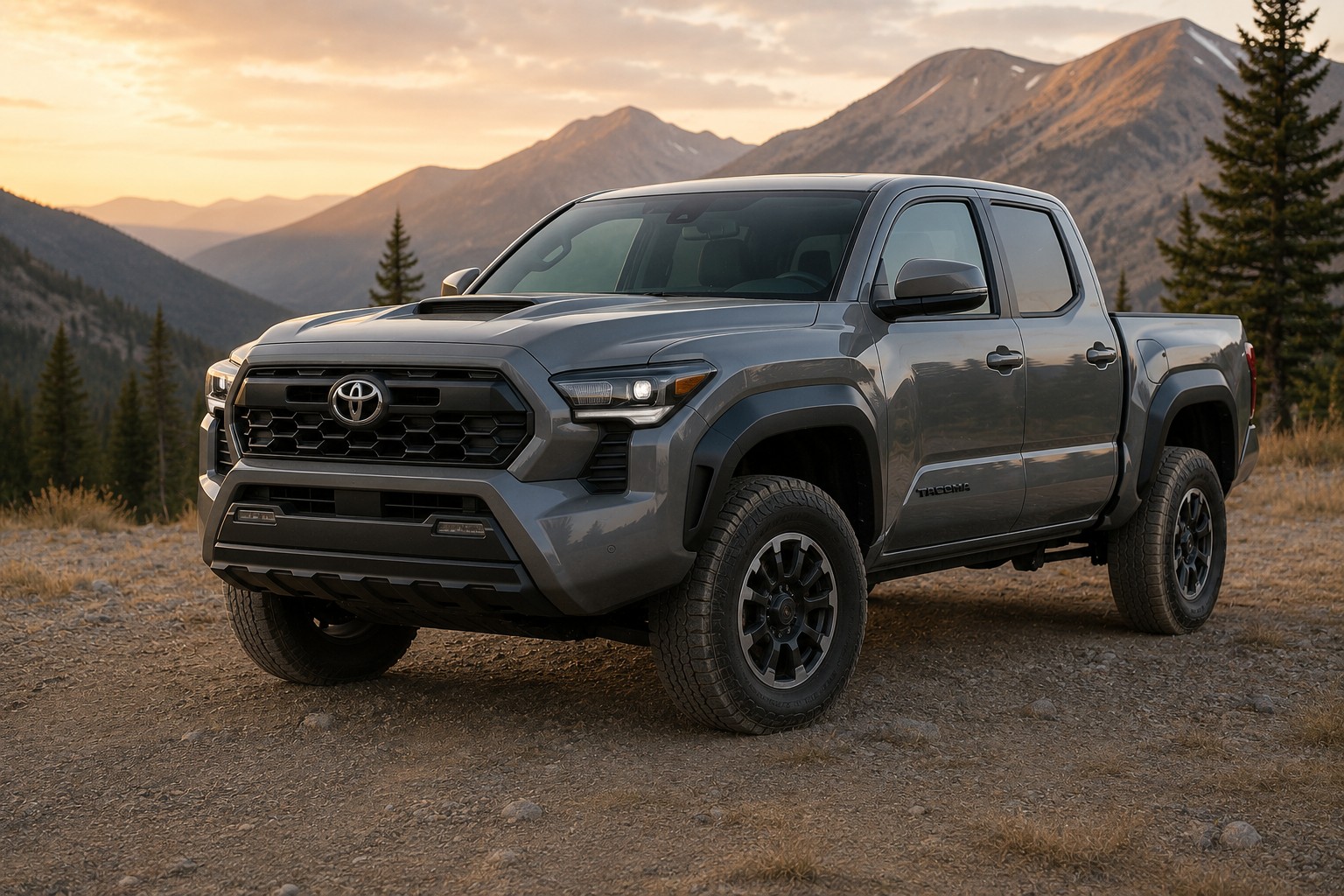
There is a particular kind of trust that takes decades to build and only a few bad years to shake. Toyota built that trust with the Tacoma over nearly three decades of bulletproof reliability, off-road dominance, and resale values that defied logic.
But by the early 2020s, something had quietly shifted. The truck that once ruled every category was now aging visibly. Rivals had modernized. Buyers had more options. Critics had more ammunition.
The Tacoma gradually fell further behind a growing collection of competitors while, paradoxically, its sales continued to increase. That strange contradiction, people still buying it even as it fell behind, revealed just how deep the loyalty ran. Toyota understood this.
They also understood that loyalty, stretched too thin for too long, eventually snaps. So they made a decision that was years in the making. They tore the Tacoma down to the ground and rebuilt it as the most capable, most modern, most thoroughly reimagined version in the truck’s history.
The result surprised even the most skeptical observers. The current Tacoma represents the most significant redesign in the truck’s history. When it arrived, Toyota’s reputation did not just recover; it bounced back faster than almost anyone in the industry had predicted.
A New Foundation Built to Last Generations
Every great truck begins with its bones. The frame, the platform, the underlying architecture, these decisions shape everything that rides on top. For the 2024 Tacoma, Toyota made its most ambitious structural decision in the nameplate’s history. Rather than refresh the existing setup, it started over entirely.
The fourth-generation Tacoma was built on Toyota’s TNGA-F platform, shared with the Tundra and Land Cruiser. This was not a budget decision or a shortcut. It was a deliberate commitment to truck-grade engineering at a mid-size scale. The same platform that underpins one of the most capable full-size trucks on the market now forms the backbone of the Tacoma.
The platform brought with it a high-strength boxed steel ladder frame. This design increases rigidity while simultaneously reducing weight. A stronger, lighter frame directly translates to better handling, improved fuel economy, and greater durability over a truck’s lifetime, three things that matter enormously to international buyers who put serious mileage on their vehicles.
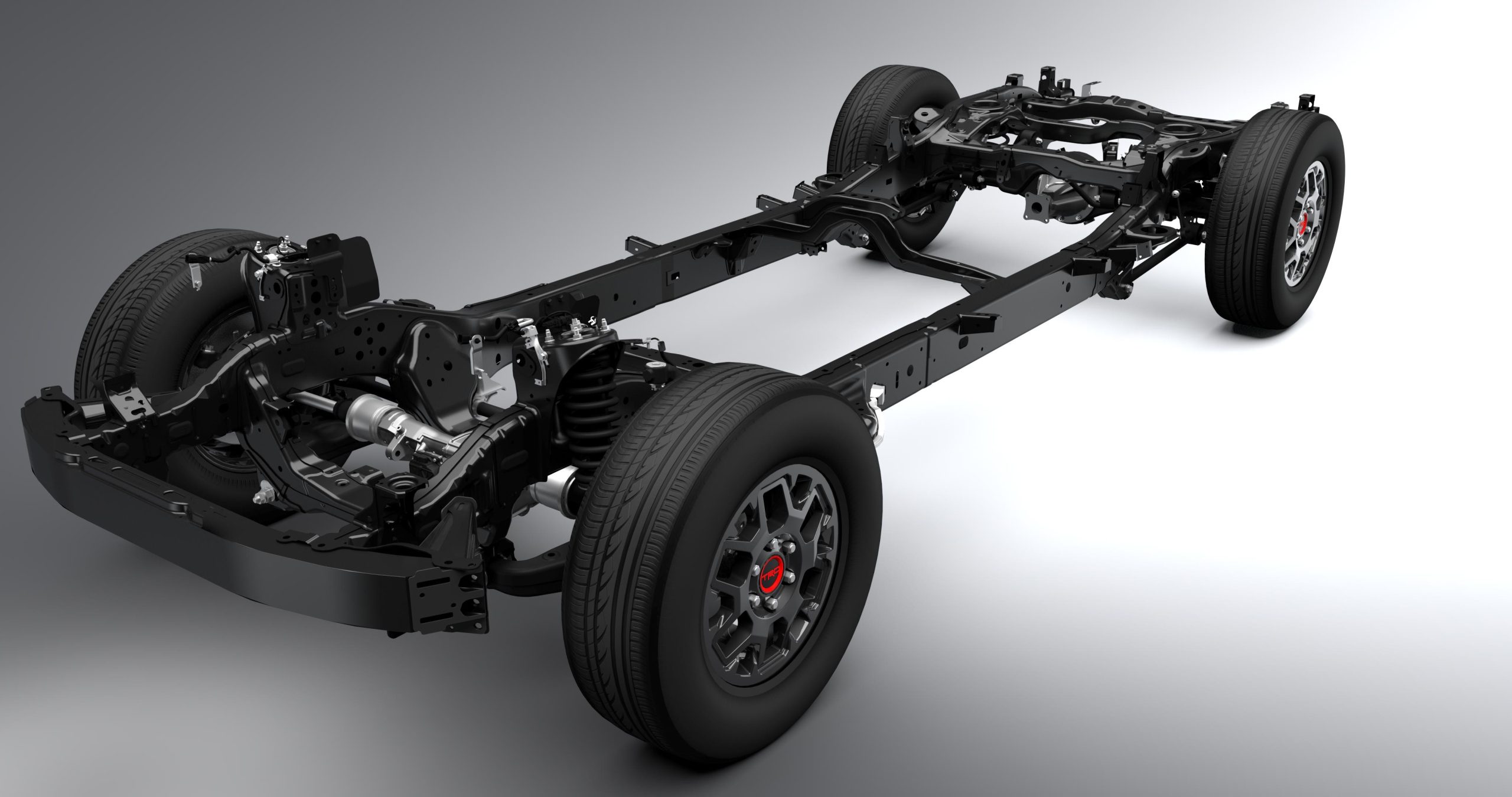
The chassis redesign also included a new front cross member and a more rigid steering box mount. These additions enhanced front-end stability under load and during hard cornering. For buyers in markets with rough, unpaved roads across South Asia, the Middle East, Sub-Saharan Africa, and Latin America, this level of structural integrity is not a luxury. It is a daily necessity.
The wheelbase grew by approximately four inches, yet the length of the truck stayed nearly identical to the previous generation. This means the new Tacoma can still be parked comfortably in most standard garages. That was a smart engineering decision that foreign buyers especially appreciate, particularly in dense urban markets where parking space is a genuine constraint.
Though the design clearly carries influences from the larger Tundra full-size truck, the new 2024 Tacoma reads as a modern and technical evolution of the outgoing model. It kept its visual identity while shedding its mechanical age. That balance, familiar face, entirely new body gave longtime fans something to hold onto while signaling clearly to new buyers that something fundamental had changed underneath.
The Engine Swap That Divided Opinion and Won Everyone Over
No decision in the 2024 Tacoma’s development generated more debate than the engine. Toyota retired the beloved 3.5-liter V6 and replaced it with a turbocharged 2.4-liter four-cylinder. On paper, this looked like a step backward. Fewer cylinders, smaller displacement to traditional truck buyers, that equation reads as a downgrade. Reality told a completely different story.
The turbocharged 2.4-liter four-cylinder, paired with the new eight-speed automatic transmission, produces 278 horsepower and 317 pound-feet of torque. Those numbers exceed what the old V6 delivered at its peak.
Torque, the pulling force that actually matters when hauling cargo, towing a trailer, or climbing a steep trail, improved significantly. Drivers who initially doubted the smaller engine were quickly converted after spending time behind the wheel.
The eight-speed automatic transmission transformed the driving experience completely. Previous Tacoma transmissions were criticized for hunting between gears and delivering hesitant power delivery. The new unit is intuitive and quick. It reads driver intent accurately and responds without drama. For international buyers accustomed to European or Korean trucks with refined gearboxes, this upgrade finally brought the Tacoma into fully competitive territory where it could be evaluated on equal terms.
Interior and Technology: The Cabin Toyota Should Have Built Years Ago
If the previous Tacoma generation had one clear weakness that united every critic, it was the cabin. Functional, durable, honest, but also dated, plastic-heavy, and far behind what rivals were offering. Foreign buyers who cross-shopped the Tacoma against a Ford Ranger or Chevrolet Colorado felt that gap immediately and decisively. The 2024 model closed it with purpose and confidence.
The optional 14-inch infotainment screen is large, clear, and genuinely easy to use. The interior is modern yet still prioritizes large physical knobs and buttons for everything from climate control to audio. That combination of digital sophistication with tactile controls is exactly what drivers in demanding environments need. A touchscreen alone is inadequate when wearing work gloves on a job site. Toyota understood this reality and designed accordingly.
Wireless Apple CarPlay and Android Auto are now standard across the entire lineup. A wireless charging pad and JBL premium audio system are available on upper trims. These features, standard in many contemporary sedans sold worldwide, were largely absent from previous Tacoma generations.
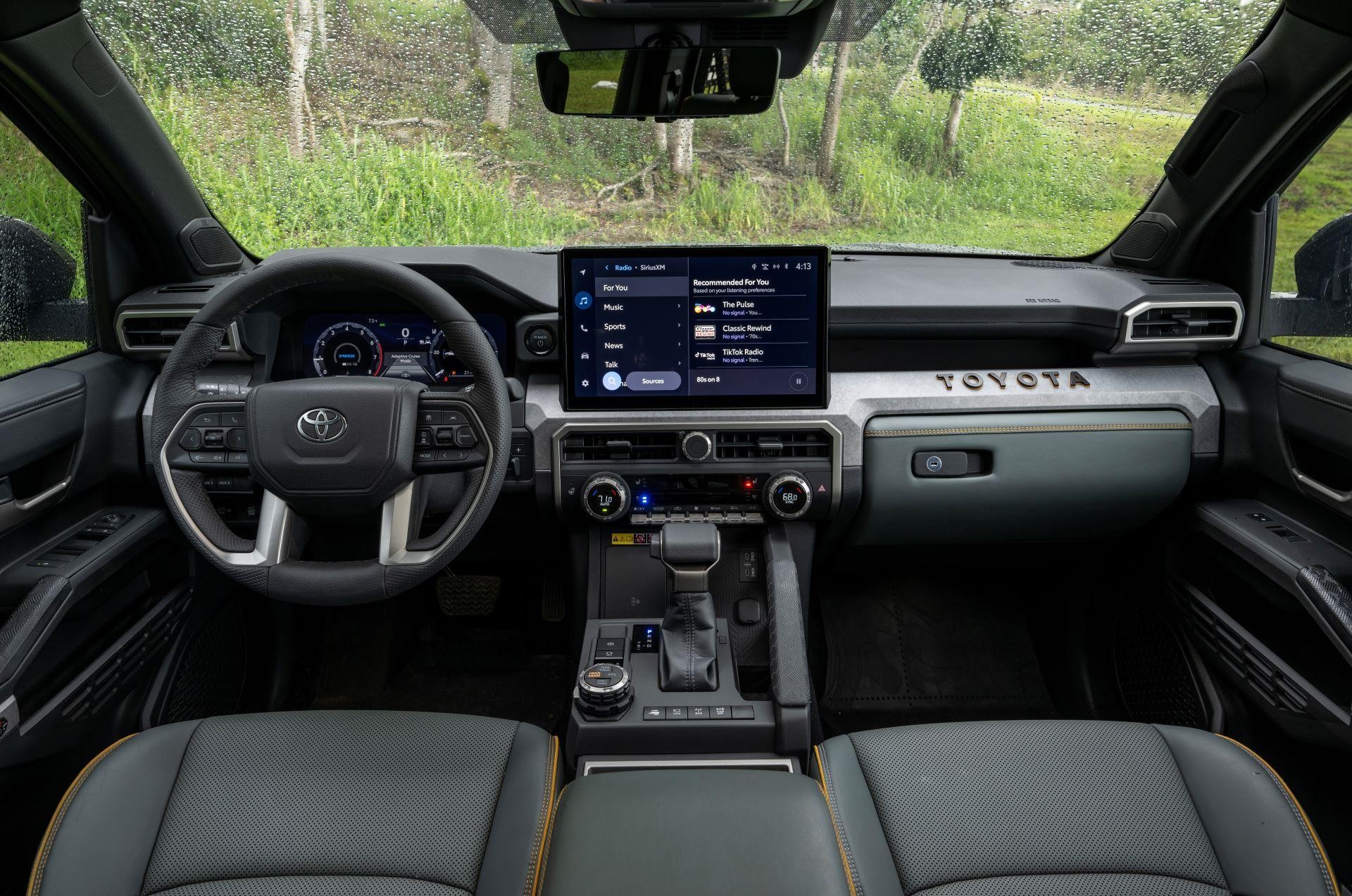
Their inclusion signals a serious shift in how Toyota views the Tacoma buyer no longer just a contractor or hardcore off-road purist, but a connected, technology-aware individual who expects modern comfort alongside rugged capability.
The seating position improved dramatically from the previous generation. The new Tacoma provides a tall and upright driving position that reduces fatigue on long journeys. Front seats feel more supportive and better contoured. For buyers in markets where the Tacoma serves as a primary daily work vehicle covering hundreds of kilometers at a stretch, this ergonomic improvement is not trivial; it is a meaningful quality of life.
Safety technology took a major leap forward as well. Standard equipment now includes automatic emergency braking with pedestrian detection, adaptive cruise control with lane-centering, road sign detection, hill-start assist, and automatic high beams.
A digital rearview mirror, 360-degree top-down camera system, trailer backup guide, and trailer brake controller are available on select trims. For foreign markets with increasingly strict vehicle safety regulations, the 2024 Tacoma arrives fully prepared and future-proofed.
Off-Road Credentials Taken to a New Level
The Tacoma earned its off-road reputation honestly. Decades of performance across deserts, mountain trails, and jungle tracks built a legacy that no marketing campaign could manufacture. The 2024 redesign took that earned legacy and equipped it with genuinely advanced hardware for the first time, raising the bar significantly above what any previous generation offered.
Two suspension setups are available depending on trim level. Lower trims use a traditional leaf-spring rear suspension, proven, simple, and effective for load-carrying work. Higher trims receive a multi-link coil-spring rear suspension that delivers a noticeably smoother ride without sacrificing load-carrying ability. The gap in ride quality between these two setups is significant and worth considering carefully during a purchase decision, especially for buyers who split time between paved and unpaved surfaces regularly.
A new Adaptive Variable Suspension system is available on select trims. This technology adjusts damping forces in real time based on road surface feedback. On a smooth highway, it softens the ride. On a rough trail, it firms up to maintain control and protect the chassis. This kind of active suspension management was previously reserved for luxury SUVs priced well above the Tacoma’s range. Toyota brought it into the mid-size truck segment without apology.
Maximum towing capacity reaches 6,500 pounds when properly equipped. The hybrid powertrain’s 2,400-watt bed-mounted power inverter allows owners to run power tools, charge equipment, and operate electrical devices directly from the truck bed. For tradespeople, outdoor workers, and overlanders across the globe, this feature has genuine everyday value that goes beyond specification sheets.
The Sales Story: A Dip, Then a Historic Surge
No discussion of the 2024 Tacoma’s impact is complete without examining what happened to its sales figures. The initial months of the redesign launch showed a significant volume drop. Early 2024 sales fell sharply as Toyota ramped up production at its manufacturing plants in Baja, California, and Guanajuato, Mexico.
Supply was constrained. Lower-trim models dominated dealer inventories. Many of the most desirable configurations, including the hybrid TRD Pro and Trailhunter, did not reach showrooms until months after the initial launch date.
But what followed that early dip was remarkable by any measure. The Tacoma posted year-over-year sales gains exceeding 60 percent through the first three quarters of 2025. The rebound was not a slow, gradual recovery driven by discounts or promotional financing. It was an explosion of organic demand that caught even optimistic analysts by surprise and forced competitors to reconsider their own strategies.
Through the third quarter of 2025, the Tacoma had delivered over 204,000 units in North America alone, while the nearest competitor moved fewer than 78,000 units over the same period. That is not a close race. It is market dominance of a kind rarely seen in a segment that had grown genuinely competitive over the previous five years.
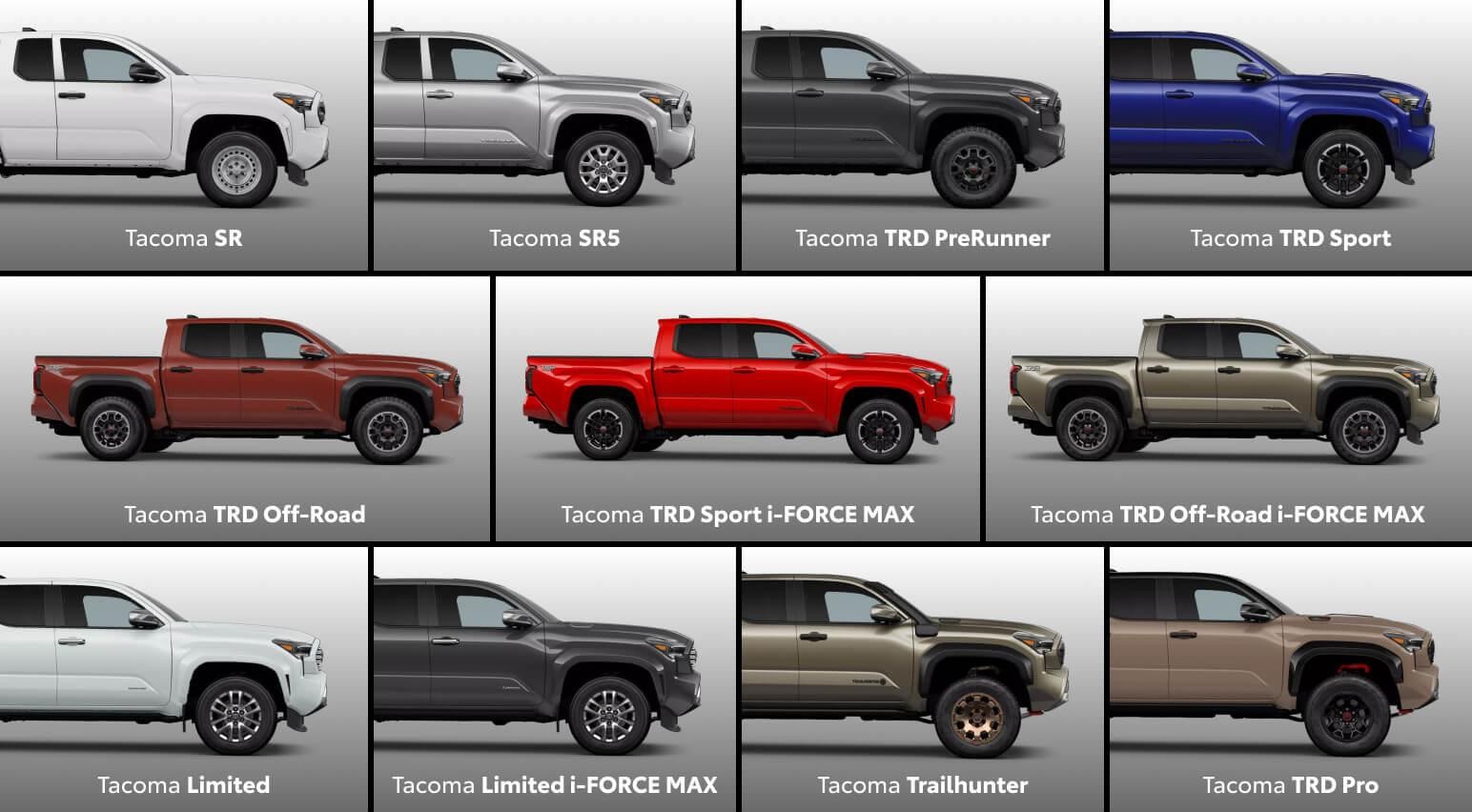
The i-FORCE MAX hybrid accounted for over 22,000 of those sales through the first nine months of 2025. Buyers demonstrated a clear willingness to pay the price premium for additional torque, the advanced powertrain, and the practical utility of the onboard power inverter. That buyer behavior confirmed something important: the 2024 Tacoma had successfully upgraded the conversation from a value purchase to a premium-justified product.
The sales recovery was not driven by incentives. It was driven by product quality and word-of-mouth from owners who drove the truck and reported back honestly. When buyers who had been skeptical of the initial pricing actually spent time behind the wheel, the justification became clear. This was not the same truck wearing new clothes. It was an entirely different machine wearing a familiar name.
Why the Reputation Recovery Happened Faster Than Anyone Predicted
Automotive reputations are slow-moving things. A brand that loses credibility through poor reliability or lazy product development typically spends years recovering lost ground. Buyers are cautious. Journalists are unforgiving. The market has a long memory and a short tolerance for mediocrity dressed up as progress.
Toyota’s reputation recovery with the 2024 Tacoma defied that pattern entirely. The reasons are worth examining carefully because they reveal something important about how consumer trust actually operates in the global truck market.
First, Toyota never lost the reliability narrative completely. Even during the years when the Tacoma felt dated and outclassed in categories like interior quality and powertrain refinement, it continued to hold its value better than almost any competing vehicle.
Owners kept them longer. Used prices stayed unusually high. That residual trust meant that when a genuinely improved product arrived, buyers who had been waiting returned quickly rather than defecting permanently to rivals who had spent years trying to capture their attention.
Second, the redesign addressed every major criticism simultaneously rather than incrementally. The platform was new. The engine was new. The transmission was new. The interior was new. The safety technology was new. The off-road hardware was new.
Rivals who had been winning individual category comparisons suddenly found themselves facing a truck that had closed most of the gaps in a single generation jump. There was no obvious remaining argument for choosing an alternative based on the Tacoma’s previous weaknesses.
Third, the 2024 Tacoma transformed from a truck that most people purchased purely on the strength of its reputation into one of the best options available in its class, offering genuine off-road capability, a refined on-road ride, an extensive and well-considered model lineup, and technology features that met contemporary expectations.
When a product moves from being a single-attribute purchase to a multi-attribute winner, the market responds loudly and quickly. That is precisely what happened here, and the sales data makes the case without ambiguity.
Also Read: Why Buying a Used Lexus Beats Buying a New Toyota in 2026
