
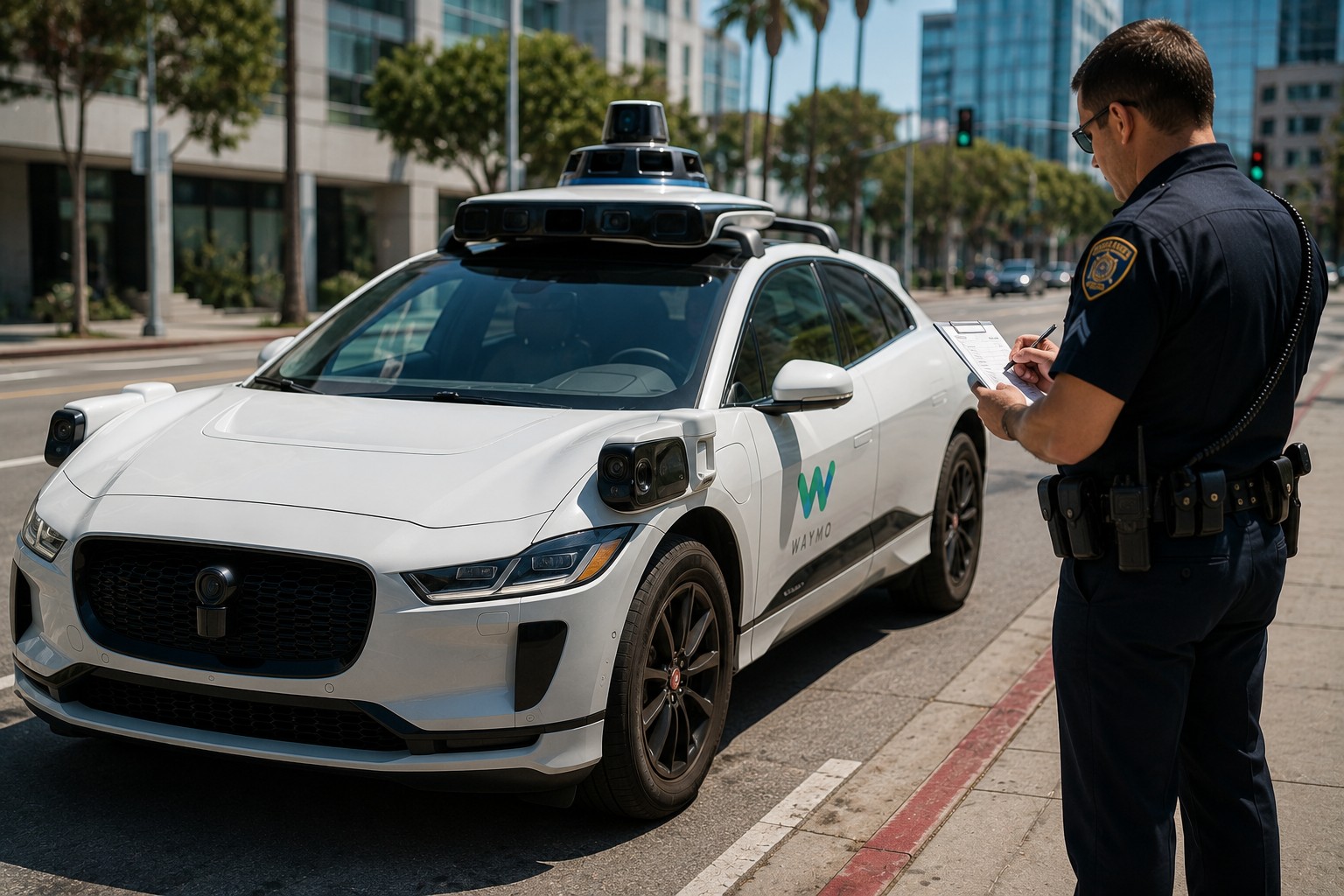
Picture this: a police officer watches a sleek, driverless car glide through a stop sign, execute an illegal U-turn, and casually block a fire truck’s path all without a single human being inside.
The officer pulls it over, walks up to the window, and finds nobody to hand a ticket to. For years, this was not just a hypothetical, it was an everyday reality on California’s streets.
Robotaxis operated in a kind of legal twilight zone where the law simply had no answer to a driver that didn’t exist. Companies like Waymo and Tesla quietly benefited from this loophole, their vehicles racking up violations that would have cost any human driver dearly, with almost zero consequence.
That strange, frustrating chapter is finally closing. Starting July 1, 2026, California is making clear that when a machine breaks the law, someone still has to answer for it.
Closing the Loophole
The fix arrives through Assembly Bill 1777, signed by Governor Newsom in September 2024 and now translated into enforceable regulations by the California DMV. The law does something elegantly simple: it treats the manufacturer as the driver.
When an officer witnesses a robotaxi speeding, blowing past a school bus, or creeping through a red light, they can now issue a “Notice of AV Noncompliance,” a formal citation that names the autonomous vehicle company as the responsible party.
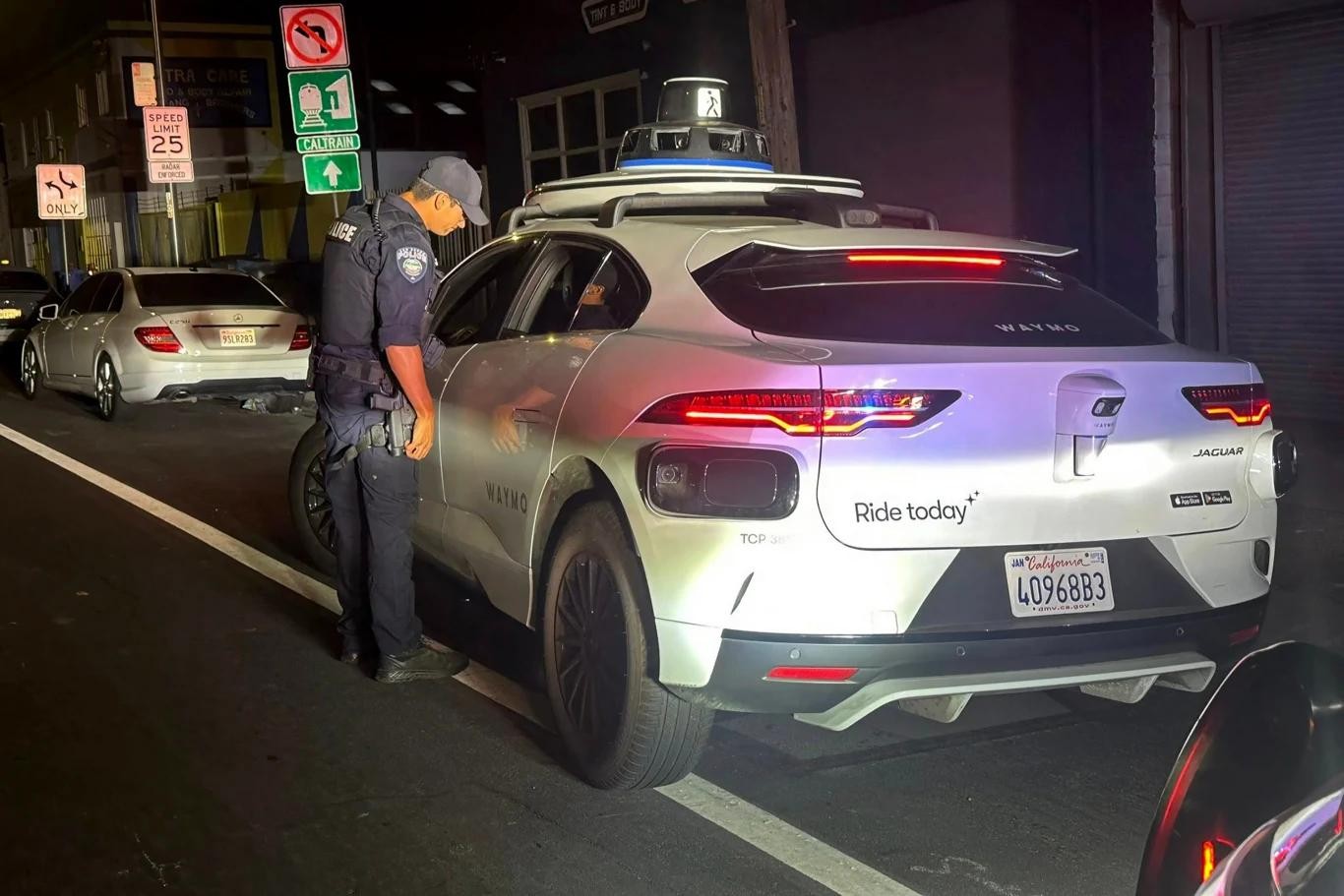
The notice carries the same essential details as any standard traffic ticket: date, time, location, license plate number, and the specific laws broken. The company then has 72 hours to report the citation to the DMV, or just 24 hours if the incident involved a collision or serious safety risk. Repeat offenders or companies involved in particularly dangerous incidents risk having their operating permits suspended or revoked entirely.
Years of Unpunished Chaos
The urgency behind these new rules is no accident; it is the product of years of mounting frustration from residents, city officials, and emergency responders who watched driverless cars misbehave with no legal recourse available.
In San Francisco, Waymo robotaxis stalled at intersections during a blackout in December 2025, gridlocking entire neighbourhoods. A Waymo once blocked a fire truck responding to an emergency in the same city. In Atlanta, another Waymo blew past a school bus with its red stop-arm extended, a violation that carries a $1,000 fine for human drivers.
And in 2023, a Cruise robotaxi dragged a pedestrian several feet after she was struck by a separate human-driven vehicle, an incident that ultimately led to GM shutting down the Cruise programme entirely. Each time, the law offered little remedy beyond a politely worded complaint to the company.
New Powers for First Responders
Beyond traffic tickets, the new regulations hand emergency personnel a powerful new tool: electronic geofencing. Under the law, AV operators must respond to calls from first responders within 30 seconds, and emergency services can issue digital directives instructing robotaxis to vacate a specific zone during an active operation.
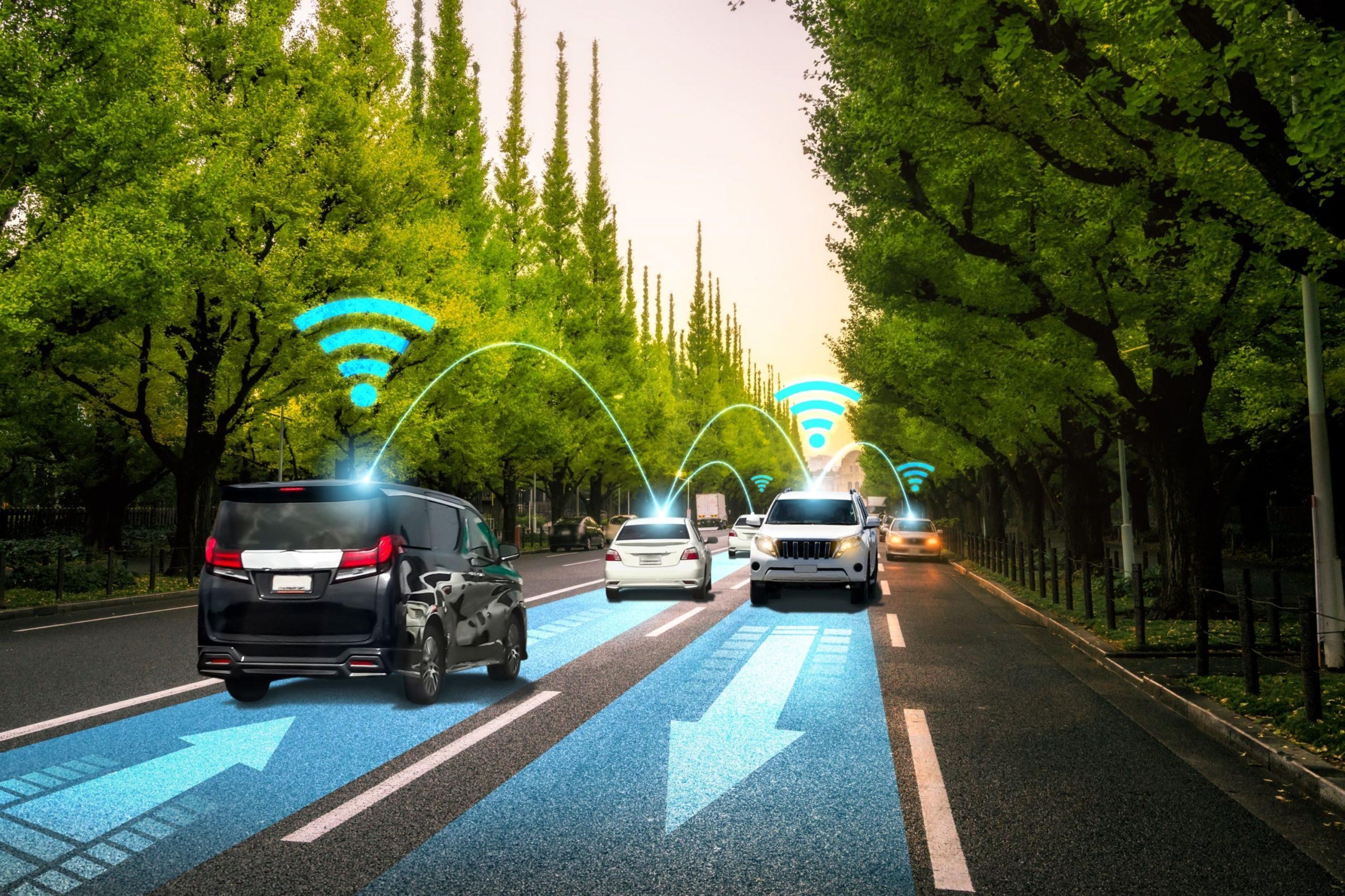
This directly addresses one of the most consistent complaints from firefighters and paramedics, who have found autonomous vehicles frozen in place at the worst possible moments.
Will Fines Actually Change Anything?
The honest answer is: perhaps not dramatically, at least not immediately. Waymo’s parent company is Alphabet, one of the wealthiest corporations on the planet, and fines levied against its robotaxi division in 2024 were negligible by comparison. But money is not the only thing at stake.
The real pressure lies in the threat to operating permits. A company that accumulates serious violations risks losing the right to operate its vehicles in the fifth-largest economy, and that consequence is one no Silicon Valley boardroom can afford to ignore.
California calls these the most comprehensive autonomous vehicle regulations in the nation. Whether they prove to be a genuine turning point or just the beginning of a longer battle for accountability, one thing is now certain: on California roads, no driver is an excuse.
Also Read: How to Catch Air Suspension Failure Before It Strands You
