
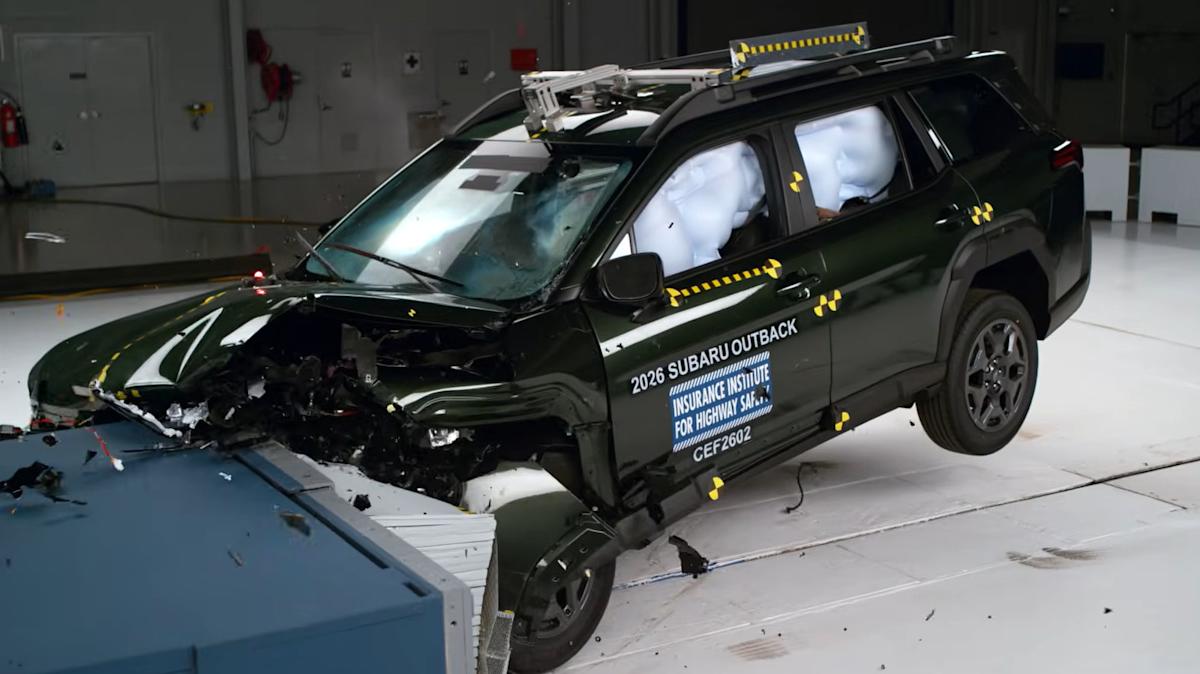
Speed changes everything in a crash. What might be a manageable collision at 25 miles per hour becomes a life-altering event at 43 miles per hour, and that is precisely why the Insurance Institute for Highway Safety raised the stakes on its crash avoidance testing by introducing evaluations at that higher speed threshold.
Most drivers spend a meaningful portion of their daily commute at or near 43 mph, which makes this test speed a far more realistic measure of a vehicle’s protective capability than lower-speed alternatives. Passing this test is not easy. At 43 mph, automatic emergency braking systems have less time to detect a threat, calculate a response, and apply stopping force before contact occurs.
Vehicles that merely squeaked through lower-speed evaluations often fail dramatically when the approach speed increases. Structural components that held together at lower impact energies deform differently at higher speeds, and restraint systems that performed adequately at 25 mph face substantially greater loading at 43 mph.
Earning a passing result at this speed represents a genuine engineering achievement, not a participation trophy. For car buyers, this information is directly actionable. Choosing a vehicle that has passed the 43 mph crash avoidance test means choosing a vehicle whose engineers designed the safety systems with real-world speeds in mind rather than test-track conditions that bear little resemblance to actual driving.
It also means choosing a vehicle that protects the people inside it and the people outside it with technology and structure tested at speeds that reflect how Americans actually drive. Eight vehicles are covered in this page, each with its full name and model designation, and each with a specific explanation of what makes its performance at this test speed genuinely earned.
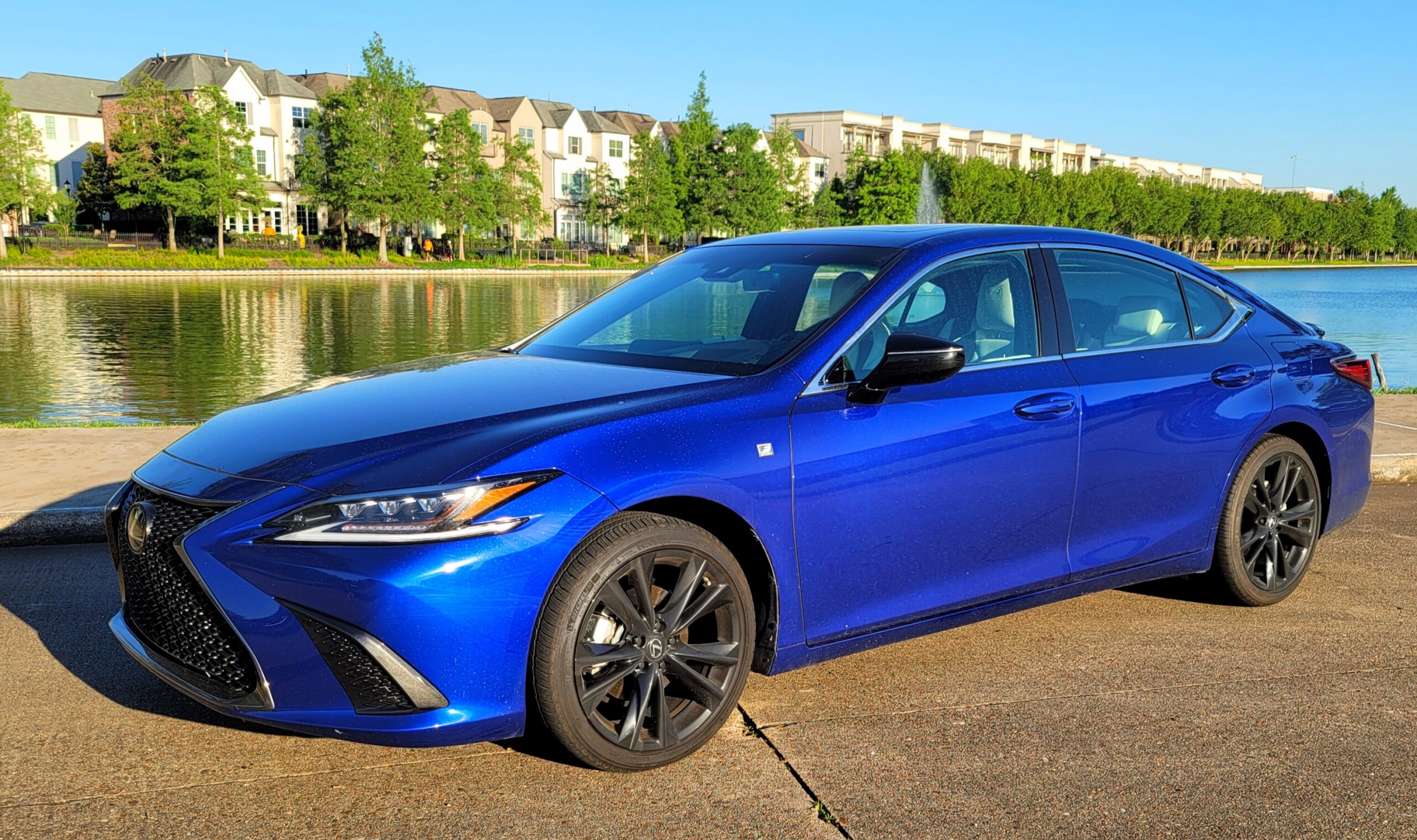
1. Lexus ES 350 F Sport Sedan
Lexus has built a brand identity around refinement, and in active safety technology, that refinement extends to a pedestrian and vehicle crash avoidance capability that holds up under conditions designed to expose inadequate engineering.
Lexus ES 350 F Sport Sedan carries Toyota’s most current Safety Sense 3.0 implementation, and at the 43 mph test threshold, that system’s combined camera and radar architecture demonstrates why dual-sensor configurations consistently outperform single-sensor alternatives under higher-speed threat scenarios.
At 43 mph, the window between threat detection and contact narrows to fractions of a second. Pre-Collision System with Pedestrian Detection on the ES 350 F Sport processes forward sensor data at a rate that allows threat identification and brake application initiation well within the time available at that speed, provided the system has been calibrated accurately for the vehicle’s weight, stopping distance, and sensor response time. Lexus engineers validated the PCS system across a range of approach speeds during development, and the 43 mph test conditions fall within the envelope the system was designed and calibrated to address.
Structural performance at 43 mph is the other dimension of passing this type of test that buyers should understand. When automatic emergency braking reduces impact speed but does not achieve a full stop before contact, the structural integrity of the vehicle’s front-end design determines how much of the remaining impact energy reaches the passenger compartment.
Lexus ES 350 F Sport’s front-end architecture uses high-strength steel in load-bearing elements, energy-absorbing crush zones between the front bumper and engine bay, and a reinforced firewall that resists intrusion when deformation forces are transmitted rearward through the structure.
Restraint system performance during higher-speed impact events requires pretensioner response and airbag deployment timing calibrated to occupant position data that the vehicle’s sensor network provides in real time. Lexus ES 350 F Sport’s restraint control module receives information from occupant position sensors, crash severity sensors, and seat belt pretensioners simultaneously, coordinating a response that deploys restraint forces appropriate to the actual impact severity rather than a fixed deployment threshold. That adaptive response protects occupants across a wider range of impact conditions than fixed-threshold systems.
Active safety integration in the ES 350 F Sport extends beyond the primary AEB function to include lane departure warning, road departure mitigation, automatic high beams, and radar cruise control that maintains safe following distance automatically.
Each of these systems shares sensor data through a common architecture, meaning the vehicle’s safety response at 43 mph is not isolated to one subsystem but reflects the coordinated function of an integrated safety network. Buyers purchasing the ES 350 F Sport receive that full integration as standard equipment, not as an optional add-on requiring additional investment.
Lexus’s record for long-term reliability also supports the safety technology argument. A pedestrian AEB system that performs correctly on a test day but develops sensor calibration drift within two years of ownership does not deliver the lifetime safety protection that buyers need. Lexus quality control and the brand’s documented reliability history support the expectation that the ES 350 F Sport’s safety systems will maintain calibration and function correctly across the ownership period, not just at initial purchase.
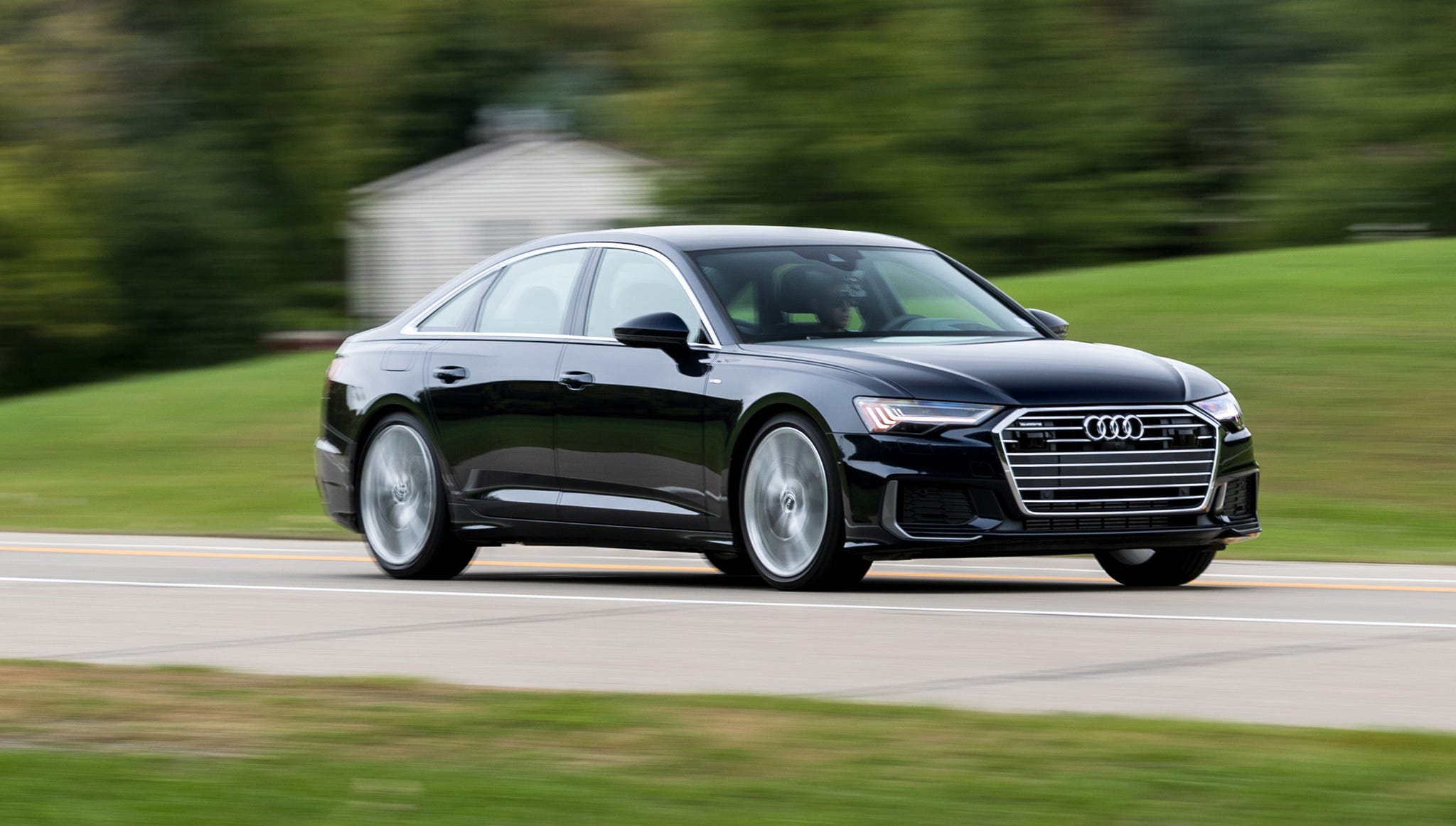
2. Audi A6 55 TFSI Quattro Premium Plus Sedan
Audi’s reputation for engineering precision carries specific implications in active safety technology. Precision in sensor calibration, precision in brake system response, and precision in the software algorithms that translate sensor data into braking commands are all areas where Audi’s development process has produced systems capable of performing well at the 43 mph test threshold. Audi A6 55 TFSI Quattro Premium Plus Sedan demonstrates that capability through an active safety suite that treats pedestrian and vehicle avoidance as a primary engineering priority rather than a regulatory compliance checkbox.
Audi Pre Sense Front on the A6 uses a front camera and radar combination with an extended detection range that provides additional processing time relative to shorter-range detection systems. At 43 mph, the vehicle is covering approximately 63 feet per second. A detection system that identifies a threat at 200 feet provides roughly 3.2 seconds of response time.
A system that identifies the same threat at 150 feet provides approximately 2.4 seconds. That 0.8-second difference is meaningful in emergency braking contexts where brake application latency, hydraulic buildup time, and vehicle deceleration rate all consume portions of the available response window.
Quattro all-wheel drive contributes directly to emergency braking performance in a way that front-wheel-drive and rear-wheel-drive alternatives cannot match. When Pre Sense Front initiates emergency braking, all four wheels contribute deceleration force simultaneously, and Quattro’s torque distribution system helps prevent individual wheel lockup during maximum deceleration.
Shorter stopping distances from the same speed, compared to two-wheel-drive alternatives with equivalent braking systems, is the practical outcome of AWD architecture in emergency braking events. Audi’s predictive efficiency assistant uses navigation data and front camera information to anticipate braking requirements based on upcoming curves, speed limit changes, and detected hazards.
While this feature operates primarily in a fuel economy context during normal driving, its underlying sensor fusion capability supports the vehicle’s ability to anticipate and respond to threats that are detectable in advance of the minimum braking distance at 43 mph. A system that uses multiple data sources to build a predictive picture of the road ahead is inherently more capable than one that reacts only to immediately present threats.
Interior occupant protection in the A6 includes Pre Sense Basic functions that close windows, tighten seat belts, and adjust seat positions when the vehicle’s sensors detect an imminent collision. These preparatory actions are complete before braking intervention begins, ensuring that occupants are optimally positioned in their seats and restrained by properly tensioned belts at the moment of maximum deceleration.
Preparation time invested before impact is recovered as improved restraint effectiveness during impact, which translates into better occupant outcome statistics at the 43 mph test speed.
Also Read: 10 Discontinued Cars Worth Hunting Down Before Prices Climb
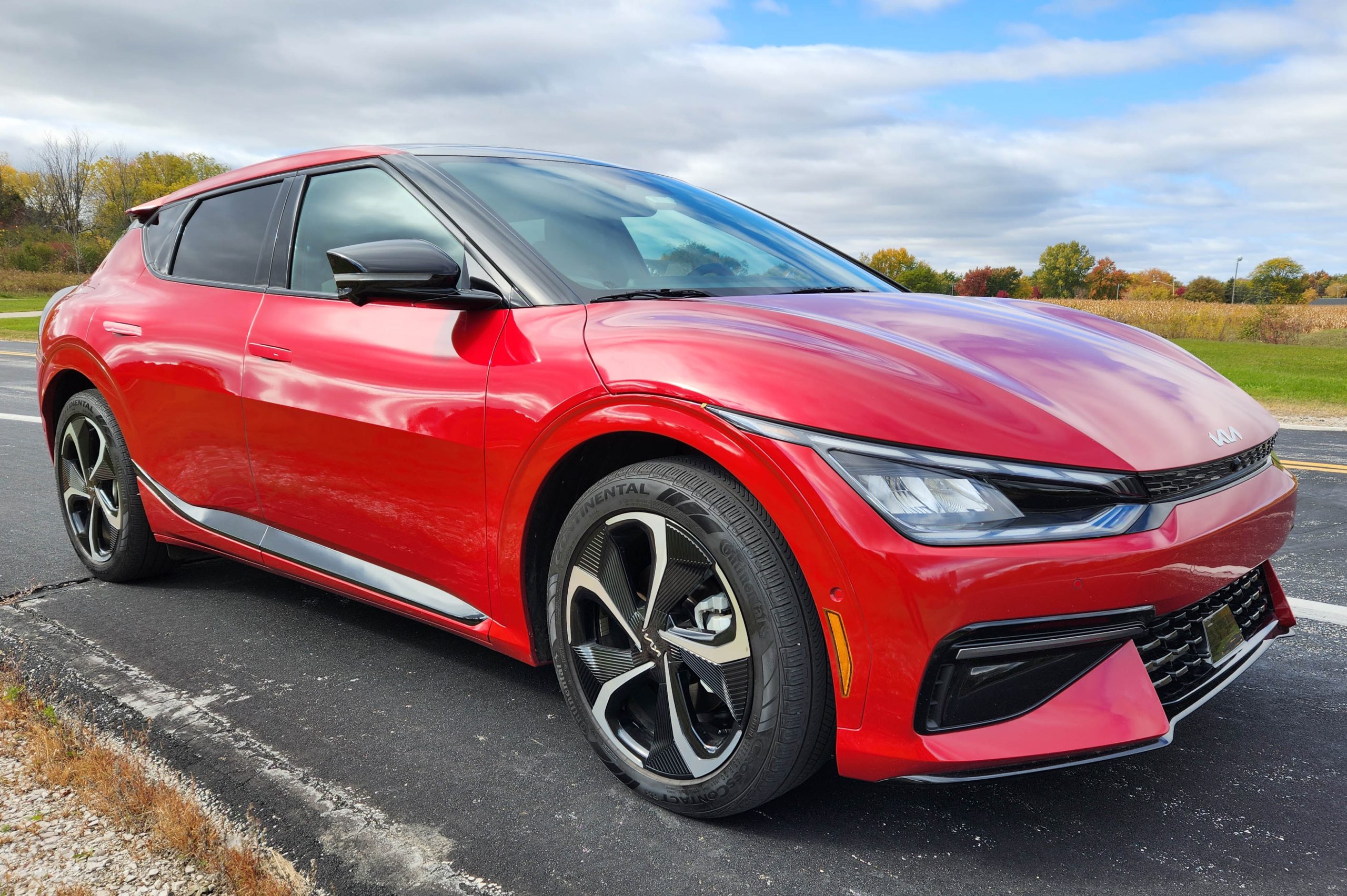
3. Kia EV6 GT-Line AWD
Electric vehicle engineering introduces structural advantages that directly support pedestrian detection and crash avoidance systems. Kia EV6 GT-Line AWD demonstrates this through a safety architecture developed specifically around an electric platform rather than adapting electronic safety features onto a combustion-based structure.
This foundation influences how sensors are placed, how braking is delivered, and how the vehicle responds during emergency situations involving pedestrians. Forward Collision Avoidance Assist 2 in the EV6 GT-Line uses a front camera paired with radar sensing.
The absence of a combustion engine, transmission tunnel, and exhaust routing at the front section allows Kia engineers to arrange sensing hardware with fewer packaging restrictions. This results in a sensor layout that prioritizes broader detection coverage and improved forward monitoring, since space allocation is not constrained by engine bay components common in traditional vehicles.
Regenerative braking contributes directly to emergency stopping capability at highway speeds, such as 43 mph. When Forward Collision Avoidance Assist activates braking, regenerative force from the electric motor works together with hydraulic braking at all four wheels.
This combined braking method increases deceleration strength compared to friction braking alone. The added resistance from energy recovery improves stopping performance during sudden pedestrian detection events where distance to impact may be short and reaction time limited.
Battery placement along the floor structure shapes vehicle stability characteristics in a way that benefits occupant protection. The EV6 GT-Line positions its high-voltage battery pack low within the chassis, reducing vertical mass distribution. This arrangement lowers rollover tendency during abrupt steering input and braking actions. A lower center position for heavy components also supports stable body control when drivers attempt evasive steering while emergency braking systems are active.
Kia Vehicle to Everything communication technology adds a layer of external data exchange between vehicles and road infrastructure. Traffic systems, surrounding vehicles, and connected infrastructure can transmit warnings about potential hazards outside direct sensor range.
Examples include traffic signals preparing to change, vehicles positioned beyond visual obstruction, or pedestrians detected through external monitoring systems. This data exchange extends warning time before a driver reaches a hazard zone, increasing awareness beyond onboard sensor detection limits.
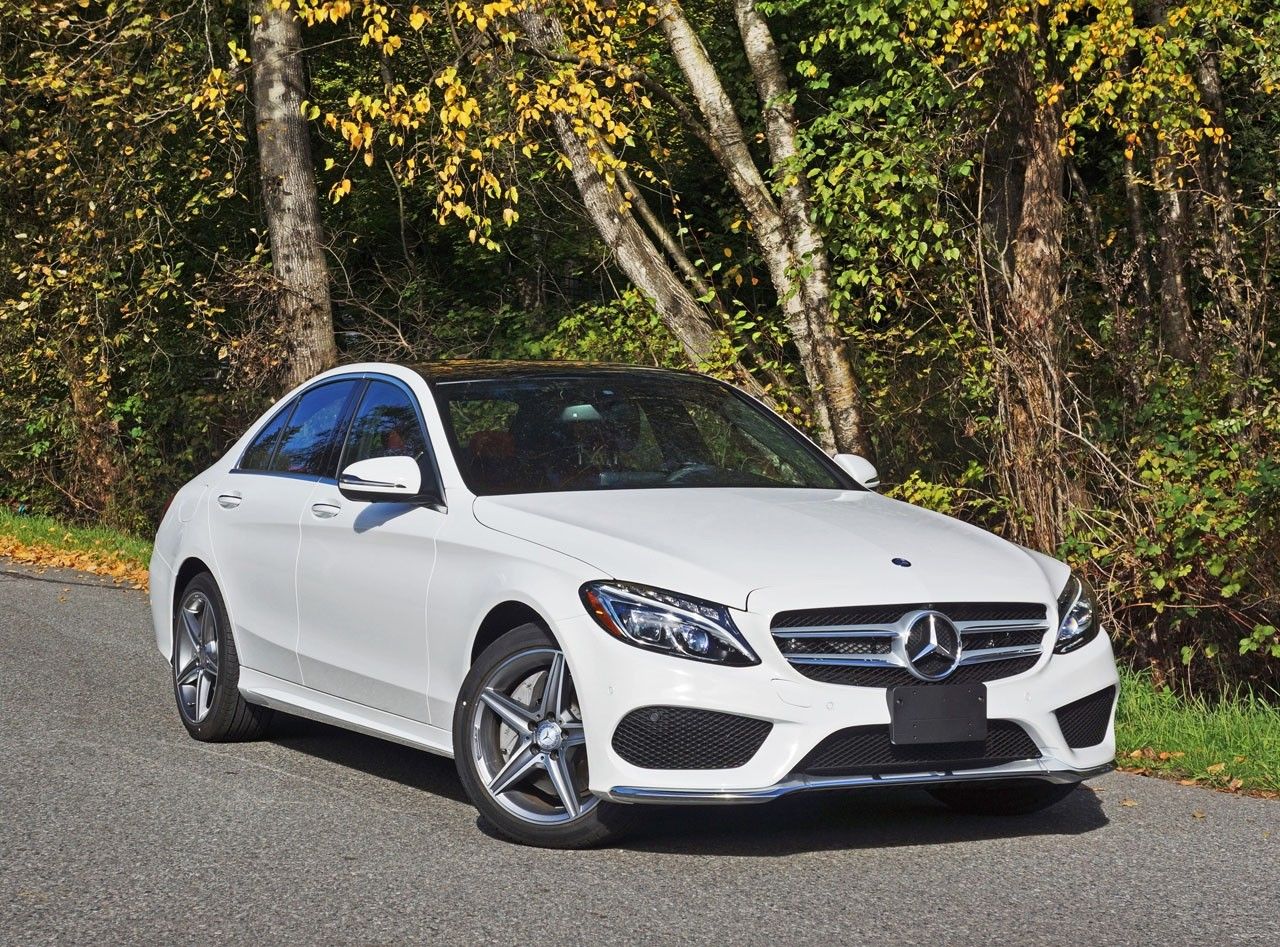
4. Mercedes-Benz C 300 4MATIC Sedan
Mercedes-Benz has maintained a long engineering focus on braking and collision prevention systems across multiple decades of vehicle development. The Active Brake Assist system fitted in the C 300 4MATIC Sedan reflects this development history through a combination of radar sensing, camera recognition, and cross-traffic detection used to identify pedestrians during forward travel and intersection movement.
Active Brake Assist processes information from radar and camera units through a verification process that compares sensor inputs before initiating emergency braking. This dual verification method reduces false activation while maintaining a reliable response when a pedestrian or obstacle is detected in the vehicle path.
At test speeds around 43 mph, system reliability depends on accurate object recognition combined with controlled braking delivery that avoids unnecessary abrupt stops while still responding to genuine hazards. Pre-Safe functions activate before full braking force is applied. When a potential collision is detected, the system prepares the cabin by tightening seat belts, adjusting seat positioning, closing open windows, and modifying audio output levels.
These preparatory actions occur within fractions of a second after threat detection, placing occupants in a safer position before full deceleration forces begin. This preparation phase supports occupant protection by reducing movement within the cabin during sudden braking events.
4MATIC all-wheel drive contributes to braking stability by distributing traction across all four wheels. During emergency braking, electronic stability systems adjust braking force based on available grip at each wheel. This allows controlled deceleration on varying road surfaces such as wet pavement or uneven road conditions commonly encountered in urban environments. Integration between braking systems and stability control ensures that braking force remains balanced during sudden stops.
Road sign recognition and speed management systems assist by maintaining appropriate travel speeds before a hazard appears. When a vehicle maintains a regulated speed according to road conditions, kinetic energy at the point of emergency detection remains lower, which reduces braking distance requirements.
This supports Active Brake Assist by reducing stopping demand during sudden pedestrian detection events, allowing for a more controlled response during emergency braking situations.
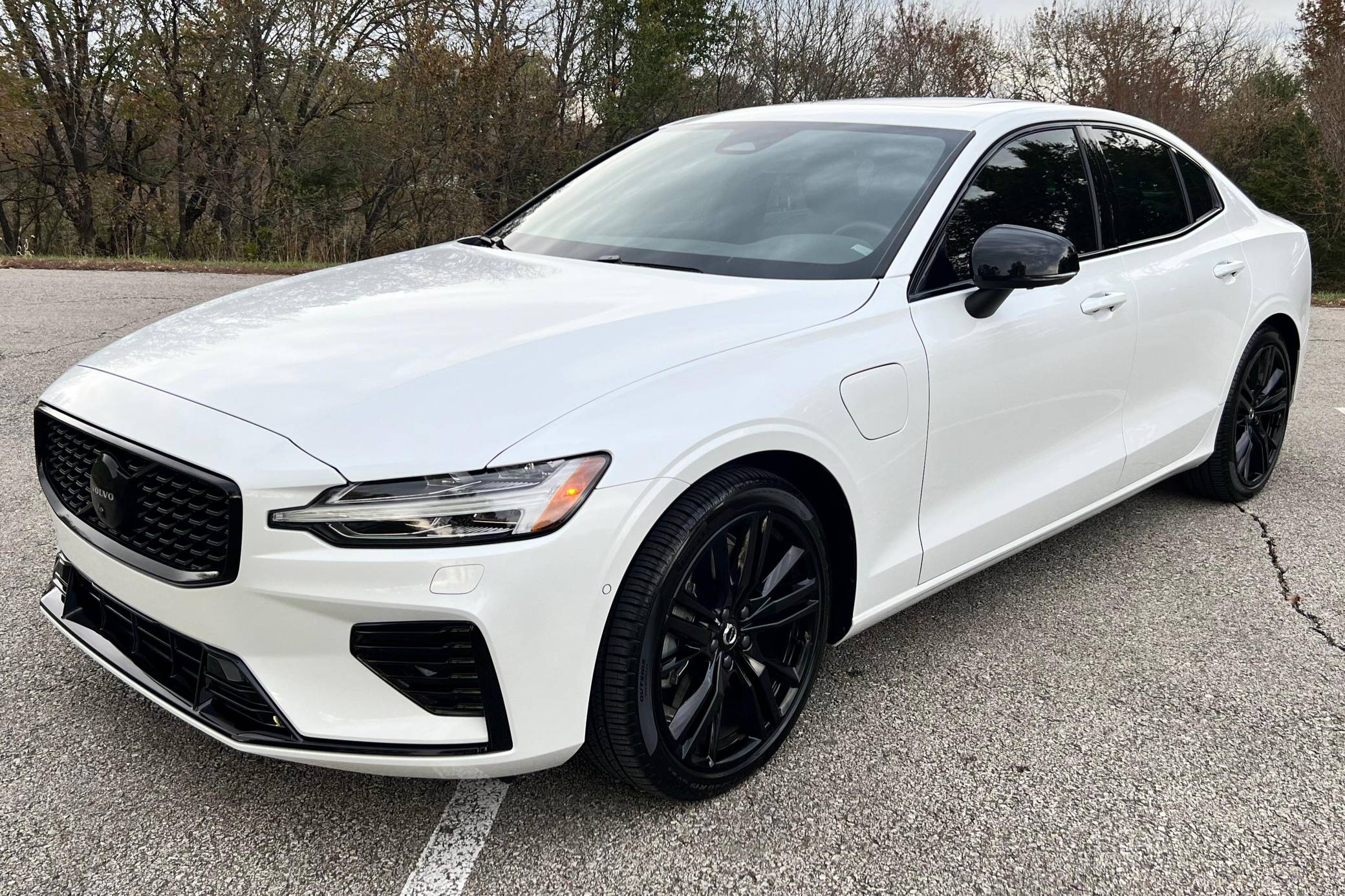
5. Volvo S60 Recharge T8 AWD Plug-In Hybrid Sedan
Safety is not a feature Volvo adds to its vehicles. It is the foundation that everything else is built around, and that philosophical priority produces vehicles whose crash avoidance performance reflects decades of institutional commitment rather than recent competitive pressure.
Volvo S60 Recharge T8 AWD Plug-In Hybrid Sedan carries City Safety, Volvo’s pedestrian and vehicle detection system, on a plug-in hybrid platform that combines electric torque with petrol power in a configuration that supports both performance and emergency stopping capability at 43 mph.
City Safety on the S60 Recharge uses camera, radar, and laser-based sensing in a configuration that provides redundant detection coverage across multiple sensor types. When a threat is identified at 43 mph, the system initiates braking while simultaneously activating the electric motor’s regenerative deceleration to supplement hydraulic brake force.
Plug-in hybrid architecture means the S60 Recharge carries a larger battery and more powerful electric motor than a standard hybrid, which provides more regenerative braking capacity during emergency events. That additional regenerative capacity contributes meaningfully to stopping distance reduction at higher test speeds.
Run-off Road Protection on the S60 Recharge detects when the vehicle is leaving the intended travel lane and applies steering torque and selective braking to return the vehicle toward the travel lane. While this function is distinct from the primary forward collision avoidance focus of the 43 mph test, it reflects Volvo’s comprehensive approach to crash prevention that addresses departure scenarios alongside approach scenarios.
A vehicle that prevents road departures as well as forward collisions provides broader crash prevention coverage than one focused exclusively on forward threat scenarios. Volvo’s structural safety heritage is relevant at higher test speeds because structural integrity at 43 mph impact energy is more demanding than at lower test speeds.
Volvo’s body construction uses ultra-high-strength boron steel in the passenger cell structure, which maintains cabin integrity under deformation loads that lower-strength materials cannot resist equally. Cage-like passenger compartment construction prioritizes survival space preservation, and energy-absorbing front and rear crumple zones are sized for the higher energy levels associated with impacts at or near highway-adjacent speeds.
OnCall connected services integration on the S60 Recharge includes automatic collision notification that contacts Volvo’s response center if the vehicle detects a crash event meeting defined severity thresholds. Automatic emergency notification reduces the time between collision occurrence and emergency service arrival, which is a post-collision safety factor that complements pre-collision avoidance technology.
Volvo’s safety approach addresses both the prevention and the response dimensions of crash events, providing protection across the full collision sequence.
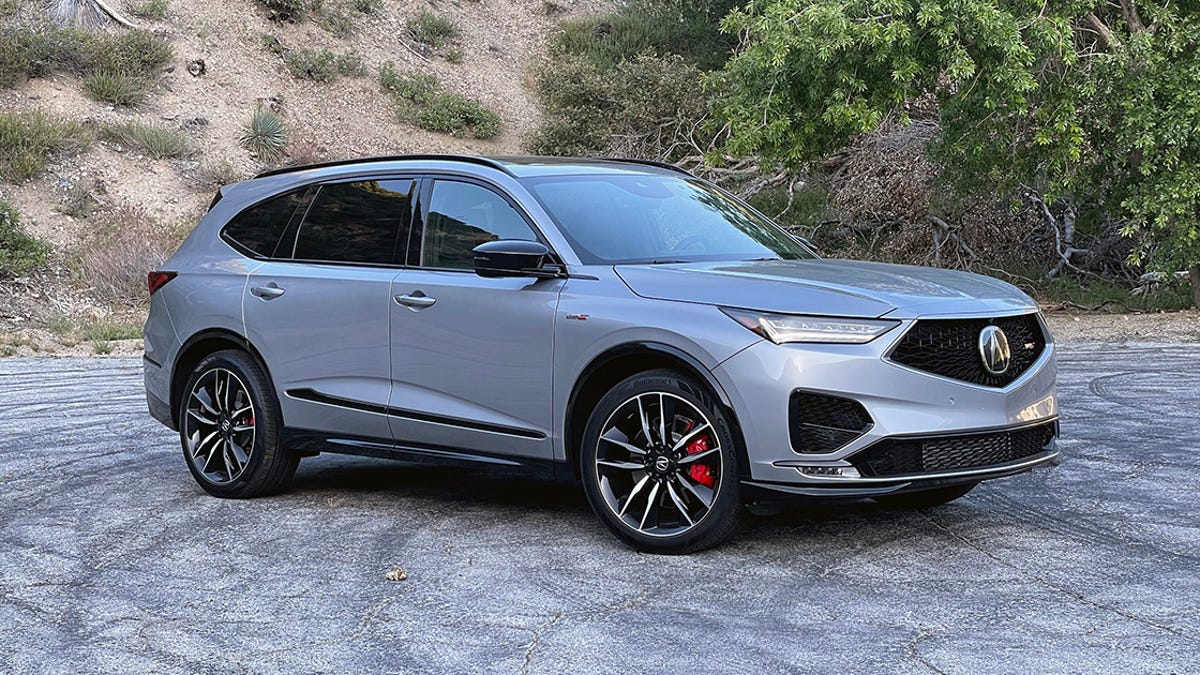
6. Acura MDX Type S Advance AWD
Three-row SUVs present specific engineering challenges for crash avoidance system performance at 43 mph. Higher vehicle mass requires greater braking force to achieve equivalent deceleration, longer stopping distances result from the same initial speed, and an elevated center of gravity affects vehicle stability during emergency maneuvers.
Acura MDX Type S Advance AWD addresses those challenges through a combination of brake system calibration, sensor technology, and structural design that produces crash avoidance performance appropriate to the vehicle’s mass and use case.
Collision Mitigation Braking System with low-speed braking function on the MDX Type S uses a front-facing camera paired with radar to detect vehicles and pedestrians ahead at distances appropriate for the SUV’s greater stopping distance requirement. Heavier vehicles need longer braking distances to decelerate from a given speed, and sensor detection range must extend farther ahead to provide equivalent response time compared to lighter vehicles.
Acura’s system calibration accounts for the MDX’s mass by tuning detection range and braking intervention timing to match the vehicle’s actual deceleration profile rather than applying calibration settings developed for lighter vehicles. SH-AWD, Acura’s Super Handling All-Wheel Drive system, contributes to emergency braking performance through individual wheel torque management that optimizes traction use at each corner independently.
When CMBS initiates emergency braking, SH-AWD’s torque vectoring function supports the braking response by managing individual wheel loads to prevent any single wheel from losing traction before its braking capacity is fully utilized. This wheel-by-wheel management reduces stopping distance compared to systems that distribute braking force based on axle-level averages rather than individual wheel traction availability.
Blind Spot Information System on the MDX Type S extends safety coverage to lateral threat scenarios that the primary forward collision avoidance system cannot address. For a three-row SUV frequently used for family transportation, lateral coverage during lane changes adds protection for a scenario where the vehicle’s size creates visual limitations that even attentive drivers struggle to compensate for fully.
BSINFO alerts and steering intervention support give the driver and the safety system cooperative coverage for a broader range of threat scenarios than forward-only detection provides. Structural mass of the MDX Type S works in favor of occupant protection during contact events by providing a mass advantage over lighter collision partners.
While lower mass is preferable for avoiding collisions through reduced stopping distance, higher mass is protective during unavoidable contacts through the physics of momentum transfer. Acura balances these competing factors by prioritizing avoidance through capable sensor technology and then providing robust structural protection for scenarios where avoidance is not achievable.

7. Genesis GV80 3.5T Prestige AWD
Genesis entered the luxury SUV segment with a strong focus on crash avoidance engineering, and the GV80 3.5T Prestige AWD reflects that direction through tested performance results at 43 mph evaluation standards used for pedestrian and obstacle detection systems.
The structure of its safety systems depends on coordinated sensor processing, suspension tuning, and driver assistance functions working together during emergency braking situations involving pedestrians. Forward Collision Avoidance Assist 2 in the GV80 uses both radar and camera input, but each sensor type performs a separate recognition role.
Radar data is used for detecting vehicles due to strong reflection from metal surfaces, while camera processing handles pedestrian recognition through movement tracking and body shape interpretation. The separation of these detection pathways improves clarity in object identification and reduces error rates that can occur when a single processing stream handles multiple target types under similar conditions.
Suspension calibration plays a role in braking stability during sudden stops. The GV80’s chassis setup reduces excessive forward pitch when braking force is applied. This helps maintain consistent contact between tyres and the road surface, which supports braking efficiency.
When a vehicle pitches forward too aggressively, rear wheel grip reduces, affecting stopping balance. Genesis tuning limits that motion, so braking force remains evenly distributed during emergency stops at moderate and highway speeds.
Rear Cross-Traffic Collision Avoidance Assist adds a protective response during reversing situations. When a pedestrian or object moves behind the vehicle during parking manoeuvres, the system detects movement and applies braking if driver’s input does not respond in time.
Parking environments often involve short distances and limited visibility, so response timing is calibrated for quick intervention within low-speed movement conditions commonly found in tight parking areas. Highway Driving Assist 2 supports lane positioning and steering control during steady-speed travel. At speeds around 43 mph, the system maintains lane centering using camera-based lane recognition combined with radar-assisted tracking.
Driver attention monitoring ensures readiness to take control when required. This function reduces lane deviation during forward travel, helping maintain stable positioning for forward detection systems that monitor pedestrians and vehicles ahead.
Also Read: 9 Cars With the Best Free Maintenance Programs

8. Polestar 2 Long Range Dual Motor
Polestar developed the Polestar 2 with strong influence from Volvo engineering standards, and that foundation is reflected in its pedestrian detection and crash prevention systems. Built on an electric platform, the vehicle integrates safety functions from the initial design stage rather than adding them later as separate modules. This allows sensor placement, braking response, and structural protection systems to operate within a unified framework.
Pilot Assist combines radar and camera input to manage speed, lane position, and forward detection. At 43 mph, radar sensors track the distance and closing speed of vehicles ahead, while camera systems identify pedestrians and cyclists. The use of both sensor types allows cross-verification before emergency braking activation.
This reduces incorrect braking activation while maintaining a reliable response when actual hazards appear in the vehicle’s path. The dual motor configuration contributes directly to braking performance during emergencies. When braking assistance activates, both front and rear motors engage regenerative braking simultaneously. This works alongside hydraulic braking at all four wheels, increasing total deceleration capacity compared to single-motor electric vehicles or internal combustion vehicles that rely solely on friction braking.
The combined braking force reduces stopping distance at moderate and higher speeds, which is relevant during pedestrian detection events where reaction time is limited. Structural design follows Volvo safety engineering principles, with reinforced passenger cell construction using ultra-high-strength steel. Front and rear zones are designed to absorb impact energy gradually, reducing force transfer to occupants.
Door structures and side impact sections are reinforced to maintain cabin integrity during lateral collisions. These structural elements work together to maintain occupant protection during impacts at speeds used in standardized crash evaluation procedures.
Over-the-air software update capability allows continuous improvement of safety systems. Pedestrian detection algorithms, emergency braking calibration, and sensor fusion logic can be updated remotely without requiring workshop visits.
This allows vehicles already in use to receive updated safety responses based on new data and system refinement. As driving data accumulates, software updates adjust detection accuracy and braking response timing, improving system behaviour across the ownership period without physical hardware changes.
