Cruiser motorcycles have always represented a different philosophy compared to aggressive superbikes and lightweight sport machines. Instead of chasing extreme lean angles or racetrack lap times, cruisers focus on effortless torque, highway comfort, commanding road presence, and relaxed long-distance riding.
During the past two decades, manufacturers pushed that philosophy even further by creating enormous V-twin and flat-six engines producing displacement figures once associated only with small automobiles.
Motorcycles with engines larger than 1,800 cc occupy a unique category within the cruiser world. These machines are not built for beginners or casual city commuting.
They deliver massive low-end torque, deep exhaust sound, and heavy road-dominating personalities designed for riders who appreciate power delivered smoothly rather than violently.
Twist the throttle on one of these bikes, and the engine responds with endless pulling force capable of carrying rider and passenger across entire countries without strain.
What makes these giant cruisers fascinating is how differently manufacturers interpret the concept. Some brands focus on luxury touring capability with advanced electronics, heated seats, and premium audio systems.
Others prioritize old-school muscle bike aggression through exposed engines, stretched proportions, and thunderous exhaust notes. A few motorcycles combine both philosophies, delivering luxury and brutal acceleration simultaneously.
Large-displacement cruiser engines also create unique riding sensations. Unlike high-revving sportbike motors demanding constant gear changes, these bikes generate huge torque at low rpm. Riders can cruise comfortably for hours while barely touching the gearbox.
The experience feels calm and mechanical at the same time, which explains why so many long-distance enthusiasts remain loyal to giant cruisers despite the rise of adventure motorcycles and high-tech touring machines.
Many of these motorcycles became icons because they offered something impossible to ignore. Massive engines, unmistakable styling, and unforgettable highway presence turned them into symbols of freedom and mechanical excess.
These eight cruiser motorcycles prove that bigger engines still create unforgettable riding experiences when manufacturers build machines around comfort, torque, and personality instead of pure speed alone.
Also Read: 10 Strongest V8 Engines Ever Put in a Production Car
1. Triumph Rocket 3 R
The Triumph Rocket 3 R feels less like an ordinary cruiser motorcycle and more like a muscle machine built around one of the most outrageous production motorcycle engines ever created.
Triumph designed the bike specifically to dominate conversations about displacement and torque, resulting in a motorcycle that completely redefined expectations for factory cruisers.
At the center of the Rocket 3 R sits a gigantic 2,458 cc inline three-cylinder engine producing monstrous low-end torque. The moment the rider twists the throttle, the motorcycle surges forward with relentless force that feels completely different from traditional V-twin cruisers.
Instead of harsh vibration or peaky acceleration, the Rocket delivers smooth yet overwhelming power across the rev range. Highway passing becomes effortless because the engine barely needs to work to move the massive machine forward aggressively.
Despite its enormous size, the Rocket 3 R handles surprisingly well. Triumph engineered the chassis carefully, using lightweight aluminum construction and high-quality suspension components.
Riders expecting sluggish steering often discover a motorcycle far more responsive than its dimensions suggest. The bike feels stable and planted through corners while still maintaining relaxed cruiser ergonomics.
Styling also separates the Rocket from typical cruisers. Massive exhaust headers, exposed engine components, muscular fuel tank design, and aggressive proportions create a futuristic appearance unlike anything from Harley Davidson or Indian. The motorcycle looks intimidating before the engine even starts.
Technology plays a major role as well. Cornering ABS, traction control, riding modes, cruise control, and advanced TFT displays make the Rocket 3 R feel modern despite its brutal mechanical personality. Triumph successfully blended extreme engine performance with contemporary refinement.
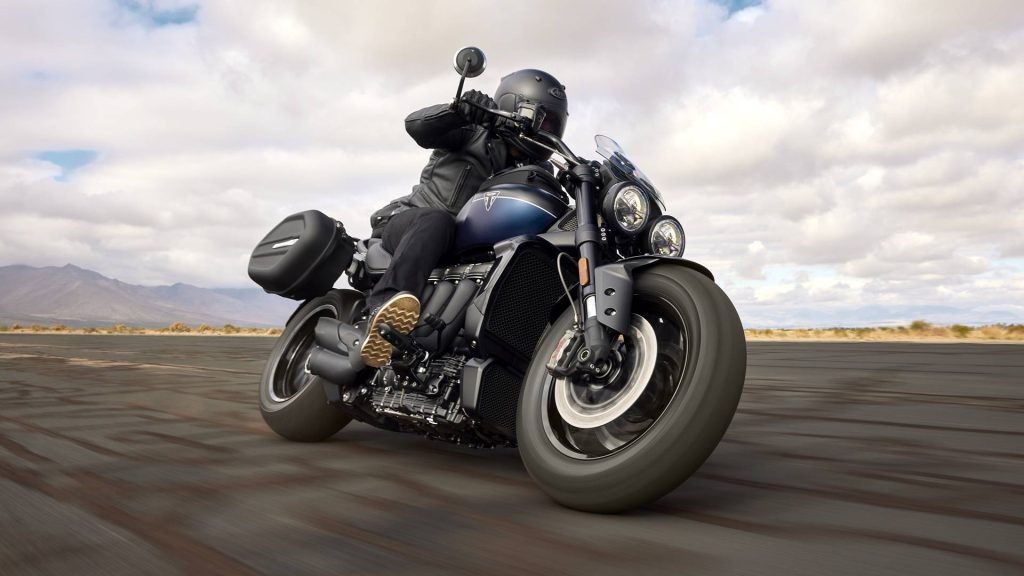
Long-distance comfort remains excellent thanks to the relaxed seating position and smooth power delivery. Riders can cruise calmly for hours or unleash devastating acceleration instantly whenever roads open up. Few motorcycles switch between relaxed touring and violent muscle-bike behavior so effectively.
The Rocket 3 R became legendary because it ignored traditional cruiser rules completely. Triumph built a motorcycle around pure engine dominance and somehow made the result practical, comfortable, and surprisingly refined. It remains one of the boldest cruiser motorcycles ever placed into production.
- Engine: 2,458 cc inline three
- Torque: 163 lb ft
- Horsepower: 165 hp
- Length/Width: 94.5 in / 36.0 in
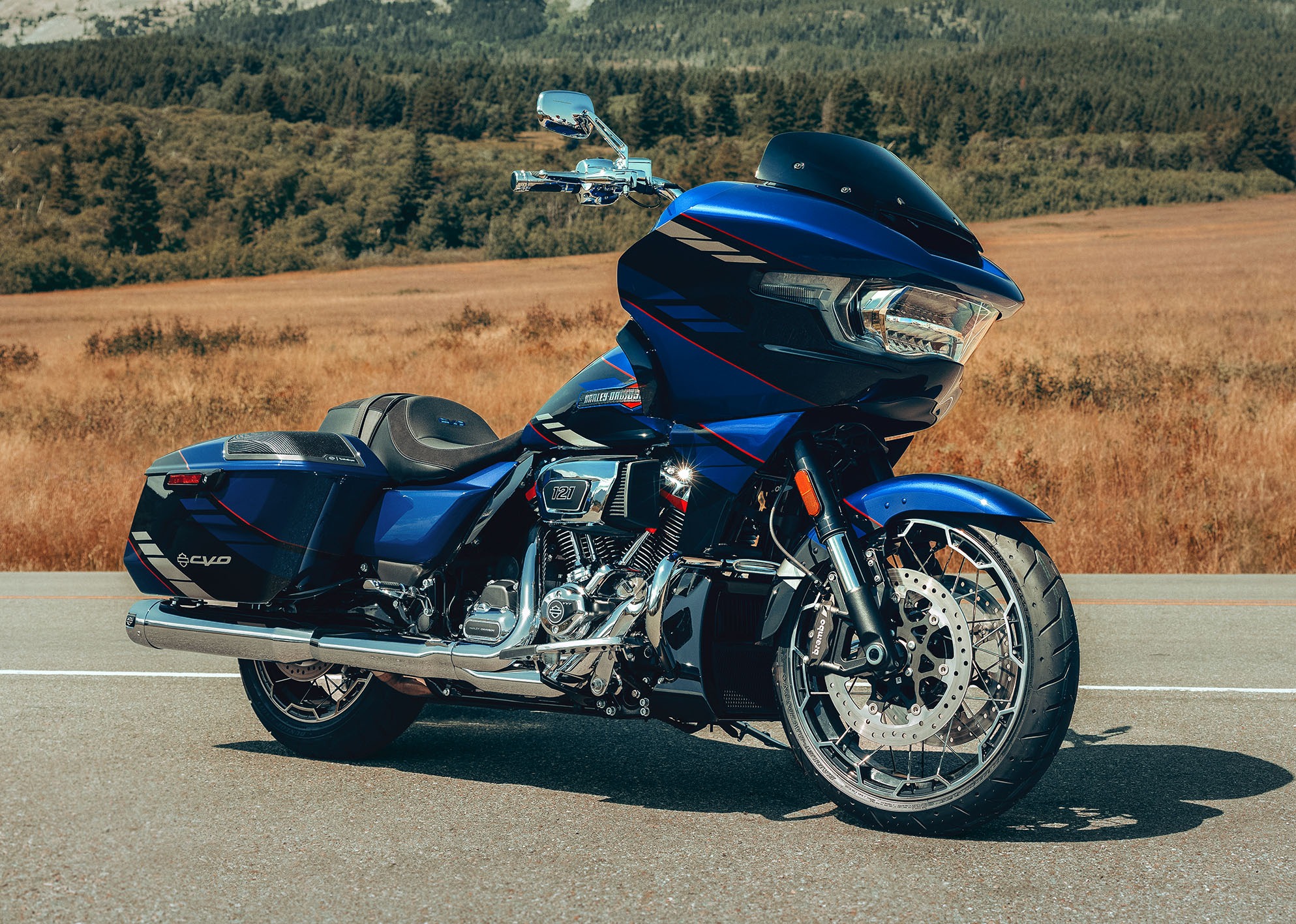
2. Harley Davidson CVO Road Glide
The Harley-Davidson CVO Road Glide represents the luxury performance side of the cruiser world. While some large-displacement motorcycles focus entirely on brute force and aggressive styling, the CVO Road Glide combines massive V-twin torque with premium touring comfort and advanced technology.
It exists for riders who want long-distance capability without sacrificing road presence or classic American cruiser character.
Harley-Davidson’s Milwaukee Eight 121 engine gives the motorcycle enormous low-rpm pulling power. Acceleration feels smooth and muscular rather than explosive, perfectly matching the bike’s touring-focused personality.
Riders can cruise effortlessly at highway speeds while carrying passengers and luggage without the engine ever feeling strained. The deep exhaust pulse adds another layer of character impossible to mistake for anything other than a Harley-Davidson.
The Road Glide’s shark-nose fairing became one of its defining design elements. Unlike handlebar-mounted fairings found on some touring motorcycles, Harley mounted the fairing directly to the frame, improving high-speed stability and reducing steering heaviness. Long-distance riders appreciate the calmer airflow and more planted highway feel during extended trips.
Inside the touring category, the CVO line sits at the top of Harley’s lineup. Premium paint finishes, upgraded audio systems, heated grips, custom wheels, and exclusive trim pieces separate the motorcycle from standard Road Glide models. Every detail feels designed for riders wanting maximum comfort and exclusivity.
Technology integration has also improved dramatically in recent years. Large infotainment displays, navigation systems, rider assistance electronics, and advanced suspension components make the CVO Road Glide feel far more modern than older Harley touring motorcycles.
Yet the bike still preserves the mechanical personality and relaxed riding experience that define traditional American cruisers.
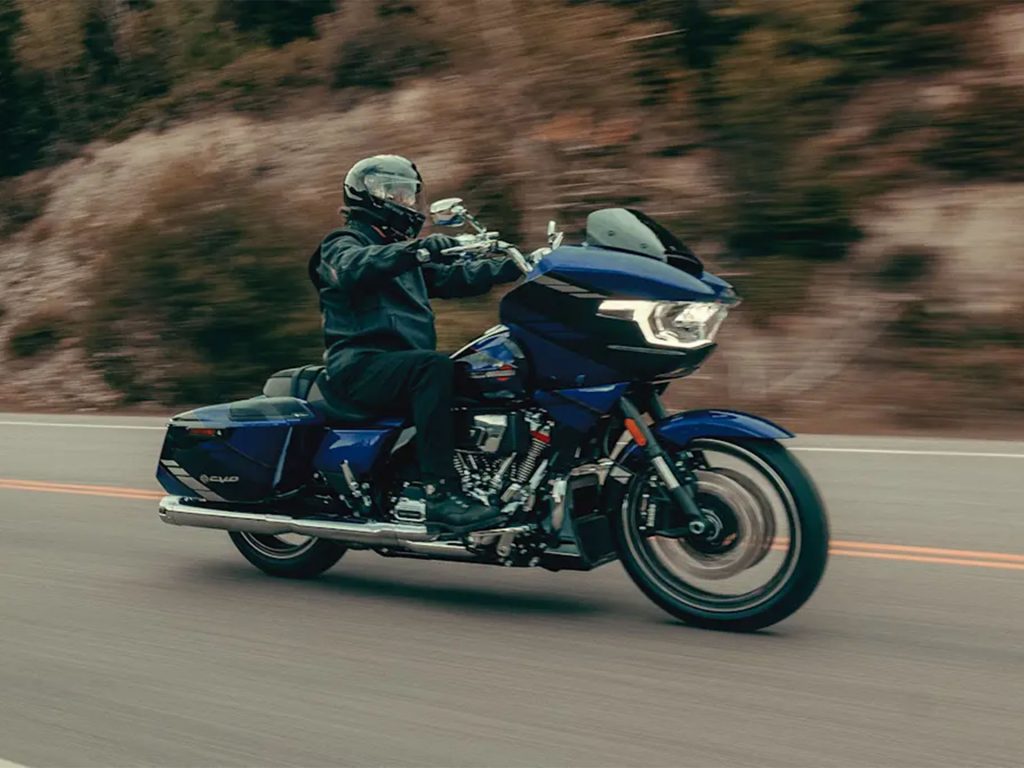
What truly makes the CVO Road Glide special involves emotional presence. Massive bodywork, a thunderous V-twin sound, and premium detailing create a motorcycle that commands attention immediately at fuel stops and highway rest areas. Riders do not simply travel on the bike. They make an entrance everywhere they arrive.
For long-distance cruiser enthusiasts wanting luxury, torque, and unmistakable American character in one package, the Harley-Davidson CVO Road Glide remains one of the most desirable heavyweight touring motorcycles ever built.
- Engine: 1,977 cc V-twin
- Torque: 139 lb ft
- Horsepower: 115 hp
- Length/Width: 96.7 in / 38.6 in
3. Indian Challenger Limited
The Indian Challenger Limited arrived with a completely different attitude compared to traditional American touring cruisers. Instead of relying heavily on nostalgia and old-school engineering, Indian Motorcycle developed the Challenger around modern performance, liquid-cooled power, and aggressive long-distance capability.
The result created one of the most advanced large-displacement cruisers ever produced while still preserving the commanding road presence cruiser riders expect.
Power comes from the massive PowerPlus 108 V twin engine, a liquid-cooled motor designed specifically to compete against heavyweight touring motorcycles from Harley-Davidson.
The engine produces impressive low-end torque but also revs more freely than many traditional air-cooled cruiser motors. Riders immediately notice the stronger acceleration and smoother highway behavior, especially during high-speed passing situations.
Unlike some giant cruisers that feel heavy and reluctant during spirited riding, the Challenger handles with surprising confidence. Indian used an aluminum frame and modern suspension tuning to improve stability and cornering precision significantly.
Riders can attack sweeping roads far more aggressively than expected from a full-size touring machine carrying hard saddlebags and a large front fairing.
The styling gives the Challenger a muscular and modern identity. Sharp body lines, integrated lighting, and an aggressive fixed fairing separate it visually from retro-inspired cruisers.
The motorcycle looks powerful without depending entirely on chrome or vintage design cues. That contemporary appearance helped attract younger riders who wanted cruiser comfort combined with modern engineering.
Technology also became a huge strength. Large touchscreen infotainment systems, navigation, riding modes, electronically adjustable rear suspension, and advanced rider assistance features made the Challenger feel extremely competitive against luxury touring motorcycles from around the world.
Long-distance comfort remains exceptional. Wide seats, excellent wind protection, spacious ergonomics, and smooth engine behavior allow riders to cover enormous distances without fatigue becoming a major issue. Passenger comfort also received significant attention during development.
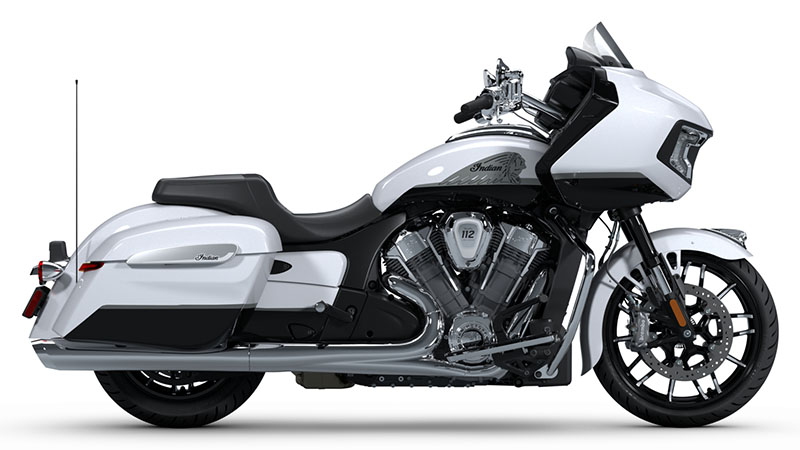
What makes the Indian Challenger Limited especially important is how confidently it modernized the American cruiser formula. Indian proved heavyweight touring motorcycles could embrace advanced engineering and sharper performance without losing the relaxed highway personality that cruiser riders value so deeply.
- Engine: 1,768 cc liquid-cooled V-twin
- Torque: 128 lb ft
- Horsepower: 122 hp
- Length/Width: 98.7 in / 39.0 in
4. Honda Gold Wing Tour
The Honda Gold Wing Tour occupies a unique position within the cruiser and touring motorcycle world because it approaches luxury differently from American V-twin competitors.
Instead of emphasizing rumbling exhaust sound and raw mechanical aggression, Honda focused on smoothness, comfort, refinement, and long-distance capability. The result became one of the most respected touring motorcycles ever created.
At the heart of the Gold Wing sits a massive 1,833 cc flat-six engine delivering incredibly smooth power. Unlike traditional cruiser engines that pulse and vibrate heavily, the Gold Wing feels almost automotive in its refinement.
Acceleration remains strong and effortless, but the motorcycle prioritizes seamless torque delivery rather than dramatic mechanical theatrics. Riders can cruise at highway speeds for hours with almost no engine vibration reaching the handlebars or seat.
Comfort became Honda’s biggest priority during development. Plush seating, excellent ergonomics, electronically adjustable windshields, and advanced suspension systems create a riding experience closer to luxury grand touring cars than ordinary motorcycles.
Long-distance riders frequently cross entire countries on Gold Wings because the bike minimizes fatigue so effectively.
Technology also separates the Gold Wing from many traditional cruisers. Apple CarPlay integration, navigation systems, premium audio equipment, electronically controlled suspension, heated seats, and advanced rider aids transform the motorcycle into a rolling luxury platform.
Honda engineered the bike for riders wanting maximum convenience alongside giant engine performance.
Handling surprises many first-time riders as well. Despite its size and weight, the Gold Wing feels balanced and stable through corners thanks to sophisticated chassis engineering and a low center of gravity created by the flat-six engine layout. The motorcycle behaves far more gracefully than most people expect from such a large touring machine.
Styling has evolved significantly through recent generations. The modern Gold Wing appears sharper and more aerodynamic compared to earlier bulky versions, helping the bike feel contemporary without abandoning its luxury touring identity.
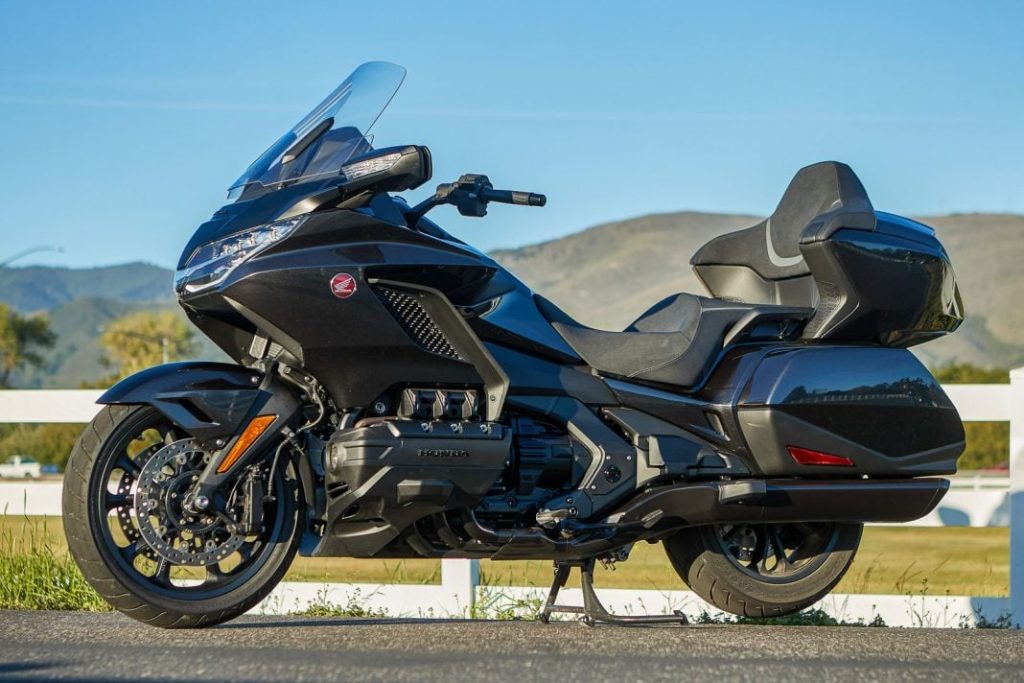
The Gold Wing Tour became legendary because it redefined expectations for what a giant-displacement touring motorcycle could achieve. It delivers incredible comfort, advanced technology, smooth power, and long-distance refinement at a level few competitors have matched consistently for decades.
- Engine: 1,833 cc flat six
- Torque: 125 lb ft
- Horsepower: 125 hp
- Length/Width: 101.4 in / 36.4 in
5. Indian Pursuit Dark Horse
The Indian Pursuit Dark Horse represents the modern evolution of the American luxury cruiser.
Instead of relying purely on nostalgic styling and old-school engineering traditions, Indian created a motorcycle designed for riders who want aggressive touring capability, advanced technology, and massive V-twin torque in one premium package.
The Pursuit feels enormous on the road, yet it delivers surprising refinement and sophistication beneath its intimidating appearance.
Its liquid-cooled PowerPlus 108 engine gives the motorcycle a completely different character compared to older air-cooled touring cruisers. The V-twin produces huge low-end torque while also revving more freely at highway speeds.
Riders notice strong acceleration immediately, especially when overtaking traffic or climbing steep roads with passengers and luggage onboard. Unlike some heavyweight cruisers that begin feeling strained during demanding riding conditions, the Pursuit remains smooth and composed even during extended high-speed touring.
Long-distance comfort became one of India’s biggest priorities while developing the bike. The seat offers excellent support for both rider and passenger, while electronically adjustable wind protection helps reduce fatigue during hours of highway riding.
Heated grips, heated seats, and premium suspension tuning further reinforce the motorcycle’s luxury touring identity. Riders can spend entire days crossing states without the physical exhaustion associated with smaller or more aggressive motorcycles.
The Dark Horse trim also gives the Pursuit a more intimidating visual personality. Blacked-out finishes replace excessive chrome, creating a cleaner and more muscular appearance. Large saddlebags, integrated lighting, and a sharp fairing design make the bike look modern and purposeful instead of overly retro-inspired.
Technology integration plays a major role in the riding experience as well. Large touchscreen infotainment systems, navigation, adaptive lighting, electronically adjustable suspension, and multiple riding modes help the motorcycle compete directly with the most advanced touring cruisers in the world. Indian successfully balanced the classic American V-twin character with genuinely modern engineering.
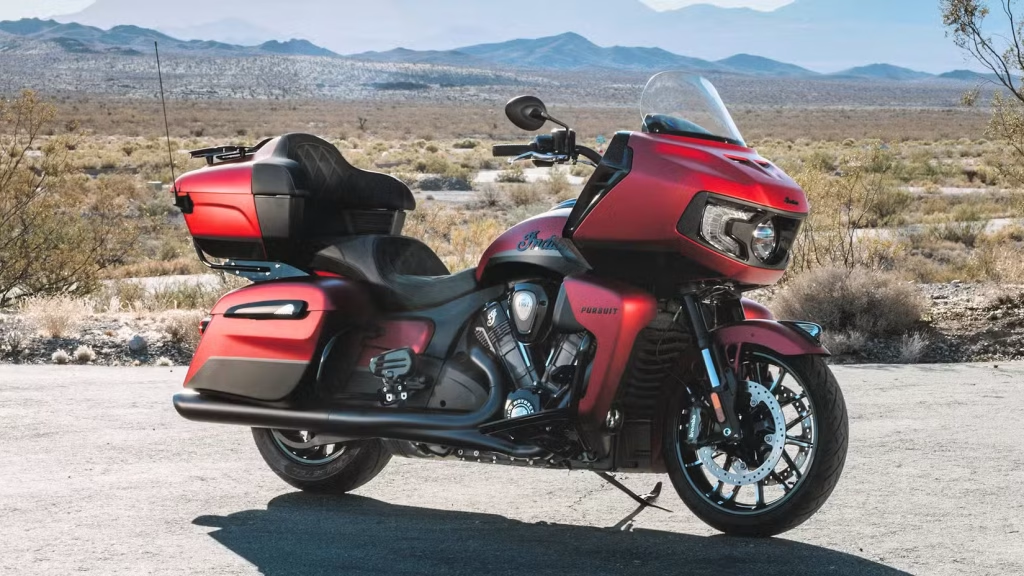
Another reason enthusiasts admire the Pursuit Dark Horse involves stability and handling. Despite its size, the chassis remains surprisingly composed during sweeping corners and long highway curves. Indian engineered the motorcycle to feel planted and predictable rather than heavy and awkward.
For riders wanting giant displacement touring comfort combined with aggressive styling and modern performance, the Indian Pursuit Dark Horse stands among the most complete cruiser motorcycles currently available.
- Engine: 1,768 cc liquid-cooled V-twin
- Torque: 128 lb ft
- Horsepower: 122 hp
- Length/Width: 98.7 in / 39.4 in
6. Harley Davidson Breakout 117
The Harley-Davidson Breakout 117 approaches the cruiser category very differently from large touring motorcycles loaded with luggage and electronics.
Instead of focusing on cross-country practicality, the Breakout exists to deliver visual drama, giant V-twin torque, and stretched custom bike attitude directly from the factory. Everything about the motorcycle emphasizes style, presence, and effortless low-speed power.
Its Milwaukee Eight 117 engine provides massive torque almost immediately off idle. Riders barely need high rpm because the engine produces a strong pulling force throughout the rev range.
Twist the throttle aggressively, and the Breakout surges forward with satisfying mechanical force accompanied by the unmistakable pulse of a large Harley Davidson V-twin. The experience feels raw and emotional rather than refined or clinical.
Styling became the motorcycle’s defining feature instantly. A gigantic rear tire, long wheelbase, low seat height, and stretched fuel tank create proportions resembling a custom-built show bike.
Harley designed the Breakout to dominate attention at every stoplight and motorcycle gathering. Chrome finishes and muscular bodywork reinforce the bike’s aggressive personality from every angle.
Despite the dramatic appearance, the Breakout remains surprisingly comfortable during relaxed cruising. Forward controls and a low seating position allow riders to stretch out naturally on highways, while the engine delivers smooth, low-rpm cruising behavior perfect for long, straight roads.
The motorcycle feels most at home rolling confidently through open highways rather than attacking tight canyon roads aggressively.
Unlike heavyweight touring cruisers, the Breakout avoids excessive technology and complexity. Riders still receive traction control and modern electronics, but the motorcycle prioritizes emotional connection and visual impact above luxury features.
That simplicity appeals strongly to enthusiasts who want a cruiser that feels mechanical and expressive instead of highly digital.
The massive rear tire also changes the riding sensation significantly. Straight-line stability feels excellent, and the bike carries a planted, muscular character at speed. Steering requires more deliberate input compared to smaller cruisers, but many riders appreciate the substantial road presence this setup creates.
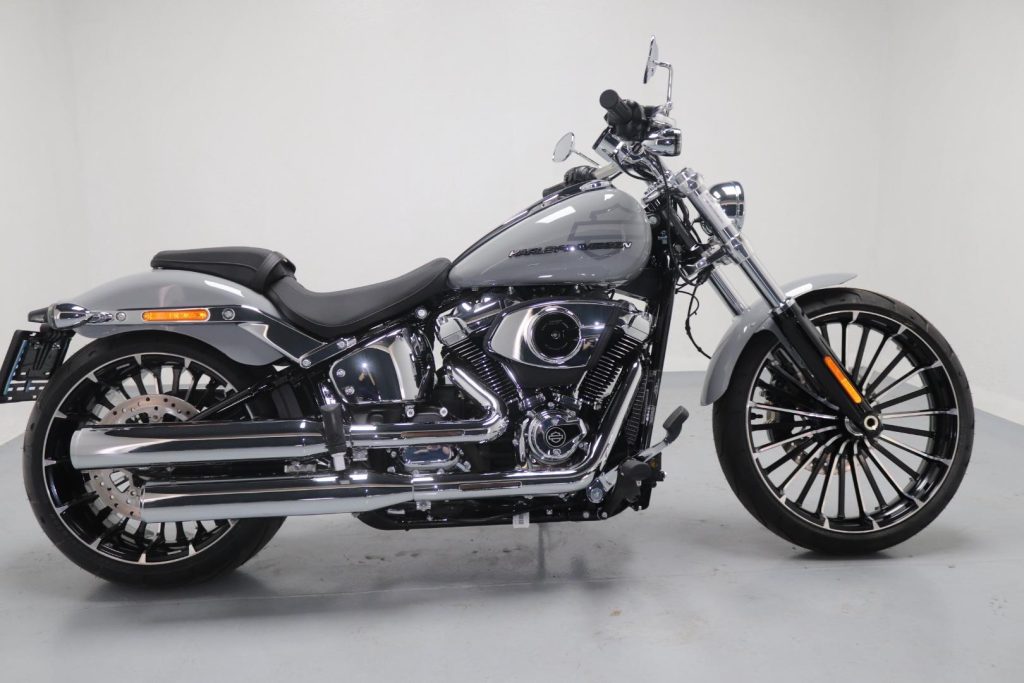
The Harley-Davidson Breakout 117 became popular because it captured the spirit of custom cruiser culture while retaining factory reliability and modern engineering. It delivers a giant displacement V-twin personality in one of the boldest-looking cruiser packages Harley Davidson has produced in years.
- Engine: 1,923 cc V-twin
- Torque: 125 lb ft
- Horsepower: 103 hp
- Length/Width: 93.3 in / 37.4 in
7. BMW R 18 Transcontinental
The BMW R 18 Transcontinental entered the heavyweight cruiser market with a completely different philosophy compared to American V-twin touring motorcycles.
Instead of copying Harley-Davidson or Indian directly, BMW blended classic cruiser proportions with German engineering precision, advanced touring technology, and one of the largest boxer engines ever installed in a production motorcycle. The result became one of the most distinctive long-distance cruisers available anywhere in the world.
At the center of the motorcycle sits BMW’s enormous 1,802 cc boxer twin engine. The exposed cylinder heads immediately give the bike a unique identity because no American cruiser uses a similar engine layout.
Twist the throttle at idle, and the entire motorcycle rocks gently from side to side due to the boxer configuration. That mechanical movement gives the R 18 personality before it even begins moving.
Once on the road, the engine delivers massive low-rpm torque with smooth and controlled acceleration. Riders do not need aggressive throttle input or constant downshifts because the boxer twin produces effortless pulling power almost everywhere in the rev range.
The motorcycle feels relaxed during highway cruising, yet still capable of strong acceleration when overtaking traffic. Unlike high-revving sport touring motorcycles from BMW’s past, the R 18 focuses entirely on calm and commanding long-distance riding.
Comfort became a huge priority during development. The Transcontinental trim includes a large front fairing, spacious seating, integrated luggage, and extensive wind protection designed specifically for cross-country travel.
Passenger accommodations also feel luxurious, making the motorcycle ideal for extended two-up touring. Heated seats, adaptive cruise control, premium audio systems, and advanced infotainment technology help the bike compete directly against elite American touring cruisers.
Styling combines vintage inspiration with modern detail work beautifully. Large chrome surfaces, flowing body lines, and exposed driveshaft components create a classic appearance, but the motorcycle still feels contemporary rather than retro themed. BMW carefully balanced heritage-inspired design with modern engineering sophistication.
Handling also surprises many riders. Despite the motorcycle’s size and weight, BMW engineered the chassis to feel stable and confidence-inspiring through sweeping roads. The low center of gravity created by the boxer engine improves balance significantly during slow-speed maneuvering and highway riding alike.
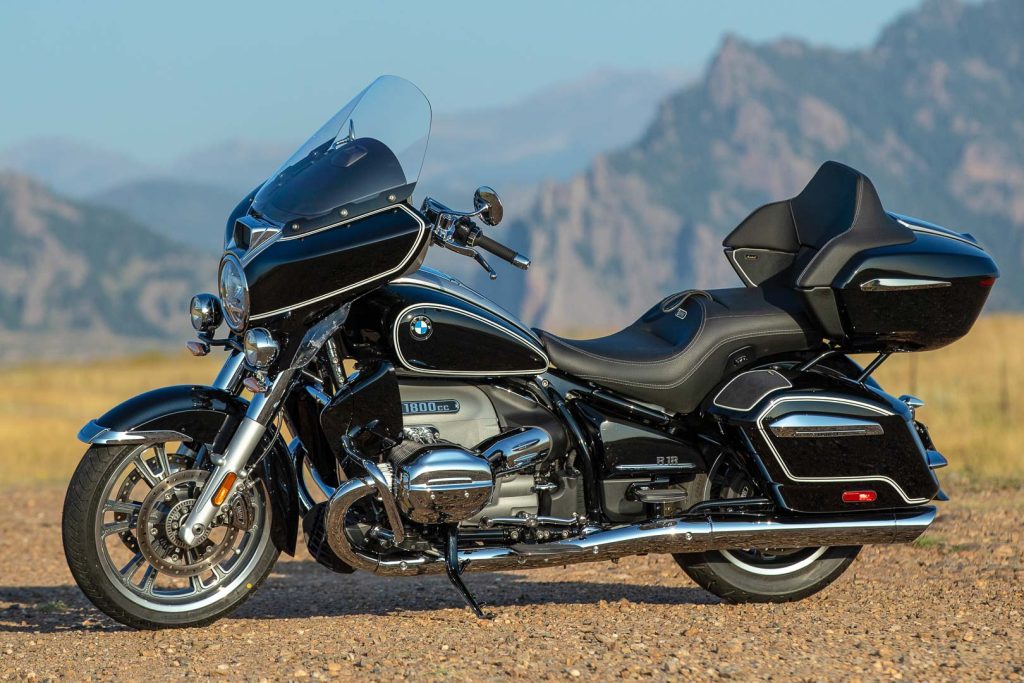
The R 18 Transcontinental became important because it proved BMW could enter the giant cruiser category without abandoning its engineering identity.
Instead of imitating established American formulas directly, BMW created a heavyweight touring cruiser that feels uniquely German while still delivering the comfort, torque, and road presence cruiser riders expect.
- Engine: 1,802 cc boxer twin
- Torque: 116 lb ft
- Horsepower: 91 hp
- Length/Width: 104.3 in / 38.0 in
8. Kawasaki Vulcan 2000
The Kawasaki Vulcan 2000 arrived during a period when cruiser manufacturers competed aggressively through engine displacement and torque numbers. Kawasaki wanted to prove Japanese brands could build giant cruisers with the same intimidating road presence and low-end power associated with massive American V-twins.
The result became one of the largest displacement V-twin motorcycles ever placed into production and one of the most underrated heavyweight cruisers of its era.
Its gigantic 2,053 cc V-twin engine defined the entire riding experience. Massive pistons and a long-stroke design allowed the engine to produce incredible low-rpm torque, giving the motorcycle effortless acceleration and deep mechanical character.
Riders barely needed to rev the engine because power arrived almost immediately above idle. The Vulcan surged forward with calm but overwhelming force, making highway riding feel relaxed regardless of passenger weight or luggage load.
Unlike some high-displacement cruisers focused purely on visual intimidation, Kawasaki engineered the Vulcan 2000 to remain surprisingly smooth and refined.
Fuel injection improved throttle response significantly, while careful balancing reduced excessive vibration during long-distance riding. The motorcycle still delivered an authentic V-twin pulse and exhaust rumble, but it avoided becoming tiring during extended highway travel.
The styling embraced classic cruiser traditions confidently. Huge fenders, a stretched wheelbase, a large fuel tank, and extensive chrome detailing gave the bike an enormous visual presence. Everything about the Vulcan looked oversized and muscular.
Parked beside smaller cruisers, the motorcycle immediately dominated attention through sheer scale alone.
Long-distance comfort also became one of the bike’s greatest strengths. Wide seating, relaxed ergonomics, and strong wind protection on touring-equipped versions allowed riders to spend hours on the highway comfortably.
The engine’s effortless torque delivery meant fewer gear changes and lower-rpm cruising behavior, which added to the calm touring personality.
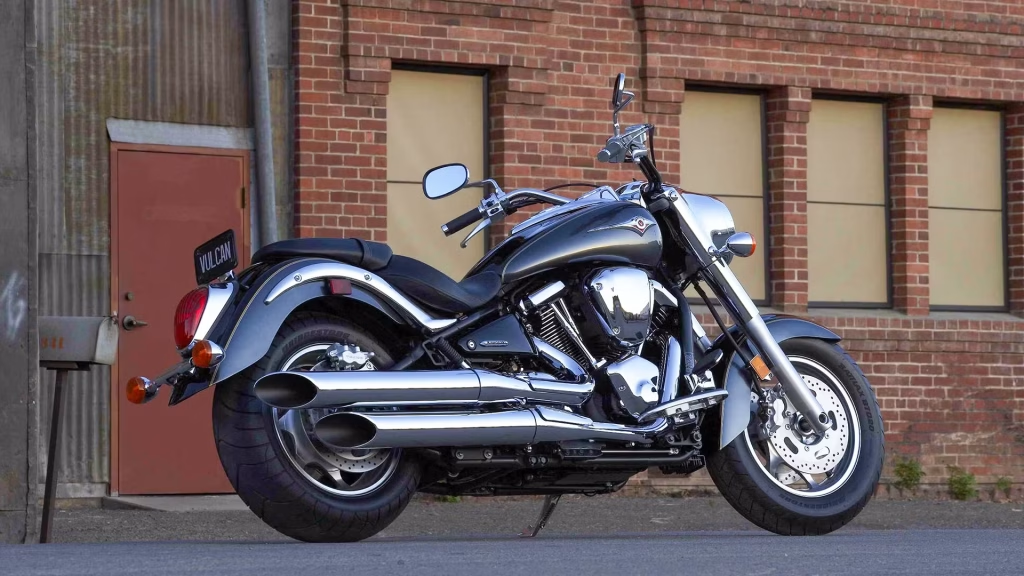
Another reason enthusiasts still respect the Vulcan 2000 involves rarity. Kawasaki eventually shifted attention toward smaller and more versatile cruiser platforms, causing the giant Vulcan to disappear quietly from the market.
Many riders today have never even seen one in person, which makes surviving clean examples increasingly interesting among cruiser enthusiasts.
The Vulcan 2000 proved Japanese manufacturers could build heavyweight cruisers with genuine personality rather than simply producing smaller alternatives to American motorcycles.
Its enormous V-twin engine, comfortable touring nature, and commanding appearance continue giving the bike cult status years after production ended.
- Engine: 2,053 cc V-twin
- Torque: 141 lb ft
- Horsepower: 103 hp
- Length/Width: 99.6 in / 39.0 in