
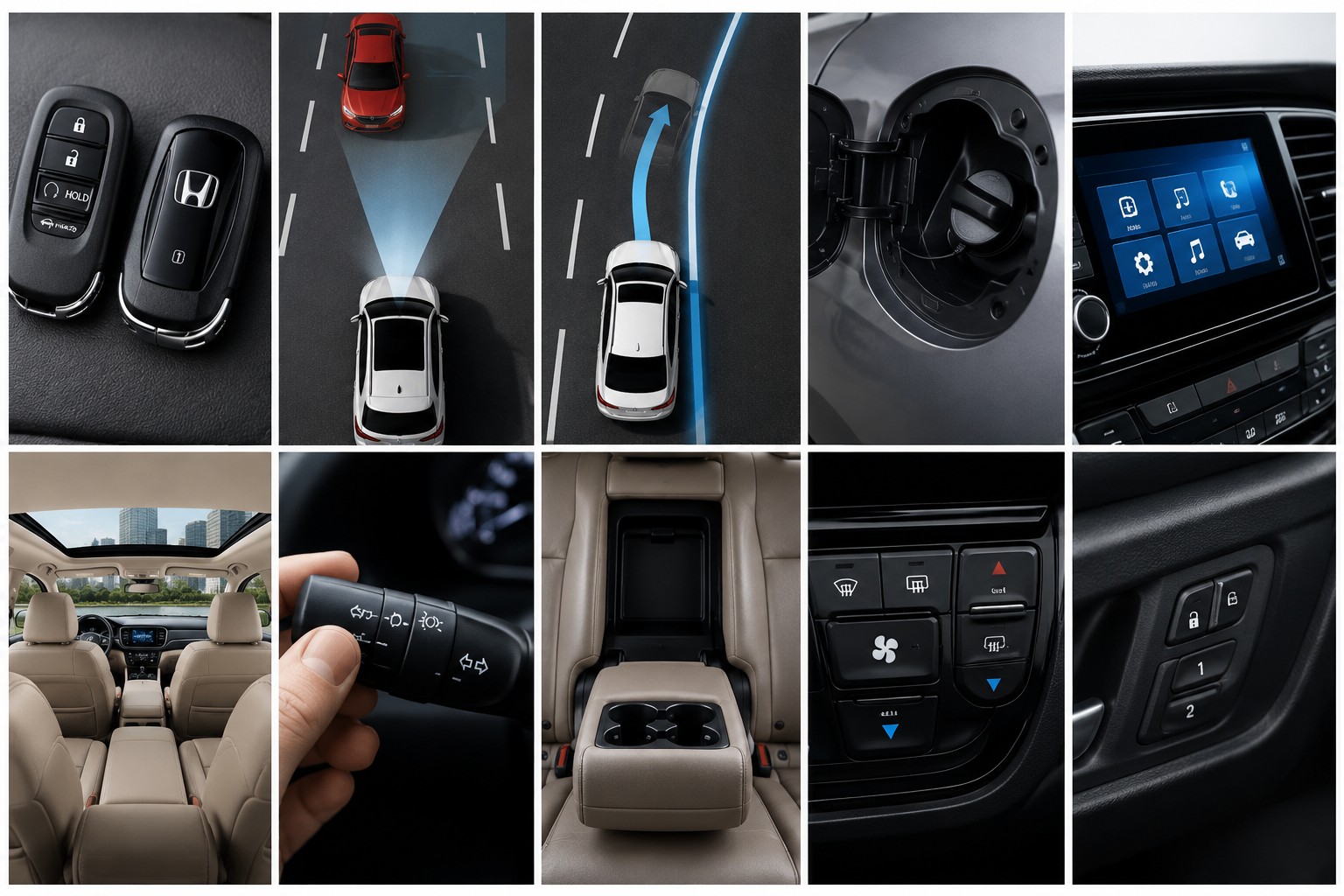
Honda has long been one of the most respected automotive brands. From the bustling streets of Tokyo to the long highways of North America, Honda cars have earned a global reputation for reliability, engineering precision, and quiet innovation.
But beyond the obvious appeal of their fuel efficiency and dependable drivetrains lies a fascinating world of hidden features that most owners never fully discover. These are not gimmicks or marketing buzzwords. They are thoughtfully engineered functions buried within menus, sensors, and mechanical systems that can dramatically transform your daily driving experience.
Honda’s engineering philosophy, rooted in the company motto “The Power of Dreams,” pushes the brand to embed intelligence into every layer of its vehicles.
Many of these features are tucked away in infotainment menus, activated by specific button sequences, or quietly operating in the background without the driver ever noticing. Whether you own a Honda Civic, Accord, CR-V, Pilot, or Odyssey, there is a very strong chance you are leaving several powerful features completely unused every single day.
This guide uncovers ten of the most impressive hidden features found across Honda’s modern lineup. Each feature is explained in thorough detail, covering how it works, which models it appears in, and exactly why it matters to the everyday driver.
Alongside each feature, you will also find precise engine, horsepower, torque, and dimensional specifications so you can appreciate the full engineering package that Honda delivers. Whether you are a long-time Honda owner or a new buyer, get ready to see your vehicle in a completely new light.
1. Walk Away Auto Lock
One of the most underused features in modern Honda vehicles is the Walk Away Auto Lock system. Most owners lock their car by pressing the key fob button, never realising the vehicle can handle this task entirely on its own.
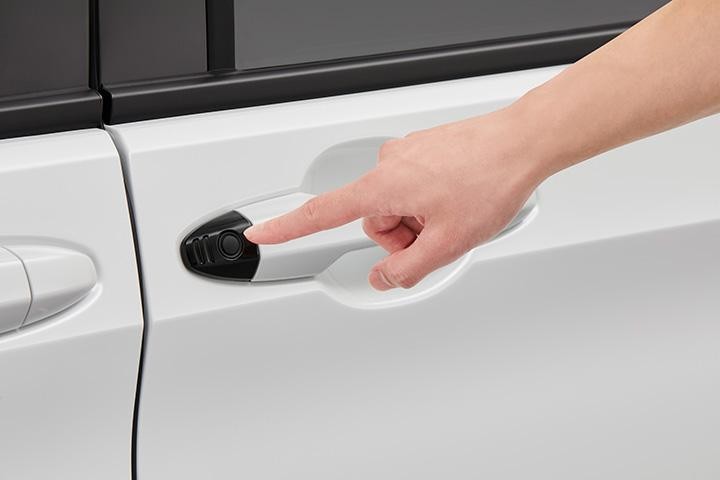
When you walk away from the car with the key fob in your pocket or bag, the doors lock automatically once you are approximately eight feet away from the vehicle.
This feature uses low-frequency antenna sensors embedded in the door handles. These sensors constantly communicate with your proximity key fob to detect whether it is moving away from the vehicle.
Once the system confirms the key has crossed the distance threshold, the locks engage automatically, and the indicators flash once to confirm the action.
The technology is available across virtually all 2018-and-newer Honda models equipped with Smart Entry. This includes the 11th-generation Civic, the 2023-onwards CR-V, the HR-V, the latest Accord, and the Pilot. Many owners never activate it simply because the feature needs to be enabled through the vehicle settings menu first.
To turn it on, go to Settings on the infotainment screen, then select Door/Window, and toggle Walk Away Auto Lock to the ON position. It takes less than thirty seconds. There is also a hidden engineering menu in models with the 7-inch or 9-inch touchscreen that allows even deeper customisation of this feature.
By pressing and holding the top-left corner of the touchscreen for 15 seconds with the ignition on, a diagnostic screen labelled “Detail Information and Setting” appears.
Going through the Body Electrical, then MICU, then Customisation reveals a Walk Away Auto Door Lock option that can be toggled on or off at a deeper system level. This setting even survives a battery disconnect, making it permanent until manually changed.
The Walk Away system also works beautifully in reverse. Honda’s Smart Entry allows keyless unlocking by simply reaching for the door handle while the fob is on your person.
The system is accurate, responsive, and works in all weather conditions. Once you activate this feature, pressing the fob button to lock your car will feel like a thing of the distant past.
2. Honda LaneWatch
Honda LaneWatch is one of the cleverest yet most overlooked safety features the brand has ever produced. A tiny camera is discreetly mounted on the underside of the passenger-side door mirror. It is so small and well-integrated that most owners mistake it for a simple design detail rather than a functioning safety device.
When you activate the right-turn signal, the camera automatically wakes up. A live wide-angle video feed of your passenger-side blind spot appears on the central infotainment touchscreen. The system provides up to four times more visibility than a conventional side mirror alone, making lane changes significantly safer on motorways and in dense city traffic.
The LaneWatch camera is especially valuable during highway driving at high speeds. Standard mirrors leave a significant blind zone on the right side, particularly for larger vehicles travelling in the adjacent lane. LaneWatch fills that gap with a real-time, colour video feed that is sharp and easy to read even in bright sunlight.
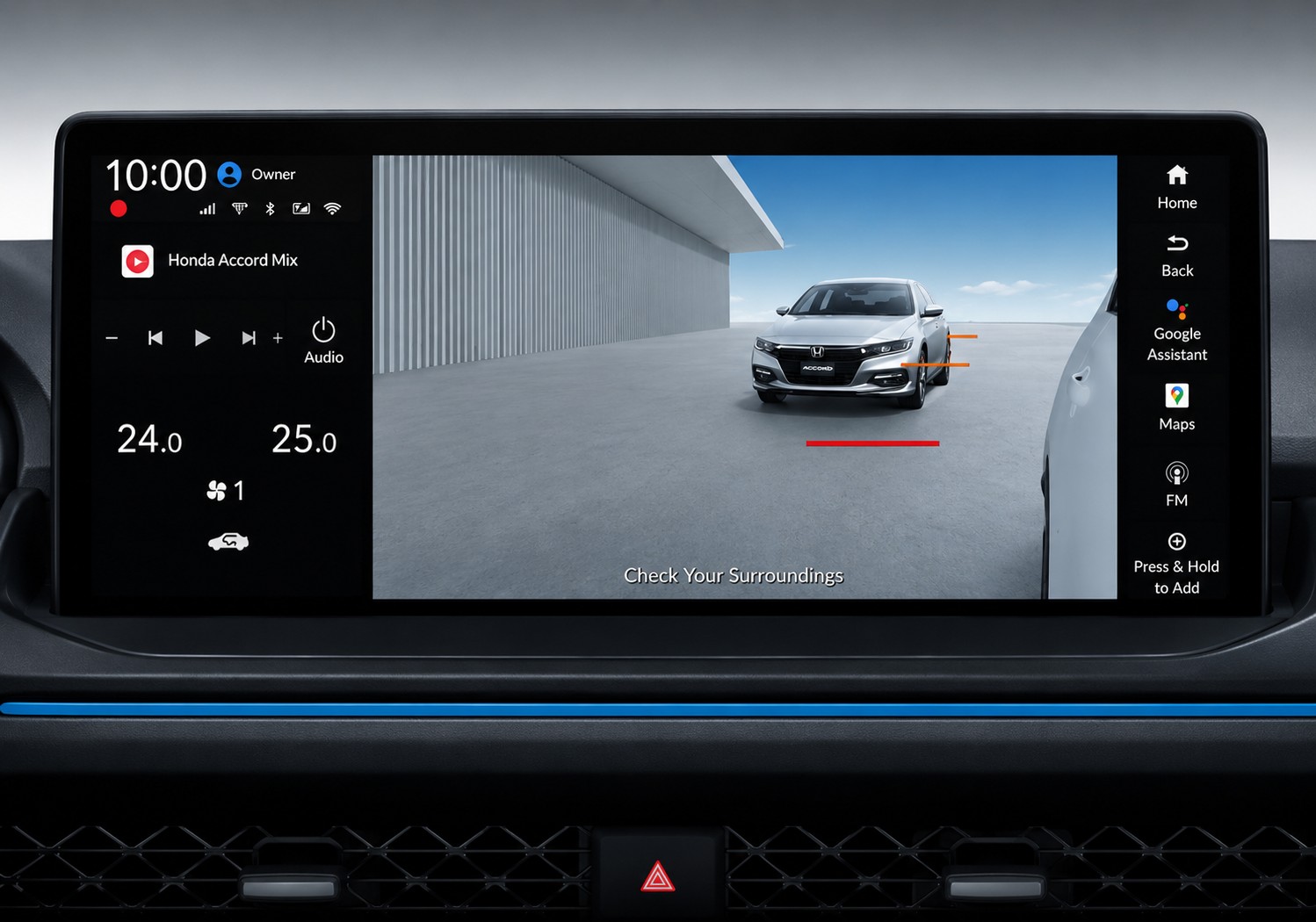
The feature is also active when parking. When you are manoeuvring into a tight roadside spot or reversing at an angle, the passenger-side feed gives you a ground-level view that the mirror simply cannot replicate.
Many drivers report that LaneWatch made them aware of cyclists and motorcycles they had completely missed in their mirrors. On some trim levels, the LaneWatch display is paired with distance guidelines that adjust dynamically as you steer.
This makes it even more useful in urban environments where millimetre-precise positioning matters. The feature is available on multiple Civic, Accord, and HR-V trim levels, though it is not always prominently mentioned in brochures or sales conversations, making it one of Honda’s best-kept secrets.
3. ECON Mode and the Eco Assist System
Nearly every modern Honda has an ECON button, usually marked with a small leaf-like icon. The vast majority of owners press it occasionally out of curiosity, but never truly understand what it does beneath the surface.
ECON Mode is actually part of a broader, deeply intelligent system called the Eco Assist System, and it works on multiple levels simultaneously. When ECON Mode is activated, the car recalibrates several key vehicle systems at once.
The throttle response is softened so that aggressive acceleration is physically discouraged. The air conditioning compressor is adjusted to run less aggressively, reducing the engine load. The cruise control system modulates speed more gradually on inclines, and the CVT shifts to prioritise lower engine revs at all times.

The Eco Assist System goes further than just ECON Mode, however. It coaches the driver in real time through a visual ambient lighting system on the instrument cluster.
When you accelerate and brake smoothly, the display glows green. When you drive aggressively, it shifts toward blue. The goal is to keep the display as green as possible throughout your journey.
Over time, this coaching system actually changes driving habits permanently. Honda designed the Eco Assist feedback loop to be subconscious. Drivers begin anticipating red lights earlier, maintaining steadier highway speeds, and braking more gently without consciously thinking about it. Real-world fuel savings of between 5 and 10 percent are commonly reported by drivers who use the system consistently.
On the CR-V specifically, the combination of ECON Mode and smooth driving technique can push fuel economy well beyond the EPA-rated 28 city and 34 highway figures.
For a family SUV of this size and capability, that is a remarkable outcome. The ECON system is one of those features that rewards patience and attention with genuinely meaningful savings at every fill-up.
4. Honda Sensing Collision Mitigation Braking System
Honda Sensing is well known as a suite of driver assistance technologies, but the most powerful component within it is one that most drivers rarely notice in action the Collision Mitigation Braking System, or CMBS.
This system quietly operates in the background during every single drive, using a hidden front-facing camera mounted in the rearview mirror housing and a millimetre-wave radar sensor embedded behind the front grille.
The camera and radar work together to continuously scan the road ahead. The system tracks the position, speed, and trajectory of vehicles, pedestrians, and even cyclists up to several hundred metres in front of the car. It processes this data dozens of times per second, calculating the probability of a collision based on your current speed and steering input.
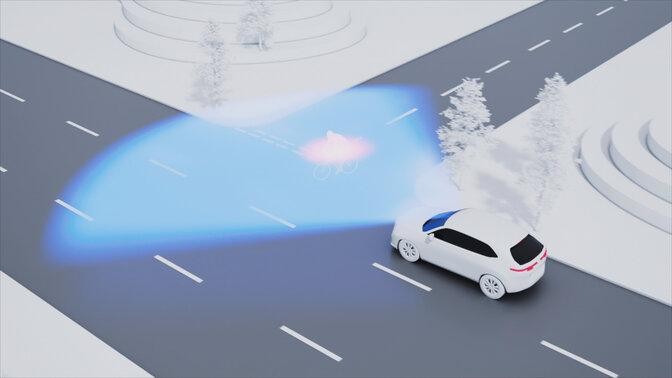
When CMBS detects a high-risk scenario forming ahead, it begins a staged response. The first stage is a visual warning on the instrument cluster combined with an audible alert. If the driver does not respond, the system tightens the seatbelts to pre-tension them against the body. In the final stage, if a collision is deemed unavoidable, CMBS automatically applies the brakes with significant force to reduce the severity of the impact.
What makes this system so impressive is that it operates without any conscious input from the driver. It is not a feature you activate or configure. It simply watches, calculates, and intervenes when human reaction time is not enough. Studies have shown that CMBS can reduce rear-end collision severity by up to 40 percent, which is a staggering figure.
On the Pilot, which frequently carries families on long highway journeys, CMBS is an invaluable safety net. The V6’s highway performance means speeds build quickly, making the system’s long-range radar capability especially critical. This is the kind of hidden feature that most drivers only truly appreciate the value of when it saves their lives.
Also Read: Extended Warranties Are Pure Profit for Dealers and Rarely Worth It for Buyers
5. Paddle Shifters with Hidden Sport Behaviour
Most Honda drivers with paddle shifters behind their steering wheel use them occasionally for novelty and then forget they exist. What very few owners realise is that Honda’s paddle shifter system has a hidden behaviour that dramatically changes how the car drives when used correctly and consistently.
The system is far more intelligent than a simple gear-hold function. On Honda CVT models equipped with paddles, repeatedly pulling the paddles activates a set of virtual gear ratios called Sport Shift Control.
The CVT simulates up to seven distinct drive ratios, each with a noticeable step in engine response when you shift between them. The transmission holds the selected ratio tenaciously until you manually shift again or come to a complete stop.
The hidden element most drivers miss is the downshift-to-decelerate behaviour. When you pull the left paddle approaching a corner or a downhill stretch, the transmission drops to a lower virtual ratio and uses engine braking to slow the car.
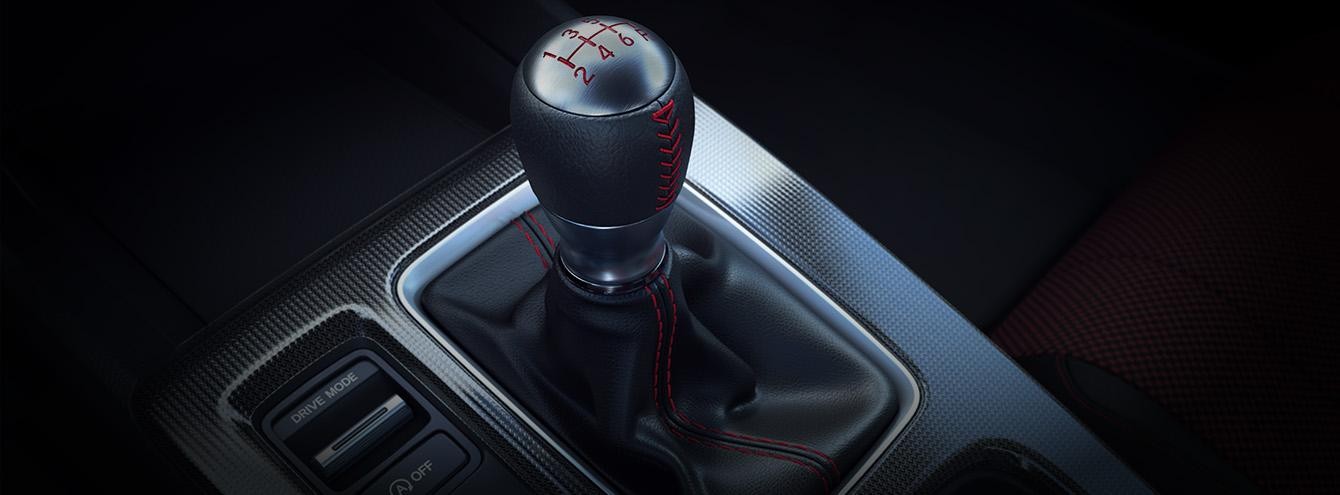
This reduces brake wear, improves control in corners, and gives a driving feel that mimics a proper manual gearbox far more convincingly than most automatics. On the Civic Si, which comes with a proper 6-speed manual, there is a related hidden feature, the rev-match system.
When downshifting, the car automatically blips the throttle to match engine speed to the lower gear, making every downshift feel perfectly executed, even for inexperienced drivers. This is a feature found on exotic sports cars that Honda has quietly included in an affordable compact sedan.
Understanding and using the paddle system transforms the Civic from a composed commuter into a genuinely entertaining driver’s car. Honda engineers the CVT with paddle control specifically to reward drivers who engage with the system. The difference in driver enjoyment between passive and active paddle use is remarkable.
6. The Hidden Infotainment Engineering Menu
Buried deep within Honda’s infotainment system is a hidden engineering and diagnostic menu that most owners will never stumble upon accidentally.
This screen was originally designed for Honda technicians to calibrate, test, and diagnose the vehicle’s electronic systems. However, it is accessible to any driver with the right button sequence and contains some genuinely useful functionality.
To access the menu on models with the 7-inch or 9-inch Honda touchscreen, press and hold the top-left corner of the display for approximately 15 seconds with the vehicle’s ignition switched on. A screen labelled “Detail Information and Setting” will appear. This is a live gateway into the vehicle’s core software.
Within this menu, drivers can access audio system diagnostic tools, including the ability to recalibrate speaker output levels and reboot the infotainment software without losing saved settings.
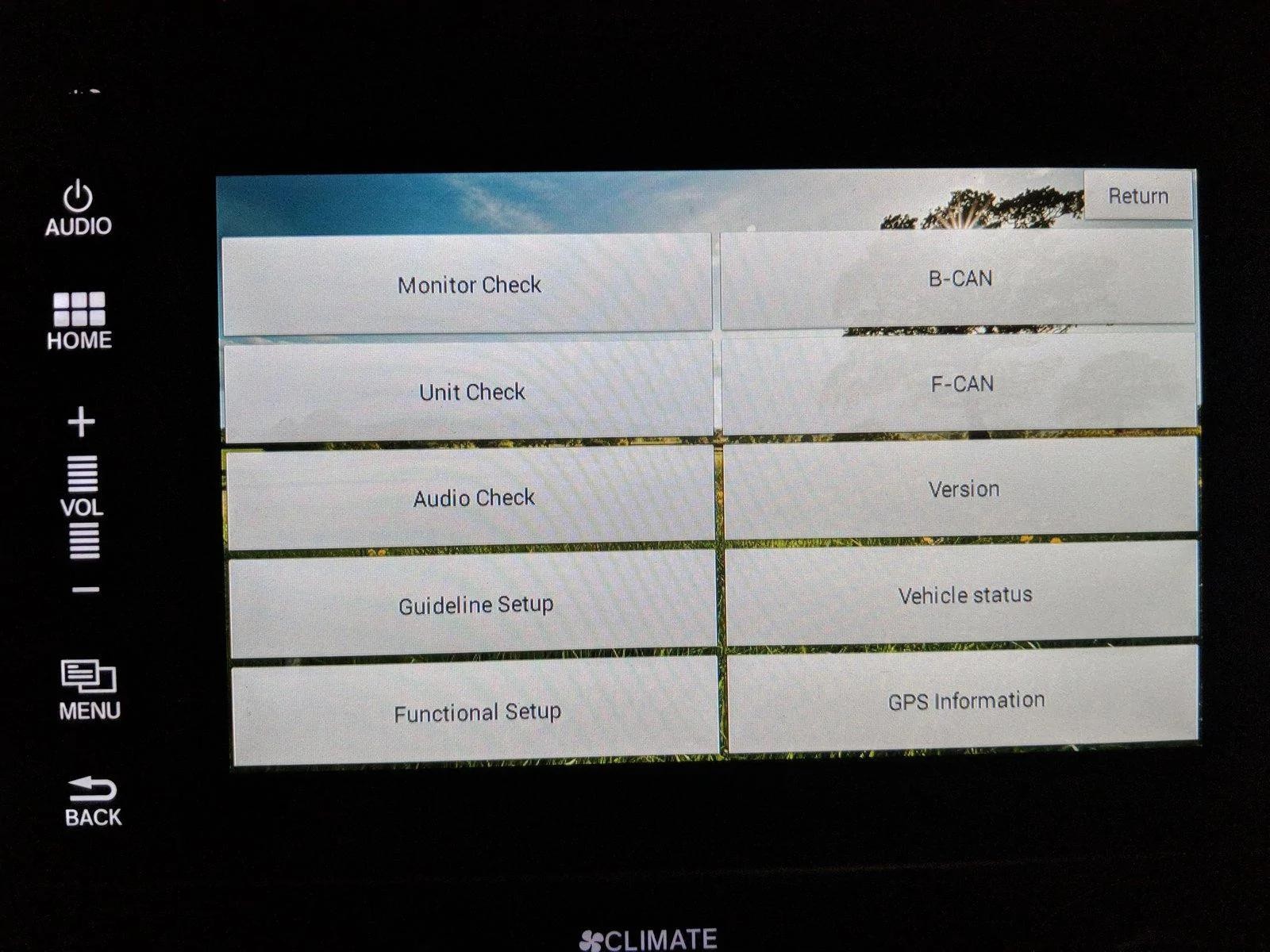
The system reboot function is particularly useful when the infotainment becomes slow or unresponsive, which can occasionally happen on older software versions without a full system restart.
The engineering menu also contains the vehicle customisation settings that are not accessible through the standard settings interface. These include modifications to the door lock behaviour, the horn confirmation beep on locking, the automatic re-lock timer, the sensitivity of the proximity unlocking sensors, and several ECON mode defaults. These are settings that many Honda owners search for online without realising they are hidden in plain sight.
On the CR-V Hybrid specifically, the menu includes hybrid system diagnostic readouts showing real-time battery state, motor output ratios, and charging behaviour. This gives technically curious owners a live window into the remarkable engineering of Honda’s two-motor hybrid system, which is one of the most sophisticated in its class.
7. Honda CabinWatch and CabinTalk
The Honda Odyssey minivan is one of the most family-focused vehicles ever built, and buried within its technology suite are two features that feel almost science-fiction in their thoughtfulness, CabinWatch and CabinTalk.
Most Odyssey owners use the rear entertainment screen for movies and never discover that the van has an internal monitoring camera and intercom system built right in.
CabinWatch is an interior-facing wide-angle camera mounted in the overhead console area between the driver and passenger seats. It provides a live feed of the second and third-row seating areas directly on the front infotainment screen.
Parents can glance at the screen to check on sleeping children or monitor rear passengers without turning around while driving, which is a significant safety benefit.
The camera adjusts automatically for ambient light levels, meaning it works clearly during nighttime driving when rear cabin lighting is reduced. The image quality is sharp enough to see facial expressions clearly, and the wide-angle lens covers the full width of the second and third rows simultaneously without any blind spots.
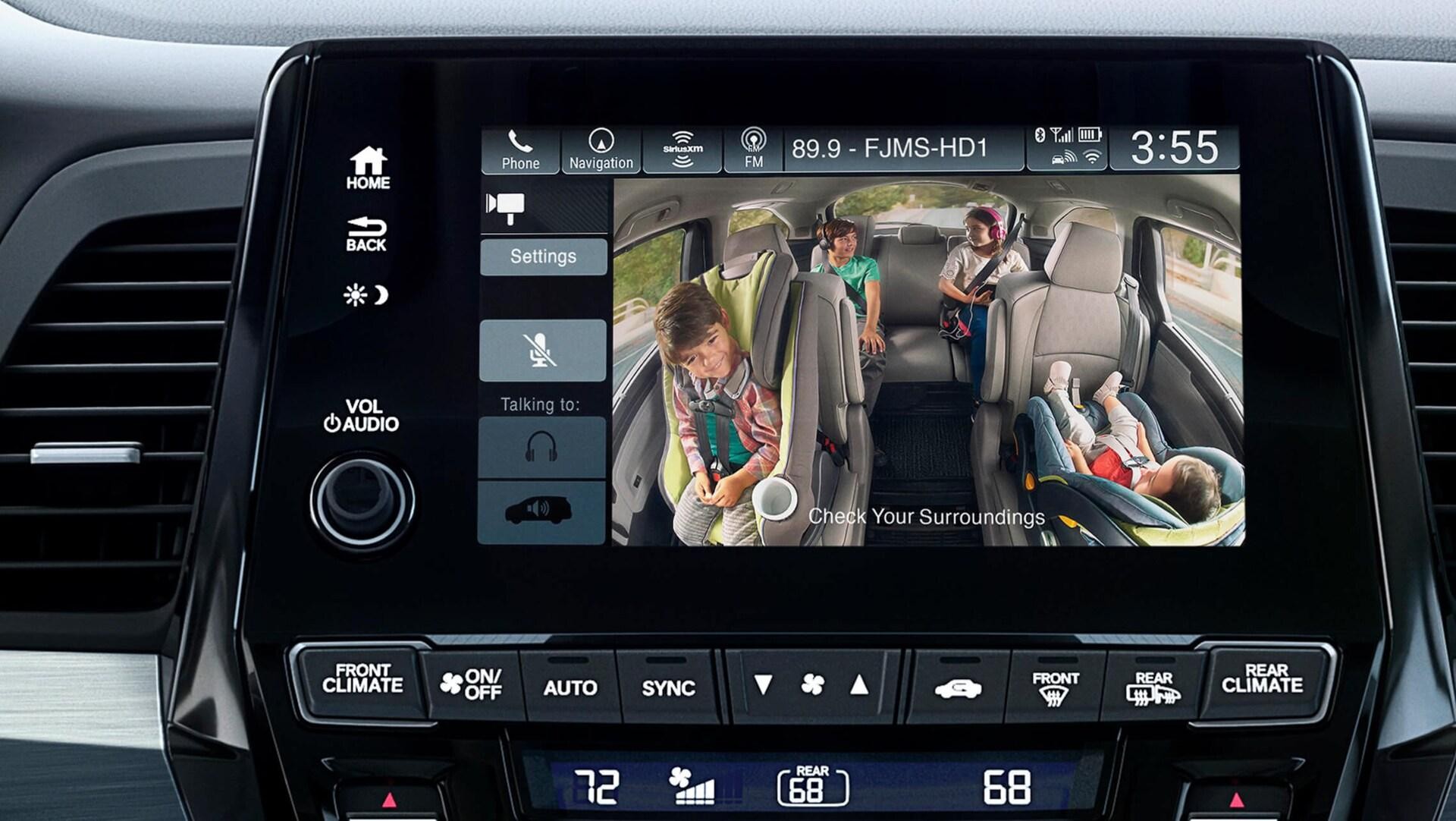
CabinTalk extends this monitoring concept further into communication. Using the front-row microphone, the driver can speak directly to rear passengers through the Odyssey’s rear speakers, eliminating the need to shout over road noise, music, or entertainment audio.
The rear passengers hear the driver’s voice clearly and can respond using a microphone built into the rear entertainment ceiling unit. For families with young children on long road trips, these two systems together are transformative.
The combination of visual monitoring and clear two-way communication means the driver can stay fully focused on the road while still remaining connected to every passenger in the vehicle. It is one of Honda’s most innovative family features, and the vast majority of Odyssey owners do not know it exists.
8. Active Noise Cancellation
One of the most sophisticated hidden features in Honda’s premium models is Active Noise Cancellation, or ANC. This is a technology that most people associate with high-end headphones, but Honda has engineered it at a full vehicle scale in the Accord Hybrid Touring and several other top-trim models.
The vast majority of drivers have no idea it is running silently during every journey. Honda’s ANC system uses microphones mounted inside the cabin to continuously sample the acoustic environment.
These microphones detect low-frequency noise produced by the engine, road surface, and exhaust system dozens of times per second. The system then generates an inverted sound wave through the vehicle’s audio speakers at precisely the right frequency and timing to cancel out the incoming noise.
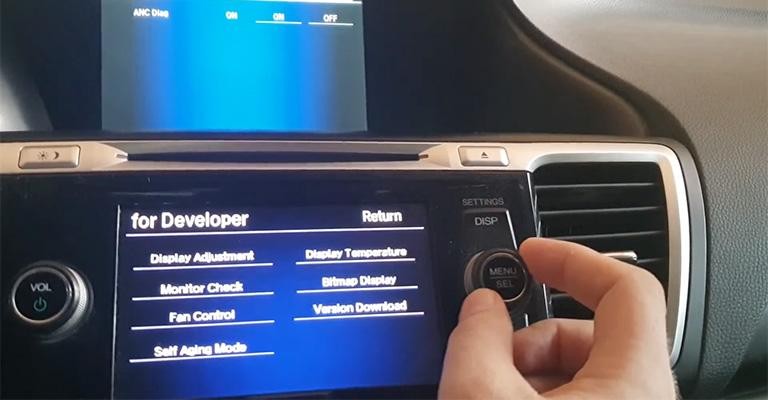
The result is a cabin that is noticeably quieter than the same car without the system. Honda engineers target the most fatiguing frequencies, specifically the low rumble of the engine under acceleration and the drone that builds up at motorway speeds. These frequencies are the ones that cause listener fatigue on long journeys without drivers ever consciously noticing them.
The system works invisibly. There is no button to press, no setting to configure, and no indicator that it is active. It simply runs in the background, perpetually working to make the cabin more serene.
The benefit is most noticeable on the Accord Hybrid at steady highway cruising speeds, where the combination of the Atkinson-cycle engine’s near-silent operation and the ANC system creates an almost luxury-car level of acoustic refinement.
When drivers switch from a base trim Accord to the Touring Hybrid and notice the cabin feels dramatically quieter, they often attribute it to better insulation.
In reality, a significant portion of that difference comes from the invisible acoustic engineering of Active Noise Cancellation working without interruption in the background.
9. Automatic High Beam Control
Automatic High Beam Control, also known as Auto High-Beam, is a feature present on a wide range of Honda models that most drivers either never activate or activate by accident and then turn off without understanding what it does.
It is one of those features that sounds simple on paper but delivers a genuinely meaningful safety benefit in real-world night driving. The system uses the same forward-facing camera that powers Honda Sensing.
During nighttime driving, when the headlights are in the AUTO position and vehicle speed exceeds approximately 25 mph, the camera scans for the headlights or taillights of other vehicles ahead.
When no other vehicles are detected within the detection range, the system automatically switches the headlights to high beam without any input from the driver.
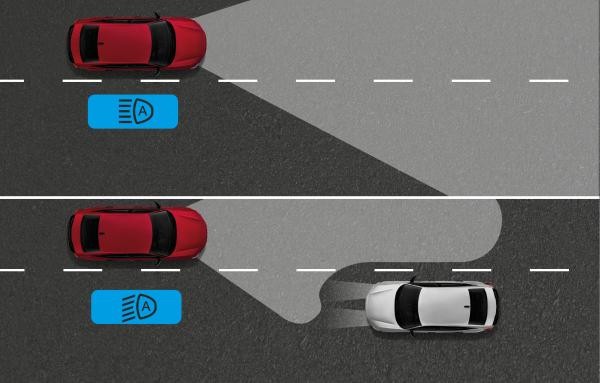
As soon as oncoming headlights or the rear lights of a vehicle ahead are detected, the system seamlessly drops back to low beam to avoid dazzling other road users.
The entire transition happens smoothly and quickly, faster than most drivers would react manually. The system also recognises street lighting and will refrain from activating high beams in well-lit urban areas where they would be inappropriate.
To activate the feature, set the headlight stalk to AUTO and look for a small AUTO HIGH BEAM button, often located on the instrument cluster or steering wheel control panel, depending on the model.
On the HR-V, the button is positioned on the left side of the instrument cluster. Many drivers miss it entirely during ownership and spend years manually managing their high beams at night.
The safety implications are significant. Studies consistently show that high beams increase a driver’s forward visibility distance by approximately double compared to low beams.
Drivers who leave the system in AUTO effectively have doubled forward vision on rural and unlit roads every night without ever consciously managing the process.
10. Honda Remote Engine Start with Climate Pre-Conditioning
Remote Engine Start is a feature that many Honda owners know exists but dramatically underestimate in capability. Most drivers use it purely to warm up the engine in winter.
The reality is that Honda has engineered this system to do something far more sophisticated, it automatically preconditions the entire cabin to the temperature you had set before you last switched the car off.
When you start the vehicle remotely using the Honda key fob or the My Honda+ smartphone app, the car does not simply idle. It immediately activates the climate control system to the exact temperature, fan speed, and distribution setting that was last used by the driver.
If you had the car at 22 degrees with airflow directed to the face vents, it returns to exactly that configuration before you even walk out the door. In extreme summer heat, this means stepping into a vehicle that has been actively cooled for several minutes rather than a car that feels like an oven.
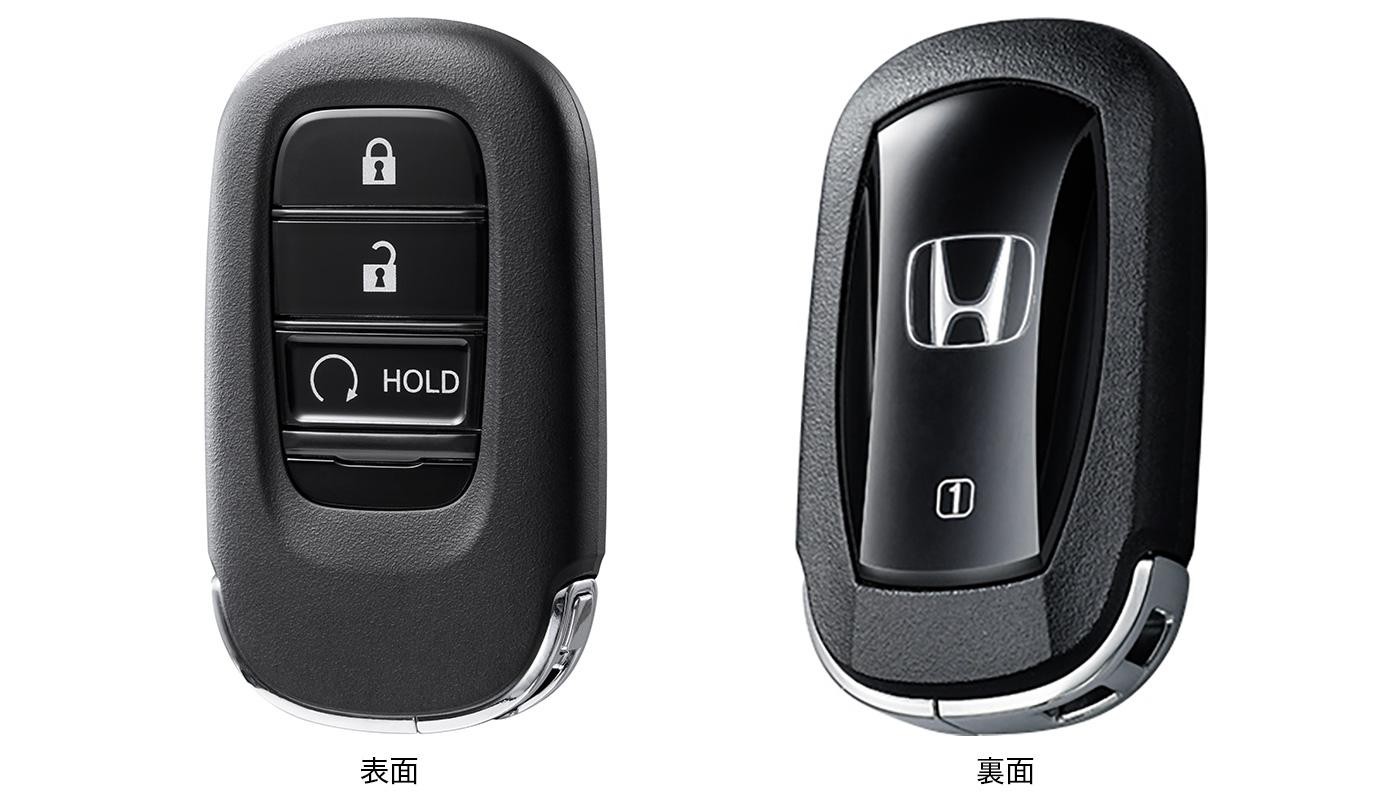
In winter, it means a fully warmed cabin with defrosted windows and heated seats that are already at temperature. Honda even designed the system so that the heated rear windscreen defroster activates automatically during remote start in cold conditions.
The My Honda+ app extends this functionality further. Using the app on a smartphone, drivers can start the engine from virtually any distance, check the fuel level, lock or unlock the doors, and see the current cabin temperature in real time.
For the Pilot, which is often used for family road trips and outdoor adventures, arriving at a car that is already perfectly prepared for the journey ahead is a genuinely appreciated luxury.
The remote start duration is set to 10 minutes by default, after which the engine shuts off automatically if no one has entered and taken over with the ignition.
This duration can be extended to 20 or 30 minutes on certain trim levels through the vehicle settings menu. For anyone who parks outdoors in regions with extreme seasonal temperatures, this feature alone justifies the step up to higher trim levels.
Also Read: Adventure Bikes Have Dethroned Sportbikes as the King of Two Wheels
