
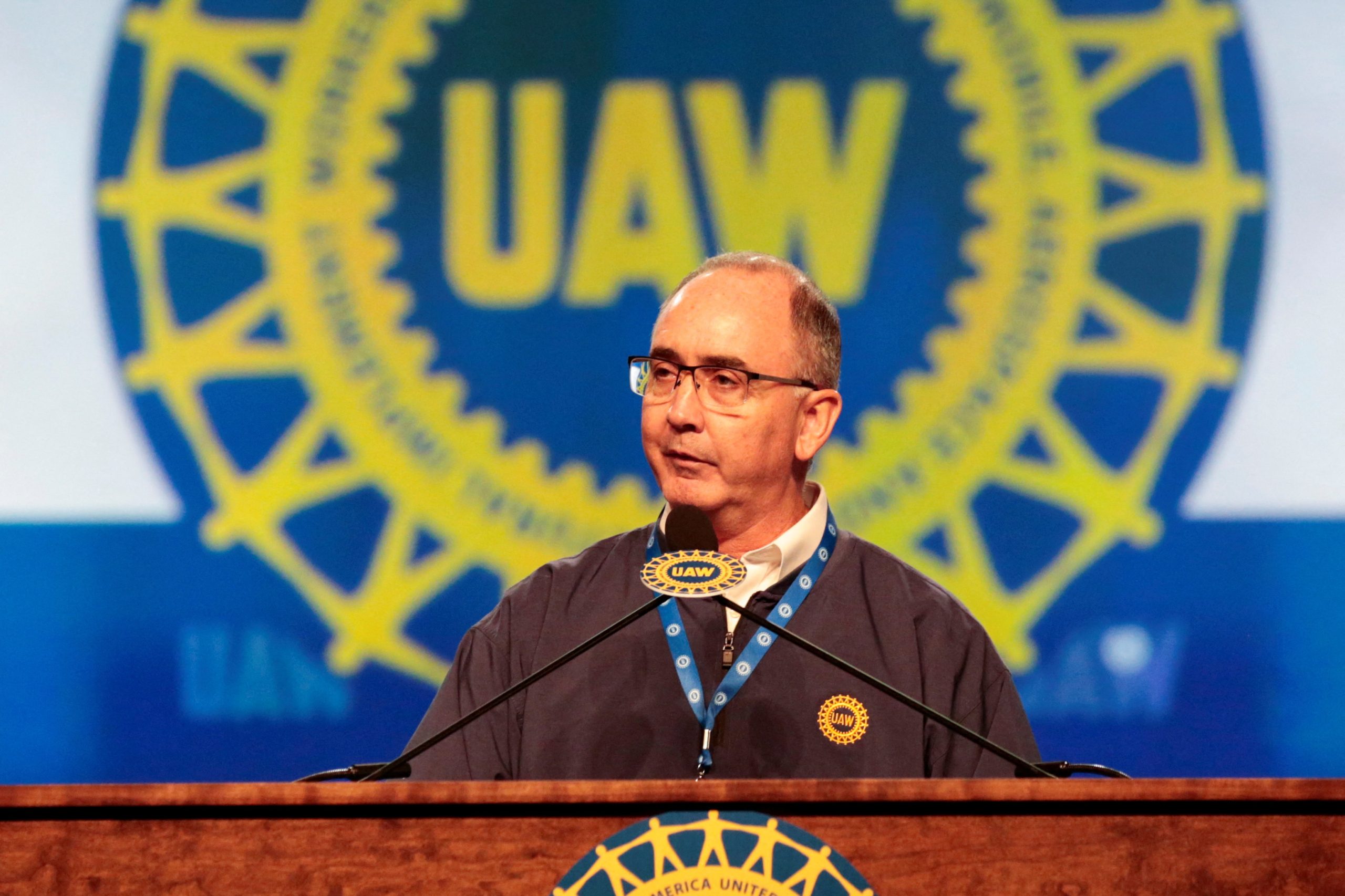
The United Auto Workers union is intensifying pressure on US trade officials and automakers ahead of upcoming United States-Mexico-Canada Agreement negotiations, calling for significantly tougher manufacturing rules designed to protect American automotive jobs and reduce what union leaders describe as unfair labor cost advantages across North America.
During the week of May 25, 2026, UAW officials renewed demands for stricter domestic production requirements, stronger wage protections, and tighter enforcement mechanisms within the USMCA framework.
The union argues that current rules still allow automakers to shift too much production to lower-wage facilities outside the United States while continuing to benefit from tariff-free trade access. The issue arrives at a sensitive moment for the North American auto industry.
Manufacturers are simultaneously dealing with electrification costs, supply chain restructuring, global competition, and slowing demand in several markets. Governments, meanwhile, are under growing political pressure to secure manufacturing jobs domestically, particularly in sectors tied closely to national industrial identity.
Few industries carry more symbolic and economic weight in the United States than automotive manufacturing.
For the UAW, the upcoming USMCA discussions represent an opportunity to push for structural changes that could reshape how automakers build vehicles across the continent for years to come.
Also Read: 8 Cars That Are Nearly Impossible to Steal
The Union Wants Stronger Rules on where cars are built
The USMCA agreement replaced the older North American Free Trade Agreement in 2020 with updated rules intended partly to encourage more regional manufacturing. Current regulations require a higher percentage of vehicle content to originate within North America in order to qualify for tariff-free treatment.
The agreement also introduced labor value requirements aimed at encouraging more production in higher-wage facilities. Despite those changes, UAW leadership argues the rules did not go far enough.
Union officials claim automakers still possess too much flexibility to shift production into lower-wage regions, particularly Mexico, where labor costs remain dramatically below those in US unionized plants. The concern has grown more intense as companies invest heavily in new EV production facilities and battery manufacturing networks.
The union fears that without stronger safeguards, the transition toward electric vehicles could accelerate long-term erosion of American auto manufacturing jobs. That anxiety reflects broader concerns across industrial labor groups.
Electric vehicles generally require fewer moving parts and different supply chains compared to traditional internal combustion vehicles. While EV production creates new opportunities in battery assembly and software development, unions worry that some legacy manufacturing jobs may disappear permanently during the transition.
As a result, the UAW is pushing not only for stricter domestic content rules but also for more aggressive enforcement provisions that prevent companies from circumventing labor standards through complex supply arrangements.
Union leadership has argued that trade agreements should reward companies investing directly in American workers rather than simply maximizing cost efficiency through international labor differences.
Automakers Face Pressure From Multiple Directions
The timing of the UAW’s demands places automakers in an increasingly difficult position. Vehicle manufacturers already face enormous financial pressure from electrification investments.
Building EV factories, battery plants, charging infrastructure partnerships, and advanced software ecosystems requires billions of dollars in spending. Many companies are attempting to balance those costs while maintaining profitability during uncertain market conditions. Stricter manufacturing rules could increase production expenses even further.
Automakers have long relied on integrated North American supply chains that allow parts and vehicle assembly to move efficiently across borders. Mexico, in particular, became a major manufacturing hub because of lower labor costs, established supplier networks, and trade agreement advantages.
For many companies, shifting significant production back into higher-wage US facilities would substantially raise operating costs. That reality creates tension between political priorities and economic realities.
Government officials increasingly want domestic manufacturing growth for both economic and national security reasons. Labor unions want stronger job protections and higher wages. Automakers, meanwhile, must remain globally competitive against rivals operating in lower-cost environments elsewhere in the world.
Balancing those competing interests has become one of the central challenges facing North American automotive policy.
Some manufacturers may privately support certain forms of stronger regional content rules if they apply equally across competitors. However, companies are also likely to resist measures they believe could sharply increase vehicle prices or disrupt established supply chains. Consumers could ultimately feel the effects as well.
If manufacturing costs rise substantially due to stricter trade requirements, automakers may pass portions of those expenses onto buyers through higher vehicle pricing. That becomes particularly sensitive during a period when affordability is already a growing problem across the automotive market.
EV Transition Is Reshaping the Trade Debate
Electric vehicles now sit at the center of nearly every major automotive policy discussion, and the USMCA negotiations are no exception.
The UAW’s concerns extend beyond traditional assembly plants. Battery production, mineral sourcing, semiconductor manufacturing, and software integration are all becoming critical parts of the automotive economy. Union leaders want future trade rules to account for those industries as well, rather than focusing only on final vehicle assembly.
That shift reflects how dramatically the industry is changing. A modern EV supply chain looks very different from the traditional manufacturing systems that shaped earlier trade agreements.
Battery materials may originate in multiple countries before final assembly occurs elsewhere. Software systems and electronics now play enormous roles in vehicle value. Automakers increasingly partner with technology firms and battery suppliers from around the world. The complexity creates enormous regulatory challenges.
Trade negotiators must decide how to define domestic production in an industry where components, materials, and intellectual property cross borders constantly. Labor groups worry that weak definitions could allow companies to claim regional compliance while still outsourcing large portions of value creation.
Meanwhile, geopolitical tensions have added another layer of urgency. Governments across North America are becoming more focused on reducing dependence on foreign manufacturing, particularly in strategically important industries.
The automotive sector, especially EV batteries and critical minerals, has become deeply tied to broader discussions about economic security and industrial independence.
For the UAW, that environment creates an opportunity to frame stronger labor protections as part of a larger national manufacturing strategy.
The union’s push also reflects its growing confidence following several high-profile labor victories over the past few years.
After securing major contracts with Detroit automakers and expanding organizing efforts into non-union facilities, UAW leadership appears increasingly willing to take aggressive positions on trade and industrial policy. Whether those demands translate into actual USMCA changes remains uncertain.
Trade negotiations involving three countries, multinational corporations, labor groups, and political interests are rarely straightforward. Mexico and Canada may resist efforts they view as disproportionately benefiting US manufacturing at their expense. Automakers are expected to lobby heavily during discussions as well.
Still, the debate itself reveals how dramatically automotive politics are shifting. For decades, trade discussions have largely centered around efficiency, market access, and economic integration. Today, conversations increasingly focus on domestic production, labor standards, strategic independence, and long-term industrial security.
The auto industry now sits directly in the middle of those competing priorities. As USMCA talks move closer, the UAW is making one point unmistakably clear: the union does not want the next era of automotive manufacturing built primarily outside the United States.
Also Read: 8 Cars With the Highest Number of Owner Complaints Filed With NHTSA
