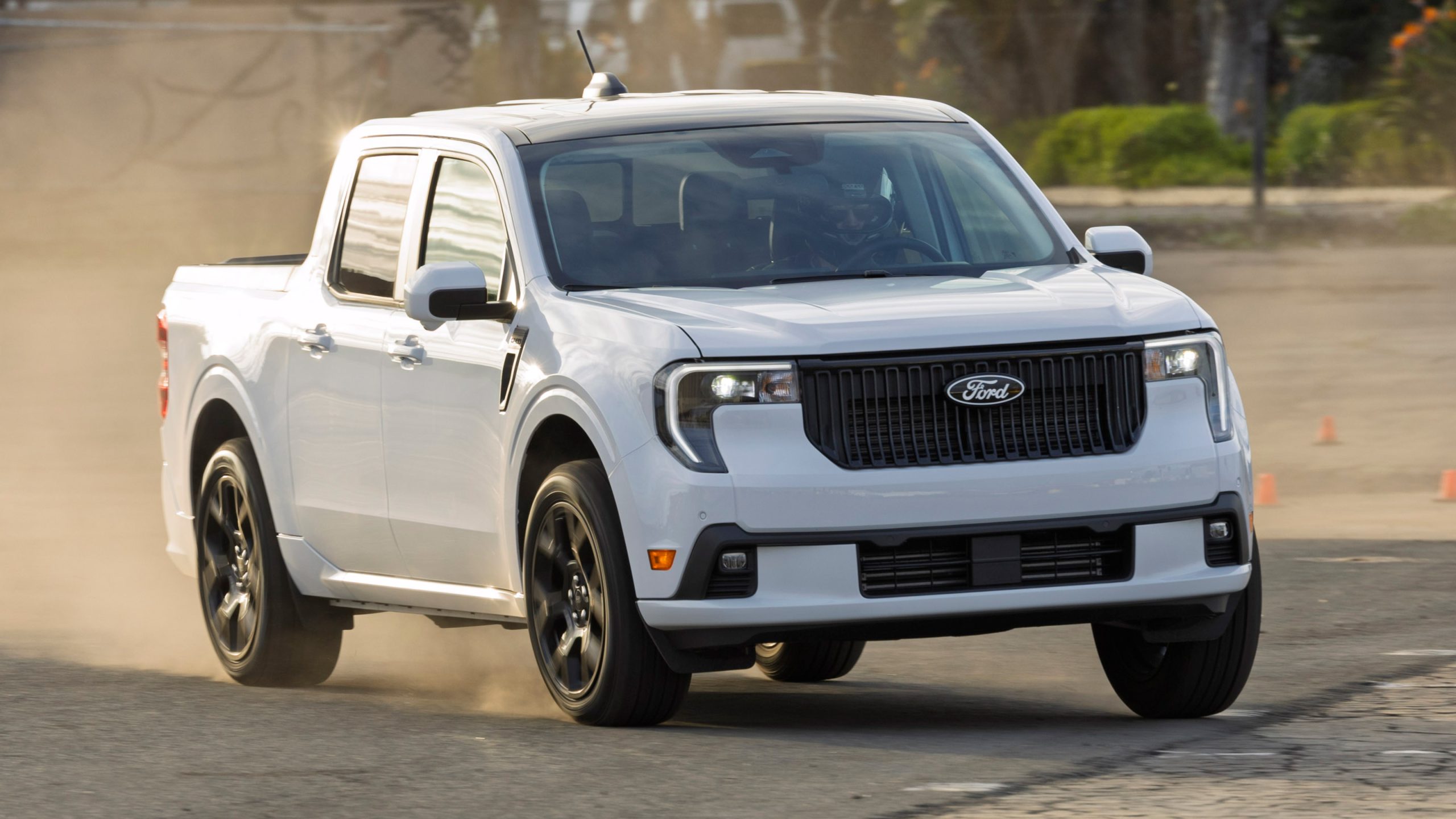
For decades, many drivers have associated American car brands with factories in Detroit, Michigan, or other U.S. manufacturing hubs. Yet modern automotive production tells a far more global story. Today, several vehicles wearing iconic American badges are actually assembled in Mexico, where automakers leverage advanced manufacturing plants, skilled labor, integrated North American supply chains, and cost efficiencies to stay competitive.
That does not make these vehicles any less “American.” Models from Ford, Chevrolet, GMC, Jeep, and Ram are still largely engineered, designed, and branded in the United States, with many key components sourced from American and Canadian suppliers. Instead, Mexico plays a strategic role in final assembly, helping brands manage pricing, production demand, and global logistics.
From compact pickups and off-road SUVs to luxury trucks and heavy-duty workhorses, these vehicles prove that modern automotive identity is shaped by engineering, supply chains, and innovation, not simply by the country where the final bolts are tightened.
1. Ford Maverick
The Ford Maverick stands out in the compact truck segment by combining American design engineering with cost-efficient assembly in Mexico. It is produced at the Hermosillo Stamping and Assembly Plant, a strategic location that helps Ford reduce production costs while maintaining high output quality. This setup allows the Maverick to be priced lower than most traditional pickups while still offering modern features and strong utility for urban and suburban drivers.
Built on Ford’s C2 unibody platform shared with the Bronco Sport, the Maverick benefits from economies of scale and efficient manufacturing. While assembled in Mexico, it is designed at Ford’s headquarters in Dearborn, Michigan, with major components such as engines and electronics sourced from U.S. suppliers. This blend of cross-border engineering and production enables Ford to balance affordability with strong brand identity and performance expectations.
Powertrain options include a standard 2.5-liter hybrid engine producing 191 horsepower paired with a CVT, and an optional 2.0-liter turbocharged engine delivering 250 horsepower with an automatic transmission. The hybrid variant prioritizes fuel efficiency, achieving up to 42 mpg in city driving, while the turbo model offers quicker acceleration and available all-wheel drive for improved capability. Towing capacity reaches up to 4,000 pounds with the optional package, supported by a payload rating of about 1,500 pounds.
Inside, the Maverick is configured as a crew cab with practical space utilization rather than a luxury focus. It features multiple storage compartments, under-seat storage, and a 4.5-foot bed capable of handling large cargo sheets. A standard 13.2-inch touchscreen supports wireless Apple CarPlay and Android Auto, along with built-in Wi-Fi connectivity and available premium audio systems. The interior emphasizes functionality and connectivity for everyday use.
Safety and driver-assistance features include standard automated emergency braking, lane-keeping assist, and adaptive cruise control on higher trims. The suspension is tuned for durability and load handling, resulting in a firmer ride on rough roads but stable performance under payload. Acceleration ranges from efficient hybrid commuting to sub-six-second 0–60 mph times in performance-oriented versions, reflecting its dual focus on economy and capability.
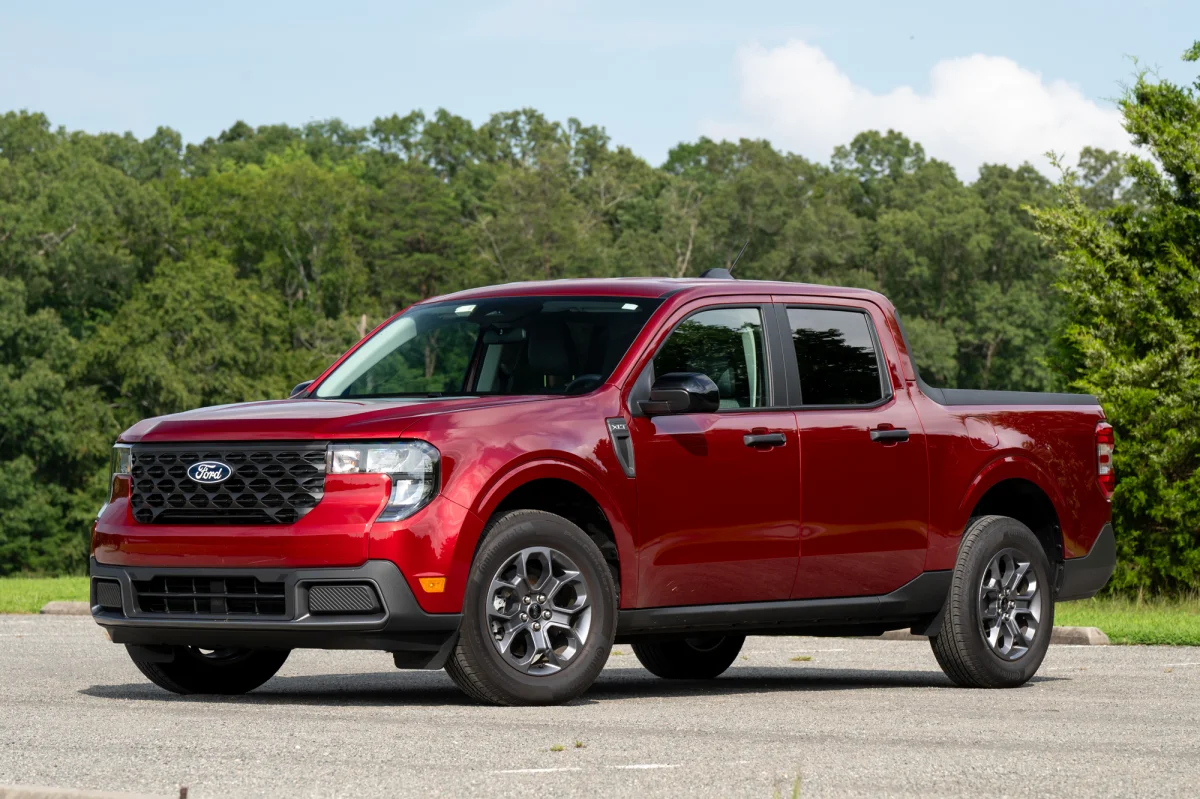
- Engine: 2.5L hybrid inline-4 + electric motor / 2.0L EcoBoost turbo inline-4
- Horsepower: 191 hp (hybrid system) / 250 hp (2.0L EcoBoost)
- Torque: 155 lb-ft (hybrid system) / 277–280 lb-ft (2.0L EcoBoost)
- Length: 199.7–200.9 in (5.07–5.10 m)
- Width: 72.6 in (1.85 m) / 83.5 in (2.12 m with mirrors)
2. Ford Bronco Sport
The Ford Bronco Sport is manufactured at the Hermosillo Stamping and Assembly Plant, where Ford produces several unibody models on shared platforms. Unlike the larger Michigan-built Bronco, this version is designed for affordability and global competitiveness. Its Mexico production strategy helps reduce labor and overhead costs while maintaining strict quality standards aligned with Ford’s off-road brand identity.
Built on the same unibody architecture as the Ford Escape, the Bronco Sport benefits from platform sharing across Ford’s compact lineup. The Hermosillo facility serves as a hub for these vehicles, enabling efficient production scaling. A significant portion of engineering, including interiors and electrical systems, was developed through Ford’s Mexican engineering teams, reflecting the plant’s expanded technical role beyond assembly alone.
Powertrain options include a 1.5-liter turbocharged three-cylinder engine producing 180 horsepower and a more powerful 2.0-liter turbo four-cylinder generating 250 horsepower. Both engines pair with an eight-speed automatic transmission and standard all-wheel drive. The stronger engine significantly improves acceleration, with quicker 0–60 mph times and higher towing capability compared to the base setup.
Off-road capability is a defining feature, especially in higher trims like Badlands with the Sasquatch package. These versions include torque-vectoring rear differentials, skid plates, all-terrain tires, and specialized driving modes for rough terrain. Even entry trims can be upgraded with additional off-road hardware, allowing the compact SUV to handle trails while remaining manageable for daily urban driving and highway use.
Inside, the Bronco Sport features a 13.2-inch touchscreen, digital gauge cluster, and wireless smartphone connectivity. Cargo flexibility is strong, with fold-flat seating, tie-down points, and optional accessories like a slide-out work table and power inverter. Safety systems include adaptive cruise control, lane-keeping assist, and automatic emergency braking, with advanced semi-autonomous features available on higher trims for improved highway driving support.
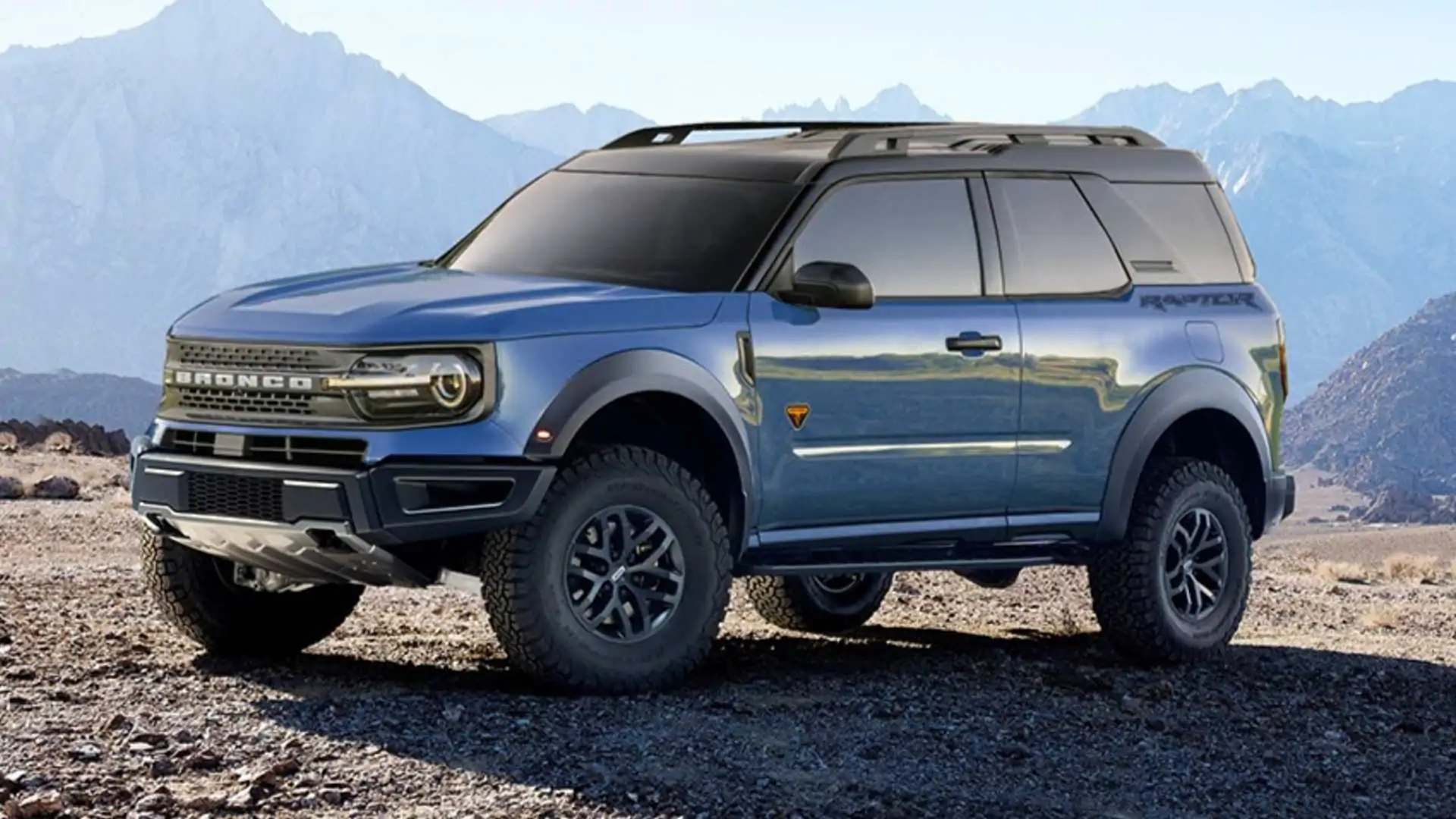
- Engine: 1.5L EcoBoost turbo I3 / 2.0L EcoBoost turbo I4
- Horsepower: 181 hp (1.5L) / 250 hp (2.0L)
- Torque: 190 lb-ft (1.5L) / 277 lb-ft (2.0L)
- Length: 172.7 in (4.39 m)
- Width: 74.3 in (1.89 m) / 82.2 in (2.09 m with mirrors)
3. Ford Mustang Mach-E
The Ford Mustang Mach-E is Ford’s all-electric SUV and is primarily assembled at the Cuautitlán Assembly Plant, a historic facility transformed for electric vehicle production. While the traditional Mustang remains U.S.-built, the Mach-E represents Ford’s global push into electrification, using Mexico as a cost-efficient hub for battery integration and advanced EV manufacturing.
Ford chose Cuautitlán due to lower labor and operational costs, strong automotive supply chains, and favorable trade agreements that allow tariff-free exports to North America, Europe, and other global markets. The plant was heavily upgraded with modern “Industry 4.0” systems, including robotics, automated quality inspection, and dedicated lithium-ion battery assembly lines. This investment enables Ford to manage the high cost of EV production while maintaining competitive pricing.
The Mach-E is also produced in China through Ford’s joint venture with Changan Ford to serve the local EV market. Its production strategy reflects a global approach, with Mexico acting as the primary export base for the Americas and Europe. This distributed manufacturing model supports efficient supply chain management and broad international availability.
Performance varies across multiple configurations, including single- and dual-motor setups with outputs ranging from about 264 horsepower to 480 horsepower in GT models. Battery options include standard and extended-range packs, delivering up to roughly 320 miles of driving range. Acceleration is strong across the lineup, with high-performance versions achieving 0–60 mph times in just over 3 seconds, placing it among the quickest electric SUVs in its class.
Inside, the Mach-E features a modern, spacious cabin enabled by its skateboard EV architecture. A large 15-inch touchscreen controls most vehicle functions, paired with digital instrumentation and wireless smartphone connectivity. Cargo space reaches up to 59 cubic feet with rear seats folded, supported by flexible storage layouts. Safety technology includes automated emergency braking, blind-spot monitoring, and Ford’s available BlueCruise hands-free driving system for semi-autonomous highway driving.
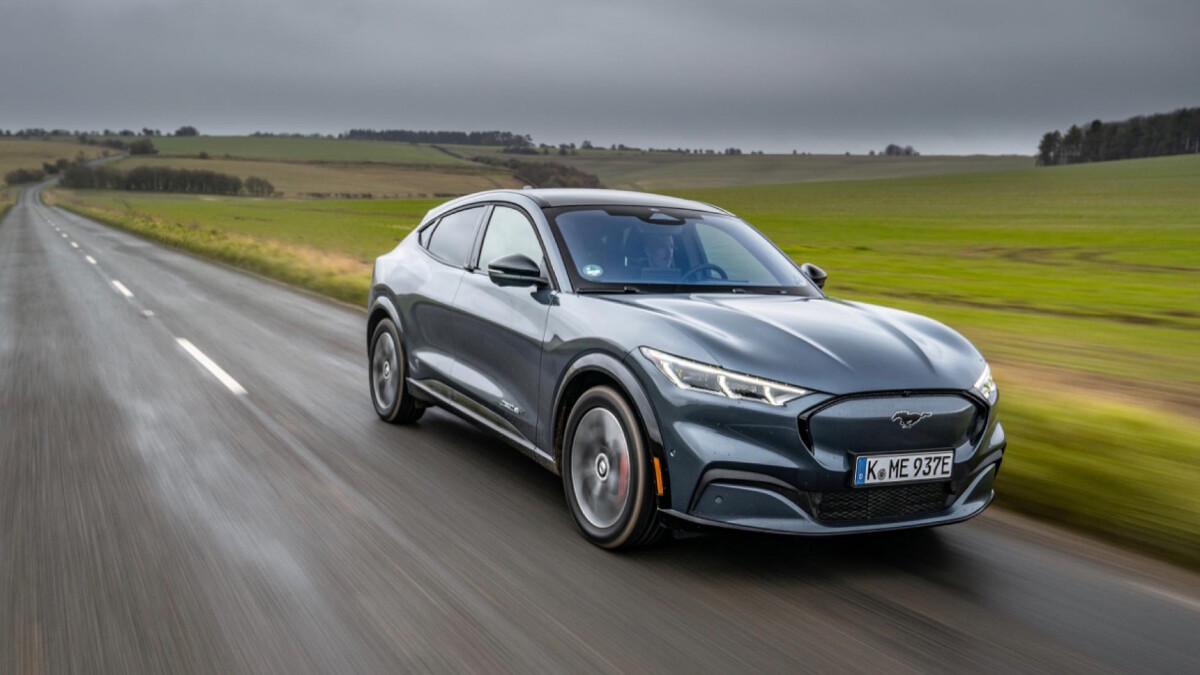
- Engine: Permanent magnet synchronous motor (single motor RWD) / dual motor eAWD (front + rear) / upgraded dual motor (GT)
- Horsepower: 264 hp (RWD Select/Premium) / 325–370 hp (eAWD Select/Premium) / 480 hp (GT & GT Performance)
- Torque: 387 lb-ft (RWD) / 500 lb-ft (eAWD) / 600–700 lb-ft (GT variants)
- Length: 185.6 in (4.71 m)
- Width: 74.1 in (1.88 m)
4. Chevrolet Silverado Crew Cab
The Chevrolet Silverado Crew Cab is primarily assembled at the Silao Assembly Plant, while other configurations are produced across North America in the United States and Canada. General Motors uses this distributed production strategy to match high demand and optimize costs, with Mexico playing a key role in building high-volume four-door Crew Cab models.
Despite its Mexican assembly, the Silverado remains a core American-engineered truck designed by GM in Detroit and built to meet traditional expectations for durability, towing strength, and long-term reliability.
Production in Mexico is driven largely by cost efficiency, integrated North American supply chains, and favorable trade agreements that support cross-border component movement. A significant portion of Silverado parts, well over half, are sourced from the United States and Canada, reinforcing its regional manufacturing identity. The Silao plant operates under strict global GM standards, ensuring that build quality and structural strength remain consistent with other North American facilities.
The Silverado Crew Cab offers a wide range of engines, including a turbocharged four-cylinder, multiple V8 options, and a 3.0-liter Duramax diesel inline-six. Power output ranges from efficient everyday performance to over 420 horsepower in V8 configurations. Acceleration varies across trims, with high-output V8 models reaching 0–60 mph in just over five seconds, while diesel versions prioritize smoothness and efficiency over speed. Towing capacity reaches up to 13,300 pounds, supported by payload ratings exceeding 2,000 pounds in select configurations.
Inside, the Silverado ranges from basic work-focused interiors to premium trims like High Country with leather and wood accents. A 12.3-inch digital cluster and large touchscreen infotainment system are available on higher trims, along with wireless smartphone integration and advanced voice controls. Safety systems include automatic emergency braking, lane-keeping assist, and optional hands-free Super Cruise technology capable of highway driving even while towing.
Fuel economy varies widely depending on engine choice, with diesel models delivering the best efficiency at up to 28 mpg highway, while V8 versions trade economy for power. Complimentary maintenance for the first service visit and standard warranty coverage reflect its competitive positioning in the full-size truck market.
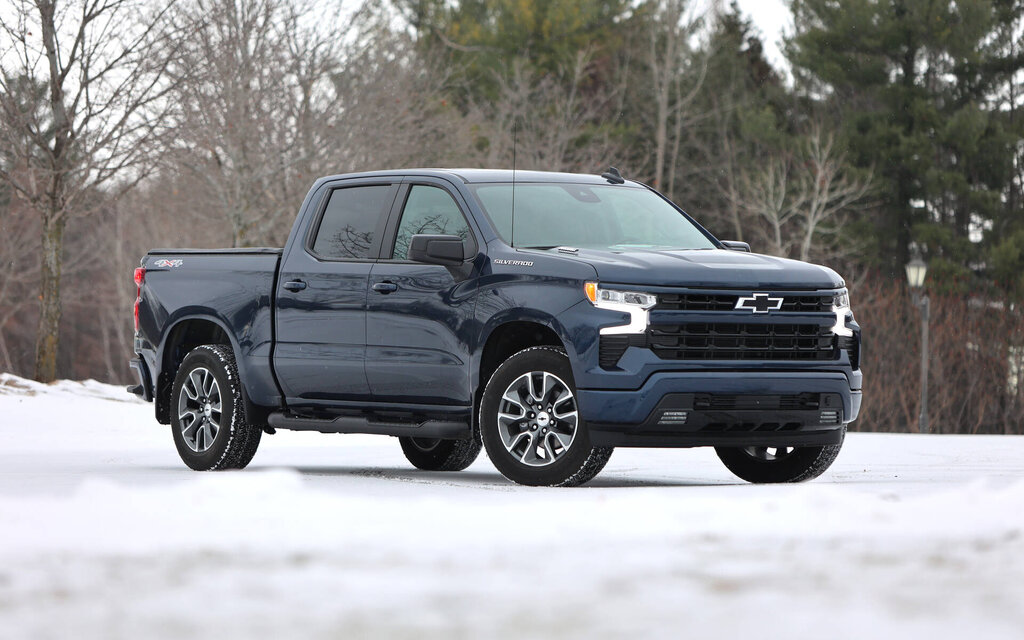
- Engine: 2.7L TurboMax I4 / 5.3L EcoTec3 V8 / 6.2L EcoTec3 V8 / 3.0L Duramax turbo-diesel I6
- Horsepower: 310 hp (2.7L) / 355 hp (5.3L) / 420 hp (6.2L) / 305 hp (3.0L diesel)
- Torque: 430 lb-ft (2.7L) / 383 lb-ft (5.3L) / 460 lb-ft (6.2L) / 495 lb-ft (3.0L diesel)
- Length: 231.9–241.3 in (5.89–6.13 m)
- Width: 81.2 in (2.06 m)
5. GMC Sierra Crew Cab
The GMC Sierra Crew Cab is primarily assembled at the Silao Assembly Plant, a high-volume General Motors production hub responsible for building many of the brand’s most profitable trucks.
While heavy-duty variants are produced in Michigan and other facilities across North America, the Crew Cab 1500 models are often built in Mexico to optimize cost efficiency, production capacity, and supply chain integration. This strategy allows GM to deliver premium trucks at scale while maintaining strong margins in the highly competitive full-size pickup market.
The Silao plant is part of a broader North American manufacturing network supported by USMCA trade agreements and deeply integrated supply chains. Many components, including powertrains and electronics, are sourced from the United States and Canada before final assembly in Mexico. This system enables GM to balance high demand with efficient production while maintaining consistent quality standards across all manufacturing locations.
Powertrain options include a 2.7-liter turbocharged four-cylinder, multiple V8 engines, and a 3.0-liter Duramax diesel. Outputs range from efficient mid-tier performance to 420 horsepower in the 6.2-liter V8. Transmission options include 8-speed and 10-speed automatics, depending on configuration. The Sierra delivers strong towing capability up to 13,300 pounds and a payload capacity of around 2,200 pounds, making it suitable for both work and recreational hauling.
Inside, the Sierra transitions from functional work truck trims to highly luxurious Denali and Denali Ultimate models. Higher trims feature leather upholstery, open-pore wood, massage seats, and advanced digital displays, including a 13.4-inch infotainment screen and head-up display. Cargo versatility is enhanced by a multifunction tailgate and a lightweight carbon-fiber-reinforced bed.
Technology and safety features include wireless smartphone integration, built-in Google services, adaptive driver assistance systems, and available Super Cruise hands-free driving technology capable of operating even while towing. Fuel economy varies by engine, with diesel models offering the best efficiency at up to 28 mpg highway, while V8 variants prioritize power and capability over fuel savings. Warranty coverage includes standard protection plus one complimentary maintenance visit.
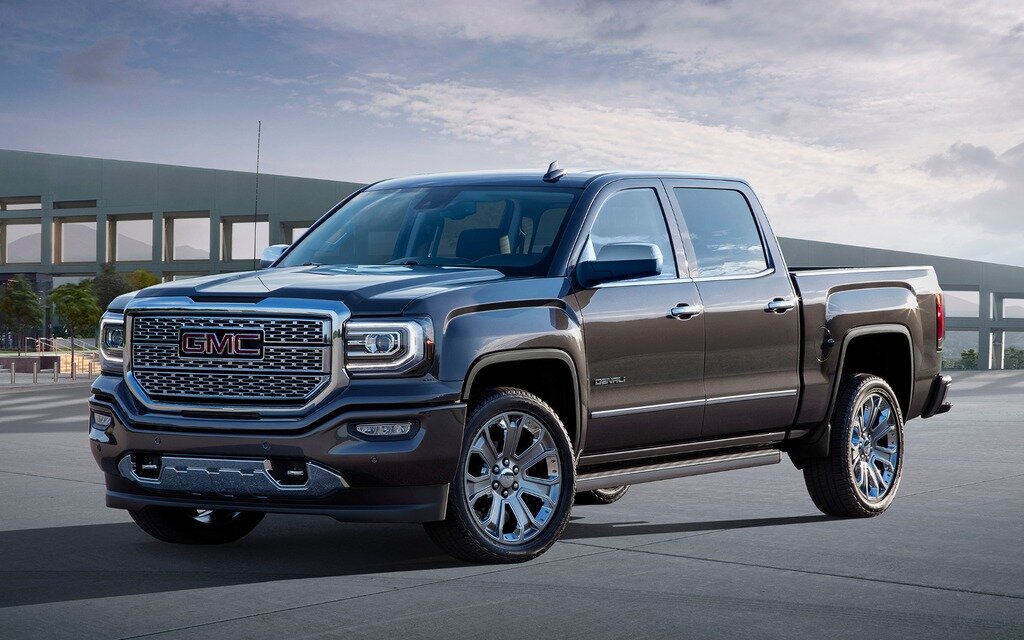
- Engine: 2.7L TurboMax I4 / 5.3L EcoTec3 V8 / 6.2L EcoTec3 V8 / 3.0L Duramax turbo-diesel I6
- Horsepower: 310 hp (2.7L) / 355 hp (5.3L) / 420 hp (6.2L) / 305 hp (3.0L diesel)
- Torque: 430 lb-ft (2.7L) / 383 lb-ft (5.3L) / 460 lb-ft (6.2L) / 495 lb-ft (3.0L diesel)
- Length: 231.9–241.5 in (5.89–6.14 m)
- Width: 81.2 in (2.06 m)
Also read: Top 10 Cars With the Shortest Turning Radius Ranked
6. Chevrolet Blazer
The Chevrolet Blazer is primarily assembled at the Ramos Arizpe Assembly Plant, a key General Motors manufacturing site that also produces its electric counterpart, the Blazer EV. GM invested heavily in this plant to support both internal combustion and electric vehicle production, allowing flexible output based on shifting market demand. This strategy helps Chevrolet maintain cost efficiency while serving North American SUV buyers with a competitive midsize crossover.
Manufacturing in Mexico is driven by a combination of factors, including lower labor costs, strong regional supply chains, and existing plant capacity when the Blazer was reintroduced. Many components, such as engines and transmissions, are sourced from the United States and Canada before final assembly in Mexico. GM is also adjusting its production strategy, with the gasoline Blazer moving to Tennessee in the future while the Blazer EV continues to be built in Mexico, reflecting a broader shift toward electrification.
The Blazer offers two main engine options: a 2.0-liter turbocharged four-cylinder producing 228 horsepower and a 3.6-liter V6 generating 308 horsepower. Both pair with a 9-speed automatic transmission and come with front- or all-wheel drive configurations. The V6 provides noticeably stronger acceleration, with 0–60 mph times around 6.6 seconds, while still maintaining balanced everyday drivability suitable for family use.
Inside, the Blazer features a sporty, Camaro-inspired cabin design with a 10.2-inch infotainment touchscreen and available digital driver displays. Higher trims add leather upholstery, heated and ventilated seating, and premium audio systems. Passenger space is generous in the rear seats, while cargo capacity reaches up to 64 cubic feet with seats folded. Safety features include automatic emergency braking and lane-keeping assist, with optional blind-spot monitoring and adaptive cruise control.
Fuel economy ranges from efficient turbo-four models at up to 29 mpg highway to V6 versions prioritizing performance over efficiency. Towing capacity reaches up to 4,500 pounds when properly equipped, making it capable of light recreational hauling. Warranty coverage includes standard protection plus one complimentary maintenance visit, keeping it competitive in the midsize SUV segment.
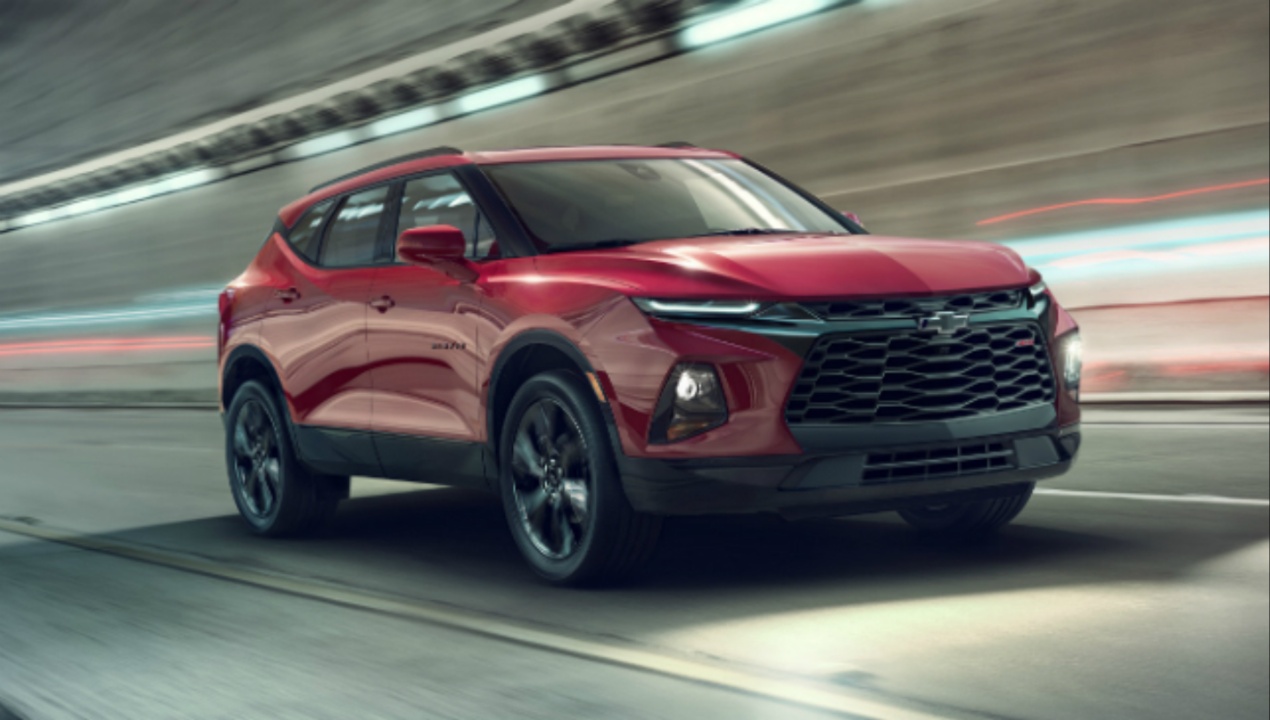
- Engine: 2.0L turbocharged inline-4 / 3.6L V6
- Horsepower: 228 hp (2.0L) / 308 hp (3.6L V6)
- Torque: 258 lb-ft (2.0L) / 270 lb-ft (3.6L V6)
- Length: 191.8–191.9 in (4.87 m)
- Width: 76.7 in (1.95 m)
7. GMC Terrain
The GMC Terrain is assembled at the San Luis Potosí Assembly Plant, where General Motors produces it alongside its platform sibling, the Chevrolet Equinox. Since 2017, this plant has served as the global production hub for the Terrain, using advanced robotic assembly systems and a highly integrated supplier network. Building in Mexico allows GMC to keep production costs lower while still offering premium trims like the Denali at competitive prices in the crowded compact SUV segment.
GM’s decision to manufacture the Terrain in Mexico is driven by cost efficiency, regional supply chains, and trade agreements that support easy export across North America and other global markets. The San Luis Potosí plant is supported by a large network of local suppliers, reducing logistics delays and improving production efficiency. This strategy also allows GM to concentrate U.S. and Canadian factories on larger trucks and SUVs, while Mexico specializes in compact crossover production.
The Terrain is powered by a single 1.5-liter turbocharged four-cylinder engine producing 175 horsepower. Front-wheel-drive models use a CVT, while all-wheel-drive versions get an 8-speed automatic transmission. Performance is modest, with 0–60 mph times around 8.6 seconds, prioritizing efficiency and everyday drivability over acceleration. Towing capacity reaches up to 1,500 pounds on AWD models, while fuel economy is rated up to 28 mpg highway, depending on configuration.
Inside, the Terrain emphasizes comfort and technology, offering a two-row layout with supportive seating, heated features, and a premium feel in higher trims. A 15-inch infotainment touchscreen with Google-based software is standard, along with wireless smartphone integration and an 11-inch digital gauge cluster. Cargo space is generous for the class, and trim-specific designs differentiate the rugged AT4 from the luxury-focused Denali.
Safety features include automatic emergency braking with pedestrian and cyclist detection, blind-spot monitoring, and adaptive cruise control. Warranty coverage includes standard protection plus one complimentary maintenance visit, keeping it aligned with most competitors in the compact SUV market.
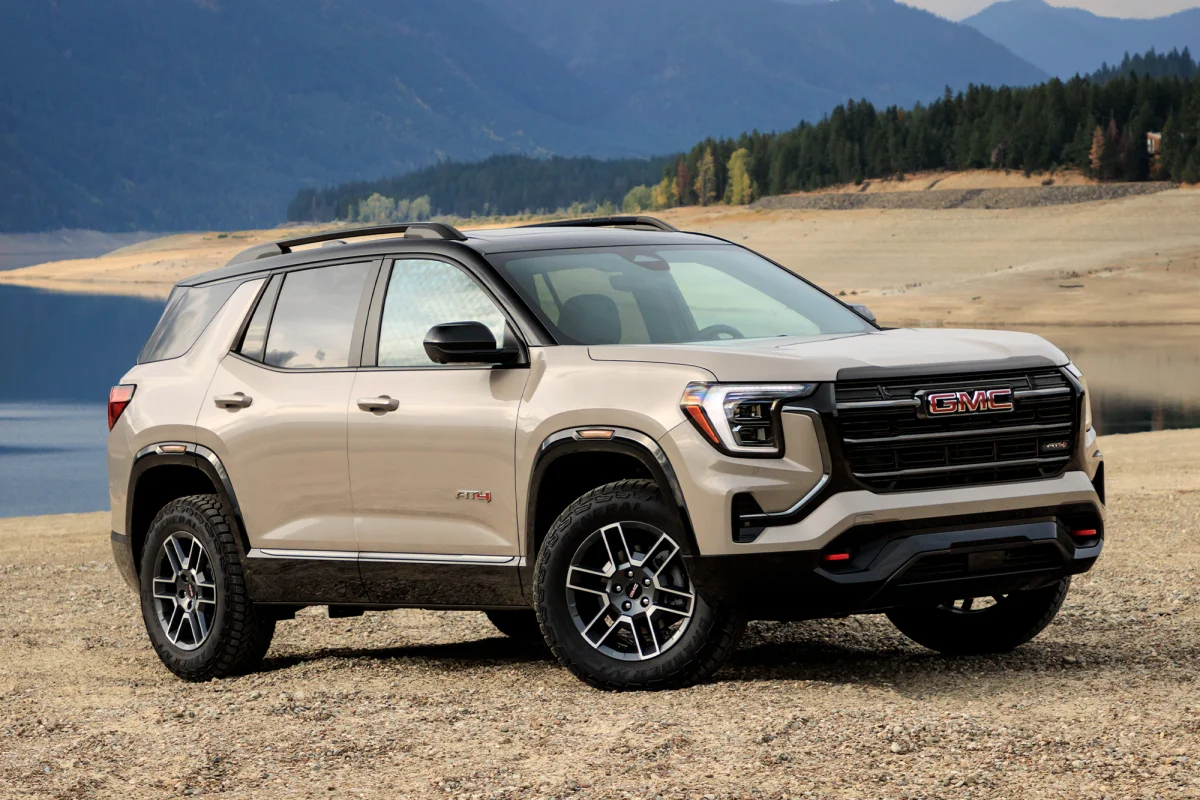
- Engine: 1.5L turbocharged inline-4 (standard) / 2.0L turbocharged inline-4 (older generation option)
- Horsepower: 175 hp (1.5L) / 252 hp (2.0L older model)
- Torque: 184 lb-ft (FWD) / 203 lb-ft (AWD) / 260 lb-ft (2.0L older model)
- Length: ~181.0 in (recent models) / ~183.1 in (older models)
- Width: ~72.6–74.5 in
8. Jeep Compass
The Jeep Compass is assembled at the Toluca Assembly Plant, a key Stellantis manufacturing hub responsible for producing this globally sold compact SUV. Although Jeep is an iconic American brand, the Compass relies heavily on Mexican production for North and Latin American markets. The Toluca plant operates as a flexible global export center, supported by strong trade agreements and efficient logistics that allow cost-effective distribution across multiple regions.
Manufacturing in Mexico is driven by lower labor costs, favorable USMCA trade rules, and an established automotive supply chain. This allows Stellantis to keep the Compass competitively priced while maintaining production efficiency. The vehicle is also part of a broader global strategy, with additional production in Europe and future shifts planned for U.S. assembly, reflecting Jeep’s efforts to balance regional demand and tariff considerations.
Every Compass uses a 2.0-liter turbocharged four-cylinder engine producing 200 horsepower, paired with an 8-speed automatic transmission and standard all-wheel drive. The lineup includes the off-road-focused Trailhawk, which adds specialized terrain modes and enhanced traction systems. Performance is moderate, with 0–60 mph times around 7.5 seconds, offering balanced everyday driving rather than sporty acceleration.
Inside, the Compass provides a practical but not premium cabin with supportive seating, a straightforward layout, and reasonable passenger space for five occupants. Cargo capacity is modest compared to rivals, with rear seats limiting maximum storage flexibility. Technology includes an 8.4-inch or optional 10.1-inch touchscreen with wireless Apple CarPlay and Android Auto, along with multiple USB ports and available premium audio systems.
Safety features include automatic emergency braking, lane-keeping assist, and blind-spot monitoring, with adaptive cruise control available on higher trims. Fuel economy is competitive, with up to 32 mpg highway EPA ratings and strong real-world efficiency. Towing capacity reaches up to 2,000 pounds, making it suitable for light recreational use. Warranty coverage includes standard protection and three years of complimentary maintenance, aligning it with most compact SUV competitors in its class.
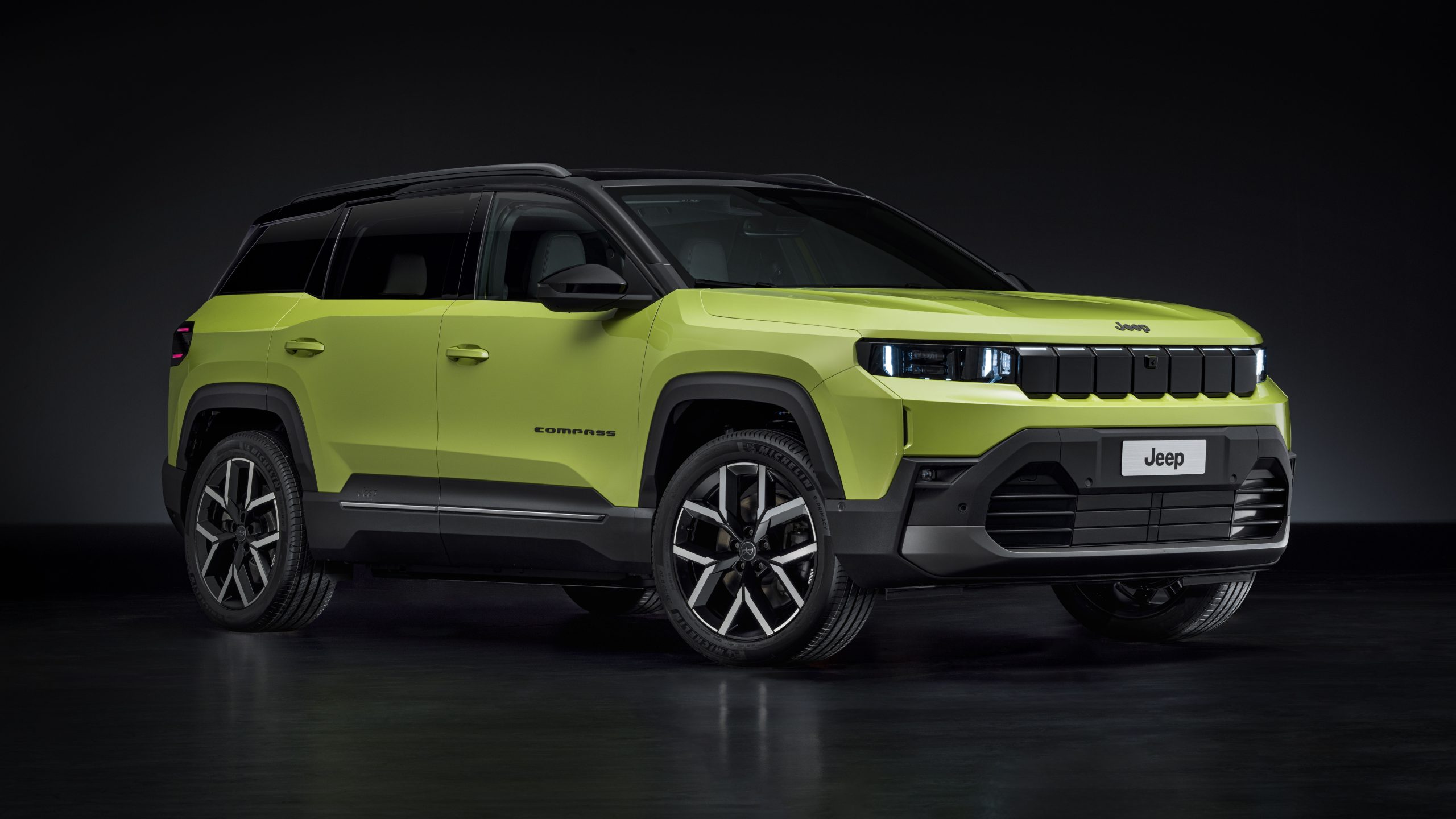
- Engine: 2.0L turbocharged inline-4 (gas)
- Horsepower: 200 hp
- Torque: 221 lb-ft
- Length: 173.4 in (4.40 m)
- Width: 73.8 in (1.87 m)
9. Ram Heavy Duty
The Ram Heavy Duty lineup, including the Ram 2500 and 3500, is assembled at the Saltillo Truck Assembly Plant, a specialized Stellantis production center focused on commercial-grade pickups. While the lighter-duty Ram 1500 is built primarily in Michigan, the Saltillo plant handles heavy-duty frames, advanced towing systems, and complex dually configurations. This manufacturing strategy allows Stellantis to dedicate U.S. factories to high-volume light-duty trucks while Mexico specializes in powerful work-focused models.
The Saltillo facility is recognized for strong build quality and integrated manufacturing, housing engine production, body stamping, and truck assembly in one location. Lower labor and operating costs help Stellantis remain competitive while investing in automated quality control, sensors, and advanced manufacturing systems. Although assembled in Mexico, many components, including parts for diesel engines, continue to be sourced across North America through an integrated supply chain.
Ram Heavy Duty models offer a standard 6.4-liter HEMI V8 producing 405 horsepower and 429 lb-ft of torque, alongside an optional 6.7-liter Cummins turbo-diesel inline-six delivering 430 horsepower and an impressive 1,075 lb-ft of torque. Both pair with an 8-speed automatic transmission, with available rear- or four-wheel drive depending on configuration. Towing and payload capabilities are major strengths, with properly equipped Ram 3500 models capable of towing over 36,000 pounds and carrying payloads exceeding 7,500 pounds.
Inside, the Ram HD combines utility with luxury, offering Crew Cab and Mega Cab layouts, premium materials, and exceptionally quiet cabins. Available infotainment displays reach up to 14.5 inches, supported by smartphone integration, Wi-Fi, and multiple power outlets. Safety features include automatic emergency braking, adaptive cruise control, and available blind-spot monitoring. Warranty coverage includes standard protection and extended powertrain support, particularly for diesel-equipped models built for demanding long-term work use.
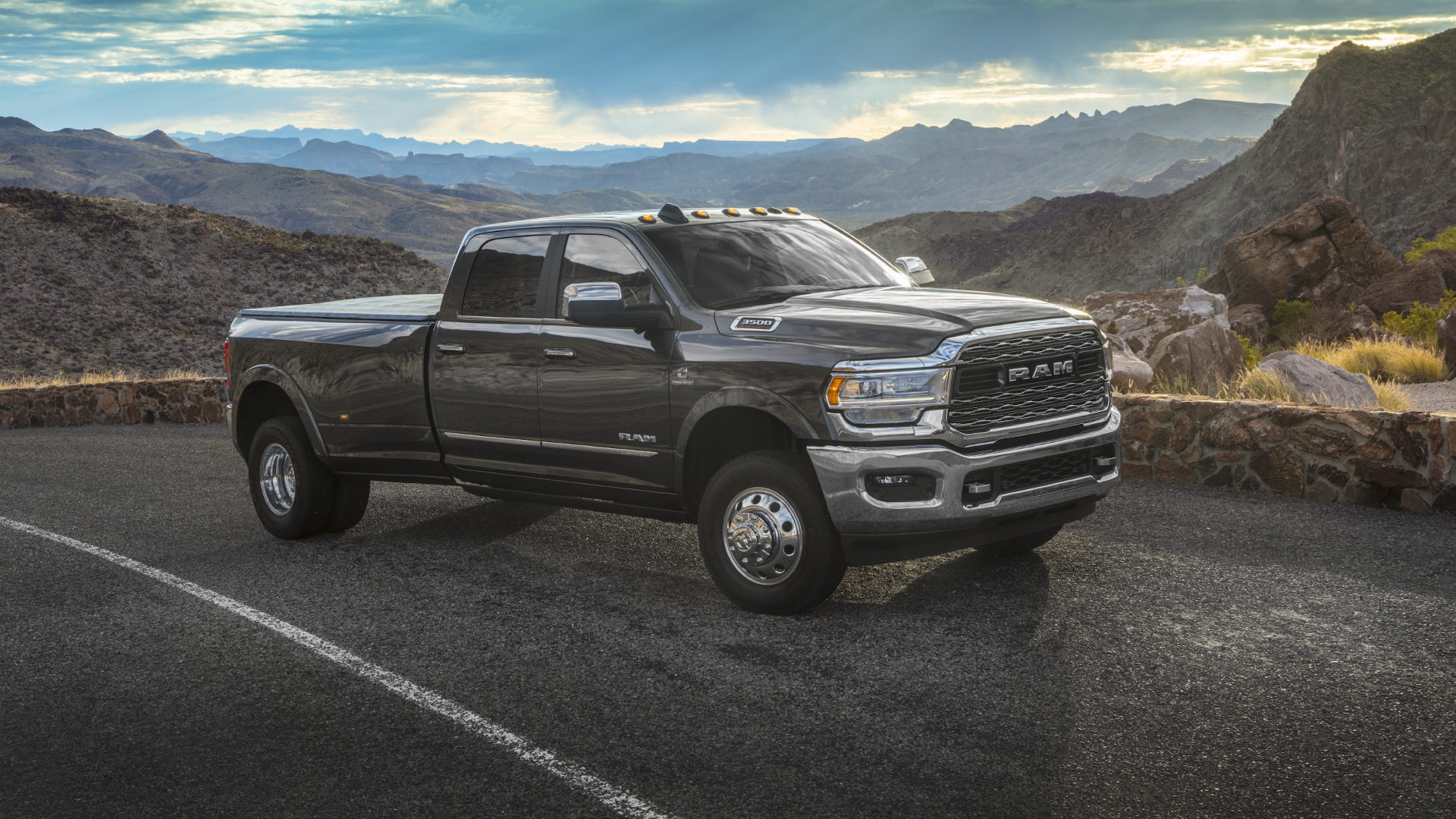
- Engine: 6.4-liter HEMI V8 / 6.7-liter Cummins turbo-diesel inline-6
- Horsepower: 405 hp / 430 hp
- Torque: 429 lb-ft / 1,075 lb-ft
- Length: roughly 232–260 inches depending on configuration
- Width: roughly 83.5 inches
Also read: 5 Cars Where Trade-In Beats Private Sale vs 5 Where It Doesn’t