
Mazda has long occupied a unique position in the automotive world, a brand that blends genuine driving pleasure with everyday practicality and surprising affordability. In 2026, the Japanese automaker continues to push boundaries with a lineup that has grown significantly in both breadth and ambition. From the iconic MX-5 Miata roadster to the flagship CX-90 three-row SUV, Mazda now offers something for nearly every type of driver.
But not every model in the lineup represents an equally compelling value proposition. Some models have received meaningful updates, excellent powertrains, and standout refinement that make them best-in-class or near it. Others, despite their premium image, come with real-world drawbacks, whether that is limited cargo space, modest power output, high pricing, or outdated features that newer rivals have already surpassed.
In this guide, we break down exactly which 2026 Mazda models deserve your hard-earned money and which ones you should walk past on the showroom floor. We look at real specifications, dimensions, engine outputs, and the on-road experience to give you a clear picture of each model’s strengths and weaknesses.
Whether you are shopping for a sporty sedan, a compact crossover, a family SUV, or a weekend roadster, this honest assessment will help you make a smarter, more informed decision. Read on to find out which four Mazda models are genuinely worth buying in 2026 and which four are best left on the lot.
4 Models Worth Buying
These exceptionally refined vehicles feature Mazda’s renowned Skyactiv engineering and premium interior quality, delivering sophisticated transportation through naturally aspirated engines, well-tuned suspensions, and interior craftsmanship exceeding class expectations.
From CX-5’s benchmark compact SUV execution to Mazda3’s class-leading refinement, these models deliver driving engagement, strong reliability, and excellent resale values that justify every penny spent, rewarding owners with lasting satisfaction throughout ownership.
1. 2026 Mazda CX-5
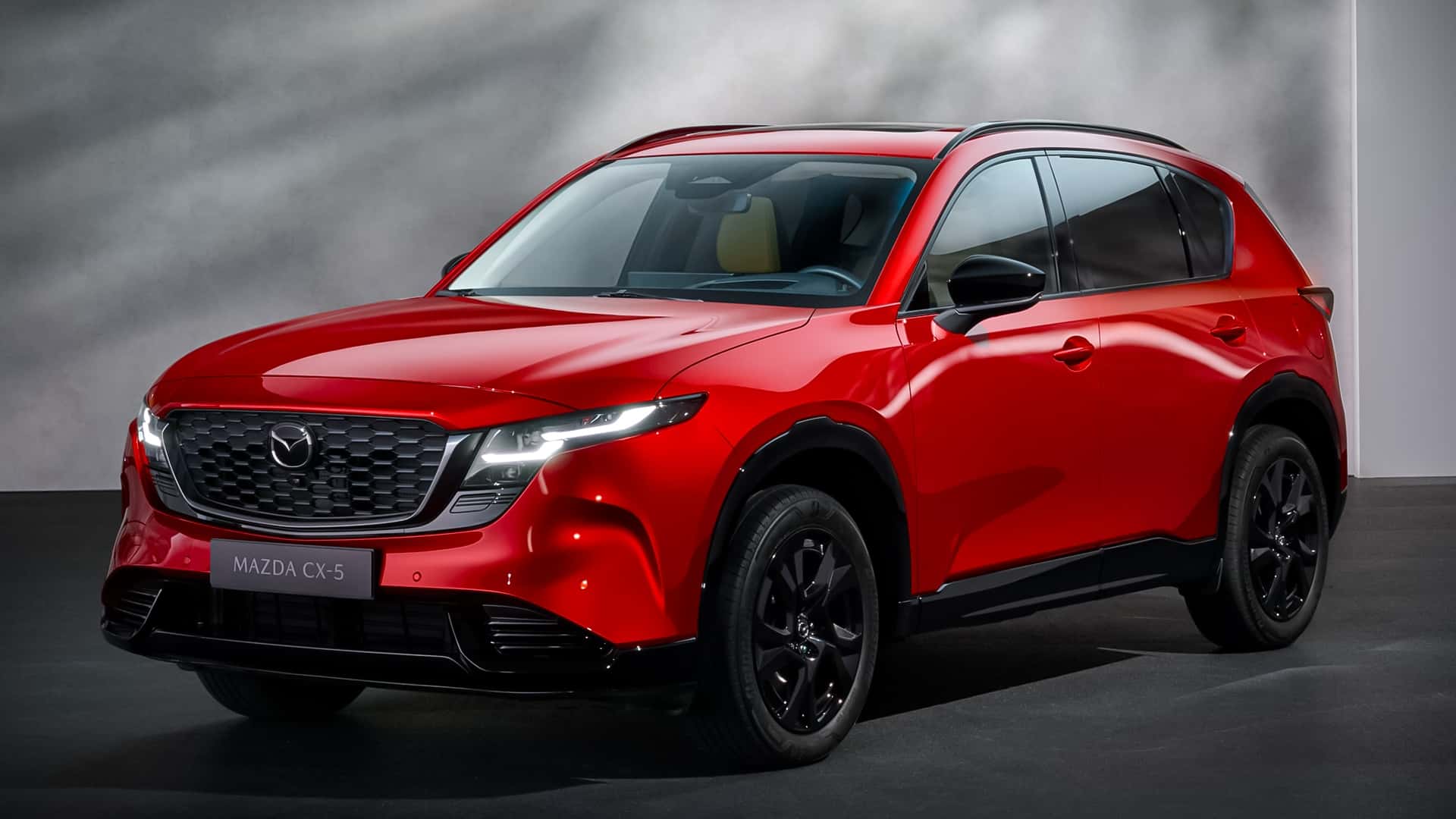
The 2026 Mazda CX-5 is not just a good compact SUV, it is arguably one of the best in its entire segment. After more than a decade on the market, Mazda has completely redesigned it for 2026, and the results are genuinely impressive.
The new CX-5 is 4.5 inches longer than its predecessor, with a slightly wider wheelbase that translates directly to better passenger comfort and significantly more cargo space.
The redesigned 2026 CX-5 measures 180.1 inches long and 72.6 inches wide, while cargo space totals 30.8 cubic feet behind the rear seats, expanding to a generous 59.6 cubic feet with the seats folded.
That is a meaningful jump over the old model and makes it competitive with best-in-class cargo haulers. For families or active buyers, this expanded space is a genuine game-changer.
Specifications:
- Engine: 2.5L Skyactiv-G DOHC Inline-4 (standard) / 2.5L Turbocharged Inline-4 (optional)
- Horsepower: 187 hp (standard) / 250 hp (turbo with premium fuel)
- Torque: 186 lb-ft (standard) / 320 lb-ft (turbo)
- Length: 4,572 mm (180.1 inches)
- Width: 1,844 mm (72.6 inches)
Under the hood, the 2026 CX-5 is powered by Mazda’s Skyactiv-G 2.5-liter four-cylinder engine, producing 187 horsepower and 186 lb-ft of torque, paired with a 6-speed automatic transmission designed for smooth shifts and responsive acceleration. The base engine is smooth, refined, and more than capable for daily driving. It never feels strained in real-world conditions.
Mazda’s i-Activ all-wheel drive system comes standard on every trim, providing improved traction and control in a variety of driving conditions. Getting standard AWD across the entire range is a big deal most rivals still charge extra for it. This alone makes the CX-5 one of the smartest buys in the compact SUV space.
The new available 15.6-inch touchscreen features Google built-in, Maps, and the Gemini AI assistant. Mazda has modernized the interior tech with a massive upgrade over the previous rotary-controlled system. The cabin material quality remains firmly above what you would expect at this price point.
The suspension has also been updated for 2026, with Mazda adding a brake-based limited-slip differential and an updated suspension setup. This gives the CX-5 sharper, more engaging handling than any of its mainstream rivals. It drives like a smaller car, which is one of Mazda’s greatest accomplishments with this generation.
For buyers who want extra punch, the turbocharged variant delivers 250 hp and 320 lb-ft of torque on premium fuel numbers that make the CX-5 genuinely quick.
The all-new 2026 CX-5 earns up to an EPA-estimated 24/30 MPG city/highway even with standard all-wheel drive, striking an excellent balance between performance and economy. Simply put, the 2026 CX-5 is Mazda at its most complete.
2. 2026 Mazda CX-90 3.3 Turbo S
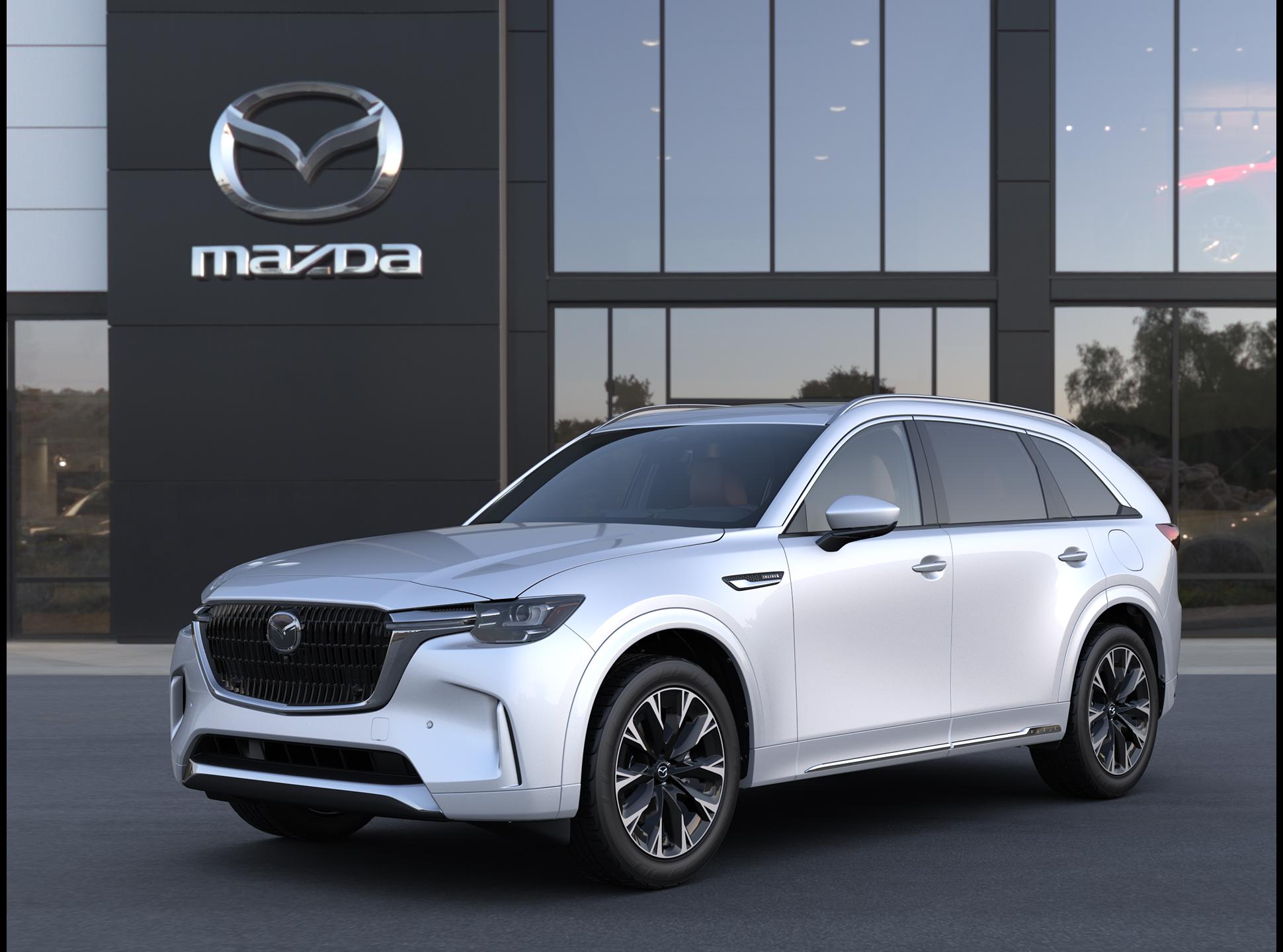
The 2026 Mazda CX-90 is Mazda’s largest and most ambitious vehicle ever, and in Turbo S trim, it delivers a driving experience that embarrasses many luxury SUVs costing considerably more.
This is a genuine three-row family hauler that doesn’t ask you to sacrifice driver engagement to fit seven or eight passengers. That is an extraordinarily rare combination in today’s market.
The 2026 Mazda CX-90 3.3 Turbo S models are tuned to provide up to 340 horsepower and 369 lb-ft of torque when using recommended premium fuel. The inline-six engine delivers power in a smooth, linear fashion. It pulls strongly from low revs and holds its composure at highway speeds. There is a refined, almost effortless quality to how this engine performs that four-cylinder rivals simply cannot replicate.
The CX-90 rides on a longitudinal front-engine, all-wheel-drive layout on Mazda’s Large Product Group platform, a rear-biased architecture more commonly associated with luxury German brands.
This setup delivers noticeably sharper handling dynamics and better weight balance than front-wheel-drive-based crossovers. It is the technical foundation that makes the CX-90 special.
Specifications:
- Engine: 3.3L e-Skyactiv G Turbocharged Inline-6 (mild hybrid)
- Horsepower: 340 hp (Turbo S, with premium fuel)
- Torque: 369 lb-ft (450 Nm)
- Length: 5,100–5,121 mm (200.8–201.6 inches)
- Width: 1,994 mm (78.5 inches)
The availability of four distinct Mi-Drive modes, Normal, Sport, Off-road, and Towing, allows the vehicle to optimize power delivery and responsiveness based on the driving situation, and maximum towing capacity ranges from 3,500 to 5,000 pounds when properly equipped.
The towing capability alone opens up a huge range of use cases for buyers who need to haul trailers, boats, or campers. Few competitors at this price offer that combination.
The Turbo S Premium Plus delivers the highest expression of Mazda’s gas-powered SUV craftsmanship, with two-tone Nappa leather and faux suede accents creating a cabin that rivals luxury sedans.
The interior craftsmanship is among the best in the non-luxury segment. The material quality, the seat support, and the dashboard design all feel premium in a way that justifies the price.
The CX-90 can accommodate up to eight people in 7 or 8-seat configurations, making it one of the most flexible options in the three-row SUV segment. Whether it is a school run or a long family road trip, the CX-90 handles it with poise. The combination of inline-six power, rear-biased AWD, and luxury-grade materials makes this one of the most compelling large SUV buys of 2026.
3. 2026 Mazda CX-50 Turbo
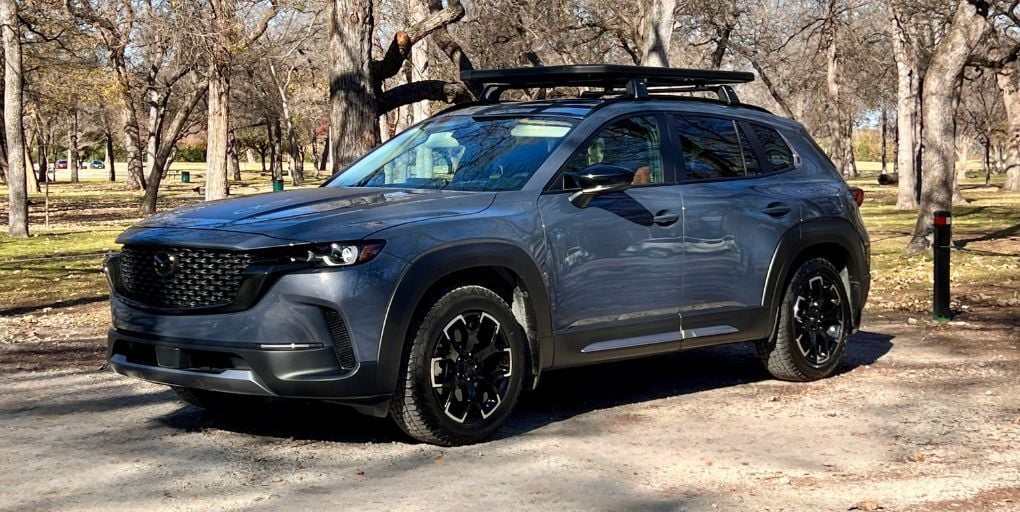
The 2026 Mazda CX-50 sits in a slightly different position from the CX-5 it is more rugged, slightly larger, and aimed squarely at buyers who want outdoor capability without giving up refinement. In turbocharged form, it becomes one of the most well-rounded compact SUVs on the market today. It is the Mazda you buy when you need both hiking trails and highway confidence.
The 2026 Mazda CX-50 engine range features a 2.5-liter gas engine with the option of turbocharging in its turbocharged state. It generates 256 horsepower and 320 lb-ft of torque fed to all four wheels through a six-speed automatic transmission.
That torque figure is genuinely strong for the class and makes a noticeable difference in real-world passing maneuvers. Acceleration feels urgent and satisfying in a way that the naturally aspirated model does not.
Specifications:
- Engine: 2.5L Turbocharged Skyactiv-G Inline-4
- Horsepower: 256 hp (with premium fuel)
- Torque: 320 lb-ft (434 Nm)
- Length: 4,719 mm (185.8 inches)
- Width: 1,851 mm (72.9 inches)
The 2026 Mazda CX-50 total length stands at 185 inches and maximum width at 80.8 inches, giving it a slightly more planted, substantial road presence compared to the CX-5.
The wider track contributes to handling stability that feels reassuring on both pavement and light off-road surfaces. Mazda engineered the CX-50 with a more rugged character than the CX-5, and you feel that in the way it carries itself.
Mazda has standardized safety across the CX-50 range for 2026, so every model now comes with eight airbags, blind-spot monitoring with rear cross-traffic alerts, radar-guided cruise control with stop and go, lane departure warnings, and lane-keep assistance.
This is a significant move that makes even the base CX-50 one of the safest vehicles in its class. You no longer have to spend up to get the protection you deserve.
Standard CX-50s have a modest 2,000-pound towing capacity, while turbos increase this to a healthier 3,500 pounds. The upgraded towing capacity on turbo models opens up real-world utility that compact SUV buyers increasingly demand. Pair that with the Mi-Drive system’s off-road mode, and you have a machine that genuinely earns its adventure credentials.
The 2026 Mazda CX-50 cargo space stands at 31.4 cu ft with the rear seats in place, and 56.3 cu ft once they are dropped, figures that comfortably accommodate weekend camping gear, bikes, or large purchases.
The CX-50 Turbo hits a sweet spot that few rivals achieve: genuine off-road readiness, sport-car-adjacent power delivery, and a premium cabin that impresses on every commute. It is a genuinely well-rounded machine that deserves more attention than it typically receives.
Also Read: 10 Best Cars for Mountain Living
4. 2026 Mazda MX-5 Miata
There is no car on the market today that offers the MX-5 Miata’s particular brand of joy at anywhere near its price. The 2026 Mazda MX-5 Miata remains the gold standard of the affordable sports car genre, a machine that proves horsepower numbers are not the whole story when it comes to driving fun. For the right buyer, this is one of the most rewarding cars sold today, full stop.
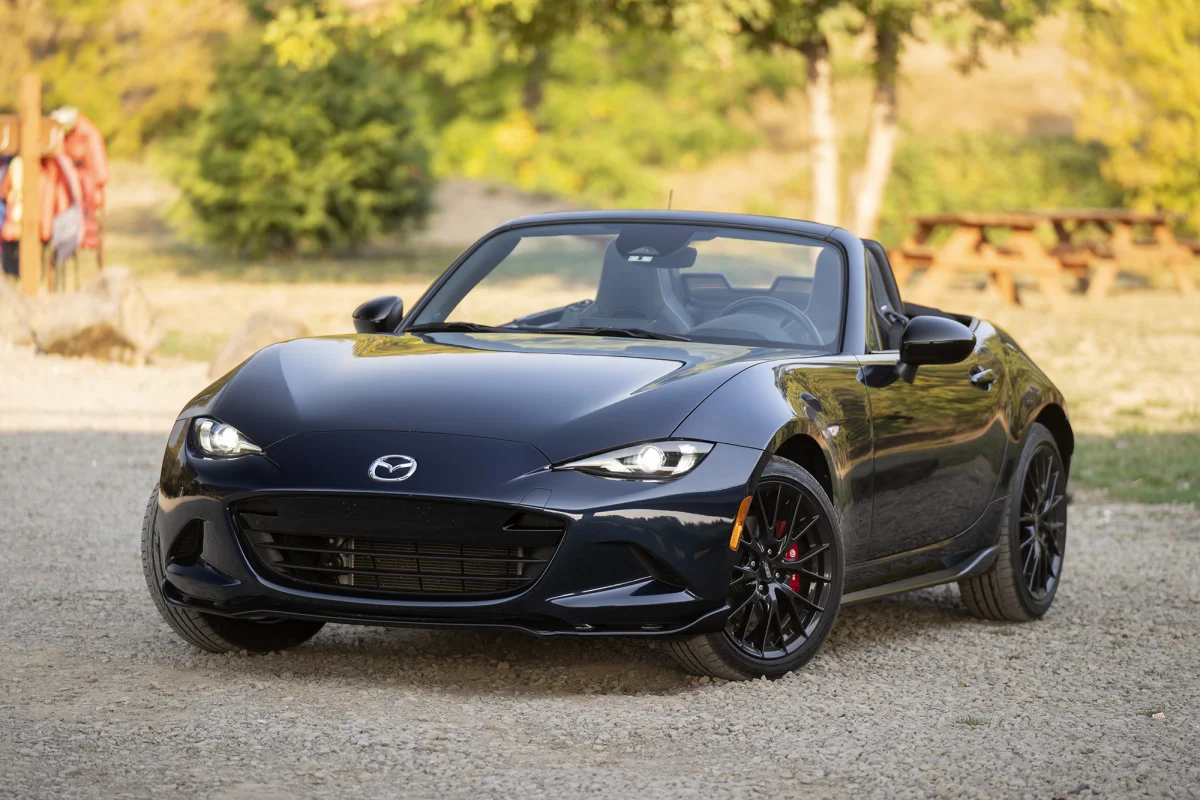
Powered by a 2.0-liter Skyactiv-G four-cylinder engine producing 181 horsepower and 151 lb-ft of torque, the Miata maximizes every bit of output because it carries significantly less mass than many modern sports cars.
The result is a power-to-weight ratio that makes the car feel far faster than the numbers suggest. Revving this engine toward 7,000 RPM is one of the most satisfying experiences available in any new car.
Specifications:
- Engine: 2.0L Skyactiv-G DOHC Inline-4
- Horsepower: 181 hp @ 7,000 RPM
- Torque: 151 lb-ft (205 Nm)
- Length: 3,914 mm (154.1 inches)
- Width: 1,735 mm (68.3 inches)
Starting at approximately 2,341 pounds with the manual transmission and soft top, the 2026 MX-5 Miata remains one of the lightest sports cars available today.
That low weight transforms everything, braking distances shrink, cornering responses sharpen, and the car communicates with the driver through the steering wheel and seat in ways heavier machines never can. Weight is the enemy of fun, and the Miata wages war on it relentlessly.
The MX-5 Miata features a front midship engine layout and nearly 50/50 weight distribution, which contributes to stability and predictable handling.
This balanced architecture means that the Miata rewards driver skill with feedback that builds confidence progressively. It is the kind of car that makes you a better driver the more time you spend behind the wheel.
The 2026 MX-5 Miata is available in soft-top and hard-top RF models, with pricing ranging from $31,665 to $36,965 for the soft-top. Every MX-5 comes with automatic emergency braking, forward collision warning, blind spot monitoring, rear cross-traffic alert, and lane departure warning.
Modern safety features give the Miata real-world usability that earlier generations lacked. You get a proper sports car without sacrificing the reassurance of contemporary safety technology.
Standard tech features on the 2026 MX-5 Miata include an 8.8-inch display, six audio speakers, Apple CarPlay, Android Auto, dual USB-C ports, and Amazon Alexa.
The Miata proves you don’t have to live like a monk to enjoy a pure performance sports car, especially given a tech package that is surprisingly generous and seamlessly integrated for the price. Instead of stripping away modern conveniences, it simply ensures that every feature serves what matters most: the drive.
4 Models to Skip
These disappointing configurations suffer from pricing that no longer represents exceptional value, with turbocharged models introducing reliability questions, outdated infotainment controllers frustrating modern buyers, and feature content that aggressive competitors provide more generously at similar price points, making these particular Mazda configurations genuinely difficult to recommend despite the brand’s otherwise outstanding reputation.
1. 2026 Mazda CX-30
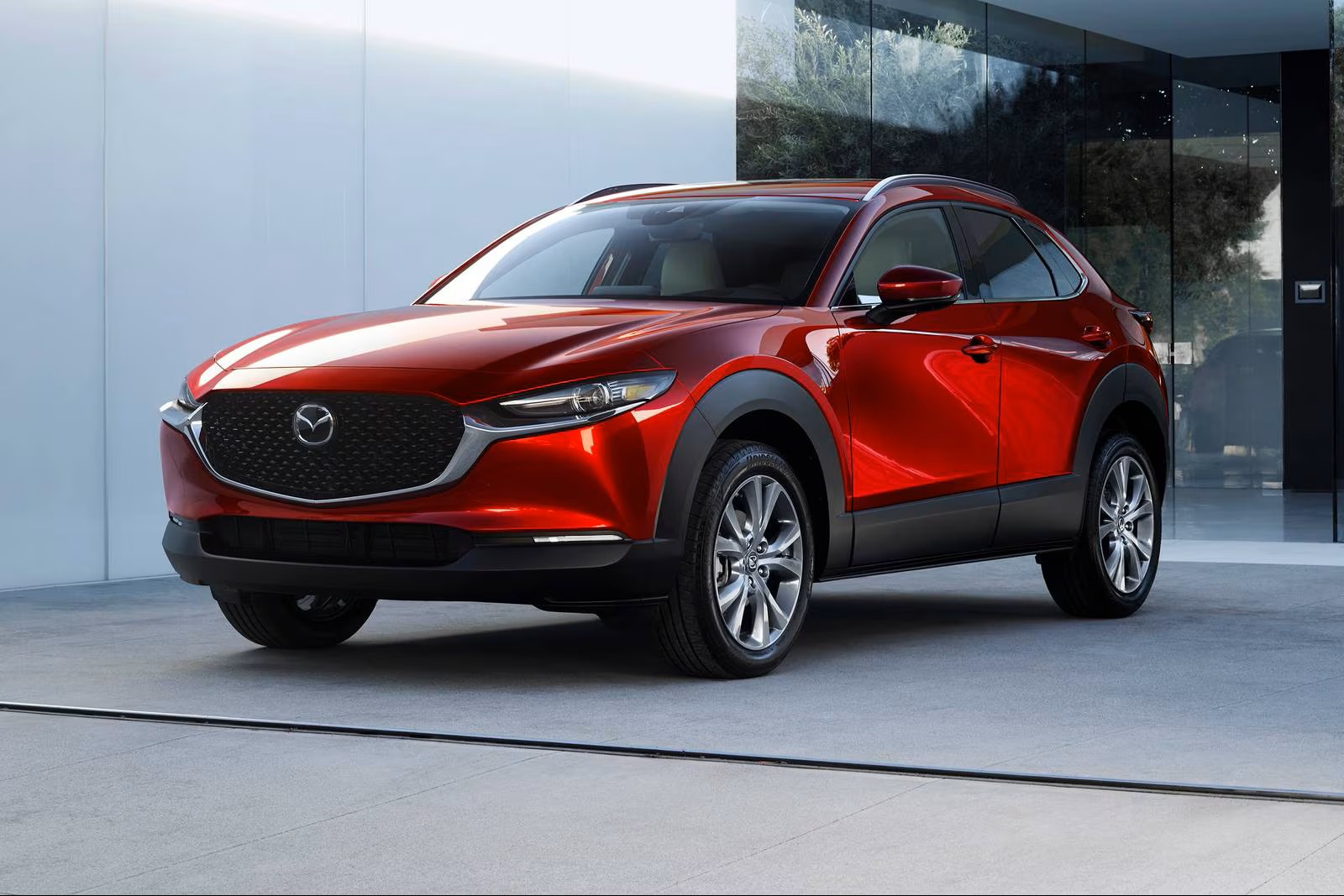
The 2026 Mazda CX-30 is by no means a bad car. It drives beautifully, looks elegant, and carries Mazda’s signature premium feel. But in today’s highly competitive compact crossover market, it has become increasingly difficult to justify the CX-30’s asking price against what it actually delivers in practical terms. When measured against its siblings and its rivals, the CX-30 comes up short in too many important areas.
The CX-30 is 173 inches long and 70.7 inches wide and provides just 20.2 cubic feet of cargo space behind the rear seats, expanding to 45.2 cubic feet with the seats folded.
That cargo figure of 20.2 cubic feet is genuinely limiting for a modern crossover. Compact competitors like the Honda HR-V and Hyundai Kona offer significantly more usable cargo room at comparable or lower price points. The CX-30 punishes you every time you try to load a stroller, a luggage set, or even a week’s worth of groceries.
Specifications:
- Engine: 2.5L Skyactiv-G Inline-4 (standard) / 2.5L Turbocharged Inline-4 (optional)
- Horsepower: 191 hp (standard) / 250 hp (turbo with premium fuel)
- Torque: 186 lb-ft (standard) / 320 lb-ft (turbo)
- Length: 4,394 mm (173.0 inches)
- Width: 1,796 mm (70.7 inches)
The rear seat is similarly cramped. Taller passengers will find legroom and headroom uncomfortably tight on any journey longer than a short city hop. For a vehicle sold primarily as a family-friendly daily driver, this is a real problem that no amount of premium interior trim can fully compensate for. Practicality is a dealbreaker here.
The CX-30 starts at $25,975, which sounds reasonable until you realize the CX-5 a dramatically more spacious and more capable vehicle, starts at only $29,050.
The price gap between the two is surprisingly narrow. When you compare what you are actually getting for that small difference, the CX-5 wins comprehensively in almost every objective measure of utility.
The 2026 CX-30 is available with a standard 2.5-liter four-cylinder engine producing 191 horsepower, while the turbocharged 2.5-liter generates 250 horsepower and 320 lb-ft of torque.
The base engine has an EPA-estimated 27 mpg combined, while the turbo engine achieves 25 mpg combined. While the fuel economy is competitive, the naturally aspirated engine feels less refined in this smaller, lighter body compared to the CX-5’s application of the same unit. The ride can feel slightly fidgety over broken urban roads.
The CX-30’s turbo version partially redeems the model with a 0–60 mph time of around 6.2 seconds, brisk enough to be genuinely fun in a city context.
The problem is that opting for the turbo pushes the price into territory where the CX-5 and even the CX-50 become obvious alternatives. There simply is no sweet spot in the CX-30 lineup where it outperforms those alternatives. If you need a subcompact and the CX-30’s size genuinely suits your needs, it remains a pleasant choice. But for most buyers, stepping up to the CX-5 is the smarter move in every respect.
2. 2026 Mazda3 Sedan (Base 2.5 S)
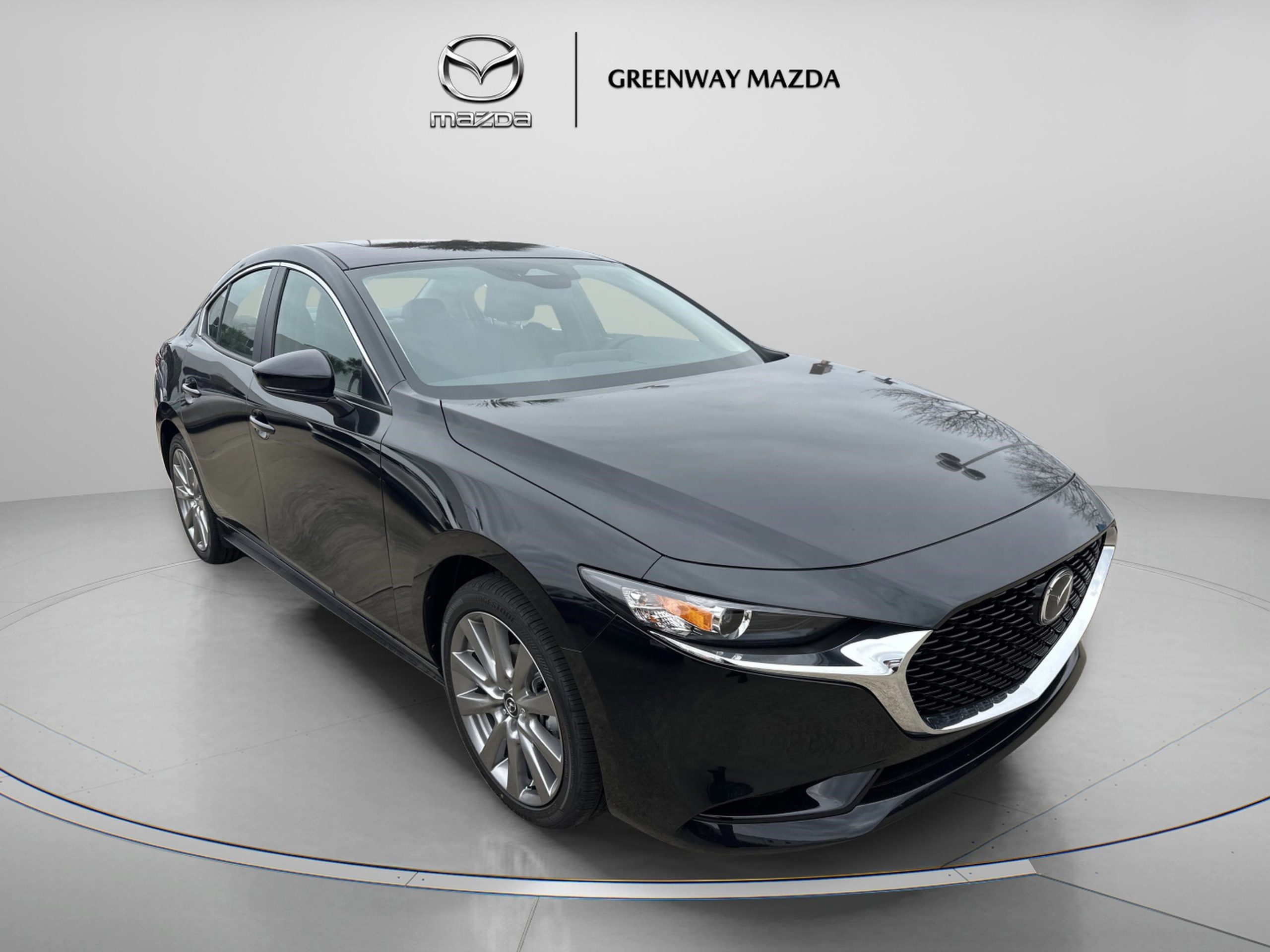
The Mazda3 Sedan is a genuinely beautiful car. It turns heads in parking lots, earns compliments from strangers, and carries an interior quality that makes most mainstream compact sedans feel downright cheap.
But beauty is not everything, and in base 2.5 S trim with front-wheel drive, the Mazda3 Sedan has some real-world shortcomings that are easy to overlook when dazzled by the exterior design and expensive to regret after purchase. The standard engine in Mazda3 2.5 S models offers up to 186 hp and 186 lb-ft of torque.
Those numbers look acceptable on paper, but the base engine is paired with front-wheel drive only on entry trims, which limits traction in rain and cold weather conditions that Indian winters and monsoon seasons regularly present. For a car that positions itself as premium, restricting AWD to higher trims feels like a deliberate cost-cutting measure dressed up in luxury packaging.
Specifications:
- Engine: 2.5L Skyactiv-G DOHC Inline-4
- Horsepower: 186 hp
- Torque: 186 lb-ft (252 Nm)
- Length: 4,662 mm (183.5 inches)
- Width: 1,797 mm (70.7 inches)
The Mazda3 Sedan offers just 13.2 cubic feet of cargo space in its trunk, a figure that falls behind most modern compact sedans in its segment. For reference, the Honda Civic and Toyota Corolla both offer more cargo volume.
This is the tax you pay for the Mazda3’s flowing, low-slung roofline. It looks sensational from the outside, but costs you meaningfully in day-to-day utility.
The pricing structure is also frustrating. The base Mazda3 competes in a segment with excellent value propositions from Korean and Japanese rivals, yet Mazda charges a premium that is only partially justified by its superior interior quality.
The base 2.5 L Skyactiv-G engine delivers 186 hp and 186 lb-ft of torque, respectable for the compact class, but the turbo version pushes output up to 250 hp and 320 lb-ft for those who want more punch.
The issue is that the turbo version costs considerably more, and once you are spending that kind of money, competitors like the Honda Civic Si or even the Mazda3 hatchback make stronger arguments.
The 2.5 Turbo engine produces 227 horsepower and 310 pound-feet of torque, increasing to 250 horsepower and 320 pound-feet of torque with high-octane fuel. The turbo transforms the car into something genuinely special, but you are now in a price tier where the competition is fierce, and the Mazda3’s cargo and rear-seat limitations still haven’t been solved.
The base Mazda3 Sedan also lacks the kind of big annual updates that would make it feel fresh and competitive for 2026. The platform has been around since 2019, and while the interior remains excellent, rivals have caught up considerably in terms of technology and feature inclusion.
Safety systems that are standard on competitors are still optional or trim-restricted here. For those who want the sporty Mazda experience in a sedan, the Turbo AWD trim is excellent, but the base model’s value case is weak at its price.
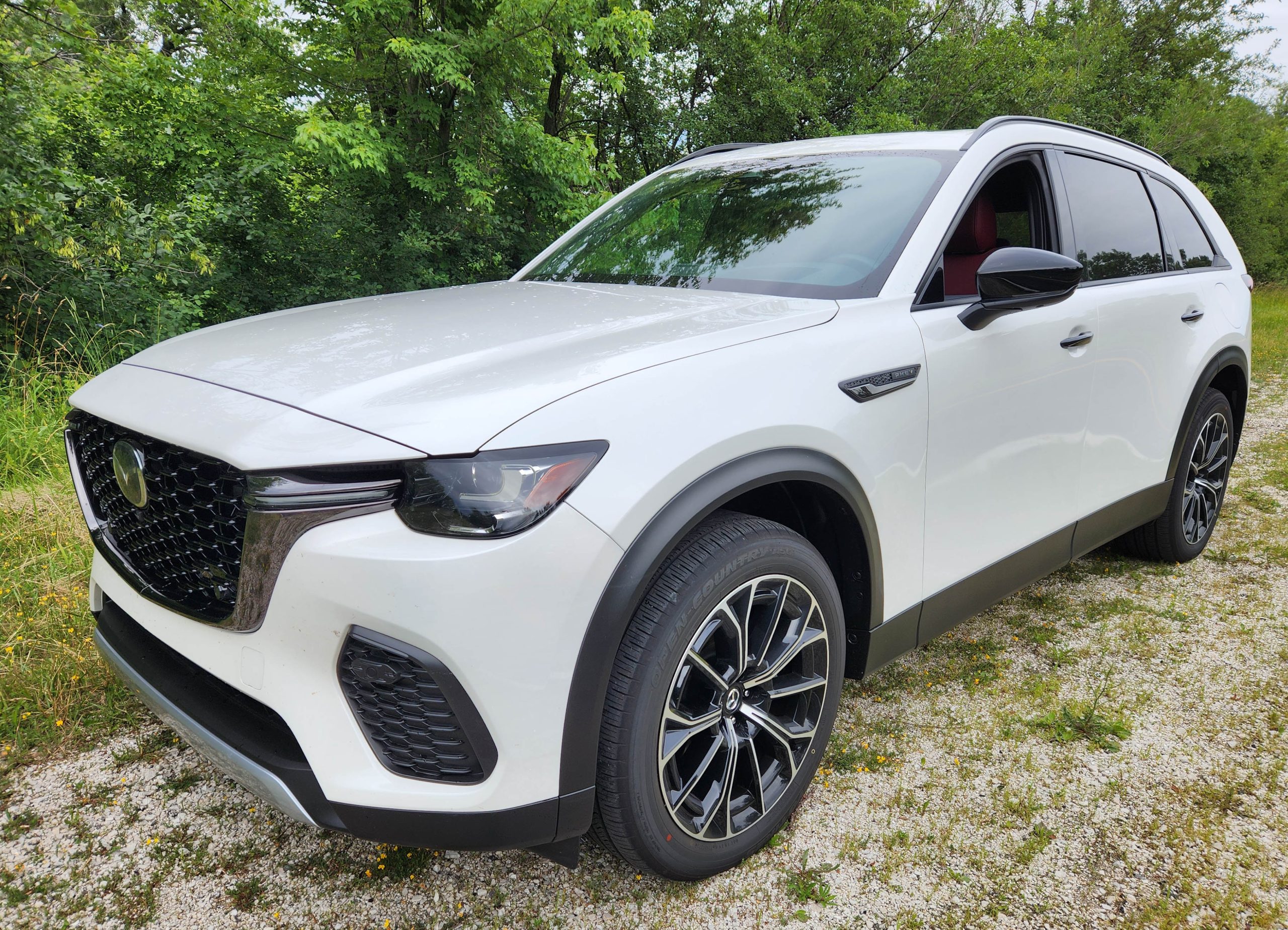
3. 2026 Mazda CX-70 PHEV
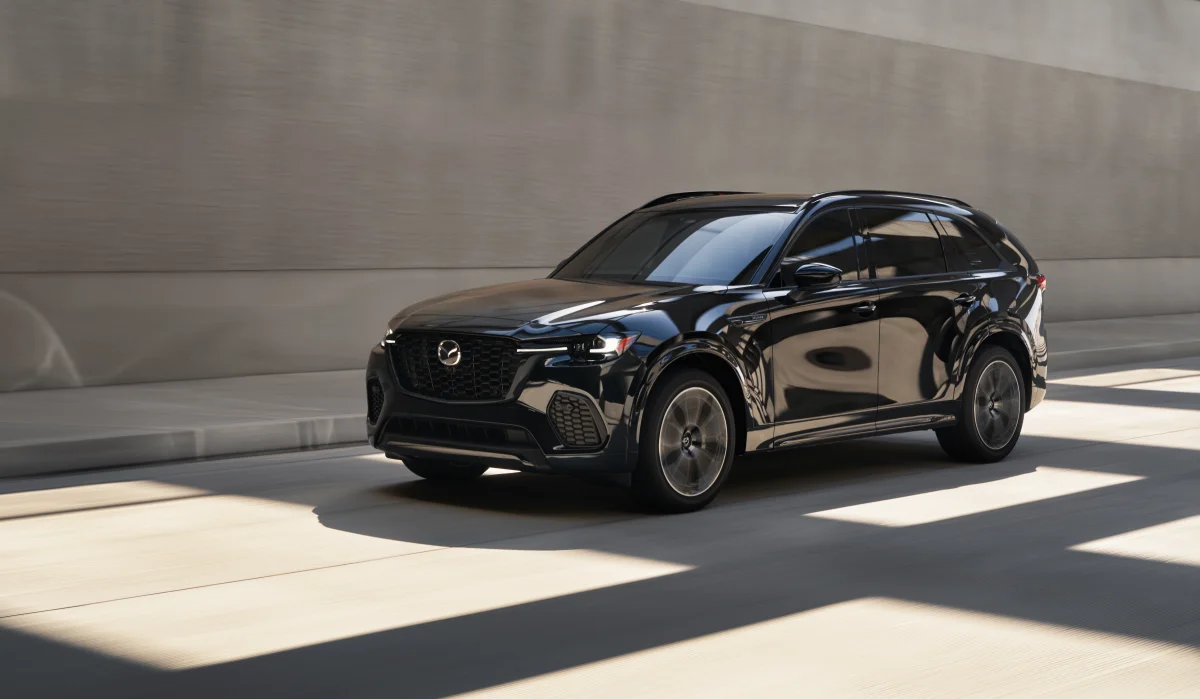
The 2026 Mazda CX-70 PHEV is a vehicle that wants desperately to be something great, and in some ways, it genuinely is. It sits on the same excellent large-platform architecture as the CX-90, looks stunning from every angle, and delivers a combined powertrain output of 323 horsepower that feels effortless in most driving scenarios.
But the PHEV version, despite its technical ambition, carries a set of real-world compromises that make it a difficult recommendation when the inline-six version sits right alongside it in the showroom.
The CX-70 PHEV uses a 2.5-liter engine and an electric motor that together produce 323 horsepower, and the model can travel up to 26 miles using only electricity.
That 26-mile electric range sounds useful on paper, but in practice, it barely covers a one-way commute for many urban and suburban buyers. Once the battery depletes, you are left with a heavier vehicle running on a four-cylinder engine that is working harder than it should to haul around the added weight of the battery pack and electric motor system.
Specifications:
- Engine: 2.5L Skyactiv-G Inline-4 + Electric Motor (Plug-in Hybrid System)
- Horsepower: 323 hp (combined system output)
- Torque: 369 lb-ft (combined, approximate)
- Length: 5,100 mm (200.8 inches)
- Width: 1,994 mm (78.5 inches)
The price premium over the standard CX-70 Turbo is significant, and it is not easily recouped unless your driving patterns are perfectly suited to short daily trips that can be charged overnight. Most buyers will not maximize the PHEV’s efficiency advantages, and the inline-six turbo models are faster, lighter, and arguably more satisfying to drive on a daily basis. The value math simply does not add up for the average buyer.
The CX-70 is larger than the Mazda CX-5 and the CX-50, and the similarly sized CX-90 offers 3rd-row seating and can accommodate up to eight people. This is another awkward positioning issue for the CX-70 PHEV. If you want PHEV technology, the CX-70 PHEV makes the argument. But if you need three rows, the CX-90 PHEV is available. And if two rows are enough, the inline-six CX-70 Turbo is quicker, cheaper, and more fun to drive.
The charging infrastructure in many markets, particularly in developing regions, also remains inconsistent, which undermines the fundamental proposition of a plug-in hybrid. Without reliable home charging, the PHEV premium becomes a financial burden rather than a benefit.
The warranty and long-term reliability of the complex dual-powertrain system also introduce ownership uncertainty that the simpler inline-six completely avoids.
The CX-70 features an advanced 8-speed automatic transmission for a smooth and seamless driving experience, and can tow up to 5,000 pounds on select models when properly equipped. These are genuinely capable figures, and the CX-70 PHEV is not without merit.
But when weighed against the stronger value proposition of the CX-70 Turbo S, the PHEV version demands a very specific buyer lifestyle to justify its premium. For most people, it is a compromise in both directions, not efficient enough to replace a pure EV, and not as engaging as the turbocharged inline-six it sits alongside.
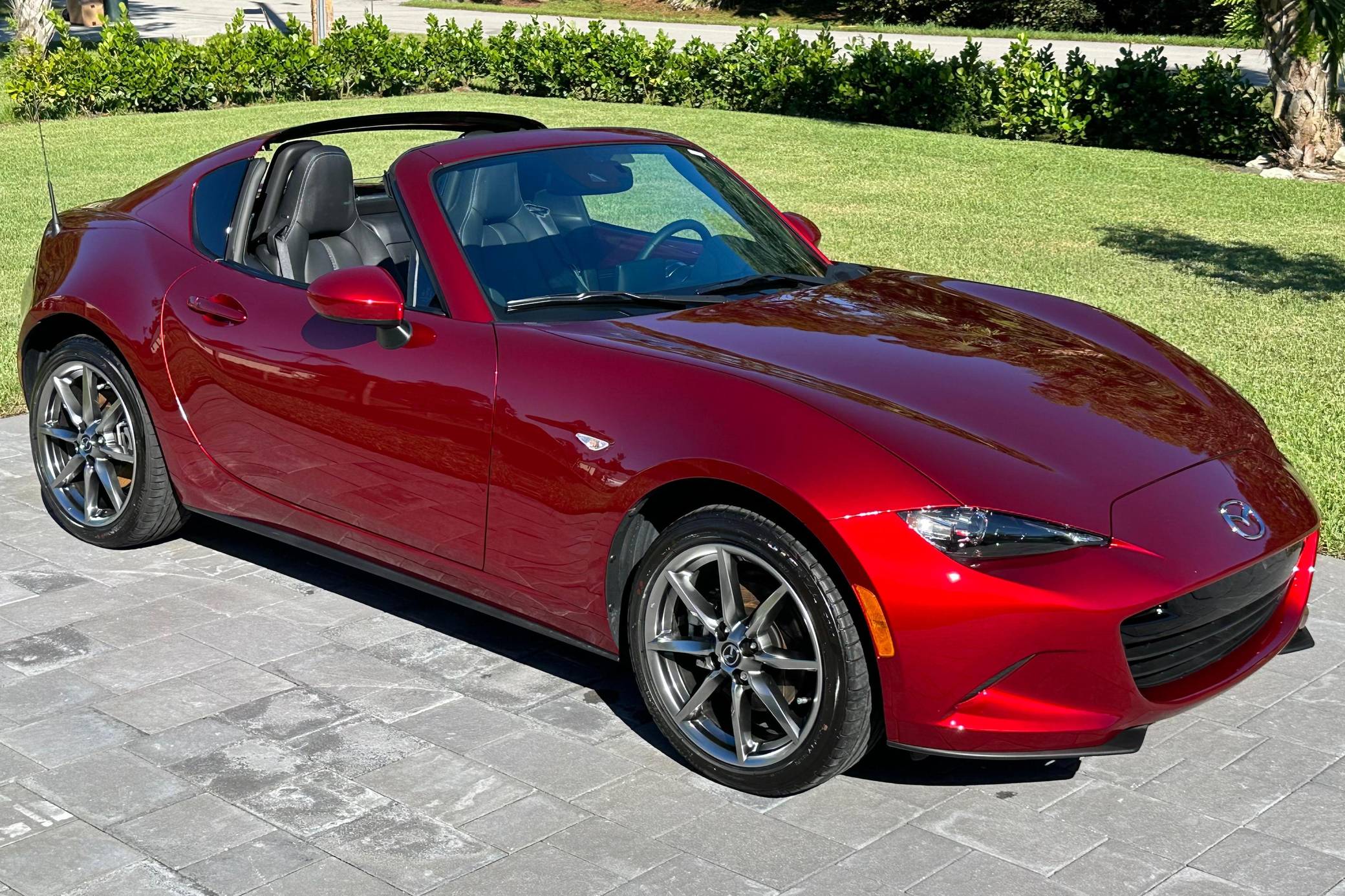
4. 2026 Mazda MX-5 Miata RF Grand Touring
The regular MX-5 Miata soft-top is one of the best buys in this entire guide. The RF (Retractable Fastback) Grand Touring, however, is a different story.
As the top-of-the-line variant of the Miata lineup, it carries a price that stretches the value proposition uncomfortably thin and introduces a set of compromises that undercut the very qualities that make the Miata special in the first place. The more you spend on a Miata, the less sense it makes.
The RF lineup includes the Club and Grand Touring, with pricing for the RF ranging from $39,685 to $43,135, a substantial premium over the soft-top Grand Touring, which tops out at around $36,965.
That extra cost buys you a retractable hardtop mechanism and slightly more wind noise insulation. But it also adds weight, increases mechanical complexity, and reduces the already tiny trunk space further. For a car whose greatest virtue is its lightness, this is a meaningful self-inflicted wound.
Specifications:
- Engine: 2.0L Skyactiv-G DOHC Inline-4
- Horsepower: 181 hp @ 7,000 RPM
- Torque: 151 lb-ft (205 Nm)
- Length: 3,914 mm (154.1 inches)
- Width: 1,735 mm (68.3 inches)
All 2026 MX-5 Miata models are powered by a 2.0-liter four-cylinder engine that makes 181 horsepower and 151 pound-feet of torque. There is no additional power on offer for the RF premium you are paying. You are spending thousands more for the same engine, the same suspension, and the same driving experience.
The RF does not go faster, handle sharper, or offer better technology than the soft-top meaningfully. The price difference is harder to justify than Mazda would like to admit.
At $43,135 for the RF Grand Touring, you are entering territory where sports cars like the Toyota GR86 and Subaru BRZ offer more power, more refinement, and a more modern platform at a lower or comparable price.
A six-speed manual is standard, with the Grand Touring available with an automatic transmission for $920 on soft-top models and $970 for the RF. Opting for the automatic further dulls the Miata’s most compelling characteristic. The manual gearbox is the soul of this car, and choosing the automatic with the RF essentially neutralizes both of the Miata’s greatest strengths.
The 2026 MX-5 Miata is a compact sports car that has seating for up to two people, with only 4.6 cubic feet of cargo space, a figure that is the same across every Miata variant, regardless of how much you spend.
There is no comfort justification for the RF’s price premium either. The seats, the dashboard, the steering wheel, and the instruments are essentially identical whether you buy the $31,665 Sport or the $43,135 RF Grand Touring.
The MX-5 Miata RF looks undeniably cool. The retractable fastback roofline creates a genuinely exotic silhouette that turns more heads than the soft-top.
But cool looks alone do not justify a price hike of over $11,000 versus the base soft-top, especially when the driving experience is fundamentally unchanged.
If you love the Miata, you should spend your money on a Sport or Club soft-top and save the difference. The smile-per-dollar ratio drops sharply as you climb the Miata ladder, and the RF Grand Touring sits at the steepest point of that curve.
Also Read: 10 Best Vehicles for Rural Gravel Roads
