
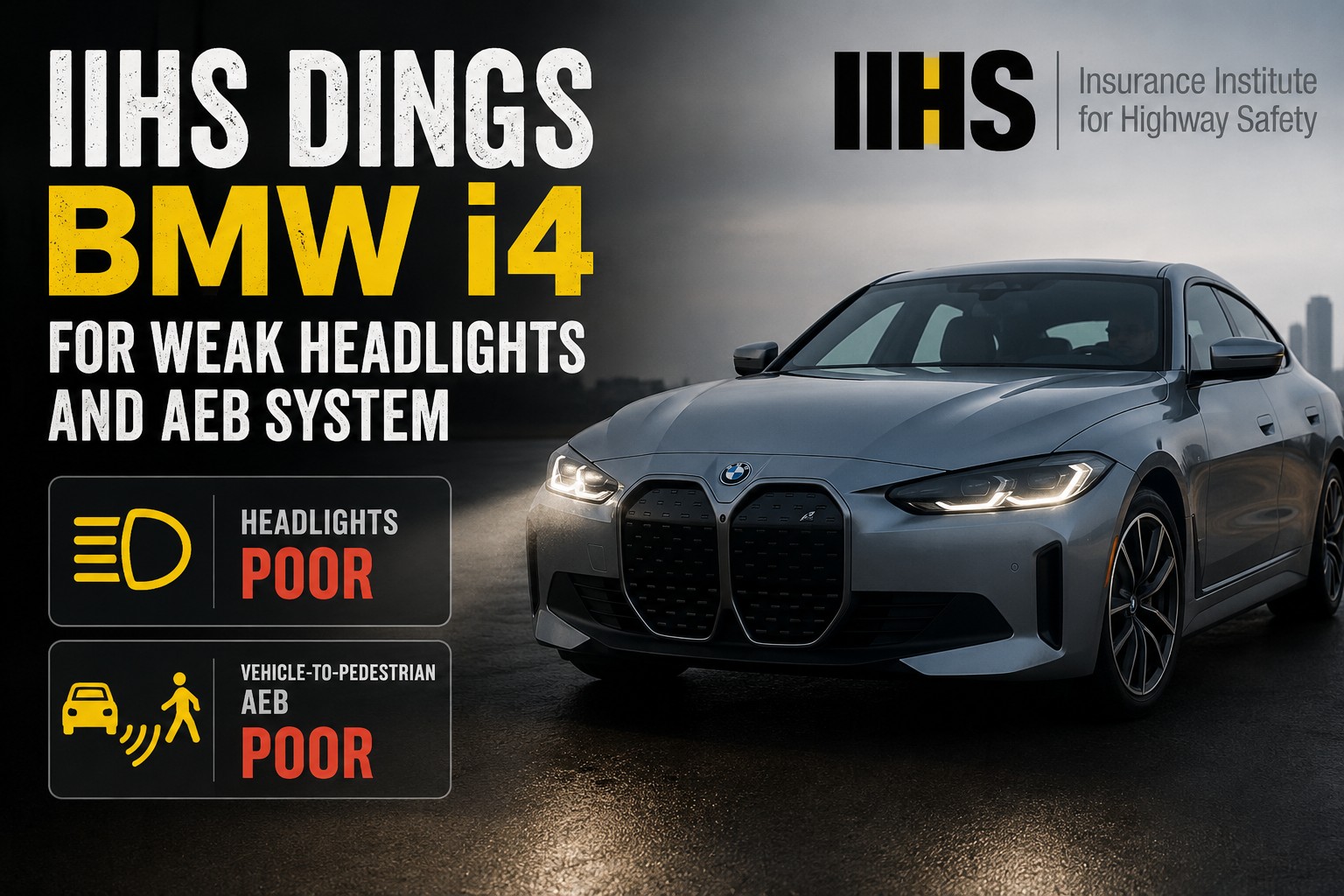
The BMW i4 is one of the most celebrated electric vehicles in the luxury segment. It combines the elegance of BMW’s iconic 4 Series Gran Coupé with a fully electric powertrain.
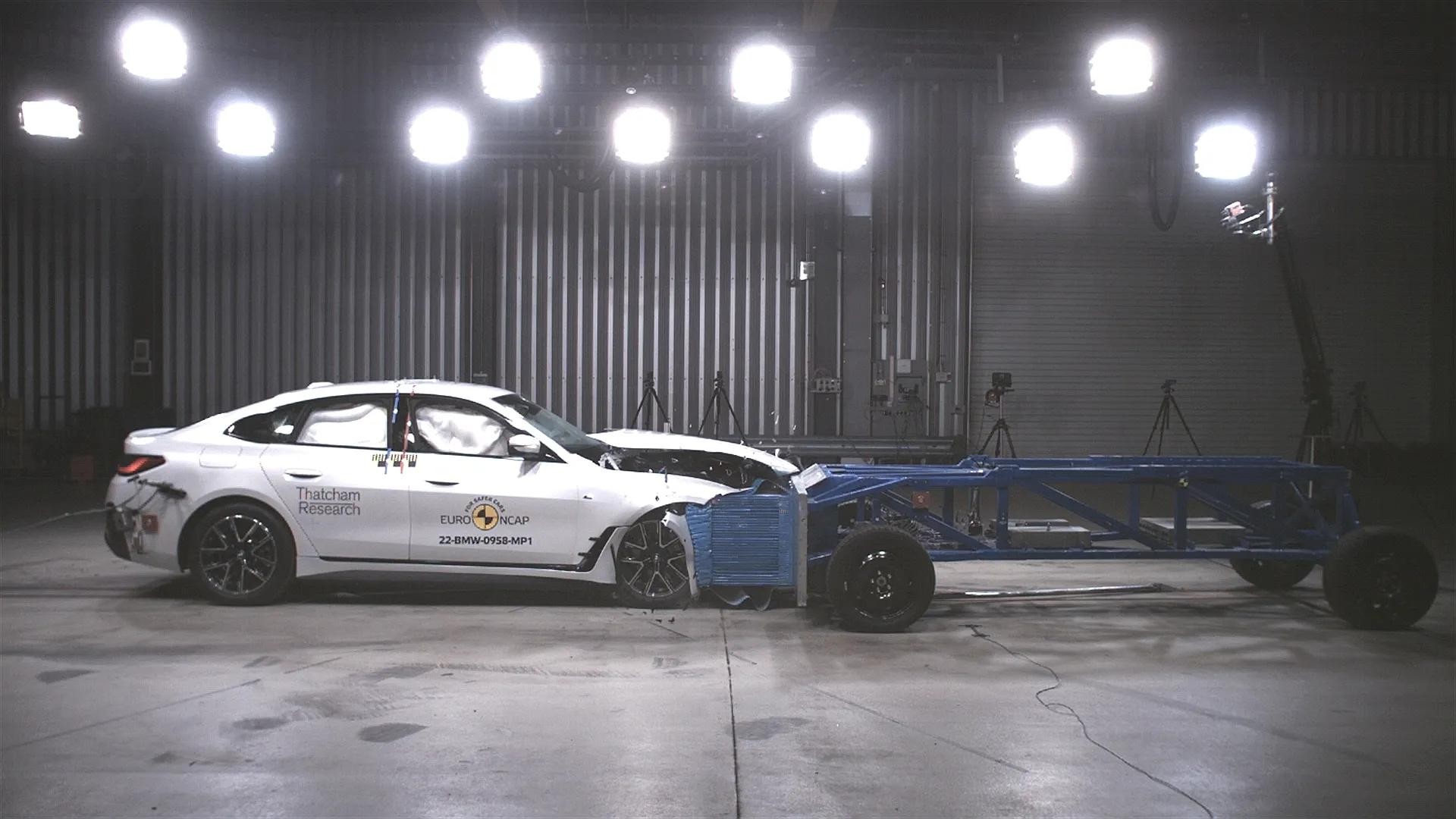
Since its launch in 2022, the i4 has built a strong reputation for structural safety. It has performed well in frontal crash tests, protecting both front and rear seat passengers effectively.
However, not everything about this vehicle’s safety profile deserves praise. The Insurance Institute for Highway Safety, commonly known as IIHS, has flagged two serious weak points in the i4’s safety package.
The car’s headlights and its Automatic Emergency Braking system have both drawn sharp criticism. These are not minor issues; they are core safety features that directly affect a driver’s ability to avoid crashes.
Headlights determine how well a driver can see hazards at night on dark roads. AEB systems are designed to automatically stop or slow the car before it collides with vehicles, motorcycles, or pedestrians.
When both of these systems underperform, real-world risk rises significantly. The IIHS confirmed that the i4 does not qualify for either the Top Safety Pick or the Top Safety Pick+ award as a result.
These awards are the industry’s most respected safety endorsements for new vehicles. Their absence from the i4’s profile is a meaningful red flag for safety-conscious buyers.
Headlight Performance: A Persistent Problem Across Trims
In IIHS testing, neither of the BMW i4’s two headlight systems provided adequate illumination on the high-beam setting. This is a serious concern for drivers who regularly travel on unlit roads and highways after dark.
The poorly rated headlight version, offered on the eDrive35, eDrive40, and xDrive40 trims, also created excessive glare with the low beams. Excessive glare can temporarily blind oncoming drivers and raise the risk of dangerous head-on collisions.
On straightaways, high-beam visibility was found to be inadequate on both sides of the road. On curves, performance was inconsistent, varying from fair to good depending on the specific curve being tested.
Lower-spec headlights rated Marginal or Poor significantly hurt visibility on dark two-lane roads. Two-lane roads are statistically among the most dangerous driving environments, especially after nightfall.
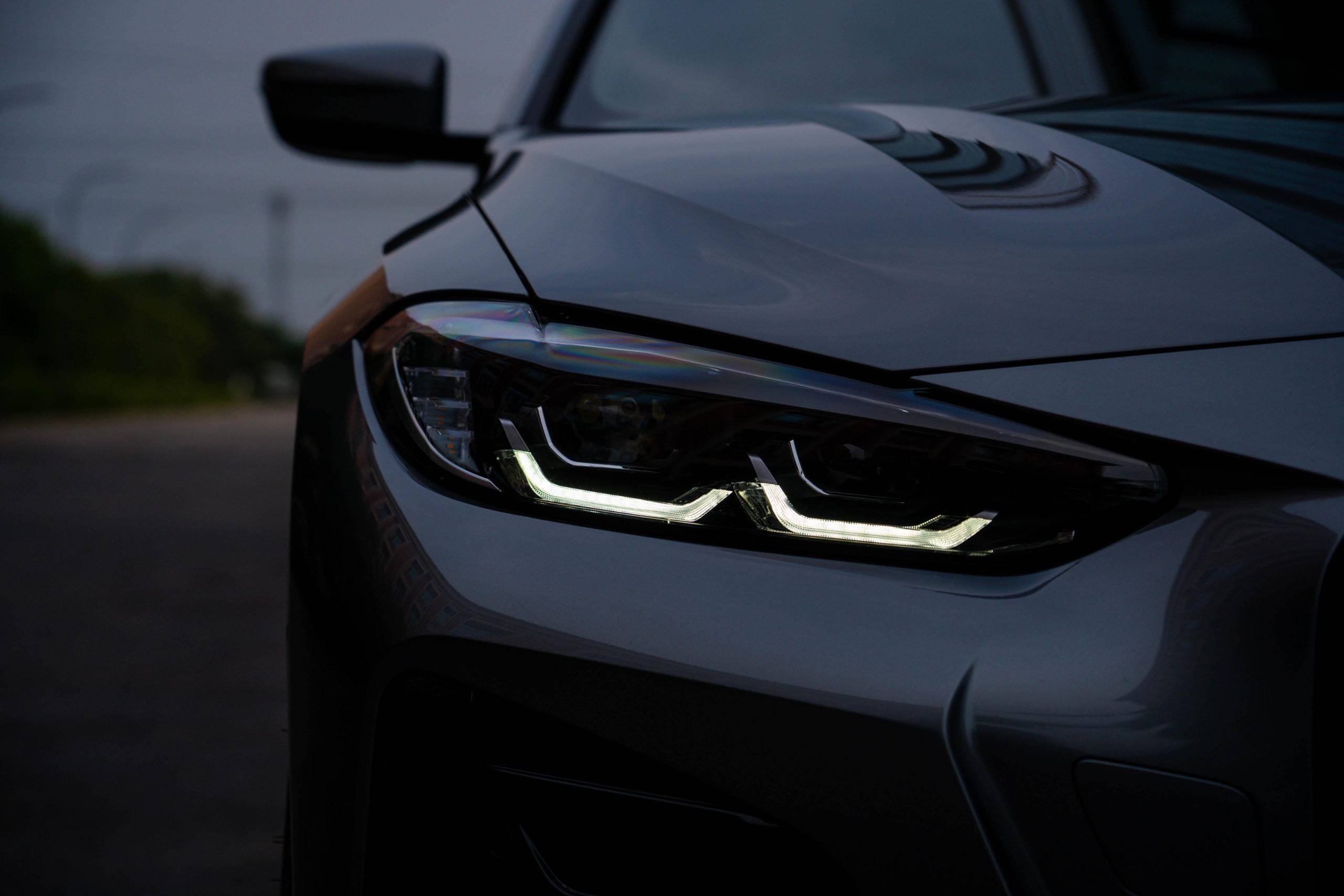
Vehicles with good headlight ratings have 19% fewer nighttime single-vehicle crashes than those with poorly rated headlights. They also record 23% fewer nighttime pedestrian crashes, showing just how much headlights matter for road safety.
The only trim that receives a slightly better rating is the M50 variant with certain optional lighting packages. Even those upgraded headlights still fall short of earning a full “Good” rating from the IIHS.
BMW has not offered a single headlight configuration across the i4 range that fully satisfies IIHS visibility standards. This is a recurring gap that the automaker has yet to address across its electric sedan lineup.
AEB System Failures: Cars and Motorcycles Remain a Problem
The BMW i4 received a “Good” rating for AEB performance, specifically against pedestrians. However, it could not do better than “Poor” in AEB scenarios involving other cars or motorcycles.
This stark contrast reveals a fundamental limitation in how the i4’s braking system detects different types of road users. It performs selectively rather than consistently across all real-world threat scenarios.
Poor-rated vehicles in IIHS testing struggled with the passenger car target, failing to slow enough in the 37-mph test. Every single one of them also struck the motorcycle target in the 31-mph run without avoiding impact.
At relatively moderate speeds, the i4’s system may fail to avoid a collision with an oncoming vehicle or motorcycle. For motorcyclists, who have no structural protection around them, such a failure can easily prove fatal.
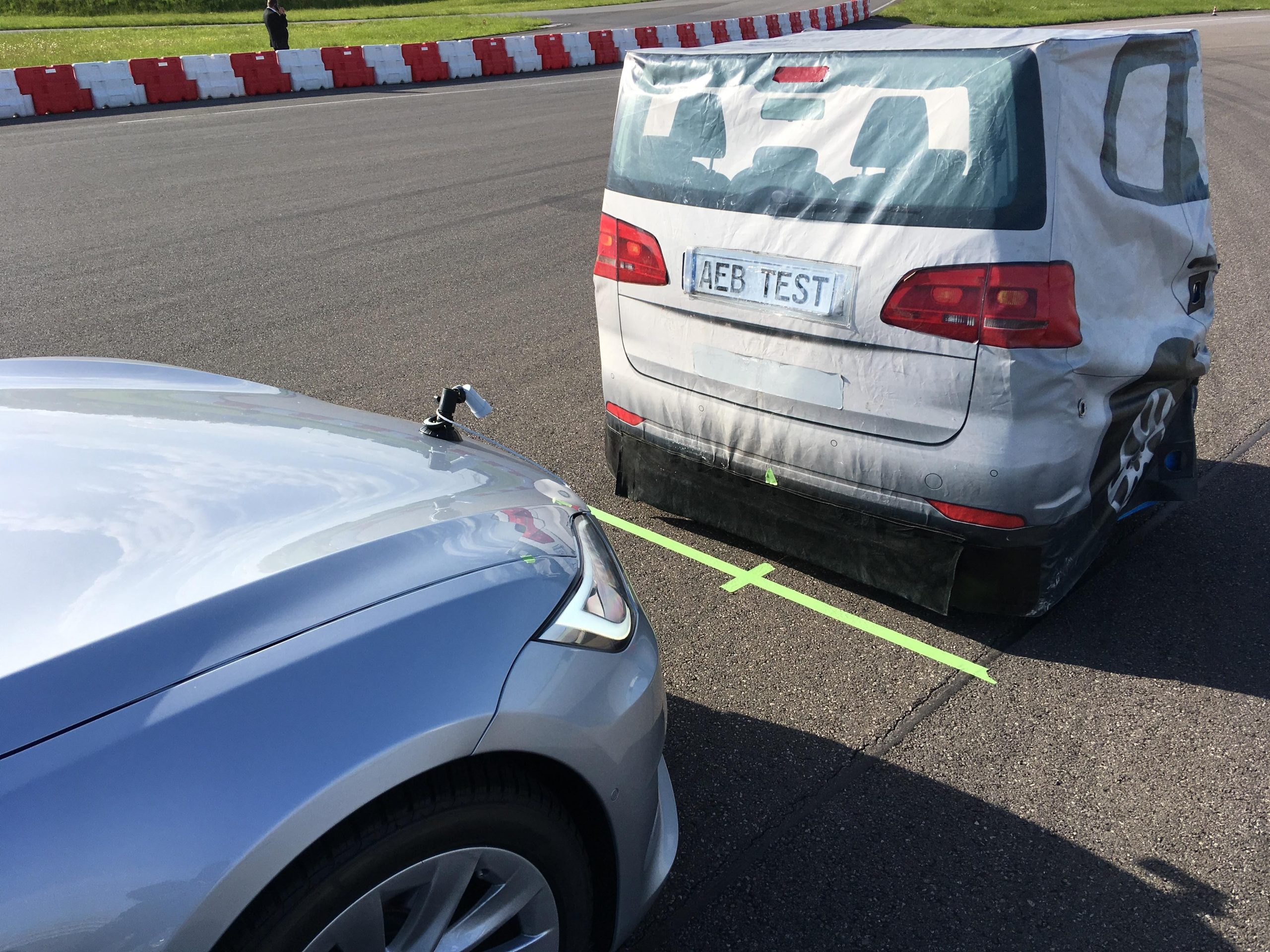
The IIHS updated its AEB testing in recent years to better reflect real-world crash conditions at higher speeds. The BMW i4 fails under precisely these more demanding and realistic testing standards.
A medium truck, heavy truck, or motorcycle is rear-ended in 43% of all fatal rear-end crashes. Despite making up just 3% of rear-end incidents, these collisions cause a wildly disproportionate share of traffic fatalities.
The i4’s strong pedestrian AEB rating shows that BMW’s sensor technology is capable of good performance when properly tuned. The failure in vehicle and motorcycle detection points to a calibration or software issue rather than a hardware flaw.
Safety Implications and What Buyers Should Know
Both IIHS Top Safety Pick awards require acceptable or good headlight ratings across all available trims. They also require an acceptable or good rating in the vehicle crash prevention test, which the i4 currently fails to achieve.
The BMW i4’s physical crash structure continues to perform well in protecting occupants during an actual impact. The safety concerns are specifically about preventing crashes from occurring in the first place.
BMW intends to completely redesign the i4 for the 2029 model year on its new Neue Klasse platform. Until that redesign arrives, buyers are purchasing a car with known AEB and headlight deficiencies that remain unresolved.
Prospective owners should factor these shortcomings into their buying decision, particularly if they drive at night regularly. Choosing a higher trim with an upgraded lighting package may partially offset the headlight concern.
Buyers should also monitor whether BMW releases any over-the-air software updates targeting AEB improvements. Until the IIHS confirms better ratings, the i4 remains structurally sound but limited in crash prevention capability.
In a luxury EV market where safety scores are increasingly decisive, these gaps carry real weight. The BMW i4 is a well-built car, but its IIHS results are a clear reminder that premium pricing does not always guarantee complete safety performance.
Also Read: 7 Vehicles Where the Emissions Test Fails Most Often
