
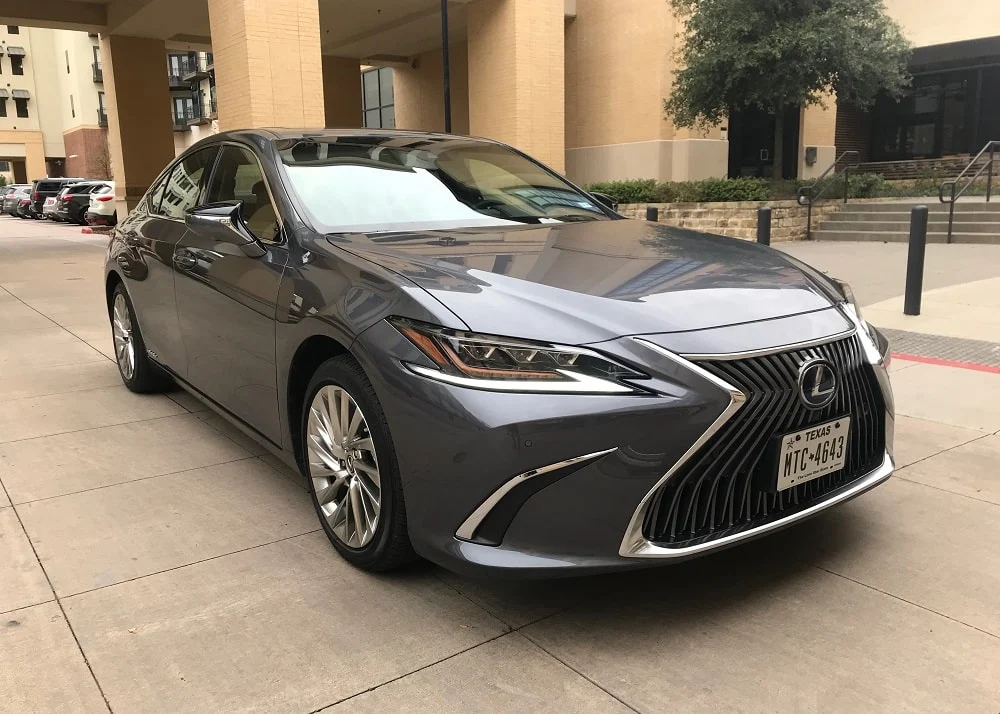
For years, the Lexus ES has occupied a unique place in the luxury sedan market. It has never tried to be the sharpest sports sedan, the fastest executive car, or the most technologically radical vehicle in its segment.
Instead, Lexus built the ES around comfort, refinement, and effortless daily usability. The redesigned 2026 Lexus ES proves that philosophy is still very much alive.
After spending time with both the new ES 350h Hybrid and the fully electric ES 500e, reviewers at Edmunds came away with a clear conclusion: Lexus has doubled down on comfort while finally adding enough technology and performance to make the sedan feel more modern than ever.
The result is a luxury car that remains deeply committed to serenity even as the rest of the segment becomes increasingly focused on aggressive styling and sportier driving dynamics. For Lexus, that strategy may be exactly what many buyers are looking for.
Also Read: 8 Cars With the Best-Rated Headlights by IIHS
Lexus Refined the Formula Instead of Reinventing It
The eighth-generation ES represents one of the biggest redesigns in the model’s history. The sedan grows noticeably larger than before, gains an entirely new interior layout, introduces fresh technology, and expands its electrified powertrain lineup. Yet despite all those changes, the ES still feels unmistakably like an ES.
The moment drivers settle into the cabin, the car’s priorities become obvious. Road noise remains impressively subdued, the suspension absorbs imperfections with ease, and the driving experience prioritises relaxation over excitement. Lexus engineers clearly resisted the temptation to transform the ES into something it was never meant to be.
That decision matters because many luxury brands are moving in the opposite direction. Modern executive sedans increasingly chase performance credentials, larger wheels, firmer suspension setups, and sport-focused handling.
Lexus instead leaned harder into comfort, creating what Edmunds described as a luxury cruiser designed for the modern commuter. The exterior styling also reflects that approach.
The new ES adopts cleaner surfaces, a sleeker profile, and more dramatic proportions while maintaining a restrained elegance. It looks modern without becoming overly aggressive, helping it stand apart from many rivals that rely heavily on sharp creases and oversized grilles.
Inside, the transformation feels even more significant. The dashboard adopts a minimalist design dominated by a large 14-inch touchscreen and digital displays.
Lexus removed many of the physical buttons from previous generations while still retaining enough traditional controls to avoid the frustration often associated with fully touch-based interiors. Materials feel richer, the layout appears more upscale, and rear passenger space benefits from the vehicle’s larger footprint.
The Hybrid Remains the Heart of the Lineup
While Lexus introduced fully electric ES variants, the ES 350h Hybrid remains the model many buyers are expected to choose.
The hybrid combines a 2.5-liter four-cylinder engine with Lexus’ latest sixth-generation hybrid system, producing 244 horsepower. For the first time, buyers can also choose all-wheel drive, something previous ES hybrids lacked.
Fuel economy reaches an estimated 46 mpg combined in front-wheel drive form and 44 mpg with all-wheel drive. Numbers alone do not tell the full story.
What makes the hybrid appealing is how naturally it fits the ES personality. The powertrain delivers smooth acceleration without drawing attention to itself.
The transitions between gasoline and electric power happen quietly, and the vehicle never feels like it is constantly reminding the driver that it is a hybrid. That seamless behavior has become one of Lexus’ greatest strengths.
During highway driving, the ES Hybrid settles into a calm rhythm that makes long journeys feel effortless. The steering remains light and predictable, while the suspension prioritizes comfort above cornering aggression.
Drivers looking for razor-sharp handling may find the car too soft, but that criticism misses the point entirely. The ES is designed to reduce stress rather than create excitement.
Edmunds noted that while acceleration is not dramatic, there is enough power for merging, passing slower traffic, and everyday driving demands. The car feels confident without ever encouraging aggressive behavior.
The ES 500e Adds a New Personality.
The biggest surprise within the lineup may actually be the new ES 500e electric variant. Unlike the hybrid, the dual-motor all-wheel-drive EV introduces a level of responsiveness that previous ES models rarely offered.
Producing 338 horsepower, the 500e accelerates far more quickly than the hybrid while delivering the instant torque characteristic of modern electric vehicles. Lexus estimates a 0 to 60 mph time of roughly 5.1 seconds. That additional performance noticeably changes the car’s personality.
Edmunds described the ES 500e as trading commuter boredom for electric bite, highlighting how much more responsive and engaging it feels compared to traditional ES models. The vehicle responds quickly to throttle inputs and feels surprisingly eager during everyday driving situations. Yet Lexus still avoided turning the 500e into a sport sedan.
The ride remains soft, the cabin remains exceptionally quiet, and comfort continues to dominate the driving experience. Even with the stronger powertrain, the ES prioritizes refinement over outright performance.
Lexus appears to have focused on making the electric version feel more premium rather than simply faster. That distinction becomes important.
Many luxury EVs chase acceleration figures as their primary selling point. The ES 500e instead uses electric power to enhance smoothness, silence, and effortless progress. The result feels more aligned with traditional Lexus values.
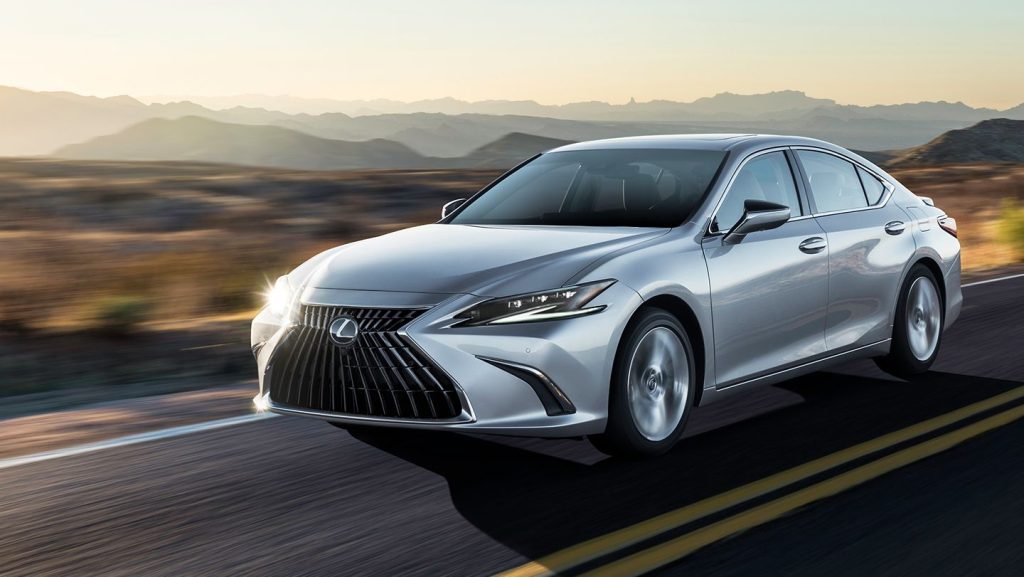
Range figures reach approximately 307 miles for certain front-wheel-drive EV variants, while charging speeds remain competitive, though not class-leading. Lexus also adopted the NACS charging connector, allowing easier access to Tesla’s Supercharger network.
Comfort Remains the Real Selling Point
What stands out most about the 2026 ES is that Lexus never abandoned its identity despite introducing major technological changes.
The automotive industry often treats electrification as an excuse to reinvent everything. Lexus took a different path. The company modernized the ES, improved efficiency, added EV options, and upgraded technology while preserving the qualities that made the sedan successful in the first place. That restraint may prove valuable.
Many luxury buyers are not searching for track performance or futuristic experimentation. They want quiet cabins, comfortable seats, smooth rides, and dependable ownership experiences. The new ES continues delivering exactly those strengths while finally feeling more contemporary than its predecessor.
The ES 350h remains the comfort-focused hybrid many Lexus customers already love, only better equipped and more efficient. The ES 500e introduces a more energetic electric personality without sacrificing refinement. Together, they create a lineup that feels carefully balanced rather than radically transformed.
In a luxury market increasingly obsessed with performance numbers and digital gimmicks, the 2026 Lexus ES stands out for a different reason. It understands that comfort itself can still be a luxury.
Also Read: 10 V8 Cars Worth Buying for the Sound Alone
