

The Jeep Wrangler has earned a legendary reputation as one of the most capable and recognizable off-road vehicles ever built. Known for its rugged design, removable doors, fold-down windshield, and impressive Four Wheel Drive capabilities, the Wrangler attracts adventure enthusiasts, outdoor explorers, and everyday drivers who appreciate its unique character.
While most people are familiar with the Wrangler’s iconic styling and trail-ready performance, many owners are unaware that Jeep has packed numerous hidden features and clever design elements into the vehicle over the years.
These features are often designed to improve convenience, enhance off-road experiences, simplify maintenance, or celebrate the rich heritage of the Jeep brand. Some are intentionally subtle and can go unnoticed for years, while others are hidden in plain sight and simply overlooked by drivers who focus primarily on the Wrangler’s performance capabilities.
From secret Easter eggs embedded throughout the vehicle to practical engineering solutions that make life easier on and off the trail, the Wrangler offers much more than meets the eye.
One reason these hidden features are so fascinating is that they reflect Jeep’s deep understanding of its customer base. Wrangler owners often enjoy customization, exploration, and discovery, making hidden details a natural extension of the ownership experience.
These thoughtful touches demonstrate how Jeep engineers have carefully considered the needs of drivers who use their vehicles in challenging environments. Whether you are crossing rocky mountain trails, driving through muddy backroads, or simply commuting along city streets, many of these features provide practical benefits that enhance the driving experience.
As Wrangler generations have evolved, Jeep has continued to introduce innovative hidden features while maintaining the vehicle’s classic appeal. Some features are found across multiple model years, while others are unique to specific generations, such as the JK or JL Wrangler.
Learning about these lesser-known capabilities can help owners get more value from their vehicles and develop a greater appreciation for the engineering and creativity behind the Wrangler.
In this article, we will explore ten hidden features in Jeep Wranglers that many owners never discover. From practical tools and storage solutions to secret design elements and off-road enhancements, these features showcase why the Wrangler remains one of the most beloved adventure vehicles in the world.
Also Read: 10 Strongest V8 Engines Ever Put in a Production Car

1. Hidden Easter Eggs Throughout the Vehicle
One of the most entertaining hidden features in modern Jeep Wranglers is the collection of Easter eggs scattered throughout the vehicle. These small design details are intentionally included by Jeep designers as a tribute to the brand’s history and adventurous spirit.
While many manufacturers focus purely on performance metrics or interior luxury, Jeep has taken a different approach by embedding personality directly into the vehicle’s design language. These Easter eggs are not advertised prominently, which makes discovering them feel like a personal reward for attentive owners.
Many Wrangler owners discover tiny Jeep silhouettes molded into various components. These miniature Jeep images may appear on windshield corners, floor mats, plastic trim pieces, or even inside storage compartments.
Some are so subtly placed that they blend into textures or patterns, making them easy to miss unless inspected closely. Finding them often feels like participating in a treasure hunt, especially for new owners who are exploring their vehicle for the first time.
Some Wranglers also feature historical references to the original military Jeep used during World War II. Designers have incorporated subtle visual cues that celebrate the vehicle’s heritage while connecting modern owners to the brand’s roots. These details can include stencil-style markings, symbolic shapes, or miniature depictions of classic Jeep profiles that pay homage to its utilitarian origins.
Depending on the model year, owners may find images of climbing Jeeps, mountains, animal tracks, or maps integrated into vehicle components. These creative additions are often placed in areas like headlight housings, windshield glass edges, or interior panels where they are not immediately visible during normal driving conditions. This intentional subtlety encourages curiosity and exploration.
The Easter eggs have become so popular that entire online communities are dedicated to locating and documenting them across different Jeep models.
Social media groups frequently share discoveries, comparing variations between trims and production years. For many owners, discovering new hidden details becomes a fun and ongoing part of Wrangler ownership that deepens their connection to the brand.

2. Fold Down Windshield Functionality
Many Wrangler owners know that the windshield can fold down, but surprisingly few ever take advantage of this capability in real-world driving situations. It remains one of the vehicle’s most distinctive and historically significant features, yet it is often treated as a novelty rather than a practical tool.
The fold-down windshield traces its origins to military Jeeps, where it served practical purposes during transportation, aircraft loading, and field operations. Reducing vehicle height made it easier to transport Jeeps in cargo planes and military convoys. This functional design choice has been preserved in modern Wranglers as a tribute to their rugged heritage.
Today, the feature offers a unique open-air driving experience that few modern vehicles can match. Removing or lowering the windshield transforms the driving environment entirely, creating a direct connection to wind, sound, and terrain. It is not just a design gimmick, but an immersive experience that highlights the Wrangler’s identity as an adventure vehicle.
The process requires removing specific bolts and carefully lowering the windshield onto protective supports. While it is not something drivers typically do every day, it becomes highly valuable for specialized situations. Enthusiasts who enjoy customization often prepare their vehicle in advance for trail runs or off-road events where full openness enhances the experience.
For off-road enthusiasts, the lowered windshield can improve visibility when tackling certain obstacles. Being able to clearly see the terrain directly ahead can be beneficial in technical driving situations such as rock crawling or steep inclines. It reduces visual obstruction and allows better judgment of wheel placement.
The feature also serves as a reminder of the Wrangler’s heritage. In an era when most vehicles prioritize sealed cabins and aerodynamic efficiency, the fold-down windshield represents Jeep’s commitment to preserving functional authenticity. It is a rare example of automotive design where tradition and utility coexist.
3. Integrated Trail Rail Cargo System
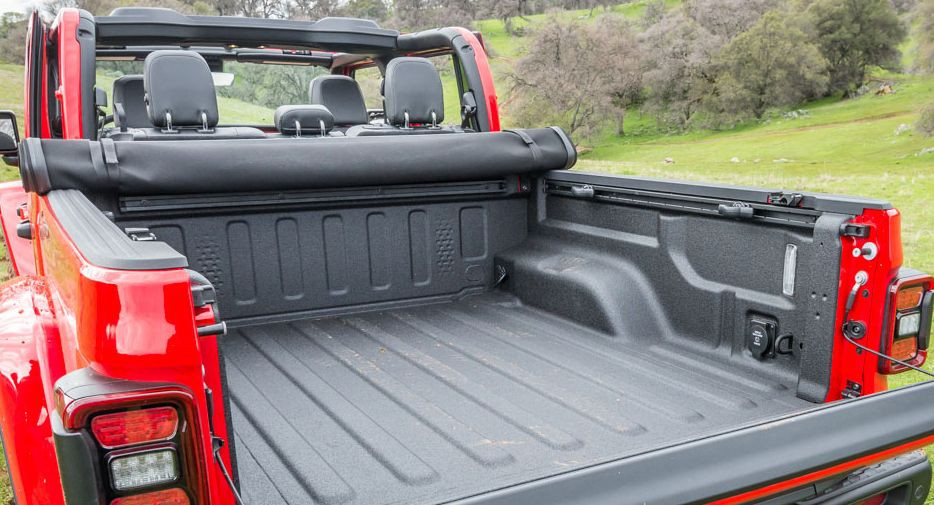
The Trail Rail Cargo Management System is one of the Wrangler’s most practical hidden features, yet many owners only discover it after extended use of their vehicle. Located in the rear cargo section, the rail system is designed to provide flexible storage solutions for a wide variety of gear and equipment.
The system allows users to secure various accessories, tie down equipment, and organize cargo for outdoor adventures. This becomes especially useful during camping trips, overlanding journeys, or long off-road excursions where carrying multiple items securely is essential. Instead of relying on fixed tie-down points, the rail system enables adjustable positioning.
The system supports movable tie-down loops that can be repositioned based on cargo requirements. This flexibility allows owners to secure oddly shaped items more effectively than traditional cargo hooks. Whether transporting coolers, recovery gear, toolboxes, or camping equipment, the configuration can be adapted quickly.
For adventure travelers, the rails help prevent equipment from shifting during rough terrain driving. Off-road conditions often involve sudden impacts, uneven surfaces, and steep angles, all of which can cause unsecured items to move around dangerously. The rail system significantly reduces this risk and improves safety.
Because the system is integrated into the vehicle’s design, it provides functionality without sacrificing cargo space. Unlike aftermarket storage solutions, it maintains a clean and factory-engineered appearance. This subtle integration is one reason many owners overlook its usefulness until they begin planning serious trips.
4. Hidden Storage Compartments
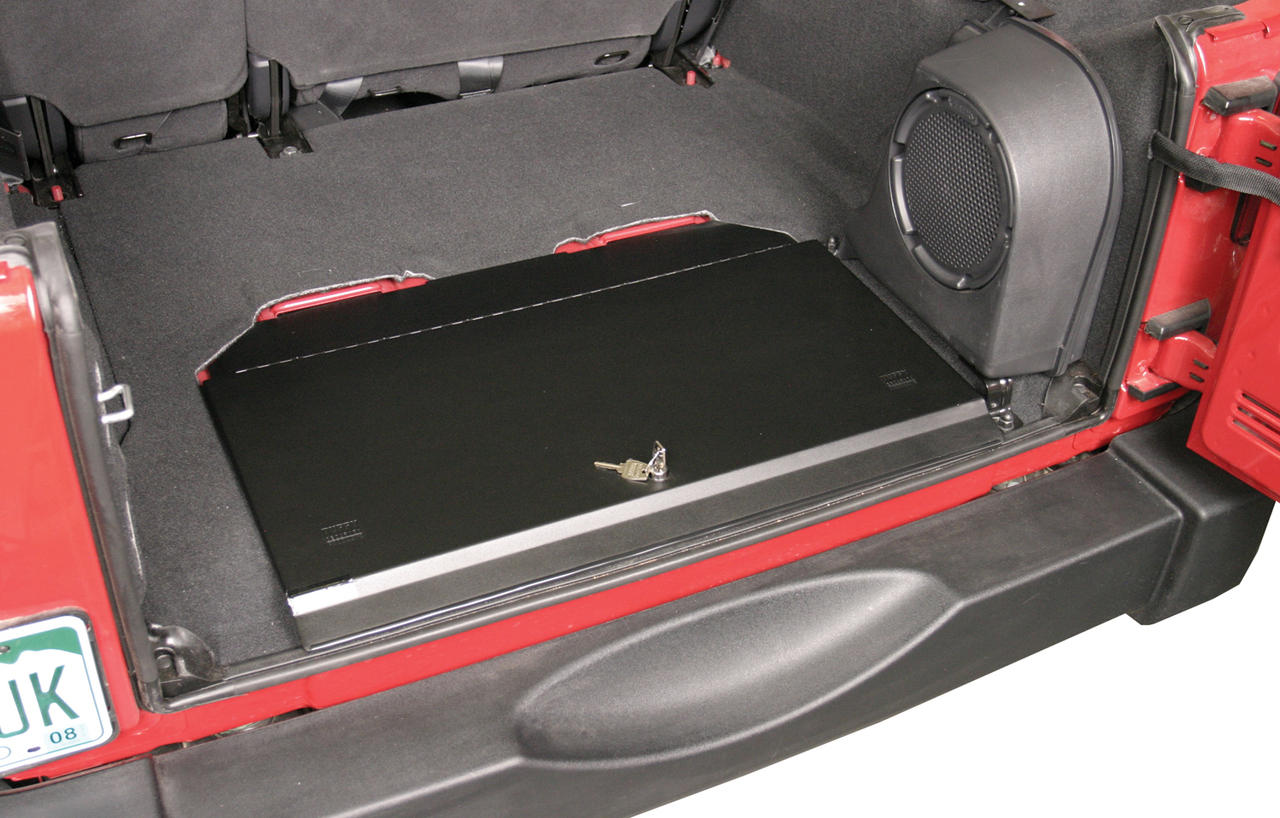
Jeep Wranglers include several storage areas that many drivers overlook during daily use. These compartments are not always obvious at first glance, especially for new owners who are unfamiliar with the vehicle’s interior layout. However, they provide highly practical solutions for storing tools, emergency supplies, and personal belongings.
Certain Wrangler models feature lockable storage beneath the rear cargo floor. This hidden area allows owners to keep valuable items out of sight while maintaining easy access when needed. It is particularly useful for storing documents, electronics, or recovery equipment that should remain protected during travel.
Additional storage opportunities may be found beneath seats or within specially designed interior panels. These spaces are often shaped irregularly, but they are intentionally designed to maximize every available inch of cabin space. Jeep engineers have optimized these compartments to support real-world utility rather than aesthetics alone.
For off-road travelers, hidden storage compartments can serve as secure locations for essential gear such as flashlights, first aid kits, tire repair tools, and survival equipment. In remote environments, quick access to these items can be critical, making organized storage more than just a convenience.
The thoughtful placement of these compartments demonstrates Jeep’s focus on practicality. Instead of relying solely on external storage solutions like roof racks or cargo carriers, the Wrangler integrates smart internal storage options that maintain balance between utility and interior comfort.
5. Auxiliary Switches for Custom Accessories
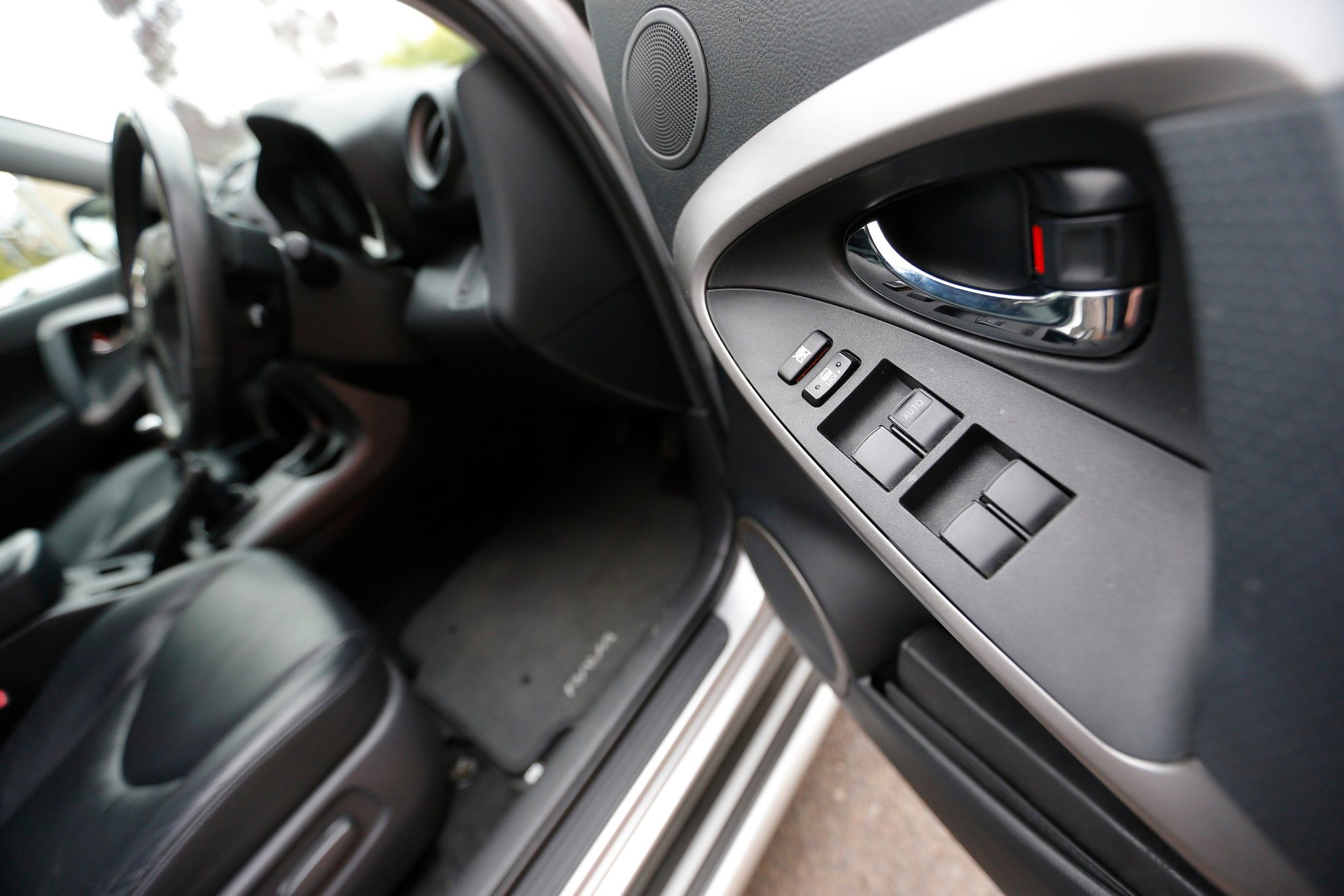
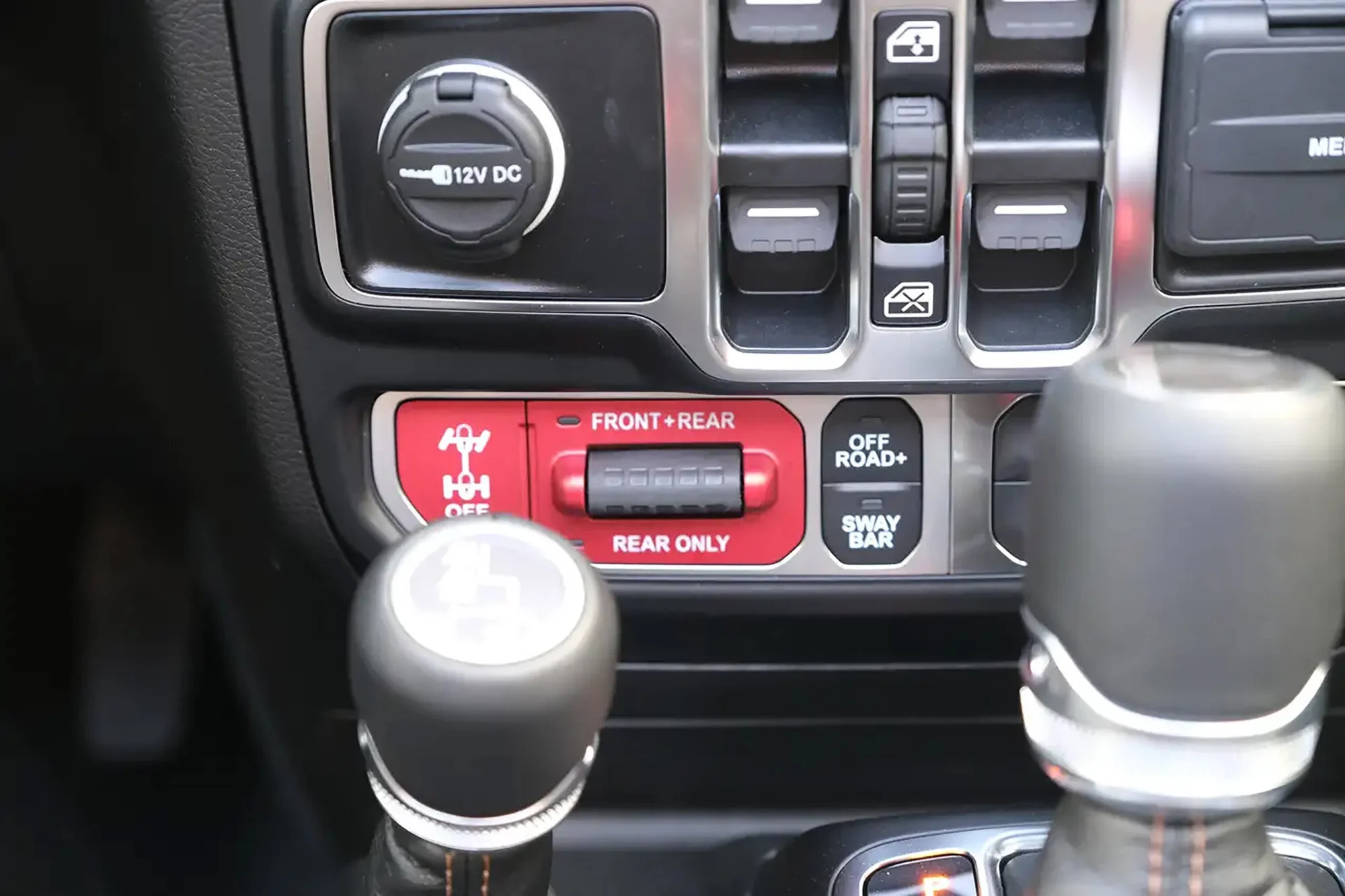
Many Wrangler models include factory-installed auxiliary switches that are often overlooked by new owners. These switches are designed specifically to simplify the process of adding aftermarket accessories, making customization more accessible and reliable.
Located near the dashboard controls, the switches allow owners to connect equipment such as LED light bars, air compressors, winches, and other electrical accessories without complicated wiring modifications. This eliminates the need for cutting into factory wiring systems, which can sometimes void warranties or create electrical issues.
The factory integration helps maintain a cleaner installation compared to traditional aftermarket setups. It reduces clutter under the dashboard and ensures that accessory wiring is routed safely and efficiently. This makes upgrades more professional in appearance and more reliable in operation.
Off-road enthusiasts particularly benefit from this feature because it supports common trail upgrades used during night driving or recovery situations. Additional lighting and electrical systems can be activated instantly using pre-wired switches, which is crucial in fast-changing environments.
The auxiliary switch system reflects Jeep’s understanding of customization culture among Wrangler owners. Rather than discouraging modifications, the vehicle is designed to support them from the factory, reinforcing its identity as a highly adaptable platform for adventure.
Also Read: 10 Cars With the Strongest Stock Engines Sold Today

6. Removable Carpet Drain Plugs
One of the most practical yet frequently overlooked hidden features in Jeep Wranglers is the removable carpet drain plug system. At first glance, these small plugs located in the vehicle floor may seem insignificant or even purely mechanical.
However, they are actually a key part of the Wrangler’s highly functional, adventure-focused design philosophy. Jeep engineers intentionally built the Wrangler to handle environments where water, mud, sand, and dirt are unavoidable, and the drain plugs are a direct reflection of that capability.
The primary purpose of these plugs is to allow easy drainage of water from the interior cabin. When driving with the doors removed or the roof panels taken off, it is not uncommon for rain or splashes from water crossings to enter the vehicle.
Instead of trapping moisture inside, which could lead to mold, odor, or interior damage, the Wrangler allows owners to simply remove the plugs and let water flow out naturally. This makes the cleaning process significantly easier compared to traditional SUVs.
Another important benefit of this system is the ability to thoroughly wash the interior. Off-road driving often results in mud buildup, sand accumulation, and debris entering the cabin.
With the drain plugs removed, owners can hose down the interior floor directly without worrying about damaging electronics or upholstery. This is a rare feature in modern vehicles, where interiors are typically sealed and sensitive to water exposure.
The drain plug system also supports long-term durability in harsh environments. Instead of relying solely on waterproof materials, Jeep provides a mechanical solution that prioritizes function over complexity. This simplicity is part of what makes the Wrangler so reliable in extreme conditions where maintenance resources may be limited.
For outdoor enthusiasts, beach travelers, and off-road adventurers, this feature transforms how the vehicle is used. It allows the Wrangler to transition from a daily driver to a fully washable adventure machine without requiring special cleaning equipment or detailing services.
7. Off Road Pages Technology
Modern Jeep Wranglers come equipped with advanced digital systems known as Off-Road Pages, yet many owners barely explore their full capabilities. This hidden feature is integrated into the infotainment system and is designed to provide real-time vehicle data specifically tailored for off-road driving conditions.
The Off Road Pages system displays critical information such as pitch, roll, steering angle, drivetrain distribution, and suspension articulation. These metrics help drivers understand how the vehicle is positioned on uneven terrain, which is essential when traversing steep inclines, rocky trails, or deep ruts.
One of the most valuable aspects of this system is the ability to monitor vehicle stability in real time. For example, when climbing a steep hill, the pitch indicator helps drivers ensure they are not exceeding safe angles. Similarly, the roll indicator provides awareness when traversing side slopes, reducing the risk of tipping or losing traction.
The system also includes drivetrain visualization, showing how power is distributed between the front and rear axles. This is particularly useful for understanding how Four Wheel Drive modes are functioning in different terrain conditions. It gives drivers greater confidence in the mechanical response of the vehicle.
Even for beginners, Off Road Pages act as an educational tool that helps develop better driving habits. By visualizing terrain impact on the vehicle, users can gradually learn how to handle challenging environments more effectively and safely.
Despite being built into many Wrangler trims, a large number of owners never access this feature simply because it is not required for everyday driving. However, once discovered, it becomes one of the most appreciated tools for off-road enthusiasts.

8. Built-In Tool Kit Features
Jeep Wranglers include several built-in design elements that function like an internal tool kit, allowing owners to perform basic modifications and maintenance without requiring specialized equipment. These features are often subtle and integrated into the vehicle’s structure, making them easy to overlook during everyday use.
One of the most well-known examples is the ability to remove doors and roof panels using tools that are partially included or designed to work with standard equipment. Jeep engineers designed these components to be modular, meaning they can be detached and reattached with relative ease compared to most modern vehicles.
This modular design supports the Wrangler’s core identity as a customizable and adaptable off-road machine. Owners can quickly switch between a fully enclosed SUV and an open-air vehicle depending on weather conditions or driving preferences. This flexibility is one of the reasons the Wrangler remains unique in the automotive market.
Certain Wrangler models also include storage areas and tool access points that simplify maintenance tasks. These areas are designed to hold essential tools or provide access to fasteners that commonly need adjustment during configuration changes. Instead of requiring a full mechanic setup, the vehicle encourages self-sufficiency.
For off-road drivers, these built-in features become especially valuable in remote locations. Being able to remove or adjust parts of the vehicle without heavy equipment allows for quick repairs or modifications in the field. This can make a significant difference during long trail expeditions.
The integrated tool kit philosophy reflects Jeep’s long-standing heritage of building vehicles that are not only durable but also user serviceable. It reinforces the idea that the Wrangler is meant to be actively interacted with rather than treated as a passive transportation machine.
9. Programmable Vehicle Settings
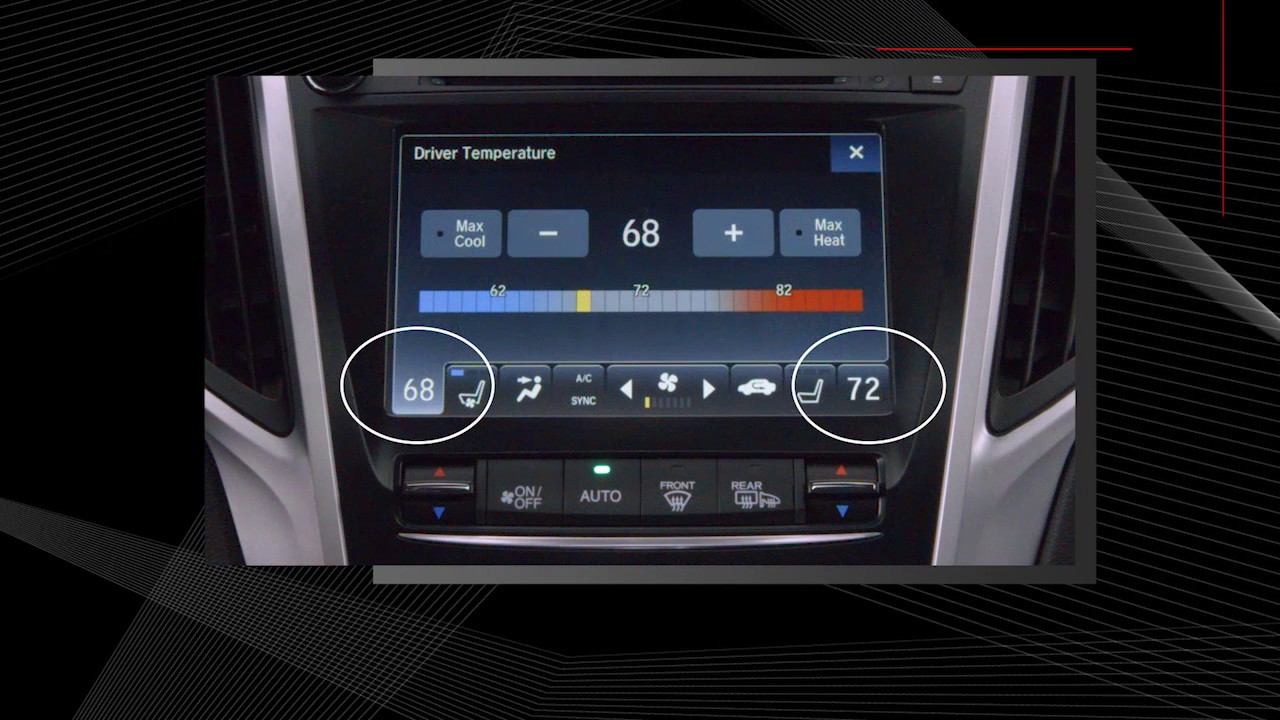
Another hidden layer of functionality within Jeep Wranglers lies in the wide range of programmable vehicle settings available through the infotainment system. Many owners use only the basic controls, such as climate settings or radio functions, but the Wrangler actually allows deep customization of vehicle behavior.
These settings include options for automatic locking and unlocking behavior, lighting preferences, remote start configuration, and door response timing. By adjusting these features, drivers can tailor the vehicle to better match their daily habits and environmental needs.
For example, some owners prefer automatic door locking when the vehicle reaches a certain speed, while others may disable this feature for convenience during off-road use. Similarly, lighting settings can be adjusted for delayed shutoff or customized welcome lighting sequences.
The system also allows customization of infotainment and display preferences, such as screen layouts, compass settings, and off-road data visibility. These adjustments help create a more personalized driving experience.
Beyond comfort features, some programmable settings can also improve practical usability. For instance, adjusting traction control behavior or selecting preferred drive modes can enhance performance in specific environments such as snow, sand, or rocky terrain.
Despite its usefulness, many owners never explore these settings in detail, often missing out on valuable customization options that could significantly improve their driving experience.
10. Hidden Heritage Design References
Jeep Wranglers are filled with subtle design elements that pay tribute to the brand’s long and historic legacy. These hidden heritage references are intentionally embedded throughout the vehicle to honor its military origins and decades of evolution as an off-road icon.
One of the most common examples includes small visual tributes to the original military Jeep design used during World War II. These references may appear as stencil-style markings, miniature silhouettes, or symbolic shapes integrated into interior or exterior components.
Inside the vehicle, designers often include textured patterns or engraved details that resemble classic Jeep design language. These elements are not immediately noticeable but become more apparent over time as owners spend more time exploring their vehicle.
Exterior components may also contain subtle nods to historical Jeep models, including references to iconic grille designs, body proportions, or functional styling cues. These design choices connect modern Wranglers to their predecessors in a way that feels natural rather than decorative.
The inclusion of these details serves more than just an aesthetic purpose. It reinforces the Wrangler’s identity as part of a continuous lineage of rugged, utilitarian vehicles designed for real-world challenges. This sense of heritage is a major part of the Wrangler’s emotional appeal.
For enthusiasts, discovering these hidden references adds depth to the ownership experience. It creates a sense of connection not only to the vehicle but also to the broader history of Jeep as a brand that has played a significant role in automotive and military history.
