
Concept cars exist to challenge expectations. Unlike production vehicles that must satisfy regulations, manufacturing costs, and consumer demands, concept cars allow designers and engineers to experiment with ideas that would otherwise never leave the drawing board.
Sometimes these ideas preview future technologies or styling trends. Other times, they become rolling demonstrations of pure imagination.
Throughout automotive history, manufacturers have revealed concept cars that seemed decades ahead of their time. Some introduced innovations that eventually became common features in everyday vehicles.
Others pursued radical solutions to transportation problems, often with designs that looked more like spacecraft, household appliances, or science fiction props than conventional automobiles.
The strangest concept cars are not necessarily the most beautiful or technologically advanced. Instead, they are the vehicles that make people stop and ask, “What exactly am I looking at?”
These machines pushed boundaries so far that they challenged traditional definitions of what a car should be. Some featured unconventional seating arrangements, unusual body shapes, bizarre steering systems, or futuristic propulsion concepts. A few appeared so unconventional that even decades later, they still seem ahead of their time.
In many cases, these vehicles were never intended for mass production. Their purpose was to generate discussion, showcase engineering talent, and demonstrate how a company viewed the future of mobility. Whether successful or not, they remain fascinating snapshots of automotive creativity.
For this ranking, the cars are ordered according to one factor: how strange they appeared compared with both their era and modern standards. Practicality, performance, and commercial success are not the focus. Instead, the ranking celebrates the concept cars that dared to be different in the most unexpected ways.
From bubble-shaped commuters to vehicles that looked like something from another planet, these are the ten strangest concept cars ever created, ranked from unusual to truly astonishing.
Also Read: 9 Hidden Features in Kia Models Owners Never Discover
10. BMW GINA Light Visionary Model
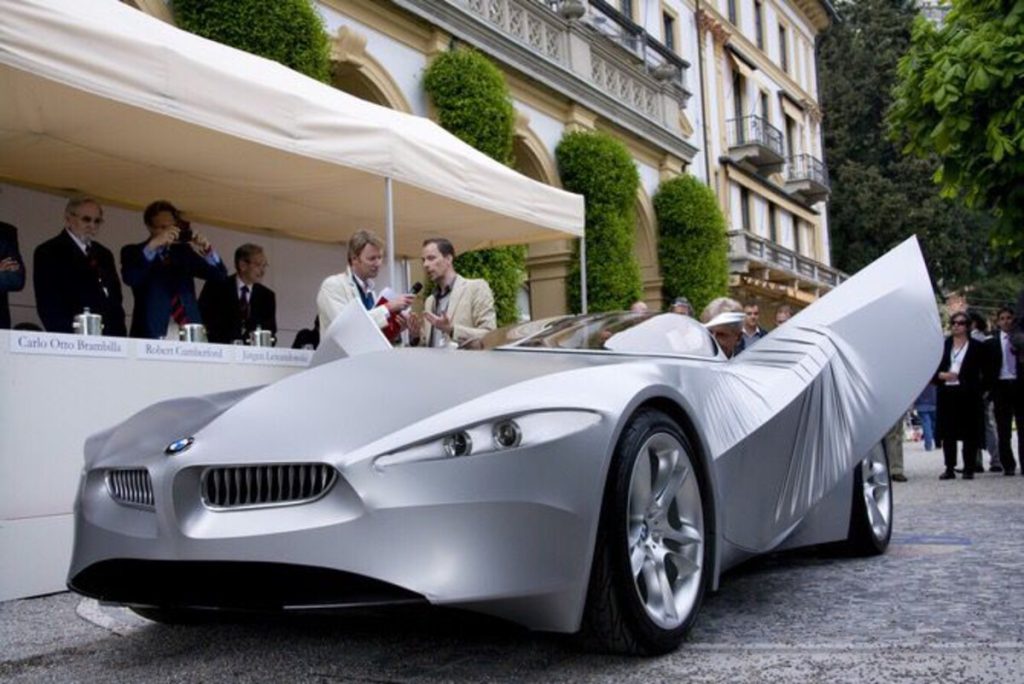
When BMW revealed the GINA Light Visionary Model in 2008, many observers initially struggled to understand what they were seeing. At first glance, it resembled a sleek roadster. A closer inspection revealed something extraordinary. The car’s body was not made from traditional metal panels but from a flexible fabric stretched across a movable frame.
The concept challenged one of the most fundamental assumptions in automotive design. For more than a century, cars have relied on rigid exterior panels. BMW questioned whether that approach was necessary and proposed a vehicle capable of physically changing shape.
The fabric skin could expand, contract, and move depending on the situation. Headlights remained hidden beneath the surface until needed.
When activated, sections of the material opened like eyelids. The hood could also separate in unique ways, allowing access to mechanical components while maintaining the vehicle’s smooth appearance.
What made the GINA strange was not just its appearance but its philosophy. Instead of treating the body as a fixed structure, BMW imagined a car that could adapt and transform. The concept felt almost alive, giving it a character rarely associated with automobiles.
From a design standpoint, the car looked elegant rather than outrageous. Its placement on this list comes from the unconventional engineering hidden beneath the surface. The idea of replacing steel and aluminum with stretchable fabric remains one of the boldest concepts ever presented by a major automaker.
Although the technology never entered production, the GINA demonstrated how radically designers could rethink automotive construction. Even today, it remains one of the most memorable concept cars of the twenty-first century because it questioned assumptions that most people never considered challenging.
Specifications
- Engine: 3.0-liter inline-six (concept platform-based)
- Torque: Approximately 220 lb-ft
- Horsepower: Approximately 215 hp
- Length/Width: 172.4 in / 72.8 in
9. Peugeot Moovie
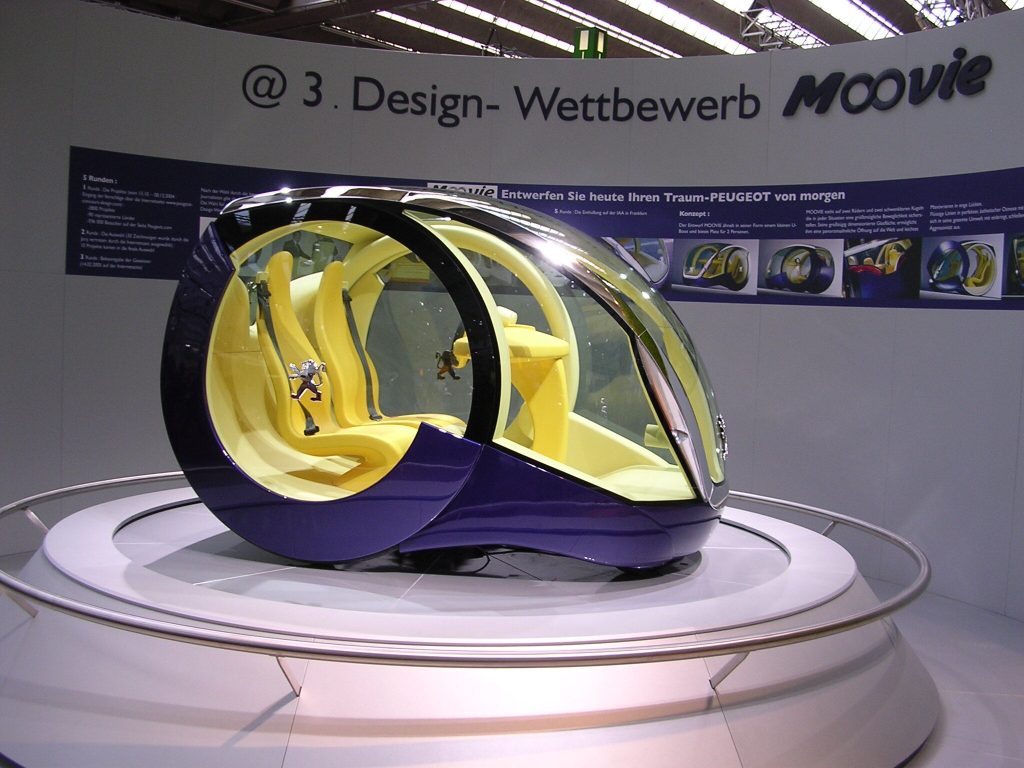
Few concept cars have embraced cartoon-like styling as enthusiastically as the Peugeot Moovie. Introduced in 2005, the tiny urban mobility concept looked less like a traditional automobile and more like an animated character brought to life.
The vehicle featured an almost spherical cabin enclosed by large transparent surfaces. Massive circular wheels sat outside the body, giving the impression that the passenger compartment was suspended between them. The proportions were unlike anything commonly seen on public roads.
Unlike many futuristic concepts focused on performance, the Moovie concentrated on city transportation. Designer André Costa envisioned a compact electric vehicle capable of moving through crowded urban environments while maximizing visibility for occupants.
What upgraded the concept’s strangeness was its playful personality. Most concept cars attempt to appear aggressive, luxurious, or technologically sophisticated. The Moovie appeared friendly and approachable. Its rounded shapes created a visual identity that felt closer to an animated film than a transportation device.
The interior was equally unconventional. Large glass areas surrounded occupants, creating an airy environment that emphasized openness rather than isolation. The design suggested a future where urban mobility could be less intimidating and more socially engaging.
Despite its whimsical appearance, the Moovie addressed serious questions about congestion and space efficiency. By minimizing its footprint while maintaining practicality, Peugeot highlighted challenges facing growing cities around the world.
The concept never reached production, but it remains memorable because of its willingness to reject traditional automotive aesthetics completely.
Even among experimental city cars, the Moovie stands apart. Its unusual combination of bubble-like proportions, exposed wheels, and cheerful design language ensures that it remains one of the strangest concept vehicles ever displayed at an international auto show.
Specifications
- Engine: Electric motor
- Torque: Not officially disclosed
- Horsepower: Not officially disclosed
- Length/Width: Approximately 118 in / 63 in
8. General Motors Firebird III
During the 1950s, optimism about the future was everywhere. Jet aircraft were capturing the public imagination, space exploration was beginning to take shape, and automakers were eager to demonstrate how transportation might evolve. Few concept cars embodied that futuristic spirit more dramatically than the General Motors Firebird III.
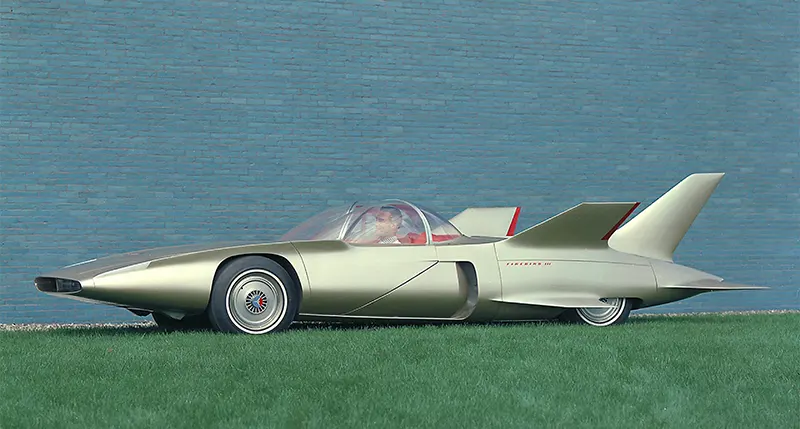
Unlike most cars of its era, the Firebird III looked as though it belonged on an airport runway rather than a public road. The body featured dramatic tail fins, a pointed nose, and a clear bubble canopy inspired by fighter aircraft. From a distance, many people could easily mistake it for a small jet plane without wings.
The concept was powered by a gas turbine engine, a technology that several manufacturers believed might replace conventional piston engines.
General Motors combined that turbine powerplant with advanced ideas such as electronic controls and automated driving concepts. At a time when most cars still relied on relatively simple mechanical systems, these ideas felt revolutionary.
One particularly unusual feature was its dual cockpit arrangement. Instead of a traditional passenger cabin, the Firebird III provided separate bubble canopies for occupants. This design reinforced the aircraft theme while making the vehicle appear even stranger.
Looking at the Firebird III today, it remains difficult to believe that it was introduced in 1958. Its styling pushed far beyond contemporary automotive norms, embracing a vision of the future that seemed limitless.
The reason it ranks so highly on this list is that it combined multiple unconventional ideas into a single package. Jet-inspired styling, turbine propulsion, automated controls, and futuristic aerodynamics created a vehicle unlike anything seen before or since.
Although many of its technologies never became mainstream, the Firebird III captured the imagination of an entire generation and remains one of the boldest concept cars ever produced by an American manufacturer.
Specifications
- Engine: Whirlfire GT-305 gas turbine
- Torque: Not officially disclosed
- Horsepower: Approximately 225 hp
- Length/Width: Approximately 233 in / 77 in
7. Nissan Pivo 2
The Nissan Pivo 2 answered a question almost nobody had asked: what if a car’s cabin could rotate independently of the chassis? Introduced in 2007, this compact electric concept became famous for one of the most unusual solutions ever proposed for urban driving.
Parking in crowded cities has always been frustrating. Instead of improving steering systems or reducing vehicle size, Nissan imagined eliminating the need to reverse altogether. The passenger compartment of the Pivo 2 could rotate 360 degrees, allowing the car to face either direction without turning around.
The exterior already looked unconventional. Its rounded shape resembled a futuristic pod more than a traditional automobile. Large glass surfaces and smooth bodywork reinforced the science fiction aesthetic. Yet the rotating cabin remained the centerpiece of the entire project.
Inside, things became even stranger. The concept featured a robotic assistant designed to communicate with occupants. This virtual companion could recognize faces, provide information, and interact with passengers. In the mid-2000s, these capabilities felt remarkably futuristic.
Another unusual feature involved wheel-mounted electric motors. By placing propulsion components near the wheels, Nissan freed up interior space and improved maneuverability. The resulting package was highly compact despite offering impressive flexibility.
Unlike some concept cars that simply looked unusual, the Pivo 2 fundamentally rethought how people interact with vehicles. Its designers focused on urban convenience and questioned long-standing assumptions about parking, navigation, and passenger communication.
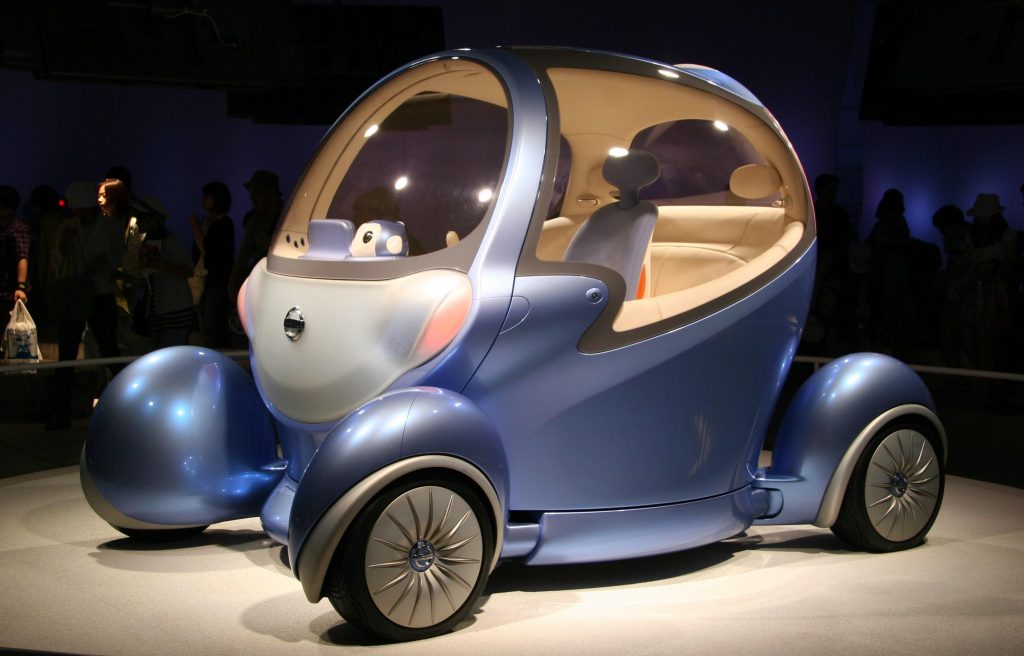
Many futuristic ideas eventually fade into obscurity. The Pivo 2 remains memorable because its core concept was so unexpected. Rotating the entire cabin was an engineering solution few people would have imagined, making the vehicle one of the most distinctive and unusual concept cars ever revealed by a major manufacturer.
Specifications
- Engine: Dual electric wheel motors
- Torque: Not officially disclosed
- Horsepower: Not officially disclosed
- Length/Width: Approximately 106 in / 59 in
6. Chrysler Thunderbolt
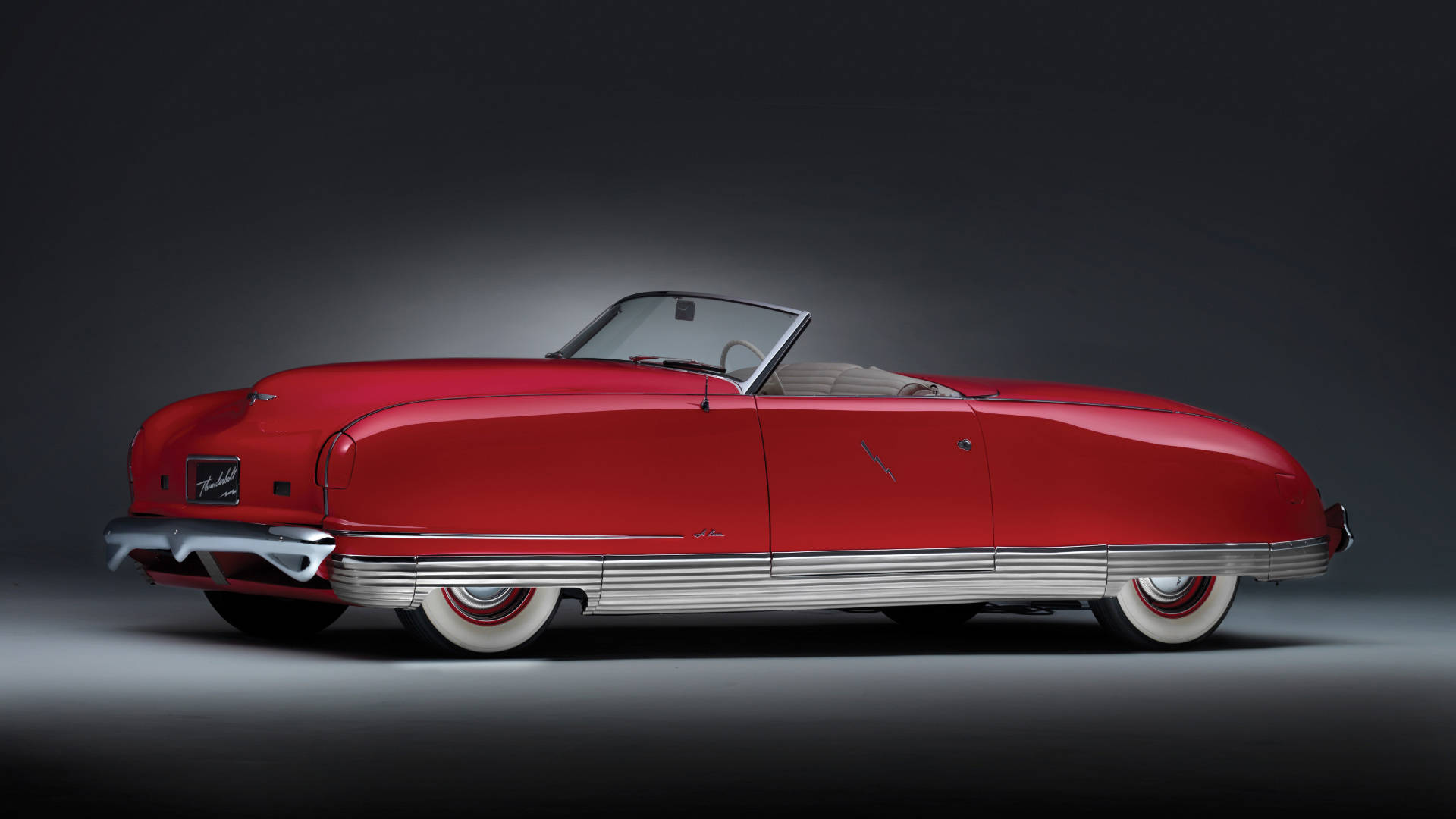
Long before concept cars became common fixtures at auto shows, Chrysler stunned audiences with the Thunderbolt. Introduced in 1941, the vehicle looked futuristic even by modern standards, making it one of the most astonishing automotive creations of its era.
Unlike many prewar automobiles characterized by exposed fenders and upright styling, the Thunderbolt embraced smooth, flowing shapes. Its streamlined body appeared almost liquid, with curves replacing sharp edges at nearly every opportunity. The result was a design that seemed decades ahead of contemporary production cars.
One of the concept’s most remarkable features was its retractable metal roof. Today, power-operated hardtops are familiar technologies, but in the early 1940s, the idea was extraordinary. Watching the roof disappear into the rear bodywork must have seemed almost magical to observers at the time.
The vehicle also featured hidden headlights and a clean, uninterrupted profile. Designers worked to eliminate visual clutter wherever possible, creating a remarkably elegant appearance. The emphasis on aerodynamic styling reflected growing interest in streamlining across multiple industries.
What earns the Thunderbolt a high position in this ranking is not visual shock value alone. Many strange concept cars rely on bizarre shapes or radical proportions. The Chrysler achieved its impact through sophistication and innovation. It challenged existing design conventions while maintaining a sense of refinement.
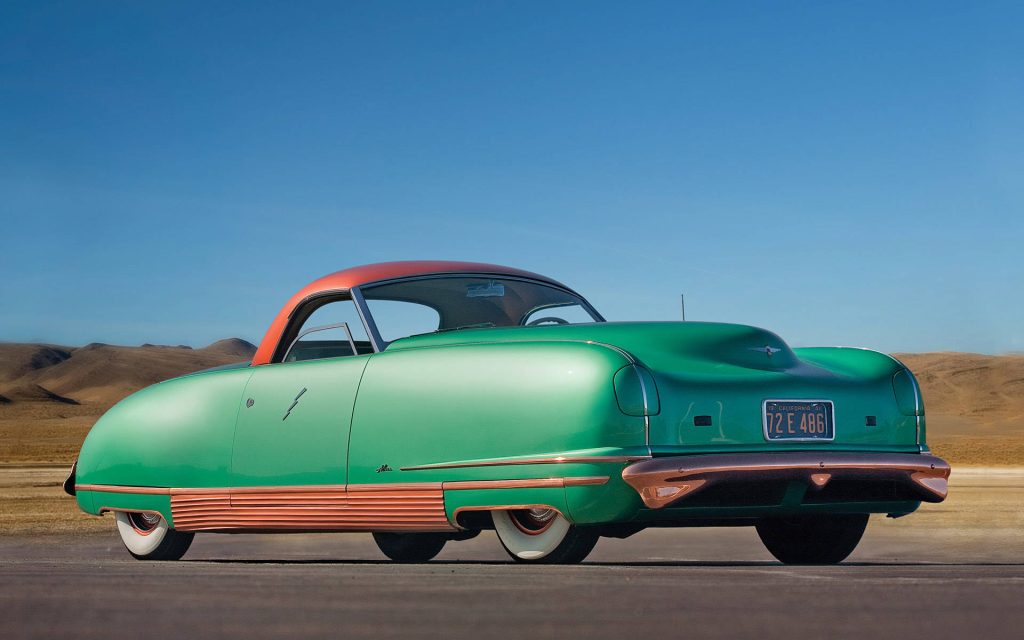
Viewed from a modern perspective, the Thunderbolt still appears strikingly advanced. Many styling themes introduced by the concept would not become common for decades. That ability to transcend its era is a major reason why automotive historians continue to celebrate it.
Few concept cars have demonstrated such a dramatic leap forward in design thinking. The Thunderbolt proved that a concept vehicle could be both beautiful and profoundly unconventional at the same time.
Specifications
- Engine: 5.3-liter inline-eight
- Torque: Approximately 220 lb-ft
- Horsepower: 143 hp
- Length/Width: Approximately 219 in / 77 in
5. Citroën Karin
By the time the Citroën Karin debuted at the 1980 Paris Motor Show, concept cars had already become increasingly adventurous. Even in that environment, the Karin stood out immediately. Its shape resembled a futuristic pyramid placed on wheels, creating one of the most unconventional silhouettes ever seen in the automotive world.
From the side, the vehicle appeared almost impossible. The body started with a broad base and narrowed dramatically toward the roof, ending in a tiny flat surface just large enough to accommodate a single occupant’s head area. Most cars widen as they move upward toward the greenhouse. Karin did exactly the opposite.
The unusual exterior was only part of the story. Citroën also developed a highly unconventional interior layout. The driver sat in the center of the cabin, while two passenger seats were positioned slightly behind on either side. This arrangement provided excellent visibility and created an experience unlike that of a traditional automobile.
Observers at the show often found themselves staring at the roof. Measuring only a small fraction of the vehicle’s total footprint, it looked almost comically tiny compared with the wide lower body. The design challenged accepted notions of balance, proportion, and practicality.
Rather than focusing on production feasibility, Citroën used the Karin to demonstrate creative freedom. The company had long been known for unconventional engineering and styling decisions, and this concept represented one of its most daring statements. Every angle seemed designed to provoke discussion.
Interestingly, despite its bizarre appearance, the vehicle maintained a surprisingly cohesive visual identity. It did not look random or unfinished. Instead, it appeared as though designers had committed fully to a radical vision and followed it to its logical conclusion.
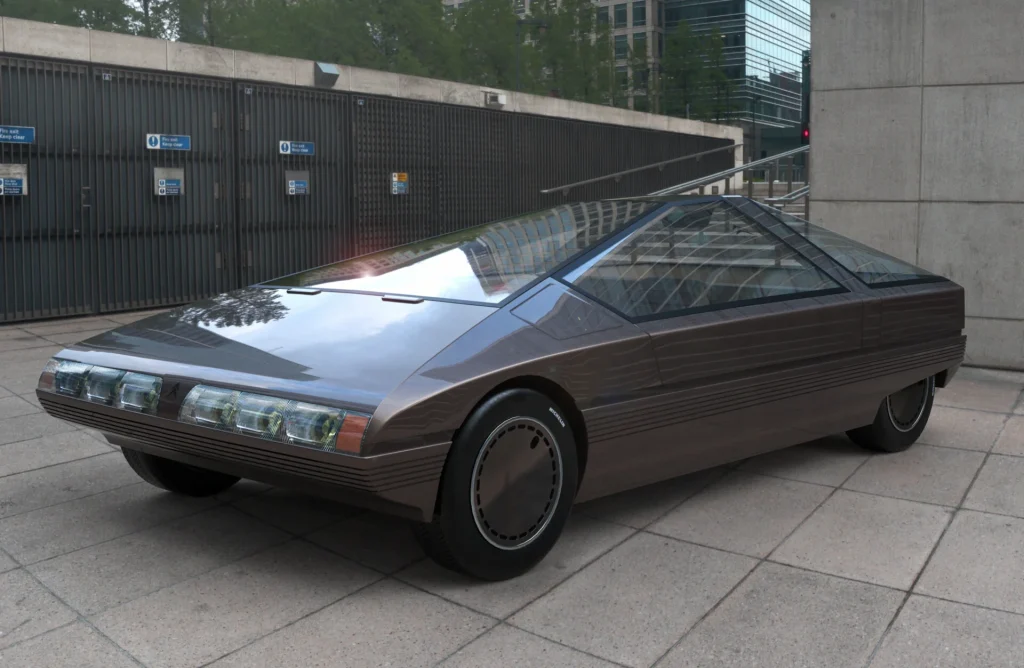
More than four decades later, the Karin still looks futuristic. Many concept cars become dated as styling trends change, yet this pyramid-shaped experiment remains startlingly unique. Its refusal to follow conventional automotive design principles secures its place among the strangest concept cars ever created.
Specifications
- Engine: Concept vehicle, no production powertrain specified
- Torque: Not officially disclosed
- Horsepower: Not officially disclosed
- Length/Width: Approximately 167 in / 75 in
4. Toyota EX-III
The 1969 Toyota EX-III occupies a special place in automotive history because it combined futuristic styling with an idea that seemed almost unbelievable at the time. Rather than simply designing a sleek show car, Toyota created a concept that attempted to rethink the relationship between the vehicle and its passengers.
At first glance, the EX-III looked like something from a science fiction movie. The body featured smooth curves, enclosed wheels, and a low aerodynamic profile. Large glass surfaces wrapped around the cabin, creating a spacecraft-like appearance that immediately distinguished it from ordinary automobiles of the late 1960s.
The truly strange element appeared when occupants entered the vehicle. Toyota envisioned a highly automated transportation experience where many traditional driving tasks would be simplified through advanced electronic systems. While modern drivers are familiar with driver assistance technology, such ideas were remarkably ambitious for the era.
The interior emphasized comfort and futuristic interaction rather than conventional automotive controls. Designers imagined a future in which technology would play a much larger role in transportation, reducing workload and increasing convenience. This forward-thinking philosophy helped make the EX-III feel decades ahead of its time.
Another unusual characteristic involved the vehicle’s proportions. It sat extremely low while maintaining a spacious passenger compartment. The shape appeared almost organic, more like a mobile capsule than a traditional automobile.
What makes the EX-III especially fascinating today is how many of its ideas foreshadowed future industry trends. Concepts involving automation, advanced electronics, and passenger-focused design eventually became important areas of development across the automotive sector.
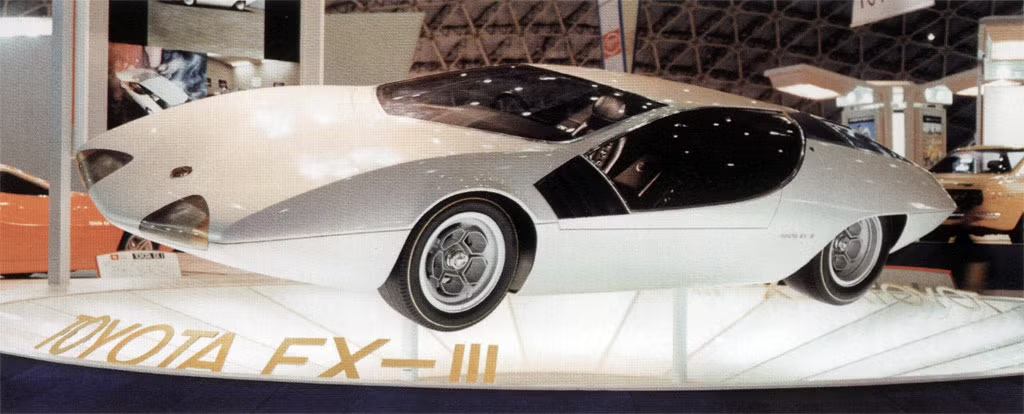
Even so, the vehicle remains undeniably strange. Its styling, layout, and futuristic ambitions combined to create a machine that looked entirely disconnected from the roads of its day. While many concept cars hinted at the future, the EX-III seemed determined to skip several decades altogether.
Specifications
- Engine: Experimental gasoline engine
- Torque: Not officially disclosed
- Horsepower: Not officially disclosed
- Length/Width: Approximately 153 in / 67 in
3. Lancia Stratos Zero
If someone unfamiliar with cars saw the Lancia Stratos Zero for the first time, they might not immediately recognize it as an automobile. Introduced in 1970 by Bertone, the concept looked more like a wedge-shaped spacecraft that had somehow landed on a public road.
The vehicle stood astonishingly low to the ground. At roughly 33 inches tall, it was lower than many modern supercars and seemed almost impossible to enter.
Traditional doors were absent. Instead, occupants climbed into the cabin through the windshield, which hinged upward to provide access. This unconventional solution instantly separated the Stratos Zero from virtually every other concept car of its era.
Its dramatic wedge profile became one of the most influential shapes in automotive design. During the 1970s, many manufacturers adopted wedge-inspired styling, but few creations were as extreme as the original Stratos Zero. The nose appeared razor sharp, while the roofline barely rose above the front fenders.
Inside, the futuristic theme continued. The dashboard and controls reflected a vision of motoring that felt radically different from conventional automobiles. Everything about the vehicle suggested motion, even when standing still.
The Stratos Zero’s significance extends beyond its unusual appearance. It served as the inspiration for the legendary production Lancia Stratos rally car that followed. Yet the road-going version was comparatively tame when compared with this outrageous concept.
What makes the Stratos Zero so strange is the complete commitment to a single idea. Designers pursued the wedge concept with almost no compromise. Visibility, accessibility, and practicality were clearly secondary concerns.
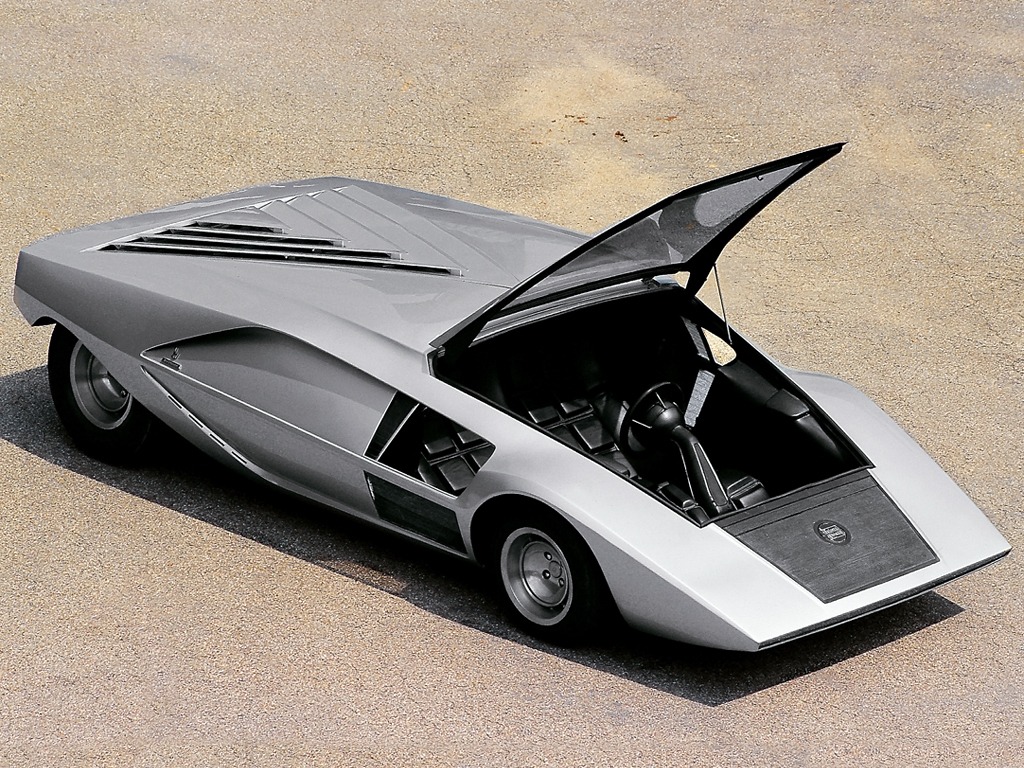
More than fifty years later, the car still looks futuristic. Many concepts eventually become outdated, but the Stratos Zero remains startlingly unconventional. Its combination of extreme proportions, unconventional entry method, and science-fiction styling earns it a place among the most bizarre automotive creations ever displayed to the public.
Specifications
- Engine: 1.6-liter Lancia Fulvia V4
- Torque: Approximately 113 lb-ft
- Horsepower: 115 hp
- Length/Width: Approximately 141 in / 69 in
2. GM Futurliner
Unlike most concept cars designed for individual ownership, the General Motors Futurliner was something entirely different. Introduced in the late 1930s and later updated for GM’s Parade of Progress exhibitions, it combined elements of a truck, bus, mobile stage, and futuristic display vehicle into one extraordinary machine.
The Futurliner was enormous. Standing over 11 feet tall and stretching more than 30 feet in length, it dominated every environment it entered. Its proportions alone made it seem strange, but the design pushed things even further.
The vehicle featured a towering central driving position located high above the road. From this upgraded perch, the driver enjoyed a commanding view unlike anything found in conventional automobiles.
The arrangement looked almost theatrical, reinforcing the Futurliner’s role as a traveling showcase for technology and innovation.
Large side panels opened outward to create exhibition spaces. Once parked, the vehicle transformed into a mobile presentation platform where General Motors could demonstrate scientific achievements and future technologies to the public. In essence, it was part vehicle and part portable museum.
Stylistically, the Futurliner appeared as though it had arrived from an alternate version of the future. Massive fenders, dramatic curves, and streamlined bodywork combined to create an unmistakable presence. Even among concept vehicles, very little looked remotely similar.
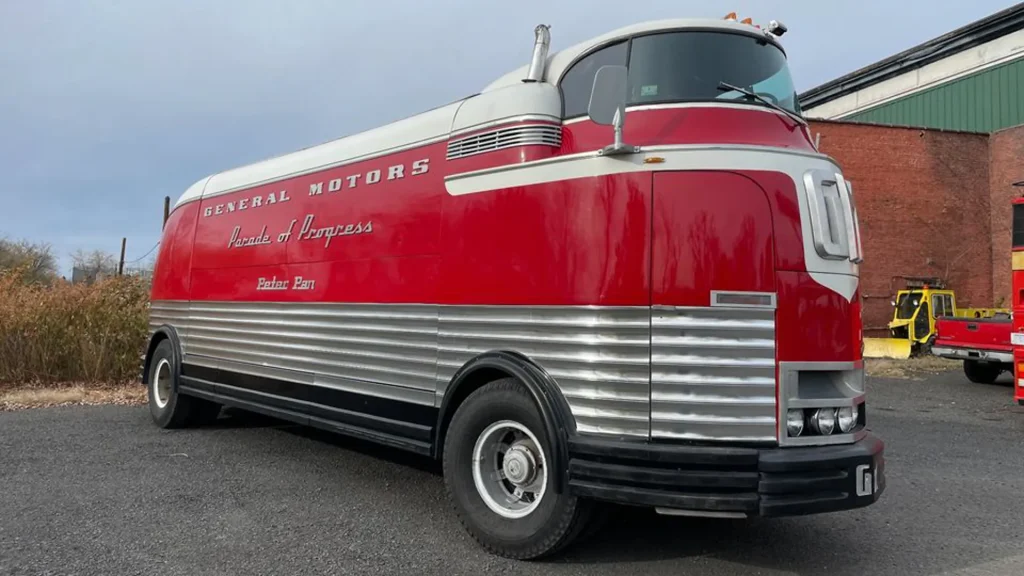
What secures its position near the top of this ranking is the fact that it challenged the definition of a car itself. Most concepts experiment with styling or technology. The Futurliner experimented with purpose. It blurred the line between transportation, architecture, and public exhibition.
Even today, restored examples attract enormous attention wherever they appear. Their unusual appearance remains just as striking as it was decades ago. Few vehicles have ever looked so unconventional while serving such a unique role.
Specifications
- Engine: 4.9-liter inline-six (later upgraded on some examples)
- Torque: Approximately 220 lb-ft
- Horsepower: Approximately 145 hp
- Length/Width: Approximately 396 in / 96 in
1. Fiat 5000 City Taxi Concept
Claiming the top spot is a vehicle that looked less like a car and more like a futuristic urban transportation pod. The Fiat 5000 City Taxi Concept represented one of the most radical departures from traditional automotive thinking ever attempted.
Designed as a vision of future city mobility, the concept abandoned many familiar automotive conventions. Its tall, narrow shape contrasted sharply with the low, wide proportions typically associated with passenger vehicles. The body appeared almost vertical, maximizing interior space while minimizing the footprint needed for crowded urban environments.
The cabin layout was equally unconventional. Instead of emphasizing the driver, the design focused heavily on passenger convenience. Wide access openings and flexible seating arrangements suggested a future where mobility services would become more important than private ownership.
What immediately made the vehicle seem strange was its appearance. Traditional styling cues were largely absent. The shape resembled a compact transportation capsule rather than a car in the conventional sense. Large glass areas enhanced visibility and reinforced the futuristic aesthetic.
Unlike many concept cars that simply aimed to look dramatic, the Fiat attempted to solve practical urban problems. Designers considered congestion, parking limitations, and passenger accessibility. Their solutions, however, produced a vehicle that looked radically different from anything on the road.
The concept arrived during a period when manufacturers were beginning to consider how cities might evolve in the future. Instead of imagining faster sports cars or more luxurious sedans, Fiat focused on urban efficiency. The result was one of the most unconventional transportation concepts ever proposed.
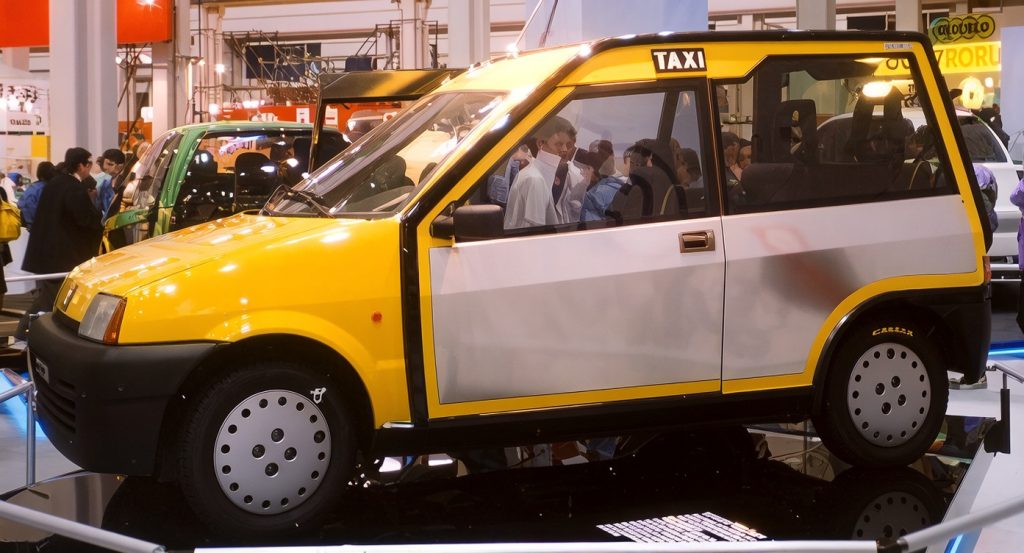
Its ranking at number one comes from the complete transformation of automotive form and function. Nearly every aspect of the vehicle challenged established expectations. Even today, it remains difficult to categorize, which is perhaps the clearest sign of just how strange it truly was.
Among hundreds of concept cars revealed throughout automotive history, few have questioned the very definition of a car as boldly as the Fiat 5000 City Taxi Concept.
Specifications
- Engine: Electric concept powertrain
- Torque: Not officially disclosed
- Horsepower: Not officially disclosed
- Length/Width: Approximately 157 in / 63 in
