
Power and policy may define a presidency, yet personal choices often reveal a different side of national leaders. Among those choices, cars stand out as objects that blend practicality, taste, and identity. From early automotive experiments to modern hybrids, vehicles owned by U.S. presidents provide a unique window into changing eras of technology and culture.
Each car tells a quiet story. Some reflect a period when automobiles were still a novelty, while others point to advancements in engineering and environmental awareness. These machines were not always used for official duties. In many cases, they were personal vehicles that showed how presidents relaxed, traveled, or connected with everyday life beyond formal responsibilities.
Presidents have had a wide range of tastes in cars, from simple and practical to more stylish and luxurious. But what they all share is that their vehicles end up reflecting the era they lived in. A presidential car isn’t just transportation; it becomes a piece of history that connects a leader’s public role with their personal lifestyle in a way people can actually relate to.
This collection takes a look at ten cars connected to different U.S. presidents and shows how American car culture has changed alongside presidential history. Each vehicle has its own story, blending history, personality, and design, while also offering a look into the lives these leaders lived outside the White House.
1. Ford Model T – Calvin Coolidge
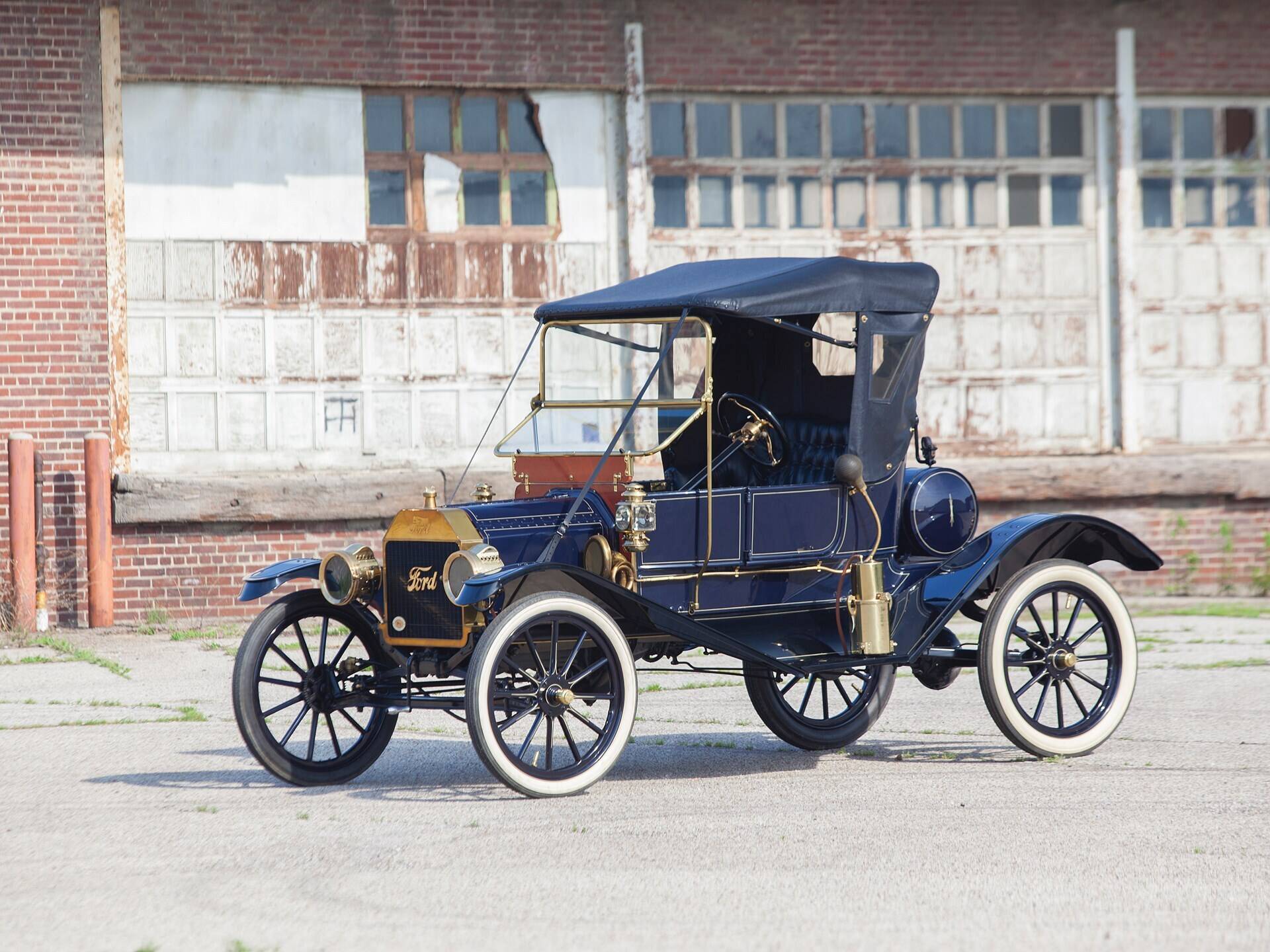
Practicality defined the connection between the Ford Model T and Calvin Coolidge. Introduced during a time when automobiles were still gaining acceptance, the Model T represented accessibility and innovation. Coolidge’s association with this vehicle aligned with his reputation for simplicity and restraint.
Unlike luxury automobiles of the same era, the Model T focused on reliability and ease of use. Its straightforward engineering allowed owners to maintain and repair it without specialized tools. This quality made it appealing to a wide range of Americans, including those in public office who valued function over display.
Coolidge’s ownership of the Model T reflected a broader connection to ordinary citizens. Driving or being associated with such a widely available car suggested a level of relatability that resonated with the public. It showed that leadership did not always require extravagance.
From a design perspective, the Model T featured a high-riding stance, narrow body, and minimal interior appointments. Comfort was limited, yet the car fulfilled its purpose effectively. It served as transportation rather than a statement of wealth.
The historical importance of the Model T extends far beyond presidential ownership. It transformed manufacturing through assembly line production, making cars more affordable and shaping the future of the automotive industry. Coolidge’s link to this vehicle places him within that broader transformation.
Collectors today treat well-preserved Model Ts like pieces of industrial history. If one is linked to someone like Coolidge, it becomes even more valuable because of that historical connection. These cars aren’t just old vehicles; they represent early engineering progress and moments in political history at the same time.
Restoration work usually focuses on keeping everything as original as possible, including the engine and body parts, so the car stays authentic. Museums and public displays often showcase the Model T to show how it changed the way people got around. When it’s tied to presidential history, it adds another layer of meaning by connecting everyday innovation with national leadership.
2. Cadillac Town Sedan – Herbert Hoover
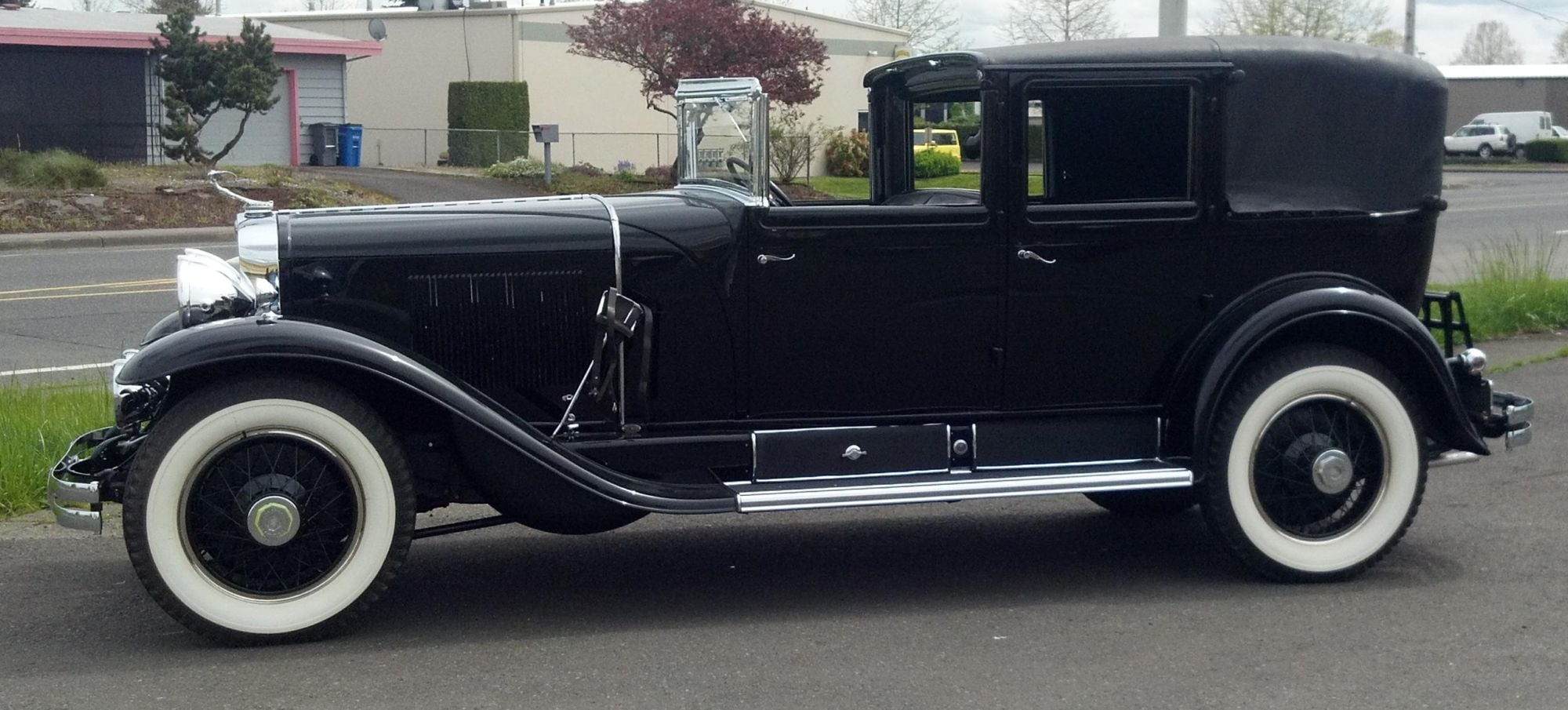
The Cadillac Town Sedan associated with Herbert Hoover reflects a period in American leadership where dignity, formality, and structured presentation carried strong weight. During Hoover’s time in office, Cadillac already held a strong reputation as a manufacturer of refined automobiles, widely regarded as a mark of status among political figures and high society. This particular model aligned with that reputation, presenting itself as a vehicle suited for official duties and ceremonial movement.
At a time when automobile design was still developing toward modern comfort standards, the Town Sedan stood apart through its focus on passenger experience. Its fully enclosed cabin created a controlled interior environment, shielding occupants from weather conditions and road disturbances common in earlier automotive travel.
The seating arrangement provided generous space, allowing passengers to travel in comfort during official engagements and long-distance movement. These qualities made it suitable for a public figure whose schedule demanded frequent formal appearances.
From a design standpoint, the exterior carried a composed and upright structure. The roof height gave the vehicle a commanding road presence, while the body shape reflected a careful balance between elegance and practicality. Attention was given to visual harmony, ensuring that every curve and panel aligned with the expectations of premium automotive styling of that period. Inside the cabin, finishing materials were selected with care.
Upholstery quality, polished trim surfaces, and carefully arranged controls created an interior atmosphere that reflected refinement without unnecessary excess. For Herbert Hoover, association with a Cadillac Town Sedan reinforced a public image tied to responsibility and institutional order.
Vehicles used by national leaders during that era were not only means of transportation but also visual representations of leadership character. A Cadillac signaled stability, respectability, and alignment with established systems of governance. In Hoover’s case, the vehicle complemented a leadership style that emphasized structure and measured public presentation.
Restoration efforts involving such vehicles usually prioritize preservation of original materials. Restorers often take care to maintain factory finishes, interior textures, and period-correct components. Alterations are generally avoided unless necessary for structural integrity, as originality remains a central factor in historical preservation.
In museum settings and curated exhibitions, the Cadillac Town Sedan offers audiences a view into how leadership was visually presented through automobiles in the early twentieth century. It stands as a representation of a time when vehicle selection carried symbolic weight, reflecting authority and public perception in equal measure.
Also Read: Top 10 Classic American Luxury Cars That Truly Earn Their Reputation
3. Ford Phaeton – Franklin D. Roosevelt
The Ford Phaeton linked to Franklin D. Roosevelt carries strong historical relevance due to its connection with both automotive adaptation and personal resilience. Roosevelt’s reliance on specially modified vehicles shaped how his transportation choices were developed and understood.
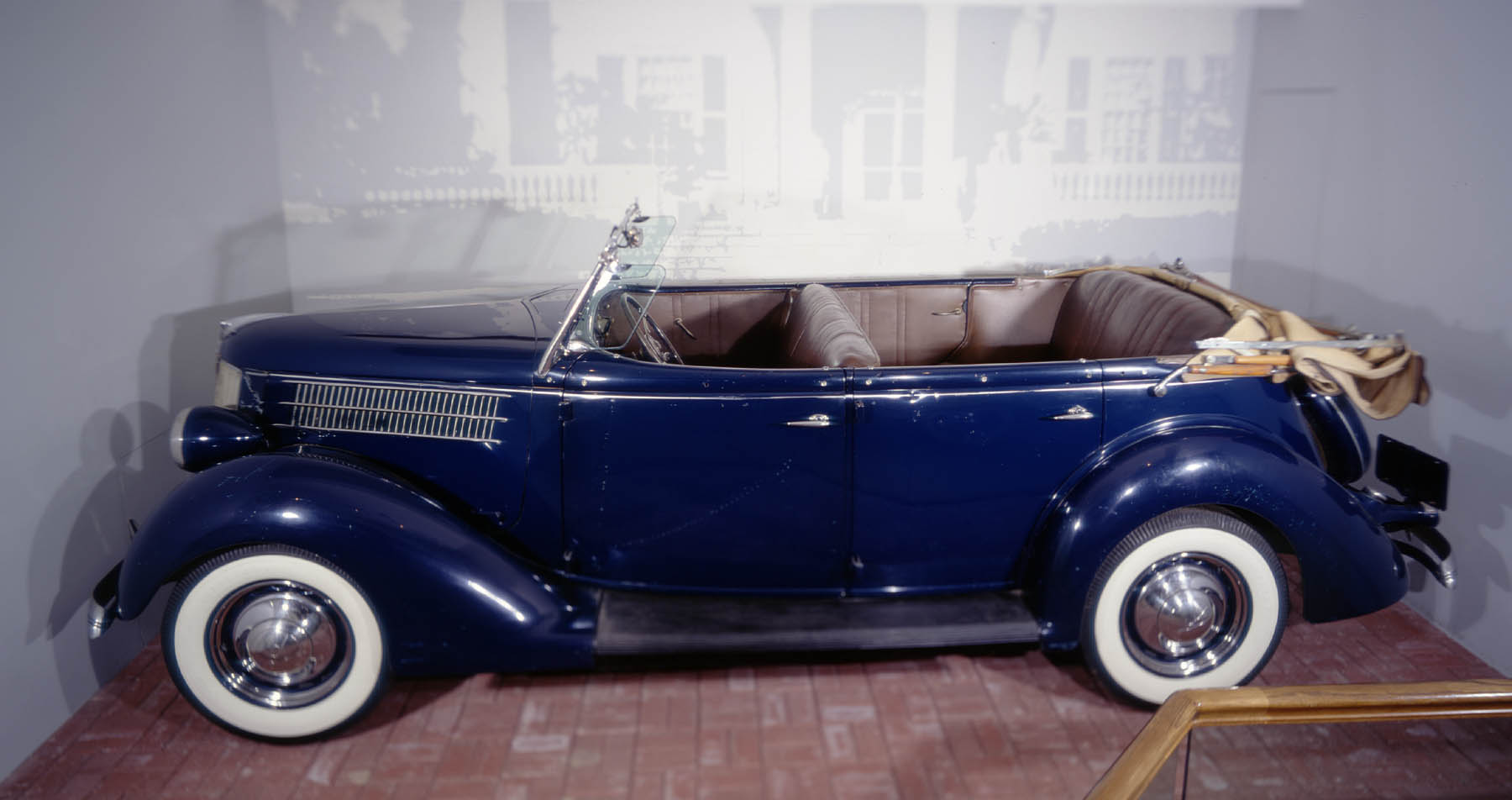
Unlike standard executive automobiles of his time, this Phaeton was configured to accommodate his physical condition, making it an important example of functional modification in automotive history. One of the defining characteristics of the Ford Phaeton was its open-top structure. This design provided a level of exposure that allowed easier entry and exit, while also offering visibility during public appearances.
For Roosevelt, accessibility was a practical requirement, and the vehicle’s configuration supported that need without removing its original identity as a passenger car. The modifications carried out on the vehicle focused primarily on usability rather than visual alteration.
A central feature of Roosevelt’s adapted vehicles was the installation of hand-controlled driving mechanisms. These systems replaced conventional foot-operated controls, allowing him to operate the vehicle independently. The engineering behind these modifications required precision, as safety and reliability had to be maintained while ensuring ease of operation. This adaptation reflected an early stage of assistive automotive engineering, showing how vehicles could be adjusted to meet individual requirements.
Driving held personal meaning for Roosevelt beyond transportation. It represented independence and personal control in daily life. Despite physical limitations, his continued engagement with driving activities demonstrated determination and a refusal to be restricted by circumstance. The Ford Phaeton became part of that expression, serving both practical and personal roles.
Vehicles linked to Roosevelt are highly valued by collectors and historians, especially those modified to accommodate his mobility needs. They’re seen as more than just pieces of transportation history, reflecting progress in accessible design and personal resilience. Proven documentation showing authenticity and modification history is a major factor in determining how much interest these vehicles attract.
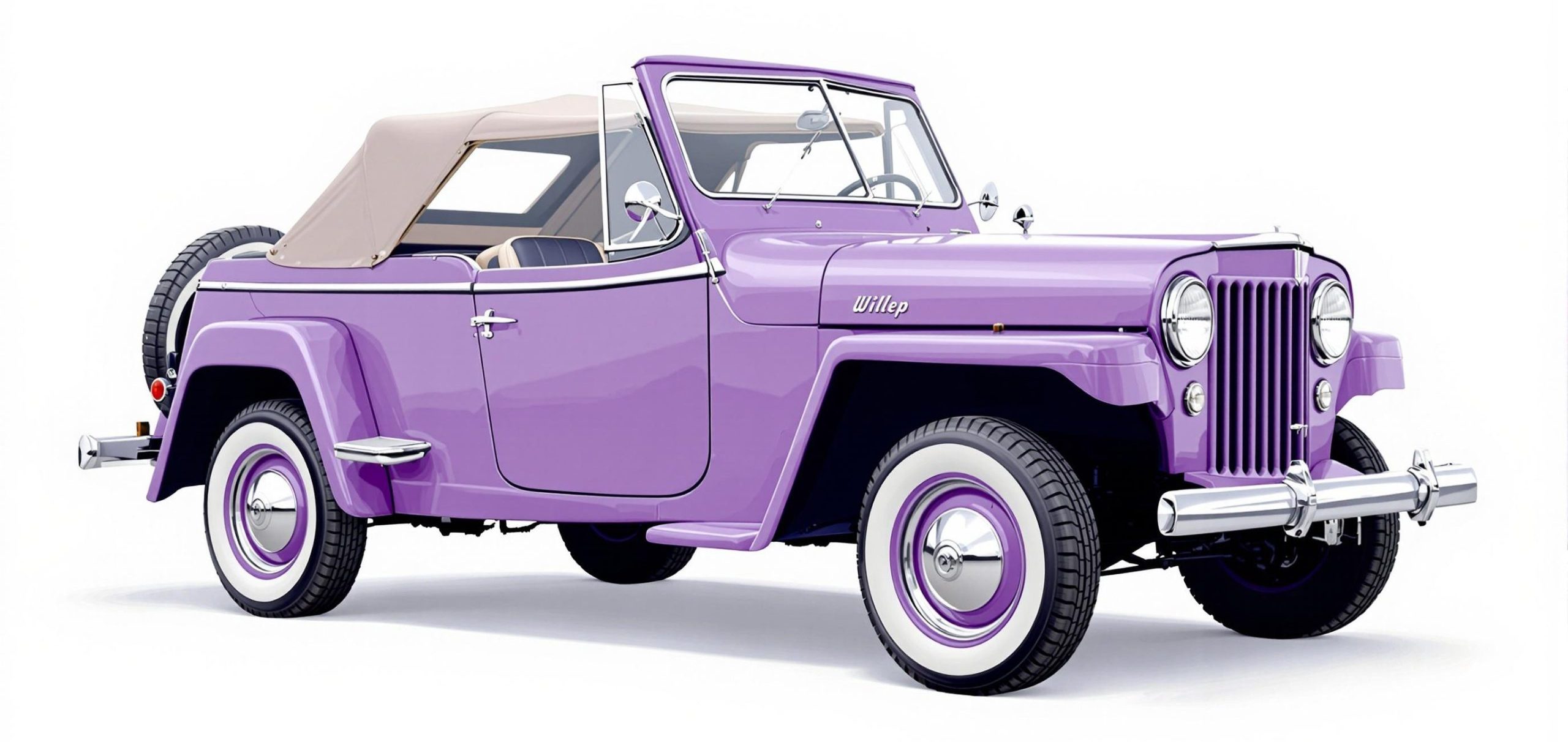
4. Willys Jeep – Harry S. Truman
Practicality stands at the forefront when examining the Willys Jeep associated with Harry S. Truman. Developed initially for military deployment during the Second World War, the Jeep earned a reputation for resilience, adaptability, and mechanical simplicity.
Its transition from battlefield use to civilian ownership reflected a broader postwar movement, where vehicles designed for conflict found new purpose in everyday life. Truman’s connection to this vehicle aligns closely with that historical progression, presenting a clear image of a leader who valued function above ornament.
Rather than embracing large luxury automobiles commonly linked with high office, Truman’s use of the Willys Jeep suggests a grounded and direct approach to personal mobility. The vehicle itself was engineered with straightforward objectives, focusing on durability and ease of repair.
Its structure allowed it to perform reliably across uneven roads, rural paths, and unpaved surfaces, making it suitable for both agricultural and domestic use. This versatility became one of its defining characteristics, setting it apart from more refined vehicles of the same period.
Mechanical layout played a central role in shaping the Jeep’s identity. A compact frame combined with four-wheel drive capability ensured that it could maintain traction under demanding conditions. This feature proved especially valuable in environments where larger vehicles would struggle due to size or weight limitations.
Simplicity extended to its engine design, which prioritized reliability rather than high output. Owners benefited from a machine that could endure extended use with minimal mechanical complications, provided routine maintenance was observed.
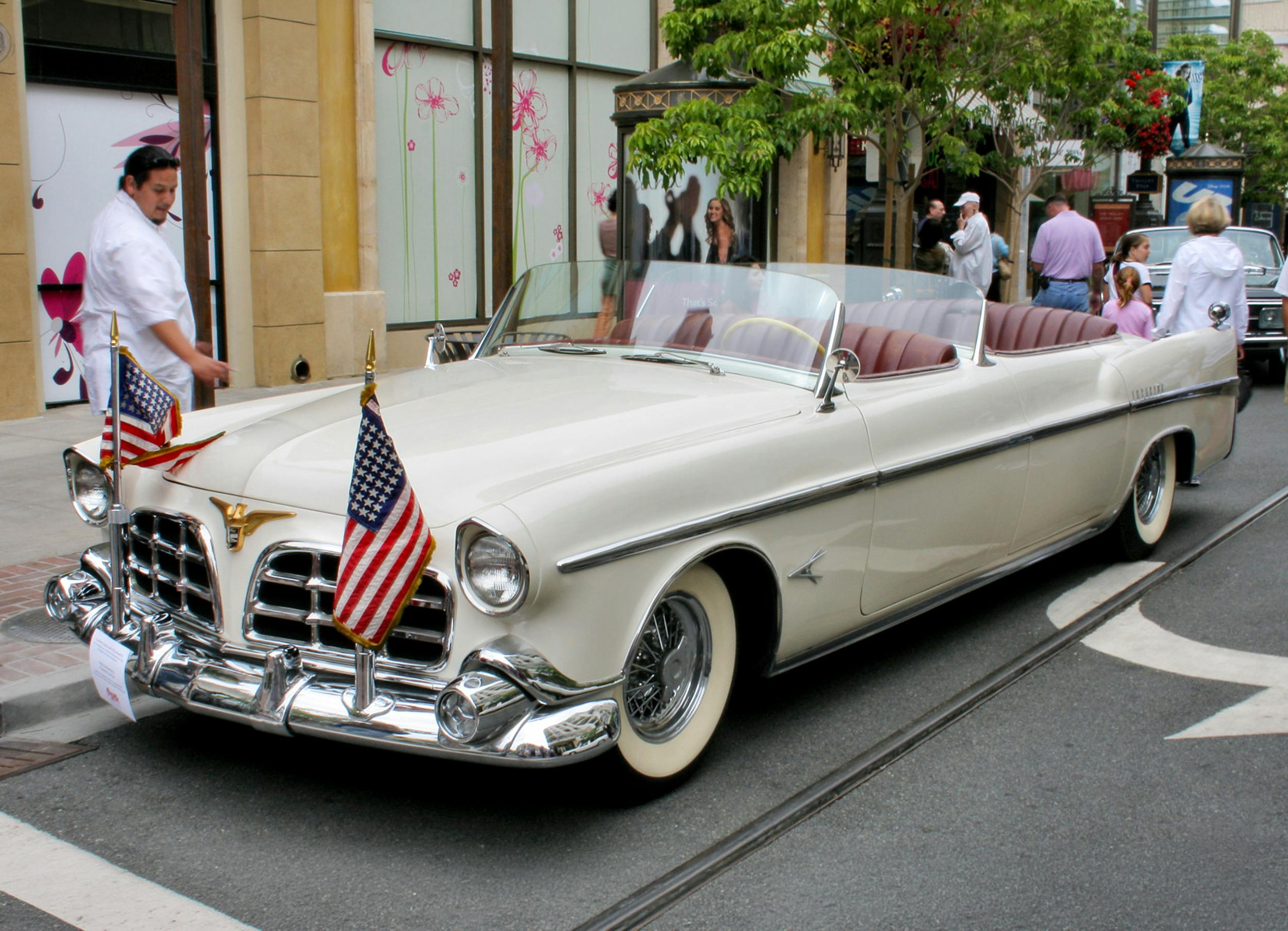
5. Chrysler Imperial – Dwight D. Eisenhower
Refinement and authority come together in the Chrysler Imperial associated with Dwight D. Eisenhower, presenting a clear representation of mid-twentieth-century American automotive ambition. Positioned as a flagship model within Chrysler’s lineup, the Imperial embodied a commitment to craftsmanship, engineering precision, and visual presence. Its connection to Eisenhower reflects an era when leadership was often expressed through vehicles that projected confidence, stability, and national pride.
Design elements of the Imperial emphasized scale and elegance. Broad body panels, extended wheelbase proportions, and carefully applied chrome accents contributed to a commanding exterior presence. The styling conveyed a sense of dignity appropriate for official engagements, while also reflecting contemporary design trends that valued both symmetry and detail.
Interior appointments matched this exterior statement, offering spacious seating, high-quality materials, and carefully arranged controls intended to enhance comfort during travel. Eisenhower’s association with such a vehicle aligns with expectations placed upon public office during that period.
A car of this nature was not merely a means of transportation; it functioned as part of a broader presentation of authority. Appearances at public events often required vehicles that could complement formal settings, and the Imperial fulfilled this requirement through its balanced combination of comfort and visual strength.
Its presence reinforced the image of leadership rooted in order and reliability. Engineering priorities for the Imperial focused on delivering smooth and consistent performance. Large displacement engines provided steady power delivery, ensuring that the vehicle could operate effectively during official duties without interruption.
Suspension systems were tuned to prioritize ride comfort, reducing road imperfections and allowing occupants to travel with minimal disturbance. This approach supported long-distance journeys, particularly those involving ceremonial or administrative responsibilities.
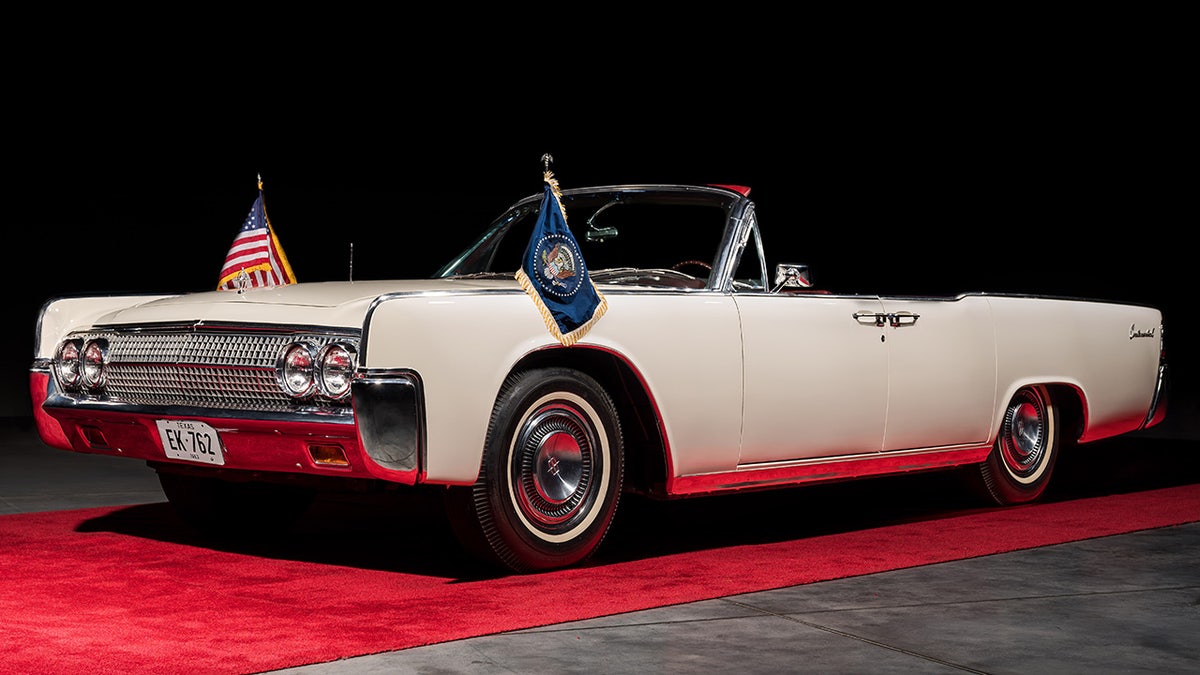
6. Lincoln Continental – John F. Kennedy
Elegance and public visibility defined the Lincoln Continental associated with John F. Kennedy. During the early 1960s, this vehicle stood as a representation of American automotive sophistication, combining clean styling with a commanding presence. Kennedy’s connection to the Continental placed it firmly within the public eye, where it became part of official appearances and ceremonial duties.
Distinctive design elements gave the car a recognizable identity. Its long, straight body lines and rear-hinged doors created a refined silhouette that communicated confidence without excessive ornamentation. The open-top configuration used during certain appearances allowed clear visibility, making it suitable for parades and public engagements. This design choice strengthened the connection between the president and the people, as it removed barriers between occupant and audience.
Interior features focused on comfort and space. The cabin provided ample room for passengers, along with materials chosen to reflect quality. Seating arrangements supported both functionality and formality, ensuring that the vehicle met the demands of official use. Every detail contributed to a composed and dignified atmosphere.
The mechanical setup was designed for smooth, controlled performance rather than anything aggressive. The engine produced consistent, steady power, allowing the car to move confidently and quietly. The suspension was tuned for comfort, keeping the ride stable even over long distances. Everything was built around the needs of a presidential vehicle, where calmness and refinement mattered more than speed.
Historical and automotive experts show strong interest in well-preserved examples of this model. Any vehicle with confirmed presidential use is carefully studied, with proper documentation playing a good role in verifying its history. Restoration work focuses on keeping the car as original as possible, treating it as a historical artifact instead of updating it to modern performance standards.
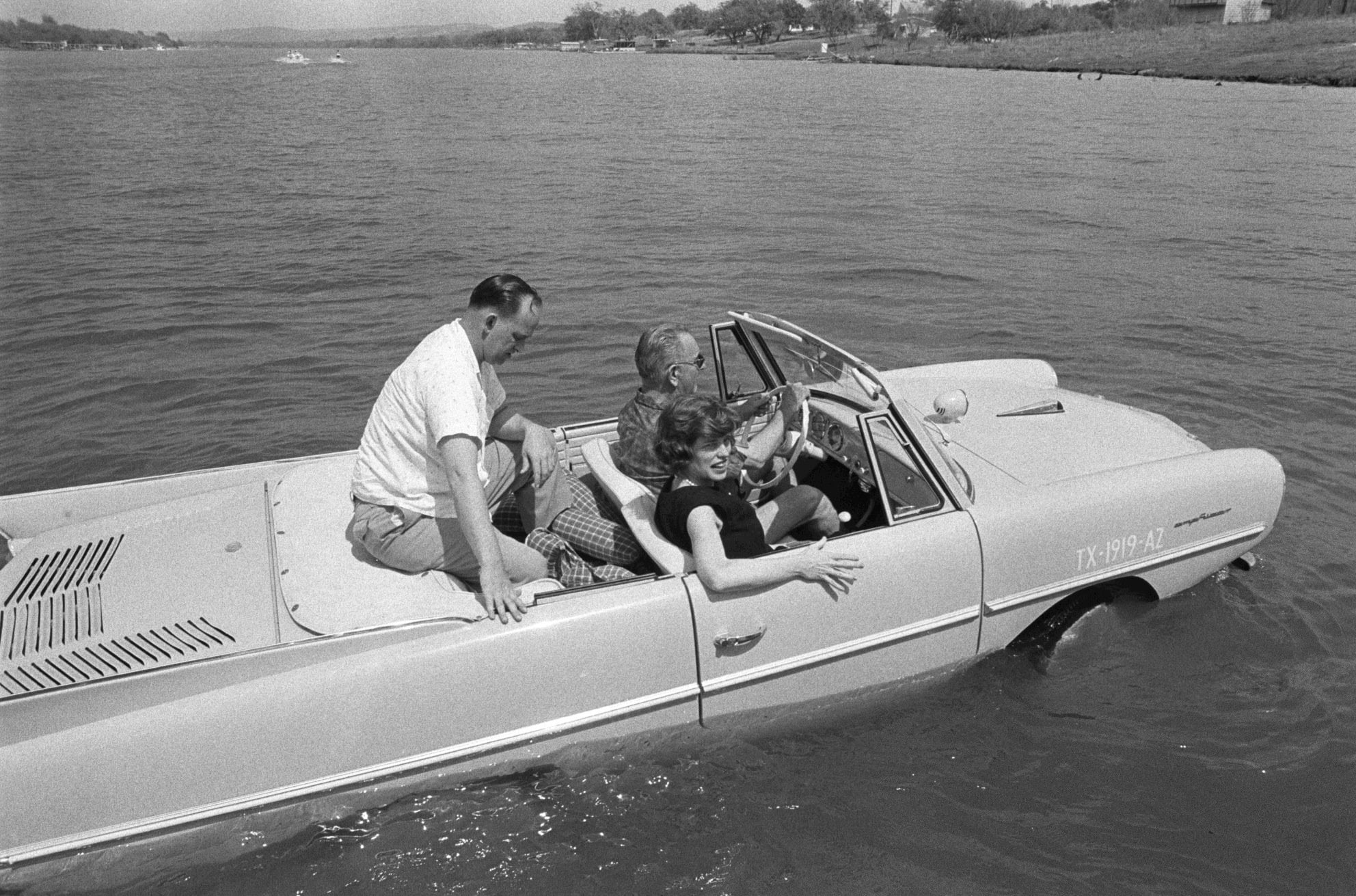
7. Amphicar Model 770 – Lyndon B. Johnson
Playfulness and engineering curiosity came together in the Amphicar Model 770 owned by Lyndon B. Johnson. Unlike traditional automobiles, this vehicle offered the ability to operate on both land and water, creating an experience that blended driving with boating. Johnson’s use of the Amphicar became well known for its unexpected demonstrations.
Compact proportions and simple styling gave the Amphicar a modest appearance. At first glance, it resembled a small convertible from the 1960s. Its true capability became evident only when it entered the water, where propellers engaged to move it forward. This dual function set it apart from nearly every other vehicle of its time.
Johnson reportedly enjoyed surprising passengers by driving toward lakes and continuing directly into the water without warning. These moments highlighted both the novelty of the vehicle and the president’s sense of humor. The Amphicar served as a reminder that personal interests can exist alongside formal responsibilities.
The Model 770 was engineered with a careful blend of automotive and marine systems. It used specialized sealing to keep water out and featured controls that made switching between driving on land and moving on water relatively smooth. It wasn’t designed to be fast or powerful in either setting, but it stood out because it could do both, offering a rare kind of versatility.
Today, people see the Amphicar as a quirky and unusual piece of automotive history. Its low production numbers and unusual dual-purpose design make it especially interesting to enthusiasts. When it’s connected to Johnson, its appeal grows even more because of the personal stories tied to its ownership and use.
8. Ford Mustang – Bill Clinton
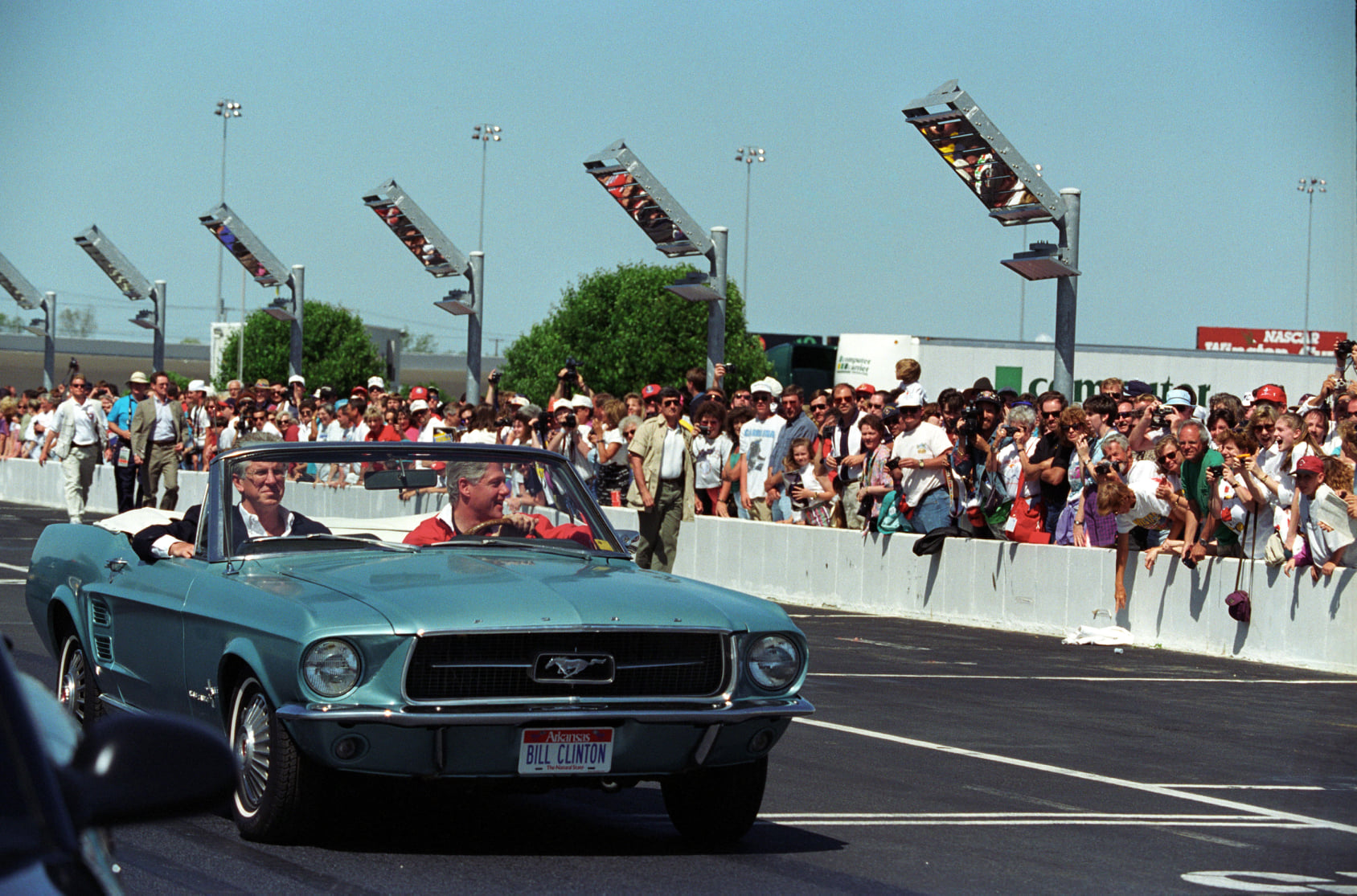
Personal enthusiasm for driving comes through clearly in the Ford Mustang owned by Bill Clinton. Before entering the presidency, Clinton developed an appreciation for this iconic American car, which became part of his public identity during later years. The Mustang represents freedom, youth, and a connection to everyday driving culture.
Sporty design defined the Mustang’s appeal. Its long hood, short rear deck, and bold stance created an image associated with performance and individuality. Clinton’s ownership reflected a preference for a car that emphasized enjoyment rather than formality.
Unlike official presidential vehicles, the Mustang served as a personal possession. Its presence highlighted a side of leadership that connected with ordinary experiences. Driving a Mustang carries a sense of familiarity, making it relatable to a broad audience.
Mechanical characteristics varied depending on model year, though performance remained central to its identity. Engines delivered strong acceleration, while suspension systems supported responsive handling. This balance allowed the car to provide both excitement and practicality.
Car enthusiasts and collectors appreciate Mustangs because of their role in American automotive culture. When a Mustang is linked to a figure like Clinton, its importance goes beyond performance or design. Its history and ownership add context that makes the car more interesting. That kind of background can increase its value and appeal.
Car lovers often try to preserve these cars in as original a condition as possible, keeping factory paint, interior parts, and engine components intact. The goal is authenticity, not modification. Whenever Clinton’s Mustang has appeared publicly, it has attracted attention and highlighted its personal, more relatable side. Unlike official presidential vehicles, it reflects individual taste and personality rather than ceremony or protocol.
The enduring popularity of the Mustang ensures that its link to Clinton remains relevant. The car represents a blend of history, personality, and automotive culture that continues to resonate.
9. Ford F-150 – George W. Bush
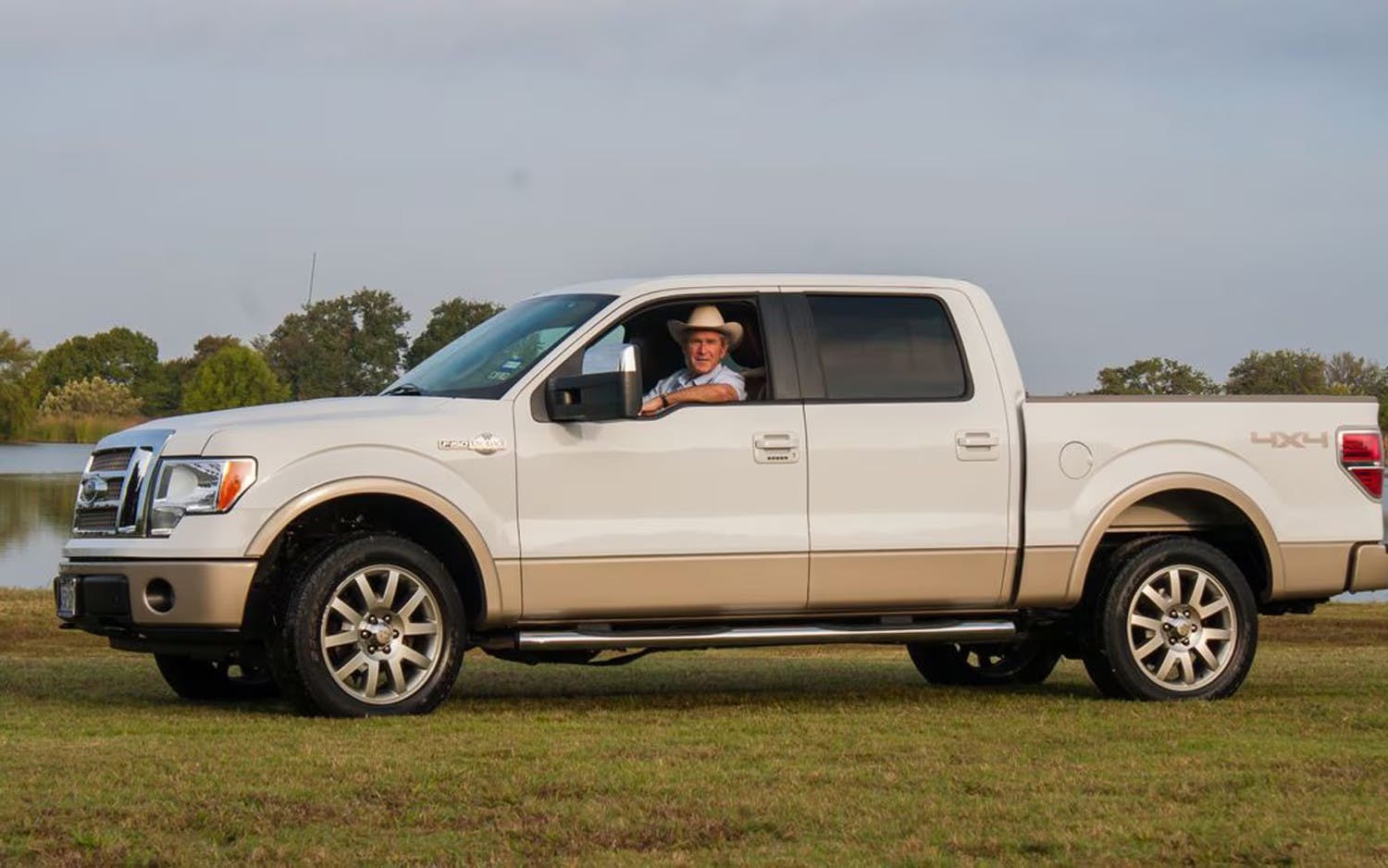
The Ford F-150 tied to George W. Bush reflects a strong association with practicality and everyday utility. During his years at his Texas ranch, he frequently used this pickup for routine movement around the property. The vehicle aligned with a lifestyle centered on manual work, land management, and personal independence rather than formal display or prestige.
Across the United States, the Ford F-150 holds a strong position as one of the most trusted pickup trucks. Its design supports heavy-duty tasks such as transporting equipment, carrying supplies, and handling uneven rural roads. That level of capability makes it suitable for agricultural environments, construction work, and general field use where durability matters more than appearance.
Bush’s preference for this type of vehicle reinforced a public image associated with simplicity and hands-on living. Instead of relying on luxury sedans or high-end SUVs, his use of a pickup truck sent a message of practicality and direct engagement with everyday tasks. That connection strengthened public perception of him as someone comfortable in rural settings.
From a structural standpoint, the F-150 is built with a strong frame designed to support heavy loads. The cargo bed provides wide space for equipment, while the cabin layout focuses on straightforward controls and functional placement of features. Comfort exists within the cabin, but the design clearly prioritizes usability.
Mechanical reliability also plays a major role in the truck’s reputation. Engine options deliver steady performance suited for both highway travel and demanding work conditions. Suspension systems are designed to handle weight without compromising stability, allowing the truck to perform consistently across different roads.
Collectors and automotive historians often show interest in vehicles linked to public figures, and the F-150 associated with Bush attracts attention for its personal use rather than ceremonial purpose. Verified ownership records increase its value among collectors who focus on provenance.
Preservation efforts typically maintain both working condition and original structure. Many owners prefer to keep such vehicles operational rather than turning them into static display pieces. That approach preserves the original intent of the truck as a working machine tied to daily life on a ranch.
Also Read: 5 Classic Convertibles With Manual Soft Tops vs 5 With Early Power Mechanisms
10. Ford Escape Hybrid – Barack Obama
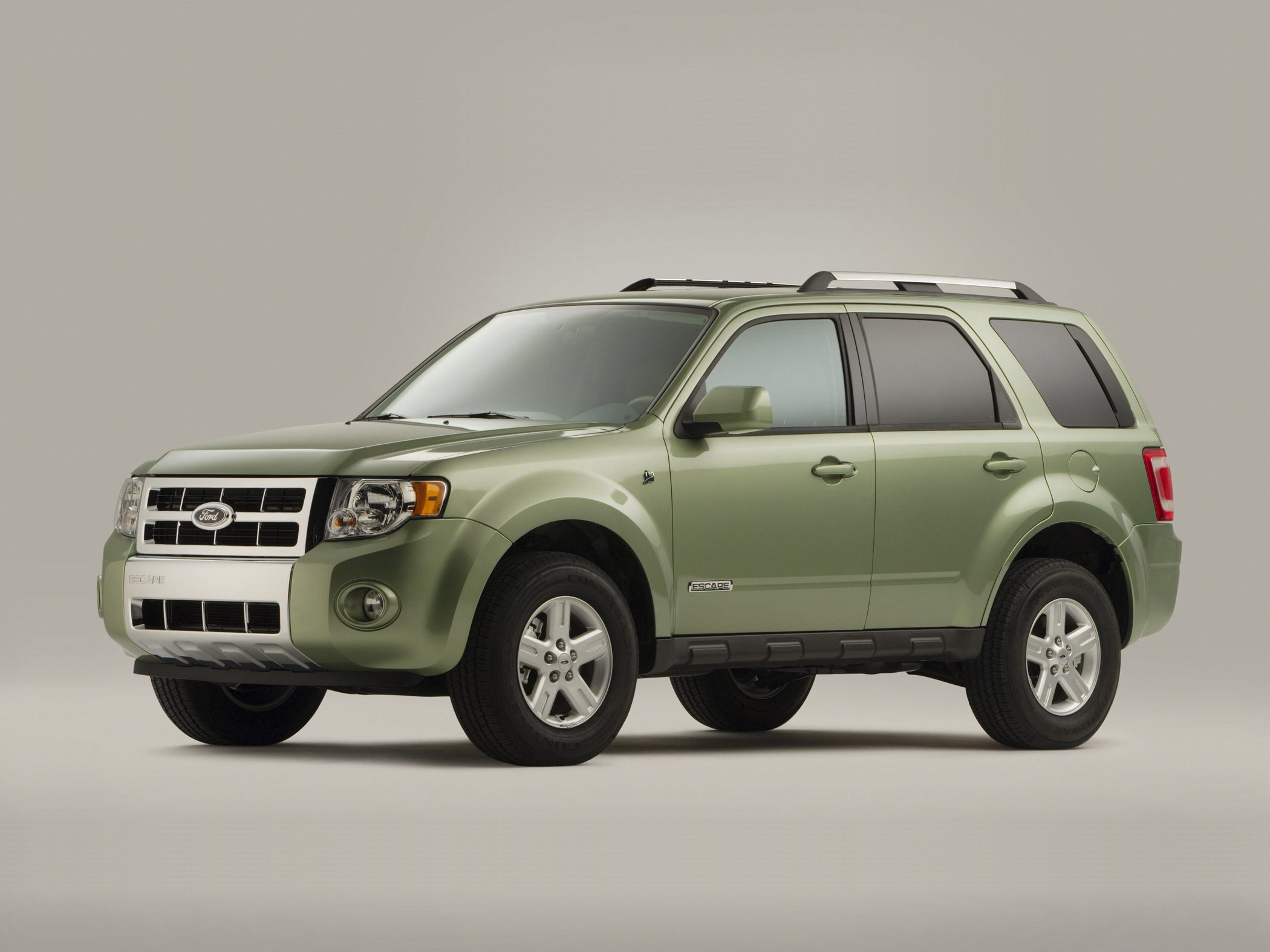
The Ford Escape Hybrid associated with Barack Obama represents a period when hybrid technology began gaining wider acceptance in the United States. His use of this vehicle reflected growing attention toward fuel efficiency and reduced environmental impact during his time in public service.
The Escape Hybrid combines a petrol engine with an electric motor, allowing the system to alternate between power sources depending on driving conditions. This setup improves fuel consumption and reduces emissions compared with traditional internal combustion vehicles. It also provides smoother operation during stop-and-go city driving.
In terms of design, the Ford Escape Hybrid is a compact sport utility vehicle with practical interior space for passengers and luggage. Its size makes it suitable for urban environments while still offering enough flexibility for longer trips. The layout focuses on usability, with controls arranged for ease of operation.
Obama’s connection to this model highlighted a broader move in public discussion around energy use and transportation technology. Hybrid vehicles were becoming more common during this period, and his association with the Escape Hybrid drew attention to alternative energy solutions within the automotive industry.
From a technical perspective, early hybrid systems required careful integration of battery packs, electric motors, and traditional engines. Maintenance routines often included software calibration and monitoring of battery health to ensure long-term performance. These requirements marked a new direction in vehicle care compared with conventional models.
Automotive historians and enthusiasts often see early hybrid vehicles as major milestones in the evolution of cars. When a vehicle is connected to a public figure like a head of state, it carries even more historical importance. The Escape Hybrid represents a period when environmental concerns started shaping transportation decisions at a national level.
Public displays and exhibitions often use this vehicle to illustrate progress in automotive engineering. It stands as an example of how traditional vehicle design began merging with electric technology, setting a path for future developments in hybrid and fully electric transportation systems.
