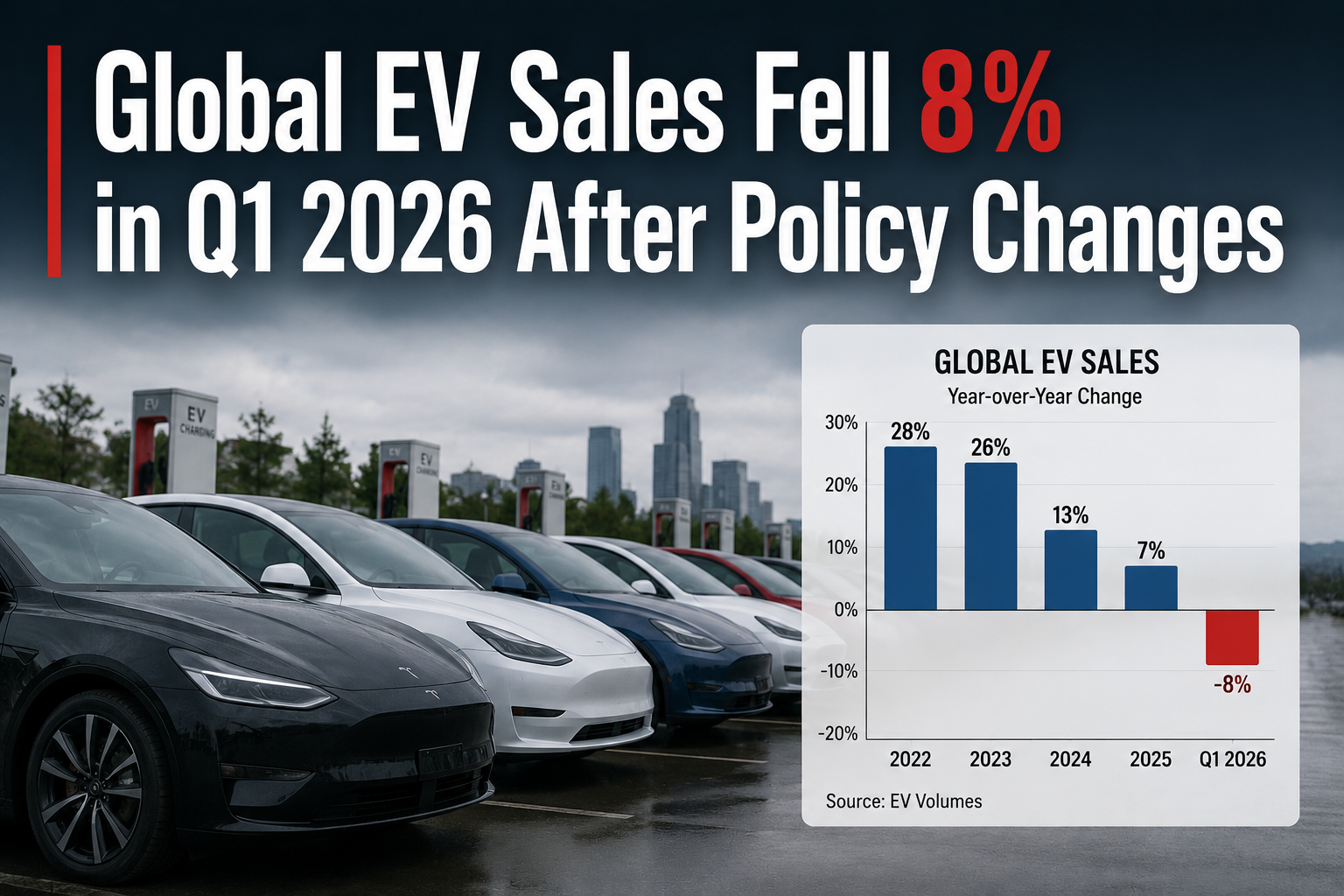
The electric vehicle industry entered 2026 with expectations of continued growth, but the first quarter delivered a reality check for automakers, suppliers, and investors around the world.
After years of rapid expansion driven by government incentives, regulatory mandates, and unprecedented investment in battery technology, global EV sales declined by 8% during the first quarter of the year following major policy changes in China and the United States.
The decline has sparked fresh debate about the pace of the transition to electric mobility. While few industry experts believe electric vehicles are facing a long-term retreat, the latest figures demonstrate that consumer demand remains heavily influenced by affordability, government support, and broader economic conditions.
The slowdown also comes at a time when several major manufacturers are reassessing strategies that were developed during an era of stronger growth forecasts.
At the center of the discussion is a growing imbalance within the global market. Chinese automakers supplied approximately 60% of electric vehicles sold worldwide during the quarter, while manufacturers from Europe and North America each accounted for roughly 15% of global sales.
Those figures highlight China’s increasing influence over the future of electric transportation and raise important questions about the competitive position of Western automakers.
The first-quarter results do not erase years of progress made by the EV industry. Instead, they reveal a market entering a more mature phase where profitability, pricing, and consumer confidence may matter as much as technological innovation.
Also Read: Tesla Model X Lost 61% Value in 5 Years
Policy Changes Reshape Consumer Demand
For much of the past decade, government support played a crucial role in expanding electric vehicle adoption. Tax credits, purchase incentives, manufacturing subsidies, and infrastructure investments helped reduce costs for consumers while encouraging automakers to invest heavily in electrification programs.
That environment began to change in late 2025 and early 2026. China, the world’s largest EV market, adjusted several policies that had long supported electric vehicle purchases.
Although the country remains committed to reducing emissions and maintaining leadership in battery technology, policymakers have increasingly shifted their focus toward market sustainability rather than aggressive subsidy-driven growth.
Meanwhile, the United States introduced policy changes that affected the availability and value of incentives for many electric vehicle buyers. Combined with upgraded borrowing costs and persistent concerns about vehicle affordability, the changes altered purchasing decisions across several segments of the market.
Industry analysts noted that many consumers who had previously considered purchasing an EV began delaying those decisions. Some opted for hybrid vehicles, while others chose to remain with conventional gasoline-powered models until prices became more competitive.
The result was an immediate impact on sales performance during the opening months of the year.
For an industry accustomed to reporting strong year-over-year growth, the decline served as a reminder that demand remains sensitive to policy shifts and economic conditions.
China Extends Its Lead in the Global EV Race
Despite the broader slowdown, China strengthened its position as the dominant force in the electric vehicle sector.
Chinese manufacturers were responsible for approximately 60% of global EV sales during the first quarter, a figure that underscores the country’s remarkable transformation into the industry’s largest production and innovation center.
The foundation for that success was built over many years. Through strategic investments in battery manufacturing, raw material processing, charging infrastructure, and vehicle development, China created an ecosystem capable of supporting rapid growth at a scale unmatched elsewhere in the world.
Companies such as BYD, SAIC, Geely, Nio, and Xpeng have emerged as serious global competitors. Their ability to develop vehicles quickly and manufacture them at competitive prices has become one of the industry’s defining trends.
Cost advantages have played a particularly important role. Chinese manufacturers often control large portions of their supply chains, allowing them to reduce production expenses and respond more efficiently to changing market conditions.
As affordability becomes increasingly important to consumers, this advantage has become even more valuable.
The strength of China’s domestic market has also allowed automakers to achieve economies of scale that many foreign competitors struggle to match. As a result, Chinese brands continue expanding into international markets across Europe, Asia, Latin America, and the Middle East.
Even with slower global growth, China’s influence over the EV industry appears stronger than ever.
European Automakers Face Growing Competitive Pressure
European manufacturers remained significant players in the electric vehicle market, accounting for approximately 15% of global sales during the quarter. However, the region’s automakers are confronting a combination of economic pressures and rising competition.
Over the past several years, companies such as Volkswagen, BMW, Mercedes-Benz, Renault, and Stellantis invested heavily in electrification. New production facilities, dedicated EV platforms, and battery partnerships were established to support ambitious long-term goals.
Those investments continue today, but market conditions have become more challenging. Higher vehicle prices, inflation, and slower economic growth have affected consumer purchasing behavior across several European markets. At the same time, Chinese competitors are introducing lower-priced vehicles that appeal to cost-conscious buyers.
This combination has forced many European manufacturers to become more cautious. Instead of focusing exclusively on expanding production volumes, executives are increasingly emphasizing profitability and operational flexibility.
Some companies have revised sales forecasts or adjusted rollout schedules for future electric models. Others have placed greater emphasis on hybrid technologies as they seek to accommodate consumers who are not yet ready to make a full transition to battery-powered transportation.
The shift does not signal a retreat from electrification, but it does indicate a more measured approach than many manufacturers envisioned only a few years ago.
North American Automakers Reassess Their Strategies
North American manufacturers held a similar share of global EV sales, contributing roughly 15% of worldwide volume during the first quarter.
The region has experienced substantial investment activity in recent years, with automakers committing billions of dollars to battery factories, assembly plants, and new electric vehicle programs. Many of those investments were made during a period when industry forecasts projected sustained rapid growth.
Recent developments have prompted a reassessment. Ford’s decision to discontinue the electric F-150 Lightning and record a massive write-down tied to EV investments became one of the most notable examples of changing industry expectations. General Motors also announced significant charges related to adjustments in its electric vehicle strategy.
These actions reflect a broader trend. Manufacturers are increasingly recognizing that consumers are prioritizing affordability and practicality alongside environmental considerations.
While interest in EVs remains strong, buyers continue to evaluate factors such as charging convenience, vehicle range, and purchase price before making decisions.
In response, several automakers have increased their focus on hybrid and extended-range technologies. These vehicles offer improved fuel efficiency while avoiding some of the concerns associated with fully electric transportation.
The strategy provides manufacturers with additional flexibility as market conditions continue to evolve.
Affordability Becomes the Industry’s Central Challenge
Perhaps the most important lesson from the first quarter slowdown is that affordability remains the single greatest obstacle to widespread EV adoption.
Many consumers support electric vehicles in principle. Surveys consistently show strong interest in lower operating costs, reduced emissions, and advanced technology features. Yet enthusiasm does not always translate into purchases.
Vehicle pricing remains a major barrier. Although battery costs have fallen significantly over the past decade, electric vehicles often remain more expensive than comparable gasoline-powered alternatives. Higher financing costs have further increased the challenge for households managing tight budgets.
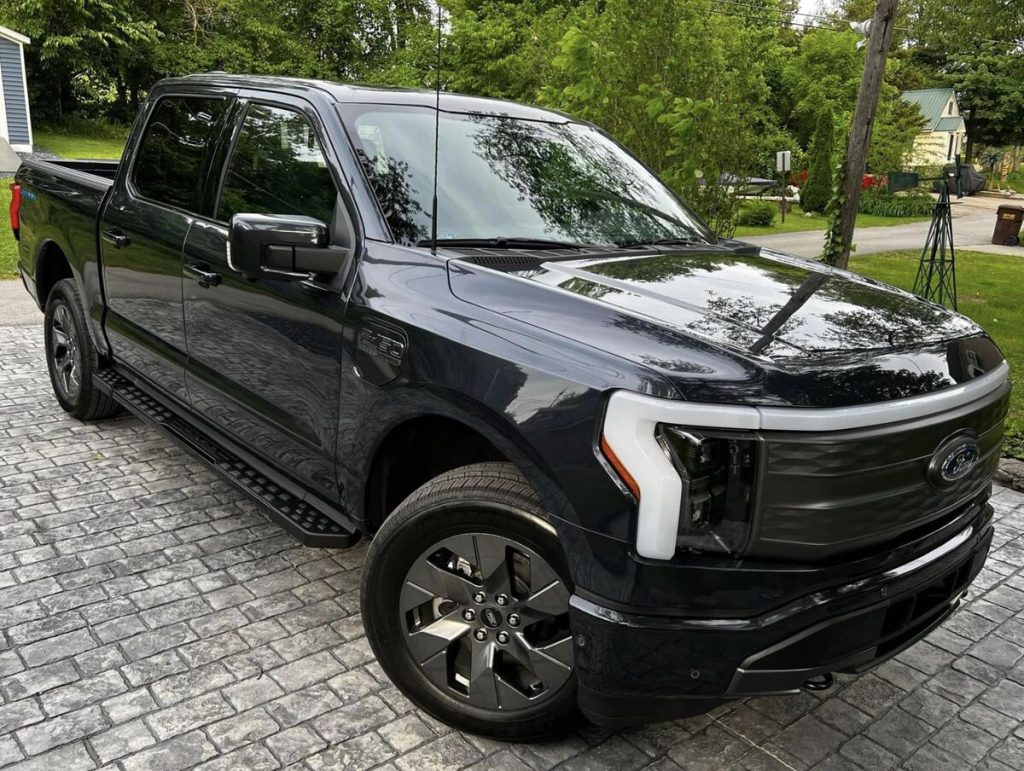
Recognizing this issue, automakers are beginning to shift their focus. Rather than emphasizing premium products, many companies are developing lower-cost electric vehicles designed to appeal to mainstream buyers. Toyota’s upcoming C-HR EV, expected to be priced around $35,000, represents one example of this strategy.
Industry analysts believe affordable EVs could play a critical role in restarting growth. Manufacturers that successfully combine competitive pricing with a practical range and strong reliability may be best positioned to capture the next wave of demand.
What the Slowdown Means for the Future
The first-quarter decline has attracted significant attention from investors, policymakers, and industry leaders because it arrives at a pivotal moment for the automotive sector.
Governments continue pursuing emissions reduction goals, while automakers remain committed to long-term electrification plans. At the same time, companies must demonstrate that their investments can generate sustainable returns.
The latest figures suggest the industry is entering a new stage of development. Instead of relying primarily on incentives and early adopters, future growth will depend increasingly on attracting mainstream consumers. That transition requires competitive pricing, reliable charging infrastructure, and products that meet the needs of everyday drivers.
The 8% decline in global EV sales during the first quarter of 2026 does not represent the end of the electric vehicle movement. Rather, it highlights the challenges that accompany the shift from rapid expansion to market maturity.
Chinese manufacturers continue to strengthen their leadership position, while European and North American automakers work to adapt to changing conditions. The companies that succeed in balancing affordability, innovation, and profitability will likely shape the next chapter of the industry’s evolution.
For now, the first quarter serves as a reminder that the path toward an electric future remains complex. Growth opportunities remain substantial, but achieving them will require strategies that reflect the realities of a more competitive and demanding marketplace.
Also Read: Stellantis Confirms Second Range-Extender SUV for Michigan Plant