
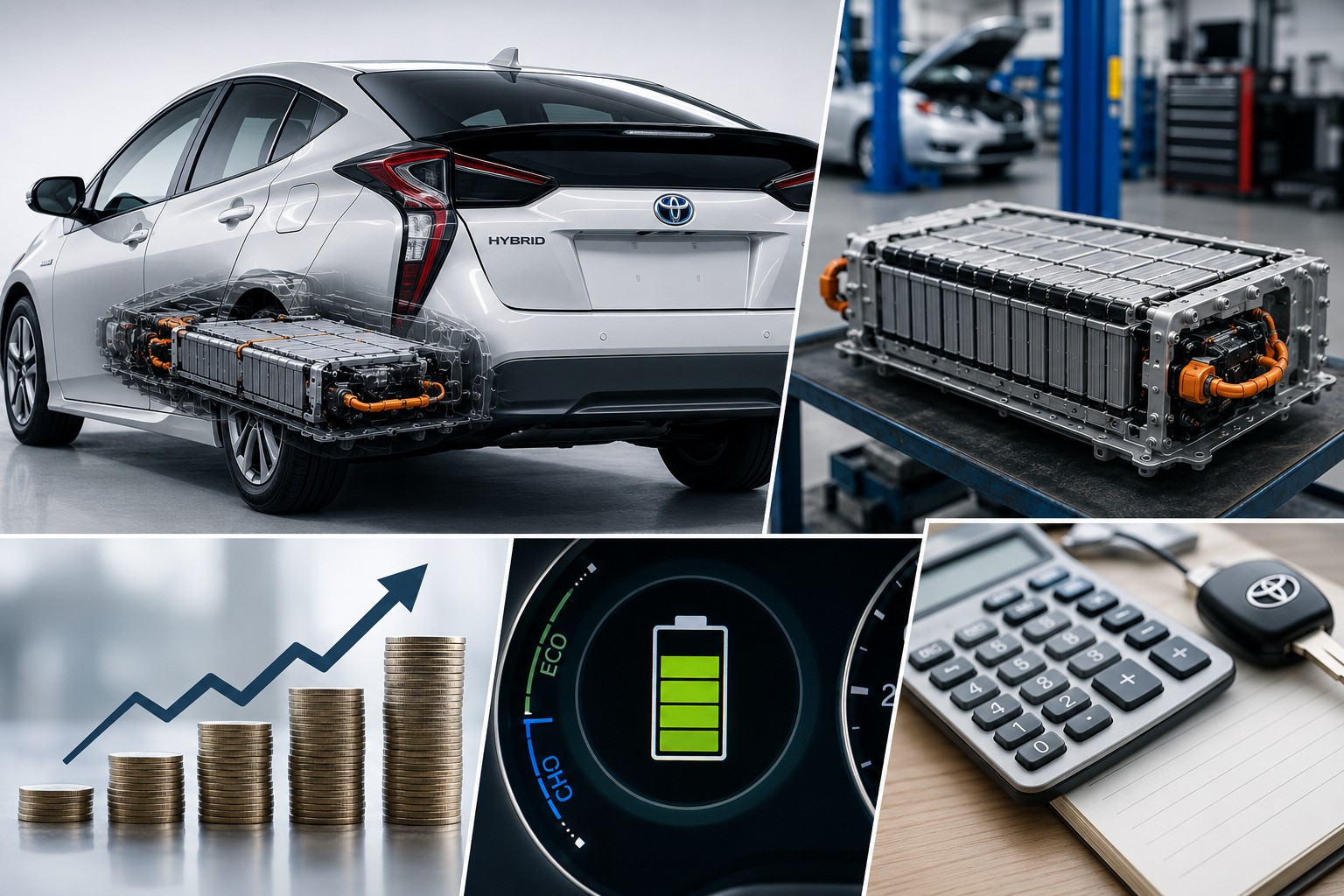
Hybrid vehicles promised drivers the best of both worlds. Lower fuel bills, fewer emissions, and smoother city driving all sounded appealing. Millions of Toyota Prius, Honda Accord Hybrid, and Ford Escape Hybrid owners bought into that promise. For years, the math worked beautifully in their favor.
Then the battery warning light appeared on the dashboard. Suddenly, the affordable, eco-friendly car became an expensive problem. Repair estimates ranging from $3,000 to $6,500 shocked owners who expected simple maintenance costs. Many drivers assumed hybrid batteries lasted the life of the vehicle. That assumption turned out to be dangerously optimistic.
In 2026, hybrid battery replacement costs have climbed higher than ever before. Supply chain disruptions, rising raw material prices, and advanced battery chemistry all contribute to the steep price tag. Labor costs at dealerships have also surged significantly across most markets.
Understanding why these costs exist helps owners make smarter financial decisions. It also helps prospective buyers calculate the true long-term cost of hybrid ownership. This article breaks down every major factor driving that $3,000 to $6,500 price range in today’s market.
The Raw Materials Inside a Hybrid Battery Are Genuinely Expensive
Every hybrid battery pack contains materials that cost serious money to mine and process. Nickel-metal hydride batteries use large quantities of rare earth elements. Newer lithium-ion packs require lithium, cobalt, manganese, and nickel in carefully refined forms.
These are not common household metals. They require deep mining operations in specific geographic regions around the world. Most lithium comes from Australia, Chile, and Argentina. Cobalt is heavily concentrated in the Democratic Republic of Congo.
Global demand for these materials has exploded in recent years. Electric vehicle production competes directly with hybrid battery manufacturing for the same raw materials. When EV factories ramp up production, hybrid battery supply chains feel the pressure immediately.
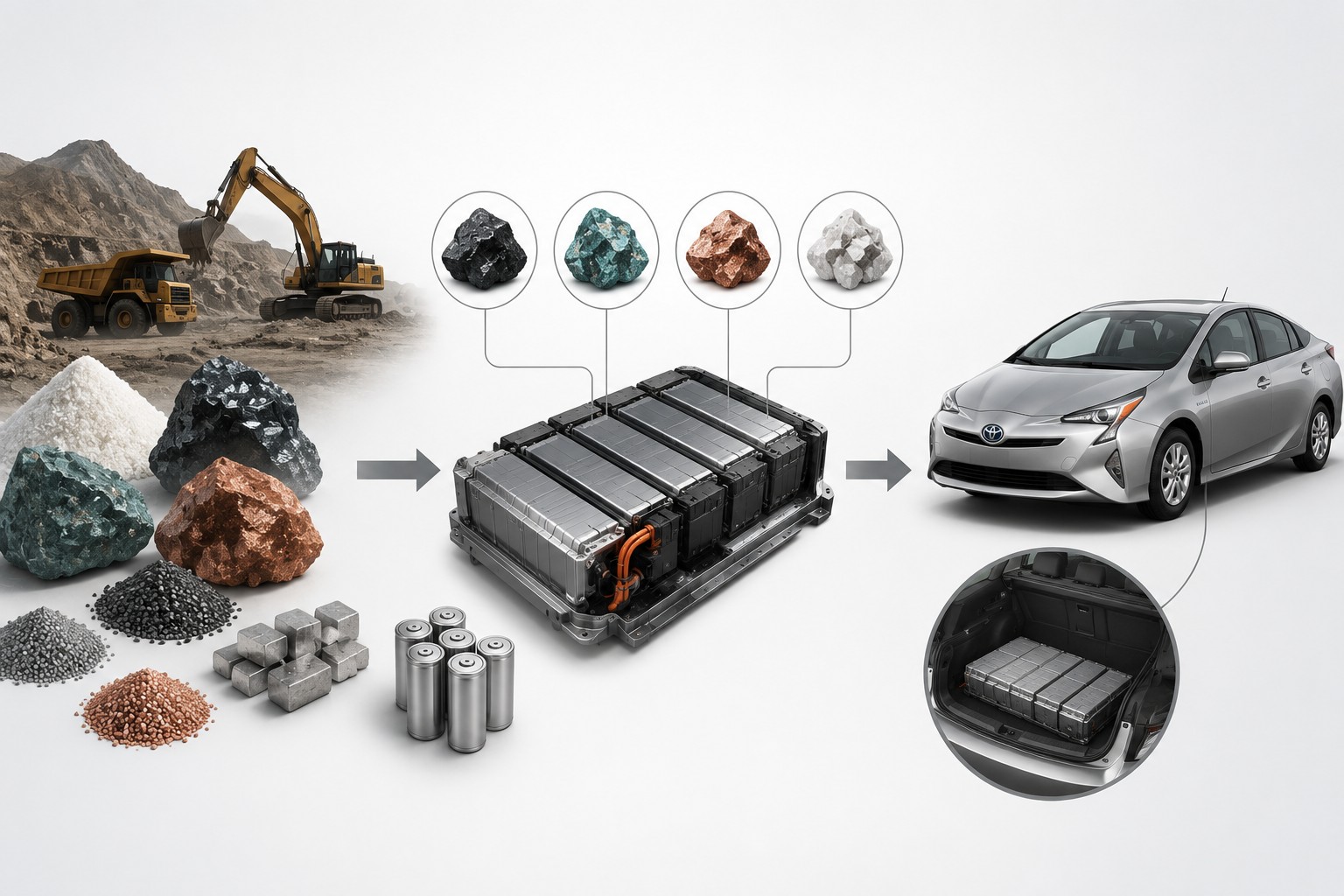
Cobalt prices remain particularly volatile in global commodity markets. Even small supply disruptions in Central Africa send ripple effects through battery manufacturing costs worldwide. Automakers cannot simply switch to cheaper alternatives overnight.
Nickel prices also surged dramatically following geopolitical tensions in major producing regions. Russia supplies a significant portion of the world’s battery-grade nickel. Trade restrictions and sanctions created serious shortages that manufacturers are still working through.
Lithium carbonate prices, though lower than their 2022 peak, remain higher compared to pre-2020 levels. Battery manufacturers locked into long-term contracts still pay inflated rates. Those costs flow directly down to the consumer, replacing a battery in 2026.
Processing these raw materials requires enormous energy and specialized chemical facilities. Refining lithium into battery-grade quality involves complex chemical processes. Each step in the supply chain adds cost before a single battery cell is even assembled.
A typical Toyota Prius battery pack contains roughly 168 individual cells working in precise coordination. Replacing even a few faulty cells often requires replacing the entire module or pack. That all-or-nothing replacement approach multiplies the raw material cost dramatically for the vehicle owner.
Engineering Complexity Makes Manufacturing These Batteries Extremely Difficult
Hybrid batteries are not simple lead-acid blocks sitting under a hood. They are sophisticated electrochemical systems engineered to incredibly tight tolerances. Each cell must match its neighbors in voltage, capacity, and internal resistance.
Toyota, Honda, and Ford each use proprietary battery designs unique to their vehicle platforms. A Camry Hybrid battery cannot be swapped into a Highlander Hybrid without significant modification. This lack of standardization drives manufacturing costs higher for every model line.
The battery management system adds another layer of engineering complexity. This onboard computer monitors every individual cell in real time. It balances charging rates, controls cooling, and prevents dangerous overheating during operation.
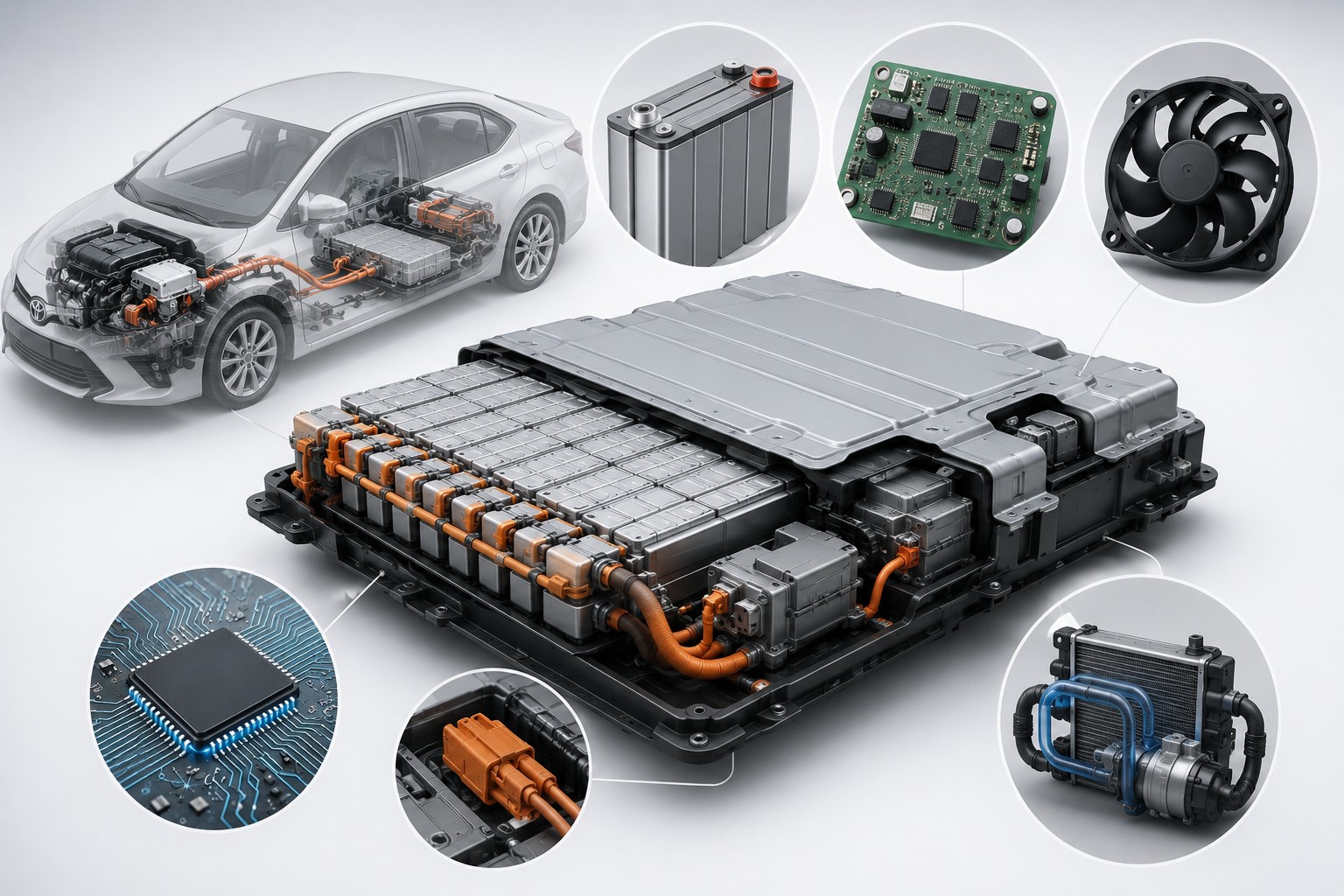
Building this system requires specialized semiconductors and precision sensors. Semiconductor shortages that began in 2021 have never fully resolved in the automotive sector. Manufacturers still pay premium prices for the chips embedded inside battery management hardware.
Thermal management is one of the most challenging engineering problems in hybrid battery design. Batteries that overheat degrade rapidly and can become safety hazards. Engineers design elaborate cooling channels, fans, and liquid cooling circuits to maintain optimal operating temperatures.
These cooling systems add physical components, weight, and manufacturing complexity to every battery pack. Each component must meet automotive durability standards and survive years of road vibration. Quality testing alone represents a significant portion of the final manufacturing cost.
Battery packs must also survive extreme temperature cycles across different global climates. A battery working in Dubai’s summer heat must perform equally well in a Canadian winter. That temperature range requirement demands premium materials and engineering solutions.
Automakers invest billions in battery research and development over many years. Those development costs are eventually recovered through part pricing over the vehicle’s lifetime. When you pay $4,500 for a replacement battery, part of that cost covers the original engineering investment.
Dealer Labor Rates and Diagnostic Complexity Push Costs Dramatically Higher
The battery itself represents only part of the total replacement bill. Labor charges at authorized dealerships add hundreds or even thousands of dollars to the final invoice. In 2026, dealership labor rates have risen sharply across most major markets.
Replacing a hybrid battery is not a job any general mechanic can attempt safely. The high-voltage systems inside hybrid vehicles carry enough current to kill a person instantly. Technicians require specialized training, certification, and proper safety equipment before touching these systems.
Toyota Master Technicians certified for hybrid work earn significantly more per hour than standard technicians. Dealerships pass those higher labor costs directly on to customers through higher hourly rates. Many dealers charge $150 to $200 per hour for hybrid-specific repair work.
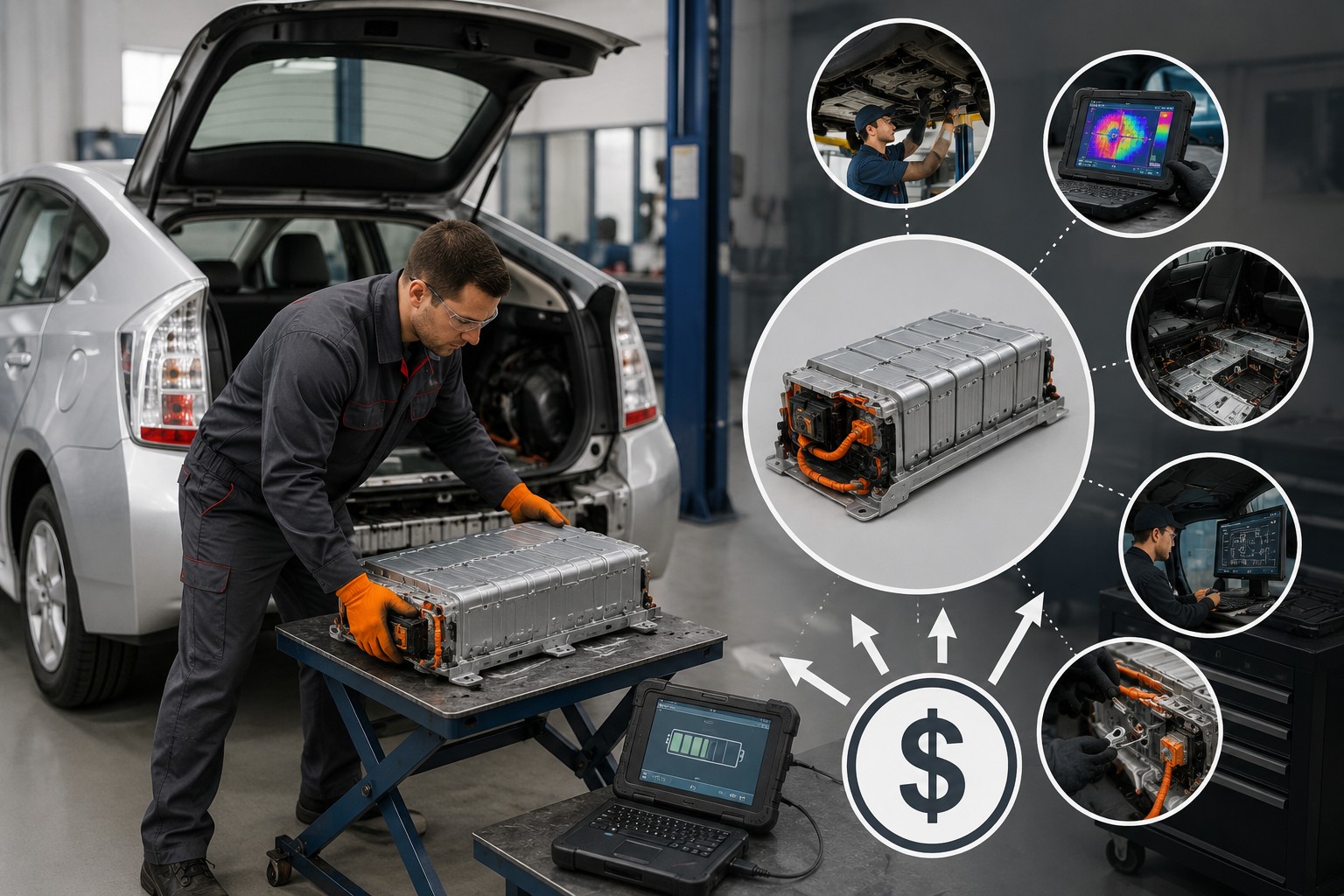
The diagnostic process itself takes considerable time before replacement even begins. Technicians must identify whether the full pack needs replacement or just specific modules. They run battery load tests, cell balancing checks, and thermal imaging scans.
This diagnostic phase can take two to four hours at premium labor rates. Even before any parts are ordered, the customer may already owe $300 to $600 in diagnostic fees. Some dealerships waive these fees if the repair proceeds through them, but not all do.
Physical removal of the battery pack is labor-intensive in most vehicle designs. The Prius battery sits beneath the rear seat and requires partial interior disassembly. The Ford Escape Hybrid battery installation involves removing floor panels and support structures.
Reassembly must be done precisely to maintain crash safety standards and proper cooling performance. Technicians torque every connection to manufacturer specifications using calibrated tools. Any mistake during reassembly could create dangerous electrical faults or premature battery failure.
Software recalibration after installation adds another hour of work time. The battery management system must learn the characteristics of the new pack. This programming step requires dealer-level diagnostic software that independent shops often cannot access.
Limited Competition in the Replacement Market Keeps Prices Artificially Elevated
The hybrid battery replacement market suffers from a serious lack of competitive pressure. Original equipment manufacturers control most of the supply chain for genuine replacement parts. Dealerships selling OEM batteries operate with comfortable profit margins due to limited alternatives.
Aftermarket suppliers have entered the market, but their options remain limited for many vehicle models. Third-party batteries for older Prius generations are relatively available. However, for newer hybrid models released after 2020, aftermarket options barely exist yet.
Independent remanufacturing companies offer refurbished battery packs at lower prices. These businesses disassemble old packs, test individual cells, replace failed cells, and reassemble them. Remanufactured batteries typically cost 30 to 50 percent less than OEM replacements.
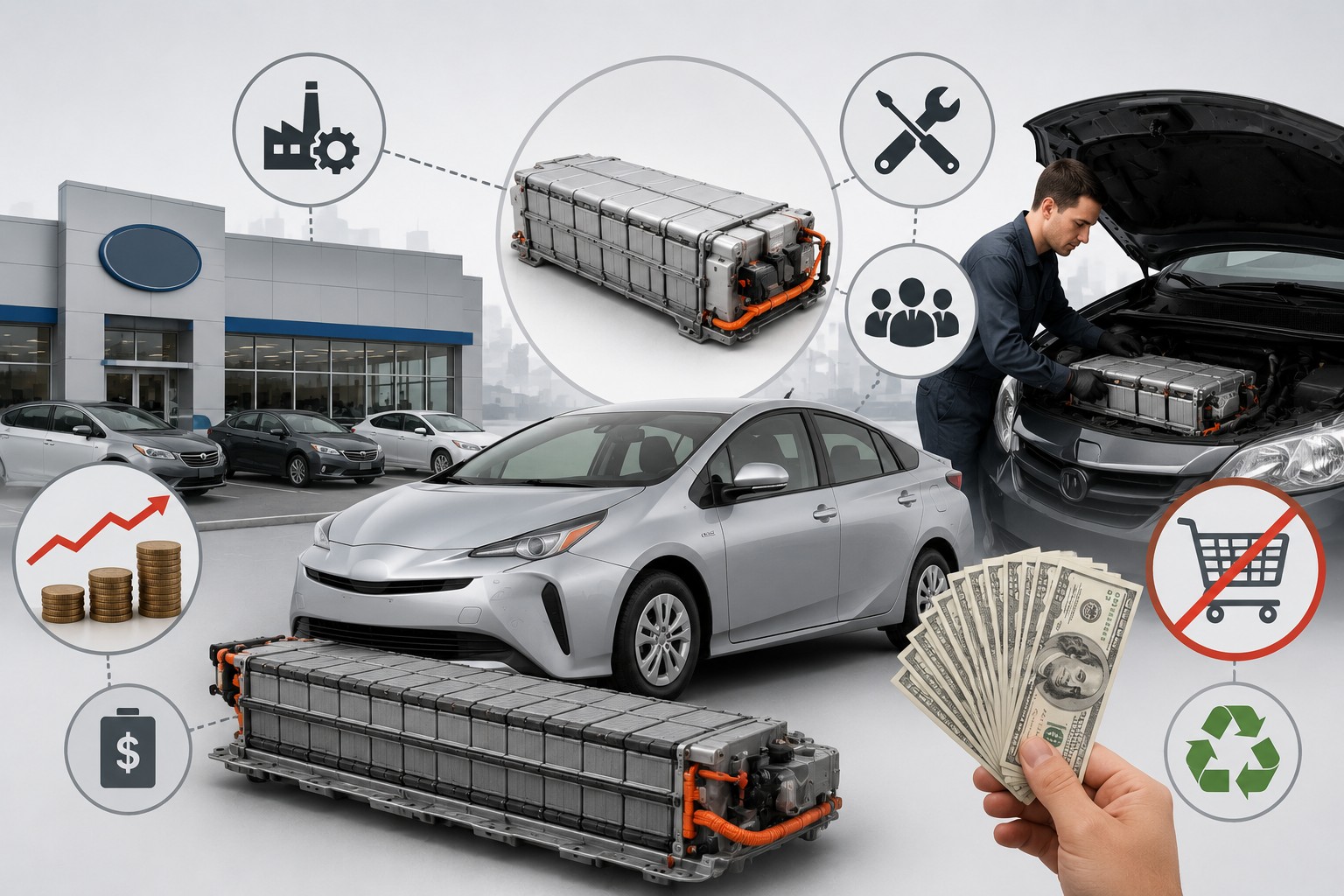
However, remanufactured batteries carry warranty risks that make many owners hesitant. Dealerships will not honor the new vehicle warranty if a non-OEM battery causes related damage. Some manufacturers have used aftermarket batteries as grounds to deny unrelated warranty claims.
The geographic distribution of repair options creates pricing disparities across different regions. Urban areas with multiple dealers competing for business sometimes offer slightly better pricing. Rural customers often have no choice but to accept whatever the single local dealer charges.
Battery rental and subscription programs have emerged in some markets as alternatives. These programs charge monthly fees for battery use rather than requiring full upfront purchase. However, these programs are not yet widely available across all vehicle brands and regions.
The lack of a robust used battery market also limits buyer options significantly. Most used hybrid batteries have an unknown history and uncertain remaining capacity. Without standardized testing and grading systems, buyers cannot confidently assess used battery quality.
Automakers have little financial incentive to encourage cheaper replacement alternatives. Battery replacement revenue represents a profitable revenue stream for authorized service networks. Until regulatory pressure forces changes, this pricing structure will likely remain in place throughout the decade.
Warranty Gaps and Insurance Exclusions Leave Owners Paying Full Price
Most hybrid vehicle warranties cover the high-voltage battery for 8 years or 100,000 miles. In California and states following California emissions rules, this coverage extends to 10 years or 150,000 miles. These warranties sound generous until owners read the fine print carefully.
Warranty coverage only applies to complete battery failure, not gradual capacity degradation. A battery that holds only 60 percent of its original charge is technically still functioning. Manufacturers consider that performance level acceptable and will not replace it under warranty.
Most hybrid owners notice performance problems long before the battery completely fails. Reduced fuel economy, weaker acceleration, and longer charging times signal a degrading battery. None of these symptoms typically trigger warranty replacement under current manufacturer policies.
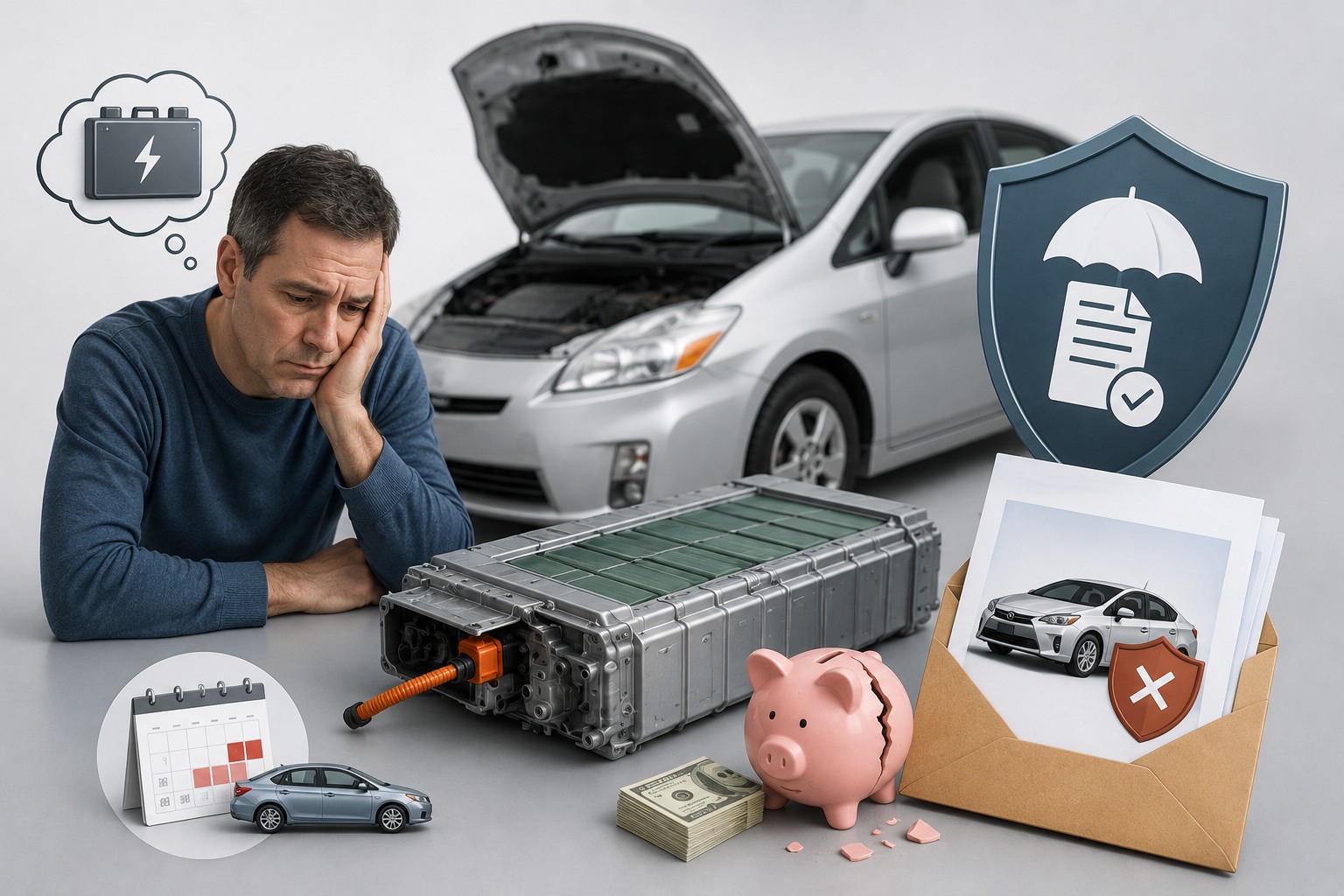
Extended vehicle service contracts sold by dealers often exclude hybrid battery components entirely. The fine print in these contracts lists high-voltage hybrid components as separate exclusions. Owners who purchased extended warranties, assuming battery coverage, were often unpleasantly surprised.
Standard automotive insurance policies do not cover mechanical breakdown or component aging. Comprehensive coverage handles accident damage and theft, but not normal component deterioration. Separate mechanical breakdown insurance policies exist, but are not widely purchased by most drivers.
Some newer insurance products specifically cover hybrid battery replacement costs. These specialty policies are becoming more available as the hybrid fleet ages globally. However, premiums for this coverage can be significant, and claim processes are often complicated.
Fleet operators and commercial hybrid vehicle users face these costs multiplied across dozens of vehicles. Companies operating hybrid taxi fleets or delivery vehicles budget significant capital for battery replacement cycles. Commercial operators have stronger negotiating power than individual consumers but still face high baseline costs.
The timing of battery failure often catches owners financially unprepared for the expense. Batteries typically fail between 8 and 12 years of vehicle age. Many owners at that point have limited remaining loan equity and face difficult repair-versus-replace decisions.
Also Read: 8 Red Flags On A Used Car Listing
